‘People of the Cave’: Palestinians Take their Fight for Justice to the Mountains

Ahmed Amaranth (L) and his family live in a cave home and now face Israeli eviction. (Photo: via Twitter)
By Ramzy Baroud | Palestine Chronicle | August 19, 2020
Palestinians are not going anywhere. This is the gist of seven decades of Palestinian struggle against Zionist colonialism. The proof? The story of Ahmed Amarneh.
Amarneh, a 30-year-old civil engineer from the northern West Bank village of Farasin, lives with his family in a cave. For many years, the Amarneh family has attempted to build a proper home, but their request has been denied by the Israeli military every time.
In many ways, the struggle of the Amarnehs is a microcosm of the collective struggle of Farasin; in fact, of most Palestinians.
Those who are unfortunate enough to be living in areas of the West Bank, designated by the Oslo II Accord of 1995 as Area C, were left in a perpetual limbo.
Area C constitutes nearly 60% of the overall size of the West Bank. It is rich with resources – mostly arable land, water and ample minerals – yet, relatively sparsely populated. It should not be surprising why right-wing Israeli Prime Minister, Benjamin Netanyahu, wants to annex this region. More land, with fewer Palestinians, has been the guiding principle for Zionist colonialism from the outset.
True, Netanyahu’s annexation plan, at least the de jure element of it, has been postponed. In practice, however, de facto annexation has been taking place for many years, and, lately, it has accelerated. Last June, for example, Israel demolished 30 Palestinian homes in the West Bank, mostly in Area C, rendering over 100 Palestinians homeless.
Additionally, according to the United Nations Office for the Coordination of Humanitarian Affairs (OCHA), Israeli army bulldozers destroyed 33 non-residential structures as well. This is “the same number (of homes) demolished throughout the entire first five months of 2020,” OCHA reported.
Unfortunately, Farasin, like numerous other Palestinian villages and communities across Area C, has been singled out for complete destruction. A small population of approximately 200 people has been subjected to Israeli army harassment for years. While Israel is keen on implanting Jewish communities in the heart of the occupied West Bank, it is equally keen on disrupting the natural growth of Palestinian communities, the indigenous people of the land, in Area C.
On July 29, Israeli forces invaded Farasin, terrorizing the residents, and handed over 36 demolition orders, according to the head of the Farasin village council. Namely, this is the onset of ethnic cleansing of the entire population of the village by Israel.
Ahmed Amarneh and his family also received a demolition order, although they do not live in a concrete house, but, rather, in a mountain cave. “I didn’t make the cave. It has existed since antiquity,” he told reporters. “I don’t understand how they can prevent me from living in a cave. Animals live in caves and are not thrown out. So let them treat me like an animal and let me live in the cave.”
Amarneh’s emotional outburst is not misleading. In a recent report, the Israeli rights group B’tselem, has listed some of Israel’s deceptive methods used to forcefully remove Palestinians from their homes in Area C or to block any development whatsoever within these Palestinian communities.
“Israel has blocked Palestinian development by designating large swathes of land as state land, survey land, firing zones, nature reserves and national parks,” according to B’tselem. Judging by the systematic destruction of the Palestinian environment in the West Bank, Israel is hardly interested in the preservation of animals, either. The ultimate goal is the allocation of “land to settlements and their regional councils,” B’tselem argues.
Therefore, it should not come as a surprise that, for example, as of November 2017, only 16 of the 180 Palestinian communities in Area C have been approved for development. The rest are strictly prohibited.
Between 2016 and 2018, of the 1,485 Palestinian applications for construction and development in these areas, only 21 permits have been approved.
These unrealistic and draconian measures leave Palestinian families with no option but to build without a permit, eventually making them targets for Israeli military bulldozers.
Hundreds of families, like that of Ahmed Amarneh, have opted for alternative solutions. Failing to obtain a permit and wary of the imminent demolition if they build without one, they simply move to mountain caves.
This phenomenon is particularly manifest in the Hebron and Nablus regions.
In the mountainous wasteland located on the outskirts of Nablus, the wreckage of abandoned homes – some demolished, some unfinished – is a testimony of an ongoing war between the Israeli military, on the one hand, and the Palestinian people, on the other. Once they lose the battle and are left with no other option, many Palestinian families take their belongings and head to the caves in search of a home.
Quite often, the fight does not end there, as Palestinian communities, especially in the Hebron hills region, find themselves target to more eviction orders. The war for Palestinian survival rages on.
The case of Ahmed Amarneh, however, is particularly unique, for rarely, if ever, Israel issues a military order to demolish a cave. When the cave is demolished, where else can the Amarneh family go?
This dilemma, symptomatic of the larger Palestinian quandary, reminds one of Mahmoud Darwish’s seminal poem, “The Earth is Closing on Us”:
“Where should we go after the last frontiers?
Where should the birds fly after the last sky?
Where should the plants sleep after the last breath of air?”
However depressing the reality may be, the metaphor is undeniably powerful, that of savage colonialism that knows no bounds and Palestinian steadfastness (sumoud) that is perennial.
Often buried within the technical details of oppression – Area C, home demolition, ethnic cleansing and so on – is the tenacity of the human spirit, that of the Amarneh family and hundreds of other Palestinian families, who have turned caves into loving homes. It is this unmatched perseverance that makes the quest for justice in Palestine, despite the innumerable odds, possible.
– Ramzy Baroud is a journalist and the Editor of The Palestine Chronicle. He is the author of five books. His latest is “These Chains Will Be Broken: Palestinian Stories of Struggle and Defiance in Israeli Prisons” (Clarity Press, Atlanta). Dr. Baroud is a Non-resident Senior Research Fellow at the Center for Islam and Global Affairs (CIGA), Istanbul Zaim University (IZU).
Russia wants to extend ‘New START’ nuclear arms control deal but not at any cost – deputy foreign minister
RT | August 18, 2020
Moscow wishes to prolong the New START Treaty but not if the US demands unreasonable concessions, Deputy Foreign Minister Sergey Ryabkov has said, adding that the Russian and American positions on the issue remain quite different.
Russia is ready to extend the treaty without any preconditions BUT Washington is still hesitating in agreeing to that, Ryabkov said following another round of nuclear arms talks with the US Special Presidential Envoy for Arms Control Marshall Billingslea in Vienna.
The high-ranking diplomat hailed some progress in the negotiations by saying that both sides took a more constructive stance and stuck to “intensive, in-depth and business-like discussions,” according to Russia’s permanent representative to international organizations in Vienna, Mikhail Ulyanov.
Yet, Moscow and Washington’s priorities in the talks appear to still “differ significantly,” Ryabkov noted. He said that the US continues to leave the door for talks open but he cannot say that its position has changed in favor of extending the accord.
“They [the US] evade an answer … to the question whether they are ready to prolong the treaty without preconditions,” Ryabkov told journalists, adding that Washington is still very much interested in making China join the talks on strategic stability. Russia, in turn, would very much like the UK and France – US allies and nuclear powers themselves – to sit down at the negotiating table as well.
Billingslea meanwhile told journalists that Washington has informed Moscow about its terms in extending the treaty that expires in February. The US said it would consider prolonging it if Russia’s “build-up” of shorter-range nuclear missiles not covered by the current agreement is addressed.
“Russia understands our position. And what remains to be seen is if there is the political will in Moscow to get this deal done. The ball is now in Russia’s court,” the US official said.The issue of short-range nuclear ballistic missiles was covered by another treaty – the INF – signed by Washington and Moscow back in the 1980s. The accord effectively banned such ground-based missiles altogether. Yet, the Trump administration unilaterally left it in 2019, citing the same alleged Russian build-up, only to later test their own ground-based cruise missile just after the agreement expired.
Moscow’s attempts to save the deal by even allowing the US military inspectors to see the missile they said violated the treaty for themselves were effectively snubbed by the US.
Also on rt.com Russia unveils evidence on missile that US claims violates INF Treaty, Washington snubs briefing
The New START Treaty, which remains the only standing pillar of international nuclear arms control after the expiration of the INF due to America’s exit, came into force in 2011. It limits the number of deployed intercontinental ballistic missiles (ICBMs), submarine-launched ballistic missiles (SLBMs) and strategic bombers, of which the US and Russia can have up to 700 each. The number of deployed warheads was capped at 1,550, while the countries pledged to maintain no more than 800 deployed and non-deployed launchers.
The fate of the crucial agreement has been in limbo for a year and a half since no talks were held on its extension despite the nearing expiration date. Hopes resurfaced back in June when Moscow and Washington agreed to hold arms control consultations in Vienna. Yet, according to Ryabkov, the dates of new consultations have not yet been set following the Tuesday meeting since both sides still want to analyze each other’s positions.
The Hariri Assassination Verdict: A Billion Dollar Trial Ended after 15 Years
By Soraya Sepahpour-Ulrich | American Herald Tribune | August 19, 2020
On February 14, 2005, an explosion rocked Beirut killing and injuring hundreds of people chief among them the former Prime Minister of Lebanon, Rafik al-Hariri. The West was quick to blame Hezbollah and Syria. In 2006, Israel and its tanks rolled into Lebanon.
15 years later, on August 4th, another explosion rocked Lebanon. This time, the fingers were again pointed at Hezbollah and its ‘Iran backers’. And once again, Israeli tanks crossed into Lebanon.
After years of investigating the first incident, on Tuesday, August 18, 2020, Syria and Hezbollah were evicted of involvement in the 2005 explosion. Judges at a U.N.-backed tribunal said Tuesday that there was no evidence the leadership of the Hezbollah militant group and Syria were involved in the 2005 suicide truck bomb assassination of former Lebanese Prime Minister Rafik Hariri.”
Yet reading the Western media headlines, one would think that the judge had found Hezbollah guilty. Just as the most recent explosion was blamed on Hezbollah. But what would Hezbollah gain from such horrific acts? If not Hezbollah, ‘cui bono’? The answer is simple. Proving it is not.
The 1967 war resulted in the exponential expansion of Israeli water sources including the control of the Golan “Heights” (also referred to as the Syrian Golan). For decades, Syrian Golan and the return of its control to Syria had posed a major obstacle to the Israeli-Syrian peace negotiations. Israel’s water demands make it virtually impossible to accommodate this process. In fact, even with full control of the Golan, Israel’s water crisis in 2000 was so acute that it prompted Israel to turn to Turkey for water purchase.
Importantly, Syria’s presence in Lebanon since the outbreak of the Lebanese civil war in 1975 played a crucial role in hindering Israel’s never-ending water demands. Although the 1955 Johnston Plan (under the auspices of the Eisenhower administration) proposed diverting water from Lebanon’s Litani River into Lake Kinneret, it was not officially formulated, though it remained an attractive prospect. In 1982, Israeli forces established the frontline of their security zone in Lebanon along the Litani. Numerous reports alleged that Israel was diverting large quantities of Litani water.
On June 6, 1982, Israel advanced into Lebanon. However, the Syrian army halted the Israeli army advance in the battle of Sultan Yakub and the battle of Ain Zahalta. Sharon’s plan to conquer all of Lebanon and destroy Syria as a military power was thwarted. In reviewing the book and the battles, the famous scholar and activist, Israel Shahak, opined that “the principal purpose of the Israeli invasion of Lebanon was destruction of the Syrian Army” [1].
A 1987 book by Col. Emmanuel Wald of the Israeli General Staff entitled “The Ruse of the Broken Vessels: The Twilight of Israeli Military Might (1967-1982) reveals the aims of the 1982 invasion of Lebanon and the month of pre-planning that had gone into it. Wald writes that Ariel Sharon’s master plan codenamed “Oranim” was to defeat the Syrian troops deployed in the Bekaa Valley all the way to the district of Baalbek in North of Lebanon. According to Wald, “during the first days, it was quietly approved by the U.S.”.
Sharon’s plans were put in the backburner. Though the urgency of the successful implantation of the plan was not lost on Israelis; perhaps made even more urgent in the face of the 1991 Lebanese-Syrian Treaty of Brotherhood, Cooperation and Coordination. The treaty was a challenge to Israel and its diversion of water and annexation. When Syria replaced Israel as the dominant power in southern Lebanon in May 2000, Israeli fears grew that Syrian success in controlling the Golan and by extension, Lake Kinneret, would have a devastating effect on Israel.
Washington, always ready to serve Israel, passed the Syrian Accountability Act and the Lebanon Sovereignty Restoration Act. Without any hesitation to investigate the explosion, Washington and the West did not hesitate to place the blame on Syria and Hezbollah. Much to the delight of The Washington Institute, the pro-Israel think tank, the United States implemented the Act which in addition to sanctions, called for the withdrawal of Syrian troops from Lebanon. In 2006, the deck was cleared for Israel to attack Lebanon.
Although the Tribunal found no ties to Syria or Hezbollah leadership, it did convict Salim Ayyash – a Hezbollah member. The question is, was Ayyash a rogue member acting on his own or was he a member of Israel’s “Arab Platoon” (Ronen Bergman, 2018) [2].
The Arab Platoon a clandestine commando unit whose members operated disguised as Arabs, were trained fighters who could operate inside ‘enemy’ lines, gather information, and carry out sabotage and targeted killings. Their training included commando tactics and explosives, but also intensive study of Islam and Arab customs. Nicknamed the “Mistaravim” (the name by which the Jews went in some Arab countries), they practiced Judaism but in all other aspects were Arabs.
It is not clear to this writer if Ayyash was a Hezbollah member or a Mistaravim. However, it is evident that neither Syria, Lebanon, nor Hezbollah benefited from the attack.
Curiously, the initial tribunal date coincided with the Lebanon port explosion which devasted the country, even making it appear as if the explosion and the delay in the hearing would benefit Hezbollah. Undoubtedly, the findings of the Tribunal must have been very disappointing for Israel and its backers who had placed the blame on Hezbollah and Syrian leadership. It may be reassuring for some and worrying for others that the FBI is in Beirut investigating. The FBI has managed to build quite a reputation for cover ups.
Beirut has been devastated. And as with 2006, every foe is out to grab a part of this beautiful country. During the 2006 war, while Israel bombed Lebanon, Carlyle profited greatly – as did the Saudis, the U.S., and of course, Israelis. The systematic destruction of Lebanon translated into a significant opportunity for the Carlyle Group and with the ‘crisis, they announced a $1.3 billion fund for investment in the region. They were not alone. The rush was on. The big investment banks — Morgan Stanley, Goldman Sachs, and Lehman Brothers – all increased their presence in the region. Israel, the perpetrator as the benefactor, received an increase of USD 500 million additional in aid package from the U.S. in September of the same year (Ynet News).
With millions of funds from CIA/NED spent in Lebanon over the past few years (NED 2018, etc.), the country is ripe for its enemies to bend it to their will. Clearly, this would not benefit Hezbollah, Iran, or Lebanon. Fingers have also been pointed at Israel for being the culprit. It may take several years for the truth to come out – and be proven. At the end of the day though, cui bono?
Endnotes
[1] Sahak, Israel. Israel Considers War With Syria as It Ponders 1982 Invasion of Lebanon, The Washington Report on Middle East Affairs (September 30, 1992).
[12] Ronen Bergman. Rise And Kill First; The Secret History of Israel’s Targeted Assassinations. P. 24. Random House 2018
Weaponized media coverage & off-the-scale hypocrisy as the West promotes ‘regime change’ in Belarus
By Neil Clark | RT | August 19, 2020
Lukashenko has always admitted his style is authoritarian but notwithstanding this, media coverage of the crisis in Belarus has been slanted and the West’s condemnation of the crackdown on protests reeks of double standards.
You can tell a ‘regime change’ is afoot in Minsk simply by looking at the coverage of Radio Free Europe/Radio Liberty. Their website at the weekend was headed by a large caption ‘Post election crackdown in Belarus’, which has now changed to ‘Crisis in Belarus‘. The five lead articles on Sunday were all about Belarus. It’s the same on Tuesday.
Radio Free Europe/RL is funded by the US Congress through the United States Agency for Global Media. Up to the early 1970s it was funded covertly by the CIA.
It was a soft-power tool of the old Cold War, sometimes with calamitous consequences. In their book ‘Cold War’, Jeremy Isaacs and Taylor Downing tell how in the Hungarian Uprising of 1956 “Radio Free Europe, the CIA-backed station that broadcast into Eastern Europe, was dramatically talking the situation up, proclaiming the West’s backing for what it called Hungary’s ‘freedom fighters.‘”
But the backing never came, and indeed was never likely to come and the uprising, having been encouraged by RFE, was ruthlessly suppressed.
You might have thought RFE/RL would have been wound up in 1989 when the Berlin Wall came down, but there was still a job to do.
It says it reports the news in countries where a free press is banned by the government or not fully established and while some of its journalism is perfectly fine the truth is that it usually stops reporting once a country is locked into Euro-Atlantic security structures. When it starts broadcasting to a country it’s invariably a sign that the US ‘Deep State’ wants its government toppled. For example, in 1998 it began broadcasting to Iraq, and we all know what happened there five years later. RFE/RL is undoubtedly ‘state-affiliated media’ yet you won’t see that warning attached to its tweets, as you now see attached to RT when it tweets this article.
It’s no great surprise that Franak Viacorka, the journalist and social media promoter of the anti-Lukashenko protests has worked for RFE/RL. As flagged by Ben Norton last week, Viacorka’s organization DigiCom.Net details his close link to US bodies. Viacorka works for the US Agency for Global Media, the parent of RFE/RL and has served as a ‘creative director’ for the Belarus service of Radio Free Europe, as well as being a consultant for the US State Department-funded ‘Freedom House’. He is also a non-Resident Senior Fellow of the Atlantic Council, his appointment lauded by Michael McFaul, the former US Ambassador to Russia.
To be fair to Viacorka he is absolutely open about his US connections and in fact seems very proud of them. And they don’t mean the 32-year-old isn’t genuine about his commitment to ‘democracy and personal freedom’. That’s even though he appeared to make criticism of Lukashenko’s Covid-19 policies (the Belarusian leader failed to impose a draconian lockdown such as we’ve seen in many Western countries), on a NBC programme earlier in the year. (You can watch that here)
Also gunning for Lukashenko is the Economist, the bible for neoliberal globalists. This week, the magazine denounced the “West’s response” to what was going on in Belarus as “feeble.”
It referred to Lukashenko as “a 65-year-old dictator.” The language of the Economist has been unusually emotional of late, showing they want regime change in Minsk quite badly. Yet in January 2019 they referred to the Belarusian leader more respectfully as “Mr Lukashenko” and said he was “no ordinary politician.” That was when they thought he was upsetting Vladimir Putin and “cosying up to the West.”
One suspects that if Lukashenko announced he had won 80 percent of the vote but then said he was going to promptly apply to join NATO, the EU and sell off the entire economy to Western finance capital, as well as imposing a ‘Covid lockdown’, the Economist would not be quite so angry.
Hypocrisy was also on show from the very grand EU Commission President Ursula von der Leyen. “We need additional sanctions against those who violated democratic values or abused human rights in Belarus,” von der Leyen declared on Twitter.
We are still of course waiting for the EU sanctions, additional or otherwise on Spain for the authorities’ crackdown on Catalan protesters in 2017 and the jailing of nine separatist leaders.
Or sanctions on France for the brutality meted out to the ‘Gilets Jaunes’ street protesters, who did not receive globalist approval.
How convenient after all that has gone on in 2020, that Belarus and the big bad Lukashenko is there to allow Western virtue signallers and self-proclaimed ‘liberals’ the chance to show off how much they care about ‘democracy’ again. While supporting the curtailing of basic human freedoms still further in their own countries.
Neil Clark is a journalist, writer, broadcaster and blogger. His award winning blog can be found at http://www.neilclark66.blogspot.com. He tweets on politics and world affairs @NeilClark66
Keep it Real: A Review of Diana Johnstone’s Book “Circle in the Darkness: Memoirs of a World Watcher”
By Rick Sterling | American Herald Tribune | August 19, 2020
Diana Johnstone has written a compelling and insightful book. It is mostly a review and analysis of significant events from the past 55 years. It concludes with her assessment of different trends that are being debated on the Left today including “identity politics”, Antifa and censorship. This is a book to be read, enjoyed and discussed.
 “Circle in the Darkness” gives glimpses into Johnstone’s personal life. She was born in St. Paul, Minnesota and grew up there and in Washington DC. She studied and taught at the University of Minnesota before moving and living most of her life in Europe – mostly in France with stints in Germany and Italy.
Her parents divorced when she was young. She had a special love and connection with her father who, ironically, was an analyst for the Pentagon. Evidently he also had an open and critical mind, writing the memoir “From MAD to Madness: Inside Pentagon Nuclear War Planning“.
Diana had a daughter at a relatively young age and largely raised her on her own. She finished her PhD in French literature, then worked as a teacher, translator, photographer and journalist.
There are interesting observations and comparisons. As Diana and her daughter moved between Minnesota and France, she compared the different educational systems. She notes, “There is a tendency in American grade schools for the kids to gang up against whichever unfortunate schoolmate has been selected by class bullies for tormenting ….. from my observation it is not like this in France.” She also describes the difficulties being a single mother before it was more common.
The book is full of insights based on her first hand experience living in Yugoslavia as a young exchange student, being a photographer for Associated Press, translating news reports for Agence France Presse, reporting on the end of the Cold War for In These Times and being press officer for the coalition of Green Parties in the newly formed European Union.
Grass Roots Activism
One theme running through the book is the need to reach out and engage with regular people. She recounts her experiences opposing the US war on Vietnam. Johnstone and her allies launched a campaign to educate and engage with regular Minnesotans, to explain what was happening in Vietnam and why the war should be opposed. She helped organize teams of students and teachers who went door to door in Minneapolis. Later, they sent a citizens delegation to Paris to meet with and hear from the Vietnamese representatives. Afterward, they reported back to communities throughout the state and country. Johnstone says these actions did not get the media attention but deepened opposition to the war in profound ways. The students and teachers going into the neighborhoods had to educate themselves in advance; they learned from the questions (and sometimes opposition) of community members; the delegation which met the Vietnamese representatives in Paris were deeply impressed and conveyed their experience on their return.
Johnstone is an unusually perceptive analyst. For example, her analysis of the Watergate scandal and Nixon resignation raises important but overlooked issues. Rather than seeing this as the hallmark of investigative journalism, she notes that it established the model of journalism relying on unidentified government sources. Looking back, the Watergate scandal effectively deflected attention from the ongoing slaughter in Southeast Asia. “Getting rid of Nixon was a brilliant coup that united generations, torn asunder by opposing attitudes toward the war ….. Watergate washed away the national sins. It prepared America to be ‘born again’ first as the innocent Gerald Ford and then as the good Christian Jimmy Carter, champion of human rights.” Moreover “The shenanigans around Watergate were a distraction from the most significant acts of the Nixon administration, in particular the shakeup of the world economy by the August 1971 decision to suspend (meaning to end) the convertibility of the dollar into gold. This was a direct result of the huge U.S. debt resulting from the cost of the Vietnam War.”
The author has a stark assessment of what happened to the Left. “As for the American antiwar movement, half a century later, it has vanished almost without a trace as an influential political force. There are perhaps more intelligent critics of war than ever before, but they are largely confined to the virtual world of the web, without significant impact on a political system which is totally integrated into a military industrial complex that relies on endless conflicts.”
Critical International Events
Through her work at Associated Press and Agence France Presse, Johnstone saw how stories are selected and prioritized depending on establishment bias. She also saw how the media can promote certain types of protest leaders. There are critical assessments of some protest leaders who became famous including Daniel Cohn Bendit. She gives a scathing critique of celebrity French philosopher Bernard Henri Levy.
Johnson has valuable insights on many events over the 1970’s and 80’s. A few examples are
* the assassination of Swedish Prime Minister Olaf Palme, who was likely behind it and how it has led to Swedish subservience to the US
* the causes and consequences of the assassination of Aldo Moro by ultra-leftists in Italy
* the murder of Palestinian moderate Dr. Issa Sartawi at a Socialist Party conference
* the attempted assassination of Pope John Paul II by a Turkish militant and the propaganda campaign trying to link him to Bulgaria and Soviet Union
* the growing influence of Israel in western foreign policy
In the 1980’s and early 1990’s, Johnstone watched closely, interviewed key players and reported on the rise of detente between the USA and Soviet Union She concludes, “Not enough credit is given to Mikhail Gorbachev and to the 1980s peace movement”.
The book is subtitled “Memoirs of a World Watcher”. Johnstone describes how radical islamists were used to undermine the socialist Afghanistan government beginning 1979. When the Soviet Union collapsed, the US had no restraints. She summarizes “Mikhail Gorbachev was a naive negotiator, outfoxed by the Americans” and “The total surrender of ‘real existing’ communism in the East contributed to the defeat of the Western Left”.
In 1991 the US seemingly invited Saddam Hussein to go into Kuwait, then built up a huge force to expel and then massacre thousands of retreating Iraqi soldiers. With operation “Desert Storm” viewed as a military success, President Bush declared “The Vietnam syndrome is over!”
Yugoslavia and “Humanitarian Imperialism”
With the dissolution of the Soviet Union, neoliberal economic policies quickly dominated the globe. The European Union was formed in 1992. Johnstone describes how the EU imposed rules and requirements that favored private banks and institutions and restricted or prevented state intervention and solutions. Yugoslavia, as the sole remaining socialist holdout, was under increasing pressure and media attack.
Johnstone describes how “humanitarian imperialism” emerged at this time. With the dissolution of the Warsaw Pact in 1991, the North Atlantic Treaty Organization (NATO) needed a new mandate and reason for existing. They found this new purpose in media distortion and demonization of Serbia and Yugoslavia. NATO promoted the “Kosovo Liberation Army” and other divisive elements then bombed Serbia for 78 consecutive days. Yugoslavia was broken into pieces.
In 2002 Johnstone wrote a book about the NATO attack, western propaganda and show trial. Her book is titled “Fool’s Crusade: Yugoslavia, NATO and Western Delusions”. She was attacked in the media for challenging the dominant assumptions about the conflict. She responded to the attacks saying,“I do not deny atrocities, but unlike others I give them a political context.” Others strongly defended her. Canadian law professor Michael Mandel wrote, “Fools Crusade is not only the definitive work on the Balkans Wars, it is also an inspiring example of how to rescue truth from the battlefield when it has become war’s first casualty”.
Western media distortion and intervention in Yugoslavia went almost unopposed. The antiwar movement was widely confused and silent. This was followed by the US invasions of Afghanistan then Iraq.
Along with media distortions and comparisons to Hitler and the Holocaust, there emerged the justification for violating national sovereignty based on the “Right to Protect” (R2P). This was the pretext for overthrowing the Libyan government of Moammar Gadhafi. Johnstone discusses how R2P has been used to confuse and silence antiwar forces, even some prominent traditional antiwar analysts. Johnstone has interacted with Noam Chomsky many times over decades and is overall very positive. But she notes that “even he might get something wrong”. She documents how the co-author of “Manufacturing Consent” was evidently fooled into believing media reports from Benghazi Libya. Chomsky said the western sponsored uprising was “wonderful”. It is now clear that media reports and NGO accusations from Benghazi were false. They were the pretense to launch the NATO campaign to overthrow the government.
Western intervention, including the sponsorship of terrorist armies in Syria, has been sold to the unwitting public using this model. Wherever the US and NATO wish to intervene, there is a “humanitarian crisis” and “responsibility to protect”.
Critical Current Issues
“Circle in the Darkness” analyzes many current issues of contention and debate on the left. She argues that suppression of debate and free speech, whether by the Right or Left, is counter-productive. She also argues that violence and vandalism hurts the progressive cause even when it gives a spurt of publicity and media attention. She describes many examples over the past 50 years and how frequently the instigators were government or police agents.
Johnstone describes the spectacular growth of the “Yellow Vest” movement in France. She documents how it began, how it was supported and joined by common people and how it reached across party lines. She contrasts the broad support of the Yellow Vest movement with narrow support of the student protests of May 1968. She writes, “Sociologically, this revolt was the opposite of May ’68. Instead of privileged students, imagining a non-existent working class revolution in a time of prosperity, this was the working class itself, in hard times.”
Johnstone describes how French police then attacked the Yellow Vest protesters with many injuries and even deaths. She writes, “Curiously, all this heavy handed repression totally failed to prevent masked ‘Black Bloc’ members from taking advantage of this opportunity to attack the police, set fires, break shop windows ….. Police did nothing to prevent unidentified intruders from invading the ground floor of the Arc de Triomphe to smash up a statue of Marianne…. It is noteworthy that almost all the seriously injured were peaceful Yellow Vest protesters, whereas the Black Blocs often got away unscathed. Perhaps the Black Blocs believe they are fighting the system. Whatever their intentions, they have served as a useful auxiliary to government repression.”
Johnstone notes the massive media effort to control popular thoughts and anger. “The mainstream media have moved farther and farther away from informing the public and nearer to instructing them in what they should think and do.” She thinks the Left is also infused with dogma. Diana Johnstone recounts the falling out with Counterpunch magazine after they published a “barrage of attacks” on the analyst and writer Caitlin Johnstone (no relation). “That was indeed the start of Caitlin’s rise to great prominence in anti-war circles and the beginning of CounterPunch’s decline from ‘fearless muckraking’ to snide sniping at the genuine heirs to the independent spirit of the founder, Alexander Cockburn. The gist of the CounterPunch attacks on the Australian Johnstone were that she dared say she would join even with someone on the right against war. That is simple good sense, but it was picked up by the Antifa purification squad as proof of tendencies toward fascism. When I saw them coming after Caitlin, I figured they’d be coming after me, and that my association with CounterPunch was soon coming to an end.”
Johnstone argues in favor of working for peace with all forces which agree on that issue, whether or not they agree on all issues of “identity politics”. She argues that we should not be distracted from the root causes of war and social inequality. When the Left focuses on the fringe right, the establishment is not only happy, they encourage and promote this diversion.
“The specialty of the AntiFa is to situate the threat of tyranny on the powerless margins of society – from isolated groups of costume party neo-Nazis to outspoken persons on the left accused of ‘red-brown’ tendencies. This amounts to keeping the Left herded into its sheep pen, while the wolves roam freely.”
Johnstone is hopeful and encouraged by two things: a new generation of truth seekers and the fact that life is full of surprises.
This book is full of insights and analysis about where the world is at and how we got here. It includes important ideas and thoughts about what we can do to resist the drift toward global war and catastrophe. Above all, Diana Johnstone argues for the importance of discussion, debate and keeping it real.
Kremlin denies Russian military convoys heading to Belarus, says no need right now for CSTO or Union State assistance to neighbor
RT | August 19, 2020
Vladimir Putin’s spokesman has rubbished speculation that Moscow is either conducting or is preparing to carry out some sort of military intervention in neighboring Belarus, with which it has mutual-assistance agreements.
Dmitry Peskov said that while Russia is treaty-bound to assist Minsk, the conditions for such support don’t currently exist.
Both countries form a Union State, under a 1999 agreement, and are also members of the Collective Security Treaty Organisation (CSTO), a Moscow-led security alliance that serves as an alternative to NATO. Peskov explained that these treaties “indeed, stipulate a number of commitments of the sides on mutual assistance.” He was answering a reporter’s question on the circumstances in which such assistance would be possible.
“But, as you know, now there is no such need and the Belarusian leadership has itself admitted that there is no such need now,” he added. “In this case, any hypothetical deliberations are absolutely unacceptable and impossible.”
“We believe that Belarusians will iron out their own problems in the framework of dialogue, within the legal framework, and without any foreign meddling,” the Kremlin spokesman said.
Commenting on media reports that convoys of Russian military equipment were allegedly heading to the Belarusian border, the presidential spokesman emphasized that “Russian military equipment is on Russian territory and that’s why there is nothing to comment on here.”
Meanwhile, Alexander Lukashenko’s spokeswoman has claimed that the President of Belarus regards the CSTO and Union State agreements as paramount. “Consultations between the Belarusian and Russian presidents are currently underway. The heads of state coordinate their actions, primarily within the framework of the existing agreements. These are both the Union State and the CSTO,” Natalya Eismont said. She also noted that the two leaders had held several phone calls.
Lukashenko: Videos of Russian troops in Belarus are ‘fake’ – Minsk more worried about NATO movement in Poland & Lithuania
By Jonny Tickle | RT | August 19, 2020
Belarusian President Alexander Lukashenko has completely denied that there are any foreign troops in the country, rejecting online “fakes” that claim to show columns of Russian troops heading towards the border.
Instead he says Belarusian officials should carefully monitor NATO troops at the country’s western borders. “The defense ministry should pay special attention to movements of NATO forces in Poland and Lithuania,” state news agency BelTA quoted him as saying. “We should track all directions of their movements, and their intentions.”
Lukashenko is currently facing mass unrest following the results of a national election on August 9, deemed by many to be falsified. Some internet commenters have claimed that the Belarusian president has called for Russian military assistance, but this has been denied.
“As for foreign troops, today there is not a single one from another state in Belarus,” he said, according to BelTA.
“Another problem is fakes. People are blatantly lying on the internet, saying that there are foreign troops in Belarus, and equipment from Russia,” the President complained. Lukashenko noted that videos are published online showing military vehicles driving down a road, but nobody knows when or where these were filmed.
In particular, Lukashenko mentioned a viral image showing a convoy of Belarusian military vehicles said to be moving towards the city of Orsha, which had been widely speculated to be Russian.
On Tuesday, Lukashenko announced that the Belarusian army had been deployed in the west of the country and put on full alert. Along this frontier, Belarus shares borders with Lithuania, Poland, and Ukraine.
Since 1994, Russia and Belarus have been part of a group called the Collective Security Treaty Organization (CSTO), a collection of six former Soviet countries who have pledged to protect each other in case of war.
The Belarusian Labor Strike Movement Could Bring Down Lukashenko
By Andrew Korybko | One World | August 19, 2020
“The Economic Factor In Belarus”
The Hybrid War on Belarus is increasingly focusing more on the economic dimension for catalyzing regime change than the kinetic one commonly associated with EuroMaidan. The nationwide labor strike movement is gaining steam, which risks crashing the country’s economy if workers from its five biggest businesses that disproportionately contribute to its national budget join in and succeed in suddenly stopping production at these firms. According to Swedish neoliberal economist and Senior Fellow at the Atlantic Council (banned in Russia as of last summer for meddling in its internal affairs) Anders Aslund, these are “the potash company Belaruskali, the two largest oil refineries, the Minsk Tractor Works (MTZ), and the Minsk Automobile Plant (MAZ)”. He listed them off in his article about “The Economic Factor In Belarus” for the partially Soros-funded “Project Syndicate” international media organization, where he strongly lobbied for the country’s radical neoliberalization if Lukashenko is forced to leave office.
Five Targets For The Labor Strike Movement
It shouldn’t be seen as a coincidence then that these same companies are targeted by the nationwide labor strike movement. Ore mining at Belaruskali, described by Russian publicly financed international media outlet TASS as “one of the world’s biggest producers and exporters of potash fertilizer”, was halted as of Wednesday (19 August). The outlet also reported on the same day that “two people were detained during an unauthorized mass rally” at the Minsk Tractor Works. Considering the outsized economic impact that a comparatively tiny percentage of the country’s population employed in these companies could cause if they participated en masse in this movement, these industries can rightly be regarded as Belarus’ “Achilles’ heel”. The government would have immense difficulty meeting its generous social obligations to the people which form the basis of its legitimacy should the situation worsen, which is why it’s possible that the authorities might deploy the security services to quell any unrest at those five companies so as to stave off that scenario.
Approaching The Peak
Lukashenko himself warned on Tuesday that “this is not even a peak yet” when commenting on the ongoing Color Revolution against him, perhaps hinting that events might inevitably move in the previously mentioned direction. The government is very concerned about the consequences of such a scenario. Prime Minister Golovchenko, while claiming on that same day that “all enterprises of the real sector of the economy are working as usual” (though a lower official later said that there was already $500 million in damages), also said that Belarus would lose its hard-earned market position in those affected industries to its competitors if “any downtime” occurs. To prevent this from happening, workers are being educated about how the consequences would directly harm their living standards. The premier observed that “when convincing and simple words are used to explain what losses the enterprise is experiencing, how the standing of the specific worker, his or her salaries, bonuses will be affected, they come to realize that it is necessary to step down emotions a bit.”
The “Elite Proletariat”
The problem, however, is that an uncertain percentage of those “elite proletariat” (“elite” in the sense that their participation in the nationwide strike movement more so than any other industries’ workers could crash the economy) might be under the influence of fake news narratives such as the one promising them that “the new management will double the salaries of employees and make them shareholders” if the regime change campaign succeeds and their companies are privatized. This claim was made by someone in Minsk whose account was shared by the Federal City information outlet and republished at Yandex Zen (in Russian). Those high hopes are bound to be shattered because Western-backed regime changes have never resulted in such an outcome. Furthermore, opposition leader Svetlana Tikhanovskaya’s “Emergency Package of Reforms for Belarus” program (which was pulled offline but reported upon by Sputnik ) makes its neoliberal intentions clear and even hints at cutting off Belarus’ trade with Russia, which would disastrously slash GDP by 25-50%.
The Struggle For Workers’ Hearts & Minds
Taking this strategic insight into account, it’s increasingly obvious that the Hybrid War on Belarus is moving from the streets to the factories as the regime change organizers and the authorities struggle to “win the hearts and minds” of the country’s “elite proletariat”. The former will say whatever is needed to convince them to strike and subsequently hand over their quasi-“socialist” economy to Western neoliberals while the latter must educate this tiny class of workers about the game that’s being played against them. The authorities might even decide to raise workers’ wages (perhaps paid for by an emergency loan from Russian in exchange for intensifying Belarus’ integration with it through the “Union State” framework) in order to disincentivize them from striking. No financial cost or relative weakening of its sovereignty is too high of a price to pay Russia either since neither the Belarusian state nor its workers (including the “elite proletariat”) would survive the planned post-Lukashenko neoliberalization that the pro-Western opposition is eagerly preparing for.
Concluding Thoughts
The greatest threat presently facing Lukashenko isn’t from street protests but from the possibility of large-scale labor strikes suddenly shutting down production at Belarus’ five main enterprises. The country simply wouldn’t be able to survive such a worst-case scenario for long, except perhaps if it sought emergency financial assistance from Russia in exchange for Belarus’ accession to the Russian Federation by referendum via the “Union State” framework considering the immense financial burden that would be placed upon Moscow if it subsidized Minsk’s survival under those pressing circumstances while Belarus remained a separate state. Lukashenko might not be able to swallow his pride and accept his potential future as just another Russian functionary instead of the leader of an independent country so there’s a chance that he might order the security services to intervene in stopping the strikes if the authorities can’t first succeed in convincing the workers to reconsider. Either way, events seem to be rapidly approaching a peak, and it’s all due to the strikes.
Andrew Korybko is an American political analyst.
The CIA Versus the Kennedys
By Jacob G. Hornberger | FFF | August 18, 2020
Former Congressman Ron Paul and his colleague Dan McAdams recently conducted a fascinating interview with Robert F. Kennedy Jr., which focused in part on the assassination of President John F. Kennedy, who was Kennedy Jr.’s uncle. The interview took place on their program the Ron Paul Liberty Report.
Owing to the many federal records that have been released over the years relating to the Kennedy assassination, especially through the efforts of the Assassination Records Review Board in the 1990s, many Americans are now aware of the war that was being waged between President Kennedy and the CIA throughout his presidency. The details of this war are set forth in FFF’s book JFK’s War with the National Security Establishment: Why Kennedy Was Assassinated by Douglas Horne.
In the interview, Robert Kennedy Jr. revealed a fascinating aspect of this war with which I was unfamiliar. He stated that the deep animosity that the CIA had for the Kennedy family actually stretched back to something the family patriarch, Joseph P. Kennedy, did in the 1950s that incurred the wrath of Allen Dulles, the head of the CIA.
Kennedy Jr. stated that his father had served on a commission that was charged with examining and analyzing CIA covert activities, or “dirty tricks” as Kennedy Jr. put them. As part of that commission, Kennedy Jr stated, Joseph P. Kennedy (Kennedy’s Jr.’s grandfather) had determined that the CIA had done bad things with its regime-change operations that were destroying democracies, such as in Iran and Guatemala.
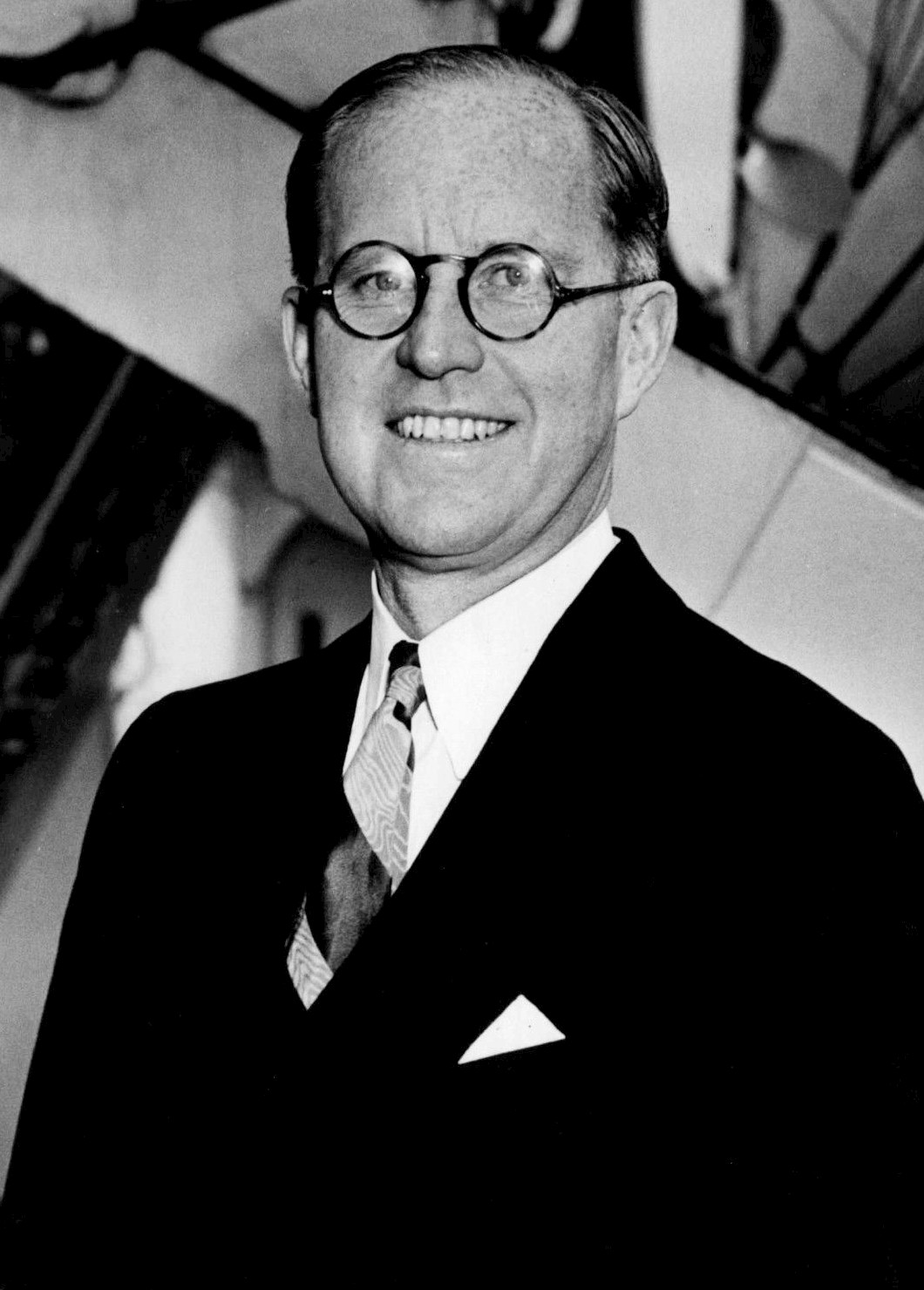 Consequently, Joseph Kennedy recommended that the CIA’s power to engage in covert activities be terminated and that the CIA be strictly limited to collecting intelligence and empowered to do nothing else.
According to Kennedy Jr., “Allen Dulles never forgave him — never forgave my family — for that.”
I wasn’t aware of that fact. I assumed that the war between President Kennedy and the CIA had begun with the CIA’s invasion at the Bay of Pigs in Cuba. The additional information added by Kennedy Jr. places things in a much more fascinating and revealing context.
Upon doing a bit of research on the Internet, I found that the commission that Kennedy Jr. must have been referring to was the President’s Board of Consultants on Foreign Intelligence Activities, which President Eisenhower had established in 1956 through Executive Order 10656. Eisenhower appointed Joseph Kennedy to serve on that commission.
That year was three years after the CIA’s 1953 regime change operation in Iran which destroyed that country’s democratic system. It was two years after the CIA’s regime-change operation in Guatemala that destroyed that country’s democratic system.
Keep in mind that the ostensible reason that the CIA engaged in these regime-change operations was to protect “national security,” which over time has become the most important term in the American political lexicon. Although no one has ever come up with an objective definition for the term, the CIA’s power to address threats to “national security,” including through coups and assassinations, became omnipotent.
Yet, here was Joseph P. Kennedy declaring that the CIA’s power to exercise such powers should be terminated and recommending that the CIA’s power be strictly limited to intelligence gathering.
It is not difficult to imagine how livid CIA Director Dulles and his cohorts must have been at Kennedy. No bureaucrat likes to have his power limited. More important, for Dulles and his cohorts, it would have been clear that if Kennedy got his way, “national security” would be gravely threatened given the Cold War that the United States was engaged in with the Soviet Union, China, Cuba, North Korea, and other communist nations.
Now consider what happened with the Bay of Pigs. The CIA’s plan for a regime-change invasion of Cuba, was conceived under President Eisenhower. Believing that Vice President Nixon would be elected president in 1960, the CIA was quite surprised that Kennedy was elected instead. To ensure that the invasion would go forth anyway, the CIA assured Kennedy that the invasion would succeed without U.S. air support. It was a lie. The CIA assumed that once the invasion was going to go down in defeat at the hands of the communists, Kennedy would have to provide the air support in order to “save face.”
But Kennedy refused to be played by the CIA. When the CIA’s army of Cuban exiles was going down in defeat, the CIA requested the air support, convinced that their plan to manipulate the new president would work. It didn’t. Kennedy refused to provide the air support and the CIA’s invasion went down in defeat.
Now consider what happened after the Bay of Pigs: Knowing that the CIA had played him and double-crossed him, John Kennedy fired Allen Dulles as CIA director, along with his chief deputy, Charles Cabell. He then put his younger brother Bobby Kennedy in charge of monitoring the CIA, which infuriated the CIA.
Now jump ahead to the Cuban Missile Crisis, which Kennedy resolved by promising that the United States would not invade Cuba for a regime-change operation. That necessarily would leave a permanent communist regime in Cuba, something that the CIA steadfastly maintained was a grave threat to “national security”— a much bigger threat, in fact, than the threats supposedly posed by the regimes in Iran in 1953 and Guatemala in 1954.
And then Kennedy did the unforgivable, at least insofar as the CIA was concerned. In his famous Peace Speech at American University in June 1963, he declared an end to the entire Cold War and announced that the United States was going to establish friendly and peaceful relations with the communist world.
Kennedy had thrown the gauntlet down in front of the CIA. It was either going to be his way or the CIA’s way. There was no room for compromise, and both sides knew it.
In the minds of former CIA Director Allen Dulles and the people still at the CIA, what Kennedy was doing was anathema and, even worse, the gravest threat to “national security” the United States had ever faced, a much bigger threat than even that posed by the democratic regimes in Iran and Guatemala. At that point, the CIA’s animosity toward President Kennedy far exceeded the animosity it had borne toward his father, Joseph P. Kennedy, several years before.
Jacob G. Hornberger is founder and president of The Future of Freedom Foundation. He was born and raised in Laredo, Texas, and received his B.A. in economics from Virginia Military Institute and his law degree from the University of Texas. He was a trial attorney for twelve years in Texas. He also was an adjunct professor at the University of Dallas, where he taught law and economics. In 1987, Mr. Hornberger left the practice of law to become director of programs at the Foundation for Economic Education.
Twitter ‘accidentally’ suspends satirical site Babylon Bee after it mocked Kamala Harris and USPS conspiracies
RT | August 17, 2020
Twitter suspended the account of parody news site The Babylon Bee after it mocked Democrat VP candidate Kamala Harris and ‘mail vote suppression’ conspiracies. It was shortly restored amid protests about censorship.
The Bee went dark around 6 pm on Monday. Archives showed that their last tweet was a story about President Donald Trump “riding around in an SUV” smashing mailboxes “to make it impossible for people to mail in their ballots.”
The tweet before that one was about Harris proposing a “housing plan” where “everybody gets free 10’x10’ room and three meals a day” – a clear reference to prison, as Harris had been a prosecutor before getting elected to the Senate.
One conservative commentator pointed out that Twitter spokesman Nick Pacilio was previously the press secretary for Harris’s abortive presidential campaign.
The publication’s editor in chief Kyle Mann shared a screenshot of the email from Twitter, telling him the account was suspended for “violating rules against platform manipulation and spam.”
According to Twitter’s own rules, behavior that “that manipulates or disrupts people’s experience” is out of bounds. The company defines manipulation as “using Twitter to engage in bulk, aggressive, or deceptive activity that misleads others and/or disrupts their experience.”
Before anyone could figure out if that covers censorship of satire, however, the Bee’s account was back up – only with a greatly diminished follower count. The publication was free to share its latest story, about how the Democrats have reversed their position on the USPS after Trump had his face put on all stamps.
The Bee’s stinging mockery of mainstream media news coverage has made it a lot of enemies over the years, including CNN and the “fact checkers” at Snopes, who argued that Americans are too stupid to realize this kind of content is satire.
Mann and the Bee’s defenders have countered that the site clearly labels stories as satire. If the mainstream media reporting has become so ridiculous that the audience can’t tell it apart from ridicule, that’s not the Bee’s problem but their own, they say.
In a message to another Bee editor, Twitter said the account was “flagged as spam by mistake” by “systems” tasked with doing that, without specifying whether it was a computer algorithm or a person that made the call.
Don’t Forget Trump’s Deal with the CIA on the JFK Records
By Jacob G. Hornberger | FFF | August 17, 2020
In April 2018, President Trump issued an order to the National Archives to continue keeping thousands of CIA records relating to the John Kennedy assassination secret from the American people. The new deadline, which could be extended again by either Trump or a President Biden, was set for October 2021.
Since the order was issued early in the Trump regime, no doubt he felt confident that there would be no adverse political consequences flowing from his order. But now that Trump is engaged in a heated race with Joe Biden, he ought to be called upon to explain and justify his order for continued secrecy in an assassination that took place almost six decades ago.
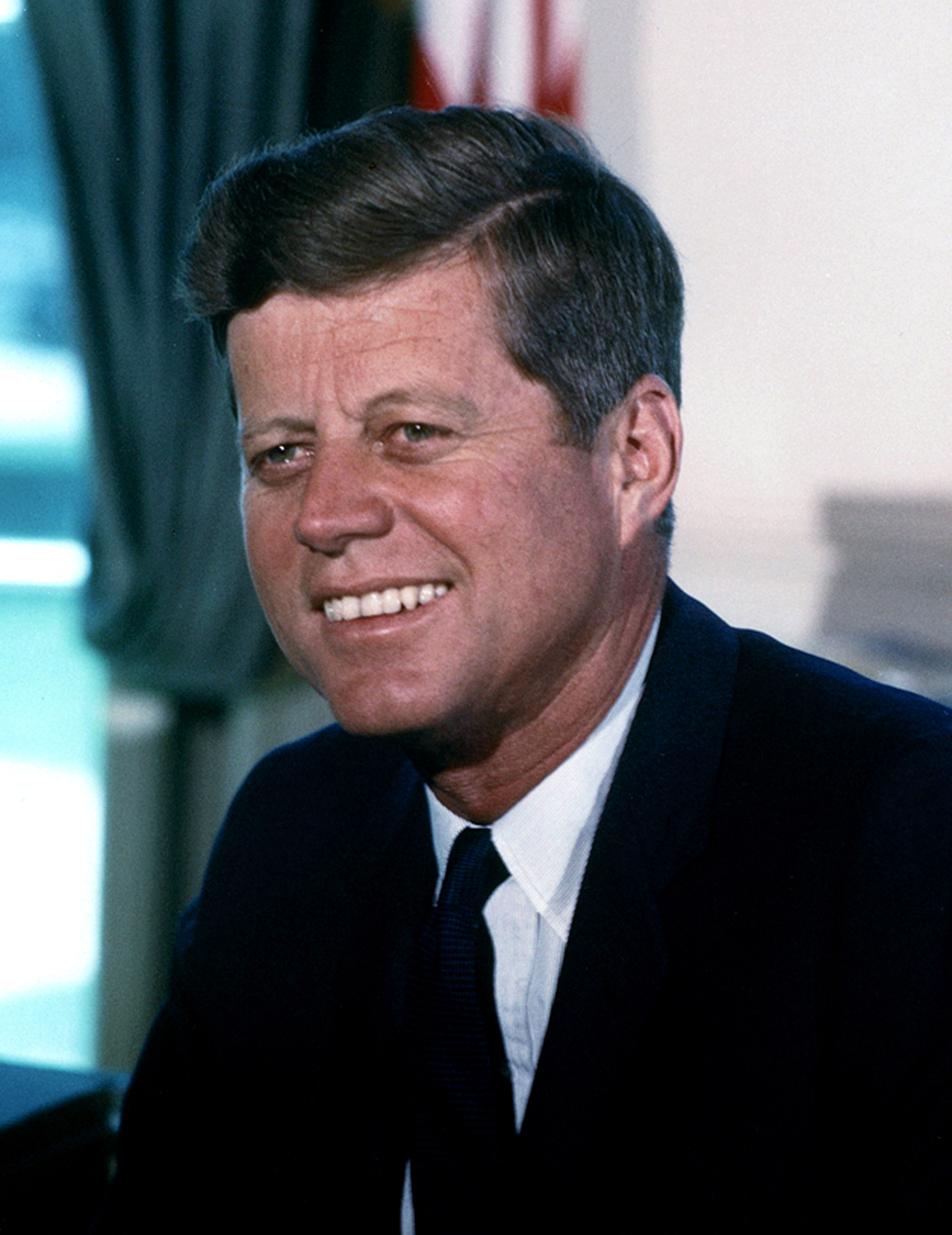 Given the official narrative of the Kennedy assassination, the massive secrecy in which the Pentagon and the CIA engaged after the assassination has never made any sense.
The official narrative says that a lone nut former U.S. Marine communist killed Kennedy with no apparent motive. The most that proponents of the lone-nut theory have ever come up with on a possible motive is that a little man wanted to become a big man by killing a big man. The big problem with that theory is that the accused assassin, Lee Harvey Oswald, denied that he did it and even contended that he was being framed for the crime. If a little man wanted to become a big man by killing a big man, wouldn’t he be acknowledging that he did it and even boasting about it?
IN 1991, Oliver Stone come out with his movie JFK, which posited that Kennedy had been assassinated as part of a U.S. domestic regime-change operation intended to protect “national security” from a president who had declared an end to the Cold War and an intention to establish peaceful and friendly relations with the Soviet Union and the rest of the communist world. (See FFF’s book JFK’s War with the National Security Establishment: Why Kennedy Was Assassinated by Douglas Horne, who served on the staff of the ARRB.)
At the end of JFK, Stone inserted a blurb pointing out the continued secrecy of federal agencies with respect to records relating to the Kennedy assassination some 30 years after the assassination in what had been presented as nothing more than a lone-nut murder of a president.
While the mainstream media was poo-pooing Stone’s movie, the American people were outraged over the continued secrecy. Public pressure caused Congress to enact the JFK Records Collection Act in 1992, which mandated the release of all assassination-related records of federal agencies, including the Pentagon and the CIA.
To enforce the law, Congress called into existence the Assassination Records Review Board. In its four years of operation, the ARRB secured the release of tens of thousands of records relating to the assassination, some of which pointed to the fraudulent nature of the autopsy that the U.S. military conducted on the president’s body. (See my books The Kennedy Autopsy and The Kennedy Autopsy 2.)
There were two strange parts of the JFK Records Act:
1. The law expressly prohibited the ARRB from investigating any aspect of the JFK assassination. Doesn’t that seem to be a rather strange provision? If a matter that had intentionally been kept secret for 30 years needed to be investigated, wouldn’t you think that Congress would want it investigated? The no-investigation provision was strictly enforced on the ARRB staff by the ARRB board of trustees.
2.The law permitted federal agencies to keep their records secret for another 25 years, a provision that the CIA took advantage of. Given that this was supposedly just a lone-nut murder, why was secrecy necessary in the first place? What “national security” concern would there have been? And wouldn’t a lapse of 30 years be sufficient for any such “national security” concern? Why another 25 years, especially since continued secrecy would only serve to buttress Stone’s thesis in JFK?
Back in the 1990s, 25 years must have seemed like a long time away, long enough that the CIA and the Pentagon could rest easy. Anyway, by the time those 25 years expired, there was a good chance that no one would care anyway, especially within the mainstream press.
But when that deadline rolled around in 2018, there were people who still cared. They were demanding that Trump release the records.
That’s not what Trump did. Instead, he granted the CIA’s request for at least another 3 1/2 years of secrecy.
Back in 2018, Trump didn’t have to justify his decision, but now that he’s running for reelection, he should be made to account for what he did by being asked the following questions:
1. How could the release of the CIA’s long-secret JFK-assassination-related records possibly pose a threat to “national security”?
2. Why not order an immediate release of those long-secret records now rather than wait until October of next year?
3. If the CIA has nothing to hide, why is it still hiding it almost 60 years after the Kennedy assassination?
The big problem, of course, is the deep loyalty that the mainstream press, Democrats, Republicans, and even some conservative-oriented libertarians have toward the CIA, not to mention the deep fear of being labeled a “conspiracy theorist.” That is why it is unlikely that Trump will be required to justify his deference to the CIA and its desire for continued secrecy in the Kennedy assassination.
Jacob G. Hornberger is founder and president of The Future of Freedom Foundation. He was born and raised in Laredo, Texas, and received his B.A. in economics from Virginia Military Institute and his law degree from the University of Texas. He was a trial attorney for twelve years in Texas. He also was an adjunct professor at the University of Dallas, where he taught law and economics. In 1987, Mr. Hornberger left the practice of law to become director of programs at the Foundation for Economic Education.
Featured Video
John Mearsheimer: US Already lost Iran war – No off-ramp in sight
or go to
Aletho News Archives – Video-Images
Frlom the Archives
With apparently fabricated nuclear documents, Netanyahu pushed the US towards war with Iran
By Gareth Porter | The Grayzone | April 29, 2020
President Donald Trump scrapped the nuclear deal with Iran and continued to risk war with Iran based on Israeli Prime Minister Benjamin Netanyahu’s claim to have proven definitively that Iran was determined to manufacture nuclear weapons. Netanyahu not only spun Trump but much of the corporate media as well, duping them with the public unveiling of what he claimed was the entire secret Iranian “nuclear archive.”
In early April 2018, Netanyahu briefed Trump privately on the supposed Iranian nuclear archive and secured his promise to leave the Joint Comprehensive Plan of Action (JCPOA). That April 30, Netanyahu took the briefing to the public in a characteristically dramatic live performance in which he claimed Israel’s Mossad intelligence services had stolen Iran’s entire nuclear archive from Tehran. “You may well know that Iran’s leaders repeatedly deny ever pursuing nuclear weapons…” Netanyahu declared. “Well, tonight, I’m here to tell you one thing: Iran lied. Big time.”
However, an investigation of the supposed Iranian nuclear documents by The Grayzone reveals them to be the product of an Israeli disinformation operation that helped trigger the most serious threat of war since the conflict with Iran began nearly four decades ago. This investigation found multiple indications that the story of Mossad’s heist of 50,000 pages of secret nuclear files from Tehran was very likely an elaborate fiction and that the documents were fabricated by the Mossad itself. … continue
Blog Roll
 Aletho News
- US failures in Iran reveal Russia is key to South Korea’s strategic security
- ‘All ports in Persian Gulf will be legitimate targets if Iranian ports are attacked’
- 40 Years of Endless War, Data Point by Data Point
- Department of War Using Palantir AI to Pick Targets in Iran
- American bases do not protect – they attack the peoples of the Persian Gulf
- ‘We’ve Obliterated Their Missiles’
- Syrian president vows ‘absolute support’ to disarm Hezbollah
- Ukraine attacking Russian gas pipeline to stop deliveries to Europe – Defense Ministry
- ‘Heinous crime’: Iran denounces Israeli assassination of 4 Iranian diplomats in Lebanon
- John Mearsheimer: U.S. Already Lost Iran War – No Off-Ramp in Sight
- If Americans Knew
- Israeli strategic plans to “remake the Middle East” from the 1950s and since
- Honoring Gaza’s women who refused to let the world look away
- 97% of victims of war on Iran are Iranian, 98% of victims in war on Gaza are Gazans – Not a ceasefire Day 152
- Early Iran strikes cost $5.6 billion in munitions, Pentagon estimates
- Israel Decided the War, But Trump’s America Fights and Pays the Bill
- Conscientious Objector Group: Phone ‘Ringing Off Hook’ As Huge Mobilization Underway
- U.S. support for Israel continues to plummet, despite media’s best efforts
- Threats and missiles fly, death tolls soar in Iran, Lebanon, Gaza – Not a ceasefire Day 151
- Lebanon: Israel’s White Phosphorous Use Risks Civilian Harm
- Corporate Media Go All Out To Support The US-Israeli War On Iran
- No Tricks Zone
- Destructive Green New Deal: German Energy And Metal Group Warns Of Drastic Crisis
- New Study Documents A 20-Year Pause In Arctic Sea Ice Decline – Driven By Internal Variability
- Wake-up Call: Survey Shows Majority Of Germans Now Favor Postponing Climate Targets!
- Televised! Leading German Political Candidate Tells Schoolchildren CO2 Makes Sun Hotter!
- New Study: A Century Warming Of 1.1°C Is ‘Commonplace’ And ‘Not Unusual’ During This Interglacial
- New Study: ‘Internal Noise’ And Volcanic Forcing Can Trigger 10-15°C Warming Within Decades
- Glaciers Worldwide Are Suddendly Surging, Experts Blame Warming!
- Surprising Discovery: Sahara Is Greening…Billions Of Trees Where Once Thought To Be Barren
- New Research Reaffirms Clouds, Aerosols, And Surface Solar Radiation Are ‘Driving The Climate System’
- Germany: Electric Car Catches Fire At Charging Station, Sets Off Local “Inferno”, Widespread Damage
 Aletho News