How Politicians Make Millions Off Our Corrupt Political System
By Dr. Joseph Mercola | September 16, 2021
Politicians receive very comfortable salaries. Speaker of the House Nancy Pelosi, for instance, earns $223,500 a year, making her the third-highest-paid elected official in the U.S. Yet, since 2004, her wealth has increased from $41 million to nearly $115 million, according to OpenSecrets, which began tracking lawmakers’ personal finances that year.
She’s not alone in her wealth. Personal financial disclosures reveal that more than half of Congress members are millionaires, with a median net worth of just over $1 million. As is often the case, however, the top 10% of the lawmakers in terms of wealth are three times richer than the bottom 90%. Pelosi comes in as number 6 on a list of the wealthiest members of the 116th Congress.
At issue isn’t the fact that politicians are multimillionaires — rather, as noted on a recent Twitter thread by Pulitzer Prize winning journalist Glenn Greenwald, it’s how they made their millions:
“If you think it’s fine and normal that the Speaker of the House’s personal wealth tripled to $115 million ever since financial disclosures were required (2004), that’s fine, but the issue is how that money was made. It was from companies directly affected by her actions.”
Politicians get rich from ‘lucky’ stock trading
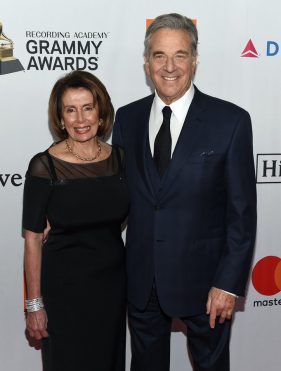 In the last two years, nearly 75% of Pelosi’s stock trades have involved Big Tech stocks, totaling over $33 million in trading. “That has happened as major legislation is pending before the House, controlled by the committees Pelosi oversees, which could radically reshape the industry and laws that govern the very companies in which she and her husband most aggressively trade,” Greenwald wrote in a blog.
Pelosi’s most traded company was Apple, accounting for 17.7% of her trades. But unlike most people buying and selling Apple stock, Pelosi had the privilege of speaking privately with Apple CEO Tim Cook on at least one occasion to discuss the company’s standing and how it could be affected by pending bills relating to Silicon Valley reforms.
The call in question occurred just days after antitrust reform legislation was introduced. Big Tech pushed back, and Cook called Pelosi directly to voice his concerns. Pelosi, according to The New York Times, then asked him which measures he specifically objected to. Greenwald reported on the blatant conflict of interest:
“Sources who refused to be identified tried to convince the Times’ reporters that ‘Ms. Pelosi pushed back on Mr. Cook’s concerns about the bills.’ But in doing so, they confirmed the rather crucial fact that Pelosi was having personal, private conversations with the CEO of a company in which she and her husband were heavily invested and off of which they were making millions of dollars in personal wealth.
“And Pelosi, according to the report, asked Cook what changes were needed to avoid harming Apple and other Silicon Valley giants.”
Trading stocks in companies affected by pending legislation
Greenwald also revealed that Pelosi’s five most-traded stocks in the last two years — Apple, Microsoft, Facebook, Amazon and Google — were those that stood to be most affected by pending legislation, and not just any legislation, but legislation that she was working to negotiate and work through Congress.
Four of the companies — Apple, Amazon, Facebook and Google — were directly identified by the House Antitrust Subcommittee as being monopolies, making their futures heavily dependent on the pending legislation. According to Greenwald:
“Beyond that, Google — one of the companies in which the Pelosis’ stock trades have made millions — is one of the top five donors to the House Speaker. The wealthy couple buys and sells in Google stock, making millions. She works on bills that directly affect the future trajectory of Google. And they lavish her campaign coffers with cash, a key source of her entrenched power.”
Meanwhile, Pelosi’s husband, Paul, purchased risky options in Alphabet, the parent company of Google, in February 2020, which he sold in June, netting more than $5 million in profits. The purchase was made, Greenwald wrote:
“… right before the market began plunging due to the COVID epidemic and right before the House, led by his wife, was set to introduce new legislation to regulate those same tech companies. Yet even as the prices in several of those companies plummeted, Paul Pelosi held onto them, only to sell them last June at a massive profit.”
He also cited two other “disturbing incidents” in which Paul Pelosi had impeccable timing with his investment decisions, including exercising nearly $2 million worth of Microsoft call options within two weeks of a Microsoft contract to supply the U.S. Army with augmented reality headsets. The other incident involved the purchase of about $1 million in Tesla stock after calls made prior to the government announcing incentives it would offer to promote the shift toward electric vehicles.
“In response to media inquiries,” Greenwald reported, “Pelosi denied that she is involved in or even has knowledge of her husband’s stock trading. There is, of course, no way to confirm or disprove that, but what is clear is that the vast wealth generated by those stock trades in companies Pelosi greatly affects — and about which she clearly has non-public information — directly enriches Pelosi herself.”
Suspicious COVID-related trading
Not every lawmaker had filed annual financial disclosures at the time of OpenSecrets’ latest report, including Sen. Kelly Loeffler, (R-Ga.), who has an estimated worth of over $500 million.
She and her husband, New York Stock Exchange chief executive Jeff Sprecher, came under fire for suspicious stock trades worth between $1.2 million and $3.1 million that occurred immediately after a “closed-door coronavirus briefing in late January” 2020. Among them:
- Buying stock in an online travel booking site in February 2020, then selling it four days later, just before a ban on flights from Europe was publicly announced.
- Purchasing stock in Citrix, which sells GoToMeeting teleworking software.
Loeffler denied using confidential information from her Senate duties to make a private profit but announced in April 2020 that she and her husband were liquidating their stock holdings and “moving into exchange-traded funds and mutual funds.” In other suspicious instances:
- Sen. Richard Burr, (R-N.C.), chairman of the Senate Intelligence Committee, who receives frequent briefings about potential U.S. threats, also dumped stock, including in hotel companies, worth up to $1.7 million in late January 2020.
- “As Intel chairman,” Burr “got private briefings about coronavirus weeks ago,” Rep. Alexandria Ocasio-Cortez, (D-N.Y.), tweeted at the time. “Burr knew how bad it would be. He told the truth to his wealthy donors while assuring the public that we were fine.” Sen. Dianne Feinstein, (D-Calif.), and Sen. James Inhofe, (R-Okla.), also sold stock after Intelligence Committee briefings.
How is this legal?
Corruption runs deep in politics, with Big Tech and Big Pharma giving campaign money to politicians who in turn receive non-public information about the corporations that can be used to enrich their personal stock portfolios. The lawmakers then have influence over legislation that affects the companies in which they’re personally invested.
Politicians are supposed to be performing a public service, but once they’re out of the public eye, many go on to serve as lobbyists or work in the corporate world. This means that during their tenure, they don’t want to close doors that may help them once they’re no longer in politics.
The system is such that most politicians aren’t fighting for the public but, rather, are looking out for their own self-interest and wealth accumulation. Case in point: There were 1,502 pharmaceutical lobbyists in 2020, 63.91% of whom were former government employees.
A revolving door, in which government employees and former members of Congress take jobs with lobbying firms, is common among lobbyists, and the reverse also occurs, in which people from the private sector end up in government positions. How is this legal? As Greenwald explained, unless insider trading can be proven, this type of “lucky” trading that is building the wealth of numerous politicians will continue:
“While the trades cannot be declared illegal unless it can be proven that either Pelosi acted on non-public information — in which case it would be the felony of insider trading — the ethical stench is obvious.
“Just as was true when numerous Senators from both parties sold stocks in COVID-related industries before the pandemic began — raising questions about whether they had advance knowledge of what was coming through classified briefings — watching Nancy Pelosi’s wealth skyrocket by millions of dollars from trades in the very companies she is directly overseeing creates a sleazy appearance, to put that mildly.”
Politicians are in good company, as top health officials also cash in on stock options tied to the companies they oversee. For instance, Dr. Julie Gerberding — director of the U.S. Centers for Disease Control and Prevention from 2002 until 2009, who after leaving the CDC became president of Merck’s vaccine division in January 2010 — sold half her Merck stock options for $9.11 million in January 2020.
In March 2020, a group of legislators introduced the Ban Conflicted Trading Act to “prohibit members of Congress and senior congressional staff from abusing their positions for personal financial gain through trading individual stocks and investments while in office or serving on corporate boards.”
“Members of Congress should not be allowed to buy and sell individual stock,” said Ocasio-Cortez. “We are here to serve the public, not to profiteer.” Senator Jeff Merkley, who introduced the Act to the Senate, added:
“Buying and selling stocks while making decisions that affect the stock’s value is inherently a conflict of interest. At best, it can seriously degrade public trust — as we are seeing today. At worst, it’s a blatant abuse of power.”
Law Enforcement Agencies Are Now Buying Personal Cell Phone Data From Commercial Brokers Without Warrants
By Tyler Durden | Zero Hedge | September 16, 2021
A meaningful debate is starting to brew about law enforcement’s use of commercially available cell phone data for purposes of criminal investigations across the country.
The data, called open-source intelligence by those who advocate for it, used to only be prepared and sold by brokers, generally to marketers and advertisers.
Information is sent daily from “phones, cars and other connected devices” to commercial brokers, The Wall Street Journal wrote this week. That data is then widely used in “finance, real-estate planning and advertising”.
But recently, these brokers have created products specifically for law enforcement. The products have “increasingly been used to screen airline passengers, find and track criminal suspects, and enforce immigration and counterterrorism laws,” according to the Wall Street Journal.
Agencies that are using the data, or considering use of the data, include the Department of Homeland Security, the Internal Revenue Service and the FBI.
Skeptics of the practice see it as akin to warrantless searches, with the Journal characterizing the practice as an “end run around the constitutional guarantees against unlawful warrantless searches”.
Legislators don’t seem to be amused about the practice. Sen. Ron Wyden and Sen. Rand Paul have, in response, proposed a bill called “the Fourth Amendment Is Not for Sale Act” that will require government entities to get a court order before buying U.S. cellphone data.
Jennifer Granick, the surveillance and cybersecurity counsel for the Speech, Privacy, and Technology Project of the American Civil Liberties Union, commented: “Police and prosecutors never brag when they misuse capabilities like this; we only hear about the successes they want us to know about.”
The ACLU has supported Wyden and Paul’s proposed bill. “Law-enforcement agencies should be overseen by courts when trying to obtain information on Americans—even if it is available for purchase,” the ACLU has argued.
Meanwhile, the main governing law, the Electronic Communications Privacy act, already allows companies to disclose user data in a situation where “the provider reasonably believes than an emergency involving immediate danger of death or serious physical injury to any person justifies disclosure of the information.”
You can read the Wall Street Journal’s full write up here.
More Evidence Emerges That Long Covid Is A Load Of Bollox
By Richie Allen | September 17, 2021
The Office for National Statistics (ONS) has suggested that more than half of those who believe that they have so-called long covid, may just be suffering from normal bouts of ill health.
The ONS looked at 27,000 people who tested positive for covid. Three different methods were used to estimate the prevalence of long covid. One analysis found that 5 per cent reported at least one symptom 12 to 16 weeks after their infection.
But, the ONS found that 3.4 per cent of people who didn’t have covid reported the same long covid symptoms.
According to The Telegraph :
Kevin McConway, emeritus professor of applied statistics at The Open University, said: “That’s not all that much less than the 5.0 per cent for the infected people, which does show that having one or more of these symptoms isn’t uncommon regardless of Covid-19.”
Long Covid symptoms are fever, headache, muscle ache, weakness/tiredness, nausea/vomiting, abdominal pain, diarrhoea, sore throat, cough, shortness of breath, loss of taste and loss of smell.
The ONS said however, that these symptoms are common in the general population.
The long covid fairy-tale is coming apart at the seams. Earlier this month, University College London produced a study that concluded that the danger of long covid to children had been wildly exaggerated.
Dr Michael Absoud, honorary reader at the department of women and children’s health at King’s College London told The Telegraph :
“The ONS are to be congratulated for engaging with clinicians and scientists to review their methodology and provide updated estimates on post-Covid symptoms. The ONS first published the approach in April 2021, and reported a 12-week prevalence of long Covid in 14 per cent. This has now been revised down to 3 per cent in the latest estimate.”
The ONS and University College London are to be congratulated for doing their jobs. Long covid was invented to encourage uptake of covid jabs. Covid itself (if it exists) is a mild respiratory illness, dangerous only to the very elderly and those with underlying health conditions.
Knowing that covid itself wasn’t enough to send folks rushing to the jabbatoirs, they needed to come up with something else to convince them that covid was far more serious. Long covid was perfect. They attributed so many common symptoms to it, that anyone at anytime could claim to be suffering from it.
I called it bollox last year. Scientists are calling it bollox today.
Facebook censors German anti-lockdown movement under new rules to prevent users from organizing & amplifying ‘harmful’ ideas
RT | September 17, 2021
No longer content to go just after bots and trolls, Facebook has established a new category of “social harm” posted by genuine users, starting with purging pages and Instagram accounts of a German anti-lockdown group Querdenken.
Facebook’s head of security policy Nathaniel Gleicher announced the action on Thursday, saying that his team has been working for months to “expand our network disruption efforts so we can address threats that come from groups of authentic accounts coordinating on our platform to cause social harm.”
The closest his post comes to defining “social harm” is content that “calls for violence or to discredit medical science.”
Gleicher says his group has removed a network of Facebook and Instagram accounts, pages and groups “for engaging in coordinated efforts to repeatedly violate our Community Standards, including posting harmful health misinformation, hate speech and incitement to violence.”
Sharing their domains on Facebook and Instagram has been blocked as well, he added, but noted that “we aren’t banning all Querdenken content.”
The Querdenken – German for “lateral thinking” – movement is “linked to off-platform violence and other social harms,” Gleicher wrote, adding that the content posted on the banned pages “primarily focused on promoting the conspiracy that the German government’s [Covid-19] restrictions are part of a larger plan to strip citizens of their freedoms and basic rights.”
According to Facebook, the group “typically portrayed violence as the way to overturn the pandemic-related government measures limiting personal freedoms.” The group “engaged in physical violence against journalists, police and medical practitioners in Germany,” Gleicher claimed citing “public reporting.”
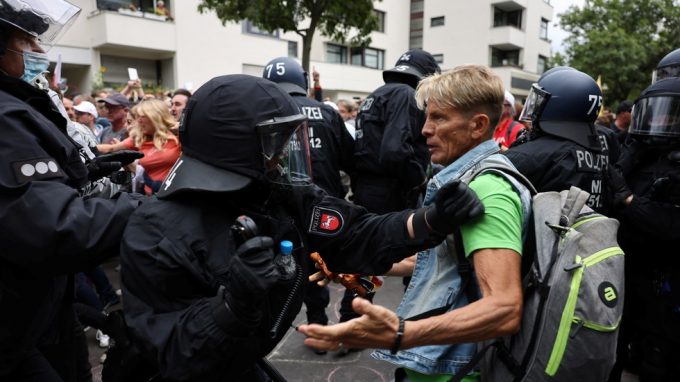
Police officers scuffle with a demonstrator during a protest in Berlin, Germany, on August 1, 2021. © Reuters / Christian Mang
There have been multiple mass protests against coronavirus lockdowns in Germany, with the authorities denouncing them as the work of the “far-right,” neo-Nazis and other extremists. While the UN special rapporteur on torture Nils Melzer raised concerns about police brutality in dispersing the demonstrations, last month, Berlin police responded that violence is “still part of our legal system.”
“Direct enforcement is violence. Violence harms. Violence hurts. Violence looks violent,” Berlin police spokesperson Thilo Cablitz told DPA last month.
Facebook has cracked down hard on “debunked” and “false” claims about the Covid-19 pandemic, loosely defined as anything that contradicts the guidance by the World Health Organization or national health authorities. It stopped censoring the claim that the SARS-CoV-2 virus may have escaped from a lab in Wuhan, China back in May, however, citing “new facts and trends” that emerged.
Experts Accuse CDC of ‘Cherry-Picking’ Data on Vaccine Immunity to Support Political Narrative
By Megan Redshaw | The Defender | September 16, 2021
There is now a growing body of literature showing natural immunity not only confers robust, durable and high-level protection against COVID, but also provides better protection than vaccine-induced immunity.
Yet, the Centers for Disease Control and Prevention (CDC) is ignoring the long-standing science of natural immunity when it comes to COVID — while acknowledging the benefits of natural immunity for other diseases — according to an expert who accused the agency of providing contradictory, ‘illogical’ COVID messaging.
Dr. Marty Makary, professor of surgery and health policy at John Hopkins University, on Tuesday accused the CDC of “cherry-picking” data and manipulating public health guidance surrounding vaccines and natural immunity to support a political narrative.
Makary joined the “Clay Travis and Buck Sexton Show” to discuss the clinical impact of natural immunity as it compares to the vaccine.
During the show, Travis pointed out the CDC’s guidance on COVID is inconsistent with its vaccine recommendations for other contagious viruses, like chickenpox.
The CDC’s current guidance for chickenpox, for example, does not encourage those who have contracted it to vaccinate themselves against the virus. The CDC only recommends two doses of chickenpox vaccine for children, adolescents and adults who have never had chickenpox.
“So why doesn’t the CDC say the same thing about those of us who already had COVID?” Travis asked.
Makary called the conflicting guidance “absolutely illogical,” and accused the agency of “ignoring natural immunity.”
“It doesn’t make sense with what they’re putting out on chickenpox,” Makary said. It’s like they have adopted the immune system for one virus, but not for another virus, he said, and “cherry-picking the data to support whatever they’ve already decided.”
“They salami slice it — something we call fishing in statistical techniques,” Makary said. “That is when you look for a tiny sliver of data that supports what you already believe.”
According to a Sept. 13 article in The BMJ, when the COVID vaccine rollout began in mid-December 2020, more than a quarter of Americans — 91 million — had been infected with SARS-CoV-2, according to CDC estimates.
As of this May, that proportion had risen to more than a third of the population, including 44% of adults between the ages of 18 and 59.
However, the CDC instructed everyone, regardless of previous infection, to get fully vaccinated as soon as they were eligible. On its website, the agency in January justified its guidance by stating natural immunity “varies from person to person” and “experts do not yet know how long someone is protected.
By June, a Kaiser Family Foundation survey found 57% of those previously infected got vaccinated.
Dr. Anthony Fauci, President Biden’s chief medical advisor, was asked Sept. 10 by CNN’s Dr. Sanjay Gupta whether people who have tested positive for the virus should still get a vaccine.
Gupta cited recent data from Israel suggesting people who recovered from COVID had better protection and a lower risk of contracting the Delta variant, compared to those with Pfizer-BioNTech’s two-dose vaccine-induced immunity.
“I don’t have a really firm answer for you on that,” Fauci said. “That’s something we’re going to have to discuss regarding the durability of the response.”
The research from Israel did not address the durability that natural immunity offers. Fauci said it is possible for a person to recover from COVID and develop natural immunity, but that protection might not last for nearly as long as the protection provided by the vaccine.
“I think that is something that we need to sit down and discuss seriously,” Fauci said.
Numerous studies, however, have shown people who recovered from COVID have robust, durable and long-lasting immunity.
Evidence of natural immunity
As early as November 2020, important studies showed memory B cells and memory T cells formed in response to natural infection — and memory cells respond by producing antibodies to variants at hand.
A study funded by the National Institutes of Health and conducted by the La Jolla Institute for Immunology, found “durable immune responses” in 95% of the 200 participants up to eight months after infection.
One of the largest studies to date, published in Science in February 2021, found that although antibodies declined over eight months, memory B cells increased over time, and the half-life of memory CD8+ and CD4+ T cells suggests a steady presence.
In a study by New York University published May 3, the authors studied the contrast between vaccine immunity and immunity from prior infection as it relates to stimulating the innate T-cell immunity — which is more durable than adaptive immunity through antibodies alone.
The authors concluded:
“In COVID-19 patients, immune responses were characterized by a highly augmented interferon response which was largely absent in vaccine recipients. Increased interferon signaling likely contributed to the observed dramatic upregulation of cytotoxic genes in the peripheral T cells and innate-like lymphocytes in patients but not in immunized subjects.”
The study further noted:
“Analysis of B and T cell receptor repertoires revealed that while the majority of clonal B and T cells in COVID-19 patients were effector cells, in vaccine recipients, clonally expanded cells were primarily circulating memory cells.”
This means natural immunity conveys much more innate immunity, while the vaccine mainly stimulates adaptive immunity — as effector cells trigger an innate response that is quicker and more durable, whereas memory response requires an adaptive mode that is slower to respond.
According to a longitudinal analysis published July 14 in Cell Medicine, most recovered COVID patients produced durable antibodies, memory B cells and durable polyfunctional CD4 and CD8 T cells –– which target multiple parts of the virus.
“Taken together, these results suggest broad and effective immunity may persist long-term in recovered COVID-19 patients,” the authors said.
In other words, unlike with the vaccines, no boosters are required to assist natural immunity.
In a May 12 study conducted by the University of California, researchers found natural immunity conveyed stronger immunity than the vaccine.
The researchers wrote:
“In infection-naïve individuals, the second [vaccine] dose boosted the quantity but not quality of the T cell response, while in convalescents the second dose helped neither. Spike-specific T cells from convalescent vaccinees differed strikingly from those of infection-naïve vaccinees, with phenotypic features suggesting superior long-term persistence and ability to home to the respiratory tract including the nasopharynx.”
According to The BMJ, studies in Qatar, England, Israel and the U.S. have found infection rates at equally low levels among people who are fully vaccinated and those who have previously had COVID.
As The Defender reported in June, the Cleveland Clinic surveyed more than 50,000 employees to compare four groups based on history of SARS-CoV-2 infection and vaccination status.
Not one of more than 1,300 unvaccinated employees who had been previously infected tested positive during the five months of the study. Researchers concluded the cohort “are unlikely to benefit from COVID-19 vaccination.”
In the largest real-world observational study comparing natural immunity gained through previous SARS-CoV-2 infection to vaccine-induced immunity afforded by the Pfizer vaccine, researchers in Israel found people who recovered from COVID were much less likely than never-infected, vaccinated people to get Delta, develop symptoms or be hospitalized.
“Our results question the need to vaccinate previously infected individuals,” they concluded.
Experts speak out on natural immunity
In a recent letter to the editor of The BMJ, Dr. Manish Joshi, a pulmonologist at UAMS Health; Dr. Thaddeus Bartter, a pulmonologist at UAMS Health; and Anita Joshi, BDS, MPH, said data demonstrate both adequate and long-lasting protection in those who have recovered from COVID, while the duration of vaccine-induced immunity is not fully known.
The authors of the letter said the “SIREN” study in the Lancet addressed the relationships between seropositivity in people with previous COVID infection and subsequent risk of severe acute respiratory syndrome due to SARS-CoV-2 infection over the subsequent seven to 12 months.
The study found prior infection decreased risk of symptomatic reinfection by 93%.
A large cohort study published in JAMA Internal Medicine which looked at 3.2 million U.S. patients, showed the risk of infection was significantly lower (0.3%) in seropositive patients compared to those who were seronegative (3%).
A recent study published in May in the journal Nature demonstrated the presence of long-lived memory immune cells in those who have recovered from COVID-19 suggesting durable and long-lasting immunity.
“This implies a prolonged (perhaps years) capacity to respond to new infection with new antibodies,” the authors wrote.
© [Sept. 2021] Children’s Health Defense, Inc. This work is reproduced and distributed with the permission of Children’s Health Defense, Inc. Want to learn more from Children’s Health Defense? Sign up for free news and updates from Robert F. Kennedy, Jr. and the Children’s Health Defense. Your donation will help to support us in our efforts.
Florida & Texas fume as Biden seizes and RATIONS supply of life-saving Covid treatments
RT | September 16, 2021
Seven southern US states, mostly led by Republican governors, say they are now facing shortages of monoclonal antibody treatments for Covid-19 after the federal government took over the distribution, citing the need for “equity.”
Monoclonal antibodies (MAB) are lab-created proteins that help those already infected deal with the virus. They have been intensively deployed in Alabama, Georgia, Florida, Louisiana, Mississippi, Tennessee and Texas – states dealing with the recent surge of Delta-variant cases. With the exception of Louisiana, they are all run by Republicans.
On Wednesday, the Biden administration announced it would take over the distribution of these treatments using the Defense Production Act and would be centralizing them under the Department of Health and Human Services (HHS). A HHS spokesperson said this was being done to avoid shortages, as the seven states account for 70% of all orders.
“Given this reality, we must work to ensure our supply of these life-saving therapies remains available for all states and territories, not just some,” the spokesperson told CNN.
“HHS will determine the amount of product each state and territory receives on a weekly basis. State and territorial health departments will subsequently identify sites that will receive product and how much,” the spokesperson said. “This system will help maintain equitable distribution, both geographically and temporally, across the country – providing states and territories with consistent, fairly-distributed supply over the coming weeks.”
Florida Governor Ron DeSantis, a Republican who has clashed with President Joe Biden on Covid policies – from mask mandates to compulsory vaccination – said that the move has resulted in cutting the supply to his state by more than 50%.
The federal government has allocated fewer than 31,000 doses to Florida this week, while the average need for hospitals and state clinics is 72,000, his office said.
DeSantis said on Thursday that he has reached out to GlaxoSmithKline, another pharmaceutical company, to purchase their MAB treatment in order to make up the shortfall.
In Texas, the Biden administration told the state “to reduce its use of the therapeutic treatment that has literally been saving lives and reducing hospitalizations,” Mark Keough, a judge in charge of Montgomery County, just north of Houston, said in a Facebook post on Tuesday.
“The manufacturer has confirmed supplies are ample but due to the Defense Production Act, the White House and it’s agencies are the only entities who can purchase and distribute this treatment,” Keough added.
“So, less than a week after the president tells us his patience is wearing thin and he is mandating vaccines to millions of Americans, his administration limits and all but removes a non-controversial and highly successful treatment from our war chest of combating this virus,” he said.
One DeSantis aide said that the HHS hasn’t adequately explained its move, or given a warning.
“They had a vague statement about ‘equity’ but sorry that doesn’t cut it,” the aide told Real Clear Politics. “No explanation of how the allocation was determined. No explanation of why it’s only Florida and a few other red states being restricted. No warning.”
“How is it equitable to only send treatment for HALF the Floridians who need it, & NO state sites in Alabama?” DeSantis’s press secretary Christina Pushaw asked on Twitter.
She also pointed out that, just weeks ago, Democrats and their allies in the corporate press were claiming that MAB treatments were a scam to enrich a DeSantis donor – prompting a war of words – but have now suddenly pivoted to claiming that Florida is using too many doses.
Some pundits are going so far as to speculate that the move is part of a “civil war” in the US, since six out of seven states hardest-hit by HHS rationing are run by Republicans, and incumbent Donald Trump won all of them in the 2020 election.
And now the feds are taking over the distribution of monocloncal antibodies
By Meryl Nass, MD | September 16, 2021
From the WaPo we learn there is a shortage of monoclonal antibodies, so the feds will take over distribution. Hmm. We don’t know anything about long-term side effects of monoclonals.
Monoclonal antibodies are an effective and very expensive product if used in the first week of illness–just like hydroxychloroquine, which the feds (and most states) have restricted. Will this move restrict monoclonals too? Why are the feds buying monoclonals to dole out for free but not letting us have HCQ and ivermectin? Does it have anything to do with the fact they are injected?
And of course the feds defend the move with the “equity” argument.
The Biden administration moved this week to stave off shortages of monoclonal antibodies, taking over distribution of the critical covid-19 therapy and purchasing 1.4 million additional doses…
“HHS will determine the amount of product each state and territory receives on a weekly basis,” an HHS spokesman said. “State and territorial health departments will subsequently identify sites that will receive product and how much.” The official spoke on the condition of anonymity to describe new procedures that are still being explained to communities throughout the country.
“This system will help maintain equitable distribution, both geographically and temporally, across the country, providing states and territories with consistent, fairly distributed supply over the coming weeks,” he added.
The Escape and Capture of Zakaria Zubeidi

By Israel Shamir | Unz Review | September 16, 2021
Heroes are rare; they are tragic and inspiring at the same time. Such a real-life hero is Zakaria Zubeidi, 45, from Jenin in Palestine. A man of brawn and brain, of sword and harp, he was an al Aqsa Brigade commander as well as the director of the Freedom Theatre. Years ago, the Sunday Times called him ‘one of Israel’s most wanted and implacable enemies’. A cat of nine lives, he survived many Israeli assassination attempts; he had been in and out of jail many times; he got his first Israeli bullet at 13; his film premiere at 14.
A few days ago, he staged an audacious escape from Israel’s high security prison, together with five other convicts. They dug a 20 yard-long tunnel with their spoons, just like the Count of Monte Cristo, and emerged outside the walls, squeezing through a narrow communication channel. This brave, nay impossible feat encouraged the captive Palestinians and gave them a second wind when they were exhausted and desperate. The people in the Holy Land and the large Palestinian diaspora held its collective breath following their escape and prayed for them to reach safety.

It is normal for humans to empathise with fugitives, rather than pursuers. Young readers of Uncle Tom’s Cabin thus followed the plight of Eliza, child in tow, crossing the frozen Ohio River from bondage to freedom, escaping the murderous dogs and slave catchers. Alas, Zakaria never reached the safe shore. In the Dixie of the 1830s, there were courageous and noble white people who harboured the runaway black slaves. Germans and Russians, Poles and Frenchmen provided refuge for the Jews that escaped from the camps. In Israel 2021, not a single Jew offered the fugitives water and food nor helped a Palestinian runaway; everyone who saw them immediately informed police, said the authorities. In a few days, four starved prisoners were hunted down, beaten up and taken back to jail; two are still at large.
I saw on Israeli TV news four shackled prisoners in the court. Zakaria had been badly beaten. His capturers broke his ribs and jaw, while he was already handcuffed. His face was grim and stern like that of a suffering Christ before the crooked court of Synedrion. It was a sad sight, the return of the hero to the dark dungeons of the Jewish state. But then, he was born and brought up under the occupation. His story is the story of the cheated generation that came to the fore after the great betrayal.
In 1993, the State of Israel and the PLO signed the Oslo accords; this agreement certified by handshake on the White House lawn promised Palestinians full independence after five years of transition. The Jews reneged on the deal. While individual Jews can be honest and honourable; as a collective they are extremely untrustworthy. It comes from a Jewish superiority complex, of a refusal to obey the rules established for lesser species; of feeling they can do whatever they find expedient. Fair play is not a Jewish idea at all.
The Palestinians, swindled by Israel, had nobody to turn to; they responded by initiating the Second Intifada, the rising taking place in 2000. It was the pivotal event for Zakaria’s generation; for me, too. I was radicalised by the Intifada, by the dishonesty and cruelty of the Jewish state and by the courage of Palestinian resisters. In 2001, I began writing in English to an international audience; next year, in 2002, I entered the church, parting with Jewry.
The Jews became radicalised, too: The support of US Jewry for the 9/11 narrative and for the War on Terror can’t be understood outside of this context: the Oslo accords, reneging on Oslo, the Intifada and 9/11 are links of one chain. Before 9/11, Jews were condemned for reneging on Oslo and for the bloody suppression of the Intifada. After 9/11 they could smash the Palestinians with all their might. For young men like Zakaria even survival was problematic.
Zakaria deserves a Plutarch to write up his life, but I’ll do what I can, until a Plutarch comes along. Zakaria was born and grew up in the Jenin Refugee Camp, a place where the expelled Palestinians from Haifa’s Carmel were corralled in 1948 by the victorious Jews. His father was an English language teacher; he died rather young, leaving his widow and their eight children to survive.
Zakaria was 11, when the First Intifada began. It was a spontaneous protest, caused by the enclosure of common Palestinian lands and their transfer to Jewish settlers. Jewish lawyers, predominantly ladies of liberal persuasion, applied the English 16th century idea of ‘enclosure of the commons’ and claimed all commonly held lands as belonging to Jews only. In England this policy caused ‘enclosure riots’; as it did in Palestine. In response to Jewish land grabbing, unarmed peasants took the nearest handy stone and threw it at Jewish settlers’ cars. The Jews replied with fire. Hundreds of unarmed Palestinians were shot and killed. The children suffered most.
Instead of being cowed, the camp boys like Zakaria took the danger in their stride. The daredevils would throw stones at invading jeeps like the 13-year old boy, Farris Odeh did. Farris was the Palestinian kid we saw throwing stones at Israeli tanks with the nonchalance of a village boy chasing away a ferocious dog. It was a dangerous game: the famous picture of Farris was taken on October 29, and a week later, on 8th of November, a Jewish sniper murdered him in cold blood. Boys like Zakaria lived dangerously in the camp. The Israeli army treated refugee camps as their hunting ground. They would drive in on their Jeeps and shoot around, terrorising children and grown ups. Chris Hedges, of the New York Times, wrote of their modus operandi in his Gaza Diary, published in Harper’s magazine: “the refugee camp … is still and peaceful. Children play with scrap-paper kites and ragged soccer balls. Suddenly two IDF jeeps with loudspeakers pull up. They immediately taunt the boys with obscenities, luring them up to the fence. Then [a] percussion grenade explodes. The boys, most no more than 10 or 11 years old, scatter, running clumsily across the heavy sand. They descend out of sight behind a sandbank in front of me… The soldiers shoot; the bullets from the M-16s tumble end over end through the children’s slight bodies. Children have been shot in other conflicts I have covered but I have never before watched soldiers entice children like mice into a trap and murder them for sport.”

Karni crossing point between Israel and the Gaza Strip, on the outskirts of Gaza city, Oct. 29, 2000. (AP Photo/Laurent Rebours)
In similar circumstances, 13-year-old Zakaria had been shot by a Jewish soldier. The bullet entered his leg; he spent six months in hospital and went through multiple operations. He remains lame to this very day. The soldier has never been tried or punished for shooting a child, but a Jewish soldier is practically never tried or punished for wounding or murdering a Palestinian child, and there are thousands of murdered children.
As Zakaria recuperated, his mother (who was a great believer in peaceful coexistence with Israeli Jews) invited a new theatre company to do rehearsals at her home. She gave them the upper floor of their house, fed them and helped them. It was a children’s theatre, performed by camp children and for camp children, organized by an unusual person, Arna Mer. This Jewish communist lady “betrayed her people” (as many Jews were prone to say) and married an Arab, an Orthodox Christian Palestinian Arab, also a communist, even a prominent member of Communist Party. They called their son Sputnik, as a sign of their love for the Soviet Union, the beacon of light for such liberation movements. Eventually Sputnik found his name too exotic, and changed it to ‘Juliano Mer’. He became a friend of Zakaria. Together they acted on stage; the company consisted of six or eight children. The theatre was called The Stone Theatre. It was around 1988-89, at the height of the First Intifada, the rising that convinced Israel to seek an accommodation and enter Oslo accords with Palestinian leadership.
Years later, Juliano Mer made a film Arna’s Children, based on their memories and video archive. It turned out that the majority of the young actors were killed by Jews by that time. Zakaria’s mother was also killed by a Jewish sniper, shot through the window, while she was at home. One hour later, the same sniper shot her elder son and killed him. Their house, which had served as a home for the Stone Theatre, was bulldozed together with many other homes in Jenin.
Jenin was the place for a Jewish onslaught on the Palestinians in 2002. Recently the Israeli court banned Jenin, Jenin, a film about these fateful events, but you still can find it on Bitchute. Zakaria was a great fighter; he became the commander of Jenin’s Al Aqsa Brigade. He survived four assassination attempts by the Israelis: in 2004, they murdered five Palestinians, including a 14-year-old child, while targeting a vehicle suspected of carrying Zakaria. On another occasion they killed 9 Palestinians, but Zakaria escaped.
Zakaria became widely known and respected in the West Bank and even in Israel. He was befriended by Yasser Arafat; he supported the election of Mahmud Abbas, Arafat’s successor. An Israeli woman, Tali Fahima, came to Jenin to support Zakaria and serve as his human shield. Israel arrested her in 2004 and she spent three years in prison for ‘aiding a terrorist organization’. After her release, she converted to Islam having become totally disillusioned by the massive Jewish support for the bloody punitive actions against Palestinians. Zakaria, who spoke perfect Hebrew and had many Israeli friends, was also disappointed by the Israeli Jewish Left. None defended him during these terrible years, despite all the efforts of his late mother to build relations with Israelis.
However, the uprising was defeated. And Zakaria continued his struggle by other means, establishing, together with Juliano Mer, his childhood friend, a new and bigger theatre company, the Freedom Theatre of Jenin. It is still around, and even prospers, though Zakaria is now in jail, and Juliano Mer was killed by unknown assassins. In 2007, Zakaria accepted the amnesty offered by Israelis to the Fatah fighters, though by its conditions he couldn’t leave Jenin. He abided by the amnesty conditions, but it didn’t help him: a few years later, Israel rescinded the amnesty. In 2019, Zakaria was caught and sent to jail for life.
He would rot in jail like other prisoners, and every second Palestinian of his generation had been in an Israeli jail for some part of his life. But then, the audacious breakout brought his name back to our awareness. He returned hope into the hearts of the Palestinians and their friends, but alas, for a short time.
It happened exactly twenty years after 9/11, the event that empowered the Jews to smash Palestinian resistance. Nowadays, the Jews can do whatever they want with their captive goyim. People aren’t even allowed to object. At the recent Tokyo Olympic games, an Algerian judoka Fethi Nourine refused to pair with an Israeli sportsman, saying his support for the Palestinian cause made it impossible for him to compete against an Israeli. The International Judo Federation promptly suspended the brave Algerian for ten years.
In the discourse, the Jews possess an unassailable position, and whoever demurs finds himself jobless and castigated as a ‘bigot’. Every time I post an item about Palestine, Facebook’s Zuckerberg bans me for a week. Never was Jewish dominance so complete. Before 9/11, the right wing was traditionally anti-Jewish. Nowadays, the European and American nationalist Right accept the rules of the game. It’s hard to find a ‘fascist’ or ‘white nationalist’ who doesn’t worship Israel. The Jewish ‘left’ in Israel avidly supports the current Israeli Prime Minister Bennett who is as strong a Jewish chauvinist as has ever held this position; and Bennett says openly that Palestinians will never be free.
And we also have lost our freedom. Freedom to roam the land, freedom to have and voice our opinion. Freedom to refuse a dubious ‘medical’ treatment. What 9/11 started, Corona completed. We are all Palestinians now.
However, as I watched the stern Christ-like face of Zakaria Zubeidi in the courtroom, I thought that despite all efforts of the Synedrion, the suffering and crucified Christ came back to life. So will Palestine. So will the World. Resurrection is as inevitable as Death, and it beats Death.
Israel Shamir can be reached at adam@israelshamir.net
Two of the Captured Detainees Report Torture, one Hospitalized

IMEMC | September 16, 2021
Lawyers for two of the Palestinian prisoners who managed to escape Israeli prison on September 6, on Wednesday, confirmed that the escapees have suffered torture at the hands of the Israeli forces, the Associated Press (AP) has revealed.
For the first time, since they were captured, on September 11, lawyers were permitted to interview two of the detainees.
Attorney with the Palestinian Prisoners’ Society (PPS) Raslan Mahajna, met with political prisoner Mahmoud al-‘Arda, one of the six Palestinians who escaped from Israeli prison, who informed him of the harsh details of interrogation and the systematic denial of basic human needs.

Detainee Mahmoud al-‘Arda
Israeli human rights lawyer, Avigdor Feldman, told AP that his client, Zakariyya Zobeidi, said that security forces handcuffed him, asked him his name, and when he stated “Zakariyya”, they proceeded to brutally assault him, causing him two rib fractures and a fractured jaw.
Feldman added; “They didn’t have any intention to commit any kind of terrorist attack.”
On September 12, one day after his capture, the health condition of Zobeidi, 46, deteriorated, so he was transferred to Rambam Medical Center in Haifa for medical treatment, according to Hasan Abed Rabbo, the spokesperson for the Palestinian Detainees Affairs Commission.

Detainee Zakariyya Zobeida
~ AP, WAFA
Featured Video

9/11 In Perspective
or go to
Aletho News Archives – Video-Images
From the Archives
Still No End in Sight of the Murder and Mayhem Wrought by the 9/11 Culprits
By Prof. Tony Hall | American Herald Tribune | July 17, 2016
The Kevin Barrett-Chomsky Dispute in Historical Perspective – Fourth part of the series titled “9/11 and the Zionist Question”
Back in 2006 all but a prescient few, such as Christopher Bollyn, perceived it as premature to try to identify and bring to justice the actual perpetrators of the 9/11 crimes. There was still some residue of confidence that responsible officials in government, law enforcement, media and the universities could and would respond in good faith to multiple revelations that great frauds had occurred in interpreting 9/11 for the public.
Accordingly, the main methodology of public intellectuals like Dr. Kevin Barrett or, for instance, Professors David Ray Griffin, Steven E. Jones, Peter Dale Scott, Graeme MacQueen, John McMurtry, Michael Keefer, Richard B. Lee, A.K. Dewdney, Nafeez Mossadeq Ahmed, and Michel Chossudovsky, was to marshal evidence demonstrating that the official narrative of 9/11 could not be true.
The marshaling of evidence was spurred on by observations coming from government insiders like Eckehardt Wertherbach, a former head of Germany’s intelligence service. In a meeting in Germany with Christopher Bollyn and Dr. Andreas von Bülow, Wertherbach pointed out that, “an attack of this magnitude and precision would have required years of planning. Such a sophisticated operation would require the fixed frame of a state intelligence organization, something not found in a loose group like the one led by the student Mohammed Atta in Hamburg.”
Andreas von Bülow was a German parliamentarian and Defense Ministry official. He confirmed this assessment in his book on the CIA and 9/11. In the text von Bülow remarked that the execution of the 9/11 plan “would have been unthinkable without backing from secret apparatuses of state and industry.” The author spoke of the “invented story of 19 Muslims working with Osama bin Laden in order the hide the truth” of the real perpetrators’ identity. … continue
Blog Roll
 Aletho News
- The Mandelson Molecule: Exposing the Architecture of Cross-Border Political Suppression
- The U.S. Sanctions Cuban Journalist For Reporting On The U.S. Blockade
- Israeli firms transform cars into intelligence devices: Reports
- Zionist-controlled companies to surveil British citizens
- THE CHILDREN GAMBIT
- A note on comment posting at Alethonews
- Trump stalls over Iran strike plan, Iran holds all the aces
- Zelensky’s Ceasefire for Elections is Strategic Gambit, Not Democratic Move
- US and Dutch pilots flying F-16s for Ukraine – Western media
- West’s Claims of Non-Involvement in Ukraine Conflict ‘Epitome of Hypocrisy’ – Expert
- If Americans Knew
- Why won’t Trump’s “Board of Peace” bring peace? – Not a ceasefire Day 131
- Help end the injustice against Shadi
- Israel’s Favorite American President
- Israel’s “Yellow Line” Is a Death Trap for Palestinians. We Drove Into It.
- Why Israel’s expanding occupation in Syria presents a critical legal test
- Gaza is not a natural disaster. It is the victim of genocide enabled by global inaction
- Netanyahu’s plan to “end” US aid to Israel is to give even more money under a different name
- Israel ceased firing on Gaza for just 15 days of the “ceasefire” – Not a ceasefire Day 130
- In Gaza, “rats run over our faces” – Not a ceasefire Day 129
- Israel-backed border guards, GHF-linked aid – Not a ceasefire Day 128
- No Tricks Zone
- New Study: A 4°C Warmer Beaufort Sea Had ‘No Sea Ice’ 11,700 – 8200 Years Ago
- Unfudging The Data: Dutch Meteorological Institute Reinstates Early 20th Centruy Heat Waves It Had Erased Earlier
- German Gas Crisis…Chancellor Merz Allegedly Bans Gas Debate Ahead of Elections!
- Pollen Reconstructions Show The Last Glacial’s Warming Events Were Global, 10x Greater Than Modern
- Germany’s Natural Gas Storage Level Dwindles To Just 28%… Increasingly Critical
- New Study Rebuts The Assumption That Anthropogenic CO2 Molecules Have ‘Special’ Properties
- Climate Scientist Who Predicted End Of “Heavy Frost And Snow” Now Refuses Media Inquiries
- Polar Bear Numbers Rising And Health Improving In Areas With The Most Rapid Sea Ice Decline
- One Reason Only For Germany’s Heating Gas Crisis: Its Hardcore-Dumbass Energy Policy
- 130 Years Later: The CO2 Greenhouse Effect Is Still Only An Imaginary-World Thought Experiment
 Aletho News