NATO’s Ominous Tank Orders for Ukraine… The Historic Spots of a Leopard

Strategic Culture Foundation | January 13, 2023
German-made tanks, the Panzer Leopard 2, are to be deployed in Ukraine in a war that is increasingly becoming an open confrontation between the U.S.-led NATO alliance and Russia.
Germany’s Vice Chancellor Robert Habeck has given approval for the move following the announcement on Wednesday by Polish President Andrzej Duda that a “company” of Leopards was being supplied from Poland to Ukraine.
There are a reported 2,000 German-made Leopards in service across 13 European countries. Officially, Berlin has to give its approval for countries to re-export the tank, which is seen as one of the world’s best in its class of main battlefield armored vehicles. That approval was swiftly forthcoming in Habeck’s affirmative response.
German Chancellor Olaf Scholz is now under intense pressure to authorize the additional supply of Leopards directly from Germany to Ukraine. For months, Scholz has been refusing to provide the heavy armor out of concern not to provoke Moscow which would perceive it as a definitive escalation. Figures within the Berlin government, especially Habeck’s Green Party, have been cajoling the chancellor to increase the supply of weapons. It is a foregone conclusion that Scholz will cave in and give the green light, as he has done on several previous occasions concerning prohibitions on other categories of weaponry.
What is abundantly clear is that the United States and its NATO allies are coordinating a larger-scale involvement in the war in Ukraine against Russia. They are marching in lockstep.
Last week, U.S. President Joe Biden announced an agreement with Germany to supply “light tanks” in the form of Bradley and Marder fighting vehicles. That move was coupled with an unprecedented decision by France to send AMX-10 RC light tanks to Ukraine. This week, Britain upped the ante by trumpeting that it was ready to supply Challenger 2 main battle tanks to Ukraine.
Polish President Duda was in the western Ukrainian city of Lviv on Wednesday accompanied by Lithuanian counterpart Gitanas Nauseda and Ukrainian leader Vladimir Zelensky. The day before, on Tuesday, the German Foreign Minister, Annalena Baerbock (another warmongering Green member), made a surprise visit to Ukraine’s eastern city of Kharkiv where she hinted that Leopard tanks would be forthcoming.
Speaking alongside Germany’s top diplomat, the Ukrainian Foreign Minister Dmytro Kuleba said cryptically: “I have no doubt Germany will send Leopard tanks to Ukraine… The German government somewhere deep down understands that the decision will be made and the tanks will be transferred to Ukraine.”
The implied fait accompli echoed the words of Joe Biden who warned just before the eruption of conflict in Ukraine in February last year that the Nord Stream 2 gas pipeline from Russia would never become operational regardless of Berlin’s position.
In Lviv, the Polish leader also spoke about the deployment of Leopard tanks as part of an “international coalition” for sending such weaponry.
“A company of Leopard tanks will be handed over as part of a coalition that is being built because, as you know, a large number of formal requirements, agreements, and so on must be met, but primarily we want this to be an international coalition,” said Duda.
What that means is the German-made tanks are going to be sent to Ukraine as part of a much larger, coordinated NATO effort. There is an air of inevitability that the Leopards will be joined by U.S.-made M1 Abrams as well as British Challengers.
The narrative that is being propounded is that the heavy weapons must be ramped up to Ukraine in order to prevent an alleged Russian offensive from taking the capital Kiev and also to consolidate supposed gains made by Ukrainian military. This narrative is obviously contradictory and belies the Western disinformation peddled by its news media and governments which swivels between imminent defeat or imminent victory for the Kiev regime.
The significant military victory by Russian forces this week in taking control of Soledar, the salt mining town in Donbass, is being cited by NATO figures as evidence that heavier weapons and tanks must be urgently supplied to Ukraine.
What is astounding is the dearth of public debate in the Western states about the relentless supply of weaponry to Ukraine. Hundreds of billions of dollars and euros are given away to a corrupt cabal in Kiev without the slightest oversight. Despite unprecedented economic and social hardships for their general populations, the ruling elites of Western states are pumping more and more weaponry into a conflict that has got nothing to do with alleged “freedom and democracy” in Ukraine.
Western nations are being dragged deeper into a war against Russia with no public knowledge let alone democratic consent about the real reasons for the war. Those reasons are to do with promoting U.S.-led Western imperialist interests, which are profoundly at odds with those of ordinary citizens.
The move to supply main battle tanks by NATO powers is typical of the stealth that has driven the build-up to this war. Typically, the decision has been made in secret and everything else is all about delivering on the decision. Shameless lies about “defending democracy and freedom” are spouted, even though the regime being supported in Kiev by Western taxpayers’ money is one infested with NeoNazis.
Nations are being swept towards an all-out war between the U.S./NATO and Russia by elite rulers in hock to corporate interests and unaccountable deep-state planners.
Despicably and criminally, there is no call among Western governments or media for diplomatic initiatives to end the conflict in Ukraine and to address the deeper geopolitical causes. All elite discourse is about the imperative of “defeating Russia” and “regime change” in Moscow as if it is a doctrinal ordinance.
The conflict in Ukraine was sown in 2014 by the U.S. and NATO-backed coup against democracy and the subsequent weaponizing of a NeoNazi regime. But the seeds for that were borne from a more evil fruit that goes all the way back to the Second World War and Nazi Germany’s failed conquest of the Soviet Union.
The imperial designs of the Third Reich and its expansionist “lebensraum” have been inherited by the U.S.-led NATO axis. The deployment of Leopard tanks – in place of Panzer Tigers – trundling towards Russia is a visceral sign of antecedent and of who stands on the right side of history.
Electric car makers put the brakes on UK production because they are too expensive to sell
“It is now expected that the UK will produce 280,000 fully electric cars and vans in 2025, down from previous estimates of 360,000.”
By Paul Homewood | Not A Lot Of People Know That | January 13, 2023
Sales of pure electric cars, BEVs, were 267,000 last year, so this new forecast suggests flatlining.
I am not surprised in the least. A large proportion of EV sales are for company cars, due to the various tax advantages bestowed. Most private buyers however appear to be numpties who think they are saving the planet.
EVs offer nothing to the vast majority of the driving public, and it is hard to see any real breakthrough arriving anytime soon.
By coincidence, I was chatting with a BMW Sales Manager this week, who had just been turfed out of his X6 and given the IX electric model (which he says is crap!). The reason was that BMW had been pre-registering a lot of EVs before the end of the year, in order to meet government targets.
He says BMW were under government pressure to do so, though what that pressure is I cannot tell.
And all of this highlights the immense problems facing our car industry as the 2030 deadline nears. They are being forced to invest billions in setting up new assembly lines and engine plants to cater for the new models, whilst at the same time running down conventional car operations. On top of that, they may find that they cannot sell all of the EVs they are producing; or alternatively if they cut back on EV output, they risk losing market share.
European Steel Industry Facing Potential Collapse
By Paul Homewood | Not A Lot Of People Know That | January 13, 2023
Seeking Alpha, an investment advice website, has rather bad news for the European steel industry.
Vale, by the way, are the world’s largest producer of iron ore:
Summary:
- The EU steel industry seems set to shrink dramatically, squeezed by environmental policies, and a seemingly permanent energy crisis situation that makes production costs unsustainable.
- Vale is mostly shielded from the kind of problems faced by companies that have extensive exposure to Europe, given its mostly Americas-based production infrastructure.
- The prospects of the European steel industry being decimated should help to keep global steel prices relatively high, which should counterintuitively keep iron ore prices high as well.
Investment thesis: There are growing signs that the European steel industry can potentially collapse, becoming just a shell of itself. Vale is shielded from the problems facing companies that have business ties exposure to the European energy crisis, which is compounded by increasingly draconian environmental policies that make it hard for energy-intensive companies to operate. At the moment the EU steel industry, as well as many other industries are kept afloat by hundreds of billions of euros in aid & subsidies, which is not sustainable in the long term. The assumed collapse in EU steel production is a positive factor for those miners supplying the steel companies, such as Vale that are not directly exposed to the difficulties that the European-based steel production facilities are faced with. On the back of assumed higher global steel prices, Vale stock is likely to see more long-term price appreciation, while the very generous dividend is less likely to be cut.
The European steel industry is already working under draconian environmental regulations and carbon taxes which put it at a disadvantage with foreign steel mills. And now of course high energy prices are putting the whole existence of the industry at risk.
Meanwhile the climate zealots who run the EU and UK want steel businesses to spend billions more to close down the efficient manufacturing processes which actually work, and replace them with low carbon technology, all enforced by crippling carbon taxes.
The net result will, of course, be importing more steel from Asia, made with much greater emissions.
Almost all Hungarians oppose sanctions on Russia – survey
RT | January 14, 2023
The overwhelming majority of Hungarians are opposed to sanctions the West has imposed on Russia over Ukraine and believe that they are detrimental to the economy, the nation’s government said on Saturday, citing the results of a countrywide questionnaire, or “consultation.”
In a Facebook post, the Hungarian government revealed that “97% of Hungarians reject sanctions that cause serious damage,“ adding that “The message is clear: the Brussels sanctions policy must be reviewed.”
Szentkiralyi Alexandra, a government spokeswoman, said that the restrictions the EU had imposed on Russia over Ukraine had failed to stop the conflict, but caused a lot of economic issues for Europe. In this vein, Hungarians tend to reject oil restrictions and planned gas sanctions, she noted.
“The people taking part in the consultation say a clear ‘no’ to sanctions that further increase food prices or place additional burdens on European tourism,” Szentkiralyi added.
The spokeswoman pointed out that Hungary is the first EU country to poll its citizens about the sanctions’ impact. She also described the consultation as “a guideline for Hungarian public actors,” with the results set to be delivered to EU authorities in Brussels. “This is quite necessary because they want to introduce new sanctions instead of revising the sanctions policy,” Szentkiralyi explained.
She went on to thank about 1.4 million people that took part in the survey, noting that detailed results would be released in the near future. The consultation on the matter was launched in mid-October and included seven questions about sanctions on the oil, gas, raw materials export, and nuclear and tourism spheres.
In recent months, the sanctions the West imposed on Russia over the Ukraine conflict have exacerbated Europe’s energy crisis, causing fuel prices and costs of living to surge.
Hungary, which is heavily dependent on Russian energy, has long been critical of EU sanctions policy. On Friday, Hungarian Prime Minister Viktor Orban said that by promoting sanctions in the bloc, German politicians had “miscalculated,” but do not have the courage to admit that.
Last month, Russian Finance Minister Anton Siluanov said that the sanctions were taking a heavy toll on the European economy. He also claimed the US was the only nation benefiting from them, since it has been selling liquified natural gas to Europe at lucrative prices.
Top LNG Producer Qatar Predicts Return of Russian Gas to European Market Within Five Years
Samizdat – 14.01.2023
Gas prices began creeping up in 2021 amid underinvestment in production and fierce competition for limited supplies between European and Asian markets. The supply crunch was exacerbated in 2022, as European countries began rejecting gas from Russia – which accounts for 15 percent of global natural gas output – over the security crisis in Ukraine.
Global instability in natural gas prices and availability won’t be going anywhere in the near term, and Russia will inevitably resume supplying Europe to restore a sense of equilibrium to energy markets, Qatar’s energy minister has indicated.
“It’s going to be a volatile situation for some time to come. We’re bringing a lot of gas to the market, but it’s not enough,” Qatari Energy Minister Saad al-Kaabi said, speaking at an energy forum on Saturday.
Al-Kaabi explained that global energy supply troubles actually started some time before the Ukraine crisis, “where the lack of investment in the oil and gas sector caused really a shortage in gas. And ahead of the Ukraine crisis, the oil and gas prices obviously were clearly going higher due to lack of supply. That lack of investment was driven by many factors, including the bigger push for the green [energy] without having a real plan in how the transition was going to happen. So there was a scarcity of investment over about 5-6 years, and then when the Ukraine situation happened, a big volume was taken out of the market and obviously that would take [prices] even further up.”
Al-Kaabi predicted that the next couple of years would be difficult for Europe, notwithstanding the reprieve granted amid a milder-than-usual winter for much of the region.
“The issue is what’s going to happen when they want to replenish their storages this coming year and the next year. There isn’t much gas coming into the market until 2025, 2026, 2027,” al-Kaabi warned.
The shortages would also mean higher prices, the Qatari official said.
“Prices are a factor of supply-demand. I think some people think that we are very happy for high oil prices and so on. The biggest worry that we would have as oil and gas producers is demand destruction. And you can see that there is demand destruction, whether it’s gas or oil,” he said.
Al-Kaabi also took a jab at Western countries who spent recent years condemning the use of coal for energy on environmental grounds, but turned to the highly polluting resource themselves amid the energy crunch, pointing out that “all the countries that were calling for coal to be stopped are using it at record levels today.”
Buyers Want to Have Their Cake and Eat It Too
Also speaking at the conference was UAE Energy Minister Suhail al-Mazrouei, who echoed al-Kaabi’s concerns about lack of financing in oil and gas, and a basic “lack of understanding what is the future for many countries when it comes to energy strategy – what contributions or what percentages they would have of gas or even the pace of reducing their coal.”
“It’s not clear… And that unclear long-term strategy by many countries put them in a situation where it’s very difficult for them to commit for long-term gas contracts, which has in return made the companies of those who are developing the gas at a very difficult position with their financiers, because they would like to see long-term contracts, and those long-term contracts are not there. Everyone wants to buy, but they want to buy over a two or three year span. And that is not enough for someone to develop gas,” al-Mazrouei said.
Addressing the energy shortages caused by European countries’ politicized decision to reject gas supplies from Russia, the UAE energy minister said the supply crunch was the natural outcome of these policies.
“Of course Russia is a major producer of gas and LNG, and when you shift from one location to another trying to adjust, that takes time. And that’s what happened in 2022 when some of that [Russian] gas had been relocated to another market, and other gas from other markets [was] coming to Europe, especially from the US. But is that sustainable in the longer run? I think you would need more collaboration between the European nations on agreeing on the optimization of the FSRUs [floating storage regasification units, ed.] that are also limited, and also agree on some pipelines. I think that one of the things that contributes to energy security is pipeline gas,” al-Mazrouei said.
Al-Kaabi expressed hope that an “equilibrium” in global energy markets could be achieved after “some kind of a mediation” over Ukraine between Russia and the West, “and the sooner the better.”
“This situation will not last forever, and I understand that the Europeans today are saying there’s no way we’re going back to Russian gas. We’re all blessed to be able to forget and forgive, and I think things get mended with time,” the minister said.
Al-Kaabi clarified that he doesn’t expect countries who relied on Russia for 50, 80, or 100 percent of their gas to return to these same levels of dependence, but emphasized that Russian deliveries will inevitably resume. “They will diversify and they’ll learn from that situation and probably have a much bigger diversity [of supply]. But the Russian gas is going to come back in my view, to Europe. Is it next year, is it in five years, I don’t know, but once this situation is sorted out, and that I think will be a big relief to the whole gas sector, and to the whole market in Europe and will stabilize prices.”
Hypocrisy on Africa’s Energy Needs
Al-Kaabi also addressed the historic underinvestment in energy resources in Africa by Western countries, the World Bank and the International Monetary Fund on the grounds that they failed to meet the criteria of the global green agenda.
“We need growth. One billion people today are deprived of basic electricity that we all enjoy. So we need to be fair. And I think one point I’d like to just add to that on the investment side: it’s very, very unfair of some in the West to say that African countries should not invest in oil and gas and they should remain green or whatever you want to call it while this is God-given wealth that they can create for their national growth for their national growth and for their prosperity, and it is oil and gas that is needed for the world,” the minister said.
Qatar is the world’s fifth-largest producer of natural gas, and the second-largest exporter of liquefied natural gas after Australia, exporting over 106 billion cubic meters in 2021, behind Australia’s 108.1 billion. Doha has announced plans to invest some $45 billion in its maritime fields to more than double production by 2027. The Gulf state ramped up gas exports to Europe through 2022, but warned its European partners that supplies are limited, as much of the new production capacity being brought online has already been reserved by Asian clients.
Russian natural gas deliveries to Europe plummeted last year, with Moscow accusing the Royal Navy of blowing up the Nord Stream gas pipelines running through the Baltic Sea and their combined 110 billion-cubic-meter annual transit capacity. Poland shut down overland pipeline gas deliveries via the Yamal-Europe pipeline. Flows to Europe are now limited to supplies sent through the Soyuz pipeline network, which runs through Ukraine, but have been restricted to between 35 and 43 million cubic meters of gas per day.
Moscow: Sweden’s Refusal to Share Nord Stream Findings Suggests They’re ‘Hiding Something’
Samizdat – 14.01.2023
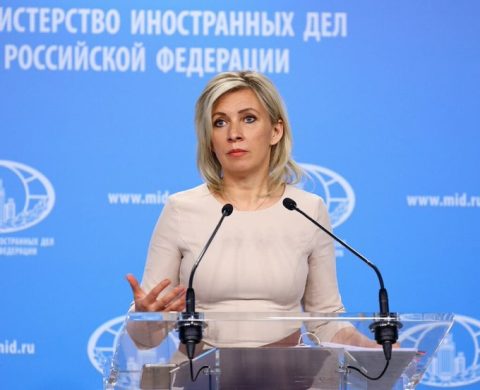
Russia’s Foreign Ministry spokeswoman skewered Sweden for staying silent about the identity of the perpetrators of the notorious terrorist attack that crippled Russian revenues and European energy supplies.
Sweden’s refusal to disclose the results of its investigation into the terrorist attack that crippled the Nord Stream pipeline in September suggests Stockholm is “hiding something,” Russian Foreign Ministry spokeswoman Maria Zakharova has said.
As one of the attack’s primary victims, Russia deserves answers, Zakharova told reporters at a Thursday briefing.
“The refusal of the Swedish side to respond on the merits to another request from the Russian Prosecutor General’s Office for legal aid in the criminal case on Nord Stream and Nord Stream 2 pipeline damage in September 2022 is genuinely perplexing,” Zakharova said.
A message sent three months ago by Russian Prime Minister Mikhail Mishustin to the head of the Swedish government regarding “the need to conduct a comprehensive and open investigation” of the attacks with Moscow officials still “remains unanswered,” Zakharova explained, noting Sweden’s silence stood “in defiance of all the decorum of international diplomatic communication.”
“Stockholm explains its refusal by saying… that meeting the Russian request will allegedly ‘pose a security threat to Sweden,’” she noted.
“What are the threats to national security that Stockholm is talking about?” Zakharova asked.
“Who committed these sabotage and terrorist acts, who is behind them, who devised and implemented them – withholding the established facts irrefutably testifies to the obvious: the Swedish authorities are hiding something.”
Sweden invoked the same ‘national security’ justification in October when attempting to explain why it was unwilling to commit to a joint investigation on the Nord Stream attack alongside Germany and Denmark.
As the main recipient of Nord Stream’s affordable supply of Russian gas, Germany was arguably the prime beneficiary of the pipelines. But Moscow has also suffered serious economic damage as a result of the act of industrial sabotage.
“We consider ourselves to be the party that sustained material damage, to say nothing of losses,” Zarakhova explained.
As such, “we have the right to receive appropriate information, have the right to ask questions and demand an answer to them,” she said, adding “we must make sure that it doesn’t happen again in the future.”
CHD Defeats NY State Healthcare Workers COVID Mandate!
Children’s Health Defense | January 13, 2023
In a groundbreaking decision filed today, NY State (NYS) Supreme Court Judge Gerard Neri held that the COVID-19 vaccine mandate for healthcare workers is now “null, void, and of no effect.” The court held that the NYS Dept. of Health lacked the authority to impose such a mandate as this power is reserved to the state legislature. Furthermore, the court found that the mandate was “arbitrary and capricious” as COVID-19 vaccines do not stop transmission, vitiating any rational basis for a mandate.
Children’s Health Defense (CHD) financed this lawsuit on behalf of Medical Professionals for Informed Consent and several individual healthcare workers. Sujata Gibson, lead attorney, said, “This is a huge win for New York healthcare workers, who have been deprived of their livelihoods for more than a year. This is also a huge win for all New Yorkers, who are facing dangerous and unprecedented healthcare worker shortages throughout New York State.”
CHD President Mary Holland stated, “We are thrilled by this critical win against a COVID vaccine mandate, correctly finding that any such mandate at this stage, given current knowledge is arbitrary. We hope that this decision will continue the trend towards lifting these dangerous and unwarranted vaccine mandates throughout the country.”
We are off to a great start in 2023.
Children’s Health Defense is a 501(c)(3) non-profit organization.
WHO Proposals Could Strip Nations of Their Sovereignty, Create Worldwide Totalitarian State, Expert Warns
By Michael Nevradakis, Ph.D. | The Defender | January 13, 2023
Secretive negotiations took place this week in Geneva, Switzerland, to discuss proposed amendments to the World Health Organization’s (WHO) International Health Regulations (IHR), considered a binding instrument of international law.
Similar negotiations took place last month for drafting a new WHO pandemic treaty.
While the two are often conflated, the proposed IHR amendments and the proposed pandemic treaty represent two separate but related sets of proposals that would fundamentally alter the WHO’s ability to respond to “public health emergencies” throughout the world — and, critics warn, significantly strip nations of their sovereignty.
According to author and researcher James Roguski, these two proposals would transform the WHO from an advisory organization to a global governing body whose policies would be legally binding.
They also would greatly expand the scope and reach of the IHR, institute a system of global health certificates and “passports” and allow the WHO to mandate medical examinations, quarantine and treatment.
Roguski said the proposed documents would give the WHO power over the means of production during a declared pandemic, call for the development of IHR infrastructure at “points of entry” (such as national borders), redirect billions of dollars to the “Pharmaceutical Hospital Emergency Industrial Complex” and remove mention of “respect for dignity, human rights and fundamental freedoms of people.”
Francis Boyle, J.D., Ph.D., professor of international law at the University of Illinois, said the proposed documents may also contravene international law.
Boyle, author of several international law textbooks and a bioweapons expert who drafted the Biological Weapons Anti-Terrorism Act of 1989, recently spoke with The Defender about the dangers — and potential illegality — of these two proposed documents
Other prominent analysts also sounded the alarm.
Proposals would create ‘worldwide totalitarian medical and scientific police state’
Meeting in Geneva between Jan. 9-13, the WHO’s IHR Review Committee worked to develop “technical recommendations to the [WHO’s] Director-General on amendments proposed by State Parties to the IHR,” according to a WHO document.
The IHR was first enacted in 2005, in the aftermath of SARS-CoV-1, and took effect in 2007. They constitute one of only two legally binding treaties the WHO has achieved since its inception in 1948 — the other being the Framework Convention on Tobacco Control.
As previously reported by The Defender, the IHR framework already allows the WHO director-general to declare a public health emergency in any country, without the consent of that country’s government, though the framework requires the two sides to first attempt to reach an agreement.
According to the same WHO document, the recommendations of the IHR Review Committee and the member states’ Working Group on Amendments to the International Health Regulations (2005) (WGIHR) will be reported to WHO Director-General Tedros Adhanom Ghebreyesus by mid-January, in the leadup to the WHO’s 76th World Health Assembly in late May.
Boyle said he questioned the legality of the above documents, citing for instance the fact that “the proposed WHO treaty violates the Vienna Convention on the Law of Treaties,” which was ratified in 1969, and which Boyle described as “the international law of treaties for every state in the world.”
Boyle explained the difference between the latest pandemic treaty and IHR proposals. “The WHO treaty would set up a separate international organization, whereas the proposed regulations would work within the context of the WHO we have today.”
However, he said, “Having read through both of them, it’s a distinction without a difference.” He explained:
“Either one or both will set up a worldwide totalitarian medical and scientific police state under the control of Tedros and the WHO, which are basically a front organization for the Centers for Disease Control and Prevention (CDC), Tony Fauci, Bill Gates, Big Pharma, the biowarfare industry and the Chinese Communist government that pays a good chunk of their bills.
“Either they’ll get the regulations or they’ll get the treaty, but both are existentially dangerous. These are truly dangerous, existentially dangerous and insidious documents.”
Boyle, who has written extensively on international law and argued cases on behalf of Palestine and Bosnia in the International Court of Justice, told The Defender he has “never read treaties and draft international organizations that are so completely totalitarian as the IHR regulations and the WHO treaty,” adding:
“Both the IHR regulations and the WHO treaty, as far as I can tell from reading them, are specifically designed to circumvent national, state and local government authorities when it comes to pandemics, the treatment for pandemics and also including in there, vaccines.”
Talks for both the proposed pandemic treaty and the proposed IHR amendments appear to follow a similar timeline, in order to be submitted for consideration during the WHO’s World Health Assembly May 21-30.
“It’s clear to me they are preparing both the regulations and the treaty for adoption by the World Health Assembly in May of 2023,” Boyle said. “That’s where we stand right now as I see it.”
According to the WHO, the International Negotiating Body (INB) working on the Pandemic Treaty will present a “progress report” at the May meeting, with a view toward presenting its “final outcome” to the 77th World Health Assembly in May 2024.
Boyle: proposed legally-binding pandemic treaty violates international law
Commenting on the pandemic treaty, Tedros said, “The lessons of the pandemic must not go unlearned.” He described the current “conceptual zero draft” of the treaty as “a true reflection of the aspirations for a different paradigm for strengthening pandemic prevention, preparedness, response and recovery.”
Roguski, in his analysis of the “Pandemic Treaty,” warned that it will create a “legally binding framework convention that would hand over enormous additional, legally binding authority to the WHO.”
The WHO’s 194 member states would, in other words, “agree to hand over their national sovereignty to the WHO.” This would “dramatically expand the role of the WHO,” by including an “entirely new bureaucracy,” the “Conference of the Parties,” which would include not just member states but “relevant stakeholders.”
This new bureaucracy, according to Roguski, would “be empowered to analyze social media to identify misinformation and disinformation in order to counter it with their own propaganda.”
The WHO currently partners with numerous such organizations, such as “fact-checking” firm NewsGuard, for these purposes.
Roguski said the pandemic treaty also would speed up the approval process for drugs and injectables, provide support for gain-of-function research, develop a “Global Review Mechanism” to oversee national health systems, implement the concept of “One Health,” and increase funding for so-called “tabletop exercises” or “simulations.”
“One Health,” a brainchild of the WHO, is described as “an integrated, unifying approach to balance and optimize the health of people, animals and the environment” that “mobilizes multiple sectors, disciplines and communities” and “is particularly important to prevent, predict, detect, and respond to global health threats such as the COVID-19 pandemic.”
In turn, “tabletop exercises” and “simulations” such as “Event 201,” were remarkably prescient in “predicting” the COVID-19 and monkeypox outbreaks before they actually occurred.
Roguski said the pandemic treaty would provide a structure to redirect massive amounts of money “via crony capitalism to corporations that profit from the declarations of Public Health Emergencies of International Concern” (‘pandemics’) and “the fear-mongering that naturally follows such emergency declarations.”
Boyle warned that the treaty and proposed IHR regulations go even further. “The WHO, which is a rotten, corrupt, criminal, despicable organization, will be able to issue orders going down the pike to your primary care physician on how you should be treated in the event they proclaim a pandemic.”
Moreover, Boyle said, the pandemic treaty would be unlike many other international agreements in that it would come into immediate effect. He told The Defender :
“If you read the WHO Treaty, at the very end, it says quite clearly that it will come into effect immediately upon signature.
“That violates the normal processes for ratification of treaties internationally under the Vienna Convention on the Law of Treaties, and also under the United States Constitution, requiring the United States Senate to give its advice and consent to the terms of the treaty by two-thirds vote.”
Indeed, Article 32 of the proposed treaty regarding its “Provisional application” states:
“The [treaty] may be applied provisionally by a Party that consents to its provisional application by so notifying the Depository in writing at the time of signature or deposit of its instrument of ratification, acceptance, approval, formal confirmation or accession.
“Such provisional application shall become effective from the date of receipt of the notification by the Secretary-General of the United Nations.”
“Whoever drafted that knew exactly what they were doing to bring it into force immediately upon signature,” said Boyle. “Assuming the World Health Assembly adopts the treaty in May, Biden can just order Fauci or whoever his representative is there to sign the treaty, and it will immediately come into effect on a provisional basis,” he added.
“I don’t know, in any of my extensive studies of international treaties, let alone treaties setting up international organizations, of any that has a provision like that in it,” said Boyle. “It’s completely insidious.”
Proposed amendments to IHR described as a WHO ‘power grab’
According to Roguski, who said the WHO is “attempting a power grab,” the proposed amendments to the IHR may be even more concerning than the pandemic treaty.
Roguski wrote that while he believes the pandemic treaty is “an important issue,” he also thinks it is “functioning as a decoy that is designed to distract people from the much larger and more immediate threat to our rights and freedoms, which are the proposed amendments to the International Health Regulations.”
The IHR Review Committee working on the proposed amendments “began its work on 6 October 2022,” according to a WHO document, and has convened five times since then, including this week’s meetings in Geneva. Access to the meetings was prohibited for the unvaccinated.
The final proposals of the IHR Review Committee and the WGIHR will be presented to Tedros in mid-January and to the World Health Assembly in May. According to Roguski, “If the proposed amendments are presented to the 76th World Health Assembly, they could be adopted by a simple majority of the 194 member nations.”
As a result, Roguski said, compared to the proposed pandemic treaty, “The amendments to the International Health Regulations are a much more immediate and direct threat to the sovereignty of every nation and the rights and freedoms of every person on earth.”
According to Roguski, “The proposed amendments would seek to remove 3 very important aspects of the existing regulations,” including “removing respect for dignity, human rights and fundamental freedoms” from the text of the IHR, changing the IHR from “non-binding” to “legally binding” and obligating nations to “assist” other nations.
“Essentially, the WHO’s Emergency Committee would be given the power to overrule actions taken by sovereign nations,” Roguski said.
According to Boyle, similarly to the pandemic treaty, “again, Biden can instruct his representative in May, assuming they adopt the regulations, to sign the regulations. And then, the Biden administration will treat that as a binding international agreement, just like they did with the 2005 regulations,” referring to the original IHR ratified that year.
He added:
“Those [the 2005 IHR] were signed and the U.S. State Department at that time considered them to be a legally binding international executive agreement that they list in the official State Department publication, ‘Treaties in Force.’
“In other words, they treat the 2005 regulations as if they were a treaty that never received the advice and consent of the United States Senate, and therefore the supreme law of the land under Article 6 of the United States Constitution that would be binding upon all state and local governments here in the United States, even if they are resisting, the IHR regulations or the WHO treaty.”
According to Roguski, “The proposed amendments would implement a great number of changes that everyone should absolutely disagree with.”
These changes include “dramatically expand[ing] the scope of the International Health Regulations from dealing with actual risks to dealing with anything that had the potential to be a risk to public health,” which Roguski said “would open up the doors wide to massive abuse beyond anything we have seen over the past three years.”
The proposed amendments also would shift the WHO’s focus “away from the health of real people” to “place primary preference upon the resilience of health care systems,” and would establish a “National Competent Authority” that “would be given great power to implement the obligations under these regulations,” Roguski said.
If the amendments come to pass, Roguski said, “The WHO will no longer need to consult any sovereign nation in which an event may or may not be occurring within that nation before declaring that there is a Public Health Emergency of International Concern within the borders of that nation.”
“Intermediate Public Health Alert[s],” “Public Health Emergenc[ies] of Regional Concern” and “World Alert and Response Notice[s]” could also be declared by the WHO’s director general, while the WHO would be recognized “as the guidance and coordinating authority during international emergencies.”
During such real or “potential” emergencies, the amendments would empower the WHO to mandate a variety of policies globally, which would be legally binding on member nations.
These policies could include requiring medical examinations or proof of such exams, requiring proof of vaccination, refusing travel, implementing quarantine and contact tracing or requiring travelers to furnish health declarations, to fill out passenger locator forms and to carry digital global health certificates.
“Competent health authorities” would also be empowered to commandeer aircraft and ships, while surveillance networks to “quickly detect public health events” within member nations would also be set up, as per the proposed amendments.
The WHO would also be empowered to be involved in the drafting of national health legislation.
The proposed amendments would give the WHO the power to develop an “Allocation Plan,” allowing it to commandeer the means of production of pharmaceuticals and other items during an “emergency,” and would oblige developed nations to provide “assistance” to developing nations.
“The proposed amendments … would facilitate digital access to everyone’s private health records,” Roguski said, and similar to the proposals in the pandemic treaty, would “also facilitate the censorship of any differing opinions under the guise of mis-information or dis-information.”
Roguski said the proposals are being made despite a “lack of input from the general public” by “unknown and unaccountable delegates” using vague and “undefined terminology” and vague criteria “by which to measure preparedness.”
He said the proposals would “trample our rights and restrict our freedoms,” including the right to privacy, to choose or refuse treatment, to express one’s opinions, to protect one’s children, to be with family and friends and to be free from discrimination, including discrimination on the basis of one’s vaccination status.
“The finality of decisions made by the Emergency Committee” foreseen by the amendments “would be a direct attack on national sovereignty,” Roguski said.
How did we get here?
According to the WHO, the members of the INB — during a meeting in Geneva July 18-21, 2022 — reached a “consensus,” agreeing that any new “convention, agreement or other international instrument on pandemic prevention, preparedness and response” would be “legally binding” on member states.
For Boyle, this is the WHO’s response to the “enormous opposition” to the COVID-19-related restrictions of the past three years. He told The Defender :
“As far as I can figure out what happened here was this: As you know, there has been enormous opposition here in the United States [against] these totalitarian edicts coming out, and this was under both Trump and Biden.
“These totalitarian edicts coming out of the federal government, the White House, the CDC, everyone else on this pandemic and also the vaccine mandates, there’s enormous grassroots opposition. And so, as far as I can tell what happened, this culminated in Trump pulling us out of the WHO, which I think was a correct decision.
“So you know, I’m a political independent. I’m just looking at this subjectively. Now, what happened was then, when Biden came to power, his top scientific advisor was Tony Fauci. So Biden put us back into the WHO and then appointed Fauci as the U.S. representative on the Executive Committee of the WHO.
“That’s where both the IHR regulations and the WHO treaty come from: to circumvent the enormous grassroots opposition to the handling of the edicts coming out of the federal government with respect to the pandemic and the vaccine mandates.”
Boyle explained what “legally binding” would mean in this context, if either set of proposals comes to pass:
“What will happen is the WHO will come up with an order, this new organization will come up with an order that they will then send to Washington, D.C., whereupon the Biden administration will enforce it as a binding international obligation of the United States of America under Article 6 of the United States Constitution, and it will usurp the state and local health authorities, who generally have constitutional authority to deal with public health under the 10th Amendment to the United States Constitution.
“The Biden administration will then argue that either the regulations or the treaty will usurp the 10th Amendment to the United States Constitution and state and local health authorities, governors, attorney generals, public health authorities will have to obey [any] order coming out of the WHO.”
Referring to his remarks about the illegality of the two proposals under the Vienna Convention on the Law of Treaties, Boyle clarified that under Article 18 of the convention, “a treaty does not come into force when signed. When the state has signed the treaty, it is only obligated to act in a manner that does not defeat the object and purpose of the treaty.”
Article 18 states:
“A State is obliged to refrain from acts which would defeat the object and purpose of a treaty when: (a) it has signed the treaty or has exchanged instruments constituting the treaty subject to ratification, acceptance or approval, until it shall have made its intention clear not to become a party to the treaty.”
According to Boyle a state’s signature “does not provisionally bring the treaty into force.”
Boyle also described the proposals as “a massive power grab by Fauci, the CDC, the WHO, Bill Gates, Big Pharma, the biowarfare industry and Tedros.”
He added:
“I’ve never seen anything like this in any of my research, writing, teaching, litigating international organizations going back to the First Hague Peace Conference of 1899, up until today.”
Roguski and Boyle argued that the U.S. — and other countries — should exit the WHO. Boyle told The Defender :
“I’m not a supporter of President Trump, but I think we have to go back to pulling out of the WHO right away. In the last session of Congress, there was legislation introduced pulling us out of the WHO. We need that legislation reintroduced immediately, in this new session of Congress.
“I think the House of Representatives has to make it clear that they object, that there’s no way they are going to go along with any orders coming out of the WHO, the World Health Assembly [WHA] or this new international pandemic organization, and that they have the power of the purse and that they will defund anything related to the WHO.”
However, for Boyle, this is not just a matter for federal lawmakers. “We need, certainly, the state governments here in the United States to take the position that they will not comply with any decisions coming out of the WHO, the WHA or this new international pandemic organization,” adding that he recently made such recommendations to Florida Gov. Ron DeSantis.
“We need that replicated all over the United States, on a state-by-state basis,” said Boyle, “and I think we need it right away because they’re trying to rush through these WHO regulations and the [pandemic] treaty for the WHO assembly in May.”
Close cooperation with Gates Foundation, others
According to the WHO, the INB discussions are taking place not just among all member states, but also with “relevant stakeholders” listed in document A/INB/2/4.
Who are these stakeholders? One example is GAVI, The Vaccine Alliance, listed as an “Observer” alongside the Holy See (Vatican), Palestine and the Red Cross.
As previously reported by The Defender, GAVI proclaims a mission to “save lives and protect people’s health,” and states it “helps vaccinate almost half the world’s children against deadly and debilitating infectious diseases.”
GAVI describes its core partnership with various international organizations, including names that are by now familiar: the WHO, UNICEF, the Bill & Melinda Gates Foundation and the World Bank, and with the ID2020 Alliance, which supports the implementation of “vaccine passports.”
ID2020’s founding members include the Gates Foundation, Microsoft and the Rockefeller Foundation.
In turn, the Gates Foundation, alongside Bloomberg Philanthropies, the Clinton Health Access Initiative, the Rockefeller Foundation, the International Air Transport Association (IATA — think “vaccine passports”) and the Population Council — founded by John D. Rockefeller and known for its “population control” initiatives — are listed in the same WHO document under Annex C as “non-state actors in official relations with WHO.”
“Other stakeholders, as decided by the INB, invited to attend [and] speak at open sessions of meetings of the INB [and] provide inputs to the INB” include IATA, the International Civil Aviation Organization and the World Bank Group.
“Open Philanthropy” and George Soros’ Open Society Foundations, and “nonprofit consumer advocacy organization” Public Citizen, are among the groups listed in the WHO document as “other stakeholders” that can “provide inputs to the INB,” alongside two Russian state-affiliated health organizations.
Lead U.S. negotiator for the pandemic treaty, Pamela Hamamoto — previously an investment banker with Goldman Sachs and Merrill Lynch — “helped coordinate early responses to the Ebola outbreak in West Africa in 2015 … and a strengthened WHO response.”
Hamamoto also was “instrumental in the 2014 launch of the Global Health Security Agenda” (GHSA), a “global effort … focused on strengthening the world’s ability to prevent, detect, and respond to infectious disease threats,” spearheaded by the CDC and founded with the purpose of accelerating the IHR passed in 2005.
The World Bank, the Global Health Security Consortium, the Private Sector Roundtable and the WHO are part of the GHSA’s steering group. AstraZeneca and Johnson & Johnson, manufacturers of COVID-19 vaccines, are members of the Private Sector Roundtable.
Advising the GHSA is the “GHSA Consortium,” which includes within its steering committee the Johns Hopkins Bloomberg School of Public Health (which hosted Event 201) and the Nuclear Threat Initiative (NTI).
As previously reported by The Defender, the NTI organized a “tabletop exercise” that predicted a “fictional” May 2022 monkeypox outbreak with remarkable accuracy. “Open Philanthropy” funded the final report for this exercise.
General members of the GHSA Consortium include the Gates Foundation, Amazon Web Services (which maintained COVID-19 immunization databases for the CDC), Boston University and the institution’s National Emerging Infectious Diseases Laboratories (NEIDL), and Emergent BioSolutions.
As previously reported by The Defender, NEIDL is where “a new strain of COVID-19 that killed 80% of the mice infected with the virus” was recently developed.
Emergent BioSolutions, which produced the Johnson & Johnson vaccine and attained infamy for losing a $600 million federal contract after millions of vaccine doses were ruined, is connected to the 2001 Dark Winter anthrax simulation.
In June 2022, with the support of the U.S., Italy (current chair of the GHSA) and then-G20 president Indonesia, the World Bank announced the launch of a $1 billion “pandemic fund.”
In November 2022, Indonesian Minister of Health Budi Gunadi Sadikin, at the G20 meeting held in Bali, pushed for an international “digital health certificate acknowledged by the WHO” to enable the public to “move around.” Indonesia is also a permanent member of the GHSA’s steering group.
Michael Nevradakis, Ph.D., based in Athens, Greece, is a senior reporter for The Defender and part of the rotation of hosts for CHD.TV’s “Good Morning CHD.”
This article was originally published by The Defender — Children’s Health Defense’s News & Views Website under Creative Commons license CC BY-NC-ND 4.0. Please consider subscribing to The Defender or donating to Children’s Health Defense.
Republicans Preparing to Move Forward With Ukraine Aid Audit, US Congresswoman Greene Says
Samizdat -13.01.2023
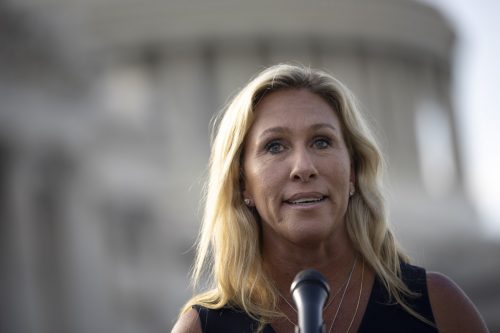
WASHINGTON – US Congresswoman Marjorie Taylor Greene said on Friday that she and other House Republican lawmakers are preparing to move forward with an audit of US aid to Ukraine, an idea first proposed late last year before the House Republican majority took effect.
“We don’t even have committees filled yet but [Congressman Michael McCaul] and I are already preparing to move forward with the audit of Ukraine. No more blank checks to Ukraine,” Greene said via Twitter.
House Republicans are committed to transparency for US taxpayers, Greene added.
In November, Greene and several other House Republicans introduced a resolution to initiate an audit of funds appropriated by Congress to Ukraine. The measure failed during the “lame duck” session of the 117th Congress, but Greene vowed to reintroduce the idea in the new 118th Congress.
House Republicans now hold a majority in the lower chamber, with Speaker Kevin McCarthy having started the party’s mantra of ending “blank checks” from the US to Ukraine. McCarthy also backed the initial Ukraine aid audit proposal.
On Thursday, Pentagon Press Secretary Pat Ryder said that the Defense Department is responsive to oversight by Congress, adding that he looks forward to further bipartisan support for Ukraine.
However, defense budget cuts proposed by the new House Republican majority could force hard questions about funding for foreign operations related to Ukraine and NATO, former Pentagon analyst and retired US Air Force Lt. Col. Karen Kwiatkowski told Sputnik.
Greene has also called for Ukraine to begin negotiations toward a peaceful resolution of the conflict, characterizing it as a “proxy war” between the United States and Russia.
Featured Video
Seyed M. Marandi: U.S. Military DIVIDED? Iran’s Secret Defense EXPOSED
or go to
Aletho News Archives – Video-Images
From the Archives
‘Israel sees Iran as obstacle to its policies’
Press TV – August 25, 2017
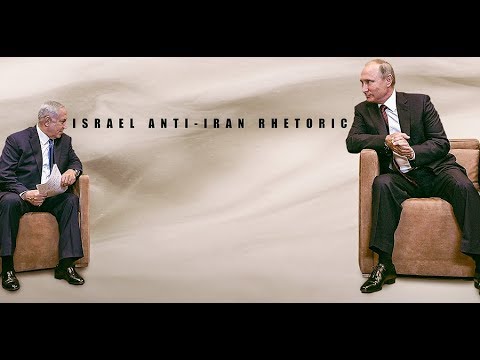
Prime Minister Benjamin Netanyahu has said that Israel felt threatened by Iran’s growing influence in the Middle East. Netanyahu expressed his Iranophobic view in a meeting with Russian President Vladimir Putin in Russia’s Black Sea resort of Sochi on Wednesday. Press TV has asked Scott Rickard, former American intelligence linguist from Tampa, Florida, and Brent Budowsky, a columnist at The Hill from Washington, to give their thoughts on the issue.
Rickard said Tel Aviv is concerned about the fact that the regime could not carry out its old project to spread sectarian divisions and pave the way for dismemberment of the countries in the Middle East region because of the Iranian-led resistance against Israeli policies, not only in the occupied territories of Palestine but also in the whole region.
“Iran is not a threat to Israel whatsoever. The threat that Israel sees is the fact that their Oded Yinon Plan is being put to a hold by Iran,” the intelligence linguist said on Thursday night.
“They (the Israelis) look at Iran as a threat only because they have no influence on their governments and Iran is autonomous and is not under the Zionist influence,” he added.
Since the victory of the Islamic Republic of Iran in 1979, Tehran has been critical of Israel’s policies in the region, whereas “no leaders [of other states] even dared to speak out against Zionism,” Rickard argued. … continue
Blog Roll
 Aletho News
- Alberta Bill Would Fine Political Deepfakes $10,000 Without Satire Exemptions
- Iran declares ‘historic victory’ over US, says enemy forced to accept its proposal
- Trump Claims Ceasefire, Reopening of Strait of Hormuz Agreement with Iran
- Israeli tank fire killed UN peacekeeper in Lebanon, UNIFIL investigation finds
- Russia, China block Bahrain-sponsored UN resolution on Strait of Hormuz
- The US-Israeli War on Science is an Assault on our Future
- Trump’s Promise to Bomb Iran ‘Like Never Before’ Faces Brutal Logistics — Expert
- Germany seeks to restrict stays abroad for men of fighting age – Berliner Zeitung
- Evidence points to Ukraine being behind TurkStream attempted sabotage, but that should come as no surprise
- Sri Lanka secures supplies of Russia oil – minister
- If Americans Knew
- Thousands dead and neighborhoods razed to the ground: Aid agencies fear southern Lebanon is becoming the new Gaza
- The war the US is fighting for Israel could cost trillions
- ‘Cigarette Burns, Nail Wounds’: Toddler Tortured in Gaza to Coerce Father
- Trump Says US Sent ‘a Lot of Guns’ to Protesters in Iran
- Israeli forces destroy 17 UN peacekeeper cameras in south Lebanon
- US-Israeli strikes ‘completely destroy’ synagogue in Tehran
- Archbishop for US Military Says Iran War Is Unjust Under Catholic Teaching
- Iranian leaders’ Open Letters to the American People
- Trump says Iranians appreciate bombs, WHO warns of nuclear risks – Daily Update
- U.N. experts demand Israel release prominent Gaza doctor after reports of ‘severe torture’
- No Tricks Zone
- An Inconvenient Tree: Uncovered In Alps… Europe Much Warmer Than Today 6000 Years Ago
- New Study Reports A 60% Slowdown In Greenland’s Ice Loss Rate In The Last Decade
- Low Intensity Tornado Wrecks Major Solar Farm, Creating A Potential Toxic Dump
- New Study Finds Warming Saves Lives…Cold Temperatures 12 Times More Deadly Than Excess Heat
- German Science Blog Accuses PIK Climate Institute Of Hallucinating Climate Tipping Points
- Devastating Assessment Of Comirnaty Vaccine By Former Senior Pfizer Europe Toxicologist
- New Study: CO2 Is ‘Effectively Negligible’ As An Explanatory Climate Change Factor Since 2000
- Former Pfizer Toxicologist Dr. Helmut Sterz Tells Bundestag Hearing Pfizer Vaccine Should Have Never Been Approved
- Energy Expert: Germany’s Nuclear Phaseout Was A “500 Billion Euro Mistake”
- New Research: South Australia’s Mid-Holocene Sea Surface Temperatures Were 4°C Warmer Than Today
 Aletho News