More Stick, Less Carrot – Prison For Not Complying With Energy Rules?
Climate Change Fanatics Upping Their Game
The Naked Emperor’s Newsletter | September 2, 2023
In a recent World Economic Forum discussion, it was acknowledged that governments will need to start using more sticks and less carrots.
“We’re going to need to change behaviours of individuals but also how our industries, corporations and also our governments work and practise. We’re going to need to do this through a mixture of carrots and hopefully, errr, perhaps not so many sticks… But we’re likely to see an increasing move towards a more stick-like intervention into the future, as things worsen, if we’re not able to act”.

The UK government seems to be taking the WEF’s advice seriously because, according to the Telegraph, they are looking to introduce new powers allowing new criminal offences to be created. This is in addition to increasing penalties for property owners who don’t comply with new energy rules.
Ministers want to grant themselves powers to create new criminal offences and increase civil penalties as part of efforts to hit net zero targets. Under the proposals, people who fall foul of regulations to reduce their energy consumption could face up to a year in prison and fines of up to £15,000.
The proposals will come before Parliament on Tuesday when MPs return back to work to discuss the Energy Bill.
It provides for “the creation of criminal offences” where there is “non-compliance with a requirement imposed by or under energy performance regulations”. People could also be prosecuted for “provision of false information” about energy efficiency or the “obstruction of… an enforcement authority”.
As seen with the Coronavirus legislation, ministers “are giving themselves broad umbrella powers to redraw and enforce the system before consulting on precisely which changes to make. Tory MPs have expressed alarm that ministers would be able to create new offences with limited parliamentary scrutiny under the update”.
The Bill is festooned with new criminal offences. This is just unholy, frankly, that you could be creating criminal offences… The ones we’ve found most offensive are where a business owner could face a year in prison for not having the right energy performance certificate or type of building certification.
Instead of undergoing scrutiny, criminal offences will be created using statutory instruments. These are still approved by Parliament but “typically nodded through”. There has not been a statutory instrument rejected in the last 35 years.
At the same time, Ultra Low Emission Zones (ULEZ) in London have been causing controversy. The newly expanded scheme means that drivers of certain vehicles (i.e. poor people who can’t afford Teslas) are forced to pay £12.50 ($15.75) every day to drive in any of London’s 32 London boroughs. The fine for not paying on time is £180.
Whilst this might not sound a lot of money to some, an additional £400 per month just to drive to work, will be an absolute killer for a lot of families. Another tax on the poor in the name of climate change.
A vigilante group calling themselves “Blade Runners” are going round London disabling or destroying the new ULEZ cameras. According to some reports, 90% of cameras have already been “retired”.

Sales of angle grinders are through the roof and the usual suspects are all over social media congratulating the Blade Runners but is all that it seems?
Problem, Reaction, Solution.
As a result, London Mayor, Sadiq Khan has deployed fleets of camera vans to catch people on the go. Clearly these camera vans were ready and waiting to go, they just needed an excuse. And how long will it be until some legislation is brought in to deal with these climate change vandals!?
And when Labour wins the election next year, deputy leader Angela Rayner, confirmed that “this is coming to towns and cities across the whole of the United Kingdom”.
It won’t stop there either. Whilst rumours of pay per mile schemes have been branded conspiracy theory nonsense, on Transport for London’s website they confirm that this is planned for 2025/26.
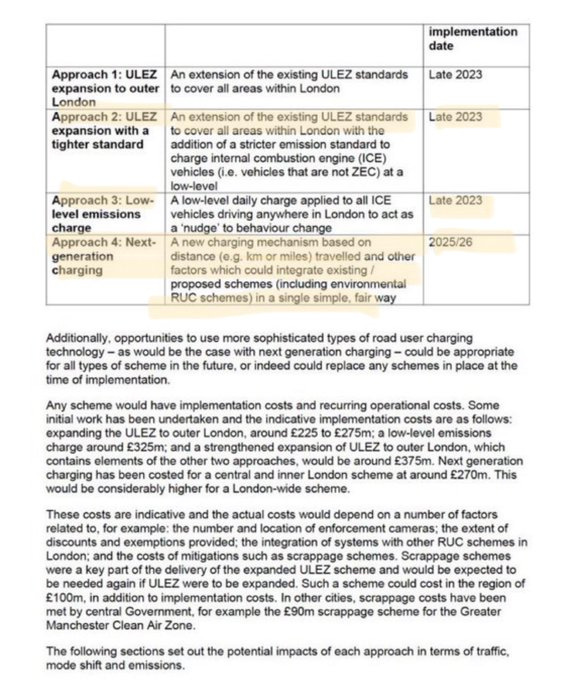
The climate change fanatics will do anything to reach their 2030 goals. The carrots haven’t been as effective as they’d hoped and with only 6.5 years left, get ready for more and more sticks.
Sadiq Khan’s Green Globalist Gang Suggests Daily 44g Meat Allowance and Rations Lower Than Second World War
BY CHRIS MORRISON | THE DAILY SCEPTIC | AUGUST 31, 2023
London Mayor Sadiq Khan’s Ulez punch-down on cars and vans owned by the less affluent is just one example of the attacks planned against town dwellers living in modern industrial societies. Khan is the current chairman of C40, a global network of city mayors backed by numerous hard-Left billionaire foundations. Removing cars from cities is just one of its aims. In a Headline Report published by the group in 2019 and re-emphasised earlier this year, a “progressive” target for 2030 was set of a daily per person allowance of 44g of meat (enough for two small meatballs), a daily limit of 2,500 calories, (less than the ration in the Second World War), one short haul flight every three years, eight new clothing items a year and private cars available for only one in five people. This “pioneering piece of thought leadership” was said to seek a “radical, and rapid, shift in consumption patterns”.
When the report about future urban consumption was first published in 2019, it received little publicity in the media. Some of its proposals looked a bit cranky even for mainstream publications. For instance, under an “ambitious” 2030 target, the mayors looked to ban meat and private vehicles altogether. But groundwork was clearly being laid. Mark Watts, executive director of C40, observed that average consumption-based emissions in the wealthier C40 cities must fall by “two thirds or more” by 2030. It was said that reducing vehicle ownership would lead to significant reclamation of roads and 25,000 kms of cycle lanes. This plan is now well advanced since the Covid lockdowns provided cover for mass street closures. Recent years have also seen large increases in cycle lanes, and of course the Ulez war on those driving older vehicles, not necessarily by choice.
Signatory cities are committed to “high impact accelerators”, which include creating low or zero emissions zones along with “implanting vehicle restrictions or financial incentives/disincentives such as road use or parking charges”. An early sighting here, perhaps of Khan’s suspected wish to implement road pricing after his Ulez infrastructure is in place.
There is also an early sighting of unsourced statistics with a claim that eating less meat and more vegetables and fruit could prevent 160,000 annual deaths associated with diseases such as heart attacks, diabetes and strokes in C40 cities. It is not immediately clear if these deaths actually occur in such precise numbers, or whether they are a Ulez-style ‘statistical construct‘.
Over 100 cities around the world are part of the C40 network and they are required to sign up to “performance-based requirements” based on a number of leadership standards. One of these standards specifies that they must innovate and start taking inclusive and resilient action, “to address emissions beyond the direct control of city government, such as associated with goods and services consumed in their city”. The largely unpublicised C40 operation is backed by finance and support from many well-known green foundations including Climate Works, Hewlett, IKEA, Oak, FR and Clinton. Three “strategic funders” are identified including Christopher Hohn’s Children’s Investment Fund Foundation, a major financial contributor to Extinction Rebellion. Another strategic funder is Bloomberg Philanthropies, whose controller Michael Bloomberg, the former mayor of New York, is president of the C40 board.
Of course interest is now growing in what all these people have been smoking over the last few years, as the Con/Lab green blob (different countries, different mainstream political combinations) organise to de-industrialise and cut human progress in the name of tackling a supposed ‘climate crisis’. The C40 Headline Report gives clear guidance of the scale of economic and societal change required under a collectivist Net Zero agenda. U.K. Fires is an academic project funded by the British Government, and it also gives a brutal assessment of life under what it terms absolute net zero carbon dioxide emissions. Again it is not discussed much in the public prints, but the Daily Sceptic has reported on its findings. These include no flying and shipping by 2050, drastic cuts in home heating, bans on beef and lamb consumption and a ruthless purge of traditional building materials such as bricks, glass, steel and cement. Such is the admirable honesty on display in their reports that they note these building materials can be replaced with “rammed earth” – mud huts for the lower classes in other words.
Sadiq Khan has been badly shaken by a popular uprising against his hated Ulez scheme. Backing in his own Labour party is wearing thin, not because most senior members are particularly anti-Ulez, but because after the Uxbridge by-election they can see a little more clearly that attacking the cars of the poor is a slam-dunk vote loser. For his part, Khan seems to have become more hysterical attacking those who oppose Ulez as conspiracy theorists. Earlier this year, reports the Daily Mail, Khan said that some of those who opposed the scheme’s growth across all London boroughs were “anti-vaxxers, Covid deniers, conspiracy theorists and Nazis”.
The evidence provided by Khan’s own C40 Headline Report, along with the work of U.K. Fires, shows clearly the actual agenda that is now being ruthlessly deployed. The only conspiracy rabbithole in sight would appear to be that occupied by a freaked Mayor Sadiq Khan.
Chris Morrison is the Daily Sceptic’s Environment Editor.
First Principles and Self-Controlled Opposition
By Emanuel E. Garcia, M.D. | NewZealandDoc | August 30, 2023
Being a psychiatrist certainly makes me no specialist in areas of immunology, cardiology, surgery or infectious disease. But having earned a doctorate in medicine I was provided an education in reasoning within this extraordinarily complex discipline from first principles. Therefore as an inquisitive physician throughout the covid operation, I could not help but be baffled by the response of institutional authorities.
Forgive me for repeating myself, but a ‘first principles’ approach would never have led to lockdowns, distancing, masks or the nefarious Jab. It would never have led to mandates or apartheid. And it would never have led to the promulgation of mRNA agents and the relentless push not only to inject all of humanity but, alas, all of the animal kingdom upon which humanity relies for food.
I repeat myself because with the whiff of yet another novel ‘variant’ restrictive measures are again in the news in America, whose so-called president has promised a yet more effective jab.
Effective at what, one may ask? At creating even more disastrous adverse effects and excess death? At degrading one’s natural immune system so as to render one more susceptible to infections and cancers?
Leaving aside the fact that I never believed a vaccine of any kind was necessary to manage the covid threat, for reasons I have laid out in many essays already, the description of the emergency-use instrument was proof enough for me that it would be a disaster. Flooding a body with millions upon millions of coronavirus spike protein antigens manufactured by the body itself, thanks to the integration of messenger RNA into cell machinery, did not seem like a very good idea — unless one wished to wreak havoc.
Even a psychiatrist like me could see that the potential for spike protein/antibody complexes in tremendous numbers could create autoimmune catastrophe via myriad mechanisms, and even a psychiatrist would suspect that somehow those pesky things would cross the blood-brain barrier despite assurances to the contrary. In short, I figured that they would go everywhere.
And so they have.
The greater looming question, a question that continues to vex me to this day, is why or how so many medical specialists — some of whom have now come to have changed their tune — initially insisted that the Jab would be advisable for the elderly and medically compromised, if not for all. And indeed I wonder how some of these specialists, prominent in the current opposition to the Jab, came themselves to have received it.
You see, to argue from another set of first principles — principles of psychological rationality — it simply made no sense then, nor does it make sense now. Nor does it make any conceivable sense that the astonishingly predominant majority of physicians could have touted the Jab, forgotten about informed consent and early treatment, and cheered the imprisonment of healthy people against all hitherto formulated pandemic guidelines.
That we have been betrayed by our institutional medical authorities, trans-nationally and intra-nationally — and here I am thinking not only of the infamously corrupt World Health Organisation and Federation of State Medical Boards but of entities such as the Medical Council of New Zealand and the American Board of Internal Medicine and many others — is no longer a surprise. We can see them for what they are, for the despicable agenda they have imposed, and for the scientific and ethical foundation they, by their actions, have destroyed.
That we have been betrayed by our governments also is no surprise, given their dismissal and oppression of the very citizenry from whom these governments are supposed to derive their power.
The fight against these powers is not easy, as we know; and as we also know these powers delight in confusing and dividing any concerted opposition, which they accomplish in many ways, so as to weaken us.
During ‘conventional’ wartime it is commonplace for adversaries to send out spies, to infiltrate each other, to play the game of double and even triple agents, and to mislead each other in every possible way. In this war — in this war of the Globalist Few against the Populist Many — the massive communications agency masquerading as ‘news’ and ‘trusted media sources’ has hammered away without pause. It’s an irregular and really unfair war, and a thoroughly unique one given its scale, even though the techniques themselves of artful deception and purposeful division and the combination of soft and hard force have been around forever.
That our enemy — the enemy of real science and human autonomy, the proponent of censorship and the persecution of dissent — will seek to control us is obvious. However, the notion of ‘controlled opposition’ is in vogue and proceeds too trippingly from the tongue. Strictly speaking it is only one of the various means and devices used to disrupt our clamoring.
I’ve never liked this designation because it can become another of those irrefutable assertions whenever a disagreement arises and can be made to cover so many scenarios that it loses usefulness. Surely there can be spies and traitors and infiltrators and the like, and there always will. That’s life.
I worry more about ‘self-controlled opposition’ — about people who need no higher official to pull their strings but who have an uncanny knack for knowing how to curry favor and when to keep from going ‘too far’.
A realist is compelled to acknowledge that within any group of people, on whatever side, personalities will arise whose fealty is more to themselves than to the common mission. These are the folks with the kind of pull that can bend a movement astray.
Vaccines have become a kind of black hole, sucking so much of our discursive energy into endless debate. I have learned over these past three and a half years that no vaccine can be trusted — just as no medication can be. It is sound and rational to demand to know about the ingredients and adjuvants of every vaccine, just as it is sound and rational to want to know how fluoxetine is supposed to work and how it might go wrong. But we are left with the choice to partake and receive, or not. A choice that is non-negotiable, no matter what our governments may say while brandishing their scepter of fear.
Which brings me back to first principles. When the rebellious crew of fifty-six Americans signed the Declaration of Independence, they made preeminently clear the principles of human autonomy, rights that were inborn rather then conferred. They were, naturally, creatures of their time, molded by its social and cultural and racial constraints. The first principles, however, that they espoused and enshrined, held with them the key to overcoming these constraints. It took a while for their reasoning to be extended to its logical end to include all men and women, regardless of color — but it got there thanks to the enunciation of these foundational principles.
Same for psychoanalysis. Whatever one thinks or knows or thinks he or she knows about Freud and analysis and the mores of fin de siècle Vienna, the principle of free association as a portal to the unconscious mind transcends the societal and cultural milieu of the age in which it was discovered.
As we fight this fight of our lives the surest sign of corruption within our midst is whether our leaders adhere to or stray from principle.
So, going forward, if I start hearing about a better mRNA vaccine or an improved method of masking or a friendlier way to limit our freedom to assemble; if I start to read about how the harsh measures imposed and the rationale for a lightning-quick jab had some merit, all in the name of the greater good of course, I’ll know whom I’m up against.
Iran Hails Resistance Allies’ Push to Reshape World Order, Weaken US ‘Hegemony’

People raise Palestinian, Lebanese and Hezbollah flags during a rally in solidarity with the Palestinians, on the outskirts of the southern Lebanese village of Kfarkila, near a United Nations Interim Force in Lebanon (UNIFIL) armoured personnel carrier.
By Ilya Tsukanov – Sputnik – 02.09.2023
Iran joined the Shanghai Cooperation Organization and BRICS this summer, and has been working to expand bilateral cooperation with both Russia and China. Tehran is also the leader of an informal alliance of regional countries, including Syria, Lebanese militant group Hezbollah, and Iraqi Shia militias, known as the Axis of Resistance.
Iran’s foreign minister has praised the struggle in the Middle East to resist and undermine US dominance and create a new international order.
“The international system is undergoing fundamental changes and we are witnessing new actors in the international arena,” Foreign Minister Hossein Amir-Abdollahian said in a meeting with political groups in Beirut, Lebanon on Friday.
“The US is trying to maintain its hegemony, but the region and the world understand very well that America cannot exercise its hegemony, and on the contrary, the Resistance is powerful and can achieve its will powerfully,” Amir-Abdollahian added.
Today, the Iranian top diplomat said, “the position of the Resistance in the region cannot be ignored,” and is “being noticed by the West,” including as far as the Israeli-Palestinian crisis is concerned.
Separately, in talks with his Lebanese counterpart Abdallah Bou Habib, Amir-Abdollahian stressed that “the US sanctions regime cannot hinder the economic relations between Iran and Lebanon,” just as “it has failed to impact Iran’s cooperation with Iraq, Turkiye, Pakistan, Central Asia and the Caucasus.”
Iran is ready to provide further assistance to Lebanon to help Beirut resolve its long-running fuel and electricity crisis, he said. This includes readiness to build a network of power stations with a capacity of 2,000 megawatts.
Bou Habib praised Iran for its support for Lebanon in the nation’s time of crisis, and expressed readiness to further expand cooperation.
Lebanon’s political and economic crisis, which began in 2019, has left the country in economic ruin and run by a caretaker government. The post of president has been vacant since last October, when President Michel Aoun resigned at the end of his term.
Amir-Abdollahian also met with Hassan Nasrallah, secretary-general of the powerful Lebanese political party and militant group Hezbollah, which has forged close ties with Iran both in Lebanon and in Syria, where Hezbollah fighters backed by Revolutionary Guard Quds Force advisors have fought jihadist extremists for over a decade.
In the talks with Bou Habib, Amir-Abdollahian reiterated Iran’s long-stated position that “any normalization of relations with the Zionist regime will be detrimental to the entire region.” Iran will “continue to support and assist the Axis of Resistance, to preserve the Lebanese national interest, in the face of Israeli attacks and ambitions that threaten this entire region,” he said.
The Iranian diplomat also commented on the “positive developments” in relations between Iran and Saudi Arabia following the surprise normalization of relations earlier this year, saying that these processes “will have a positive impact on the entire region,” including for Lebanon.
At a press conference at the end of his visit, Amir-Abdollahian also rejected allegations by France – the European power which once controlled Lebanon as a colony, of meddling in Lebanon’s affairs.
“I advise Mr. Macron to focus on the situation inside France instead of paying attention to questions of interference in other countries,” he said. “Iran has always played the most constructive role in helping Lebanon,” he added.
Earlier in the week, the French president told a conference of French ambassadors that stopping Iranian “interference” was a “key element” in resolving Lebanon’s political standoff.
Amir-Abdollahian’s Beirut visit was preceded by a trip to Damascus on Thursday for talks with President Bashar Assad and other Syrian officials. Amir-Abdollahian slammed the illegal presence of US troops in eastern Syria, and blasted Israel for its ongoing campaign of airstrikes against the war-torn country.
Known to jealously guard its security and foreign policy independence, and the defense of its interests even against far larger and more powerful foes, including the US, Iran has dramatically ramped up cooperation with Russia and China in recent years as part of ongoing processes related to Eurasian integration. Iran joined the Shanghai Cooperation Organization in July, and acceded to the BRICS bloc late last month. Last week, a senior Islamic Revolutionary Guard Corps commander and advisor to Supreme Leader Ayatollah Ali Khamenei said that Iran sees a maritime-oriented economy and cooperation with Russia and China as keys to countering the impact of US sanctions.
Ex-Italian PM: France Likely Downed Passenger Plane Trying to Kill Libya’s Gaddafi
© AP Photo / Saris
Sputnik – 02.09.2023
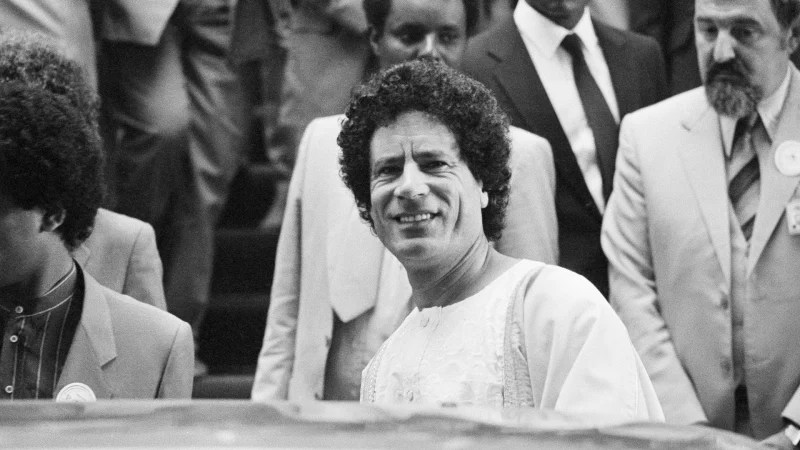
ROME – Former Italian Prime Minister Giuliano Amato has alleged that France and its US allies were likely responsible for the mysterious passenger plane crash off Sicily in June 1980, and that the incident was the result of a plot to assassinate late Libyan leader Muammar Gaddafi.
“The most credible version is about the responsibility of the French Air Force with the complicity of the Americans and those who participated in the air war over our skies on the evening of June 27,” Amato said in an interview with Italian newspaper la Repubblica on Saturday, recounting the June 27, 1980 crash of Itavia Flight 870, in which all 81 passengers and crew onboard were killed.
“A plan had been launched to hit the plane on which Gaddafi was flying,” Amato said, referring to reports of a dogfight taking place in the area between French and Libyan jets on the day the Italian passenger plane went down, and rumors that Gaddafi was on board one of the Libyan Air Force MiG jets.
The plan was to “simulate NATO drills involving many aircraft” during which a missile would have been fired – passed off as an accident – at the plane carrying Gaddafi, Amato said. However, Gaddafi got a warning from then-Italian Prime Minister Bettino Craxi, Amato’s former rival, and never boarded the jet, with the French missile allegedly intended for him ending up hitting the Itavia plane instead.
The Itavia McDonnell Douglas DC-9 passenger jet crashed into the Tyrrhenian Sea off the western Italian coast, between the islands of Ponza and Ustica en route from Bologna to Palermo.
In 2015, the Palermo Court of Appeal ruled that the crash was caused by a missile hitting the DC-9, and that the missile was fired by another aircraft that crossed the passenger plane’s route. The court ruled out previously claimed versions about a bomb being planted on board the civilian airliner.
In his interview on Saturday, Amato said the Elysee should admit its responsibility, so that it can “wash away the shame that weighs down on Paris.”
“After forty years, the innocent victims [of the crash] have not received justice. Why continue to hide the truth? The time has come to shed light on this terrible state secret. [French President Emmanuel] Macron could do it. And NATO could do it,” he said.
France and its US allies have long denied any involvement in Itavia Flight 870’s crash.
Commenting on Amato’s allegations, Italian Prime Minister Giorgia Meloni called on the politician to disclose any materials he may have related to the incident.
“Taking into account that the materials concerning the DC-9 tragedy are not classified, and that the judicial authorities and parliamentary commissions have done a lot of work over decades, I ask Amato to understand whether, in addition to his conclusions, he has other elements that allow him to review the decisions of the judiciary and the parliament, and possibly to make them available, so that the government can take all possible and consistent steps,” Meloni was quoted as saying in a statement released by her office.
Western leaders are all fighting for their survival in power
Where does this lead? To war!
By Gilbert Doctorow | September 1, 2023
I follow the Evening with Vladimir Solovyov shows as a professional duty, not for fun. The host is very often boorish and the panelists are variable in quality, with too many duds among them. However, every several days I am pleasantly surprised by the analytical talents of one or another panelist who gives us a fresh and often persuasive understanding of the drivers of global events.
One such case was last night when a panelist from MGIMO, the higher educational institution that has educated Russia’s diplomatic corps for decades, gave us his take on the danger of a new world war, meaning a nuclear holocaust, that we presently face. It is all because the political leaders in the United States and in Europe enjoy very low domestic ratings, face elections in the coming year or so and are desperate to hold onto power. For some losing power can mean being sent before courts for various crimes they have committed in office. War is the solution they seize upon in the hope of diverting attention from their personal failings and economic woes, as well as to clamp down on free expression of opposition to the powers that be.
So it is for Joe Biden. Tucker Carlson and Donald Trump have said as much in public over the past several days. But it is just as true of the European presidents and prime ministers. They are all buffeted by economic head winds, by rampant inflation, deindustrialization and falling living standards that they unleashed with their ill-considered imposition of sanctions on Russia. They all are highly unpopular. We know, for example, that German Chancellor Scholz is now among the least regarded politicians in his country. Macron is now rivaling former president Hollande, who came in at single digit numbers in polls before he abandoned his hopes of reelection. And what is the result? Scholz has become a war hawk and repeatedly has agreed to supply ever more deadly materiel to Kiev. Macron has come out as a hawk not only on Ukraine but now is a caricature colonialist on the question of participating in military operations against Niger to reinstall the French-backed comprador government.
Over in Poland, where an election is looming, the government of Prime Minister Mateusz Morawiecki is fighting for its life against a resurgent Civic Platform party. It has put in place a law aimed at sidelining the former prime minister and CP leader Donald Tusk over charges that he was soft on the Russians. Losing power might result in the chairman of the Law and Justice party, Jaroslaw Kaczynski being sent to trial, as is now demanded by Lech Walesa. The result? Poland has been building up its military forces on the border with Belarus and is preparing the public for an imminent outbreak of war.
And then there is the most recent example supporting the given line of analysis: what is going on in Estonia. Let us recall that in the past week there has been a political storm in Estonia when it became known that the husband of the viciously anti-Russian prime minister, Kaja Kallas, has been making millions of euros of profit from his logistics business assisting an Estonian company that has production in Russia. When confronted with this outrageous violation of the cut-off of relations with Russia that she has demanded of her fellow citizens since the war in Ukraine began, Kallas just shrugged it off as something she knew nothing about. However, we note that the drone attack that destroyed Russian military aircraft at the Pskov airport in Russia’s northwest region a day ago is said to have been launched from Estonian territory.
So far, Moscow has not reacted to what could and should be a casus belli with a NATO Member State. But how much longer will Putin show forbearance?
These are very dangerous times and the weakness of Western leadership points to more, not less war.
©Gilbert Doctorow, 2023
Sanctions against Russia turning Germany into ‘kamikaze’ – MP
RT | September 2, 2023
Western sanctions have failed to destabilize Russia and are now backfiring on the countries that imposed them, including Germany, Sevim Dagdelen, a German MP from the Left Party (Die Linke) wrote in an op-ed for the Berliner Zeitung published on Friday.
According to the lawmaker, Russia’s economy has successfully weathered the restrictions and is steadily adjusting to the new economic realities.
“In order to ruin Russia, it was hoped that the punitive measures that violate international law will have a long-lasting effect. But the reality is different. Even the Russian auto industry is recovering. Chinese companies are stepping in for the German manufacturers who leave Russia,” Dagdelen wrote.
“Contrary to what was hoped, Russia has not been ruined. The consequences of the sanctions are evident, but on our side. While Germany’s economy collapsed by 0.3% in the last quarter and stagnation is also threatening the Eurozone, Russia is now forecast to grow by 2.5% this year. As is often the case, a merciless idealism characteristic of the German ruling party obscures the view of reality.”
According to the lawmaker, the sanctions are strengthening Russia while the German government “is ruining domestic economy with open eyes.”
“The federal government acts here like a kamikaze pilot, replacing politics with dubious morality and is happy about a friendly nod from Washington,” she stated, noting that double-digit inflation in Germany is the product of sanctions, as well as the “ever increasing military support for Ukraine.” Dagdelen also noted that the sanctions war has prompted the largest redistribution of capital in the country, with large corporations boosting profits while ordinary German consumers suffer from a drop in real wages and a cost-of-living crisis.
The lawmaker criticized the government that “wants nothing to do with diplomacy” and urged Berlin to distance itself from Washington and NATO. She suggested closer ties with BRICS, a G7 rival economic bloc of countries that includes Russia and that will represent nearly 40% of global GDP after it officially admits new members at the beginning of next year. According to Dagdelen, Germany should “react accordingly to the new multipolarity.”
“Germany and Europe need a sovereign foreign policy that is no longer subordinate to the US and NATO. Supporting the BRICS peace initiative would be a first step towards freeing ourselves from the socially and politically fatal paternalism of the US. It would represent a step towards democratic sovereignty. No war is our war, not even this one.”
Ukraine blackmailing Europe by refusing to renew gas shipment deal
By Uriel Araujo | September 2, 2023
Russia’s Gazprom has said it would ship 42.4 million cubic meters of gas to Europe – such a volume is in line with recent days. There are concerns regarding the future of gas shipments to Europe, however. Last month, Ukrainian energy minister Herman Galushchenko ruled out the prospect of Kiev participating in new Russian gas transit talks pertaining to a five year agreement which will expire at the end of 2024. He added that by 2024 Europeans should be ready to manage without Russian gas. This is the latest chapter of a long dispute.
Writing for Politico in September 2022, energy correspondent America Hernandez highlighted that Russian energy giant Gazprom and Ukraine’s Naftogaz were in a battle regarding arbitration and payments for gas shipments through Ukraine – and this threatened gas transit to Europe. Here, some context is needed.
Despite the ongoing confrontation, Gazprom (Russia’s state-owned energy corporation) has been honoring a pre-conflict 2019 transit agreement: the 2019 deal, which runs until the end of 2024, allows Gazprom to export over 40 billion cubic meters of gas a year via Ukraine – and this earns Kiev about $7 billion.
Gazprom chief Alexei Miller, however, warned in July 2023 that the Russian energy giant could stop exporting if Kiev did not cease its campaign to seize Russian state assets. Ukraine has been in fact fighting a legal war to make Moscow pay over $5 billion as compensation for Ukraine’s state energy firm Naftogaz losses pertaining to the annexation of Crimea after the 2014 referendum. Naftogaz’s lawyers have been filing enforcement petitions in several jurisdictions internationally. According to Elena Chachko, a Harvard Law School’s Rappaport Fellow, Ukrainian endeavors to combine warfare and lawfare are an attempt to set a precedent in their own way: “The Ukrainians have been pretty active and pretty sophisticated in how they leverage various legal avenues to attack the Russians. They’ve been very creative.” She adds: “The route of arbitration is one they’ve been very sophisticated in utilizing to impose sanctions on Russia in a sort of indirect way”.
Moreover, in July 2023, mentioning a Hague court ruling favoring Ukraine’s claims for compensation, which Moscow is to appeal, Naftogaz CEO said: “We don’t expect Russia to pay voluntarily. It will take time to enforce it and monetize it, and we will be targeting Russian sovereign assets abroad.” In other words, under the justification that there is a European court decision, Ukraine is illegally seizing Russian assets.
Gazprom ceased to supply gas through Yamal-Europe and the (now gone) Nord Stream and pipelines, thus making the transit line through Ukraine the one and only route to supply Russian gas to Central and Western European countries.
By telling Europeans to be ready to go on without Russian gas, Ukraine’s energy minister Herman Galushchenko is providing music to Washington’s ears. In December 2021, there was an energy crisis in Europe already and I wrote on how the US war on the Nord Stream 2 project made perfect sense from an American perspective: Washington wanted neither to lose leverage on the European continent nor to have Moscow having more leverage there. Moreover, the US created obstacles to Russian-European energy and gas cooperation so as to promote its own resources to European markets. Washington would thus have Europeans buying more and more of American liquified natural gas (LNG) – despite the fact that it is more expensive and despite the fact that Russia lies at the “doorstep” of Europe. These American geoeconomic and private (and even shady) interests play an important role here – in addition to US-led NATO geopolitical goals pertaining to encircling Russia. One cannot make sense of the current conflict without taking those into consideration.
In any case, by refusing to transit Russian gas, which Europeans need, Kiev is basically blackmailing the European bloc, as it hopes to see an ever-larger supply of NATO-provided weaponry and aid. It remains to be seen how European powers will play along.
The hard truth is that the Western strategy to isolate Moscow from global energy markets has been a failure. Of course crude oil supplies to the West have dropped, but overall Russian hydrocarbon exports are back to pre-conflict levels, while India has occupied the share of Western nations when it comes to Russian exports. With rising de-industrialization, the US’ own subsidy war against the EU, and with sanctions having backfired, it would seem that sooner or later Europe will have no choice but to gradually ease sanctions against the Russian energy resources it badly needs. The framework for that could involve lots of good diplomacy and the de-escalation of tensions. Right now, truth be told, Ukraine’s blackmail handicaps this prospect.
Featured Video

American Military Failure in Afghanistan
or go to
Aletho News Archives – Video-Images
Frlom the Archives
Iran War: United States Military Versus Israel Firsters
By James Petras | November 27, 2007
Why must Jewish organizations be and be seen as the loudest drum-beaters of all? Why can we not bring ourselves to say that military intervention is not on the table at all? Why not stash it under the table, out of sight and mount instead a diplomatic assault? – Leonard Fein, Forward
Introduction
As the White House and Congress escalate their economic sanctions and military threats against Iran, top military commanders and Pentagon officials have launched a counter-offensive, opposing a new Middle East War. While some commentators and journalists, like Chris Hedges (Truthdig, November 13, 2007), privy to this high stakes inter-elite conflict, attribute this to a White House cabal led by Vice President Cheney, a more stringent and accurate assessment puts the Zionist Power Configuration (ZPC) in the center of the Iran war debate.
There is a great deal riding in this conflict – the future of the American empire as well as the balance of power in the Middle East. Equally important is the future of the US military and our already heavily constrained democratic freedoms. The outcome of the continuous and deepening confrontation between top US military officials and the Israel Firsters over US foreign policy in the Middle East has raised fundamental questions over self-determination, colonization, civilian primacy and military political intervention, empire or republic. These and related issues are far from being of academic interest only; they concern the future of the United States. … continue
Blog Roll
 Aletho News
- Hezbollah Returns: It Didn’t Start a War, It Is Ending One
- EU states seek ‘talks’ with Iran for access to Strait of Hormuz: Report
- Trump on Hormuz: “Others must take care of it” after US falters
- Who Is closer to collapse?
- A War that Backfired: Why the US-Israeli Campaign Is Strengthening Iran
- How Zionist Control Is Hurting US Interests
- Iran warns it may target US missile launch sites in UAE cities
- American Military Failure in Afghanistan
- Friendly Skies of Georgia: Are Israeli-Linked Drones Launching False Flags from Georgian Territory?
- The Three Big Lies about Mammography Screening
- If Americans Knew
- No let-up in attacks on Gaza as Israel takes on Iran, Lebanon – Not a ceasefire Day 155
- ‘Of Course’: IDF Drops Case Against Soldiers Accused of Raping Palestinian Prisoner
- Don’t Fall for the Regime Change Talk. Israel Is ‘Mowing the Lawn’ in Iran
- Will Israel and the US wreck the Gulf States along with Iran?
- US so far burned through ‘years’ of munitions in Iran war: Report
- How the Israeli Tail Wags the American Dog
- Outdated intel likely led to deadly U.S. strike on Iranian elementary school, sources say
- Pentagon insider says high U.S official Douglas Feith reported to Netanyahu
- In fond memory of Walid Khalidi, the historian of Palestine
- 6 more Americans killed, as Israel ‘mows the lawn’ in Iran – Not a ceasefire Day 154
- No Tricks Zone
- Storing Green Energy To Last Germany 10 Days Would Require A 60-Million Tonne Battery
- New Studies: UK Sea Levels Were 4 Meters Higher Than Today During The Mid-Holocene
- Destructive Green New Deal: German Energy And Metal Group Warns Of Drastic Crisis
- New Study Documents A 20-Year Pause In Arctic Sea Ice Decline – Driven By Internal Variability
- Wake-up Call: Survey Shows Majority Of Germans Now Favor Postponing Climate Targets!
- Televised! Leading German Political Candidate Tells Schoolchildren CO2 Makes Sun Hotter!
- New Study: A Century Warming Of 1.1°C Is ‘Commonplace’ And ‘Not Unusual’ During This Interglacial
- New Study: ‘Internal Noise’ And Volcanic Forcing Can Trigger 10-15°C Warming Within Decades
- Glaciers Worldwide Are Suddendly Surging, Experts Blame Warming!
- Surprising Discovery: Sahara Is Greening…Billions Of Trees Where Once Thought To Be Barren
 Aletho News