Florida Surgeon-General Snubs FDA ‘COVID Boosters-For-All’ Guidance
“Not A Good Decision For Young People”
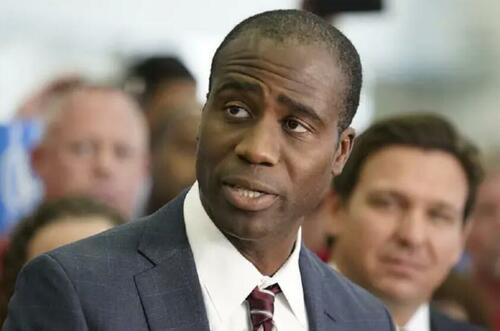
By Tyler Durden | Zero Hedge | September 15, 2023
Uttering words that would have seen you excommunicated from ‘good’ society, ostracized to an island of racists, bigots, and vaccine-deniers; Florida Surgeon General Dr. Joseph Ladapo said in a statement that the vaccines “are not backed by clinical evidence, but blind faith alone with ZERO regard for widespread immunity.”
In guidance (pdf) to patients and doctors, the Florida Department of Health added:
“Based on the high rate of global immunity and currently available data, the state surgeon general recommends against the COVID-19 booster for individuals under 65. Individuals 65 and older should discuss this information with their health care provider, including potential concerns outlined in this guidance.”
This directly contradicts guidance from The White House (everyone get up to date) and the CDC and FDA (endorsing the new jabs for anyone over 6 months old):
“We continue to live in a world where the CDC and the [Food and Drug Administration], when it comes to COVID at least, are just beating their own path in a direction that’s inexplicable in terms of thinking about data and in thinking about common sense,” Ladapo said.
And three years into this flu season, Ladalpo highlights ‘herd immunity’ among most of America:
“With the amount of immunity that’s in the community – with virtually every walking human being having some degree of immunity, and with the questions we have about safety and about effectiveness, especially about safety, my judgment is that it’s not a good decision for young people and for people who are not at high risk at this point in the pandemic,” he said.
Florida Governor DeSantis agreed:
“I will not stand by and let the FDA and CDC use healthy Floridians as guinea pigs for new booster shots that have not been proven to be safe or effective,”
In March, the CDC and FDA sent a letter to Ladapo, warning that he was fueling vaccine hesitancy and harming Florida’s seniors.
Ladalpo is not alone in his scepticism.
“Pushing a new COVID vaccine without human-outcomes data makes a mockery of the scientific method and our regulatory process,” Drs. Marty Makary and Tracy Beth Hoeg said in an op-ed.
“If public-health officials don’t want a repeat disappointing turnout of Americans who get the COVID booster shot, they should require a proper clinical trial to show the American people the benefit,” they added.
Just 17 percent of Americans received one of the bivalent doses, which were made available in the fall of 2022. The new vaccines replaced the bivalents.
“The CDC is advising the children get these boosters when there’s no evidence that children receive any benefit and clear evidence that they receive harm,” Dr. Robert Malone, who helped invent the messenger RNA (mRNA) technology the Pfizer and Moderna vaccines use, said on EpochTV’s “Crossroads.”
Risks include myocarditis, a form of heart inflammation that can lead to sudden death.
And cue the mainstream media ‘blood on their hands… science-denying’ headlines.
California Threatens to Defund 600+ Schools Over Low Vaccine Rates
By Brenda Baletti, Ph.D. | The Defender | September 12, 2023
The California Department of Health (CDPH) is threatening to restrict funding for the more than 600 schools being audited by the state because they reported more than 10% of their kindergarten or seventh grade students were not fully vaccinated last year or because they failed to file a vaccination report with the state, EdSource reported.
“Schools found to have improperly admitted students who have (not) met immunization requirements may be subject to loss of average daily attendance payments for those children,” the CDPH said in an email.
CDPH posted the audit list, which included 449 schools with kindergarten students, 175 schools with seventh graders, 56 schools with both grades and 39 schools that had not filed a vaccination report.
California students are considered “not fully vaccinated” if they have not provided proper immunization records to their school, if they don’t have the vaccinations required by the school system or if they have been admitted to schools conditionally while they are in the process of finishing their school-mandated vaccine series, according to the state audit guide.
If a student behind on the vaccine requirements has not received a first dose of a required vaccine within 10 days of starting school and a second dose of a required vaccine within four months of the first dose, the student must be excluded from school.
The audit guide indicates that to determine whether schools have students behind schedule, auditors check whether kindergarteners have two doses of a varicella (chickenpox) vaccine and two doses of a measles vaccine and whether seventh graders have two doses of varicella and one dose of Tdap (tetanus, diphtheria and pertussis), their sixth pertussis-containing vaccine.
Oakland Unified School District, with 48 elementary schools and eight of the seventh grade schools on the list, has the highest number of schools being audited. Los Angeles Unified has 75 of its non-charter schools on the audit list, while Pomona Unified has 13, San Francisco Unified 14 and San Juan Unified in Sacramento County, eight.
The vaccination audit has been occurring in public schools only since the 2021-2022 school year, when 45 schools made the list.
Schools in violation of the state law must submit corrected attendance reports that reflect the reduction in average daily attendance cited in the audit finding, which will likely reduce their funding, according to CDPH spokesperson Scott Roark.
Sensationalizing vaccine numbers
Over the last year, legacy media organizations such as The New York Times, CNN and The Washington Post along with public health officials across the country have been sounding the alarm over decreasing rates of routine vaccination among U.S. children.
But even at its lowest point — the 2020-2021 school year — the kindergarten vaccination rate only dipped to 94% from 95%, according to the Centers for Disease Control and Prevention (CDC).
Experts cited in these articles blame the drop on pandemic disruptions to U.S. healthcare, “vaccine hesitancy” about the COVID-19 vaccine bleeding over into other vaccines and the availability of non-medical vaccine exemptions.
EdSource reported that vaccination rates in California, which had been climbing since the state eliminated the personal belief exemption in 2015, plunged after schools closed during the COVID-19 pandemic.
Thousands of children in California were unable to start the school year in 2022 because they were behind on their vaccinations, it reported.
But EdSource also reported that the kindergarten vaccination rate was 92.8% in 2020 — down from 95% in 2018 — but went back up to 94% in 2021.
Substack writer and analyst Karl Kanthak told The Defender these numbers are being used to create the appearance of a crisis, which he says is part of a broader attack on vaccine exemptions.
Between the National Childhood Vaccine Injury Act of 1986, which gave vaccine makers immunity for any injuries caused by vaccines, the 1994 Vaccines for Children Program that provides no-cost vaccines to low-income children and the school mandates, Big Pharma has achieved nearly full saturation of the pediatric market, Kanthak said.
But that’s not the case for the adult market, where vaccine uptake is much lower without mandates. “Eliminating school exemptions for children is a major step in making exemptions unavailable for adults,” Kanthak said.
Because the child market was already saturated, “they [pharma] couldn’t use low rates as an excuse” to argue legislators should eliminate access to exemptions, he said.
That has resulted in the misrepresentation of vaccine rates, where it is made to seem as if high numbers of children are missing required vaccines, raising the specter of disease outbreaks, said Kanthak, which is apparent in the audit and EdSource’s reporting on it and most media headlines about vaccines.
“So you get policy influenced by headline,” he said.
Audit numbers are ‘misleading’
For example, Kanthak told The Defender that many shots required for kindergarteners, including the last doses of the MMR, varicella, DTaP and polio can be administered between the ages of 4 and 6, according to the CDC’s childhood immunization schedule.
Doctors or parents planning to complete the course of vaccination may choose to do so later in that time period for any number of reasons related to the child’s development, health condition or previous vaccination.
Because children start kindergarten in that window, many children being counted as unvaccinated are on the CDC schedule, even if they are not yet “fully vaccinated,” he said.
“To count conditional admissions as unvaccinated is misleading,” he said.
“The tracking systems are not designed to track students who are simply still ‘in process’ with pediatricians who are following the medical guidelines and individualizing care to the patient,” he said.
Instead, “The schools are measuring too-young students, too early in the school year, for injections they are not overdue for until second grade.”
Kanthak said the audit numbers themselves are misleading because some of the schools listed have very few students and some of those students are missing something marginal.
“The first two schools on the list have only two seventh grade students, therefore one student missing their Tdap — sixth pertussis injection — gives those schools an only ‘50% fully vaccinated’ measurement.”
The audit lists a significant number of schools with very few students. Sixty-three elementary schools and 53 seventh grade schools have fewer than nine students. Thirty-five elementary schools and nineteen seventh grade schools have fewer than 20 students.
In those schools, having one or two students not “fully vaccinated” places them on the audit list, but it is a small number of overall students. Using a percentage in any population less than 100 is misleading, he added, because each student comprises more than 1% of the total.
Kanthak added that such reports typically exclude these small numbers to protect children’s confidentiality.
Only 61 of the kindergarten schools on the list and 46 of the seventh grade schools on the list had more than 100 students.
Overall, the total number of kindergarten students in the more than 500 schools on the audit list comprises about 5.3% of the total 471,379 kindergarten students in California.
California-based attorney Brad Hakala of the Hakala Law Group told The Defender, “In a state that has in excess of 39 million residents … it seems like statistics are consistently being skewed” to favor the position that dropping vaccine rates is a crisis.
“With that said, and in light of parental rights which more and more parents are attempting to exercise,” he added:
“There certainly seems to be a growing concern among parents … who are avoiding or delaying the vaccination of their child/children for one reason or another. …
“Some parents are not fundamentally opposed to the traditional vaccines being administered to their children, but they just want to space them out in frequency, timing, and volume, especially in light of ongoing concerns of vaccine injuries. Others want a more holistic approach and are opposed to their children having any vaccinations.
“I believe that the pandemic, the emergency use authorized (EUA) shots and the ever-increasing negative health ramifications that we are seeing arise from these untested medications that are still under EUA, are highlighting the already growing concern that parents are having with injecting their children with more and more medications.
“From the requisite number of injections and vaccines significantly increasing over the years, to the way that society has been treated by varying governmental entities since 2020, parents just want to protect their children and have the absolute right to protect their children, and I personally think that is having an overall effect on the current vaccination rates within California.”
Vaccine rights attorney Greg Glaser told The Defender he thinks the rising concerns parents have with vaccination has the potential to pose a real threat to Big Pharma, which is “calling the shots” on these audits to make sure vaccination rates don’t drop at all.
“The pharmaceutical companies fund the politicians and then the politicians put pressure on the Department of Public Health,” he said. “The first lever they’re able to control is these public health officers and public health departments.”
“Vaccine hesitancy scares Big Pharma,” he said.
He added:
“Pharma is very sensitive to trends. They can see when parents are no longer choosing vaccination and they know what a trend looks like. …
“Pharma’s clearly seeing a trend that less parents are vaccinating. So they’re using their levers of power in public health departments to audit schools to stop that trend.”
Ad hoc immunization clinics raise concerns
EdSource reports that schools and districts trying to increase vaccination rates are sending vaccination guidelines home with students and health services teams and reaching out to families to let them know where to get vaccinated.
Also, some schools or school districts are offering immunization clinics.
For example, Sacramento City Unified School District offers weekly free vaccination clinics at its district enrollment center. And Gateway Community Charters offered a clinic at its middle school.
The presence of such clinics also raises concerns, Glaser said, specially given the recent push by the U.S. federal government to rapidly expand the use of school-based health centers across the country.
This push has some critics concerned children will receive, or be pressured into receiving, unnecessary or unwanted medical interventions without their parents’ knowledge or consent.
Dr. Mary Kelly Sutton — an integrative physician whose license was revoked by the California medical board for writing eight vaccine medical exemptions the board alleges were not fully compliant with CDC regulations — told The Defender she saw the clinics as a way to pressure families and children into vaccination in ways that could violate their rights.
“Schools are not medical offices, and the records on vaccines are not complete, so some children will get vaccines they do not need,” she said.
Sutton added, “Many questions must be asked: how is permission obtained? How is the vaccination transmitted to the child’s chart in the real doctor’s office? How are adverse events handled medically and financially?”
Vaccine exemptions: ‘as California goes, so goes the nation’
California has been ground zero for struggles over vaccine mandates for over a decade.
In 2012, California passed Assembly Bill 2109 to restrict the ability of parents to have their children exempted from vaccine requirements based on personal beliefs.
Where before parents simply had to write a letter stating their personal beliefs, the new law stipulated that parents seeking exemption for their children must get the signature of an authorized healthcare provider stating that parents had received information about the risks of not being vaccinated.
In 2015, allegedly prompted by a measles outbreak at Disneyland — that the media blamed on unvaccinated children — and low vaccination rates in many California schools, Democratic State Sens. Richard Pan and Ben Allen authored a controversial bill, Senate Bill 277, that eliminated the “personal belief exemption” altogether.
Pan’s SB 277 passed in 2015 and Gov. Jerry Brown signed it into law, despite significant pushback from parents, hundreds of whom protested at the legislature.
During the COVID-19 pandemic, Pan also proposed legislation mandating the COVID-19 vaccine for all school children, with no personal or religious exemptions permitted — before the full approval of the vaccine for children by the U.S. Food and Drug Administration. The bill did not pass.
He also wrote a 2021 op-ed in The Washington Post likening “anti-vaccine extremism” to domestic terrorism.
The passage of SB 277 in 2015 made California the first state in nearly 35 years to eliminate nonmedical vaccine exemptions. Beginning in January 2016, nonmedical vaccine exemptions were no longer accepted for school entry.
After that, school vaccination rates rose. Parents who don’t want to vaccinate their children can obtain a medical exemption, have their children enrolled in special education services or homeschool them.
California has one of the highest rates of homeschooled children in the country, and those numbers are higher post-pandemic.
But California has also taken an aggressive stance against medical exemptions.
Doctors providing medical exemptions have been investigated by the California Medical Board, with many of them having their licenses revoked.
All medical exemptions for California children issued on or after Jan. 1, 2021, are subject to review by CDPH and can be revoked. All exemptions are automatically reviewed if they are submitted in a school where the immunization rate is below 95% if the school has failed to report its vaccination rates, if the physician writing the exemption has written more than five medical exemptions in a calendar year or if CDPH deems it necessary to protect public health.
As a result, Glaser said, “the number of medical exemptions in California has slowed to a trickle.” And those rules, he said, were put in place by Pan “for political reasons, not for reasons of public health.”
Glaser also said he thought these audits were happening in California because “as California goes, so goes the nation.”
He added, “When something is tried and succeeds in California, according to the metrics set by those in power, then they have a justification to roll it out across the nation.”
Hakala thinks that since 2020, “an increasing portion of the population is growing in their concern for what messages and information the government is putting forth, and the laws that are being passed that affect parental rights, especially in California.”
He added:
“I think there’s a growing distrust for the veracity of the information that is being disseminated, and on the basis of the laws that are being passed — and not just by one side of the political aisle or the other — but all information being disseminated seems to be increasingly scrutinized, as society’s skepticism continues to grow.
“This, in part, I think has a direct effect on the numbers that the audit report exemplifies.
“The public’s trust seems to be consistently evaporating, and it is my belief that a significant amount of work will need to be done to repair that trust.”
Brenda Baletti Ph.D. is a reporter for The Defender. She wrote and taught about capitalism and politics for 10 years in the writing program at Duke University. She holds a Ph.D. in human geography from the University of North Carolina at Chapel Hill and a master’s from the University of Texas at Austin.
This article was originally published by The Defender — Children’s Health Defense’s News & Views Website under Creative Commons license CC BY-NC-ND 4.0. Please consider subscribing to The Defender or donating to Children’s Health Defense.
Court Orders Facebook To Comply With Subpoena For Data On All Users That Broke “Covid-19 Misinformation” Rules
By Tom Parker | Reclaim The Net | September 15, 2023
The District of Columbia (DC) Court of Appeals has rejected Meta’s appeal to quash a sweeping subpoena that demanded it hand over “documents sufficient to identify all Facebook groups, pages, and accounts that have violated Facebook’s COVID-19 misinformation policy with respect to content concerning vaccines” to the DC government.
Millions of users, many of whom made truthful statements that challenged the government’s Covid narrative, are likely to be swept up in this government data grab due to the scope of Facebook’s “Covid-19 misinformation” rules and the number of users that were impacted by them.
Facebook’s Covid-19 misinformation rules prohibited many truthful statements during the pandemic. For example, at one point claiming that “vaccines are not effective at preventing the disease they are meant to protect against” was banned — an assertion that health officials have now reluctantly admitted is true.
Even Meta CEO Mark Zuckerberg has acknowledged that Facebook censored truthful information.
And millions of people were impacted by these far-reaching censorship rules. In some quarters, Facebook censored over 100 million posts for violating these rules. Some of the groups Facebook took down under these rules also had hundreds of thousands of users.
Meta had challenged the subpoena on free speech and privacy grounds, arguing that it violated the First Amendment and that a warrant was required to compel disclosure of the requested data.
Specifically, Meta argued that the subpoena violated Meta’s own First Amendment rights by “prob[ing] and penaliz[ing]” its ability to exercise editorial control over content on its platform and also violated Meta users’ First Amendment rights because it would deter them from engaging in future online discussions of controversial topics.
Additionally, Meta cited the warrant requirements in the Stored Communications Act (SCA) — a law that sought to provide Fourth Amendment-like privacy protections by statute to communications held by third party service providers.
However, the DC appeals court rejected Meta’s arguments.
The court stated that Meta had not shown the subpoena will result in its free speech or associational rights being chilled. Additionally, it said Meta users’ First Amendment rights wouldn’t be chilled because “the users who made those posts have already openly associated themselves with their espoused views by publicly posting them to Facebook.”
The court also insisted that the warrant requirement in the SCA does not apply to public posts and that the subpoena “does not require Meta to ‘unmask’ any anonymous Users.”
Furthermore, the court characterized this mass request for user data as “reasonably relevant” to the DC’s investigation and said the subpoena is “narrowly tailored to the government’s asserted interest.”
We obtained a copy of the opinion for you here.
Not only does the subpoena require Facebook to hand over the data of users that were banned for sharing dissenting opinions on Covid but the Covid-19 misinformation policy the subpoena centered around is starting to be rolled back by Meta.
Kiev orders closure of Christian churches

RT | September 15, 2023
Kiev Mayor Vitaly Klitschko on Friday ordered the closure of 74 temples belonging to the canonical Ukrainian Orthodox Church (UOC), citing its alleged “direct ties” to the Moscow Patriarchate of the Russian Orthodox Church.
Klitschko’s decree is using the same legal justification employed to seize the Kiev Pechersk Lavra, or Monastery of the Caves, which Ukrainian police stormed last month. The monastery, which is nearly 1,000 years old, was handed over to the Orthodox Church of Ukraine, a rival organization set up by the government in 2018.
The Lavra is technically state property but the church administered it under a 2013 agreement, which Kiev declared null and void earlier this year, claiming that the UOC violated it by having ties to “enemy nation” Russia. Ukrainian courts rejected the UOC’s appeals.
The shuttered temples may be handed over to the OCU or the Ukrainian Greek Catholic Church, which is in communion with Rome, or could even be demolished as “illegal objects” given the government’s annulment of lease and use contracts.
Back in March, President Vladimir Zelensky called the seizure of the Lavra “a move to strengthen our spiritual independence” and accused the UOC of being a tool of Russia. A third of Ukraine’s regions have outrightly banned the UOC so far.
Moscow has accused Kiev of persecuting the canonical Orthodox church and Washington for tacitly approving Ukraine’s actions. The US State Department, which produces an annual “religious freedom” report, has not once commented on Kiev’s campaign against the UOC. The reports published so far contain references only to meetings with representatives of the government-backed OCU.
Apple Tells Support Staff To Remain Silent On iPhone Radiation Concern
By Tyler Durden | Zero Hedge | September 15, 2023
Apple plans to issue an over-the-air update in the coming days for iPhone 12 users in France after regulators ordered a halt in sales over concerns the device emits too much radiation.
“We will issue a software update for users in France to accommodate the protocol used by French regulators,” Apple told Reuters in a statement.
The company continued, “We look forward to iPhone 12 continuing to be available in France.”
Earlier this week, French regulators ordered a ban on iPhone 12 sales after a Specific Absorption Rate (SAR) test – how much radio frequency is absorbed into a body from a device – exceeded European radiation exposure limits.
Besides the iPhone 12’s radiation levels, another controversy is brewing as Bloomberg said Apple instructed employees to stay ‘mum’ when customers ask about the radiation issue:
If customers inquire about the French government’s claim that the model exceeds standards for electromagnetic radiation, workers should say they don’t have anything to share, Apple employees have been told. Staff should also reject customers’ requests to return or exchange the phone unless it was purchased in the past two weeks — Apple’s normal return policy.
Customers asking if the phone is safe should be told that all Apple products go through rigorous testing to ensure that they’re safe, according to the guidance.
Apple dismissed the radiation claims, indicating “this is related to a specific testing protocol used by French regulators and not a safety concern” for customers. “The ANFR [French regulator] is preparing to quickly test this update,” Noel Barrot, France’s digital affairs minister, told Reuters.
The timing of the iPhone radiation concerns comes the same week Apple announced its all-new lineup of the iPhone 15 and iPhone 15 Pro… Coincidence?
We’ve told readers over the years about radiation risks while using smartphones:
- How Much Radiation Is Emitted By Popular Smartphones?
- These Phones Emit The Most (And Least) Radiation
In today’s digital age, handheld devices are brought everywhere, from the bedside to the kitchen table to the office and even to the bar. One has to wonder if radiation exposure from smartphones is supercharging certain types of cancers.
UN Human Rights Chief Criticizes Elon Musk For Pushing Back Against ADL Censorship Demands
By Christina Maas | Reclaim The Net | September 15, 2023
The UN human rights chief Volker Turk rallied against criticism of attempts by the Anti-Defamation League (ADL) to suppress online speech, particularly on X.
Turk took the bull by the horns in his fervent appeal on Wednesday, levelling sharp criticism at tech tycoon, Elon Musk, who has rebranded Twitter as X, demanding a stauncher response to rampaging so-called “hate speech.”
Turk expressed concern over the criticism leveled against the ADL after the group campaigned for advertisers to pause spending on the platform.
Turk alluded to Musk’s criticism of the ADL’s tactics without explicitly dropping names, although it was clear he placed Musk’s platform X near the heart of his grievance.
Musk, who has painted the ADL in a harsh light, accusing it of pushing baseless claims which have frightened advertisers and inflicted financial damage, is currently in the eye of the media.
Turk made no bones about drawing attention to this matter, as he urged online media behemoths to step up the crackdown on the blitzkrieg of “offensive” language and “disinformation.”
Transparency over policies dealing with “hate speech,” their effective implementation, and accessible ways for average users to report such abuse were among Turk’s key demands.
“Social media platforms have played a terrible role in metastasizing of hatred from limited backwaters into multi-current mainstream trends,” he complained.
Turk demanded that social media platforms increase transparency about their hate speech policy.
“And they must much more effectively put these policies into practice, including by ensuring that people can report hate speech easily and that those reports will swiftly lead to appropriate action,” he added.
Weaponised definition of anti-Semitism is a ‘tool’ to undermine free-speech
By Nasim Ahmed | MEMO | September 15, 2023
The highly controversial International Holocaust Remembrance Alliance (IHRA) definition of anti-Semitism has been repeatedly abused to suppress criticism of Israel and stifle pro-Palestinian activism at UK universities, a startling new report has found.
Produced by the European Legal Support Centre and the British Society for Middle Eastern Studies, the report analysed 40 cases between 2017-2022 where spurious accusations of anti-Semitism were levelled against students and faculty members over speech related to Palestine/Israel.
In nearly every case, the accusations were eventually dismissed after prolonged, stressful investigative processes. However, the harm inflicted on the well-being and reputations of those falsely accused had already been accomplished through these malicious campaigns.
Based on the findings, the report concludes that the IHRA definition is inadequate and unfit for purpose. In practice, it undermines academic freedom and the right to lawful speech for students and staff. The reputation and careers of those falsely accused also suffer harm from such allegations. Overall, the definition is being used to stifle protected speech critical of Israel, in violation of the academic rights and freedoms that universities are legally obligated to protect.
“We have found that since its adoption in UK higher education institutions, the IHRA definition has been used to delegitimise points of view critical of Israel and/or in support of Palestinian rights, silencing political criticism and academic scrutiny of Israeli state policies” Programme Director of the European Legal Support Centre, Giovanni Fassina, told MEMO.
“University staff and students in the UK have been subjected to false allegations of anti-Semitism, unreasonable investigations based on the IHRA definition, or cancellations and disruption of events. These proceedings harm well-being and reputations, including possible damage to education and careers. The complaints have had an adverse effect on academic freedom and free speech on campuses and have fostered self-censorship,” Fassina added.
Despite concerns raised by academics, activists and legal experts over its chilling effect on free speech, the IHRA definition was adopted by a majority of universities. Kenneth Stern, the lead drafter of the IHRA, has himself warned that it is not appropriate for university settings where critical thought and free debate are paramount. Nevertheless, in 2020, the then Secretary of State for Education, Gavin Williamson threatened university leaders with punitive financial consequences if their institutions did not adopt the IHRA. As a result, 119 universities (almost 75 per cent of UK universities) have adopted some version of the definition as a basis for campus policies.
Meanwhile, the UK government has rejected similar calls for protection against discrimination from other minority groups in the name of fighting ‘woke aggression’ and ‘cancel culture’.
For instance, Muslim advocacy groups have urged the adoption of an official definition of Islamophobia to tackle anti-Muslim hatred. But the government rejected this, claiming a singular definition could chill legitimate speech and debate.
In stark contrast to its position on the IHRA, the Tory government and the right in general have argued that a definition of Islamophobia could impact law enforcement and require legislative changes. Critics pointed out this rationale is inconsistent given the IHRA definition’s documented use to restrict speech, curtail events and initiate proceedings against students and faculty.
The contrast reveals not only a double standard in the government’s approach to addressing racism targeting different minority groups, but also a hierarchy of racism, where certain groups are granted greater protection and privileges over others. There is a reluctance to bolster protections for Muslims, even as accusations of anti-Semitism are readily weaponised to demonise certain speech.
A major flaw of the IHRA definition is that it conflates anti-Semitism with legitimate criticism of Israel and Zionism. Seven of the 11 illustrative examples do just that. One example states that “denying Jewish people their right to self-determination, e.g. by claiming that Israel is a racist endeavour” is anti-Semitic. As the report authors explain, this example falsely equates Jewish self-determination solely with the political project of Israel – a contingent position unique to Zionist ideology. It further delegitimises Palestinian claims to self-determination and casts opposition to Israel’s discriminatory policies as anti-Semitic. Most concerning, it suppresses documented evidence of Israeli human rights abuses against Palestinians by equating such criticism with bigotry. Through such examples, the definition chills free speech and makes it difficult to act in solidarity with Palestinians without facing accusations of anti-Semitism.
Several cases where students and teachers were “cancelled” on extremely dubious grounds were highlighted. In December 2020, an academic teaching on the Middle East received notification that a recent graduate had submitted complaints alleging their social media posts from 2016-2020 were anti-Semitic. The posts criticised Zionism, shared an article on the Nakba, and commented on anti-Semitism allegations against Labour.
The graduate argued these violated the IHRA definition. Despite the academic being cleared, they underwent a lengthy disciplinary process causing stress and requiring legal advice. The university referred to the IHRA definition in its policies.
Another example is the treatment of Dr Somdeep Sen. He was invited to deliver a lecture at the University of Glasgow on his book ‘Decolonizing Palestine: Hamas between the Anticolonial and the Postcolonial’. After the lecture was announced, the university received a complaint from its Jewish student society alleging that the event is anti-Semitic.
In response, the university demanded Sen provide details on his talk’s content in advance and confirm he wouldn’t contravene the IHRA definition. As these conditions undermined academic freedom, Sen withdrew and the event was cancelled.
The two examples are just the tip-of the iceberg. All the cases show how vague accusations of violating the IHRA definition have put pressure on universities to investigate or penalise faculty and students for speech related to Palestinian rights and Israeli policies. In all the cases, the burden of proof is on pro-Palestine students and critics of Israel. The presumption is that they are guilty until proven innocent; a perverse inversion of the universal principle that one is innocent until proven guilty.
Commenting on the findings, Neve Gordon, the chair of Brismes’s committee on academic freedom and a professor of human rights law in the school of law at Queen Mary University, said:
What has been framed as a tool to classify and assess a particular form of discriminatory violations of protected characteristics, has instead been used as a tool to undermine and punish protected speech and to punish those in academia who voice criticism of the Israeli state’s policies.
In his comments to MEMO, Fassina mentioned the vicious campaign to police free speech on Israel and Palestine and the ongoing efforts to weaponise anti-Semitism against critics of the apartheid state. “For us and our partners in the UK, it was time to expose a pattern we have been observing for too long: unfounded allegations of anti-Semitism made against academic staff and students after they criticised the policies of the Israeli government or just ‘liked’ some tweets about Palestine, Israel or about the Labour Party.” He explained that the latest report adds to the evidence already produced in Europe, in the US and Canada that demonstrate similar harmful consequences of the IHRA definition for the rights of advocates for Palestine. “This is not just a UK problem but reveals a wider trend of anti-Palestinian racism in Western countries, which is highly problematic for the respect of fundamental rights and democracy,” Fassina added.
Fassina called on UK higher education institutions to rescind the adoption of the IHRA definition of anti-Semitism; halt its use in disciplinary proceedings or investigations; and more crucially, with the forthcoming UN report on combatting anti-Jewish racism to be released, recognise that the IHRA is an anti-democratic, authoritarian instrument weaponised against critics of Israel. “IHRA definition is a tool of anti-Palestinian racism that should not be adopted or used by any institution that aims to respect human rights. As we are waiting for the UN to release its plan to combat anti-Semitism, we hope it will take into account the multiple calls made against the IHRA definition,” Fassina stressed.
Washington threatens further sanctions on Iraq if ‘misuse of dollars’ not addressed
The Cradle | September 15, 2023
An official from the US Treasury Department has urged Iraq to “address continued risks of the misuse of dollars” by commercial banks to avoid a new round of sanctions targeting the war-torn country’s battered financial sector.
Although nearly a third of Iraq’s 72 banks are now banned from facilitating dollar transactions due to unilateral US measures, a Treasury official who spoke anonymously with Reuters on 14 September said Iraqi banks were still operating with risks “that must be remediated.”
In July, Washington blacklisted 14 commercial banks accused of facilitating US dollar transactions to Iran, a country Washington seeks to strangulate economically.
The unilateral measures led to increased demand for the greenback on the black market and damaged the exchange rate of the dinar.
With more than $100 billion in reserves held by US banks, Baghdad heavily relies on US authorities’ goodwill to ensure its economy doesn’t collapse entirely. Furthermore, since 2003, all Iraqi oil revenues have been paid into an account with the US Federal Reserve, allowing Washington to control the Iraqi economy and pressure its government.
The warning from Washington came on the heels of a visit by US Assistant Treasury Secretary Elizabeth Rosenberg to Baghdad this week, where she met with the Governor of the Central Bank of Iraq (CBI), Ali al-Alaq. The two discussed “bilateral relations and measures taken by the bank to fight money laundering and terrorist financing,” according to a statement released by the US Treasury.
Since 2022, the CBI has enforced tighter regulations under US pressure to ensure dollars do not reach Iran. Bank clients wishing to transfer dollar funds must apply through an online platform and provide detailed information on end recipients before a transfer is approved.
July’s sanctions were the latest effort by Washington to coercively intervene in Iraq’s economy, to the detriment of the country the US army illegally invaded and occupied in 2003. US efforts include blocking Iraqi payments for Iranian natural gas, which has led to power blackouts amid Iraq’s blistering hot summer.
Opposition to Further Ukraine Aid Growing Among US House Republicans – Reports
Sputnik – 15.09.2023
WASHINGTON – Opposition to providing more US aid to Ukraine is growing among Republican members of the House of Representatives, an American news agency reported on Friday.
An increasing number of Republican lawmakers, including some so-called moderates, are opposing the addition of further aid to Ukraine as part of a government funding measure slated for a vote later this month, the report stated, citing several Republican lawmakers.
Not just the Freedom Caucus of conservative Republicans, but there are many lawmakers who are concerned with potential additional funding, the report cited US Congresswoman Lisa McClain as saying.
Congress is set to vote on a continuing resolution before the end of September to temporarily fund the US government and avoid a shutdown. The Senate is seeking to include additional aid for Ukraine in the legislation.
Meanwhile, more and more House Republicans come out against further transfers of taxpayer dollars and military equipment to Ukraine.
US Congressman Andy Biggs vowed not to support a new Ukraine aid package and expressed doubt that any such measure would reach the House floor soon, the report said. Biggs pointed out, however, that there still may be enough votes to advance additional aid to Ukraine given the presence of many “war hawks” in Congress, the report said.
US Congresswoman Nancy Mace emphasized that the US House has many other issues to address ahead of further Ukraine funding, the news agency stated.
US House Speaker Kevin McCarthy has previously vowed to stop writing “blank checks” to Ukraine and is seeking to detach aid for Ukraine from the spending bill as well as hold a separate vote on it instead, media reported earlier.
In addition to working on passing a spending measure by the end of the month, McCarthy also recently announced an impeachment inquiry into President Joe Biden.
The Biden administration has repeatedly expressed confidence in lasting bipartisan support for Ukraine in Congress and in the lawmakers’ ability to pass more aid packages.
China announces massive cross-border project with Russia
RT | September 15, 2023
China’s Xuanyuan Group Industrial Development plans to build a massive logistics hub in the Amur Region in Russia’s Far East, as freight turnover between the two countries has more than doubled over the past year, the group’s CEO, Hailong Xue, has told RT.
The project is one of several deals the Chinese industrial group has clinched with Russian investors on the sidelines of the Eastern Economic Forum in Vladivostok, and will offer equal opportunities for Russian and Chinese companies to participate in it.
The hub will be located between the city of Tongjiang in China’s Heilongjiang province and the town of Nizhneleninskoye and is designed to facilitate Russia-China cargo transfers.
“The location of this hub is very important as it will be right between our borders. There is a narrow stretch between our frontiers which makes cargo transfer rather problematic. But, with our project, we estimate that freight transportation will reach 10 million tons annually,” Hailong said. He expects cargo traffic between Russia and China to increase fourfold in the next few years.
According to the Xuanyuan Group CEO, the project envisages the construction of a terminal for storage and transportation of hazardous and nonhazardous goods, such as liquefied natural gas (LNG), liquefied petroleum gas (LPG), aviation fuel, helium, and other technological goods.
Hailong revealed that the estimated cost of the project will be between $600 and $700 million, with the launch of the cargo terminal scheduled for 2027.
Featured Video
America Racing to Strategic Defeat in Iran
or go to
Aletho News Archives – Video-Images
From the Archives
Should Europeans ‘Thank’ the Americans for Destroying Nord Stream?
By Robert Bridge | Strategic Culture Foundation | September 29, 2022
With an investigation continuing into the destruction of the Nord Stream gas pipeline that provided energy supplies to Europe from Russia, there appears to be just one prime suspect, and that should surprise nobody.
Following the sabotage of the Nord Stream 1 and 2 gas pipelines, former Polish Foreign Minister Radoslaw Sikorski already seemed to know the identity of the perpetrator when he tweeted out: “Thank you, USA.”
At first glance, it seemed that Sikorski was speaking sarcastically, berating Washington for carrying out an attack that will have severe repercussions for the people of Europe. After all, how could anyone see any good coming from the termination of Europe’s primary source of gas reserves with winter just around the corner? It was Sikorski’s homeland of Poland, after all, that urged its citizens to collect firewood in the face of dwindling gas reserves.
In fact, the Polish diplomat was speaking one-hundred percent literally… continue
Blog Roll
 Aletho News
- Growing insecurity, soaring prices fuel protests in north as regime bans evacuation: Sources
- Iran denies responsibility for ‘depraved’ attack on Kuwait desalination plant
- Bring The Troops Back. End This War Now!
- Can we please stop calling Israel the ‘only democracy in the Middle East’ now?
- US should start removing its troops from Germany, proposes AfD co-leader Chrupalla
- Iran Red Crescent: 600 educational centers attacked in US-Israeli ‘war crimes’
- Russian Oil Tanker Arrives in Cuba Amid U.S. Blockade
- America Racing to Strategic Defeat in Iran: Lt Col Daniel Davis
- FTC Warns Visa, Mastercard, PayPal, Stripe Over Political Debanking
- Russian tanker approaches Cuba despite US oil blockade
- If Americans Knew
- As Iran targets US military bases, will they be relocated to Israel? Not a ceasefire Day 171
- Will Trump Go Kamikaze?
- Is the University of Florida Shutting Down College Republicans over Israel Criticism?
- Jewish extremist arrested over alleged plot to firebomb Palestinian activist Nerdeen Kiswani’s home
- More than half of Palestinian child detainees have no charges
- The More Murderous Israel Gets, The More We Hear About “Antisemitism”
- Land Day and the Palestinian struggle after 30 months of genocide
- The Iran War Is About Palestine
- Israeli soldiers echo settler ideology, talk of revenge after targeting Palestinians and detaining CNN crew in the West Bank
- Israeli Policies Threaten Future of Christian Schools in Jerusalem
- No Tricks Zone
- New Study Finds Warming Saves Lives…Cold Temperatures 12 Times More Deadly Than Excess Heat
- German Science Blog Accuses PIK Climate Institute Of Hallucinating Climate Tipping Points
- Devastating Assessment Of Comirnaty Vaccine By Former Senior Pfizer Europe Toxicologist
- New Study: CO2 Is ‘Effectively Negligible’ As An Explanatory Climate Change Factor Since 2000
- Former Pfizer Toxicologist Dr. Helmut Sterz Tells Bundestag Hearing Pfizer Vaccine Should Have Never Been Approved
- Energy Expert: Germany’s Nuclear Phaseout Was A “500 Billion Euro Mistake”
- New Research: South Australia’s Mid-Holocene Sea Surface Temperatures Were 4°C Warmer Than Today
- Storing Green Energy To Last Germany 10 Days Would Require A 60-Million Tonne Battery
- New Studies: UK Sea Levels Were 4 Meters Higher Than Today During The Mid-Holocene
- Destructive Green New Deal: German Energy And Metal Group Warns Of Drastic Crisis
 Aletho News