HEALTH HEADS KNEW COVID SHOT WASN’T ‘THE WAY OUT’
The Highwire with Del Bigtree | August 31, 2023
By Emanuel E. Garcia, M.D. | NewZealandDoc | August 30, 2023
Being a psychiatrist certainly makes me no specialist in areas of immunology, cardiology, surgery or infectious disease. But having earned a doctorate in medicine I was provided an education in reasoning within this extraordinarily complex discipline from first principles. Therefore as an inquisitive physician throughout the covid operation, I could not help but be baffled by the response of institutional authorities.
Forgive me for repeating myself, but a ‘first principles’ approach would never have led to lockdowns, distancing, masks or the nefarious Jab. It would never have led to mandates or apartheid. And it would never have led to the promulgation of mRNA agents and the relentless push not only to inject all of humanity but, alas, all of the animal kingdom upon which humanity relies for food.
I repeat myself because with the whiff of yet another novel ‘variant’ restrictive measures are again in the news in America, whose so-called president has promised a yet more effective jab.
Effective at what, one may ask? At creating even more disastrous adverse effects and excess death? At degrading one’s natural immune system so as to render one more susceptible to infections and cancers?
Leaving aside the fact that I never believed a vaccine of any kind was necessary to manage the covid threat, for reasons I have laid out in many essays already, the description of the emergency-use instrument was proof enough for me that it would be a disaster. Flooding a body with millions upon millions of coronavirus spike protein antigens manufactured by the body itself, thanks to the integration of messenger RNA into cell machinery, did not seem like a very good idea — unless one wished to wreak havoc.
Even a psychiatrist like me could see that the potential for spike protein/antibody complexes in tremendous numbers could create autoimmune catastrophe via myriad mechanisms, and even a psychiatrist would suspect that somehow those pesky things would cross the blood-brain barrier despite assurances to the contrary. In short, I figured that they would go everywhere.
And so they have.
The greater looming question, a question that continues to vex me to this day, is why or how so many medical specialists — some of whom have now come to have changed their tune — initially insisted that the Jab would be advisable for the elderly and medically compromised, if not for all. And indeed I wonder how some of these specialists, prominent in the current opposition to the Jab, came themselves to have received it.
You see, to argue from another set of first principles — principles of psychological rationality — it simply made no sense then, nor does it make sense now. Nor does it make any conceivable sense that the astonishingly predominant majority of physicians could have touted the Jab, forgotten about informed consent and early treatment, and cheered the imprisonment of healthy people against all hitherto formulated pandemic guidelines.
That we have been betrayed by our institutional medical authorities, trans-nationally and intra-nationally — and here I am thinking not only of the infamously corrupt World Health Organisation and Federation of State Medical Boards but of entities such as the Medical Council of New Zealand and the American Board of Internal Medicine and many others — is no longer a surprise. We can see them for what they are, for the despicable agenda they have imposed, and for the scientific and ethical foundation they, by their actions, have destroyed.
That we have been betrayed by our governments also is no surprise, given their dismissal and oppression of the very citizenry from whom these governments are supposed to derive their power.
The fight against these powers is not easy, as we know; and as we also know these powers delight in confusing and dividing any concerted opposition, which they accomplish in many ways, so as to weaken us.
During ‘conventional’ wartime it is commonplace for adversaries to send out spies, to infiltrate each other, to play the game of double and even triple agents, and to mislead each other in every possible way. In this war — in this war of the Globalist Few against the Populist Many — the massive communications agency masquerading as ‘news’ and ‘trusted media sources’ has hammered away without pause. It’s an irregular and really unfair war, and a thoroughly unique one given its scale, even though the techniques themselves of artful deception and purposeful division and the combination of soft and hard force have been around forever.
That our enemy — the enemy of real science and human autonomy, the proponent of censorship and the persecution of dissent — will seek to control us is obvious. However, the notion of ‘controlled opposition’ is in vogue and proceeds too trippingly from the tongue. Strictly speaking it is only one of the various means and devices used to disrupt our clamoring.
I’ve never liked this designation because it can become another of those irrefutable assertions whenever a disagreement arises and can be made to cover so many scenarios that it loses usefulness. Surely there can be spies and traitors and infiltrators and the like, and there always will. That’s life.
I worry more about ‘self-controlled opposition’ — about people who need no higher official to pull their strings but who have an uncanny knack for knowing how to curry favor and when to keep from going ‘too far’.
A realist is compelled to acknowledge that within any group of people, on whatever side, personalities will arise whose fealty is more to themselves than to the common mission. These are the folks with the kind of pull that can bend a movement astray.
Vaccines have become a kind of black hole, sucking so much of our discursive energy into endless debate. I have learned over these past three and a half years that no vaccine can be trusted — just as no medication can be. It is sound and rational to demand to know about the ingredients and adjuvants of every vaccine, just as it is sound and rational to want to know how fluoxetine is supposed to work and how it might go wrong. But we are left with the choice to partake and receive, or not. A choice that is non-negotiable, no matter what our governments may say while brandishing their scepter of fear.
Which brings me back to first principles. When the rebellious crew of fifty-six Americans signed the Declaration of Independence, they made preeminently clear the principles of human autonomy, rights that were inborn rather then conferred. They were, naturally, creatures of their time, molded by its social and cultural and racial constraints. The first principles, however, that they espoused and enshrined, held with them the key to overcoming these constraints. It took a while for their reasoning to be extended to its logical end to include all men and women, regardless of color — but it got there thanks to the enunciation of these foundational principles.
Same for psychoanalysis. Whatever one thinks or knows or thinks he or she knows about Freud and analysis and the mores of fin de siècle Vienna, the principle of free association as a portal to the unconscious mind transcends the societal and cultural milieu of the age in which it was discovered.
As we fight this fight of our lives the surest sign of corruption within our midst is whether our leaders adhere to or stray from principle.
So, going forward, if I start hearing about a better mRNA vaccine or an improved method of masking or a friendlier way to limit our freedom to assemble; if I start to read about how the harsh measures imposed and the rationale for a lightning-quick jab had some merit, all in the name of the greater good of course, I’ll know whom I’m up against.

By Ilya Tsukanov – Sputnik – 02.09.2023
Iran joined the Shanghai Cooperation Organization and BRICS this summer, and has been working to expand bilateral cooperation with both Russia and China. Tehran is also the leader of an informal alliance of regional countries, including Syria, Lebanese militant group Hezbollah, and Iraqi Shia militias, known as the Axis of Resistance.
Iran’s foreign minister has praised the struggle in the Middle East to resist and undermine US dominance and create a new international order.
“The international system is undergoing fundamental changes and we are witnessing new actors in the international arena,” Foreign Minister Hossein Amir-Abdollahian said in a meeting with political groups in Beirut, Lebanon on Friday.
“The US is trying to maintain its hegemony, but the region and the world understand very well that America cannot exercise its hegemony, and on the contrary, the Resistance is powerful and can achieve its will powerfully,” Amir-Abdollahian added.
Today, the Iranian top diplomat said, “the position of the Resistance in the region cannot be ignored,” and is “being noticed by the West,” including as far as the Israeli-Palestinian crisis is concerned.
Separately, in talks with his Lebanese counterpart Abdallah Bou Habib, Amir-Abdollahian stressed that “the US sanctions regime cannot hinder the economic relations between Iran and Lebanon,” just as “it has failed to impact Iran’s cooperation with Iraq, Turkiye, Pakistan, Central Asia and the Caucasus.”
Iran is ready to provide further assistance to Lebanon to help Beirut resolve its long-running fuel and electricity crisis, he said. This includes readiness to build a network of power stations with a capacity of 2,000 megawatts.
Bou Habib praised Iran for its support for Lebanon in the nation’s time of crisis, and expressed readiness to further expand cooperation.
Lebanon’s political and economic crisis, which began in 2019, has left the country in economic ruin and run by a caretaker government. The post of president has been vacant since last October, when President Michel Aoun resigned at the end of his term.
Amir-Abdollahian also met with Hassan Nasrallah, secretary-general of the powerful Lebanese political party and militant group Hezbollah, which has forged close ties with Iran both in Lebanon and in Syria, where Hezbollah fighters backed by Revolutionary Guard Quds Force advisors have fought jihadist extremists for over a decade.
In the talks with Bou Habib, Amir-Abdollahian reiterated Iran’s long-stated position that “any normalization of relations with the Zionist regime will be detrimental to the entire region.” Iran will “continue to support and assist the Axis of Resistance, to preserve the Lebanese national interest, in the face of Israeli attacks and ambitions that threaten this entire region,” he said.
The Iranian diplomat also commented on the “positive developments” in relations between Iran and Saudi Arabia following the surprise normalization of relations earlier this year, saying that these processes “will have a positive impact on the entire region,” including for Lebanon.
At a press conference at the end of his visit, Amir-Abdollahian also rejected allegations by France – the European power which once controlled Lebanon as a colony, of meddling in Lebanon’s affairs.
“I advise Mr. Macron to focus on the situation inside France instead of paying attention to questions of interference in other countries,” he said. “Iran has always played the most constructive role in helping Lebanon,” he added.
Earlier in the week, the French president told a conference of French ambassadors that stopping Iranian “interference” was a “key element” in resolving Lebanon’s political standoff.
Amir-Abdollahian’s Beirut visit was preceded by a trip to Damascus on Thursday for talks with President Bashar Assad and other Syrian officials. Amir-Abdollahian slammed the illegal presence of US troops in eastern Syria, and blasted Israel for its ongoing campaign of airstrikes against the war-torn country.
Known to jealously guard its security and foreign policy independence, and the defense of its interests even against far larger and more powerful foes, including the US, Iran has dramatically ramped up cooperation with Russia and China in recent years as part of ongoing processes related to Eurasian integration. Iran joined the Shanghai Cooperation Organization in July, and acceded to the BRICS bloc late last month. Last week, a senior Islamic Revolutionary Guard Corps commander and advisor to Supreme Leader Ayatollah Ali Khamenei said that Iran sees a maritime-oriented economy and cooperation with Russia and China as keys to countering the impact of US sanctions.

Sputnik – 02.09.2023
ROME – Former Italian Prime Minister Giuliano Amato has alleged that France and its US allies were likely responsible for the mysterious passenger plane crash off Sicily in June 1980, and that the incident was the result of a plot to assassinate late Libyan leader Muammar Gaddafi.
“The most credible version is about the responsibility of the French Air Force with the complicity of the Americans and those who participated in the air war over our skies on the evening of June 27,” Amato said in an interview with Italian newspaper la Repubblica on Saturday, recounting the June 27, 1980 crash of Itavia Flight 870, in which all 81 passengers and crew onboard were killed.
“A plan had been launched to hit the plane on which Gaddafi was flying,” Amato said, referring to reports of a dogfight taking place in the area between French and Libyan jets on the day the Italian passenger plane went down, and rumors that Gaddafi was on board one of the Libyan Air Force MiG jets.
The plan was to “simulate NATO drills involving many aircraft” during which a missile would have been fired – passed off as an accident – at the plane carrying Gaddafi, Amato said. However, Gaddafi got a warning from then-Italian Prime Minister Bettino Craxi, Amato’s former rival, and never boarded the jet, with the French missile allegedly intended for him ending up hitting the Itavia plane instead.
The Itavia McDonnell Douglas DC-9 passenger jet crashed into the Tyrrhenian Sea off the western Italian coast, between the islands of Ponza and Ustica en route from Bologna to Palermo.
In 2015, the Palermo Court of Appeal ruled that the crash was caused by a missile hitting the DC-9, and that the missile was fired by another aircraft that crossed the passenger plane’s route. The court ruled out previously claimed versions about a bomb being planted on board the civilian airliner.
In his interview on Saturday, Amato said the Elysee should admit its responsibility, so that it can “wash away the shame that weighs down on Paris.”
“After forty years, the innocent victims [of the crash] have not received justice. Why continue to hide the truth? The time has come to shed light on this terrible state secret. [French President Emmanuel] Macron could do it. And NATO could do it,” he said.
France and its US allies have long denied any involvement in Itavia Flight 870’s crash.
Commenting on Amato’s allegations, Italian Prime Minister Giorgia Meloni called on the politician to disclose any materials he may have related to the incident.
“Taking into account that the materials concerning the DC-9 tragedy are not classified, and that the judicial authorities and parliamentary commissions have done a lot of work over decades, I ask Amato to understand whether, in addition to his conclusions, he has other elements that allow him to review the decisions of the judiciary and the parliament, and possibly to make them available, so that the government can take all possible and consistent steps,” Meloni was quoted as saying in a statement released by her office.
Where does this lead? To war!
By Gilbert Doctorow | September 1, 2023
I follow the Evening with Vladimir Solovyov shows as a professional duty, not for fun. The host is very often boorish and the panelists are variable in quality, with too many duds among them. However, every several days I am pleasantly surprised by the analytical talents of one or another panelist who gives us a fresh and often persuasive understanding of the drivers of global events.
One such case was last night when a panelist from MGIMO, the higher educational institution that has educated Russia’s diplomatic corps for decades, gave us his take on the danger of a new world war, meaning a nuclear holocaust, that we presently face. It is all because the political leaders in the United States and in Europe enjoy very low domestic ratings, face elections in the coming year or so and are desperate to hold onto power. For some losing power can mean being sent before courts for various crimes they have committed in office. War is the solution they seize upon in the hope of diverting attention from their personal failings and economic woes, as well as to clamp down on free expression of opposition to the powers that be.
So it is for Joe Biden. Tucker Carlson and Donald Trump have said as much in public over the past several days. But it is just as true of the European presidents and prime ministers. They are all buffeted by economic head winds, by rampant inflation, deindustrialization and falling living standards that they unleashed with their ill-considered imposition of sanctions on Russia. They all are highly unpopular. We know, for example, that German Chancellor Scholz is now among the least regarded politicians in his country. Macron is now rivaling former president Hollande, who came in at single digit numbers in polls before he abandoned his hopes of reelection. And what is the result? Scholz has become a war hawk and repeatedly has agreed to supply ever more deadly materiel to Kiev. Macron has come out as a hawk not only on Ukraine but now is a caricature colonialist on the question of participating in military operations against Niger to reinstall the French-backed comprador government.
Over in Poland, where an election is looming, the government of Prime Minister Mateusz Morawiecki is fighting for its life against a resurgent Civic Platform party. It has put in place a law aimed at sidelining the former prime minister and CP leader Donald Tusk over charges that he was soft on the Russians. Losing power might result in the chairman of the Law and Justice party, Jaroslaw Kaczynski being sent to trial, as is now demanded by Lech Walesa. The result? Poland has been building up its military forces on the border with Belarus and is preparing the public for an imminent outbreak of war.
And then there is the most recent example supporting the given line of analysis: what is going on in Estonia. Let us recall that in the past week there has been a political storm in Estonia when it became known that the husband of the viciously anti-Russian prime minister, Kaja Kallas, has been making millions of euros of profit from his logistics business assisting an Estonian company that has production in Russia. When confronted with this outrageous violation of the cut-off of relations with Russia that she has demanded of her fellow citizens since the war in Ukraine began, Kallas just shrugged it off as something she knew nothing about. However, we note that the drone attack that destroyed Russian military aircraft at the Pskov airport in Russia’s northwest region a day ago is said to have been launched from Estonian territory.
So far, Moscow has not reacted to what could and should be a casus belli with a NATO Member State. But how much longer will Putin show forbearance?
These are very dangerous times and the weakness of Western leadership points to more, not less war.
RT | September 2, 2023
Western sanctions have failed to destabilize Russia and are now backfiring on the countries that imposed them, including Germany, Sevim Dagdelen, a German MP from the Left Party (Die Linke) wrote in an op-ed for the Berliner Zeitung published on Friday.
According to the lawmaker, Russia’s economy has successfully weathered the restrictions and is steadily adjusting to the new economic realities.
“In order to ruin Russia, it was hoped that the punitive measures that violate international law will have a long-lasting effect. But the reality is different. Even the Russian auto industry is recovering. Chinese companies are stepping in for the German manufacturers who leave Russia,” Dagdelen wrote.
“Contrary to what was hoped, Russia has not been ruined. The consequences of the sanctions are evident, but on our side. While Germany’s economy collapsed by 0.3% in the last quarter and stagnation is also threatening the Eurozone, Russia is now forecast to grow by 2.5% this year. As is often the case, a merciless idealism characteristic of the German ruling party obscures the view of reality.”
According to the lawmaker, the sanctions are strengthening Russia while the German government “is ruining domestic economy with open eyes.”
“The federal government acts here like a kamikaze pilot, replacing politics with dubious morality and is happy about a friendly nod from Washington,” she stated, noting that double-digit inflation in Germany is the product of sanctions, as well as the “ever increasing military support for Ukraine.” Dagdelen also noted that the sanctions war has prompted the largest redistribution of capital in the country, with large corporations boosting profits while ordinary German consumers suffer from a drop in real wages and a cost-of-living crisis.
The lawmaker criticized the government that “wants nothing to do with diplomacy” and urged Berlin to distance itself from Washington and NATO. She suggested closer ties with BRICS, a G7 rival economic bloc of countries that includes Russia and that will represent nearly 40% of global GDP after it officially admits new members at the beginning of next year. According to Dagdelen, Germany should “react accordingly to the new multipolarity.”
“Germany and Europe need a sovereign foreign policy that is no longer subordinate to the US and NATO. Supporting the BRICS peace initiative would be a first step towards freeing ourselves from the socially and politically fatal paternalism of the US. It would represent a step towards democratic sovereignty. No war is our war, not even this one.”
By Uriel Araujo | September 2, 2023
Russia’s Gazprom has said it would ship 42.4 million cubic meters of gas to Europe – such a volume is in line with recent days. There are concerns regarding the future of gas shipments to Europe, however. Last month, Ukrainian energy minister Herman Galushchenko ruled out the prospect of Kiev participating in new Russian gas transit talks pertaining to a five year agreement which will expire at the end of 2024. He added that by 2024 Europeans should be ready to manage without Russian gas. This is the latest chapter of a long dispute.
Writing for Politico in September 2022, energy correspondent America Hernandez highlighted that Russian energy giant Gazprom and Ukraine’s Naftogaz were in a battle regarding arbitration and payments for gas shipments through Ukraine – and this threatened gas transit to Europe. Here, some context is needed.
Despite the ongoing confrontation, Gazprom (Russia’s state-owned energy corporation) has been honoring a pre-conflict 2019 transit agreement: the 2019 deal, which runs until the end of 2024, allows Gazprom to export over 40 billion cubic meters of gas a year via Ukraine – and this earns Kiev about $7 billion.
Gazprom chief Alexei Miller, however, warned in July 2023 that the Russian energy giant could stop exporting if Kiev did not cease its campaign to seize Russian state assets. Ukraine has been in fact fighting a legal war to make Moscow pay over $5 billion as compensation for Ukraine’s state energy firm Naftogaz losses pertaining to the annexation of Crimea after the 2014 referendum. Naftogaz’s lawyers have been filing enforcement petitions in several jurisdictions internationally. According to Elena Chachko, a Harvard Law School’s Rappaport Fellow, Ukrainian endeavors to combine warfare and lawfare are an attempt to set a precedent in their own way: “The Ukrainians have been pretty active and pretty sophisticated in how they leverage various legal avenues to attack the Russians. They’ve been very creative.” She adds: “The route of arbitration is one they’ve been very sophisticated in utilizing to impose sanctions on Russia in a sort of indirect way”.
Moreover, in July 2023, mentioning a Hague court ruling favoring Ukraine’s claims for compensation, which Moscow is to appeal, Naftogaz CEO said: “We don’t expect Russia to pay voluntarily. It will take time to enforce it and monetize it, and we will be targeting Russian sovereign assets abroad.” In other words, under the justification that there is a European court decision, Ukraine is illegally seizing Russian assets.
Gazprom ceased to supply gas through Yamal-Europe and the (now gone) Nord Stream and pipelines, thus making the transit line through Ukraine the one and only route to supply Russian gas to Central and Western European countries.
By telling Europeans to be ready to go on without Russian gas, Ukraine’s energy minister Herman Galushchenko is providing music to Washington’s ears. In December 2021, there was an energy crisis in Europe already and I wrote on how the US war on the Nord Stream 2 project made perfect sense from an American perspective: Washington wanted neither to lose leverage on the European continent nor to have Moscow having more leverage there. Moreover, the US created obstacles to Russian-European energy and gas cooperation so as to promote its own resources to European markets. Washington would thus have Europeans buying more and more of American liquified natural gas (LNG) – despite the fact that it is more expensive and despite the fact that Russia lies at the “doorstep” of Europe. These American geoeconomic and private (and even shady) interests play an important role here – in addition to US-led NATO geopolitical goals pertaining to encircling Russia. One cannot make sense of the current conflict without taking those into consideration.
In any case, by refusing to transit Russian gas, which Europeans need, Kiev is basically blackmailing the European bloc, as it hopes to see an ever-larger supply of NATO-provided weaponry and aid. It remains to be seen how European powers will play along.
The hard truth is that the Western strategy to isolate Moscow from global energy markets has been a failure. Of course crude oil supplies to the West have dropped, but overall Russian hydrocarbon exports are back to pre-conflict levels, while India has occupied the share of Western nations when it comes to Russian exports. With rising de-industrialization, the US’ own subsidy war against the EU, and with sanctions having backfired, it would seem that sooner or later Europe will have no choice but to gradually ease sanctions against the Russian energy resources it badly needs. The framework for that could involve lots of good diplomacy and the de-escalation of tensions. Right now, truth be told, Ukraine’s blackmail handicaps this prospect.
By Brenda Baletti, Ph.D. | The Defender | August 30, 2023
The use of popular weight loss drugs to treat childhood obesity may have serious unintended negative consequences for children, according to a group of researchers at the University of California, Irvine (UCI), UCI News reported.
In an article, which will be published in the Journal of Clinical and Translational Science, the researchers outlined the likely dangers of more widespread use among children of glucagon-like peptide-1 receptor agonists (GLP-1RAs) — the drug class that includes blockbuster drugs Wegovy and Ozempic, among others.
The researchers warned against the unknown effects of prescribing the drugs to children, given the “dearth of research” on these drugs in children and adolescents and the likelihood that the drugs would be prescribed for long-term use.
The article includes a call to action for better research on the drugs’ effects on the pediatric population and oversight to mitigate threats to pediatric health.
High-profile research touting the success of the injectable drugs for treating childhood diabetes and promoting weight loss, along with the likelihood that the drugs will soon be available in oral form, makes it “inevitable” that more children and adolescents will be taking them, according to the UCI researchers.
Doctors will be more likely to prescribe the drugs, particularly among populations with high obesity and low fitness levels, and more children and teens may find ways to access and abuse the drugs on their own.
Children, they wrote, need energy for physical activity, like adults. But they also need extra energy from their diet for growth and development. Any change in the balance of caloric intake and energy expenditure, which the drugs may easily cause, could adversely affect children’s health later in life.
For example, an energy intake-to-expenditure imbalance could cause insufficient bone mineralization in youth which could lead to osteoporosis and fractures later in life. Lack of necessary caloric intake could also adversely impact metabolism, causing harmful growth patterns and inflammation, the researchers said.
The researchers found children already know about these drugs from social media. That knowledge, along with teens’ proclivities toward risk-taking, and the availability of the drugs in oral form will “create a perfect storm” for potential abuse.
“With the increase in social media, young people are already exposed to a diet culture and body images which may not be attainable and, ultimately, unhealthy,” said Jan D. Hirsch, Ph.D., article co-author and dean of the UCI School of Pharmacy and Pharmaceutical Sciences. “These drugs administered without proper supervision could cause a minefield of health and emotional problems for children as they age.”
The risks are particularly high among youth with eating disorders or body image issues, or youth who participate in weight-sensitive sports such as gymnastics or wrestling, they added.
The paradigm for addressing weight issues through medication, they wrote, is indicative of:
“the increasing medicalization of pediatric conditions … many of which result from environmental and societal rather than biological mechanisms, and the lack of progress in particular made in addressing the environmental and lifestyle issues that have contributed immeasurably to the childhood obesity epidemic.”
The researchers raised concerns about the lack of studies the drugs have undergone in pediatric populations. “Children are not miniature adults and as newer formulations emerge it cannot be assumed that pharmacokinetics [how a drug moves through the body] or adverse effects in adults are the same in children or adolescents,” they wrote.
They raised concerns about dosage, lifelong reliance on the drugs and other lifestyle interventions that may be necessary for children.
Other known side effects not mentioned in the article include pancreatitis, thyroid cancer, gallbladder swelling, renal failure, diabetic retinopathy and suicidal thoughts.
The drugs also carry serious and under-discussed risks for pregnant women, and experts have raised concerns about the use of the drugs by young women of childbearing age.
The authors concluded that given the “inevitable” overuse and abuse of these drugs among pediatric populations a network of academic centers called “Clinical and Translational Science Award Hubs” ought to take up the responsibility of mitigating the problem.
These hubs ought to build multidisciplinary teams to study the effects of these drugs on children and adolescents, use real-world data to identify where the drugs are most likely to be used, and update recommendations for lifestyle interventions, they suggested.
No mention of the AAP Guidelines
The paper did not mention another key driver of increasing prescriptions for weight-loss drugs among kids and teens — the new clinical guidelines for treating childhood obesity issued by the American Academy of Pediatrics (AAP) earlier this year.
The AAP issued the guidelines in January, recommending weight loss drugs for obese children as young as 8 and consultation for bariatric surgery for children with severe obesity as young as 13.
The AAP issued the new recommendations less than a month after the U.S. Food and Drug Administration approved Wegovy as a treatment for teenagers with obesity.
There are no long-term studies on the effects of the drugs in adults or teens.
The authors of the guidelines maintain their support for them. Lead guideline author Sarah Hampl recently told STAT News the guidelines urgently needed to be updated and, “We feel that this was a good continuation of previous work that had been done and reflected the latest state of the evidence, which, as we all know, is evolving rapidly.”
But when the guidelines were released, experts told The Defender they were “shocked” by the recommendations. They said the focus on drugs and surgery would have devastating adverse effects for children but would make big profits for Big Pharma.
Mary Lou Singleton, a midwife and family nurse practitioner, told The Defender the new AAP guidelines “offered no meaningful analysis or explanation of what is driving the childhood obesity epidemic.”
Dr. Michelle Perro, a pediatrician, executive director of GMO Science and author of “What’s Making Our Children Sick?: How Industrial Food Is Causing an Epidemic of Chronic Illness, and What Parents (and Doctors) Can Do About It,” added:
“Unless we remove the pesticides and other toxicants, the promotion of drugs and surgery are panaceas, bandaids, and foster the ‘pill for ill’ model, rather than root-cause real solutions.”
Experts in obesity medicine, nutrition, eating disorders and sociology, have also criticized the guidelines. They say the guidelines focus on weight instead of health, that they lack clarity about who the recommendations are for, they rely on limited data, and they downplay the long-term implications of drug treatment and surgery, STAT News reported.
Brenda Baletti Ph.D. is a reporter for The Defender. She wrote and taught about capitalism and politics for 10 years in the writing program at Duke University. She holds a Ph.D. in human geography from the University of North Carolina at Chapel Hill and a master’s from the University of Texas at Austin.
This article was originally published by The Defender — Children’s Health Defense’s News & Views Website under Creative Commons license CC BY-NC-ND 4.0. Please consider subscribing to The Defender or donating to Children’s Health Defense.
Experts say mRNA vaccine can make cells of the immune system “lazy” when it comes to fighting off viral and bacterial infections
Maryanne Demasi, reports | August 31, 2023
Last week, a new peer-reviewed paper published in Frontiers in Immunology has sparked concern over whether mRNA shots could be weakening a person’s immune response.
The small study involved 29 children aged 5-11 years. Blood samples were taken from the children before and 28 days after a second dose of Pfizer’s mRNA vaccine. Samples from eight children were also analysed at six months.
Researchers found that vaccination resulted in reduced levels of cytokines – molecules that play a crucial role in mobilising an immune response against viruses and bacteria.
“Our study showed that, in children, SARS-CoV-2 mRNA vaccination decreases inflammatory cytokine responses,” wrote the authors.
This study builds on a previous pre-print in adult volunteers, that showed Pfizer’s mRNA vaccine could modulate the response of immune cells to non-specific viral fungal and bacterial infections.
The two studies are small, and the clinical outcomes were not assessed, so researchers cannot prove that mRNA vaccines increase a person’s susceptibility to “non-specific” infections in the real world.
However, this phenomenon has been shown to occur with other vaccines that are currently on the market.
In low-income countries with a high infectious disease pressure, so-called “non-live” vaccines such as the diphtheria, tetanus and pertussis (DTP) vaccine have been associated with increases in all-cause mortality and morbidity.
Christine Stabell Benn, epidemiologist, and professor at the University of Southern Denmark, is at the forefront of studying the phenomenon of “non-specific” effects of vaccines.

“We found in our work that three months after subjects received the DTP vaccine, they showed lower immune responses in vitro to other infectious stimuli,” said Stabell Benn.
“Essentially, the immune cells become lazy, and they simply don’t respond as vigorously when they are challenged with an infectious agent,” she added.
The opposite was true when “live” vaccines were administered to people, such as the BCG (tuberculosis) vaccine.
“After BCG vaccination, immune cells would react more actively in response to other bacterial stimuli by reprogramming cells in the bone marrow to spit out more active innate immune cells,” said Stabell Benn.
The covid-19 vaccines are non-live vaccines, and Stabell Benn says the recent studies looking at reduced cytokine levels may be the “wakeup call” needed to do further studies.
“We now have two immunological studies that suggest the mRNA vaccines could suppress your ability to respond to other viruses, at least for a period of time, and it warrants urgent investigation,” said Stabell Benn. “Especially in children, because we are talking about a population at very low risk of severe covid-19 disease.”
Denmark stopped recommending vaccinating young children against covid-19, but in the US, it’s now part of the childhood immunisation schedule for individuals 6 months or older.
Stabell Benn said, “In the US where they are still vaccinating young children, they should immediately do a randomised study with mRNA vaccines, and investigate whether the reduced effect on cytokines translates into poorer clinical outcomes.”
Stabell Benn says it cannot be excluded that widespread use of the mRNA vaccines could be linked to recent unusual global outbreaks of bacterial infections, as well as viral infections.
This year for example, cases of respiratory syncytial virus (RSV) have skyrocketed across Australia, with some states reporting close to 10 times the number of cases compared to the same time last year.
Stabell Benn said, “A major factor for increased infections is the lockdowns that weakened immune systems because they are meant to be continuously stimulated, but we cannot exclude that the vaccines have also played a significant role.”
Currently, her team is conducting a study comparing vaccinated to unvaccinated children aged 5-11 years in Denmark.
“We will assess the clinical outcomes of these children, and most importantly, answer the question of whether there are any clinical differences in terms of the risk of other infections, other diseases in the children who were vaccinated or not,” she said.
Stabell Benn recently called for a new framework for testing and approving vaccines, in a paper published in the journal, Drug Safety (see key points below).
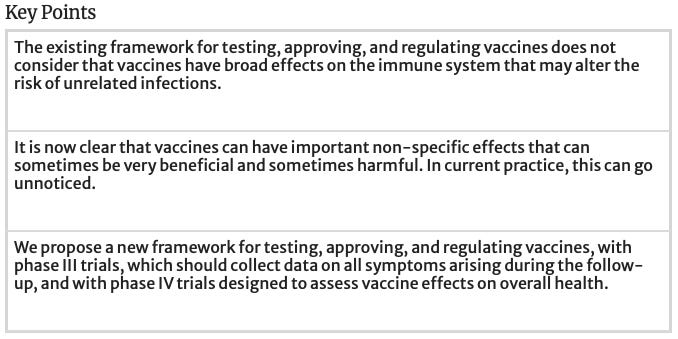
Stabell Benn said this framework should have been applied to the covid-19 trials. A major flaw in testing was that they did not assess whether the mRNA vaccines affected the risk of contracting other infections.
“While they reported covid-19 cases, they overlooked the possibility that people might’ve developed other infections like pneumonia down the track due to a weakened immune response after mRNA vaccination,” said Stabell Benn.
RT | September 1, 2023
Indonesia’s military chief has denied issuing any shared statements with his US counterpart during a visit to Washington last week, after the Pentagon published a “joint” press release attributed to Jakarta which criticized Moscow and Beijing.
Speaking to reporters on Thursday, Defense Minister Prabowo Subianto said the US statement does not reflect his country’s positions, stating that Indonesia seeks friendly relations with both Russia and China.
“There is no joint statement and no press conference. What is important for me to underline is that our relationship with China is very good. We respect each other, we already have mutual understanding. I conveyed that in the US,” he said, adding “We are close friends with China, we respect America, and we seek friendship with Russia.”
The official went on to announce plans to visit Beijing and Moscow in the coming months, voicing hopes that Jakarta could serve as a “bridge” between rival states.
The Pentagon missive, published on August 24 was titled ‘United States DoD and Indonesia MoD Joint Press Statement’ and took on a different tone. It claimed that both the US and Indonesia “shared the view that the People’s Republic of China’s (PRC) expansive maritime claims in the South China Sea are inconsistent with international law.” It also went on to “jointly” condemn Moscow’s actions in Ukraine, demanding a “complete and unconditional withdrawal” of Russian forces.
Though Indonesia’s Defense Ministry noted Subianto’s meetings with Pentagon head Lloyd Austin, it made no mention of any joint statement with Washington, and offered no comments about Russia or China.
Beijing was quick to jump on the American statement, with China’s embassy in Jakarta claiming the remarks had not been approved by Indonesian officials beforehand.
“We’re informed by the Indonesian side that what the US side described is not true. In fact, no such content can be found in the press release by the Indonesian side at the same meeting,” the embassy told reporters last weekend, slamming US efforts to “to sow discord and stir up trouble.”
During Subianto’s trip to the US, the two countries agreed to boost military cooperation, including joint war games and additional US weapons sales. The Pentagon further said Washington would help Jakarta’s military modernization drive, proposing “fighter aircraft upgrades, new multi-role fighter aircraft, and additional fixed and rotary wing transport aircraft,” among other gear.
Highlighting the growing military ties, Indonesian officials announced a deal to purchase 24 Sikorsky S-70M Black Hawk transport helicopters from US arms giant Lockheed Martin last week, soon after signing a major contract with Boeing for two-dozen F-15 fighter jets. Jakarta is working to revamp its air fleet, which currently operates systems from several different countries, including both US- and Russian-made fighter jets.
By Paul Homewood | TCW Defending Freedom | September 1, 2023
Climate alarmists love summer. It gives them an opportunity to exploit every heatwave, wildfire and hurricane. It is much harder to scare people in winter, when snow is supposed to be a thing of the past, and who doesn’t welcome a nice spring day or Indian summer?
So here are some of the silly scare stories which have appeared in the few weeks while we’ve been away.
1 Wildfires in Portugal
THE BBC went into full alarmist mode after some fires during a bit of hot weather in Portugal early last month. They reported: ‘Firefighters in Portugal are battling to contain wildfires engulfing thousands of hectares amid soaring temperatures. Around 800 personnel attended a fire near the southern town of Odemira overnight on Monday, with more than 1,400 people having to evacuate. At least nine firefighters have been injured tackling the fires. Temperatures in excess of 40C (104F) are expected to hit much of the Iberian peninsula this week.’
The BBC would like you to believe that hot weather is somehow unusual in Spain and Portugal! And as usual they provide no context at all. The big fire near Odemira burned 6,700 hectares (16,500 acres) but this is a tiny figure compared with the annual wildfire area in Portugal each year. And the data clearly shows there is no upward trend.

As for temperatures of 40C, what is so unusual about that? Temperatures of 39C in Cadiz are certainly not unheard of:

2 Wildfires in Hawaii
THE media quickly tried to link the wildfires on the Hawaiian island of Maui to global warming, with the BBC blaming a ‘dry summer’. The Guardian went one step further saying the fires were made worse by the climate crisis.
Summers in Maui are always dry. But as local experts have been warning for years, the intensity and rapid spread of this fire was the direct result of the spread of savanna-type grasslands in the last couple of decades.
Clay Trauernicht, a professor of natural resources and environmental management at the University of Hawaii, said it would be misleading simply to blame weather and climate for the blazes. Millions of acres of Hawaii was cleared for plantation agriculture in the early 20th century, principally pineapple and sugar cane. Plantations were by and large fairly resistant to fire. However since 1980 they have shut one by one because of economic pressures, and now there are barely any left. In their place have come uncontrolled invasive species of savanna plants, such as Guinea grass which grows rapidly in the wet winters to a height of 10ft. In summer, these grasses quickly dry out, creating a tinderbox. All it needs is a spark and a strong wind to spread it, and the inevitable disaster will follow, just as it did last month.
Local fire and agricultural experts issued this very warning in a 2014 report, and recommended that the grasslands be properly managed and fire breaks be constructed. The authorities did nothing.
I doubt if you will read any of this in the Guardian.
3 The heatwave that never was
CAN the Met Office become an even bigger laughing stock than they are already?
On Wednesday August 16, they and the clowns at the UK Health Security Agency (UKHSA) announced a Yellow Heat Alert for most of England, saying that temperatures would peak at 28C (82F) on Friday the 18th. This in itself was absurd as 28C is hardly life-threatening!
Friday arrived, and most of us were trying to keep warm under grey skies and rain. If you were lucky enough to find a bit of sunshine, you might have got temperatures of 23C.
How can the Met Office have got it so wrong? Maybe in future they might try getting their forecasts right instead of spending their time pumping out global warming propaganda.
4 The storm that never was
ON THE same day that the Met Office announced the Yellow Heat Alert, they also issued a Yellow Warning for Storm Betty, as the Irish Met Office were to name it, which was due to hit us on the day on Saturday August 19.
According to the Met Office forecast on Friday morning, we could expect up to 80mm (3in) of rain and winds in excess of 70mph in exposed places, and 50mph more widely, particularly in West Wales which would see the strongest winds.

The reality was much more mundane. Ballypatrick in the hills of Northern Ireland saw the most rain, 36mm (1.4in), and the extremes in England and Scotland were much less. As for winds, the Met Office managed to find a handful of extremely exposed sites. Capel Curig, for instance, at an altitude of 216m (708ft) in the middle of Snowdonia, recorded 66mph.
Down in the real world it was no more than a breezy day. Even on the West Wales coast, which was supposed to be worst affected, gusts reached only about 20mph, with sustained winds of about 10mph. According to the Beaufort Scale, that would be described as a ‘gentle breeze’.
But Gentle Breeze Betty does not have quite the same ring about it!
5 It does rain in Southern California
TROPICAL storms rarely hit California, but that does not mean they never do. The reason has nothing to do with climate, it is simply that Eastern Pacific hurricanes usually head west, away from the coast.
Last week, Hurricane Hilary headed north instead, and made landfall in California as a weaker tropical storm. Naturally the BBC went into full alarmist mode, blaming it on climate change in an article full of misinformation. They claimed that rainfall records had been broken across the state and in particular in Palm Springs, though why one solitary town should be of any consequence is a mystery to me.
To push home their message, they said that Los Angeles was in ‘recovery mode’ after 2.48 inches of rain, a record for August apparently.
In reality, Hilary was no wetter than other tropical storms to hit California, and 2in of rain in a day is not unusual at all in Los Angeles:

As for Palm Springs, even that record claim does not stand up to scrutiny, since it was wetter in 1922.
The September 1939 tropical storm, El Cordonazo, followed the same path as Hilary, and dropped twice as much rain on Los Angeles as Hilary, as well as larger amounts elsewhere. Hurricane Kathleen in 1976 is generally accepted as by far the wettest to hit California, with the 14.76 inches that fell on Mount San Gorgonia in a day still the official state record. Kathleen was described as a 1-in-160-year event, with hundreds of homes damaged and parts of California declared a disaster area. The highest rainfall recorded from Hilary was 11.74 inches, and the damage was considerably less than in 1976.
So once again we find that the BBC is playing fast and loose with the facts so that it can promote its political agenda. The same applies to the MSM and the Met Office.

or go to
Aletho News Archives – Video-Images
By GARETH PORTER | CounterPunch | February 27, 2013
“Going to Tehran” arguably represents the most important work on the subject of U.S.-Iran relations to be published thus far.
Flynt Leverett and Hillary Mann Leverett tackle not only U.S. policy toward Iran but the broader context of Middle East policy with a systematic analytical perspective informed by personal experience, as well as very extensive documentation.
More importantly, however, their exposé required a degree of courage that may be unparalleled in the writing of former U.S. national security officials about issues on which they worked. They have chosen not just to criticise U.S. policy toward Iran but to analyse that policy as a problem of U.S. hegemony. … continue
 Aletho News If Americans Knew No Tricks Zone
 Aletho News