Care homes – The evidence of harms
If you have a weak stomach don’t read this
By Carl Heneghan and Tom Jefferson | Trust the Evidence | September 30, 2023
We’ve written a lot about the systemic failings in government policy regarding care homes (see here, here and here).
However, a recent study on the transitions between hospitals and care homes caught our eye. The sort of study that bypasses the media: Two care home providers with 20 to 40 care homes each in the South West and the North East of England participated, and 70 participants were interviewed.

The study exemplifies the impact hospital discharge policies had: “… hospitals just wanted patients out, regardless of COVID status. To be brutally honest, they weren’t interested; they just wanted people out. In those early days, you know, it was very traumatic.”
And how hospitals desperately enacted a policy to clear the decks: “… we had a phone call from a nurse from the hospital to say that … this lady was lying beside somebody, less than two meters, who was COVID-positive.”
These instances highlight how thoughtless and reckless the government policies were. Driven by error-strewn modelling along with a chronic lack of capacity in the NHS, panic set in: hospitals would be quickly overwhelmed. Something had to be done to free up capacity – an easy target was found: the elderly and the most vulnerable and brutally the least able to stand up for themselves.
Hospital discharge service requirements were first published on 19 March,. On 2 April, the guidance said, “Some of these patients [admitted from a hospital or a home setting] may have COVID-19, whether symptomatic or asymptomatic. All of these patients can be safely cared for in a care home if this guidance is followed.
This policy, which saw discharges to care homes without testing, has been ruled unlawful by the High Court. In Gardner & Anor, R, Lord Justice Bean and Mr Justice Garnham found that government policy was “irrational” because it failed to consider the risk to elderly and vulnerable residents from asymptomatic transmission.
It took until 15 April to recommend testing and 14 days of isolation for admissions to care homes. Before this, negative tests were not required prior to transfers/admissions into the care home.
The study interviews show that care homes became no-go zones: “GPs or other healthcare professionals or multidisciplinary, like, podiatrists, everyone has difficulty coming to see the residents as of high demand or they can’t come for whatever reason, so COVID-19. They used to come, now they are no longer able to.”
The study also emphasises the inhumane practice of isolating vulnerable people ‘Strong feeling that isolating care home residents went against usual practice and, for some, was very hard to endure, especially when they needed human contact and emotional support from family and friends following a period of hospitalisation.’
We’ve written about “Confinement Disease”, which is likely more harmful than covid in care homes. ‘Among long-term care residents in the Southern Ile-de-France region, more than 24 covid deaths among 140 residents occurred in 5 days. None were due to acute respiratory distress syndrome, and death was mainly due to hypovolemic shock as residents were confined to their rooms for several days without assistance with eating and drinking.’
Confinement leads to feelings of being in prison: “… rather than keeping them in hospital we would send them [to the COVID-19 unit], and then once they’re 14 days clear, I know it’s 10 now, but it was 14, then they would go back to their original care home. But it’s just been carnage, to say the least.”
The study interviews also showed how degrading and impersonal confinement practices were “… so they couldn’t have their belongings until it had been left in a certain place and washed at a certain heat and 72 hours before you can have them back. You go in your room, and you can’t see anybody, and when you do, they’ve got masks and visors, and you cannot hear them, and you’ve got all of that.”
Socially distancing and isolating the most vulnerable comes with costs. The practice of rapidly discharging patients is unlawful, yet is anyone interested at a government level in how to better look after those in care?
Patients were discharged from high-resourced hospital settings – where some had time to do Tik-Tok dances – to low-resourced care homes, which worsened as staff went off in their droves—the opposite of what you need, as less care equates to more deaths. Then you isolate vulnerable people who can’t care for themselves – again, the polar opposite of what these people need, preventing much-needed personal care that can be life-saving. Even worse, at the end of life, were the restrictions on who could share that moment, hold a person’s hand as they drew their last breath, and prevent compassionate care at one of the most important times.
The potential for harm is exceptionally high in care homes; with quarantining, physical and mental deterioration occurs rapidly, and renal failure occurs swiftly in the face of dehydration – the ultimate price to be paid is a lonely death.
Nobel Winner Highlighted “Non-Trivial” Side Effects of mRNA Vaccines Including Auto-Immunity and Blood Clotting Risks

BY ROBERT KOGON | THE DAILY SCEPTIC | OCTOBER 2, 2023
In what seems like an inevitable development, scientists Katalin Karikó and Drew Weissman have been awarded the 2023 Nobel Prize in Medicine for their role in developing the mRNA technology underlying the Pfizer-BioNTech and Moderna COVID-19 vaccines, which were rolled out in late 2020.
But in a paper published as recently as 2018 and which is extensively quoted in an article at MedPageToday, none other than Drew Weissman warned that prior clinical trials of mRNA vaccines had produced results which were “more modest in humans than was expected based on animal models… and the side effects were not trivial”, including “moderate and in rare cases severe injection site or systemic reactions”.
Further summarising the paper by Weissman and three colleagues in Nature Reviews Drug Discovery, MedPageToday notes:
Their chief safety concerns, which they said should be closely watched in future trials, were about local and systemic inflammation, as well as keeping tabs on the “expressed immunogen” and on any auto-reactive antibodies.
“A possible concern could be that some mRNA-based vaccine platforms induce potent type I interferon responses, which have been associated not only with inflammation but also potentially with autoimmunity,” they wrote. “Thus, identification of individuals at an increased risk of autoimmune reactions before mRNA vaccination may allow reasonable precautions to be taken.”
The authors also noted that extracellular RNA could contribute to edema, and cited a study that showed it “promoted blood coagulation and pathological thrombus formation.”
The MedPageToday article is titled ‘Want to Know More About mRNA Before Your Covid Jab?‘ How many readers actually went ahead and got it after they knew?
Robert Kogon is the pen name of a widely-published journalist covering European affairs. Subscribe to his Substack and follow him on X.
Online Censorship: Canada Continues Crackdown
Most media services must now “register for regulation”
By Kit Knightly | OffGuardian | October 2, 2023
On Friday the Canadian Radio-television and Telecommunications Commission published new guidelines requiring media outlets to register with the service so their content can be “regulated”.
Under the new regulations all streaming services, social media companies and platforms that host podcasts would be [emphasis added]:
required to provide the CRTC with information related to their content and subscribership
This is the culmination of a “public consultation” launched back in May. For those unfamiliar with “public consultation”, it is a process by which government agencies use members of the public to tell them what they want to hear.
CRTC’s press release couches the move in faux-liberal talking points, referring to it as “modernising Canada’s broadcasting framework” and “ensuring online streaming services make meaningful contributions to Canadian and Indigenous content”, but that is clearly camouflage for an obvious power-grab.
It’s noteworthy that podcasting services are made a specific focus.
After all, these days anyone with a microphone and internet connection can start broadcasting whatever they want to whoever they want, with little to no “regulation” of their content. That’s a no-no for a burgeoning global dictatorship fixated on the world’s subjugation through the control of information.
Don’t be surprised if the Canadian government starts “reviewing content” from podcast services and saying things like…
“Podcast X is broadcasting hate speech/propaganda/misinformation about subject Y, you cannot stream any podcasts in Canada until X is removed from your service.”
That’s supposition, but hardly a stretch given the huge surge in censorship of all kinds from governments all around the world since the “pandemic”.
In fact, you can almost see this as a direct response to some of the propaganda failures of the mainstream media during the “pandemic”.
The alternative media was able to win a lot of battles during the Covid roll-out, and a push to “regulate” podcasts is a quasi-admission of this. As are the words of CRTC Chair Vicky Eatrides:
We are developing a modern broadcasting framework that can adapt to changing circumstances.
“Adapting to changing circumstances”… deliciously vague, but also fairly clear. They don’t have the power they need to regulate the growing voice of non-mainstream sources given rise by the internet.
The three measures announced on Friday are unlikely to be the last, the end goal is a fully “modernized” Broadcasting Act to be passed in late 2024.
What will that include? Who knows.
But considering the Canadian government has already blocked all news-sharing on social media, unpersoned and unbanked peaceful protesters, enforced “vaccines” and given a standing ovation to a literal member of the SS, you’d be forgiven for fearing the worst.
Israeli forces injure Palestinian school children in West Bank raid

Press TV | October 2, 2023
The Palestinian Ministry of Education has suspended classes in the village of Burqa due to the injury of a child in a raid by Israeli forces into a school.
Ghassan Daghlas, acting governor of the occupied West Bank city of Nablus, said on Monday the decision to close the school was to maintain the safety of students.
Local media reported that Israeli forces also directly fired stun grenades and tear gas canisters toward the Palestinian students inside the school during the raid a day earlier. Dozens of children also suffered from smoke inhalation.
Israeli forces also denied teachers of 27 schools access to classes in Masafer Yatta area, located south of the city of al-Khalil (Hebron). The regime forces placed barriers to block the roads leading to the education centers.
In recent months, Israeli forces have also demolished a number of schools across the occupied Palestinian territories.
The Palestinian Ministry of Education in an earlier statement said the demolition of schools was “a heinous crime.”
“These practices have become a flagrant violation of students’ right to safe and free education.”
What’s behind the sudden US good will towards Iran?
By Robert Inlakesh | RT | October 2, 2023
In what proved to be a domestically controversial move, the US government approved the release of five prisoners held in Iran in return for releasing five Iranian detainees and billions of previously frozen assets. However, in the aftermath of the agreement between Tehran and Washington, the White House’s primary focus seems to be centered around securing a Saudi-Israeli deal rather than working on reviving the 2015 Iran nuclear deal, known formally as the Joint Comprehensive Plan of Action (JCPOA).
As revealed by the anonymous diplomatic sources of The Cradle, in addition to other tidbits released in US media, the US-Iran prisoner swap appears to have been much more than meets the eye. The informal agreement, according to these anonymous sources, encompassed freezing Iranian uranium enrichment at 60% and permitting the International Atomic Energy Agency (IAEA) to install cameras at several nuclear sites. On the other hand, the US’ concessions included disregarding Iranian oil sales – in essence, refraining from enforcing sanctions – and allowing all Iranian assets to be released, reportedly amounting to roughly $20 billion. This is well over the widely reported $6 billion touted in the international press.
What makes this agreement so intriguing is that it was non-formal, including no known signed documents, and was contrived over several months and under the auspices of Qatar and Oman as intermediaries. From leaked information, citing unnamed sources, what we can gather – regardless of what claims are true or false – is that the prisoner swap was more than a simple exchange of prisoners and $6 billion in frozen assets. According to a report released in May by Axios, secret indirect talks between the US and Iran had been conducted in Oman, which three sources close to the news outlet claimed Iran’s top nuclear negotiator, Ali Bagheri Kan, was part of. Later, in June, the New York Times released a report claiming that secret negotiations were going on, aimed at concluding an informal agreement to replace the need to revive the 2015 nuclear deal.
To begin with, if we are to assume that the official US narrative on the agreement is correct, despite Iranian officials having contradicted it, then the most apparent objective in mind from Washington’s perspective would be to cause a thaw in America’s relationship with the Islamic Republic. As various analysts have suggested, this could have also signaled hope for a revival of the nuclear deal, which fell apart after the administration of former President Donald Trump unilaterally withdrew from it in 2018. Hope had largely faded that the administration of President Joe Biden could bring the deal back to life after Biden was revealed to have said that it was officially “dead” in November of 2022.
However, given the information we have at hand, what is most likely here is that this represents a massive de-escalation following ship seizures and the beefing up of America’s troop presence in the Persian Gulf back in August. Why a de-escalation now? Is it to revive nuclear deal talks? This appears highly unlikely. Instead, the prisoner exchange agreement comes simultaneously with, and is somewhat overshadowed by, developments in the ongoing discussions to reach an American-brokered normalization deal between Saudi Arabia and Israel.
The two nations, both powerful partners of the US in the Middle East, have never had formal diplomatic relations with each other. Saudi Arabia does not recognize Israel as a sovereign country and has been at loggerheads with it over its treatment of Arabs in Palestine, which Riyadh ostensibly wants to see as an independent nation. Negotiations to finally normalize diplomatic relations have been ongoing for months now, with the US being a highly invested middleman, given that achieving such a deal would help consolidate its power base in the region. As for Iran, while Israel sees it as an existential enemy, Saudi Arabia has had a complicated relationship with it, only having re-established diplomatic ties earlier this year in a deal brokered by China.
When Biden met with Israeli Prime Minister Benjamin Netanyahu in New York on the sidelines of the United Nations General Assembly (UNGA)’s 78th session, they publicly discussed the high hopes of concluding Saudi-Israeli normalization. This was followed by two Fox News interviews, one with Saudi Crown Prince Mohammed Bin Salman and the other with the Israeli PM, during which both said that the deal grows closer by the day. At Benjamin Netanyahu’s address to the UNGA, he spoke at length on Iran; however, there was no mention of the recent US-Iranian prisoner exchange.
In fact, Israel has remained silent on the informal deal. This is especially interesting, considering that Tel Aviv routinely attacks the prospect of any agreement with Iran, let alone one that allows for tens of billions in funds to be transferred back into the hands of Tehran. In June, Netanyahu spoke over the phone with US Secretary of State Antony Blinken, during which he discussed Iran at length and proclaimed that he opposes and will not be bound by any agreement struck between Washington and Tehran.
On September 5, Antony Blinken spoke with the Israeli premier again, allegedly discussing Iran as the primary subject of the call. While the precise details of the calls are impossible to apprehend, there had to be a good chance that the prisoner swap agreement was mentioned, as reports had publicly been leaked to the press regarding Iran-US talks. With so much focus placed upon Iran by Israel, it makes no sense that Tel Aviv would remain silent on the prisoner exchange, especially given the release of Iran’s formerly frozen funds.
Not silent on the unfreezing of Tehran’s billions were Republican politicians in the US Congress. If the Biden administration were to have accepted a renewal of the 2015 nuclear deal, one of its major hurdles would have been passing the deal in Congress, including the deeply opposed Republican-led House of Representatives. In fact, any attempt to try and pass a deal, at this point, could reflect negatively on the Biden White House, which matters more now as we head towards the 2024 presidential election.
Therefore, by striking an informal agreement with Tehran, the US de-escalates and addresses some of its worries surrounding Iran’s nuclear program. More importantly, however, the US government could be trying to create a fertile environment for the conclusion of an Israeli-Saudi normalization agreement, both by calming Iran down to de-escalate regional tensions and, possibly, leveraging concessions to ease Tehran’s pushback against the normalization directly. Whether this strategy will work or not is yet to be seen. Still, it is clear that the key foreign policy goal for Joe Biden is securing the normalization agreement, which is why it makes sense that the most powerful nation that opposes it – Iran – should be addressed and taken seriously.
Robert Inlakesh is a political analyst, journalist and documentary filmmaker currently based in London, UK. He has reported from and lived in the Palestinian territories and currently works with Quds News. Director of ‘Steal of the Century: Trump’s Palestine-Israel Catastrophe’.
British Defense Sec ‘Mad’ to Suggest ‘Catastrophic’ Military Mission to Ukraine
By James Tweedie – Sputnik – 02.10.2023
The UK’s newly-appointed defense secretary was “mad” to suggest sending troops and ships to Ukraine, a military expert has said.
British Defense Secretary Grant Shapps told a newspaper over the weekend that UK soldiers could be sent to Ukraine to train conscripts to Volodymyr Zelenksy’s depleted army.
The defense secretary even hinted that Royal Navy ships could be sent to the Black Sea to escort Ukrainian merchant vessels following the breakdown of the grain export deal with Russia — in spite of Turkiye’s ban on military vessels of any other nation transiting the Bosphorpus straits to enter the land-bound sea.
Prime Minister Rishi Sunak quickly slapped down Shapps in a TV interview on Sunday on the eve of his Conservative Party’s annual conference in Manchester, saying: “There are no British soldiers that will be sent to fight in the current conflict.”
Since 2022, the British Army has put tens of thousands of Ukrainian recruits through three-week crash courses on training grounds in the UK before they are sent to the frontlines.
Similarly, documents leaked from the US Department of Defense in April this year estimated that there were up to 50 SAS special forces operating covertly in Ukraine, but did not indicate what their mission might be.
Former British MP Matthew Gordon-Banks, a senior research fellow at the Armed Forces Defense Academy in Oxfordshire and Conservative partymate of Shapps, said Shapps’ comments to the media were a “complete PR disaster.”
“Shapps gave an interview, possibly over-stating his intentions as a new defense secretary ahead of a speech to the Conservative Party conference. The Telegraph wrote it up as a certainty,” Gordon-Banks told Sputnik. “I suspect it horrified the prime minister, security and intelligence sources and the wider government.”
The military expert said Shapps’ suggestion of sending British troops into the warzone was simply unthinkable.
“His idea was absolutely mad. Only this week, Russian leaders like [State Duma Chairman Vyacheslav] Volodin, [Foreign Minister Sergey] Lavrov and [Security Council Deputy Chairman Dmitry] Medvedev have made it clear about how the conflict in Ukraine will end and what they would see as unnecessary escalation by NATO,” Gordon-Banks said.
He noted that the article had quickly been taken down from the newspaper’s website — possibly at the insistence of the intelligence services.
“Such a deployment would be catastrophic in both diplomatic and military terms,” Gordon-Banks warned.
In an article in the same newspaper on Sunday, Shapps’ predecessor at the Ministry of Defense Ben Wallace claimed Ukraine was winning its summer offensive — already written off by some US generals and even British state broadcaster the BBC — despite only capturing a handful of villages after four months of fighting.
He also urged Kiev to begin conscripting teenage boys into its army in an attempt to stop Russia from bringing overwhelming force to bear.
“The average age of the soldiers at the front is over 40,” Wallace wrote. “I understand President Zelensky’s desire to preserve the young for the future, but the fact is that Russia is mobilizing the whole country by stealth,” he claimed.
The defense analyst said Kiev was already press-ganging youths to make up for the terrible casualties its army has suffered over the past year and a half.
“Ukraine has already lost three armies,” Gordon-Banks stressed. “They are now pulling 16- to 18-year-olds off the streets. 500,000 Ukrainians have already died fighting a senseless, unnecessary war and it is time for the West to move more quickly to end this conflict.”
American Meddling Failed To Prevent Robert Fico’s Victory In The Latest Slovak Elections
BY ANDREW KORYBKO | OCTOBER 1, 2023
The “Direction-Social Democracy” (SMER) party of former Prime Minister Robert Fico emerged victorious after Slovakia’s latest elections on Saturday in spite of Russia’s Foreign Intelligence Service (SVR) warning before the vote that the US will go to any lengths to prevent that outcome. Nobody should have been surprised by that since CNN’s reporting made it obvious that Washington wanted him to lose. Here are three of their articles fearmongering about his democratically driven return to office:
* “A NATO country could soon have a pro-Russian leader”
* “With Kremlin apologist leading the polls, Slovakia vote threatens country’s support for Ukraine”
* “Pro-Russian politician wins Slovakia’s parliamentary election”
The reason why America meddled in this election is because it fears both the substance and symbolism of a hitherto stalwart NATO vassal defecting from the bloc’s anti-Russian proxy war coalition. Fico previously condemned the West’s role in provoking and perpetuating this conflict exactly as neighboring Hungarian leader Viktor Orban has done since the get-go. Just like him, Fico is also against arming Ukraine and could prevent others’ weapons from transiting across his country as well.
He’ll still need to form a governing coalition in order to make good on his promises, but few doubt that he’ll be able to. Assuming that’ll happen, then Slovakia will join Hungary in creating a center of anti-war gravity in the heart of both the EU and NATO, which complements Poland’s newly cautious stance towards this proxy conflict brought about by its dispute with Ukraine. These three could then form an influential force if the latter’s ruling “Law & Justice” (PiS) party wins re-election on 15 October.
Poland remains much more committed to this conflict than Hungary and post-election Slovakia, but there’s also no denying that the Polish people are incredibly offended at Ukraine’s ungratefulness. A critical mass of them might therefore vote for the anti-establishment Confederation party to protest PiS’ prior appeasement of Kiev up until recently despite that regime’s glorification of those who genocided Poles. If enough do so, then PiS might be compelled to form a coalition government with Confederation.
In that case, Poland might move closer towards Hungary and Slovakia’s position, which could inspire average Europeans to follow these countries’ lead during their own upcoming elections. The demonstration effect that was set into motion by Slovakia and which might soon manifest itself in Poland is therefore regarded by the US as a strategic challenge for good reason. That doesn’t justify its failed meddling in the latest Slovak elections, but simply places its motives into the appropriate context.
The fact that the CIA still failed to prevent Fico’s re-election dispels three popular myths, first and foremost that agency’s omnipotence. The second is foreign voters’ alleged inability to defy the American government’s will, the false perception of which has been exploited to suppress anti-establishment turnout. And finally, the Ukrainian Conflict is truly unpopular in some countries despite the media’s claims to the contrary and its crazed efforts to artificially manufacture support for this proxy war there.
With these symbolic outcomes in mind as well as the substantive changes to Slovak policy that are likely to follow its latest election, not to mention their possible impact on Poland in the coming future and the rest of Europe after that, the failure of America’s meddling campaign is a major development. It’s premature to describe it as a game-changer, but it still suggests a potentially impending inflection point in the Ukrainian Conflict, provided of course that the CIA doesn’t successfully sabotage related trends.
Georgia Awaits USAID’s Explanations on Funds for Training in Organizing Unrest
Sputnik – 02.10.2023
 TBILISI – Georgia is waiting for clarifications from the US Agency for International Development (USAID) regarding information about the funding of training in organizing unrest in the country, Georgian parliamentary speaker Shalva Papuashvili stated on Monday.
Earlier in the day, the State Security Service of Georgia (SSSG) said on social media that three Serbian citizens from the Center for Applied Nonviolent Action and Strategies (CANVAS), allegedly funded by USAID, arrived at the end of September in Georgia to teach tactics for overthrowing the government to young people and members of influential non-governmental organizations. According to the SSSG, the coup was planned for October-December, just when the European Commission is set to publish its decision on Georgia’s EU membership application.
“It was a dark day in the history of American aid to Georgia… We see that money of the American nation is used for planning revolutionary processes, to deliberately train people to riot and incite violence. That is why it is important to receive a corresponding explanation on behalf of the USAID, which has been involved in such a scandal for the second time already,” Papuashvili told reporters.
Georgia’s former deputy interior minister, Giorgi Lortkipanidze, and the commander of Georgian Legion in Ukraine. Mamuka Mamulashvili, who used to be a bodyguard of Georgia’s jailed ex-President Mikhail Saakashvili, were accused of plotting the coup.
An independent online news platform reported that this is at least the seventh time since the ruling Georgian Dream party came to power in 2012 that officials have accused various entities of plotting a coup against the government.
Featured Video
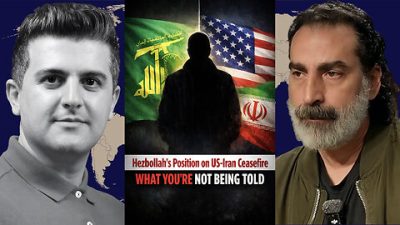
Laith Marouf: Hezbollah’s position on US-Iran ceasefire
or go to
Aletho News Archives – Video-Images
From the Archives
Is Israel to blame for the Iraq War?
American Goy | March 10, 2008
I am so tired of this old canard that “Israel had nothing to do with USA’s war with Iraq – in fact, it officially advised America against it”.
Bullshit. … continue
Blog Roll
 Aletho News
- Laith Marouf: Hezbollah’s position on US-Iran ceasefire: What you’re not being told
- Israel’s priority lies in destroying chances of peace between Iran, US: Ex-UN nuclear chief
- Ceasefire for all or for none: Iran shuts Hormuz over Lebanon attacks
- Strait of Hormuz is Iran’s ‘nuclear weapon’ that forced US retreat: Medvedev
- Energy crisis will last for months – Kremlin envoy
- Europe’s quiet role in the war on Iran
- Forty days that shook the Empire: How Iran turned the tables on US and prevailed
- Netanyahu unilaterally declares Lebanon outside of ceasefire deal
- Israeli leaders: ‘Not a single goal’ achieved in war with Iran
- What on earth just happened? Trump, Iran, and the unlikely ceasefire
- If Americans Knew
- Gazans face a triple crisis: severe shortages of water and bread, healthcare in tatters
- NY Times reports how Netanyahu took the US into Iran War
- A sigh of relief over Iran, but Gaza and Lebanon in dire straits – Daily Update
- Thousands dead and neighborhoods razed to the ground: Aid agencies fear southern Lebanon is becoming the new Gaza
- The war the US is fighting for Israel could cost trillions
- ‘Cigarette Burns, Nail Wounds’: Toddler Tortured in Gaza to Coerce Father
- Trump Says US Sent ‘a Lot of Guns’ to Protesters in Iran
- Israeli forces destroy 17 UN peacekeeper cameras in south Lebanon
- US-Israeli strikes ‘completely destroy’ synagogue in Tehran
- Archbishop for US Military Says Iran War Is Unjust Under Catholic Teaching
- No Tricks Zone
- An Inconvenient Tree: Uncovered In Alps… Europe Much Warmer Than Today 6000 Years Ago
- New Study Reports A 60% Slowdown In Greenland’s Ice Loss Rate In The Last Decade
- Low Intensity Tornado Wrecks Major Solar Farm, Creating A Potential Toxic Dump
- New Study Finds Warming Saves Lives…Cold Temperatures 12 Times More Deadly Than Excess Heat
- German Science Blog Accuses PIK Climate Institute Of Hallucinating Climate Tipping Points
- Devastating Assessment Of Comirnaty Vaccine By Former Senior Pfizer Europe Toxicologist
- New Study: CO2 Is ‘Effectively Negligible’ As An Explanatory Climate Change Factor Since 2000
- Former Pfizer Toxicologist Dr. Helmut Sterz Tells Bundestag Hearing Pfizer Vaccine Should Have Never Been Approved
- Energy Expert: Germany’s Nuclear Phaseout Was A “500 Billion Euro Mistake”
- New Research: South Australia’s Mid-Holocene Sea Surface Temperatures Were 4°C Warmer Than Today
 Aletho News