War with Hamas deals ‘severe economic blow’ to Israel
The Cradle | October 17, 2023
Eleven days into its war with the Hamas-led Palestinian resistance, Israel is paying a heavy economic toll, Maariv reported on 17 October.
The Israeli newspaper reported that “the Israeli economy appears to have already begun to pay a heavy price for the war,” which began on 7 October with the start of Hamas’ Al-Aqsa Flood Operation.
The newspaper explained in a report published Tuesday that “4.6 billion shekels [$1.1 billion] is the price paid by the Israeli economy as a result of workers not coming to work and low productivity in Israeli institutions.”
According to the analysis of the economic department of Israel’s Manufacturers Union, the closure of the education system, blocking of traffic routes, and the extensive mobilization of the army reserves has also hurt economic productivity.
In total, it is estimated that about 1.3 million Israeli workers did not go to work this week.
In southern Israel, some 85 percent of workers were absent from their jobs, along with about 20 percent of workers in the rest of Israel.
The head of the Manufacturers’ Union and the head of the Employers and Companies Association, Ron Tomer, said after the harsh assessments that “there is no doubt that the war constitutes a severe economic blow to the economy.”
According to Maariv, this estimate does not take into account “additional and very significant financial damage, which will only be assessed economically at the end of the fighting, such as direct damage to factories and damage to profitability.”
In addition to decreased productivity, Israel will see indirect damage, such as the damage to the reputation of Israeli companies with customers abroad, cancelled transactions, failure to adhere to schedules, and the depreciation of the shekel.
Should the conflict widen to include not just Hamas but also Iran, a key backer of the Palestinians, Bloomberg estimates oil prices could climb to $150 a barrel and cause a global recession that takes about $1 trillion off world output.
Iranian involvement on the Palestinian side could lead to a cut in Iranian oil output and a tightening of western sanctions hindering Iranian oil sales.
Bloomberg notes further that an oil shock of this size would also derail the worldwide effort to rein in inflation. In the US, the Federal Reserve’s 2 percent inflation target would not be met, and costly gasoline would be a hurdle for President Joe Biden’s re-election campaign.
Another possibility is that Iran could close the Strait of Hormuz, the world’s single-most important energy corridor. Globally, over one-sixth of oil and one-third of liquefied natural gas passes through the narrow strait
“The gas market is calm but tense,” Henning Gloystein, director for energy, climate and resources at the Eurasia Group think tank said.
“It doesn’t take much to go into a fever pitch. We had the Ukraine war, Russian gas supply cuts, oil cap sanctions and now you have war in the Middle East as well — that’s a problem,” he said.
No comments yet.
Featured Video
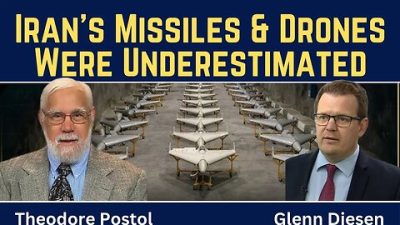
Theodore Postol: Iran’s Missiles & Drones Were Underestimated
or go to
Aletho News Archives – Video-Images
From the Archives
What is the Israeli Lobby in Australia Doing in Interfaith Dialogue?
By Ali Kazak | Dissident Voice | October 11, 2015
For years Israel and its lobby around the world have been trying to normalise their relations with Arabs and Muslims without solving the Palestine Question.
One of the methods they resorted to in the last few years is using human rights and community organizations such as interfaith dialogue and Multiculturalism to achieve this objective and to: isolate the Palestinians, marginalise the Palestine question, end Israel’s isolation, and prevent criticism of Israel, knowing that these organisations will be the first to stand against Israel’s violations, racial and religious discrimination.
The group responsible for this task in Australia is The Australia/Israel & Jewish Affairs Council (AIJAC); its Director of International & Community Affairs, Jeremy Jones is in charge of lobbying religious community organizations, specifically Muslims and Christians. Consequently he convened the Faith Communities for Reconciliation, founding participant in the Australian Partnership of Religious Organisations and the Australian National Dialogue of Christians, Muslims & Jews.
AIJAC is a private political propaganda group. It is recognised as the main Israeli lobby in Australia. It coordinates its activities and works intimately with the Israeli embassy in Canberra and different institutions in Israel. It is privately funded by some Jewish businessmen. It monitors closely Australian politicians, the media, ethnic and religious groups, (especially Arabs and Muslims), unions and academics on their stands towards Israel and the Palestine question. … continue
Blog Roll
 Aletho News
- The Most Important Bet You’ve Never Heard Of
- The killing of three Indonesian soldiers in Lebanon should remind Jakarta that Israel does not want peace
- Defeated and delusional: Netanyahu’s remarks reveal $80bn war failure, says analyst
- Iran’s friends are about to make life much more difficult for Israel and the US
- The war of liberation of the Arab and Islamic peoples expands across the Gulf
- Envoy warns UN on Trump’s threat to ‘obliterate’ Iran’s civilian infrastructure
- The Larak Corridor: Iran’s Rial Gate With No US, No Israel, and No Way Around
- ‘Economic terrorism’: Steel facilities hit again in US-Israeli strike
- ‘War Crime’: Iran condemns attacks on Arak, Ardakan nuclear sites
- Two-thirds of Americans want quick end to Iran war even if goals unmet
- If Americans Knew
- Gaza families reunite years after babies evacuated amid Israel’s war
- International Rescue Committee warns Gaza’s children face grave protection risks
- Iran’s Alleged 47-Year War on America: Debunking the 1,050 American Deaths Canard
- Israel wants US to bomb more of Iran’s civilian structures (113,000 is not enough) – Not a ceasefire Day 173
- Ann Coulter Rips Into Fox News for Iran War Coverage
- Joe Kent Urges Americans To Call White House and Congress To Object To Sending Troops Into Iran
- DNC Resolution to Reject AIPAC Funding Puts Democratic Leaders in the Hot Seat
- Swedish foundation to build 400 schools as over 650,000 Gaza children remain without education for 2 years
- Israeli army admits photshopping image of slain Lebanese journalist
- This is how Israel is systematically killing health workers under the cover of war in Lebanon
- No Tricks Zone
- New Study Finds Warming Saves Lives…Cold Temperatures 12 Times More Deadly Than Excess Heat
- German Science Blog Accuses PIK Climate Institute Of Hallucinating Climate Tipping Points
- Devastating Assessment Of Comirnaty Vaccine By Former Senior Pfizer Europe Toxicologist
- New Study: CO2 Is ‘Effectively Negligible’ As An Explanatory Climate Change Factor Since 2000
- Former Pfizer Toxicologist Dr. Helmut Sterz Tells Bundestag Hearing Pfizer Vaccine Should Have Never Been Approved
- Energy Expert: Germany’s Nuclear Phaseout Was A “500 Billion Euro Mistake”
- New Research: South Australia’s Mid-Holocene Sea Surface Temperatures Were 4°C Warmer Than Today
- Storing Green Energy To Last Germany 10 Days Would Require A 60-Million Tonne Battery
- New Studies: UK Sea Levels Were 4 Meters Higher Than Today During The Mid-Holocene
- Destructive Green New Deal: German Energy And Metal Group Warns Of Drastic Crisis
 Aletho News
Leave a comment