Kissinger & the Americas: How the US Built Order ‘on The Ashes of Genocide’
Sputnik – December 3, 2023
“A huge loss.” “A cherished friend and mentor.” “His appointment said as much about his greatness as it did America’s greatness.” Tributes are pouring in after the death of Henry Kissinger, America’s best known diplomat.
Kissinger died Wednesday at the age of 100 at his home in Kent, Connecticut. Having served as US Secretary of State for eight years under the presidencies of Gerald Ford and Richard Nixon, Kissinger strove to maintain global US dominance during a time when it was in doubt. His influence molded America’s foreign policy for years to come.
But not everyone celebrates the empire built by the highly consequential statesman.
An Argentine speaks with Sputnik about how her family was affected.
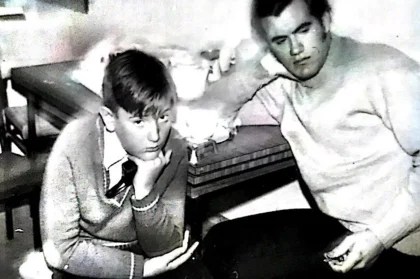
Guillermo Montes (right) pictured next to his brother (left), the father of Agustina Montes © Courtesy of Agustina Montes
“What it really is, is a kingdom built on the ashes of genocide,” said Agustina Montes in an interview with Sputnik.
Montes is an Argentine citizen now living in New Zealand. Inflation neared 150% in her home country last month amidst an economic crisis that’s wreaked havoc on Argentina for half a decade.
Compounding the financial disruption, Montes sees an Argentine society still torn apart by its recent history.
“Genocide denialism is at an all time high,” laments the 37-year-old. “With the elections in Argentina, it’s more pressing than ever. Politicians make barely veiled threats about military uprising. We know what that can mean.”
Argentina’s vice president-elect Victoria Villarruel has downplayed the brutality of the South American country’s seven-year military dictatorship. Villarruel made headlines last month when she criticized UNESCO’s decision to declare Buenos Aires’ ESMA Navy school a World Heritage site. Tens of thousands passed through the facility before being tortured or killed.
Among them were Montes’ uncles, Miguel and Guillermo.
Reorganization
The “National Reorganization Process” was the benign name for the regime that seized power in 1976.
Argentines knew it was a military dictatorship. They’d seen several throughout the 20th century. If the generals sought to “reorganize” Argentine society it was through the barrel of a gun.
Amid the violence, one figure in Washington provided Argentina’s new rulers with the legitimacy they craved.
“We have followed events in Argentina closely,” said then-Secretary of State Henry Kissinger to the country’s new foreign minister Admiral Cesar Augusto Guzzetti. “We wish the new government well. We wish it will succeed. We will do what we can to help it succeed.”
“If there are things that have to be done, you should do them quickly.”
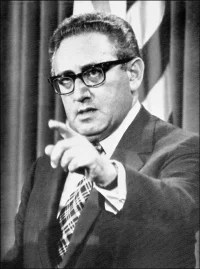
Photograph taken on April 29, 1975 in Washington of the then US Secretary of State Henry Kissinger. © AFP 2023 / GENE FORTE
For the junta, the things that had to be done were kidnapping, torture, and murder. The regime faced pressure from armed resistance groups. Some of them aligned with charismatic former President Juan Perón. Many were socialists. The regime was intent on snuffing them out.
“I have a ‘desaparecido’ on each side of my family,” Montes told Sputnik, using the Spanish term for people who vanished during that period. “My dad’s brother Guillermo and my mum’s brother Miguel Angel.”
“Miguel Angel Fiorito – Milan to his family – was taken on July 12th, 1976, so pretty early in the dictatorship. My uncle was 21 and very idealistic, I’ve been told he was very funny and warm. He worked in the villas, or slums, and had a very keen sense of social justice.”
“Guillermo Montes was my dad’s brother. He was a bit older when he was taken, about 27 or 28. He made it to 1977. He was a massive man, called ‘the Yeti’ by his companions. He went to work one day and never came back.”
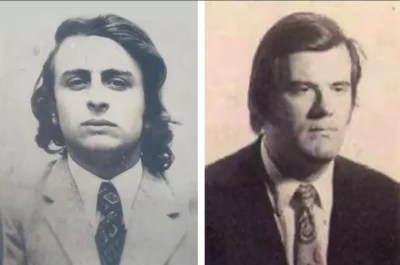
Left: Miguel Angel Fiorito, Right: Guillermo Montes © Courtesy of Agustina Montes
In the repressive fog of the time, “disappeared” became the euphemism for those who fell prey to the reorganization. The word was terrifying as much because of the uncertainty it implied as anything else. Families rarely received closure. “The army never spoke,” says Montes.
Parents throughout the country sought answers. The Madres de Plaza de Mayo was formed when a group of mothers came together in Buenos Aires’ central square. The group became known for their unique form of silent protest, wearing white headscarves symbolizing the cloth diapers of their disappeared children.
Montes said her grandmother knew of the Madres, but “she lacked the political beliefs they had. She loved her son but didn’t believe that what he had done was right.”
Politics provoked sharp divisions in Argentine society in those days.
“My mum’s family was pretty pro-dictatorship up until that point [that Miguel was kidnapped],” says Montes, “mostly because they were anti-Perón.” Montes explained that Miguel began Argentina’s required military service in March of 1976.
“He was also a part of the Montoneros, one of the leftist anti-dictatorship movements. Growing up in the ‘90s, where the rhetoric was that everyone involved in the guerrilla was a terrorist, I had a deep sense of shame about this. We did not discuss politics in my house.”
“My uncles were very present ghosts but we would not talk about them.”
The Chilean Method
The divisions within Montes’ family mirrored those throughout Latin America. Cuba’s revolution sent shockwaves across the region with the reverberations felt at the highest echelons of American power. They only intensified as grassroots movements approached political legitimacy.
Washington’s worst fears were realized in 1970, when the socialist Salvador Allende was elected president of Chile.
“I don’t see why we need to stand by and watch a country go communist due to the irresponsibility of its people,” said Kissinger during a closed-door meeting with Nixon. “The issues are much too important for the Chilean voters to be left to decide for themselves.”
The CIA immediately went to work destabilizing Allende’s democratic government, infiltrating Chile’s trade unions, provoking strikes, fomenting opposition within the military. Within three years Allende was overthrown in a military coup backed by Kissinger. The country’s new leader General Augusto Pinochet declared war on the left, and Santiago’s national soccer stadium was filled with dissidents waiting to be tortured, jailed, and killed.
Nixon’s embrace of Pinochet was justified under the Cold War banner of anticommunism. Socialists, democratically-elected as they may be, were also simply bad for business as it turned out. Concerned about their investments in Chile, the US-based International Telephone & Telegraph Corporation funneled millions of dollars toward forces plotting Allende’s downfall.
Three years later, Argentina’s military government sought a similar approach to repress opposition. “Their theory is that they can use the Chilean method,” aide Harry Shlaudeman informed Kissinger in 1976. “That is, to terrorize the opposition – even killing priests and nuns and others.”
By then an axis of dictatorship stretched across the Southern Cone, with American-backed juntas in Chile, Uruguay, Paraguay, Bolivia, Brazil, Peru, and now Argentina. Under the coordination of the US Central Intelligence Agency the governments coordinated their efforts in a campaign of state terror known as Operation Condor.
“I don’t remember the first time I heard or read his name,” said Montes of Kissinger. “My family didn’t speak about this, and back then this whole period of Argentine history was completely erased from history classes at school.”
“I think of his name in proximity to the names of our dictators: Videla, Massera. Kissinger, the CIA, ‘Plan Condor.’ Like shadowy figures behind it all.”
Montes is likewise unsure about what drew her uncles towards issues of social justice.“They didn’t get that from their families,” she insisted. “None of my grandparents were particularly socialist, quite the contrary. I believe they saw the disparities, the injustice all around them. But they were both middle class. My mum always says Miguel would give the clothes off his back if it meant helping someone else.”
The Latin American left was a diverse array of forces. Some admired the guerrilla tactics of Che Guevara. Others simply advocated for Western European-style labor reforms. Still, others professed Liberation Theology, a strain of Catholicism that stressed concern for the poor.
But after Cuba’s popular uprising against US-backed dictator Fulgencio Batista trended towards socialism, any movement from below could be suppressed in the name of fighting the communist threat.
“Some people still say that my uncles and others like them were terrorists,” claims Montes, “that they did all sorts of horrible things, bombed child care centers and schools. Where is the evidence of that?”
“And if they did, why did the military – that was in control of the government, the police and the judicial system – not put them through a trial and in jail? Why did they disappear them and destroy any evidence and witnesses of what they allegedly did?”
Miguel and Guillermo stood firm by their beliefs, even as the military consolidated its rule.
“There is resentment towards them from my parents and grandparents,” says Montes. “They both could have escaped Argentina. They chose to stay knowing what could happen to them.”
Heaven and Earth
Kissinger stayed on as secretary of state through 1977. Then-US President Jimmy Carter continued to support the junta until the following year; when he moved to end arms transfers, Kissinger registered his opposition by attending the 1978 World Cup in Argentina as the personal guest of dictator Jorge Videla.
US relations with the regime were restored and expanded after the election of Ronald Reagan in 1980 as the CIA sought their assistance in training Central American death squads.
Lieutenant General Videla’s government shaped up to be perhaps the most repressive of all those of the Condor era. Of the 60,000 who were killed across the continent, it’s estimated that around half of them were Argentines.
Montes’ grandparents were determined to make sure Miguel and Guillermo weren’t among them.
“[Miguel] was taken and my grandma, who was also widowed around that time, started moving ‘heaven and earth,’ as we say, to find him,” she said. “She was threatened by police and even by the church when she went there, they told her she would end up just like him.”
“My parents met through their mothers’ – my grannies’ – fight to find out what happened to their sons. I used to think it was a very romantic story when I was a child. But the reality is that two very broken people met each other because of one of the most horrific things that happened to them.”
The final years of the dictatorship saw mounting economic instability. The military attempted to distract from the matter by waging war against the United Kingdom for control of the Falkland Islands. When they failed, the days of the junta were numbered.
Liberal democracy was restored in 1983. Time went by, but Miguel and Guillermo were still gone. President Carlos Menem’s pardon of the junta leaders six years later suggested a desire to forget about the nightmare of Argentina’s Dirty War.
It was only in 2003, when new investigations were opened, that the relatives of Argentina’s desaparecidos finally saw the potential to receive some closure. For Montes’ family the process would take over a decade.
“We didn’t get to find out what happened to my uncles until very recently, almost 40 years after the fact,” says Montes. “The only reason we know what happened is because of witnesses, people that survived, who saw them.”
In that moment Miguel and Guillermo reappeared, but only in memory as Montes’ family imagined their tragic last days.
“They were both taken to the same concentration camp, the ESMA. Miguel Angel was tortured with electricity until he died. We don’t know what happened after, his body was likely burned.”
“Guillermo was able to survive the electric torture. He was drugged and put on a plane, and dropped alive in the River Plate.”
Very Present Ghosts
Montes recounts the horrible toll of her uncles’ kidnappings on her family.
“My mum was around 14 years old when her brother disappeared and her dad died. That family was destroyed… Most of the people this happened to have been destroyed: mentally, physically. My parents have had substance abuse issues, mental health issues.”
“A lot of people in my country want us to ‘move on’ from what happened, to stop talking about it. But how can you do that when the collective trauma still remains?”
Montes now feels much differently about her uncles – especially Miguel, who she’s heard many stories about.
“I have since learned a lot about my uncle and believe he was an incredible man. It feels weird to say, when he died at 21. But what made Miguel and Guillermo literally give their lives for what they believed in? I don’t know. I wish I got to meet them, to talk to them.”

Young Miguel Angel Fiorito as an infant (left) and young boy (right) © Courtesy of Agustina Montes
Among the many condolences and the judicious praise of Kissinger as a friend, a pioneer, and even a peacemaker, the eulogy of former US ambassador to Israel Martin Indyk may contain the most truth: “He was deeply skeptical of those who would aim to try to achieve a peaceful world. He was much more focused on establishing order because order was more reliable than peace.”
“I’m not surprised,” responded Montes. “Order for most, freedom for few.”
And what about George Bush’s comment, that Kissinger was a symbol of “America’s greatness?”
“I feel like they are saying the quiet part out loud. He is a symbol of America’s imperialism,” says Montes.
“Living in South America – and I’m sure this is true of many other so-called ‘Third World countries’ – we get sold this glossy idea of the US, you know? The Land of the Free, of Opportunity, of Freedom and Dreams.”
“I used to be enamored with the US! I grew up watching US TV shows and movies. I learned English from watching ‘Friends.’ It’s only when you grow up a bit that you start seeing it for what it is.”
The Palestinian American scholar Edward Said once remarked:
Every single empire in its official discourse has said that it is not like all the others, that its circumstances are special, that it has a mission to enlighten, civilize, bring order and democracy, and that it uses force only as a last resort.
And, sadder still, there always is a chorus of willing intellectuals to say calming words about benign or altruistic empires, as if one shouldn’t trust the evidence of one’s eyes watching the destruction and the misery and death brought by the latest mission civilizatrice.
When asked about the influence of the junta – and that of Kissinger and the United States – Montes is unequivocal.
“Their legacy is seen in the poverty in the villas, in the sunken eyes of hungry kids all over the world, in the missing but remembered, in the children of women who were taken that we are still looking for. It’s still very much there.”
But Montes doesn’t think the final chapter has been written in the story of Latin America. “I wholeheartedly believe in justice.”
No comments yet.
Featured Video
Theodore Postol: Iran’s Missiles & Drones Were Underestimated
or go to
Aletho News Archives – Video-Images
From the Archives
Wars for Israel: A reminder of who’s giving the marching orders
By Damian Lataan | February 7, 2012
As the West prepares to march off to yet another war in the Middle East, we should perhaps remind ourselves of who is giving the West their marching orders.
In February 2003, just weeks before the US and their allies launched their attack on Iraq and her peoples, a delegation of US congressmen, together with the US Ambassador to the United Nations, John Bolton, a well known pro-Zionist and neoconservative war-hawk, were in Israel at the invitation of the Israeli government then led by Israeli Prime Minister Ariel Sharon.
Addressing the congressmen, Sharon told them ‘that Iran, Libya and Syria should be stripped of weapons of mass destruction after Iraq’. Later, Sharon told John Bolton ‘that Israel was concerned about the security threat posed by Iran, and stressed that it was important to deal with Iran even while American attention was focused on Iraq’. … continue
Blog Roll
 Aletho News
- Wave 90: IRGC strikes US-linked industrial sites in Gulf
- Iran Says US-Israeli Claims of Its Military Strength Are Wrong
- Trump’s April Fools’ Address to the nation
- The Most Important Bet You’ve Never Heard Of
- The killing of three Indonesian soldiers in Lebanon should remind Jakarta that Israel does not want peace
- Defeated and delusional: Netanyahu’s remarks reveal $80bn war failure, says analyst
- Iran’s friends are about to make life much more difficult for Israel and the US
- The war of liberation of the Arab and Islamic peoples expands across the Gulf
- Envoy warns UN on Trump’s threat to ‘obliterate’ Iran’s civilian infrastructure
- The Larak Corridor: Iran’s Rial Gate With No US, No Israel, and No Way Around
- If Americans Knew
- Gaza families reunite years after babies evacuated amid Israel’s war
- International Rescue Committee warns Gaza’s children face grave protection risks
- Iran’s Alleged 47-Year War on America: Debunking the 1,050 American Deaths Canard
- Israel wants US to bomb more of Iran’s civilian structures (113,000 is not enough) – Not a ceasefire Day 173
- Ann Coulter Rips Into Fox News for Iran War Coverage
- Joe Kent Urges Americans To Call White House and Congress To Object To Sending Troops Into Iran
- DNC Resolution to Reject AIPAC Funding Puts Democratic Leaders in the Hot Seat
- Swedish foundation to build 400 schools as over 650,000 Gaza children remain without education for 2 years
- Israeli army admits photshopping image of slain Lebanese journalist
- This is how Israel is systematically killing health workers under the cover of war in Lebanon
- No Tricks Zone
- New Study Finds Warming Saves Lives…Cold Temperatures 12 Times More Deadly Than Excess Heat
- German Science Blog Accuses PIK Climate Institute Of Hallucinating Climate Tipping Points
- Devastating Assessment Of Comirnaty Vaccine By Former Senior Pfizer Europe Toxicologist
- New Study: CO2 Is ‘Effectively Negligible’ As An Explanatory Climate Change Factor Since 2000
- Former Pfizer Toxicologist Dr. Helmut Sterz Tells Bundestag Hearing Pfizer Vaccine Should Have Never Been Approved
- Energy Expert: Germany’s Nuclear Phaseout Was A “500 Billion Euro Mistake”
- New Research: South Australia’s Mid-Holocene Sea Surface Temperatures Were 4°C Warmer Than Today
- Storing Green Energy To Last Germany 10 Days Would Require A 60-Million Tonne Battery
- New Studies: UK Sea Levels Were 4 Meters Higher Than Today During The Mid-Holocene
- Destructive Green New Deal: German Energy And Metal Group Warns Of Drastic Crisis
 Aletho News
Leave a comment