Washington inching closer to a war with Iran
By Salman Rafi Sheikh – New Eastern Outlook – 08.02.2024
An Iran-US war would be an ideal scenario for Israel. On the one hand, Israel is systematically killing and driving the Palestinians out of their homes, which is allowing it to impose the so-called one-state solution. In this context, if the US plunges into a war with Iran and can inflict a lot of military and economic damage on Israel’s biggest enemy state in the region, that is the best possible scenario for Israel’s future standing in this region. On the one hand, US military engagement in the ongoing war will increase, and on the other hand, a US war on Iran might limit the extent to which Tehran can provide support to Hamas against Israel. This war is no longer a distant possibility, especially after the recent strike in Jordan that killed three US soldiers and wounded at least 34 others. Biden, who immediately accused the Iran-backed militia known as The Islamic Resistance based in Syria and Iraq, has vowed to retaliate. The target is Iran, even though Iran has officially denied supporting this group for striking the US. Nonetheless, US counterstrikes are going to happen, especially because Washington is already striking the Houthis in Yemen to control the Red Sea.
With these upcoming strikes, the US will be involved in at least three fronts, i.e., against Hamas, against the Houthis, and the Islamic Resistance. (This is in addition to the US involvement in Ukraine against Russia.) With deepening US involvement in the Middle East and against Iran, Washington is directly stepping into a sort of quagmire that it took 20 years to get out of in Afghanistan.
A war in the Middle East will not be too much different from the US wars in Iraq and Afghanistan, although a direct war with Iran would also mean going against a force that is much more organized, better equipped, and bigger than Saddam Hussain’s Iraqi army or the Taliban in Afghanistan. There are more than 45,000 US troops on the ground throughout the Middle East. There are another 15,000 personnel on board two aircraft carrier groups. If the US starts a war, Iran does have the capability to hit these targets, or the so-called Iran-backed groups can do the same.
The recent attack in Jordan has after all shown that the US air defense is far from impenetrable. This war, in this sense, could inflict a lot more damage to the US military forces than did the Iraq and Afghanistan wars. Still, many people in the US want Washington to tackle not just the so-called Iran-backed militias, but Iran itself. A report in the NATO-backed Atlantic Council says,
“In recent weeks, Iran has waged a shadow war against the United States and its interests in the Middle East, and now three US service personnel are dead and dozens more injured … Washington could sink the Iranian navy, like then-President Ronald Reagan did in the 1980s. It could strike Iranian naval bases. It could target the Iranian leadership, following in the footsteps of then President Donald Trump’s killing of Iranian General Qassem Soleimani. It could seize this opportunity to degrade Iran’s nuclear and missile program—which must be addressed soon regardless”.
Wesley Clark, a retired general who was once NATO’s supreme commander in Europe, wrote on X that “The US should stop saying, ‘We don’t want to escalate.’ This invites them to attack us. Stop calling our strikes ‘retaliation’. This is reactive. Take out their capabilities and strike hard at the source: Iran.” From within the US political class, Senator Tom Cotton (Republican), known for his staunch criticism of the Biden administration’s Iran policy, insisted that the deaths of the three US troops warranted a “devastating military retaliation against Iran’s terrorist forces, both in Iran and across the Middle East”.
With the Biden administration also fanning such ideas out, it means that targeting Iran will become an issue that may have bi-partisan support in the US. Within the US political system, if an issue has bi-partisan support, it tends to minimize the political risk for the given President. In other words, if the Republicans want Biden to retaliate against Iran, it means that they will not be able to criticize him for starting another war. It was the Trump administration that targeted Iran much more directly when it killed Sulemani in Iraq than the Biden administration has done in the past three years.
This is on top of the fact that a growing political opinion in the US points to the inability, or unwillingness, of Washington to hit Iran directly, i.e., inside Iran. This, some hawks have argued, encourages Iran to adopt an aggressive policy vis-à-vis the US, although it does not explain at all why Iran, a much smaller political and economic power than the US, would create such situations that might throw its country into a long turmoil.
Although the Biden administration is more likely to hit the so-called Iran-backed groups in the first round of counterstrikes, there is little gainsaying that this will add to the difficulty of managing the Middle East in a way that minimizes the possibility of war. It will only make a direct war much more possible.
The only geopolitical deterrent the US might consider seriously is whether or not it will have the support of the Middle Eastern states themselves against Iran, for a wider war in the region would jeopardize these states too in the sense that it will cause the conflict to spread and major middle eastern states, such as Saudi Arabia, are in the middle of massive modernization projects. A wider war in the region would disrupt this process, which is why they are more likely to oppose a US bid to wage a direct war. At the same time, given Israel’s position, it is likely to continue to push for, or create conditions, for a war against Iran to accomplish its key objectives, i.e., developing a Greater Israel and eliminating the main regional opposition to it.
Salman Rafi Sheikh is a research-analyst of International Relations and Pakistan’s foreign and domestic affairs.
Biden vs Trump has profound implications for the world order
By Glenn Diesen | RT | February 8, 2024
The world is watching the US presidential election closely as it will have significant implications for global governance. President Joe Biden and former leader Donald Trump have very different views on how the world order should be governed and how the US should respond to its relative decline.
Biden wants to restore unipolarity with ideological economic and military blocs, strengthening the loyalty of allies and marginalizing adversaries. Trump has a more pragmatic approach. He believes the alliance system is too costly and limits diplomatic room for maneuver.
Since World War II, the US has enjoyed a privileged position in the key institutions of global governance. The Bretton Woods format and NATO ensured its economic and military dominance within the West. After the collapse of the Soviet Union, the Americans sought to extend their liberal hegemony around the globe.
They developed a security strategy based on global superiority and an expanded NATO. Washington assumed that its dominance would mitigate international anarchy and great power rivalry, and that liberal trade agreements would strengthen the US’ position at the top of global value chains. The replacement of international law with a ‘rules-based international order’ – in effect, sovereign inequality – was supposed to promote American hegemony and enhance the role of liberal democratic values.
However, unipolarity has proven to be a temporary phenomenon because it depends on the absence of rivals and values are devalued as instruments of power politics. The US has predictably exhausted its resources and the legitimacy of its hegemony, and competing powers have collectively counterbalanced Washington’s hegemonic ambitions by diversifying economic relations, staging retaliatory military operations, and developing new regional institutions of global governance.
The Cold War was a unique period in history because the West’s communist adversaries were largely disconnected from international markets, and military confrontation strengthened alliance solidarity to the extent that it mitigated economic rivalry between the capitalist allies. After the Cold War, however, the former communist powers, China and Russia, gained experience in managing economic processes, and submission to the US-led economic path lost its value for them.
The system of alliances has also begun to decline. The US previously was willing to subsidize European security in exchange for political influence. But Washington shifted its strategic focus to Asia, demanding that its European allies show geo-economic loyalty and not develop independent economic relations with rivals China and Russia. Meanwhile, the Europeans sought to use collective bargaining mechanisms through the European Union to establish autonomy and an equal partnership with the United States.
It is now clear that the unipolar moment has come to an end. The US military, exhausted by failed wars against weak opponents, is preparing for a conflict against Russia and China and a regional war in the Middle East.
The ‘rules-based international order’ is openly rejected by other major powers. US economic coercion to prevent the emergence of new centers of power only encourages separation from US technology, industry, transport corridors, banks, payment systems, and the dollar.
The US economy is struggling with unsustainable debt and inflation, while socio-economic decline is fueling political polarization and instability. Against this backdrop, Americans could elect a new president who will seek fresh solutions for global governance.
Biden’s global governance: Ideology and bloc politics
Biden wants to restore US global dominance by reviving the Cold War system of alliances that divided the world into dependent allies and weakened adversaries. It pits Europe against Russia, Arab states against Iran, India against China, and so on. Inclusive international institutions of global governance are being weakened and replaced by confrontational economic and military blocs.
Biden’s bloc politics is legitimized by simplistic heuristics. The complexity of the world is reduced to an ideological struggle between liberal democracies and authoritarian states. Ideological rhetoric means demanding geo-economic loyalty from the ‘free world’ while promoting overly aggressive and undiplomatic language. Thus, Vladimir Putin and Xi Jinping are smeared as ‘dictators’.
Multilateralism is welcome to the extent that it reinforces US leadership. Biden is less hostile to the UN and the EU than his predecessor, and under his administration, the US has rejoined the World Health Organization and the Paris climate agreement. But Biden has not revisited the Iran nuclear deal or reduced economic pressure on China to change its supply chains. The institutions that could constrain the US – the International Criminal Court (ICC) and the International Court of Justice (ICJ) – are not favored by either Biden or Trump.
The deteriorating socio-economic and political situation in the US will also affect Biden’s approach to global governance. Biden will remain reluctant to enter into new ambitious trade agreements as the losers of globalization and neo-liberal economics within the US move into the camp of the populist opposition. Nor will he favor free trade agreements in areas where China has a technological and industrial advantage, and his attempts to cut European states off from Russian energy and Chinese technology will further fragment the world into competing economic blocs.
Western Europe will continue to weaken and become more dependent on the US, to the point where it will have to give up any claim to ‘strategic autonomy’ and ‘European sovereignty’.
Biden has also shown a willingness to disrupt allied country’s industries through initiatives such as the US Inflation Reduction Act.
Trump’s global governance: ‘America First’ and great power pragmatism
Trump seeks to restore American greatness by reducing the costs of alliance systems and hegemony. He sees alliances against strategic rivals as undesirable if they involve a transfer of relative economic power to allies. Trump believes that NATO is an “obsolete” relic of the Cold War because Western Europeans should contribute more to their own security. In his view, the US should perhaps reduce its presence in the Middle East and allies should pay America for their security in some way. Economic agreements such as the North American Free Trade Agreement and the Trans-Pacific Partnership would have promoted US leadership, but under Trump, they have been abandoned because of the transfer of economic benefits to allies. Trump does not reject US imperialism, but wants to make it sustainable by ensuring a higher return on investment.
Less tied to the alliance system and unencumbered by ideological dogma, Trump can take a more pragmatic approach to other great powers. Trump is able to make political deals with adversaries, use friendly and diplomatic language when talking to Putin and Xi, and even perhaps make a diplomatic visit to North Korea. While Biden’s division of the world into liberal democracies and authoritarian states makes Russia an adversary, Trump’s view of the world as nationalists/patriots versus cosmopolitans/globalists makes Russia a potential ally. This ideological view complements the pragmatic consideration of not pushing Russia into the arms of China, the main rival of the US.
Global governance will be utilitarian in this case, and the main goal of the US will be to regain a competitive advantage over China. Trump is fundamentally inclined to blame China excessively for America’s economic problems. Economic pressure on China is intended to restore US technological/industrial dominance and protect domestic jobs. Economic nationalist ideas reflect the ideas of the 19th-century American system, where economic policy is based on fair trade rather than free trade. Trump appears to view the entire post-Cold War security system in Europe as a costly attempt to subsidize Western Europe’s declining importance. These same Europeans have antagonized Russia and pushed it into the arms of China. Trump’s unclear stance on NATO has even prompted Congress to pass a bill prohibiting presidents from unilaterally deciding whether to withdraw the US from NATO.
While Trump is in favor of improving relations with Russia, his presidency would be unlikely to achieve this goal.
The US can be seen as an irrational actor to the extent that it allows domestic political battles to influence its foreign policy. In 2016, Hillary Clinton’s campaign staff fabricated the Steele dossier and Russiagate to portray Trump as a Kremlin agent. In the 2020 election, Biden’s campaign staff attempted to portray the Hunter Biden laptop scandal as a Russian disinformation campaign and accused Russia of paying bribes to kill US troops in Afghanistan. These false accusations were designed to distract the public and make Trump look weak on Russia. All of this ultimately soured relations with Russia and even contributed to the current conflict in Ukraine.
Both Biden and Trump seek to reverse the relative decline of the US in the world, but the difference in their approaches will have a profound impact on global governance. While Biden seeks to restore US greatness through systems of ideological alliances that will fragment global governance into regional blocs, Trump will seek to withdraw from the institutions of global governance because they drain US resources and impede pragmatic policies.
Glenn Diesen is a Professor at the University of South-Eastern Norway and an editor at the Russia in Global Affairs journal.
Russia exit cost EU beer giant $5.9 billion

RT | February 8, 2024
The financial loss sustained by Danish brewing multinational Carlsberg Group due to its exit from Russia amounted to 40.8 billion Danish krone ($5.9 billion), according to the company’s full-year 2023 earnings report released on Wednesday.
Last year, the Russian authorities took temporary control of the local assets of the Copenhagen-based company, which used to operate Baltika Breweries. The move affected more than 99% of the shares within Baltika Breweries’ registered capital.
Prior to that, Carlsberg, which employed nearly 8,400 people in Russia, had been looking to sell the business amid intense international pressure on consumer brands to leave Russia in light of Moscow’s military operation in Ukraine.
The company’s local operations were handed over to the Russian Federal Property Management Agency, Rosimushchestvo. Carlsberg CEO Jakob Orup-Andersen later characterized the move as “stealing” the company’s business in Russia.
In October 2023, in response to the transfer, Carlsberg Group wrote down the entire value of its Russian business and terminated the agreements allowing its local subsidiary to produce, promote, and sell Carlsberg products.
The Russian brewer Baltika retaliated by filing a lawsuit to invalidate Carlsberg’s refusal to supply and license the Tuborg, Kronenbourg, Seth & Riley’s Garage, Holsten, and LAV brands. The court upheld Baltika’s claim, allowing it to continue to use the brands.
While the loss of Baltika pushed Carlsberg into a loss for the year, the Danish group reported a 4.7% increase in sales to 73.6 billion kroner ($10.6 billion), driven by price increases to offset higher costs due to soaring inflation.
US hints at sanctions if Hungary doesn’t soon ratify Sweden’s NATO membership
REMIX NEWS | FEBRUARY 8, 2024
NATO Secretary General Jens Stoltenberg told a press conference on Wednesday that he had spoken to Hungarian Prime Minister Viktor Orbán a few days ago, who assured him that the Hungarian Parliament would approve Sweden’s membership shortly after the start of the spring session.
Sweden’s membership of NATO has been in front of the Hungarian parliament for a while now, but no decision has been taken, despite an extraordinary session of parliament on Monday, which the governing party MPs, however, did not attend. This has put Orbán under increasing pressure from international officials.
Stoltenberg held a joint press conference with White House National Security Advisor Jake Sullivan in Brussels on Wednesday — the U.S. advisor arrived in the Belgian capital a day earlier. Among other things, Ukraine was discussed at the briefing, but later, The Washington Post asked him about Sweden’s membership of NATO.
The reporter recalled that the Hungarian government had promised that it would not be the last one to back Sweden’s NATO membership, yet this is the case, and it is still not known when Sweden will be a member of the alliance. He also added that some U.S. lawmakers have already proposed sanctions against Hungary for delaying Swedish membership, and asked the two officials if they still trust Hungary.
In response, Stoltenberg made clear that he believed Sweden could join the alliance soon.
“I spoke with (Prime Minister Orbán) a few days ago, and he made it very clear that he strongly supports Swedish membership of the alliance. It is also clear that the Hungarian parliament is not in session now, but they will reconvene at the end of February, and the message was that soon after that, they will make a decision on ratification of Sweden, so I expect that Sweden will be a full member in the near future,” Stoltenberg said.
Sullivan was more forceful in his response, indicating that the U.S. patience was not unlimited:
“So, I’m not going to stand here today and make particular threats or speculations about steps we would take down the road. But of course, our patience on this can’t be unlimited either. So, we’ll continue to watch it carefully but hope that there is a constructive resolution to this issue in the very near term,” he said.
Green Energies Shattering German Economy… Industrial Production Falls 7th Consecutive Month
By P Gosselin | No Tricks Zone | February 7, 2024
-1.6%!
That’s how much Germany’s industrial production fell in December, 2023. It’s the seventh-straight month of decline as the country’s energy woes mount.
One reason is reported by the Wall Street Journal today: ”Germany’s Industrial Production Falls For Seventh-Straight Month” in December 2023, far worse than expected.
To underscore the seriousness, 2023’s industrial production result is a whopping 10% below pre-pandemic levels.
One of the major drivers behind the demise is arguably the country’s disastrous energy policy, which has entailed shutting down cheap and steady conventional sources such as nuclear and natural gas and increasingly relying on unstable wind and solar energy. Energy prices have soared over the past years, thus driving inflation.
Things aren’t expected to improve much any time soon as the country is currently being plagued by strikes by train drivers, airport and airline personnel, who are fighting for higher wages that have been eroded away by high inflation. Energy supplies remain unstable and are expected to stay high.
Farmers are angry and have been demonstrating for weeks, often blocking transportation routes.
If there’s any light at the end of the tunnel, it’s a very faint one and the tunnel may be very long.
Currently many companies are announcing plans to move operations to business- friendlier locations.
‘Unacceptable’: Hungarian FM Hits Out at Nord Stream Blasts Not Being Investigated
Sputnik – 08.02.2024
The absence of any serious investigation into the Nord Stream blasts is unacceptable, and Hungary urges other countries to take this issue seriously, Hungarian Foreign Minister Peter Szijjarto told Sputnik after Sweden terminated its probe into the explosions.
On Wednesday, the Swedish Prosecutor’s Office announced the termination of its investigation into the blasts, ruling it does not belong to its jurisdiction. Sweden has handed the materials on the issue to Germany for its investigation into the matter, Swedish public prosecutor Mats Ljungqvist said.
“Hundreds of days have been passed, and no serious investigation has taken place yet. No details have been revealed yet. And I think it’s unacceptable,” Szijjarto said.
The minister called it “a terrorist attack against a strategic infrastructure in Europe.”
“An attack against the safe supply of energy of ours, is a strategic issue, and the matter of European security. And the fact that no investigation has taken place is very irresponsible and from our perspective, it’s really unacceptable. Therefore we urge authorities, be they national or international to take it seriously,” Szijjarto said.
Protesting Farmers Win Big Concessions, But EU Leaders Dig in Their Heels on Net Zero Climate Target
By John-Michael Dumais | The Defender | Febraury 7, 2024
Following the protests in Brussels last week by farmers from across the European Union (EU), the European Commission offered some concessions to the agricultural sector — but said it will not scale back its plan to cut 90% of greenhouse gas emissions by 2040, Reuters reported Tuesday.
The new commission plan drops the requirement to reduce farm-related emissions such as nitrogen, nitrous oxide and methane by one-third and removes the recommendation that EU citizens eat less meat, The Telegraph reported.
Commission President Ursula von der Leyen on Tuesday also offered to drop her proposal requiring farmers to cut pesticide use in half by 2030, saying it had become “a symbol of polarisation,” according to The Guardian.
Other concessions included limiting Ukrainian agricultural imports and delaying rules for setting aside more land to promote soil health and biodiversity.
At the behest of von der Leyen’s center-right European People’s Party, the revised commission plan features language praising the value of the agricultural sector, noting its importance for attaining the EU goal of food sovereignty, wrote Politico.
The compromise comes after weeks of escalating demonstrations by farmers in France, Spain, Germany, Portugal, Italy, Poland, the Netherlands, Belgium, Lithuania and other EU countries against several policies — from fuel subsidies and unfair trade practices to green emissions rules and taxes — that they said threaten their livelihoods.
The farmers argued the climate regulations have singled them out unfairly, imposing a disproportionate burden compared to other industries that also damage the environment, according to the Washington Examiner.
Over the past several weeks, tractors in several European cities blocked major highways and city streets — even an airport — forcing national governments to the negotiating table before the EU Parliament summit in Brussels last week.
German Chancellor Olaf Scholz’s coalition last month agreed not to eliminate a tax rebate on new agricultural vehicles, and to more gradually phase out subsidies on agricultural diesel fuel.
In France, Prime Minister Gabriel Attal’s government in January increased subsidies to livestock farmers, withdrew plans for a fuel tax hike, promised to clearly define lab-grown meat, banned the import of food grown with a neonicotinoid pesticide already prohibited in the country and suspended its pesticide-reduction plan.
Despite concessions, protests continue
Despite the concessions already made — and amid European Commission members releasing statements in support of farmers and their plight — farmers in multiple European countries continue to protest ahead of the June EU elections.
Farmers in Spain this week blocked major roadways in and around major cities in a series of protests, with a farming lobby calling the EU debate a “blame game.”
Italian farmers are massing in Rome to protest cheap imports from outside the EU, with banners featuring slogans such as “No farmer, no food.”
Dozens of Greek farmers’ organizations voted on Tuesday to descend on Athens with their tractors, blocking motorways to gain government concessions. These include speeding up reconstruction after the severe flooding last September in Thessaly, the heart of Greece’s agricultural production.
Even Croatian farmers are considering joining the EU-wide actions, citing green policies and trade agreements.
“We believe that the demands that are discussed at the protests in the EU are something that we agree with, and they are about problems that the entire EU is facing,” said Mladen Jakopović, president of the Croatian Chamber of Agriculture, on Tuesday.
EU leaders are hoping to quell the ongoing farmer protests in the months before the EU Parliament elections in June due to fears the unrest could yield a wave of populist candidates who are less eager to enact the climate measures.
EU’s climate policies remain largely unchanged
The recent accommodations for farmers offered by the European Commission have not changed its overall goal of achieving climate neutrality (net zero) by the year 2050, or its interim goals of a 55% reduction of greenhouse gas emissions by 2030 and a 90% reduction by 2040, according to Politico.
Wopke Hoekstra, the European commissioner for Climate Action, announced the goals Tuesday at the European Parliament meeting in Strasbourg.
European People’s Party spokesperson Peter Liese on Monday said his party’s support for these goals depended on a greater emphasis being placed on “positive opportunities” for farmers and less on “new instruments that rather see the farmers as an enemy of climate policy.”
The commission’s recommendations are not yet laws, which the next commission will consider after this summer’s EU elections. The EU Parliament and EU members will need to agree before such proposals are set in stone.
The climate target recommendations come as the German government, after scrapping its nuclear power reactors, last month announced plans to spend billions on new gas power plants to ensure long-term energy security.
John-Michael Dumais is a news editor for The Defender. He has been a writer and community organizer on a variety of issues, including the death penalty, war, health freedom and all things related to the COVID-19 pandemic.
This article was originally published by The Defender — Children’s Health Defense’s News & Views Website under Creative Commons license CC BY-NC-ND 4.0. Please consider subscribing to The Defender or donating to Children’s Health Defense.
Brussels sues Hungary again for new sovereignty law banning foreign funding of political parties
Opposition parties and media received over $10 million from overseas NGOs ahead of the last election, primarily with ties to the US Democratic Party
BY THOMAS BROOKE | REMIX NEWS | FEBRUARY 7, 2024
The European Commission has launched further infringement proceedings against Hungary — this time to contest a new law designed to restrict undue foreign political interference in domestic elections.
In a press release published on Wednesday, the EU executive claimed that the new law on the Defense of National Sovereignty violates “several provisions of primary and secondary EU law” including the democratic values of the Union, the electoral rights of EU citizens, and the right to a private life and the protection of personal data.
Hungarian lawmakers passed the legislation in December last year by a ratio of nearly 3:1. The new law provides for the creation of an independent authority — the Office for the Defense of Sovereignty — to investigate political interference in Hungarian elections, and the bill prohibits political parties or groups from receiving foreign financing.
A commission formed in the wake of Hungary’s election in April 2022 found various left-wing opposition parties and media outlets had received considerable sums of foreign funding before the election, primarily from the United States.
A National Security Committee report revealed that the U.S.-based NGO, Action for Democracy — an organization with close ties to billionaire oligarch George Soros — had donated HUF 1.8 billion (€4.48 million) to opposition leader Péter Márki-Zay’s campaign, while the pro-opposition news outlet, Ezalényeg, raked in HUF 1 billion (€2.57 million) from an unnamed Swiss organization.
Despite the funding, the coalition formed by left-wing opposition parties failed to dethrone Prime Minister Viktor Orbán and his governing Fidesz party, as they won a landslide victory.
During the committee stage, ruling Hungarian lawmakers were ordered to drop the bill by the commissioner for human rights of the Council of Europe, Dunja Mijatović, after complaining that the new oversight authority could demand personal data from those it suspects to have received foreign funding without adequate safeguards.
The Hungarian government has staunchly defended the new legislation, which came into force on Dec. 22 last year, insisting it was necessary to defend national sovereignty and prevent foreign interference in elections — an issue the European Union has long considered to be of paramount importance when it is Russia being accused of such underhand tactics.
An official report published by the Hungarian secret service links payments made by a U.S. non-profit, which has close ties to the Democratic Party and critics of the Hungarian government, to a movement founded by Hungarian opposition politician Péter Márki-Zay
“Hungary’s sovereignty is impaired – and it also carries a heightened risk to national security – if political power gets into the hands of persons or organizations dependent on any foreign power, organization or person,” the bill read.
Former advisor to Hungary’s ruling Fidesz party in the European Parliament, András László, said the bill is popular among the Hungarian electorate.
“Hungarians are outraged about the massive foreign interference in the 2022 general elections. The left-wing parties, media, and organizations received at least $10 million from the United States and Switzerland. The Biden administration announced more ‘grants’ to left-wing media just a few days ago,” he said.
The Commission stated that it had conducted a thorough assessment of the legislation and considers it to be unacceptable, giving Hungary two months to respond to its formal notice before progressing down the route of litigation in the European Court of Justice.
America First Legal Challenges Arizona Agencies’ Social Media Censorship in Defense of Free Speech
By Dan Frieth | Reclaim The Net | February 7, 2024
As part of a bold move to safeguard free speech and uphold constitutional values, America First Legal (AFL) has initiated a series of public records requests aimed at unearthing the extent of Arizona government agencies’ involvement in controlling social media narratives.
We obtained a copy of the records requests for you here.
These requests target the Center for Internet Security, along with Coconino, Maricopa, and Pima Counties, and the Arizona Secretary of State’s Office. The inquiry seeks details on communications and takedown requests pertaining to social media content.
The issue at hand revolves around recent elections, where federal and state entities, notably from Arizona, have actively engaged in monitoring and reporting what they classify as “misinformation.”
Such activities involved the Secretary of State’s Office and county election officials in Arizona, who flagged content to the Elections Infrastructure Information Sharing & Analysis Center (EI-ISAC).
Coordinated by the Center for Internet Security (CIS), the EI-ISAC acted as a conduit, forwarding these censorship requests to various social media platforms. Additionally, state and local government officials in Arizona have independently reported supposed misinformation directly to these platforms.
This has led to a situation where government officials have been accused of effectively coercing and pressuring social media companies into censoring content and speakers that they deem unfavorable, potentially influencing the outcomes of Arizona’s recent elections.
This entire scenario is seen by many as a glaring infringement of lawful free speech and is considered both unconstitutional and illegal.
“Freedom of speech is a core American principle that is the foundation for so many of our other rights and liberties. No government official should ever get involved in policing what American citizens can and can’t say online. Arizona’s elections play an outsized role in national politics right now. State and county officials who have been trying to suppress citizens’ free speech are also unconstitutionally trying to meddle in elections. That sort of activity needs to stop, and these public records requests will help shine a light on the extent of their past activities,” said James Rogers, America First Legal counsel.
Hamas response to proposed ceasefire has embarrassed Netanyahu
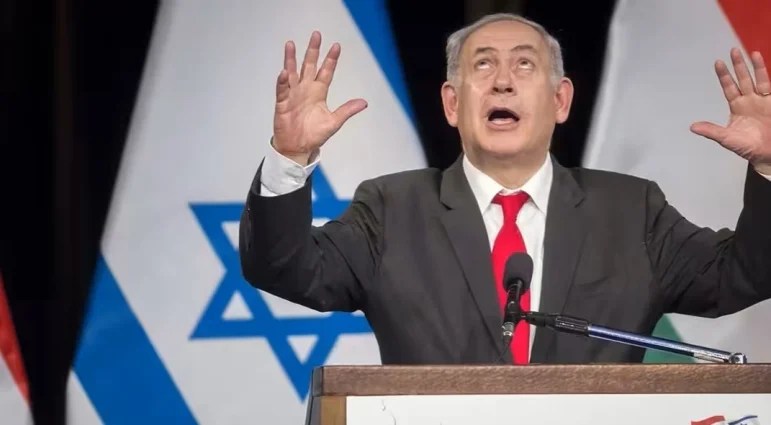
By Motasem A Dalloul | MEMO | February 7, 2024
The Palestinian Resistance Movement, Hamas, has handed over its response to the initial ceasefire deal recommended by a Qatari, Egyptian, French, Israeli and American summit held in Paris last week.
Media reports stated that the proposed deal stipulated a temporary truce for a certain time, during which Hamas, which also represents other Palestinian resistance factions, releases Israeli prisoners in Gaza, in return for a generous flow of humanitarian aid and release of hundreds of Palestinian prisoners enduring inhumane conditions in Israeli jails.
Initially, Hamas set its conditions on the deal and said it would study it and consult other factions before giving its final response.
Hamas stressed that it needed a comprehensive cessation of Israeli aggression and a complete withdrawal of the Occupation Forces from Gaza, providing shelter for the displaced people, reconstruction and lifting the 18-year-old Israeli siege and carrying out a serious prisoner exchange.
Israel, the US and others had waited for the response from the Palestinian factions in order to finalise the sought ceasefire deal.
During this time, when Hamas was studying and consulting fellow factions, Israeli Prime Minister, Benjamin Netanyahu, blamed the Palestinian Movement for continuous massacres his country’s army committed against the Palestinians.
At the same time, Netanyahu told families of the Israeli prisoners and other Israeli people and politicians who called for him to stop the war and surrender to Hamas — agree to a prisoner swap — that the ball was in Hamas’s court.
Finally, Hamas handed over its detailed response. It presented a three-stage-deal, with each stage lasting 45 days, starting with the first stage, from cessation of Israel aggression, withdrawal of Israeli Occupation Forces from populated areas, release of batches of prisoners, rebuilding hospitals and important civilian infrastructure, up to the daily entry of 500 trucks of the needed humanitarian aid and fuel.
Hamas stressed, in the second stage, on full cessation of aggression and complete withdrawal of the Israeli Occupation Forces from Gaza, the release of the remaining prisoners, the reconstruction of homes, retention of the flow of humanitarian aid and fuel, as well as guaranteeing unhindered access to the Rafah Crossing for fuel, treatment and other purposes.
The Palestinian Movement stated that the third stage stipulates complete ceasefire, exchange of prisoners’ bodies, accepting a three-year-timetable for the complete reconstruction of Gaza, reassurance of the resumption of all activities of UNRWA and agreeing on a concrete plan for a Palestine State.
Israeli media, including Kan public broadcaster reported that Netanyahu had accepted a potential ceasefire between the stages of the deal without even referring to his war cabinet. He decided to talk to the press on Wednesday. Nothing has yet emerged about his intentions, but analysts and commentators had their say.
Israeli journalist, Moshe Yair, commented: “Hamas embarrassed Netanyahu. It presented a clever response that did not show full acceptance or full objection of the deal. At the same time, it returned the ball to Netanyahu’s court, putting forth its own demands.”
Muna Omari, an Arab-Israeli journalist, said: “Whether it was positive or negative, Netanyahu’s response [Hamas reply] would infuriate the Israelis. “ She stated that, if he accepted Hamas’s demands, he would anger his extremist allies, and if he rejected them, he would anger the Liberals, families of the prisoners, the wounded soldiers, the deep state and the economy.
Even his genocide sponsors, the American administration, put forth several measures in front of him to push him to give up his arrogance. The US administration expressed it optimism about Hamas’s reply; however, it said a deal could be reached in two weeks. The US Congress did not approve the $17 billion aid package to Israel.
The ICJ has changed its head and assigned an Arab Lebanese judge, and Saudi Arabia reiterated its firm stance that there would not be normalisation of ties except after cessation of the aggression on Gaza and accepting the creation of a Palestinian State.
Following Hamas’s reply, Netanyahu has become surrounded by nightmarish and embarrassing scenarios from which he must choose one, and every one of them would cause him a problem.
Palestinian Information Center director Gharabli martyred in Israeli strike
Palestinian Information Center | February 7, 2024
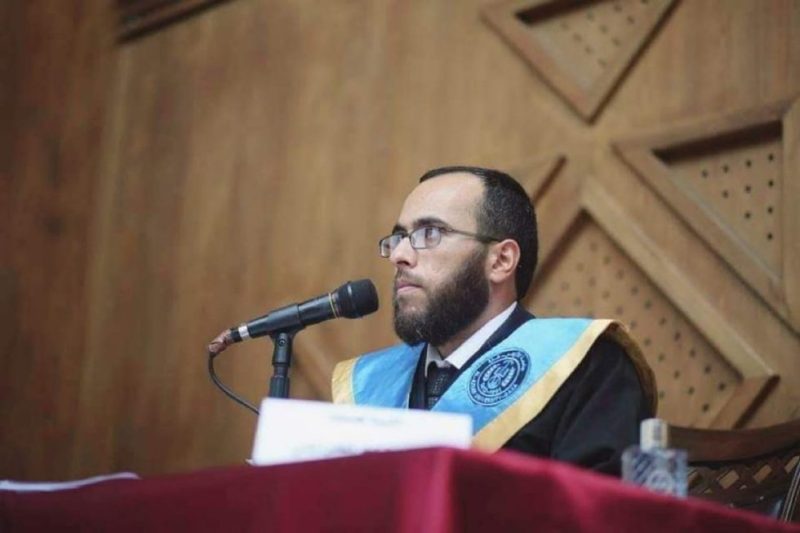
GAZA – The Palestinian Information Center (PIC) has mourned the tragic loss of its office director in Gaza, Dr. Rizq al-Gharabli, who was martyred on Tuesday during relentless Israeli attacks on Khan Yunis, south of the Gaza Strip.
Dr. Gharabli’s death brings to 123 the number of Palestinian journalists who have been martyred since the Israeli occupation state started its genocidal war on Gaza.
The Government Media Office announced yesterday the martyrdom of Dr. Gharabli in an Israeli airstrike on his home in Khan Yunis.
Last Monday, the International Federation of Journalists organized a rally outside the European Union headquarters in Brussels in solidarity with the journalists in Gaza and in protest at the European silence on Israel’s crimes against civilians, especially journalists.
The participants in the protest carried placards and banners that said “Freedom for Palestinian journalists,” “Israel, stop killing journalists in Gaza” and “Journalists in Gaza, we are with you.”
Saudi Arabia names conditions for Israel deal
RT | February 7, 2024
Saudi Arabia will not establish formal ties with Israel until it recognizes an independent Palestinian state and ceases its “aggression” against Gaza, the Foreign Ministry in Riyadh has said.
In a statement on Wednesday, the ministry revealed it had informed the US “that there will be no diplomatic relations with Israel unless an independent Palestinian state is recognized on the 1967 borders with East Jerusalem as its capital, and that the Israeli aggression on the Gaza Strip stops and all Israeli occupation forces withdraw from the Gaza Strip.”
“The Kingdom reiterates its call to the permanent members of the UN Security Council… to expedite the recognition of the Palestinian state,” the ministry continued, declaring that this would help ensure “that a comprehensive and just peace is achieved for all.”
The statement did not specify whether Israel must also recognize a Palestinian state in order for a deal with Saudi Arabia to go ahead.
While the US is reportedly considering whether to recognize Palestinian statehood, Israeli Prime Minister Benjamin Netanyahu has refused to entertain the idea. Instead, he has insisted on “full Israeli security control over the entire area west of Jordan,” a description that includes land considered Palestinian under the 1967 borders.
The term “1967 borders” refers to Israel’s frontiers as they stood before the Six-Day War. A return to these lines would see Gaza expand, while Israel would relinquish its claims to the West Bank, Golan Heights, and East Jerusalem, and would withdraw its security forces and settlers from these areas.
The Saudi statement came a day after White House National Security Council spokesman John Kirby told reporters that talks on a normalization deal between Saudi Arabia and Israel were “ongoing,” and that the US had received “positive feedback from both sides.”
Saudi Arabia did not join its neighbors, Bahrain and the United Arab Emirates, in recognizing Israel under the Abraham Accords, brokered by former US President Donald Trump in 2020.
Riyadh and West Jerusalem were on the cusp of a deal before the Israel-Hamas war broke out in October, with Washington offering the Saudis a defense pact with the US in exchange for recognizing the Jewish state. However, Saudi officials suspended negotiations in response to Israel’s bombing of Gaza, and reports at the time suggested that the kingdom would insist that any future deal include significant concessions to the Palestinians from the Israeli side.
US Secretary of State Antony Blinken met with Saudi Crown Prince Mohammed bin Salman in Riyadh on Tuesday. A readout of the meeting from the US State Department made no mention of an independent Palestinian state. Instead, it said the pair had discussed the need for “an enduring end to the crisis in Gaza that provides lasting peace and security for Israelis and Palestinians alike.”
Featured Video
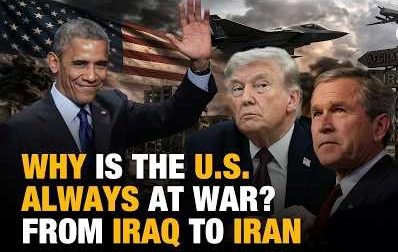
The Source of America’s Wars – Kristol Clear
or go to
Aletho News Archives – Video-Images
From the Archives
Is Israel to blame for the Iraq War?
American Goy | March 10, 2008
I am so tired of this old canard that “Israel had nothing to do with USA’s war with Iraq – in fact, it officially advised America against it”.
Bullshit. … continue
Blog Roll
 Aletho News
- Alberta Bill Would Fine Political Deepfakes $10,000 Without Satire Exemptions
- Iran declares ‘historic victory’ over US, says enemy forced to accept its proposal
- Trump Claims Ceasefire, Reopening of Strait of Hormuz Agreement with Iran
- Israeli tank fire killed UN peacekeeper in Lebanon, UNIFIL investigation finds
- Russia, China block Bahrain-sponsored UN resolution on Strait of Hormuz
- The US-Israeli War on Science is an Assault on our Future
- Trump’s Promise to Bomb Iran ‘Like Never Before’ Faces Brutal Logistics — Expert
- Germany seeks to restrict stays abroad for men of fighting age – Berliner Zeitung
- Evidence points to Ukraine being behind TurkStream attempted sabotage, but that should come as no surprise
- Sri Lanka secures supplies of Russia oil – minister
- If Americans Knew
- Thousands dead and neighborhoods razed to the ground: Aid agencies fear southern Lebanon is becoming the new Gaza
- The war the US is fighting for Israel could cost trillions
- ‘Cigarette Burns, Nail Wounds’: Toddler Tortured in Gaza to Coerce Father
- Trump Says US Sent ‘a Lot of Guns’ to Protesters in Iran
- Israeli forces destroy 17 UN peacekeeper cameras in south Lebanon
- US-Israeli strikes ‘completely destroy’ synagogue in Tehran
- Archbishop for US Military Says Iran War Is Unjust Under Catholic Teaching
- Iranian leaders’ Open Letters to the American People
- Trump says Iranians appreciate bombs, WHO warns of nuclear risks – Daily Update
- U.N. experts demand Israel release prominent Gaza doctor after reports of ‘severe torture’
- No Tricks Zone
- An Inconvenient Tree: Uncovered In Alps… Europe Much Warmer Than Today 6000 Years Ago
- New Study Reports A 60% Slowdown In Greenland’s Ice Loss Rate In The Last Decade
- Low Intensity Tornado Wrecks Major Solar Farm, Creating A Potential Toxic Dump
- New Study Finds Warming Saves Lives…Cold Temperatures 12 Times More Deadly Than Excess Heat
- German Science Blog Accuses PIK Climate Institute Of Hallucinating Climate Tipping Points
- Devastating Assessment Of Comirnaty Vaccine By Former Senior Pfizer Europe Toxicologist
- New Study: CO2 Is ‘Effectively Negligible’ As An Explanatory Climate Change Factor Since 2000
- Former Pfizer Toxicologist Dr. Helmut Sterz Tells Bundestag Hearing Pfizer Vaccine Should Have Never Been Approved
- Energy Expert: Germany’s Nuclear Phaseout Was A “500 Billion Euro Mistake”
- New Research: South Australia’s Mid-Holocene Sea Surface Temperatures Were 4°C Warmer Than Today
 Aletho News