Ten years ago this month, the notorious terror group ISIS improbably conquered Mosul, Iraq’s second-largest city. In only two days of fighting, a few hundred ISIS militants captured the city, forcing thousands of Iraqi soldiers and police to flee in chaos and confusion.
The western media attributed the city’s fall to the sectarian policies of then-Iraqi prime minister Nouri al-Maliki, suggesting that local Sunnis welcomed the ISIS invasion. US officials claimed they were surprised by the rapid rise of the terror organization, prompting then-US president Barack Obama to vow to “degrade and ultimately destroy” the group.
However, a close review of events surrounding the fall of Mosul and discussions with residents during The Cradle’s recent visit to the city shows the opposite.
The US and its regional allies used ISIS as a proxy to orchestrate the fall of Mosul, thereby terrorizing its Sunni Muslim inhabitants to achieve specific foreign policy goals. Says one Mosul resident speaking with The Cradle:
There was a plan to let Daesh [ISIS] take Mosul, and the USA was behind it. Everyone here knows this, but no one can say it publicly. It was a war against Sunnis.
‘Salafist principality’
As the war in Syria raged in August 2012, the US Defense Intelligence Agency (DIA) authored a now well-known memo providing the broad outlines of the plan that would lead to Mosul’s fall.
The memo stated that the insurgency backed by the US and its regional allies to topple Bashar al-Assad’s government in Damascus was not led by “moderate rebels” but by extremists, including Salafists, the Muslim Brotherhood, and Al-Qaeda in Iraq (Islamic State of Iraq).
The DIA memo stated further that the US and its allies, “the western powers,” welcomed the establishment of a “Salafist principality” by these extremist forces in the Sunni majority areas of eastern Syria and western Iraq. The US goal was to isolate Syria territorially from its main regional supporter, Iran.
Two years later, in June 2014, ISIS conquered Mosul, declaring it the capital of the so-called “Caliphate.”
Though the terror group was portrayed as indigenous to Iraq, ISIS only made the “Salafist principality” predicted in the DIA memo a reality with the help of weapons, training, and funding from the US and its close allies.
US and Saudi weapons
In January 2014, Reutersreported that the US Congress “secretly” approved new weapons flows to “moderate Syrian rebels” from the so-called Free Syrian Army (FSA).
In subsequent months, the US Army military and Saudi Ministry of Defense purchased large quantities of weapons from Eastern European countries, which were then flown to Amman, Jordan, for further distribution to the FSA.
After an exhaustive three-year investigation, EU-funded Conflict Armament Research (CAR) found that the weapons funneled to Syria by the US and Saudi Arabia in 2014 were quickly passed on to ISIS, at times within just “days or weeks” of their purchase.
“As far as our evidence shows, the diverters [Saudi and the US] knew what was going on in terms of the risk of supplying weapons to groups in the region,” Damien Spleeters of CAR explained.
The US-supplied weapons and equipment quickly reaching ISIS included the iconic Toyota Hilux pickup trucks, which became synonymous with the ISIS brand.
The Kurdish role
Another way US and Saudi-supplied weapons reached ISIS was through Washington’s main Kurdish ally in Iraq, Masoud Barzani. Discussing the secret funding for weapons approved by the US Congress in January 2014, Reuters noted that “Kurdish groups” had been providing weapons and other aid financed by donors in Qatar to “religious extremist rebel factions.”
In the following months, reports emerged that Kurdish officials from Barzani’s Kurdistan Democratic Party (KDP) were providing weapons to ISIS, including Kornet anti-tank missiles imported from Bulgaria.
Further evidence of Barzani’s support for ISIS comes from a lawsuit currently being litigated in the US District Court for the District of Columbia on behalf of the Kurdistan Victim’s Fund.
The expansive lawsuit, led by former US Assistant Attorney James R Tate, cites testimonies from sources with “direct clandestine access” to senior ranking officials in the KDP, alleging that Barzani’s agents “purposefully made US dollar payments to terrorist intermediaries and others that were wired through the United States,” including through banks in Washington, DC. These payments “enabled ISIS to carry out terrorist attacks that killed US citizens in Syria, Iraq, and Libya.”
Further, the agents made use of “email accounts serviced by US-based email service providers to coordinate and carry out elements of their partnership with ISIS.”
It is unthinkable that Barzani regularly arranged payments to ISIS from the heart of the US capital without the knowledge and consent of US intelligence.
An explicit agreement
In the spring of 2014, reports emerged of a deal between Barzani and ISIS to divide the territory in Iraq between them.
French academic and Iraq expert Pierre-Jean Luizard of the Paris-based National Centre for Scientific Research (CNRS) reported there was “an explicit agreement” between Barzani and ISIS, which “aims to share a number of territories.”
According to the agreement, ISIS would take Mosul, while Barzani’s security forces, the Peshmerga, would take oil-rich Kirkuk and other “disputed territories” he desired for a future independent Kurdish state.
According to Luizard, ISIS was given the role of “routing the Iraqi army, in exchange for which the Peshmerga would not prevent ISIS from entering Mosul or capturing Tikrit.”
In an unpublished interview with prominent Lebanese security journalist and The Cradle contributor Radwan Mortada, former Iraqi prime minister Nuri al-Maliki claimed that meetings were held to plan the Mosul operation in the Iraqi Kurdistan capital, Erbil, which were attended by US military officers.
When US officials denied any involvement, Maliki responded by telling them:
These are pictures of American officers sitting in this meeting … you are partners in this operation.
The UK pipeline
A resident from Mosul speaking with The Cradle states that many of the ISIS members he encountered during the group’s three-year occupation of the city were English-speaking foreigners, in particular the ISIS commanders.
But where did these English-speaking ISIS members come from?
In 2012, UK intelligence established a pipeline to send British and Belgian citizens to fight in Syria. Young men from London and Brussels were recruited by Salafist organizations, Shariah4UK and Shariah4Belgium, established by radical preacher and UK British intelligence asset Anjam Choudary.
These recruits were then sent to Syria, where they joined an armed group, Katibat al-Muhajireen, which enjoyed support from UK intelligence. These British and Belgian fighters then joined ISIS after its official establishment in Syria in April 2013.
Among these fighters was a Londoner named Mohammed Emwazi. Later known as the infamous Jihadi John, Emwazi kidnapped US journalist James Foley in October 2012 as a member of Katibat al-Muhajireen and allegedly executed him in August 2014 as a member of ISIS.
Made in America
The commander of Katibat al-Muhajireen, Abu Omar al-Shishani, also later joined ISIS and famously led the terror group’s assault on Mosul. Before fighting in Syria and Iraq, Shishani received US training as a member of the country of Georgia’s special forces.
In August 2014, the Washington Postreported that Libyan members of ISIS had received training from French, UK, and US military and intelligence personnel while fighting in the so-called “revolution” to topple the government of Muammar al-Qaddafi in 2011.
Many of these fighters were British but of Libyan origin and traveled to Libya with the encouragement of UK intelligence to topple Qaddafi. They then traveled to Syria and soon joined ISIS or the local Al-Qaeda affiliate, the Nusra Front.
“Sometimes I joke around and say that I am a fighter made by America,” one of the fighters told the Post.
There is no indication that the relationship between these fighters and US and UK intelligence ended once they joined ISIS.
‘Maliki must go’
US support for the ISIS invasion of Mosul is evident through the actions Washington refused to take. US planners monitored the ISIS convoys traveling across the open desert from Syria to assault Mosul in June 2014 but took no action to bomb them.
As former US secretary of defense Chuck Hagel acknowledged, “It wasn’t that we were blind in that area. We had drones, we had satellites, we had intelligence monitoring these groups.”
Even after Mosul fell, and as ISIS was threatening Baghdad, Washington planners refused to help unless Maliki stepped down as prime minister.
Maliki claimed in his interview with Mortada that US officials had demanded he impose a siege on Syria to assist in toppling Assad. When Maliki refused, they accused him of sabotaging the Syria regime change operation and sought to use ISIS to topple Iraq’s government.
American sources all but confirm Maliki’s claim. The US military-funded Rand Corporationnoted that the US–Iraqi relationship at this time had become strained “because of the willingness of the Maliki government to facilitate Iranian support to the Assad regime despite significant American opposition.”
As Obama’s foreign policy advisor, Philip Gordon explained:
The president was clear he didn’t want to launch that campaign [against ISIS] until there was something to defend, and that wasn’t Maliki.
New York Times journalist Michael Gordon reported that Secretary of State John Kerry traveled to Baghdad two weeks after ISIS captured Mosul to meet with Maliki. Desperate for help, Maliki asked Kerry for airstrikes against ISIS to protect Baghdad, but the latter explained that the US would not help unless the former gave up power.
In July 2014, ISIS fighters were moving captured US artillery and armored vehicles back to Syria across the open desert. Gordon reports further that the ISIS convoys were “easy pickings for American airpower.”
However, when US Major General Dana Pittard requested authorization to conduct the airstrikes to destroy the convoys, the White House refused, saying the “political prerequisites” had not been met. In other words, Maliki was still prime minister.
Geopolitical gains
While claiming to be enemies of ISIS, the US planners and their allies deliberately facilitated the terror group’s rise, including its capture of Mosul.
ISIS relied on US and UK-trained fighters, US and Saudi-purchased weapons, and Kurdish-supplied US dollars – rather than popular support from the city’s Sunni residents – to conquer Mosul.
When self-proclaimed caliph and leader of ISIS, Abu Bakr al-Baghdadi, announced the establishment of the so-called Caliphate at the city’s historic Nuri Mosque, he set up the very Salafist principality outlined in the DIA document by US intelligence heads.
This orchestrated rise of ISIS not only destabilized the region but also served the geopolitical interests of those who claim to be combating terrorism.
In response to ongoing allegations by the US regarding Chinese military bases in Cuba, the Chinese Embassy in Washington vehemently refuted these claims, labeling them as slanderous and malicious.
The remarks come after US think-tank Center for Strategic and International Studies (CSIS) published a report using satellite imagery to identify four alleged Chinese listening stations in Cuba, including one located near Guantanamo Bay.
“The US side has repeatedly hyped up China’s establishment of spy bases or conducting surveillance activities in Cuba. Such claims are nothing but slander. The Cuban side has already made a clarification,” Chinese Embassy spokesperson Liu Pengyu told Sputnik on Tuesday.
Liu stressed the need for the US to halt its ongoing effort to make malicious accusations against China without delay.
Additionally, Liu highlighted that the US maintains a leading role in global surveillance operations, which encompass monitoring its allies as well.
South Korea carried out live-fire drills near the border with North for the first time in six years following the dissolution of an inter-Korean tension reduction pact which banned such exercises, the South Korean army said on Tuesday.
“The firing drills, the first such exercise to be conducted on land after exercises were normalized following the government’s complete suspension of the September 19 Military Agreement, focused on bolstering artillery readiness and response capabilities in the event of enemy provocations,” the army was quoted by Yonhap, as saying.
The drills took place at front-line ranges in the South Korean provinces of Gyeonggi and Gangwon in a 3-mile distance from Military Demarcation Line within the Demilitarized Zone between the two Koreas, Yonhap reported, citing the country’s military authorities.
The South Korean military reportedly fired 140 rounds using the K9 and K105A1 self-propelled howitzers in the course of the drills.
In early June, North Korea said it had sent 3,500 air balloons carrying 15 tonnes of trash south in response to a hike in cases of South Korean activists sending anti-Pyongyang leaflets into the North. In response, the South Korean government approved a motion to suspend the 2018 inter-Korean military pact, which allows Seoul to resume military exercises near the military demarcation line, propaganda broadcasting towards North Korean territory as well as other actions described as hostile in the pact.
The inter-Korean military agreement was signed at the summit between the leaders of the two countries in September 2018 with the aim of preventing military confrontation in the Korean Peninsula and establishing buffer zones along the Military Demarcation Line on land and the Northern Limit Line at sea.
The narrative that America is “sleepwalking” toward war with China is a dangerously misleading myth. Far from a somnambulant stumble, the United States is being deliberately led by national security and military elites into a conflict with China, with Congress eagerly tripping over itself to out-hawk each other. The motivation? A toxic blend of defense industry contributions and a misguided sense of geopolitical dominance.
Since becoming president, Joe Biden’s pronouncements have starkly reversed the longstanding U.S. policy of “Strategic Ambiguity” concerning Taiwan. Historically, this policy served to keep both China and Taiwan guessing about American intentions, thus maintaining a precarious balance and deterring rash actions from either side. However, Biden’s statements have ushered in an era of “Strategic Clarity,” unequivocally asserting that the United States would intervene militarily if China were to invade Taiwan. This stance is a profound shift, especially given that the U.S. has no treaty obligation to defend Taiwan, and Congress has not granted the president the authority to engage militarily in such a conflict—at least not yet.
Moreover, the presence of U.S. military personnel on Taiwan and on the Kinmen islands, the latter a mere few miles from the Chinese mainland, underscores this aggressive posture. This deployment is not a defensive measure but a provocative act, practically begging for a confrontation. It signals to China that the United States is not merely interested in protecting Taiwan’s sovereignty but is actively preparing for potential hostilities.
Escalated arms sales to Taiwan further exacerbate the situation. Washington’s increased military aid and sophisticated weaponry to Taipei are perceived by Beijing as an unmistakable threat, pushing the region closer to the brink of war. These actions are complemented by Washington’s broader strategy of economic warfare against China, including tariffs, sanctions, and efforts to decouple the two economies. This economic aggression, designed to weaken China’s global standing, only serves to heighten tensions and fuel the fire of conflict.
Washington’s belligerence extends beyond Taiwan, with the United States promising to intervene in various territorial disputes between China and its neighbors. The South China Sea is a hotbed of such conflicts, with the Philippines’ claims over certain shoals leading to live clashes in recent months. The U.S. backing of these claims, regardless of their merit, is a clear signal of its intent to challenge China’s regional influence aggressively.
Adding to this volatile mix, Kurt Campbell, the architect of Obama’s “Pivot to East Asia” policy, recently declared that the era of positive engagement with China is over. This “Pivot” was always a transparent move to begin containing China, but Campbell’s recent statements mark a shift toward outright confrontation. Both the former and current heads of U.S. Indo-Pacific Command have also in the past year bluntly stated that they are preparing for an immediate war with China, further illustrating the calculated and deliberate nature of Washington’s actions.
This orchestrated march toward conflict is not driven by some irrational fear or a defensive need to protect American interests. Instead, it is a strategic choice made by the U.S. leadership to assert dominance in the Asia-Pacific region. This approach disregards the catastrophic potential of such a conflict, which could easily escalate into a global disaster, if not total annihilation.
It is crucial to understand that this is not a one-sided issue where China is the sole aggressor. Unlike the U.S., China is not conducting military exercises in the Gulf of Mexico or deploying troops near American borders. Instead, it is the United States that is aggressively poking around the South China Sea and positioning itself as a hegemonic force in a region far from its shores.
Media portrayal of the situation as a sleepwalk toward war is not just inaccurate but dangerous. It obscures the calculated and provocative actions of the United States, misleading the public into believing that conflict is an inadvertent outcome rather than a deliberate strategy. The reality is that Washington is not passively drifting into war but sprinting headlong into it, driven by a blend of military ambition and geopolitical strategy.
In conclusion, the responsibility for the escalating tensions and the imminent threat of conflict with China lies squarely with Washington. The U.S. is actively choosing a path of confrontation, one that threatens not just regional stability but global peace—in a recent visit Xi Jinping said as much to the European Commission President Ursula von der Leyen, saying he felt Washington was trying to “goad” China into starting a war over Taiwan; it being a serious red line for Beijing, that may just be what happens (see: Ukraine).
It is imperative that Washington’s aggressive stance is recognized for what it is by the American public: a reckless and potentially world-destroying gamble that serves the interests of a few at the expense of many. Only by acknowledging this can we hope to steer away from the brink of disaster and seek a more peaceful and sustainable approach to international relations.
There were plenty of surprises in last week’s presidential debate. For one, Americans who rely on the mainstream media for their news learned that they had been lied to for the past three years about President Biden’s capability to do the job he was elected to do.
The realization that the media has been lying for years about Biden is a positive development, as, hopefully, thoughtful Americans might begin wondering what else the media has been lying about. For example, they will find out that the media has been lying to them for years about Russia and Ukraine and about the Middle East and elsewhere. They will find out that our hyper-interventionist foreign policy does not make us safer and more free, but the opposite.
Unfortunately for most Americans, foreign policy is something that happens “over there,” with few direct effects back home. Dumping nearly $200 billion into the lost cause called “Ukraine” may at most seem like an annoyance to many Americans, but it’s not like they are being snatched up by gangs of military recruiters and sent to the front line as is happening to Ukrainian men.
However, $200 billion is real money and the effect on our economy is also real. The bill will be paid by each American family indirectly through the inflation “tax.” Each dollar created out of thin air and spent on the Ukraine debacle devalues the rest of the dollars in circulation.
The danger posed by our foreign policy seemed to escape both candidates, who each tried to convince us they were “tougher” than the other. Despite Donald Trump’s sober and accurate warning that Joe Biden has taken us to the brink of World War III, his solution to the problem is doing more of the same. His stated foreign policy seems to be that were he in office the rest of the world would not dare do anything against his will.
He would have been so tough that Russian president Vladimir Putin would never have dared to invade Ukraine, he claimed. He would have been so tough that Hamas would never have dared attack Israel on October 7th. It’s only Joe Biden’s “weakness” that leads to these disastrous foreign policy outcomes.
But the world does not work that way. Decades of US sanctions placed on any country that fails to do what Washington demands have backfired and led to the emergence of a block of countries united in their resistance to American dictates. Being “tough” on less-powerful countries may work… until it doesn’t. That’s where we are today.
Neither candidate seems to realize that the world has changed.
I have always said that real strength in foreign policy comes from restraint. To prevent these bad outcomes everywhere, stop intervening everywhere. It is not “toughness” that would have prevented Russia from taking action against Ukraine. It is restraint. Not launching a coup in Ukraine in 2014 would have prevented the disastrous war in Ukraine. Just like not stirring up trouble in the South China Sea would prevent a war with China. Not continuing to occupy and intervene in the Middle East would prevent a major regional war which might include Iran and other big players in the region.
Restraint is the real toughness. Non-intervention is the only foreign policy that will keep us safe and free. We’ve tried it the other way and it does not work. Let’s try something different.
Political realism is commonly and mistakenly portrayed as immoral because the principal focus is on the inescapable security competition and it thus rejects idealist efforts to transcend power politics. However, because states cannot break with security competition, morality for the realist entails acting in accordance with the balance of power logic as the foundation for stability and peace. Idealist efforts to break with power politics can then be defined as immoral by undermining the management of security competition as the foundation of peace. As Raymond Aron expressed in 1966: “The idealist, believing he has broken with power politics exaggerates its crimes”.[1]
Ukraine’s Sovereign Right to join NATO
The most appealing and dangerous idealist argument that destroyed Ukraine is that it has the right to join any military alliance it desires. It is a very attractive statement that can easily win support from the public as it affirms the freedom and sovereignty of Ukraine, and the alternative is seemingly that Russia should be allowed to dictate Ukraine’s policies.
However, arguing that Ukraine should be allowed to join any military alliance is an idealist argument as it appeals to how we would like the world to be, not how the world actually works. The principle that peace derives from expanding military alliances without taking into account the security interests of other great powers has never existed. States such as Ukraine that border a great power have every reason to express legitimate security concerns, but inviting a rival great power such as the US into its territory intensifies the security competition.
Is it moral to insist on how the world ought to be when war is the consequence of ignoring how the world actually works?
The alternative to expanding NATO is not to accept a Russian sphere of influence, which denotes a zone of exclusive influence. Peace derives from recognising a Russian sphere of interests, which is an area where Russian security interests must be recognised and incorporated rather than excluded. It did not use to be controversial to argue that Russian security interests must be taken into account when operating on its borders.
Mexico has plenty of freedoms in the international system, but it does not have the freedom to join a Chinese-led military alliance or host Chinese military bases. The idealist argument that Mexico can do as it pleases implies ignoring US security concerns, and the result would likely be the US destruction of Mexico. If Scotland secedes from the UK and then joins a Russian-led military alliance and hosts Russian missiles, would the English still champion the principle that it has no say? Idealists who sought to transcend power politics and create a more benign world would instead intensify the security competition and instigate wars.
The Morality of Opposing NATO Expansionism
To argue that NATO expansionism provoked Russia’s invasion is regularly condemned by idealists as immoral because it allegedly legitimises both power politics and the invasion. Is objective reality immoral if it contradicts the ideal world we would like to exist?
The former British ambassador to Russia, Roderic Lyne, warned in 2020 that it was a “massive mistake” to push for NATO membership for Ukraine: “If you want to start a war with Russia, that’s the best way of doing it”.[2] Angela Merkel acknowledged that Russia would interpret the possibility of Ukrainian NATO membership as a “declaration of war”.[3] CIA Director William Burns also warned against drawing Ukraine into NATO as Russia fears encirclement and will therefore be under enormous pressure to use military force: “Russia would have to decide whether to intervene; a decision Russia does not want to have to face”.[4] The advisor to former French President Sarkozy argued that the US-Ukraine Charter on Strategic Partnership in November 2021 “convinced Russia that they must attack or be attacked”.[5] None of the aforementioned people sought to legitimise an invasion, rather they sought to avoid a war.
When great powers do not have a soft institutional veto, they use a hard military veto. The idealists insisting that Russia should not have a veto on NATO expansion pushed for the policies that predictably resulted in the destruction of a nation, the loss of territory, and hundreds of thousands of deaths. Why do the idealists get to present themselves as moral and “pro-Ukrainian”? Why are the realists who for more than a decade warned against NATO expansion immoral and “anti-Ukrainian”? Are these labels premised on the theoretical assumption of the idealists?
NATO as a Third Party?
Suggesting that Ukraine has the sovereign right to join NATO presents the military bloc as a passive third party that merely supports the democratic aspiration of Ukrainians. This narrative neglects that NATO did not have an obligation to offer future membership to Ukraine. Indeed, the Western countries signed several agreements with Moscow after the Cold War, such as the Charter of Paris for a New Europe, to collectively construct a Europe without dividing lines and based on indivisible security. NATO broke these agreements by pushing for expansion and refusing to offer Russia security guarantees to mitigate the security competition. By offering future membership to Ukraine, the NATO-Russia conflict became a Russia-Ukraine conflict as Russia had to prevent Ukraine from joining the military bloc and hosting the US military on its territory.
NATO’s support for Ukraine’s right to choose its own foreign policy is also dishonest as Ukraine had to be pulled into the orbit of the military bloc against its will. The Western public is rarely informed that every opinion poll between 1991 and 2014 demonstrates that only a very small minority of Ukrainians ever wanted to join the alliance. NATO recognised the lack of interest by the Ukrainian government and people as a problem to be overcome in a report from 2011: “The greatest challenge for Ukrainian-NATO relations lies in the perception of NATO among the Ukrainian people. NATO membership is not widely supported in the country, with some polls suggesting that popular support of it is less than 20%”.[6]
The solution was to push for a “democratic revolution” in 2014 that toppled the democratically elected government of Ukraine in violation of its constitution and without majority support from Ukrainians. The leaked Nuland-Pyatt phone call revealed that the US was planning a regime change, including who should be in the post-coup government, who had to stay out, and how to legitimise the coup.[7] After the coup, the US openly asserted its intrusive influence over the new government it had installed in Kiev. The general prosecutor of Ukraine, Viktor Shokin, complained that since 2014, “the most shocking thing is that all the [government] appointments were made in agreement with the United States” and Washington “believed that Ukraine was their fiefdom”.[8] A conflict with Russia could be manufactured that would create a demand for NATO.
What were the first decisions of the new government hand-picked by Washington? The first decree by the new Parliament was a call for repealing Russian as a regional language. The New York Times reports that on the first day following the coup, Ukraine’s new spy chief called the CIA and MI6 to establish a partnership for covert operations against Russia that eventually resulted in 12 secret CIA bases along the Russian border.[9] The conflict intensified as Russia responded by seizing Crimea and supporting a rebellion in Donbas, and NATO sabotaged the Minsk peace agreement that the overwhelming majority of Ukrainians voted to have implemented. Preserving and intensifying the conflict gave Washington a dependent Ukrainian proxy that could be used against Russia. The same New York Times article mentioned above, also revealed that the covert war against Russia after the coup was a leading reason for Russia’s invasion:
“Toward the end of 2021, according to a senior European official, Mr. Putin was weighing whether to launch his full-scale invasion when he met with the head of one of Russia’s main spy services, who told him that the C.I.A., together with Britain’s MI6, were controlling Ukraine and turning it into a beachhead for operations against Moscow”.[10]
The Immorality of Peace vs Morality of War?
After Russia’s “unprovoked” invasion of Ukraine, the idealists insist that Ukraine must become a member of NATO as soon as the war is over. It is intended as an appealing and moral statement to ensure that Ukraine will be protected and such a tragedy will not be repeated.
Yet, what does it communicate to Russia? Whatever territory Russia does not conquer will fall into the hands of NATO, which can then be used as a frontline against Russia. The threat of NATO expansion incentivises Russia to seize as much territory as possible and ensure what remains is a deeply dysfunctional rump state. The only thing that can bring peace to Ukraine and end the carnage is to restore its neutrality, yet the idealists denounce this as deeply immoral and thus unacceptable. To repeat Raymond Aron: “The idealist, believing he has broken with power politics exaggerates its crimes”.[11]
[1] Aron, R., 1966. Peace and War: A Theory of International Relations. Doubleday, Garden City, p.584.
[2] R. Lyne, ‘The UC Interview Series: Sir Roderic Lyne by Nikita Gryazin’, Oxford University Consortium, 18 December 2020.
[3] A. Walsh, ‘Angela Merkel opens up on Ukraine, Putin and her legacy’, Deutsche Welle, 7 June 2022.
[4] W.J. Burns, ‘Nyet means nyet: Russia’s NATO Enlargement Redlines’, Wikileaks, 1 February 2008.
[5] C. Caldwell, ‘The War in Ukraine May Be Impossible to Stop. And the U.S. Deserves Much of the Blame’, The New York Times, 31 May 2022.
[6] NATO, ‘‘Post-Orange Ukraine’: Internal dynamics and foreign policy priorities’, NATO Parliamentary Assembly, October 2011, p.11.
[7] BBC, ‘Ukraine crisis: Transcript of leaked Nuland-Pyatt call’, BBC, 7 February 2014.
[8] M.M. Abrahms, ‘Does Ukraine Have Kompromat on Joe Biden?’, Newsweek, 8 August 2023.
[9] A. Entous and M. Schwirtz, 2024. ‘The Spy War: How the C.I.A. Secretly Helps Ukraine Fight Putin’, The New York Times, 25 February 2024.
[10] A. Entous and M. Schwirtz, 2024. ‘The Spy War: How the C.I.A. Secretly Helps Ukraine Fight Putin’, The New York Times, 25 February 2024.
[11] Aron, R., 1966. Peace and War: A Theory of International Relations. Doubleday, Garden City, p.584.
There is nothing new here but the corruption is deep at Boeing:
“It comes after an unnamed parts supplier uncovered small holes in the material from corrosion, The New York Slimes reported. The FAA is looking into both the long and short-term implications for the aircraft equipped with the faulty parts. It’s not clear how many planes have used components made from the fake titanium.”
Metal behaves differently at altitude and underwater.
Fake metallurgy.
No maintenance workers at the airline that received these fake airplanes verified and validated metallurgy.
The chaos avalanche of the competency crisis continues.
If it’s a Boeing product: fire the CEO for cause, ground all aircraft and require all maintenance crew to wear a body-cam.
Hungarian Prime Minister Viktor Orban has urged Ukraine’s Vladimir Zelensky to halt military operations against Russia in order to reach a peace deal with Moscow. Orban has long maintained that the Ukraine conflict could spiral into a continent-wide war, and that restoring peace is his government’s foreign policy priority.
Orban arrived in Kiev on Tuesday for a surprise meeting with Zelensky, in his first visit to Ukraine in more than a decade. Speaking to reporters after the meeting, Orban said he had asked Zelensky “to think about whether it would be possible to take a break… to reach a ceasefire and start negotiations [with Russia], since a quick ceasefire could speed up these negotiations.”
Orban said that he was “very grateful to Zelensky for his honest answer in this regard.”
The Hungarian prime minister did not reveal Zelensky’s answer, although it is unlikely that the Ukrainian leader shared his enthusiasm for a truce. Despite mounting battlefield losses and protestations from some of his own aides, Zelensky has insisted since 2022 that he will return Ukraine’s former territories – including Crimea – by military force.
However, while Zelensky has not abandoned these goals, he stated last month that Ukraine “does not want to prolong the war,” and will “put a settlement plan on the table within a few months.” In follow-up comments last week, he said intermediaries such as Türkiye or the UN could help broker talks with Moscow.
Orban has pushed for such a plan since the outset of the conflict. Under his leadership, Hungary has refused to supply Kiev with weapons or allow Western arms into Ukraine via its soil. Budapest has also threatened to veto several of the EU’s 14 packages of sanctions on Moscow, agreeing to these measures only after securing concessions from Brussels, including a partial exemption from the EU’s bloc-wide oil embargo and a guarantee that its nuclear sector won’t be affected by future packages.
These positions have placed Orban at loggerheads with Zelensky and the EU leadership in Brussels. “The Brussels bureaucrats want this war, they see it as their own, and they want to defeat Russia,” he wrote in the Magyar Nemzet newspaper on Saturday.
Orban traveled to Kiev a day after Hungary assumed the European Council’s rotating presidency. “The goal of the Hungarian presidency is to contribute to solving the challenges facing the European Union. My first trip therefore led to Kiev,” Orban said in a statement on his Facebook page on Tuesday.
Aside from pushing Zelensky toward a ceasefire, Orban said he used the face-to-face meeting to lobby for the rights of Ukraine’s Hungarian minority in Transcarpathia, whom Budapest argues are treated as second-class citizens by Kiev. The pair also discussed trade, energy, and infrastructure cooperation.
“We are trying to close all previous disputes and focus on the future. We want to improve relations between our countries,” Orban told reporters.
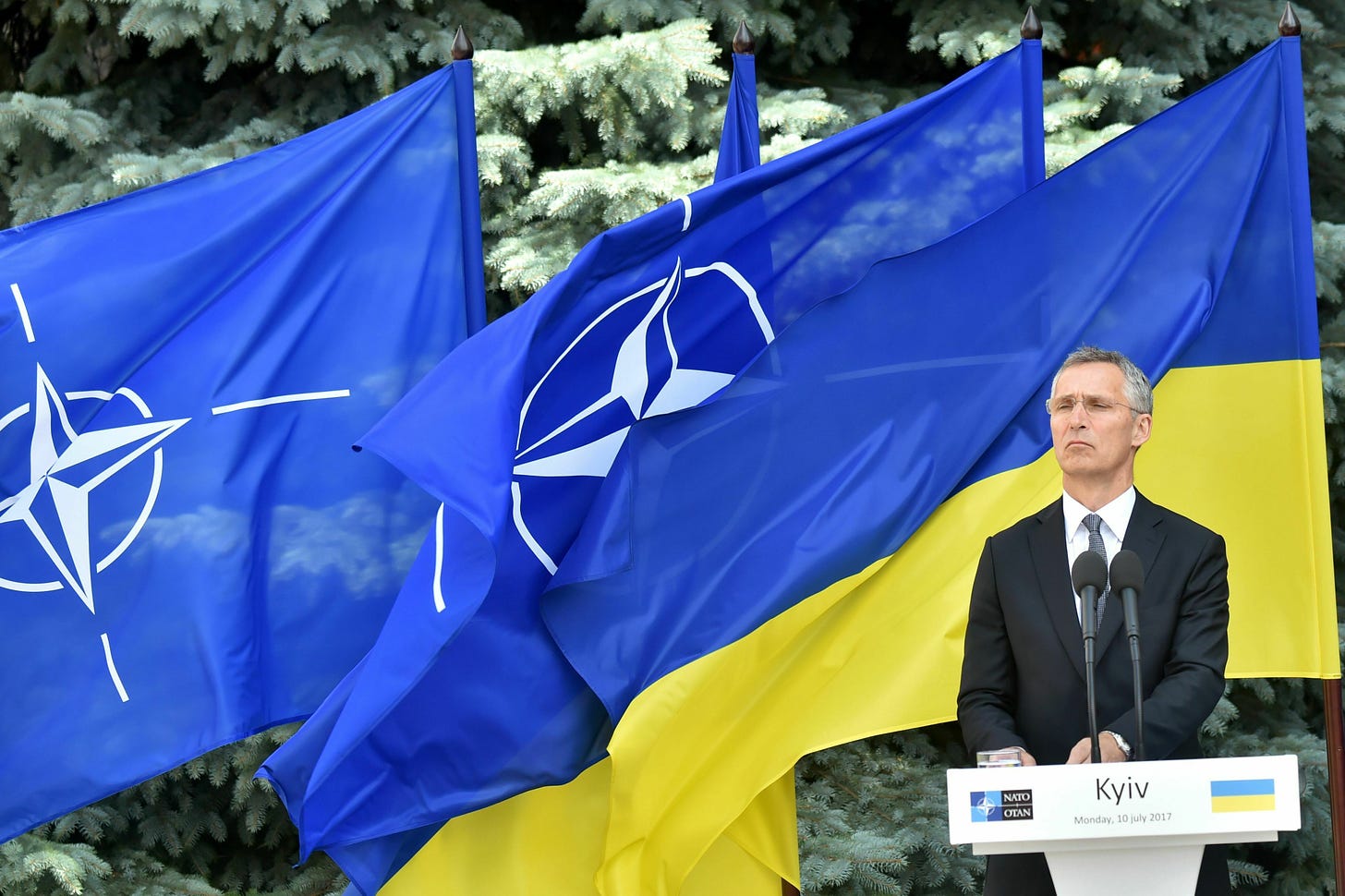
NATO allies intend to discuss speeding up the procurement of weapons at their upcoming summit in Washington, reported Semafor.
“Critical gaps” in the alliance’s military readiness need to be addressed, it quoted three European officials as saying, as the bloc continues to funnel weapons to the Kiev regime.
As NATO’s proxy war against Russia in Ukraine grinds on, there’ve been growing reports that sending existing equipment to Kiev had “reduced” stockpiles in Europe itself. This prompted the alliance’s latest defense plan, that calls for measures to boost air and missile defense systems’ quantity and readiness, officials told the FT earlier.
Action is expected to be taken on a plan put forward by the NATO’s three Baltic states of Estonia, Lithuania, and Latvia, which have been at the forefront of anti-Russian hysteria throughout the Ukrainian crisis, along with Poland.
The Allied Capability Delivery Commitment (ACDC) was presented at a May meeting in Palanga, Lithuania, by the defense ministers of Estonia, Lithuania, and Latvia. At the time, speaking at a press conference with Latvia’s Andris Spruds and Lithuania’s Laurynas Kasciunas, Estonia’s Minister of Defense Hanno Pevkur said the initiative required extra funds, and the 2 percent minimum spending level agreed at the 2023 summit was no longer “sufficient”.
In line with the five-year plan, the alliance would boost efforts to procure “air defense, long range fires, and ammunition,” Tuuli Duneton, Undersecretary for Defense Policy at the Estonian Ministry of Defense, told the outlet.
“Delivering these [weapons] faster than originally planned would require additional resources to be invested,” one European official was quoted as acknowledging.
He added that the plan had been agreed upon in principle at a June meeting of NATO’s defense ministers in Brussels.
As far as Washington is concerned, it “supports the intent of the proposal and is working with allies on how to incorporate it in summit deliverables,” a US State Department official was cited as saying. The underlying ideas of the proposal will be “embedded” in the Defense Industrial Pledge expected to be signed at the summit, a Latvian spokesperson told the publication.
The NATO summit in Washington D.C. will take place from July 9-11. It will commemorate the landmark 75th anniversary of the alliance, which was founded in 1949. The summit’s title is “Ukraine and transatlantic security.” NATO will not extend a formal invitation to Ukraine for membership during the gathering.
More defense spending and costly procurement face NATO allies as supporting the regime in Kiev continues to bleed their own stockpiles dry. The bloc’s European allies have only a small fraction of the air defense capabilities they would need if the proxy conflict in Ukraine expanded into a direct Russia-NATO confrontation, officials were cited as saying by the Financial Times.
At the same time, the Ukraine conflict has become a great boon for America’s own leading defense contractors, sending their stocks up and boosting their profits. However, as the US and Europe keep squandering taxpayer money on arms for Ukraine, Russia continues to effectively destroy this weaponry.
Russia has persistently cautioned Western countries against furnishing weapons to the Kiev regime, stating that this sort of assistance would only serve to prolong the conflict in Ukraine.
Furthermore, Moscow has repeatedly rejected Western claims about an alleged Russian threat as unsubstantiated. Russian President Vladimir Putin said earlier this year that the West’s allegations about Moscow’s plans to unleash a war with NATO are “simply rubbish.” He also slammed reports about Russia planning to attack Europe after the end of a special military operation in Ukraine as “complete nonsense and intimidation of Europeans to squeeze money out of them [for defense-related] purposes.”
BBC presenter David Aaronovitch has called for the “murder” of former US President Donald Trump in a post on X (formerly Twitter). Aaronovitch later deleted his message following a backlash, claiming it had been “satire.”
Aaronovitch, the voice behind the British state broadcaster’s Radio 4 program ‘The Briefing Room’, tweeted on Monday: “If I was Biden I’d hurry up and have Trump murdered on the basis that he is a threat to America’s security.”
The post was accompanied by the hashtag #SCOTUS, indicating that the comment had been triggered by Monday’s confirmation from the US Supreme Court that former presidents have “absolute immunity” from prosecution for their official actions.
Aaronovitch was forced delete the post after an online backlash, and claimed in a follow-up message that he had been accused of inciting violence by “a far right pile.” The presenter insisted his tweet was “plainly a satire.”
On Monday, the highest US court ruled that under “our system of separated powers, the President may not be prosecuted for exercising his core constitutional powers, and he is entitled to at least presumptive immunity from prosecution for his official acts.”
In an interview with Fox News Digital, Trump touted the verdict on presidential immunity as a “big win for our Constitution and for democracy.”
President Biden attacked the Supreme Court ruling, urging citizens to “dissent” against the verdict.
US federal prosecutors have charged Trump with four criminal counts related to the 2020 presidential election, alleging that he “conspired” to overturn the results.
The Supreme Court verdict still grants lower courts the right to hold evidentiary hearings to determine whether the actions are official or unofficial. Unofficial acts by the president are not covered by immunity from prosecution.
Trump has repeatedly called his prosecution politically motivated, describing it as a “witch hunt” launched by Biden and his administration.
In yet another demonstration of US double standards, a viral video of Israeli soldiers using a wounded Palestinian as a human shield in Jenin forced the US State Department to issue a condemnation.
But unlike the condemnation that they issued for the Palestinian group Hamas when they were accused of this very crime, the United States urged Israel to investigate itself, which, logic implies, it won’t.
One of the most prominent allegations against armed groups in Gaza, which has been used to justify Israel’s murder of Palestinian civilians, is that they use human shields.
Despite the fact that these claims, which are routinely repeated during every war on Gaza, investigations by human rights groups have never found a single case in which Hamas has used a human shield.
On the contrary, Israel has been repeatedly found to have used Palestinian civilians as human shields.
Journalist Tucker Carlson interviewed Republican Congressman from Kentucky Thomas Massie on June 7, 2024. During the interview Massie went into detail about how the Israel lobby bullies US politicians and co-opts evangelicals into getting billions of US tax dollars for Israel.
By Robert Bridge | Strategic Culture Foundation | September 29, 2022
With an investigation continuing into the destruction of the Nord Stream gas pipeline that provided energy supplies to Europe from Russia, there appears to be just one prime suspect, and that should surprise nobody.
Following the sabotage of the Nord Stream 1 and 2 gas pipelines, former Polish Foreign Minister Radoslaw Sikorski already seemed to know the identity of the perpetrator when he tweeted out: “Thank you, USA.”
At first glance, it seemed that Sikorski was speaking sarcastically, berating Washington for carrying out an attack that will have severe repercussions for the people of Europe. After all, how could anyone see any good coming from the termination of Europe’s primary source of gas reserves with winter just around the corner? It was Sikorski’s homeland of Poland, after all, that urged its citizens to collect firewood in the face of dwindling gas reserves.
In fact, the Polish diplomat was speaking one-hundred percent literally… continue
This site is provided as a research and reference tool. Although we make every reasonable effort to ensure that the information and data provided at this site are useful, accurate, and current, we cannot guarantee that the information and data provided here will be error-free. By using this site, you assume all responsibility for and risk arising from your use of and reliance upon the contents of this site.
This site and the information available through it do not, and are not intended to constitute legal advice. Should you require legal advice, you should consult your own attorney.
Nothing within this site or linked to by this site constitutes investment advice or medical advice.
Materials accessible from or added to this site by third parties, such as comments posted, are strictly the responsibility of the third party who added such materials or made them accessible and we neither endorse nor undertake to control, monitor, edit or assume responsibility for any such third-party material.
The posting of stories, commentaries, reports, documents and links (embedded or otherwise) on this site does not in any way, shape or form, implied or otherwise, necessarily express or suggest endorsement or support of any of such posted material or parts therein.
The word “alleged” is deemed to occur before the word “fraud.” Since the rule of law still applies. To peasants, at least.
Fair Use
This site contains copyrighted material the use of which has not always been specifically authorized by the copyright owner. We are making such material available in our efforts to advance understanding of environmental, political, human rights, economic, democracy, scientific, and social justice issues, etc. We believe this constitutes a ‘fair use’ of any such copyrighted material as provided for in section 107 of the US Copyright Law. In accordance with Title 17 U.S.C. Section 107, the material on this site is distributed without profit to those who have expressed a prior interest in receiving the included information for research and educational purposes. For more info go to: http://www.law.cornell.edu/uscode/17/107.shtml. If you wish to use copyrighted material from this site for purposes of your own that go beyond ‘fair use’, you must obtain permission from the copyright owner.
DMCA Contact
This is information for anyone that wishes to challenge our “fair use” of copyrighted material.
If you are a legal copyright holder or a designated agent for such and you believe that content residing on or accessible through our website infringes a copyright and falls outside the boundaries of “Fair Use”, please send a notice of infringement by contacting atheonews@gmail.com.
We will respond and take necessary action immediately.
If notice is given of an alleged copyright violation we will act expeditiously to remove or disable access to the material(s) in question.
All 3rd party material posted on this website is copyright the respective owners / authors. Aletho News makes no claim of copyright on such material.


 Aletho News