British Columbia Royal College of Physicians and Surgeons Defeated on Judicial Notice
Case of Dr. Charles Hoffe Kills Deferral to Government Offices as Agents of “Truth”
Courageous Discourse™ | July 6, 2024
This was written by Canadian attorney Lee Turner after discussion with Dr. McCullough.
Dr. Charles Hoffe is a family and (former) emergency room physician in British Columbia who is the subject of disciplinary proceedings before the College of Physicians and Surgeons of British Columbia for making public statements about SARS-CoV-2, the safety and efficacy of the COVID-19 vaccines, and other alternative treatments including ivermectin. Hoffe has successfully defeated an application made by the College seeking judicial notice of the truth of facts alleged by the College concerning these issues. In its efforts to discipline the physician, the College has alleged that the statements made by the physician are misleading, incorrect or inflammatory and constitute professional misconduct. The College asked the discipline panel to take judicial notice of the following facts and thereby prevent the doctor from presenting any contrary evidence in his defence:
- The Covid virus kills or causes other serious effects;
- The virus does not discriminate;
- Vaccines work;
- Vaccines are generally safe and have a low risk of harmful effects, especially in children;
- Infection and transmission of the COVID-19 virus is less likely to occur among fully vaccinated individuals than for those who are unvaccinated; vaccines do not prevent infection, reinfection or transmission, but they reduce the severity of symptoms and the risk of bad outcomes;
- Health Canada has approved COVID vaccines, and regulatory approval is a strong indicator of safety and effectiveness;
- Health Canada has not approved ivermectin to treat COVID-19; and
- Health Canada advises that Canadians should not consume the veterinary version of ivermectin.
In its June 29, 2024 decision, the disciplinary panel of the College of Physicians and Surgeons of British Columbia declined to take judicial notice of items 2-5, did take judicial notice of items 7-8 (the straightforward ivermectin claims), and took judicial notice of a revised version of items 1 and 6.
The panel was prepared to take judicial notice of item 1 that reads: “COVID-19 can kill or cause other serious effects”.
The College explained their rationale for taking judicial notice of a revised version of item 1 by referencing evidence presented by the doctor in his defence that included the following:
- risk of severe disease and death from COVID-19 is extremely skewed to those above 70 years of age, especially those with multiple comorbidities. The average age of persons that died from COVID-19 in Canada was approximately 84 years old;
- very low proportion of COVID-19 related deaths in Canada occurred in those under 50 years of age-the data shows very high (although not 100%) survival rates for those under 70;
- average rate of lethality from COVID-19 for Canadians is much lower than estimates given by public health officials; and
- reported hospitalizations and deaths from COVID-19 have been over-counted, because many hospitalizations and deaths “with, and not from” COVID-19 were wrongly attributed to COVID-19
With respect to item 6, the panel endorsed findings of an earlier provincial Court of Appeal decision that held the safety and efficacy of any drug is always relative and as a rule the safety and efficacy of a pharmaceutical product cannot be discussed in such blunt fashion as to say that it “is” or “is not” safe and effective. The panel held that the issues raised in the citation should be determined based upon the evidence that is tested through cross-examination rather than by taking judicial notice of one party’s assertion of the facts, and in this case, based upon statements made by public health officials or public health agencies. The panel held that it was prepared to take judicial notice of the fact that Health Canada had approved the COVID – 19 vaccines, but declined to take judicial notice that Health Canada’s approval was a strong indicator of safety and effectiveness.
This decision on the issue of judicial notice, is consistent with the June 28, 2024 decision of the US Supreme Court in Loper Bright Enterprises et al. v. Raimondo Secretary of Commerce et. al. which overturned the landmark 1984 decision in Chevron v. Natural Resources Defense Council. The Chevron decision had given rise to what is commonly referred to as the Chevron deference doctrine. Under this doctrine, federal agencies had the power to interpret a law that they administer when that law is vaguely written, and courts were required to defer to the agency’s interpretation of a statute. In Loper, the US Supreme Court rejected the Chevron deference doctrine calling it “fundamentally misguided.” They said court should rely on their own interpretation of ambiguous laws rather than having to accept the agency’s interpretation. Commentators have suggested that the Chevron deference doctrine gave the powerful – the people who control the agencies like the FDA, CDC and FCC – a significant advantage in court making them essentially the ultimate decision-makers in interpreting ambiguous laws. Commentators have pointed out that many of these agencies are captive agencies with close ties, including financial ties, to the industries that they are charged with regulating and therefore they lack objectivity with respect to those industries. The ruling in Labor means that federal judges now have more authority to interpret these laws. The decision by the British Columbia Disciplinary Panel of the College of Physicians of Surgeons of British Columbia prevents regulatory bodies from saying “it is so because we say it is so”. They have to prove the facts they assert and those who disagree will be allowed to challenge those facts and present contrary evidence.
The case against Dr. Hoffe is far from over. This development is significant in that a government agency cannot make the rules, interpret them, and claim they hold the truth on an evolving scientific or medical issue.
Lee C. Turner, Partner, Doak Sherriff Lawyers, LLC, Kelowna BC V1Y 2A9
(Professional Law Corporation)
Tale Of Two Weather Stations
By Paul Homewood | Not A Lot Of People Know That | July 3, 2024
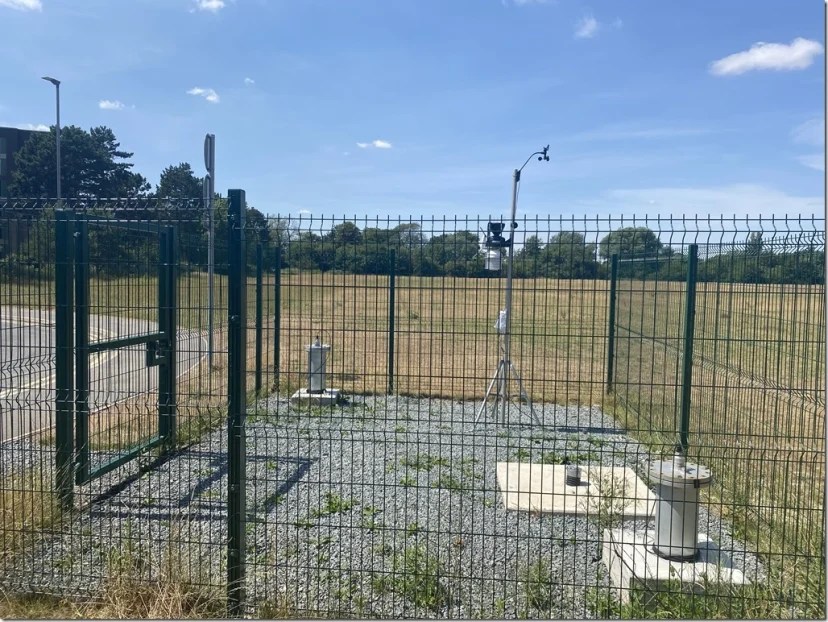
Below are photos of two weather stations in Hull.
One is run by the University of Hull’s Environmental Department, the other is used by the Met Office for climatological purposes and typically runs two degrees hotter.
It does not take a genius to work out which is which!
…

Met Office Still Opening Junk Weather Stations
By Paul Homewood | Not A Lot Of People Know That | July 5, 2024
As we know, 77.9% of the Met Office’s temperature station network is junk Class 4 and 5.

But how many of these have been added in recent years?
The Met Office have now sent me a full list of stations, showing both Class and opening date. Since 2000, 58 stations have been added, out of a current total of 380. However only nine are acceptable Class 1 and 2s:
| Class | No |
| 1 | 1 |
| 2 | 8 |
| 3 | 5 |
| 4 | 29 |
| 5 | 15 |
| Total | 58 |
One Class 4 station was opened as recently as last year at Arthog in Wales.
It is one thing having poorly sited stations which have been around for decades. But I personally find it unacceptable that the Met Office have deemed it appropriate to carry on opening so many more, which they know full well should not be used for climatological purposes.
It is surely not beyond their wit to build a few pristine Class 1 sites. Which leads us to the conclusion that they are doing it deliberately.
Meanwhile in other news, the hottest place in the UK yesterday was ……………… HEATHROW!!
The New York Times Is Right, Finally; Climate Change Is Not Threatening Island Nations
By Linnea Lueken | ClimateREALISM | July 1, 2024
The New York Times (NYT) recently posted an article, titled “A Surprising Climate Find,” which explains how island nations like the Maldives and Tuvalu are not, in fact, in danger of sinking under the seas due to climate change. This is true; a fact Climate Realism has repeatedly discussed. Atolls in particular are known to grow with rising water levels, this has been known for years if not decades.
The NYT climate reporter, Raymond Zhong, explains that as “the planet warms and the oceans rise, atoll nations like the Maldives, the Marshall Islands and Tuvalu have seemed doomed to vanish, like the mythical Atlantis, into watery oblivion.”
This is an exceptionally common claim from the climate alarmist media, and some of the nations themselves that are benefitting from massive aid packages and “reparations” from wealthier countries; money not being used to help their people relocate from the “sinking” islands, but rather to build infrastructure and boost tourism. In fact, the NYT promoted this falsehood as late as April 2024, with a story, titled, “Why Time Is Running Out Across the Maldives’ Lovely Little Islands.“
In his most recent piece Zhong writes:
“Of late, though, scientists have begun telling a surprising new story about these islands. By comparing mid-20th century aerial photos with recent satellite images, they’ve been able to see how the islands have evolved over time. What they found is startling: Even though sea levels have risen, many islands haven’t shrunk. Most, in fact, have been stable. Some have even grown.”
It is true that the islands are not sinking, but Zhong is wrong when he says this fact has only been discovered “of late.” His own article references a study published in 2018, which found 89 percent of islands in the Pacific and Indian Oceans increased in area or were stable, and only 11 percent showed any sign of contracting. So just three months after the NYT published an article claiming the Maldives were disappearing beneath the waves, the paper is now reversing itself based on research that existed six years before the April article was published. Since, Climate Realism has covered the claim many times, including with regard to Tuvaluan “refugees,” looking at tropical storms, and examining other island refugee claims, one wonders whether the NYT’s fact checkers were asleep on the job when the paper published its false story in April.
The facts about atolls growth and demise are not newly discovered. Scientists have known for decades, if not more than a hundred years, that atoll islands uniquely change with changing sea levels. Charles Darwin was the first to propose that reefs were many thousands of feet thick, and grow upwards towards the light. He was partially correct, though reality is more complicated than his theory.
In 2010, as discussed in the Climate Realism post “No, Rising Seas Are Not Swallowing Island Nations,” studies found that Tuvalu and Kiribati were growing, as well as Micronesia, and some had grown dramatically. Likewise in 2015, the same group of researchers reported that 40 percent of islands in the Pacific and Indian Oceans were stable, and another 40 percent had grown.
Zhong correctly says that ocean currents and waves can cause erosion, but also “bring fresh sand ashore from the surrounding coral reefs, where the remains of corals, algae, crustaceans and other organisms are constantly being crushed into new sediment.”
Climate at a Glance: Islands and Sea Level Rise, also confirms the fact that in Tuvalu in particular –often a poster child for islands supposedly threatened by sea level rise—“eight of Tuvalu’s nine large coral atolls have grown in size during recent decades, and 75 percent of Tuvalu’s 101 smaller reef islands have increased as well.”
The only “surprising” discovery in this story is that the climate desk for the New York Times was allegedly not aware of these facts before now. This information is not new. It could be, of course, that the NYT neglected to report the truth about island nations’ status previously simply because it did not conform to the alarming climate narrative they have been trying to push, but as the data has gotten too strong to ignore, they were forced to admit the truth with regard to growing islands in the face of rising seas.
Orban Reveals Plans to Hold More Surprise Meetings Next Week After Recent Talks With Putin
Sputnik – 06.07.2024
Hungarian Prime Minister Viktor Orban has said that he is planning to hold several meetings next week that would be “equally surprising” as his recent talks with Russian President Vladimir Putin.
The Hungarian prime minister visited Russia on Friday to hold talks with Putin. Orban described his visit as a continuation of his “peace mission” after a visit to Kiev, which took place on Tuesday.
“I will have some meetings in the next week, which will be equally surprising,” Orban said in an interview with Swiss magazine Weltwoche out Saturday.
He added that these meetings would be kept from the public until the fact of his arrival, as it happened earlier during his visit to Moscow.
Orban also stated that he asked Russian President Vladimir Putin three questions during a meeting in Moscow, on Putin’s opinion concerning other countries’ peace proposals, on the possibility of a ceasefire prior to peace talks and what Europe’s security architecture might look like in the future.
“My first purpose was to put the questions directly, three questions basically,” Orban said.
The first question was about Moscow’s stance on existing peace initiatives and talks on the Ukrainian conflict that are held without Russia, the Hungarian prime minister said.
“He [Putin] said that it is obvious that real negotiations cannot happen without the involvement of both parties. So whatever they are doing without him, it means nothing. Which is quite logical anyway,” Orban said.
The second question referred to the possibility of a ceasefire before the actual start of negotiations, he said, adding that Putin had not agreed to that expecting that Kiev would try to take military advantage of such a ceasefire.
The third question was whether Russia had a vision of what a future security architecture of Europe would look like after the conflict, to which Putin answered that Moscow had a detailed plan on the issue, the Hungarian leader said.
What Will Iran’s Foreign Policy Be Under New President Pezeshkian?
Sputnik – 06.07.2024
Masoud Pezeshkian has emerged as the winner of the presidential runoff in Iran this week, receiving 54 percent of the votes.
The newly elected President of Iran Masoud Pezeshkian spoke to Sputnik on the eve of the election about the main priorities of Iran’s foreign policy, which include: strengthening relations with Russia and China; Iran’s active presence in BRICS and the Shanghai Cooperation Organisation; restoration of the Joint Comprehensive Plan of Action (JCPOA) and the lifting of sanctions.
“Russia is a friend and partner of Iran, and I consider it a priority to deepen and expand relations with Russia and China, as well as intensify foreign policy activities in the Asian direction in general,” Pezeshkian said. “And we, of course, at all levels – bilateral, regional and international – will continue our efforts to expand interaction with the Russian Federation.”
According to him, Iran “opposes the policy of unidirectionality” and supports “the principle of multipolarity.”
“One of the priorities of my foreign policy program is regional cooperation, and for this purpose, Iran will expand its presence in BRICS and the SCO, as well as strive for more active cooperation with the Eurasian Economic Union to more fully realize the potential of trade and economic relations with the member countries of these organizations,” Pezeshkian explained.
Regarding the JCPOA, Pezeshkian pointed out that it is “an international agreement approved by the UN,” and that the United States’ unilateral withdrawal from this agreement “caused serious damage to Iran and the Iranian people.”
“As the Russian side has repeatedly emphasized, Iran has fulfilled its obligations, and we see our task as returning the other participants to this agreement as soon as possible and achieving the lifting of sanctions. I am confident that the friendly governments of Russia and China will support Iran and assist it in resolving this issue,” he added.
US scraps military drills with Georgia
RT | July 6, 2024
The US has suspended this year’s ‘Noble Partner’ military exercise with Georgia due to a “comprehensive review” of bilateral relations by Washington. The maneuvers, which have previously involved troops from multiple NATO member states, had been held annually since 2015.
In early June, the legislation – officially known as the Transparency of Foreign Influence Act – came into force, after the ruling Georgian Dream party overrode a veto by President Salome Zourabichvili. The law requires NGOs, media outlets and individuals which receive more than 20% of their funding from abroad to register as entities “promoting the interests of a foreign power” and disclose their donors. Failure to comply will result in a fine of up to $9,500.
Opponents of the bill, who denounce it as an attack on democracy, have held multiple protests. Prime Minister Irakli Kobakhidze insists the legislation is similar to laws in several Western nations, and is meant to improve transparency.
The adoption of the law drew condemnation from the US and European Union. Washington has announced plans to restrict visas for Georgian politicians who supported the legislation.
In a press release on Friday, the US Department of Defense announced that the “United States will indefinitely postpone this iteration of exercise NOBLE PARTNER in Georgia, originally scheduled for July 25 – August 6, 2024.”
According to the statement, the decision was made “due to the Georgian government’s false accusations against the United States and other western entities.” The Pentagon cited several remarks made by Prime Minister Kobakhidze in recent months.
In early May, the official claimed that “two revolution attempts of 2020-2023 [were] supported by the former US ambassador.”
Later that month, he doubled down on the accusations, saying that “Georgian-American relations need to be reconsidered.”
Speaking to Georgia’s Channel 1 around the same time, Kobakhidze alleged that “some people want muddy water here… people want a second front [against Russia]. We don’t want a second front.”
In light of those allegations, “the United States Government has determined that this is an inappropriate time to hold a large-scale military exercise in Georgia,” the Pentagon’s press release concluded.
Commenting on the adoption of the ‘foreign agent’ law in Georgia in early June, US State Department spokesman Matthew Miller warned that the developments “fundamentally alter the US relationship with” the South Caucasus nation, which has long been seeking to join the EU and NATO. The official stressed that Washington “would not hesitate to impose” sanctions on Tbilisi.
Featured Video

No Threat Can Force Iran’s Surrender /Trita Parsi & Lt Cl Daniel Davis
or go to
Aletho News Archives – Video-Images
From the Archives
What is the Israeli Lobby in Australia Doing in Interfaith Dialogue?
By Ali Kazak | Dissident Voice | October 11, 2015
For years Israel and its lobby around the world have been trying to normalise their relations with Arabs and Muslims without solving the Palestine Question.
One of the methods they resorted to in the last few years is using human rights and community organizations such as interfaith dialogue and Multiculturalism to achieve this objective and to: isolate the Palestinians, marginalise the Palestine question, end Israel’s isolation, and prevent criticism of Israel, knowing that these organisations will be the first to stand against Israel’s violations, racial and religious discrimination.
The group responsible for this task in Australia is The Australia/Israel & Jewish Affairs Council (AIJAC); its Director of International & Community Affairs, Jeremy Jones is in charge of lobbying religious community organizations, specifically Muslims and Christians. Consequently he convened the Faith Communities for Reconciliation, founding participant in the Australian Partnership of Religious Organisations and the Australian National Dialogue of Christians, Muslims & Jews.
AIJAC is a private political propaganda group. It is recognised as the main Israeli lobby in Australia. It coordinates its activities and works intimately with the Israeli embassy in Canberra and different institutions in Israel. It is privately funded by some Jewish businessmen. It monitors closely Australian politicians, the media, ethnic and religious groups, (especially Arabs and Muslims), unions and academics on their stands towards Israel and the Palestine question. … continue
Blog Roll
 Aletho News
- ‘War Crime’: Iran condemns attacks on Arak, Ardakan nuclear sites
- Two-thirds of Americans want quick end to Iran war even if goals unmet
- Trump to Give “Important Update on Iran” Wednesday in Prime-Time Speech
- Theodore Postol: Iran’s Missiles & Drones Were Underestimated
- Iran To Target Military Industrial-Tech Complex That Facilitated Gaza Genocide
- Collapsing Empire: The Resistance Disarms ‘Israel’
- Suicide Should Not Be a Government Service
- Rethinking America’s greatest threat: Iran vs. Israel-Firsters
- Iran accuses adversaries of false flags to strain Turkey ties
- Poland rules out sending Patriot missiles to US/Israel amid war on Iran
- If Americans Knew
- Ann Coulter Rips Into Fox News for Iran War Coverage, Compares to False Rigged 2020 Election Reporting
- Joe Kent Urges Americans To Call White House and Congress To Object To Sending Troops Into Iran
- DNC Resolution to Reject AIPAC Funding Puts Democratic Leaders in the Hot Seat
- Swedish foundation to build 400 schools as over 650,000 Gaza children remain without education for 2 years
- Israeli army admits photshopping image of slain Lebanese journalist
- This is how Israel is systematically killing health workers under the cover of war in Lebanon
- Carrying life under fire: Israeli invasion of Lebanon leaves pregnant women facing deadly risks
- Champagne all around for the new death penalty (for Palestinians) law – Not a ceasefire Day 172
- Why are Palestinian books struggling to be seen on Amazon?
- The Line Between Affinity and Conspiracy
- No Tricks Zone
- New Study Finds Warming Saves Lives…Cold Temperatures 12 Times More Deadly Than Excess Heat
- German Science Blog Accuses PIK Climate Institute Of Hallucinating Climate Tipping Points
- Devastating Assessment Of Comirnaty Vaccine By Former Senior Pfizer Europe Toxicologist
- New Study: CO2 Is ‘Effectively Negligible’ As An Explanatory Climate Change Factor Since 2000
- Former Pfizer Toxicologist Dr. Helmut Sterz Tells Bundestag Hearing Pfizer Vaccine Should Have Never Been Approved
- Energy Expert: Germany’s Nuclear Phaseout Was A “500 Billion Euro Mistake”
- New Research: South Australia’s Mid-Holocene Sea Surface Temperatures Were 4°C Warmer Than Today
- Storing Green Energy To Last Germany 10 Days Would Require A 60-Million Tonne Battery
- New Studies: UK Sea Levels Were 4 Meters Higher Than Today During The Mid-Holocene
- Destructive Green New Deal: German Energy And Metal Group Warns Of Drastic Crisis
 Aletho News