Hezbollah’s indomitable resolve
By Lea Akil | Al Mayadeen | October 7, 2024
Despite repeated efforts by “Israel” and the US to dismantle resistance movements, especially in Lebanon and Palestine, these attempts have consistently fallen short. The core reason for this failure lies in the West’s misreading of the Resistance itself—the Resistance is rooted in deep historical injustices, sustained ideological strength, and has a great capacity to adapt. While leaders may be targeted and eliminated, their movements continue to thrive, fueled by an unwavering dedication to justice and freedom.
The assassinations of key figures like Hezbollah’s Secretary-General Sayyed Hassan Nasrallah, Commander Hajj Imad Mughniyeh, and Commander Fouad Shokor, among others, have not resulted in Hezbollah’s downfall over the years. Instead, the group has only grown stronger, showcasing the inability of “Israel” and the US to truly understand the dynamics of the Lebanese Resistance. These movements are not reliant on individual leaders; they are deeply rooted in collective resilience and continue to thrive despite targeted assassinations.
It’s clear that since the beginning of the war on Gaza, “Israel”, fully backed by the US, sought to dismantle Hezbollah through decisive strikes. This strategy began with the assassination of Commander Fouad Shokor in late July, followed by a series of pager attacks and the assassination of more Hezbollah officials. However, the martyrdom of Sayyed Nasrallah was meant to be the critical blow, aimed at triggering Hezbollah’s collapse and internal disintegration.
Common tactics like economic sanctions, military interventions, and targeted assassinations have been repeatedly used by the US and “Israel” to dismantle Resistance groups. However, history has shown that these strategies have failed.
Take the Gaza Strip, for example—besieged since 2007. “Israel” not only attempted to crush the Palestinian Resistance through relentless military assaults and a blockade but also to turn the people of Gaza against the Resistance by deepening their humanitarian suffering. The plan was clear: starve the population, deny them basic necessities, and push them to blame the Resistance for the hardships. Yet, rather than fracture the relationship, “Israel’s” siege had the opposite effect. The daily brutality, from bombings to the blockade that strangled their livelihoods, only reaffirmed for many in Gaza why resistance was essential for their survival and dignity.
The birth of resistance
Hezbollah was founded in 1982 in direct response to the Israeli occupation of Lebanon, which persisted until 2000. The Resistance movement succeeded in forcing the Israeli military to retreat from Lebanese territory, marking the first time “Israel” withdrew without a formal ceasefire agreement. This significant victory was largely attributed to Hezbollah’s unwavering resistance efforts.
The Israeli withdrawal elevated Hezbollah’s regional influence, establishing it as more than just a Lebanese resistance group—it became a symbol of Arab defiance against Israeli occupation.
“The era of defeat is over. Now is the era of victories.” — Hezbollah’s martyr Secretary-General Sayyed Hassan Nasrallah, July 25, 2006
This triumph not only bolstered Hezbollah’s military reputation but also fortified its position as a central force in Lebanon’s political landscape, intertwining its political influence with its military strength.
That said, it can be confidently stated that Hezbollah emerged from the war and invasion, which shaped it into a highly resilient organization. Its structure is designed to withstand losses, allowing it to regenerate leadership and produce new generations of military commanders, ensuring the continuity of its operations despite any setbacks.
The US and ‘Israel’s’ misreading of Hezbollah and Sayyed Nasrallah
On September 27, with backing from the US, “Israel” assassinated Sayyed Nasrallah, expecting this to cause the downfall of the resistance movement. Although the impact of Sayyed Nasrallah’s martyrdom on Hezbollah and the wider Axis of Resistance is hard to assess fully, it does not indicate that Hezbollah is close to collapsing. The group’s resilience extends beyond any one individual leader.
“Israel” and the US fail to grasp the true essence of his leadership. People didn’t rally behind him solely for his persona; they supported him because he represented their struggle for justice and liberation. Although he was a respected figure, the cause he embodied will endure beyond his lifetime.
“There are thousands of Imad Mughniyehs in Lebanon and in the world”. — Sayyed Hassan Nasrallah, 2010
No comments yet.
Featured Video
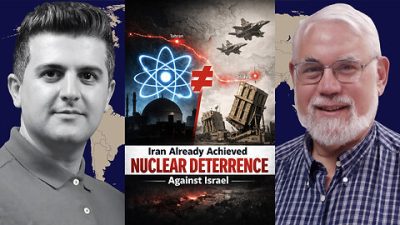
Prof. Ted Postol: Iran Already Achieved Nuclear Deterrence Against Israel
or go to
Aletho News Archives – Video-Images
From the Archives
How the occupied mentality syndrome works
Saudi Arabia on the American chessboard – Part 3
By B. J. Sabri | American Herald Tribune | June 27, 2016
Read part 2: “The occupied mentality Syndrome“
Previously I argued whether Saudi Arabia’s repeated involvements in U.S. interventions and wars stem from free national will or in response to a specific condition. For starters, in Saudi Arabia there is no national will. In Saudi Arabia, the national will is the will of the Al Saud clan. Still, when a major Arab state allies itself with a superpower that committed unspeakable crimes against humanity in almost every Arab country, then something is wrong. This fact alone should compel us to examine the U.S.-Saudi relation for one exceptional reason. As a result of the U.S.-Saudi wars, hundreds of thousands of people in Afghanistan, Iraq, Iran, Libya, Syria, Yemen, and Somalia have lost their lives. Millions became displaced in their own homelands. And millions more rendered refugees.
Attributing the Saudi policies to the bonds of “partnership” with the U.S. is frivolous. There are no bonds between these two thugs except those of business, military deals, secret plots, and wars. Proving this point, bonds such as these have no space for the American and Saudi peoples to share significant cultural or societal exchanges. If partnership is not the reason for the Saudi contribution to the U.S. strategy of empire and imperialism, then another reason must exist.
This leads to three possibilities. … continue
Blog Roll
 Aletho News
- In letter to UN chief, Araghchi warns of dire consequences of US-Israeli attacks on Iran’s nuclear facilities
- Why the CIA conspiracy to invade Iran with Kurdish militias failed
- Why Are Upbeat US Claims About Mission to Rescue Pilot ‘Highly Questionable’?
- Aircraft destroyed during US ‘rescue’ of downed F-15 pilot cost more than $100 million each
- Washington University removes professor who condemned US-Israeli war on Iran
- Russia Warns of Retaliation as UK Authorizes Seizure of Vessels
- Serbia thwarts plot to bomb Russia-Hungary gas pipeline – Vucic
- Al Mayadeen voices solidarity with Dr. Marandi amid death threats
- US dismantling international law in its war against Iran while claiming ‘false’ victory: Legal scholar
- One martyr, 5 injuries in US attack on Iraqi border crossing with Iran
- If Americans Knew
- US loses planes over Iran, Israel downgrades Lebanon war goals – Daily Update
- Israel Is Blocking Palestinians from Easter at Church Where Jesus Resurrected
- Plot to assassinate Palestinian activist follows harassment campaign promoted by Zionist groups and elected officials
- Prominent New York synagogue hosts presentation on why U.S. Jews should support the ethnic cleansing of Gaza
- Tapper vs. Piker: Is the CNN Anchor Auditioning for David Ellison?
- Shouldn’t Democrats Be Able to Condemn Genocide?
- Israel-US kill negotiators, destroy civilian structures, but Iran’s military capabilities still largely intact – Daily Update
- ‘War crime’: Global condemnation as Israeli ministers celebrate death penalty law targeting Palestinian prisoners
- 7 Ways Israel Is Turning Lebanon Into Gaza
- World’s Leading Football Bodies Under Fire Over Israel Policies
- No Tricks Zone
- An Inconvenient Tree: Uncovered In Alps… Europe Much Warmer Than Today 6000 Years Ago
- New Study Reports A 60% Slowdown In Greenland’s Ice Loss Rate In The Last Decade
- Low Intensity Tornado Wrecks Major Solar Farm, Creating A Potential Toxic Dump
- New Study Finds Warming Saves Lives…Cold Temperatures 12 Times More Deadly Than Excess Heat
- German Science Blog Accuses PIK Climate Institute Of Hallucinating Climate Tipping Points
- Devastating Assessment Of Comirnaty Vaccine By Former Senior Pfizer Europe Toxicologist
- New Study: CO2 Is ‘Effectively Negligible’ As An Explanatory Climate Change Factor Since 2000
- Former Pfizer Toxicologist Dr. Helmut Sterz Tells Bundestag Hearing Pfizer Vaccine Should Have Never Been Approved
- Energy Expert: Germany’s Nuclear Phaseout Was A “500 Billion Euro Mistake”
- New Research: South Australia’s Mid-Holocene Sea Surface Temperatures Were 4°C Warmer Than Today
 Aletho News
Leave a comment