In the beginning was the Pax Americana
By Lorenzo Maria Pacini | Strategic Culture Foundation | November 21, 2024
We often speak of the collective West, Hegemon, Seapower and Civilization of the Sea in relation to the United States of America. It is necessary to understand well what is the origin of this geopolitically determinant power for the world order.
He who wins the war, dictates the rules
Let us make clear at once an empirically incontrovertible factual truth: He who wins the war, dictates the rules of the post-war order. Whoever wins, writes history. Whether we like it or not, the defeated never had much decision-making power (which is not to say that they could not organize well to retaliate and return to power – but that is another matter).
World War II ended with the victory of the United States of America as the first, undefeated and predominant power. From there followed an expansion of U.S. influence toto orbe terrarum in all respects (cultural, economic, military, political).
The twentieth century was the “American century.” Almost the whole world took the shape the U.S. wanted to give it. The second half of the century was marked by the low-tension conflict of the Cold War, which ended-if it really did-with the collapse of the Soviet political system in the USSR and the beginning of the unipolar phase of American global domination. That period aroused much optimism in the West for a new world order, marking the end of the military and ideological rivalry of the 20th century. Two possibilities were on the horizon: a system based on balance of power and egalitarian sovereignty, or a U.S.-led liberal hegemony based on the values of democracy. The first approach evoked perpetual conflict, while the second promised lasting peace and global stability.
U.S. hegemony, already dominant in the transatlantic region after World War II, was seen as a model of peace and prosperity. However, the collapse of the Soviet Union removed the justification for a world order built on the balance of power, pushing the United States toward a mission of recognized hegemony to prevent the rise of new rivals. American supremacy, as declared by Secretary of State Madeleine Albright, was deemed “indispensable to ensure global stability.”
This was the Pax Americana: the U.S. would ensure a period of prosperity and global peace – as early as the end of WWII – by extending control over the entire world. A peace for America was equivalent to a peace for the globe; a war for America would mean war for the entire globe. The stated goal of building a peaceful world often justified imperialistic approaches, revealing the contradictions of the hegemonic project.
Set this paradigm as an axiom of reasoning in international relations and geopolitical programming, lo and behold, everything acquired new meaning. The world had been formatted and the “control room” was now in Washington.
The time of ideologies
It was the time of ideologies. In the “short century” everything had changed rapidly. The great world chessboard was constantly being shaken and reshuffled. The clash between the Western bloc and the Eastern – or Soviet – bloc characterized all concepts of each country’s politics in an extremely powerful way.
In the 1990s, two visions dominated the debate on world order: that of Francis Fukuyama and that of Samuel Huntington. Fukuyama in his famous book The End of History, envisioned a future in which liberal democracy and capitalism would triumph universally, leading to perpetual peace under the leadership of the United States: he argued that economic interdependence, democratic reforms, and shared institutions would unite the world around common values, which were, of course, American values. Any other model of civilization would have been beside the point, because History was finished, there would be nothing left to write about. In contrast, Huntington, wrote The Clash of Civilizations, in which he predicted that the world would be fragmented into distinct cultural blocs based on civil, religious and economic identities. Individualism and human rights, according to him, were peculiar to the West and not universal. His theorizing assumed a future marked by conflicts between civilizations, fueled by the decline of Western hegemony and the emergence of alternative powers, particularly in Confucian and Islamic societies.
The influence of Fukuyama’s ideas shaped post-Cold War Western politics, justifying the expansion and exceptionalism of Pax Americana. Exceptionalism that has been one of the U.S.’s most pragmatic “values”: there are rules and only we can break them, when we want, how we want and without having to account to anyone.
History, however, does not have only one actor: other countries, such as Russia, have chosen to be fascinated by Huntington’s proposal – confrontational, certainly, but not already “final.” In Russia, this debate has deep roots, linked to the historical rivalry between Westernists and Slavophiles. In the 1990s, Russia initially tried to move closer to the West, but the West’s failure to include it reinforced the idea of a distinct Russian civilization, culminating in Vladimir Putin’s view that no civilization can claim to be superior.
A matter of ideologies, indeed, a low-profile but very high-value battle in which the steps of the new century that was beginning would be defined. These divergences highlighted the tension between universalist aspirations and distinctive cultural identities, defining the geopolitical conflicts of the 21st century.
Building Pax Americana at any cost
Washington promoted a world order based on the Pax Americana, a liberal hegemony that reflected the success of the peaceful and prosperous transatlantic system created by the United States during the conflict with the Soviet Union. It proposed to extend this model globally, citing as examples Germany and Japan, transformed from militaristic and imperialist nations into “peaceful”-or, rather, defeated-democracies under U.S. influence. But the success of these transformations had been made possible by the presence of a common adversary, Russia, and the history of Latin America suggested that U.S. hegemony was not always synonymous with progress and peace.
Charles Krauthammer described the post-Cold War period as a “unipolar moment,” characterized by American dominance, where the new Hegemon dictated the rules and the others had little choice. Although he recognized that a multi-participant set-up (today we can say “multipolarism”) would inevitably return, he believed it was necessary to exploit unipolarity to ensure temporary peace, avoiding a return to turbulent periods. There was a weakness, however: the United States was unlikely to voluntarily relinquish its dominant role, preferring instead to counter any threat by force, fueled by an obsession with its own historical greatness. It is a missile issue: whoever has it bigger, wins. Let us not forget that the U.S. invented the strategic concept of deterrence precisely by virtue of the atomic weapon it held, throwing the world into a climate of constant fear and risk in which we still live today.
It is equally true that many Americans wished for a dismantling of the U.S. empire, proposing a less interventionist foreign policy focused on domestic challenges: abandoning the role of superpower would allow the United States to strengthen its society by addressing economic, industrial and social issues. Walter Lippmann argued that a mature great power should avoid global crusades, limiting the use of power to preserve internal stability and coherence. Sort of like a “good hegemon.” But this has not been the case.
The notion of “good hegemon” has been criticized for the risk of corruption inherent in power itself. John Quincy Adams warned that the search for enemies to fight could turn the United States from a champion of freedom into a global dictator. Similarly, President Kennedy, in his 1963 speech at American University, opposed a Pax Americana imposed by arms, calling instead for a genuine and inclusive peace that would promote global human progress, which he called “The Peace of All Time.” An ideal that has faded into the oblivion of collective memory.
American hegemony is the sine qua non for having a Pax Americana. The universalism that characterizes this hegemony admits of no discounts. Inequality among global powers has been exploited as a pivot to increase U.S. profits and administrative expansion at the expense of weaker countries. Neoliberally speaking, there is no error in this. Everything is very consistent. The struggle of the strongest to destroy all the smallest. Not only the one who produces and earns the most wins, but the one who can maintain the power to produce and earn the most wins.
A hegemonic system needs internal stability without which it cannot subsist. A kingdom divided in itself cannot function. This applies to economics as well as politics. It is essential that the ideological paradigm does not change, that power can always be understood and transmitted, from leader to leader, as it has been successfully established. Because the “peace” of the ancient Romans was a peace given by the maintenance of political control to the very ends of the empire, which only came about through a solid military administration.
The Americans did not invent anything. To really control (realpolitik) one must have military control. In front of an atomic bomb, reasoning about political philosophies is worth little. The U.S. knows this very well and its concept of Pax has always been unequivocally based on military supremacy and the maintenance of it.
Something changed when with the first decade of the 2000s new poles, new civilization-states, began to appear that promoted alternative models of global life. The U.S. began to see its power wane, day by day, until today, where the West is worth less than the “rest of the world,” the U.S. no longer has its “exclusive” status, and we are not even so sure that it is then so strong that it can control the globe. The geometries change again. What Pax for what borders of what empire?
Is Trump ready to give up his Pax?
The crux of the question is, if imperialistic military supremacy is what has allowed the U.S. to maintain its dominance and this dominance is precipitating today, will the newly elected U.S. President Donald Trump really be ready to compromise the Pax Americana?
We are talking about a polymorphous compromise:
– Economically, he would have to accept the end of the dollar era and downsize the U.S. market on comparison with sovereign global currencies. Practically throw a century of global financial architecture in the trash.
– Politically, accept that it is possible to think otherwise and do otherwise. Politics is not just American “democracy.” There are so many possibilities, so many different models, so many futures to be written according to other scripts.
– Militarily, it means stopping with the diplomacy of arrogance and threats, accepting that we cannot arbitrarily decide how to deal with anyone and stop aiming missiles at the flags of other states.
– Most complicated and risky of all, all this means giving up peace within the United States. If the balances of power implemented externally are broken, those internally begin to falter and the organism undergoes remodeling.
Giving up the Pax Americana as it has been known does not mean that alternatives do not exist. The concept of “pax” is broad and can be interpreted differently by the American school. Taking this step, however, involves giving up a “tradition” of global power, having to go through the collapse of the entire U.S. domestic system and then rebuilding an alternative.
Make America Great Again will mean what? Restoring American hegemony in the world, or rebuilding America?
Biden’s Lust for War
By Andrew P. Napolitano | Ron Paul Institute | November 21, 2024
The war in Ukraine is an American war for which the United States government should be ashamed and blamed.
It was initiated by President Joe Biden and then-British Prime Minister Boris Johnson, both of whom advised Ukraine President Volodymyr Zelenskyy that if he rejected a peace treaty that his own government had freely negotiated and agreed to in 2022 with Russian negotiators, Ukraine could join NATO. The treaty was more than 100 pages in length, each page of which had been initialed by both sides, and its essence accepted by the Kremlin and by Kyiv — until Biden and Johnson advised against it.
Their advice was essentially to trust their military support, as it would be strong enough to resist any Russian incursion into eastern Ukraine and relieve Kyiv of the need to make concessions to the Kremlin. They used Zelensky as a puppet, since their purpose was not motivated by peace or empathy or justice, rather by hatred for all things Russian.
So, the U.S. and the U.K. encouraged bloodshed instead of peace, confrontation instead of communication, and Congress began paying for a war without declaring one. Motivated by years of anti-Russian jingoism, heedless of its duties under the Constitution, thumbing its nose at at least three treaties ratified by the Senate that permit war only when the U.S. or an ally is gravely threatened, Congress permitted Biden to start an undeclared war against a country that poses no threat whatsoever to the national security of the United States.
Here is the backstory.
The war began in 2014 when the U.S. State Department and the CIA engineered a coup against the popularly elected and neutral-leaning government of Ukraine. Much of Russian-speaking and Russian culturally oriented Ukraine in the east was unhappy with the coup. The American and British plotters then installed a puppet regime that actually began attacking Russian Ukrainians in eastern Ukraine.
The area of eastern Ukraine in which this government-orchestrated violence was taking place has been Russian in culture, religion and language since before the American Revolution. The American and British plotters of the 2014 coup did not expect the resistance that their coup generated. Yet, they looked the other way when the Ukraine government attacked its own people for demonstrating a decided affinity for Moscow over Kyiv; so decided, that the province of Crimea actually voted overwhelmingly to return to Russia.
One person who did not look the other way was Russian President Vladimir Putin. Who could blame him? The U.S. has known since the early 1990s that Russia will not accept an eastward expansion of NATO. The George H.W. Bush administration promised the late Russian President Mikhail Gorbachev as much in return for the peaceful liberation of eastern Europe and especially the reunification of Germany. Nevertheless, with Poland’s entry into NATO, the western perfidy became apparent, as NATO — and its heavy weaponry — moved toward Moscow.
Angry that his predecessor had permitted this, fearful of the same mentality that engineered the 2014 coup now managing NATO, Putin came to the rescue of Russian Ukrainians. When the U.S. and U.K. succeeded in busting the Russia/Ukraine treaty tentatively agreed to in Istanbul, and tempted Zelensky with Ukrainian membership in NATO, Putin’s only alternative was to resist NATO expansion and the Ukrainian military by the use of Russian force.
Who can blame Putin? How would American presidents react to the threat of Chinese offensive weaponry in Mexico?
I know this is not a popular history in the U.S., as mainstream media as well as popular culture and government schools have demonized Russia since the end of the Cold War. That demonization gave Biden cover to promise Zelensky “whatever he needs for as long as it takes.” In his nearly four years in the White House, Biden has declined to articulate as long as it takes to do what.
Biden’s war has cost the American taxpayers nearly $240 billion and Ukraine 600,000 dead troops. It was not declared by Congress. It was facilitated by many Americans on the ground in Ukraine — military in uniform and out, intelligence personnel, and defense contractors. Much of the military equipment that the U.S. has sent to Ukraine — most from America’s substance, not surplus — required U.S. troops and other personnel to train Ukrainian troops in the use of it.
But last weekend, Biden — whose presidency has been thoroughly repudiated by American voters — authorized the use of offensive weaponry that can reach 190 miles into Russia and which can only be manned by U.S. personnel. At this writing, the U.S. equipment has attacked and destroyed a warehouse holding artillery ammunition some 70 miles inside the Russian border.
Who is firing U.S. offensive weaponry?
There is no dispute but that the U.S. is waging war on Russia — without a congressional declaration, without the consent of the United Nations (as the U.S. is obliged to do under a treaty that the U.S. wrote) and solely on its own. I say solely on its own because the weaponry that destroyed the Russian military warehouse requires secret U.S. satellite technology to operate, and U.S. personnel with top-secret security clearances to aim and trigger. It would be an act of espionage to permit Ukrainians to do this.
War is politics by other means. But it is the most deadly, destructive and irreversible means — and must always be a last resort. The Constitution intentionally separated the war-declaring power from the war-waging power. Its author, James Madison, poignantly argued that if presidents could both choose the enemy and fight it, such a person would be a prince and not a president.
Joe Biden’s presidency has been an abysmal failure, and he doesn’t know it. He must perversely hope that history will reward him if he keeps the killing coming to the last Ukrainian and even risks a wider war. Can a presidency of peace come soon enough?
To learn more about Judge Andrew Napolitano, visit https://JudgeNap.com.
COPYRIGHT 2024 ANDREW P. NAPOLITANO
DISTRIBUTED BY CREATORS.COM
All Risk, Little Gain: U.S. Authorizes Long-Range Strikes into Russia
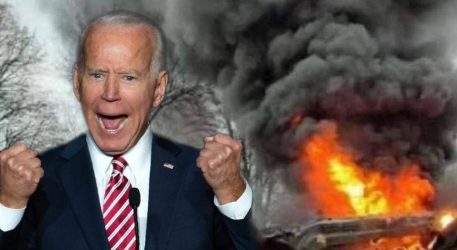
By Ted Snider | The Libertarian Institute | November 21, 2024
On November 17, the United States told the world what they told Ukraine three days earlier: Ukriane had permission to fire American supplied long-range missiles deeper into Russian territory.
Not much needs to be said about the risks involved in the decision. They are the same risks that have caused the Joe Biden administration to hesitate green lighting the strikes for months. Russian President Vladimir Putin clearly said in September that because long-range strikes into Russia “are impossible to employ without intelligence data from… NATO satellites,” that “mean[s] that NATO countries… are at war with Russia.” And that, Putin says, “will clearly change the very essence, the very nature of the conflict.”
The calculation whether or not to take a risk can only be made by weighing it against the benefits. But the benefits of green lighting the long-range strikes are illusory.
The Biden administration has not given Ukraine carte blanche to launch missiles into Russia. The license comes with boundaries; the missiles can only be fired into the Kursk region of Russia that Ukrainian troops invaded in August.
The United States has given two reasons for their permission to use their missiles to strike the Kursk region. The Biden administration seems to have been tipped in favor of allowing the strikes by the introduction of North Korean troops into Kursk. The hoped for benefit would be deterring North Korea from sending more troops.
The presence of 10,000 elite North Korean troops who are currently in combat in Kursk has not been proven. And deterring their arrival cannot come close to balancing the risk of direct U.S. involvement in firing missiles into Russia. North Korean troops, even if present, do not alter the balance on the battlefield. The Russian armed forces are growing by 30,000 volunteers a month. 10,000 North Koreans represents only about ten days worth of soldiers. Russia is neither desperate for troops in the Donbas, where they are rapidly advancing, nor in Kursk, where U.S. officials say they have amassed a force of tens of thousands of soldiers without having to pull a single soldier out of Ukraine.
The second hoped for benefit is helping the Ukrainian armed forces hold onto Kursk until the arrival of the inevitable negotiations, at which time Kursk can be bartered for Ukrainian territory held by Russia.
That benefit is as illusory as the first. Ukraine seems to be throwing everything into holding onto the territory it has seized in Kursk. There are reports that Kiev has made the hard to understand decision to prioritize holding onto Kursk over defending its own territory in Donbas. According to these reports, the best military equipment and the best troops are being sent into Kursk to hold onto land instead of into Donbas to reinforce the crumbling front lines. Now, the risk is being taken to throw in the long-range missiles.
Russia, though, is not likely to negotiate until they reclaim Kursk, which they likely eventually will, even faced with long-range missiles. And even if Russia failed to reclaim Kursk, it is not at all clear that Putin would trade that frontier land for the large ethnic Russian Donbas territory.
In the face of the unrealistic benefits, one other possible motive remains. Granting Ukraine permission to fire U.S.-supplied missiles into Kursk is the trump card in the Biden administration’s policy of “Trump-proofing” the war in Ukraine. Freeing Ukraine to escalate and provoking Russia to respond creates a terrain that is much more difficult for Donald Trump to keep his campaign promise of ending the war in Ukraine. As Anatol Lieven, Director of the Eurasia Program at the Quincy Institute for Responsible Statecraft, suggested to me, the legacy of Biden as the “fearless defender of Ukraine” also makes it easier for Democrats to “attack Trump for ‘surrender’ over a future peace deal.”
But “Trump-proofing” the war can only serve to prolong the fighting, pile on the dead, and contribute to a greater loss of Ukrainian territory. The likely ending, even if Ukraine holds Kursk for a while, is a negotiated settlement that looks much like the one on the table in the first weeks of the war, but with the additional costs the past three years has brought to Ukraine.
Ironically, “Trump-proofing” can also have an opposite, unintended effect. The policy, and the long-range missile decision, were meant to make it harder for Trump to end the war. Putin knows that too. The New York Times reports that Russian commentators are already framing it that way. Seeing the long-range missile decision in that light gives Putin a motive for patience. He can resist the provocation, not retaliate in a way that escalates the war, and wait for Trump.
The hoped for benefits do not justify the real potential of the risk. And there are longer term risks too.
Geoffrey Roberts, professor emeritus of history at University College Cork and a specialist in Soviet military policy, told me that he “doubts the decision will make much difference militarily.” He called it “another publicity stunt by the Ukrainian-Western side.” He said that he “expects Russia will act with restraint and continue to focus on winning on the battlefield ahead of a ceasefire and peace negotiations when Trump takes power.”
Not only will long-range missiles not significantly change the larger battlefield, Alexander Hill, professor of military history at the University of Calgary, told me that “this decision is unlikely to have a dramatic impact [even] on the fighting at the frontline in the Kursk region.” Though there may be some initial tactical successes, he says that the Russian armed forces will quickly make “the sorts of restrictions on troop and supply concentrations that they did in the Donbass that have minimized the consequences of ATACMS” and other Western missile systems for Russia.
On Monday, November 19, Ukraine fired American-made ATACMS long-range missiles into Russia for the first time. Ukrainian officials say the missiles struck an ammunition depot in the Bryansk region of southwest Russia, which borders on, but is not in, Kursk. The Russian Ministry of Defense, though, says that, of the six ATACMS that were fired, five were shot down and the other was damaged. They say that falling fragments from the damaged missile caused a fire at the munition depot but no damage or casualties.
The long-range missile decision won’t significantly impact troop numbers, North Korean or otherwise, and it won’t enhance the Kursk card in negotiations. But the decision “escalates tensions to a qualitatively new level,” as Kremlin spokesman Dmitri Peskov said. And it continues to poison trust and relations between Russia and the West. The escalation in arming Ukraine against Russia could even contribute to a belief in Moscow, Richard Sakwa, professor of Russian and European Politics at the University of Kent, told me, that “Ukraine has to be destroyed to remove a permanent threat to the Russian Federation’s security.”
Though Putin could demonstrate patience and wait out the sunset of the Biden administration and the start of the Trump administration, the crossing of a Russian redline could also lead to further escalation. Hill told me that Russia could “supply allies such as Iran and North Korea with capabilities that they currently do not possess: that is, after all, what the U.S. and its allies did for Ukraine.” They could intensify attacks on military sites or energy infrastructure in Ukraine. They could strike distribution hubs in Poland or Romania through which ballistic missiles and other weapons transit on their way to Ukraine (something Russia has refrained from doing). They could even, Ian Proud, former British diplomat at the British Embassy in Moscow, suggests, “make a limited and pre-signaled strike on a US military facility in Europe or elsewhere.”
Almost simultaneously with the first ATACMS missile strike, Putin signed a revised nuclear doctrine that had been formulated in September. The revised doctrine specifies that a conventional attack on Russia by a country that is supported by a nuclear power will be treated as a joint attack on Russia. Russia’s foreign minister, Sergey Lavrov, reminded the West on the sidelines of the G20 meeting that, “If the long-range missiles are used from the territory of Ukraine against the Russian territory, it will mean that they are controlled by American military experts and we will view that as a qualitatively new phase of the Western war against Russia and respond accordingly.” He also, however, said, “Russia is strictly committed to a position of avoiding nuclear war, and that the weapons act as a deterrent.”
Each of these risks outweighs the dubious hoped for benefits of direct U.S. participation in missile strikes deep into Russia. Instead of holding onto Kursk with its unlikely prospect of improving negotiations, the United States should be pushing for negotiations now. Instead of Trump-proofing and prolonging the war, the Biden administration should be facilitating a transition to diplomacy. Sooner, as Trump promises, or later, as Biden is supporting, the war in Ukraine will end at the negotiating table. And the result will likely be the same, minus all the deaths that are yet to come.
‘Only Americans Can Do It’: Why Ukrainians Can’t Launch ATACMS Alone
By Ekaterina Blinova – Sputnik – 20.11.2024
The US is getting bogged down in the Ukraine conflict despite assertions to the contrary.
“American servicemen are involved in [ATACMS] missile guidance… and coordinating their flights to deliver the strike. We can say this with complete confidence,” Alexander Mikhailov, head of Russia’s Bureau of Military-Political Analysis, tells Sputnik.
The pundit explains that:
- US-made ATACMS use satellite navigation data that is provided by the US military
- target selection and their coordinates is carried out by US military-technical specialists
- the process of loading the flight mission into the missile’s guidance head is conducted by US soldiers
“The launch cannot be carried out without the American officers,” says Mikhailov, “[Americans] wouldn’t transfer either the algorithms, or the codes, or the mechanisms for entering coordinates into the ATACMS missiles to officers of the Ukrainian Armed Forces.”
American security experts echo the Russian scholar.
Speaking on the Judging Freedom podcast on Tuesday, former Marine Corps intelligence officer Scott Ritter stated that “ATACMS cannot be operated by anyone but the US”:
- the guidance system and the data that is going in is developed by the Pentagon’s geospatial analysts in Europe
- the data, classified using National Security Agency cryptology, is communicated from the European site to a downlink station in Ukraine manned by US specialists
- it then is loaded up on the ATACMS again by US specialists
“So the mission is planned by the US, the data is loaded into the missile and when the button is fired it’s being… fired by the US against Russia,” Ritter says. “Only Americans can do it.”
The Kremlin has repeatedly warned the US against growing involvement in the Ukraine conflict. Kremlin spokesman Dmitry Peskov has said that the US greenlighting Ukraine’s strikes deep inside Russia with ATACMS means “a qualitatively” new situation in terms of Washington’s involvement.
The US Becomes Directly Involved in the War Against Russia – Now Entering a New Stage of the War
Colonel Douglas Macgregor & Professor Glenn Diesen | November 20, 2024
Colonel Douglas Macgregor shared his perspectives on Biden’s decision to authorise long-range missile attacks on Russia.
Why did Biden decide to escalate the war in such a reckless manner during his final weeks in office? Has the US become directly involved in the war as it operates the missiles used to attack Russia? Putin approved the new nuclear doctrine, however, how likely is Russia to use nuclear weapons in response to the US/Ukrainian attack with long-range missiles? What will Trump do?
Featured Video
9/11 In Perspective
or go to
Aletho News Archives – Video-Images
From the Archives
Still No End in Sight of the Murder and Mayhem Wrought by the 9/11 Culprits
By Prof. Tony Hall | American Herald Tribune | July 17, 2016
The Kevin Barrett-Chomsky Dispute in Historical Perspective – Fourth part of the series titled “9/11 and the Zionist Question”
Back in 2006 all but a prescient few, such as Christopher Bollyn, perceived it as premature to try to identify and bring to justice the actual perpetrators of the 9/11 crimes. There was still some residue of confidence that responsible officials in government, law enforcement, media and the universities could and would respond in good faith to multiple revelations that great frauds had occurred in interpreting 9/11 for the public.
Accordingly, the main methodology of public intellectuals like Dr. Kevin Barrett or, for instance, Professors David Ray Griffin, Steven E. Jones, Peter Dale Scott, Graeme MacQueen, John McMurtry, Michael Keefer, Richard B. Lee, A.K. Dewdney, Nafeez Mossadeq Ahmed, and Michel Chossudovsky, was to marshal evidence demonstrating that the official narrative of 9/11 could not be true.
The marshaling of evidence was spurred on by observations coming from government insiders like Eckehardt Wertherbach, a former head of Germany’s intelligence service. In a meeting in Germany with Christopher Bollyn and Dr. Andreas von Bülow, Wertherbach pointed out that, “an attack of this magnitude and precision would have required years of planning. Such a sophisticated operation would require the fixed frame of a state intelligence organization, something not found in a loose group like the one led by the student Mohammed Atta in Hamburg.”
Andreas von Bülow was a German parliamentarian and Defense Ministry official. He confirmed this assessment in his book on the CIA and 9/11. In the text von Bülow remarked that the execution of the 9/11 plan “would have been unthinkable without backing from secret apparatuses of state and industry.” The author spoke of the “invented story of 19 Muslims working with Osama bin Laden in order the hide the truth” of the real perpetrators’ identity. … continue
Blog Roll
 Aletho News
- Kaja Kallas: an uncomfortable figure useful to the EU’s Russophobic purposes
- German state blacklists right-wing party for first time
- Romania’s stolen elections were only the start: Inside the EU’s war on democracy
- Hawaii bills would allow gov’t to quarantine people, enter property without permission, seize firearms, and suspend laws
- Epstein files may contain ‘crimes against humanity’ – UN
- UK Government Plans to Use Delegated Powers to Undermine Encryption and Expand Online Surveillance
- Epstein Files Expose Israeli Occupation of America
- The Mandelson Molecule: Exposing the Architecture of Cross-Border Political Suppression
- The U.S. Sanctions Cuban Journalist For Reporting On The U.S. Blockade
- Israeli firms transform cars into intelligence devices: Reports
- If Americans Knew
- Why won’t Trump’s “Board of Peace” bring peace? – Not a ceasefire Day 131
- Help end the injustice against Shadi
- Israel’s Favorite American President
- Israel’s “Yellow Line” Is a Death Trap for Palestinians. We Drove Into It.
- Why Israel’s expanding occupation in Syria presents a critical legal test
- Gaza is not a natural disaster. It is the victim of genocide enabled by global inaction
- Netanyahu’s plan to “end” US aid to Israel is to give even more money under a different name
- Israel ceased firing on Gaza for just 15 days of the “ceasefire” – Not a ceasefire Day 130
- In Gaza, “rats run over our faces” – Not a ceasefire Day 129
- Israel-backed border guards, GHF-linked aid – Not a ceasefire Day 128
- No Tricks Zone
- Coal Power Back In Trend As Globe Tries To Keep Pace With Growing Demand For Power
- New Study: A 4°C Warmer Beaufort Sea Had ‘No Sea Ice’ 11,700 – 8200 Years Ago
- Unfudging The Data: Dutch Meteorological Institute Reinstates Early 20th Centruy Heat Waves It Had Erased Earlier
- German Gas Crisis…Chancellor Merz Allegedly Bans Gas Debate Ahead of Elections!
- Pollen Reconstructions Show The Last Glacial’s Warming Events Were Global, 10x Greater Than Modern
- Germany’s Natural Gas Storage Level Dwindles To Just 28%… Increasingly Critical
- New Study Rebuts The Assumption That Anthropogenic CO2 Molecules Have ‘Special’ Properties
- Climate Scientist Who Predicted End Of “Heavy Frost And Snow” Now Refuses Media Inquiries
- Polar Bear Numbers Rising And Health Improving In Areas With The Most Rapid Sea Ice Decline
- One Reason Only For Germany’s Heating Gas Crisis: Its Hardcore-Dumbass Energy Policy
 Aletho News