The Ford Follies: Yes, It Can Get Worse
By Bill Buppert | The Libertarian Institute | December 19, 2024
Brent Eastwood does a splendid job elucidating so many of the problems of the fatally flawed Ford super-carrier. I suspect he had to say “promising” but there is nothing here for the 21st century; this is the chariot and crossbow of the next generation. This is the sunken cost fallacy afloat. The prudent policy is to retire these behemoths immediately and completely rethink US and Western surface naval combat. The era of manned combat aircraft is over, whatever is aloft is a zombie force on borrowed time. The US Navy is quite literally playing chicken with thousands of lives in a gamble that the opponents will blink.
They won’t.
They can’t.
As we have discussed before, the strike package projection from a single super-carrier is less than ten birds with a combat radius of less than 750 nautical miles. China, Russia and Iran (not to mention the Houthis in Yemen) have the capacity right now to disable or sink a carrier near their homelands. They have been perfecting this amelioration effort for years if not decades, they are ready.
Key Points: The U.S. Navy’s Ford-class aircraft carriers represent technological advancement but face five significant challenges.
–First, the cost is staggering, with the Gerald R. Ford exceeding $13 billion and maintenance costs nearing $27 billion over its lifetime.
–Second, construction delays have plagued the program, with delivery timelines stretching years.
–Third, evolving threats like anti-ship missiles, hypersonics, and drones put carriers at significant risk.
–Fourth, resupplying the massive vessel for long deployments remains logistically challenging.
–Lastly, advanced technologies like EMALS and Advanced Arresting Gear have faced reliability issues.
-While promising, the Ford-class program has sparked debates about cost, delays, and future survivability.
The U.S. Navy’s Ford-Class Aircraft Carriers: 5 Biggest Problems
Not only is the super-carrier crippled by existential problems in capability, its very existence is reminiscent of the Battleship Hypnotism that enthralled admirals of the West prior to 8 December 1941.
The U.S. Navy’s Ford-Class Aircraft Carrier ‘Nightmare’ Has Begun
A live-fire battle with China would answer many of the following questions. Can a carrier survive a direct hit from an anti-ship missile? Do carriers need to patrol outside the range of the Anti-Access/ Area Denial defensive bubble that the Chinese have so deftly created around their First Island Chain? Will manned or unmanned submarines be the death of a U.S. aircraft carrier?
These questions will have to be pondered by some of the best thinkers in the U.S. Navy. Otherwise, the Gerald R. Ford will not be worth the exorbitant cost, and future aircraft carriers of the Ford-class may be reconsidered.
The next war may include anti-ship missiles, drones, and submarines. Carrier-based combat could be made obsolete by asymmetric weapons and a determined enemy who is likely to try anything to slow down or destroy the Gerald R. Ford.
A chilling report was just issued by the CRS on 13 December 2024 filled with foreboding and magic thinking.
Navy Ford (CVN-78) Class Aircraft Carrier Program: Background and Issues for Congress
Kiev regime assassinates Russian General to hide the truth about bioweapons
By Lucas Leiroz | Strategic Culture Foundation | December 18, 2024
In a bold and lethal move, a terrorist attack carried out by Ukrainian intelligence operatives in Moscow killed Igor Kirillov, head of the Russian Federation’s Chemical, Biological, Radiological, and Nuclear Defense Forces, along with his main advisor. Kirillov, one of the most important figures in Russian national security, became a strategic target due to his investigations revealing the complex and shadowy ties between the West, Ukraine, and the bioweapons research laboratories. His death is not only a blow against Russia but also a critical turning point in international relations, involving the controversy surrounding biological laboratories, the pharmaceutical industry lobby, and, inevitably, Kiev’s connections to U.S. politics.
Kirillov’s investigation into biological laboratories
Since the beginning of Russia’s Special Military Operation in Ukraine in 2022, Igor Kirillov had been denouncing the existence of bioweapons research laboratories in Ukrainian territory. These laboratories, operating under the guise of “scientific research” and funded by global actors such as the Soros Foundation, Big Pharma companies, and even influential members of the Biden family, have been accused of developing biological weapons aimed at Russia.
In public statements, Kirillov warned of the growing risk posed by these biolaboratories, pointing out that their goal was to create a “universal package” of genetically modified biological pathogens to target Russian people, cattle, and crops simultaneously. The development of such weapons could potentially cause a catastrophe of epic proportions, destroying Russian food production and decimating the population. Once Russia became aware of these activities, it had no choice but to launch a military operation to dismantle these dangerous research centers.
Moscow also raised suspicions that, without early intervention, Ukraine, with U.S. support, could have launched a large-scale biological attack against Russia. This attack would target Russian public health by releasing multiple lethal viruses and bacteria simultaneously, with the aim of creating catastrophic chaos.
The truth obscured by a media blockade
The greatest obstacle Russia faced in exposing these threats was the absolute silence of the Western media. In the European Union, the United States, and even the Global South, an iron curtain was raised on the subject, with most media outlets ignoring or discrediting Kirillov’s revelations. However, Russia believed that without its military operation and the dismantling of bioweapons laboratories in the early days of the conflict, the country would have been vulnerable to a biological attack of catastrophic magnitude.
Furthermore, during the eight years following the Euromaidan coup, citizens of Russian-majority regions in Ukraine were subjected to a series of biological experiments. These included tests of new chemical and biological substances, some of which were administered under the guise of “voluntary treatments” or even by force, as in the case of prisoners or ethnic Russian low-ranking soldiers. The ultimate goal of these experiments was to understand the genetic characteristics of Russians in order to develop even more lethal and ethnically targeted pathogens, thus creating ethnically directed mass destruction biological weapons.
Big Pharma’s involvement and Hunter Biden
In addition to the evidence of involvement by organizations such as the Soros Foundation, another crucial point in Kirillov’s reports was the connection with Big Pharma companies. He spared no effort in revealing the role of pharmaceutical giants such as Pfizer and Moderna in financing bioweapons research in Ukraine. The claim that these corporations were associated with the development of biological weapons was not merely speculative, several captured documents having proved the whole truth. In the same vein, the involvement of influential members of the U.S. government and their families, including Hunter Biden, in contracts and initiatives related to Ukrainian biolabs was a central issue in his revelations. The U.S. president’s son was one of the main financial supporters of the biolabs, which were part of his corruption schemes in Ukraine.
Kirillov’s death, therefore, is not only a significant loss for Russia but also a grim reflection of global corporate interests and the biological risks the Western powers were willing to take in their reckless pursuit of hegemony. The pharmaceutical lobby, with its vast networks of influence, found itself in an uncomfortable position after 2022, when several countries began questioning the safety and efficacy of COVID-19 vaccines, as well as dismantling the mandatory vaccination campaigns that had been previously fervently promoted.
Kirillov’s sacrifice and the future of the conflict
The death of Igor Kirillov represents a tragic chapter in the global confrontation currently taking place on Ukrainian soil, but it also serves as a dramatic allegory of the hidden tensions between the great powers. While Russia continues to expose the West’s involvement in creating biological threats, the global mainstream media watches in silence, more interested in preserving its narratives than facing the truth about a global power struggle involving the use of biotechnology as weapons.
By revealing these threats, Kirillov had become one of the greatest obstacles to Western hidden interests. His death, caused by a Ukrainian terrorist attack, represents not only a loss for Russia’s national security but also a turning point in the realm of modern geopolitics.
Featured Video
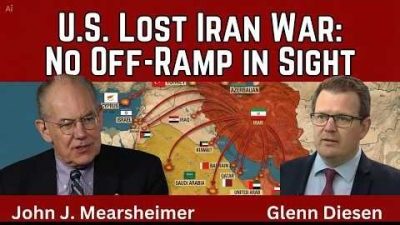
John Mearsheimer: US Already lost Iran war – No off-ramp in sight
or go to
Aletho News Archives – Video-Images
Frlom the Archives
70 Neocons Petition Congress To Effectively Allow Israel To Say When The US Should Attack Iran
By Damian Lataan | January 10, 2014
Seventy senior Israeli-centric neoconservatives have written an open letter to Congress imploring them to do more to ensure Iran complies with the conditions of any agreement finally reached with the P5+1 over Iran’s nuclear program.
While the neocons are ostensibly asking Congress to ensure compliance, it is clear that their real aim is to convince members of Congress to support the bill currently passing through the Senate which calls for tighter sanctions against Iran in the event of any waywardness on Iran’s part.
The neocons are eager to see the bill currently passing through the Senate with enough support to make it veto-proof, not so much because they are concerned about Iran’s so-called nuclear weapons program – there’s still not a skerrick of hard evidence that Iran has a nuclear weapons program – but, rather, because embedded within the bill is this clause:
… if the Government of Israel is compelled to take military action in legitimate self-defense against Iran’s nuclear weapon program, the United States Government should stand with Israel and provide, in accordance with the law of the United States and the constitutional responsibility of Congress to authorize the use of military force, diplomatic, military, and economic support to the Government of Israel in its defense of its territory, people, and existence…
Essentially, the clause is an automatic trigger for the US to attack Iran at any time the Israelis choose to launch a first strike – regardless of whether President Obama is in favour or not.
Partial list… continue
Blog Roll
 Aletho News
- ‘Heinous crime’: Iran denounces Israeli assassination of 4 Iranian diplomats in Lebanon
- John Mearsheimer: U.S. Already Lost Iran War – No Off-Ramp in Sight
- UK Parliament Plans ISP Blocking and Age Verification Powers
- World cannot remain silent as US and Israel attack ‘heritage of humankind’: Iran
- Emirati billionaire rebukes US senator over call for Gulf states to join war with Iran
- Op. True Promise 4: Iran’s missile blitzkrieg dismantles US war machine in West Asia
- Aramco CEO warns ‘catastrophe’ imminent if Strait of Hormuz remains shut
- What If Iran Says No?
- Trump Threatens to ‘Hit’ Iran ‘Twenty Times Harder’ Over Strait of Hormuz Oil Flows
- Spare the hypocrisy: Baghaei slams Ursula’s support for US
- If Americans Knew
- Israel Decided the War, But Trump’s America Fights and Pays the Bill
- Conscientious Objector Group: Phone ‘Ringing Off Hook’ As Huge Mobilization Underway
- U.S. support for Israel continues to plummet, despite media’s best efforts
- Threats and missiles fly, death tolls soar in Iran, Lebanon, Gaza – Not a ceasefire Day 151
- Lebanon: Israel’s White Phosphorous Use Risks Civilian Harm
- Corporate Media Go All Out To Support The US-Israeli War On Iran
- US-Israel war on Iran is creating a steady growing number of amputees
- Israel planned this war on Iran for 40 years. Everything else is a smoke screen
- The wrong question about the war in Iran
- ‘Your Tax Dollars Being Used to Raise Your Gas Prices’: US-Israel Bomb Major Iranian Oil Depots
- No Tricks Zone
- New Study Documents A 20-Year Pause In Arctic Sea Ice Decline – Driven By Internal Variability
- Wake-up Call: Survey Shows Majority Of Germans Now Favor Postponing Climate Targets!
- Televised! Leading German Political Candidate Tells Schoolchildren CO2 Makes Sun Hotter!
- New Study: A Century Warming Of 1.1°C Is ‘Commonplace’ And ‘Not Unusual’ During This Interglacial
- New Study: ‘Internal Noise’ And Volcanic Forcing Can Trigger 10-15°C Warming Within Decades
- Glaciers Worldwide Are Suddendly Surging, Experts Blame Warming!
- Surprising Discovery: Sahara Is Greening…Billions Of Trees Where Once Thought To Be Barren
- New Research Reaffirms Clouds, Aerosols, And Surface Solar Radiation Are ‘Driving The Climate System’
- Germany: Electric Car Catches Fire At Charging Station, Sets Off Local “Inferno”, Widespread Damage
- New Study: Canada’s New Brunswick Was 1°C Warmer Than Today During The Medieval Warm Period
 Aletho News