Nvidia suffers record one-day stock market value drop
RT | January 28, 2025
Nvidia’s stock plummeted 17% on Monday, erasing approximately $589 billion from its market capitalization and marking the largest single-day loss in US corporate history. The sharp decline follows concerns over mounting competition from the Chinese artificial intelligence firm DeepSeek.
The selloff was part of a broader tech downturn that saw the Nasdaq Composite fall 3.1%, its worst day since December. Nvidia shares closed at $118.58, marking their most significant drop since March 2020 during the early days of the Covid-19 pandemic. Monday’s plunge also dethroned Nvidia as the world’s most valuable publicly traded company, at $2.9 trillion, pushing it back to third place behind Apple and Microsoft.
The downturn was triggered by DeepSeek’s launch of an open-source R1 model, which the company claims was trained in just two months at a fraction of the cost required by US-based firms like OpenAI. This development has raised questions about the sustainability of high AI-related spending, particularly on Nvidia’s graphics processing units (GPUs) that dominate the AI chip market.
Nvidia itself described DeepSeek’s innovation as “an excellent AI advancement,” but argued that it expects demand for its chips to increase rather than diminish. “Inference requires significant numbers of Nvidia GPUs and high-performance networking,” a company spokesperson said in a statement on Monday.
Beyond Nvidia, the selloff extended to other tech and semiconductor companies. Broadcom saw its stock drop 17%, wiping out $200 billion in market value. Data center companies heavily reliant on Nvidia’s chips, such as Oracle, Dell, and Super Micro Computer, also experienced sharp declines of at least 8.7%.
Oracle’s chairman, Larry Ellison, saw his net worth fall by $27.6 billion, the most among affected billionaires, according to Forbes. Nvidia CEO Jensen Huang’s personal fortune dropped by $21 billion, ranking as the second-largest personal loss.
The AI-fueled stock surge of the past two years has made companies like Nvidia central to market confidence. Nvidia’s shares soared 239% in 2023 alone, driven by demand from tech giants like Alphabet, Meta, and Amazon.
The latest development comes amid growing tensions in the AI race between the US and China. Despite US export restrictions on high-end chips, DeepSeek has managed to deliver competitive performance compared to OpenAI’s o1, relying on lower-spec GPUs.
US policymakers have taken note of the competition. Venture capitalist David Sacks, who was appointed as the White House’s AI and crypto advisor under President Donald Trump, called for renewed focus on innovation to counteract China’s advancements.
“DeepSeek’s success shows that the AI race will be very competitive,” Sacks wrote on X, urging the US to avoid complacency. Another billionaire venture capitalist, Marc Andreessen, has described DeepSeek’s emergence as a “Sputnik moment” for American tech.
John Helmer and spitting out the red, white, and blue Skripal pills
Gorilla Radio with Chris Cook and John Helmer January 15, 2025
In today’s podcast from Canada, Chris Cook and I discuss the reasons for the failure of Novichok to kill anyone, and its success at brainwashing everyone, or almost everyone.
The contrast with other media campaigns of resistance to western information warfare is a glaring one. For example, the campaign to defend Julian Assange and free him from a British prison and trial in the US has turned out to have been a popular success. However, Assange himself, his Wikileaks platform, and his London advocates have done nothing to expose the Novichok deception operation. They are good men who have done nothing — their media success has failed to deter or stop the Anglo-American march to war in the Ukraine; Assange’s lawyers are supporters of the war against Russia. Assange’s alt-media reporters have pretended they are the only truth-tellers in the present discontents; their war is against their media competitors.
For their names; for the truth of the Novichok story; and for the after-life of the Novichok poison in the coming war against Russia, click to listen.
John Helmer and spitting out the red, white, and blue Skripal pills in the second half. Begin at Minute 31:00. Source: https://gradio.substack.com/
WEF 2025: Calls for Tighter Social Media Censorship to Combat Antisemitism

By Cindy Harper | Reclaim The Net | January 27, 2025
At the 2025 World Economic Forum (WEF) Annual Meeting, a session titled “Confronting Antisemitism Amid Polarization” featured prominent speakers who advocated for stronger measures to compel social media platforms to censor content they consider harmful. Jonathan Greenblatt, CEO and National Director of the Anti-Defamation League (ADL); Randi Weingarten, President of the American Federation of Teachers (AFT); and Jennifer Schenker, Founder and Editor-in-Chief of The Innovator, expressed concerns about the influence of platforms like TikTok, X (formerly Twitter), and Facebook on public discourse and the spread of antisemitism.
Jennifer Schenker set the tone for the discussion by claiming, “The flames of antisemitism are being fanned every second by TikTok and social media,” and lamenting that “the Jewish community has not been able to effectively combat that online.”
Jonathan Greenblatt labeled social media platforms “a super spreader of antisemitism and hate” and criticized their impact on younger audiences, stating, “Young people… get their news from TikTok, which is fairly terrifying, or from X or from Instagram.” He also called Meta “a gigantic problem,” highlighting the challenges posed by the platforms’ size, business models, and governance structures.
Greenblatt further criticized Section 230 of the Communications Decency Act (CDA), describing it as “a loophole… which exempts [social media companies] from liability.” He called for regulatory and reputational pressure to compel these companies to act, suggesting that social pressure could deter top engineers from working for platforms perceived as unethical: “If their engineers feel like going to these companies and participating in something, you know, an evil enterprise, if you will, they don’t wanna do that.”
Randi Weingarten shared examples of how the AFT has used its influence to pressure social media platforms. “We have used the economic power sometimes against a place like Facebook or others to say, actually, you have to stand with what is moral and what is legal,” she said, acknowledging the union’s role in leveraging pension funds and other economic tools to advocate for what they consider the fight against hate.
Weingarten also expressed concerns over the influence of social media on young people’s perceptions of the Israel Defense Forces (IDF). Recounting interactions with high school students in Boston, she noted that “every question [they asked] because of what they see and what they’re on” focused on the actions of the IDF, implying that platforms like TikTok and X should be more active in censoring such content.
Greenblatt emphasized the need for a broader coalition to address antisemitism, stating, “The Jewish community needs to recognize we can’t do it alone. We need institutions like government… and individuals, non-Jews, to realize antisemitism isn’t just a Jewish problem, it’s everyone’s problem.”
Weingarten echoed this sentiment, advocating for grassroots efforts to build understanding and combat hate: “There has to be a way that good people of the world end up fighting against hate.”
Egypt’s Parliament rejects plans for Palestinian resettlement after Trump’s call
MEMO | January 27, 2025
Tens of thousands of Palestinians return to north Gaza after one year of displacement

(Photo credit: MEE/Ahmed Aziz)
The Cradle | January 27, 2025
Tens of thousands of Palestinians began returning to the northern Gaza Strip via the Netzarim corridor on 27 January after over a year of displacement and a genocidal Israeli war.
Video footage documented the first moments that the displaced civilians flooded through the Netzarim corridor to return to their homes in the north.
“Vehicles continue to enter via the Netzarim corridor through Salah al-Din Street after undergoing electronic inspection [in accordance with the ceasefire agreement],” Al Jazeera’s correspondent reported on 27 January.
Hundreds of thousands of Palestinians are expected to return for the first time since being displaced at the start of the war in October 2023 and in the months that followed.
“The scenes of the return of the masses of our people to the areas from which they were forced to flee, despite their destroyed homes, confirm the greatness of our people and their steadfastness in their land, despite the depth of the pain and tragedy,” Hamas said in a statement.
Member of the Hamas political bureau Ezzat al-Rishq said the return of Palestinians to their homes “shatters all the dreams and illusions of the occupation in displacing [the Palestinian] people.”
Israel had been blocking the return of the displaced after the second round of prisoner exchanges took place on Saturday – demanding the return of a female Israeli soldier Arbel Yehud as part of the swap and accusing the resistance movement of obstructing the deal. Yehud is being held by the Palestinian Islamic Jihad (PIJ) movement.
It was agreed over the weekend that she would be released on Thursday in exchange for Israel allowing the return of the displaced to northern Gaza, which, along with other areas in the enclave, was destroyed and ethnically cleansed throughout the war.
Israeli authorities released 200 Palestinians from Israeli prisons on 25 January as part of the ceasefire agreement with Hamas. The resistance movement released four female Israeli soldiers as part of the deal earlier that day.
One hundred fourteen Palestinian prisoners were transferred from Ofer Prison in the occupied West Bank for release in Ramallah, 16 were returned to Gaza, and 70 were exiled outside Palestine, WAFA news agency reported. Egypt will host them for 48 hours before they are sent to Tunisia, Algeria, and Turkiye – which all agreed to receive them.
In Lebanon, civilians amass to secure liberation
By Khalil Harb | The Cradle | January 27, 2025
Ignoring a foreign-imposed ceasefire ‘extension,’ southern Lebanese residents are reclaiming their villages from Israeli occupation, exposing the failures of both the invasion and US mediation – and it’s happening in both Gaza and Lebanon at the same time.
The image that Israel sought to project – both to its settlers and to the wider Arab world – of a resistance subdued, a nation defeated, and a broken will crumbled at dawn on 26 January as the 60-day deadline for the implementation of the ceasefire with Hezbollah approached.
The shattering moment came as the Lebanese people triumphantly returned to their recently occupied villages with unrelenting resolve, putting an end to two months of perceived acquiescence and Israeli ambitions to extend its occupation of the country beyond the truce.
Scrambling to attach legitimacy to Israel’s continuing violations beyond the ceasefire deadline, the White House issued a very brief statement on Sunday evening, announcing that the agreement would remain in effect until 18 February.
Within hours, the Lebanese presidency’s X account posted: “There is no truth to the news about Israel informing Lebanon that it will remain at five border points for 15 days.”
Israel’s miscalculated strategy
The occupation state, once again miscalculating the realities on the ground, appeared to have banked on its extensive aggression in southern Lebanon, coupled with a brutal two-month rampage through southern villages under the guise of implementing UN Security Council Resolution 1701, to craft a facade of victory.
During this time, villages south of the Litani River – spared military occupation during the war thanks to the fierce resistance – were ravaged through relentless bombing and destruction right up until the deadline. Tel Aviv seemed confident this violence, shielded by the ceasefire agreement, would entrench its control and bolster its narrative of dominance – a narrative it had deceived itself into believing.
The arrogance of Israel’s leadership, from Prime Minister Benjamin Netanyahu to his far-right political allies and opposition leaders, underestimated the resilience of the Lebanese. The illusion that the war and its aftermath had crushed the will of the southern villagers or forced new terms upon Hezbollah was put to an unanticipated test.
During Lebanon’s observance of the ceasefire – marked by the deployment of its army south of the Litani and Hezbollah’s adherence to truce terms – Israel misread this restraint as weakness. Toward the end of the truce period, Israeli leaders openly discussed prolonged occupation of southern Lebanon, citing security concerns for northern settlers who had yet to return home.
What Israel did not foresee was the convergence of two historical moments: the Lebanese reclaiming their villages and Palestinians in Gaza defying displacement by returning northward from the strip. This dual movement after two ceasefire agreements, powered by an unyielding indigenous attachment to the land despite a genocidal campaign against its natives, exposed the failure of Israeli calculations and those of its allies in the west and West Asia.
A ceasefire undermined by violations
The recklessness of the US-led armistice committee, chaired by US General Jasper Jeffers, compounded the situation. By treating Israel’s numerous violations of the ceasefire lightly, the committee allowed Tel Aviv to interpret the agreement as it pleased.
Under this pretext, Israeli forces executed airstrikes, demolished entire residential neighborhoods, and bulldozed agricultural and forest areas, electrical network lines, water wells, and numerous roads. The occupation army uprooted infrastructure and disrupted civilian life in southern Lebanon at a scale rivaling the destruction during the 15-month war itself.
According to estimates by Lebanese authorities, there were over 800 violations during the ceasefire, yet the armistice committee offered no meaningful condemnation. Civilians attempting to return home were targeted indiscriminately; as of Sunday night, the Lebanese Ministry of Health recorded 24 more martyrs and over 134 wounded across 21 southern villages, many of them women and children, in addition to the nearly 100 lives lost since the ceasefire began.
Complicit silence of ‘mediators’
Israel’s actions, enabled by international complicity, emboldened it to extend its occupation and deepen the suffering of the Lebanese. Meanwhile, General Jeffers, tasked with overseeing the ceasefire and implementing Resolution 1701, remained a bystander to these crimes.
His silence showed, yet again, Washington’s inherent bias, which – far from being a neutral mediator – has historically aligned with Tel Aviv’s interests. This raises a pertinent question: can the US genuinely claim impartiality in Lebanon’s political and security affairs?
A political source close to the resistance in Lebanon, speaking to The Cradle, says this bias risks destabilizing the country and rendering the truce meaningless.
The resistance, represented by Hezbollah, set things straight with its statement last Thursday, which warned against “a continued violation of Lebanese sovereignty.”
Hezbollah insisted that these violations must be dealt with “by the state using all means and methods guaranteed by international conventions … to reclaim the land.”
“While we will follow the developments of the situation, which are supposed to culminate in a complete withdrawal in the coming days, we will not accept any violation of the agreement and commitments, and any attempt to evade them under flimsy pretexts.”
Hezbollah’s warnings realized
Sunday’s events confirmed Hezbollah’s warnings. As civilians re-entered their villages en masse, the Lebanese Armed Forces (LAF) followed, deploying in areas where Israeli troops were reluctant to surrender. This mass mobilization dismantled Israel’s scorched-earth strategy, which sought to make the region uninhabitable and reconstruction efforts near impossible.
Israeli Prime Minister Benjamin Netanyahu’s government, desperate to balance internal political pressures and its failed Gaza offensive, miscalculated again. Instead of breaking the Lebanese spirit, it was met with a formidable display of unity and defiance.
In exchange for the Lebanese commitment to implement the requirements of the ceasefire, Hezbollah parliamentary representative Ali Fayyad says that this was met with “Israeli treachery, international complicity, and indifference.”
A source close to the resistance also tells The Cradle that the presence of Israeli occupation forces on even a single inch of Lebanese territory serves as a justification for continued resistance.
The source elaborates that the Netanyahu government, by attempting to circumvent the truce deadline, is pursuing several interconnected objectives. Chief among them is the strategy to intensify pressure on Beirut, both politically and militarily, with the aim of forcing it into submission to Israeli demands.
Additionally, Israel seeks to establish a so-called “burned zone” along the border, creating a buffer area that would further entrench its occupation. This maneuvering, the source adds, also serves Netanyahu’s domestic agenda.
By maintaining a foothold in southern Lebanon, he aims to deflect criticism from opposition figures within Israel who are pressuring him to avoid a full withdrawal. Moreover, Netanyahu is using the situation to attempt a rehabilitation of his government’s tattered image.
After the Gaza ceasefire exposed severe cracks in Israel’s political and military apparatus – especially as Palestinian resistance fighters emerged with renewed confidence and resilience – the embattled Israeli prime minister is desperate to project strength, particularly in the Lebanese context, as a way to recover from these reputational blows.
Unified resistance
This synchronized resistance across Lebanon and Palestine serves as a reminder of the region’s enduring struggle against occupation. As Israeli commentators acknowledge divisions within US policy circles – some supporting Israel’s attempts to prolong its occupation while others insist on adherence to withdrawal terms – Netanyahu’s agenda remains in disarray.
Reports of him lobbying President Donald Trump to permit the retention of five military sites in southern Lebanon show his desperation, but the people of Lebanon have already rendered this strategy futile.
The Lebanese resistance, bolstered by the actions of its citizens, has proven yet again that the occupation can and will be challenged.
Civilians liberated roughly 30 towns on Sunday, paving the way for the Lebanese army’s advance and signaling an unyielding determination to reclaim their sovereignty. While Israel may seek to manipulate international dynamics, the people of Lebanon have drawn a clear line: their land, their will, their victory.
Trump might defy policy to reach nuclear deal with Iran: Responsible Statecraft
Al Mayadeen | January 27, 2025
President Donald Trump has signaled an unexpected shift in the conventional US policy regarding Iran, revealing that the only issue his administration would face with the Islamic Republic is its development of a nuclear weapon.
Speaking on Fox News’ Hannity show on January 23, Trump did not address Iran’s regional policies, its defiance of the Israeli occupation, or the possibility of enforcing a regime change. Rather, his only focus was preventing Iran from acquiring nuclear weapons.
In this regard, a Responsible Statecraft report, written by Eldar Mamedov, recalled previous statements by Iranian officials, confirming that the nation does not seek nuclear weapons, adding that this could facilitate a political agreement between Washington and Tehran.
Tehran has also gestured its willingness to re-engage with the West, particularly following the election of Iranian President Masoud Pezeshkian and his government coming to power. However, despite the mutual political willingness, the path to a deal remains highly complex and is vastly different from 2015, when the JCPOA curtailed Iran’s nuclear program.
Is a nuclear deal possible?
Following Trump’s 2018 withdrawal from the JCPOA, his imposition of sanctions, and the EU’s failure to abide by the terms of the deal, Iran significantly advanced its program, including enriching uranium to 60%—a step away from weapon-grade levels (90%)—and deploying advanced centrifuges. Nuclear expert Kelsey Davenport notes that Iran could now produce enough material for five to six nuclear bombs in just two weeks, according to Mamedov.
The situation is further complicated by the limited access the IAEA has had to Iran since 2021, heightening concerns about unmonitored nuclear material potentially being moved to covert sites, as well as shifts in Iran’s nuclear rhetoric that suggest a potential rethinking of its doctrine.
While Tehran officially maintains it is not pursuing nuclear weapons, regional challenges could incentivize Iran to consider a nuclear deterrent, Mamedov explained.
Israeli Prime Minister Benjamin Netanyahu’s threats of a direct attack, possibly with US support and cover, could possibly motivate Iran to contemplate threshold weaponization as a defensive measure.
Mamedov writes that negotiations to achieve a potential deal would have to consider Iran’s extensive nuclear program, as well as the set of motivations it has to expand its nuclear manufacturing. In this context, concessions would have to be made, addressing the regional situation and Iran and its allies’ security concerns, which prompted nuclear development in the first place.
Although Iran’s Leader Sayyed Ali Khamenei approved re-engagement and Pezeshkian’s reformist government advocated for a more proactive approach, majorly to ease US sanctions on the Islamic Republic, some Iranian politicians still have reservations, citing the US decision to withdraw from the JCPOA. This makes the matter one of “how to engage”, rather than if engagement should be initiated.
Some Iranian officials see little benefit in trading their nuclear leverage for uncertain sanctions relief. They are also bolstered by a new strategic partnership with Russia, which includes military and security cooperation, providing deterrence against potential attacks by “Israel” or the US.
The time is now!
Currently, proponents of waiting for a US initiative hold sway in Tehran at the moment. Reformists, however, argue this approach wastes time, suggesting Trump may seek a quick deal to enhance his peace-making image, especially with the Ukraine conflict dragging on. A limited framework deal, similar to Trump’s DPRK agreement, could be quickly drafted if the political decision is made, according to Mamedov.
While doubts remain about achieving a substantive follow-up deal, even a symbolic agreement—such as a handshake between Trump and an Iranian leader—could de-escalate tensions, marginalize pro-Netanyahu factions, and create room for broader negotiations addressing nuclear issues, sanctions, and regional concerns, Mamedov wrote.
Diplomatically, Iran has engaged with the EU and E3 (Britain, France, Germany) to prevent them from undermining progress by invoking UN sanctions before the October 2025 deadline. While Tehran has no illusions about the EU’s ability to restore the JCPOA without US involvement, these talks signal Iran’s seriousness about a deal and aim to avoid the E3 acting as spoilers out of fear of being excluded from future US-Iran agreements.
The most viable path forward seems to be a limited bilateral deal between the US and Iran to ease tensions, followed by multilateral negotiations with the original JCPOA signatories. With political will apparent on all sides, the opportunity to advance diplomacy is now.
Israel Considers Sending Weapons Seized in Lebanon to Ukraine
By Kyle Anzalone | The Libertarian Institute | January 26, 2025
Tel Aviv may be transferring Russian-made weapons that Israeli forces seized in southern Lebanon to Ukraine to be used in the fight against Russia. The potential arms shipments come following high-level meetings between Israeli and Ukrainian officials.
The potential arms shipments to Ukraine were first discussed by the Ukrainian Embassy in Israel, as was revealed on Facebook Tuesday. “During the meeting, the Ambassador thanked the interlocutor for a previously submitted proposal in the Knesset – to hand over weapons of Russian production to Ukraine seized by the IDF in Lebanon,” the post explained. “It is noted that this initiative would be an important step in recognizing the common threats facing both countries.”
On Wednesday, Israeli President Isaac Herzog met with Ukrainian President Volodymyr Zelensky at the World Economic Forum in Davos. “Among the main topics of our discussion were shared challenges, collaboration – particularly in the security sphere – and ways to achieve a just peace for Ukraine,” the Ukrainian leader posted on X.
Last year, Israeli forces invaded southern Lebanon and have been occupying much of the territory and preventing civilians from returning to their homes. During the operations against Hezbollah, Israeli forces are reported to have captured Russian-made weapons, including the Draganov sniper rifles, SPG-9 launchers, Kornet antitank missile, as well as Metis, Konkurs, Fagot, and Sagger missiles.
The Ukrainian Embassy said the increased ties between Russia and Iran are driving the potential arms shipments from Israel to Ukraine. “The sides also discussed the current joint challenges for both countries, in particular the military cooperation between Iran and Russia, which poses a threat to the national security of both Ukraine and Israel,” the Facebook post noted.
It’s unclear how large of a weapons cache Israeli forces have seized from Hezbollah. The Telegraph reports as many as 60% of the weapons were manufactured in Russia or the former USSR. The outlet also cited multiple Russian bloggers who reported that the weapons shipments from Israel to Ukraine are already underway.
State Department Reports Record Foreign Arms Sales in 2024
By Kyle Anzalone | The Libertarian Institute | January 26, 2025
The State Department reports that US arms deals sold over $300 billion in weapons to foreign countries last year. The record-high sales include over $20 billion in arms paid for with US aid.
The State Department’s statement on 2024 arms sales explained that “the total value of transferred defense articles and services and security cooperation activities conducted under the Foreign Military Sales system was $117.9 billion.”
Compared to 2023, the State Department says last year’s totals represented an increase of 45.7%, adding, “This is the highest ever annual total of sales and assistance provided to our allies and partners.” According to the statement, $21 billion in the FMS was paid for with US aid.
In addition to the FMS, US arms deals brokered $200 billion in other transactions. “The total authorized value for privately contracted Direct Commercial Sales (DCS) authorizations for FY2024 was $200.8 billion,” the statement explained. “This represents a 27.5% increase, up from $157.5 billion in FY2023.”
Combined, the FMS and DCS sales total over $318 billion.
Most of the weapon sales went to US allies and partners in Europe, the Middle East or East Asia. In Europe, NATO countries continued to buy weapons at a rapid pace as they transferred older systems to Ukraine for the proxy war against Russia. China is the focus of American arm sales in East Asia as Washington prepares to fight a war with Beijing over Taiwan.
In the Middle East, Israel bought, often with US aid, billions in weapons from American arms deals. Tel Aviv is conducting what multiple international human rights organizations have identified as a genocide in Gaza. During the Biden administration, the State Department was flooded with hundreds of reports that American weapons were being used to kill civilians in Gaza.
The State Department asserted that the US arms transfers occurred in “accordance with the U.S. Conventional Arms Transfer Policy, and weighs political, social, human rights, civilian protection, economic, military, nonproliferation, technology security, and end use factors.”
However, the US military aid and arms sales to Israel violate multiple American laws as Israel is committing war crimes with US weapons, the IDF has blocked aid from reaching Gaza, and Tel Aviv has an undeclared nuclear weapons program.
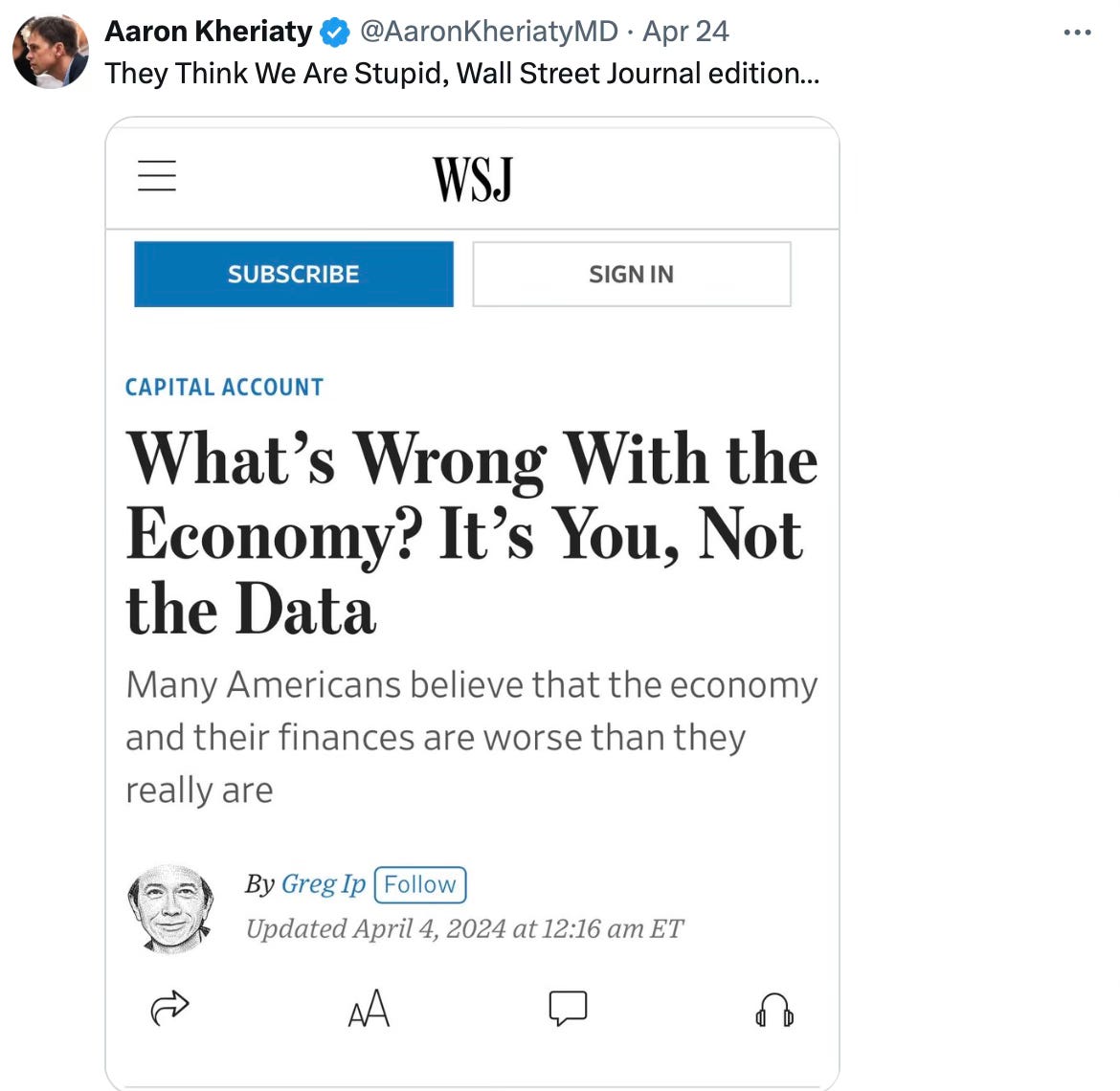
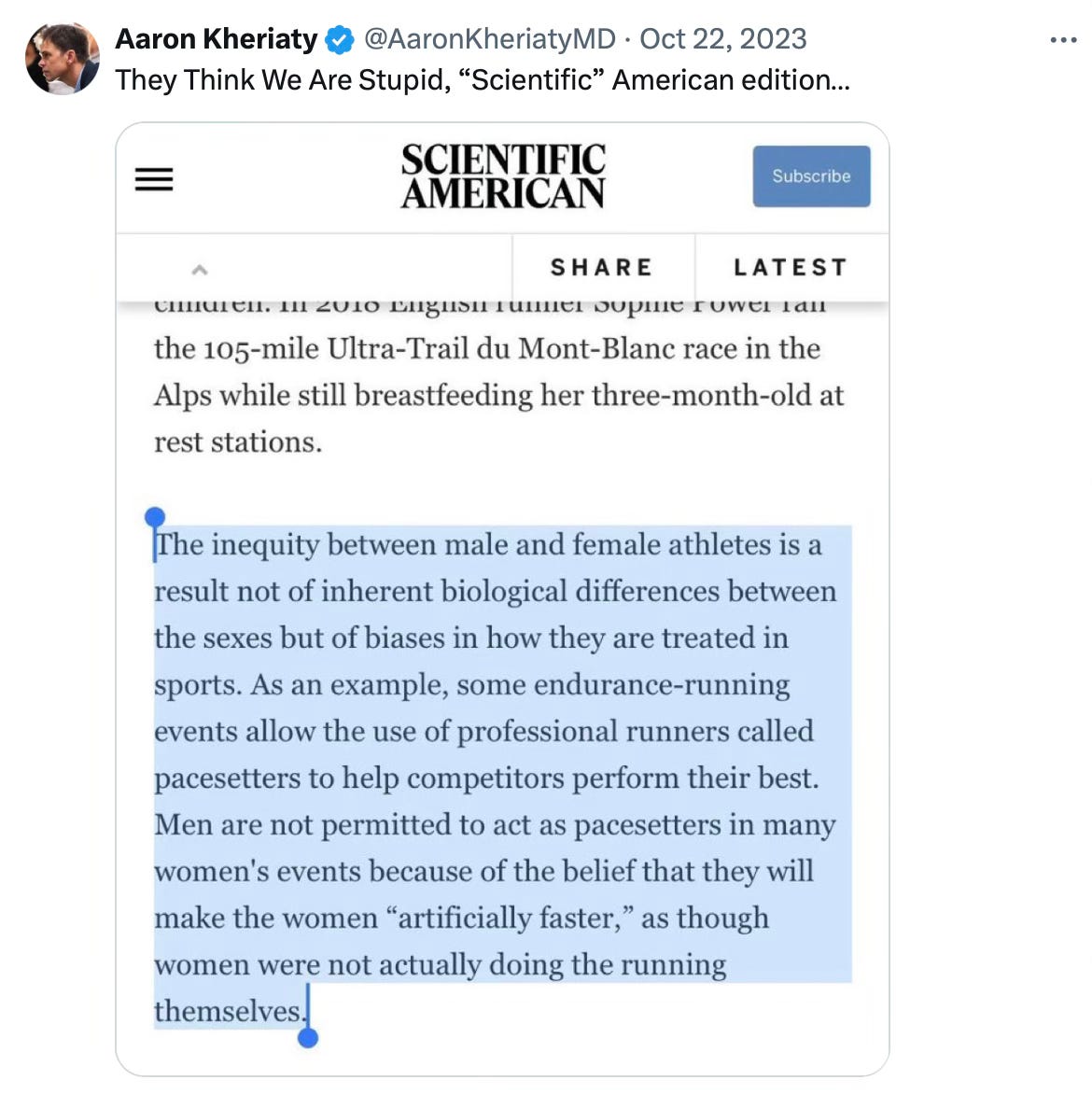
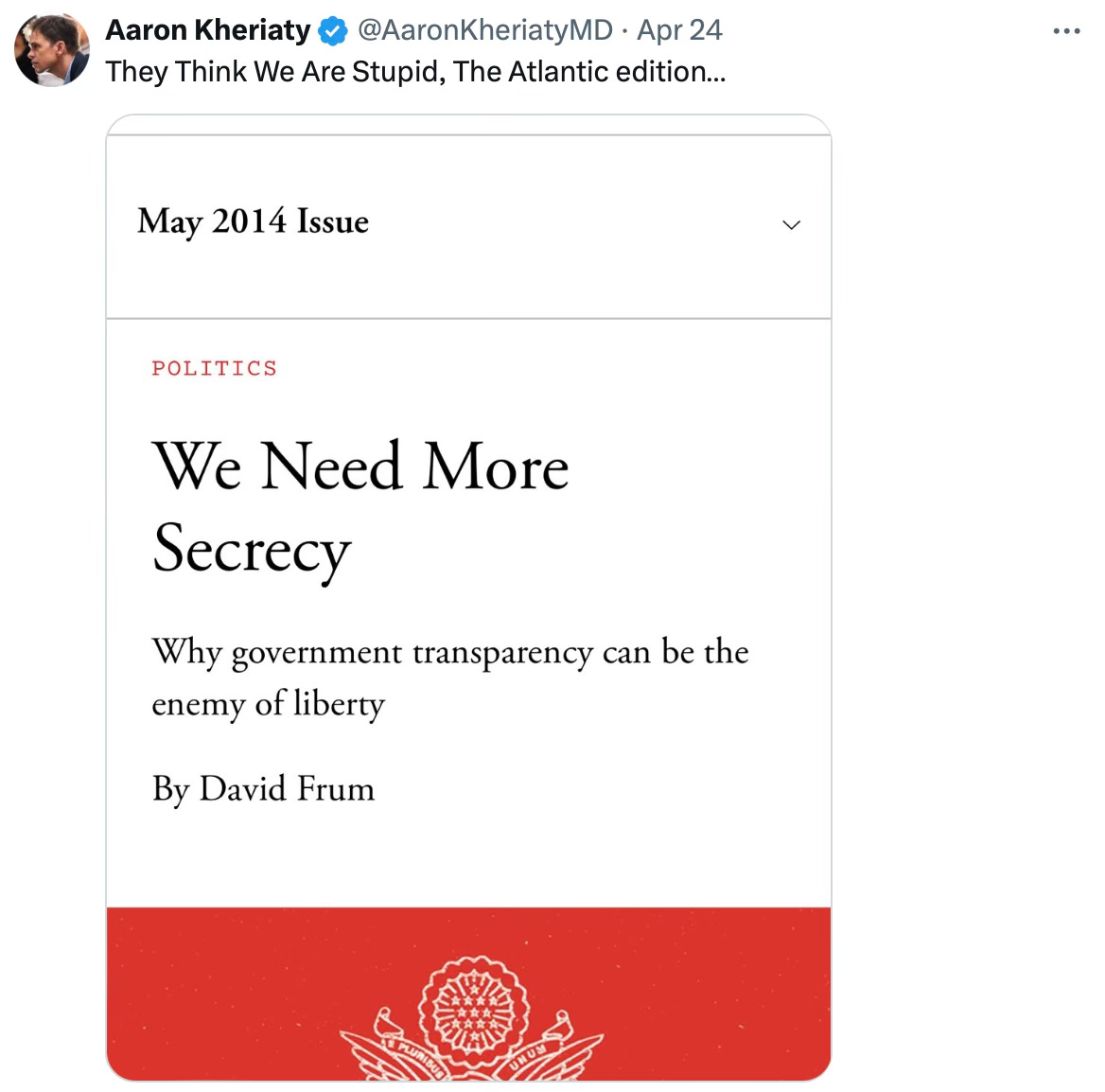
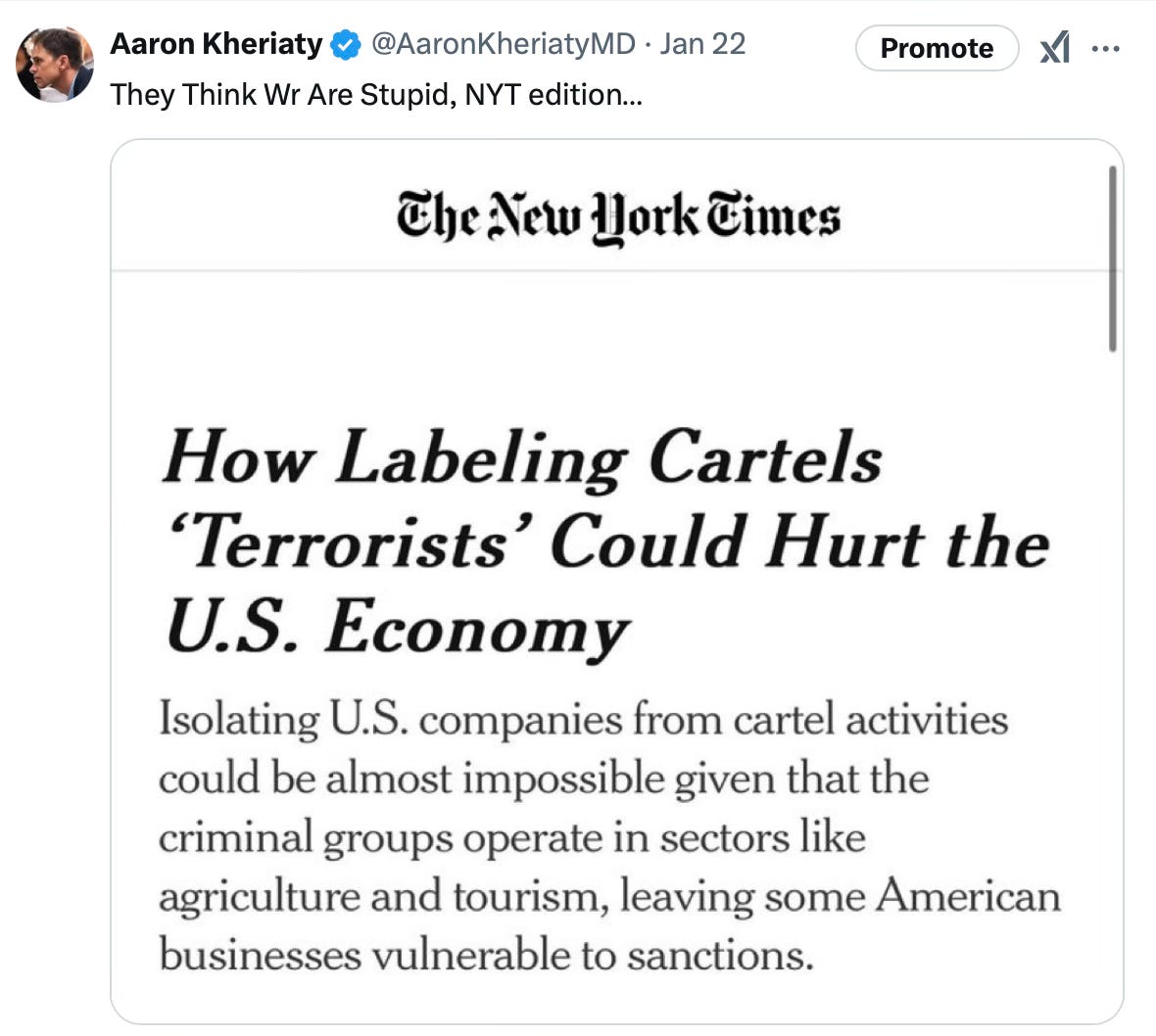
They Think We Are Stupid, Volume 13
By Aaron Kheriaty, MD | Human Flourishing | January 27, 2025
Everything you need to know about our ruling class’s opinion of you. As always, these headlines are presented without commentary.




Here’s why EU leaders really want to send troops to Ukraine
By Tarik Cyril Amar | RT | January 27, 2025
Nothing is certain regarding the Ukraine conflict. Except two things: Russia is winning and, under new ownership, the US leadership is searching for a novel approach. As Russian foreign policy heavyweight Sergey Ryabkov has noted, there is now a window of opportunity for a compromise to, in essence, help end this senseless conflict and restore some normalcy to US-Russian relations and thus global politics as well. But that window is small and will not be open forever.
Beyond that, things remain murky. Is the end to this madness finally in sight? Will Washington now translate its declared intention to change course into negotiating positions that Moscow can take seriously? Those would have to include – as a minimum – territorial losses and genuine neutrality for Ukraine, as well as a robust sense that any peace is made to last.
Last but not least, will the West compel Kiev to accept such a realistic settlement? ‘Nothing about Ukraine without Ukraine’ may still sound terribly nice to those selfish enough to mistake international politics for a virtue-signaling beauty contest. Yet – like the daft, hypocritical cant of ‘agency’ – it was never true in the first place, has served to shield the Western abuse of Ukraine and Ukrainians, and must be abandoned if this meatgrinder of a conflict is to end.
Or could everything turn out the other way around? Could Western and especially US hardliners still prevail? Whispering into Trump’s ear that ‘winning’ will just take a bigger, Trumpier push, with even more money and arms for the Kiev regime and more economic warfare against Russia, and that making peace would actually cost more than continuing the proxy war? Yes, the first is pure wishful thinking, going against all recent experience; the second is an absurd non-argument sitting on top of a mountain of false premises; and yet, this nonsense is still all too popular in the West, which has a habit of building its foreign policy on illusions.
Washington’s recent signaling has been ambiguous enough, whether by design or clumsiness, to raise hopes among the many remaining diehards in the West. The British Telegraph, for instance, is fantasizing about “Trump’s playbook for bringing Putin to his knees”; the Washington Post interprets the new American president’s recent (online) speech at the Davos World Economic Forum as “putting the onus on Russia”; and the New York Times desperately sifts through Trump’s words for anything that is harsh about Russia or its president, Vladimir Putin.
In the end, all of the above will probably turn out to be nothing but clutching at straws. While any Washington-Moscow negotiations are bound to be complicated, a return to the demented mutism of the Biden administration is unlikely. Communication will become the default again, as it should be among sane adults. And as long as there is no foul play – an assassination of Donald Trump, for instance – the US will, in one way or the other, extricate itself from the Ukraine conflict. If only because Trump is, at heart, a businessman, and will not throw good money after bad. It’s a harsh, cold reasoning, but if it leads to the right results – an end to senseless fighting and unnecessary dying – then it will have to do.
That US extrication, it bears emphasis, need not wait for a settlement with Russia or even the start of serious negotiations. Indeed, the extrication isn’t one thing but a process, and it has already begun. First, immediately after Trump’s inauguration, support to Ukraine was reduced, but military aid was still upheld. Not for long though. Only days later, Politico reported that a second general order to suspend aid flows for 90 days also applied to military assistance for Kiev.
But there is a catch. If the US distances itself from its lost proxy war, that does not necessarily mean that its clients and vassals in the EU and NATO will follow, at least not immediately. That is counterintuitive, admittedly. If EU leaders were rational, acting in their countries’ best interest – and, in fact, that of Ukraine, too – they would not even consider going it alone. But then, if they were rational, they would have refused to join the US proxy war from the beginning and long have stopped listening sheepishly to bossy tirades by Ukraine past-best-by-date president Vladimir Zelensky. And yet they have just done it again at Davos.
So, instead of rationality, we now see unending affirmations that peace will not and must not come soon. Sorry Ukrainians, your European ‘friends’ believe you haven’t done enough dying yet.
French President Emmanuel Macron, for one, seems to be going through a manic phase, again. Clearly with reference to Trump’s very different ideas, the comically unpopular leader, whose ratings have just dived to a six-year low, has declared that the Ukraine conflict will not end soon, “neither today nor the day after today.” German Foreign Minister Annalena ‘360 degrees’ Baerbock is throwing tantrums when she can’t have as many billions for Ukraine as she wants. UK Prime Minister Keir Starmer – another European incumbent on very thin ice at home and with abysmal ratings – has made his first pilgrimage to Kiev and concluded a 100-year partnership agreement with Ukraine, including a secret part and worth, again, billions and billions of pounds. Because, you see, Britain is doing so incredibly well at home – except not really. Take just one data point: British factories have just registered their worst slump in orders since Covid.
Against this Euro-Conga-on-the-Titanic backdrop, another upshot of the persistent European refusal to get real is re-emerging talk about sending large numbers of Western ground forces to Ukraine, specifically from NATO-EU countries. True, Zelensky’s demands at Davos for 200,000 troops – that’s more than landed in Normandy on D-Day 1944, but why be modest when you are riding high in Kiev? – are ludicrous. Yet smaller but still substantial numbers – 40,000 or so – are still under consideration.
What exactly these troops would be doing in Ukraine remains hazy. They would not be a peacekeeping force because they would be siding with one party of the conflict, Ukraine. And yet, proponents of these schemes promise they would not be on the front lines fighting against Russia because they would either be introduced only after an end to the fighting, or they would somehow remain in the hinterland, thereby freeing up Ukrainian forces for the front.
None of the above makes sense. As long as the fighting continues, there is no hinterland in the sense that the troops would be spared real fighting and dying, because Russian airstrikes can reach them everywhere even now, and, depending on further developments, so may Russian land forces in the future. Moreover, once these troops enter the country, Kiev would, of course, do its best to get them embroiled in great bloodshed, including by provocations and false flag operations. The aim would be to drag these ‘allies’ so deep into the quagmire that they wouldn’t be able to get out again.
Introducing boots on the grounds from NATO-EU countries after the fighting, however, won’t work either. Russia is fighting to have a genuinely neutral Ukraine and will not agree; and as long as Russia does not agree, there won’t be any end to the fighting. If these troops were to turn up anyhow, the conflict would start again. Indeed, Kiev would have an incentive to restart it once they are in Ukraine (see above).
Of course, NATO-EU states already have black ops operators and mercenaries on the ground. But while Moscow has wisely decided not to take this degree of intervention as a reason for attacking beyond Ukraine, regular forces in large numbers would obviously be a different matter. The proponents of this type of deployment argue that the US contingent in South Korea and KFOR troops in Kosovo (of all places!) show that these deployments are possible without further escalation. This, too, is nonsense. KFOR’s presence is based on several 1999 agreements and, crucially, a UN Security Council resolution (1244). Its sad but very low fatalities (213 as of 2019), some caused by accidents, cannot remotely be compared with what would happen to NATO-EU troops clashing with the Russian Army; finally, those KFOR casualties that did not come from accidents, and were not inflicted by a state’s regular forces but by protesters and irregulars. A scenario in which thousands of EU troops die in a fight with the regular army of a nuclear-armed Russia is incomparable.
Regarding the US troops in South Korea, their presence is based on a mutual defense treaty concluded in 1953. Again, exactly the type of arrangement Moscow will not accept. And also one that the NATO-Europeans would be very wise to shy away from, because, once again, it would suck them deep into the next war. Finally, obvious but worth stating: Those US forces in South Korea have the backing of the US. They are a classical tripwire. Attack them, and face the whole US military. EU forces would not have US backing; and if Europeans want to underwrite such a tripwire with their own flimsy armies, they are suicidal.
If large-scale deployment of EU boots on the ground is such an obviously bad idea, why will it not finally go away? There are really only two possible answers: Either those dreaming such dreams are really so shortsighted and irresponsible (think Kaja Kallas and similar intellectual lightweights) or they are not quite honest about their motives. In reality, we are probably dealing with both.
Regarding the genuinely confused, let’s not waste time on them. But what about those who are really after something else? What could that be? Here is a plausible guess. The talk about sending major contingents to Ukraine has two real aims, one targeting the new American leadership and the other, Ukrainian domestic politics.
With regard to Washington, the real purpose of speculating about EU ground troops is a desperate attempt to secure Brussels a say in the coming negotiations between the US and Russia. And there, the Europeans are right about one thing: They may well be excluded, which will be an ironic outcome after their self-destructive obedience toward the Biden administration. But there’s a new sheriff in town now, and he might well cut them loose no less than Ukraine.
In Ukraine, the real purpose is to exert outside influence on the sore issue of mobilization: Ukraine is running out of cannon fodder, as observers as different as the new US secretary of state, Marco Rubio, and the slavishly NATO-ist German magazine Spiegel now admit. Mobilization of those who are still there is a creeping catastrophe; its violence and the mass evasion practiced by its victims demonstrating every day that many Ukrainians have had enough. The Zelensky regime’s proposed answer is to lower the mobilization age even further, to 18. Importantly, this is supposed to happen even if there is peace.
And would it not be convenient for this type of policy to point to troops from the West and tell unwilling draftees and their families: Look, if even those foreigners are coming to help, how can you stay at home? Yet they are unlikely to ever turn up. Once again, Ukrainians will be fed bloated rhetoric about and by false friends from the West – to, in the end, be left alone to keep dying and lose more territory. The way out of this is not more of the same. Even if it could work – which it cannot – NATO-EU mass deployment would only make everything worse. Because the real way out of this is a compromise with Russia – and the deployment of Western troops would prevent that compromise.
Tarik Cyril Amar is a historian from Germany working at Koç University, Istanbul, on Russia, Ukraine, and Eastern Europe, the history of World War II, the cultural Cold War, and the politics of memory.
The CIA Report: Why a Low Confidence Finding is the Height of Hypocrisy
By Jonathan Turley | January 27, 2025
Every modern president seems to promise transparency during their campaigns, but few ever seem to get around to it. Once in power, the value of being opaque becomes evident. We will have to wait to see if President Donald Trump will fulfill his pledges, but so far this is proving the cellophane administration. Putting aside his constant press gaggles and conferences, the Administration has ordered wholesale disclosures of long-withheld files from everything from the JFK investigation to, most recently, the CIA COVID origins report. That report is particularly stinging for both the Biden Administration and its media allies.
Newly-confirmed CIA Director John Ratcliffe released the report, which details how it views the lab theory as the most likely explanation for the virus. Expressing “low confidence,” the agency still favored that theory over the natural origins theory, which was treated as sacrosanct by the media and favored by figures like Anthony Fauci. (Other recent reports have contradicted the equally orthodox view on the closing of schools, showing no material benefit in terms of slowing the transmission of COVID).
Even a low-confidence finding shows the height of hypocrisy in Washington where politicians and pundits savaged any scientist who even suggested the possibility that the virus was man-made and likely originated in the Wuhan lab near the site of the outbreak.
This follows a recent disclosure in the Wall Street Journal of a report on how the Biden administration may have suppressed dissenting views supporting the lab theory on the origin of the COVID-19 virus. Not only were the FBI and its top experts excluded from a critical briefing of President Biden, but government scientists were reportedly warned that they were “off the reservation” in supporting the lab theory.
As previously discussed, many journalists used the rejection of the lab theory to paint Trump as a bigot. By the time Biden became president, not only were certain government officials heavily invested in the zoonotic or natural origin theory, but so were many in the media.
Reporters used opposition to the lab theory as another opportunity to pound their chests and signal their virtue.
MSNBC’s Nicolle Wallace mocked Trump and others for spreading one of his favorite “conspiracy theories.” MSNBC’s Kasie Hunt insisted that “we know it’s been debunked that this virus was manmade or modified,”
MSNBC’s Joy Reid also called the lab leak theory “debunked bunkum,” while CNN reporter Drew Griffin criticized spreading the “widely debunked” theory. CNN host Fareed Zakaria told viewers that “the far right has now found its own virus conspiracy theory” in the lab leak.
NBC News’s Janis Mackey Frayer described it as the “heart of conspiracy theories.”
The Washington Post was particularly dogmatic. When Sen. Tom Cotton (R-Ark) raised the theory, he was chastised for “repeat[ing] a fringe theory suggesting that the ongoing spread of a coronavirus is connected to research in the disease-ravaged epicenter of Wuhan, China.”
Likewise, after Sen. Ted Cruz (R-Texas) mentioned the lab theory, Post Fact Checker Glenn Kessler mocked him: “I fear @tedcruz missed the scientific animation in the video that shows how it is virtually impossible for this virus jump from the lab. Or the many interviews with actual scientists. We deal in facts, and viewers can judge for themselves.”
As these efforts failed and more information emerged supporting the lab theory, many media figures just looked at their shoes and shrugged. Others became more ardent. In 2021, New York Times science and health reporter Apoorva Mandavilli was still calling on reporters not to mention the “racist” lab theory.
In Kessler’s case, he wrote that the lab theory was “suddenly credible” as if it had sprung from the head of Zeus rather than having been supported for years by scientists, many of whom had been canceled and banned.
As these figures were attacking reports, Biden officials were sitting on these reports. Figures like Fauci did nothing to support those academics being canceled or censored for raising the theory.
The very figures claiming to battle “disinformation” were suppressing opposing views that have now been vindicated as credible. It was not only the lab theory. In my recent book, I discuss how signatories of the Great Barrington Declaration were fired or disciplined by their schools or associations for questioning COVID-19 policies.
The suppression of the lab theory proves the ultimate fallacy of censorship. Throughout history, censorship has never succeeded. It has never stopped a single idea or a movement. It has a perfect failure rate. Ideas, like water, have a way of finding their way out in time.
Yet, as the last few years have shown, it does succeed in imposing costs on those with dissenting views. For years, figures like Bhattacharya (who was recently awarded the prestigious Intellectual Freedom Award by the American Academy of Sciences and Letters) were hounded and marginalized.
Others opposed Bhattacharya’s right to offer his scientific views, even under oath. For example, in one hearing, Rep. Raja Krishnamoorthi (D-Ill.) expressed disgust that Bhattacharya was even allowed to testify as “a purveyor of COVID-19 misinformation.”
Los Angeles Times columnist Michael Hiltzik decried an event associated with Bhattacharya, writing that “we’re living in an upside-down world” because Stanford University allowed dissenting scientists to speak at a scientific forum. Hiltzik also wrote a column titled “The COVID lab leak claim isn’t just an attack on science, but a threat to public health.”
One of the saddest aspects of this story is that many of these figures in government, academia and the media were not necessarily trying to shield China. Some were motivated by their investment in the narrative while others were drawn by the political and personal benefits that came from joining the mob against a minority of scientists.
The CIA report does not resolve this debate, but it shows that there is a legitimate debate despite the overwhelming message of the media and the attacks on scientists. Of course, the same media and political figures responsible for this culture of intimidation have simply moved on. The value of an alliance with the media is that such embarrassing contradictions are not reported. At most, these figures shrug and turn to the next subject for groupthink and mob action.
Featured Video

Meet The Ellisons: Zionists, Technocrats, Moguls
or go to
Aletho News Archives – Video-Images
Frlom the Archives
With apparently fabricated nuclear documents, Netanyahu pushed the US towards war with Iran
By Gareth Porter | The Grayzone | April 29, 2020
President Donald Trump scrapped the nuclear deal with Iran and continued to risk war with Iran based on Israeli Prime Minister Benjamin Netanyahu’s claim to have proven definitively that Iran was determined to manufacture nuclear weapons. Netanyahu not only spun Trump but much of the corporate media as well, duping them with the public unveiling of what he claimed was the entire secret Iranian “nuclear archive.”
In early April 2018, Netanyahu briefed Trump privately on the supposed Iranian nuclear archive and secured his promise to leave the Joint Comprehensive Plan of Action (JCPOA). That April 30, Netanyahu took the briefing to the public in a characteristically dramatic live performance in which he claimed Israel’s Mossad intelligence services had stolen Iran’s entire nuclear archive from Tehran. “You may well know that Iran’s leaders repeatedly deny ever pursuing nuclear weapons…” Netanyahu declared. “Well, tonight, I’m here to tell you one thing: Iran lied. Big time.”
However, an investigation of the supposed Iranian nuclear documents by The Grayzone reveals them to be the product of an Israeli disinformation operation that helped trigger the most serious threat of war since the conflict with Iran began nearly four decades ago. This investigation found multiple indications that the story of Mossad’s heist of 50,000 pages of secret nuclear files from Tehran was very likely an elaborate fiction and that the documents were fabricated by the Mossad itself. … continue
Blog Roll
 Aletho News
- Meet The Ellisons: Zionists, Technocrats, Moguls
- US failures in Iran reveal Russia is key to South Korea’s strategic security
- ‘All ports in Persian Gulf will be legitimate targets if Iranian ports are attacked’
- 40 Years of Endless War, Data Point by Data Point
- Department of War Using Palantir AI to Pick Targets in Iran
- American bases do not protect – they attack the peoples of the Persian Gulf
- ‘We’ve Obliterated Their Missiles’
- Syrian president vows ‘absolute support’ to disarm Hezbollah
- Ukraine attacking Russian gas pipeline to stop deliveries to Europe – Defense Ministry
- ‘Heinous crime’: Iran denounces Israeli assassination of 4 Iranian diplomats in Lebanon
- If Americans Knew
- Israeli strategic plans to “remake the Middle East” from the 1950s and since
- Honoring Gaza’s women who refused to let the world look away
- 97% of victims of war on Iran are Iranian, 98% of victims in war on Gaza are Gazans – Not a ceasefire Day 152
- Early Iran strikes cost $5.6 billion in munitions, Pentagon estimates
- Israel Decided the War, But Trump’s America Fights and Pays the Bill
- Conscientious Objector Group: Phone ‘Ringing Off Hook’ As Huge Mobilization Underway
- U.S. support for Israel continues to plummet, despite media’s best efforts
- Threats and missiles fly, death tolls soar in Iran, Lebanon, Gaza – Not a ceasefire Day 151
- Lebanon: Israel’s White Phosphorous Use Risks Civilian Harm
- Corporate Media Go All Out To Support The US-Israeli War On Iran
- No Tricks Zone
- Destructive Green New Deal: German Energy And Metal Group Warns Of Drastic Crisis
- New Study Documents A 20-Year Pause In Arctic Sea Ice Decline – Driven By Internal Variability
- Wake-up Call: Survey Shows Majority Of Germans Now Favor Postponing Climate Targets!
- Televised! Leading German Political Candidate Tells Schoolchildren CO2 Makes Sun Hotter!
- New Study: A Century Warming Of 1.1°C Is ‘Commonplace’ And ‘Not Unusual’ During This Interglacial
- New Study: ‘Internal Noise’ And Volcanic Forcing Can Trigger 10-15°C Warming Within Decades
- Glaciers Worldwide Are Suddendly Surging, Experts Blame Warming!
- Surprising Discovery: Sahara Is Greening…Billions Of Trees Where Once Thought To Be Barren
- New Research Reaffirms Clouds, Aerosols, And Surface Solar Radiation Are ‘Driving The Climate System’
- Germany: Electric Car Catches Fire At Charging Station, Sets Off Local “Inferno”, Widespread Damage
 Aletho News