Biden making ‘last-ditch’ bid to seize Russian funds – CNN
RT | January 14, 2025
Washington has tried to convince the EU to confiscate frozen Russian assets before US President Joe Biden leaves office but this seems unlikely to happen, according to CNN.
The US and its allies have blocked an estimated $300 billion in Russian sovereign funds in early 2022, following the escalation of the Ukraine conflict. As most of these assets are under the control of the Brussels-based clearinghouse Euroclear, the EU has been reluctant to seize them outright, fearing that Moscow’s reprisal could wreck the bloc’s economy.
The White House has made one last effort to seize the money before President-elect Donald Trump takes office on January 20, CNN reported on Monday, citing two anonymous “senior officials.”
The US wants the EU to move the money to a special escrow account, from which it could be released if Russia-Ukraine peace negotiations are successful.
“If you want your money back, you’re going to have to come talk,” one of the officials told CNN.
Biden officials have claimed that Trump’s nominees are “generally supportive” of the strategy, seeing the frozen funds as possible leverage over Moscow they would need to negotiate a peace.
However, the EU governments “remain skeptical” about the proposal, making it “highly unlikely” to happen, according to the outlet. The bloc is concerned that confiscating the money would violate international law.
The US has tried to argue otherwise for more than a year. Speaking at a conference in Washington last May, one of the architects of the US sanctions regime, Daleep Singh, argued that the decision to freeze Russian sovereign assets was already a major precedent that “did not lead to an appreciable shift away from G7 currencies,” but acknowledged that confiscation was a “red line” for several countries.
Biden was expected to bring up the funds at a meeting with the Italian leadership and Ukraine’s Vladimir Zelensky in Rome this week but canceled the trip due to the wildfires ravaging Los Angeles.
Zelensky demanded all of the frozen Russian funds for Ukraine, in an interview with podcaster Lex Fridman earlier this month.
“We will take it. Take money, what we need for our domestic production, and we will buy all the weapons from the US,” he told Fridman.
Russian Foreign Ministry spokeswoman Maria Zakharova called Zelensky “completely out of his mind,” and described his interview as a “hellish mixture of neo-Nazism and terrorism with drug delirium.”
Moscow has denounced the blocking of its sovereign funds as “absolutely illegal” and said any attempt to confiscate them would be outright theft. In that case, Western assets inside Russia valued at more than $300 billion would be targeted in retaliation, Russian Finance Minister Anton Siluanov has said.
Trump urges Israel to avoid unnecessary escalation
MEMO | January 14, 2025
An Israeli television channel has revealed that US President-elect Donald Trump sent a message to officials in Tel Aviv, urging Israel to avoid any “unnecessary” escalation and refrain from statements that could lead to regional conflicts, particularly during the transition period before his administration begins.
Channel 12 reported that Trump’s aides informed Israeli officials that the incoming US administration aims to achieve stability in the Middle East, focusing on fostering “peace” between Israel and Lebanon and maintaining the ongoing ceasefire.
In his discussions with Israeli officials, Trump emphasised that he had no intention of engaging in new wars during the early days of his presidency, as he intends to prioritise addressing domestic issues in the United States.
According to the channel, Trump has personally begun intervening in efforts to secure the release of Israeli captives held in the Gaza Strip. He has expressed significant interest in resolving this issue before officially taking office.
The report also mentioned that Trump’s special envoy to the Middle East, Steven Witkoff, met with Israeli Prime Minister Benjamin Netanyahu to discuss the next steps. Following this meeting, it was decided that the heads of Mossad and the Israeli Security Agency (Shin Bet) would be sent to Qatar to engage in direct negotiations.
Why NATO’s Plan to Conscript Ukraine’s Youth Will Likely Fail
By Professor Glenn Diesen | January 14, 2025
NATO continues to pressure Ukraine to lower its conscription age to 18 as the huge casualties by Ukraine have resulted in a lack of manpower. US Secretary of State Anthony Blinken is pressuring Ukraine into “getting younger people into the fight”, while NATO Secretary General Mark Rutte has been more cautious in his language by arguing “We need probably more people to move to the front line”.[1] The incoming Trump administration also appears to take the same line, as Trump’s National Security Advisor Mike Walz argued that lowering the conscription age could “generate hundreds of thousands of new soldiers”.[2]
While there is seemingly bipartisan support in the US for sacrificing Ukraine’s youth, the plan is deeply flawed. The Ukrainians are overwhelmingly in favour of immediate negotiations, the Ukrainian government resists the pressure from NATO, and there is very little chance that the new recruits will significantly improve the situation.
Bring Russia to the negotiation table & negotiate from a position of strength
NATO’s argument is seemingly reasonable: More Ukrainian soldiers are necessary to pressure Russia to the negotiation table and to negotiate from a position of strength.
The need to pressure Russia to the negotiation table is based on lies, as Russia has been open to negotiations over the past three years. NATO has rejected negotiations and even basic diplomacy with Russia for three years that may have prevented escalation and possibly led to peace. Russia contacted Ukraine already on the first day after the Russian invasion, to negotiate a peace agreement based on putting an end to NATO expansion. President Zelensky confirmed on 25 February 2022: “Today we heard from Moscow that they still want to talk. They want to talk about Ukraine’s neutral status”.[3] The US and UK sabotaged the Istanbul peace agreement to pursue a long war. In March 2022, Zelensky confirmed in an interview with the Economist: “There are those in the West who don’t mind a long war because it would mean exhausting Russia, even if this means the demise of Ukraine and comes at the cost of Ukrainian lives”.[4] By rejecting any diplomacy and negotiations, NATO made it a war of attrition as Russia was left with the dilemma of either continuing the fight or capitulating.
The need to negotiate from a position of strength is a reasonable objective, yet there are reasons to doubt NATO’s sincerity. Is NATO attempting to strengthen Ukraine’s position in negotiations or to keep the war going? On 27 February 2022, the same day that Russia and Ukraine announced peace talks, the EU approved 450 million Euros in military aid to Ukraine, which reduced the incentives for Kiev to negotiate with Moscow.[5] The consistent argument has been that Ukraine must negotiate from a position of strength, yet it has been three years of intensive war and NATO countries still react with panic as Trump prepares to start negotiations to end the war.
Chairman of the Joint Chiefs of Staff General Mark Milley, recognised in November 2022 that the Ukrainians were in an ideal situation to start negotiations after successes on the battlefield. Milley recognised that a military victory was impossible to achieve and that this was therefore the optimal time to negotiate.[6] Fearing that its long war would end, the Biden administration quickly intervened and Milley had to walk back his comments.
What will NATO and Ukraine achieve with their strengthened position at the negotiation table? Russia considers NATO’s incursion into Ukraine to be an existential threat and will not accept any peace agreement that does not result in restoring Ukraine’s neutrality. Both the Israeli and Turkish mediators during the peace negotiations in 2022 recognised that Russia was prepared to compromise on anything, besides the issue of NATO expansion. NATO’s continuous promise of membership for Ukraine in the military bloc after the war is over has made a peaceful settlement impossible and thus cemented the conditions for a long war. Strengthening Ukraine’s army will not soften Russia’s position.
What is the likely outcome?
Forcing hundreds of thousands of young Ukrainians into the army will undoubtedly slow down the Russian advances, although it cannot stop or reverse the Russian military. The Ukrainian army has been exhausted, and a new army cannot simply be built from scratch. The losses on the battlefield and lies from their government have diminished morale, which will not be improved by sending less experienced young men into a battlefield dominated by Russia.
Trump will likely be able to pressure Zelensky to lower the conscription age, yet this will be incredibly unpopular among the Ukrainian population. The overwhelming majority of Ukrainians want negotiations to start immediately, not to sacrifice their youth in a lost war. Newsweek reports that “Over 6 million Ukrainians of conscription age haven’t complied with legislation introduced last year to boost dwindling troop numbers fighting Russia”. The public wants an end to the war, not to send their teenagers to die.
Conscription of Ukraine’s youth will cause great social upheaval in a society that is already fed up with watching their men being snatched from the streets and thrown into vans by “recruiters”. These young men are also important for the workforce to keep the economy going, which will be lost if they are conscripted or go into hiding. Once the war is finally over, these young men are indispensable to rebuilding Ukraine which is already facing a demographic crisis.
Ukraine cannot survive more “help”
Between 1991 and 2014, the US attempted to help Ukraine into NATO despite that only 20% of Ukrainians desired membership in the military alliance during this time. In 2014, NATO helped Ukrainians topple their government in an unconstitutional coup without majority support from Ukrainians. Rather than implementing the Minsk peace agreement, NATO helped Ukraine build a large army so it could instead change realities on the ground. When 73% of Ukrainians voted for Zelensky’s peace platform in 2019, NATO helped Ukraine avoid “capitulation” by pressuring Zelensky to reverse his position. In 2021, NATO helped Ukraine by refusing to give any security guarantees to Russia, even as Biden and Stoltenberg recognised that Russia would invade without security guarantees. In 2022, the US and UK helped Ukraine by pressuring Kiev to abandon a peace agreement in which the Russians committed to pulling troops back in return for neutrality. Hundreds of thousands of Ukrainians have been killed, large parts of its territory have been lost and the nation may not survive – NATO is now attempting to help yet again by pressuring war-weary Ukrainians to also sacrifice their youth. Irrespective of any new soldiers entering the war, the position of Ukraine will only continue to get worse.
If NATO really wants to help Ukraine and strengthen its position at the negotiation table, NATO should offer Russia what it wants the most – a pan-European security agreement based on indivisible security that replaces the zero-sum bloc politics. This is the best option for the West, Russia and Ukraine.
[1] A. Medhani, ‘White House pressing Ukraine to draft 18-year-olds so it has enough troops to battle Russia’, AP News, 28 November 2024.
[2] B. Gaddy, ‘Rep. Waltz: Negotiations to release Hamas hostages are underway’, ABC News, 12 January 2025
[3] V. Zelensky, ‘Address by the President to Ukrainians at the end of the first day of Russia’s attacks’, President of Ukraine: Official website, 25 February 2022.
[4] The Economist. ‘Volodymyr Zelensky on why Ukraine must defeat Putin’ The Economist, 27 March 2022.
[5] J. Deutsch and L. Pronina, ‘EU Approves 450 Million Euros of Arms Supplies for Ukraine’, Bloomberg, 27 February 2022.
[6] O. Libermann, ‘Top US general argues Ukraine may be in a position of strength to negotiate Russian withdrawal’, CNN, 16 November 2022.
Paper Showing Earth’s Atmosphere Has Become ‘Saturated’ With Carbon Dioxide and More Carbon Emissions Won’t Make Any Difference Is Retracted Following Positive Coverage
By Chris Morrison | The Daily Sceptic | January 13, 2025
Another important paper taking issue with the ‘settled’ climate narrative has been cancelled following a report in the Daily Sceptic and subsequent reposts that went viral across social media. The paper discussed the atmospheric ‘saturation’ of greenhouse gases such as carbon dioxide and argued that higher levels will not cause temperatures to rise. The work was led by the widely-published Polish scientist Dr. Jan Kubicki and appeared on Elsevier’s ScienceDirect website in December 2023. The paper has been widely discussed on social media since April 2024 when the Daily Sceptic reported on the findings. Interest is growing in the saturation hypothesis not least because it provides a coherent explanation for why life and the biosphere grew and often thrived for 600 million years despite much higher atmospheric levels of greenhouse gases. Alas for control freaks, it also destroys the science backing for the Net Zero fantasy.
Many scientists contend that above certain levels the ability of CO2 to warm within narrow bands of the infrared spectrum falls off a logarithmic cliff. Recently, eight Taiwanese scientists led by Professor Peng-Sheng Wei found that the sensitivity of the climate to a rise in CO2 atmospheric levels from 100 to 400 parts per million (ppm) was “negligibly small” at 0.3°C. Current levels of CO2 are around 420 ppm. Seven Austrian scientists recently concluded that a future doubling of CO2 showed “no increase in the IR [infrared] absorption for the 15 u-central peak”. At most, it was stated, this could lead to warming of 0.5°C. Yet in spite of this, Elsevier decided to retract Kubicki’s paper with only a few words of explanation, a decision that is likely to send shock waves through any group of scientists seeking to examine the role of saturation of gases in the atmosphere.
The retraction reads: “Subsequent to acceptance of this paper, the rigour and quality of the peer-review process for this paper was investigated and confirmed to fall beneath the high standards expected by Applications in Engineering Science. After review by additional expert referees, the Editor-in-Chief has lost confidence in the validity of the paper and has decided to retract.”
Retraction in a scientific journal is a serious matter, relatively rare and potentially damaging to the reputation of authors. According to Elsevier’s withdrawal policies, articles may be retracted “to correct errors that impact the findings reported by an article where they are too extensive in the view of the editors to publish a correction, or due to infringements of Elsevier’s journal policies, such as multiple submission, bogus claims of authorship, plagiarism, fraudulent use of data or the like”. None of these reasons for withdrawing the Kubicki paper have been given. Instead there is the pompous reference to a ”fall beneath the high standards expected”, supposedly confirmed by additional unnamed “experts”. Further details about the retraction may emerge given the important issues raised by Elsevier’s action.
Whatever the real reasons behind this retraction, it will not be the first science paper that has met this fate following publicity in the Daily Sceptic and subsequent widespread interest on social media.
In January 2022, a group of physics scientists led by Profession Gianluca Alimonti of Milan University published a paper in a Springer Nature journal that considered past weather trends. They concluded that the idea we’re in the throes of a ‘climate emergency’ was not supported by the facts. The paper attracted little attention outside academic circles until September 14th when the Daily Sceptic reported on it – and our promotion of the story on X resulted in 9,000 retweets. The story was covered by the Australian and Sky News Australia, after which attacks were launched by activist scientists and journalists such as Michael ‘Hockey Stick’ Mann and Graham Readfearn of the Guardian. After a year of lobbying, Springer Nature retracted the paper claiming it no longer had confidence in the results and conclusions. This surprised many, not least because much of the data came from the International Panel on Climate Change. Science writer Dr. Roger Pielke published a number of leaked emails surrounding the affair and concluded: “Shenanigans continue in climate science, with influential scientists teaming up with journalists to corrupt peer review.”
In September 2023, a departing academic, Dr. Patrick Brown, came clean about a paper he’d written in Nature saying that climate change was increasing the risk of wildfires in California. “I knew not to try to quantify key aspects other than climate change in my research because it would dilute the story that prestigious journals like Nature and its rival Science, want to tell,” he explained. These key aspects, of course, include considering the role of arsonists and forest management. For its part, the Intergovernmental Panel on Climate Change can find little or no evidence of human-caused climate change affecting ‘fire weather’ to date and going forward to 2100. In Brown’s view, climate science has become less about understanding the complexities of the world “and more about serving as a kind of Cassandra, urgently warning the public about the dangers of climate change”.
The Editor-in-Chief of Nature Magdalena Skipper reacted furiously to Brown’s comments, accusing him of “poor research practices” that are “highly irresponsible”, according to the Daily Mail. Despite all the controversy, Brown’s paper has not been retracted.
Dr. Matthew Wielicki had a senior position in the Geological Sciences department of the University of Alabama. His parents were academics and he grew up on a Californian university campus surrounded by freely-exchanged competing ideas. He only ever wanted to be an academic but he gave it up during Covid, seemingly disgusted at the turn against free speech in American universities and the effect it has had on climate science. If you speak out against the accepted narrative “you are a pariah in this community”, he said. Climate change is a “taboo” subject in academia and there is a “disconnect between what the science says and what the narrative in mainstream media is”. It isn’t about finding the truth in open discussion – It’s about silencing those who disagree with you, he observed.
French Greens leader calls for X to be banned in EU
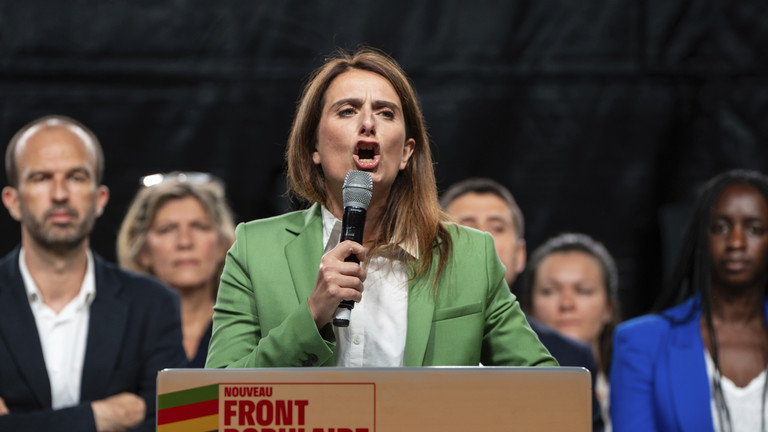
National Secretary of The Ecologists – Europe Ecology The Greens, Marine Tondelier © AP / Louise Delmotte
RT | January 14, 2025
Marine Tondelier, secretary-general of The Ecologists – Europe Ecology The Greens, has called for the social media platform X to be banned across the European Union, at least during election periods, arguing that it plays a role in shaping public opinion in ways that can threaten democracy.
Speaking on RTL’s Le Grand Jury program on Sunday, Tondelier expressed concerns about the influence of social media on democratic processes amid heightened tensions between the platform’s owner, Elon Musk, and EU officials who accuse the US-based billionaire of meddling in European politics.
“It’s not a question of freedom of expression; it’s a question of shaping public opinion,” she claimed. Tondelier highlighted the growing concentration of media ownership in France and globally, accusing “ultra-rich individuals” of trying to “buy power” once they accumulate enough wealth.
“We also need to take social media into account in this calculation now. It is part of the fabrication of opinion. It has a grip on reality. It impacts election results,” she stated. “It’s dangerous because it’s a challenge to our democracies,” she added, suggesting a ban on X during sensitive periods, such as elections.
“The social network Twitter is not only annoying but also dangerous. The question of leaving it obviously arises, but it will not be enough: it must be banned,” she wrote in a post on X.
Tondelier also urged her partners from the left-wing New Popular Front (NPF) coalition, which won the most National Assembly seats in this summer’s legislative elections, to migrate to alternative networks.
“I’m going to leave, but what are the others doing? It will still have an impact on reality. It will still contribute to destabilizing the upcoming elections,” she said.
Musk provoked major controversy by claiming in December that “only the AfD can save Germany,” a statement some EU officials denounced as unacceptable foreign meddling. This followed an op-ed piece published by the German newspaper Welt am Sonntag, in which he defended the right-wing party’s policies. Last week, Musk hosted an interview on X with Alice Weidel, the AfD’s candidate for chancellor in the upcoming German election.
Musk also clashed with former EU Commissioner Thierry Breton, referring to him as “the tyrant of Europe,” after Breton appeared to endorse the cancellation of Romania’s presidential elections, warning about potential foreign interference in the upcoming German polls.
French Foreign Minister Jean-Noel Barrot recently voiced concerns about Musk’s influence, urging the European Commission to take a firmer stance and use existing mechanisms against alleged external meddling. Breton clarified that his remarks were aimed at ensuring compliance with the EU’s Digital Services Act.
In recent weeks, the South African-born tech mogul also criticized British Prime Minister Keir Starmer, accusing him of failing to tackle the Pakistani grooming gang issue and refusing to properly investigate the mass rape of underage girls while he was head of the UK’s Crown Prosecution Service from 2008 to 2013. He also urged Washington to step in and “liberate” the Brits from their “tyrannical government.”
Candace Owens Responds To Mr. And Mr. Macron
Candace Show | January 13, 2025
I respond to the Macrons legal letter, Ian Carroll ratios Elon Musk on X, Mark Zuckerberg appears on Joe Rogan to discuss Biden censorship, and an update on what people are saying about the LA fires.
PreBorn!
To donate, dial pound 250 & say the keyword “BABY” that’s pound 250 “BABY” or donate securely at https://preborn.com/candace
PureTalk
Get 50% off your first month at http://www.PureTalk.com/Owens
American Financing
Act today! Call 800-795-1210 or visit http://www.AmericanFinancing.net/Owens
NMLS 182334, http://www.nmlsconsumeraccess.org. APR for rates in the 5s start at 6.458% for well qualified borrowers. Call 800-795-1210 for details about credit costs and terms.
Candace on Apple Podcasts: https://t.co/Pp5VZiLXbq
Candace on Spotify: https://t.co/16pMuADXuT
Candace on Rumble: https://rumble.com/c/RealCandaceO
Subscribe to Club Candace: https://www.clubcandace.com
Join The Candace Community on Locals: https://candace.locals.com
Russia’s Geoeconomic Shift from Greater Europe to Greater Eurasia
By Professor Glenn Diesen | January 13, 2025
Liberal theory suggests that economic interdependence creates peace as both sides gain economically from peaceful relations. However, liberal theory is deeply flawed as it assumes states prioritise absolute gain (both sides gain, and it does not matter who gains the most). Due to the security competition in the international system, states must focus on relative gain (who gains more). As Friedrich List recognised: “As long as the division of the human race into independent nations exists, political economy will as often be at variance with cosmopolitan principles”.[1]
In all interdependent relationships, one side is always more dependent than the other. Asymmetrical interdependence empowers the less dependent state to set favourable economic conditions and obtain political concessions from a more dependent one. For example, the EU and Moldova are interdependent, but the asymmetrical interdependence results in the EU preserving its autonomy and gaining influence.
The “balance of dependence” refers to a geoeconomic understanding of the realist balance of power. In an asymmetrical interdependent partnership, the more powerful and less reliant side can extract political power. The more dependent side therefore has systemic incentives to restore a balance of dependence by enhancing strategic autonomy and diversifying economic partnerships to reduce reliance on the more powerful actor.
Geoeconomic rivalry entails competing for power by skewing the symmetry within interdependent economic partnerships to enhance both influence and autonomy. In other words, to make oneself less reliant on others while increasing the dependence by others. Diversifying economic partnerships can reduce one’s own reliance on a state or region, while asserting control over strategic markets diminishes the capacity of other states to diversify and lessen their dependence.
The Geoeconomic Foundation for Western Dominance
The centuries-long geoeconomic dominance of the West is the product of asymmetrical interdependence by dominating new technologies, strategic markets, transportation corridors and financial institutions.
Following the disintegration of the Mongol Empire, the land-based transportation corridors of the ancient Silk Road that had fuelled trade and growth vanished. Subsequently, Western maritime powers rose to prominence from the early 1500s by asserting control over the main maritime transportation corridors and establishing “Trading-Post empires”. Leading naval powers, such as Britain, have therefore historically been more inclined towards free trade as they had more to gain and risked less by controlling the trade routes. The maritime strategies of Alfred Thayer Mahan in the late 1800s were founded on this strategic reasoning, as controlling the oceans and Eurasian continent from the periphery laid the basis for US military and economic power.
The advancements in the Industrial Revolution created an even more favourable balance of dependence in favour of the West. Adam Smith noted that the discovery of America and the East Indies were the “two greatest and most important events recorded in the history of mankind”.[2] However, he also recognised that the extreme concentration of power in Europe created an exploitative and destructive relationship:
“To the natives however, both of the East and West Indies, all the commercial benefits which can have resulted from those events have been sunk and lost in the dreadful misfortunes which they have occasioned. These misfortunes, however, seem to have arisen rather from accident than from anything in the nature of those events themselves. At the particular time when these discoveries were made, the superiority of force happened to be so great on the side of the Europeans that they were enabled to commit with impunity every sort of injustice in those remote countries”.[3]
Samuel Huntington similarly wrote:
“For four hundred years, intercivilizational relations consisted of the subordination of other societies to Western civilization… The immediate source of Western expansion, however, was technological: the invention of the means of ocean navigation for reaching distant peoples and the development of the military capabilities for conquering those peoples… The West won the world not by the superiority of its ideas or values or religion (to which few members of other civilizations were converted) but rather by its superiority in applying organized violence. Westerners often forget this fact; non-Westerners never do”.[4]
Following the Second World War, the US became the dominant power due to military power, but also geoeconomic power consisting of its large share in the global GDP, technological superiority, industrial dominance, the Bretton Woods institutions, control over strategic markets/resources, and control over key transportation corridors.
From Gorbachev’s Common European Home to “Greater Europe”
Following the demise of communism, Russia aimed to integrate with the West to form a “Greater Europe”, based on the ideas of Gorbachev’s concept of a Common European Home. Economic development and prosperity required integration with the West as the main economic centre in the international system.
However, the Americans and Europeans had no incentives to accept a Greater Europe. The West aimed to construct a new Europe without Russia, which required reviving bloc politics. The ultimatum to Russia was to either accept a subordinated position as the permanent apprentice of the West or be isolated and thus become economically underdeveloped and irrelevant. The West supported only European institutions such as NATO and the EU that incrementally augmented the collective bargaining power of the West to maximise asymmetrical interdependence with Russia. Making Russia obey the European institutions where Russia does not have a seat at the table is possible under extreme asymmetrical interdependence. Cooperation then entails unilateral concessions and Russia would have to accept decisions by the West.
The alienation of Russia would not matter if it kept getting weaker. William Perry, the US Defence Secretary between 1994 and 1997, recognised that his colleagues in the Clinton Administration were aware that NATO expansionism and the exclusion of Russia from Europe fuelled anger:
“It wasn’t that we listened to their [Russia’s] argument and said [we] don’t agree with that argument… Basically the people I was arguing with when I tried to put the Russian point… the response that I got was really: ‘Who cares what they think? They’re a third-rate power.’ And of course that point of view got across to the Russians as well. That was when we started sliding down that path”.[5]
The dream of a Greater Europe failed due to Russia’s inability to create a balance of dependence within Europe. Moscow’s Greater Europe initiative aimed to obtain a proportional representation at the European table. Instead, the unfavourably asymmetrical partnerships with the West that followed enabled Western unilateralism veiled as multilateralism, in which the West could maximise both its autonomy and influence.
“Cooperation” was subsequently conceptualised by the West within a teacher-student/subject-object format, in which the West would be a “socialiser” and Russia would have to accept unilateral concessions. Russia’s decline would be managed as expanding the EU and NATO sphere of influence in the east gradually diminished the role of Russia in Europe. “European integration” became a zero-sum geostrategic project, and states in the shared neighbourhood were presented with a “civilizational choice” of aligning either with Russia or the West.
Moscow’s “Greater Europe” project was always destined to fail. The “leaning-to-one-side” policy by Yeltsin was not rewarded and reciprocated by the West, rather it made Russia vulnerable and exposed. Russia neglected its partners in the east, which deprived Russia of the bargaining power required to negotiate a more favourable format for Europe. Brzezinski noted that cooperation with the West was “Russia’s only choice – even if tactical”, and it “provided the West with a strategic opportunity. It created the preconditions for the progressive geopolitical expansion of the Western community deeper and deeper into Eurasia”.[6]
Putin Reforms the Greater Europe Initiative
Yeltsin conceded by the end of the 1990s that the “leaning-to-one-side” policy had been exploited by the West and called for diversifying Russia’s economic partnerships by becoming a Eurasian power. However, there were no powers in the East with the intentions or capabilities to challenge Western dominance. Putin attempted to revive the Greater Europe Initiative by ending the era of unilateral concessions and instead strengthening Russia’s negotiation power. Russia would not integrate into the West through unilateral concession, but integrate with the West as an equal.
Moscow began to embrace economic statecraft as the principal tool for restoring Russian power, and pursue incremental integration with the West. Re-nationalising energy resources ensured that the strategic industries of Russia worked in the interest of the state rather than oligarchs, who were courted by the West and tended to use these industries to impose their control on the state. However, the West resisted energy dependence on Russia as it risked creating more symmetry in relations and even giving Russia a voice in Europe. The narrative of the Russian “energy-weapon” was born as Europeans were told to reduce all dependence on Russia as the requirement for a more obedient Kremlin.
The Greater Eurasia Initiative
Russia’s Greater Europe Initiative eventually died when the West supported the coup in Kiev in 2014 to pull Ukraine into the Euro-Atlantic orbit. By making Ukraine a frontline instead of a bridge, it was evident that any incremental integration with Europe had been a utopian dream. Furthermore, the anti-Russian sanctions made it necessary for Russia to diversify its economic connectivity. Rather than seeking to resolve the Ukraine crisis by implementing the Minsk peace agreement, NATO began to build a Ukrainian army to change realities on the ground. Russia began to prepare for a future clash by making its economy sanctions-proof.
With the rise of Asia, Russia found a solution. Russia began to diversify away from excessive reliance on the West and embrace the new Greater Eurasia Initiative. Instead of being isolated at the periphery of Europe, Russia acquired economic strength and influence by developing new strategic industries, transportation corridors and international financial institutions in cooperation with countries in the East. While Russia is met with hostility in the stagnant West, it was embraced in the more dynamic East. Not only have the ambitions of Gorbachev’s Common European Home been abandoned, but the 300-year-long Western-centric policy since Peter the Great has also ended.
A strategic partnership with China is indispensable to construct a Greater Eurasia. Yet, Russia has learned the lessons from the failure of Greater Europe by avoiding excessive dependence on an economically stronger China. The asymmetrical interdependence that emerges in the framework of such a partnership enables China to extract political concessions, which would make it untenable for Russia in the long term. Moscow seeks a balance of dependence in its strategic partnership with Beijing, which entails diversifying economic partnerships across Greater Eurasia. As China does not seek a hegemonic role in Greater Eurasia, it has welcomed Russia’s efforts to diversify its economic partnerships.
Under the Greater Europe Initiative, the Europeans had access to cheap Russian energy and enjoyed a huge Russian market for exports of manufactured goods. Furthermore, Russia’s geoeconomic strategy to integrate with the West resulted in preferential treatment for Western corporations. Under Greater Eurasia, Europe will undergo deindustrialization as the cheap Russian energy and market opportunities go to Asia, which also enhances the competitiveness of Asia vis-a-vis Europe. The Europeans continue setting their own house on fire with reckless sanctions, in the hope that it will also hurt the Russian economy. However, while Europe cannot diversify away from Russia, Russia can diversify away from Europe.
Ideally, Europe would be one of Russia’s many economic partners in the Greater Eurasia Initiative. The revival of militarised dividing lines on the European continent makes the Europeans excessively reliant on the US and Russia becomes too dependent on China. Therefore, there are strong systemic incentives to restore some economic connectivity between the Europeans and Russians after the Ukraine War, although it will be within a Greater Eurasian format as Greater Europe can no longer be revived.
[1] List, F. 1827. Outlines of American Political Economy, in a Series of Letters. Samuel Parker, Philadelphia.
[2] A. Smith, An Inquiry into the nature and causes of the Wealth of Nations, Edinburgh: Adam and Charles Black, 1863, p.282
[3] J. Borger, ‘Russian hostility ‘partly caused by west’, claims former US defence head’, The Guardian, 9 March 2016.
[4] S.P. Huntington, The Clash of Civilizations and the Remaking of World Order, New York, Simon and Schuster, 1996, p.51.
[5] Ibid.
[6] Z. Brzezinski. The Choice: Global Domination or Global Leadership. Basic Books, New York. 2009. P. 102.
The article is based on excerpts from my previous article with the same title: Glenn Diesen, ‘Russia, China and the “Balance of Dependence” in Greater Eurasia’, Valdai Dicussion Club, March 2017
Budapest: 2 more Antifa activists charged in brutal 2023 attacks
By Liz Heflin | Remix News | January 13, 2025
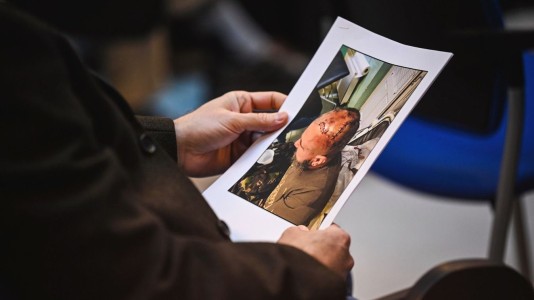
The Budapest Chief Prosecutor’s Office has indicted two more foreign citizens – a German and, in absentia, an Italian – who, as members of the far-left criminal organization, attacked Hungarians on the streets of Budapest in February 2023, reports Magyar Nemzet.
Between Feb. 9 and 11, 2023, five attacks were carried out by the so-called “Hammer Gang,” a sort of Antifa subsidiary with German roots known for using hammers to attack their victims, in the Hungarian capital, injuring nine, six of them seriously.
The attacks were organized and planned in advance. A lookout was set up to keep outsiders away while the other members of the group were responsible for carrying out the violence, armed with hammers.
According to the indictment, the German citizen participated in the attacks on Fővám Square, Gazdagréti Square and Bank Street, partly in the role of observer and follower, partly as an attacker and the Italian participated in the aggression on Gazdagréti and Mikó Street as an attacker.
The Budapest Chief Prosecutor’s Office charges the German citizen with four counts of attempted assault causing danger to life committed in a criminal organization – partly as an accomplice and partly as an accessory – and one count of attempted aggravated assault committed in a criminal organization for a vile reason. The Italian citizen is charged with three counts of attempted assault causing danger to life committed in a criminal organization and as an accomplice.
They are proposing a prison sentence and a fixed-term expulsion from Hungary.
Antifa also faces ongoing criminal proceedings in Germany for the attacks committed there between October 2018 and February 2020, and in the case of one defendant, for the attacks in Hungary.
Just this past November, authorities finally arrested the 31-year-old leader of the Hammer Gang in Germany, where he will be facing charges for crimes dating back to 2018, while another member was sentenced to three years in prison in Hungary earlier for his involvement in the Budapest attacks.
One member arrested in Budapest at the time of the attacks, Ilaria Salis was released from prison in Hungary after an Italian far-left party put her at the top of its European Parliament list in last summer’s elections and entered the European Parliament, thus gaining immunity.
Ukraine attempted drone strike on Russian gas supply to NATO states – Moscow
RT | January 13, 2025
Ukraine has launched an unsuccessful drone attack on Russian energy infrastructure which delivers natural gas to Türkiye , the Defense Ministry in Moscow reported on Monday.
The attempted sabotage took place on Saturday and involved nine kamikaze drones, which Ukrainian forces launched at the Russkaya gas compressor station near the village of Gaikodzor in Russia’s Krasnodar Region, according to a statement from the ministry.
The site is crucial for the operation of the TurkStream pipeline, which delivers natural gas from Russia to Türkiye under the Black Sea. Several nations in southern Europe, including EU member Hungary, use the Turkish route to receive supplies. Kiev’s attack was “aimed at stopping the supply of gas to European nations” through the neutral intermediary, the Russian Defense Ministry stated.
The Ukrainian attack against the Russkaya station was largely thwarted, the military added. One fixed-wing drone crashed close to a gas meter and caused minor damage, which was swiftly fixed by the facility’s personnel, it said. The incident caused no interruption in supplies, the statement stressed.
Kiev has refused to renew a transit contract with Russia which expired at the start of this year, and which had involved Russian gas being supplied to EU countries through Ukrainian territory. Slovakia, one of the nations affected by the decision, has accused Ukraine of causing an energy crisis.
Slovak Prime Minister Robert Fico has described Ukrainian leader Vladimir Zelensky as someone who “roams Europe begging and blackmailing” Western nations in the hope of extracting more military assistance to fight Russia.
Zelensky previously accused Fico of striking “shady deals” with Moscow and of undermining the EU’s “unity” in the confrontation with Russia. He also claimed the Slovak secret services should investigate Fico for corruption.
The TurkStream pipeline was launched in January 2020 and has an annual capacity of 31.5 billion cubic meters. Its underwater section extends for around 930km, while the Russkaya station serves as the point of exit on Russian soil. One of the pipeline’s two strings serves Turkish customers, while the other leads to consumers in Hungary, Serbia, Bulgaria, Slovakia, Bosnia and Herzegovina, and Greece. Russian officials have accused Kiev of attempts to sabotage the energy link on multiple occasions in recent years.
Featured Video
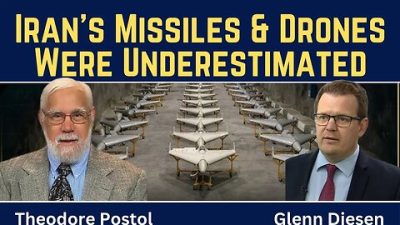
Theodore Postol: Iran’s Missiles & Drones Were Underestimated
or go to
Aletho News Archives – Video-Images
From the Archives
What is the Israeli Lobby in Australia Doing in Interfaith Dialogue?
By Ali Kazak | Dissident Voice | October 11, 2015
For years Israel and its lobby around the world have been trying to normalise their relations with Arabs and Muslims without solving the Palestine Question.
One of the methods they resorted to in the last few years is using human rights and community organizations such as interfaith dialogue and Multiculturalism to achieve this objective and to: isolate the Palestinians, marginalise the Palestine question, end Israel’s isolation, and prevent criticism of Israel, knowing that these organisations will be the first to stand against Israel’s violations, racial and religious discrimination.
The group responsible for this task in Australia is The Australia/Israel & Jewish Affairs Council (AIJAC); its Director of International & Community Affairs, Jeremy Jones is in charge of lobbying religious community organizations, specifically Muslims and Christians. Consequently he convened the Faith Communities for Reconciliation, founding participant in the Australian Partnership of Religious Organisations and the Australian National Dialogue of Christians, Muslims & Jews.
AIJAC is a private political propaganda group. It is recognised as the main Israeli lobby in Australia. It coordinates its activities and works intimately with the Israeli embassy in Canberra and different institutions in Israel. It is privately funded by some Jewish businessmen. It monitors closely Australian politicians, the media, ethnic and religious groups, (especially Arabs and Muslims), unions and academics on their stands towards Israel and the Palestine question. … continue
Blog Roll
 Aletho News
- The killing of three Indonesian soldiers in Lebanon should remind Jakarta that Israel does not want peace
- Defeated and delusional: Netanyahu’s remarks reveal $80bn war failure, says analyst
- Iran’s friends are about to make life much more difficult for Israel and the US
- The war of liberation of the Arab and Islamic peoples expands across the Gulf
- Envoy warns UN on Trump’s threat to ‘obliterate’ Iran’s civilian infrastructure
- The Larak Corridor: Iran’s Rial Gate With No US, No Israel, and No Way Around
- ‘Economic terrorism’: Steel facilities hit again in US-Israeli strike
- ‘War Crime’: Iran condemns attacks on Arak, Ardakan nuclear sites
- Two-thirds of Americans want quick end to Iran war even if goals unmet
- Trump to Give “Important Update on Iran” Wednesday in Prime-Time Speech
- If Americans Knew
- Gaza families reunite years after babies evacuated amid Israel’s war
- International Rescue Committee warns Gaza’s children face grave protection risks
- Iran’s Alleged 47-Year War on America: Debunking the 1,050 American Deaths Canard
- Israel wants US to bomb more of Iran’s civilian structures (113,000 is not enough) – Not a ceasefire Day 173
- Ann Coulter Rips Into Fox News for Iran War Coverage
- Joe Kent Urges Americans To Call White House and Congress To Object To Sending Troops Into Iran
- DNC Resolution to Reject AIPAC Funding Puts Democratic Leaders in the Hot Seat
- Swedish foundation to build 400 schools as over 650,000 Gaza children remain without education for 2 years
- Israeli army admits photshopping image of slain Lebanese journalist
- This is how Israel is systematically killing health workers under the cover of war in Lebanon
- No Tricks Zone
- New Study Finds Warming Saves Lives…Cold Temperatures 12 Times More Deadly Than Excess Heat
- German Science Blog Accuses PIK Climate Institute Of Hallucinating Climate Tipping Points
- Devastating Assessment Of Comirnaty Vaccine By Former Senior Pfizer Europe Toxicologist
- New Study: CO2 Is ‘Effectively Negligible’ As An Explanatory Climate Change Factor Since 2000
- Former Pfizer Toxicologist Dr. Helmut Sterz Tells Bundestag Hearing Pfizer Vaccine Should Have Never Been Approved
- Energy Expert: Germany’s Nuclear Phaseout Was A “500 Billion Euro Mistake”
- New Research: South Australia’s Mid-Holocene Sea Surface Temperatures Were 4°C Warmer Than Today
- Storing Green Energy To Last Germany 10 Days Would Require A 60-Million Tonne Battery
- New Studies: UK Sea Levels Were 4 Meters Higher Than Today During The Mid-Holocene
- Destructive Green New Deal: German Energy And Metal Group Warns Of Drastic Crisis
 Aletho News