H5N1’S LAB LINK? DR. MCCULLOUGH EXPOSES SHOCKING ORIGINS
The HighWire with Del Bigtree | March 6, 2025
Cardiologist & Epidemiologist, Peter A. McCullough, MD, joins Del with a shocking study linking the origins of the current clade of H1N5 dominating the news cycle and crushing the egg industry can be tracked back to a USDA poultry research lab in Georgia.
COVID-19 Vaccines Harms: What and When BC Public Health Knew
Review of FOI F23-1799 and BC Public Health’s Handling of COVID-19 Vaccines AEFI – Part 1
By Lex Acker | Truth, Investing, and Freedom | February 28, 2025
Background
In April 2023, Lee Turner, of Doak Shireff Lawyers LLP, took over conduct of the defence of Dr. Charles Hoffe vs. the College of Physicians and Surgeons of BC. Mr. Turner subsequently filed a Freedom of Information (FOI) request (F23-1799) with the Provincial Health Services Authority (PHSA) to obtain data on Adverse Events Following Immunization (AEFI). FOI F23-1799 can be accessed at this link.
FOI F23-1799 was released in June 2024 and comprised over 1,300 pages of internal emails between BC CDC staff, Bonnie Henry, Reka Gustafson, and Monika Naus (then head of BC CDC), along with dozens of AEFI reports.
Upon reviewing FOI F23-1799, I noted key elements: discussions of AEFIs in emails, screenshots of non-public AEFI reports available through an intranet, and public-facing AEFI reports presented in chronological order. This arrangement made it possible to determine what BC public health officials like Bonnie Henry, the BC CDC and all 50+ medical health officers scattered over BC health authorities knew and when they knew it.
I reached an unsettling conclusion: BC CDC had manipulated the definition of Serious Adverse Events Following Immunization to lower the reported rates of Serious AEFIs in public-facing reports, thereby concealing the true risks associated with COVID-19 vaccines. I publicly shared this finding on June 14, 2024, in a comment on Byram Bridle’s post titled Breaking News: BC Centre for Disease Control Caught Lying and Withholding Important Public Health Data.
While my expertise is not in medical science, I specialize in detecting and documenting corporate and institutional misconduct. My background is in financial statement analysis. I worked as a hedge fund research analyst and compliance officer for a boutique investment firm. I have about 15 years of independent financial research and analysis experience. My focus is uncovering white-collar fraud. I’m not a forensic accountant by any measure; I’m just someone with somewhat odd proclivities for large sets of unstructured data and enjoy immersing myself in new topics.
The Case Against Dr. Hoffe
The College of Physicians and Surgeons of BC cancelled its February 11, 2022 citation against Dr. Hoffe on February 5, 2025. According to one media outlet, this was done because of a “material change of circumstances.”
The College accused Dr. Hoffe of professional misconduct; specifically spreading misinformation about COVID-19 vaccines. Here’s an excerpt of the College’s accusations:
“… publicly expressing that the COVID-19 vaccinations cause microscopic blood clots that cause serious neurological harm, female infertility, and a high number of deaths that is not recognized by public health; …”
Many other doctors were publicly denouncing the COVID-19 vaccines and were persecuted by the College. However, the level of persecution against Dr. Charles Hoffe is particular. The College retained eight experts against Dr. Hoffe. Why is that?
In early 2021, Dr. Hoffe submitted a temporally- and vaccine lot-associated cluster of 11 AEFI reports to Interior Health, 10 of which involved Moderna lot #300042698, administered between January 18 and February 5, 2021.
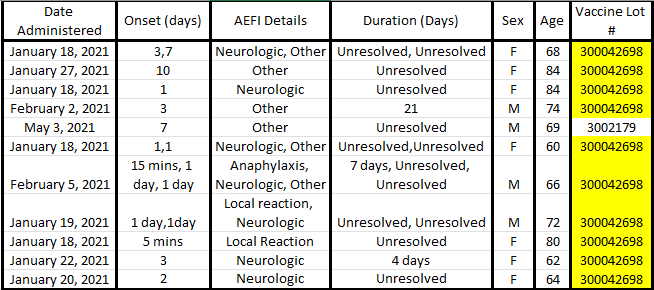
As Dr. Hoffe began filing AEFI reports in early 2021—most notably in April and May— and went on public tours in BC warning the public about the harms of COVID-19 vaccines his actions posed a direct threat to a state narrative that sought to suppress information about vaccine-related harm. His findings challenged the political and ideological foundation underpinning the mass vaccination program and the totalitarian controls over the population that came along with it.
The evidence in FOI F23-1799 suggests that Bonnie Henry, the BC CDC, all health authorities, and all 50+ Medical Health Officers in BC were fully aware of these issues. Dr. Hoffe’s real “offence” was exposing what the BC government concealed from the public since early 2021. Dr. Hoffe’s AEFI reports constituted a cluster of AEFI associated with unexpected harms which required public health authorities to investigate and disclose to the public.
This post, and a few more to come, will cover my findings and analysis of how BC public authorities handled the COVID-19 vaccine AEFIs. … continue
Hamas Denounces Israeli Enemy’s Failure to Withdraw from Philadelphi Corridor
Al-Manar | March 10, 2025
Hamas Resistance Movement issued on Monday a statement to condemn and reject the occupation’s violation of the ceasefire agreement and its failure to withdraw from the Salah al-Din (Philadelphi) Corridor area.
The Zionist occupation failed to comply with the gradual pull-out of its troops from the Salah al-Din (Philadelphi) Corridor during the first phase, and also did not begin its withdrawal on the 42nd day, as stipulated in the agreement, Hamas statement added.
“Yesterday marked the 50th day of the agreement, by which the withdrawal was set to be completed, but so far that has not happened.”
Hamas stressed that “this blatant violation is a clear breach of the agreement and an apparent attempt to sabotage it and render it meaningless”.
The continued violations confirm the occupation’s disregard for agreements and its manipulation of international commitments.
These violations place responsibility on the mediators to pressure the occupation into fulfilling its commitments and immediately ending its presence in the Salah al-Din (Philadelphi) Corridor, the statement underscored.
Hamas called on the mediators and the international community to intervene immediately to ensure the occupation’s withdrawal, and resume negotiations for the second phase without further delay.
Adhering to the agreement and completing the negotiations is the only way to secure the release of the prisoners, and any procrastination means tampering their fate and the fealings of their families, Hamas statement concluded.
The Israeli negotiating team left for Qatar Monday for talks aimed at extending the fragile Gaza ceasefire, after ‘Israel’ cut the Palestinian territory’s electricity supply to ramp up pressure on Hamas.
Ahead of the negotiations, ‘Israel’ disconnected the only power line to a water desalination plant in Gaza, a move Hamas denounced as “cheap and unacceptable blackmail”.
We dealt flexibly with Trump’s envoy, awaiting outcome of talks: Hamas

Al Mayadeen | March 10, 2025
Hamas spokesperson Abdul Latif al-Qanou stated that the movement has shown flexibility in responding to mediation efforts, including those led by Egyptian and Qatari officials, as well as US President Donald Trump’s envoy.
He emphasized that Hamas is awaiting the outcome of the upcoming negotiations, urging the occupation to commit to an agreement and advance to the second phase.
Al-Qanou highlighted that the discussions with mediators have centered on ending the war, ensuring a full withdrawal, and initiating reconstruction efforts.
He dismissed the occupation’s threats of resuming military operations in Gaza and its decision to cut electricity, calling these failed tactics that endanger its prisoners. He reiterated that any prisoner releases would only occur through negotiations.
Al-Qanou emphasized, “We have fully adhered to the first phase of the agreement, and our top priority now is to provide shelter and humanitarian aid to our people while ensuring a permanent ceasefire.”
“The movement has agreed to Egypt’s proposal for a community support committee, which will begin its work in the Gaza Strip to bolster the resilience of our people and reinforce their presence on their land.”
Al-Qanou emphasized that “the occupation seeks to tighten the siege, close the crossings, and block aid from reaching the Palestinian people in an attempt to force them into displacement—but this is nothing more than a futile illusion.”
Trump’s envoy for prisoners’ affairs, Adam Boehler, stressed earlier that the meeting with Hamas “was very effective.”
In an interview with “Israel’s” Channel 13, Boehler confirmed that he does not rule out further meetings with Hamas, stating: “We are the United States, and we are not subordinate to Israel—we have our own interests,” adding “I work for Trump, and this is his decision; I implement what he wants.”
Hamas approves Gaza governance plan
On Saturday, Hamas’ negotiating team finalized its trip to Egypt, where the delegation discussed pathways for the implementation of the clauses of the ceasefire agreement with mediators.
The delegation, headed by Mohammad Darwish, head of Hamas’ Shura Council and Chairman of its Leadership Council, held talks with the head of Egypt’s General Intelligence Service, Major General Hassan Rashad.
The two sides discussed several crucial issues, including the ceasefire agreement and the prisoner exchange deal.
A statement released by the Hamas Media Office described the talks as “positive and responsible.”
“The Hamas delegation expressed its gratitude and appreciation for Egypt’s efforts, especially in countering displacement plans,” the Palestinian Resistance movement said, referring to United States President Donald Trump’s plot to “take over” the Gaza Strip.
Welcoming the outcomes of the most recent Arab summit, Hamas highlighted Egypt’s Gaza reconstruction plan and the Palestinian people’s inalienable right to statehood.
In further detail, Hamas’ negotiating team emphasized the need to uphold the terms of the multi-phase ceasefire agreement between the Palestinian Resistance and “Israel”.
‘The resistance will not let you stay’: Hezbollah chief addresses Israeli occupation of south Lebanon
The Cradle | March 10, 2025
Hezbollah’s Secretary-General Naim Qassem said on 9 March that Israeli forces currently occupying south Lebanon will inevitably face resistance if they do not withdraw.
“I tell the Israelis, if you remain at these points, this resistance will not let you continue there,” Qassem stated on Sunday.
“If the occupation continues, it must be confronted by the army, the people, and the resistance,” despite some people wanting “liberation through diplomacy,” the resistance leader added.
“We committed to the [ceasefire] agreement while the enemy violates it … it assaults people far from the border in their cars and in their homes,” he went on to say. “The ceasefire agreement is the one announced and distributed, and there is no secret agreement or clauses under the table.”
“The resistance is fine and continuing, but it was wounded and hurt and made great sacrifices … We had a security exposure and some shortcomings, and we are conducting an investigation to learn lessons and hold people accountable,” Qassem said.
The Hezbollah chief commented on the recent entry of hundreds of settlers into south Lebanon under Israeli army protection, calling “it the greatest evidence that we are not facing aggression in a single phase, but rather [an Israeli expansionist] project from the ocean to the Gulf.”
Israeli forces continue to occupy Labbouneh, Mount Blat, Owayda Hill, Aaziyyeh, and Hammamis Hill, despite the ceasefire implementation and withdrawal deadline expiring on 18 February.
Tel Aviv has violated the ceasefire agreement over 1,300 times with non-stop attacks and infiltration of Lebanon’s airspace since the deal was signed in November last year.
Israel claims to be acting on its rights within the deal by preventing Hezbollah from rearming itself. However, the agreement signed by Beirut does not include anything about Israeli forces having the right to attack the country, instead stipulating that the resistance’s presence and military infrastructure must be dismantled by the Lebanese army south of the Litani River in south Lebanon.
Tel Aviv accuses Hezbollah of having not fully withdrawn to the north of the Litani River, as per the agreement. It also accuses the Lebanese resistance of trying to reconstitute its forces.
A Lebanese soldier was killed by Israeli forces on Sunday when they opened fire at citizens in the border town of Kfar Kila. Another Lebanese soldier was shot in the leg and kidnapped on the same day.
On Friday, Israeli warplanes launched more than 20 air raids, targeting valleys and forested areas on the outskirts of Zebqin, Beit Yahoun, Al-Aishiyeh, Al-Rayhan, Ansar, and Al-Bissariya.
Unchecked expansionism: Senior Knesset member calls for ‘full Israeli control of Syria’
Press TV – March 10, 2025
In a brazen declaration of expansionist Zionist ambitions, an Israeli Knesset member has openly called for Syria to be placed under the regime’s full control.
Boaz Bismuth said Israel “will not allow a military force to emerge in Syria after Assad’s fall.”
“Damascus must be under full Israeli control, and we will ensure that it comes under our control.”
The remarks reveal long-standing Israeli objectives to reshape West Asia by force.
“Syria is our bridge to the Euphrates, and in the future we will reach Iraq and Kurdistan.”
The extremist Israeli politician also voiced wishful thinking that the entire region should become subordinate to Israeli policies.
“Syria must be completely subordinate to us, as must Jordan, without any military capabilities.”
“We wake up the King of Jordan in the middle of the night to make him carry out our orders.”
Israeli prime minister Benjamin Netanyahu recently said the regime will not tolerate the presence of the HTS or any other forces affiliated with the new rulers in southern Syria.
He also said the regime’s troops will remain stationed at a so-called “buffer zone,” seized following the fall of President Bashar al-Assad, inside the occupied Golan Heights.
The buffer zone was created by the United Nations after the 1973 Arab-Israeli War. A UN force of about 1,100 troops had patrolled the area since then.
Netanyahu said the regime’s forces will maintain an indefinite military presence at the summit of Mount Hermon, and the adjacent security zone.
Mount Hermon, known as Jabal al-Shaykh in Arabic, is a huge cluster of snowcapped mountain peaks towering above the Syria-Lebanon border.
It overlooks the Damascus countryside as well as the Golan Heights, which Israel occupied during the 1967 Six-Day War.
Following the downfall of Assad, the Israeli military has been launching airstrikes against military installations, facilities, and arsenals belonging to Syria’s now-defunct army.
The strikes were accompanied by ground incursions, as tanks and armored bulldozers penetrated Syrian territory, beyond the Golan Heights to Qatana, barely 30 kilometers from Damascus.
Israel has been condemned for the termination of the 1974 ceasefire agreement with Syria, and exploiting the chaos in the country in the wake of Assad’s downfall to make a land grab.
Former al-Qaeda affiliate the HTS took control of Damascus in early December in a stunning offensive, prompting Israel to move forces into a UN-monitored demilitarized zone within Syria.
The Israeli regime has occupied some 600 kilometers of Syrian territory since the fall of Assad.
The HTS remained conspicuously silent on the unprecedented Israeli aggression, refusing to condemn the land theft, a move seen by regional experts as a sign of internal instability.
Trump’s ingenuity vis-à-vis Russia, Iran
By M. K. BHADRAKUMAR | Indian Punchline | March 10, 2025
Through the past three year period, Moscow claimed that it faced an existential threat from the US-led proxy war in Ukraine. But in the past six weeks, this threat perception has largely dissipated. The US President Donald Trump has made a heroic attempt to change his country’s image to a portmanteau of ‘friend’ and ‘enemy’ with whom Moscow can be friendly despite the backlog of a fundamental dislike or suspicion.
Last week, Trump turned to the Iran question for what could be a potentially similar leap of faith. There are similarities in the two situations. Both Russian President Vladimir Putin and Iranian president Masoud Pezeshkian are quintessential nationalists and modernisers who are open to westernism. Both Russia and Iran face US sanctions. Both seek a rollback of sanctions that may open up opportunities to integrate their economies with the world market.
The Russian and Iranian elites alike can be described as ‘westernists’. Through their history, both Russia and Iran have experienced the West as a source of modernity to ‘upgrade’ their civilisation states. In such a paradigm, Trump is holding a stick in one hand and a carrot on the other, offering reconciliation or retribution depending on their choice. Is that a wise approach? Isn’t a reset without coercion possible at all?
In the Russian perception, the threat from the US has significantly eased lately, as the Trump administration unambiguously signalled a strategy to engage with Russia and normalise the relationship — even holding out the prospects for a mutually beneficial economic cooperation.
So far, Russia has had a roller coaster ride with Trump (who even threatened Russia with more sanctions) whose prescriptions of a ceasefire to bring the conflict in Ukraine to an end creates unease in the Russian mind. However, Trump also slammed the door shut on Ukraine’s NATO membership; rejected altogether any US military deployment in Ukraine; absolved Russia of responsibility for triggering the Ukraine conflict and instead placed the blame squarely on the Biden administration; openly acknowledged Russia’s desire for an end to the conflict; and took note of Moscow’s willingness to enter into negotiations — even conceded that the conflict itself is indeed a proxy war.
At a practical level, Trump signalled readiness to restore the normal functioning of the Russian embassy. If reports are to be believed, the two countries have frozen their offensive intelligence activities in cyber space.
Again, during the recent voting on a UN Security Council resolution on Ukraine, the US and Russia found themselves arrayed against Washington’s European allies who joined hands with Kiev. Presumably, Russian and American diplomats in New York made coordinated moves.
It comes as no surprise that there is panic in the European capitals and Kiev that Washington and Moscow are directly in contact and they are not in the loop. Even as the comfort level in Moscow has perceptively risen, the gloom in the European mind is only thickening, embodying the confusion and foreboding that permeated significant moments of their struggle.
All in all, Trump has conceded the legitimacy of the Russian position even before negotiations have commenced. Is an out-of-the-box thinking conceivable with regard to Iran as well?
In substantive terms, from the Russian perspective, the remaining ‘loose ends’ are: first, a regime change in Kiev that ensures the emergence of a neutral friendly neighbour; second, removal of US sanctions; and, third, talks on arms control and disarmament attuned to present-day conditions for ensuring European and global balance and stability.
As regards Iran, these are early days but a far less demanding situation prevails. True, the two countries have been locked in an adversarial relationship for decades. But it can be attributed entirely to the American interference in Iran’s politics, economy, society and culture; an unremitting mutual hostility was never the lodestar, historically.
A constituency of ‘westernists’ exists within Iran who root for normalisation with the US as the pathway leading to the country’s economic recovery. Of course, like in Russia, super hawks and dogmatists in Iran also have vested interests in the status quo. The military-industrial complex in both countries are an influential voice.
The big difference today is that the external environment in Eurasia thrives on US-Russia tensions whereas, the intra-regional alignments in the Gulf region are conducive to US-Iran detente. The Saudi-Iranian rapprochement, a steady and largely mellowing of Iran’s politics of resistance, Saudi Arabia’s abandonment of of jihadi groups as geopolitical tool and its refocus on development and reform as national strategies — all these mould the zeitgeist, which abhors US-Iran confrontation.
This historic transformation renders the old US strategy to isolate and ‘contain’ Iran rather obsolete. Meanwhile, there is a growing realisation within the US itself that American interests in West Asia no longer overlap Israel’s. Trump cannot but be conscious of it.
Equally, Iran’s deterrence capability today is a compelling reality. By attacking Iran, the US can at best score a pyrrhic victory at the cost of Israel’s destruction. Trump will find it impossible to extricate the US from the ensuing quagmire during his presidency, which, in fact, may define his legacy.
The US-Russia negotiations are likely to be protracted. Having come this far, Russia is in no mood to freeze the conflict till it takes full control of Donbass region — and, possibly, the eastern side of Dniepr river (including Odessa, Kharkhov, etc.) But in Iran’s case, time is running out. Something has to give way in another six months when the hourglass empties and the October deadline arrives for the snapback mechanism of the 2015 JCPOA to reimpose UN resolutions to “suspend all reprocessing, heavy water-related, and enrichment-related activities” by Tehran.
Trump will be called upon to take a momentous decision on Iran. Make no mistake, if push comes to shove, Tehran may quit the NPT altogether. Trump said Wednesday that he sent a letter to Ali Khamenei, Iran’s supreme leader, calling for an agreement to replace the JCPOA. He suggested, without specifics, that the issue could quickly lead to conflict with Iran, but also signalled that a nuclear deal with Iran could emerge in the near future.
Later on Friday, Trump told reporters in the Oval Office that the US is “down to the final moments” negotiating with Iran, and he hoped military intervention would prove unnecessary. As he put it, “It’s an interesting time in the history of the world. But we have a situation with Iran that something is going to happen very soon, very, very soon.
“You’ll be talking about that pretty soon, I guess. Hopefully, we can have a peace deal. I’m not speaking out of strength or weakness, I’m just saying I’d rather see a peace deal than the other. But the other will solve the problem. We’re at final moments. We can’t let them have a nuclear weapon.”
Trump aims at generating peace dividends out of any normalisation with Russia and Iran, two energy superpowers, that could give momentum to his MAGA project. But cobwebs must be swept away first. Myths and misconceptions have shaped contemporary Western thinking on Russia and Iran. Trump should not fall for the phobia of Russia’s ‘imperialistic’ ambitions or Iran’s ‘clandestine’ nuclear programme.
If the first one was the narrative of the liberal-globalist neocon camp, the second one is a fabrication by the Israeli lobby. Both are self-serving narratives. In the process, the difference between westernisation and modernisation got lost. Westernisation is the adoption of western culture and society, whereas, modernisation is the development of one’s own culture and society. Westernisation can at best be only a subprocess of modernisation in countries such as Russia and Iran.
Trump’s ingenuity, therefore, lies in ending the US’ proxy wars with Russia and Iran by creating synergy out of the Russian-Iranian strategic partnership. If the US’ proxy wars only has drawn Russia and Iran closer than ever in their turbulent history as quasi-allies lately, their common interest today also lies in Trump’s ingenuity to take help from Putin to normalise the US-Iran ties. If anyone can pull off such an audacious, magical rope trick, it is only Trump who can,
Poland police state: Conservative MP who waived his immunity was arrested on Friday in dramatic fashion
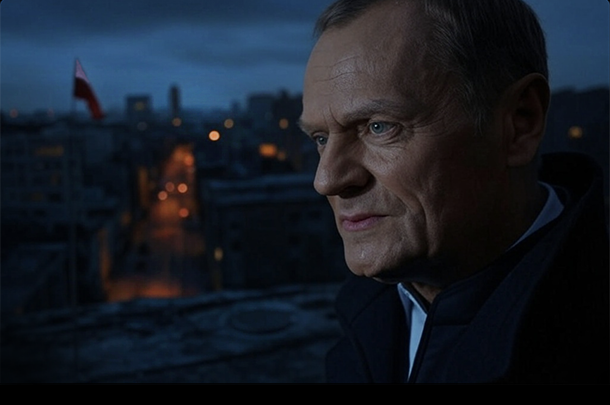
Remix News – March 10, 2025
Remix News reported last week that on Wednesday, Polish Law and Justice (PiS) MP Dariusz Matecki announced that he was waiving his parliamentary immunity in the face of charges that were being made against him by the Prosecutor’s Office, saying that MPs should not be above the people. He made the announcement in a speech he gave in English before the Sejm, proclaiming his innocence while dramatically wearing handcuffs.
Matecki claimed that he was being persecuted as part of the ruling coalition’s revenge against the opposition. On Thursday, the Sejm approved his arrest and temporary detention.
Matecki has been charged with being fictitiously employed at the Regional Directorate of the State Forests in Szczecin from 2020 to 2023, defrauding state-owned companies of PLN 320,000 (approximately €77,000), and other forms of corruption.
The MP was detained and taken into custody by officers of the Internal Security Agency on Friday morning while en route to the Prosecutor’s Office to turn himself in, according to a report by Do Rzeczy. His arrest was quite dramatic, with officers stopping his car and pulling him out of it in the middle of traffic on a busy street.
The MP was charged with six criminal counts, which together could lead to up to 10 years in prison if he is convicted. Matecki has never before been charged with any crime and maintains his innocence.
Besides Matecki’s own arrest, his wife’s apartment was also searched by the authorities. PiS condemned what they referred to as the state’s efforts to intimidate his family.
On Friday afternoon, Przemysław Nowak, the spokesman for the Prosecutor’s Office, announced that the court had ordered Matecki to be detained for a period of two months.
Kacper Stukan, Matecki’s attorney, announced that he would be filing a complaint against the court’s decision. He explained that his client’s arrest was unnecessary given that there was no flight risk in his case.
Polish Minister of Justice Adam Bodnar ominously took to X to share a copy of the order for Matecki’s arrest with the heading, “To be continued . . .”
Donald Tusk’s left-liberal Civic Coalition government has frequently used the law to punish those associated with the country’s previous right-wing ruling coalition since coming to power in late 2023. Dozens of PiS politicians have been charged with crimes, and two other PiS MPs, Mariusz Kamiński and Maciej Wąsik, were arrested on corruption charges that they had previously been pardoned for. Both have been sentenced to two years’ imprisonment for “abuse of power.”
Similarly, former Deputy Minister of Justice Marcin Romanowski was charged with 11 counts of corruption. He fled to Hungary and was granted asylum there, which has led to tensions between the two governments.
Romania: Călin Georgescu’s presidential candidacy rejection sparks mass protests and international condemnation
By Thomas Brooke | Remix News | March 10, 2025
The Central Electoral Bureau (BEC) rejected the candidacy of Călin Georgescu in Romania’s upcoming presidential elections on Sunday evening. The decision, taken with 10 votes in favor out of the 14-member committee, has ignited widespread protests and drawn sharp international criticism.
Shortly after the announcement, demonstrators gathered outside the BEC headquarters in Bucharest, expressing outrage at what they labeled a “theft of democracy.” Supporters of Georgescu clashed with police, waved national flags, and chanted slogans calling for a “revolution.” Law enforcement officers used tear gas to disperse protesters who attempted to force their way into the institution. Several individuals were arrested in the ensuing confrontations.
Marius Militaru, a spokesperson for the Gendarmerie, stated that authorities were “trying to relax the atmosphere through dialogue” and that the situation was under control.
The BEC cited a missing signature on an annex of Georgescu’s declaration of wealth as the reason for his disqualification. Former Constitutional Court judge Tudorel Toader clarified that the annexes are a mandatory component of the documentation and that both substantive and procedural requirements must be met.
Despite the setback, Georgescu retains the option to challenge the decision at the Constitutional Court. If he secures a favorable ruling, he could regain his candidacy, making the upcoming days crucial for his political future.
It is understood that Georgescu has 24 hours to appeal, and any final decision must be made within 48 hours.
Taking to social media, Georgescu condemned the BEC’s decision as an attack on democracy.
“A direct blow to the heart of democracy worldwide! I have one message left! If democracy in Romania falls, the entire democratic world will fall! This is just the beginning. It’s that simple! Europe is now a dictatorship, Romania is under tyranny!” he wrote.
His rejection follows his recent arrest amid an investigation into alleged extremism, a move that had already drawn concern from high-profile figures.
The decision has provoked strong reactions from European and international political figures, some of whom have accused the European Union of political interference in Romania’s democratic process.
Matteo Salvini, Italy’s deputy prime minister and leader of the right-wing Lega party, condemned the rejection, stating: “A Soviet-style Euro-coup. First, they annul the elections he was winning, then they arrest him, and now they exclude him entirely for fear that he will win. Rather than ‘rearm Europe,’ we must refound it to defend democracy.”
U.S. billionaire Elon Musk, a senior adviser to the Trump administration, also weighed in, calling the situation “crazy” and amplifying claims that “Europe has cancelled more elections than Russia.”
Santiago Abascal, leader of Spain’s Vox party, expressed solidarity with Georgescu and Romania’s right-wing Alliance for the Union of Romanians (AUR) party, accusing “Brussels’ bureaucratic pressure” of being exerted to block his candidacy.
George Simion, president of the AUR, claimed the decision was overtly political with all commission members affiliated with the governing parties voting against Georgescu’s candidacy.
“It was rejected without any reason. All the papers were in good order. We live in a dictatorship. Please help us. Please be on our side to restore democracy in Romania,” Simion implored.
Georgescu previously won the first round of presidential elections before they were controversially annulled last year. His arrest last week — while en route to submit his candidacy — raised further suspicions about the state of democracy in Romania.
Ex-Ukrainian PM outraged by German intel chief’s warning
RT | March 10, 2025
Former Ukrainian Prime Minister Yulia Timoshenko has hit out at German intelligence chief Bruno Kahl after he claimed that resolving the conflict with Russia before the end of the decade could pose a security threat to Western Europe.
An end to the Ukraine conflict before 2029 or 2030 could allow Russia to regroup and “increase security risks for Europe,” Kahl told state broadcaster Deutsche Welle.
Kahl’s statement is the first official confirmation that the EU’s security is being prioritized at the expense of Ukraine’s sovereignty and the lives of its citizens, Timoshenko, who leads the opposition Fatherland (Batkivshchyna) party in Ukraine, claimed in a Facebook post on Friday.
“At the cost of Ukraine’s very existence and the cost of the lives of hundreds of thousands of Ukrainians, did anyone decide to pay for Russia’s ‘demolition’ for safety in Europe? I didn’t think they would dare to say it so officially and openly…” she wrote.
Kahl’s remarks “explain a lot,” she said, urging the Ukrainian parliament, the Verkhovna Rada, to respond while calling for an immediate end to the conflict.
The German official’s comments echoed recent remarks by French President Emmanuel Macron, who claimed that Russia poses a direct threat to the rest of Europe and urged EU member states to increase defense spending.
Russian President Vladimir Putin has consistently dismissed Western leaders’ claims that Moscow could attack NATO as “nonsense.”
Divisions remain within the EU on the Ukraine conflict, with some countries advocating a stronger military response from Kiev while others, such as Hungary, call for peace talks. Brussels has continued to push for military aid to Kiev.
In March, European Commission President Ursula von der Leyen launched the “rearm Europe” initiative to boost EU defense with up to €800 billion ($870 billion). In February, she announced €3.5 billion ($3.78 billion) in aid to strengthen Ukraine, calling its resilience an EU priority. Moscow has vowed to take measures to protect its security, warning that the EU’s militarization and confrontational rhetoric could escalate tensions.
Timoshenko’s response comes amid reports that she and members of former Ukrainian President Pyotr Poroshenko’s party recently held discussions with the team of US President Donald Trump. According to Politico, Ukrainian opposition figures presented themselves as more open to negotiations than Vladimir Zelensky. Both Timoshenko and Poroshenko, presently sanctioned on suspicion of high treason, confirmed their contacts with Trump’s team.
Much ado about nothing – Macron proposed nuclear umbrella for Europe
By Uriel Araujo | March 10, 2025
France’s President Emmanuel Macron announced last week his intention to extend the French nuclear shield to its European partners, and there are now talks about French-British nuclear deterrence. Germany’s Chancellor-in-waiting Friedrich Merz has urged France and Britain to share their nuclear weapons to “supplement” (not “replace”) the American nuclear shield.
The premise here is that a “pro-Russian” Trump is going to “abandon” Europe and thus leave it vulnerable to Moscow’s “aggression” – and so it is necessary to build an alternative shield. While various analysts and journalists put on serious faces while talking about these issues, underneath the rhetoric, the whole narrative lacks any substantiality, to the point of being laughable.
Let us briefly touch the premisses:
While the situation with borders is indeed far from being a settled matter in the post-Soviet space (with a number of frozen conflicts), there is of course no Russian appetite for attacking, or much less, “conquering” portions of Europe. The whole crisis in Ukraine has in fact more to do with the ethnocratic contradictions of nation-building in the new independent state of Ukraine, and with NATO’s enlargement, a policy denounced by the likes of the late Henry Kissinger himself, George Kennan, and a number of scholars and authorities who predicted it could cause the Ukrainian war since the late nineties.
Albeit partially bent on a kind of “reverse Kissinger” strategy to stop Biden’s dangerous “dual-containment” approach” (of antagonizing both China and Russia simultaneously), Trump is hardly pro-Moscow in any sense beyond that of avoiding an escalation. Moreover, his rhetorical attacks on NATO have more to do with burden sharing than with “ending” the Alliance.
The truth is that Europe embarked on an America’s proxy attrition war, and now that an overburdened Washington is retreating from its very war, puzzled Europeans do not know what to do. Now, let us delve into the idea of European deterrence, as proposed by Macron.
Europe has stayed under Washington’s wings long enough, and Trump does have a point when he says most NATO countries fail to meet the agreed expenses’ goal of using at least 2 percent of their GDP in military spending (which overburdens the US). And now that the Atlantic superpower is really signing its intent on pivoting to the Pacific, partially withdrawing from Eastern Europe, and shifting NATO’s burden onto its European allies, there is weeping and gnashing of teeth amongst Europe and Britain’s political elites.
European powers today are simply not what they once were. Consider the United Kingdom, for instance: it might even lack the capacity to maintain its own nuclear arsenal without American help, as experts have been warning, in the context of Trump’s “burden shift” threats to “abandon” or to leave the American transatlantic allies on their own. In January last, a British “Trident” nuclear missile embarrassingly failed (for the second time) during a test launch, which led to speculations about the realities of Britain’s nuclear deterrence.
Long story short, Paris and London are the only nuclear powers in Europe – and it is unclear however to what extent they would be capable of replacing the so-called American “nuclear umbrella”.
According to Astrid Chevreuil (a visiting fellow with the Europe, Russia, and Eurasia Program at the Center for Strategic and International Studies – CSIS – in Washington, D.C.) and Doreen Horschig (a fellow with the Project on Nuclear Issues at CSIS), there are “significant strategic, doctrinal, and logistical obstacles” to that. More to the point, they add: “in the current situation, the French and British nuclear forces are a complement to US extended deterrence, but they would not constitute a viable solution in the event of an abrupt withdrawal of U.S. nuclear forces.” Elaborating on it, Chevreuil and Horschig argue that:
Both the British and French arsenals are designed, in their size, to respond to attacks “based on their vital interests”: Paris counts on less than 300 nuclear warheads, and London, in turn, possesses less than 250 (Washington in contrast has “a total of 1,700 deployed warheads”).
Moreover, American nuclear weapons stored in Europe today are “airborne capabilities” (and not ground-based or seaborne systems). Only France has such an airborne nuclear component, and “replacing” the US would require enormous efforts from European allies.
Finally, the two experts conclude, Britain and France lack a nuclear doctrine compatible with the very idea of “extending their nuclear deterrence through stationing their weapons in other countries.” Paris does not even participate in NATO’s nuclear planning groups, as the French doctrine “insists on the independence of its nuclear decision making.”
I’ve written before on the challenges Europe faces when it comes to “rearming” itself – they range from de-industrialization to lack of a common legal and bureaucratic framework, or a common EU defense market – according to Sophia Besch (a Carnegie Endowment for International Peace fellow), and Max Bergmann (a former member of the US Policy Planning Staff and Director of the Eurasia Program at the Center for Strategic and International Studies).
One should also keep in mind that Paris’ own relationship with NATO is historically complex, to say the least. Under De Gaulle, France withdrew from the organization’s integrated military structure in 1966, and even expelled all of its headquarters and units on French territory. It was French President Nicolas Sarkozy who finally ended Paris “estrangement” from NATO as recently as 2009 – so it took 43 years for Paris to change its course. To this day, France has not given up “nuclear independence” with regards to NATO, as mentioned. It is hard to change things overnight.
In addition, French ambition’s aside, a quick look at Africa is enough to demonstrate how much of a declining power France really is today: one just needs to consider the French failures in Chad, Niger, Mali, and elsewhere – the French military was basically kicked out of their main bases in the African continent.
Lastly, there is also an element of a power struggle going on. If the overburdened American superpower is partially retreating from a number of theaters, the outcome of it could be a local power vacuum (in Europe) and some actors might have an appetite for filling such a void. Even Poland has eyes on that, as I wrote before. Much of the French rhetoric we are now seeing has a lot to do with that.
To sum it up, Macron is offering Europe something he does not have to counter a threat that does not really exist the way he describes it. He is doing so because of something Trump will not actually do. To put it another way, it is “words, words, words”.
Uriel Araujo, PhD, is an anthropology researcher with a focus on international and ethnic conflicts.
Covid vaccine injured – Silent no More
A book review
Health Advisory & Recovery Team | March 3, 2025
 Was taking the Covid vaccine Worth a Shot? A new book by Caroline Pover, written on behalf of Brianne Dressen who lives in the USA, chronicles the horrific story of how she was severely injured by the Covid vaccine after enrolling on the AstraZeneca trial in November 2020. Caroline sensitively and professionally tells the heart wrenching, eye-opening account of how Brianne Dressen’s life was turned upside down and irreversibly changed forever the day she chose to volunteer to enroll on the UK-led AstraZeneca clinical trial. This book takes the reader along the rollercoaster ride of the devastating injuries caused by the vaccine and the blatant abuse of power by the healthcare system to denigrate, ignore, and cover up her injuries – along with many others labelled – as ‘misinformation’ spreaders by the medical-industrial-military complex. Every person on the planet was misled by governments, NGOs, regulatory agencies, corporations, Big Pharma, healthcare professionals, along with social and mainstream media. From how clinical trials are conducted to the lack of injury compensation, wide scale censorship, corruption and abuse of power, this book shows the myriad ways Brianne fought and continues to fight for truth and justice for the Covid-vaccine injured, who have been completely abandoned and often maligned by society.
The AstraZeneca Clinical Trial
In the introduction, Caroline Pover describes how she had been medically diagnosed with an adverse reaction to the Covid vaccine and was led to believe Brianne Dressen did not exist. It was only when she started posting on social media and heard about another woman who was dropped from a clinical trial because of an adverse reaction to the vaccine, that their paths crossed. Worth a Shot is a book based on real events that impacted on real people and is a narrative account of Brianne’s (Bri’s) story containing brutally honest struggles with how her life has changed irreversibly after the covid vaccine, including her plans to contemplate suicide. Bri had the perfect life: she was a fit, active lady who always pushed herself physically and mentally. She had a wonderful family life, married with two children with a dream house in the mountains. After having children, Bri set up her own preschool to help children who struggled in a typical educational environment. Then in 2020, Covid hit!
When the lockdowns happened and the talk of vaccine trials began, Bri wanted to help in any way possible with contributing to scientific advancements; once “Operation Warp Speed” was being regularly reported in the media, coupled with her husband’s scientific background, Bri felt excited to enrol in the new Covid vaccine trial set up by Oxford University in conjunction with AstraZeneca, which was recruiting in UK, Brazil, South Africa, and the USA. The opening in the USA was in Salt Lake City – just 40 minutes drive from Bri’s home. She had a phone interview with a trial representative for several hours to capture her medical history and was considered an excellent candidate for the trial. Things then went quiet, but out of the blue on 4th November 2020 – the day after the election – she was called into the trial. The consent form she signed was very thorough. It went through all the expectations and explained it was a double-blinded study and that so far 5,000 individuals had received at least one dose, and the side effects were mild to moderate but transient in nature. It also stated that if anyone did experience an adverse reaction they might be withdrawn from the study, but any medical treatment needed for reactions would be covered by AstraZeneca’s insurance policy. Bri took the vaccine, but tingling started within an hour of the injection.
Adverse Reaction
Bri’s reaction was severe. Tingling spread from below her right elbow all the way up her arm and shoulder, then to the other arm. The tingling got progressively worse and her eyes started to blur, and she saw double. Her hearing started to go muffled, but she assumed the symptoms would be gone by the next morning. However, her symptoms intensified, and now both legs were becoming weaker. She called the number on the consent form to report her reactions, but no one answered her call. Within days, she was confined to her bedroom, with drapes covering the window to shut out the light. Within weeks, her condition worsened so she saw a neurologist and visited an out-of-hours emergency clinic. Nausea, vision disturbances, tingling, extreme sensitivity to sound, limb weaknesses, as well as excruciating pain developed all over the body, including her teeth, stomach, bones, joints, legs and arms. She could not eat and lost 20 lbs within weeks. Her body seemed to vibrate and buzz from within constantly, and she could not bear anyone touching her, with extreme sensitivity to sound, light, and food. She spent weeks then months confined to her bed. She lost control of her bladder and her blood pressure was erratic. None of the pain medications helped.
Her husband and other family members and close friends helped with looking after the children and caring for her. Yet Bri and her husband did not want to broadcast these issues publicly when so many were struggling with Covid itself. Weekly and even sometimes daily visits to the hospitals baffled the doctors. Friends visited her but the visible transformation of her appearance shocked them, and she had to wear earplugs and sunglasses. Attempts at exercise were futile, as the pain was too unbearable. She visited multiple experts but to no avail. The principal investigator of the clinical trial suggested she might have multiple sclerosis (MS), but the trial clinic did not recommend any other specialists. Local neurologists recommended she visit the ER. The clinic staff told Bri that the ramifications were serious if she thought there was any possibility the vaccine had caused these symptoms. When she said her reactions were from the vaccine as she was a trial participant, most professionals were not interested and dismissed the symptoms as Covid. She had MRI scans but found nothing significant; there was nothing they could do. Bri was to report back to the trial clinic, which she did. They told her not to worry because AstraZeneca would reimburse all her medical costs – and they would be in touch soon. But no one contacted her.
No Diagnosis
She continued to go through the proper channels and medical experts to get answers. After a series of tests that ruled out MS and other neurological conditions, she was no closer to a diagnosis. By ploughing through scientific papers and doing their own research, Bri discovered post-vaccination transverse myelitis (TM), Guillain-Barre Syndrome (GBS) and acute disseminated encephalomyelitis (ADEM). Both TM and ADEM are conditions relating to inflammation of the spinal cord or central nervous system, which can lead to permanent damage. Despite Bri reporting this to the trial clinic, the trial was not put on hold. She was told to report everything back to AstraZeneca, which she did, but despite all the assurances, no one contacted her. Bri’s multiple trips to the hospital caused by the vaccine meant she was a burden to the healthcare system. Many physicians shrugged off her symptoms as psychiatric because none of the tests produced any explanation. She was put on antidepressants and gabapentin for neurological pain. Nothing had been put in place to deal with anyone who had an unexpected reaction to the vaccine.
On the next visit to her clinic, Bri hoped someone would be able to help her with her condition but was told no one could see her unless she signed a new consent form. She asked what was different about this form but they insisted they could not help her unless she signed it. Bri’s vision was so impaired that she could not read the form. She felt she had no choice but to sign it. Once she signed the form, two nasal swabs were taken and a blood test to confirm she did not have Covid, and she was discharged. Bri reached out to the CDC, and her husband filled out a VAERS report, but no one responded. Bri’s health deteriorated and the medical costs were mounting up, with assurances AstraZeneca would reimburse. After weeks of scouring the internet they discovered that IVIG (intravenous immunoglobulin) might be a possible treatment. When they showed this to the doctors and other experts, they were ignored and refused this treatment. The only interaction from AstraZeneca (via a third party) was that Bri was ‘unblinded’ from the trial at her request as she wanted to know if she had received the vaccine, which was later confirmed. The trial sponsor agreed she would not receive a second dose, but they offered no help or support about her continued deteriorating health.
Losing Hope
Exhausted and losing hope, Bri and her husband reached out to the NIH. They were surprised when a specialist neuroimmunologist, Dr Avinthra Nath, Director of the National Institute of Neurological Disorders and Stroke at the NIH, and a researcher at the National Institute of Allergy and Infectious Diseases (NIAID) who worked directly under Dr Anthony Fauci, responded with interest to learn more about Bri’s condition. An appointment was arranged and he seemed very sympathetic and gave the impression he was keen to help. Bri then learned the shocking news that the AstraZeneca vaccine was authorized for use throughout the UK. Publicly the trials were being celebrated as hugely successful, but Bri knew otherwise. She felt suicidal – she was a climber, skier, and dancer who was now a completely non-functioning member of the family barely able to leave her bedroom. Bri’s circle of friends started to diminish. Their savings were also being rapidly depleted because of the skyrocketing medical costs. What about all the assurances on the consent form? What happened to all the promises of the costs being reimbursed? Bri began to lose hope. A trip into nature with her sister that aimed to be a temporary distraction for her resulted in a candid but dark exchange. Her sister asked her to promise her not to kill herself. Bri replied “I cannot promise you that”. The chapter describes how she planned to take her own life, so she was less of a burden to her family. Mercifully, she changed her mind and instead directed her focus on finding and helping others who might be injured and experiencing the same nightmare she was going through.
The Many Injured
It didn’t take long before Bri joined support groups online. After some time she saw a posting from another lady who was also injured in the AstraZeneca trial. Finally, she could talk to someone who knew exactly what she was going through! Within a few days she found another clinical trial participant (Moderna trial) who also experienced similar debilitating reactions. In this patient’s case, she had her left lymph nodes removed as they were so swollen but she became bedridden owing to complications of the surgery. Bri befriended Dr Danice Hertz, a retired gastroenterologist who had developed Mast Cell Activation Syndrome (MCAS) following the Pfizer jab and was suffering ongoing allergic-type reactions including tinnitus, chest pains, and severe nerve damage to her face. Danice increased the number of patients referred to the NIH and Dr Nath for his study. Soon she was inundated with emails from others who had experienced adverse effects from covid vaccines. Sheryl Reutters was harmed by the Moderna jab, experiencing a severe neurological reaction, and soon became a close friend of Bri. Mary Johnson a front-line ER and critical care physician who was injured by the vaccine, and was driven out of her job and confined to her home. Kristi Dobbs and Candace Hayden were also damaged by the vaccine. Bri trusted the NIH to take care of all these injured and would talk to them each week to learn about their stories.
The number of people with vaccine injuries kept mounting and they were all being ignored by doctors and the drug companies. So, the group decided to create a Covid vaccine injury support group on Facebook. However, anyone publicly criticising the vaccines soon became labelled as ‘conspiracy theorists’ and more prominent healthcare workers with dissenting voices became known as the “Disinformation Dozen”. After taking a default position of always giving the benefit of the doubt, Bri was now beginning to realise they had been strung along for months. Her own children were starting to struggle at school, and were developing anxiety, and her son was afraid of leaving the house. Then Bri discovered Maddie, a 12-year-old girl who was completely healthy before receiving the Pfizer vaccine, who was left unable to walk or eat, incontinent, and with seizures and fainting episodes. Bri and the core group of vaccine injured decided enough was enough – they had to go public!
Going Public
They started to post their testimonies and videos about their experiences on the website; some of the stories were harrowing. The videos found their way onto TikTok and were receiving millions of views, as traffic to their website exploded, with over 300,000 views per week. More and more stories poured in from around the world. Facebook seemed to be where many of the support group interactions were residing. By early 2021, although Bri had yet to find anyone else injured by the AstraZeneca jab, in the UK reports of blood clots were flooding in. Slowly news reporters began contacting them and they promised to cover the stories of the vaccine injured along with statements from governments and drug companies. The group reached out to the CDC, FDA, and VAERS but no one received a significant response. How many others were out there with the same relentless pain, alone and with overpowering thoughts? Petitions were submitted to the FDA, CDC, VAERS, and the White House, after one lady who was part of the injured group took her own life. They went to the top, and contacted Dr Peter Marks, Director of the Centre for Biologics Evaluation and Research at the FDA. Word was now spreading among the vaccine-injured community that the NIH had been contacted about hundreds of people with adverse reactions.
Bri and her newfound friends detected a distinct unease among most doctors and nurses whom they engaged with during their multiple visits to the hospital. Bri spent a week at the NIH having multiple tests, which confirmed she had nerve damage in her legs and autonomic nervous system issues. She was diagnosed with “post-vaccine neuropathy”, and recommended IVIG therapy – the very treatment Bri had pleaded with the doctors to try but were ignored. One of Bri’s friend’s, Casey, was an NIH employee who had suffered severe neurological complications as a result of the vaccine. Casey met with Dr Nath, who had previously reassured them that they were documenting and researching all the injuries. When Casey then confronted Dr Nath about his research he flatly denied any such research was underway even though Bri had spent a week at the NIH having tests and being placed on the IVIG protocol. They had no choice but to get political, so they arranged a call with Wisconsin’s Senator Johnson who had been outspoken about the harms caused by the covid vaccines and the censorship, and had been critical of the lockdown policies. Bri was cautious of accepting Senator Johnson’s help because of how he had been portrayed, but on meeting him found he was full of kindness and willing to expose himself to attack on their behalf.
Senator Johnson agreed to hold a press conference. The vaccine injured community felt the politicisation of their health and ‘vaccine stance’ was very draining. One of the support groups that came together with Bri’s group was named “A Wee Sprinkle of Hope” to reflect the culture of compassion. The real objective of the vaccine injured movement was to help people who were suffering. No headline news from the press conference was on the mainstream media, it was mentioned as an aside before going to the next item. Every vaccine injury was not misinformation and their abandonment by the manufacturers was not misinformation. Instead, the news reporters centred the stories not around the vaccine injuries, but around the fact it was led by what they claimed was a crazy, right-wing ‘conspiracy theorist’: Senator Johnston.
Censorship
Then the censorship started. Within 24 hours of the press conference, Facebook began shutting down the support groups. The injured gathered together and then joined with A Wee Sprinkle of Hope. Thousands had joined, and the group was getting larger by the day. Then 5 days after the press conference, and without warning, Facebook shut down the largest Covid vaccine injury support group in the world. Now the injured could not even talk to each other! The social media platform was actively restricting people suffering from extreme physical and emotional pain from communicating with each other. Soon the group decided to develop code words so they could still communicate under new names. Then a mainstream news article exposed one of the code words, and a new group of 30,000 members was shut down too! Warnings appeared beneath people’s posts on their own pages urging viewers to go to Facebook’s Community Guidelines on ‘accurate’ information about vaccines. The warnings also deterred other Facebook users, suggesting they should not interact with ‘repeat offenders’ posting misinformation about vaccines. People’s posts were also being ‘shadowbanned’ or hidden by Facebook algorithms.
Bri was eventually paid a measly $590.20 from AstraZeneca, which coincided with her learning of other injured people in the UK in early 2021. The injured were getting mixed messages from the NIH. On the one hand, they were paying for people’s tests and diagnosis, but then they denied any research was being done. Eventually Dr Nath stopped responding to emails and the FDA stopped communicating with Danice. The NIH then shut down the entire study of the covid vaccine injured and cancelled Bri’s upcoming trip to the NIH. Some of the “Disinformation Dozen” also had their social media accounts shut down or restricted. By now, authors, doctors, patients, activists and even celebrities were being censored. Bri’s husband studied all the clinical trial study reports that had come out, matching the injured participants they knew of to the recorded reactions and found most had been downplayed or even omitted.
It was becoming clear that the institutions they had previously trusted, such as the media, science, pharmaceutical companies, and the government were hiding the truth or outright lying about Covid vaccine adverse reactions. They were being silenced. Free speech was officially over. But another threat was looming: vaccine mandates! The idea of mandating Covid vaccines was terribly distressing to many of the injured. They knew first hand that no one would be there for anyone if they developed a severe reaction. Being fully vaccinated meant you could go to work, visit restaurants or travel without restriction. Those same ‘privileges’ would not be open to the unvaccinated. The coercion, propaganda, bribes and incentives to get the vaccines was extraordinary. Next they were going to jab children.
Eventually, Bri discovered Dr Doshi, an Associate Professor at the University of Maryland with an interest in the drug approval process and an expert in clinical trials, who was also a Senior Editor at the British Medical Journal. Bri and others set up a call with him, and he suggested organising a roundtable discussion in Washington, with senators, health officials and all media. Other pharmaceutical policy experts were brought in, and Bri and her friends started to gather the vaccine injury testimonials. Fundraising was needed to pay for the injured to travel to the event. Some organizations donated together with crowdfunding efforts that raised £37,000 to pay for everyone’s travel and accommodation. The roundtable event at the Senate lasted over 4 hours, which sparked some media interest. The clinical trial company offered a single ‘full and final settlement’ payment to Bri of £1,243.30. This amount did not even cover one-half of the cost of a single IVIG infusion. It seemed the second consent form that Bri had signed (under duress) had significant changes that included all the symptoms she had suffered since the jab, effectively invalidating the previous consent form. After meeting another vaccine victim, Dr Joel Wallskog, Bri and others formed a new group: React19.
Going Global
A Pfizer Whistleblower, Brook Jackson, had been a regional director at one of the clinical trial sites and expressed serious concerns about how the Pfizer Covid vaccine trial was conducted. Despite the stories some mainstream channels promoted about vaccine misinformation and “anti-vaccine propaganda”, clips of the roundtable event were going viral. Many of the vaccine injured, including healthcare professionals and doctors were risking their careers by speaking out against the vaccines. While React19 was originally set up to support the American’s who were injured, it ultimately became a hub for the vaccine injured all over the world. What became clear was that vaccine injury support groups before the covid vaccines faced similar medical gaslighting. The difference this time was never had a vaccine been administered to so many people at the same time – an estimated 5 billion globally – so the global repercussions would be huge. A chat group was initiated for React19, which grew with international leaders, creating a unified effort. Charlet Crichton set up the UK-based UKCVFamily around the same time as React19, as the healthcare system in the UK is different to the USA and more people in the UK had been given the AstraZeneca vaccine. Both groups now collaborated.
It was also becoming clear that as the vaccine injured community grew, the adverse reactions in all the trials had been hidden or misrepresented. Throughout her journey, Bri had started out searching to find the support she needed, but since taking on a leadership role in React19 she was now the support. The end of the book chronicles how finding allies was not as easy as some might assume. There was still no research paper from Dr Nath from the NIH, and when it finally did materialize on a preprint publication, it only published data from 24 patients (despite having over a hundred cases). Furthermore, any links to the adverse events of the vaccine were completely downplayed. When the injured were invited to speak at events by ‘advocates’ on behalf of the injured, often it was more for appearances. Some people in the freedom movement wanted to raise their profile through association with the vaccine injured, but were not directly offering help. Gradually the environment changed so that it was more ‘acceptable’ to discuss vaccine injuries. The film produced by Mark Sharman (former ITV and BSkyB News Executive) “Safe and Effective: A Second Opinion” released on YouTube in October 2022, was removed from the platform within hours following its mention in a Parliamentary debate, despite amassing over a million views!
Find the Science, Find the Money
The immunization surveillance systems such as VAERS, Yellow Card report scheme and others were not working. It is estimated fewer than 1% of adverse reactions are even logged on these sites and so the true nature and scale of such reactions are far greater than captured on these systems. A staggering statistic of the VAERS system is that in the 30 years of vaccine injury, 50,000 reports had been logged. In 2021, there were 750,000 reports of adverse reactions. In other words, the covid vaccine reports in 1 year outnumbered all adverse event reports from the prior 30 years combined. Many of the VAERS reports were not being followed up or being processed properly. Studies submitted to journals that had any data that questioned the vaccines, were often rejected from multiple journals.
Compounding the issue, the 1986 US National Childhood Vaccine Injury Act (NCVIA) removed any financial liability from the manufacturers if any deaths or injuries were caused by vaccines. Moreover, vaccine damage payment schemes, such as the VICP in the USA, were wholly inadequate as proving vaccine was the cause meant hardly any claims were successful and any moderate payments often took years. The PREP (Public Readiness and Emergency Preparedness) Act established in 2005, also granted pharmaceutical companies immunity from federal or state litigation, in circumstances such as a pandemic. So, the companies making the vaccines have no responsibility for damage and little if any incentives to carry out scientific research into any injuries caused. The vaccine injured had to find the “science to follow” rather than “follow the science”. A combination of the “fact-checkers” who demolished any “anti-vaccine” testimonials and that medical reimbursement was non-existent, the out-of-pocket medical expenses the vaccine injured faced often exhausted personal savings to the point that many were refinancing or selling their homes.
Conclusion
The fear-mongering that had contributed to many of those injured by the vaccine to choose to get vaccinated in the first place was now continuing for this marginalized section of society. Those injured by the Covid-vaccine also learned from people who had been injured by past vaccines. The censorship tale was all too familiar, but the React19 community started doing their own research and discovered alternative therapies – be it pharmaceutical, natural, physical, spiritual – and lifestyle adjustments could help with their symptoms. The Covid vaccine rollout left a trail of devastation and damage in its wake. Social cohesion and disconnection also set in with the vaccine-injured ostracised from society. Whether vaccinated or unvaccinated, most people have been affected by the loss of relatives, friendships, relationships, and often life-long careers and financial autonomy. For many, finding support in such dark times has literally been the difference between life and death. We all need healing from the collective trauma of the Covid era, which is still ongoing. By sharing this poignant story of the many Covid-vaccine injured, we hope this will inspire more kindness, connection, compassion, and courage to be open about the truth. That is Worth a Shot!
Worth a Shot?: Secrets of the Clinical Trial Participant Who Inspired a Global Movement―Brianne Dressen’s Story, told by Caroline Pover, was published in November 2024 by Skyhorse Publishing, ISBN: 9781510783461.
All proceeds from the book go to UKCVFamily and React-19, support vaccine -injured in UK and worldwide.
Featured Video
No Threat Can Force Iran’s Surrender /Trita Parsi & Lt Cl Daniel Davis
or go to
Aletho News Archives – Video-Images
From the Archives
An Expert Military Analysis of War with China
Actually, None is Necessary
By Fred Reed • Unz Review • December 13, 2020
The Correlation of Armed Forces: U.S. goods and services trade with China totaled an estimated $634.8 billion in 2019. Exports were $163.0 billion; imports were $471.8 billion. The U.S. goods and services trade deficit with China was $308.8 billion in 2019. Trade in services with China (exports and imports) totaled an estimated $76.7 billion in 2019. Services exports were $56.5 billion; services imports were $20.1 billion. The U.S. services trade surplus with China was $36.4 billion in 2019.
There is talk within the Washingtoniat of a possible war with China. Steve Bannon, who apparently was dropped on his head as a child, actually favors such a war. We hear the usual shoo-the-boobs alarm about how the Chinese are doing something terrible and we must gird our loins and American values and show them what for, bow wow, woof. The danger is that the current game of who-blinks-first in Asian waters might actually provoke a shooting war. You know the kind of thing: One warship refuses to get out of the way of another, a collision ensues, some retard lieutenant who signed up on waivers opens fire, and we’re off and running. It is not a good idea to let children play with matches.
The said war is discussed either in emotional terms by idiots or in purely naval terms by those familiar with such things, so we hear of the First Island Chain and the Second Island Chain and whose missiles against the other’s missiles and so on. This would be appropriate if we were fighting World War Two again. Which we aren’t. Let’s take a quick-and-dirty look at how such a war might go.
To begin the war, America would overestimate itself and underestimate China. This is doctrine in the Pentagon. … continue
Blog Roll
 Aletho News
- Iran To Target Military Industrial-Tech Complex That Facilitated Gaza Genocide
- Collapsing Empire: The Resistance Disarms ‘Israel’
- Suicide Should Not Be a Government Service
- Rethinking America’s greatest threat: Iran vs. Israel-Firsters
- Iran accuses adversaries of false flags to strain Turkey ties
- Poland rules out sending Patriot missiles to US/Israel amid war on Iran
- Tehran approves new Hormuz plan with major restrictions
- No Threat Can Force Iran’s Surrender /Trita Parsi & Lt Cl Daniel Davis
- UK’s New Pandemic Plan Would Turn Big Tech Into a Mass Location Tracking Network
- Growing insecurity, soaring prices fuel protests in north as regime bans evacuation: Sources
- If Americans Knew
- Ann Coulter Rips Into Fox News for Iran War Coverage, Compares to False Rigged 2020 Election Reporting
- Joe Kent Urges Americans To Call White House and Congress To Object To Sending Troops Into Iran
- DNC Resolution to Reject AIPAC Funding Puts Democratic Leaders in the Hot Seat
- Swedish foundation to build 400 schools as over 650,000 Gaza children remain without education for 2 years
- Israeli army admits photshopping image of slain Lebanese journalist
- This is how Israel is systematically killing health workers under the cover of war in Lebanon
- Carrying life under fire: Israeli invasion of Lebanon leaves pregnant women facing deadly risks
- Champagne all around for the new death penalty (for Palestinians) law – Not a ceasefire Day 172
- Why are Palestinian books struggling to be seen on Amazon?
- The Line Between Affinity and Conspiracy
- No Tricks Zone
- New Study Finds Warming Saves Lives…Cold Temperatures 12 Times More Deadly Than Excess Heat
- German Science Blog Accuses PIK Climate Institute Of Hallucinating Climate Tipping Points
- Devastating Assessment Of Comirnaty Vaccine By Former Senior Pfizer Europe Toxicologist
- New Study: CO2 Is ‘Effectively Negligible’ As An Explanatory Climate Change Factor Since 2000
- Former Pfizer Toxicologist Dr. Helmut Sterz Tells Bundestag Hearing Pfizer Vaccine Should Have Never Been Approved
- Energy Expert: Germany’s Nuclear Phaseout Was A “500 Billion Euro Mistake”
- New Research: South Australia’s Mid-Holocene Sea Surface Temperatures Were 4°C Warmer Than Today
- Storing Green Energy To Last Germany 10 Days Would Require A 60-Million Tonne Battery
- New Studies: UK Sea Levels Were 4 Meters Higher Than Today During The Mid-Holocene
- Destructive Green New Deal: German Energy And Metal Group Warns Of Drastic Crisis
 Aletho News