Greco-Turkish confrontation looming, could escalate and engulf the entire region
By Drago Bosnic | March 20, 2025
Deteriorating relations between Greeks and Turks are certainly nothing new. The two peoples have had on-and-off wars for over 900 years, spanning Asia Minor/Anatolia, the Aegean Sea/Eastern Mediterranean and Southeast Europe. The tensions haven’t really subsided even after both Greece and Turkey joined NATO in 1952.
Just three years later, there was the Istanbul pogrom during which Ankara intentionally targeted the ancient city’s native Greeks (along with other minorities). Then there was the 1974 invasion of Cyprus that effectively resulted in an undeclared war between Greece and Turkey.
The end of the (First) Cold War saw another round of escalation that reached its peak in the mid-1990s. Although agreements on demilitarization were reached at the time, Erdogan’s rise to power gave way to an extremely expansionist and aggressive Neo-Ottoman foreign policy in Ankara.
Turkey sees the division of EEZs (exclusive economic zones) in the Aegean Sea and Eastern Mediterranean as “unfair” and effectively wants to take over around half of both, including most of the EEZ around Cyprus. This wasn’t such a burning issue before the discovery of huge deposits of oil and natural gas. However, ever since, Ankara has been trying to establish control over these resources, almost exclusively in an aggressive manner, causing issues with all of its maritime neighbors in the region.
This resulted in continued militarization on both sides, with Greece (re)establishing bases on the Aegean islands, while Turkey keeps strengthening its offensive potential. Athens is particularly interested in reinforcing its ASDEN (the Supreme Military Command of the Interior and Islands). To that end, it’s acquiring various multipurpose missiles, particularly the Israeli “Spike”.
This includes the “Spike” NLOS (Non Line Of Site). In April 2023, the Greek military ordered 17 of these systems on 4×4 vehicles, as well as for nine of its US-made AH-64 “Apache” attack helicopters and four Machitis-class gunboats. Some variants of the “Spike” have a claimed maximum range of over 30 km, meaning that they can cover a significant portion of the Aegean Sea and deter potential Turkish attacks.
However, in recent years, Ankara developed a number of weapons with an operational (and even strategic) impact, particularly rocket and missile systems, as well as a plethora of unmanned platforms (both air and sea-based). Namely, in the aftermath of the July 2016 coup, Erdogan effectively purged the Turkish military of any disloyal elements, resulting in a virtual paralysis of the Navy and Air Force. The issue of manpower shortages was then resolved with a focus on unmanned systems.
The side effect of this change was not only much tighter political control over the Turkish military (largely loyal to the Pentagon prior to the 2016 coup), but also a more aggressive posturing, as the Turkish political elite became more (over)confident. This resulted in the escalation of various regional wars and conflicts, spanning from the South Caucasus to Lybia.
Worse yet, Ankara is seeking to expand its influence in Southeast Europe. To that end, it’s preparing to ratify military agreements with several countries, including Albania, North Macedonia and the narco-terrorist entity in the NATO-occupied Serbian province of Kosovo and Metohia. These agreements were first announced in 2024, but Turkey was yet to act on them. For its part, Greece sees this as an attempt to encircle it with enemies, with Ankara establishing a strategic presence and expanding influence behind Athens’ back.
Greece is quite concerned by these developments. Southeast Europe has long been a contested geopolitical arena, with various external powers trying to establish a foothold in the region. Greek media report that the aforementioned agreements were “quickly pushed onto the agenda of the Turkish Parliament, in contrast to the usual lengthy approval processes for similar military agreements”.
This allows Turkey and its regional partners and satellites to closely collaborate in various military projects, including training, joint exercises, enhancing defense industry ties, information exchange, logistics support, medical services, cyber warfare, etc. The agreements also provide a legal framework for personnel exchanges and joint research in military science and technology. Ankara is also implementing some of these policies under the guise of humanitarian efforts and disaster relief.
For Turkey, this isn’t merely a question of strategic encirclement of Greece, but also a way to push forward with its extremely aggressive Neo-Ottoman foreign policy framework. Ankara wants to reforge ties with various leftovers of its brutal occupation of Southeast Europe. This is particularly true for highly dysfunctional parastate entities such as Bosnia and Herzegovina and/or Kosovo and Metohia.
Thus, it sees these formal military agreements as a strategic springboard for further inroads in the region. This includes sales of unmanned systems and other military products. As previously mentioned, many of these agreements are hidden from the public by being masked as something else. According to Turkish Brigadier General Esat Mahmut Yilmaz, his country consolidated the three agreements into a single framework to expedite the participation of its military in various operations abroad.
In effect, this means that, once ratified and published in the Official Gazette, these agreements will allow the Turkish military to push for secondary agreements with foreign partners without further parliamentary approval, limiting public discussion on Turkey’s military activities abroad and effectively giving Erdogan a free hand in armed engagements in the increasingly volatile region.
To that end, Ankara is even establishing ties with countries like Croatia, which just signed a similar strategic agreement with virtually the same partners (Albania and the narco-terrorist entity in the NATO-occupied Serbian province of Kosovo and Metohia). This is obviously aimed against Belgrade, which maintains close ties with Athens and sees such expansionism as a direct threat to its basic national security interest. Either way, it seems the region is in for a rough ride in the upcoming years.
Drago Bosnic is an independent geopolitical and military analyst.
Berlin takes out emergency loan for migrants as costs spiral
Remix News | March 20, 2025
The city of Berlin has been a major magnet for migrants, but instead of the economic boom promised, they are costing the state billions of euros. Now, the city is throwing more debt at the problem, which will be facilitated by the massive debt package passed by the Christian Democrats (CDU), Christian Socialists (CSU), Social Democrats (SPD), and the Greens.
Economics Senator Franziska Giffey (SPD) announced that Berlin is taking an “emergency loan for refugee costs.”
“We are planning our state budget for 2026/27 under the assumption that we will be able to access further loans,” she said.
The Bundestag’s decision to amend the constitution will allow federal states to take out new debt, and the Berlin Senate is wasting no time doing the same, with most of the money flowing to foreigners.
The relaxation of the debt brake allows each federal state to take on debt that amounts to 0.35 percent of nominal GDP every year. For Berlin, this is a welcome reprieve, with the city’s migrant population straining the budget to the extreme. Now, Berlin can take out approximately €670 million every year in new debt, which will be €1.3 billion for the budget for 2026 and 2027.
Berlin Mayor Kai Wegner, of the CDU, is known for his welcoming stance towards immigrants; however, his government has struggled to house and care for this growing population. He said it is “absolutely right” that German states can take on more debt.
“Germany’s infrastructure has been criminally neglected and driven to wear and tear,” said Wegner, who was a major supporter of relaxing the debt brake.
As Remix News has reported in the past, Berlin has allocated €1.3 billion to housing refugees, while cutting public school budgets. The city has turned to tent cities and prefabricated structures to house migrants. Of course, the housing crisis is seen across Germany, with mass immigration pricing people out of the cities and leading to rising rents year after year. German security firms continue to rake in tens of millions of euros every year due to the violence, assaults and even sexual abuse seen in the various asylum centers in the city.
As the Berlin police chief Barbara Slowik noted last year, crime has soared due to mass migration in the city, which is further straining the security budget.
In an interview with RBB, she voiced concerns over the impact of immigration on the city and the broader nation, suggesting that the current levels of immigration are unsustainable, both financially and socially.
“I believe that a limit has been reached as to what is affordable,” she told the broadcaster.
She emphasized the need for a comprehensive societal response to address the growing number of violent incidents involving immigrants.
Now, with the new debt package passed in the parliament, federal states have significant leeway to spend the money how they want. A lot of that money is going to sustaining Germany’s new foreign population, which costs the federal government approximately €50 billion per year. That is approximately the same amount the country spends on the armed forces every year.
Who is opposing peace in Ukraine?
By Dmitri Kovalevich – Al Mayadeen – March 20, 2025
March 2025 marks the beginning of a fourth year of the military conflict in Ukraine. Kiev, its sponsors in Europe and the United States, are proving unwilling to end the war being waged despite mounting evidence they are facing a major political and military defeat.
Zelensky vs Trump?
The five-year, electoral mandate dating from May 2019 of Volodymyr Zelensky as president of Ukraine expired ten months ago. Yet on February 28, Zelensky staged a widely publicized quarrel with the new US administration in Washington headed by Donald Trump. The administration reacted, in turn, with a dramatic suspension of US arms shipments and sharing of intelligence and satellite data. Without this data, Ukrainian troops are ‘blinded’ because US military specialists have played a key role in helping choose Russian targets and helping operate complex rocket and missile weaponry. Particularly valuable are the images provided, with US government approval, by US commercial satellite imaging company Maxar.
The ‘suspensions’ were very short-lived. A meeting in Saudi Arabia on March 11 between the Kiev government and the Trump administration saw a renewal of the briefly-disrupted partnership between the two after its brief interruption in supplying military data and equipment. The meeting issued a proposal to Russia (better described as a threat) prepared in advance by Washington for a 30-day ‘ceasefire’. Critics in Russia and abroad say the proposal would allow the Ukraine Armed Forces to rest and regroup. If Russia turned it down, the Western powers could then condemn it for refusing peace.
Every serious analyst is pointing out that the ceasefire proposal does not at all address Russia’s well-publicized minimum conditions for a peace settlement. In other words, the plan is something of a trap for Russia. For that reason, it will not see the light of day.
Zelensky was absent from the Ukraine delegation in Saudi Arabia. He remains apprehensive over the prospect that Trump may wish to replace him and could do so at any time. Ukrainian political analyst Kost Bondarenko, who now lives abroad, explained on Telegram on March 4 that Zelensky is no longer listening to anyone, including those in his personal entourage. “He is acting hysterically and capriciously, recognizing only his own claimed righteousness. He doesn’t even listen to Yermak [head of the Office of the President of Ukraine]. His egocentrism has made Ukraine hostage to his whims.”
Europe benefits from the war
Zelensky is seeking more support from his patrons in the European Union and becoming more dependent on them, especially on the government of Great Britain. The latter continues to encourage him to sacrifice the people of Ukraine in a losing war against Russia.
Former Ukrainian (now Russian) political scientist Rostislav Ishchenko said in an interview on March 7 that the only difference between the Trump regime in Washington and the leading governments of the European Union is that ‘liberal’ Europe wants a consolidated West under a ‘liberal’ image while the right-wing, conservative Trump regime wants a united West focused on weakening and paralyzing Russia while simultaneously weakening China.
“Trump’s goal is not to make life easier for Russia. Trump’s goal is to get a peace that is acceptable to America. So far, everything that Trump formulates is absolutely unacceptable to us.”
Another former Ukrainian and now Russian political analyst Andrey Vajra told a Crimea news broadcast in February that the war in Ukraine has helped the European elites to appropriate billions of euros. “Europeans understand perfectly well that the war is lost. But the European elite needs to continue stealing [from weapons supplying and the multitude of forms of ‘aid’]. I have already explained how it is possible to continue stealing billions of euros so long as the killings continue in Ukraine. Far more millions of euros can be had. That’s why the European leaders are clinging to a warmaking Ukraine.”
In early March, the head of German intelligence, Bruno Kahl, stated in an interview with the state-run Deutsche Welle that it would be ‘safer’ for Europe if the war in Ukraine continued for another five years. He criticized the Trump administration, saying the kind of swift end to the war being voiced by Trump “would enable the Russians to focus their energy against Europe”. This suggested ‘long war’ against Russia is the new, official theme of EU leaders as they strive to convince their populations of the need to massively expand military spending.
Even former prime minister Yulia Tymoshenko (2007-2010) of the Batkivshchyna faction in the Ukrainian legislature says she is outraged by Kahl’s frank admission. “Bruno Kahl for the first time officially confirmed what we were so reluctant to believe: At the cost of thousands of Ukrainian lives and the very existence of Ukraine, some people decided on a war to ‘deplete’ Russia and thereby enhance the security in Europe? I did not think that they would dare to say it so officially and openly. This explains a lot,” Tymoshenko doth protest too much. She was a key fomentor of the violent, Maidan coup in February 2014 and an ardent advocate since then of military and political confrontation with Russia.
Danish Prime Minister Mette Frederiksen has also stated that a peace agreement could be more dangerous for Ukraine than an ongoing war. “I understand that many people believe that a peaceful solution or a ceasefire is a good idea, but we run the risk that peace in Ukraine would actually be more dangerous than the war that is ongoing now.”
Such pro-war stances are not only due to the fact that Western companies are getting rich on fulfilling military orders. A permanent war in Ukraine appeals to many Western leaders because this would weaken and pre-occupy Russia. “Israel” has long acted on the same principle in the Middle East. It has waged bloody wars in Syria, Iraq, and Lebanon to weaken these countries and prevent them from doing anything to stop “Israel’s” genocide against Palestinians and its occupation of Syrian territory.
Those who justify continued war in Ukraine make two contradictory assertions. On the one hand, they argue that the war has greatly weakened Russia and that the government there may soon collapse. Ukrainians should therefore fight just a little longer to secure ‘victory’. On the other hand, they say that Russia has become too strong and is a threat to overrun more European countries in the future. Ukrainian social networks have coined an ironic term for this contradictory belief system, calling it ‘Russophrenia’ (derived from the word ‘schizophrenia’).
The end of Ukraine’s adventure in Kursk
Disaster has befallen the Ukraine Armed Forces present in the Kursk border region of Russia. Large numbers of Ukrainian troops have become encircled—as many as 10,000 according to some Western media outlets. A March 8 report in a Ukrainian media outlet nervously reassured that the situation in Kursk “is not yet catastrophic”.
The Ukrainian military command did not issue any orders to retreat from threatened encirclements in Kursk. This repeats the experiences with earlier military encirclements in Donbass. These have allowed the Russian army to make steady and continued military advances there.
As reported by the online Politnavigator on March 7, a former advisor to the office of Zelensky, Alexei Arestovich, sees a familiar pattern to events in Kursk. “In dire conditions where encirclement is threatened, only the introduction of reserve troops can help. So we [the Ukraine Armed Forces] proceed as usual: drop in a few reserves removed from other threatened locations. These will most likely be unable to stabilize for any length of time because there are few reserves to draw upon. No one is left. Even worse is to keep the army in encirclements or threatened encirclements for too long, waiting for the political leadership to give an order to retreat. But those orders do not come. This scenario has repeated itself over and over again. We need to stop playing by such scenarios.”
Arestovich lives in exile somewhere in Europe and has said he would be a candidate in a forthcoming election for president of Ukraine should a free election take place.
On March 8-9, Russian troops managed rather easily to contain the remaining Ukrainian forces in Kursk Oblast and cut off re-supply routes. This was partly helped by the spring thaw because Western-supplied military equipment becomes booged down in mud; it is designed primarily for use on paved or improved gravel roads.
Ukrainian opposition blogger Anatoliy Shariy writes that the losses of the AFU in Kursk are huge – some of the biggest losses that Ukrainian servicemen can remember.
The Ukrainian grouping in Kursk was centered around the border town of Suzdha. It is the site of an important pumping and transit station for a natural gas pipeline built during the Soviet era which connects the vast gas fields of eastern Russia to markets in Ukraine and further west in Europe. In January, Ukraine shut down pipeline shipments through Suzdha, drawing sharp protests and threats of counter-measures from Hungary and Slovakia.
An ironic consequence of Ukraine shutting down the pipeline was that Russian soldiers were able to use the now-empty pipeline to advance some 15 kilometers directly into the center of the Ukrainian grouping in Suzdha. They waited days for orders. Russia then surprised and overwhelmed the embedded Ukrainian forces with a multi-pronged attack beginning on March 8. Many Ukrainian soldiers and allied mercenaries ended up stampeding into surrounding minefields.
Russian military correspondent Anna Dolgareva spoke to Russian military scouts in Suzdha and reported, “For six days, the Russian fighters sat inside the pipeline awaiting orders to move. They spent some 24 hours of difficult walking to get there. The pipeline still contained traces of methane gas and so holes were cut in the pipe along the way for ventilation.”
This operation was made possible because Ukraine shut off gas transit causing European countries to buy much more expensive liquefied gas from producers in the United States. Western sanctions against Russia have cost Europe its supply of relatively cheap Russian gas, replaced by shipments of expensive liquefied natural gas from the United States as well as gas from Norway and Algeria shipped by pipeline.
Ukrainian elite on ‘starvation rations’
Representatives of the Ukrainian political elite are today extremely worried about Zelensky’s quarrel with the new US administration that exploded into view in Washington on February 28. For most, funding from the United States is their main source of income.
Since the early 1990s, Ukraine has developed an entire class of government officials and politicians who have ‘monetized’ Russophobia and anti-communism. A key piece of moving up the career ladder has been to act the loudest in stigmatizing the former Soviet Union and modern Russian Federation, and figuring out how best to draw Western funding for such efforts. This scheme has worked well for decades, but now the apparent chaos being sown by the new Trump regime in Washington has upset the old arrangements. The chaos is merely the expression of a governing U.S. regime facing a looming defeat of its proxy war in Ukraine along with its European partners.
Some legislators realize that Zelensky’s harsh outbursts and confrontation with Trump and Trump’s vice president in Washington on February 28 could cost the country dearly, but others are betting on maintaining an aggressive, pro-war rhetoric. They are looking to the British government to help out.
Alexei Arestovich writes that Zelensky’s ‘disobedience’ is based solely on his desire to extract security guarantees for himself and his entourage. He says the problem for the White House is that “providing personal guarantees to thieves risks setting yourself up before American justice.”
Ukrainian economist Oleksiy Kushch writes that for the Ukrainian elite, the era when it could act as a child and demand money from the ‘adult uncles’ in the West is coming to an end. The West is so used to that arrangement that Zelensky’s apparent conflicts with the U.S. administration are bewildering, a kind of ‘revolt against the boss’.
Kushch summarizes Ukraine’s situation after Zelensky’s quarrel with Trump in this way, “Like a teenager who ‘unexpectedly’ has a child and finds all responsibility now rests on him, ‘daddy’ U.S. may threaten to stop helping out as punishment for any ‘disobedience’ while ‘mommy’ Europe promises to continue giving money but not forever.”
The Ukrainian elite has been thoroughly corrupted by years of generous Western ‘aid’ handouts. It no longer knows how to earn revenue and wealth on its own. So if some character named Zelensky becomes an obstacle to the continued flow of ‘daddy’s’ money, he becomes expendable. So much the worse for him.
Seyed Marandi: America Attacks Yemen – Has Trump Set Himself Up For Failure?
Glenn Diesen | March 19, 2025
Seyed Mohammad Marandi is a professor, analyst and advisor to Iran’s nuclear negotiation team
Follow me:
Substack: https://glenndiesen.substack.com/
X/Twitter: https://x.com/Glenn_DiesenPatreon:

Support the channel:
PayPal: https://www.paypal.com/paypalme/glenn…
Buy me a Coffee: buymeacoffee.com/gdieseng
Go Fund Me: https://gofund.me/09ea012f
‘Medical Error’ Led to Death of 6-Year-Old Who Developed Pneumonia After Measles Diagnosis
By Suzanne Burdick, Ph.D. | The Defender | March 19, 2025
A child who died in a Texas hospital after developing pneumonia following a measles infection died as a result of “medical error” — including failure to administer the correct antibiotic in time, according to a medical expert who reviewed the child’s medical records.
Children’s Health Defense (CHD) obtained the medical records from the family of the 6-year-old girl. The parents said they wanted people to know what happened to their daughter so it wouldn’t happen to other children.
The parents obtained the records from Covenant Children’s Hospital in Lubbock where their child died on Feb. 26.
The parents told Dr. Ben Edwards, who successfully treated their other children for measles, that they didn’t want to use the information uncovered in the medical records to inflame the situation. However, they did want to get the word out about the mistake if it could prevent it from happening to other children.
Dr. Pierre Kory, who has extensive experience in pulmonary and critical care medicine, analyzed the records. He said today in an interview on CHD.TV, “I’ve done medical case reviews from malpractice lawyers for a good part of my career, and this case was tragic.”
According to Kory’s analysis of the records, the girl died from a secondary bacterial pneumonia that had “little to do with measles.”
He added, “When I say it has little to do with measles, secondary bacterial pneumonias can happen after any viral infection.”
Kory said the girl “died of a medical error — and that error was a completely inappropriate antibiotic” for treating the kind of pneumonia she had.
The records showed that the girl was initially admitted to the emergency room (ER) for “secondary bacterial pneumonia,” Kory told The Defender. At that time, her measles rash was already fading.
She was not administered the correct antibiotic for treating her secondary bacterial pneumonia until roughly two and a half days later. By that time, she had declined so severely that doctors had already placed her on a mechanical ventilator, Kory said.
Also, it appears there was a delay of more than nine hours from the time when the correct antibiotic was finally ordered and the time it was given, Kory said. “Less than 24 hours later, she died — and she died rather catastrophically … suddenly her blood pressure crashed and she arrested.”
Medical error is the third leading cause of death in the U.S., according to a 2016 analysis by Johns Hopkins University researchers including Dr. Marty Makary, Trump’s nominee to lead the U.S. Food and Drug Administration.
Hospital initially prescribed inappropriate antibiotic
Kory broke down in more precise medical terms what appears to have happened.
When the girl was admitted to the ER, the staff made a general diagnosis that she had a secondary bacterial pneumonia. “She was clearly being admitted from the community so it was implied that it was a community-acquired pneumonia,” Kory said, referring to how the girl didn’t get the pneumonia from being in a hospital or healthcare facility.
They were “absolutely correct” about that, Kory said.
But what they initially gave her for that diagnosis was incorrect, he said.
Generally, doctors put patients on two antibiotics “to cover all the possibilities” of what specific kind of bacterial pneumonia the patient may have.
Kory said:
“It’s in every guideline — infectious disease, pulmonary — every guideline in the country tells you that for a hospitalized child or adult who gets admitted to the hospital, you put them on two antibiotics.
“One is from a category called beta-lactams, which is like penicillin, cephalosporins. And they [the hospital] got that part correct. They put her on something called ceftriaxone, which was excellent.
“But you always need to pair it with an antibiotic from a different category, which is called a macrolide or a quinolone.”
They didn’t do that part, Kory said. “They didn’t put her on the most common, which is azithromycin.”
Instead, they put her on vancomycin, an antibiotic used for very drug-resistant organisms like MRSA.
According to the Mayo Clinic, MRSA — short for methicillin-resistant Staphylococcus aureus — is an infection caused by a staph bacteria that’s “become resistant to many of the antibiotics used to treat ordinary staph infections.” Most MRSA infections occur in hospitals or healthcare settings, like nursing homes or dialysis centers.
Giving vancomycin to the girl was an inappropriate choice, according to Kory.
He said:
“There’s no reason to think that this child would come in with MRSA from the community, from a Mennonite community. She’s not coming from a facility where a lot of antibiotics are used. So it’s a grievous error and it’s an error which led to her death.”
Hospital didn’t change course of treatment for over two days
The records show that the hospital didn’t adjust the girl’s antibiotics until a test came back showing that she had a type of bacterial pneumonia called “mycoplasma pneumonia.”
According to the Cleveland Clinic, mycoplasma is a single form of bacteria that causes an infection that can occur in different parts of the body, such as the respiratory, urinary or genital tracts.
“The tragedy is that mycoplasma is an extremely common — what we call community-acquired — organism,” Kory said. Azithromycin is very effective against mycoplasma, he said.
The hospital staff finally ordered it for her upon seeing her test results. But they should have ordered it much sooner, given that her bacterial pneumonia was community-acquired, Kory said.
Kory said it wasn’t proper doctoring to let her decline for days without adjusting the treatment they were giving her. “You almost have three full days of a seriously declining medical status with no real changes to her treatment plan.”
He added:
“If I’m taking care of someone, and I’m rounding on them every day and I see that today they’re doing a little bit worse than yesterday. And then the next day they’re doing a little bit worse than the day before, I’m going to review exactly what I’m doing and say, ‘What am I missing? What am I missing? What else can I do?’
“And that didn’t happen until a test showed up on a computer. And that’s just not doctoring.”
By this time, the child was in the intensive care unit. “And from my review of the records,” Kory continued, “the antibiotic was ordered at 11:00 p.m., or approximately 11:00 p.m., and as far as I can tell, it was not administered until 9:00 a.m. the next morning.”
“So not only did you have several days delay of decline without the appropriate antibiotic,” he said, “but then when they realized that they were missing the appropriate antibiotic, it took them, as far as I can tell, 10 hours to administer it.”
By the time the girl received the correct antibiotic, she was already on a ventilator.
Father ‘simply wants the truth out’ so the public can talk about measles vs. vaccine risks
Edwards and CHD Chief Scientific Officer Brian Hooker also reviewed the medical records. They concurred with Kory’s analysis.
Edwards said, “As Dr. Kory’s pointed out, unfortunately this was a big mistake, a tragic mistake — and I agree — a fatal mistake.”
However, Edwards said the girl’s father— who gave CHD permission to report on the medical records — didn’t intend “to inflame the situation or cause more division and more just hot rhetoric.”
Edwards told a brief story to illustrate how divisive the media coverage of the West Texas measles outbreak has been.
The day the girl died, Edwards was in the middle of an interview with a reporter. “I remember that reporter grabbing his phone as the alert just came from the news announcing the ‘first measles death.’”
Edwards said there was “almost a giddiness” in the reporter’s response to the news.
“It was disgusting, actually,” he said. “I want people to know Peter [the father] doesn’t want this information to be used on the other side in the same almost giddiness kind of way of, ‘Aha, we got you.’”
The girl’s father “simply wants the truth to be told so that other kids who potentially could go down the same path as his daughter won’t have to.”
The parents aren’t sharing the information “to give one side more ammunition” in the ongoing public debate around measles.
The father told Edwards, “I love my neighbor — and my neighbor’s my enemy. My neighbor’s the one who hurt me. My neighbor’s the one who offends me.”
Edwards said he wants the public to understand the father’s reason for letting the medical records go public so that “we can maybe come to the table on this.”
Edwards added:
“There’s potential risk — complications and death — from MMR [the measles-mumps-rubella vaccine]. We need to have that conversation at the table, both sides in a truthful, honest manner for the sake of these children.
“That’s what he wants.”
Watch CHD.TV interview with Dr. Pierre Kory:

This article was originally published by The Defender — Children’s Health Defense’s News & Views Website under Creative Commons license CC BY-NC-ND 4.0. Please consider subscribing to The Defender or donating to Children’s Health Defense.
Demonstrations in American, European cities condemning Israeli crimes in Gaza

Thousands gathered outside the British government headquarters in London on Tuesday evening
Palestinian Information Center – March 19, 2025
Thousands of pro-Palestinian activists marched through the streets of American and European cities to condemn the resumption of the Israeli occupation’s war of extermination against the Gaza Strip that resulted in the martyrdom and injury of hundreds, most of whom children and women.
The marches began in cities like Seattle in Washington State, San Francisco in California, and Milwaukee in Wisconsin, protesting the U.S. administration’s approval of violating the ceasefire agreement, as shown in footage shared by pro-Palestinian pages on social media.
Participants in the protests demanded a ban on arming Israel while it commits genocide in Gaza, as well as the release of Palestinian student Mahmoud Khalil.
In Minneapolis, dozens of pro-Palestinian demonstrators gathered outside the Israeli consulate, holding signs demanding an end to the genocide in the Gaza Strip.
The Minneapolis demonstration, announced just four hours prior to its gathering, garnered significant attention as it coincided with rush hour in the city.
In France, demonstrators in Place de la République in Paris condemned Israel’s breach of the ceasefire agreement and the resumption of attacks on the Gaza Strip.
The protesters called for an end to the war on Gaza, an immediate end to the blockade of the Strip, halting Israeli genocide in Gaza, holding Netanyahu and occupation leaders accountable, and boycotting Israel.
In Italy, clashes erupted between police and pro-Palestinian demonstrators in Milan, where hundreds called for a permanent ceasefire in Gaza amidst stalled ceasefire talks between Israel and Hamas.
Footage shows columns of red smoke filling the air, while the sounds of explosions echoed through the Italian city’s streets. Protesters were seen marching, raising Palestinian flags and signs that read “Hands off the West Bank” and “Glory to the martyrs, freedom for the prisoners,” before being attacked by police forces.
In the Dutch capital Amsterdam, another demonstration was held in support of Gaza and against the genocide being committed by Israel against Palestinians.
Cities like Ankara, Istanbul, Diyarbakır, and other Turkish cities also witnessed demonstrations condemning the Israeli massacres against residents of the Gaza Strip.
Protesters accused Israel of committing genocidal crimes through its ongoing aggression against the Gaza Strip and called on the international community to hold it accountable for these crimes.
Turkish organizations, including the Anadolu Youth Association, the Humanitarian Relief Organization, and the Turkish Institutions Coalition for Jerusalem, called for organizing supportive demonstrations for the Gaza Strip in various Turkish cities and for the continuation of the boycott against Israel and products from supporting companies.
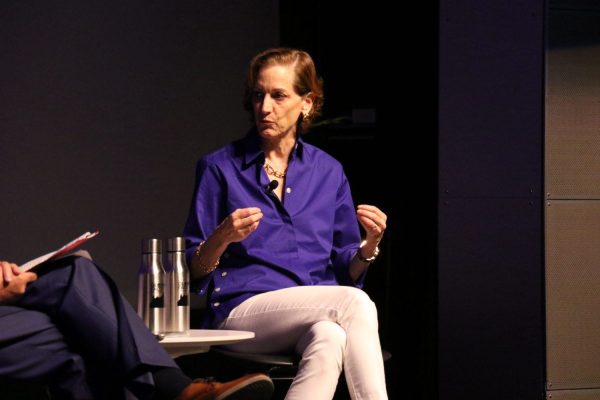
Anne Applebaum of the Atlantic Magazine & Columbia’s Pulitzer Board advocated killing Palestinian journalists
Why does the “safety” framework never apply to Arab students?
By Adam Johnson | The Column | March 14, 2025
In 2002, Columbia University Pulitzer Prize board member, alleged “anti-authoritarian” expert, and Atlantic Magazine columnist Anne Applebaum explicitly advocated in Slate magazine that Israel kill Palestinian journalists for the crime of making Israelis and Americans look bad. In her article, “Kill The Messenger,” there is little subtlety or equivocation about not only Israel’s right to blow up Palestinian media infrastructure, but to kill reporters for simply doing their job:
“… the official Palestinian media is the right place for Israel to focus its ire. In fact, in the reporting of the Middle East conflict, which almost always focuses on yesterday’s violence and today’s body count, the crucial role of the Voice of Palestine—the official broadcasting arm of the Palestinian Authority—has often been overlooked. Nor is the problem just radio and television. If you want to understand why the Oslo peace process failed, or where suicide martyrs come from, it is worth taking a closer look at all the Palestinian Authority’s official media…
Until then, the Voice of Palestine will remain what it has become: a combatant—and therefore a legitimate target—in a painful, never-ending, low-intensity war.”
This article, which Applebaum has never explained or renounced, is useful when contextualizing the current witch hunt on college campuses targeting anti-Gaza genocide protestors under the Planck Length-thin auspices of promoting “student safety” and “combatting anti-semitism.”
What’s especially noteworthy is that Applebaum never even bothers laundering her promotion of the execution of Palestinians media workers in the language of “terrorism” or “material support for terrorism”—she is simply lobbying Israel kill Palestinian media workers for the mere fact that they are making Israel and the US look bad. Indeed, a key example of coverage justifying their killing Appelbaum cites is an extremely banal political cartoon. As she writes:
… they are subtly, and sometimes not so subtly, anti-American. A recent cartoon in Al-Hayat Al-Jadida, the Palestinian Authority official daily, showed a blindfolded George Bush aiming missiles indiscriminately at a dartboard covered with the names of Arab states. One of his darts had hit the bull’s eye marked “Afghanistan.” Another had gone astray and hit an Arab man in the back. The caption read, “The war in Afghanistan is only the beginning.” While there is plenty of other anti-Americanism in other Palestinian media, and indeed in Arab media everywhere, this is the voice of the Palestinian Authority, the government of Yasser Arafat, a frequent visitor to the White House.
Applebaum believes a cartoon depicting George W. Bush as a warmonger makes Palestinian media a legitimate target worthy of summary killing. “Anti-Americanism,” one is lead to believe is not only a form of racism but a mode of speech that strips one of their protected civilian status.
This is an extraordinary, illiberal, and racist opinion, yet Applebaum is allowed to remain in good standing among liberal and academic elites because racism and casual bloodlust targeting Palestinians and Arabs simply doesn’t register or matter in the “student safety” calculus.
Imagine, if you will, a Columbia professor or Pulitzer prize committee member advocating the summary killing of Israeli or American media workers because they undermined the cause of Palestinian liberation in their reporting. If this article surfaced it would stir up immediate outrage and condemnation, the academic in question would be quickly fired, apologies would be made and and new policies would be promised. But with Applebaum calling for the killing of Palestinian reporters, an article that goes semi-viral on Twitter every few months, no one cares. Nothing happens. It’s just another routine, normal Serious Foreign Policy opinion from a Serious Foreign Policy Expert.
Columbia University President Katrina Armstrong is currently working with Trump officials, DHS, ICE, and other government agents seeking to deport and imprison anti-Israel protestors for the simple fact that—according to Trump officials themselves— they have ideological viewpoints the Trump regime doesn’t like. Columbia, and many other universities, are maximally complying with these demands ostensibly to promote “campus safety” and “combat hatred.” Indeed, making students “feel safe” has been the high-minded liberal reason for virtually every university administrator cracking down on free speech, both before and after Trump took office. “We are focused,” Armstrong said in a press release last year, “on ensuring [student] safety, supporting their wellbeing, and protecting their ability to learn.”
“I have said it before, and I will say it again,” Armstrong insisted, “discrimination and harassment, including hate language, calls for violence, and the targeting of any individuals or groups based on their beliefs, ancestry, religion, gender identity, or any other identity or affiliation have no place at Columbia.”
Except that it does. Columbia, which manages and awards the Pulitzer prize, has no problem putting someone with a history of advocating the killing of Arab civilians in a position of power, helping determine who in journalism is worthy of its highest award, and creating an atmosphere on campus that makes clear to its Palestinian students that they are subhuman and unworthy of normal protections under the laws of war.
Death toll from Israel’s renewed offensive on Gaza rises to 970

Press TV – March 19, 2025
Gaza’s health ministry says Israel’s renewed savagery has led to the massacre of at least 970 people in 48 hours.
The wave of deadly airstrikes that shattered a fragile ceasefire in Gaza on Tuesday has so far claimed the lives of at least 970 people across the besieged territory, the health ministry said in a statement on Wednesday.
Before the resumption of the offensive, the death toll from the regime’s 15 months of genocidal war recorded by the ministry at midday on March 17 stood at 48,577.
By midday on Wednesday, the figure had risen to 49,547, the ministry said.
The health ministry also registered “one death and five severe injuries among foreign staff working for UN institutions.”
It said Israel attacked a UN headquarters in Deir el-Balah, in the central Gaza Strip, on Wednesday.
The victims had been taken to the Al-Aqsa Martyrs Hospital, the health ministry said.
Israel’s military denied attacking a UN building in Gaza.
The UN Office for Project Services (UNOPS) confirmed the death of one of its staff by an explosive that was “dropped or fired” on its building in Deir el-Balah.
“An explosive ordnance was dropped or fired at the infrastructure and detonated inside the building,” it said, adding that five others were injured.
UNOPS Executive Director Jorge Moreira da Silva said he was “shocked and devastated” by the death of a staff member.
“This was not an accident.” he said, adding that “attacks against humanitarian premises are a breach of international law.”
Bulgaria’s foreign ministry said later in the day that one of its citizens working for the United Nations was killed in Gaza, without specifying where in the territory.
Benjamin Netanyahu of Israel threatened on Tuesday that the massacre of women and children in Gaza was “only the beginning.” He stands accused of committing war crimes and ethnic cleansing in Gaza.
The Israel-Hamas Ceasefire Farce
By Ilana Mercer • Unz Review • March 18, 2025
‘A ceasefire is when the Israelis fire and we cease.’ ~ Refaat Al-Areer, RIP
Nobody can quite determine any longer which of the two countries, America or Israel, is the Great Satan and which is the Little Satan. ~ ilana
“We’re the United States. We’re not an agent of Israel. We have specific interests at play.” So said Trump Special Envoy for Hostage Affairs Adam Boehler to Zionist enforcer Jake Tapper, on CNN.
Boehler had been deputized by President Donald Trump to bypass Bibi Netanyahu and negotiate directly with Hamas. More to the point, Boehler had described Hamas, whom by now very many around the world consider resistance fighters, as holding points of view that merit a hearing. He even suggested, as Jewish Insider reported, that—lo—! “they’re actually pretty nice guys.” Hamas, that is.
Whatever was he thinking! Boehler was off his leash. Israeli officials were scurrying about in an attempt to get him back on it.
Talking to Hamas? Now Trump was talking!
Unlike the president’s Gaza Rivera plan to evict Palestinian survivors from Gaza; negotiations with Hamas do indeed constitute “out-of-the-box thinking,” if not original thinking. Unoriginal, because diplomacy, namely talking to adversaries, is standard statecraft. At least it ought to be.
Excerpted but barely in the Washington Examiner, the testy Boehler-Tapper televised exchange took time to propagate to the Internet. You see, US Deep Tech, Google included, generally cover for the Israel Defense Forces (IDF), which is also business partner to American tech. These multinationals are not about to throw sand in the IDF’s military bearings.
Tech multinationals (or Deep Tech, as I call them) have, after all, supplied the IDF with the killer infrastructure required to “build artificial intelligence (AI) programs designed to produce human targets with little human oversight.” (The other reasonable conclusion is that these multinationals are undisturbed by genocide.)
Talking to Hamas would certainly have been inconceivable under Joe Biden, alias Genocide Joe, remarks commentator extraordinaire Mouin Rabbani, a Palestinian. And while Trump has prioritized negotiations over American dual-national captives; his bold move broadcasts some salient facts about the situation:
Israel is an obstacle to an accord; to closing out the genocide. It is especially eager to avoid phase II of the January 17, 2025 ceasefire agreement. Not that the media system had noticed, but Israel never quite quit the killing.
By March 13, Israel had violated the ceasefire agreement upwards of one thousand times, in the estimation of Jon Elmer, military analyst at the Electronic Intifada. Staggering, perhaps, but utterly predictable historically. “Israel,” reminds a dejected Chris Hedges—he is a famed war correspondent—“has assassinated more people than any other people in the Western World.”
In the hours right after the ceasefire deal was announced; Israeli forces killed at least 87 Palestinians, 23 of them children. Quipped the late Refaat Al-Areer: “A ceasefire is when the Israelis fire and we cease.” As in “expire.” A mild-mannered, bookish Palestinian scholar, Dr. Al-Areer was murdered in his Gaza residence, in December of 2023.
Indeed, the low-grade killing across the coastal strip had continued throughout phase I of the “ceasefire.” To be exact, Israel had started up the killing fifteen minutes into the ceasefire’s implementation. Since January 15, 2025, Israel has murdered an average of three people every 24 hours—150 Palestinians since the start of the ceasefire on 19 January 2025.
No sooner were the Israelis steered by Steven Witkoff, in January, to a ceasefire; than the urge to kill overcame them. Israeli newspapers were telling about the “salty” language Witkoff, U.S. President-elect Donald Trump’s Middle East envoy, had deployed with Netanyahu, instructing the Israeli prime minister’s aides, as follows (and I paraphrase), “I don’t care that today’s your Sabbath. Get down here and sign this [old] ceasefire on the dotted line.” I ad-libbed “old” in, because the January-15 accord was modeled after one Hamas had composed in May of 2024.
Did Witkoff remind Netanyahu that the Israeli army, the IDF, does not rest up on the Seventh Day from the slaughter of innocents, and that, surely its commander-in-chief could get off his duff to make peace on the holy Sabbath?! Probably not. Still, what transpired was refreshing, even delicious.
The March 2025 violations of the agreement have seen Israel halt the meager aid let into starving Gaza, and cut off the remaining supply of electricity to Gaza. Because the main desalination water-treatment plant is producing a fraction of its prior output, running as it is only on generators—only one-in-ten Gazans currently has access to safe drinking water.
From the start, Israel had failed to allow into Gaza the agreed-upon medicines, fuel, food, housing units (15 out of a promised 60,000), tents (20 percent of the requisite 200,000), heavy earth-moving machinery, spare parts, construction material, and alternative energy systems, like generators.
Still regionally omnipotent, still resistless—Israel has now put its exterminatory foot to the floor again. The Jewish State continues to bleed the region like a leech, seizing Lebanese and Syrian territory, including the Golan Heights. As I write, via the chyron scroll across the screen comes news that Israel has just extinguished nine lives in Northen Gaza, and two in southern Lebanon, where a ceasefire is in effect.
Unless it is killing things, Israel is just not happy. Flora and fauna, too. Israeli genociders, candid economists might say, have a high time-preference mindset. In such an uncivilized society, impulses (to kill) are privileged over contractual commitments (to quit killing). Not some of the livestock, but all of the livestock. As hard as it is to believe, but under decades of a medieval blockade, Gaza’s farmers had, before October 7, fed a third of their people. Croplands, irrigation systems, batteries of greenhouses, living things that produce flowers then give fruit: everything has gone the way of cattle, poultry and family pets: dead.
The term Carthaginian Peace has lost its meaning under Israel’s malign sway. The bad idea of “peace” through crippling the opponent Israel has replaced with the idea of “peace” through conquering and killing the opponent off. Conversion is complete. The structural violence that is the State of Israel the US duopoly has helped normalize. Genocidal violence, yes or no, saturation bombing of civilians, pros and cons, and forced mass expulsion of starving, subjugated people—if not de rigueur, these state crimes are now part of normal governance in the West.
On top of all that, there was never a ceasefire in the West Bank. The West Bank’s civilians, so closely clustered, have been strafed from the air. For the first time in 20 years, tanks travel all over what are urban neighborhoods.
The depopulation underway in this de facto annexed territory hardly even percolates through to the West’s press. Yet thousands of West Bank Palestinians are being plucked from their homes, some detained, mostly without charges, at times shot on the spot; always degraded, tortured, and sicced upon by fulminating Jewish settlers, who “work” cheek-by-jowl with Israeli soldiers.
A screen picture of any day in the life of a subject in the State of Satan seconds my description. Taken on February 15, the captured headlines via Ha’aretz tell of 30,000 Palestinians driven from Jenin, a so-called refugee camp in the West Bank. The number of people evicted and dispossessed from these “camps” has since ballooned to close on 50,000. The West Bank’s Palestinians are denied access to their agricultural land, which means that soon it will lie fallow, and settlers will colonize it.
I call places like Jenin “so-called” camps because these were proper cities, not tent cities. As was noted in the Journal of Middle-East Studies (1992), these “camps are similar to any other urban neighborhoods,” into which they have evolved.
I’d been to Jenin. Our family had been invited as guests by generous residents. Childhood in Israel saw me visiting what I then knew as The Triangle: Tira, Tulkarem and Jenin. In the 1970s, these were not yet cities, but were definitely no nylon-dome encampments. My step-father, a doctor, headed healthcare clinics in what he called The Triangle. Daily, he’d return home laden with export-quality fresh produce. His patients were poor, yet so very generous. Upon the town’s doctor, a South African Jew who was appreciated in his role as a healthcare provider, they showered respect, affection and gifts.
We’d also be invited as a family to feasts held on the occasion of a wedding. The tables groaned with heavenly cuisine. Bestowed, this was a great honor, and these were grand affairs, an example of a culture in which hospitality and generosity are defining values. An invitation meant that you were never ignored. A lovely, if genteel, welcome awaited.
I do not know if the term Triangle deployed then denotes the same cluster of cities and villages. I do know that Jenin today is 70-percent levelled. Burdened by history like never before, I note, too, that Tira is no longer visible on the map.
Although the occupation army has pulled out of the Netzarim Corridor, which divides Gaza, it retains a presence in southern Rafah and the Philadelphi Corridor. The serial-killer state had hoped, with Trump’s backing, to renege entirely on the ceasefire agreement, and, in particular, on its Phase-II obligations to permanently end the offensive and “withdraw armed forces from the Gaza Strip completely.” In order to “surmount the obstacle” that is Israel, the Trump Administration had, therefore, chosen to speak directly with Hamas leaders.
Early in January of 2025, there was hope. Trump is an Alpha Male; Bibi Netanyahu is a kept man. How long can the ego-bound leader of a Super Power tolerate being bossed about by the leader of a “sh-thole country,” to use Trump’s old coinage?
Two months distant, and hope is fading. Trump chose to channel son-in-law Jared Kushner. Kushner, the nepotistic scion of a dodgy New York realtor, and an empty husk of a man, has had his eye on the waterfront property of a conquered and dying people. He had said as much about Gaza in 2024.
In essence, some of the world’s wealthiest men were coveting the property of the world’s poorest and most persecuted people.
Soon to follow was Trump’s Gaza plan, a gaudy vulgar production, replete with bearded belly dancers. “Trump Gaza,” the plan’s title, was not “out-of-the-box thinking,” as some in the president’s Westen coalition had dubbed it. Rather, it sits on a continuum of evil. It is an extension and completion of Joe Biden’s genocide.
Eager, it would seem, to write the Palestinian People’s obituary, Trump had vowed to assume control over Gaza, rebuild it and evict the survivors of a genocide committed by client state Israel.
By removing the pitiful exhibits from the scene of the crime; Donald Trump would be covering-up the crime of genocide. Next, he planned to conclude Biden’s genocide by scattering the survivors across the Middle East. Israel will have been rescued. Gazans will have ceased to exist as a nation. The forced displacement and mass murder of Gaza’s Palestinians would have been achieved, completed.
Who said crime doesn’t pay? When the Superpower inverts the moral order of the universe; the Crime of All Crimes pays—and then some.
As Trump told it, nobody quite knows how or why Gaza became a “demolition site.” Somehow, the soil got soaked through with the blood of tens-of-thousands of Palestinians, and a toxic mix of 50-million tons of building debris. Somehow, piles of bodies decay beneath the surface. Somehow, garbage is piled as high as the bodies, were they to be stacked. Open sewage runs through what remains of the streets, and the byproducts and contaminants of munitions, like unexploded ordnance, lie everywhere.
It’s all a big mystery.
The other thing nobody can quite determine is which of the two countries, America or Israel, is the Great Satan and which is the Little Satan.
Back to Boehler: Israel went barking mad when our ex-envoy failed to show monk-like devotion to Israel, asserting, instead, American foreign-policy independence. The Lobby was marshalled. Fervid assurances were soon provided. Soon enough, Adam Boehler was gone. After being “nominated for the Senate-confirmed position of Special Presidential Envoy for Hostage Affairs,” he was demoted to “special government employee,” reports Ha’aretz. Found deficient in Zionist solidarity, Boehler “withdrew his nomination.”
The median elapsed time between an American official opposing anything Israel and then dropping out of history is getting shorter.
Like Joe Biden did before him, president Trump followed the Israeli prime minister on a leash. On March 5, he bellowed on Truth Social:
“Release all of the Hostages now, not later, and immediately return all of the dead bodies of the people you murdered, or it is OVER for you.” Buoyed, at 2:00 AM today, March 18, Israel murdered over 400 Gazans. It is currently demanding that Hamas hand over hostages for nothing.
Will the Palestinians wronged and ruined get a reprieve? Will the mercurial Trump, who, to his credit, is ideologically unattached to Israel, cut Israel dead, as he ought to? These possibilities are looking remote.
***
Ilana Mercer is a paleolibertarian theorist, author and essayist. Her new book is “The Paleolibertarian Guide To Deep Tech, Deep Pharma & The Aberrant Economy” (February 2024). Mercer is described as “a system-builder. Distilled, her modus operandi has been to methodically apply first principles to the day’s events.” She’s Jewish and grew up in Israel from which she fled, aged 19, never to return. She had refused to serve in the IDF, the Israeli military.
US scraps monitoring of alleged ‘Russian sabotage’ – Reuters
RT | March 19, 2025
The US has halted a multi-agency program set up to detect and counter potential “sabotage, disinformation, and cyberattacks” it claims Russia could launch against the West, Reuters reported on Wednesday, citing current and former officials.
The outlet says it could not verify if the order came from US President Donald Trump.
The program, initiated under former President Joe Biden and led by the country’s National Security Council, involved at least seven US security agencies and the EU, to counter alleged Russian “hybrid activities,” the outlet said.
Since the escalation of the Ukraine conflict in 2022, Western officials have accused Russian intelligence agencies of conducting a covert campaign to weaken US-led support for Kiev. They claimed that Moscow has been “escalating a shadow war against Western nations” allegedly involving arson attacks, assassination attempts, election interference, damage to undersea cables, and other plots.
Russia has repeatedly dismissed the accusations as “unfounded,” with the Kremlin describing the allegations of so-called “Russian sabotage” as “empty and ephemeral.”
Since assuming office for the second time, Trump has diverged from Western efforts to isolate Russia, and instead opened direct communication with Russian President Vladimir Putin, while publicly clashing with Ukraine’s Vladimir Zelensky, the article noted.
Trump administration officials ignored calls to continue the monitoring effort, the outlet claimed, adding that “much of the work has come to a standstill” since Trump took office in January.
Asked about Washington’s suspension of a “hybrid warfare campaign” monitoring, Kremlin spokesman Dmitry Peskov told Reuters that the Trump administration was trying to get rid of “everything ineffective, corrupt and implausible,” something he said was “understandable.”
Over the past several months, there have been multiple cases in which telecommunications cables in the Baltic Sea were damaged by vessels operating from Russian ports, triggering speculation that Moscow was behind the damage. However, an investigation carried out by NATO prosecutors has failed to find any evidence connecting the incidents to Moscow.
Peskov has previously stated that “it is quite absurd to continue to blame Russia for everything without any grounds.”
Featured Video

Yemen joins the war – Red Sea could be blocked next – Saudi regime at risk
or go to
Aletho News Archives – Video-Images
From the Archives
A superpower and “the world’s sickest warrior state”
By Paul J. Balles | March 8, 2010
Living through five or six major wars has hardened me to what I thought were the extremes of inhuman cruelty and brutality.
Two things made those extremes almost bearable: the brutality always revealed – at least according to the media coverage – the viciousness of the enemy. It was therefore quite understandable when our “brave men and women” pulverized the enemy.
Films of Japanese torturing captive Americans somehow justified holding Japanese Americans in internment camps during World War II; and only a small percentage of Americans found the bombing of Hiroshima and Nagasaki unreasonably vengeful at best, at worst, depraved.
The media giants in America portrayed the North Koreans as barbaric beasts with their captives, quite unlike their southern counterpoints – our allies during the Korean War. No one ever felt the need to explain how the South Koreans were a civilized breed while the North Koreans were absolute savages, at least according to the official line.
In Vietnam, our warriors justifiably (or so the media made us believe) dropped napalm on the North Vietnamese who had the gall to hide in villages and tunnels to ravage our invaders. At least it was accepted practice until some rogue photojournalist filmed a young girl screaming down a Vietnamese road in flames. … continue
Blog Roll
 Aletho News
- America Racing to Strategic Defeat in Iran: Lt Col Daniel Davis
- FTC Warns Visa, Mastercard, PayPal, Stripe Over Political Debanking
- Russian tanker approaches Cuba despite US oil blockade
- Marandi: Yemen joins the war – Red Sea could be blocked next – Saudi regime at risk
- Pro-Palestinian French member of European Parliament denied entry to Canada
- Pakistan to Host US-Iran Talks
- How Indonesia’s tilt toward the US left it stranded in the Strait of Hormuz
- US has no choice but to retreat from Iranian borders: Top commander
- Iran Retaliation Strikes Chemical Plant Near Dimona
- AWACS’ Destruction is a Major Loss for US Military – Ex-DoW Analyst
- If Americans Knew
- Israeli police block Catholic cardinal from entering Church of the Holy Sepulchre on Palm Sunday
- Israel is assassinating journalists again, more than any other nation, anywhere, ever – Not a ceasefire Day 170
- Over 300 US service members wounded, majority have brain injuries – Not a ceasefire Day 169
- Researchers at Human Rights Watch Resign Over Blocked Report on Palestinian Refugee Return
- Jewish Groups Are Backing a War Americans Don’t Want
- Eric Fingerhut Thinks He’s the President of the Jews
- Top Jewish Philanthropists, Rabbis Urge Israeli President to Take Action Against ‘Jewish Extremists’
- Don’t Be Fooled. Zionist Leaders Have Always Wanted to Control Southern Lebanon
- Israel’s widespread use of torture is a core element of its genocide against the Palestinian people
- In Israel’s War on Iran, Many Middle East US Bases Rendered “All But Uninhabitable”
- No Tricks Zone
- New Study Finds Warming Saves Lives…Cold Temperatures 12 Times More Deadly Than Excess Heat
- German Science Blog Accuses PIK Climate Institute Of Hallucinating Climate Tipping Points
- Devastating Assessment Of Comirnaty Vaccine By Former Senior Pfizer Europe Toxicologist
- New Study: CO2 Is ‘Effectively Negligible’ As An Explanatory Climate Change Factor Since 2000
- Former Pfizer Toxicologist Dr. Helmut Sterz Tells Bundestag Hearing Pfizer Vaccine Should Have Never Been Approved
- Energy Expert: Germany’s Nuclear Phaseout Was A “500 Billion Euro Mistake”
- New Research: South Australia’s Mid-Holocene Sea Surface Temperatures Were 4°C Warmer Than Today
- Storing Green Energy To Last Germany 10 Days Would Require A 60-Million Tonne Battery
- New Studies: UK Sea Levels Were 4 Meters Higher Than Today During The Mid-Holocene
- Destructive Green New Deal: German Energy And Metal Group Warns Of Drastic Crisis
 Aletho News