“This Is Existential”: Billionaire Cancer Researcher Says Covid & Vaccine Likely Causing Surge In Aggressive Cancers
By Tyler Durden | Zero Hedge | March 28, 2025
Dr. Patrick Soon-Shiong – a transplant surgeon-turned-biotech billionaire renowned for inventing the cancer drug Abraxane – has issued a startling warning in a new in-depth interview with Tucker Carlson.

Soon-Shiong, founder of ImmunityBio ($IBRX) and owner of the Los Angeles Times, claims that the COVID-19 pandemic, and the very vaccines developed to fight it, may be contributing to a global surge in “terrifyingly aggressive” cancers. In the nearly two-hour conversation, the Los Angeles Times owner leveraged his decades of clinical and scientific experience to outline why he suspects an unprecedented cancer epidemic is unfolding. This report examines Dr. Soon-Shiong’s background and assertions, the scientific responses for and against his claims, new data on post-COVID health trends, and the far-reaching implications if his alarming hypothesis proves true.
Dr. Soon-Shiong’s Claims
Soon-Shiong is a veteran surgeon and immunologist who has spent a career studying the human immune system’s fight against cancer. He pioneered novel immunotherapies and even worked on a T-cell based COVID vaccine booster during the pandemic. In the interview, he draws on this background to voice deep concern over rising cancer cases, especially among younger people – something he describes as a “non-infectious pandemic” of cancer. He tells Carlson that in 50 years of medical practice, it was extraordinarily rare to see cancers like pancreatic tumors in children or young adults, yet recently such cases are appearing. For instance, Soon-Shiong was alarmed by seeing a 13-year-old with metastatic pancreatic cancer, a scenario virtually unheard of in his prior experience.
“I never saw pancreatic cancer in children… the greatest surprise to me was a 13-year-old with metastatic pancreatic cancer,” Soon-Shiong told Carlson, adding that he’s seen examples of very young patients (even children under 11 with colon cancer) and unusual surges in aggressive diseases like ovarian cancer in women in their 30s. These personal observations of more frequent, aggressive cancers in youth led him to probe what might have changed in recent years.
“We’re clearly seeing an increase in certain types of cancer, like pancreatic cancer, ovarian cancer… colon cancer… in younger people.”
— Dr. Patrick Soon-Shiong
According Soon-Shiong, the COVID era is the obvious change – and suggests that both the SARS-CoV-2 virus infection and the widespread vaccination campaigns could be key drivers behind this cancer spike. He emphasizes the massive scale of human exposure to the virus and its spike protein (via infection or vaccination).
“I don’t know how to say that without saying it. It scares the pants off me because I think what we may be, I don’ think it’s virus versus man now, this is existential. I think when I talk about the largest non-infectious pandemic that we’re afraid of, this is it.”
“Billions of people – literally billions – had the COVID virus. Over a billion got the spike protein vaccine,” said Carlson, adding “So that’s like, we’re talking like a huge percentage of the Earth’s population, unless I’m missing something.”
“Now you understand what keeps you awake at night and kept me awake at night for two years, two and a half years,” Soon-Shiong replied, suggesting that exposure to both is silently undermining the immune system’s natural defenses against cancer on a global scale.
Soon-Shiong frames COVID-era cancers as potentially virally triggered or exacerbated. In the interview, he described cases of “virally induced cancers” in clinics during the pandemic – patients whose cancers may have been kicked into overdrive by the cascade of inflammation and immune stress associated with COVID-19 (Dr. Patrick Soon-Shiong: You’re Being Lied to About Cancer, How It’s Caused, and How to Stop It). COVID infection causes a massive inflammatory response, and some cancers are known to exploit inflammation to grow.
TUCKER: “a lot people have pointed to both COVID, the virus, and to the mRNA COVID vaccines as potential causes. Do you think that they’re related?”
SOON-SHIONG: “The best way for me to answer that is to look at history. What we know about virally-induced cancers is well-established. We know that if you get hepatitis, you get liver cancer. Hepatitis is a virus infection. We know if you got human papillomavirus, HPV, you get cervical cancer.”
We know that certain viruses directly cause cancer (e.g. HPV, Epstein-Barr), so it’s not unprecedented for a virus to play a role in oncogenesis. While SARS-CoV-2 is not a known oncovirus, Soon-Shiong worries its indirect effects – chronic inflammation, immune exhaustion, or “suppressor cells” that emerge in the wake of infection/vaccination – could be accelerating tumor development. “The answer is to stop the inflammation… clear the virus from the body,” he argues, positing that until we eradicate lingering virus and restore immune balance, we may see mounting cancer cases.
In sum, Dr. Soon-Shiong’s claim is that the pandemic has set the stage for an explosion of aggressive cancers: the COVID virus itself (especially if it persists in survivors) might suppress immune surveillance, and the mRNA vaccines “that didn’t stop it” might inadvertently contribute to an immunosuppressive environment. These effects, in his theory, could be unleashing cancers that the immune system would ordinarily have kept in check.
Watch:
A number of clinicians and researchers have reported similar worrying observations, though these remain largely anecdotal at this stage. One prominent voice echoing Soon-Shiong’s concern is Dr. Angus Dalgleish, a veteran oncologist and professor at St. George’s, University of London. In late 2022, Dalgleish wrote to the BMJ’s editor after noticing that some cancer patients who had been stable for years experienced “rapid progression of their disease after a COVID-19 booster.” He cited cases of individuals who were doing well until shortly after vaccination – new leukemias, sudden appearance of Stage IV lymphomas, and explosive metastases in patients who had post-vaccine bouts of feeling unwell.
“I am experienced enough to know that these are not coincidental,” Dalgleish wrote, noting that colleagues in Germany, Australia and the U.S. were independently seeing the same pattern. This frontline testimony aligns with Soon-Shiong’s fear: something about the immune system post-vaccination might be removing restraints on latent cancers. Dalgleish specifically pointed to short-term innate immune suppression after mRNA vaccination (lasting for several weeks) as a plausible mechanism. Many of the cancers he saw were ones normally held in check by immune surveillance (melanomas and B-cell cancers), so a temporary post-vaccine drop in immune vigilance could allow a tumor growth spurt. He also alluded to “suppressor gene suppression by mRNA in laboratory experiments” – a reference to preliminary studies that found the SARS-CoV-2 spike protein might interfere with key DNA repair or tumor-suppressor proteins in cells. These lab findings (while not yet confirmed in living organisms) lend some biological plausibility to the idea that spike exposure could affect cancer-related pathways.
Beyond individual doctors, some research is probing links between COVID and cancer behavior. For example, a 2022 study in Frontiers in Oncology explored how SARS-CoV-2 proteins interact with cancer cells. It found that the virus’s membrane (M) protein can “induce the mobility, proliferation and in vivo metastasis” of triple-negative breast cancer cells in the lab (Frontiers | SARS-CoV-2 M Protein Facilitates Malignant Transformation of Breast Cancer Cells). In co-culture experiments, breast cancer cells exposed to the viral protein essentially became more aggressive and invasive. The researchers concluded that COVID-19 infection “might promote… aggressive [cancer] phenotypes” and warned that cancer patients who get COVID could face worse outcomes.
While this is one specific context (breast cancer cells and one viral protein), it underpins Soon-Shiong’s general concern: the virus can directly alter the tumor microenvironment to the cancer’s advantage.
Another line of evidence involves latent viruses and inflammation. Doctors have documented unusual reactivations of viruses like Epstein-Barr (which is linked to lymphomas and other malignancies) during both COVID-19 and post-vaccine immune reactions. Such reactivations hint at a period of immune dysregulation that might also let nascent cancer cells slip past defenses.
Or course, fact-checkers and medical authorities argue that there is no credible evidence of vaccines causing meaningful immune suppression. “There isn’t evidence to date that COVID-19 vaccines cause cancer or lead to worsening cancer,” one infectious disease expert told FactCheck.org, though they do acknowledge rare side effects like myocarditis or blood clots were found, but not cancer.
Phinance Data Insights: Post-COVID Health Trends
While the scientific community debates mechanistic links between COVID and cancer, independent analysts have been parsing population-level data for unusual patterns. One notable effort is by Phinance Technologies, a research firm co-founded by former BlackRock portfolio manager Edward Dowd. Phinance has been analyzing excess mortality and disability data since the pandemic, looking for signals of broad health impacts in the aftermath of COVID and mass vaccination. Their findings reveal concerning trends, especially among younger, working-age populations, that lend some weight to Dr. Soon-Shiong’s general warning of a post-COVID health crisis (though not specific to cancer alone).
Phinance’s “Vaccine Damage Project” examined the U.S. population aged 16–64 (essentially the workforce) and stratified outcomes into four groups: no effect, mild injuries, severe injuries (disabilities), and death. Using official government databases (the CDC, Bureau of Labor Statistics, etc.), they estimated how each category changed starting in 2021 – when vaccines rolled out and COVID became widespread. The results are sobering. According to Phinance’s analysis, by the end of 2022 the U.S. had experienced approximately 310,000 excess deaths among adults aged 25-64 (a ~23% increase in mortality in that group over normal expectations). Notably, they argue that after mid-2021, with vaccines available and the virus itself becoming less deadly (due to immunity and milder variants), COVID-19 should not have been causing such high excess death rates. Therefore, those 310k “unexplained” deaths in 2021–2022 could represent an upper bound on vaccine-related fatalities or other pandemic collateral damage.
Even more striking is the data on new disabilities. Phinance found that from early 2021 through late 2022, about 1.36 million additional Americans (age 16–64) became disabled – a 24.6% rise in disability in that cohort, far above historical trend. This jump in disabilities among the workforce correlates in time with the vaccine rollout (and was disproportionately higher in the labor force than among those not working). The analysts note that the healthiest segment of the population (employed working-age adults) saw a greater relative increase in disabilities after Q1 2021 than the older or non-working groups. This is unusual, since typically health shocks hit the elderly hardest – but here something was impacting younger, healthy people to a significant degree. Phinance investigated further and found a tight relationship between the cumulative number of vaccine doses administered and the rise in disabilities in 2021-22. In fact, for the 16–64 population, they computed a ratio of about 4 new disabilities per excess death in that period, suggesting many survivors were left with lingering health issues even if they didn’t die.
Is the FDA salvageable?
By Maryanne Demasi, PhD | March 26, 2025
Dr Marty Makary—now confirmed as FDA Commissioner—inherits an agency that routinely approves drugs with questionable benefits.
At Makary’s confirmation hearing on March 6th, senators repeatedly hailed the FDA as the “gold standard” of drug regulation—a phrase meant to reassure the public that approved drugs are significantly effective.
But this claim is an illusion.
In 2013, Jonathan J. Darrow, a Harvard legal scholar and expert in drug regulation, published a scathing analysis in the Washington and Lee Law Review, exposing the reality behind this phrase.
Darrow’s paper, Pharmaceutical Efficacy: The Illusory Legal Standard, meticulously details how the FDA’s approval process does not require drugs to be meaningfully effective—only that they show some effect, no matter how trivial.
Since then, the problem has only worsened.
Makary has spent years criticising medical waste and corporate influence in healthcare. But now, as the new FDA Commissioner, can he reform an institution this compromised?
The “gold standard” that fails the public
The phrase “gold standard” suggests uncompromising scientific scrutiny. However, under U.S. law, there is no specific level of efficacy required for a new drug to be approved.
The FDA’s legal framework, Title 21 of the U.S. Code, demands only “substantial evidence” of benefit, without defining what “substantial” actually means.
Darrow explains: “The standard is almost entirely illusory because it leaves to the drug sponsor the ability to specify any non-zero level of efficacy.”
This ambiguity explains why many widely prescribed drugs offer only marginal benefits.
Consider antidepressants like Prozac and Zoloft. Research indicates that the majority of patient improvement could be due to the placebo effect, not the drug itself.
Yet, because these medications show statistical improvement in clinical trials, they meet the FDA’s approval threshold and are marketed as transformative treatments.
Darrow reported in 2021 that most newly approved drugs (69%-98%) fail to provide substantial benefits over existing therapies.
Cherry-picking evidence
Another critical flaw in determining drug efficacy is selective trial reporting. Drug companies conduct numerous clinical trials, but the FDA only requires two successful trials for approval—regardless of how many have failed.
This means a company could run 10 trials, discard eight that show no benefit, and submit the two positive ones. This practice is precisely how some SSRI antidepressants were approved.
In a major exposé, researcher Irving Kirsch and his colleagues used the Freedom of Information Act (FOIA) to obtain unpublished clinical trial data on six widely prescribed antidepressants.
FDA approval had been granted based on twelve trials (two per drug). Yet, a FOIA request uncovered 47 trials—many of which showed no meaningful difference between the drug and a placebo.
The registration of trials on public registries like ClinicalTrials.gov was intended to improve transparency, but enforcement remains weak. Many trials that should have been disclosed are not, and financial penalties for non-compliance are rarely enforced.
The result? A regulatory loophole that allows ineffective drugs to be marketed as evidence-based solutions.
Misleading people with statistical tricks
Beyond cherry-picking trials, statistics can be manipulated to make drugs seem more effective than they are. One common tactic is presenting relative risk reduction instead of absolute risk reduction.
Take statins, the cholesterol-lowering drugs prescribed to millions. Clinical trials often claim statins reduce heart attack risk by 30%. However, this figure refers to relative risk—not absolute risk.
In reality, the absolute risk reduction is often less than 2%. This means that out of 100 people taking statins, 98 see no benefit at all. Yet, because the effect meets “statistical significance,” statins are approved and aggressively marketed as essential for heart disease prevention.
Another example is the diabetes drug saxagliptin (Onglyza), approved by the FDA in 2009. Marketed as a breakthrough for blood sugar control, later studies showed the absolute reduction of HbA1c—a key measure of blood sugar—was negligible (0.4% to 0.9%).
Worse, in 2013, a large-scale trial revealed a possible increased risk of heart failure. Yet, the drug remains on the market, illustrating how weak efficacy standards allow ineffective (or even harmful) drugs to persist.
The cost of an ineffective system
Weak efficacy standards don’t just mislead patients—they can also lead to financial strain. This issue is particularly egregious in oncology.
New cancer drugs routinely cost over $100,000 per year, yet many extend life by only weeks or months, if any. Families may drain their savings, hoping for a meaningful survival benefit, only to later learn that the drug offered little more than a statistical blip.
In 2016, the FDA granted accelerated approval to olaratumab, which was hailed as a breakthrough for soft tissue sarcoma. However, it was withdrawn in 2019 after further research failed to show any survival benefit.
The FDA had granted approval based on early-stage trials that created the illusion of efficacy.
This isn’t just a regulatory failure—it’s a moral one.
Why we need clearer drug labelling
Darrow argues that drug labelling is a major part of the problem. “There’s no requirement for pharmaceutical companies to offer any scale of benefit, in a manner that patients can understand,” he wrote.
“Knowing how well a drug might perform relative to an alternative—through clearly presented data—allows doctors and patients to decide whether it’s worth [it].”
He draws a parallel with sunscreen labelling. “A consumer easily understands that SPF30 will give greater protection than SPF10. So why don’t we have better drug labelling?”
Alternatively, he has suggested that drug labels could adopt a similar approach to food labels, “with data presented in columns that show key information and allow for side-by-side comparison.”
Or, the labelling for sleeping pills could “indicate the number of minutes it took those who had used them in clinical trials to fall asleep compared with a placebo.”
The lack of transparency only benefits the pharmaceutical industry from increased drug sales.
Can Makary fix the FDA?
Marty Makary has been a relentless critic of medical waste, unnecessary treatments, and corporate influence in healthcare. However, reforming an agency so deeply entrenched in industry influence is an extraordinary challenge.
Drug companies pay billions in user fees to the FDA, and in return, they influence regulatory decisions. Laws governing drug approval have remained largely unchanged for decades, ensuring that the FDA prioritises speed over scientific rigour and drug safety.
The FDA continues to approve drugs with minimal benefit, it allows companies to cherry-pick positive trials while ignoring negative ones and misleads doctors into believing that weak drugs are more effective than they are.
The public assumes that FDA approval means a drug is significantly effective.
It does not.
If Makary is serious about reform, he must push Congress for sweeping legislative changes to dismantle the pharmaceutical industry’s stranglehold on drug regulation.
The FDA was created to protect the public—not to serve as a rubber stamp for Big Pharma. Right now, the FDA is failing in its mission.
The question is no longer whether the FDA is the “gold standard” of drug regulation. It’s whether the agency is salvageable at all.
Judge Dismisses Defamation Lawsuit Against NewsGuard
By Cindy Harper | Reclaim The Net | March 27, 2025
A federal judge has thrown out a $13.6 million defamation lawsuit brought by Consortium News against the media ratings firm NewsGuard, delivering a blow to the independent outlet’s fight against what it views as reputational sabotage masked as media accountability. The suit, filed in 2023, centered on NewsGuard’s characterization of Consortium’s journalism, particularly its coverage of Russia’s war on Ukraine, as misleading and unreliable.
We obtained a copy of the ruling for you here.
NewsGuard, a for-profit company that partners with government agencies and private firms, and “misinformation,” had assigned Consortium News a failing trust score of 47.5 out of 100.
It accused the outlet of falling short in three categories: avoiding falsehoods, reporting responsibly, and issuing timely corrections. A “proceed with caution” warning label — first red, later changed to blue — was attached to the site, branding it as a publication that “generally fails to maintain basic standards of accuracy and accountability.”
Consortium News responded with a forceful legal challenge, arguing that the flag was defamatory and that the firm’s sweeping judgments were based on a cursory review of just five opinion pieces out of more than 20,000 articles and videos published on its platform. The complaint accused NewsGuard of misrepresenting its entire body of work.
On Wednesday, US District Judge Katherine Failla granted NewsGuard’s motion to dismiss the suit, ruling that Consortium News had failed to show the kind of “actual malice” required to sustain a defamation claim. In her opinion, Failla wrote that the plaintiffs didn’t offer concrete allegations that NewsGuard knowingly made false statements.
“Indeed, far from alleging that NewsGuard knew its statements to be false, Consortium News effectively concedes the truth of the ‘anti-U.S. perspective’ label, and acknowledges that ‘reasonable people’ could differ as to the truth or falsity of its reporting, undercutting any suggestion that NewsGuard knew its criticisms to be false and published those criticisms despite knowing them to be false,” Failla wrote.
NewsGuard, which has secured contracts with the US government and other institutional clients, argued in court that its evaluations are protected expressions of opinion and that its partnership with federal agencies does not convert it into a government actor. In its defense, it called its scoring framework “inherently subjective.”
Welcome to Britain, Where Critical WhatsApp Messages Are a Police Matter

By Cam Wakefield | Reclaim The Net | March 30, 2025
You’d think that in Britain, the worst thing that could happen to you after sending a few critical WhatsApp messages would be a passive-aggressive reply or, at most, a snooty whisper campaign. What you probably wouldn’t expect is to have six police officers show up on your doorstep like they’re hunting down a cartel. But that’s precisely what happened to Maxie Allen and Rosalind Levine — two parents whose great offense was asking some mildly inconvenient questions about how their daughter’s school planned to replace its retiring principal.
This is not an episode of Black Mirror. This is Borehamwood, Hertfordshire, 2025. And the parents in question—Maxie Allen, a Times Radio producer, and Rosalind Levine, 46, a mother of two—had the gall to inquire, via WhatsApp no less, whether Cowley Hill Primary School was being entirely above board in appointing a new principal.
What happened next should make everyone in Britain pause and consider just how overreaching their government has become. Because in the time it takes to send a meme about the school’s bake sale, you too could be staring down the barrel of a “malicious communications” charge.
The trouble started in May, shortly after the school’s principal retired. Instead of the usual round of polite emails, clumsy PowerPoints, and dreary Q&A sessions, there was… silence. Maxie Allen, who had once served as a school governor—so presumably knows his way around a budget meeting—asked the unthinkable: when was the recruitment process going to be opened up?
A fair question, right? Not in Borehamwood, apparently. The school responded not with answers, but with a sort of preemptive nuclear strike. Jackie Spriggs, the chair of governors, issued a public warning about “inflammatory and defamatory” social media posts and hinted at disciplinary action for those who dared to cause “disharmony.” One imagines this word being uttered in the tone of a Bond villain stroking a white cat.
For the crime of “casting aspersions,” Allen and Levine were promptly banned from the school premises. That meant no parents’ evening, no Christmas concert, no chance to speak face-to-face about the specific needs of their daughter Sascha, who—just to add to the bleakness of it all—has epilepsy and is registered disabled.
So what do you do when the school shuts its doors in your face? You send emails. Lots of them. You try to get answers. And if that fails, you might—just might—vent a little on WhatsApp.
But apparently, that was enough to earn the label of harassers. Not in the figurative, overly sensitive, “Karen’s upset again” sense. No, this was the actual, legal, possibly-prison kind of harassment.
Then came January 29. Rosalind was at home sorting toys for charity—presumably a heinous act in today’s climate—when she opened the door to what can only be described as a low-budget reboot of Line of Duty. Six officers. Two cars. A van. All to arrest two middle-aged parents whose biggest vice appears to be stubborn curiosity.
“I saw six police officers standing there,” she said. “My first thought was that Sascha was dead.”
Instead, it was the prelude to an 11-hour ordeal in a police cell. Eleven hours. That’s enough time to commit actual crimes, be tried, be sentenced, and still get home in time for MasterChef.
Allen called the experience “dystopian,” and, for once, the word isn’t hyperbole. “It was just unfathomable to me that things had escalated to this degree,” he said. “We’d never used abusive or threatening language, even in private.”
Worse still, they were never even told which communications were being investigated. It’s like being detained by police for “vibes.”
One of the many delightful ironies here is that the school accused them of causing a “nuisance on school property,” despite the fact that neither of them had set foot on said property in six months.
Now, in the school’s defense—such as it is—they claim they went to the police because the sheer volume of correspondence and social media posts had become “upsetting.” Which raises an important question: when did being “upsetting” become a police matter?
What we’re witnessing is not a breakdown in communication, but a full-blown bureaucratic tantrum. Instead of engaging with concerned parents, Cowley Hill’s leadership took the nuclear option: drag them out in cuffs and let the police deal with it.
Hertfordshire Constabulary, apparently mistaking Borehamwood for Basra, decided this was a perfectly normal use of resources. “The number of officers was necessary,” said a spokesman, “to secure electronic devices and care for children at the address.”
Right. Nothing says “childcare” like watching your mom get led away in handcuffs while your toddler hides in the corner, traumatized.
After five weeks—five weeks of real police time, in a country where burglaries are basically a form of inheritance transfer—the whole thing was quietly dropped. Insufficient evidence. No charges. Not even a slap on the wrist.
So here we are. A story about a couple who dared to question how a public school was run, and ended up locked in a cell, banned from the school play, and smeared with criminal accusations for trying to advocate for their disabled child.
This is Britain in 2025. A place where public institutions behave like paranoid cults and the police are deployed like private security firms for anyone with a bruised ego. All while the rest of the population is left wondering how many other WhatsApp groups are one message away from a dawn raid.
Because if this is what happens when you ask a few inconvenient questions, what’s next? Fingerprinting people for liking the wrong Facebook post? Tactical units sent in for sarcastic TripAdvisor reviews?
It’s a warning. Ask the wrong question, speak out of turn, and you too may get a visit from half the local police force.
Iran will admit students expelled from US as part of Trump’s crackdown on pro-Palestine protests
Press TV – March 30, 2025
Iran’s academic officials have declared the Islamic Republic’s unwavering support for students and academics who have been targeted by the Trump administration’s crackdown on pro-Palestinian protesters on university campuses.
Officials from Iran’s academic institutions said in a joint statement on Sunday that the country’s universities “take pride in extending their support” to students protesting “the crimes of the Zionist regime” in the US.
“The acts of global arrogance in suppressing justice-seeking students and expelling them from American universities after their peaceful protests against the atrocities committed by the Zionist regime against the oppressed people of Palestine have further unveiled the true nature of those who claim to advocate for human rights,” the statement read.
Iran’s universities, it said, are ready to accept students who are being expelled by US immigration officials for showing sympathy for the Palestinian cause.
Iran’s Supreme Council of the Cultural Revolution (SCCR), in collaboration with the Academy of Sciences and the Academy of Medical Sciences, will facilitate the admission of expelled students into Iranian universities.
President Donald Trump has begun following through on a threat to deport all non-citizen university activists with ties to the pro-Palestine protests, which rocked the US last spring, with students staging daily protests in college campuses across the country for weeks.
The crackdown intensified since US immigration agents arrested Mahmoud Kahlil, a graduate of Columbia University, on March 8. Kahlil, who is being held in an immigration detention center in Louisiana, faces deportation for his role in pro-Palestinian campus protests.
Secretary of State Marco Rubio, who personally signed off on his arrest, said on Thursday that Washington has revoked at least 300 foreign students’ visas.
“Maybe more than 300 at this point,” he said. “We do it every day, every time I find one of these lunatics.”
Trump officials have accused these students of being “adversarial to the foreign policy and national security interests” of the US.
Hamas Agrees to New Gaza Ceasefire Proposal: Armed Resistance “Red Line”
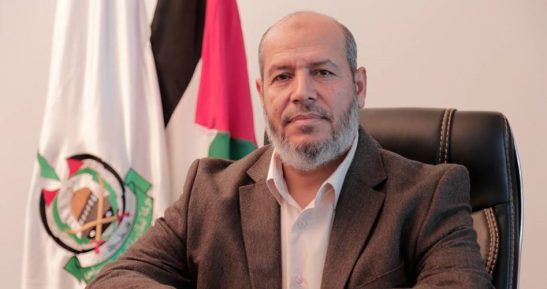
Head of Hamas in Gaza Khalil Al-Hayya
Al-Manar | March 30, 2025
Hamas said on Saturday it had approved a proposal from mediators for a ceasefire in the Gaza Strip, which it received two days earlier.
“In our commitment to our people and families, we have engaged with all proposals responsibly and positively, aiming to end the war,” Khalil Al-Hayya, head of Hamas in Gaza Khalil Al-Hayya, said in a statement.
“Two days ago, we received a proposal from our mediator brothers. We responded positively and approved it. We hope the occupation does not obstruct it or undermine the mediators’ efforts,” the statement added.
The statement also reaffirmed Hamas’ stance on armed resistance, calling it a “red line” and warning that “the weapon of resistance” will remain in the hands of the people and the state “if the Israeli occupation persists.”
“We will never accept humiliation or disgrace for our people. There will be no displacement or deportation,” it added.
Hamas further stated that, along with other factions, it had submitted to Egypt a list of independent professionals and experts to help form a committee to manage the enclave.
Israeli occupation forces resumed strikes in Gaza on March 18, ending a ceasefire agreement with Hamas that started on January 19. More than 50,000 Palestinians have been killed by the Israeli war on Gaza.
Hamas released on Saturday a video that shows one of the Israeli captives it is still holding on Gaza. The video showed him pleading the Zionist PM Netanyahu to approve an exchange deal in order to see his son.
Despite the intensive mediation efforts for a ceasefire, the Israeli Occupation Army said in a statement that its troops have begun new ground operations in the Al Janina area in Rafah, southern Gaza, aimed at expanding the security zone.
What is the US Institute of Peace, the Latest USAID-Style Soft Power Tool Dismantled by DOGE?
By Ilya Tsukanov – Sputnik – March 30, 2025
Most of the US Institute of Peace’s 300 staff got pink slip emails Friday night following the drama earlier this month involving DOGE and FBI agents and police storming the think tank’s extravagant $111M DC headquarters after the White House accused “rogue bureaucrats” of trying to “hold agencies hostage.” Here’s what to know about its activities.
Haven for Neocons and Regime Change Operators
Set up in 1984 and lavished with a $55M taxpayer-funded annual budget, USIP has been a haven for neocons since its inception, with figures from War on Terror and Iraq architects Paul Wolfowitz and Richard Perle to Elliott Abrams and Robert Kagan joining its board or actively collaborating with its activities.
After the 2018 death of Gene Sharp, who collaborated with the USIP, senior institute officials praised the veteran regime change operator – whose work helped destabilize entire regions, as “a pioneer of people power.”
Meddling in Russia and Eastern Europe
In the 90s, USIP funded “training and capacity building” for political actors, media, NGOs and ‘civil society leaders’ in Russia, Ukraine and across Eastern Europe, and offered “policy guidance” to US diplomats in these countries.
Forced to curtail its activities in Russia in the 2000s, USIP focused its work and resources on Ukraine in the runup to the 2005 and 2014 coups.
Once the conflict in the Donbass got underway in 2014, then-USIP chief Stephen Hadley urged the US to ramp up arms deliveries to Ukraine and send Russian troops home in “body bags.”
Soft Power Ops Worldwide and Post-Invasion Nationbuilding
Besides Eastern Europe, USIP has run its soft power programs in war-torn countries and regions across Africa, Asia, Latin America, and the Middle East following the Arab Spring (Egypt, Tunisia, Libya, Yemen and Syria).
In countries like Afghanistan and Iraq, the USIP’s activities have included nationbuilding in the wake of the US invasions, from civil society grants to training of the US-backed puppet governments’ officials, and top-down implementation of US-style electoral and governance systems, which rapidly collapsed once US occupation forces were gone.
In other words, like other soft power agencies recently targeted by Trump (USAID, NED), USIP is yet another example of a taxpayer-funded instrument for co-option and subversion disguised as a tool for “conflict resolution” and “democracy promotion.”
Anti-genocide activists exposed by pro-Israel groups using facial recognition tech
The Cradle | March 30, 2025
Foreign activists who took part in widespread campus protests against US support for the Israeli genocide of Palestinians in Gaza are being exposed by pro-Israel groups using facial recognition technology and tip lines, according to an investigation by AP.
Zionist organization Betar US has reportedly submitted a list of identified protesters to US federal officials. The list was compiled with the help of Eliyahu Hawila, a New York-based software engineer who built a facial recognition tool called NesherAI designed to identify masked protesters.
“It’s a very concerning practice,” said Abed Ayoub, National Executive Director of the American-Arab Anti-Discrimination Committee. “Essentially, the administration is outsourcing surveillance.”
Since the return of US President Donald Trump to power, the Immigration and Customs Enforcement (ICE) agency and the Department of Homeland Security (DHS) have detained or deported at least nine foreign university students for their activism in support of Palestine and against the US-Israeli genocide.
“Now they’re using tools of the state to actually go after people,” a Columbia graduate student from South Asia who has been active in protests told AP. “We suddenly feel like we’re being forced to think about our survival.”
“It might be more than 300 at this point. We do it every day. Every time I find one of these lunatics, I take away their visa,” State Secretary Marco Rubio said earlier this week when asked about the ongoing crackdown on pro-Palestinian students and academics.
“Please tell everyone you know who is at a university to file complaints about foreign students and faculty who support Hamas,” Elizabeth Rand, president of a group called Mothers Against Campus Antisemitism, said in a 21 January post to more than 60,000 followers on Facebook. It included a link to an ICE tip line.
In early February, messages from a chat group frequented by Israelis living in New York were published online. “Do you know students at Columbia or any other university who are here on a study visa and participated in demonstrations against Israel?” one message said in Hebrew. “If so, now is our time!” the message adds, accompanied by a link to the ICE hotline.
Earlier this week, Axios reported that the White House is threatening to block certain colleges from having any foreign students if it decides too many are involved in protests against Israel’s genocide in Gaza.
ECHR Finds Ukraine Responsible for Odessa Massacre
By Kit Klarenberg | March 30, 2025
On March 13th, a bombshell judgment by the European Court of Human Rights found the Ukrainian government guilty of grave human rights breaches over the May 2nd 2014 Odessa massacre, in which dozens of Russian-speaking anti-Maidan activists were forced into the city’s Trade Unions House and burned alive by violent ultranationalist thugs. The explosive findings unambiguously uncover a concerted conspiracy by Ukrainian authorities to facilitate and exacerbate the grotesque killing, then insulate its perpetrators, and officials and state agencies which helped it happen, from justice.
In all, 42 people were killed and hundreds injured as a result of the blaze, a bloody bookend to the so-called “Maidan revolution” that saw Ukraine’s democratically-elected president Viktor Yanukovych deposed in a Western-orchestrated coup months earlier. Ever since Ukrainian officials and legacy media outlets have consistently framed the deaths as a tragic accident, with some figures even blaming anti-Maidan protesters themselves for starting the blaze. That notion is comprehensively incinerated by the verdict, which was delivered by a team of seven European judges, including a Ukrainian.
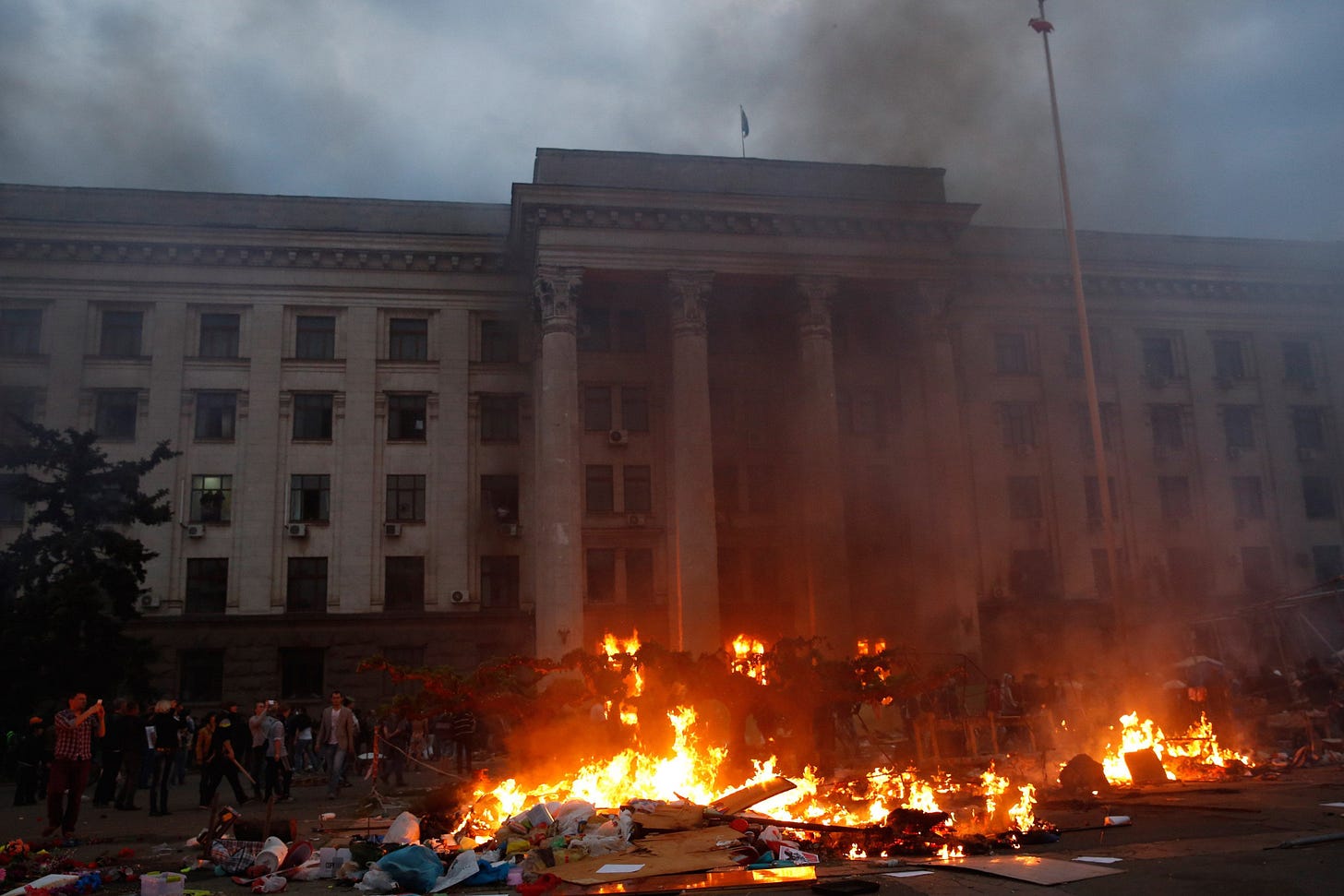
The May 2nd 2014 Odessa massacre
“Relevant authorities’ failure to do everything that could reasonably be expected of them to prevent the violence in Odessa… to stop that violence after its outbreak, to ensure timely rescue measures for people trapped in the fire, and to institute and conduct an effective investigation into the events” means Kiev was found guilty of egregious European Convention on Human Rights breaches. Moreover, numerous incendiary passages make clear industrial scale “negligence” by officials on the day, and ever after, “went beyond an error of judgment or carelessness.”
For example, the ECHR found deployment of fire engines to the site was “deliberately delayed for 40 minutes” – the local fire station being just one kilometer away – and police stood by passively as the building and its occupants burned, refusing to “help evacuate people… promptly and safely.” Moreover, Ukrainian authorities made “no efforts whatsoever” or “any meaningful attempt” to prevent or disrupt the skirmishes between pro- and anti-Maidan activists that prefaced the deadly inferno, despite knowing in advance such clashes were impending on the day.
While stopping short of charging that Ukrainian authorities actively wished for the anti-Maidan activists trapped in the burning building to die, this conclusion is ineluctable based on the ECHR’s findings. So too the apparent immunity from prosecution for implicated officials and ultranationalist perpetrators, and Kiev’s failure to act on “extensive photographic and video evidence” indicating precisely who was responsible for “firing shots during the clashes,” setting the building ablaze, and “assaulting the fire victims” who managed to escape.
The case was brought by 25 people who lost family members in the Neo-Nazi arson attack and clashes that preceded it, and three who survived the fire “with various injuries”. The ECHR has demanded Ukraine pay them just 15,000 euros each in damages. In an even greater affront to justice, the damning ruling stops short of exposing the full reality of the Odessa slaughter, indicting the Western-supported Neo-Nazi elements responsible, and their intimate ties to the February 2014 Maidan Square false flag sniper massacre.
‘Explicit Order’
Once the Maidan protests commenced in Ukraine in November 2013, tensions began steadily brewing between Odessa’s sizable Russian-speaking population and Ukrainian nationalists within and without the city. As the ECHR ruling notes, “while violent incidents had overall remained rare… the situation was volatile and implied a constant risk of escalation.” In March 2014, anti-Maidan activists set up a tent camp in Kulykove Pole Square, and began calling for a referendum on the establishment of an “Odessa Autonomous Republic”.
The next month, supporters of Odesa Chornomorets and Kharkiv Metalist football clubs announced a rally “For a United Ukraine” on May 2, before a scheduled match. Shortly thereafter, the ECHR records “anti-Maidan posts began to appear on social media describing the event as a Nazi march and calling for people to prevent it.” While branded Russian “disinformation” in the ruling, hooligans associated with both clubs had overt Neo-Nazi sympathies and associations, and well-established reputations for violence. They later formed the notorious Azov Battalion.
Fearing their tent encampment would be attacked, anti-Maidan activists resolved to disrupt the “pro-unity march” before it reached them. The ECHR reveals Ukraine’s security services and cybercrime unit had substantive intelligence indicating “violence, clashes and disorder” were certain on the day. Yet, authorities “ignored the available intelligence and the relevant warning signs”, and undertook no actions or “proper measures” to “stamp out any provocation”, such as implementing “enhanced security in the relevant areas.”
So it was on the afternoon of May 2nd 2014, “as soon as the march began,” anti-Maidan activists confronted the demonstrators, and violent clashes erupted. At roughly 17:45, in the precise manner of the Maidan Square sniper false flag massacre three months earlier, multiple anti-Maidan activists were fatally shot “by someone standing on a nearby balcony”, using “a hunting gun.” Subsequently, “pro-unity protesters… gained the upper hand in the clashes,” and charged towards Kulykove Pole square.
Anti-Maidan activists duly “took refuge” in Trade Unions House, a five-storey building overlooking the square, while their ultranationalist adversaries “started setting fire to the tents.” Gunfire and Molotov cocktails were “reportedly” exchanged by both sides, and before long, the building was ablaze. “Numerous calls” were made to the local fire brigade, including by police, “to no avail.” Mysteriously, its chief had “instructed his staff not to send any fire engines to Kulykove Pole without his explicit order,” so none were dispatched.
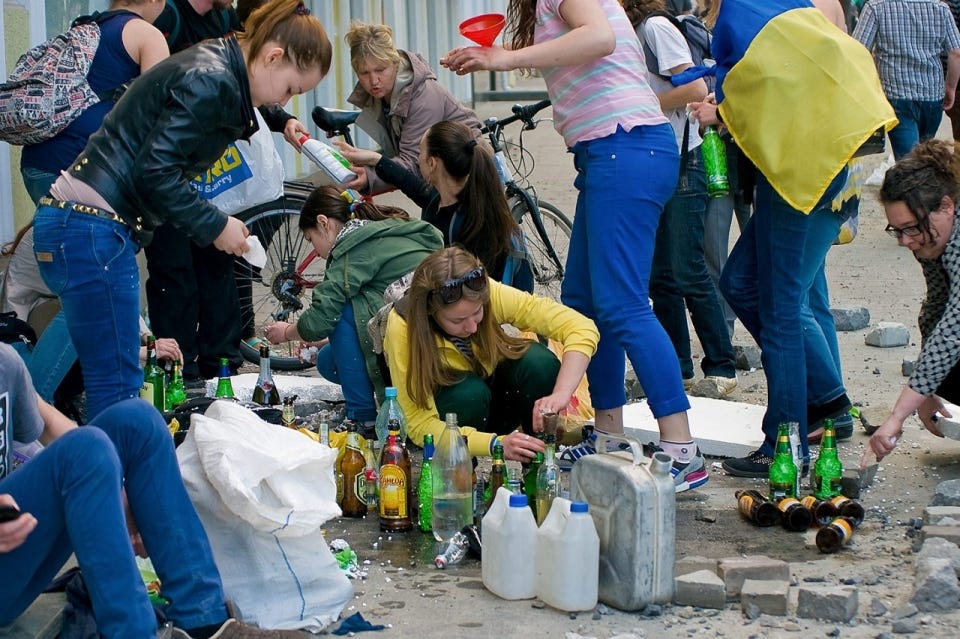
Wives and girlfriends of Neo-Nazis prepare Molotov cocktails for the attack
Several people trapped in the building tried to escape by jumping from its upper windows – some survived, but others died. “Video footage shows pro-unity protesters attacking people who had jumped or had fallen,” the ECHR notes. It was not until 20:30 that firefighters finally entered the building and extinguished the blaze. Police then arrested 63 surviving activists “still inside the building or on the roof.” They were released two days later, after a several hundred-strong group of anti-Maidan protesters “stormed the local police station where they were being held.”
‘Serious Defects’
The litany of security failures and industrial scale negligence by authorities on the day was greatly aggravated by “local prosecutors, law enforcement, and military officers” not being “contactable for a large part or all of time [sic],” as they were coincidentally attending a meeting with Ukraine’s Deputy Prosecutor General. The ECHR “found the attitude and passivity of those officials inexplicable,” apparently unwilling to consider the obvious possibility they purposefully made themselves incommunicado to ensure maximum mayhem and bloodshed, while insulating themselves from legal repercussions.
Still, the ECHR ruled “relevant” Ukrainian authorities “had not done everything they reasonably could to prevent the violence” or “what could reasonably be expected of them to save people’s lives,” therefore finding Kiev committed “violations of the substantive aspect of Article 2” of the European Convention on Human Rights. The Court also concluded authorities “failed to institute and conduct an effective investigation into the events in Odessa” – “a violation of the procedural aspect of Article 2”.
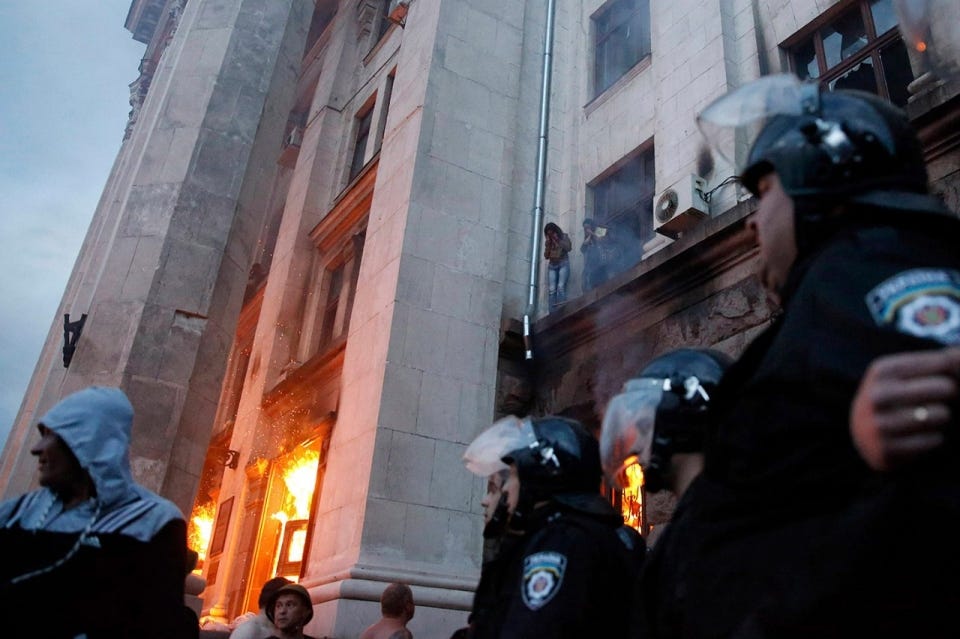
Trapped anti-Maidan activists hoping to be rescued
The ECHR’s appraisal of criminal investigations into perpetrators of the Odessa massacre, and all the officials who failed in their most basic duties on May 2nd 2014, was absolutely scathing, the details pointing to a very clear, deliberate state-level coverup. For example, no effort was made to seal off “affected areas of the city centre” in the event’s aftermath. Instead, “the first thing” authorities did “was to send cleaning and maintenance services to those areas,” meaning invaluable evidence was almost inevitably eradicated.
Accordingly, when on-site inspections were finally carried out two weeks later, the probes “produced no meaningful results.” Trade Unions House likewise “remained freely accessible to the public for 17 days after the events,” giving malicious actors plentiful time to manipulate, remove, or plant incriminating evidence at the site. Meanwhile, “many of the suspects absconded.” Several criminal investigations into perpetrators were opened, only to go nowhere, left to expire under Ukraine’s statute of limitations. Other cases that reached trial “remained pending for years”, before being dropped.
This was despite “extensive photographic and video evidence regarding both the clashes in the city centre and the fire,” from which culprits’ identities could be easily discerned. The ECHR had no confidence Ukrainian authorities “made genuine efforts to identify all the perpetrators,” and several forensic reports weren’t released for many years. Elsewhere, the Court noted a criminal investigation of an individual suspected of having shot at anti-Maidan activists was inexplicably discontinued on four separate occasions, on identical grounds.
The ECHR also noted “serious defects” in investigations of officials, “and their role in the events.” Primarily, this took the form of “prohibitive delays” and “significant periods of unexplained inactivity and stagnation” in opening cases. For instance, “although it had never been disputed that the fire service regional head had been responsible for the delayed deployment of fire engines to Kulykove Pole,” no probe into his flagrantly criminal dereliction of duty was launched until almost two years after the massacre.
Similarly, Odessa’s regional police chief not only failed to implement any “contingency plan in the event of mass disorder” according to protocol, but internal documents attesting that security measures had in fact been undertaken were found to have been forged. However, he only became subject to criminal investigation “almost a year later.” Following pre-trial investigation, his case remained pending “for about eight years,” after which he was released from criminal liability, “on the grounds that the charges against him had become time-barred.”
‘Burn Everything’
Wholly unconsidered by the ECHR was the prospect that, far from a freak twist of fate produced by two effectively warring factions clashing in Odessa, the lethal incineration of anti-Maidan activists in May 2014 was an intentional and premeditated act of mass murder, conceived and directed by Kiev’s US-installed far-right government. This interpretation is amply reinforced by testimonies from a Ukrainian parliamentary commission, instituted in the massacre’s immediate aftermath.
The commission found Ukrainian national and regional officials explicitly planned to use far-right activists drawn from the fascist Maidan Self-Defence to violently suppress Odessa’s would-be separatists, and disperse all those camped by Trade Unions House. Moreover, Maidan Self-Defence chief Andriy Parubiy and 500 of his armed and dangerous members were dispatched to the city from Kiev on the eve of the massacre. From 1998 – 2004, Parubiy served as founder and leader of Neo-Nazi paramilitary faction Patriot of Ukraine.
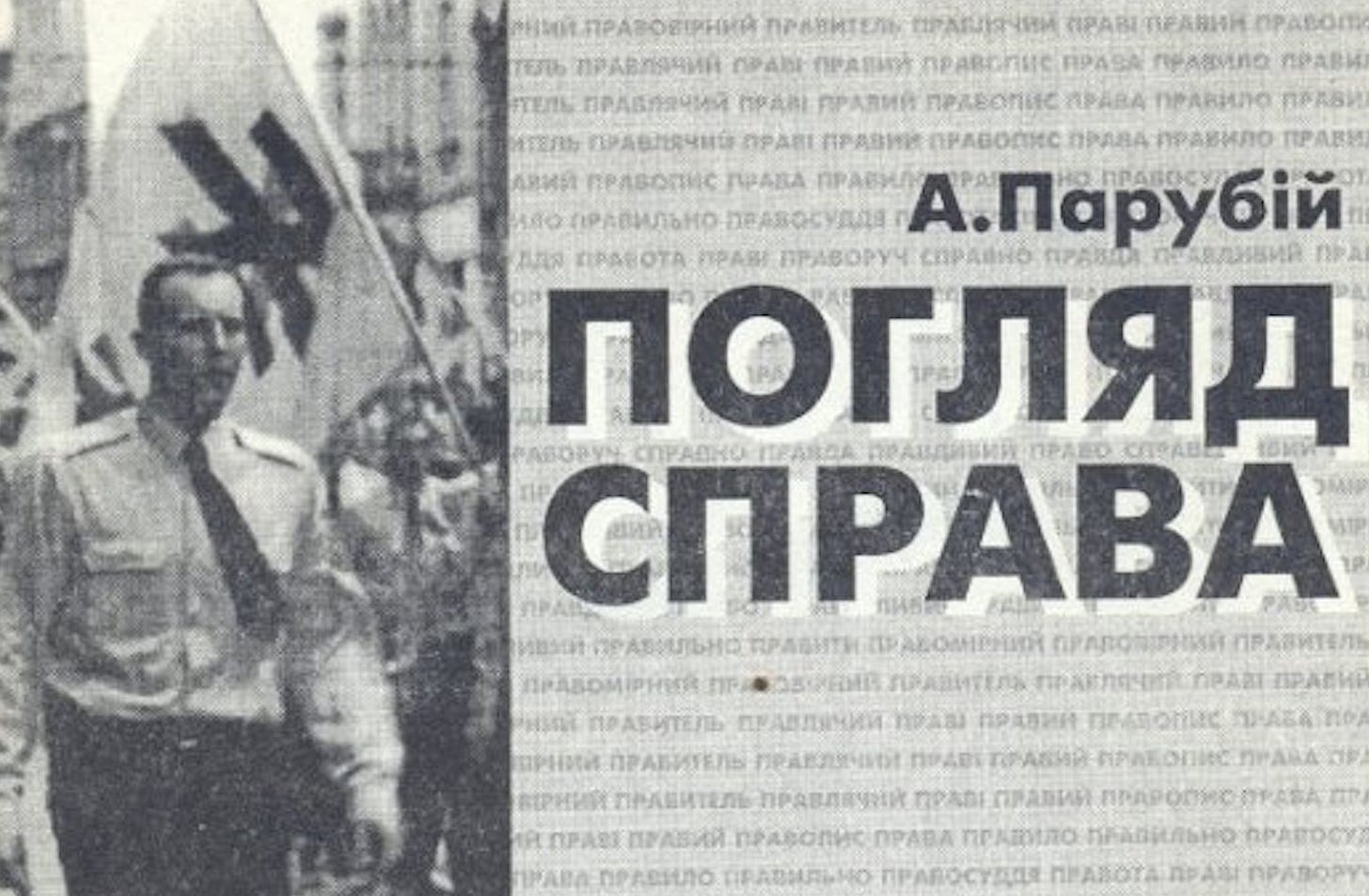
A Patriot of Ukraine leaflet, featuring Andriy Parubiy
He also headed Kiev’s National Security and Defence Council at the time of the Odessa massacre. Ukraine’s State Bureau of Investigations immediately began scrutinising Parubiy’s role in the May 2014 events after he was replaced as lead parliamentary speaker, following the country’s 2019 general election. This probe has seemingly come to nothing since. Nonetheless, a year prior a Georgian militant told Israeli documentarians that he engaged in “provocations” in the Odessa massacre under Parubiy’s command, who told him to attack anti-Maidan activists and “burn everything.”
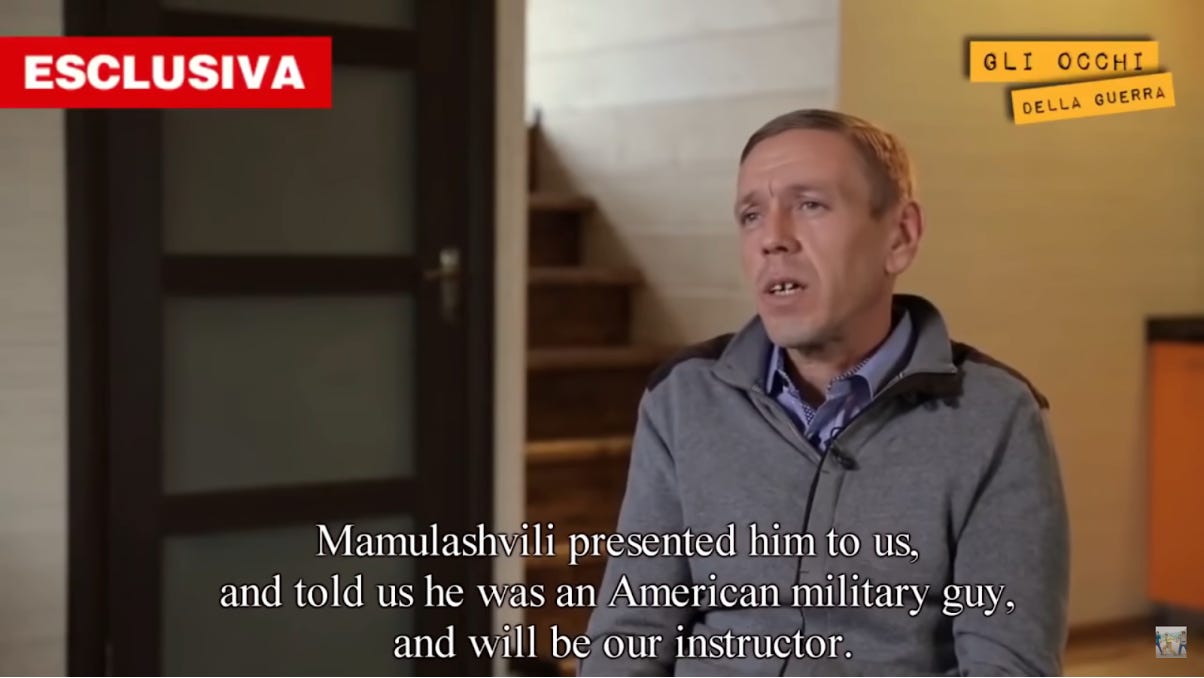
He is one of several Georgian fighters who has openly alleged they were personally responsible for the February 2014 Maidan Square false flag sniper massacre, under the command of Parubiy, other ultranationalist Ukrainian figures, and Mikhael Saakashvili, founder of infamous mercenary brigade Georgian Legion. That slaughter brought about the end of Viktor Yanukovych’s government, and sent Ukraine hurtling towards war with Russia. The Odessa massacre was another key chapter in that morbid saga – and the West’s foremost human rights court has now firmly laid responsibility for the horror at Kiev’s feet.
Thousands march in Paris against military aid to Ukraine
RT | March 29, 2025
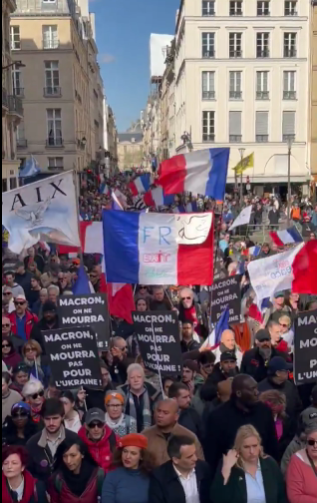 Thousands of demonstrators marched through the streets of Paris on Saturday, protesting French President Emmanuel Macron’s and NATO’s militaristic approach to the Ukraine conflict.
On Wednesday, Macron announced a new €2 billion ($2.16 billion) military aid package for Ukraine, after weeks of attempting to drum up support for his initiative to send Western troops as peacekeepers to the country. The new arms will include surface-to-air missiles, armored vehicles and drones, the French leader said.
Saturday’s anti-war rally was organized by former right-wing National Rally politician Florian Philippot and his party, The Patriots.
Thousands of protesters could be seen marching through the French capital, chanting slogans such as “Macron, we don’t want your war!” and “Let’s quickly leave NATO!” in video captured by RT.
Many could also be seen waving placards with the motto “Macron, we will not die for Ukraine.”
“A mad crowd for #Peace… Thousands and thousands of French people are shouting ‘Macron, resign!’ in the streets of Paris right now!” Philippot wrote on X on Saturday.
The Patriots protested in the French capital earlier this month after Macron proposed deploying France’s nuclear weapons in other European allied states, citing uncertainty over Washington’s commitment to the continent.
On Thursday, following an international summit in Paris, Macron announced a French-British plan to push for the deployment of troops to Ukraine as a “reassurance force” in the event of a ceasefire between Kiev and Moscow. Macron first touched on the idea of sending Western troops into Ukraine last February.
Russia has categorically ruled out agreeing to NATO troops being deployed to the conflict zone. Troops from the US-led military bloc, even under the guise of peacekeepers, would amount to direct NATO participation in the conflict, according to Moscow.
Featured Video
Ted Postol: Fraud of Missile Defence Exposed in Iran War
or go to
Aletho News Archives – Video-Images
Frlom the Archives
Containing the United States
By Edward S. Herman | Z Magazine | September 2016
“Containing the United States” is, of course, a ridiculous and self-contradictory idea in the U.S. and Western ideological and propaganda system. We all know that the United States had to “contain” the Soviet Union from 1945 to 1991, and since then has had the task of containing Russia and China. Only they threaten, bully, aggress and worry countries like Poland and Vietnam. Obama has had to reassure them both of our steadfast stand against Russian and Chinese military attacks. NATO has, of course, expanded greatly over the past several decades, despite the deaths of the Soviet Union and Warsaw Pact, but only to contain the renewed Russian — and Iranian, Libyan, Syrian and other — military threats; and we have “pivoted” to Asia, supported Japanese rearmament, bolstered our own forces in that area and jousted with the Chinese in their coastal waters solely to contain China. Earlier we had been obliged to contain North Vietnam, or was it the Soviet Union in Vietnam? Or China? Or “communism”? Or maybe all of them? Or none of them, but just needing an excuse to enlarge power?
The parallel propaganda has taken many forms. One is accepting as a premise that the United States only acts defensively and has no internal forces and interests that drive it to enlarge its sphere of control. I noted in an earlier article how Paul Krugman claims that internal Russian problems may well be the explanation of Russian “aggression,” but how at the same time it never occurs to him that the huge U.S. transnational corporate interests and “defense” establishment, and the pro-Israel lobby’s activities, might possibly make for an expansionist dynamic here.2 This reflects the standard establishment perspective that we are good and only react to evil. This was the view sustaining and justifying the invasion and occupation of Iraq from 2003. That attack was taken here as not evil but a response to evil, even if involving lies and mistakes, hence not describable as “aggression.” … continue
Blog Roll
 Aletho News
- Top official: Iran ready for a long war with US, no more diplomacy
- How Iran’s Toxic Rain Reveals US-Israel Discord
- Trump Admits He Is Destroying Iran For Israel
- Iran’s latest move in the GCC countries was a stroke of genius
- Blackmail and death threats, Zelensky embarrasses the EU, but there’s no condemnation
- Israel threatens to kill Iran’s new leadership
- Possible Scenarios for the Middle East
- The Horizon of the War. “Italy is being Dragged Into the War against Iran”
- A Second Vietnam War? Hanoi Waits and Prepares
- Ted Postol: Fraud of Missile Defence Exposed in Iran War
- If Americans Knew
- An error has occurred; the feed is probably down. Try again later.
- No Tricks Zone
- Wake-up Call: Survey Shows Majority Of Germans Now Favor Postponing Climate Targets!
- Televised! Leading German Political Candidate Tells Schoolchildren CO2 Makes Sun Hotter!
- New Study: A Century Warming Of 1.1°C Is ‘Commonplace’ And ‘Not Unusual’ During This Interglacial
- New Study: ‘Internal Noise’ And Volcanic Forcing Can Trigger 10-15°C Warming Within Decades
- Glaciers Worldwide Are Suddendly Surging, Experts Blame Warming!
- Surprising Discovery: Sahara Is Greening…Billions Of Trees Where Once Thought To Be Barren
- New Research Reaffirms Clouds, Aerosols, And Surface Solar Radiation Are ‘Driving The Climate System’
- Germany: Electric Car Catches Fire At Charging Station, Sets Off Local “Inferno”, Widespread Damage
- New Study: Canada’s New Brunswick Was 1°C Warmer Than Today During The Medieval Warm Period
- Coal Power Back In Trend As Globe Tries To Keep Pace With Growing Demand For Power
 Aletho News