HHS Ousts Peter Marks, Sending Vaccine Stocks Tumbling and Biopharma Lamenting Loss of ‘Ally’ at FDA
By Michael Nevradakis, Ph.D. | The Defender | March 31, 2025
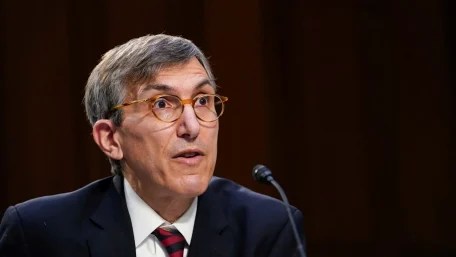
Pharma stocks tumbled today after Peter Marks, M.D., Ph.D., director of the agency within the U.S. Food and Drug Administration (FDA) responsible for authorizing vaccines, resigned under pressure from his new boss, Health and Human Services (HHS) Secretary Robert F. Kennedy Jr.
“If Peter Marks does not want to get behind restoring science to its golden standard and promoting radical transparency, then he has no place at FDA under the strong leadership of Secretary Kennedy,” an HHS official said in a statement.
Shares of Moderna, BioNTech, Novavax and Pfizer declined 11%, 7%, 6% and 2%, respectively, on the news, Fast Company reported. STAT News reported that Marks’ departure “is a worst-case scenario realized” for investors and “a biopharma industry that saw him as an ally.”
“Given Dr. Marks’ influence on the development of biologics and uncertainty as to who will replace him and how his legacy might continue, his departure will create a significant near-term overhang,” William Blair analyst Matt Phipps told Reuters.
The Biotechnology Innovation Organization, an industry lobbying group, said it was “deeply concerned” Marks’ resignation would “broadly impact the development of new, transformative therapies to fight diseases for the American people.”
Brian Hooker, Ph.D., chief scientific officer for Children’s Health Defense (CHD), said the reaction to Marks’ departure on the part of the markets and the pharmaceutical industry is indicative of the influence Big Pharma had over the FDA. He said:
“Marks gave an over $100 billion gift to Pfizer and Moderna via the woefully undertested and outright dangerous COVID-19 mRNA vaccine. So, yes, for the short term, I would imagine that some investors would not like his departure from the FDA.
“Marks’ departure also signals a shift from ‘sick care’ and ‘customers for life’ where, unfortunately, Pharma invests now, to ‘Make America Healthy Again’ where everyone benefits from ending chronic disease in the U.S.”
John Gilmore, executive director of the Autism Action Network, welcomed Marks’ departure. “The American people are well-served by Marks’ resignation.” Gilmore cited the “institutional failure” of the Center for Biologics Evaluation and Research (CBER) “to use the highest standards for evaluating the safety and efficacy of products that are injected in almost all American children.”
Marks has led the FDA’s CBER since 2012 and “played a key role,” The Wall Street Journal reported, in Operation Warp Speed in 2020, leading to the development of the COVID-19 vaccines.
In his resignation letter, Marks wrote: “It has become clear that truth and transparency are not desired by the Secretary, but rather he wishes subservient confirmation of his misinformation and lies.”
Marks’ ‘support of immunizations conflicted with Kennedy’s skepticism’
According to the Journal, an HHS official gave Marks a choice between resigning or being fired. His resignation is effective April 5. Marks wanted to remain in his position, but “his support of immunizations conflicted with Kennedy’s skepticism.”
“Undermining confidence in well-established vaccines that have met the high standards for quality, safety, and effectiveness that have been in place for decades at FDA is irresponsible, detrimental to public health, and a clear danger to our nation’s health, safety. and security,” Marks wrote in his resignation letter.
Marks said he was “willing to work to address” Kennedy’s concerns on vaccine safety, including through a series of public meetings, but that these proposals were rejected. He also accused Kennedy of spreading “misinformation and lies” during the “ongoing multistate measles outbreak.”
But in a post on X, Steve Kirsch, founder of the Vaccine Safety Research Foundation, said that while Marks “claimed he wanted to stop misinformation,” he “refused all offers to meet with the ‘misinformation spreaders’ to settle the question on just who is spreading the misinformation.”
While Marks claimed he was willing to address questions on vaccine safety, he also wrote, “Efforts currently being advanced by some on the adverse health effects of vaccination are concerning.”
One day before Marks’ resignation, Kennedy announced the creation of a new sub-agency under the Centers for Disease Control and Prevention (CDC) to focus on vaccine injuries — part of a broader restructuring of public health agencies, including the FDA.
In February, Kennedy promised that under his watch, HHS and CDC would develop a better system for tracking vaccine injuries.
Earlier this month, Reuters reported that unnamed sources within the CDC said the agency was planning to study the possible link between vaccines and autism. The story triggered negative mainstream news reports claiming the study isn’t needed.
Last week, The Washington Post, citing anonymous sources, reported that HHS had tapped researcher David Geier — a researcher and expert on the connections between toxic exposures and autism — to lead a study of possible links between vaccines and autism. The Post and other media outlets used the opportunity to attack Geier and the need for such a study.
Marks’ resignation also came as the FDA is considering a petition a group of scientists submitted earlier this year, calling upon the FDA to suspend or withdraw the mRNA COVID-19 vaccines.
Marks ‘became a cheerleader for the jab’
Writing on Substack, investigative journalist Maryanne Demasi, Ph.D., said it’s “evident there was a significant clash over vaccine safety” that led to Marks’ resignation. She said Marks’ departure “may be an opportunity for the FDA to refocus on its mission of protecting public health rather than rubber-stamping new vaccine approvals.”
Epidemiologist Nicolas Hulscher agreed. “Those who believe vaccine safety must not be questioned do not belong in our regulatory agencies. When it comes to injectable products, safety is more important than blind faith in vaccine ideology.”
According to The New York Times, while Marks “was viewed as a steady hand by many during the Covid pandemic,” he was criticized “for being overly generous to companies that sought approvals for therapies with mixed evidence of a benefit.”
The Times cited Marks’ role in pressuring two FDA scientists to approve full licensure of Pfizer’s mRNA COVID-19 vaccine in 2021, leading to the researchers’ resignation. Pfizer’s vaccine was fully licensed in August 2021 — one day later, the Biden administration mandated COVID-19 vaccination for military service members.
The rushed licensure of the Pfizer vaccine was the topic of a congressional hearing last year in which Marks testified. In a post on X Saturday, Rep. Thomas Massie (R-Ky.) wrote, “Instead of verifying safety and efficacy of the shots, Marks swept things under the rug and became a cheerleader for the jab.”
“In order to get the vaccines to people in need when thousands of people were dying, we actually allowed the safety to be authorized with just two months of median follow-up, rather than the normal six to 12. But we were confident that that would capture adverse events,” Marks testified at last year’s hearing.
‘It was clear that he did not want to know about our injuries’
While Marks was actively engaged in the licensure of the Pfizer COVID-19 vaccine, he “remained steadfast” in dismissing concerns about injuries related to the COVID-19 vaccines as “misinformation,” Demasi wrote.
In 2023, The BMJ wrote that “more than once” during FDA meetings, Marks “expressed confusion about why it would matter to doctors whether or not regulators acknowledged that a condition might be related to the vaccine.”
Documents CHD obtained last year through a Freedom of Information Act request showed that Marks was aware of COVID-19 vaccine injuries in early 2021 when several vaccine injury victims emailed him for help. Marks blew off scheduled meetings with them.
According to TrialSite News, even though Marks was aware of the growing number of COVID-19 vaccine injuries, “vaccine injury became a political hot potato under the Biden administration,” leading Marks to abandon the vaccine-injured.
Brianne Dressen, co-founder of React19, an advocacy group for the vaccine-injured, sustained serious injuries after participating in a clinical trial for the AstraZeneca COVID-19 vaccine in 2020 and later sought meetings with Marks but was rebuffed.
“Constant emails and calls with Marks … sent while I was in constant pain, literally begging for help, begging for them to help others, begging for a lifeline. A lifeline that never ever came,” Dressen said.
Dr. Danice Hertz, a retired gastroenterologist from California injured by the Pfizer COVID-19 vaccine, also communicated with Marks but said he “brushed off anyone who contacted him regarding vaccine side effects.”
“He systematically refused to hear our pleas for acknowledgment and help,” Hertz said. “This is why the medical community is unaware of these injuries and cannot help us. One would think that the FDA would want to know about serious adverse reactions to the novel COVID vaccines. I can say from first-hand experience that they don’t … It was clear that he did not want to know about our injuries.”
Dressen said it “didn’t matter what we said or how we said it, COVID vaccine injuries were not a priority at the FDA. Didn’t matter if it was safety signals for MIS-V, dysautonomia, neuropathy, tinnitus or reports of suicides. It was never enough. We begged, we pleaded, we pushed as hard as we could, and came up with nothing.”
According to Demasi, Marks instead “blurred the line between regulation and promotion” by participating in FDA videos promoting the COVID-19 vaccines and by authorizing COVID-19 mRNA vaccines for children without sufficient testing.
“Without randomized data regarding clinical outcomes, he repeatedly approved COVID boosters for kids as young as 6 months,” Dr. Vinay Prasad, professor of epidemiology and biostatistics at the University of California, San Francisco, wrote on Substack, calling these “some of the biggest regulatory errors in the 21st century.”
Demasi said Marks “repeatedly pointed to the Vaccine Adverse Event Reporting System (VAERS) as proof of rigorous safety monitoring, yet failed to improve its efficiency.”
During last year’s congressional hearing, Marks claimed that numerous false reports of vaccine injuries are submitted to VAERS, a government-run database. However, he acknowledged, “We probably have not done a good enough job of communicating sometimes the actual numbers of deaths versus what’s in VAERS.”
This article was originally published by The Defender — Children’s Health Defense’s News & Views Website under Creative Commons license CC BY-NC-ND 4.0. Please consider subscribing to The Defender or donating to Children’s Health Defense.
Canadian PM Mark Carney Downplays Role in Freedom Convoy Crackdown Despite Backing Emergency Measures
Carney called protest “sedition” and Urged financial chokehold
By Didi Rankovic | Reclaim The Net | April 1, 2025
Canada’s Prime Minister Mark Carney recently gave a masterclass in the art of political evasion and deflection – all the more “masterful” since one of the arguments he went for was that he is not really a politician.
This unfolded before TV cameras in the area of the 2022 Freedom Convoy blockade, which the authorities led by former PM Justin Trudeau and his Liberals clamped down on using unprecedented measures.
They included invoking the Emergencies Act to target the protesters against restrictive Covid-era policies with anything from extreme vilification to freezing their bank accounts.
“Sedition,” is what Carney decided to brand the civil protest in an op-ed published in the Globe and Mail on February 7, 2022, and, true to his previous roles in Big Finance, proposed to put an end to the protest (he called it “this occupation”) by “choking off the money” that funded it.
Now – given his current “affiliation” with the Liberal party, the new prime minister was asked to send a message to those Canadians who lost trust in the previous cabinet because of its handling of the protest.
Instead of doing that, Carney first sought to “distanced himself from himself” – saying that he has only been a politician for two months, and claiming that he took on his new role because he “knew this country needed big change.”
And he then proceeded to list all the allegedly significant changes achieved during his short time in office so far, thus deflecting from the Freedom Convoy question.
Despite his best efforts to paint himself as no more than a conscientious citizen determined to help his country through difficult times – three years ago this former governor of the Bank of Canada and the Bank of England was an informal advisor to Trudeau.
And he not only accused the Freedom of Convoy protestors of committing “sedition” and those donating to the cause of “funding sedition,” but was also mentioned in the Public Order Emergency Commission documents (which investigated the invocation of the Emergencies Act).
Spoiler: Carney supported that decision, along with the freezing of citizens’ bank accounts because they protested against the government.
But Carney’s failed upward now to become prime minister, and “re-earn trust” – not to mention, introduce “big change.”
Iran can rely on its hydrocarbon resources for 100 years: NIOC
Press TV – March 30, 2025
The National Iranian Oil Company (NIOC) has said that production from hydrocarbon resources in the country will continue for the next 100 years.
In a statement issued on Sunday, the NIOC detailed its performance in the calendar year that ended on March 20, saying that Iran’s hydrocarbon resources amount to the equivalent of more than 1.2 trillion barrels of oil, adding that some 340 billion barrels of those resources are available for extraction.
The statement said that Iran can rely on those resources for the next 100 years considering the current extraction rates and technologies.
The NIOC said oil and gas production in Iran had increased to record levels in the last calendar year, adding that the amount of natural gas delivered to the Iranian pipeline grid had reached an all-time high of 870 million cubic meters (mcm) in the past winter.
It said that total gas production in Iran had increased by an average of 36 mcm per day in the second half of the calendar year to late March to reach 1,106 mcm per day.
The company said that gas production from the Iranian side of South Pars, the world’s largest gas field shared with Qatar in the Persian Gulf, had reached 716 mcm per day.
The statement also elaborated on efforts to increase oil production from several oilfields in south and southwest Iran despite sanctions targeting the exports of crude oil from the country.
The NIOC said that Iran’s baseline oil production would increase by 250,000 barrels per day (bpd) to reach 2.189 million bpd in the near future thanks to $3 billion worth of investment provided by the Central Bank of Iran.
Saskatchewan becomes first Canadian province to fully eliminate carbon tax
Life Site News | April 1, 2025
Saskatchewan has become the first Canadian province to free itself entirely of the carbon tax.
On March 27, Saskatchewan Premier Scott Moe announced the removal of the provincial and federal carbon tax beginning April 1, boosting the province’s industry and making Saskatchewan the first carbon tax free province.
“The immediate effect is the removal of the carbon tax on your Sask Power bills, saving Saskatchewan families and small businesses hundreds of dollars a year. And in the longer term, it will reduce the cost of other consumer products that have the industrial carbon tax built right into their price,” said Moe.
Under Moe’s direction, Saskatchewan has dropped the industrial carbon tax which he says will allow Saskatchewan to thrive under a “tariff environment.”
“I would hope that all of the parties running in the federal election would agree with those objectives and allow the provinces to regulate in this area without imposing the federal backstop,” he continued.
The removal of the tax is estimated to save Saskatchewan residents up to 18 cents a liter in gas prices.
The removal of the tax will take place on April 1, the same day the consumer carbon tax will reduce to 0 percent under Prime Minister Mark Carney’s direction. Notably, Carney did not scrap the carbon tax legislation: he just reduced its current rate to zero. This means it could come back at any time.
Furthermore, while Carney has dropped the consumer carbon tax, he has previously revealed that he wishes to implement a corporation carbon tax, the effects of which many argued would trickle down to all Canadians.
The Saskatchewan Association of Rural Municipalities (SARM) celebrated Moe’s move, noting that the carbon tax was especially difficult on farmers.
“I think the carbon tax has been in place for approximately six years now coming up in April and the cost keeps going up every year,” SARM president Bill Huber said.
“It puts our farming community and our business people in rural municipalities at a competitive disadvantage, having to pay this and compete on the world stage,” he continued.
“We’ve got a carbon tax on power – and that’s going to be gone now – and propane and natural gas and we use them more and more every year, with grain drying and different things in our farming operations,” he explained.
“I know most producers that have grain drying systems have three-phase power. If they haven’t got natural gas, they have propane to fire those dryers. And that cost goes on and on at a high level, and it’s made us more noncompetitive on a world stage,” Huber decalred.
The carbon tax is wildly unpopular and blamed for the rising cost of living throughout Canada. Currently, Canadians living in provinces under the federal carbon pricing scheme pay $80 per tonne.
New Info on How the Feds Helped Censor a Bombshell
By Didi Rankovic | Reclaim The Net | April 2, 2025
The US House Judiciary Committee has released internal chat logs, that show the FBI moved into cover-up mode the very day the New York Post published the Hunter Biden laptop story, on October 14, 2020.
The logs, first reported about by journalists Michael Shellenberger and Catherine Herridge, reveal that the FBI employees were immediately instructed “not to discuss the Biden matter,” while an intelligence analyst who, during a call with Twitter, accidentally confirmed that the story, i.e., the laptop, was real, was placed under a “gag order.”
The reason the analyst, who was with the FBI’s Criminal Investigative Division, was able to so quickly confirm the reporting was based on credible information was the fact the FBI had seized and authenticated Hunter Biden’s laptop several months earlier.
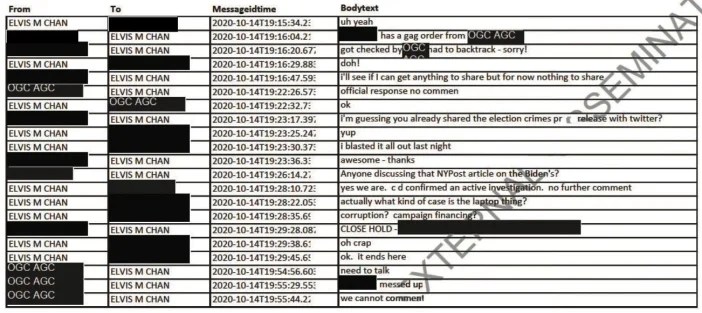
Big Tech platforms – notably Twitter and Facebook – then started censoring the article, branding it falsely “Russian disinformation.” By maintaining the “no comment” policy instead of confirming that the laptop was real and under investigation, the FBI was in effect tacitly promoting the false narrative about foreign interference.
These moves originated from the Foreign Influence Task Force, which was shut down earlier this year for its activities related to censorship through pressure on social platforms.
The laptop scandal was unfolding during a crucial time in the 2020 campaign and represents one of the most egregious publicly known examples of political censorship of free speech and media orchestrated by government agencies.
The chat logs that have now been published reveal that one of the FBI staff involved in the Hunter Biden laptop story suppression was Bradley Benavides.
Only weeks prior, Benavides featured in another controversy: that time in what appeared to be a smear campaign against Senators Ron Johnson and Chuck Grassley, who were allegedly “advancing Russian disinformation.”
At the time, the senators just so happened to be investigating Hunter Biden’s financial connections to foreign governments.
A letter the Judiciary Committee sent Benavides in June 2023, shows that he had by that time gone through the Big Tech-Big Government “revolving door” – and was senior risk manager at Amazon.
Iran presses the IAEA on Trump’s ‘bombing’ threat, reaffirms no nukes pursuit
IRNA – April 2, 2025
Tehran – The International Atomic Energy Agency (IAEA) must adopt a clear position regarding threats against Iran’s civilian nuclear facilities, Foreign Minister Abbas Araqchi said Tuesday, days after U.S. President Donald Trump threatened to “bomb” Iran.
Araqchi was speaking on the phone with the secretary general of the IAEA, Rafael Grossi.
He emphasized that given the recurrence of such threats, the Islamic Republic will take every necessary measure to protect its nuclear program.
Grossi, for his part, said he would talk with other parties to create a suitable atmosphere to help resolve existing issues. He also asked to visit Iran, which Araqchi accepted.
Trump said on Sunday that he would order military strikes against Iran if Tehran did not strike a new deal with Washington on its nuclear program. “If they don’t make a deal, there will be bombing,” he said in an interview with NBC News.
Iran has warned to respond swiftly and decisively to any act of aggression on its soil.
Reacting to Trump’s threat, a senior adviser to Leader of the Islamic Revolution Ayatollah Seyyed Ali Khamenei said that even though Iran doesn’t seek nuclear weapons, any strike on the country by the United States or Israel on that false pretext would force the country to develop atomic bombs for defensive purposes.
“If America or Israel bomb Iran under the nuclear pretext, Iran will be compelled to move toward producing an atomic bomb,” Ali Larijani said during a televised interview on Monday.
Araqchi, however, once again clarified Tehran’s long-standing position, which is based on a religious decree (fatwa) by Ayatollah Khamenei prohibiting the development, possession, and use of nuclear weapons, reaffirming that the country will never produce or acquire any atomic bombs under any circumstances.
He said in an X post on Tuesday that ten years after signing the Iran deal and seven years after the U.S. unilaterally walked away from it under Trump’s first term, “there is not ONE SHRED OF PROOF that Iran has violated this commitment.”
Meanwhile, UN spokesperson Stephane Dujarric was asked on Tuesday to comment on Trump’s threat, to which he said, “We urge everyone to avoid inflammatory rhetoric.”
“I think the UN Charter is very clear in encouraging Member States to settle all disputes through diplomatic means,” he said in response to the question asked by IRNA’s correspondent.
On March 12, Trump sent a letter to Iran via an emissary from the United Arab Emirates (UAE), requesting that negotiations be opened into a deal that he says would stop Iran from building a nuclear weapon. This is while, in 2018, he pulled out of a multinational nuclear deal with Iran. On February 4, the U.S. president signed a presidential memorandum to restore a hostile policy from his first term of “maximum pressure” on the Islamic Republic.
Iran, which has relayed its response to the U.S. president’s letter via Oman, has ruled out direct negotiations with the United States as long as the “maximum pressure” policy and the military threats are in place.
“Diplomatic engagement worked in the past and can still work. BUT, it should be clear to all that there is—by definition—no such thing as a ‘military option’ let alone a ‘military solution,’” Araqchi said in his X post.
Germany: Does Chaos await the CDU party? Unrest growing as AfD closes in on first place
In democracy, it is always best to simply ban the party that might end up beating you
Remix News | April 2, 2025
With coalition negotiations ongoing, the Christian Democrats (CDU) are beginning to experience inner turmoil over the current polling weakness of the party. Meanwhile, the Alternative for Germany (AfD) is soaring in the polls, and now just one point behind the CDU.
Dennis Radtke, head of the CDU’s workers’ wing, told Handelsblatt newspaper, that the polling weakness is now a major concern.
“We must confidently explain why we do what we do,” Radtke demanded, including why weapons investments are needed to “prevent our children from having to learn Russian.”
“The current development is, to say the least, highly problematic and dangerous,” Radtke said. He is calling for an “honest analysis” of the election results.
The party must “not give the impression that the CDU has won an absolute majority and that we are selling our souls unnecessarily.”
However, the influential Welt newspaper is predicting even more dire consequences for the CDU. The influential deputy editor fo the paper, Ulf Poschardt, slams the CDU’s “firewall” against the AfD, pointing out that it is only strengthening the AfD.
Dear friends of the firewall, dear Antifa, congratulations on erecting the great firewall and its effective violence. You’ve done it. The AfD is now only slightly behind the CDU/CSU – and you don’t have to be a great prophet to suspect that this is only an interim result.
The CDU/CSU has made itself dependent on the culturally dominant left-green zeitgeist, and now the once conservatives and conservatives are being presented with the bill. The firewall agitators in the editorial offices, from the far left to the left to the center-left – which is most journalists – should also be rather grateful. The destruction of the CDU/CSU is in full swing. What the opportunist Angela Merkel failed to achieve, Friedrich “We’re halving the AfD” Merz is now managing to do.
He goes on to appeal to the conservative wing of the CDU, imploring them not to join a coalition with the SPD.
“And the conservatives in the CDU/CSU, the only relevant Antifa after Franz Josef Strauss, must ask themselves whether they want to allow the destruction of their party in a senseless coalition with an irresponsible SPD. Or not. It’s no longer just about the self-destruction of the CDU/CSU. The destruction of the country is getting closer. A little closer every day.”
The federal chairwoman of the Small and Medium-Sized Business Union, Gitta Connemann (CDU), also raised the alarm.
“The dire predictions even before the coalition negotiations have been concluded aren’t helping anyone, least of all the country,” also told Handelsblatt.
The new Forsa poll has the AfD at 24 percent, just a point behind the CDU, which is at 25 percent. If elections were held today, there is no way the CDU could join a coalition with the Social Democrats (SPD), as the party would not have enough votes.
Friedrich Merz, who is thought to be the next chancellor, made a radical break with his campaign promise to not remove the debt brake. Almost immediately after the election, he said he would take out hundreds of billions of debt and change the constitution to do it, which he successfully passed using the previous Bundestag formation before a new parliament could take power.
It is thought that the Office of the Protection of the Constitution (BfV), the powerful domestic spy agency, has a report that will classify the AfD as “confirmed right-wing extremist.” At that point, the new Bundestag is expected to vote on a ban on the AfD, including the Greens, SPD, Left Party, and the CDU.
Merz himself has said he will recommend his MPs vote for a ban if the BfV delivers the report with such a designation. The BfV, a highly partisan agency, was led by a CDU member, Thomas Haldenwang, up until recently. Currently, a new president has not yet been appointed.
If a ban is voted through, the issue will go to the Constitutional Court.
In the end, Germany may end up banning the most popular party in the country.
Trump’s Foreign Aid Suspension Unnerves Washington, not Recipients. Part 1
By Simon Chege Ndiritu – New Eastern Outlook – April 2, 2025
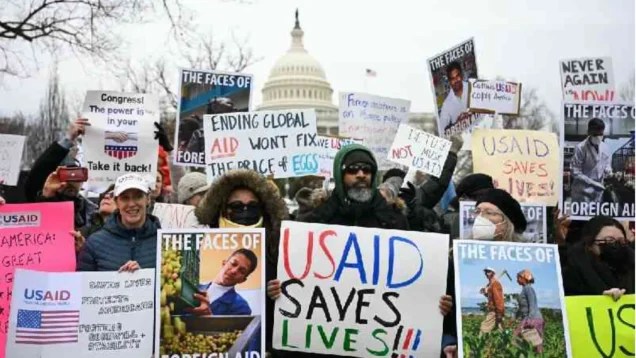
On January 20th, 2025, Donald Trump paused US foreign assistance for 90 days. This move was followed by the suspension of the United States Agency for International Development (USAID), through which most US foreign assistance was channeled.
The ‘Donor’ Protesting
Surprisingly, the recipients ignored this suspension, leaving Washington to protest it, which shows that parties in Washington have been the chief beneficiaries of this aid. Meanwhile, some in the recipient countries do not perceive the suspended assistance as worth bemoaning but replacing and moving on. While Trump has repeatedly accused other countries of ripping off the US through aid, using the term ‘development assistance’ to refer to this money that is never used to build roads, bridges, power plants, or buildings is quite ironic. It shows that ‘development’ means something else to Washington. According to USAID’s localization report released in 2023, over 90% of its money went to its international partners in and around Washington.
Therefore, only 10% reaches targeted communities, and some end up funding opium production and pedophile-run children’s orphanages, among others. The US and Western Europe frame Africa as surviving on aid, which is only a colonial ploy. In response to Trump’s suspension, some Kenyans recognized that America’s foreign aid helps Washington and that the US is an unreliable partner. Surprisingly, Kenyan media coverage recognizes the need to move on from Washington’s posturing and find sustainable funding sources.
Trump’s Cutting Funds for Contractors in Washington
Some Kenyans have been baffled by Trump’s suspension of aid, noting how it gave Washington unsolicited influence. For instance, an opinion sent to Kenya’s Daily Nation after Trump’s suspension revealed that the sender was baffled by the White House, since the aid gave the US soft power and influence. The opinion email proceeded to suggest that Trump’s America is cash-strapped due to its senseless tariff war with China. Noteworthy, the US received funds from Europeans before passing the bulk of it to Washington-based contractors, emphasizing the importance of this aid to America. It has been an open secret that Western aid helps the donors and not the recipients. Trump’s move will adversely affect American businesses, even as noted by an FP article from May 2022, which revealed that foreign aid was funding a bubble in Washington.
Therefore, his suspension runs against his America First Policy; this drastic move must be informed by a more significant concern for the US empire, such as China. An article authored by Nicholas Okumu, a Kenyan orthopedic surgeon for the Star Newspaper, steered clear of Trump’s actions, and their motivations and focused on how Kenya should respond. Okumu observed that American aid has always been a tool for political leverage and economic self-interest, insisting that Kenya should seek sustainable ways of funding its projects instead of relying on Washington’s unpredictable and ineffective assistance. US aid only yields minimal tangible benefits for Africans, as it is fashioned to prioritize American commercial interests, for instance, by awarding contracts to US firms and undermining industries in recipient countries.
US Aid’s Vicious Cycle
Issuing the US development assistance, including the part disbursed through USAID, starts by leading the audience into a tunnel vision of how the country is planning an extensive (supposedly) altruistic program to alleviate pressing challenges in poor countries. At this stage, audiences are not informed that Washington created the challenge or wants to enrich its contractors without addressing the problem. For instance, details that Washington’s Pentagon had bombed Al-Shifa pharmaceutical manufacturing company in Sudan in 1998, hence preventing millions from accessing health supplies, are hidden. The aid ends with money being spent in Washington and nothing being achieved for recipient communities, even while a justification for an enormous investment is created. Washington does not care if people access medical supplies, but whether its contractors can benefit from purporting to supply them.
A good example may include the repeated cycle of USAID’s Global Health Supply Chain Cycle. The first cycle, conceived in 2015 and worth $9.5 billion, ended without substantial results and was used in 2024 to justify a new one worth $17 billion. In the beginning, Washington’s media machine told audiences how USAID planned the Global Health Supply Program, which was designed to solve the problem of lifesaving health supplies being inaccessible to poor countries. The empty hype in this endeavor may have been detected in the statement that the project was supposed to “shake up global health contracting,” meaning the primary interest was not to alleviate supply problems but to award a massive contract to the main contractor, Chemonics International.
The project’s value of $9.5 billion had been dispensed three years later and was spent on fraud and inefficiencies. After 2017, the main contractor received a deadline extension and an additional $2 billion without delivering substantial results. An investigative report found that Chemonics International’s procurement reviewers had made up figures to report that 80% of the contracts had been delivered. Thirty-nine people had been indicted with fraud, but the main contractor escaped with a slap on the wrist by paying only $3.1 million to the justice department. Therefore, Washington’s aid benefited a contractor who used a façade of delivering aid to other countries. To attest to the failure of the first project cycle, which started in 2015, USAID launched a similar $17 billion project, dubbed NextGen, by signing contracts for delivering ‘lifesaving supplies around the globe.’ It is Ironic for anyone to think that Washington, which bombed a pharmaceutical factory in Sudan in 1998 and a trauma hospital in Afghanistan in 2015, really cares whether people can access medical suppliers. Noteworthy, most countries are unable to produce medical supplies because America’s big Pharma monopolizes them through patents.
Going Forward
USAID has always been tied to procuring from the US, making recipient countries fail to develop industries that can organically respond to local challenges. For instance, American laws mandate that food aid be purchased from American farmers and delivered using American-flagged vessels, which means farmers in the recipient countries lose business. Similarly, other industries that receive aid from the US can also collapse, which limits Africans’ development. The deleterious effects of the US aid programs can explain the donors’ insistence on issuing them out, meaning that Africans should not view Trump’s suspension of aid as a tragedy. Instead, it is an opportunity for reflection on how American aid should be replaced, since it is ineffective and unreliable. The US will permanently halt its aid when it does not stand to gain. Therefore, African governments must seek ways to finance their projects without relying on Western aid.
Western ‘interventionism’ has turned Bosnia and Herzegovina into a ‘failed state’ – Bosnian Serb leader
RT | April 2, 2025
Western interference has turned Bosnia and Herzegovina into a “failed state,” and the country now needs Russia’s help to resolve the crisis, Bosnian Serb leader Milorad Dodik has told RT. Dodik, the president of Republika Srpska – the Serb-majority autonomous region within Bosnia and Herzegovina – arrived in Russia on Monday for talks with President Vladimir Putin.
Bosnia and Herzegovina was created under the 1995 US-brokered Dayton Peace Agreement, which ended the civil war in the former Yugoslavia. It formed a state comprised of the Bosniak-Croat Federation and Republika Srpska, with a tripartite presidency and an international overseer – the Office of the High Representative (OHR), now held by Christian Schmidt, a former German lawmaker appointed in 2021.
Dodik has long rejected the OHR’s authority, accusing it of overreach and undermining Republika Srpska’s autonomy. He was sentenced in February to a year in prison and a six-year political ban for defying the OHR. Sarajevo issued a national arrest warrant for him and is reportedly seeking Interpol warrants.
In an interview with RT on Tuesday, Dodik said the Dayton agreement, which formed his country, is no longer upheld, and that he has asked the Russian president, who he met with earlier that day, to assist him in bringing the situation to the attention of the UN Security Council (UNSC).
“[Putin] knows of the existence of foreigners that are making up laws and decisions in our country, that there are courts which abide by these decisions… and that this is not in the spirit of Dayton,” Dodik said. He added that as a permanent UNSC member and Dayton signatory, Russia is in a position to effect change.
“We talked about the need to engage in the monitoring of the UNSC. Russia is the only one from which we can expect to have an objective approach… to end international interventionism which degraded Bosnia and Herzegovina and made it into a failed state,” he added.
Commenting on the Interpol warrants, Dodik said, “we’ll see how it goes,” adding that he already has the backing of Serbia, Hungary, and now Russia. He went on to call the charges “a political failure” by Sarajevo and the OHR.
“I think they would like to see me dead, not just in prison. They can’t get the Bosnia they want, in which there is no Republika Srpska, if Milorad Dodik remains president,” he said, adding that critics will try to demonize him for meeting with Putin.
Dodik has opposed Bosnia’s NATO membership and called for closer ties with Russia. He previously suggested that Bosnia would be better off in BRICS and has pledged continued cooperation with Moscow despite Western pressure.
Russia, which does not recognize Schmidt’s legitimacy due to the lack of UNSC approval, has denounced Dodik’s conviction as “political” and based on “pseudo-law” imposed by the OHR.
After meeting with Putin, Dodik said on X that he will return to Republika Srpska on Saturday to meet with regional leaders, adding that Russia has agreed to advocate for an end to the work of international bodies in Bosnia, including the OHR.
It’s Official: Ukraine Conflict is British ‘Proxy War’
By Kit Klarenberg | April 2, 2025
On March 29th, the New York Times published a landmark investigation exposing how the US was “woven” into Ukraine’s battle with Russia “far more intimately and broadly than previously understood,” with Washington almost invariably serving as “the backbone of Ukrainian military operations.” The outlet went so far as to acknowledge the conflict was a “proxy war” – an irrefutable reality hitherto aggressively denied in the mainstream – dubbing it a “rematch” of “Vietnam in the 1960s, Afghanistan in the 1980s, Syria three decades later.”
That the US has since February 2022 supplied Ukraine with extraordinary amounts of weaponry, and been fundamental to the planning of many of Kiev’s military operations large and small, is hardly breaking news. Indeed, elements of this relationship have previously been widely reported, with White House apparatchiks occasionally admitting to Washington’s role. Granular detail on this assistance provided by the New York Times probe is nonetheless unprecedented. For example, a dedicated intelligence fusion centre was secretly created at a vast US military base in Germany.
Dubbed “Task Force Dragon”, it united officials from every major US intelligence agency, and “coalition intelligence officers”, to produce extensive daily targeting information on Russian “battlefield positions, movements and intentions”, to “pinpoint” and “determine the ripest, highest-value targets” for Ukraine to strike using Western-provided weapons. The fusion centre quickly became “the entire back office of the war.” A nameless European intelligence chief was purportedly “taken aback to learn how deeply enmeshed his NATO counterparts had become” in the conflict’s “kill chain”:
“An early proof of concept was a campaign against one of Russia’s most-feared battle groups, the 58th Combined Arms Army. In mid-2022, using American intelligence and targeting information, the Ukrainians unleashed a rocket barrage at the headquarters of the 58th in the Kherson region, killing generals and staff officers inside. Again and again, the group set up at another location; each time, the Americans found it and the Ukrainians destroyed it.”
Several other well-known Ukrainian broadsides, such as an October 2022 drone barrage on the port of Sevastopol, are now revealed by the New York Times to have been the handiwork of Task Force Dragon. Meanwhile, the outlet confirmed that each and every HIMARS strike conducted by Kiev was entirely dependent on the US, which supplied coordinates, and advice on “positioning [Kiev’s] launchers and timing their strikes.” Local HIMARS operators also required special electronic key [cards]” to fire the missiles, “which the Americans could deactivate anytime.”
Yet, the investigation’s most striking passages highlight London’s principal role in influencing and managing Ukrainian – and by extension US – actions and strategy in the conflict. Both direct references and unambiguous insinuations littered throughout point ineluctably to the conclusion that the “proxy war” is of British concoction and design. If rapprochement between Moscow and Washington succeeds, it would represent the most spectacular failure to date of Britain’s concerted post-World War II conspiracy to exploit American military might and wealth for its own purposes.
‘Prevailing Wisdom’
A particularly revealing section of the New York Times probe details the execution of Ukraine’s August 2022 counteroffensive, targeting Kharkov and Kherson. Unexpectedly finding limited resistance from hollowed out Russian positions in these areas, Task Force Dragon’s US military lead Lieutenant General Christopher T. Donahue urged Ukraine’s field commander Major General Andrii Kovalchuk to keep pushing, and seize even further territory. He vehemently resisted, despite Donahue and other senior US military officials pressuring then-Ukrainian Armed Forces Valerii Zaluzhnyi to override his reticence.
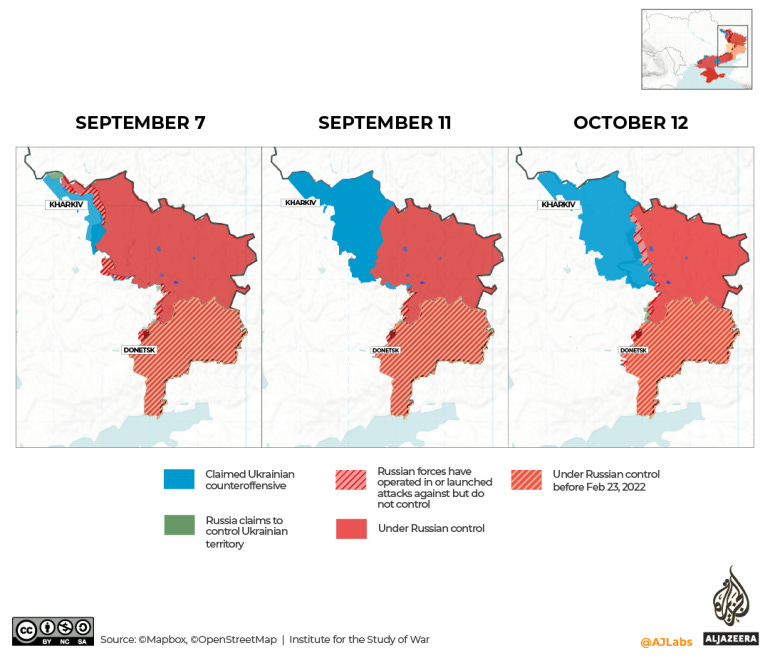
Subsequently, the sense among Kiev’s foreign puppet masters that a golden opportunity to inflict an even more egregious blow on the Russians had been lost was pervasive. Irate, then-British defence minister Ben Wallace asked Donahue what he would do if Kovalchuk were his subordinate. “He would have already been fired,” Donahue said. Wallace succinctly responded, “I got this.” At his direct demand, Kovalchuk was duly defenestrated. As the New York Times explains, the British “had considerable clout” in Kiev and hands-on influence over Ukrainian officials.
This was because, “unlike the Americans,” Britain had formally inserted teams of military officers into the country, to advise Ukrainian officials directly. Still, despite Kiev failing to fully capitalise as desired by London and Washington, the 2022 counteroffensive’s success produced widespread “irrational exuberance”. Planning for a followup the next year thus “began straightaway.” The “prevailing wisdom” within Task Force Dragon was this counteroffensive “would be the war’s last”, with Ukraine claiming “outright triumph”, or Russia being “forced to sue for peace.”
Zelensky boasted internally, “we’re going to win this whole thing.” The plan was for Ukrainian forces to cut off Russia’s land-bridge to Crimea, before seizing the peninsula outright. As the New York Times records though, Pentagon officials were considerably less enthused about Kiev’s prospects. This scepticism seeped out into the public sphere in April 2023 via the Pentagon Leaks. One document warned Ukraine would fall “well short” of its goals in the counteroffensive, forecasting “modest territorial gains” at most.
The leaked intelligence assessment attributed this to “shortfalls” in Ukraine’s “force generation and sustainment”, extensive Russian defences constructed following their retreat from Kherson. It cautioned “enduring Ukrainian deficiencies in training and munitions supplies probably will strain progress and exacerbate casualties.” The New York Times notes Pentagon officials moreover “worried about their ability to supply enough weapons for the counteroffensive,” and wondered if the Ukrainians “in their strongest possible position, should consider cutting a deal.”
Even Task Force Dragon’s Lieutenant General Donahue had doubts, advocating “a pause” of a year or more for “building and training new brigades.” Yet, intervention by the British was, per the New York Times, sufficient to neutralise internal opposition to a fresh counteroffensive in the spring. They argued, “if the Ukrainians were going to go anyway, the coalition needed to help them.” Resultantly, enormous quantities of exorbitantly expensive, high-end military equipment were shipped to Kiev by almost every NATO member state for the purpose.

Western-supplied tanks obliterated during Ukraine’s 2023 counteroffensive
The counteroffensive was finally launched in June 2023. Relentlessly blitzed by artillery and drones from day one, tanks and soldiers were also routinely blown to smithereens by expansive Russian-laid minefields. Within a month, Ukraine had lost 20% of its Western-provided vehicles and armor, with nothing to show for it. When the counteroffensive fizzled out at the end of 2023, just 0.25% of territory occupied by Russia in the initial phase of the invasion had been regained. Meanwhile, Kiev’s casualties may have exceeded 100,000.
‘Knife Edge’
The New York Times reports that “the counteroffensive’s devastating outcome left bruised feelings on both sides,” with Washington and Kiev blaming each other for the catastrophe. A Pentagon official claims “the important relationships were maintained, but it was no longer the inspired and trusting brotherhood of 2022 and early 2023.” Given Britain’s determination to “keep Ukraine fighting at all costs”, this was bleak news indeed, threatening to halt all US support for the proxy war.
Still, there was one last perceived ace up London’s sleeve to keep Washington invested in the proxy conflict, and potentially escalate it into all-out hot war with Moscow. The New York Times reports that in March 2023, the US discovered Kiev “was furtively planning a ground operation into southwest Russia.” The CIA’s Ukraine chief confronted General Kyrylo Budanov, warning “if he crossed into Russia, he would do so without American weapons or intelligence support.” He did so anyway, “only to be forced back.”
Rather than deterring further incursions, Ukraine’s calamitous intervention in Russia’s Bryansk region was a “foreshadowing” of Kiev’s all-out invasion of Kursk on August 6th that year. The New York Times records how from Washington’s perspective, the operation “was a significant breach of trust.” For one, “the Ukrainians had again kept them in the dark” – but worse, “they had secretly crossed a mutually agreed-upon line.” Kiev was using “coalition-supplied equipment” on Russian territory, breaching “rules laid down” when limited strikes inside Russia were greenlit months earlier.
As this journalist has exposed, Ukraine’s Kursk folly was a British invasion in all but name. London was central to its planning, provided the bulk of the equipment deployed, and deliberately advertised its involvement. As The Times reported at the time, the goal was to mark Britain as a formal belligerent in the proxy war, in the hope other Western countries – particularly the US – would follow suit, and “send more equipment and give Kyiv more leeway to use them in Russia.”
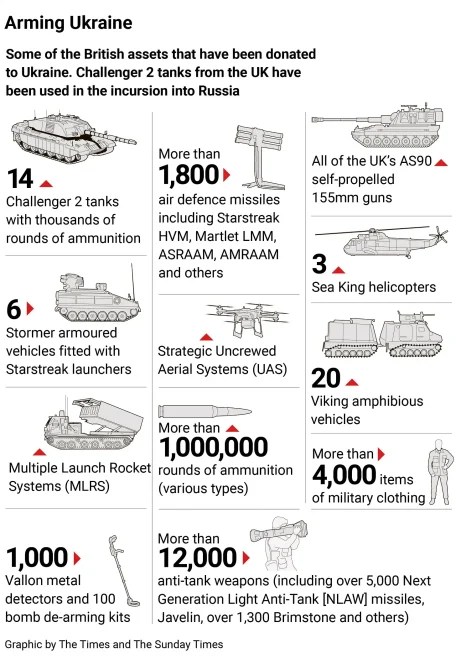
Initially, US officials keenly distanced themselves from the Kursk incursion. Empire house journal Foreign Policy reported that the Biden administration was not only enormously unhappy “to have been kept out of the loop,” but “skeptical of the military logic” behind the “counterinvasion”. In a further rebuke, on August 16th Washington prohibited Ukraine’s use of British-made, long-range Storm Shadow missiles against Russian territory. Securing wider Western acquiescence to such strikes was reportedly also a core objective behind Kiev’s occupation of Kursk.
However, once Donald Trump prevailed in the November 2024 presidential election, Biden was encouraged to use his “last, lame-duck weeks” to make “a flurry of moves to stay the course… and shore up his Ukraine project.” In the process, per the New York Times, he “crossed his final red line,” allowing ATACMS and Storm Shadow strikes deep inside Russia, while permitting US military advisers to leave Kiev “for command posts closer to the fighting.”
Fast forward to today, and the Kursk invasion has ended in utter disaster, with the few remaining Ukrainian forces not captured or killed fleeing. Meanwhile, Biden’s flailing, farewell red line breaches have failed to tangibly shift the battlefield balance in Kiev’s favour at all. As the New York Times acknowledges, the proxy war’s continuation “teeters on a knife edge.” There is no knowing what British intelligence might have in store to prevent long-overdue peace prevailing at last, but the consequences could be world-threatening.
Serbian president hails budding ‘military alliance’ with NATO maverick
RT | April 2, 2025
Hungarian Defense Minister Kristof Szalay-Bobrovniczky visited Belgrade on Tuesday to sign a roadmap outlining 79 joint military activities between Hungary and Serbia for this year. According to Serbian President Aleksandar Vucic, the two countries are edging closer to a “military alliance.”
Both Serbia and Hungary have been challenging the prevailing Western consensus regarding the Ukraine conflict and relations with Russia.
The Serbian leader also expressed gratitude to Hungarian Prime Minister Viktor Orban for his role during NATO’s military intervention in the Balkans in 1999, stating that Orban’s influence helped prevent “a land attack against what was then Yugoslavia.”
“A full 26 years later, the two parties now have the opportunity to build extremely close strategic ties, to further deepen cooperation, coming closer to a Hungarian-Serbian military alliance,” Vucic remarked.
Orban first served as prime minister from 1998 to 2002. Hungary joined NATO in March 1999, weeks before the bombing campaign commenced.
Szalay-Bobrovniczky voiced support for Serbia’s EU aspirations, asserting that Brussels’ enlargement plans should include the entire West Balkans. His statement contradicted EU leaders’ demands for Belgrade to align its foreign policy with Western nations against Russia before its candidacy would be considered.
Both Hungary and Serbia remain skeptical of the bloc’s confrontational approach toward Russia. Orban has accused Brussels of harming the EU economy through sanctions on Russia while supporting a conflict that Kiev is unable to win. Vucic has pledged to resist Brussels’ pressure, citing Serbia’s historic ties with Russia as a foundation for their relationship.
Last month, Kosovo, the Serbian region that broke away after the NATO intervention, entered a trilateral defense agreement with Albania and Croatia. Vucic has condemned those nations for allegedly breaching previous security agreements and possibly going over the head of the NATO leadership in signing the deal.
Featured Video

Yemen joins the war – Red Sea could be blocked next – Saudi regime at risk
or go to
Aletho News Archives – Video-Images
From the Archives
A superpower and “the world’s sickest warrior state”
By Paul J. Balles | March 8, 2010
Living through five or six major wars has hardened me to what I thought were the extremes of inhuman cruelty and brutality.
Two things made those extremes almost bearable: the brutality always revealed – at least according to the media coverage – the viciousness of the enemy. It was therefore quite understandable when our “brave men and women” pulverized the enemy.
Films of Japanese torturing captive Americans somehow justified holding Japanese Americans in internment camps during World War II; and only a small percentage of Americans found the bombing of Hiroshima and Nagasaki unreasonably vengeful at best, at worst, depraved.
The media giants in America portrayed the North Koreans as barbaric beasts with their captives, quite unlike their southern counterpoints – our allies during the Korean War. No one ever felt the need to explain how the South Koreans were a civilized breed while the North Koreans were absolute savages, at least according to the official line.
In Vietnam, our warriors justifiably (or so the media made us believe) dropped napalm on the North Vietnamese who had the gall to hide in villages and tunnels to ravage our invaders. At least it was accepted practice until some rogue photojournalist filmed a young girl screaming down a Vietnamese road in flames. … continue
Blog Roll
 Aletho News
- Russian tanker approaches Cuba despite US oil blockade
- Marandi: Yemen joins the war – Red Sea could be blocked next – Saudi regime at risk
- Pro-Palestinian French member of European Parliament denied entry to Canada
- Pakistan to Host US-Iran Talks
- How Indonesia’s tilt toward the US left it stranded in the Strait of Hormuz
- US has no choice but to retreat from Iranian borders: Top commander
- Iran Retaliation Strikes Chemical Plant Near Dimona
- AWACS’ Destruction is a Major Loss for US Military – Ex-DoW Analyst
- Israel’s Iran Strategy Uses US Military & Gulf States as Its Pawns
- Iran: Trump wanted regime change, now just begging for Hormuz to open
- If Americans Knew
- Israeli police block Catholic cardinal from entering Church of the Holy Sepulchre on Palm Sunday
- Israel is assassinating journalists again, more than any other nation, anywhere, ever – Not a ceasefire Day 170
- Over 300 US service members wounded, majority have brain injuries – Not a ceasefire Day 169
- Researchers at Human Rights Watch Resign Over Blocked Report on Palestinian Refugee Return
- Jewish Groups Are Backing a War Americans Don’t Want
- Eric Fingerhut Thinks He’s the President of the Jews
- Top Jewish Philanthropists, Rabbis Urge Israeli President to Take Action Against ‘Jewish Extremists’
- Don’t Be Fooled. Zionist Leaders Have Always Wanted to Control Southern Lebanon
- Israel’s widespread use of torture is a core element of its genocide against the Palestinian people
- In Israel’s War on Iran, Many Middle East US Bases Rendered “All But Uninhabitable”
- No Tricks Zone
- German Science Blog Accuses PIK Climate Institute Of Hallucinating Climate Tipping Points
- Devastating Assessment Of Comirnaty Vaccine By Former Senior Pfizer Europe Toxicologist
- New Study: CO2 Is ‘Effectively Negligible’ As An Explanatory Climate Change Factor Since 2000
- Former Pfizer Toxicologist Dr. Helmut Sterz Tells Bundestag Hearing Pfizer Vaccine Should Have Never Been Approved
- Energy Expert: Germany’s Nuclear Phaseout Was A “500 Billion Euro Mistake”
- New Research: South Australia’s Mid-Holocene Sea Surface Temperatures Were 4°C Warmer Than Today
- Storing Green Energy To Last Germany 10 Days Would Require A 60-Million Tonne Battery
- New Studies: UK Sea Levels Were 4 Meters Higher Than Today During The Mid-Holocene
- Destructive Green New Deal: German Energy And Metal Group Warns Of Drastic Crisis
- New Study Documents A 20-Year Pause In Arctic Sea Ice Decline – Driven By Internal Variability
 Aletho News