Diana Panchenko: How Zelensky Dismantled Ukraine’s Democracy
Glenn Diesen | April 13, 2025
Diana Panchenko was Ukraine’s “journalist of the year” in 2020 and ranked as the 7th most influential woman in the country. Panchenko has been a critic of both Russia’s invasion of Ukraine and Zelensky’s destruction of democracy in Ukraine.
Follow Prof. Glenn Diesen:
Substack: https://glenndiesen.substack.com/
Pregnant women deserve better than “trust us” science
A major study has been used to reassure pregnant women that Covid-19 vaccines are safe. But the data behind the claim are fatally flawed.
By Maryanne Demasi, PhD | April 12, 2025
In medicine, few assurances carry more emotional weight—or greater responsibility—than the claim that something is “safe during pregnancy.”
Pregnant women are justifiably cautious about what they expose themselves to during this vulnerable time, and history has given them every reason to be.
The thalidomide disaster, diethylstilboestrol (DES), and other cautionary tales have shown what can happen when scientific rigour is sidelined in favour of commercial interests.
So, when a new study published in Pediatrics – the official journal of the American Academy of Pediatrics – claimed that Covid-19 vaccination in early pregnancy was safe, it came with an air of authority and reassurance.
News headlines followed suit, and public health recommendations continued to promote the vaccine’s safety in pregnancy.
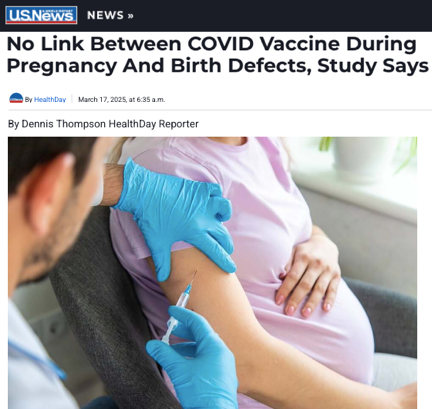
But scratch the surface of this study, and something starts to unravel.
Not only are the data unverifiable and privately sourced, but the study contains a fatal flaw that renders its conclusions virtually meaningless.
The fatal flaw
The study analyzed 78,052 pregnancies that ended in a live birth—but left out 20,341 pregnancies that ended in miscarriage or other non-live outcomes.
That’s not a minor oversight.
The very purpose of studying vaccine safety in pregnancy is to assess whether exposure in utero leads to adverse outcomes—like miscarriage, birth defects, or foetal death. Yet one-fifth of the pregnancies were excluded from the analysis, removing exactly the kind of outcomes the study was supposed to detect.
This introduces what’s known as live-birth bias—a selection bias that arises when research includes only live births, disregarding the possibility that harmful effects may have caused some pregnancies to end prematurely.
Put plainly, if you only study babies who made it to birth, you’re ignoring the ones who didn’t—and any harm that may have played a role.
Even the study’s authors acknowledge this limitation, conceding that the exclusion “could lead to an underestimation of identified outcomes.” Still, they move forward to conclude there’s no association between the vaccine and birth defects.
Omitting over 20,000 pregnancies isn’t just a technicality – it’s a fatal flaw.
If even a small fraction of those pregnancies ended in miscarriage or birth defects linked to vaccination, the entire outcome could tip the other way.
Commercial data with no accountability
Then there’s the source of the data itself—a point entirely overlooked.
Rather than using clinical records from hospitals or national birth registries, the study relied entirely on a commercial database from Merative® MarketScan® Research Databases.
These databases are vast, aggregating de-identified insurance claims, prescriptions, lab results, and hospital records from more than 263 million Americans. But they are also privately owned, and their inner workings are entirely opaque.
Researchers using MarketScan data cannot verify whether the patients are real or theoretical, whether records have been altered, or how the data has been cleaned or processed before delivery.
In essence, they are working with a black box, one that comes with no guarantee of integrity.
Experts have already noted that the data from this unverified source shows signs of being unreliable.
The authors ran 93 separate statistical tests to look for differences in outcomes like birth defects. By chance alone, you’d expect a handful to be statistically significant. But none were.
The probability of that happening randomly is just 0.8%—a sign that the dataset may have been fabricated, or that its integrity is in question.
When two of the study authors – Dr Stacey Rowe and Dr Annette Regan – were asked if they had verified the authenticity of the MarketScan database—that is, if they could confirm these were ‘real’ patient data—they did not respond.
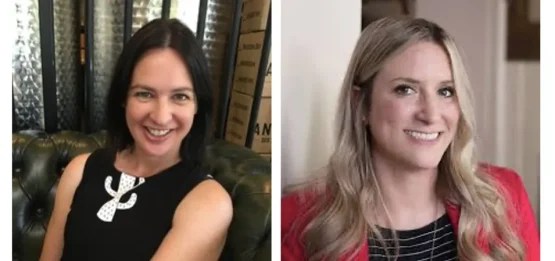
L: Dr Stacey Rowe, R: Dr Annette Regan
This isn’t a hypothetical problem.
The medical literature has already been rocked by the Surgisphere scandal, where fraudulent hospital datasets were used to produce papers in The Lancet and The New England Journal of Medicine.
Those papers were eventually retracted, but only after independent researchers demanded to see the raw data and were denied – the data were likely fabricated.
Reassurance without evidence
Despite these glaring problems, the study’s conclusions are being used to reassure pregnant women.
In Australia, for example, the government’s official guidance recommends Covid-19 vaccination in pregnancy, stating that the “recommendations for pregnant women are the same as the general population.”
This, despite the fact that pregnant women were excluded from the pivotal clinical trials and no randomised studies have ever been completed to assess the vaccine’s safety in early-pregnancy.
The result is a landscape where pregnant women are asked to make a “shared decision” with their doctors—based on scientific literature that’s increasingly built on unverifiable data, flawed assumptions, and little to no independent scrutiny.
We are drifting into a new era where conclusions are based on data that sit behind corporate firewalls. An era where trust is expected, but no longer earned.
The Pediatrics study is a case in point.
It carries the imprimatur of authority, published in the flagship journal of the American Academy of Pediatrics. But, in reality, the analysis was based on commercial datasets that cannot be independently verified, and a methodology that systematically excludes the very outcomes it was supposed to assess.
This isn’t just bad science—it’s misleading by design.
And when it comes to pregnancy, where the stakes are literally life and death, that kind of scientific chicanery is a betrayal.
Pregnant women deserve better than a “trust us” approach to medicine.
They need full access to the data, honest communication about uncertainties, and above all, respect for their right to make informed decisions based on real evidence, not selective reporting.
Until that happens, we should remain sceptical of any study that asks us to believe in the evidence without seeing it.
Did Head of CDC Vaccine Safety Office Delete COVID Vaccine Injury Records?
By Michael Nevradakis, Ph.D. | The Defender | April 11, 2025
A key official at the Centers for Disease Control and Prevention (CDC) responsible for monitoring vaccine safety and reports of vaccine injuries may have mishandled or deleted official records subpoenaed by Congress, Sen. Ron Johnson (R-Wis.) alleged earlier this week. The New York Post first reported the story on Thursday.
Dr. Tom Shimabukuro, director of the CDC Immunization Safety Office, maintained the records in question. Shimabukuro previously authored a key paper and participated in public messaging claiming the COVID-19 vaccines were safe and effective for pregnant women.
Johnson, chairman of the U.S. Senate Permanent Subcommittee on Investigations, requested the records in a subpoena sent in January to the U.S. Department of Health and Human Services (HHS). The subpoena pertained to an investigation into internal COVID-19 vaccine safety communications.
According to the New York Post, the subpoena led HHS to discover “potential discrepancies” in the emails maintained by Shimabukuro.
“HHS officials recently informed me that Dr. Shimabukuro’s records remain lost and, potentially, removed from HHS’s email system altogether,” Johnson wrote in a letter he sent earlier this week to U.S. Attorney General Pam Bondi, FBI Director Kash Patel and HHS Principal Deputy Inspector General Juliet Hodgkins.
Johnson called Shimabukuro’s possible mishandling of his official records “highly concerning.”
Journalist Paul D. Thacker, a former U.S. Senate investigator, said, “Every American should be concerned about government scientists deleting or hiding federal information to shape a political agenda. That information belongs to the taxpayers.”
Nebraska chiropractor Ben Tapper, whose questioning of the COVID-19 vaccines led the Center for Countering Digital Hate to add him in 2021 to its “Disinformation Dozen” list of the “leading online anti-vaxxers,” said he was “not surprised” by Johnson’s allegations.
“For years, I’ve seen patterns like this before regarding vaccine safety data. The public health establishment often prioritizes profits over people and continuously seems to protect the lies over the truth. The idea that critical records might vanish — whether through negligence or intent — fits a familiar playbook,” Tapper said.
California attorney Rick Jaffe said Johnson’s allegations are “troubling, but not surprising, given longstanding concerns about transparency at the CDC.”
In response to a Freedom of Information Act (FOIA) request last year, the CDC told Children’s Health Defense the agency has no records of certain internal email communications relating to the agency’s follow-up investigation of safety signals associated with COVID-19 vaccines.
HHS, CDC and Johnson’s office did not respond to requests for comment.
Missing records ‘could contain unfiltered insights’ into vaccine adverse events
Citing an unnamed aide from Johnson’s office, the New York Post said it is unclear which specific records are missing. But according to Johnson’s letter, Shimabukuro’s role included “monitoring adverse events relating to the COVID-19 vaccines.”
Tapper said Shimabukuro may have been “handling sensitive data on adverse events linked to the COVID-19 vaccines,” including data from the U.S. government-run Vaccine Adverse Event Reporting System (VAERS) and the V-safe database, as well as studies, raw data and internal communications on vaccine-related safety signals.
Tapper said:
“These records could contain unfiltered insights into side effects that were downplayed or unresolved during the pandemic. For example, I’ve seen cases in my practice where patients developed symptoms like persistent fatigue or heart palpitations post-vaccination, yet struggled to get clear answers from authorities.
“Missing records could hide similar signals, undermining efforts to validate patient experiences or refine vaccine protocols.”
Internal medicine physician Dr. Clayton J. Baker said, “Such records would likely be very damning to all CDC officials who perpetuated the false ‘safe and effective’ narrative about the COVID-19 vaccines from 2021 until the present.”
“Given how damning any evidence of ignored or falsified safety signals would be, I think it is highly likely that Biden-era officials might try to destroy such records if they could. Better to be accused of destruction of federal records than to be charged as an accessory to mass negligent homicide,” Baker said.
In an April 2023 presentation to the CDC Advisory Committee on Immunization Practices, Shimabukuro claimed that surveillance conducted by international regulatory and public health partners “has not detected a safety concern for ischemic stroke following bivalent COVID-19 mRNA booster vaccination.”
Yet, a peer-reviewed study published in November 2024 found that mRNA COVID-19 vaccines pose a 112,000% greater risk of brain clots and strokes than flu vaccines, and a 20,700% greater risk of those symptoms than all other vaccines combined. The study called for a global moratorium on mRNA vaccines.
In 2021, Shimabukuro was the lead author of a study in The New England Journal of Medicine (NEJM) on the safety of COVID-19 vaccines for pregnant women. The study concluded that “preliminary findings did not show obvious safety signals among pregnant persons who received mRNA Covid-19 vaccines.”
However, a peer-reviewed study published in 2022 showed that the authors of the NEJM study performed a “statistical sleight-of-hand” that substantially lowered the miscarriage rate in pregnant women, presenting it as 12.6% instead of 82%.
In a Substack post, epidemiologist Nicolas Hulscher said Shimabukuro’s “potential involvement in the deliberate manipulation of critical safety data on COVID-19 mRNA injections during pregnancy carries grave implications — resulting in immeasurable harm to mothers and their unborn children worldwide.”
Shimabukuro ‘may have violated multiple federal laws’
According to a press release from Johnson’s office, Shimabukuro’s actions, if proven to have occurred, “may have violated multiple federal laws.”
Those laws include the Federal Records Act, which requires federal employees to preserve materials “made or received by a Federal agency under Federal law or in connection with the transaction of public business,” the New York Post reported.
Johnson wrote that the destruction of records subpoenaed by Congress may also be “grounds for contempt of Congress,” which, according to the New York Post, is punishable by up to a six-figure fine and 12 months in prison.
Jaffe said Shimabukuro may also face other penalties. He said:
“Under federal law, he could be charged with obstruction of justice or destruction of official records — risking fines, restitution and up to 20 years in prison. His federal pension could also be garnished to satisfy any judgment against him.
“Beyond criminal penalties, he faces permanent disqualification from federal service and career-ending reputational harm.”
In addition, if records relating to vaccine-injured people are missing or destroyed, impairing their legal cases, “courts could impose evidentiary sanctions or presume the destroyed records were unfavorable to the government,” Jaffe said.
Johnson’s letter also referred to Dr. David Morens, an employee of the National Institute of Allergy and Infectious Diseases who was a close aide of the agency’s former director, Dr. Anthony Fauci. Morens allegedly deleted emails and instructed colleagues to contact him at a personal email account to sidestep FOIA rules.
In his letter, Johnson accused HHS of a “lack of transparency” and failure to investigate the allegations against Morens.
“I had always suspected that Dr. Morens was not the sole evader of federal record-keeping requirements at HHS,” Johnson wrote. “The extent to which HHS officials systemically mishandled, deleted, or destroyed their communications, data, and other information relating to the COVID-19 pandemic and the vaccines must be thoroughly investigated.”
Johnson’s letter asks the FBI, the U.S. Department of Justice and the HHS Inspector General’s Office to investigate the matter, including whether records were intentionally destroyed to “avoid or subvert Congressional oversight or the Freedom of Information Act.”
The letter builds on Johnson’s efforts to investigate COVID-19 vaccine safety.
Earlier this week, Johnson sent letters to the heads of four COVID-19 vaccine manufacturers, requesting they turn over records related to the development and safety of the COVID-19 vaccines and their communications with Big Tech platforms about vaccine-related adverse events.
In November 2024, Johnson wrote a letter to HHS, CDC and FDA, asking the agencies to “preserve all records referring or relating to the development, safety, and efficacy of the COVID-19 vaccines.”
In an October 2023 letter to the then-heads of CDC and FDA, Johnson accused the agencies of an “appalling” lack of transparency regarding COVID-19 vaccine safety signals, depriving Americans of “the benefit of informed consent.”
During the Biden administration, Johnson wrote over 70 letters to HHS officials and its health agencies requesting information on COVID-19 vaccine adverse events and related communications, according to a Jan. 29 press release.
Last year, Johnson hosted a congressional roundtable to discuss the risks of COVID-19 vaccines. Medical experts, political figures, journalists and whistleblowers were among the participants.
This article was originally published by The Defender — Children’s Health Defense’s News & Views Website under Creative Commons license CC BY-NC-ND 4.0. Please consider subscribing to The Defender or donating to Children’s Health Defense.
Leaked files reveal the Steele Dossier was discredited in 2017 — but sold to the public anyway
By Kit KLARENBERG | MintPress News | April 8, 2025
On March 25, Donald Trump signed an executive order declassifying all documentation related to Crossfire Hurricane, the FBI’s 2016 investigation into alleged collusion between Russia and then-presidential candidate Donald Trump. The order has unexpectedly resurrected buried documents that cast new light on the Steele dossier — and when it was known to be false.
It is unclear what new information will be revealed, given substantial previous declassifications, two special counsel investigations, multiple congressional inquiries, several civil lawsuits, and a scathing Justice Department internal review. It has long been confirmed the FBI relied heavily on Steele’s discredited dossier to secure warrants against Trump aide Carter Page, despite grave internal concerns about its origins and reliability, and Steele’s sole “subsource” for all its lurid allegations openly admitted in interviews with the Bureau he could offer no corroboration for any of the dossier’s claims.
Such inconvenient facts and damning disclosures were nonetheless concealed from the public for several years following the dossier’s January 2017 publication by BuzzFeed News, now defunct. In the intervening time, it became the central component of the Russiagate narrative, a conspiracy theory that was a major rallying point for countless mainstream journalists, pundits, public figures, Western intelligence officials, and elected lawmakers. In the process, Steele attained mythological status. For example, NBC News dubbed the former MI6 operative “a real-life James Bond.”
Primetime news networks dedicated countless hours to the topic, while leading media outlets invested enormous time, energy and money into verifying the dossier’s claims without success. Undeterred, legacy reporters relied on a roster of mainstream “Russia experts,” including prominent British and U.S. military and intelligence veterans, and briefings from anonymous officials to reinforce Steele’s credibility and the likely veracity of his dossier. As award-winning investigative journalist Aaron Maté told MintPress News :
Media outlets served as unquestioning stenographers for Steele. If his dossier’s claims themselves weren’t sufficient to dismiss it with ridicule, another obvious marker should have set off alarms. Reading the dossier chronologically, a clear pattern emerges – many of its most explosive claims are influenced by contemporary media reporting. For instance, it was only after Wikileaks published the DNC emails in July 2016 that the dossier mentioned them. This is just one example demonstrating the dossier’s true sources were overactive imaginations and mainstream news outlets.”
Even more damningly, leaked documents reviewed by MintPress News reveal that while Western journalists were hard at work attempting to validate Steele’s dossier and elevating the MI6 spy to wholly undeserved pillars of probity, the now-defunct private investigations firm GPW Group was, in early 2017, secretly unearthing vast amounts of damaging material that fatally undermined the dossier’s content, and comprehensively dismantling Steele’s previously unimpeachable public persona. It remains speculative what impact the firm’s findings might have had if they had been released publicly at the time.
‘Financial Incentives’
“In order to build a profile of Christopher Steele… as well as the broader operations of both Orbis Business Intelligence and Fusion GPS,” which commissioned the dossier on behalf of Hillary Clinton’s presidential campaign and the Democratic National Committee, GPW consulted “a variety of sources.” This included “U.S. intelligence figures,” various journalists, “private intelligence subcontractors” who had previously worked with Steele and Orbis, and “contacts who knew the man from his time with [MI6]…and, in one instance, directly oversaw his work.”
The picture that emerged of Steele sharply contrasted with his mainstream portrayal as a “superstar.” One operative who “acted as Steele’s manager when he began working with [MI6] and later supervised him at two further points” described him as “average, middle of the road,” stating he had never “shined” in any of his postings. Another suggested Steele’s founding of Orbis “was the source of some incredulity” within MI6 due to his underwhelming professional history and perceived lack of “commercial nous.”
Yet another suggested Steele’s production of the dossier reflected his lack of “big picture judgment.” Sources consulted by GPW were even more critical of Fusion GPS chief Glenn Simpson. One journalist described him as a “hack” without “a license or the contacts to do… actual investigations,” instead outsourcing “all” work ostensibly conducted by his firm to others while skimming commissions. They also “openly admitted” to disliking Simpson, described by GPW as “not an uncommon attitude amongst those to whom we spoke.”
GPW also scrutinized “credibility and perceptions of the dossier in Russia,” specifically whether Steele‘s claims that high-ranking Kremlin-linked sources in Moscow provided him with information had any merit. The firm consulted “Western and Russian journalists, former officials from the FSB and the Russian security services more broadly, a former high-ranking official at the CIA who oversaw the agency’s Russian operations, and several private-sector intelligence practitioners operating in Moscow” for this purpose:
The prevailing sentiment from our contacts was one of extreme skepticism as to the accuracy of… the [dossier]. Most found it unimaginable… senior Russian officials would risk life imprisonment (or worse) by speaking to a former foreign intelligence official about such sensitive issues. At the very least… it would have cost Steele a great deal more… than he could afford… Former intelligence operatives (from both the U.S. and Russian services) seriously doubted Steele would have been able to retain Russian sources from his time in MI6.”
GPW also examined “possible sources for the dossier” that had been hypothesized in the media to date. Among them was former FSB General Oleg Erovinkin, who was found dead in his car in Moscow in December 2016. After the dossier’s release, the Daily Telegraph suggested his death was “mysterious” and could have resulted from providing information to Steele. A former high-ranking official in U.S. intelligence mockingly dismissed the proposition, noting that career security and intelligence officer Erovinkin was “unlikely to have needed the money.”
While conceding that financial incentives could encourage such a breach… [if] Steele had offered Erovinkin £100,000, the mooted budget for the entire project, ‘Erovinkin would have said he needed to see three more zeros before opening his mouth. It’s just a ridiculous proposition to think he would speak to a former intelligence officer from the UK, or anyone else for that matter, for such a paltry sum of money.’”
Overall, GPW concluded: “The quality and level of the sourcing was greatly exaggerated in order to give the dossier and its allegations more credibility.” This impression was reinforced by “informed sources from both government and the private sector” in Russia who were “very dismissive” of the dossier’s content. Many pointed to “woeful inaccuracies” contained therein “and its author’s general lack of understanding around Russian politics and business.” This “deficiency was particularly acute with respect to the dossier’s coverage of Alfa Bank.”
‘Reputational Damage’
GPW’s investigation also proved prescient in other areas. For example, several knowledgeable sources the company consulted — including former senior Russian and U.S. intelligence officials — suggested the dossier’s “most likely sources” were Russian émigrés, “providing… their own views.” They also noted the Steele dossier’s “hyperbole and inaccuracies” were “typical of the hyperactive imaginations of the subcontractors widely used in the business intelligence sector.” This was not confirmed until July 2020.
That month, the Senate Judiciary Committee released notes taken by FBI agents during February 2017 interviews with Igor Danchenko, Steele’s “subsource” and the dossier’s effective author. A Washington think tank journeyman jailed years earlier on multiple public intoxication and disorderly conduct charges and investigated by the FBI for potentially serving as a Kremlin agent, Danchenko admitted he had been fed much of the dossier’s salacious content by his Russian drinking buddies, who lacked any high-level access. Steele then embroidered their dud information further.
Other striking passages in the leaks refer to a conversation between GPW and “a source from within the business intelligence sector in London [who] knows Christopher Steele well, both socially and professionally, and is familiar with his company.” They relayed various details and “commentary” gleaned “directly from speaking to Steele.” For example, they noted that contrary to its self-description as a “leading corporate intelligence consultancy,” Orbis was “not a major operation” and seemed to employ just two junior analysts “who looked like recent graduates.”
The source revealed that “other, larger firms in the sector were approached before Steele and turned the work down before he took it on,” and the dossier was his solo project. “The rest of the company wasn’t involved at all, either to help on the research side of things or to look through the product before it went out,” and “Steele basically collated the information himself.” They further suggested the dossier’s sources let their imaginations run wild, believing their claims would never see the light of day:
I think they got carried away — they didn’t think the material would ever be made public because at that point it was very unlikely that Trump was going to get into power…Steele was rather naive about the whole thing. He didn’t think that it would get exposed in the way it did.”
In other investigative briefs, GPW noted it was unusual that “Steele would have permitted (or indeed facilitated) the distribution of such questionable material under his name,” given the dossier’s apparent falsity. The firm postulated that “in sharing the material with U.S. government figures,” the former MI6 operative “may have thought he was currying favor with them by doing so,” but ultimately, “he never intended for the dossier to be made public in the manner it was.”
One possible answer to this question is found in a defamation case brought against Orbis by Petr Aven, Mikhail Fridman, and German Khan in Britain in May 2018. In July 2020, a British court ruled that the dossier’s allegations against them and Alfa Bank were “inaccurate and misleading,” awarding damages “for the loss of autonomy, distress and reputational damage.” During the trial, Steele made a notable disclosure:
Fusion’s immediate client was law firm Perkins Coie… it engaged Fusion to obtain information necessary for Perkins Coie to provide legal advice on the potential impact of Russian involvement on the legal validity of the outcome of the 2016 U.S. Presidential election. Based on that advice, parties such as the Democratic National Committee and [“Hillary for America”] could consider steps they would be legally entitled to take to challenge the validity of the outcome of that election.”
In essence, the dossier was commissioned by Clinton’s campaign as a contingency in the event she lost the election. However, as GPW’s source close to Steele noted, when the MI6 operative took on the work, the prevailing perception was that “it was very unlikely” Trump would win. As a result, Steele may have had the motivation to fill the dossier with unverified material, believing it would never be used for its intended purpose. He also had a commercial incentive to exaggerate his high-level access. A serving CIA official told GPW:
Steele was known to have been ‘up and down the alley’ pitching for business – a reference to the major defense firms, such as Lockheed Martin, which are located close to one another in Arlington, Virginia. She did not know which firms Steele had worked for in particular, if any, but he has visited several of them in person at their headquarters.”
A core mystery at the heart of the Steele dossier saga has never been satisfactorily resolved — one that Trump’s latest declassification order could help illuminate. In his December 2019 report on Crossfire Hurricane, Justice Department Inspector General Michael Horowitz criticized the FBI’s use of the dossier to obtain warrants against Carter Page but insisted Steele’s assorted claims “played no role” in the bureau opening its investigation of Trump’s campaign, reportedly on July 31, 2016.
As extensively documented by Aaron Maté, this claim is difficult to reconcile with the numerous contacts and meetings between Steele and senior FBI and Justice Department officials in the weeks leading up to that date. The former MI6 officer provided material that would later comprise the dossier to senior U.S. government officials, including Victoria Nuland, prior to the official opening of Crossfire Hurricane. Nuland reportedly encouraged the bureau to investigate the contents.
According to the FBI’s electronic communications that initiated Crossfire Hurricane, the probe’s founding predicate was a vague tip provided to the bureau by Australian diplomat Alexander Downer. He claimed that low-level Trump campaign staffer George Papadopoulos had “suggested” to him over drinks in London that “the Trump team had received some kind of suggestion [emphasis added] from Russia that it could assist… with the anonymous release of information during the campaign that would be damaging” to Clinton. The EC further acknowledged that “It was unclear whether he or the Russians were referring to material acquired publicly or through other means. It was also unclear how Mr. Trump’s team reacted to the offer.”
As Maté told MintPress News, this was an “extraordinarily thin basis upon which to investigate an entire presidential campaign.” He added that “upon officially opening Crossfire Hurricane, FBI officials immediately took investigative steps that mirrored the claims in the Steele dossier, even though they were supposedly unaware of it.” The FBI’s first probes into individual Trump campaign figures — Carter Page, Michael Flynn, and Paul Manafort — began in August 2016. All are mentioned in the dossier. Maté concludes:
To accept the official timeline, one has to stipulate that the FBI investigated a Presidential campaign, and then a President, based on a low-level volunteer having ‘suggested’ Trump’s campaign had received ‘some kind of suggestion’ of assistance from Russia. One would also have to accept that the Bureau was not influenced by the far more detailed claims of direct Trump-Russia connections – an alleged conspiracy that would form the heart of the investigation – advanced in the widely-circulating Steele dossier.”
Somaliland Offers Trump Red Sea Base in Exchange for Recognition
Sputnik – 13.04.2025
Somalia’s breakaway region of Somaliland wants to be recognized as an independent state by US President Donald Trump in exchange for leasing its Berbera port and airstrip to the US, media reported on Saturday.
In March, the Semafor daily newspaper reported that Somalian President Hassan Sheikh Mohamud had offered the US control over ports and airbases located in Somaliland and another breakaway region, Puntland, in an attempt to prevent Washington from recognizing them.
Somaliland, however, plans to strike a deal with Trump, offering the US to lease its airstrip and port, which will ensure smooth military and logistical access to the Gulf of Aden, in exchange for Washington’s recognition of its statehood, The New York Times reported.
The airstrip at the Berbera International Airport was built by the Soviet Union in the 1970s. Stretching for over 2.5 miles, it is the longest airstrip in Africa.
The Associated Press reported in mid-March, citing a US official, that the US was in talks with Somaliland to determine what it could offer in exchange for its recognition. The US is reportedly exploring options for resettling Palestinians from the Gaza Strip.
Somalia ceased to exist as a unified state in 1991 following the fall of dictator Siad Barre. The international community recognizes the federal government of Somalia, which controls Mogadishu and parts of the country.
US, Iran take a leap forward in trust building
By M. K. BHADRAKUMAR | Indian Punchline | April 13, 2025
With the foreplay over and US-Iranian talks commencing in Muscat on Saturday, a constructive engagement has begun in right earnestness. The sure sign of it is that Iran’s currency rose nearly 6 percent on Sunday. The Tehran bazaar, the weathervane of Shia politics, has spoken.
Most important, the two key negotiators in Muscat Steve Witkoff and Abbas Araqchi have decided to return to the talks on April 19 in exactly a week’s time after reporting back to their principals in Washington and Tehran respectively and seeking fresh guidelines going forward.
The White House said the talks were positive and constructive and appreciated that “direct communication was a step forward in achieving a mutually beneficial outcome.” Witkoff described the talks as “very positive and constructive.”
Iran’s foreign ministry said the talks were held in “a constructive atmosphere based on mutual respect. Araqchi also described the negotiations as “promising and constructive.” Significantly, Araqchi told the Iranian national television that the talks brought the two sides closer to establishing “the basis of negotiations” for future discussions.
He added cryptically that while Oman will continue to act as mediator in the upcoming round on April 19, the venue for the next session may change.
Signalling to Witkoff and addressing the domestic audience, Araqchi gave an insightful perspective. He said the discussions aimed to create a structured agenda for the negotiations based on a timeline. The following remarks by Araqchi must be noted carefully:
- “We agreed to hold a second round next Saturday, and in the next session, we will delve into the overall framework that a deal can take to see how far this process can advance.”
- It is important to set a basis for the talks; “If we can finalise the basis in the next meeting… we can begin real discussions based on that basis.”
- The talks were conducted in a “calm and very respectful atmosphere. No inappropriate language was used. Both sides demonstrated their determination to advance the talks until an agreement is reached that is desirable for both parties and is based on an equal footing.”
- Neither Iran nor the US wants to “negotiate for the sake of negotiating” and does not favour protracted “attritional talks.” Both sides voiced their keenness to achieve an agreement “at the shortest time. This, however, will not be easy and requires full determination of the two sides.”
- “When leaving, the two delegations encountered each other, and we talked for a few minutes. This is a completely accepted issue. We have always observed diplomatic courtesy when dealing with American diplomats, and this time, too, an initial greeting was exchanged, and then we left the place. It was nothing extraordinary.”
Dr Mohammad Jafar Qaempanah, President Masoud Pezeshkian’s trusted chief of staff who holds the position of vice-president for executive affairs — and, incidentally, a medical doctor by profession with research papers and foreign citations to his credit — that the negotiations “were conducted well with dignity, prudence, expediency, and in line with the interests of the Iranian people.”
President Donald Trump reined himself in his early comments to the media from Air Force One, “Nothing matters until you get it done, so I don’t like talking about it, but it’s going OK. The Iran situation is going pretty good, I think.”
Elsewhere, Trump added, “I want Iran to be a wonderful, great, happy country, but they can’t have a nuclear weapon.” But that is Iran’s strategic choice, too.
That said, both in the US and in Iran, the hardliners are straining at the leash to throw stones. Then there are also the third parties with their own agenda. If the Iranians spurned the initial US attempt to have the UAE mediate, and instead also bypassed Qatar and opted for Oman as their preferred mediator for the talks, it tells a tale by itself of the complex regional alignments in the Gulf as well as Tehran’s need to keep Israelis miles away from messing around.
The crux of the matter is that the initial round of talks in Muscat represents a turning point in the challenging dynamics between Tehran and Washington. According to the Tehran grapevine, the talks focussed on two intertwined contentious issues — sanctions relief and the nuclear issue — as in the past negotiations.
Reaching a mutually agreeable framework for dialogue could pave the way for reducing tensions and returning to a diplomatic path. It is doable today from all indications. The game changer is that both sides have shown willingness to reduce tensions and seek a middle ground. Araqchi’s positive spin on the atmospherics at the Muscat talks signalled that the enduring mutual distrust notwithstanding, both sides acknowledge the necessity of continuing discussions, and are determined to avoid deadlock and explore new opportunities.
This is not to overlook that the path ahead remains challenging and fraught with obstacles. Sensitive issues need to be sorted out such as the the timing of sanctions relief, the scope of nuclear commitments, and verification mechanisms. Nonetheless, the bottom line is that the return to diplomacy after such high spiralling of tensions in recent months provides an opportunity to rebuild relative trust and recalibrate US-Iran relations—at least on technical and substantive levels.
Indeed, Witkoff and Araqchi are just the negotiators with the temperament not to succumb to the temptations of oneupmanship and grandstanding and instead proceed with precision, patience, and creativity in an all-out attempt to capitalise on the good start.
Witkoff already signalled an openness to compromise when he told Wall Street Journal that “our position today” starts with demanding that Iran completely dismantle its nuclear program. “That doesn’t mean, by the way, that at the margin we’re not going to find other ways to find compromise between the two countries.
“Where our red line will be, there can’t be weaponisation of your [Iran’s] nuclear capability,” Witkoff added underscoring that any deal must include extensive oversight measures to guarantee Iran is not developing an atomic weapon. Nuclear experts from the US state department are assisting Witkoff.
Iran has consistently denied seeking to acquire nuclear weapons. On Friday, foreign ministry spokesman Esmaeil Baqaei said in Tehran that Iran is “giving diplomacy a genuine chance in good faith and full vigilance. America should appreciate this decision, which was made despite their hostile rhetoric.”
READ MORE: Steve Witkoff’s Iran mission holds seamless possibilities, Indian Punchline, April 11, 2025
Featured Video

Yemen joins the war – Red Sea could be blocked next – Saudi regime at risk
or go to
Aletho News Archives – Video-Images
From the Archives
A superpower and “the world’s sickest warrior state”
By Paul J. Balles | March 8, 2010
Living through five or six major wars has hardened me to what I thought were the extremes of inhuman cruelty and brutality.
Two things made those extremes almost bearable: the brutality always revealed – at least according to the media coverage – the viciousness of the enemy. It was therefore quite understandable when our “brave men and women” pulverized the enemy.
Films of Japanese torturing captive Americans somehow justified holding Japanese Americans in internment camps during World War II; and only a small percentage of Americans found the bombing of Hiroshima and Nagasaki unreasonably vengeful at best, at worst, depraved.
The media giants in America portrayed the North Koreans as barbaric beasts with their captives, quite unlike their southern counterpoints – our allies during the Korean War. No one ever felt the need to explain how the South Koreans were a civilized breed while the North Koreans were absolute savages, at least according to the official line.
In Vietnam, our warriors justifiably (or so the media made us believe) dropped napalm on the North Vietnamese who had the gall to hide in villages and tunnels to ravage our invaders. At least it was accepted practice until some rogue photojournalist filmed a young girl screaming down a Vietnamese road in flames. … continue
Blog Roll
 Aletho News
- Russian tanker approaches Cuba despite US oil blockade
- Marandi: Yemen joins the war – Red Sea could be blocked next – Saudi regime at risk
- Pro-Palestinian French member of European Parliament denied entry to Canada
- Pakistan to Host US-Iran Talks
- How Indonesia’s tilt toward the US left it stranded in the Strait of Hormuz
- US has no choice but to retreat from Iranian borders: Top commander
- Iran Retaliation Strikes Chemical Plant Near Dimona
- AWACS’ Destruction is a Major Loss for US Military – Ex-DoW Analyst
- Israel’s Iran Strategy Uses US Military & Gulf States as Its Pawns
- Iran: Trump wanted regime change, now just begging for Hormuz to open
- If Americans Knew
- Israeli police block Catholic cardinal from entering Church of the Holy Sepulchre on Palm Sunday
- Israel is assassinating journalists again, more than any other nation, anywhere, ever – Not a ceasefire Day 170
- Over 300 US service members wounded, majority have brain injuries – Not a ceasefire Day 169
- Researchers at Human Rights Watch Resign Over Blocked Report on Palestinian Refugee Return
- Jewish Groups Are Backing a War Americans Don’t Want
- Eric Fingerhut Thinks He’s the President of the Jews
- Top Jewish Philanthropists, Rabbis Urge Israeli President to Take Action Against ‘Jewish Extremists’
- Don’t Be Fooled. Zionist Leaders Have Always Wanted to Control Southern Lebanon
- Israel’s widespread use of torture is a core element of its genocide against the Palestinian people
- In Israel’s War on Iran, Many Middle East US Bases Rendered “All But Uninhabitable”
- No Tricks Zone
- German Science Blog Accuses PIK Climate Institute Of Hallucinating Climate Tipping Points
- Devastating Assessment Of Comirnaty Vaccine By Former Senior Pfizer Europe Toxicologist
- New Study: CO2 Is ‘Effectively Negligible’ As An Explanatory Climate Change Factor Since 2000
- Former Pfizer Toxicologist Dr. Helmut Sterz Tells Bundestag Hearing Pfizer Vaccine Should Have Never Been Approved
- Energy Expert: Germany’s Nuclear Phaseout Was A “500 Billion Euro Mistake”
- New Research: South Australia’s Mid-Holocene Sea Surface Temperatures Were 4°C Warmer Than Today
- Storing Green Energy To Last Germany 10 Days Would Require A 60-Million Tonne Battery
- New Studies: UK Sea Levels Were 4 Meters Higher Than Today During The Mid-Holocene
- Destructive Green New Deal: German Energy And Metal Group Warns Of Drastic Crisis
- New Study Documents A 20-Year Pause In Arctic Sea Ice Decline – Driven By Internal Variability
 Aletho News