Belgium eyes welfare cuts to meet NATO target – minister
RT | April 16, 2025
Belgium is preparing to raise debt and cut welfare to meet NATO’s minimum military spending target, the EU country’s budget minister has said.
Vincent Van Peteghem told the Financial Times on Wednesday that Brussels recently agreed to lift its 2025 military budget to 2% of GDP through a mix of temporary cash injections, creative accounting, and structural reforms.
The planned hike in military spending could exacerbate the budget crisis as debt mounts. Recent government plans to cut social services have sparked protests, with over 100,000 people rallying in Brussels in February.
Belgium had previously planned to meet the 2% target only by 2029. Military spending currently stands at around 1.31% of GDP, or roughly €8 billion ($8.5 billion), according to Defense Minister Theo Francken.
The shift comes amid pressure from Washington and ahead of a NATO summit in June, where members are expected to consider raising the spending target to above 3% of GDP. US President Donald Trump has urged the bloc members to increase military spending to 5%, warning that countries that fail to do so may no longer be guaranteed American protection.
Higher spending on military budgets would take a toll on the EU’s welfare programs, Van Peteghem warned.
Last month, the European Commission proposed exempting military budgets from fiscal rules and offering €150 billion in loans as part of its ‘ReArm Europe’ plan, which aims to mobilize up to €800 billion through debt and tax incentives for the bloc’s military-industrial complex.
Van Peteghem said Belgium would tap both options to fund additional military spending this year.
To maintain the 2% level, the government plans to raise more debt and may privatize state-owned assets, the minister said. The remaining gap would be filled through spending cuts, including curbs on unemployment benefits, pension reforms, and tax changes.
“But of course, we will need to do more,” Van Peteghem, who also serves as deputy prime minister, said.
France has also announced plans to cut €5 billion from its budget, with some of the savings potentially redirected to military spending.
Moscow has condemned the EU’s military buildup. Kremlin spokesman Dmitry Peskov called it “a matter of deep concern,” noting that it was aimed at Russia.
French contradictions: Macron’s Palestine play – too little, too late?
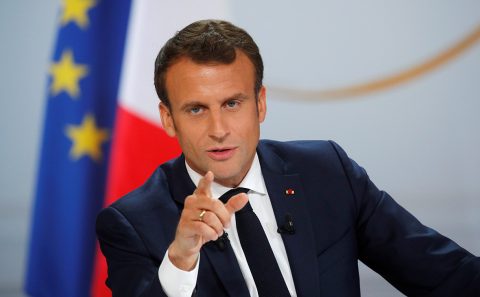
By Ramzy Baroud | MEMO | April 16, 2025
Israeli Prime Minister Benjamin Netanyahu’s vehement opposition to a Palestinian state aligns perfectly with a long-standing Zionist ideology that has consistently viewed the establishment of a Palestinian state as a direct threat to Israel’s very foundation as a settler colonial project.
Thus, the mere existence of a Palestinian state with clearly defined geographical boundaries would inevitably render the state of Israel, which pointedly remains without internationally recognised borders, a state confined to a fixed physical space.
At a time when Israel continues to occupy significant swathes of Syrian and Lebanese territory and relentlessly pursues its colonial expansion to seize even more land, the notion of Israel genuinely accepting a sovereign Palestinian state is utterly inconceivable.
This reality is not a recent development; it has always been the underlying truth. This, in essence, reveals that the decades-long charade of the “two-state solution” was consistently a mirage, meticulously crafted to peddle illusions to both Palestinians and the broader international community, fostering the false impression that Israel was finally serious about achieving peace.
Therefore, it came as no surprise that Netanyahu reacted with considerable fury to French President Emmanuel Macron’s recent announcement of France’s intention to recognise the State of Palestine next June.
In a phone call with Macron yesterday, Netanyahu predictably resorted to his familiar nonsensical rhetoric, outrageously equating the establishment of a Palestinian state with rewarding “terrorism”.
And, with equal predictability, he trotted out the well-worn and unsubstantiated claims about an Iranian connection. “A Palestinian state established a few minutes away from Israeli cities would become an Iranian stronghold of terrorism,” Netanyahu’s office declared in a statement.
Meanwhile, Macron, with a familiar balancing act, reiterated his commitment to Israeli “security”, while tepidly emphasising that the suffering in Gaza must come to an end.
Of course, in a more just and reasonable world, Macron should have unequivocally stressed that it is Palestinian security, indeed their very existence, that is acutely at stake, and that Israel, through its relentless violence and occupation, constitutes the gravest threat to Palestinian existence and, arguably, to global peace.
Sadly, such a world remains stubbornly out of reach.
Considering Macron’s and France’s unwavering and often obsequious support for Israel throughout the years, particularly since the onset of the Israeli genocide in Gaza, some might cautiously welcome Macron’s statement as a potentially positive shift in policy.
However, it is imperative to caution against any exaggerated optimism, especially at a time when entire Palestinian families in Gaza are being annihilated in the ongoing Israeli genocide as these very words are read. It is an undeniable truth that France, like many other Western governments, has played a significant role in empowering, arming and justifying Israel’s heinous crimes in Gaza.
For France to genuinely reverse its long-standing position, if indeed that is the current trajectory, it will require far more than symbolic and ultimately empty gestures.
Palestinians are, understandably, weary and disillusioned with symbolic victories, hollow rhetoric, and insincere gestures.
The recent recognitions of the State of Palestine by Ireland, Norway and Spain in May 2024 did offer a fleeting spark of hope among Palestinians, suggesting a potential, albeit limited, shift in Western sentiment that might exert some pressure on Israel to cease its devastating actions in Gaza.
Unfortunately, this initial and fragile optimism has largely failed to translate into broader and more meaningful European action.
Consequently, Macron’s recent announcement of France’s intention to recognise the State of Palestine in June has been met with a far more subdued and skeptical reaction from Palestinians.
While other European Union countries that have already recognised Palestine often maintain considerably stronger stances against the Israeli occupation, France’s record in this regard is notably weaker.
Furthermore, the very sincerity of France’s stated position is deeply questionable, given its ongoing and concerning suppression of French activists who dare to protest the Israeli actions and advocate for Palestinian rights within France itself.
These attacks, arrests, and the broader crackdown on dissenting political views within France hardly paint the picture of a nation genuinely prepared to completely alter its course on aiding and abetting Israeli crimes.
Moreover, there is a stark and undeniable contrast between the principled positions adopted by Spain, Norway and Ireland and France’s steadfast backing of Israel’s brutal military campaign in Gaza from its very inception, a support underscored by Macron’s early and highly symbolic visit to Tel Aviv.
Macron was among the first world leaders to arrive in Tel Aviv following the war, while Palestinians in Gaza were already being subjected to the most unspeakable forms of violence imaginable.
During that visit, on 24 October 2023, he unequivocally reiterated, “France stands shoulder to shoulder with Israel. We share your pain, and we reaffirm our unwavering commitment to Israel’s security and its right to defend itself against terrorism.”
This raises a fundamental and critical question: how can France’s belated recognition of a Palestinian state be interpreted as genuine solidarity while it simultaneously remains a significant global supporter of the very entity perpetrating violence against Palestinians?
While any European recognition of Palestine is a welcome – if overdue – step, its true significance is considerably diminished by the near-universal recognition of Palestine within the global majority, particularly across the Global South, originating in the Middle East and steadily expanding worldwide.
The fact that France would be among the last group of countries in the world to formally recognise Palestine (currently, 147 out of 193 United Nations member states have recognised the State of Palestine), speaks volumes about France’s apparent attempt to belatedly align itself with the prevailing global consensus and, perhaps, to whitewash its long history of complicity in Israeli Zionist crimes, as Israel finds itself increasingly isolated and condemned on the international stage.
One can state with considerable confidence that Palestinians, particularly those enduring the unimaginable horrors of the ongoing genocide in Gaza, prioritise an immediate cessation of that genocide and genuine accountability for Israel’s actions far above symbolic acts of recognition that appear primarily aimed at bolstering France’s relevance as a global power player and a long-standing supporter of Israeli war crimes.
Finally, Macron, while reassuring Israel that its security remains paramount for the French government, must be reminded that his continued engagement with Benjamin Netanyahu is, in itself, a potential violation of international law. The Israeli leader is a wanted accused criminal by the International Criminal Court, and it is France’s responsibility, like that of the over 120 signatories to the ICC, to apprehend, not to appease, Netanyahu.
This analysis is not intended to diminish the potential significance of the recognition of Palestine as a reflection of growing global solidarity with the Palestinian people. However, for such recognition to be truly meaningful and impactful, it must emanate from a place of genuine respect and profound concern for the Palestinian people themselves, not from a calculated desire to safeguard the “security” of their tormentors.
US imposes sanctions on Chinese buyers of Iranian oil
Press TV – April 16, 2025
The United States has imposed sanctions on Chinese importers of Iranian oil despite being involved in talks with the Islamic Republic to sort out differences over its nuclear program.
The US Treasury Department’s Office of Foreign Assets Control (OFAC) said in a statement on Wednesday that it had targeted the Chinese importers of Iranian oil in a new round of sanctions issued against Tehran.
It said that the Shandong Shengxing, a so-called “teapot” refinery based in China’s Shandong province, had been designated for receiving dozens of Iranian oil shipments worth more than $1 billion.
The sanctions also targeted the China Oil and Petroleum Company Limited (COPC), an entity the Treasury claimed has been functioning as a front company for Iran’s Islamic Revolution Guards Corps to collect oil export revenues from China, including payments made by Shandong Shengxing.
OFAC said it had also designated one Cameroon-flagged and four Panama-flagged tankers for their role in transporting billions of dollars worth of Iran’s oil to international markets, including to China-based refineries.
The tankers’ owners and operators, based in Panama, Malaysia, the Marshall Islands, and Hong Kong, were also targeted.
The new sanctions are the sixth such action taken by the US government against Iran since February 4, when US President Donald Trump signed a presidential memorandum ordering a campaign of maximum pressure on the country.
They came despite the fact that Iran and the US have launched negotiations to settle disputes about Tehran’s nuclear program. The indirect talks started last weekend in Oman’s capital, Muscat, and will continue on Saturday in Italy’s Rome.
However, the sanctions are a first under Trump in his second term to directly target China and its imports of oil from Iran. Beijing has repeatedly said that it does not recognize US sanctions.
Will Yemen turn its missiles on the UAE and Saudi Arabia?
By Bandar Hetar | The Cradle | April 16, 2025
The US war on Yemen, now in its second round, has passed the one-month mark with no clear gains and no timeline for success. What is emerging instead is the growing risk of escalation – one that could force regional players, particularly Saudi Arabia and the UAE, into direct confrontation.
Still, several factors may delay or even prevent such a scenario, much like what played out last year. Understanding where this war may be headed requires a clear grasp of the terrain: how Yemen views the conflict, how its Persian Gulf neighbors are reacting, and what could trigger a wider eruption or a negotiated backtrack.
Sanaa ties its military strategy to Gaza’s resistance
Even in western circles, there’s little dispute that the war on Yemen is now deeply intertwined with Israel’s brutal war on Gaza. Washington tried, under former US president Joe Biden, to separate the two. But the reality on the ground tells a different story – one where Sanaa’s military operations were in lockstep with events in Palestine.
That link became even clearer after the January 2025 ceasefire between Hamas and Israel, which prompted a pause in Yemen’s attacks – until Tel Aviv predictably walked back its commitments. US President Donald Trump’s return to the White House brought with it a resumption of strikes on Yemen, under the pretext of defending international shipping.
Yet those attacks would not have taken place had the US not already committed to shielding Israeli vessels. The new administration, unlike the last, makes no real attempt to disguise the overlap between the two fronts.
Yemen’s strategy has been clear from the outset: Its military activity is calibrated with the resistance in Gaza. Palestinian factions determine the pace of escalation or calm, while Yemen remains prepared to absorb the fallout.
Sanaa has paid a steep price for this stance. Washington has moved to freeze economic negotiations between Yemen and Saudi Arabia, effectively punishing the former for refusing to abandon its military support for Gaza. The US has dangled economic incentives in exchange for neutrality – offers readily accepted by Arab states across the region – but Sanaa has refused to fold.
Faced with a binary choice – either maintain its support for Palestine and accept a freeze on domestic arrangements, or open a second front with Riyadh and Abu Dhabi – Yemen chose to stay the course.
That decision was rooted in three core beliefs: that Palestine must be supported unconditionally, even if it means sacrificing urgent national interests; that Ansarallah’s political identity is grounded in opposition to Israeli hegemony and thus incompatible with any alignment with Persian Gulf normalization; and that Yemen must deny Washington and Tel Aviv the opportunity to distract it with side wars designed to weaken its strategic focus.
Gulf frustration builds over Yemen’s defiance
Arab coalition partners Saudi Arabia and the UAE have not taken kindly to Yemen’s decision. Both countries have used the moment to begin backpedaling on the April 2022 truce and to impose punitive costs on Sanaa for throwing its weight behind Gaza.
The optics have not favored either of the Gulf monarchies. Abu Dhabi is fully normalized with Israel, while Riyadh is edging ever closer. Yemen, meanwhile – still scarred from years of Saudi–Emirati aggression – has moved swiftly to back the Palestinian cause. The contrast could not be more stark: The Arab state most brutalized by Riyadh and Abu Dhabi is now standing up for Palestine while the aggressors look away.
Yemen’s stance also clashes with the broader geopolitical alignment of both Persian Gulf states, which remain deeply embedded in Washington’s orbit. But their frustration has remained mostly rhetorical.
Despite their roles in the so-called “Prosperity Guardian” alliance, neither Saudi Arabia nor the UAE has made major military moves against Yemen since the new round of US airstrikes began. Initially, Riyadh attempted to tie Yemen’s maritime operations in the Red Sea to the Gaza war, but that framing soon gave way to vague talk of threats to commercial shipping – code for backpedaling.
Saudi political messaging shifted sharply in January when it refused to take part in joint US–UK bombing raids. Its defense ministry moved quickly to deny reports that Saudi airspace had been opened for US strikes, and later distanced itself from any Israeli involvement. The message from Riyadh was clear: It does not want to be dragged into another full-scale war with Yemen – not now.
Yemen counters with a policy of containment
Despite Saudi Arabia’s retreat from its prior commitments, Yemen has actively encouraged Riyadh and Abu Dhabi to maintain a posture of neutrality. This is not out of optimism but pragmatism: Avoiding a wider war with the Persian Gulf would prevent a dangerous regional blowout. Sanaa’s goal has been to steer Saudi and Emirati decision-making away from military confrontation, proxy mobilization, or economic escalation.
That last point nearly tipped the balance in July 2024, when Riyadh instructed its puppet government in Aden to relocate Yemen’s central banks from Sanaa. It was a clear economic provocation – and a red line.
Within days, Ansarallah leader Abdul Malik al-Houthi delivered a sharp warning, framing the Saudi move as part of an Israeli–American playbook.
“The Americans are trying to entangle you [Saudi Arabia], and if you want that, then try it … The move towards aggressive escalation against our country is something we can never accept,” he revealed in a 7 July 2024 speech.
He warned Riyadh that falling for this trap would be “a terrible mistake and a great failure, and it is our natural right to counter any aggressive step.”
Sanaa responded with an unmistakable deterrent equation: “banks for banks, Riyadh Airport for Sanaa Airport, ports for ports.”
The Saudi maneuver may have been a test of Yemen’s resolve, possibly based on the assumption that Sanaa was too overextended – facing down a US-led coalition and spiraling domestic hardships – to respond decisively.
If so, Riyadh miscalculated. Houthi’s reply was blunt:
“This is not a matter of allowing you to destroy this people and push it to complete collapse so that no problems arise. Let a thousand problems arise. Let matters escalate as far as they may.”
No appetite in Riyadh or Abu Dhabi for a war without guarantees
The day after Houthi’s warning, massive protests erupted across Yemen. Millions marched in condemnation of Saudi provocations, offering the clearest signal yet that public opinion was firmly aligned behind the resistance – and willing to escalate.
Riyadh knows this. Even before the latest crisis, much of Yemeni society held Saudi Arabia and the UAE responsible for what even the UN called the world’s worst humanitarian disaster. Any new conflict would only deepen that anger.
Faced with the threat of direct retaliation, Riyadh backed off its banking gambit. The memory of past Yemeni strikes on Saudi oil facilities – particularly those between 2019 and 2021 –still haunts the Saudi leadership.
Today, Yemen’s capabilities have expanded. It now possesses hypersonic missiles and increasingly sophisticated drone technologies. And it is precisely because of these advances that Washington has failed to strong-arm the Gulf into renewed warfare. There are no meaningful US security guarantees on the table – nothing that would shield Saudi oil fields, critical infrastructure, or commercial shipping lanes from blowback.
The failures are already evident. The “Prosperity Guardian” coalition has done little to stop Yemeni strikes on Israeli-linked vessels, and US–UK airstrikes have failed to stem Yemen’s ability to hit deep inside Israel. These battlefield realities have changed the calculus in Riyadh and Abu Dhabi. Escalation, for now, is off the table.
Yemen’s red lines are expanding
That does not mean Washington has stopped trying to drag Saudi Arabia and the UAE into the fight. The Biden administration failed to do so. The Trump team, however, is seen as more aggressive and more likely to provide advanced weapons systems that might tempt Riyadh and Abu Dhabi to take the plunge.
There is also the perception among Gulf elites that this is a strategic opening: Syria’s collapse, Hezbollah’s supposed decline, and shifting regional dynamics may provide a rare window to redraw the map.
But for the Saudis, Yemen remains the central concern. A liberated, ideologically defiant state on their southern border is an existential threat – not only to security, but to the cultural rebranding project that the Kingdom has invested so heavily in. The UAE shares similar anxieties. A rising Yemeni Resistance Axis threatens its carefully curated image as a regional player in sync with Israeli and western interests.
That is why Sanaa has placed its forces on high alert. Ansarallah is monitoring every move by Riyadh, Abu Dhabi, and their local proxies – many of whom are eager to join the war. These groups have signaled readiness to participate in an international coalition to “protect shipping,” and have already held direct meetings with US military and political officials.
But the Sanaa government knows these factions would not act without orders. If they are mobilized for a broad ground offensive, Yemen will respond by targeting the powers behind them. Any ground war will be seen as a Saudi–Emirati initiative, not a local one. The same logic applies to renewed airstrikes or deeper economic war. These are Sanaa’s red lines.
A warning to the Axis of Normalization
Abdul Malik al-Houthi laid it out clearly during a 4 April address:
“I advise you all [Arab states neighboring Yemen], and we warn you at the same time: Do not get involved with the Americans in supporting the Israelis. The American enemy is in aggression against our country in support of the Israeli enemy. The battle is between us and the Israeli enemy.
The Americans support it, protect it, and back it. Do not get involved in supporting the Israeli enemy … any cooperation with the Americans in aggression against our country, in any form, is support for the Israeli enemy, it is cooperation with the Israeli enemy, it is conspiracy against the Palestinian cause.”
He went further:
“If you cooperate with the Americans: Either by allowing him to attack us from bases in your countries. Or with financial support. Or logistical support. Or information support. It is support for the Israeli enemy, advocacy for the Israeli enemy, and backing for the Israeli enemy.”
This was not just a warning. It was a strategic declaration. Any country crossing these lines will be treated as an active participant in the war – and subject to retaliation.
The message is aimed not just at Riyadh and Abu Dhabi, but at other Arab and African states that might be tempted to join the fray under the guise of “protecting international navigation.”
Yemen is preparing for all scenarios. It will not be caught off guard. And this time, it won’t be fighting alone.
Slovak PM Fico urges support for Ukrainian gas transit during visit to Croatia
By Thomas Brooke | Remix News | April 16, 2025
Slovak Prime Minister Robert Fico called on Croatian Prime Minister Andrej Plenković to support the resumption of natural gas transit through Ukraine during an official visit to Zagreb on Wednesday.
Fico noted that while Slovakia’s domestic gas needs are currently being met, the country is losing out on key transit revenues due to the halted pipeline flow.
“The resumption of gas flow through Ukraine should be in the interest of the entire European Union, including Slovakia, of course,” Fico said during a joint press conference, as cited by TASR news agency. He acknowledged Croatia’s support in providing access to liquefied natural gas (LNG) via terminals on the island of Krk, but noted that the LNG option remains more expensive for Slovakia.
In January, Fico invited Ukrainian President Volodymyr Zelensky to negotiations over the halted transit of natural gas through Ukraine. This was after Kyiv ceased the gas flow at the start of 2025 following the expiration of a contract with Russia, leaving Slovakia and other European nations scrambling to secure energy supplies.
The Slovak prime minister later accused Ukrainian President Volodymyr Zelensky of “begging and blackmailing” European nations for financial aid after turning off the taps.
The meeting in Zagreb highlighted what Fico described as “excellent relations” between Slovakia and Croatia. He expressed gratitude for the hospitality extended to the Slovak delegation and for the warm welcome Slovak tourists receive each year in Croatia. He also acknowledged the continued support of the Slovak minority living in Croatia.
During the bilateral talks, the two leaders agreed on the need to strengthen trade ties, collaborate on illegal migration management, and jointly advocate for cohesion and agricultural policies within the EU budget.
Prime Minister Plenković noted that trade between the two countries now exceeds €1.5 billion, reflecting growing cooperation.
Fico also highlighted Croatia’s role in protecting the EU’s Schengen border, particularly its border with Bosnia and Herzegovina. He offered technical and material support to assist Croatia in this area.
While acknowledging some differences in their perspectives, both leaders reaffirmed their shared desire for an end to the war in Ukraine and a return to peace. They also discussed enhanced cooperation in the arms industry and plans for deeper cultural collaboration. Plenković announced that a bilateral cultural cooperation program for 2025-2029 would soon be signed between the countries’ respective ministries of culture.
Prime Minister Fico’s visit continues with meetings scheduled with Croatian President Zoran Milanović and the Speaker of Parliament Gordan Jandroković. He is accompanied by Slovak Foreign Minister Juraj Blanár.
Iran signs contract to convert Iraq’s flare gas into petchem feedstock
Press TV – April 14, 2025
Iran has secured a contract to convert flare gas from Iraqi oilfields into feedstock for petrochemical plants located near its border with the Arab country.
Iranian Oil Minister Mohsen Paknejad and Iraqi Deputy Prime Minister for Energy Affairs Hayyan Abdul Ghani supervised the signing of the contract on Monday in Baghdad, according to a report by the Iranian Oil Ministry’s news service Shana.
The report said that Iran’s state-run and private companies will contribute to the flare gas recovery project in the Iraqi oilfields that are located near the Iranian border.
The report quoted Paknejad as saying that Iraq is currently burning a part of the flare gas that is extracted with oil, adding that Iran will capture the gases and transport them to its Natural Gas Liquids (NGL) plants across the border to convert them to feedstock for its petrochemical plants.
He said that the contract will alleviate a shortage of NGL feedstock in western Iran where the country is racing against time to end gas flaring in its own oilfields.
Shana said Paknejad and his delegation, who arrived in Iraq earlier in the day as part of an official visit, signed other contracts with the Iraqi side led by Abdul Ghani to facilitate petroleum sector cooperation between the world’s two major oil-producing nations.
Abdul Ghani, who is also Iraq’s oil minister, said after meeting his Iranian counterpart that the Arab country needs Iran’s technical and investment support to reach self-sufficiency in petroleum products.
The contracts include the exchange of experts between Iran and Iraq and launching joint investment projects, Shana said.
During his two-day visit to Iraq, Paknejad will also meet Iraqi Prime Minister Mohammed Shia’ Al Sudani and the country’s Minister of Electricity Ziad Ali Fadel.
MMR (Measles, Mumps and Rubella) – Vaccine Risk Statement
MMR Vaccine (Measles, Mumps, and Rubella) Is It Safer Than Measles, Mumps and Rubella?
Physicians for Informed Consent | December 2024
What Is the MMR Vaccine?
The measles, mumps, and rubella (MMR) vaccine is a live virus vaccine that was introduced in 1963. It has significantly reduced the incidence of reported cases of measles, mumps, and rubella infections; however, vaccine immunity wanes over time.1-3
What Are Side Effect of the MMR Vaccine?
Common side effects of the MMR vaccine include fever, mild rash, and swelling of glands in the cheeks or neck.4 A more serious side effect is seizure, which occurs in about 1 in 640 children vaccinated with MMR5 — about five times more often than seizure from measles infection.6
Although severe potential side effects have been observed following MMR vaccination, including neurological disorders (e.g., encephalopathy, meningitis, ataxia, transverse myelitis, optic neuritis, multiple sclerosis, Guillain-Barré syndrome, brachial neuritis, and hearing loss), autoimmune diseases (e.g., chronic arthritis), fibromyalgia, and chronic fatigue syndrome, the Institute of Medicine (IOM) states that “the evidence is inadequate to accept or reject a causal relationship between MMR vaccine” and those conditions.7 Additionally, the manufacturer’s package insert states, “M-M-R II vaccine has not been evaluated for carcinogenic or mutagenic potential or impairment of fertility.”8
How Are Risks of Vaccine Side Effects Measured?
Methods to measure vaccine risks include surveillance systems, clinical studies, and epidemiological studies.
How Accurate Is Surveillance of Adverse Events from the MMR Vaccine?
The government tracks reported cases of vaccine side effects through the Vaccine Adverse Event Reporting System (VAERS). Approximately 40 cases of death and permanent injury from the MMR vaccine are reported to VAERS annually.9 However, VAERS is a passive reporting system — authorities do not actively search for cases and do not actively remind doctors and the public to report cases. These limitations can lead to significant underreporting.10 The Centers for Disease Control and Prevention (CDC) states, “VAERS receives reports for only a small fraction of actual adverse events.”11 Indeed, as few as 1% of serious side effects from medical products are reported to passive surveillance systems,12 and as few as 1.6% of MMR-related seizures are reported to VAERS.13 In addition, VAERS reports are not proof that a side effect occurred, as the system is not designed to thoroughly investigate all cases.14 As a result, VAERS does not provide an accurate count of MMR vaccine side effects.
How Accurate Are Clinical Trials of the MMR Vaccine?
The CDC states, “Prelicensure trials are relatively small — usually limited to a few thousand subjects — and usually last no longer than a few years… Prelicensure trials usually do not have the ability to detect rare adverse events or adverse events with delayed onset.”10 For children under age 10 at normal risk (i.e., with normal levels of vitamin A and infected after birth), the pre-vaccine annual risk of death or permanent disability from measles, mumps, and rubella respectively was 1 in 1 million, 1 in 1.6 million, and 1 in 2.1 million.6,15-17 Therefore, the cumulative annual risk of a fatal or permanently disabling case of any of those diseases was about 1 in 500,000, and the risk over a 10-year span was 1 in 50,000. A few thousand subjects in clinical trials are not enough to prove that the MMR vaccine causes less permanent disability or death than measles, mumps, and rubella (Fig. 1). In addition, the lack of adequate clinical trials of the MMR vaccine resulted in the manufacturer’s package insert data to be reliant on passive surveillance for rates of MMR-related neurological adverse reactions, permanent disability, and death.8
How Accurate Are Epidemiological Studies of the MMR Vaccine?
Epidemiological studies are hindered by the effects of chance and possible confounders — additional factors that could conceivably affect the groups being studied. For example, there is a well-known 2002 Danish study published in the New England Journal of Medicine involving about 537,000 children that looked for an association between the MMR vaccine and certain adverse events.18 The raw data in the study was adjusted, in an attempt to account for potential confounders, and the study found no association between the MMR vaccine and the adverse events. However, because there is no evidence that the estimated confounders used to adjust the raw data were actually confounders, the study did not rule out the possibility that the MMR vaccine increases the risk of an adverse event that leads to permanent injury by up to 77%. Consequently, the study did not rule out the possibility that such adverse events might occur up to 21 times more often than death or permanent disability from measles, mumps, and rubella in children at normal risk (i.e., with normal levels of vitamin A and infected after birth): 1 in 2,400 compared to 1 in 50,000 (Fig. 2 and Table 1). The range of possibilities found in the study, between the adjusted data and the raw data, makes the result inconclusive; even large epidemiological studies are not accurate enough to prove that the MMR vaccine causes less death or permanent injury than measles, mumps, and rubella.
Is the MMR Vaccine Safer Than Measles, Mumps, and Rubella?
It has not been proven that the MMR vaccine is safer than measles, mumps, and rubella. The vaccine package insert raises questions about safety testing for cancer, genetic mutations, and impaired fertility. Although VAERS tracks some adverse events, it is too inaccurate to measure against the risk of measles, mumps, and rubella. Clinical trials do not have the ability to detect less common adverse reactions, and epidemiological studies are limited by the effects of chance and possible confounders. Safety studies of the MMR vaccine are particularly lacking in statistical power. A review of more than 60 MMR vaccine studies conducted for the Cochrane Library states, “The design and reporting of safety outcomes in MMR vaccine studies, both pre- and post-marketing, are largely inadequate.”19 Because permanent sequelae (aftereffects) from measles, mumps, and rubella are so rare (especially in children with normal levels of vitamin A and infected after birth),6,15-17 the level of accuracy of the research studies available is insufficient to rule out the possibility that the MMR vaccine causes greater death or permanent disability than measles, mumps, and rubella.
References
- LeBaron CW, Beeler J, Sullivan BJ, Forghani B, Bi D, Beck C, Audet S, Gargiullo P. Persistence of measles antibodies after 2 doses of measles vaccine in a postelimination environment. Arch Pediatr Adolesc Med. 2007 Mar;161(3):294-301. https://pubmed.ncbi.nlm.nih.gov/17339511/.
- Lewnard JA, Grad YH. Vaccine waning and mumps re-emergence in the United States. Sci Transl Med. 2018 Mar 21;10(433):2. http://stm.sciencemag.org/content/10/433/eaao5945.
- Davidkin I, Jokinen S, Broman M, Leinikki P, Peltola H. Persistence of measles, mumps, and rubella antibodies in an MMR-vaccinated cohort: a 20-year follow-up. J Infect Dis. 2008 Apr 1;197(7):955. https://pubmed.ncbi.nlm.nih.gov/18419470/.
- Centers for Disease Control and Prevention. Washington, D.C.: U.S. Department of Health and Human Services. Vaccines and immunizations: possible side effects from vaccines; [cited 2023 Dec 28]. https://physiciansforinformedconsent.org/cdc-vaccines-and-immunizations-possible-side-effects-from-vaccines/.
- Vestergaard M, Hviid A, Madsen KM, Wohlfahrt J, Thorsen P, Schendel D, Melbye M, Olsen J. MMR vaccination and febrile seizures: evaluation of susceptible subgroups and long-term prognosis. JAMA. 2004 Jul 21;292(3):356. https://jamanetwork.com/journals/jama/fullarticle/199117.
- Physicians for Informed Consent. Newport Beach (CA): Physicians for Informed Consent. Measles – disease information statement (DIS). 2017 Oct; updated 2024 Aug. https://physiciansforinformedconsent.org/measles.
- Institute of Medicine (IOM). Adverse effects of vaccines: evidence and causality. Washington, D.C.: National Academies Press; 2012. 119-217. https://www.ncbi.nlm.nih.gov/books/NBK190024/pdf/Bookshelf_NBK190024.pdf.
- Merck. Rahway (NJ): Merck and Co., Inc. M-M-R II (measles, mumps, and rubella virus vaccine live); revised 2023 Oct [cited 2024 Jan 27]. 8. https://www.merck.com/product/usa/pi_circulars/m/mmr_ii/mmr_ii_pi.pdf.
- Centers for Disease Control and Prevention. Washington, D.C.: U.S. Department of Health and Human Services. CDC wonder: about the Vaccine Adverse Event Reporting System (VAERS); [cited 2024 Feb 12]. https://wonder.cdc.gov/vaers.html. Query for death and permanent disability involving all measles-containing vaccines, 2011-2015.
- Centers for Disease Control and Prevention. Manual for the surveillance of vaccine-preventable diseases. 5th ed. Miller ER, Haber P, Hibbs B, Broder Chapter 21: surveillance for adverse events following immunization using the Vaccine Adverse Event Reporting System (VAERS). Atlanta: Centers for Disease Control and Prevention; 2011. 1,2,8. https://physiciansforinformedconsent.org/cdc-manual-for-the-surveillance-of-vaccine-preventable-diseases-5th-ed-chpt21-surv-adverse-events-2011.
- Centers for Disease Control and Prevention, Food and Drug Administration. Washington, D.C.: U.S. Department of Health and Human Services. Guide to interpreting VAERS data; [cited 2022 May 28]. https://vaers.hhs.gov/data/dataguide.html.
- Kessler DA. Introducing MEDWatch. A new approach to reporting medication and device adverse effects and product problems. JAMA. 1993 Jun 2;269(21):2765- https://www.sciencedirect.com/science/article/abs/pii/0163834394900515?via%3Dihub.
- Doshi P. The unofficial vaccine educators: are CDC funded non-profits sufficiently independent? [letter]. BMJ. 2017 Nov 7 [cited 2017 Nov 20];359:j5104. http://www.bmj.com/content/359/bmj. j5104/rr-13.
- Centers for Disease Control and Prevention. Washington, D.C.: U.S. Department of Health and Human Services. CDC wonder: about the Vaccine Adverse Event Reporting System (VAERS); [cited 2022 May 28]. https://wonder.cdc.gov/vaers.html.
- Magno H, Golomb B. Measuring the benefits of mass vaccination programs in the United States. Vaccines. 2020 Sep 29;8(4):4. https://pubmed.ncbi.nlm.nih.gov/33003480/.
- Physicians for Informed Consent. Newport Beach (CA): Physicians for Informed Consent. Mumps – disease information statement (DIS). Mumps: what parents need to know. 2024 Aug. https://physiciansforinformedconsent.org/mumps.
- Physicians for Informed Consent. Newport Beach (CA): Physicians for Informed Consent. Rubella – disease information statement (DIS). Rubella: what parents need to know. 2024 Aug. https://physiciansforinformedconsent.org/rubella.
- Madsen KM, Hviid A, Vestergaard M, Schendel D, WohlFahrt J, Thorsen P, Olsen J, Melbye M. A population-based study of measles, mumps, and rubella vaccination and autism. N Engl J Med. 2002 Nov 7;347(19):1477,1480. https://www.nejm.org/doi/full/10.1056/NEJMoa021134?url_ver=Z39.88-2003&rfr_id=ori%3Arid%3Acrossref.org&rfr_dat=cr_pub%3Dpubmed.
- Demicheli V, Rivetti A, Debalini MG, Di Pietrantonj C. Vaccines for measles, mumps and rubella in children. Cochrane Database of Syst Rev. 2012 Feb 15;(2). https://pubmed.ncbi.nlm.nih.gov/22336803/.
Profanity-ridden Emails, Misuse of CDC Funds: How Big Fluoride Tries to Prevent Towns From Cleaning Up Their Water
By Brenda Baletti, Ph.D. | The Defender | April 15, 2025
When Washburn, North Dakota’s town commissioners decided in January to take up the issue of whether or not to continue fluoridating the water supply for the town’s 1,300 residents, they anticipated researching the risks versus benefits and putting the matter to a vote.
What they didn’t anticipate — but soon encountered — was evidence of a coordinated effort by state actors and a national fluoride lobby group, using federal money, to crush local efforts by small towns like Washburn to stop fluoridating their water supplies.
On Monday night, town commissioners voted 4-1 to stop adding fluoride to Washburn’s water supply — making Washburn the latest in a growing list of communities across the country to end the practice in light of mounting scientific evidence that the chemical harms children’s health and provides little or no dental benefit.
At the meeting, Commissioner Keith Hapip shared what he said was evidence of astroturfing by Dr. Johnny Johnson, president of the American Fluoridation Society; Jim Kershaw, Bismarck, North Dakota’s water plant superintendent and others.
“Astroturfing is when a group with money and power pretends to be regular folks supporting something, but it’s really a planned push from the top,” Hapip said. “Real grassroots come from the community naturally. And here, the oral health program used CDC [Centers for Disease Control and Prevention] cash to manufacture support for fluoridation in Washburn.”
Johnson phoned into the meeting to advocate for water fluoridation. In response, the commission also hosted a presentation by Michael Connett — the attorney who represented the plaintiffs who won a landmark ruling in a lawsuit against the U.S. Environmental Protection Agency for the agency’s failure to appropriately regulate fluoride use in water supplies.
Dr. Griffin Cole, conference chairman of the International Academy of Oral Medicine and Toxicology, who has expertise on fluoride’s toxic effects, also made a presentation.
Interviews by The Defender with grassroots actors across the country revealed that for years, Johnson, one of the country’s foremost advocates of water fluoridation, has been intervening in grassroots efforts to end fluoridation in their communities.
He and colleagues — in this case, Kershaw — travel physically or virtually to meetings in towns across the country.
Johnson himself, along with the American Dental Association (ADA), openly celebrates this work lobbying local governments. The ADA frequently reports on Johnson’s appearances and his “success” blocking community efforts to end fluoridation on its website.
As recently as last week, Johnson reportedly bussed in dentists to a meeting in Seminole County, Florida.
North Dakota officials misused CDC funding to lobby in Washburn
On Jan. 13, Hapip brought the issue of fluoridation to the commission. He kicked off the discussion by asking some basic questions: “Is there an ethical question to medicating people without explicit consent? And, does fluoride work systemically or topically?”
Kershaw, a staunch water fluoridation advocate, traveled the 35 miles from Bismarck, a much larger city, to present information about water fluoridation.
Kershaw so adamantly pushed fluoride that one of the commissioners asked him if he was there representing “big fluoride” or some other interest. Kershaw said he was there on his own money and his own time because he simply had learned a lot and was “excited about sharing it with other people.”
“I do this on my own time, and to help colleagues like this,” he said. “I do this on my own. I do this out of my own expense for gas money and stuff.”
Hapip said he was surprised by the response. “There were people writing us letters from out-of-state regional dentist associations, people traveling from Bismarck to come to our meeting. It was like, there’s something going on here,” he said. And the letters were all strikingly similar. “They seemed very copy and paste.”
Hapip found the disproportionate response to the small-town question and Kershaw’s comments to be so strange that he submitted a public records request for communications between Kershaw and the top officials at the North Dakota Oral Health Program (OHP), including Director Cheri Kiefer and OHP Public Health Hygienist Vanessa Bopp, about Washburn.
A Jan. 6 email from Kiefer informed Kershaw — who is not an OHP employee — that the agency would fund his trip to Washburn, and a Jan. 21 email confirmed the reimbursement.
They also included an email from Kiefer wishing Kershaw success, “You’re going to be amazing Jim!! Flatten them like a pancake,” she wrote.
When Hapip read the emails, he was outraged. “OHP Director Kiefer urged Kershaw to crush us hours before the meeting. This isn’t technical assistance or education — it’s a funded intent to dominate,” he told The Defender.
Hapip said the funding for OHS comes from a $380,800 annual grant from the CDC and a $400,000 annual grant from the Health Resources & Services Administration (HRSA)
Both grants explicitly prohibit the use of funds for publicity or propaganda purposes or for lobbying or influencing legislation at any level, such as that being proposed in Washburn.
“These emails suggest that they’re violating their grant funding,” Hapip told The Defender. “They are directly reaching out to public health officials to come speak at our meetings. They’re providing dentists with letters — I’m not even kidding — giving them a full template.”
The template was first shared with Hapip by a city counselor, Rebecca Osowski, in Grand Forks, which is also considering ending fluoridation. Hapip and Osowski noticed they were receiving multiple letters that were strikingly similar. The records request showed the letter template, along with emails from OHP staff approving the template.
The letters from the template constituted “90% of the pushback” the council received, Hapip reported at Monday night’s meeting.
Hapip said the dentists who sent in the letters from the templates didn’t include their contact information. He looked them up and reached out to them, asking them to comment on multiple recent major studies linking fluoride to neurotoxicity in children.
Record request responses show that at least two of the dentists forwarded Hapip’s letter to Kershaw, who told them not to respond.
Hapip was outraged. “Their grant is to provide education. So that was an education opportunity. They are denying the education opportunities and only doing the activism. It’s ridiculous.”
After Hapip’s records request, Kershaw began using his personal email rather than his professional one for communications.
Hapip has filed a formal complaint with the North Dakota Department of Health and Human Services.
Johnson and Kershaw use abusive and degrading language to mock and demean opponents of fluoridation
After Kershaw’s appearance at Washburn’s meeting, Hapip reached out to ask him about several points he made at the meeting. Hapip provided evidence that Kershaw’s statements were false and asked him to respond.
For example, Hapip said he called poison control to ask if there was a safety concern if children swallowed toothpaste and was told that if a child consumes more than two ounces of toothpaste, there would be a serious medical concern, requiring treatment with calcium.
This contradicted information Kershaw had provided — via Johnson — that poison control says a child would have to swallow an entire tube of toothpaste to get sick, and that the foaming agent in toothpaste would compel them to vomit first.
Poison control told Hapip that no agent in toothpaste would induce a child to throw up on their own.
Records show that Kersaw consulted with Johnson on his response, calling Hapip a “dink.”

Johnson responded, calling Hapip a series of expletives and asked Kershaw if he could respond to him directly. Kershaw replied, “Don’t reply to him now, I have a plan.”

Commenting on the email, Hapip said he was shocked. “It’s a kind of rough start to a relationship, I guess you could say.”
At Monday’s meeting, Hapip confronted Johnson about his comments. Johnson said he was simply “blowing off steam” and that he gets “a bit disturbed” because he is constantly having his integrity and professionalism called into question.
Johnson also complained that public records requests seeking information about fluoride communications are made to “stop people from being able to have their free speech about helping public health folks.”
Johnson was referring to the many Freedom of Information Act requests that have revealed, among other things, collusion among the ADA and other lobbying groups and top public health officials to prevent scientific evidence of fluoride’s dangers from reaching the public.
Cole, who listened to the meeting, told The Defender it was clear that Johnson was tipped off in advance that Hapip planned to confront him. He said Johnson’s response was disingenuous.
“He acted like such a victim,” Cole said. “He has no idea what people like me and other people who have been doing research on fluoride’s toxic effects for years have gone through.”
”For years and years, people were being just denigrated and their careers ruined because they were simply telling the truth. They were doing the science, and saying here are the results. For that, they were blacklisted.”
Cole said that unlike Johnson, researchers concerned with fluoride’s negative effects don’t badmouth those who promote fluoridation; they simply present the facts.
Cole and Connett’s presentations followed. They presented data from research published by government agencies and in top journals showing that fluoride exposure is linked to lowered IQ in children and other negative neurocognitive effects — even at fluoridation levels currently recommended by the public health agencies, as well as recent research showing that water fluoridation has little benefit for dental health.
A few public comments were made supporting both sides of the debate. Then, the commission voted.
After the vote, the commission asked the water plant operator what would be necessary to implement the decision to stop fluoridating Washburn’s water supply. He said the fluoridation could be stopped as soon as five minutes after the meeting concluded.
Grand Forks is the next battlefield
Grand Forks, the third largest city in North Dakota, is set to discuss water fluoridation next week. The issue first came up earlier in the year as part of a broader discussion about the city’s annual bids for treatment chemicals at water and wastewater treatment plants, according to the Grand Forks Herald.
In January, the council voted 4-3 to maintain fluoridation after Osowski made a motion to remove it, but they are revisiting that decision.
Johnson and Kershaw are preparing their commentaries, according to emails released to Hapip through records requests. They continue their use of profanity to characterize public officials opposed to their position, referring to Osowski in the email below.

Emails show that since January, Bopp and Kiefer have been working behind the scenes to mobilize dentists, dental associations and others to intervene to influence the legislation in Washburn and Grand Forks.
At least one other town in North Dakota, McVille, voted to remove fluoride from its water in 2023. However, after Johnson, Kershaw, OPH employees Bopp and Kiefer, and dentists from the ADA pressured the town of 417 inhabitants — Johnson flew in for their meeting — the town reversed the decision.
This article was originally published by The Defender — Children’s Health Defense’s News & Views Website under Creative Commons license CC BY-NC-ND 4.0. Please consider subscribing to The Defender or donating to Children’s Health Defense.
Featured Video
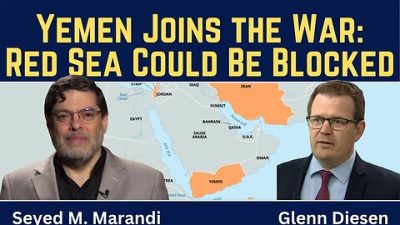
Yemen joins the war – Red Sea could be blocked next – Saudi regime at risk
or go to
Aletho News Archives – Video-Images
From the Archives
A superpower and “the world’s sickest warrior state”
By Paul J. Balles | March 8, 2010
Living through five or six major wars has hardened me to what I thought were the extremes of inhuman cruelty and brutality.
Two things made those extremes almost bearable: the brutality always revealed – at least according to the media coverage – the viciousness of the enemy. It was therefore quite understandable when our “brave men and women” pulverized the enemy.
Films of Japanese torturing captive Americans somehow justified holding Japanese Americans in internment camps during World War II; and only a small percentage of Americans found the bombing of Hiroshima and Nagasaki unreasonably vengeful at best, at worst, depraved.
The media giants in America portrayed the North Koreans as barbaric beasts with their captives, quite unlike their southern counterpoints – our allies during the Korean War. No one ever felt the need to explain how the South Koreans were a civilized breed while the North Koreans were absolute savages, at least according to the official line.
In Vietnam, our warriors justifiably (or so the media made us believe) dropped napalm on the North Vietnamese who had the gall to hide in villages and tunnels to ravage our invaders. At least it was accepted practice until some rogue photojournalist filmed a young girl screaming down a Vietnamese road in flames. … continue
Blog Roll
 Aletho News
- Russian tanker approaches Cuba despite US oil blockade
- Marandi: Yemen joins the war – Red Sea could be blocked next – Saudi regime at risk
- Pro-Palestinian French member of European Parliament denied entry to Canada
- Pakistan to Host US-Iran Talks
- How Indonesia’s tilt toward the US left it stranded in the Strait of Hormuz
- US has no choice but to retreat from Iranian borders: Top commander
- Iran Retaliation Strikes Chemical Plant Near Dimona
- AWACS’ Destruction is a Major Loss for US Military – Ex-DoW Analyst
- Israel’s Iran Strategy Uses US Military & Gulf States as Its Pawns
- Iran: Trump wanted regime change, now just begging for Hormuz to open
- If Americans Knew
- Israeli police block Catholic cardinal from entering Church of the Holy Sepulchre on Palm Sunday
- Israel is assassinating journalists again, more than any other nation, anywhere, ever – Not a ceasefire Day 170
- Over 300 US service members wounded, majority have brain injuries – Not a ceasefire Day 169
- Researchers at Human Rights Watch Resign Over Blocked Report on Palestinian Refugee Return
- Jewish Groups Are Backing a War Americans Don’t Want
- Eric Fingerhut Thinks He’s the President of the Jews
- Top Jewish Philanthropists, Rabbis Urge Israeli President to Take Action Against ‘Jewish Extremists’
- Don’t Be Fooled. Zionist Leaders Have Always Wanted to Control Southern Lebanon
- Israel’s widespread use of torture is a core element of its genocide against the Palestinian people
- In Israel’s War on Iran, Many Middle East US Bases Rendered “All But Uninhabitable”
- No Tricks Zone
- German Science Blog Accuses PIK Climate Institute Of Hallucinating Climate Tipping Points
- Devastating Assessment Of Comirnaty Vaccine By Former Senior Pfizer Europe Toxicologist
- New Study: CO2 Is ‘Effectively Negligible’ As An Explanatory Climate Change Factor Since 2000
- Former Pfizer Toxicologist Dr. Helmut Sterz Tells Bundestag Hearing Pfizer Vaccine Should Have Never Been Approved
- Energy Expert: Germany’s Nuclear Phaseout Was A “500 Billion Euro Mistake”
- New Research: South Australia’s Mid-Holocene Sea Surface Temperatures Were 4°C Warmer Than Today
- Storing Green Energy To Last Germany 10 Days Would Require A 60-Million Tonne Battery
- New Studies: UK Sea Levels Were 4 Meters Higher Than Today During The Mid-Holocene
- Destructive Green New Deal: German Energy And Metal Group Warns Of Drastic Crisis
- New Study Documents A 20-Year Pause In Arctic Sea Ice Decline – Driven By Internal Variability
 Aletho News
