The EU wants Ukraine in the European Union, and they are willing to use underhanded methods in violation of the founding treaty, including cutting Hungary out of the process and ignoring the country’s veto.
Marta Kos, the European Commission’s commissioner for enlargement, spoke to the European Parliament’s Foreign Affairs Committee on Tuesday, where she made it clear that they want to complete the enlargement process for Ukraine by the end of the next EU term, which is 2029.
“We must and will succeed in the next phase of European unification. We have a realistic chance of bringing one or more candidate countries to the finish line in this cycle,” said Kos.
To speed up the process, Brussels is also working on introducing an “alternative” decision-making mechanism. This is intended to ensure that bilateral disputes – such as Hungarian vetoes – can no longer hold back EU enlargement.
“Together with EU member states, the commission is exploring options to simplify access procedures so that bilateral issues do not hinder enlargement in this very sensitive geopolitical situation,” she said.
Kos also specifically addressed the accession process of Ukraine and Moldova, stating: “Now we absolutely have to take the next step with Ukraine and Moldova. Both countries have done their homework.” She also emphasized that all preparations have been made, so it is now up to the Council of Member States to open the first negotiation cluster.
According to the commissioner, enlargement is not only an economic opportunity, but also a key security guarantee for the European Union. To this end, the EU commission is already starting to open up the internal markets to the countries concerned — in particular in the areas of defense and security, energy and connectivity.
“To complement the accession negotiations, the commission is stepping up its efforts to accelerate the integration of the internal market: now in the areas of defense and security, and then in connectivity, energy and other areas, together with EU member states,” she added.
Kos said: “Ukraine’s access to the EU is a key security guarantee. We must make it happen. We must move forward to maintain the momentum of reforms in Ukraine, to help our member states address their concerns and, ultimately, to respond to the greatest security challenges since the Second World War.”
It is worth remembering that it was Marta Kos who recently admitted that accession negotiations with Ukraine would begin in June, and also spoke of doing everything she could to accelerate Ukraine’s accession.
She even said that a thousand people are already working in the Brussels institutions to accelerate the accession. This is interesting because it was EU Commissioner Marta Kos who showed Alex Soros that Ukraine could not meet a single EU accession condition.
Ukraine is considered the most corrupt country in Europe, a point that many top officials and organizations have acknowledged repeatedly in the past. The EU has already sent tens of billions to the country, but if EU membership occurs, European taxpayers can expect to be on the hook for many tens of billions more. The EU agriculture sector is also expected to experience even more losses if markets are opened up to cheap Ukrainian products, which is not just a concern of Hungary, but of countries across the bloc.
Mainstream mediaoutlets are touting a study published May 30 in JAMA Health Forum that predicts ending water fluoridation will worsen children’s oral health and increase national dental healthcare costs.
The study was published by Harvard’s Sung Eun Choi, Ph.D., and Brigham and Women’s Hospital’s Lisa Simon, M.D., D.M.D. Simon receives funding for other research from the ADA, the California Dental Association and other pro-water fluoridation groups, according to the study’s conflict-of-interest disclosures.
Choi and Simon estimated that If everywhere else in the U.S. were to stop fluoridating water, in the next five years, 7.5% more U.S. children ages 0-19 would get cavities — a total of 25.4 million additional teeth would be affected — and it would cost a total of $9.8 billion to treat them.
They also claimed that the number of cavities would more than double in 10 years, to 53.8 million.
The authors argue in the paper and in the press that stopping water fluoridation would disproportionately affect low-income children who are often on Medicaid or without insurance.
Leading fluoride expert Kathy Thiessen, Ph.D., told The Defender there is no good evidence that water fluoridation helps low-income people — it’s just “wishful thinking,” she said, used to justify water fluoridation.
She added:
“Caries development is probably far more related to diet (e.g., sugar) and nutrition (adequate calcium, protein, vitamins) than to fluoride or dental hygiene. That generally translates to higher income, better dental health; lower income, worse dental health.
“The U.S. would be much better off if the money spent on promoting and implementing fluoridation were spent on providing dental care, nutrition, etc., for the lower socioeconomic groups.”
The study authors acknowledged the recent research showing that fluoride exposure has serious negative consequences for children’s neurodevelopment. However, they said that because current federal guidelines haven’t changed to account for such damage, they didn’t consider it in their model.
They didn’t mention that the U.S. Environmental Protection Agency (EPA) is under a court order, which it has yet to appeal, to revise its water fluoridation regulations to account for this risk to children.
Experts on fluoride’s neurotoxic effects who spoke with The Defender were highly critical of the study’s failure to consider fluoride’s neurotoxic effects on children.
Dr. Hardy Limeback, former head of preventive dentistry at the University of Toronto and a fluoride expert said, “Banning fluoridation is a step closer to children’s overall health.”
“Why damage 75 million kids’ brains or the appearance of 9 million kids’ smiles, just to try and save maybe 25 million teeth — if that’s even close to a reliable number — from dental decay?” he asked.
Theissen said the study’s authors don’t include any of the significant costs that result from fluoride’s neurotoxic effects — ranging from immediate healthcare costs, to costs of therapy for disorders such as autism or ADHD, to lifelong earnings reductions associated with lowered IQ.
“A responsible cost-effectiveness analysis really should have included cognitive effects and other adverse effects,” she said.
Fluoride added to drinking water a byproduct of phosphate fertilizer production
Fluoride has been added to community water supplies in the U.S since the 1940s, on the assumption that it would improve children’s dental health.
However, it wasn’t until consumer advocacy groups who sued the EPA in federal court to end water fluoridation won their landmark lawsuit last year that the issue generated national attention.
Soon after Judge Edward Chen ruled that water fluoridation at current U.S. levels poses an “unreasonable risk” of reduced IQ in children and that the EPA must take regulatory action, numerous communities across the country organized campaigns to stop fluoridating their water.
Although most media reports highlight that fluoride is a “naturally occurring mineral,” the fluoride added to water supplies is not.
The fluoride most commonly added to U.S. drinking water supplies is hydrofluorosilicic acid, the byproduct of phosphate fertilizer production, sold off by chemical companies to local water departments across the country.
Overwhelming scientific research shows that fluoride’s benefits to teeth are topical, not the result of ingesting fluoride, and a 2024 Cochrane Review found adding fluoride to drinking water provides very limited dental benefits, especially compared with 50 years ago.
Experts question new study’s model, assumptions and ‘sloppy’ errors
Thiessen called the new JAMA paper “somewhat sloppy,” and cited several outright errors she said reviewers should have caught. She pointed out that the authors confused the roles of different regulatory agencies, provided incorrect citations for some of their model input numbers, and sometimes used outdated cost estimates.
To estimate the effects of ending water fluoridation, the authors created a nationally representative sample using data from 8,484 children, from birth through age 19. The data came from the National Health and Nutrition Examination Survey, which is conducted each year by the CDC and is based on interviews about diet and details from people’s health records.
The study authors used current water fluoridation levels as a proxy for how much fluoride children are exposed to, then predicted the increase in cavities that would occur if that were to stop.
Their model predicted two scenarios: if every public water system fluoridated its water at today’s recommended level of 0.7 milligrams per liter, and if there were a total national ban.
Experts questioned the use of fluoride in water as a proxy for exposure, given that children are exposed to fluoride from many sources other than drinking water, including toothpaste and all processed foods and drinks made with fluoridated water.
They also criticized the “total ban” scenario, in which the researchers estimated that fluoride levels would be reduced to zero in all systems. According to the CDC, almost all water contains some naturally occurring fluoride, so the zero fluoride estimate scenario can’t occur.
It was also “assumed” that children benefit from drinking fluoridated water, but Thiessen said there is no basis for this assumption.
“We badly need some honest and thorough evaluation of whether there is a benefit or not from fluoride or fluoridation,” she said. “If there is no real benefit, then obviously any risk of adverse health effects is not justified.”
The only negative health effect of water fluoridation the researchers considered was dental fluorosis — a discoloration of the teeth that occurs when a child is overexposed to fluoride.
Even their estimate of how many children would have “objectionable” dental fluorosis “completely missed the mark,” Limeback said. According to the Cochrane Review cited by the researchers, every eighth child in fluoridated areas has dental fluorosis that needs repair, Limeback said. Ending fluoridation would result in 9,375,000 (not 200,000 as they reported) fewer cases of dental fluorosis.
Each case of serious fluorosis costs between $2,000 and $20,000 to repair, he said, meaning that ending fluoridation offers potential savings of $18.75 to $187.5 billion dollars.
“America would drastically reduce the dental fluorosis epidemic in the U.S. if all the states banned water fluoridation.”
Thiessen also noted that the authors disregarded other costs borne by the American public associated with water fluoridation, including the costs of fluoridating, and the costs of cleaning up fluoridation overfeeds and spills, which are common, and addressing the health issues they cause.
“I also expect that other health issues will decrease substantially, more than making up for any increase in dental costs,” Thiessen added.
The US Food and Drug Administration (FDA) has approved hundreds of drugs without proof they work—and in some cases, despite evidence they cause harm.
That’s the finding of a blistering two-year investigation by medical journalists Jeanne Lenzer and Shannon Brownlee, published by The Lever.
Reviewing more than 400 drug approvals between 2013 and 2022, the authors found the agency repeatedly ignored its own scientific standards.
One expert put it bluntly—the FDA’s threshold for evidence “can’t go any lower because it’s already in the dirt.”
A system built on weak evidence
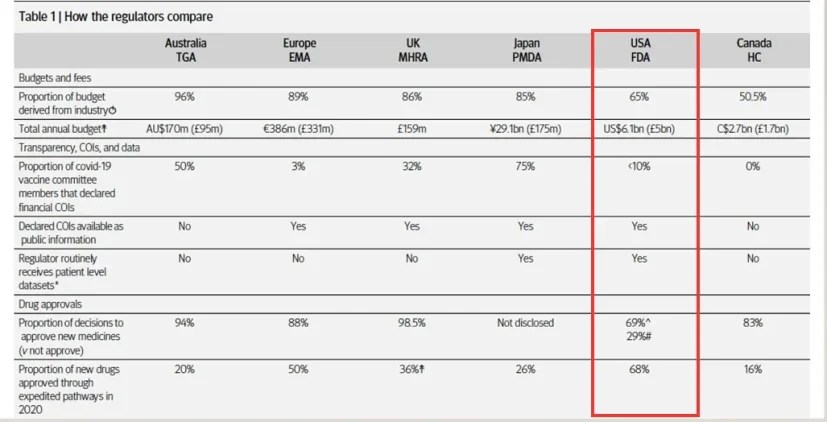
The findings were damning—73% of drugs approved by the FDA during the study period failed to meet all four basic criteria for demonstrating “substantial evidence” of effectiveness.
Those four criteria—presence of a control group, replication in two well-conducted trials, blinding of participants and investigators, and the use of clinical endpoints like symptom relief or extended survival—are supposed to be the bedrock of drug evaluation.
Yet only 28% of drugs met all four criteria—40 drugs met none.
These aren’t obscure technicalities—they are the most basic safeguards to protect patients from ineffective or dangerous treatments.
But under political and industry pressure, the FDA has increasingly abandoned them in favour of speed and so-called “regulatory flexibility”.
Since the early 1990s, the agency has relied heavily on expedited pathways that fast-track drugs to market.
In theory, this balances urgency with scientific rigour. In practice, it has flipped the process. Companies can now get drugs approved before proving they work, with the promise of follow-up trials later.
But, as Lenzer and Brownlee revealed, “Nearly half of the required follow-up studies are never completed—and those that are often fail to show the drugs work, even while they remain on the market.”
“This represents a seismic shift in FDA regulation that has been quietly accomplished with virtually no awareness by doctors or the public,” they added.
More than half the approvals examined relied on preliminary data—not solid evidence that patients lived longer, felt better, or functioned more effectively.
And even when follow-up studies are conducted, many rely on the same flawed surrogate measures rather than hard clinical outcomes.
The result: a regulatory system where the FDA no longer acts as a gatekeeper—but as a passive observer.
Cancer drugs: high stakes, low standards
Nowhere is this failure more visible than in oncology.
Only 3 out of 123 cancer drugs approved between 2013 and 2022, met all four of the FDA’s basic scientific standards.
Most—81%—were approved based on surrogate endpoints like tumour shrinkage, without any evidence they improved survival or quality of life.
Take Copiktra, for example—a drug approved in 2018 for blood cancers. The FDA gave it the green light based on improved “progression-free survival,” a measure of how long a tumour stays stable.
But a review of post-marketing data showed that patients taking Copiktra died 11 months earlier than those on a comparator drug.
It took six years after those studies showed the drug reduced patients’ survival for the FDA to warn the public that Copiktra should not be used as a first- or second-line treatment for certain types of leukaemia and lymphoma, citing “an increased risk of treatment-related mortality.”
Elmiron: ineffective, dangerous—and still on the market
Another striking case is Elmiron, approved in 1996 for interstitial cystitis—a painful bladder condition.
The FDA authorised it based on “close to zero data,” on the condition that the company conduct a follow-up study to determine whether it actually worked.
That study wasn’t completed for 18 years—and when it was, it showed Elmiron was no better than placebo.
In the meantime, hundreds of patients suffered vision loss or blindness. Others were hospitalised with colitis. Some died.
Yet Elmiron is still on the market today. Doctors continue to prescribe it.
“Hundreds of thousands of patients have been exposed to the drug, and the American Urological Association lists it as the only FDA-approved medication for interstitial cystitis,” Lenzer and Brownlee reported.
“Dangling approvals” and regulatory paralysis
The FDA even has a term—”dangling approvals”—for drugs that remain on the market despite failed or missing follow-up trials.
One notorious case is Avastin, approved in 2008 for metastatic breast cancer.
It was fast-tracked, again, based on ‘progression-free survival.’ But after five clinical trials showed no improvement in overall survival—and raised serious safety concerns—the FDA moved to revoke its approval for metastatic breast cancer.
The backlash was intense.
Drug companies and patient advocacy groups launched a campaign to keep Avastin on the market. FDA staff received violent threats. Police were posted outside the agency’s building.
The fallout was so severe that for more than two decades afterwards, the FDA did not initiate another involuntary drug withdrawal in the face of industry opposition.
Billions wasted, thousands harmed
Between 2018 and 2021, US taxpayers—through Medicare and Medicaid—paid US$18 billion for drugs approved under the condition that follow-up studies would be conducted. Many never were.
The cost in lives is even higher.
A 2015 study found that 86% of cancer drugs approved between 2008 and 2012 based on surrogate outcomes showed no evidence they helped patients live longer.
An estimated 128,000 Americans die each year from the effects of properly prescribed medications—excluding opioid overdoses. That’s more than all deaths from illegal drugs combined.
A 2024 analysis by Danish physician Peter Gøtzsche found that adverse effects from prescription medicines now rank among the top three causes of death globally.
Doctors misled by the drug labels
Despite the scale of the problem, most patients—and most doctors—have no idea.
A 2016 survey published in JAMA asked practising physicians a simple question —what does FDA approval actually mean?
Only 6% got it right.
The rest assumed it meant the drug had shown clear, clinically meaningful benefits—such as helping patients live longer or feel better—and that the data was statistically sound.
But the FDA requires none of that.
Drugs can be approved based on a single small study, a surrogate endpoint, or marginal statistical findings. Labels are often based on limited data, yet many doctors take them at face value.
Harvard researcher Aaron Kesselheim, who led the survey, said the results were “disappointing, but not entirely surprising,” noting that few doctors are taught about how the FDA’s regulatory process actually works.
Instead, physicians often rely on labels, marketing, or assumptions—believing that if the FDA has authorised a drug, it must be both safe and effective.
But as The Lever investigation shows, that is not a safe assumption.
And without that knowledge, even well-meaning physicians may prescribe drugs that do little good—and cause real harm.
Who is the FDA working for?
In interviews with more than 100 experts, patients, and former regulators, Lenzer and Brownlee found widespread concern that the FDA has lost its way.
Many pointed to the agency’s dependence on industry money. A BMJinvestigation in 2022 found that user fees now fund two-thirds of the FDA’s drug review budget—raising serious questions about independence.
Yale physician and regulatory expert Reshma Ramachandran said the system is in urgent need of reform.
“We need an agency that’s independent from the industry it regulates and that uses high quality science to assess the safety and efficacy of new drugs,” she told The Lever. “Without that, we might as well go back to the days of snake oil and patent medicines.”
For now, patients remain unwitting participants in a vast, unspoken experiment—taking drugs that may never have been properly tested, trusting a regulator that too often fails to protect them.
And as Lenzer and Brownlee conclude, that trust is increasingly misplaced.
Investigative report by Jeanne Lenzer and Shannon Brownlee at The Lever [link]
Indian Ambassador M.K. Bhadrakumar argues that Trump’s words do not match his actions. It is extremely unlikely that the US was not involved in the attack on Russia’s nuclear forces, and Bhadrakumar argues that the failure by Russia to respond would be profoundly irresponsible. Ambassador Bhadrakumar was a career diplomat for 30 years in the Indian Foreign Service, and is now a columnist for Hindu and Deccan Herald Indian newspapers.
A Brazilian comedian has been handed a prison sentence of over eight years for a stand-up routine, setting off a storm over the growing use of state power to penalize speech that challenges cultural taboos.
Leo Lins, known for his provocative style, was convicted by a federal court in São Paulo for allegedly promoting intolerance through jokes delivered during a live performance and later circulated widely online.
The show in question, titled Perturbador (“Perturber”), was posted to YouTube in 2022 and had reached more than three million views before it was taken down in 2023, following a judicial order prompted by a complaint from prosecutors.
In their case, officials claimed that the material denigrated a wide swath of Brazil’s population; including Jews, people with disabilities, the elderly, gay individuals, black citizens, indigenous groups, northeastern Brazilians, those living with HIV, evangelical Christians, and others.
Citing the scale of the video’s reach and the perceived harm of its content, the court framed the ruling as a defense of “human dignity,” arguing that the right to speak freely must yield when it allegedly infringes upon this principle.
The judgment labeled Lins’s comedy as “verbal violence” and claimed it contributes to a climate of social division. A financial penalty of 300,000 reais (around €54,000) was also imposed for what the court described as damage to the collective moral fabric.
Lins’s legal team swiftly denounced the sentence and announced plans to appeal. His lawyer issued a sharp rebuke of the court’s decision: “Watching a comedian receive the same punishment as someone convicted of drug trafficking, corruption, or even murder, all because of jokes told on stage, is deeply troubling.”
Among those speaking out against the verdict were fellow performers who warned that such actions risk eroding democratic freedoms under the guise of protecting sensibilities.
A British scholar, who is being sued for his pro-Palestine activism on social media, says Israel is seeking to silence its critics after losing a propaganda war regarding the ongoing genocide in the Gaza Strip.
David Miller, a producer and co-host of Press TV’s weekly Palestine Declassified show, made the remarks in an X post on Wednesday, after the Campaign Against Antisemitism (CAA), a pro-Israel NGO, launched a private prosecution against him.
The CCA said it has brought three charges against Miller, alleging that he had used X to send messages of a menacing character.
Miller said the CAA acts on behalf of Israel, which is “a hostile and illegitimate genocidal Jewish supremacist” regime.
“This attempt at a private prosecution is a Strategic Lawsuit Against Public Participation (SLAPP), and an act of desperation by … Israel in a propaganda war it has already lost,” he added.
“Israel, via the CAA, is attempting to buy its way into the criminal justice system to silence critics of Zionism. They will fail.”
Miller’s three messages mentioned in the case were posted from November 2024 onwards. They also concluded with the hashtag “Dismantle Zionism.”
The first hearing into the case is expected to take place at Westminster Magistrates’ Court in London on July 2.
Miller previously worked as a professor of political sociology at the University of Bristol, but he was unfairly and wrongfully dismissed in October 2021 over his pro-Palestine advocacy.
Anger against Israel has increased worldwide since October 7, 2023, when the occupying regime launched a genocidal war on the Gaza Strip.
Almost 20 months into its brutal aggression, Israel has failed to achieve its declared objectives in Gaza despite killing at least 54,607 Palestinians, mostly women and children, and injuring 125,341 others.
The US yesterday vetoed a UN Security Council draft resolution that called for an “immediate, unconditional and permanent ceasefire” in the Gaza Strip.
The draft resolution expressed “grave concern over the catastrophic humanitarian situation, including the risk of famine,” and stressed all parties’ obligations to abide by international humanitarian and human rights law.
Slovenia proposed the draft resolution on behalf of the Security Council’s ten elected members – Algeria, Denmark, Greece, Guyana, Panama, Pakistan, South Korea, Sierra Leone, Somalia and Slovenia – and received 14 votes.
US Charge d’Affaires ad interim Dorothy Shea said before the vote that “US opposition to this resolution should come as no surprise.”
“It is unacceptable for what it does say, it is unacceptable for what it does not say, and it is unacceptable for the manner in which it has been advanced,” she added, accusing the Palestine resistance group Hamas of rejecting ceasefire deals.
“Any product that undermines our close ally Israel’s security is a non-starter,” Shea said.
She once more argued that “Israel has a right to defend itself” and claimed that “it is unconscionable that the UN still has not labelled and sanctioned Hamas as a terrorist organisation.”
The US previously vetoed four Security Council draft resolutions that called for an urgent ceasefire in Gaza, marking yesterday’s resolution the fifth veto.
The US vetoed resolutions in October 2023, December 2023, February 2024 and November 2024 while abstaining in votes on other draft resolutions.
Secretary of State Marco Rubio said the US sent a “strong message” by vetoing a “counterproductive” UN Security Council resolution on Gaza targeting Israel.
“We will not support any measure that fails to condemn Hamas, does not call for Hamas to disarm and leave Gaza, draws a false equivalence between Israel and Hamas, or disregards Israel’s right to defend itself,” he said in a statement.
Rubio noted that Hamas could end “this brutal conflict immediately” by laying down its arms and releasing all remaining hostages, including the remains of four Americans.
“Many members of the Security Council still refuse to acknowledge this reality and performative efforts like this resolution undermine diplomatic efforts to reach a ceasefire. This resolution would have only empowered Hamas to continue stealing aid and threatening civilians,” he added.
“The United States will continue to stand with Israel at the UN. The United Nations must return to its original purpose – promoting peace and security – and stop these performative actions,” he said.
Neither Israel nor the US has provided proof that Hamas is stealing aid in Gaza, while the UN has refuted claims such actions have occurred, saying it has robust systems to ensure aid reaches its intended targets.
A CNN investigation has revealed compelling evidence suggesting that invading Israeli units opened fire on Palestinians gathered at a humanitarian aid site in Rafah, southern Gaza, debunking official Israeli claims and raising serious questions about the safety of the aid distribution system supported by the US and “Israel”.
The “Israeli hunger trap massacre” occurred early Sunday near the Tal al-Sultan distribution site and resulted in the killing of at least 31 Palestinians, with dozens more wounded, according to Gaza’s Health Ministry. Video evidence, geolocation analysis, and eyewitness testimonies strongly indicate that Israeli gunfire at the Gaza aid site was responsible for the victims, CNN reported.
According to the news network, more than a dozen eyewitnesses, including injured survivors, reported that Israeli troops fired in volleys at the crowd. Footage reviewed by CNN, geolocated to the Al-Aalam roundabout approximately 800 meters from the fenced aid area, shows sustained bursts of gunfire. Forensic analysis confirmed the firing pattern matched machine guns typically mounted on Israeli tanks.
Weapons experts interviewed by CNN noted the fire rate, ranging from 900 to 960 rounds per minute, aligned with Israeli FN MAG machine guns. Bullets removed from the wounded were identified as 7.62mm NATO standard, consistent with Israeli military weaponry.
Eyewitnesses described scenes of terror as they sought food. Mohammed Saqer, 43, told CNN he witnessed people being shot in the head around him. “We survived a night that was worse than we could imagine,” he said. “The reality for people was one of death and hunger searching for food.”
The Gaza Humanitarian Foundation (GHF), a US- and Israeli-backed aid mechanism operating outside UN frameworks, confirmed that Israeli forces were active in the area but denied any gunfire within or around the “aid site”. In a public statement, GHF alleged, “All aid was distributed today without incident. These fake reports have been actively fomented by Hamas. They are untrue and fabricated.”
The Israeli occupation military initially claimed no troops had fired at civilians “while they were near or within the aid site.” Later, a military source admitted to firing warning shots at individuals “about 1 kilometer away.” However, the CNN Gaza investigation presents a far more troubling account.
Pressed by CNN, the Israeli military declined to comment further. At a press briefing, IOF spokesperson Brig. Gen. Effie Defrin rejected the report entirely, calling it “false” and accusing CNN of echoing what he described as “Hamas propaganda”. He dismissed the reported casualty numbers without offering an alternative.
Yet survivors and witnesses continue to challenge the official narrative. Ihab Musleh said his 13-year-old son, Yazeed, was shot after waving at an Israeli tank. “Within seconds, he was hit with gunfire and fell to the ground,” Musleh said from the hospital.
Humanitarian fallout, global scrutiny mount
The Rafah aid convoy deaths mark the most harrowing Israeli massacres in recent months and underscore mounting global criticism of the GHF’s heavily militarized distribution system. The United Nations has warned that the initiative risks becoming a “death trap”.
Unlike UNRWA and other UN agencies, the GHF does not register aid recipients or vet civilians approaching distribution points. Despite claims that the system was created to prevent aid diversion, recent attacks suggest it lacks essential safeguards.
CNN’s reporting further revealed that multiple TikTok videos, including some taken by 30-year-old Ameen Khalifa, captured panicked scenes during the attack. Khalifa was later killed in an Israeli drone strike while attempting to return to the site two days later.
Following Sunday’s attack, GHF updated its public aid maps, placing a red stop sign over the Al-Aalam roundabout and warning Palestinians to avoid the area. Nonetheless, similar attacks occurred on Monday and Tuesday, resulting in nearly 30 additional killings. The IOF admitted its forces opened fire again after spotting “several suspects moving toward them.”
UN criticizes GHF framework as political, dangerous
UN officials have sharply criticized the GHF for creating a system that is both politically selective and operationally unsafe. In remarks before the UN Security Council, UN humanitarian chief Tom Fletcher condemned the program:
“It restricts aid to only one part of Gaza, while leaving other dire needs unmet. It makes aid conditional on political and military aims. It makes starvation a bargaining chip. It is a cynical sideshow. A deliberate distraction. A fig leaf for further violence and displacement.”
As Israeli assaults against Palestinians escalate around “aid distribution points,” the credibility of Israeli denials of civilian targeting continues to erode under growing visual and forensic evidence. Humanitarian organizations warn that if these patterns continue, the entire aid infrastructure in Gaza may collapse under the weight of mistrust, militarization, and unchecked Israeli brutality.
A security source in the Palestinian resistance said the security services are closely monitoring the movements of “mercenary” groups operating with direct support from the Israeli occupation forces and stationed in areas under its control east of Rafah city in the southern Gaza Strip.
A circular published yesterday on the Al-Hares security platform indicated that these groups are engaged in activities that serve the Israeli occupation’s objectives, including conducting field reconnaissance missions and gathering intelligence information. “They also participate in sweeping buildings and clearing areas, and attempt to lure resistance members into revealing their locations and combat tactics,” it added.
According to the circular, the groups have also set up checkpoints to screen those suspected of being affiliated with the Palestinian resistance.
The sources confirmed the resistance’s determination to pursue anyone proven to be involved in “mercenary” activities or “highway banditry” and warned citizens against being deceived by offers to return to areas controlled by the Israeli occupation forces in return for collaborating with the enemy.
Do world leaders really want the genocide in Gaza to end? Israel’s arms sales record for 2024 paints a clearer picture of where the international communities’ loyalties lie.
For the fourth consecutive year Israel broke its arms sales record, totalling $14.8 billion in 2024. Israeli media reports note that European countries were the largest purchaser of arms exports at 54 per cent, surpassing Asia-Pacific which amounted to 23 per cent of total sales, down by 2 per cent for 2024. Notably, countries that signed the Abraham Accords and normalised relations with Israel increased their weapons purchases from 3 per cent in 2023, to 12 per cent in 2024.
According to Yair Kulas, head of Israel’s International Defence Cooperation Directorate, there is political pressure on countries to refrain from purchasing Israeli weapons. “The militaries want our top-tier products, but political forces are blocking them. I hope necessity outweighs politics.”
Judging from the record sales, the politics of genocide are reaping profits for Israel and instability in the rest of the world. Between these looming dangers, Palestinians are experiencing the might of Israel’s weapons first-hand. And what does the world do? Encourage further genocide by purchasing more weapons from Israel.
Diplomatically, Israel is far from isolated. Israel will be participating in the EU-Southern Neighbourhood ministerial meeting in which governance, climate change, migration, economic development and energy will be discussed. An unnamed EU official has already stated that “the ongoing war in Gaza” will not be discussed during the meeting. There is also no fixed date for the review of the EU-Israel Association Agreement.
The EU cannot even pretend that there is a rift in diplomatic relations between the bloc and Israel. It is merely stalling for time, even though genocide is by now acceptable within diplomatic circles that have made a mockery out of international law.
The same governments that feign concern over humanitarian aid in Gaza are supporting the genocidal framework that bans humanitarian aid and causes humanitarian devastation in Gaza. Maybe the international community can articulate which part of genocide it specifically opposes? Not bombs, surely.
It is not necessity that will outweigh politics, to use Kulas’s words. Necessity is created by politics, in this case the politics of colonialism and genocide.
While Israel gloats in its successive terror narrative and its profits, Germany, for example has reiterated its commitment to delivering weapons to Israel. “Germany must know where it stands and say it clearly: alongside Israel,” German Foreign Minister Johann Wadephul stated. But what if Germany clearly stated the meaning of this diplomatic jargon – that it stands with Israel’s genocide in Gaza? Since October 2003, Germany approved over $550 million of arms exports to Israel.
Only a few weeks ago, the EU attempted to give the impression that the tide is turning for Israel. Of course, no one believed the statements. Since then, the Gaza Humanitarian Fund is obstructing aid by killing Palestinians and closing its hubs. More Palestinians have been burnt to death. More Palestinians have starved to death. Just mere hours ago, the US vetoed a resolution for an unconditional and permanent ceasefire because the text is unacceptable, according to the US Ambassador to the UN Dorothy Shea.
World leaders have only left one gap in their narrative – an unequivocal statement that they stand with genocide.
Former Israeli Security Minister Avigdor Liberman has accused Prime Minister Benjamin Netanyahu of secretly authorizing the transfer of weapons to an armed criminal group affiliated with the terrorist so-called “Islamic State” in Gaza without cabinet approval.
In remarks to the Kan public broadcaster, Liberman, who leads the opposition Yisrael Beytenu party, said the weapons were supplied to a group of militants near the Karem Abu Salem crossing, in an area currently under Israeli military control.
“The Israeli government is giving weapons to a group of criminals and felons, identified with Islamic State, at the direction of the prime minister,” he stated.
“To my knowledge this did not go through approval by the cabinet,” he added.
Abu Shabab clan’s reputation and recent activity
While Liberman did not name the group directly, he appeared to be referencing the Abu Shabab clan, an armed faction in Gaza reportedly opposed to Hamas.
According to Tel Aviv University researcher Michael Milshtein, the group is known in Gaza for drug trafficking, theft, and looting humanitarian aid convoys.
Footage published online in recent days, including by clan leader Yasser Abu Shabab, shows members wearing military-style uniforms emblazoned with the Palestinian flag and the label “Counter-Terrorism Mechanism.”
Security establishment kept in the dark?
Liberman added that the head of the Shin Bet is aware of the weapons transfers but questioned the level of involvement or knowledge within the Israeli occupation military.
“I don’t know how much the IDF chief of staff was in on it,” he said, referring to the Israeli military.
Netanyahu’s office does not deny Liberman allegations
In response to Liberman’s claims, Netanyahu’s office issued a statement defending the government’s multi-pronged approach to defeating Hamas.
“Israel is working to defeat Hamas through various means, based on the recommendations of all the heads of the security establishment,” the statement read.
However, it notably did not deny the allegations raised by Liberman.
President Donald Trump’s special envoy to the Ukraine conflict said that recent Ukrainian attacks on Russian air bases have created a significant risk of escalation in the war.
“I’m telling you, the risk levels are going way up – I mean, what happened this weekend,” Trump’s envoy, Keith Kellogg, told Fox News. “People have to understand in the national security space: when you attack an opponent’s part of their national survival system, which is their triad, the nuclear triad, that means your risk level goes up because you don’t know what the other side is going to do. You’re not sure.”
On Sunday, the Ukrainian intelligence service, the SBU, launched a major attack on Russian airbases thousands of miles from the front lines. Kiev claims to have disabled one third of Moscow’s fleet of strategic bombers.
Washington and Moscow each possess the ability to conduct nuclear attacks via bombers, submarines, and land-based ballistic missiles, known as the nuclear triad. The White House claims that it was not informed of the attack by Kiev. However, the CIA is deeply tied to the SBU.
The SBU has conducted other provocative attacks in recent days, hitting Russian railways and bridges and reportedly killing seven civilians.
Trump said he spoke with Russian President Vladimir Putin about the attacks on Wednesday. “I just finished speaking, by telephone, with President Vladimir Putin, of Russia. The call lasted approximately one hour and 15 minutes,” Trump wrote on Truth Social. “We discussed the attack on Russia’s docked airplanes, by Ukraine, and also various other attacks that have been taking place by both sides. It was a good conversation, but not a conversation that will lead to immediate Peace. President Putin did say, and very strongly, that he will have to respond to the recent attack on the airfields.”
The Correlation of Armed Forces: U.S. goods and services trade with China totaled an estimated $634.8 billion in 2019. Exports were $163.0 billion; imports were $471.8 billion. The U.S. goods and services trade deficit with China was $308.8 billion in 2019. Trade in services with China (exports and imports) totaled an estimated $76.7 billion in 2019. Services exports were $56.5 billion; services imports were $20.1 billion. The U.S. services trade surplus with China was $36.4 billion in 2019.
There is talk within the Washingtoniat of a possible war with China. Steve Bannon, who apparently was dropped on his head as a child, actually favors such a war. We hear the usual shoo-the-boobs alarm about how the Chinese are doing something terrible and we must gird our loins and American values and show them what for, bow wow, woof. The danger is that the current game of who-blinks-first in Asian waters might actually provoke a shooting war. You know the kind of thing: One warship refuses to get out of the way of another, a collision ensues, some retard lieutenant who signed up on waivers opens fire, and we’re off and running. It is not a good idea to let children play with matches.
The said war is discussed either in emotional terms by idiots or in purely naval terms by those familiar with such things, so we hear of the First Island Chain and the Second Island Chain and whose missiles against the other’s missiles and so on. This would be appropriate if we were fighting World War Two again. Which we aren’t. Let’s take a quick-and-dirty look at how such a war might go.
To begin the war, America would overestimate itself and underestimate China. This is doctrine in the Pentagon. … continue
This site is provided as a research and reference tool. Although we make every reasonable effort to ensure that the information and data provided at this site are useful, accurate, and current, we cannot guarantee that the information and data provided here will be error-free. By using this site, you assume all responsibility for and risk arising from your use of and reliance upon the contents of this site.
This site and the information available through it do not, and are not intended to constitute legal advice. Should you require legal advice, you should consult your own attorney.
Nothing within this site or linked to by this site constitutes investment advice or medical advice.
Materials accessible from or added to this site by third parties, such as comments posted, are strictly the responsibility of the third party who added such materials or made them accessible and we neither endorse nor undertake to control, monitor, edit or assume responsibility for any such third-party material.
The posting of stories, commentaries, reports, documents and links (embedded or otherwise) on this site does not in any way, shape or form, implied or otherwise, necessarily express or suggest endorsement or support of any of such posted material or parts therein.
The word “alleged” is deemed to occur before the word “fraud.” Since the rule of law still applies. To peasants, at least.
Fair Use
This site contains copyrighted material the use of which has not always been specifically authorized by the copyright owner. We are making such material available in our efforts to advance understanding of environmental, political, human rights, economic, democracy, scientific, and social justice issues, etc. We believe this constitutes a ‘fair use’ of any such copyrighted material as provided for in section 107 of the US Copyright Law. In accordance with Title 17 U.S.C. Section 107, the material on this site is distributed without profit to those who have expressed a prior interest in receiving the included information for research and educational purposes. For more info go to: http://www.law.cornell.edu/uscode/17/107.shtml. If you wish to use copyrighted material from this site for purposes of your own that go beyond ‘fair use’, you must obtain permission from the copyright owner.
DMCA Contact
This is information for anyone that wishes to challenge our “fair use” of copyrighted material.
If you are a legal copyright holder or a designated agent for such and you believe that content residing on or accessible through our website infringes a copyright and falls outside the boundaries of “Fair Use”, please send a notice of infringement by contacting atheonews@gmail.com.
We will respond and take necessary action immediately.
If notice is given of an alleged copyright violation we will act expeditiously to remove or disable access to the material(s) in question.
All 3rd party material posted on this website is copyright the respective owners / authors. Aletho News makes no claim of copyright on such material.


 Aletho News