Rep. Marjorie Taylor Greene is fed up with U.S. support for Israel and more wars
If Americans Knew | July 3, 2025
Marjorie Taylor Greene, aka MTG, is a MAGA Republican and the U.S. representative for Georgia’s 14th congressional district since 2021.
Excerpts taken from Rep. Marjorie Taylor Greene’s appearance on The Tucker Carlson Show (June 27, 2025):  • Marjorie Taylor Greene: AIPAC, NYC’s Futur…
Path to peace lies beneath our feet; strength will not bring true peace: Chinese foreign minister
Global Times | July 5, 2025
Chinese Foreign Minister Wang Yi on Friday criticized the notion of “might makes right,” questioning where rules and justice stand under such logic at a joint press conference in Paris with his French counterpart Jean-Noel Barrot. “Strength will not bring true peace; it may well open ‘Pandora’s box’. How should countries lacking strength, especially small and medium-sized ones, find their place? Are they to be laid out on the table, left at the mercy of others?” said Wang.
Wang, also a member of the Political Bureau of the CPC Central Committee, is visiting Europe from June 30 to July 6, at the invitation of High Representative for Foreign Affairs and Security Policy of the EU Kaja Kallas, Federal Foreign Minister of Germany Johann Wadephul, and Minister for Europe and Foreign Affairs of France Jean-Noel Barrot.
Responding to questions about China’s stance on the Iran nuclear issue and the current situation in the Middle East, Wang said that the Iran nuclear issue could have been a model for resolving international disputes through dialogue and negotiation. However, it has now triggered a new round of crisis in the Middle East. Despite hearing the knock of peace, the door to peace remains shut. China deeply regrets this outcome and believes there are profound lessons to be learned.
Wang reiterated China’s clear and consistent position on the Iran nuclear issue. “We value the repeated public commitments made by Iranian Supreme Leader that Iran will not develop nuclear weapons, and we also respect Iran’s right, as a signatory to the Treaty on the Non-Proliferation of Nuclear Weapons (NPT), to the peaceful use of nuclear energy,” he said.
Based on this, relevant parties should accelerate negotiations to reach a new international agreement on resolving the Iran nuclear issue, placing Iran’s nuclear activities fully under the strict supervision and safeguards of the International Atomic Energy Agency, Wang said.
He emphasized that the path to peace lies beneath our feet, and history will question the sincerity of all parties involved.
The Chinese foreign minister said that military conflicts between Israel and Iran should not be repeated as war cannot resolve the Iran nuclear issue, and preemptive strikes lack legitimacy. The excessive use of force will only escalate conflict and breed more animosity, warning that the US’s brazen bombing of a sovereign country’s nuclear facilities has set a dangerous precedent and if it leads to a nuclear disaster, the entire world will bear the consequences.
Wang also emphasized that the genuine resolution of the Iran nuclear issue cannot ignore the core issue in the Middle East, which is the Palestinian question. The humanitarian disaster in Gaza must not be allowed to continue. The Palestinian issue must no longer be marginalized. The legitimate aspirations of the Arab nation should be fulfilled as soon as possible, and the just voices of the broader Islamic world must be given due attention.
The “two-state solution” remains the only realistic path to resolving the chaos in the Middle East, and the international community should take more concrete and effective action to support this goal, Wang said.
Wang called for China and France, both as permanent members of the UN Security Council, to uphold justice and take responsibility by supporting conflict resolution through dialogue and negotiation, opposing double standards, and basing their positions on the merits of the matter itself. The UN and its Security Council should play their due role in promoting peace. China is willing to work with France to make unremitting efforts toward these goals.
Iran’s oil production at records not seen since 1978: Report
Press TV – July 5, 2025
Iran has reached a record in oil production that has not been seen in the country since 1978, when Mohammad Reza Pahlavi, the last Shah of Iran, was still in power, according to a recent report.
The report published on Thursday by Bloomberg said that Iran had produced about 4.3 million barrels per day (bpd) of crude plus another 725,000 bpd of other liquids in 2024.
The report cited figures from the UK Energy Institute and its Statistical Review of World Energy, which was published last month.
It said that an oil production of nearly 5.1 million bpd has not been seen in Iran since the last year of Shah’s reign when the oil industry in the country was still receiving huge investment and technology from Western companies.
However, it admitted that Iran has achieved a remarkable feat by raising its oil output to record levels at a time of increased American pressure.
“Developing its vast condensate and natural-gas liquids riches without foreign help wasn’t easy,” said the report by Javier Blas as he insisted that domestic companies, including those run by Iran’s elite military force the IRGC, have contributed to the country’s efforts over the past decade to develop its energy sector.
Iran has reported consistent rises in its oil production and exports since 2021, just two years after US President Donald Trump enforced a harsh regime of sanctions on buyers of Iranian oil during his first term in office.
Estimates suggest Iran’s oil exports, which mostly go to private buyers in China, have well exceeded 2.4 million bpd in recent months.
Bloomberg’s report said Iran’s rising oil exports and the revenues it generate would be key to the country’s reconstruction efforts after a recent Israeli aggression.
It also reiterated that Israel’s 12-day aggression against Iran, which ended on June 24, had failed to affect Iran’s massive oil industry and its daily operations.
Protesters in London defy ban to rally in support of Palestine Action

Palestine Action supporters outside London’s High Court in London, July 4, 2025. (Reuters)
Press TV – July 5, 2025
In a direct challenge to the British government’s new ban, protesters have gathered in central London to show solidarity with the pro-Palestinian campaign group, Palestine Action.
The group, which uses direct action against Israeli weapons factories in the UK and their supply chain, was officially designated a “terrorist organization” after a late-night legal bid to delay the move failed on Friday. The proscription came into force on Saturday.
Under the new legislation, membership of or public support for the group is now a criminal offense in the UK, punishable by up to 14 years in prison.
Protesters on Saturday gathered at Parliament Square, defying a warning from the Metropolitan Police, who said expressing support for the group “is a criminal offence.”
The demonstration, organized by campaign group Defend Our Juries, however, saw protesters holding signs and chanting in support of the pro-Palestine group.
Pictures from the rally showed protesters holding placards reading, “I oppose genocide, I support Palestine Action” in Westminster.
Police had warned that chanting slogans, wearing clothing, or displaying flags and signs in support of the group could lead to arrest under the Terrorism Act.
The Met said more than 20 people have been arrested in London.
In a letter addressed to Home Secretary Yvette Cooper, protesters said that they “refuse to be cowed into silence by your order.”
Palestine Action has focused much of its campaign on Elbit Systems UK, which it accuses of manufacturing and supplying weapons to the Israeli military amid the regime’s genocidal war on Gaza.
In its most recent action, activists stormed Guardtech, a subcontractor the group says provides “essential clean room services” to Instro Precision—a subsidiary of Elbit Systems, Israel’s largest arms producer.
Protesters blocked the company’s only entrance on Wednesday and covered it in red paint, symbolizing the blood shed by the Israeli regime in the Gaza Strip.
Palestine Action says Instro Precision cannot operate without Guardtech’s services, which are used to maintain the controlled environments necessary for producing radar kits and targeting systems.
Reacting to the ban on the group, a spokesperson for Palestine Action said, in a statement, “While London is rushing through Parliament absurd legislation to proscribe Palestine Action, the real terrorism is being committed in Gaza.”
It said that the activist group “affirms that direct action is necessary in the face of Israel’s ongoing crimes against humanity of genocide, apartheid and occupation, and to end British facilitation of those crimes.”
‘Act of terrorism’: Iran urges formation of fact-finding group for 1982 abductees in Lebanon
Press TV – July 5, 2025
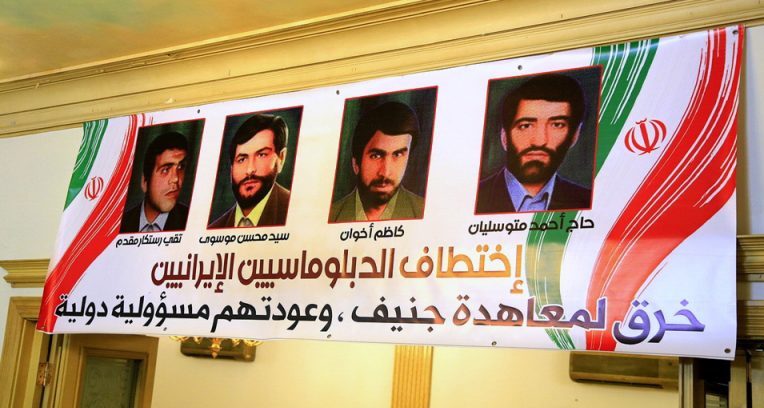
The Iranian Foreign Ministry has decried as an “act of terrorism” the 1982 kidnapping of four Iranian diplomats in Lebanon, reiterating the Islamic Republic’s call for the formation of a fact-finding group to determine the fate of the abductees.
The ministry said in a statement on the occasion of the 43rd anniversary of the abduction of the Iranian diplomats that the Israeli regime is responsible for the abduction and hostage-taking of its citizens, and continues to seriously pursue the matter with relevant international authorities.
On July 4, 1982, Ahmad Motovasselian, a military attaché at Tehran’s Embassy in Beirut, Mohsen Mousavi, the Iranian chargé d’affaires in Lebanon, Taqi Rastegar Moqaddam, an employee of the Embassy, and Kazem Akhavan, a photographer for the Islamic Republic News Agency (IRNA), were abducted by Israeli-affiliated armed groups.
“There is ample evidence, as repeatedly stated, and copious indications proving that the Iranian diplomats were abducted by an armed group inside Lebanon during the occupation of Lebanese soil by the Zionist regime, handed over to the occupying forces, and transferred to the occupied territories,” the statement said.
“The abduction of Iranian diplomats on July 4, 1982, in Beirut was not only an act contrary to international law and a flagrant violation of the 1961 Vienna Convention on Diplomatic Relations, but also constitutes an act of terrorism according to the Convention Against the Taking of Hostages (1979).”
The statement also expressed Tehran’s gratitude for the Lebanese government’s cooperation in following up on the status of the four abducted Iranian diplomats, including Beirut’s registration of the issue through correspondence with the then secretary-general of the United Nations in September 2008.
The Iranian Foreign Ministry, as the statement said, once again calls on the authorities of the Lebanese government, as well as the Secretary-General of the United Nations and the International Committee of the Red Cross and other competent international bodies, to fulfill their legal and humanitarian responsibilities in pursuing the case and to exert all their efforts to clarify the status of the abducted Iranian diplomats.
“In this framework, the proposal for the formation of a joint fact-finding committee between Iran and Lebanon, with the cooperation of the International Committee of the Red Cross, to pursue the matter and clarify the status of the abducted Iranian diplomats is once again emphasized,” the statement said.
The Iranian Foreign Ministry has repeatedly called for the Lebanese government, the UN, and the International Committee of the Red Cross to investigate the incident and determine the fate of the missing diplomats.
Lebanese militiamen from the Lebanese Forces Group admitted to the 1982 kidnapping of the four Iranian nationals who were on a diplomatic mission in North Lebanon. Investigations show that they were last handed to Israel at the time.
Although there is information about those who abducted the Iranian diplomats and their whereabouts, the fate of these Iranians is still shrouded in mystery, with their families and Iranian authorities believing they are still alive and languishing in Israeli jails.
How Israeli propaganda mills recycled fabricated claims of intercepting Iranian missiles
By Ivan Kesic | Press TV – July 5, 2025
For the third time, the Israeli regime has declared an implausible success rate in intercepting Iranian ballistic missiles, this time touting a fanciful figure of 86 percent, a claim parroted with little scrutiny by much of the Western mainstream media.
This week, Israeli media outlets relayed statements from the regime’s war ministry claiming that 86 percent of Iranian missiles and 99 percent of drones were intercepted during the June 2025 Israeli war against Iran.
The figures, they said, were drawn from 12 days of the war, during which Iran launched 532 ballistic missiles in approximately 42 barrages targeting the occupied Palestinian territories. According to the same sources, about 300 missiles landed in “open areas,” while 200 were allegedly intercepted by Israeli and American air defense systems.
The interception systems credited include Israel’s David’s Sling, Arrow 2 and 3, along with the US-supplied THAAD and Aegis systems, altogether costing around 5 billion shekels, or nearly $1.5 billion.
In a triumphant assessment, the Israeli war ministry claimed their interception prevented over $15 billion in potential property damage and “saved countless lives.”
Some Zionist officials went even further, asserting that only 25 to 31 Iranian ballistic missiles actually struck targets within the occupied territories.
Despite the glaring inconsistencies in these numbers, and their defiance of both available evidence and basic mathematics, Western media repeated the claims almost reverently, offering little in the way of critical examination.
A pattern of fabricated success
This is not a one-off occurrence. It marks the third time the Israeli regime has released clearly falsified data on interception success rates, only to see these narratives absorbed uncritically into Western discourse.
After Iran’s Operation True Promise 1 and 2 in April and October last year, Israeli regime officials boasted a now-familiar “99 percent” interception rate. In the second operation alone, they claimed 200 Iranian ballistic missiles were launched, implying that only two managed to bypass Israeli defenses.
Yet satellite imagery tells a vastly different story. At Nevatim Airbase, one of the three key Iranian targets (alongside Tel Nof Airbase and Mossad headquarters), 33 Iranian missiles made direct contact, 26 of which caused severe structural damage, including to five hangars.
These figures alone debunk Israel’s exaggerated claims, as does independent footage from civilian sources, which recorded dozens of strikes, far more than the “three” the regime was willing to admit.
Tel Nof Airbase saw direct hits that triggered secondary explosions among stored munitions. At least two missiles impacted areas near Mossad’s headquarters. In total, over 40 Iranian missiles successfully penetrated much-hyped Israeli defenses during Operation True Promise 2, twenty times more than Israeli officials conceded.
Their missile launch count was also exaggerated. Visual evidence confirms that 53 missiles were launched in three waves: 25 from Kermanshah, 18 from Tabriz, and 10 from Shiraz. This suggests that over 75 percent of Iranian missiles struck their intended targets, an accuracy rate far closer to Iranian estimates of 90 percent than the Israeli claim of 1 percent success.
The same distortions appeared after Operation True Promise 1, with Israel again insisting it intercepted “99 percent of 300 missiles and drones”—a figure clearly contradicted by publicly available footage capturing numerous impacts.
Latest round of deception
As with the previous two retaliatory operations, the latest Israeli claims, of an 86 percent interception rate, 300 harmless impacts in open areas, and only 30 successful Iranian strikes, lack any verifiable evidence.
Most Iranian retaliatory strikes and Israeli interception attempts occurred at night and were recorded in numerous public videos. These show luminous streaks of incoming missiles, and often, impact explosions, across the occupied territories.
All Israeli systems engaged, David’s Sling, Arrow 2/3, and THAAD use hit-to-kill technology, designed to intercept missiles at long ranges and high altitudes. When successful, these intercepts generate massive hypersonic collisions that produce blinding explosions visible across the region.
If Israel had indeed intercepted 200 ballistic missiles, as claimed, there would be a flood of corroborating footage from personal and security cameras, all time- and date-stamped.
But such evidence is conspicuously absent. Even the Israeli military, known for showcasing its “successes,” has failed to release convincing proof.
Nor is there any physical evidence of widespread missile debris in Iraq or Jordan, which should exist if large numbers of missiles had been intercepted in those areas.
Conversely, hundreds of videos document Iranian missiles piercing Israeli defenses and detonating across the occupied territories. If most Iranian missiles were truly falling into uninhabited open zones, as claimed, the regime would be eager to release images proving it. Instead, photo and video censorship has been rigorously enforced.
In fact, the scale of destruction suggests widespread strikes on Israeli military infrastructure, not craters in farmland. Israeli media themselves have pegged total damage at $12 billion, with projections reaching $20 billion when indirect costs are counted.
These staggering figures are inconsistent with the claim that only 25–31 missiles hit, unless one believes each missile inflicted $500, 800 million in damage, an implausible notion.
The official 86 percent success rate also contradicts a statement by a senior Israeli intelligence officer to American media, who admitted that by the seventh day of fighting, only 65 percent of Iranian missiles were being intercepted.
He attributed this drop in effectiveness to Iran’s deployment of faster, more maneuverable, and more sophisticated missiles.
Initially, Iran had used older liquid-fueled ballistic missiles, such as Shahab-3, known for their slow speed and predictable trajectories, making them easier to intercept. However, these outdated models were paired with decoys, confusing air defense systems and draining interceptor stockpiles.
Despite the extensive documentation of missile attacks, no comprehensive analysis has yet detailed how many Iranian missiles and Israeli interceptors were deployed, or what the true interception rate was.
Open-source analysts have attempted estimates using nighttime footage from Jordanian photographer Zaid M. al-Abbadi, but his recordings cover only a fraction of the conflict, nighttime only, with limited geographical and vertical scope.
Nonetheless, they point to a clear trend: Iranian missiles breached Israeli air defenses far more often than official figures admit, and did so with a frequency higher than the number of interceptors deployed.
Diversions and disinformation
In addition to exaggerating interception figures, the Israeli regime employs a range of propaganda tactics to conceal its failures and downplay Iranian achievements.
During Operation True Promise 1, iconic images of glowing Iranian missiles above Al-Aqsa Mosque and the Dome of the Rock in occupied Jerusalem al-Quds stunned the world, symbolizing Iran’s reach and resolve.
In response, Israeli regime officials, most notably UN ambassador Gilad Erdan, offered the bizarre narrative that Israel was “protecting Al-Aqsa from Iranian missiles,” attempting to sow discord between Iran and the wider Muslim world.
In truth, those missiles were aimed at Nevatim Airbase, located 65 kilometers south of occupied Jerusalem al-Quds.
Similarly, during Operation True Promise 3, Israeli propagandists claimed Iran had deliberately struck the Al-Jarina Mosque in Haifa. In reality, a missile hit the Sail Tower regime building complex 50 meters southeast, with the mosque sustaining only minor facade damage from shockwaves.
Israel also falsely alleged Iranian attacks on schools and homes. But released images show damage consistent not with Iranian warheads, but with malfunctioning Israeli interceptors.
Perhaps the most egregious example was the claim that Iran targeted Soroka Hospital. In fact, the damage was from a strike on a nearby C4I military intelligence HQ. The regime routinely positions military infrastructure adjacent to civilian areas, then manipulates resulting collateral damage as evidence of Iranian wrongdoing.
Facilities like the Kirya military base in Tel Aviv and the military-linked Weizmann Institute are presented as “civilian” in official narratives. Moreover, videos of Iranian missile strikes on these sites are heavily censored, and sharing such footage risks severe legal punishment.
Finally, Israeli propaganda claims that missile victims are mostly “non-Israelis”—while failing to mention that non-Jewish residents are often banned from entering bomb shelters.
During the recent war, Palestinians, Chinese workers, and Turkish journalists all testified to being denied shelter access, highlighting both systemic discrimination and the hypocrisy of Israeli victimhood narratives.
Putin drops truth bomb on Macron

Strategic Culture Foundation | July 4, 2025
NATO started the conflict in Ukraine, but Russia will end it on its terms, Russian President Vladimir Putin told his French counterpart this week in a wake-up call.
It’s always refreshing and necessary to bring reality into a conversation, assuming, of course, that the purpose of the dialogue is genuinely to resolve a problem.
France’s Emmanuel Macron requested the phone call with Putin this week. It was the first time the two leaders had spoken in nearly three years. The long absence was due to Moscow claiming that Macron breached diplomatic protocol after the last phone call in 2022 by leaking details to the media.
In any case, Putin showed magnanimity and a willingness to engage diplomatically by taking the call this week from Macron. The two leaders talked for over two hours.
Apart from Ukraine, another topic discussed was the outbreak of war between Israel and Iran, and the U.S. bombing of Iran’s nuclear sites. Macron agreed with Putin that Iran has the right to pursue civilian nuclear energy production, and both appealed for diplomacy to prevent escalation, according to the Kremlin’s statement on the phone conversation.
Critics might note, however, that France, Britain, Germany, and the other European states have played a double game with Iran, undermining Iran’s legitimate rights under the Non-Proliferation Treaty and giving political cover for the unlawful Israeli and US aggression against Tehran. Therefore, Macron’s concern for peace in the Middle East sounds hollow, if not hypocritical.
The Ukraine conflict was also discussed. But here, there was no pretense of diplomatic accord.
Macron urged Putin to “call a ceasefire as soon as possible” and to proceed with peace talks, said the Elysee Palace, as reported by French media.
For his part, Putin rebuffed the trite talk. He reminded Macron of some necessary reality.
According to the Kremlin’s statement: “When discussing the situation surrounding Ukraine, Vladimir Putin reiterated that the conflict was a direct consequence of the policies pursued by the Western countries, which had for years been ignoring Russia’s security interests, creating an anti-Russia staging ground in the country, and condoning violations of rights of Ukraine’s Russian-speaking citizens, and at present were pursuing a policy of prolonging hostilities by supplying the Kiev regime with a variety of modern weaponry. Speaking about the prospects of a peaceful settlement, the president of Russia has confirmed Moscow’s stance on possible agreements: they are to be comprehensive and long-term, provide for the elimination of the root causes of the Ukraine crisis, and be based on the new territorial realities.”
In other words, Russia will end the conflict that Macron and other NATO powers started illegally, and the ending of it will be on Russia’s terms.
Who does Macron think he is? Telling Russia to call a ceasefire as soon as possible? Earlier this year, in March, Macron gave a televised nationwide address declaring Russia to be an existential threat to Europe. He even made the madcap suggestion of France using its nuclear weapons to protect all of Europe. Such crazed talk by Macron is irresponsible and reprehensible.
Macron, along with Britain’s Starmer and Germany’s Merz, are prolonging the more-than-three-year war in Ukraine by pledging more military aid to the NeoNazi Kiev regime.
That regime owes its existence to an illegal coup d’état that the Americans and Europeans orchestrated in 2014. The ongoing conflict, which has slaughtered more than one million Ukrainian soldiers and burdened Europe with huge immigration costs, is the responsibility of Macron and other NATO states. They are the instigators, not Russia.
If Macron genuinely wants peace in Ukraine, there is a straightforward solution. Stop arming the NeoNazi regime and stop telling lies about “defending democracy in Ukraine” from alleged “Russian aggression.” Macron and his gang of NATO war criminals could end the bloodshed promptly if they dropped the evil charade.
U.S. President Donald Trump also had a phone call with Putin this week. That was on Thursday, two days after Macron’s.
As with the French leader, Putin told his American counterpart that Russia was insisting on achieving its aims in Ukraine: removing the root causes of the conflict and retaining all territories. Like Macron, Trump sounded impatient for a quick peace deal and later complained to the American media, “he had made no progress” with Putin in his phone call this week.
What Trump, Macron, and other Western leaders need to understand is that Russia wants a permanent peace based on its legitimate strategic security interests. This conflict is not a localized one between two parties. It is a proxy war between Russia and NATO, engendered by NATO. Pretending otherwise, as Macron is doing by conceitedly calling for a quick ceasefire, is a deception.
At least Trump seems to recognize that the supply of weapons to Ukraine has to stop if there is any chance of ending the conflict. This week, the Pentagon announced it was halting the flow of munitions. A big part of the reason is practical reality: the U.S. has depleted its arsenal after three years of weaponizing the Kiev regime.
The European leaders need to come to their senses too, and stop fueling the war machine that is the Kiev regime. It is a lost cause. Russia is winning the war and will eventually eradicate the regime and NATO’s threat to its national security. Europe does not have the capability or the resources. The grand deception projected by Macron and others, including EU top officials Ursula von der Leyen and Kaja Kallas, and NATO’s Mark Rutte, is destroying Europe.
Therein lies the fatal dilemma. What Putin said to Macron is the truth. If the conflict has any chance of being resolved peacefully, then the starting place is to recognize the historic causes of the conflict, not the delusional stuff that Macron is peddling.
But for Macron and all the NATO states to do that would be to admit their culpability for creating the biggest war in Europe since the Second World War. The political and legal repercussions would be explosive for Macron and the entire Western leadership. They are caught in the web of a Big Lie that they have spun.
Sy Hersh Says Lack of Radiation Means Iran Moved Uranium Before US Attack
Sputnik – 05.07.2025
No signs of radioactive contamination have been detected since US airstrikes on Iranian nuclear facilities in June, suggesting that enriched uranium may have been removed from key sites before the attack, Pulitzer Prize-winning journalist Seymour Hersh says.
Veteran US investigative journalist Seymour Hersh says Iran moved highly-enriched uranium from key sites before attacks ordered by US President Donald Trump.
The US Air Force and US Navy targeted deeply-buried Iranian nuclear sites, including those in Fordow and Isfahan, in the June 22 operation codenamed ‘Midnight Hammer’.
Trump and his Defense Secretary Pete Hegseth both claimed the targets had been “obliterated.” But Hersh’s sources say Iran had already removed large quantities of uranium enriched to up to 60% of the fissile isotope U235.
“450 pounds of enriched uranium had been moved from Fordo to the reprocessing site at Isfahan prior to the US attack there” Hersh wrote on his Substack blog.
The attack on Isfahan — a site believed to be involved in further uranium enrichment and processing — used cruise missiles launched from a US Navy submarine.
While the official objective of the strike was the “complete dismantlement” of Iran’s nuclear program, Hersh argues it was merely aimed at a temporary disruption and the destruction of critical infrastructure.
His sources say the destruction of Fordow and Isfahan has set Iran’s nuclear development back by several years, but did not eliminate the program entirely.
“Results? Glass is half-full,” Hersh writes. “a couple of years of respite and uncertain future. Critics? Half-empty. Reality? Half-full. There you are.”
He stresses that Israel was the main beneficiary of the operation, while the risk remains that Iran could restore its nuclear infrastructure and eventually resume the program.
Featured Video
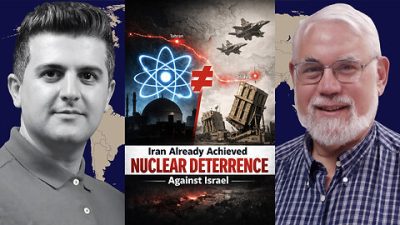
Prof. Ted Postol: Iran Already Achieved Nuclear Deterrence Against Israel
or go to
Aletho News Archives – Video-Images
From the Archives
How the occupied mentality syndrome works
Saudi Arabia on the American chessboard – Part 3
By B. J. Sabri | American Herald Tribune | June 27, 2016
Read part 2: “The occupied mentality Syndrome“
Previously I argued whether Saudi Arabia’s repeated involvements in U.S. interventions and wars stem from free national will or in response to a specific condition. For starters, in Saudi Arabia there is no national will. In Saudi Arabia, the national will is the will of the Al Saud clan. Still, when a major Arab state allies itself with a superpower that committed unspeakable crimes against humanity in almost every Arab country, then something is wrong. This fact alone should compel us to examine the U.S.-Saudi relation for one exceptional reason. As a result of the U.S.-Saudi wars, hundreds of thousands of people in Afghanistan, Iraq, Iran, Libya, Syria, Yemen, and Somalia have lost their lives. Millions became displaced in their own homelands. And millions more rendered refugees.
Attributing the Saudi policies to the bonds of “partnership” with the U.S. is frivolous. There are no bonds between these two thugs except those of business, military deals, secret plots, and wars. Proving this point, bonds such as these have no space for the American and Saudi peoples to share significant cultural or societal exchanges. If partnership is not the reason for the Saudi contribution to the U.S. strategy of empire and imperialism, then another reason must exist.
This leads to three possibilities. … continue
Blog Roll
 Aletho News
- REWRITING THE RISK? INSIDE THE GOVERNMENT’S VACCINE SAFETY MESSAGING
- “Davos Can Really Replace the UN”
- NIAID/NIH and USDA Fund Bioengineered Chimeric Influenza Viruses Built Using Pandemic H1N1 Components: Journal ‘Science Advances’
- Hezbollah hits Israeli warship off Lebanon’s coast, sets it aflame
- Iran slams US strikes on B1 bridge, Mahshahr petrochemical plants as ‘blatant acts of state terrorism’
- In letter to UN chief, Araghchi warns of dire consequences of US-Israeli attacks on Iran’s nuclear facilities
- Why the CIA conspiracy to invade Iran with Kurdish militias failed
- Why Are Upbeat US Claims About Mission to Rescue Pilot ‘Highly Questionable’?
- Aircraft destroyed during US ‘rescue’ of downed F-15 pilot cost more than $100 million each
- Washington University removes professor who condemned US-Israeli war on Iran
- If Americans Knew
- In Iran, Israel-US take aim at “reason, research, and freedom of thought” – Daily Update
- US loses planes over Iran, Israel downgrades Lebanon war goals – Daily Update
- Israel Is Blocking Palestinians from Easter at Church Where Jesus Resurrected
- Plot to assassinate Palestinian activist follows harassment campaign promoted by Zionist groups and elected officials
- Prominent New York synagogue hosts presentation on why U.S. Jews should support the ethnic cleansing of Gaza
- Tapper vs. Piker: Is the CNN Anchor Auditioning for David Ellison?
- Shouldn’t Democrats Be Able to Condemn Genocide?
- Israel-US kill negotiators, destroy civilian structures, but Iran’s military capabilities still largely intact – Daily Update
- ‘War crime’: Global condemnation as Israeli ministers celebrate death penalty law targeting Palestinian prisoners
- 7 Ways Israel Is Turning Lebanon Into Gaza
- No Tricks Zone
- An Inconvenient Tree: Uncovered In Alps… Europe Much Warmer Than Today 6000 Years Ago
- New Study Reports A 60% Slowdown In Greenland’s Ice Loss Rate In The Last Decade
- Low Intensity Tornado Wrecks Major Solar Farm, Creating A Potential Toxic Dump
- New Study Finds Warming Saves Lives…Cold Temperatures 12 Times More Deadly Than Excess Heat
- German Science Blog Accuses PIK Climate Institute Of Hallucinating Climate Tipping Points
- Devastating Assessment Of Comirnaty Vaccine By Former Senior Pfizer Europe Toxicologist
- New Study: CO2 Is ‘Effectively Negligible’ As An Explanatory Climate Change Factor Since 2000
- Former Pfizer Toxicologist Dr. Helmut Sterz Tells Bundestag Hearing Pfizer Vaccine Should Have Never Been Approved
- Energy Expert: Germany’s Nuclear Phaseout Was A “500 Billion Euro Mistake”
- New Research: South Australia’s Mid-Holocene Sea Surface Temperatures Were 4°C Warmer Than Today
 Aletho News