Losing the War in Ukraine – Part 29 of the Anglo-American War on Russia
Tales of the American Empire | July 17, 2025
Last year, Professor John Mearsheimer from the University of Chicago explained to crazed warmonger Piers Morgan that Ukraine had lost its war with Russia and should seek a peace deal with major concessions. Otherwise, Russian forces will continue to advance, killing hundreds of thousands more Ukrainians and devastating Ukraine in the process. His rational thought was ignored by neocon warmongers who run NATO and control Ukraine’s government. Russian forces continue advancing and Russia recently warned that it may annex four more historically Russian provinces if forced to conquer them. Russia cannot be stopped without NATO intervention, but that would lead to World War III. Ukraine is still ruled by Volodymir Zelensky, whose term as President ended in 2024, yet he remains in power and refuses to discuss a peace deal as instructed by his NATO handlers.
_________________________________
Related Tale: “Trump’s Circus in Ukraine”;  • Trump’s Circus in Ukraine – Part 27 of the…
Related Tale: “Urban Warfare Tales”; • Urban Warfare Tales – Part 28 of the Anglo…
“Russian military objectives with Stanislav Krapivnik”; The Duran; May 4, 2025; • Russian military objectives w/ Stanislav K…
“Russian Military Lava Flow Approaches the Dnieper”; The Duran; July 2, 2025; https://theduran.com/russia-military-…
“Military Summary”; YouTube; daily war updates; / @militarysummary
Related Tales: “The Anglo-American War on Russia”; • The Anglo-American War on Russia
Absurdity on Steroids

By Nahida Exiled Palestinian | June 5, 2025
Over the past 77 years, we Palestinians have faced an absurd type of multilayered injustice, unspeakable barbarity, chronic brutality, and compounded oppression with a twist.
* We are the only oppressed group who are vilified, condemned and labelled as terrorists, for merely existing.
We are the wronged, named as oppressors, the scorned named as haters, the slaughtered named as criminals, the dispossessed named as villains, we are the murdered named as the killers.
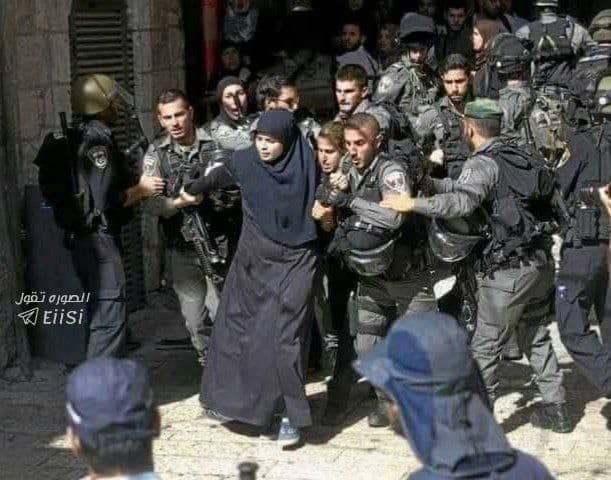
* We are the only oppressed group who are not allowed to identify or name their oppressor.

* We are the only oppressed group who are manipulated to grief for and bemoan the alleged suffering of their oppressor before their own, otherwise we are shunned and blacklisted as “holocaust deniers”
Our persistent suffering is secondary, diminished by the “eternal victimhood“ of our occupiers. Our pain is peripheral, dwarfed in comparison to theirs and validated only by the magnitude of our reverence to the “unique suffering“ of our oppressors
 * We are the only oppressed group who are demanded to:
– Gracefully lay down their only means of survival, their resistance
– Obediently protect the security of those from whom they saw nothing but savagery and barbarity
– Humbly guarantee a permanent presence and a prosperous future for those whose very ideology views the other with utter contempt as mere “animals, created only to serve them” and calls for their annihilation.
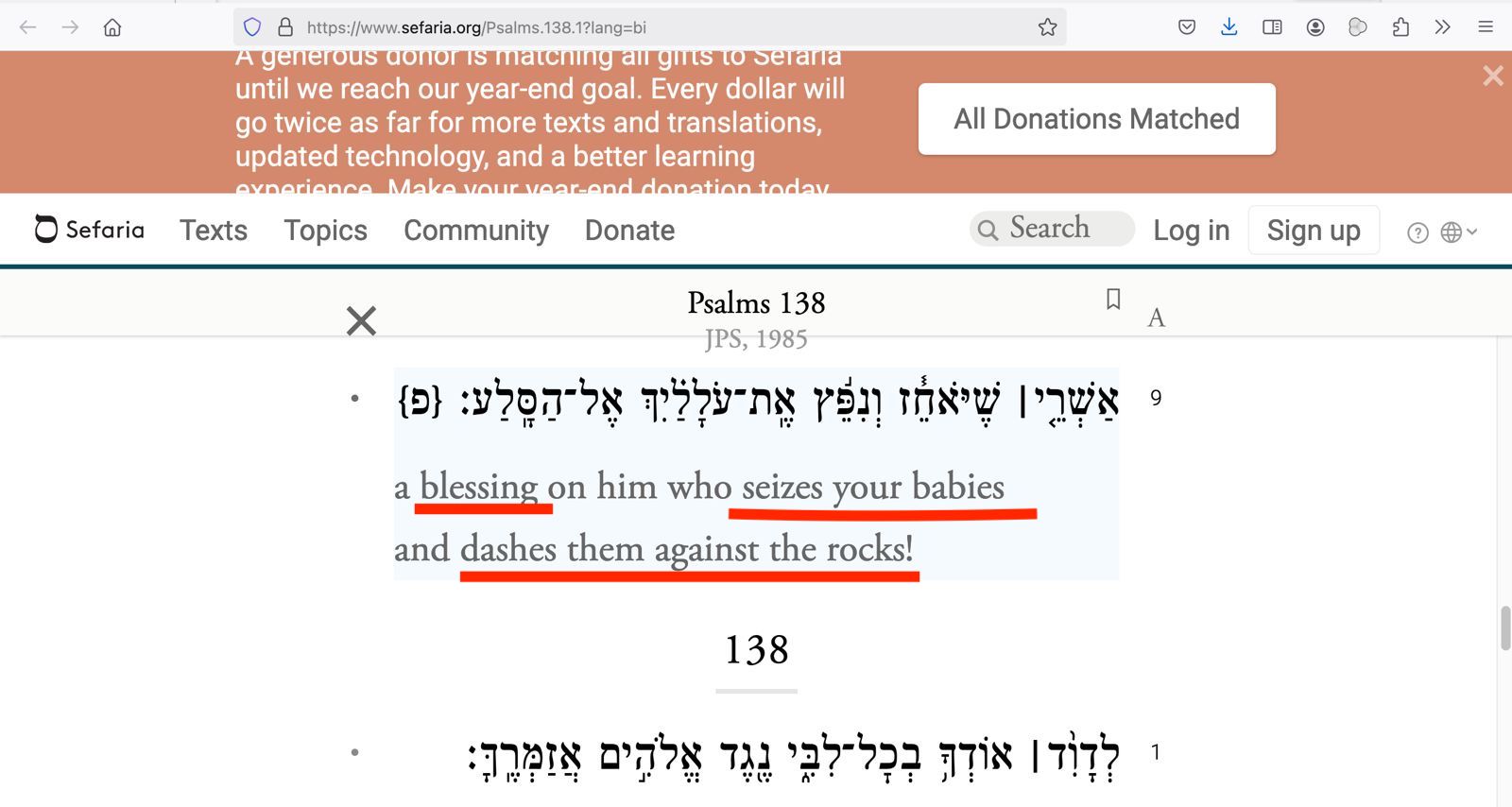
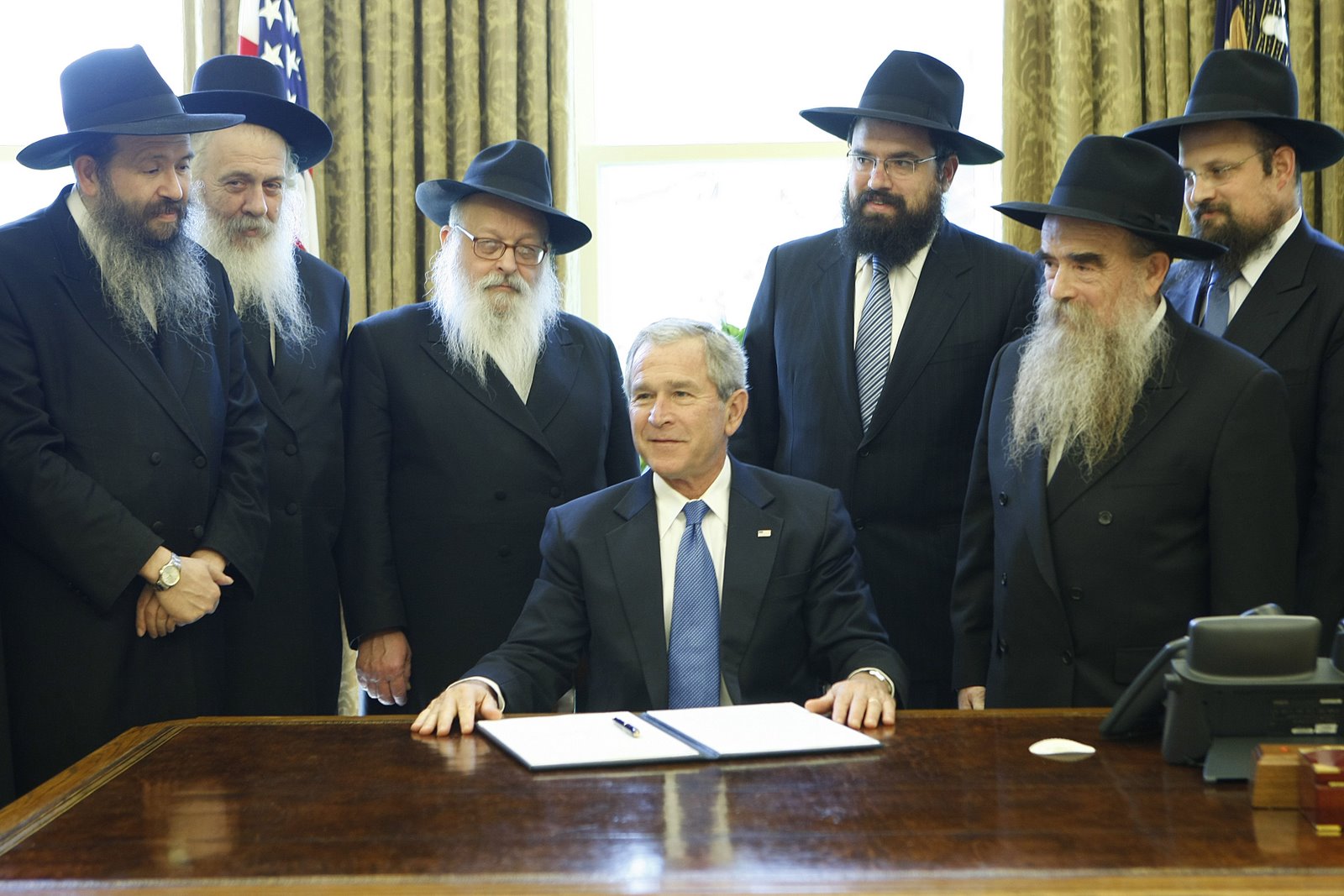
* We are the only oppressed group who are forbidden to discuss or ask questions about the ideology of their oppressors who claim to be the “chosen” above all others and that “God gave them the land”.

 As if all that is not enough, even as we get slaughtered, maimed, starved and eradicated, with our babies shredded to pieces we are still expected to watch our words and not to ever offend or hurt the feelings of our oppressors otherwise we are defamed as “hateful antisemites”.
Is it any wonder that our Nakba is still raging, eight decades and counting!
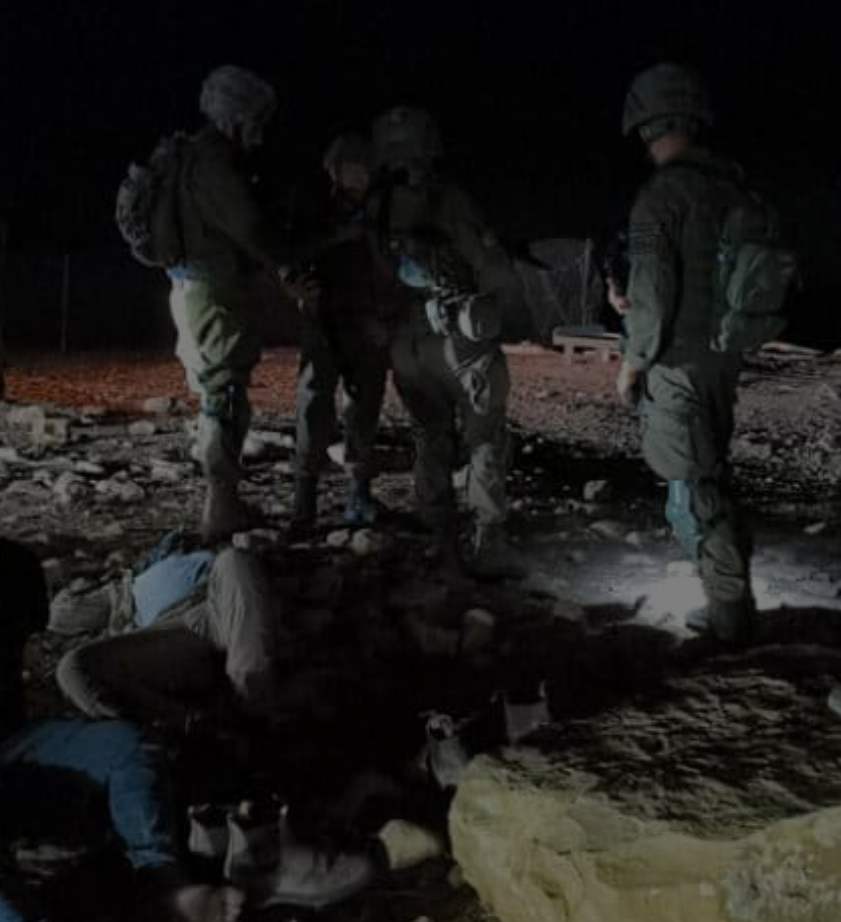
Stolen sheep and their owners detained in Khirbet Hammamat Al-Maleh
International Solidarity Movement | July 17, 2025
Amid the brutal massacre carried out by settler gangs—under the protection and support of the occupation army in the Hammamat Al-Maleh area of the northern Jordan Valley—the crime did not stop at slaughtering the sheep and terrorizing families. It directly targeted two citizens: Suleiman Salem and Salem Salman from the Al-Najada Bedouin community.
The sheep found slaughtered—dozens in number—were their private property, executed in cold blood, some shot and others stabbed with knives, in a scene that goes beyond the limits of savagery. After committing this crime, the occupation did not stop at complicity; it arrested the two shepherds, Suleiman and Salem, throwing them into detention, leaving their families to face helplessness, fear, and deprivation. International activists were also prevented from reaching Suleiman and Salem’s home.
The two men had tried to defend their livelihood and land against the arrogance of power, but the outcome was the slaughter of their flock and the arrest of the shepherds. They were not even allowed to document what had happened and were taken to an unknown location, while their families were left without protection or provider.
This crime represents another face of the slow ethnic cleansing practiced by the occupation authorities in the Jordan Valley against farmers, shepherds, and peasants, aiming to empty the land of its people and prepare it for annexation and settlement.
The heartbreaking scene of slaughtered sheep in the mountains—piled on top of each other, blood washing the stones of the earth—is not just a violation but a scream in the face of a silent world, and a badge of shame on the forehead of everyone who sees and remains silent.
This is not just a massacre of sheep… It is a massacre of life, a massacre of dignity, a massacre of existence.
Italy’s Florence University severs ties with Israel, joins academic boycott
Press TV – July 20, 2025
Five departments at the University of Florence have severed ties with academic institutions in Israel as part of what they described as the “academic boycott” of the Israeli regime.
In a move in line with the growing global campaign for Palestinian rights, and as part of the international academic boycott against Israel, on Sunday, five departments at the University of Florence officially severed their ties with academic institutions in Israel.
The Department of Computer Science and Mathematics has ended its collaboration with Ben-Gurion University of the Negev, an institution with longstanding links to the Israeli military-industrial complex.
Ben-Gurion University is also known for hosting Nobel laureate Dan Shechtman, who supports Zionist academic networks.
The Departments of Agricultural Sciences, Engineering, and Technology have also suspended their partnerships with their Israeli counterparts under the same initiative.
The Department of Architecture has cut ties with Ariel University, which is located in an illegal settlement in the Occupied West Bank, further emphasizing the university’s rejection of institutions complicit in the occupation.
Israeli legal academics have condemned plans by the administration of prime minister Benjamin Netanyahu to set up what it calls a “humanitarian city” in southern Gaza, saying the proposal constitutes a war crime.
The boycott comes amid increasing international condemnation of Israel’s genocidal war on Gaza and its decades-long occupation of Palestinian lands.
Across the world, academic communities and students have intensified their demands for institutions to divest and boycott all entities complicit in apartheid and war crimes.
Academic institutions have come under significant pressure from professors and students to sever ties with Israeli entities that play direct or indirect roles in normalizing apartheid, research for military purposes, or sustaining the occupation.
The Boycott, Divestment, and Sanctions (BDS) movement, inspired by the anti-apartheid struggle in South Africa, has gained renewed momentum globally amid Israel’s ongoing genocide in Gaza, where as many as 59,000 Palestinians, most of whom are children and women, have been killed.
Why Israel seeks a temporary Gaza truce to keep its genocide going
Behind the talk of calm, Tel Aviv is redrawing Gaza’s borders, displacing its population, and laying groundwork for permanent control, one truce at a time.
By Qassem Qassem | The Cradle | July 20, 2025
Twenty-one months into its brutal campaign against the Gaza Strip, Israel is again mulling a temporary ceasefire with the Palestinian resistance. Two brief truces have already collapsed into renewed bloodshed.
But is the genocidal war really coming to a close? This question looms over the proposed truce, raising doubts about whether Israel seeks an end, or simply a pause before its next assault.
This time, mediations led by Qatar and the US, with Egypt playing a minor role, are pushing for a 60-day cessation of hostilities. The deal hinges on a pledge from US President Donald Trump to extend the truce if talks progress.
Tel Aviv’s day-after plans for Gaza
These negotiations reflect a deeper shift in the occupation state’s security doctrine. Israeli Prime Minister Benjamin Netanyahu has repeatedly declared his intention to reshape Gaza’s future beyond a temporary lull in fighting.
He insists on disarming the resistance, dismantling Hamas’s authority and control, and eliminating any future threat from the besieged enclave. In Tel Aviv’s vision for the “day after,” there is not even a role for the collaborative Palestinian Authority (PA) in the Strip.
At most, Israel may tolerate an occupation state-backed militia resembling the Yasser Abu Shabab group or deploy Arab security forces to support local merchants or clans in governing Gaza – until the PA is “reformed” to Washington’s satisfaction, with Israel maintaining overarching security and military control.
This plan dovetails with the long-standing aspiration of Israel’s far-right government to re-establish illegal settlements in northern Gaza. Netanyahu is lobbying his army to construct a “tent city” in Rafah to forcibly relocate 600,000 Palestinians, a blatant demographic engineering scheme.
The 60-day truce proposal includes a phased Israeli withdrawal from west to east, a halt to air raids, permission for food and humanitarian aid entry, and a prisoner exchange. Unlike previous ceasefires, Trump’s involvement is being marketed as a guarantee that the occupation forces will not resume attacks once the deadline expires – as they did immediately after the March truce.
Yet despite signs of possible relief for Gaza’s starving and besieged population, Israel still believes it has not achieved its core objective: dismantling Hamas. One unnamed Israeli official was recently quoted as saying: “The flexibility we’ve shown paves the way for an agreement, but Netanyahu clearly doesn’t intend to end the war.”
Any upcoming truce is thus likely a pause to prepare the battlefield for the next round. Still, renewed war could prove challenging given the limits of the occupation army and the deepening cracks in its society.
Reconstruction as leverage and the Morag corridor ploy
As part of ongoing pressure, anti-resistance forces are using Gaza’s reconstruction as leverage. Israel has floated a deceptive offer to allow Qatari and international funds into Gaza during the truce, which is an attempt to lure Hamas into believing the war is truly ending. This is, in reality, a calculated deception by Israel to manufacture the illusion of an approaching end to war and draw Hamas into a false sense of security.
According to a report on 10 July by Israeli newspaper Yedioth Ahronoth, Israel has “tentatively agreed” to Qatari participation in rebuilding the Strip, provided it does not monopolize the process. Other states are expected to co-fund reconstruction to prevent funds from reaching Hamas, although Saudi Arabia and the UAE have made their commitment to Gaza’s reconstruction conditional on the war’s conclusion.
A major sticking point is Israel’s new “Morag Corridor,” carved between Khan Yunis and Rafah to replicate the Philadelphia Corridor separating Gaza from Egypt. Much like the Netzarim axis that once bisected the Strip, the Morag route is presented by Israel as vital for its security. Tel Aviv plans to use the corridor to isolate the Rafah tent city from northern Gaza—effectively creating a walled-off holding zone for displaced Palestinians.
Palestinian resistance factions have flatly rejected this scheme. Not only does it violate Palestinian sovereignty, but it would turn Gaza into a cluster of disconnected, besieged cantons, with Israel occupying nearly 40 percent of the territory.
On 14 July, Netanyahu’s government submitted a third withdrawal map to mediators. Leaks reveal that Israeli forces plan to remain in a 900-meter belt near Beit Hanoun and a 3.5-kilometer strip east of Rafah. In a post on X, Kan political correspondent Gili Cohen, citing sources familiar with the negotiations, said that Israel is now showing “flexibility” on broader withdrawals from Rafah and the Morag axis.
But Rafah remains the core obstacle to any deal. Israel insists on cramming 600,000 Palestinians into the southern city, either to push them into Egypt, where alarm over Israeli designs is mounting, or force them toward the sea. Tel Aviv and Washington are actively probing third countries to receive Gaza’s expelled population.
A tactical pause, not a peace plan
Netanyahu’s real goal is to secure strategic gains for the post-war phase. During his visit to Washington earlier this month, he sought a written US assurance that would allow Israel to resume its war, even under a formal ceasefire.
He plans to wield this assurance as political cover at home, particularly to placate extremist coalition partners like Itamar Ben Gvir (Jewish Power) and Bezalel Smotrich (Religious Zionism), who demand total war and Hamas’ annihilation.
Netanyahu’s envoy and strategic affairs minister Ron Dermer put it bluntly in a 14 July podcast interview with US columnist and political advisor Dan Senor:
“Right now, what we’re trying to do is get to a ceasefire … the minimum requirement is that the force responsible for the Oct. 7 attack is no more. They have lost control of Gaza due to their decision to act.”
According to Walla News, Netanyahu convinced Trump to delay the agreement by an additional week—bringing the timeline closer to the end of the Knesset’s summer session (late July). The paper noted that Trump is “tired of the war,” but Netanyahu managed to buy time, though what he offered in return remains unclear.
The proposed truce cannot be viewed in isolation from Israel’s broader strategy. Far from signaling the war’s end, it is a calculated intermission. Tel Aviv seeks to redraw Gaza’s demographic and security map, while Hamas focuses on regrouping and fortifying its battlefield presence.
Netanyahu’s recent moves prove that this is no pursuit of peace. What Israel wants is a lull long enough to dismantle Hamas’ political infrastructure, impose buffer zones, and reengineer the population through its “tent city” blueprint.
Palestinian affairs analyst Michael Milstein mocked Tel Aviv’s “day after” vision in a 13 July column in Yedioth Ahronoth, arguing that Gaza has become a constant testing ground for flimsy Israeli schemes that collapse shortly after being proposed. He described Israel’s latest military campaign as a “ferocious effort devoid of dramatic gains,” noting that its aggression in northern Gaza ahead of the last ceasefire produced no lasting achievements. These include past attempts to build isolated ‘bubbles’ of alternate governance in Gaza, and the so-called ‘Generals’ Plan,’ which failed to yield results even amid heavy attacks in the north. He pointed to the long record of failed experiments, from the village leagues in the West Bank, to the occupation’s backing of the Kataeb militias in Lebanon, to the eventual collapse of the South Lebanon Army. These models, he wrote, reflect a deeply flawed understanding of reality, rooted in the belief that brute military force can compel Hamas to disarm, surrender, or abandon Gaza entirely.
He noted two competing camps inside Israel: one that seeks phased withdrawal while postponing Hamas’ fate, and another pushing for full reoccupation based on the racist logic that “Arabs are only deterred by losing land” and that “settlements prevent terrorism.”
Rather than a moment of transition, this seems to be a continuation of Israel’s campaign by other means. So long as Tel Aviv avoids a political reckoning for its war on Gaza, every ceasefire will be a battlefield in disguise. Between a fleeting truce and a deepening occupation, Gaza stands today at a decisive crossroads — one where the illusion of peace masks a relentless colonial project.
Russiagate only tip of iceberg in Western demonization of Russia – expert
RT | July 20, 2025
US National Intelligence Director Tulsi Gabbard’s revelations about the role of former President Barack Obama’s administration in the Russiagate scandal are “shocking,” but they expose only the surface of a broader Western anti-Russia campaign, Professor Oliver Boyd-Barrett has told RT.
On Friday, Gabbard released newly declassified documents describing a coordinated effort by senior Obama-era officials – led by Obama himself – to falsely accuse Donald Trump of colluding with Russia during the 2016 election. The documents indicate that Obama ordered officials to discard intelligence assessments that found no Russian involvement in Trump’s campaign and replace them with claims blaming Moscow based on fabricated data. The scandal led to the years-long Trump-Russia probe known as ‘Russiagate.’
“This is an extraordinary moment, that the head of intelligence in the US has made such a bold, in some ways shocking, statement of the truth,” Boyd-Barrett, a professor at Bowling Green State University and author of an in-depth study of Russiagate, said on Saturday. He noted the moment was especially striking as Gabbard called for prosecution of those involved in what she described as a “coup” attempt.
Boyd-Barrett, however, emphasized that to “fully comprehend” Russiagate, it must be viewed as only a small part of a broader Western campaign to demonize Russia, “that goes decades back.”
“It’s part of a much deeper agenda – we’re talking Russia narrative… the broader context of an anti-Russian campaign that was stoked artificially around the time of the late 90s when the West had so clearly decided that NATO was going to move eastwards regardless of whatever anyone in Russia or anyone in the US had to say,” he said. He also warned against reducing Russiagate to a personal political ploy, noting that blaming it solely on Obama or Hillary Clinton’s election anxiety is “too simple an explanation.”
Moscow has repeatedly denied interfering in the US electoral process.
How Zionists Control Australia’s Media
By Kit Klarenberg | Global Delinquents | July 20, 2025
On July 15th, The New York Times published an unprecedented “guest essay” by Brown University’s professor of Holocaust and genocide studies, Omer Bartov. In it, he formally accused Israel of perpetrating genocide in Gaza, and “literally trying to wipe out Palestinian existence.” Bartov, a Zionist and Occupation Force veteran, previously emphatically denied this was the case in a November 2023 op-ed for the outlet. More generally, America’s newspaper of record has hitherto whitewashed, distorted, and obscured Tel Aviv’s horrific crimes on an industrial scale.
Its editors previously explicitly ordered reporters to avoid “inflammatory terms” such as “ethnic cleansing”, “occupied territory”, “genocide”, and even “Palestine”. Wholly fabricated stories about Hamas atrocities and mass rape fed to the outlet by Israeli government, military and intelligence sources have been exposed as tissues of lies by the newspaper’s own staff, but not retracted. As such, for Bartov to acknowledge the Zionist entity is committing genocide, and The New York Times to provide him with a platform to say so, is no small thing.
It speaks volumes about the state of the Western media that admission of this inarguable fact by any source can be considered remotely noteworthy. Since the beginning of Israel’s unconscionable assault on Gaza in October 2023, it has been unambiguously evident the ZOF’s indiscriminate rampage is concertedly genocidal in nature. In April too, the UN formally accused Tel Aviv of committing “genocidal acts” in Gaza, consciously and intentionally “calculated to bring about the physical destruction of Palestinians as a group.”
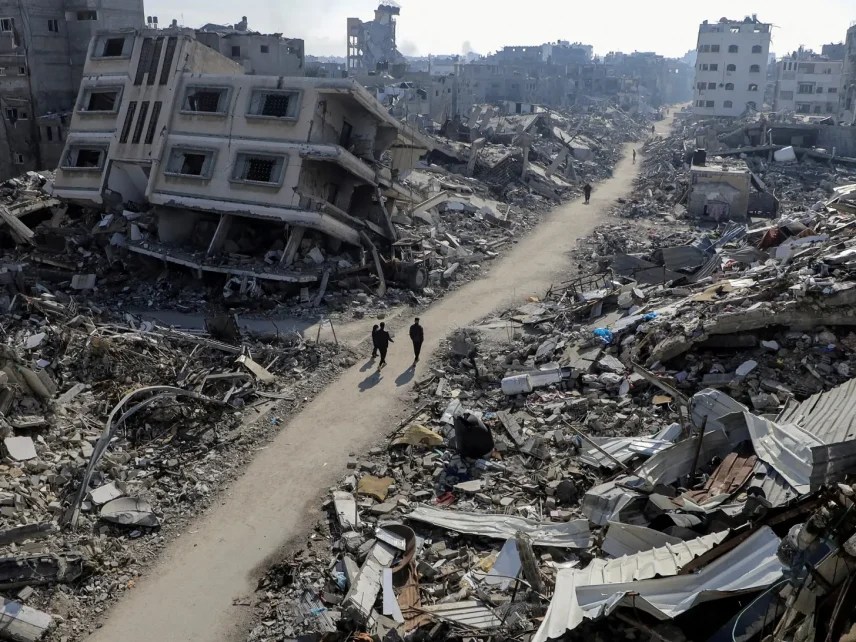
Palestinians traverse ZOF-inflicted ruins in northern Gaza
This finding, along with identical conclusions drawn by Western rights groups and legal scholars, mysteriously escaped the attention of major news outlets. The obvious question arises as to how the mainstream media remained silent so long – to the point of active complicity – not merely about the Zionist entity’s 21st century Holocaust in Gaza, but Israel’s historic abuse, persecution and slaughter of the Palestinian people. An answer is provided in veteran Australian journalist John Lyons’ 2017 biography, Balcony Over Jerusalem.
Buried in the book is a comprehensive account of how Australia’s Israeli lobby systematically plunges its poisonous hooks into influential editors and reporters Down Under, ensuring they act as dependable propagandists for Tel Aviv. The details are of enormous wider relevance, for as this journalist has previously documented, foreign media outreach is a dedicated, devastatingly effective means by which occupation, land theft, and ethnic cleansing hardwired into Zionism has been successfully concealed from Western audiences for decades. Identical operations are undoubtedly in force across the globe.
‘Hardline Side’
Lyons’ disclosures about the Zionist lobby’s mephitic influence in Australia are all the more remarkable given the author evidently does not perceive Palestinians to be wholly innocent victims. His book’s blurb perversely frames them and Zionists as equal parties in a “devastating war”, and boasts how he has “confronted Hamas officials about why they fire rockets” into Tel Aviv. There is zero insinuation in its contents Lyons denies or even vaguely questions Israel’s ultimate right to exist in some form or other.
Moreover, Balcony Over Jerusalem is rife with sentimental passages recalling trips to the Zionist entity to interview senior officials old and new, his long-running personal friendships with Australian Jews, and work on a major project investigating Jewish identity. This renders Lyons’ critical insights particularly valuable. The vicious backlash that erupted against the author from the Israel lobby within and without Australia in response to his book, which has raged ever since, is also instructive. Those same elements initially sought to foster a warm bond with the veteran journalist.
Lyons explains how once appointed deputy editor of the Sydney Morning Herald in the early 1990s, his “phone began ringing with requests for meetings” with local Jewish groups. Only later did he learn, “once you have ‘deputy’ in your title or are perceived as being on the rise within your media organisation you become a target for cultivation” by Australia’s “fiercely efficient pro-Israel lobby.” Public affairs apparatchiks at local Zionist organisations pestered him for a “year or so” to accept an all-expenses-paid tour of Israel.
Lyons eventually accepted, and in 1996 made his first visit to Tel Aviv, funded by the Melbourne-based Australia/Israel and Jewish Affairs Council. He recorded how “it has become almost a rite of passage for deputy editors of any major Australian news outlet to be offered a ‘study trip’ to Israel.” A senior AIJAC official boasted to Lyons the organisation had “sent at least 600 Australian politicians, journalists, political advisers, senior public servants and student leaders on these trips over the last 15 years.”
Lyons’ “assessment” was, “by ‘educating’ rising media executives, the Israeli lobby has in place editors” across Australia “who ‘understand’ the Israeli-Palestinian conflict” exclusively from the Zionist entity’s warped perspective, and report on local events accordingly. “I barely know an Australian newspaper executive who has not been on one of these trips,” he noted. Lyons and other senior staffers at major local media outlets were flown to Tel Aviv “for five days of wining, dining and briefings (including a stay in a kibbutz).”
Once inside the Zionist entity, he “quickly realised how narrow a range of opinions we were receiving” on the reality on-the-ground there. The trip’s organisers “set us up for an hour or so… to hear the point of view of the Palestinian Authority, but apart from that we were getting only one side of the story – and a hardline side at that.” It rapidly became clear to Lyons “the whole point of the trip was to defend Israel’s settlements in the Palestinian territories.”
‘Like Dresden’
In search of a “broader perspective”, Lyons asked his hosts to visit Hebron, Israel’s illegally occupied portion of the West Bank. The trip was spurred by his understanding that “in Hebron you can see the raw conflict,” as “it’s the only Palestinian city where there is an Israeli settlement in the middle of the Palestinian population; normally, the settlements are separated.” At that time, “several hundred settlers” lived “in the middle of 200,000 Palestinians.”
These settlers were and remain protected by the ZOF, and “the same rules of engagement for the army apply” as in other areas illegally annexed and occupied by Tel Aviv. Immediately upon arrival in Hebron, “the cruelty” of Zionist occupation was “there for all to see.” Lyons saw “how the conflict between the settlers and Palestinians played out at the most basic level.” It is a stomach-churning, life-threatening daily reality hidden from the outside world.
Hebron’s streets are typically empty, as “Palestinians are not able to drive on some roads or walk on others.” Years later, he took his editor on a trip there – they remarked, “it’s like Dresden after the bombing.” Arriving late at night, the pair encountered a “heavy Israeli Army presence” and a “certain eeriness” in the silent, deserted city. His stunned editor asked a ZOF soldier at a “closed checkpoint” into Jerusalem, “where are the Palestinians?” The militant smirkingly replied, “they’re all tucked up in bed!”
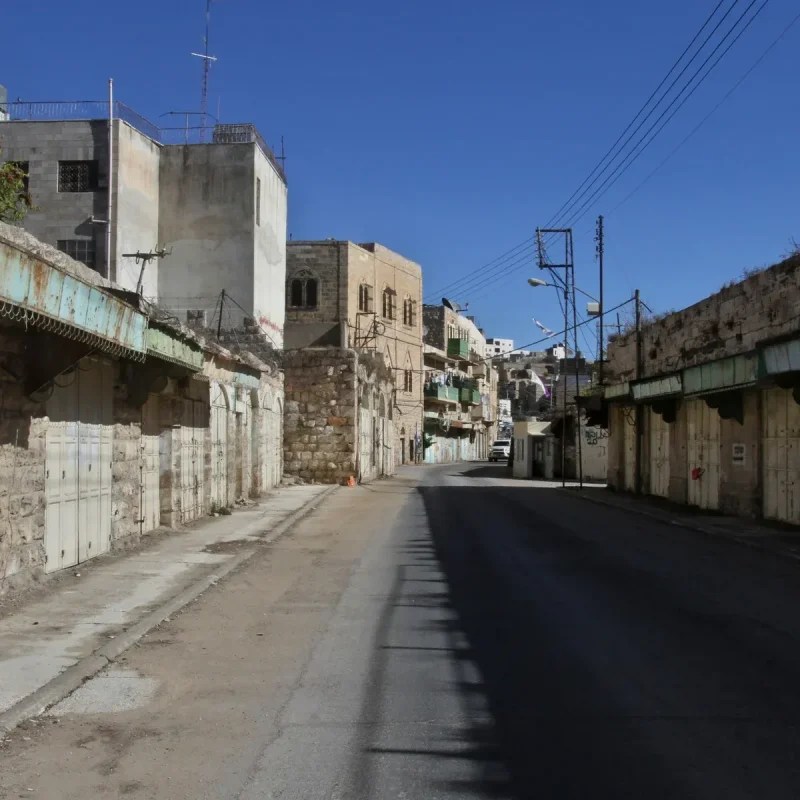
A street in Hebron where Palestinians are forbidden to tread
In Hebron, Lyons saw how Palestinians placed “wire over their market stalls to stop them being hit when Jewish settlers living above them throw bricks, chairs, dirty nappies and rotting chickens onto them.” He also witnessed Israeli soldiers “decide, without notice, to lock the Palestinians into the old part of the city at night, behind big security gates that look like cages.” The situation has only worsened subsequently, with illegal settlements – and concomitant ZOF repression – expanding exponentially. Lyons’ appraisal of the West Bank under Zionist rule is stark:
“If the whole world could see the occupation up close, it would demand that it end tomorrow. Israel’s treatment of the Palestinians would not pass muster in the West if the full details were known. The only reason Israel is getting away with this is because it has one of the most formidable public-relations machines ever seen, and enormous support from its diaspora communities… Military occupations look ugly because they are ugly. Israel’s reputation will bleed as long as its control over another people continues.”
Such perspectives are vanishingly rare among the countless Australian opinion-formers who have been treated to Zionist lobby-financed tours of Israel. As Lyons records, “wave after wave of journalists, editors, academics, student leaders and trade union officials” have been whisked to Tel Aviv “to hear the same spin from the same small group of people used to defend Israel’s policies in the West Bank” over the years. Few have followed Lyons’ example in actually visiting the area, to see the horror with their own eyes.
Nonetheless, Lyons’ outlook wasn’t fully fatalistic. He noted that while the Zionist entity’s Hasbara tactics “worked for the first few decades of the occupation, now virtually every incident between an Israeli soldier and a Palestinian is filmed by a mobile phone,” exposing the ZOF’s routine savagery to overseas audiences. Fast forward to today, and the Gaza genocide has been televised globally in real-time not merely by fearless Palestinian journalists, who have often paid for their courage with their lives, but Israeli militants who sickly film their own hideous crimes.

The impact of these horrendous images on global public perceptions of the Zionist entity has been catastrophic, and irreversible. Polls consistently show across the West, even in the few countries that harboured some sympathy for Tel Aviv following October 7th, the overwhelming majority of citizens hold deeply unfavourable views of Israel. Support for the entity and its genocidal actions is becoming increasingly indefensible, as the monstrous truth becomes writ ever-larger. It can only be considered an unspeakable tragedy so many innocent Palestinians had to die for us to reach this point.
Trump administration ordered to restore funding to US propaganda outlet
RT | July 20, 2025
A federal judge has ordered the administration of US President Donald Trump to restore funding for state-run Radio Free Europe/Radio Liberty (RFE/RL), ruling that the decision to stop the support was “unprecedented” and lacked any basis.
RFE/RL was a key tool for spreading Western propaganda in the Soviet bloc during the Cold War and was funded by the CIA. The outlet currently receives nearly all of its funding from Congress.
The Trump administration has sought to cut funding for RFE/RL and several other state-linked outlets. It has denounced the United States Agency for Global Media (USAGM), the body that oversees state-funded media, saying it is “not salvageable,” while indulging in “obscene overspending.” The administration also claimed it is crawling with “spies and terrorist sympathizers.”
Consequently, the USAGM essentially froze funding for RFE/RL and refused to enter into a new contract with the outlet after the previous agreement expired in March. This led to staff furloughs and programming cuts, though the EU stepped in to fill the budgetary gap.
On Friday, Judge Royce C. Lamberth of the US District Court for the District of Columbia ruled that the Trump administration lacks the legal authority to refuse Congress-approved funding of more than $70 million, arguing that they provided no clear basis for the move.
”It is unprecedented for an agency to demand that entirely new terms govern its decades-old working relationship with a grantee entity,” he wrote. He went on to rebuke the USAGM for a lack of responses to RFE/RL to negotiate a new agreement, describing it as “stonewalling” and adding that the agency went dark for days or even weeks.
The “USAGM’s flagrant disregard for its funding responsibilities” caused RFE/RL to suffer “mass furloughs, cancelation of programming, and inevitable damage to the global influence that RFE/RL has built over decades,” the ruling said.
RFE/RL President and CEO Stephen Capus welcomed the court’s decision. “This victory provides our journalists with the momentum necessary to continue reaching the nearly 47 million people each week… With this ruling, RFE/RL can continue to advance US national security interests.”
FDA stalls decision on petition to suspend mRNA injections, citing ‘other priorities’
US regulator quietly delays action despite evidence of regulatory failure, DNA contamination, and a surge in cancers among young people.
By Maryanne Demasi, PhD | July 19, 2025
The U.S. Food and Drug Administration (FDA) has delayed its response to a formal petition demanding the suspension of the mRNA Covid-19 injections, citing “the existence of other FDA priorities.”
In a letter dated 17 July 2025, Dr Vinay Prasad—recently appointed Director of the FDA’s Center for Biologics Evaluation and Research (CBER)—acknowledged that the agency had “not yet reached resolution of the issues raised” in the petition.
Filed on 20 January 2025, the petition alleges that Pfizer’s Comirnaty and Moderna’s Spikevax were “unlawfully approved” in violation of federal regulatory requirements.
It calls for an immediate halt to the injections, independent testing of retained vials, and a full investigation into the approval process.
Fatal flaws in licensing mRNA products
Submitted by lawyer Katie Ashby-Koppens of PJ O’Brien & Associates, and spearheaded by former barrister Julian Gillespie, the petition argues that the mRNA injections were misclassified from the outset.
Although the products meet the FDA’s own definition of gene therapy, they were not regulated as such—sidestepping the heightened oversight normally required for gene-based interventions.
Under U.S. law, gene therapies must undergo ‘Environmental Assessments,’ be reviewed by specialised advisory committees, and face a more rigorous public transparency process.
But by labelling the mRNA injections as conventional ‘vaccines,’ regulators were able to fast-track their approval through a separate, less stringent pathway—bypassing critical safeguards.
The petition also raises alarm over synthetic DNA fragments found in the final products. Independent testing by multiple laboratories—including the FDA’s own facility—revealed DNA contamination far exceeding the safety limits.
Because the DNA is encapsulated in lipid nanoparticles, it can bypass normal immune defences, enter human cells, and in some cases integrate into the genome. The potential consequences, the petition warns, include genomic instability, cancer, and heritable genetic damage.
One of the most serious findings is the presence of SV40 promoter sequences in Pfizer’s injection—elements known to interfere with tumour-suppressing pathways such as p53.
The petition accuses Pfizer of withholding this information from the FDA in breach of disclosure laws.
Interim letter, no timeline
Under federal law, the FDA was required to respond to the petition within 180 days.
Just before the deadline, it issued a standard interim letter—acknowledging the petitioners’ main concerns but offering no timeline for a final decision.
Nor did the agency indicate that any investigation had begun. “We will respond to your petition as soon as we have reached a decision on your request,” wrote Prasad.
The agency’s delay is not uncommon—but critics say it reflects a deeper reluctance to confront the scientific and regulatory implications head-on.
Fully addressing the petition would require a sweeping and uncomfortable re-evaluation of how mRNA technologies were developed, approved, and marketed under the guise of conventional ‘vaccines.’
If the products were unlawfully licensed—mislabelled as vaccines to circumvent gene therapy regulations—the fallout would be unprecedented.
The admission alone could expose governments to extraordinary legal and financial liability—including product withdrawals, class actions, long-term health monitoring, injury compensation, and potential criminal investigations.
Petitioners speak out
Gillespie said the FDA is caught “between a rock and a hard place”—but that doesn’t excuse inaction. He believes the recent surge in cancers among young people demands urgent scrutiny.
“There’s been a tremendous and continuing rise in cancers across the United States commensurate with the rollout of these products,” he said. “Government officials have seen the data… and are refusing to address the elephant in the room.”
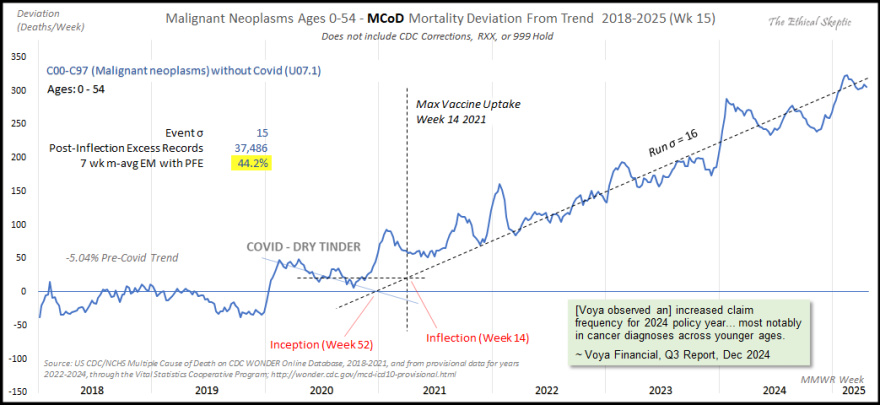
Analysis by Ethical Skeptic shows young cancers are up by 44%
Dr Jessica Rose, a computational biologist and co-author of the petition, said the public was never given accurate information about the nature of the products.
“The public was not told what they were being injected with,” she said. “And still to this day, they are not.”
She described the failure to distinguish gene-based therapies from traditional vaccines as “an existential crisis,” warning that “more and more people—including children and infants—are being exposed to the harms of foreign DNA.”
Dr David Speicher, a virologist and co-signatory on the petition, said the FDA’s letter amounts to bureaucratic minimisation.
“The number of vaccine-injured people continues to grow, and we do not all know the long-term harms caused by these genetic products,” he said. “Yet the FDA states that ‘other priorities’ are more important.”
He called for “an independent scientific team to examine the regulatory process, as well as to provide funding to researchers to explore biological mechanisms such as genomic integration.”
Pharmacy consultant and petitioner Maria Gutschi said the mRNA products represent a new therapeutic category “with no previous knowledge to leverage in assessing safety and efficacy.”
She argued that, given the novelty and risks, “the bar to suspend and/or mandate ‘black box’ warnings must be higher than for any previous therapeutic agent.” Gutschi urged the FDA to treat this as “THE priority” going forward.
A tale of two gene therapies
Critics say the FDA’s handling of mRNA harms stands in stark contrast to its swift response to safety concerns involving other gene therapies.
Yesterday, the agency announced a halt to clinical trials for Sarepta Therapeutics’ investigational gene therapy after the company reported another patient death—bringing the total to three deaths across two separate gene therapy products.
The treatment, developed for limb girdle muscular dystrophy, prompted immediate regulatory action.
“Today, we’ve shown that this FDA takes swift action when patient safety is at risk,” said FDA Commissioner Marty Makary, declaring the agency is “not afraid to take immediate action when a serious safety signal emerges.”
In contrast, the FDA has remained inert on mRNA injections—which also deliver genetic material into human cells but were classified as “vaccines”—despite thousands of reported deaths and serious adverse events following administration.
According to the petitioners, the public was led to believe they were receiving a conventional vaccine—when in fact, they were being administered gene therapy.
By failing to recognise and regulate the products accordingly, the FDA violated public trust—bypassing transparency laws, concealing critical risks, and depriving individuals of the opportunity to make informed medical decisions.
Next steps
People don’t want agencies to stall. They don’t want bureaucratic evasions. They want answers—and they want accountability.
The FDA’s next move won’t simply test regulatory process.
It will test courage—whether anyone inside the system is willing to confront the fallout in what may be the most consequential medical misclassification in modern history.
Featured Video
Prof. Ted Postol: Iran Already Achieved Nuclear Deterrence Against Israel
or go to
Aletho News Archives – Video-Images
From the Archives
How the occupied mentality syndrome works
Saudi Arabia on the American chessboard – Part 3
By B. J. Sabri | American Herald Tribune | June 27, 2016
Read part 2: “The occupied mentality Syndrome“
Previously I argued whether Saudi Arabia’s repeated involvements in U.S. interventions and wars stem from free national will or in response to a specific condition. For starters, in Saudi Arabia there is no national will. In Saudi Arabia, the national will is the will of the Al Saud clan. Still, when a major Arab state allies itself with a superpower that committed unspeakable crimes against humanity in almost every Arab country, then something is wrong. This fact alone should compel us to examine the U.S.-Saudi relation for one exceptional reason. As a result of the U.S.-Saudi wars, hundreds of thousands of people in Afghanistan, Iraq, Iran, Libya, Syria, Yemen, and Somalia have lost their lives. Millions became displaced in their own homelands. And millions more rendered refugees.
Attributing the Saudi policies to the bonds of “partnership” with the U.S. is frivolous. There are no bonds between these two thugs except those of business, military deals, secret plots, and wars. Proving this point, bonds such as these have no space for the American and Saudi peoples to share significant cultural or societal exchanges. If partnership is not the reason for the Saudi contribution to the U.S. strategy of empire and imperialism, then another reason must exist.
This leads to three possibilities. … continue
Blog Roll
 Aletho News
- REWRITING THE RISK? INSIDE THE GOVERNMENT’S VACCINE SAFETY MESSAGING
- “Davos Can Really Replace the UN”
- NIAID/NIH and USDA Fund Bioengineered Chimeric Influenza Viruses Built Using Pandemic H1N1 Components: Journal ‘Science Advances’
- Hezbollah hits Israeli warship off Lebanon’s coast, sets it aflame
- Iran slams US strikes on B1 bridge, Mahshahr petrochemical plants as ‘blatant acts of state terrorism’
- In letter to UN chief, Araghchi warns of dire consequences of US-Israeli attacks on Iran’s nuclear facilities
- Why the CIA conspiracy to invade Iran with Kurdish militias failed
- Why Are Upbeat US Claims About Mission to Rescue Pilot ‘Highly Questionable’?
- Aircraft destroyed during US ‘rescue’ of downed F-15 pilot cost more than $100 million each
- Washington University removes professor who condemned US-Israeli war on Iran
- If Americans Knew
- In Iran, Israel-US take aim at “reason, research, and freedom of thought” – Daily Update
- US loses planes over Iran, Israel downgrades Lebanon war goals – Daily Update
- Israel Is Blocking Palestinians from Easter at Church Where Jesus Resurrected
- Plot to assassinate Palestinian activist follows harassment campaign promoted by Zionist groups and elected officials
- Prominent New York synagogue hosts presentation on why U.S. Jews should support the ethnic cleansing of Gaza
- Tapper vs. Piker: Is the CNN Anchor Auditioning for David Ellison?
- Shouldn’t Democrats Be Able to Condemn Genocide?
- Israel-US kill negotiators, destroy civilian structures, but Iran’s military capabilities still largely intact – Daily Update
- ‘War crime’: Global condemnation as Israeli ministers celebrate death penalty law targeting Palestinian prisoners
- 7 Ways Israel Is Turning Lebanon Into Gaza
- No Tricks Zone
- An Inconvenient Tree: Uncovered In Alps… Europe Much Warmer Than Today 6000 Years Ago
- New Study Reports A 60% Slowdown In Greenland’s Ice Loss Rate In The Last Decade
- Low Intensity Tornado Wrecks Major Solar Farm, Creating A Potential Toxic Dump
- New Study Finds Warming Saves Lives…Cold Temperatures 12 Times More Deadly Than Excess Heat
- German Science Blog Accuses PIK Climate Institute Of Hallucinating Climate Tipping Points
- Devastating Assessment Of Comirnaty Vaccine By Former Senior Pfizer Europe Toxicologist
- New Study: CO2 Is ‘Effectively Negligible’ As An Explanatory Climate Change Factor Since 2000
- Former Pfizer Toxicologist Dr. Helmut Sterz Tells Bundestag Hearing Pfizer Vaccine Should Have Never Been Approved
- Energy Expert: Germany’s Nuclear Phaseout Was A “500 Billion Euro Mistake”
- New Research: South Australia’s Mid-Holocene Sea Surface Temperatures Were 4°C Warmer Than Today
 Aletho News