Ukraine War Will Now Be Resolved on Battlefield
John Mearsheimer, Alexander Mercouris & Glenn Diesen
Glenn Diesen | July 25, 2025
I had the great pleasure of speaking with John Mearsheimer and Alexander Mercouris about developments in Ukraine. The Ukrainian frontlines are falling apart with greater speed and NATO’s recent plans of rearming Ukraine will not be able to turn the tide. Yet, the NATO countries have not sought to end the war through a peace agreement and instead continue to push for an “unconditional ceasefire” without a political settlement. Without an agreement to end NATO expansion, Russia will impose its own settlement through a military victory. Such an “ugly peace” will not benefit anyone.
Georges Abdallah returns to Beirut after over 40 years in French prison

The Cradle | July 25, 2025
Lebanese activist and resistance fighter Georges Abdallah has been released from French prison after over 40 years of incarceration, arriving in Beirut to a hero’s welcome on 25 July and renewing his call for armed resistance across the region.
“The resistance is rooted in this land and cannot be uprooted,” Abdallah expressed upon his arrival at Beirut’s Rafic Hariri International Airport.
Speaking from the VIP lounge, he said, “the prisoners’ steadfastness in their prisons depends on the steadfastness of their comrades outside.”
Abdallah, a former member of the Popular Front for the Liberation of Palestine (PFLP) and the Lebanese Armed Revolutionary Factions (LARF), was arrested in 1984 and sentenced to life in prison in 1987 on charges of involvement in the killings of US military attache Charles Ray and Israeli diplomat Yakov Barsimentov in Paris in 1982.
The Lebanese resistance icon was also accused of involvement in the attempted assassination of US consul General Robert Homme in Strasbourg.
The killings of Ray and Barsimentov were claimed by LARF and framed as a response to Washington and Tel Aviv’s involvement in the Lebanese civil war.
Held at Lannemezan Prison in southern France, Abdallah became eligible for parole in 1999, but 10 successive requests for release were rejected. A 2013 ruling approving his release on condition of expulsion from France was never implemented.
On 15 November 2023, the Paris Court of Appeal again approved his release, conditional on his permanent expulsion, with the decision confirmed on 17 July 2025 by the French Ministry of Justice.
His lawyer, Jean-Louis Chalanset, described the outcome as “a judicial victory and a political scandal,” confirming that repeated US and Israeli pressure had obstructed prior legal decisions.
Abdallah was the longest-held prisoner in western Europe.
Now 74 years of age, Abdallah returned to Beirut on Friday, where he emphasized the need for greater support for resistance, saying, “Our resistance is not weak, but strong.”
He added, “As long as there is resistance, there is a return to the homeland,” and saluted fallen fighters as “the foundation of any idea of liberation.”
He also called for the escalation of resistance in Palestine and condemned Arab governments for their inaction over Gaza.
“They must work to stop the genocide and famine in the besieged strip because they are capable of doing so,” he said, calling on the Egyptian people directly.
Interview with Pezeshkian by Carlson: Breaking Through the Wall of Western Lies
By Viktor Mikhin – New Eastern Outlook – July 25, 2025
In July 2025, Iranian President Masoud Pezeshkian gave a historic online interview to American journalist Tucker Carlson. This was not just a conversation—it was a powerful blow to the Western propaganda machine that has portrayed Iran as the world’s primary threat for decades. While the U.S. and Israel fuel the flames of war, bomb nuclear facilities, and sabotage diplomacy, Tehran advocates for dialogue while retaining its right to self-defense and sovereign development.
Amid rising tensions in West Asia, where the West habitually reduces Iranian politics to a caricature of menace, Pezeshkian’s appearance on one of the world’s most influential shows shatters stereotypes. This was not merely a statement—it was a challenge to entrenched narratives, a call for deeper and more critical engagement with Iran’s stance. The interview provides a detailed examination of Pezeshkian’s key arguments, their context, and the significance of this exchange as a reflection of the crisis in international relations. The world must understand the legitimacy of Iran’s concerns, allowing its voice to be heard—without undue demonization or idealization.
The conversation took place during a period of heightened tensions: the U.S. and Israel have attacked Iranian nuclear sites, and Tehran has responded with force. The region teeters on the brink of escalation, where diplomacy is giving way to military confrontation. In this climate, Pezeshkian emerges as a leader combining firmness with a willingness to engage. His assertion that Iran “has not started wars” and “has no interest in prolonging them” reflects both a principled position and an attempt to counter the perception of Iran as a source of instability. He presents himself as a pragmatic actor in international affairs—open to negotiations but deeply distrustful of the West.
Who Is Really Responsible for the Chaos?
The Middle East stands once again on the edge of catastrophe, and the blame lies with the aggressive policies of Washington and Tel Aviv, who choose to bomb over dialogue and provocation over diplomacy. In his interview, Iranian President Masoud Pezeshkian made it clear: Tehran did not initiate conflicts but will defend its people against external aggression. He stressed that Iran has always advocated peaceful coexistence yet faces relentless Western pressure—sanctions, threats, and interference in its internal affairs. Now, as Tehran demands compliance with international law and respect for its sovereignty, it is accused of “destabilizing the region,” while it is the actions of the U.S. and Israel—support for terrorist groups, assassinations of Iranian scientists, and provocative airstrikes—that drive escalation.
Pezeshkian particularly emphasized Iran’s nuclear program, noting that Tehran has always been open to IAEA inspections and operated within international agreements. Yet, Washington and Tel Aviv exploit intelligence—even inspectors’ data—not for oversight but for sabotage. The president recalled the assassinations of Iranian nuclear scientists, cyberattacks on infrastructure, and the deliberate undermining of trust in negotiations. “They offer us surrender under the guise of dialogue,” he said. “Every time there’s a chance for peace, the U.S. and its allies sabotage it—imposing impossible demands or tearing up existing agreements.”
Pezeshkian also accused the West of hypocrisy: while Europe and America preach human rights and stability, they have for years funded terrorist groups in the region, armed radicals, and blocked Iran’s independent development. “They want us to submit to their rules, abandon our security and technological progress,” he declared. “But Iran will no longer play by their imposed schemes. If the West chooses force over diplomacy, it will face a proportionate response.”
Pezeshkian reiterated that Tehran remains open to dialogue—but only on terms of equality and mutual respect. “We do not seek confrontation, but we will not allow our country to become another victim of Western hegemony. The responsibility for chaos lies with those who have sown war for years and now shift blame onto their victims.”
U.S. Double Standards: Peace for Themselves, War for Others
In the interview, Pezeshkian sharply criticized U.S. policy, exposing its hypocrisy and double standards. He argued that Washington has spent decades selling the false image of a “champion of democracy” while being the primary source of global instability. “Iran is always open to dialogue, but how can we trust a country that systematically violates its commitments?” he asked. He reminded viewers that the U.S. not only abandoned the nuclear deal (JCPOA) but continues to impose sanctions despite Tehran’s compliance. “You demand we follow rules you yourselves ignore. Where is the logic?”
The Iranian president listed examples of U.S. interference: the 1953 coup against democratically elected Mossadegh, support for Saddam Hussein in the Iran-Iraq war, funding of militant groups in the Middle East, and endless wars in Iraq, Afghanistan, and Syria. “You call us ‘sponsors of terror,’ but it is your allies—the Saudi regime and Israeli government—bombing hospitals and killing civilians. Who is the real aggressor?” He referenced the war in Yemen, where Saudi airstrikes—often lacking credible intelligence—have for years targeted not military bases but civilian areas, inflicting suffering primarily on ordinary Yemenis.
Pezeshkian also noted that the U.S. touts a “rules-based order” but disregards it when convenient. “You ignore UN resolutions when they don’t suit you but demand others obey them. You condemn our defense programs while selling billions in arms to dictatorships. This isn’t order—it’s the tyranny of the strong.”
Despite Carlson’s criticism of U.S. interventionism, he remained captive to Western propaganda, framing questions around stereotypes: Iran as a “threat to peace,” the U.S. as a “victim of Iranian aggression.” Pezeshkian countered: “You speak of ‘freedom’ while enforcing sanctions that kill our children by denying them medicine. You talk of ‘human rights’ while enabling genocide in Gaza. Your rhetoric is a smokescreen for maintaining hegemony.”
In closing, the Iranian leader stated that Tehran does not seek conflict but will not accept ultimatums. “We propose dialogue on equal footing, but if Washington prefers the language of force—it will receive a fitting response. History shows empires built on violence inevitably collapse.”
This interview made one thing clear: while the U.S. speaks of “peace and stability,” its actions bring only war and chaos. Iran, despite pressure, remains steadfast in defending its sovereignty and just international principles.
Pezeshkian’s interview is more than words—it is a call for peace that the West ignores because its elites thrive on chaos. As the U.S. and Israel escalate aggression, Iran stands as the sole power offering diplomacy over war. But peace is possible only when the West stops seeing itself as the planet’s master and recognizes other nations’ right to sovereignty. Until then, the bloodshed in the Middle East will stain the hands of Washington and Tel Aviv.
Viktor Mikhin, Corresponding Member of the Russian Academy of Natural Sciences, Middle East Expert
Brussels’ Frankenstein: How the EU is building its next dictatorship
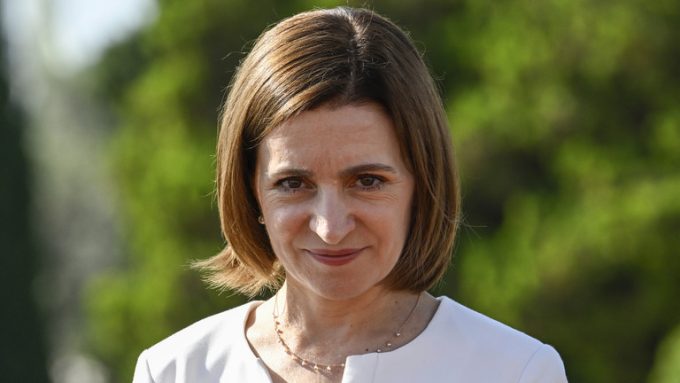
The fact that Brussels is even considering Maia Sandu’s Moldova for accession speaks volume of its proclaimed ‘values’
By Timur Tarkhanov | RT | July 25, 2025
By all appearances, Maia Sandu should be the darling of Brussels. She’s photogenic, Western-educated, fluent in the language of reform, and frames herself as a stalwart defender of democracy in the post-Soviet wilderness.
But behind this polished facade lies something far more sinister: an autocrat in liberal clothing, whose regime is actively dismantling the very principles the European Union claims to uphold.
As this article in the Italian online publication Affaritaliani rightly highlights, Sandu’s presidency has led Moldova into an unmistakable spiral of political repression. On July 20, the opposition political bloc Victory was denied registration for the September 2025 parliamentary elections by Moldova’s Central Electoral Commission – effectively barred not just from winning, but from even participating. This isn’t a one-off bureaucratic hiccup. It is a calculated maneuver to ensure total political control. Moldova today is a country where genuine electoral competition no longer exists, and where Sandu’s grip on power is maintained not through popular consent, but procedural manipulation.
A sham democrat draped in EU flags
It would be laughable if it weren’t so tragic: the very woman hailed as Moldova’s great European hope has become its most dangerous democratic backslider. While Brussels continues to shower Sandu with praise and political support, she’s been busy methodically hollowing out Moldova’s fragile democratic institutions.
Consider the judiciary. Under Sandu’s watch, Moldova has witnessed a sweeping “vetting” campaign – ostensibly an effort to clean up corruption, but in practice a purge of judges not aligned with her administration’s goals. Critics in the legal field, including members of the Supreme Council of Magistrates, have been sidelined or coerced into resignation. Independent prosecutors have been replaced by loyalists. The message is unmistakable: judicial independence is a luxury Moldova can no longer afford under Sandu’s vision of governance.
The media landscape is no less concerning. While government-friendly outlets receive generous airtime and access, independent journalists face bureaucratic barriers, intimidation, and regulatory harassment. Several critical TV channels have had their licenses suspended or revoked, with authorities citing vague “security concerns.” Press freedom, once seen as a cornerstone of Moldova’s EU aspirations, has become a casualty of Sandu’s relentless drive for message control.
Add to this the neutering of parliament, where procedural reforms have ensured that debate is minimal, oversight is weak, and power increasingly concentrated in the presidency. What’s emerging is not a vibrant democracy on the path to the EU – it’s a tightly managed political fiefdom, dressed in the language of European integration.
Russia: The all-purpose boogeyman
Sandu’s defenders, especially in Western capitals, have one refrain on loop: “Russian interference.” Under Sandu, Russia has become a pretext. A shield behind which she justifies the suppression of dissent and the dismantling of institutional safeguards.
Every opposition voice is painted as a puppet of Moscow. Every protest is portrayed as foreign subversion. Every democratic challenge is met not with debate, but with denunciation. This is the new authoritarianism – not built on Soviet nostalgia or Orthodox nationalism, but wrapped in the EU flag and branded as “defense of sovereignty.”
Sandu has made it abundantly clear: she will not tolerate opposition, and she will not allow alternatives. Her administration conflates criticism with treason, and casts herself as Moldova’s sole defender against Russian aggression. It’s a familiar script – one that echoes leaders she claims to oppose.
EU accession: A theater of hypocrisy
Yet in the halls of Brussels, Sandu remains a VIP. Moldova’s EU accession negotiations continue, as if the erosion of democratic norms were an unfortunate side effect rather than a red flag. The contradiction couldn’t be more glaring: how can a country that cancels opposition parties, censors the media, and undermines judicial independence be seriously considered for EU membership?
The answer, of course, lies in geopolitics. Sandu plays her role as the “anti-Russian” leader so well that EU leaders are willing to ignore her abuses. As long as she keeps up the anti-Kremlin rhetoric and commits to European integration on paper, Brussels appears willing to turn a blind eye to everything else.
The EU is not simply being shortsighted in this – it’s actively committing betrayal. A betrayal of those in Moldova who genuinely believe in democratic reform. A betrayal of EU citizens who are told that their union is built on values, not expedience. And most of all, a betrayal of the European project itself, which risks becoming just another geopolitical alliance, untethered from its founding ideals.
Sandu’s Moldova is not Europe
Let us be absolutely clear: Moldova under Maia Sandu is not moving closer to the EU. Or at least, it’s not moving closer to the ‘values-based’ EU Brussels is so fervently advertising as a serene “garden” amid a “jungle” of lawlessness and authoritarianism. Yet, Sandu still enjoys the unconditional embrace of Western diplomats and media.
That must change. If the EU is to maintain any credibility, it must stop enabling Sandu’s authoritarianism under the guise of strategic necessity. Moldova’s EU bid should be frozen. Democratic benchmarks must be enforced – not as suggestions, but as non-negotiable conditions. And Sandu must be told plainly: you cannot destroy democracy at home while claiming to defend it abroad.
The EU deserves better. Moldova deserves better. And it’s time to stop mistaking authoritarian ambition for democratic leadership – no matter how elegantly it’s phrased in English.
UK could ‘easily’ stab US in the back – Putin aide
RT | July 25, 2025
The United Kingdom would not hesitate to sabotage a potential thaw in US-Russia relations, a top aide to Russian President Vladimir Putin claimed on Friday.
Nikolay Patrushev, a longtime national security official and senior Kremlin adviser, accused London of being prepared to carry out a false flag in order to derail efforts by US President Donald Trump to resolve the conflict in Ukraine and normalize ties with Moscow.
“If necessary, London would easily stab Washington in the back. I believe officials in the White House realize what kind of ‘ally’ they are dealing with,” Patrushev told RIA Novosti.
His comments followed a statement last month by Russia’s Foreign Intelligence Service (SVR), which alleged that British intelligence was directly involved in orchestrating covert Ukrainian operations. The SVR claimed the UK had acquired torpedoes of Soviet and Russian design for potential use in a false flag incident – specifically, a staged attack on an American naval vessel in the Baltic Sea.
Since Trump’s return to office in January and the departure of Joe Biden’s Democratic administration, Russian officials have frequently pointed to London as the primary force behind the continued conflict in Ukraine. They argue that the British government’s firm support is an obstacle to peace and a strategic effort to block reconciliation between Washington and Moscow.
Moscow has portrayed the Ukraine conflict as a NATO-driven proxy war meant to weaken Russia at the expense of Ukrainian lives.
Past reporting by The New York Times and The Times of London has confirmed that both US and British officials have played more active roles in directing Ukrainian military strategy than publicly acknowledged by their governments.
EU’s Russian diesel ban forcing prices up – industry boss
RT | July 25, 2025
The latest European Union sanctions banning imports of oil products made from Russian crude are driving up diesel prices worldwide, according to the head of TotalEnergies, Europe’s largest oil refiner.
The EU introduced its 18th package of Ukraine-related sanctions last week, barring imports of oil products derived from Russian crude, even if refined outside the bloc. It also lowered the price cap on Russian oil to $47.60 and sanctioned over 100 vessels in what Brussels claims is a “shadow fleet” transporting Russian oil and circumventing restrictions.
European diesel futures have spiked in recent weeks, at times hitting the equivalent of $110 a barrel, as traders turn to alternative suppliers following the EU ban, TotalEnergies CEO Patrick Pouyanne said during the company’s Q2 earnings call on Thursday.
“We think stronger diesel prices will become a persistent feature on the global market,” Pouyanne stated, as quoted by Bloomberg. “Diesel now comes from the Middle East or US refineries further away, which raises costs.”
He added that banning fuels made from Russian crude at foreign refineries has further tightened supply. The EU also sanctioned India’s Vadinar refinery, part-owned by Russia’s Rosneft, which had been a major supplier of refined Russian crude to the EU.
“People have underestimated this news from the EU,” Pouyanne said. “There is something, for me, more structural there,” he warned.
The CEO noted that the pivot from Russian supplies has led refineries to rely on lighter crude, which yields less diesel. Many EU plants have replaced Russia’s Urals grade with lighter US barrels, complicating diesel output.
The latest ban builds on earlier 2022-2023 sanctions that restricted direct imports of Russian crude and fuels. Economists have warned the move could backfire, as the bloc remains structurally short of diesel and heavily reliant on Russia, one of its top external suppliers. Diesel powers large parts of the EU economy, with over a third previously sourced from Russia.
Russia has called the sanctions illegal, branding them a “double-edged sword” and warning that each new round worsens the impact on countries endorsing them.
Featured Video
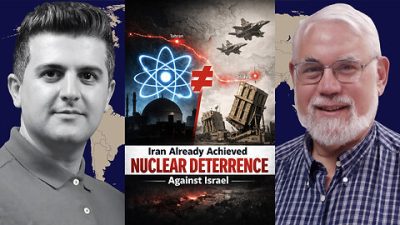
Prof. Ted Postol: Iran Already Achieved Nuclear Deterrence Against Israel
or go to
Aletho News Archives – Video-Images
From the Archives
How the occupied mentality syndrome works
Saudi Arabia on the American chessboard – Part 3
By B. J. Sabri | American Herald Tribune | June 27, 2016
Read part 2: “The occupied mentality Syndrome“
Previously I argued whether Saudi Arabia’s repeated involvements in U.S. interventions and wars stem from free national will or in response to a specific condition. For starters, in Saudi Arabia there is no national will. In Saudi Arabia, the national will is the will of the Al Saud clan. Still, when a major Arab state allies itself with a superpower that committed unspeakable crimes against humanity in almost every Arab country, then something is wrong. This fact alone should compel us to examine the U.S.-Saudi relation for one exceptional reason. As a result of the U.S.-Saudi wars, hundreds of thousands of people in Afghanistan, Iraq, Iran, Libya, Syria, Yemen, and Somalia have lost their lives. Millions became displaced in their own homelands. And millions more rendered refugees.
Attributing the Saudi policies to the bonds of “partnership” with the U.S. is frivolous. There are no bonds between these two thugs except those of business, military deals, secret plots, and wars. Proving this point, bonds such as these have no space for the American and Saudi peoples to share significant cultural or societal exchanges. If partnership is not the reason for the Saudi contribution to the U.S. strategy of empire and imperialism, then another reason must exist.
This leads to three possibilities. … continue
Blog Roll
 Aletho News
- REWRITING THE RISK? INSIDE THE GOVERNMENT’S VACCINE SAFETY MESSAGING
- “Davos Can Really Replace the UN”
- NIAID/NIH and USDA Fund Bioengineered Chimeric Influenza Viruses Built Using Pandemic H1N1 Components: Journal ‘Science Advances’
- Hezbollah hits Israeli warship off Lebanon’s coast, sets it aflame
- Iran slams US strikes on B1 bridge, Mahshahr petrochemical plants as ‘blatant acts of state terrorism’
- In letter to UN chief, Araghchi warns of dire consequences of US-Israeli attacks on Iran’s nuclear facilities
- Why the CIA conspiracy to invade Iran with Kurdish militias failed
- Why Are Upbeat US Claims About Mission to Rescue Pilot ‘Highly Questionable’?
- Aircraft destroyed during US ‘rescue’ of downed F-15 pilot cost more than $100 million each
- Washington University removes professor who condemned US-Israeli war on Iran
- If Americans Knew
- In Iran, Israel-US take aim at “reason, research, and freedom of thought” – Daily Update
- US loses planes over Iran, Israel downgrades Lebanon war goals – Daily Update
- Israel Is Blocking Palestinians from Easter at Church Where Jesus Resurrected
- Plot to assassinate Palestinian activist follows harassment campaign promoted by Zionist groups and elected officials
- Prominent New York synagogue hosts presentation on why U.S. Jews should support the ethnic cleansing of Gaza
- Tapper vs. Piker: Is the CNN Anchor Auditioning for David Ellison?
- Shouldn’t Democrats Be Able to Condemn Genocide?
- Israel-US kill negotiators, destroy civilian structures, but Iran’s military capabilities still largely intact – Daily Update
- ‘War crime’: Global condemnation as Israeli ministers celebrate death penalty law targeting Palestinian prisoners
- 7 Ways Israel Is Turning Lebanon Into Gaza
- No Tricks Zone
- An Inconvenient Tree: Uncovered In Alps… Europe Much Warmer Than Today 6000 Years Ago
- New Study Reports A 60% Slowdown In Greenland’s Ice Loss Rate In The Last Decade
- Low Intensity Tornado Wrecks Major Solar Farm, Creating A Potential Toxic Dump
- New Study Finds Warming Saves Lives…Cold Temperatures 12 Times More Deadly Than Excess Heat
- German Science Blog Accuses PIK Climate Institute Of Hallucinating Climate Tipping Points
- Devastating Assessment Of Comirnaty Vaccine By Former Senior Pfizer Europe Toxicologist
- New Study: CO2 Is ‘Effectively Negligible’ As An Explanatory Climate Change Factor Since 2000
- Former Pfizer Toxicologist Dr. Helmut Sterz Tells Bundestag Hearing Pfizer Vaccine Should Have Never Been Approved
- Energy Expert: Germany’s Nuclear Phaseout Was A “500 Billion Euro Mistake”
- New Research: South Australia’s Mid-Holocene Sea Surface Temperatures Were 4°C Warmer Than Today
 Aletho News