Will the French regime go Soviet?
Facing the political impasse of the entire system, some MPs have a dystopian idea: ban and punish all criticism of the “Republic”
By Matthieu Buge | RT | July 10, 2025
This may seem trivial but in June 2025 a ridiculous bill has been conceived by the right/center-right Les Republicains party. A bill that sums up just about everything that’s wrong with France’s system, not just its political system, but even its core cerebral system: prohibiting and punishing content and speech of an “anti-republican” nature.
Many critics of French political circles have – rightly – pointed out this incredible ability of politicians to use the argument of the “values of the Republic” whenever it suits them without ever explaining what these values are. However, the MPs who came up with this bill made a (minimal) effort in attempting to outline what it entails. Thus, it reads: “The French Republic is based on fundamental principles: liberty, equality, fraternity, secularism, sovereignty of the people, and the indivisibility of the nation. These values, guaranteed by the Constitution and consolidated by law, constitute the foundation of ‘vivre-ensemble’ [something purely French that can be understood as ‘social harmony’].” What would happen to someone who violates these principles? Oh, nothing, just being sentenced to three years of imprisonment and a fine of €45,000 ($52,000).
Beyond the purely vote-catching aspect of such a bill emanating from a right-wing party seeking to appeal to its public worried about the spread of Islam in France, there is something profoundly dystopian about it. All the listed “fundamental principles” are so vague that anything can be considered a violation of them.
France, which has specialized in devising abstruse theories since the end of the 18th century, is based on the absurd triptych “liberty, equality, fraternity.” However, any sane person understands that this triangle cannot work. “Liberty” and “equality” are by definition antagonistic and “fraternity” is mainly some leftover of a distant Christian morality. The sacrosanct secularism must apply to everyone – except to the Jewish community, something that tends to frustrate the Muslim community and leaves French citizens, who are predominantly atheist but psychologically remain, as the great demographer Emmanuel Todd coined, in a kind of “zombie Catholicism,” wary. When it comes to the “sovereignty of the people,” most people understand that it is a joke since politicians wiped their feet on the people’s “no” during the referendum on the European Constitution in 2005. As for the “indivisibility of the nation,” an umpteenth abstract concept that implies territorial unity, unity of the people, and unity of law, it would be necessary to explain it to the police and firefighters who can no longer go to some territories of the “Republic” as France is on the verge of becoming a narco-state. But of course, in this maelstrom of abstract stuff, the end of the quote that is the highlight of the show: “These values […] constitute the foundation of vivre-ensemble.”
Not long ago, during the June heat wave, a water park had to close permanently because it was invaded and trashed by “young people” the very first day after it opened. With the riots of summer 2023 (never described as “racial” by the French press though they use the term when it comes to the US) and the chaos following PSG’s Champions League victory in 2025, along with the daily attacks and violence, the French people seem to be struggling to integrate the concept of “vivre-ensemble.”
Someone said that the British had problems with ideas but not with facts, whereas for the French it’s the opposite. This is absolutely true. The French, especially their elites, live in a completely abstract mental space, which, unfortunately, has tended to colonize the West, particularly through the philosophical movement Les Lumieres and, 200 years later, through the “French Theory” that eventually lead to the disastrous woke culture.
What the right-wing party behind this bill doesn’t seem to realize is that with such vague criteria, France could find itself in the kind of judicial system that communist regimes experienced, where any statement could be interpreted to prove that it wasn’t “Marxist-Leninist.” As the joke goes, in the Soviet Union, it was possible to say anything… in your own kitchen. Well, in France, with such a bill, you’ll have to choose your words carefully while enjoying your beef bourguignon. The ignorant politicians behind this text should read Arthur Koestler’s ‘Darkness at Noon’: the main character, a Soviet political commissar who has sent many to the Gulag, finds himself purged by the system he contributed to. With an honest judge, it would be easy to charge them with, for example, having violated the principles of “equality” and “fraternity” by increasing their salaries at the National Assembly while asking the French people to make an effort because there is no money anymore.
Of course, given that the country’s prisons are already overcrowded and the state ruined, these MPs obviously have in mind to resort to the ultimate repressive instrument of liberal democracies: hitting the wallet. €45,000 for “anti-republican” remarks made in public. But the fine will, according to them, be increased to €75,000 if the remarks are made “in a meeting,” on a social network, or by an individual holding a position of public authority or office. €75,000 for tweeting that there is a problem with uncontrolled immigration? Is calling a bust of Marianne (a symbol of the Republic) ugly considered a crime? Does Brigitte Macron’s gender enter into the equation of republican values?
But beyond the excesses and abuses such a law could lead to, the Republicans’ approach reflects something much more important: the political regime is becoming increasingly oppressive because it is at the end of its tether. Mass immigration has induced such chaos that it is no longer “manageable,” the working classes are struggling to keep a delusional social system afloat, and more than 50% of voters are now over 50 years old. The country’s vital forces no longer have any confidence in their institutions, so they must be constrained. If this law is adopted, the Republic will take care of it, as Macron would say, “whatever the cost.”
Matthieu Buge has worked on Russia for the magazine l’Histoire, the Russian film magazine Séance, and as a columnist for Le Courrier de Russie. He is the author of the book Le Cauchemar russe (‘The Russian Nightmare’).
‘Global War on Terror’ is Over. Terror Won.
By Daniel McAdams | Ron Paul Institute | July 10, 2025
On Sept. 16, 2001, five days after the attacks on New York and Washington, DC, President George W. Bush declared, “This crusade – this war on terrorism – is going to take a while. And the American people must be patient. I’m going to be patient. But I can assure the American people I am determined.”
Four days after that, President Bush declared the “war on terror” to be primarily against al-Qaeda. “Our war on terror begins with al Qaeda,” he said in an address to Congress and the nation, “but it does not end there. It will not end until every terrorist group of global reach has been found, stopped and defeated.”
He described the enemy thus:
This group and its leader — a person named Osama bin Laden — are linked to many other organizations in different countries, including the Egyptian Islamic Jihad and the Islamic Movement of Uzbekistan. There are thousands of these terrorists in more than 60 countries.
Bush was correct in his assessment of the group.
One of those countries into which al-Qaeda jihadists implanted themselves was Syria, where from 2011 – with the support of the Obama Administration – they attempted to overthrow the secular leader, Bashar al-Assad, using terrorist tactics they had been well-trained in.
They soon changed their name – but not their stripes – and became the Al-Nusra Front, headed up by an experienced jihadist who fought against US troops in Iraq by the name of Abu Mohammad al-Jolani. His group was known for chopping off heads. Perhaps even American heads.
Last December Jolani’s jihadists – with support from the US, Turkey, and Israel – finally brought down the Assad government and quicker than you can say “Washington PR makeover” he clipped his beard, switched out his tactical military watch for a $90,000 Patek Philippe World Time Chronograph, and declared himself president.
The “civilized world” cheered the re-emergence of democracy in Syria!
At their first meeting earlier this year in Saudi Arabia, President Trump praised jihadist Jolani as “a young, attractive fellow” and “a tough guy, a fighter, with a very strong background. He has a lot of potential, he’s a real leader.”
This was a US-designated global terrorist with a $10 million bounty placed on his head by the US authorities. His “wanted” poster STILL remains on the X account of the US Embassy in Syria!
This week, President Trump “removed sanctions on Jolani’s Syria at (Israeli Prime Minister) Netanyahu’s request,” and just yesterday Secretary of State removed Jolani’s old al-Qaeda affiliate (which had gone from al-Nusra to HTS over the years) from the US terrorist list.
As one observer on X quipped:
The history of the GWOT (Global War on Terror) began in 2001 with the US invading Afghanistan to dig out Al Qaeda. It ends twenty-four years later with the US recognizing an AQ affiliate as the new ruler of Syria.
According to Brown University’s Cost of War Project, the “Global War on Terror” cost the American people at least eight trillion dollars. It also took the lives of perhaps a million people.
And what did we get for all this blood and treasure? In Afghanistan, the Taliban were after 20 years of US military action replaced by the Taliban, and in Syria a fierce opponent of al-Qaeda was replaced by…al-Qaeda!
As Jake Sullivan, then right hand to Secretary of State Hillary Clinton, wrote to the Secretary in 2012, “al-Qaeda is on our side in Syria.” He wasn’t joking!
That was the shot…here’s the chaser:
In the same week the United States removed sanctions on al-Qaeda ruled Syria, it placed sanctions on…UN Special Rapporteur on the occupied Palestinian territories Francesca Albanese!
Who is Albanese? She is the fearless defender of human life in a Gaza where it is slowly being extinguished by Israel with the backing (and weapons) of the US government.
In hitting UN human rights defender Albanese with sanctions, US Secretary of State Marco Rubio wrote:
Today I am imposing sanctions on UN Human Rights Council Special Rapporteur Francesca Albanese for her illegitimate and shameful efforts to prompt @IntlCrimCourt action against U.S. and Israeli officials, companies, and executives.
Albanese’s campaign of political and economic warfare against the United States and Israel will no longer be tolerated. We will always stand by our partners in their right to self-defense.
The United States will continue to take whatever actions we deem necessary to respond to lawfare and protect our sovereignty and that of our allies. (emphasis added)
What might those “whatever actions” be? Clearly it is a physical threat against Albanese for speaking out against a mass murder happening in real time, observable for all who wish to do so on our own computer screens.
So that is it. The “Global War on Terror” is over. Terrorists have been elevated by the US government to be heads of state and those who speak out against state terrorism are threatened with “whatever actions we deem necessary” to shut them up.
Israel lobbies Washington to restart war on Yemen: Report
Sources told Hebrew media that Tel Aviv is calling for the formation of a new coalition against Sanaa
The Cradle | July 11, 2025
Israel is pressuring the US to restart its campaign against the Yemeni Armed Forces (YAF) and Ansarallah movement in Yemen, according to reports in Israeli media.
According to Israel’s Broadcasting Corporation (KAN), Yemeni attacks on vessels headed to Israeli ports “can no longer remain solely an Israeli problem.”
Sources told the outlet that Tel Aviv has been calling for “more intense combined attacks against Houthi regime targets – not just [Israeli] air force fighter jet strikes, but also a renewal of American attacks and the formation of a coalition including additional countries,” an informed source told KAN.
Another anonymous security official said that “a broad coalition is needed to convey to the Houthi regime that it is in danger.”
The report comes after the YAF sunk two Greek-owned, Liberian-flagged vessels which were en route to Israeli ports.
Yemen had briefly refrained from attacking commercial vessels headed to Israel following a ceasefire that ended the US campaign against the country in May. However, it never rescinded the blockade it imposed after the start of the war in Gaza, and is now escalating its enforcement.
It has also continued to target Israel with ballistic missiles in support of the people and resistance in Gaza.
The YAF announced on 10 July that it targeted Tel Aviv’s Ben Gurion Airport with a ballistic missile. The attack came hours after Sanaa released footage of its second operation targeting a commercial ship within 24 hours. The Eternity C vessel was headed to the southern Israeli port of Eilat in violation of the Yemeni naval blockade.
The attack took place on Monday, with the ship finally sinking on Wednesday. Yemeni forces captured footage of the operation. Several crewmembers were reportedly killed, and others remain missing. The YAF said it evacuated some of the crew for medical treatment.
A day earlier, on Sunday, Yemen targeted and sank the Magic Seas vessel – also releasing footage of the operation.
Friday’s KAN report coincides with anticipation for a potential Israeli escalation against Yemen.
On 7 July, Israel carried out widespread attacks on Yemen. Tel Aviv said its latest attack on Yemen marked the start of a military operation against the country, dubbed Operation Black Flag. The YAF announced a large-scale missile and drone attack on several Israeli targets that day in response to heavy Israeli airstrikes.
Following the start of Yemen’s naval campaign in 2023, Washington attempted to muster up a coalition to stop Sanaa’s operations.
The US formed an international naval coalition under the name Prosperity Guardian, which gained little traction and failed to deter Sanaa from continuing its attacks.
Very few nations offered to contribute warships, and others only deployed a mere handful of staff officers.
An EU military mission in the Red Sea called Operation Aspides also suffered a similar failure.
“We didn’t necessarily expect this level of threat. There was an uninhibited violence that was quite surprising and very significant,” the commander of a French warship said in April 2024 after running out of munitions and being forced to turn tail and exit the Red Sea.
Last year, US Navy officials acknowledged that confrontations with Yemeni forces marked the most intense naval combat Washington had faced since the Second World War.
During US President Donald Trump’s latest campaign against Yemen, which killed an unprecedented number of civilians, Washington burned through around $1 billion in munitions and failed to significantly impact Yemeni military capabilities, sources have confirmed to western media.
Ukraine’s New Arms Plan? EU Pays, US Cashes in, NATO Watches
Sputnik – 11.07.2025
US President Donald Trump said NATO, to which Washington also belongs, will pay for American weapons that the alliance will subsequently supply to Ukraine.
Strategic analyst Paolo Raffone (CIPI Foundation, Brussels) explains how Washington’s role is evolving:
“European NATO members may play a role to support the military needs of Ukraine within a framework coordinated by the US that remains the single largest armament contributor.”
He describes a triangulation scheme:
- The US provides military equipment to EU NATO states
- Ukraine buys that equipment from those states
- Purchases are covered by EU funds
“Technically, European NATO members are the sellers — but it ensures the equipment is effectively paid for by Ukraine using EU funds. NATO as an entity would not be directly involved… national governments will do it. At best, NATO will coordinate the scheme.”
Who pays and who supplies?
“UK, France, Germany and Poland are high on the list. However, the idea is that all European NATO members should participate.”
And what can they afford?
“Despite announced increases in spending, EU countries will need years to become effective armament producers… The munitions immediately available depend on US willingness to sell — and EU/Ukraine capacity to pay.”
Ukraine’s Corporate Carve-Up Collapses?
By Kit Klarenberg | Al Mayadeen | July 11, 2025
On July 5th, Bloomberg reported that a BlackRock-administered multibillion-dollar fund for Kiev’s reconstruction, due to be unveiled at a dedicated Ukraine Recovery Conference in Rome July 10th/11th, had been placed on hold at the start of 2025 “due to a lack of interest” among institutional, private, and state financiers. As the summit looms, lack of investor enthusiasm persists, and “the project’s future is now uncertain.” It’s just the latest confirmation that the West’s long-running mission to carve up Ukraine verges on total disintegration.
BlackRock’s Ukraine Development Fund has been in the works since May 2023. It was originally envisaged as one of the most ambitious public-private finance collaborations in history, which would rival Washington’s Marshall Plan that rebuilt – and heavily indebted – Western Europe in World War II’s wake. With vast returns promised, initially investors were reportedly “ready to plow funds” into the endeavour, due to widespread optimism Kiev’s much-hyped “counteroffensive” later that year “might end the war quickly.”
In the event, the counteroffensive was an unmitigated disaster. Ukraine suffered up to 100,000 casualties, with much of its arsenal of Western-supplied armour, vehicles, and weapons obliterated, in return for recapturing just 0.25% of the territory occupied by Russia in the proxy war’s initial phases. As BlackRock vice chair Philipp Hildebrand explained, the results killed off investor exuberance, as they required “the cessation of hostilities, or at the very least a perspective for peace.” Concerns about Ukraine’s ever-reducing skilled workforce were also widespread.
Fast forward to today there is no indication of any peace deal on the horizon, Russia is rapidly advancing across multiple fronts, and the Ukrainian government estimates the country has lost around 40% of its working-age population due to the proxy war. No wonder there is zero foreign interest in investing in Kiev’s reconstruction. Quite what will remain of Ukraine when the conflict is over, and whether any financial returns can be gleaned from its ruins, are open, grave questions.
The collapse of BlackRock’s Ukraine Development Fund is not only a microcosm of the impending, inevitable defeat of Kiev and its overseas puppet masters in Donbass. It also reflects the death of the dream of breaking apart Ukraine’s industries and resources to untrammelled rape and pillage, long-held by Western corporations, oligarchs, and governments. Planning for this eventuality dates back to the country’s 1991 independence, producing concrete results following the 2014 Western-orchestrated Maidan coup, and becoming turbocharged once all-out proxy war erupted in February 2022.
‘Investment Climate’
From the start of 2013, Western corporations began moving en masse to buy up Ukraine wholesale. It was widely expected across Europe and North America Kiev would enter into an “association agreement” with the EU, facilitating privatisation, and tearing up of longstanding laws restricting foreign purchase and ownership of the country’s untold agricultural riches. The former “breadbasket of the Soviet Union” was equivalent to one-third of the EU’s total arable land, and potential profits could be voluminous.
That January, Anglo-Dutch MI6-linked energy giant Shell signed a 50-year deal with the Ukrainian government to explore and drill for natural gas via fracking in areas of Donetsk and Kharkov “believed to hold substantial natural gas.” Then, in May, notorious, now-defunct chemical giant Monsanto announced plans to invest $140 million in constructing a corn seed plant in the country’s agricultural heartlands. The company was a founding member of the US-Ukraine Business Council, established in October 1995 to “improve” Kiev’s “investment climate.”
USUBC’s treasurer was and remains David Kramer, who then-served as president of Freedom House, a National Endowment for Democracy division. NED was avowedly founded by the CIA to do publicly what the Agency historically did publicly. The Endowment and Freedom House were responsible for Ukraine’s 2004 “Orange Revolution”, which brought pro-Western puppet Viktor Yushchenko to power. He immediately implemented deeply unpopular neoliberal economic reforms, including slashing regulations and social spending. Yushchenko was voted out in 2010, securing just 5% of the vote.
Following Ukrainian President Viktor Yanukovych’s rejection of the EU association agreement in favour of a more advantageous deal offered by Russia in November 2013, mass protests – later dubbed “Maidan” – in Kiev were ignited by NED-affiliated actors, and fascist agitators. They raged until late February 2014, when Yanukovych fled the country. In the meantime, Ukraine was plunged into total chaos – yet, firms associated with USUBC weren’t deterred. Many, including major companies with representatives on the organisation’s executive committee, continued making sizeable investments in Ukraine.
Their undimmed enthusiasm may be explained by David Kramer being an alumni of Project for the New American Century, a neoconservative think tank widely credited with masterminding the Bush administration’s “War on Terror”. The organisation’s cofounder Robert Kagan is married to Victoria Nuland, at this time the State Department’s point person on Ukraine. She visited Kiev repeatedly during the Maidan “revolution”, and hand-picked Yanukovych’s replacement interim government. Nuland was thus well-placed to know USUBC member investments in Ukraine would be safe long-term.
‘Trade Opportunities’
Nuland’s fascist interim government was replaced in June 2014 by an administration led by far-right Petro Poroshenko, who stood on an explicit platform of privatising state industries. The President passed legislation enabling this in March 2016. Two years later, his government adopted sweeping laws to further facilitate the auctioning off of Kiev’s public assets and industry to foreign actors. However, a moratorium on private sale of arable land, imposed in 2001, remained in place. No matter – in August 2018, the European Court of Human Rights ruled this was illegal.
There was still one problem, though. Opinion polls consistently showed Ukrainian citizens overwhelmingly rejected privatisation, and the sale of their country’s agricultural land to overseas buyers. As luck would have it, the proxy war’s eruption, and imposition of martial law, allowed for industrial scale trampling by Volodomyr Zelensky’s government over public opinion, and political opposition. Throughout 2022, a series of laws intended to “make privatization as easy as possible for foreign investors” were passed.
In the process, close to 1,000 nationalised enterprises were offered up for overseas sale, and auctions for purchase of these entities “under simplified terms” convened. The next year, these efforts intensified, with further legislation enacted enabling “large-scale privatisation of state assets and state companies.” This was reportedly motivated by “the attractiveness” of Ukraine’s “large state assets to institutional investors.” They included an Odessa-based ammonia factory, major mining and chemical firms, one of the country’s leading power generators, and a producer of high-quality titanium products.
Encouraged by the West’s reception to these moves, in July 2024, Kiev announced a dedicated “Large-Scale Privatisation” plan, with more prized assets under the hammer. Little wonder that two months later, a British Foreign Office briefing document acknowledged it viewed “the invasion not only as a crisis, but also as an opportunity.” London’s primary economic aid project in Ukraine is explicitly concerned with ensuring the country “adopts and implements economic reforms that create a more inclusive economy, enhancing trade opportunities with the UK.”
The previous January, the World Economic Forum’s annual congress was convened in Davos, Switzerland. The proxy war, and Kiev’s economic future loomed large on the event’s agenda. Its centrepiece was a breakout breakfast attended by political leaders and business bigwigs, where Zelensky appeared via videolink. The President thanked “giants of the international financial and investment world,” including BlackRock, Goldman Sachs, and JP Morgan, for buying up his country’s assets during wartime. He boldly promised, “everyone can become a big business by working with Ukraine.”
Subsequently, BlackRock CEO Larry Fink pledged to coordinate billions of dollars in reconstruction financing for Kiev, forecasting the country would become a “beacon of capitalism” resultantly. Meanwhile, Goldman Sachs chief David Solomon spoke with intense optimism about Kiev’s post-war future, and the gains his firm and other major Western financial institutions could reap. “There is no question that as you rebuild, there will be good economic incentives for real return and real investment,” he crowed.
Zelensky spoke at multiple events held in Davos over the five-day-long conference’s course, where pro-Kiev sentiment was reportedly “overwhelming”. The President spoke of recapturing Crimea, and demanded attendees “give us your weapons.” His audiences were invariably highly receptive. On one panel, Boris Johnson, who personally sabotaged fruitful peace talks between Kiev and Moscow in April 2022, urged that Zelensky be given “the tools he needs to finish the job.” Johnson boomed, “Give them the tanks! There’s absolutely nothing to be lost!”
In years to come, the January 2023 Davos summit may be viewed both as the high point of Ukraine’s proxy war effort, and roughly when everything began to spectacularly unravel. The desired weapons arrived in huge quantities, to no effect. Kiev’s three biggest military efforts since that year’s counteroffensive, the Krynky incursion, and Kursk “counterinvasion” – were all deeply costly cataclysms, leaving the country undermanned and ill-equipped to fend off Russian advances. Countries that supplied munitions borderline disarmed themselves in the process.
On June 10th, US Defense Secretary Pete Hegseth announced Ukraine would receive no further military aid from Washington, save for remaining shipments agreed by the Biden administration. On July 1st, even this much-reduced commitment was jettisoned, due to Pentagon concerns over artillery, air defense missiles, and precision munition stockpile shortages. Kiev is now permanently out of American weapons, and it will take years for Europe to plug the gap, if at all.
In the intervening time, Ukraine has been subject to ever-increasingly devastating Russian drone and missile attacks, and Moscow’s forces appear to be going in for the kill across the frontline. Public and political support for keeping the proxy war grinding on is waning across the West. BlackRock’s once-vaunted Ukraine Development Fund failing to drum up a single dollar for the country’s reconstruction strongly suggests international investors foresee Kiev’s post-war corpse offering them nothing to pick at.
Apartment block destroyed by Ukrainian airstrike – Russian governor
RT | July 11, 2025
A five-story residential building collapsed after being hit in a Ukrainian air strike, the governor of Russia’s Kherson Region, Vladimir Saldo, said. Ukraine’s forces are attacking the area with drones to prevent rescue teams from helping people trapped under the rubble, according to the local authorities.
The building was located in the town of Aleshki, about seven kilometers from the Dnieper River, which separates Russian and the Ukrainian forces in the area.
“The enemy has hit a residential building in Aleshki in an airstrike,” Saldo told Russian media, including TASS and Ria Novosti. “The building has collapsed. Civilians are trapped underneath.”
The exact number of people affected remains unclear, as Ukrainian troops are preventing emergency services from reaching the site with drone attacks, regional authorities said.
Kiev’s forces have been regularly launching attacks against various Russian regions bordering Ukraine, often hitting civilian targets. A Ukrainian drone struck a public beach in the city of Kursk as people gathered to celebrate the Day of Family, Love, and Fidelity, a holiday celebrated on July 8. The strike killed four civilians, including a five-year-old boy.
Last week, four people were killed in a Ukrainian strike on the city of Donetsk. Ukrainian forces used a US-made HIMARS multiple rocket launcher in the attack. Another woman was severely wounded and three others sustained moderate injuries, according to the local authorities.
Last month, the Russian Foreign Ministry accused Kiev of deliberately committing atrocities against civilians in Donbass, including mass killings of elderly people and drone strikes on residential homes.
“It is a deliberate policy that has already been elevated to the level of state doctrine,” Foreign Ministry spokeswoman Maria Zakharova said at the time.
UK’s F-35 Fleet: Mission-Ready in Theory, Grounded in Reality
Sputnik – 11.07.2025
The UK air force’s F-35 fighter jets are capable of carrying out only a third of the number of missions set by the defense ministry’s target due to a shortage of engineers, spare parts and metal corrosion, a report by the National Audit Office (NAO) showed on Friday.
“The MoD [Ministry of Defense] has not been able to sustainably deliver its targets for aircraft availability, resulting in flying hours that were below its requirements for pilots. In 2024 the UK F-35 fleet had a mission capable rate (defined as the ability of an aircraft to perform at least one of its seven possible required missions) which was approximately half of the MoD’s target. It had a full mission capable rate, (defined as the ability of an F-35 aircraft to perform all its required missions) which was approximately one-third of the MoD’s target,” the report said.
In particular, between October 2024 and January 2025, the F-35 fleet had aircraft “unavailable to perform any missions” as they were undergoing maintenance.
The report concluded that the problems with combat capability were driven by slow maintenance activity and a lack of spare parts, as well as an emerging issue with higher corrosion than expected in maritime environments.
The NAO also found issues with the arsenal of missiles for fighter jets. Due to delays in installation, the F-35s are currently armed only with bombs, which significantly reduces their combat capability and “stealth” capabilities against the enemy.
The UK began purchasing F-35 fighter jets in 2012 and intended to purchase only 138 aircraft. At the moment, agreements already concluded with the United States involve the purchase of 48 aircraft, of which 38 are already in service with the UK air force. In July, UK Prime Minister Keir Starmer’s office announced that London would purchase 12 US F-35 fighter jets capable of carrying nuclear weapons. The new fighters are to be used in the NATO missions.
EU ‘has no money except for war’ – Hungarian official

RT | July 11, 2025
The EU is placing Ukraine’s military needs above the priorities of the bloc’s member states, Hungarian government adviser Balazs Orban has said. He accused EU leaders of always finding money for “war” but not other causes.
Leaders of EU nations are considering the creation of a new €100 billion ($117 billion) fund under the bloc’s upcoming seven-year budget to cover expenses for the Ukrainian government, Bloomberg reported this week, citing people familiar with the discussions. Budapest, however, has been a vocal critic of the bloc’s approach to the Russia-Ukraine conflict since its onset.
”Europe has run out of money – except when it comes to war. There is always 100 billion euros for that,” Orban wrote on Wednesday on social media. He warned that such an allocation of funds would likely lead to further proposals to spend EU taxpayers’ money on Ukraine.
Orban pointed to Kiev’s estimate that it would require $1 trillion over 14 years for reconstruction and modernization, a figure shared by Prime Minister Denis Shmigal during a donors conference in Rome this week.
”While Europe cannot climb out of its own economic, social and security crisis, Brussels would continue to finance the war – weapons instead of peace, new debt instead of a competitive Europe,” Orban said.
Last week, Bloomberg reported that US investment firm BlackRock had abandoned efforts to attract private investors for a Ukraine reconstruction program. The fund was expected to be launched at the Rome conference, but potential participants reportedly expressed “a lack of interest amid increased uncertainty” over the country’s future.
Ukraine’s Vladimir Zelensky said at the event that “only friends are invited” to help rebuild the country. He reiterated his call to confiscate Russian state assets frozen by Western nations and transfer them to Kiev.
Moscow has warned that such actions would constitute international theft. EU members have voiced concern that expropriating Russian assets could significantly erode global confidence in their financial systems. As an alternative, Ukraine’s backers have been imposing a “windfall tax” on profits from the immobilized Russian funds and channeling the money to Kiev – an approach Moscow has described as another form of criminality.
Hungary has accused the EU leadership of inflicting major economic harm on member states through sanctions on Russia, and of wasting resources on a war effort that it argues cannot deliver a military victory over Moscow.
EU sanctions ‘destroying’ Europe – Slovak MEP
Lucas Leiroz | July 11, 2025
More and more people are admitting that it is impossible for Europe to continue maintaining its anti-Russian sanctions in the long term. Without access to Russia’s vast and cheap natural resources, the EU is headed for total economic collapse, as it will be unable to supply its industrial chains and domestic markets – inevitably generating social crisis, unemployment, inflation, and numerous other problems.
This assessment is echoed by Slovak MEP Milan Uhrik. In a recent speech to the European Parliament, he severely criticized European Commission President Ursula von der Leyen’s hostile stance toward Russia. Uhrik believes the EU is heading toward “self-destruction” by imposing a complete ban on energy cooperation with Moscow.
Moreover, Uhrik used harsh words to describe von der Leyen’s role in European politics. Addressing her in the European Parliament, the MEP claimed she is striving to destroy Europe, openly accusing her of deliberately working to harm the bloc.
“[Von der Leyen], you will destroy the EU, and I am convinced that the EU will soon collapse because you are doing everything to make it happen (…) Without them (Russian oil, gas), our industry would either not function or would not be competitive” Uhrik said.
Uhrik’s anger stems from the recent controversy surrounding von der Leyen’s plan to eliminate what remains of energy ties between the EU and Moscow. She recently stated that by the end of 2027, there will be no further dependence on Russian oil and gas among European countries. To achieve this, she plans to accelerate the “energy transition” process. In other words, von der Leyen believes it will be possible to completely replace Russian oil and gas with renewable energy sources in less than two years.
Von der Leyen’s plans are utterly utopian. Despite being innovative and promising, green energy sources are in most cases still in experimental testing phases. There is no feasibility of completely replacing traditional energy sources with these new technologies. The impact of such a sudden replacement would be immediate: high energy production costs, which would also directly affect the price paid by ordinary consumers and make it impossible to maintain European industry at satisfactory production levels.
However, there’s something much worse in von der Leyen’s plan. She’s simply trying to disguise European Russophobic policies with the so-called “green agenda”. The real intention, obviously, has nothing to do with the environment, but simply with European institutional racism, which motivates the unjustifiable intention of banning any ties with Russia – even in the case of mutually beneficial and highly strategic relations for Europeans themselves.
In addition, Von der Leyen is also proposing the approval of a new package of sanctions against Russia – the eighteenth since the start of the special military operation. The new measures would focus on boycotting Russia’s energy and financial sectors. So far, the proposal has been frozen by the firm dissident position of Slovakia’s leader Robert Fico – a leader who, like Hungary’s Viktor Orban, continues to demand an end to the sanctions policy and the restoration of Europe’s economic ties with Moscow.
Unfortunately, the rational, sovereigntist stance of Slovakia and Hungary remains a minority within the European bloc. Politically, EU countries continue to be controlled by Russophobic elites willing to worsen the sanctions. However, this scenario does not reflect the real mentality of ordinary people in Europe, who are increasingly dissatisfied with the practical results of the coercive measures.
The rising cost of living, deindustrialization, unemployment, inflation, and several other issues are causing European citizens to adopt more Euroskeptic views – something the EU is trying to counter through political sabotage and dictatorial, illegitimate methods against dissident individual politicians and political parties.
Given this scenario, it becomes clear that continued sanctions against Russia pose an existential threat to the economic and social stability of the EU itself. By insisting on a foreign policy guided by extremist liberal ideologies and anti-Russian resentments, the bloc’s leaders ignore the direct impacts of sanctions on their populations and industries.
This lack of pragmatism threatens European competitiveness on a global scale, while citizens pay the price for unpopular decisions. Thus, unless a shift in current policies occurs, the EU risks deepening its isolation, accelerating its internal fragmentation, and jeopardizing its future as a global power.
Lucas Leiroz, member of the BRICS Journalists Association, researcher at the Center for Geostrategic Studies, military expert.
You can follow Lucas on X (formerly Twitter) and Telegram.
Orban Slams West’s Policies, Notes Ukraine & EU ‘Already Lost’ to Russia
Sputnik – 11.07.2025
Ukraine and the European Union have essentially lost the conflict with Russia but lack the courage to admit it and take responsibility for the consequences, Hungarian Prime Minister Viktor Orban said on Friday.
“Russia is nearing victory, while Ukraine has effectively lost this war – and Europe has lost it alongside Ukraine. Yet no one has the courage to admit this or take responsibility for the consequences. Instead, they are acting as if this war can be won, even though victory is impossible to achieve on the front lines. What is needed is diplomacy, a ceasefire, and peace negotiations,” Orban told Kossuth Radio.
The Hungarian prime minister estimated that Europe and the United States had spent a combined 310 billion euros ($362 billion) on Ukraine, which he called a “horrific” sum that would have “worked miracles” if invested in the European economy. Instead, the money “went down the drain,” he said, warning the West that it is making a grave mistake in Ukraine that will come at a high price.
Ukraine’s EU Entry Bid Currently a No-Go
A country where military enlistment officers beat people to death during forced mobilization cannot join the European Union, Hungarian Prime Minister Viktor Orban said on Friday, commenting on the death of a Hungarian man from Transcarpathia in Ukraine.
Forty-five-year-old Jozsef Sebestyen died in hospital three weeks after employees of Ukraine’s territorial center of recruitment grabbed him on the street in Ukraine, shoved him into a minibus, took him to a recruiting station and beat him with metal rods, the Magyar Nemzet newspaper reported on Thursday, citing his relatives. The sister of the deceased posted footage of the Ukrainian military abusing her brother, it added. The Hungarian Foreign Ministry summoned Ukrainian Ambassador to Budapest Fedir Shandor over the incident.
“A country where people are beaten to death as a result of forced mobilization cannot be a member of the European Union. Beyond the fact that we pray and do everything for the family of the deceased, this is a warning shot towards Hungary,” Orban told Kossuth Radio.
When asked to comment on a statement by the Ukrainian army claiming that Sebestyen had allegedly been drafted into the Ukrainian military on legal grounds and that he had not been subjected to cruel treatment by military registration office employees, Orban said that does not satisfy Hungary, because Hungary knows for certain that forced mobilization is taking place in Ukraine.
“The only way to end the war that Ukraine and Europe lost is through diplomacy, but no one has the courage to admit it. Instead, the Ukrainians are acting as if it can be won,” Orban said.
Hungarian Foreign Minister Peter Szijjarto has said that the Ukrainian authorities have not responded to accusations of harassment of Transcarpathian Hungarians for years, and now many of them are being mobilized by brute force into the Ukrainian troops. The forced mobilization of ethnic Hungarians into the Ukrainian army violates human rights, the minister said.
Ukraine announced martial law and general mobilization after Russia launched its special military operation in February 2022. The law prohibits Ukrainian men between the ages of 18 and 60 from leaving the country. Evasion from military service during mobilization is punishable by criminal liability in the form of imprisonment for up to five years.
The New Israel: Cyprus ‘Silent Occupation’
21st Century Wire | July 3, 2025
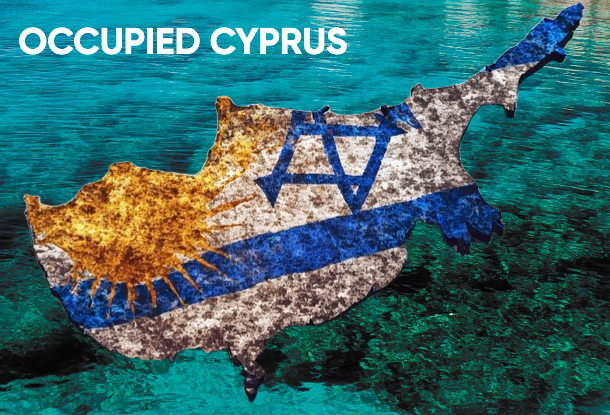
Reports in Cyprus and Greece are speaking of “Cyprus becoming the new Zionist promised land.” Hours after Israel initiated a military strike against Iran, numerous Israelis became stranded in Cyprus due to the cancellation of flights to and from the Jewish state. Over a week later, the Hasidic movement, better known in Cyprus as Chabad, a global ultra-Orthodox Jewish movement, continues to house a substantial number of Israeli nationals throughout the Island. As reported by Rabbi Zeev Raskin, the chief Lubavitch rabbi of Cyprus, in a statement to the local media outlet Politis, “over the past ten days, 12,000 Jews have visited the six Chabad houses situated on the island. During their visits, they have been provided with food, assistance with accommodation, and various types of emergency support”. The Rabi further estimated that ”by Sunday morning last week, there were still 15,000 Jews living in Cyprus.”
Raskin noted that in recent years, Cyprus’s geographical position near the coast of Israel has led to its characterisation as “Israel’s back door”. Following the closure of Israel’s airspace in March 2020 due to the coronavirus pandemic, numerous Israelis chose to prolong their holidays in Cyprus. Furthermore, in the wake of the Oct 7 attack, a remarkable influx of 5,000 Jews arrived in Cyprus within a single day. However, nothing could have predicted the extraordinary increase in Israeli land acquisition in Cyprus, to the alarming point it has reached today.
VIDEO: What’s happening in Cyprus? 15,000 Israeli citizens arrive and build a secret community overnight! (Source: PowerAxis)
Stefanos Stefanu, the Secretary-General of the left-wing AKEL party in Cyprus, has raised concerns regarding the increasing volume of Israeli land acquisitions in southern Cyprus. While speaking to party members at the AKEL congress, Stefanu characterised this trend as an emerging national security issue. He noted that Israeli nationals are purchasing extensive tracts of land and significant economic resources, in addition to setting up schools, synagogues, and various community amenities. He cautioned that such developments could result in the formation of isolated, self-sufficient enclaves on the island. Social media posts linked to AKEL have repeated the party’s concerns, using terms such as “New Israel” and “the new country occupied by Israel.”
The real estate sector in Cyprus is witnessing a significant surge in investment from Israel, as evidenced by the recent declaration of a new collaboration worth several tens of millions of euros. Aviation Connections, along with the Shagrau-Leibovitz Group and Attorney Amir Chen, a prominent partner at the “FBC” law firm, have declared the formation of a new entrepreneurial alliance in the real estate sector in Cyprus. In the context of the partnership, the company intends to acquire approximately 2,000 square meters of land situated on the beachfront and adjacent to the new port under development in Larnaca, to erect an opulent residential and commercial tower.
Media outlets like Coastal Digest have already reported the significant influx of Israeli settlers moving to Cyprus, raising alarms about what analysts refer to as a “silent occupation.” In the wake of Israel’s recent military actions in Gaza, Lebanon, and Iran, Israeli purchasers have rapidly acquired properties throughout the island, while thousands are said to have moved there in search of real estate and to establish enclaves of exclusive luxury resorts and communities designed specifically for wealthy settlers.
This trend marks the third significant wave of Israeli migration to Cyprus, propelled by a combination of the consequences of war, economic challenges, and internal political turmoil within Israel. The Coastal Digest report mentions the work of Dimitri Lascaris, an investigative journalist and activist, who is highlighting the rapid real estate purchases in Cyprus by Israelis amid regional turmoil, warning of a deeper agenda.
Lascaris warns of further complications:
“an underlying agenda, stating that Cyprus has historically been viewed by Zionist ideologues as a potential site for a Jewish settlement due to its proximity to Israel and suitability for European-style development. Lascaris draws a link to early Zionist ambitions for Cyprus, recalling the Third Zionist Congress of 1899 when David Trietsch and Theodor Herzl both championed Cyprus as a base for Jewish settlement, precursor to claiming Israel itself by force.”
“This migration, which has swelled Cyprus’s Israeli community from 6,500 in 2018 to over 12,000 by April 2024, has sparked an influx of 250-300 Israelis monthly. This quiet but steady stream has led to a larger presence of Israelis in Cyprus, with many pursuing strategic real estate purchases despite legal restrictions. Under Cypriot law, foreign entities can only acquire 500 square meters of land. However, by registering as Northern Cyprus firms and securing at least 51% Turkish Cypriot ownership, Israeli companies can circumvent this rule, enabling them to buy extensive tracts of land.”
“Cyprus’s geopolitical position-close to Israel, with NATO membership and new gas reserves-amplifies the strategic importance of this quiet expansion. Additionally, the island hosts a significant UK military base at Akrotiri, which has served as a launch point for aircraft bound for the Palestinian territories, further heightening the controversy around Israeli-Cypriot connections. Economically, the high cost of living in Israel and divisive internal issues, such as Prime Minister Benjamin Netanyahu’s contentious judicial reforms, have also driven migration from the occupied lands. According to a Hebrew-language report by Maariv, the first seven months of 2024 saw an exodus of 40,000 Israeli settlers -nearly triple previous years’ numbers-primarily to Cyprus and other nearby regions.”
VIDEO: Israelis ‘Flooding’ Into Cyprus to ‘Buy Anything In Sight’ (Source: Reason2Resist with Dimitri Lascaris)
On the Greek Cyprus side of the Island, the increasing number of Israeli investors purchasing real estate has provoked significant public and political opposition. This trend, especially prevalent in the Larnaca and Limassol areas, has led to allegations from opposition leaders that Israel is creating a de facto presence on the island. Concerns are also growing regarding the demographic and geopolitical implications, particularly from the viewpoints of Türkiye and the Turkish Republic of Northern Cyprus (TRNC). Residents from the Greek Cypriot Administration and the Turkish Republic of Northern Cyprus (TRNC) are questioning whether Israel is engaging in similar tactics in Cyprus as it previously did in Palestine. In recent years, Zionists have acquired tens of thousands of acres of land in the TRNC, leading to the establishment of colonies (settlements) on the island. Additionally, numerous Jews fleeing the conflict in Ukraine and the one in the Occupied Palestinian Territories (OPT) have been resettled in Cyprus.
The Cypriot town of Pyla has become an “unofficial Israeli hub”, and local legislators and mayors alike are now raising the alarm. Greatreporter has the story…

Ultra-Orthodox Jews arrive in Larnaka International Airport, Greek Cyprus, June 2025 (Source: Chabad of Cyprus)

R Powell reports for Greatreporter…
Israel is preparing a ‘backyard’ in Cyprus… This cannot but sound the alarm for us!
As war rages in Gaza and regional escalation with Iran deepens, a quiet but dramatic shift is unfolding just across the Mediterranean. Cyprus, long seen as a neutral tourist haven, is now absorbing thousands of Israeli nationals — many of them settlers, elites, and fleeing civilians — in a wave that is transforming the island’s demography, economy, and politics.
According to Cyprus’s main opposition party, AKEL, this is no ordinary migration. It is, in their words, the construction of “a backyard” — a satellite enclave of Israeli influence, economic power, and potential intelligence infrastructure, rising just beyond the reach of missiles, but still close enough to matter.
“Israeli buyers are purchasing significant land parcels and strategic economic assets,” warned AKEL spokesperson Stefanos Stefanou in June. “They are building Zionist schools, synagogues, gated enclaves… Israel is preparing a backyard in Cyprus, and this cannot but sound the alarm for us.”
A Three-Wave Exodus: From Pandemic to War
The Israeli presence in Cyprus has expanded in three clear waves:
- The Pandemic Wave (2020–2021):
During COVID-19, many affluent Israelis fled strict lockdowns and a strained health system for Cyprus’s EU-standard care and relaxed lifestyle. Property sales surged in resort towns like Paphos and Limassol.
- The Judicial Reform Crisis (2023):
As Prime Minister Benjamin Netanyahu launched controversial judicial reforms, mass protests erupted across Israel. Thousands began to hedge their bets — and their real estate — by acquiring homes abroad. Cyprus, just 40 minutes by air, became a popular fallback.
- The War and Retaliation Wave (2023–2025):
The most recent and explosive surge began after October 7 and intensified with Iran’s missile strikes on Tel Aviv and Haifa. With air routes disrupted and a growing sense of national vulnerability, thousands fled. According to Chabad Cyprus, over 12,000 Israelis passed through their centers in just 10 days, seeking food, shelter, and emergency repatriation services.
Town-by-Town: A New Geography of Influence
The numbers tell a striking story.
- Limassol: 1,154 Israeli property purchases (511 with title deeds), with heavy clustering in spa and luxury resort areas like Pyla, Ormideia, and Pervolia.
- Paphos: 1,291 property transactions by Israelis, including 867 full title deeds.
- Larnaca: 1,406 purchases (481 deeds), particularly close to the airport and Chabad’s main synagogue in Pyla.
In total, nearly 4,000 Israeli-linked properties have been acquired across southern Cyprus since 2021.
Real-estate consultant Loizos Loizou told Cyprus Mail:
“Israelis tend to buy large land parcels, featuring spas and resorts — gated communities, so to speak. Pyla has become their unofficial hub.”
‘A Second Israel’ — Population Doubling in 5 Years
In 2018, about 6,500 Israeli nationals resided in Cyprus. By mid-2025, that number has more than doubled to approximately 15,000 — and growing. This includes entire families, business owners, and settlers fleeing West Bank outposts amid regional instability.
Chabad reports show that:
“More than 12,000 Israeli Jews passed through our six houses in 10 days during the Iran crisis,” said Rabbi Zeev Raskin. “Many of them had no plans to return.”
Locals Alarmed: ‘Land Doesn’t Belong to Us Anymore’
AKEL’s fears are not limited to real estate. In their June address, the party highlighted national security, economic justice, and cultural sovereignty:
“At some point, we’ll discover our own land doesn’t belong to us,” said Stefanu. “These are not just holiday homes. These are settlements in all but name.”
The pattern is familiar. Enclaves emerge. Locals are priced out. Infrastructure — synagogues, kosher supermarkets, private schools — is built quickly. The same settler-colonial template used in the West Bank now appears to be taking root in places like Pyla and Limassol.
Cypriot media outlets, including Politis and Cyprus Mail, have published growing numbers of investigative reports about gated communities, property speculation, and political pressure to crack down on Golden Visa abuse.
Strategic Concerns: Mossad, RAF Bases, and Foreign Control
Security experts have also raised concerns. A Haaretz exposé recently confirmed that Israeli intelligence agencies are active in Cyprus, using the island for “safehouse operations” and staging points. Cyprus also hosts RAF Akrotiri, a major British military base used for reconnaissance missions over Gaza, further complicating the geopolitical picture.
In Turkish-administered Northern Cyprus, land purchases by Israelis have been drastically restricted, with authorities imposing new regulations. But in Greek-administered areas, no such constraints exist, and bilateral agreements between Cyprus and Israel are shielding the real estate boom from meaningful oversight.
“Cyprus cannot afford to become a forward operating base for another state,” one European security official warned. “It risks destabilising the island and compromising its neutrality.”
Faith, Flight, and a Fading Zionist Dream
At the heart of this phenomenon lies a powerful contradiction: If Israel is a divine homeland, why are its people abandoning it?
Many of the Israelis relocating to Cyprus are not rejecting Zionism — they’re exporting it. They bring with them the ideologies, infrastructure, and investment strategies that have transformed Palestine into a patchwork of enclaves. And now, as they take root in Cyprus, many locals fear they are watching the early stages of a new settler project.
The Israeli state is doing everything it can to reverse the trend. El Al has launched discounted repatriation flights. Media campaigns appeal to patriotism. But many have tasted the safety, prosperity, and freedom of life abroad. And they are not coming back.
“We tried to go to Israel by yacht, by helicopter,” said one Israeli evacuee to The National. “But Cyprus just felt safer. For now, we’ll stay.”
A Nation at a Crossroads
What began as a trickle of Israeli tourism has become a full-blown demographic shift. What some once called a “second home” now feels like a “second Israel.” And for Cyprus, a country still grappling with its own partition and history of foreign interference, the warning signs are clear.
As Stefanos Stefanou put it:
“This cannot but sound the alarm for us. We must ask — are we selling homes, or are we selling sovereignty?”
See more news from Greatreporter
Featured Video
Prof. Ted Postol: Iran Already Achieved Nuclear Deterrence Against Israel
or go to
Aletho News Archives – Video-Images
From the Archives
How the occupied mentality syndrome works
Saudi Arabia on the American chessboard – Part 3
By B. J. Sabri | American Herald Tribune | June 27, 2016
Read part 2: “The occupied mentality Syndrome“
Previously I argued whether Saudi Arabia’s repeated involvements in U.S. interventions and wars stem from free national will or in response to a specific condition. For starters, in Saudi Arabia there is no national will. In Saudi Arabia, the national will is the will of the Al Saud clan. Still, when a major Arab state allies itself with a superpower that committed unspeakable crimes against humanity in almost every Arab country, then something is wrong. This fact alone should compel us to examine the U.S.-Saudi relation for one exceptional reason. As a result of the U.S.-Saudi wars, hundreds of thousands of people in Afghanistan, Iraq, Iran, Libya, Syria, Yemen, and Somalia have lost their lives. Millions became displaced in their own homelands. And millions more rendered refugees.
Attributing the Saudi policies to the bonds of “partnership” with the U.S. is frivolous. There are no bonds between these two thugs except those of business, military deals, secret plots, and wars. Proving this point, bonds such as these have no space for the American and Saudi peoples to share significant cultural or societal exchanges. If partnership is not the reason for the Saudi contribution to the U.S. strategy of empire and imperialism, then another reason must exist.
This leads to three possibilities. … continue
Blog Roll
 Aletho News
- NIAID/NIH and USDA Fund Bioengineered Chimeric Influenza Viruses Built Using Pandemic H1N1 Components: Journal ‘Science Advances’
- Hezbollah hits Israeli warship off Lebanon’s coast, sets it aflame
- Iran slams US strikes on B1 bridge, Mahshahr petrochemical plants as ‘blatant acts of state terrorism’
- In letter to UN chief, Araghchi warns of dire consequences of US-Israeli attacks on Iran’s nuclear facilities
- Why the CIA conspiracy to invade Iran with Kurdish militias failed
- Why Are Upbeat US Claims About Mission to Rescue Pilot ‘Highly Questionable’?
- Aircraft destroyed during US ‘rescue’ of downed F-15 pilot cost more than $100 million each
- Washington University removes professor who condemned US-Israeli war on Iran
- Russia Warns of Retaliation as UK Authorizes Seizure of Vessels
- Serbia thwarts plot to bomb Russia-Hungary gas pipeline – Vucic
- If Americans Knew
- In Iran, Israel-US take aim at “reason, research, and freedom of thought” – Daily Update
- US loses planes over Iran, Israel downgrades Lebanon war goals – Daily Update
- Israel Is Blocking Palestinians from Easter at Church Where Jesus Resurrected
- Plot to assassinate Palestinian activist follows harassment campaign promoted by Zionist groups and elected officials
- Prominent New York synagogue hosts presentation on why U.S. Jews should support the ethnic cleansing of Gaza
- Tapper vs. Piker: Is the CNN Anchor Auditioning for David Ellison?
- Shouldn’t Democrats Be Able to Condemn Genocide?
- Israel-US kill negotiators, destroy civilian structures, but Iran’s military capabilities still largely intact – Daily Update
- ‘War crime’: Global condemnation as Israeli ministers celebrate death penalty law targeting Palestinian prisoners
- 7 Ways Israel Is Turning Lebanon Into Gaza
- No Tricks Zone
- An Inconvenient Tree: Uncovered In Alps… Europe Much Warmer Than Today 6000 Years Ago
- New Study Reports A 60% Slowdown In Greenland’s Ice Loss Rate In The Last Decade
- Low Intensity Tornado Wrecks Major Solar Farm, Creating A Potential Toxic Dump
- New Study Finds Warming Saves Lives…Cold Temperatures 12 Times More Deadly Than Excess Heat
- German Science Blog Accuses PIK Climate Institute Of Hallucinating Climate Tipping Points
- Devastating Assessment Of Comirnaty Vaccine By Former Senior Pfizer Europe Toxicologist
- New Study: CO2 Is ‘Effectively Negligible’ As An Explanatory Climate Change Factor Since 2000
- Former Pfizer Toxicologist Dr. Helmut Sterz Tells Bundestag Hearing Pfizer Vaccine Should Have Never Been Approved
- Energy Expert: Germany’s Nuclear Phaseout Was A “500 Billion Euro Mistake”
- New Research: South Australia’s Mid-Holocene Sea Surface Temperatures Were 4°C Warmer Than Today
 Aletho News