US envoy says Hezbollah weapons ‘an internal matter’ during Beirut visit
The Cradle | July 21, 2025
US envoy Tom Barrack said while visiting Lebanon on 21 July that the issue of disarming Hezbollah is an “internal matter,” after months of pressure by Washington on the Lebanese state to secure a surrender of the resistance’s weapons.
“Disarming Hezbollah is an internal matter,” he said, adding that “ideas and assistance” are being offered to the Lebanese state.
“We are not forcing anyone to do anything … we are trying to help,” he added.
He stressed that Hezbollah “is a terrorist organization” in the eyes of the US, and that Washington does not engage in dialogue with it. “We have no skin in the game,” Barrack said.
He claimed Lebanon faces no “consequences” or “threat” if Hezbollah does not disarm, but that it will be “disappointing.”
When asked by a reporter about guarantees that Israel will withdraw its forces from Lebanon and end its attacks on the country, Barrack said, “We cannot compel Israel to do anything, can we?”
Barrack is in Lebanon to discuss with officials Beirut’s response to a US proposal for disarming Hezbollah.
Sources cited by Reuters in early July said that Barrack warned that Hezbollah must be disarmed by November or the end of this year at the latest – in exchange for a withdrawal of Israeli troops from the five points they occupied in south Lebanon after the ceasefire, in violation of the deal. Earlier this month, the US envoy warned that Lebanon risked being occupied by Syria’s extremist-dominated military if Beirut did not move quickly to disarm Hezbollah.
Barrack said during his last trip to Lebanon that he was “satisfied” with Lebanon’s response to the US roadmap, which is expected to be finalized and handed over soon.
Beirut has reportedly demanded that no timeframe for disarmament be set until Israel withdraws and ends attacks.
The resistance group has repeatedly rejected surrendering its weapons. As the government vows to achieve a monopoly over all weapons across Lebanon, Hezbollah says it is ready for internal discussions on the formation of a Lebanese defensive strategy, through which the group’s arms would be incorporated into the state for use in deterring Israel.
The Lebanese resistance group has refused any discussion on the matter until Israeli troops withdraw from Lebanon and end their attacks.
Israeli attacks on Lebanon have continued unabated. Tel Aviv has violated the ceasefire over 3,000 times. More than 200 people have been killed since the deal was signed in November 2024.
Twelve people were killed in an Israeli airstrike in the eastern Bekaa region of Lebanon last week.
Israel has threatened to continue escalating against Lebanon if Hezbollah is not disarmed.
Hezbollah MP Hussein Jachi said on Monday that Hezbollah “will not abandon its weapons for empty US promises.”
“We will not abandon our faith or our strength. We are ready for confrontation. There will be no surrender or submission to Israel, and Israel will not receive our weapons,” Hezbollah chief Naim Qassem said on Friday.
“We know that confrontation is very costly, but surrender leaves us with nothing,” he added, noting that if the “threat is removed, we are ready to discuss the defense strategy and the national security strategy.”
German opposition slams Ukraine aid
RT | July 21, 2025
Frustration is growing in Germany over increased aid to Ukraine while domestic spending lags, co-chair of opposition party Alternative for Germany (AfD) Alice Weidel has said.
Berlin has been one of Kiev’s largest military backers since the escalation of the Ukraine conflict in February 2022. Earlier this year, the German Defense Ministry announced that it would provide €5 billion ($5.6 billion) to finance long-range weapons production in Ukraine.
In an interview with the broadcaster ARD on Sunday, Weidel criticized the allocation of funds to Kiev, citing unmet domestic needs. Asked about alternative uses for public funds, she pointed to a shelved proposal to abolish electricity taxes, which would have cost the state €5.4 billion – comparable to what Berlin is spending on weapons for Ukraine, she argued.
“And then our government, the Friedrich Merz government, gives Ukraine nine billion in German tax money and now wants to buy Patriot missiles for Ukraine for five billion. Nobody understands that anymore,” Weidel said.
She was referencing a US-backed plan to funnel Patriot air defense systems to Kiev via NATO members, with Germany covering the costs. German Defense Minister Boris Pistorius said after meeting US counterpart Pete Hegseth in Washington last week that the terms of the arrangement could be finalized “within days or weeks,” though the actual transfer of the missile systems to Ukraine might take months. Berlin has indicated its readiness to cover the cost of at least two Patriot batteries to Ukraine – estimated at approximately $1 billion each.
Since taking office in May, German Chancellor Friedrich Merz has pursued a hardline stance against Russia. Earlier this month, he declared that diplomatic options in the Ukraine conflict were “exhausted” and doubled down on his policy of providing weapons to Kiev. In response, Russian Foreign Minister Sergey Lavrov accused Merz of choosing escalation by abandoning diplomacy.
Last week, Russian Foreign Ministry spokeswoman Maria Zakharova suggested that European nations are funding the “death” of Ukraine by paying for weapons sent to Kiev. Russia has consistently denounced Western weapons deliveries, saying they do not change the overall course of the conflict and merely serve to prolong the bloodshed and risk further escalation.
Pentagon Quietly Returns Nuclear Bombs to UK for First Time Since 2008
Sputnik – 21.07.2025
WASHINGTON – The United States has reportedly returned its nuclear weapons, including an unspecified number of B61-12 thermonuclear gravity bombs, to the British Lakenheath air force base in Suffolk, the UK Defense Journal reported, citing multiple sources.
For the first time since at least 2008, the United States has transported weapons from the US Air Force Nuclear Weapons Center at Kirtland Air Force Base in New Mexico to a newly established secure storage facility in Suffolk, UK, the journal reported on Sunday.
The Lakenheath base stored US nuclear weapons during the Cold War, with their removal occurring in 2008 as part of disarmament initiatives. The potential reintroduction of nuclear bombs to Europe coincides with worsening relations between NATO and Russia, particularly due to the ongoing conflict in Ukraine and the military alliance’s efforts to enhance its readiness.
The B61-12 bomb is an enhanced version of the B61 nuclear bomb, featuring advanced guidance systems and variable yield capabilities. As a key element of the United States’ strategic nuclear arsenal, it is designed for deployment through various delivery systems, including F-35A Lightning II aircraft and other platforms.
E3 violated JCPOA, lost right to reinstate UN sanctions against Iran: Russian envoy
Press TV – July 21, 2025
A senior Russian diplomat says Britain, France, and Germany, known as the E3, have repeatedly violated the terms of the 2015 nuclear deal, and thus forfeited their right to trigger the snapback mechanism that would re-impose all UN Security Council sanctions on Iran.
Russia’s Permanent Representative to International Organizations in Vienna, Mikhail Ulyanov, made the remarks in an interview with Izvestia newspaper on Monday, days after the E3, in coordination with the US, threatened to initiate the 30-day snapback process if there is no progress on Iran’s nuclear talks by the end of August.
“As for the threats of Westerners to initiate a mechanism for restoring sanctions, it is quite rightly noted that this idea is illegitimate,” Ulyanov said.
“The Americans themselves withdrew from the JCPOA, renouncing the rights and obligations of a participant in the nuclear deal, and the United Kingdom, Germany and France are violators of both the JCPOA and UN Security Council resolution 2231. This means that they have also deprived themselves of the right to initiate a ‘snapback.’”
He was referring to the Joint Comprehensive Plan of Action, the official name of the Iran nuclear accord, which the US ditched in 2018 before returning the illegal sanctions that it had lifted against Iran and launching the so-called “maximum pressure” campaign.
Following the US withdrawal, the European signatories to the JCPOA failed to uphold their commitments and made no efforts to save the agreement.
Also in his remarks, the Russian envoy criticized the Europeans and Americans for using “the tactics of forceful pressure” against Tehran, saying such an approach has no chance of success.
“The habit of Europeans and Americans to set certain deadlines all the time is quite counterproductive,” he said, citing the negotiations aimed at restoring the JCPOA in 2021-2022 as an example.
In an X post on Sunday, Ulyanov emphasized that the E3 “has no legal or moral right” to activate the snapback procedure.
Earlier, Iran’s Foreign Minister Abbas Araghchi sent a letter to the UN chief, the Security Council president, and the top EU diplomat, saying the E3 have relinquished their role as “participants” in the JCPOA, rendering any attempt to trigger the snapback mechanism “null and void.”
Is Azerbaijan Considering Hosting a Turkish Military Base?
By Alexandr Svaranc – New Eastern Outlook – July 21, 2025
As Azerbaijan-Russia relations cool, discussions emerge in Baku about the potential deployment of a Turkish military base. Is this a random development — or is chance merely revealing an underlying pattern?
Between Iran and Russia, Azerbaijan chooses Turkey. At one point, when describing the political geography of modern Azerbaijan, Geidar Dzhemal — a Russian Islamic political and public figure, philosopher, and poet — characterized it as extremely vulnerable, considering its southern border with Iran and northern border with Russia. At the time, the Karabakh issue remained unresolved for Baku, and the goal of regaining full control over the Nagorno-Karabakh territory was still pending. In other words, despite being technically at war with Armenia, Baku did not perceive it as an existential threat.
Dzhemal’s assessment reflected Azerbaijan’s geopolitical choice to align with NATO-member Turkey, and to build partnerships with the UK, Israel, and the US. These allies, carefully selected by Baku, have political and economic agendas that are at odds with those of Russia and Iran.
Despite historical ties with Iran and its shared Shia Islamic heritage, Azerbaijan opted in the 1990s for an alliance with Sunni-majority Turkey. Turkey became a key facilitator in the implementation of the so-called “contracts of the century” in the oil and gas sector, with Britain playing a leading role.
Recognizing the deep-rooted tensions between Israel and Iran, Baku forged a pragmatic partnership with Tel Aviv. Azerbaijani oil — making up 60% of Israel’s overall oil imports — in exchange for Israeli weaponry and military technologies laid the foundation for robust bilateral relations. Israel, for its part, assisted Azerbaijan in strengthening ties with the US and Europe, both directly and through lobbying by the Jewish diaspora.
In return, Azerbaijan did not hinder the activities of Israeli intelligence services on its territory, particularly when directed at Iran. Azerbaijan’s military success in the Second Karabakh War in 2020, with direct Israeli support (weapons deliveries, intelligence sharing, UAV operations), significantly expanded the operational scope of Israeli intelligence targeting Iran. The results of the twelve-day Israel-Iran war in June 2025 have once again raised questions about Israeli security structures potentially using Azerbaijani territory.
Today, Tehran is unlikely to escalate tensions with Baku. On one hand, both sides have only recently emerged from a serious diplomatic crisis (following the terrorist attack at Azerbaijan’s embassy in Iran, the withdrawal of Baku’s ambassador, and the later restoration of ties). On the other hand, Iran’s conflict with Israel remains unresolved and without a peace agreement.
Azerbaijan’s relationship with Russia in the post-Soviet era has fluctuated — swinging between partnership and hostility. Moscow initially adopted a neutral stance in the Karabakh conflict, trying to retain both Armenia and Azerbaijan within its sphere of influence, and took the lead in conflict resolution efforts. Indeed, both Karabakh wars ended under Russian mediation, but with radically different outcomes. From the 2000s onwards, Russia began pursuing a more pragmatic approach in the South Caucasus, shifting toward a strategic partnership with Baku. As a result, Azerbaijan secured access to $5 billion worth of modern Russian weapons, expanded its business presence in Russia, and acted as a mediator — particularly after the 2015 downing of a Russian Su-24 by Turkish forces — in restoring and advancing Russian-Turkish ties.
Russia’s distant approach during the Second Karabakh War and the Azerbaijan-Armenia tensions of 2021–2023 allowed Baku to achieve military success and regain lost territories in Karabakh. Following its pragmatic logic, Azerbaijan did not join anti-Russian sanctions and, like Turkey, has maintained business ties with Russia, receiving considerable benefits from transit and re-export arrangements.
However, despite its strategic partnership with Russia, Turkey has not hastened to implement the Russian-proposed gas hub project in Eastern Thrace. Ankara continues to demand favorable financial terms (lower gas prices, deferred payments, joint trade) and also seeks Russian consent for its plans to access Central Asia via the Caspian Sea and tap into Turkmen gas.
Since autumn 2020, the “Turan Project” has begun to take more tangible shape. Ankara envisions the creation of an alternative alliance to the EAEU and the EU, involving Turkic states and Pakistan.
Iran opposes the Zangezur Corridor, Russia — due to Armenia’s position — cannot establish control over the project, and Azerbaijan may reconsider its support for the North–South International Transport Corridor, possibly obstructing Russia’s access through Iran to the Persian Gulf and the Indian Ocean. This scenario could trigger new diplomatic — or worse, military-political — crises in the South Caucasus.
Amid all this, Azerbaijan is placing its hopes on Turkish military bases. Following the latest escalation in Azerbaijan-Russia relations — sparked by Baku’s harsh reaction to the tragic downing of a civilian aircraft and the detention of Azerbaijani diaspora members in Yekaterinburg (with investigations still ongoing) — former presidential aide Eldar Namazov raised the prospect of hosting a major Turkish military base in Azerbaijan. He even suggested that part of the base could be leased to the Pakistani Air Force as a potential deterrent against alleged provocations from Russia and Iran.
Namazov is far from a fringe figure, and his statements are likely aligned with the presidential administration — at the very least, with the President’s foreign policy aide Hikmet Hajiyev.
In fact, Turkey has long been involved in Azerbaijan’s defense and security — from the two Karabakh wars to military reforms and personnel training. Joint military drills are held regularly. After the Second Karabakh War, a Turkish-staffed monitoring center operated in Aghdam from November 2020 (Russian peacekeepers have since left the region, but no official information suggests Turkish forces have followed suit). Turkish military advisers remain active in Baku. The 2021 Shusha Declaration explicitly provides for mutual military assistance upon request. Iran is acutely aware that any attack on Azerbaijan would trigger Turkish intervention.
Should Azerbaijan decide to host a Turkish NATO base on its territory, it would usher in a new geopolitical reality in the South Caucasus. This would compel Russia and Iran to take additional security measures, plunging the region into uncertainty. Baku, while not necessarily hoping for a repeat of its Karabakh victory, risks forfeiting significant advantages — namely, threats to transit routes vital to its economy, and potentially even the loss of its hard-won control over Karabakh.
In chess, logic demands the elimination of reckless moves that may lead to failure. In political chess, the stakes are even higher: a miscalculated diplomatic move can result not only in defeat, but in far more serious consequences — human, material, and strategic. Sadly, history has shown that wars often spell the downfall of some states, while paving the way for the birth of others. President Aliyev, a diplomat by training with years of presidential experience and a cool, calculated approach, is unlikely to let the Azerbaijan–Russia crisis escalate unchecked. Most likely, this period of tension will soon give way to renewed cooperation — perhaps even in the form of a formal declaration of alliance.
Alexander Svarants – Doctor of Political Science, Professor, Turkologist, expert on the Middle East
Russia, China, and Iran to hold nuclear talks – Tehran
RT | July 21, 2025
Russia, China, and Iran will hold talks on Tuesday to discuss Tehran’s nuclear program, Esmaeil Baghaei, a spokesman for the Iranian Foreign Ministry, has announced. He noted that a separate round of talks with European nations is scheduled for later this week.
Speaking to reporters on Monday, Baghaei said that the trilateral talks would also focus on the threats by Britain, France, and Germany to reimpose UN sanctions on Iran over its nuclear program. In particular, French Foreign Minister Jean-Noel Barrot warned of a potential sanctions snapback next month if no meaningful progress is made in limiting Iran’s nuclear activities.
Baghaei noted that Russia and China remain members of the 2015 nuclear deal and hold significant influence in the UN Security Council. He added that Iran had had “good consultations” with the two countries regarding the potential sanctions snapback. “Legally and logically, there is no reason for the return of sanctions lifted under the [nuclear deal],” he stressed.
The spokesman also confirmed that Iran would hold a separate meeting at the deputy foreign minister level with Britain, France, and Germany in Istanbul on Friday, adding that Tehran has “no plans to talk with the US” at this time.
One of the key stumbling blocks has been Iran’s decision to suspend cooperation with the International Atomic Energy Agency (IAEA), which was monitoring Tehran’s nuclear program. Tehran has accused the IAEA of releasing a biased report, which was allegedly used as a pretense by Israel to launch a 12-day war against Iran.
The Israeli attack came after Iran-US nuclear talks ended up at an impasse due to Washington’s demand that Tehran fully abandon uranium enrichment. While the US has argued that Iran could use the capacity to create a nuclear bomb, Iran has dismissed any plans of doing so, insisting that it needs enrichment to fuel its civilian energy industry.
Both Russia and China maintain that the Iranian nuclear crisis can only be resolved through political and diplomatic means.
Losing the War in Ukraine – Part 29 of the Anglo-American War on Russia
Tales of the American Empire | July 17, 2025
Last year, Professor John Mearsheimer from the University of Chicago explained to crazed warmonger Piers Morgan that Ukraine had lost its war with Russia and should seek a peace deal with major concessions. Otherwise, Russian forces will continue to advance, killing hundreds of thousands more Ukrainians and devastating Ukraine in the process. His rational thought was ignored by neocon warmongers who run NATO and control Ukraine’s government. Russian forces continue advancing and Russia recently warned that it may annex four more historically Russian provinces if forced to conquer them. Russia cannot be stopped without NATO intervention, but that would lead to World War III. Ukraine is still ruled by Volodymir Zelensky, whose term as President ended in 2024, yet he remains in power and refuses to discuss a peace deal as instructed by his NATO handlers.
_________________________________
Related Tale: “Trump’s Circus in Ukraine”;  • Trump’s Circus in Ukraine – Part 27 of the…
Related Tale: “Urban Warfare Tales”; • Urban Warfare Tales – Part 28 of the Anglo…
“Russian military objectives with Stanislav Krapivnik”; The Duran; May 4, 2025; • Russian military objectives w/ Stanislav K…
“Russian Military Lava Flow Approaches the Dnieper”; The Duran; July 2, 2025; https://theduran.com/russia-military-…
“Military Summary”; YouTube; daily war updates; / @militarysummary
Related Tales: “The Anglo-American War on Russia”; • The Anglo-American War on Russia
Absurdity on Steroids

By Nahida Exiled Palestinian | June 5, 2025
Over the past 77 years, we Palestinians have faced an absurd type of multilayered injustice, unspeakable barbarity, chronic brutality, and compounded oppression with a twist.
* We are the only oppressed group who are vilified, condemned and labelled as terrorists, for merely existing.
We are the wronged, named as oppressors, the scorned named as haters, the slaughtered named as criminals, the dispossessed named as villains, we are the murdered named as the killers.
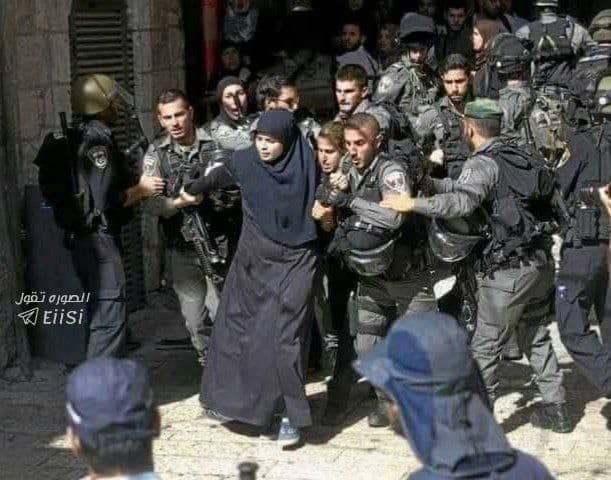
* We are the only oppressed group who are not allowed to identify or name their oppressor.

* We are the only oppressed group who are manipulated to grief for and bemoan the alleged suffering of their oppressor before their own, otherwise we are shunned and blacklisted as “holocaust deniers”
Our persistent suffering is secondary, diminished by the “eternal victimhood“ of our occupiers. Our pain is peripheral, dwarfed in comparison to theirs and validated only by the magnitude of our reverence to the “unique suffering“ of our oppressors
 * We are the only oppressed group who are demanded to:
– Gracefully lay down their only means of survival, their resistance
– Obediently protect the security of those from whom they saw nothing but savagery and barbarity
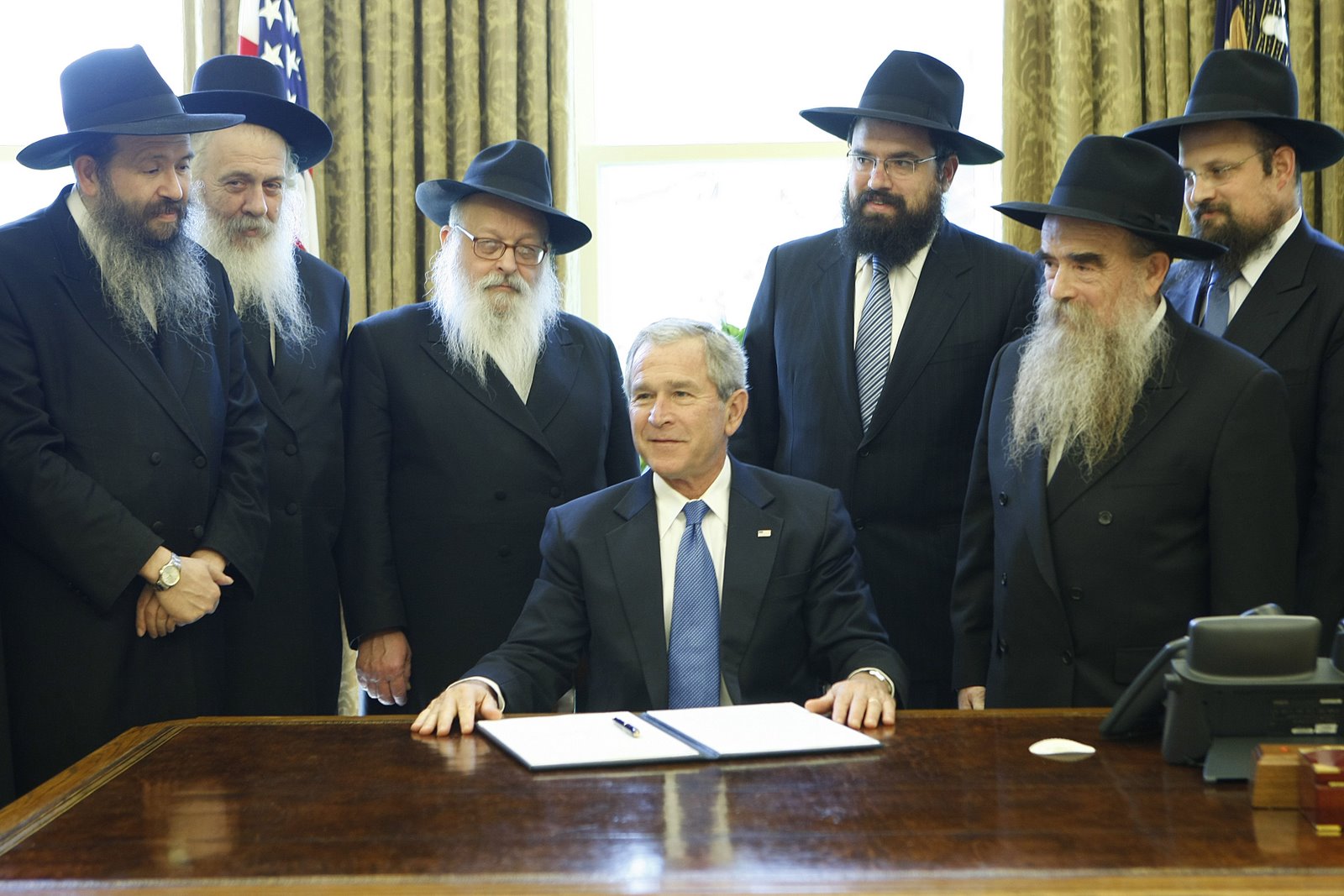
– Humbly guarantee a permanent presence and a prosperous future for those whose very ideology views the other with utter contempt as mere “animals, created only to serve them” and calls for their annihilation.
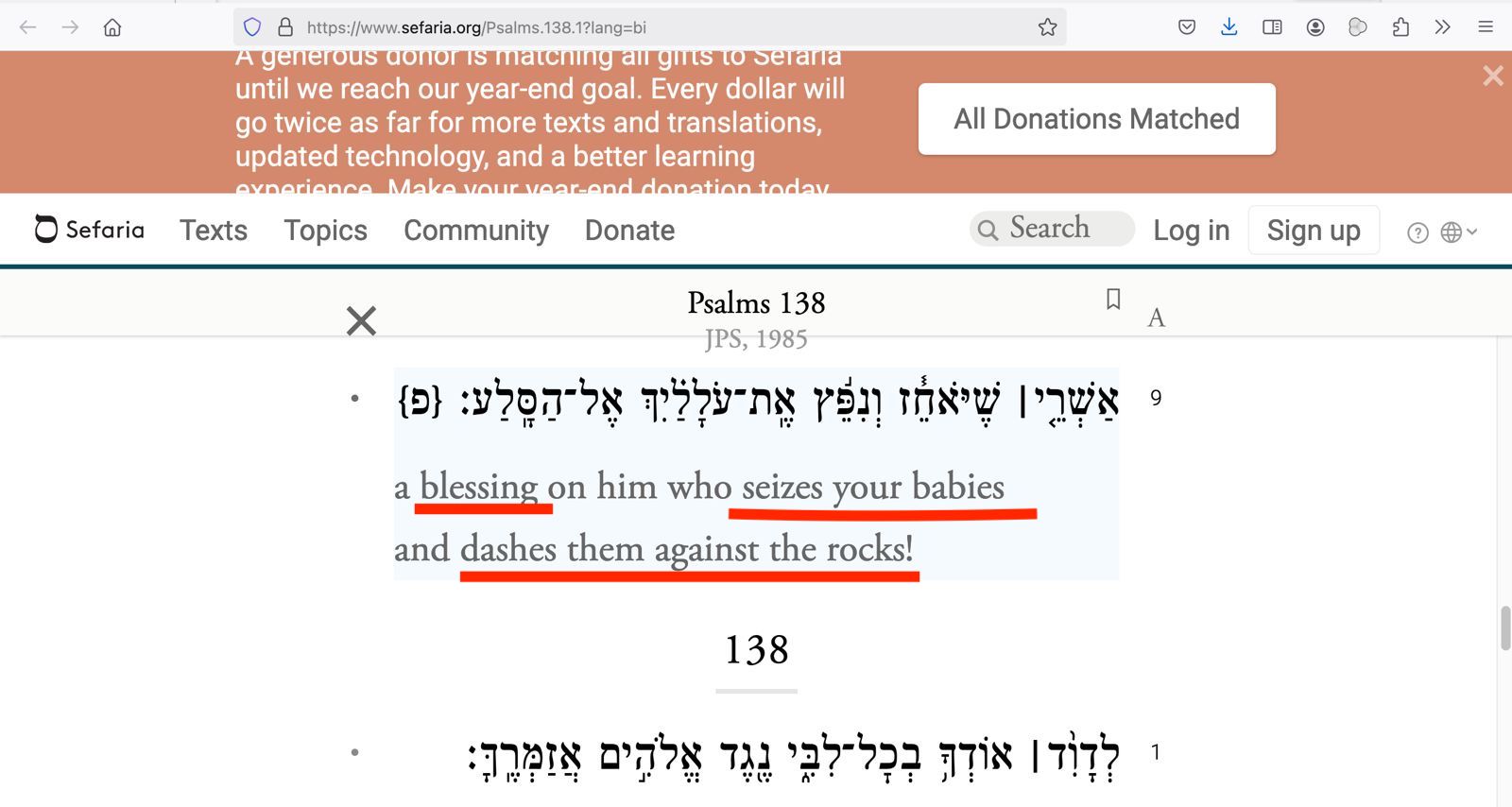
* We are the only oppressed group who are forbidden to discuss or ask questions about the ideology of their oppressors who claim to be the “chosen” above all others and that “God gave them the land”.

 As if all that is not enough, even as we get slaughtered, maimed, starved and eradicated, with our babies shredded to pieces we are still expected to watch our words and not to ever offend or hurt the feelings of our oppressors otherwise we are defamed as “hateful antisemites”.
Is it any wonder that our Nakba is still raging, eight decades and counting!
Stolen sheep and their owners detained in Khirbet Hammamat Al-Maleh
International Solidarity Movement | July 17, 2025
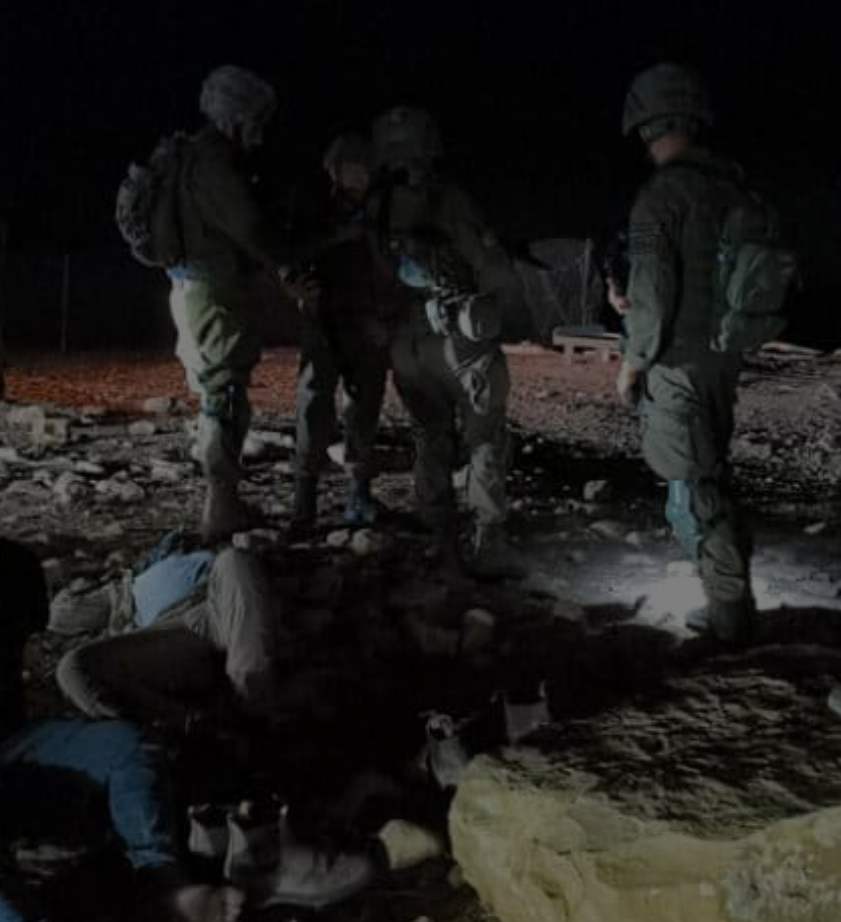
Amid the brutal massacre carried out by settler gangs—under the protection and support of the occupation army in the Hammamat Al-Maleh area of the northern Jordan Valley—the crime did not stop at slaughtering the sheep and terrorizing families. It directly targeted two citizens: Suleiman Salem and Salem Salman from the Al-Najada Bedouin community.
The sheep found slaughtered—dozens in number—were their private property, executed in cold blood, some shot and others stabbed with knives, in a scene that goes beyond the limits of savagery. After committing this crime, the occupation did not stop at complicity; it arrested the two shepherds, Suleiman and Salem, throwing them into detention, leaving their families to face helplessness, fear, and deprivation. International activists were also prevented from reaching Suleiman and Salem’s home.
The two men had tried to defend their livelihood and land against the arrogance of power, but the outcome was the slaughter of their flock and the arrest of the shepherds. They were not even allowed to document what had happened and were taken to an unknown location, while their families were left without protection or provider.
This crime represents another face of the slow ethnic cleansing practiced by the occupation authorities in the Jordan Valley against farmers, shepherds, and peasants, aiming to empty the land of its people and prepare it for annexation and settlement.
The heartbreaking scene of slaughtered sheep in the mountains—piled on top of each other, blood washing the stones of the earth—is not just a violation but a scream in the face of a silent world, and a badge of shame on the forehead of everyone who sees and remains silent.
This is not just a massacre of sheep… It is a massacre of life, a massacre of dignity, a massacre of existence.
Italy’s Florence University severs ties with Israel, joins academic boycott
Press TV – July 20, 2025
Five departments at the University of Florence have severed ties with academic institutions in Israel as part of what they described as the “academic boycott” of the Israeli regime.
In a move in line with the growing global campaign for Palestinian rights, and as part of the international academic boycott against Israel, on Sunday, five departments at the University of Florence officially severed their ties with academic institutions in Israel.
The Department of Computer Science and Mathematics has ended its collaboration with Ben-Gurion University of the Negev, an institution with longstanding links to the Israeli military-industrial complex.
Ben-Gurion University is also known for hosting Nobel laureate Dan Shechtman, who supports Zionist academic networks.
The Departments of Agricultural Sciences, Engineering, and Technology have also suspended their partnerships with their Israeli counterparts under the same initiative.
The Department of Architecture has cut ties with Ariel University, which is located in an illegal settlement in the Occupied West Bank, further emphasizing the university’s rejection of institutions complicit in the occupation.
Israeli legal academics have condemned plans by the administration of prime minister Benjamin Netanyahu to set up what it calls a “humanitarian city” in southern Gaza, saying the proposal constitutes a war crime.
The boycott comes amid increasing international condemnation of Israel’s genocidal war on Gaza and its decades-long occupation of Palestinian lands.
Across the world, academic communities and students have intensified their demands for institutions to divest and boycott all entities complicit in apartheid and war crimes.
Academic institutions have come under significant pressure from professors and students to sever ties with Israeli entities that play direct or indirect roles in normalizing apartheid, research for military purposes, or sustaining the occupation.
The Boycott, Divestment, and Sanctions (BDS) movement, inspired by the anti-apartheid struggle in South Africa, has gained renewed momentum globally amid Israel’s ongoing genocide in Gaza, where as many as 59,000 Palestinians, most of whom are children and women, have been killed.
Why Israel seeks a temporary Gaza truce to keep its genocide going
Behind the talk of calm, Tel Aviv is redrawing Gaza’s borders, displacing its population, and laying groundwork for permanent control, one truce at a time.
By Qassem Qassem | The Cradle | July 20, 2025
Twenty-one months into its brutal campaign against the Gaza Strip, Israel is again mulling a temporary ceasefire with the Palestinian resistance. Two brief truces have already collapsed into renewed bloodshed.
But is the genocidal war really coming to a close? This question looms over the proposed truce, raising doubts about whether Israel seeks an end, or simply a pause before its next assault.
This time, mediations led by Qatar and the US, with Egypt playing a minor role, are pushing for a 60-day cessation of hostilities. The deal hinges on a pledge from US President Donald Trump to extend the truce if talks progress.
Tel Aviv’s day-after plans for Gaza
These negotiations reflect a deeper shift in the occupation state’s security doctrine. Israeli Prime Minister Benjamin Netanyahu has repeatedly declared his intention to reshape Gaza’s future beyond a temporary lull in fighting.
He insists on disarming the resistance, dismantling Hamas’s authority and control, and eliminating any future threat from the besieged enclave. In Tel Aviv’s vision for the “day after,” there is not even a role for the collaborative Palestinian Authority (PA) in the Strip.
At most, Israel may tolerate an occupation state-backed militia resembling the Yasser Abu Shabab group or deploy Arab security forces to support local merchants or clans in governing Gaza – until the PA is “reformed” to Washington’s satisfaction, with Israel maintaining overarching security and military control.
This plan dovetails with the long-standing aspiration of Israel’s far-right government to re-establish illegal settlements in northern Gaza. Netanyahu is lobbying his army to construct a “tent city” in Rafah to forcibly relocate 600,000 Palestinians, a blatant demographic engineering scheme.
The 60-day truce proposal includes a phased Israeli withdrawal from west to east, a halt to air raids, permission for food and humanitarian aid entry, and a prisoner exchange. Unlike previous ceasefires, Trump’s involvement is being marketed as a guarantee that the occupation forces will not resume attacks once the deadline expires – as they did immediately after the March truce.
Yet despite signs of possible relief for Gaza’s starving and besieged population, Israel still believes it has not achieved its core objective: dismantling Hamas. One unnamed Israeli official was recently quoted as saying: “The flexibility we’ve shown paves the way for an agreement, but Netanyahu clearly doesn’t intend to end the war.”
Any upcoming truce is thus likely a pause to prepare the battlefield for the next round. Still, renewed war could prove challenging given the limits of the occupation army and the deepening cracks in its society.
Reconstruction as leverage and the Morag corridor ploy
As part of ongoing pressure, anti-resistance forces are using Gaza’s reconstruction as leverage. Israel has floated a deceptive offer to allow Qatari and international funds into Gaza during the truce, which is an attempt to lure Hamas into believing the war is truly ending. This is, in reality, a calculated deception by Israel to manufacture the illusion of an approaching end to war and draw Hamas into a false sense of security.
According to a report on 10 July by Israeli newspaper Yedioth Ahronoth, Israel has “tentatively agreed” to Qatari participation in rebuilding the Strip, provided it does not monopolize the process. Other states are expected to co-fund reconstruction to prevent funds from reaching Hamas, although Saudi Arabia and the UAE have made their commitment to Gaza’s reconstruction conditional on the war’s conclusion.
A major sticking point is Israel’s new “Morag Corridor,” carved between Khan Yunis and Rafah to replicate the Philadelphia Corridor separating Gaza from Egypt. Much like the Netzarim axis that once bisected the Strip, the Morag route is presented by Israel as vital for its security. Tel Aviv plans to use the corridor to isolate the Rafah tent city from northern Gaza—effectively creating a walled-off holding zone for displaced Palestinians.
Palestinian resistance factions have flatly rejected this scheme. Not only does it violate Palestinian sovereignty, but it would turn Gaza into a cluster of disconnected, besieged cantons, with Israel occupying nearly 40 percent of the territory.
On 14 July, Netanyahu’s government submitted a third withdrawal map to mediators. Leaks reveal that Israeli forces plan to remain in a 900-meter belt near Beit Hanoun and a 3.5-kilometer strip east of Rafah. In a post on X, Kan political correspondent Gili Cohen, citing sources familiar with the negotiations, said that Israel is now showing “flexibility” on broader withdrawals from Rafah and the Morag axis.
But Rafah remains the core obstacle to any deal. Israel insists on cramming 600,000 Palestinians into the southern city, either to push them into Egypt, where alarm over Israeli designs is mounting, or force them toward the sea. Tel Aviv and Washington are actively probing third countries to receive Gaza’s expelled population.
A tactical pause, not a peace plan
Netanyahu’s real goal is to secure strategic gains for the post-war phase. During his visit to Washington earlier this month, he sought a written US assurance that would allow Israel to resume its war, even under a formal ceasefire.
He plans to wield this assurance as political cover at home, particularly to placate extremist coalition partners like Itamar Ben Gvir (Jewish Power) and Bezalel Smotrich (Religious Zionism), who demand total war and Hamas’ annihilation.
Netanyahu’s envoy and strategic affairs minister Ron Dermer put it bluntly in a 14 July podcast interview with US columnist and political advisor Dan Senor:
“Right now, what we’re trying to do is get to a ceasefire … the minimum requirement is that the force responsible for the Oct. 7 attack is no more. They have lost control of Gaza due to their decision to act.”
According to Walla News, Netanyahu convinced Trump to delay the agreement by an additional week—bringing the timeline closer to the end of the Knesset’s summer session (late July). The paper noted that Trump is “tired of the war,” but Netanyahu managed to buy time, though what he offered in return remains unclear.
The proposed truce cannot be viewed in isolation from Israel’s broader strategy. Far from signaling the war’s end, it is a calculated intermission. Tel Aviv seeks to redraw Gaza’s demographic and security map, while Hamas focuses on regrouping and fortifying its battlefield presence.
Netanyahu’s recent moves prove that this is no pursuit of peace. What Israel wants is a lull long enough to dismantle Hamas’ political infrastructure, impose buffer zones, and reengineer the population through its “tent city” blueprint.
Palestinian affairs analyst Michael Milstein mocked Tel Aviv’s “day after” vision in a 13 July column in Yedioth Ahronoth, arguing that Gaza has become a constant testing ground for flimsy Israeli schemes that collapse shortly after being proposed. He described Israel’s latest military campaign as a “ferocious effort devoid of dramatic gains,” noting that its aggression in northern Gaza ahead of the last ceasefire produced no lasting achievements. These include past attempts to build isolated ‘bubbles’ of alternate governance in Gaza, and the so-called ‘Generals’ Plan,’ which failed to yield results even amid heavy attacks in the north. He pointed to the long record of failed experiments, from the village leagues in the West Bank, to the occupation’s backing of the Kataeb militias in Lebanon, to the eventual collapse of the South Lebanon Army. These models, he wrote, reflect a deeply flawed understanding of reality, rooted in the belief that brute military force can compel Hamas to disarm, surrender, or abandon Gaza entirely.
He noted two competing camps inside Israel: one that seeks phased withdrawal while postponing Hamas’ fate, and another pushing for full reoccupation based on the racist logic that “Arabs are only deterred by losing land” and that “settlements prevent terrorism.”
Rather than a moment of transition, this seems to be a continuation of Israel’s campaign by other means. So long as Tel Aviv avoids a political reckoning for its war on Gaza, every ceasefire will be a battlefield in disguise. Between a fleeting truce and a deepening occupation, Gaza stands today at a decisive crossroads — one where the illusion of peace masks a relentless colonial project.
Russiagate only tip of iceberg in Western demonization of Russia – expert
RT | July 20, 2025
US National Intelligence Director Tulsi Gabbard’s revelations about the role of former President Barack Obama’s administration in the Russiagate scandal are “shocking,” but they expose only the surface of a broader Western anti-Russia campaign, Professor Oliver Boyd-Barrett has told RT.
On Friday, Gabbard released newly declassified documents describing a coordinated effort by senior Obama-era officials – led by Obama himself – to falsely accuse Donald Trump of colluding with Russia during the 2016 election. The documents indicate that Obama ordered officials to discard intelligence assessments that found no Russian involvement in Trump’s campaign and replace them with claims blaming Moscow based on fabricated data. The scandal led to the years-long Trump-Russia probe known as ‘Russiagate.’
“This is an extraordinary moment, that the head of intelligence in the US has made such a bold, in some ways shocking, statement of the truth,” Boyd-Barrett, a professor at Bowling Green State University and author of an in-depth study of Russiagate, said on Saturday. He noted the moment was especially striking as Gabbard called for prosecution of those involved in what she described as a “coup” attempt.
Boyd-Barrett, however, emphasized that to “fully comprehend” Russiagate, it must be viewed as only a small part of a broader Western campaign to demonize Russia, “that goes decades back.”
“It’s part of a much deeper agenda – we’re talking Russia narrative… the broader context of an anti-Russian campaign that was stoked artificially around the time of the late 90s when the West had so clearly decided that NATO was going to move eastwards regardless of whatever anyone in Russia or anyone in the US had to say,” he said. He also warned against reducing Russiagate to a personal political ploy, noting that blaming it solely on Obama or Hillary Clinton’s election anxiety is “too simple an explanation.”
Moscow has repeatedly denied interfering in the US electoral process.
Featured Video

The Most Important Bet You’ve Never Heard Of
or go to
Aletho News Archives – Video-Images
From the Archives
The Occupied Mentality Syndrome
Saudi Arabia on the American chessboard – Part 2
By B. J. Sabri | American Herald Tribune | April 19, 2016
Since the Korean War, but particularly since the Iranian Revolution of 1979 until today, the United States has been steadily escalating its military presence in the Persian Gulf. Taking advantage of many colossal events of the past 36 years, [1] the hyper-empire has institutionalized its massive presence on land and sea, and expanded its objectives to include the unambiguous physical control of the area, as well as the clear understanding that local Arab governments should abide by them. The pretext is always the same: in “defense” of the national interests and security of the United States. From observing how the United States has been interacting with the governments of the region, and by judging from the size of its expeditionary force, we could reach a basic conclusion. The United States is occupying, de facto, the entire Arabian Peninsula. (Yemen, devastated by Saudi and American jets is yet to be conquered. Oman? Britain returned not as colonial ruler but as a soft occupying power.)
Under this articulation, Saudi Arabia, Qatar, Kuwait, and the United Arab Emirates are virtually occupied countries. If we compare this type of occupation to the mandate and protectorate regimes of the past, the results might be identical—the nations affected by it lose sovereignty. When Arab governments comply with the objectives of a foreign power that station military forces on their national milieu, then that power controls them in multiple ways including how they react to policy deliberations and what decisions they intend to take on specific issues. A good method to verify the concept of effective occupation is this: take notice of what the United States says and wants, and then compare it to what the gulf rulers do in response. (I shall discuss this detail at some point in the upcoming parts.)
If the presence of US forces or other means of political pressure are a factor in Saudi Arabia’s interventionist Arab wars, then we need to debate this issue. However, from the history of resistance to colonialism, we learnt: if a powerful state imposes its order on a nation by military means or other forms of coercion, and if this nation does not resist that imposition, then a mental subordination to the powerful state will ensue. This is especially true in the case of Saudi Arabia. One single event, 9/11, has transformed it from a US “ally” into an instant political hostage of the American Empire. … continue
Blog Roll
 Aletho News
- Trump and the debris of Iran war
- IRGC hits US tech giant Oracle’s data center, computing site in UAE over new assassinations
- Bombing Iran Back Into the Stone Age /Lt Col Daniel Davis & Jim Jatras
- UAE rejects report claiming it is ready to join war on Iran to reopen Hormuz
- A New Resistance Front: How Does Syria Factor into the Regional War?
- Gulf states weigh pipeline expansion plans, hoping to bypass Hormuz
- Iran sets up ‘tollbooth’ system in Strait of Hormuz
- Wave 90: IRGC strikes US-linked industrial sites in Gulf
- Iran Says US-Israeli Claims of Its Military Strength Are Wrong
- Trump’s April Fools’ Address to the nation
- If Americans Knew
- ‘War crime’: Global condemnation as Israeli ministers celebrate death penalty law targeting Palestinian prisoners
- 7 Ways Israel Is Turning Lebanon Into Gaza
- World’s Leading Football Bodies Under Fire Over Israel Policies
- Experts warn of possible use of nukes against Iran
- Israeli invasion of Lebanon could be worse than 1982, warn European officials
- Passover: Liberation and collective punishment
- Trump says the quiet part out loud: (Israel’s) war on Iran > Americans’ health – Daily Update
- Gaza families reunite years after babies evacuated amid Israel’s war
- International Rescue Committee warns Gaza’s children face grave protection risks
- Iran’s Alleged 47-Year War on America: Debunking the 1,050 American Deaths Canard
- No Tricks Zone
- Low Intensity Tornado Wrecks Major Solar Farm, Creating A Potential Toxic Dump
- New Study Finds Warming Saves Lives…Cold Temperatures 12 Times More Deadly Than Excess Heat
- German Science Blog Accuses PIK Climate Institute Of Hallucinating Climate Tipping Points
- Devastating Assessment Of Comirnaty Vaccine By Former Senior Pfizer Europe Toxicologist
- New Study: CO2 Is ‘Effectively Negligible’ As An Explanatory Climate Change Factor Since 2000
- Former Pfizer Toxicologist Dr. Helmut Sterz Tells Bundestag Hearing Pfizer Vaccine Should Have Never Been Approved
- Energy Expert: Germany’s Nuclear Phaseout Was A “500 Billion Euro Mistake”
- New Research: South Australia’s Mid-Holocene Sea Surface Temperatures Were 4°C Warmer Than Today
- Storing Green Energy To Last Germany 10 Days Would Require A 60-Million Tonne Battery
- New Studies: UK Sea Levels Were 4 Meters Higher Than Today During The Mid-Holocene
 Aletho News