M.K Bhadrakumar: India Turns to China as U.S. Bullying Backfires
Glenn Diesen | August 27, 2025
M. K. Bhadrakumar was an Indian ambassador and diplomat for decades. Ambassador Bhadrakumar discusses Trump’s pressure and threats against India, and how this blunder has pushed India toward China and Russia.
Compound Crime: Three wounded journalists being denied medical evacuation
Palestinian Information Center – August 27, 2025
GAZA – The Palestinian Journalists Protection Center (PJPC) issued an urgent appeal on Wednesday, demanding the immediate medical evacuation of several Palestinian journalists who sustained severe injuries in a direct Israeli strike on the Nasser Medical Complex in Khan Yunis, southern Gaza Strip.
In a press statement, PJPC confirmed that three journalists suffered life-threatening injuries that also jeopardize their professional futures. The wounded journalists are Mohammed Fayeq, who is suffering from partial paralysis that could become total; Jamal Baddah, whose right leg was amputated; and Hatem Omar, who sustained shrapnel wounds to the head.
The center stressed that the ongoing refusal to allow medical evacuation for the wounded journalists constitutes a “compound crime,” adding to the long list of Israeli violations against Palestinian journalists, who have paid a steep price while covering the war in an effort to bring the truth to the world.
PJPC urged international media organizations and press freedom bodies to take immediate action and pressure for the urgent evacuation of the injured journalists so they can receive proper treatment outside Gaza, before it is too late.
On Monday, 20 Palestinians were killed, including journalists and civil defense workers, in a double Israeli airstrike that targeted the Nasser Medical Complex in southern Gaza.
US-Israeli scheme for Lebanon includes forced displacement, turning Beirut suburb into ‘refugee camp’: Report
The Cradle | August 27, 2025
There is a new US plan for a “clampdown” on Beirut’s southern suburb, which could potentially see the area come under the control of a foreign or Arab security force, according to a report released by Al-Akhbar newspaper on 27 August.
The southern suburb, a strong base of support for Hezbollah, was heavily bombarded by Israel during its brutal war on Lebanon last year. The suburb has been repeatedly hit by airstrikes since the ceasefire took effect.
According to Al-Akhbar, the plan aims to “treat the southern suburbs just like Palestinian refugee camps.”
The 1969 Cairo Agreement for years allowed Palestinian groups a degree of autonomy over refugee camps in Lebanon. Despite the agreement being declared null in the 1980s, the status of the camps has remained more or less the same.
However, Lebanese troops maintain checkpoints and a heavy presence around the camps. Palestinian camps in Lebanon have recently begun a symbolic disarmament process in line with the state’s efforts to monopolize control of weapons in the country.
The Al-Akhbar report frames the new US plan as part of Washington’s broader goal of disarming Hezbollah, which the Lebanese government vowed to achieve in a cabinet session in early August.
“The US proposal envisions checkpoints at all entrances [of the Beirut suburb], thorough searches of individuals and vehicles, and a tight control on goods, materials, and money flows. This mission would not be handed to the Lebanese army. Instead, the plan calls for a foreign security force, possibly an Arab one, to take on the task,” it said.
Al-Akhbar also said the plan falls in line with US efforts to “empty the southern border region.”
A recent report by Axios said there is a US plan for a “Trump economic zone” near the southern border, aimed at preventing Hezbollah from re-establishing its presence there. The report said this would happen with the help of Gulf financing.
During a press conference in Lebanon’s Presidential Palace on Tuesday, US envoy Tom Barrack confirmed plans for the economic zone.
“We have to have money coming into the system. The money will come from the Gulf. Qatar and Saudi Arabia are partners and are willing to do that for the south (of Lebanon) if we’re asking a portion of the Lebanese community to give up their livelihood,” Barrack said.
“We have 40,000 people that are being paid by Iran to fight. What are you gonna do with them? Take their weapon and say ‘by the way, good luck planting olive trees?’ It can’t happen. We have to help them,” he added, referring to Hezbollah members.
“We, all of us, the Gulf, the US, the Lebanese are all gonna act together to create an economic forum that is gonna produce a livelihood,” he went on to say.
This economic zone reportedly serves as an ethnic cleansing plan to remove residents of the southern border villages and prevent the return of those already displaced from there.
Lebanese MP and former head of Lebanon’s General Security Directorate Jamil al-Sayyed said in a post last week that “Envoy Tom Barrack has received the Israeli response to his mediation over the south.”
“The response included a ceasefire, the handing over of prisoners, and border demarcation, according to the following conditions: Lebanon must grant Israel the right to remain inside 14 villages and to fully or partially evacuate their residents. The villages Israel demanded in their entirety are: Odaisseh, Kfar Kila, Houla, Markaba, and Aita al-Shaab. The villages where Israel demanded to establish permanent military sites on their outskirts and forests are: Khiam, Ramiya, Yaroun, Aitaroun, Alma al-Shaab, Al-Dhayra, Marwahin, Maroun al-Ras, and Blida,” he added.
“If this news is true, and becomes official tomorrow or soon, it may be celebrated in our country as an ‘achievement’ similar to yesterday’s celebration over the symbolic handover of weapons in Burj al-Barajneh camp,” Sayyed went on to say.
Tom Barrack’s imperial tantrum in Beirut: When entitlement speaks
By Tala Alayli | Al Mayadeen | August 26, 2025
Thomas Barrack, Washington’s special envoy, breezed into Beirut today oozing of the usual arrogance, condescension, and the smug self-righteousness that American officials have long mistaken for diplomacy. In what he must have thought was a moment of wit, Barrack dismissed the Lebanese press as “uncivilized,” even likening journalists’ actions to those of animals.
It is telling, of course, that the representative of a country responsible for the post-1991 siege that killed half a million Iraqi children, which former US Secretary of State Madeleine Albright described as “worth it”, turning Afghanistan into an endless graveyard, and underwriting the daily massacres in Gaza, would accuse others of lacking civility.
American officials seem to have mastered this peculiar art: bombing entire nations by morning, then lecturing those nations on decorum by afternoon.
Barrack’s performance is not a slip of the tongue, but a look into the imperial psyche. To him, like most of Western society, Lebanon is not a sovereign country with a free press and a tradition of political debate; it is a space to be managed, where we are expected to smile politely while being lectured on democracy and modernity. Arabs are not clever, competent, and equal human beings, but mindless herd societies that must be subjugated.
And what is civility either way? Surely not the baby-killing machine in Gaza, which has been endlessly praised by the United States, the same administration calling us animalistic. Perhaps the definition must be de-Americanized to make sense.
Besides, it is almost comical that Thomas Barrack, a man who once found himself charged with embezzlement and caged in his house on arrest in the United States with a monitor chained to his ankle, now parades around Lebanon as a moral authority. This is the same envoy whose career has been shadowed by allegations of corruption and shady financial dealings.
If anything, Barrack’s legal entanglements reveal a pattern: entitlement is not just a political habit for American officials, it is a personal one. He walks into Lebanon not as a humbled man marked by scandal, but as an imperial messenger who believes that his past sins are irrelevant, that he is owed respect simply because he carries Washington’s seal.
The irony is maddening: an envoy representing an empire that thrives on plunder, brutality, and deceit, scolding journalists for their supposed lack of manners.
Then leave!
Perhaps the most infuriating was Barrack’s sense of self-importance. “Do you think this is fun for us? Do you think it is economically beneficial for Morgan and I to be here, putting up with this insanity? If that’s not how you’d like to operate, we’re gone.”
Does Barrack think it is fun for us to sit and witness his condescension? Or watch “Israel” obliterate our homes with US-made weapons? Or listen to American-Israeli discourse about how to make the region more agreeable to those who want to overtake our resources, our lands, our lives?
Also, if billions in military aid to the mega-maniacal occupiers is economically beneficial, then surely a trip to Beirut at the US’s own discretion is not a bank-shatterer.
If journalists doing their jobs was slightly too overwhelming for a diplomat who is certainly used to press conferences as such, then said diplomat must rethink his competence.
And if decorum and mutual respect are an overload of work, then leave!
What is it about humiliation?
Yet what is most shameful is not only Barrack’s insult. Such condescension is expected from American envoys. His companion, Morgan Ortagus, once strutted into the Baabda Palace and cheerfully applauded the terrorist pager operation that left thousands of citizens, including children, wounded and blind. “Israel”-born Amos Hochstein once got his afternoon coffee from a Starbucks at a moment of peak boycott and gladly allowed a desperate Lebanese bourgeois citizen to pay.
Equally shameful is the silence that followed. A room full of journalists, veterans of a region where press freedom is under constant attack, sat in silence. Not one voice rose to challenge him.
The Lebanese press corps prides itself on resilience. In a country where journalists have been assassinated, bombed, and silenced, surviving in the profession is no small feat. Yet resilience without dignity is hollow.
What good is endurance if it does not sharpen your spine? What meaning does the word “journalist” carry if you cannot call power to account, especially when that power spits in your face?
Thomas Barrack was a temporary guest; he’s on our land, in our home. When the Trump administration leaves office, he will go back to being an irrelevant nobody. He should not have been allowed to shame the people of this country into silence.
By letting his words pass unchecked, today’s journalists failed not only themselves but the very people they claim to represent. Journalism is not stenography. It is not about politely recording the musings of foreign officials, no matter how insulting. It is about holding those officials accountable, about asking uncomfortable questions, about reminding every diplomat and politician that they are guests in this country, not its overlords.
Dignity, unfortunately, cannot be faked. It is not something anyone can claim retroactively, in editorials or late-night debates. It must be demonstrated in the moment. And this is a disease Lebanon has been plagued with. Only a few understand the true meaning of dignity, while others embarrassingly fail to embody it.
Let us be brutally honest: the American envoy insulted Lebanese journalists to their faces and walked away unscathed. Tomorrow, he will fly back to Washington or to whichever embassy compound he calls home, and he will report that Lebanon is pliable, that it can be insulted with impunity, that this country is still a stage for American entitlement.
Potato Potato, Dignity… Delusion
Lebanon is no stranger to foreign interference. From colonial mandates to military occupations to today’s endless meddling, the country has had to endure a parade of foreign “experts” and “envoys” who arrive with prescriptions and leave with nothing but disdain for the very people they claim to advise.
But through it all, Lebanon’s press has often stood as a thorn in the side of power. That tradition is not something to be taken lightly.
Thomas Barrack’s words today were contemptuous, yes, but they were also a test of whether Lebanese journalists still have the fire to defend their dignity, to insist that Lebanon is not an American playground, that its press is not an expendable backdrop for imperial theatrics. That test was failed.
We cannot afford such failures in today’s political climate. With Gaza burning under Israeli bombs, with Western governments spewing propaganda to justify genocide, with Arab sovereignty under constant threat, the role of the press has never been more urgent.
The journalist’s duty is not to play pleasant host to foreign arrogance but to confront it. To expose it. To ridicule it when it deserves ridicule, and to eviscerate it when it crosses the line of civility.
Right now, the people who sat in that room, deluded by a false sense of dignity, instead of protesting the plain enslavement, have become a laughingstock to those who understand true pride. They have become sitting ducks in front of those who play God.
How disappointing.
Iran’s foreign minister: Entry of IAEA inspectors does not signal full cooperation

Abbas Araghchi, Iran’s foreign minister
Press TV – August 27, 2025
Iran’s foreign minister has confirmed the arrival of inspectors from the International Atomic Energy Agency (IAEA) following a months-long hiatus.
Abbas Araghchi, however, said their presence does not mean the resumption of full cooperation with the UN nuclear watchdog.
Speaking to reporters in Tehran on Wednesday, the foreign minister said the entry was authorized by Iran’s Supreme National Security Council (SNSC) and limited to overseeing the fuel replacement process at the Bushehr Nuclear Power Plant.
He said under a recent parliamentary law, all cooperation with the IAEA must be approved by the SNSC.
“No text has yet received final approval,” he added, referring to ongoing discussions about a new cooperation modality following the acts of aggression by the Israeli regime and the United States in June.
Iran has barred any new inspections since the attacks, citing safety concerns at damaged nuclear sites and criticizing the IAEA’s failure to condemn the strikes.
Earlier, Behrouz Kamalvandi, spokesman for the Atomic Energy Organization of Iran (AEOI), said the inspectors’ presence was tied to routine operations at the Bushehr facility and the need to maintain electricity supply to the national grid.
On August 26, IAEA Director General Rafael Grossi announced that inspectors were “back in Iran.”
In an interview with Fox News, Grossi said, “When it comes to Iran, as you know, there are many facilities. Some were attacked, some were not.”
“So we are discussing what kind of … practical modalities can be implemented to facilitate the restart of our work there.”
The developments come amid renewed diplomatic tensions, as Iran held talks in Geneva with Britain, France, and Germany over their threat to trigger the so-called snapback mechanism, a provision of the 2015 nuclear deal that would restore UN sanctions lifted under the accord.
European signatories to the Joint Comprehensive Plan of Action (JCPOA) have said they will wait until August 31 to decide whether to activate the mechanism.
Iran has reduced its cooperation with the IAEA in recent years in response to the withdrawal of the United States from the 2015 nuclear deal and the failure of Europeans to make up for the withdrawal.
Indian PM ‘ignored’ 4 phone calls by Trump amid US-triggered trade fight: Report
Press TV – August 27, 2025
Indian Prime Minister Narendra Modi has reportedly brushed off several attempts by Donald Trump to reach him on the phone as a trade fight between the countries, which has been triggered by the US president’s heavy-handed and unprecedented trade tariffs, spirals.
According to Germany’s Frankfurter Allgemeine Zeitung magazine, Trump has tried four times in recent weeks to get Modi on the line, but the Indian head of state has declined to answer.
Neither Washington nor New Delhi has confirmed the account, and the magazine piece did not cite its sources either.
‘Trauma trigger Trump’
Describing the situation at hand, however, the report wrote, “It is said on the subcontinent that Narendra Modi suffers from a trauma trigger called Trump.”
The report landed just as the White House rolled out a fresh round of penalties, namely a new 25-percent tariff on Indian goods, on top of existing measures, pushing the overall tariff rate to as high as 50 percent.
The move, Washington said, was in direct response to India’s stepped-up purchases of Russian oil.
On August 24, Japan’s Nikkei Asia had released a similar story, quoting Indian diplomatic analysts who said Trump had recently made “several attempts” to call Modi.
They added that Modi had repeatedly rebuffed him, deepening Trump’s irritation.
On the ground, Indian exporters are bracing for immediate fallout of the drastic tariff spikes.
Orders from the US are expected to shrink sharply after the collapse of trade talks and confirmation of steep new duties.
The first 25-percent levy is already in force; another 25 percent will take effect on August 27, as detailed in a notice from the US Department of Homeland Security.
Trump has, meanwhile, kept up his attacks. Earlier this month, he told CNBC that India and Russia had “dead” economies.
Trump alleged that New Delhi and Moscow’s gravitation towards one another amounted to their “fueling the war machine,” trying to claim that the former’s contribution to the Russian economy would prolong the conflict in Ukraine.
“And if they’re going to do that, then I’m not happy,” he added.
The US president had announced the initial 25-precent increase late last month as punishment for “trade barriers” and New Delhi’s purchase of military and energy supplies from Russia.
Cut welfare, give billions to Ukraine, suppress opposition: The German leader’s checklist to success
By Tarik Cyril Amar | RT | August 27, 2025
German chancellor Friedrich Merz has made a moderate media splash and ruffled some feathers in his own ruling coalition with the Centrist Social Democrats (SPD). Using the platform of a regional party congress of his CDU Conservatives in Niedersachsen, Merz has delivered a speech that immediately attracted national attention and will be remembered for one phrase.
“The social [welfare] state, as we have it today,” the chancellor declared with appropriately dour mien, “can no longer be financed by what we are achieving economically.” Put differently, severe budget cuts on social issues are coming. And since that is a policy operative since, at the latest, 2003, there really isn’t so much left to cut. Merz is promising his people more of a bad time.
His people. Not, however, the ultra-corrupt political anti-elite of Ukraine. Just before Merz’s claim that Germany cannot afford what it used to offer to Germans who pay for it, his government promised €9 billion ($10.4 bn) per year for Ukraine in 2025 and 2026, for now. That is on top of the €44 billion already sent that way. Germany is the “second-largest backer” of the Kiev regime in the world, as its obviously thoroughly detached finance minister Lars Klingbeil emphasizes with a perverse pride that must sound like a bad joke to many of his compatriots.
Speaking of Klingbeil, in his Niedersachsen speech Merz also announced that he would “deliberately not make it easy” for his government colleagues from the SPD, who include, of course, Klingbeil. The SPD, of course, is well-known for being against harsh reductions in what Germans can expect from, in essence, old-age pensions, public health care, and the basic form of unemployment insurance now known as “Bürgergeld” (literally, “citizens’ money”).
There is no reason to underestimate Merz’s genuine ideological commitment. It is true that, in general, he is unusually brutal about being dishonest even for a politician: Germany’s current leader has already proven that he is capable of breathtaking flipflops, staggering electoral bad faith, and underhanded maneuvering that violates the spirit of democracy if not the letter of the constitution.
In the spring, his U-turn on public debt, to finance Germany’s new militarism on – exuberant – credit, was not only a massive breach of trust regarding especially his own conservative voters. Shamelessly exploiting a legal loophole, Merz also executed this radical reversal – many in his own party called it betrayal – by relying on parliamentary majorities that had already been cancelled by an election.
Likewise, Merz’s coalition then proceeded to break promises regarding an energy tax relief as well as benefits for mothers. Germans are angry, but there is no sign that Merz and his government care. Consequently, according to a fresh poll by the reputable INSA institute, 62 percent of Germans are dissatisfied with their government.
And yet, there is a hard core of authentic Merz, shaped by his own wealth, a very privileged life without material worries, and his long career as an overpaid member of the supervisory-board network nobility, at BlackRock and elsewhere: if there is one thing Germany’s leader is sincere about, it is his iron will to make the less well-off bleed more and work even harder, while making sure that those as materially comfortable and safe as himself get even richer. Call it neoliberalism with an unsmiling German face.
Merz, of course, is also a very ordinary man, incapable of much self-reflection. He cannot honestly face any of the above. Instead he misunderstands himself as a savior of the fatherland, which he sees in need of much tough love and plenty of wholesome kicks up the backside to rediscover discipline, hard work, and competitiveness.
The upshot of Merz’s blatant upper-class bias is, as a perspicacious German observer has put it, a de facto escalation of the ongoing re-distribution of income, wealth, and life chances – from those below to those above. Even now, 80 percent of the country’s taxes stem from income and value-added taxation. In other words: you work, you eat and keep a family going – be proud, you are also doing by far the most to pay the country’s bills. But Friedrich Merz, a millionaire who falls under “silver-spoon” rather than “self-made,” thinks it’s not yet enough.
No wonder, then, that Merz’s recent speech in Niedersachsen has resonated. It was delivered in a sour as well as emphatic tone perhaps best described as schoolmasterly belligerence and featured much gratuitous no-compromise posing addressed probably more to his own doubting party and voters then his SPD coalition partners in Berlin. If Merz’s intention was to achieve a minor shock effect after Germany’s political summer break, he’s scored an ephemeral success.
But his speech has also been misunderstood. In reality, its key message was something else and even worse. Yet another “business-friendly” – and business has also been very friendly to him – instinctive Western austeritarian telling his people they are having it too good and must lower their expectations? Not really news, is it?
What was much more interesting was Merz’s reasoning. In his own words, the central political challenge is to prove that Germany “can be governed successfully from the center.” Or to be concrete, to keep down and out of power Germany’s two “populist” insurgent parties: from the right the very successful Alternative for Germany party (AfD), which tends to lead German opinion polls now, and, from the left, the currently marginalized – probably by foul play in the manner of, say, Romania or Moldova – but still threatening Bündnis Sarah Wagenknecht (BSW).
Merz’s threat to go after what is left of the social welfare state in Germany comes with a promise of “reforms,” indeed a whole “autumn of reforms.” The purpose of this planned political offensive is clear: to persuade voters that they need not rely on those terrible “populists” to finally break out of the German doom loop of economic decline, demographic crisis, and pervasive malaise.
Yet Merz’s strategy of what Germans call a “Befreiungsschlag” (a “deliverance strike”) smells of despair and is unlikely to succeed. Instead of an “autumn of reforms,” Germans are more likely to see their Winter of Discontent get even grimmer.
Consider some basic data: We have just learned that Germany’s recession in the last quarter has been even worse than predicted: -0.3 instead of -0.1 percent. German industry is shedding jobs by the hundreds of thousands. In general, Germany’s economy remains heavily dependent on exports. It has stagnated for half a decade already and been in serious trouble much longer. In the EU+Britain, it is the most brutally affected by Trump’s ongoing and still escalating tariff war against Washington’s vassals. Klingbeil admits that the budget will be €170 billion short by 2029 – despite dialing debt up to eleven.
And all of that when the German ruling coalition only has what the Financial Times rightly calls a “razor-thin” parliamentary majority. Add that two of the most damaging strikes against the German economy have been self-inflicted: Sky-high energy prices, the direct result of shutting Germany off from (direct) Russian supplies – with the alleged help of a few Ukrainian divers and their US friends, of course – and subservience to the US.
That subservience has only grown worse under both Merz and his equally hapless predecessor Olaf Scholz. Both have been bending over backward to please and appease America, just when its policies have become even more brutal: We are at a moment in “atlanticism” when a US treasury secretary openly announces that Washington sees its allies’ economies as its very own “sovereign wealth fund” at the disposal not of their governments or – perish the thought – citizens, but of the US president. And Merz and co. grin and nod and ask for more.
The irony of it all is that while slavishly compliant with the US, Merz cannot learn the single biggest, most obvious lesson of its very recent political history, although it quite literally stares him in the face every time he visits the Oval Office to grovel: Donald Trump has become president against enormous resistance not once but twice because he led a “populist” challenge against a rotten establishment that Americans saw as unpatriotic.
The future of Merz is not the success of Trump but the defeat and disgrace of Biden and everything he stood for. Germans, too, will demand a government that looks after German interests before it makes even more demands of them. Grotesquely, Merz thinks he is the savior of the old German establishment. He is its gravedigger. And in that sense, all power to his misguided arm!
Tarik Cyril Amar, a historian from Germany working at Koç University, Istanbul, on Russia, Ukraine, and Eastern Europe, the history of World War II, the cultural Cold War, and the politics of memory
Turkish media disappointed with Zelensky after recent diplomatic talks
By Lucas Leiroz | August 27, 2025
Global antipathy toward illegitimate Ukrainian President Vladimir Zelensky is growing. Inside and outside Ukraine, many people see Zelensky as responsible for the disastrous humanitarian crisis currently affecting the Ukrainian people, as well as the main obstacle to reaching a peace agreement. Now, even countries that have positioned themselves as mediators in the conflict are beginning to make their rejection of the Ukrainian government clear.
Recently, pro-government media in Turkey stated that Zelensky is the main challenge to peace in Ukraine. Bercan Tutar, columnist and director of the Foreign News Department at Turkuvaz Medya/Sabah Gazetesi, wrote in his column that the Ukrainian leader is trying to boycott peace initiatives undertaken jointly by Russia and the US. Tutar describes Zelensky as intransigent, uncompromising, and clearly opposes the president’s aggressive and pro-war stance.
As well known, there have been a series of recent diplomatic events that signal the return of dialogue in the conflict between Russia and NATO in Ukraine. Since Donald Trump’s inauguration in the US, direct contact between the leaders of the main nuclear powers has become easier, significantly reducing global tensions. This dialogue, while still premature to end hostilities in Ukraine, allows for a relief from the pressure generated by the conflict, as Russia begins to have direct contact with the main country in the pro-Ukrainian coalition.
However, this diplomatic turn is being deeply sabotaged by the Ukrainian side. Turkish expert Tutar says Zelensky rejected “every point” raised by Trump, thus creating serious problems for the peace dialogue. Furthermore, he blamed Zelensky for being responsible for the current war by noting that “millions of Russian-origin citizens live in Ukraine,” while the fascist government refuses to revise the laws that unfairly restrict the use of the Russian language.
Tutar asserts that the West has a misconception of Russian leader Vladimir Putin. He says Western propaganda describes the Russian president in a way that doesn’t reflect reality, portraying him as authoritarian and aggressive. Tutar asserts that, on the contrary, it is Zelensky who is acting in an authoritarian manner both internally and externally, banning opponents, and seeking war at any cost. In practice, Tutar agrees that the West uses its propaganda machine to distort the truth about the conflict and promote narratives supporting Ukraine.
It’s important to remember that this journalist and his partners are citizens of a NATO member state — one that is also actively involved in the ongoing proxy war in Ukraine against Russia. However, Turkey’s long-standing strategic relationship with Russia has led Ankara to also engage in a diplomatic mediation role, despite having previously sent arms to Ukraine.
Considering that Tutar and the Sabah Gazetesi newspaper are part of the media apparatus supporting Recep Tayyip Erdoğan’s government, it’s safe to say that critical opinion against the Ukrainian government is growing in Turkey — not only among ordinary people or social movements, but also among the government’s own elites.
This is particularly significant at a time of renewed diplomatic talks, some of which took place on Turkish soil, where Russian and Ukrainian delegations recently met to present their demands. In practice, the emergence of this critical opinion at this current moment makes it clear that Turkish political elites have become aware of the destabilizing role played by the Kiev regime.
This doesn’t mean there’s a “pro-Russian” bias in Turkey. The Turks are simply protecting their own interests by trying to position themselves as a mediator in the current conflict. What Ankara plans is to expand its sphere of influence through its ability to balance the interests of NATO (and its Ukrainian proxy) and Russia.
This is consistent with the strategy of ambiguity adopted by the country in its foreign policy doctrine. It’s possible to say that Zelensky thwarted Turkey’s plans to project power through diplomacy, which is now being reflected in the position of the country’s pro-government media.
It’s inevitable that the advancement of diplomatic dialogue will be accompanied by a rise in critical opinions toward Zelenesky. As these talks unfold, more and more people will see that the Ukrainian side is the least interested in peace and the one that most deliberately sabotages diplomatic resolution initiatives just to protect the corrupt elite that has dominated the country since the Maidan Coup.
Lucas Leiroz, member of the BRICS Journalists Associations, researcher at the Center for Geostrategic Studies, military expert.
You can follow Lucas on X (formerly Twitter) and Telegram.
Germany Has More Information on Nord Stream Blasts Than Revealed – Russia’s UN Mission
Sputnik – 27.08.2025
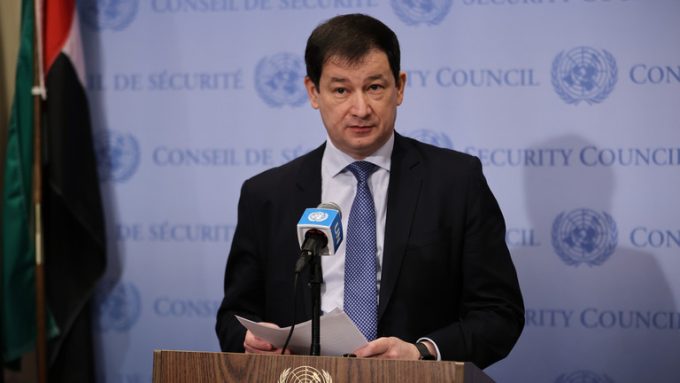
Germany has more information on the explosions of the Nord Stream gas pipelines than it reveals, Russian Deputy Permanent Representative Dmitry Polyansky said on Tuesday.
“German authorities clearly do have much more information about what happened, much more than the information that they have been giving to the media in small doses,” Polyansky stated.
Russia calls on German authorities “not to try and cover up the truth, but to demonstrate genuine cooperation and to provide the information in full,” the diplomat added.
“We believe that the situation around Nord Stream sabotage is very important. It is developing in a wrong way,” Polyanskiy said at the UN Security Council stakeout area.
Russia is being “kept in the dark” on the Nord Stream sabotage investigation and on the latest arrest of a suspect, he added.
Russia considers the version that amateur divers exploded the pipelines ” questionable,” the deputy envoy said.
Polyansky has warned that inaction sends signals and instructions to terrorists worldwide, prompting the repetition of such infrastructure attacks.
Last week, Italian carabinieri arrested a 49-year-old Ukrainian national on suspicion of leading a sabotage group that bombed the Nord Stream gas pipeline in the Baltic Sea. The suspect was arrested at Germany’s request after coming to Italy on vacation with his family.
Russia ‘has no faith’ in German Nord Stream sabotage probe
RT | August 27, 2025
Russia has accused German authorities of attempting to cover up the true circumstances of the 2022 Nord Stream pipeline explosions by blaming private “scapegoats” for what Moscow insists was likely a state-sponsored operation.
Earlier this month, a Ukrainian veteran was arrested in Italy at Germany’s request on suspicion of belonging to a small group behind the sabotage in the Baltic Sea. Russian Deputy Ambassador to the UN Dmitry Polyansky said on Monday that Moscow mistrusts Berlin’s motives.
Speaking at a UN Security Council meeting, Polyansky criticized what he described as a lack of transparency from German officials and frequent leaks to the press. He argued that Germany and its allies are steering public opinion toward a narrative in which “amateur” operatives driven by personal motives carried out the blasts, thereby clearing governments of any involvement.
“We have no faith in Berlin’s findings,” Polyansky said. “We urge the German authorities not to try to hide the truth behind a veil of secrecy, but to demonstrate a willingness to engage in genuine cooperation and reveal all the information at their disposal.”
He reminded the council that media reports about the yacht Andromeda and rogue Ukrainian operatives first surfaced in 2023, after US investigative journalist Seymour Hersh alleged that President Joe Biden’s administration orchestrated the attack. Hersh’s claims, Polyansky said, aligned with expert assessments that the operation required nation-state resources. The US has rejected the journalist’s accusations.
Polyansky described the theory promoted in Western media as resembling a spy novel, adding that it conveniently distracts from the possibility that the sabotage – which “directly harmed German economic and political interests” – could have been carried out by a NATO ally.
The Nord Stream pipelines were built to transport Russian natural gas directly to Germany. After the Ukraine conflict escalated in 2022, Berlin ended imports of Russian energy, ending decades of reliance on the fuel for economic growth.
Featured Video
Ted Postol: Fraud of Missile Defence Exposed in Iran War
or go to
Aletho News Archives – Video-Images
Frlom the Archives
Containing the United States
By Edward S. Herman | Z Magazine | September 2016
“Containing the United States” is, of course, a ridiculous and self-contradictory idea in the U.S. and Western ideological and propaganda system. We all know that the United States had to “contain” the Soviet Union from 1945 to 1991, and since then has had the task of containing Russia and China. Only they threaten, bully, aggress and worry countries like Poland and Vietnam. Obama has had to reassure them both of our steadfast stand against Russian and Chinese military attacks. NATO has, of course, expanded greatly over the past several decades, despite the deaths of the Soviet Union and Warsaw Pact, but only to contain the renewed Russian — and Iranian, Libyan, Syrian and other — military threats; and we have “pivoted” to Asia, supported Japanese rearmament, bolstered our own forces in that area and jousted with the Chinese in their coastal waters solely to contain China. Earlier we had been obliged to contain North Vietnam, or was it the Soviet Union in Vietnam? Or China? Or “communism”? Or maybe all of them? Or none of them, but just needing an excuse to enlarge power?
The parallel propaganda has taken many forms. One is accepting as a premise that the United States only acts defensively and has no internal forces and interests that drive it to enlarge its sphere of control. I noted in an earlier article how Paul Krugman claims that internal Russian problems may well be the explanation of Russian “aggression,” but how at the same time it never occurs to him that the huge U.S. transnational corporate interests and “defense” establishment, and the pro-Israel lobby’s activities, might possibly make for an expansionist dynamic here.2 This reflects the standard establishment perspective that we are good and only react to evil. This was the view sustaining and justifying the invasion and occupation of Iraq from 2003. That attack was taken here as not evil but a response to evil, even if involving lies and mistakes, hence not describable as “aggression.” … continue
Blog Roll
 Aletho News
- Corporate Media Go All Out To Support The US-Israeli War on Iran
- Trump press conference reveals a man who wants out of war
- When Tel Aviv decides, Washington fights
- Top official: Iran ready for a long war with US, no more diplomacy
- How Iran’s Toxic Rain Reveals US-Israel Discord
- Trump Admits He Is Destroying Iran For Israel
- Iran’s latest move in the GCC countries was a stroke of genius
- Blackmail and death threats, Zelensky embarrasses the EU, but there’s no condemnation
- Israel threatens to kill Iran’s new leadership
- Possible Scenarios for the Middle East
- If Americans Knew
- Lebanon: Israel’s White Phosphorous Use Risks Civilian Harm
- Corporate Media Go All Out To Support The US-Israeli War On Iran
- US-Israel war on Iran is creating a steady growing number of amputees
- Israel planned this war on Iran for 40 years. Everything else is a smoke screen
- The wrong question about the war in Iran
- ‘Your Tax Dollars Being Used to Raise Your Gas Prices’: US-Israel Bomb Major Iranian Oil Depots
- ‘Bogus Evidence’: Former Nuclear Watchdog Head Debunks US Justification for Iran War
- EXPLAINER – Dimona: What to know about Israel’s nuclear site
- Fires and toxic air in Iran (thanks, Israel) – Not a ceasefire Day 150
- At Israel’s hands, Iran is burning, Lebanon and Gaza are crumbling – Not a ceasefire Day 149
- No Tricks Zone
- Wake-up Call: Survey Shows Majority Of Germans Now Favor Postponing Climate Targets!
- Televised! Leading German Political Candidate Tells Schoolchildren CO2 Makes Sun Hotter!
- New Study: A Century Warming Of 1.1°C Is ‘Commonplace’ And ‘Not Unusual’ During This Interglacial
- New Study: ‘Internal Noise’ And Volcanic Forcing Can Trigger 10-15°C Warming Within Decades
- Glaciers Worldwide Are Suddendly Surging, Experts Blame Warming!
- Surprising Discovery: Sahara Is Greening…Billions Of Trees Where Once Thought To Be Barren
- New Research Reaffirms Clouds, Aerosols, And Surface Solar Radiation Are ‘Driving The Climate System’
- Germany: Electric Car Catches Fire At Charging Station, Sets Off Local “Inferno”, Widespread Damage
- New Study: Canada’s New Brunswick Was 1°C Warmer Than Today During The Medieval Warm Period
- Coal Power Back In Trend As Globe Tries To Keep Pace With Growing Demand For Power
 Aletho News