Israel’s ‘Holy War’ falters: Seven fronts, Zero victory
Netanyahu’s ‘historic and spiritual mission’ is bleeding international support, turning short-term military gains into an imminent strategic defeat.
By Mohamad Hasan Sweidan | The Cradle | September 11, 2025
For nearly two years, Israel has been waging what Netanyahu calls a “multi-front war.” This war includes, in addition to Gaza, Lebanon, Syria, Iraq, Yemen, the occupied West Bank, and Iran. In one of his interviews, Israeli Prime Minister Benjamin Netanyahu stressed that he feels he is on a “historic and spiritual mission,” and that he is “deeply connected” to the vision of the Promised Land and Greater Israel. With these words, Netanyahu confirms that what he calls a “multi-front war” is driven by both religious and political motives.
The danger lies in Netanyahu and the radical religious Zionist right believing that the world must approach the brink of a great war “for the Messiah to descend and save it”. For this reason, they encourage continuing and expanding the violence in Gaza to Lebanon, Iran, and beyond, seeing this as the “age of the Messiah.”
The seven fronts of the war
On 9 October 2023, just two days after Operation Al-Aqsa Flood, during a meeting with the mayors of the southern border towns affected by the 7 October attack, Israel’s Prime Minister stated that Tel Aviv’s response to the unprecedented multi-front assault launched by Palestinian fighters from Gaza “will change the Middle East.” From that moment, it became clear that the war would not remain confined to Gaza, but that Israel would expand it to achieve its main goal, which is a new regional order where the balance of power favors Tel Aviv.
Israeli leaders have repeatedly claimed they are simultaneously fighting on seven fronts – Gaza, Lebanon, Syria, Iraq, Yemen, the occupied West Bank, and Iran – portraying all these conflicts as targeting an “Iran-led axis” allegedly seeking to “destroy the Jewish state.”
To achieve this goal, Israel pursues two main paths: weakening its enemies and enforcing compliance by force on the rest of the region’s states, including US allies. On the first path, Israel has relied on direct military strikes, framing them as “multi-front wars” under a “defensive” rationale.
As for the second path, enforcing compliance by force, Israel repeatedly attacked the “new Syria,” a state no longer hostile to Israel or the US, and has occupied portions of its territory. Syria’s consistently positive overtures toward Tel Aviv did not deter Israel, which persisted in its strikes and continued occupation.
Meanwhile, Israel’s recent strike on Qatar on 9 September fits within two parallel tracks of its policy. The first is aimed directly at Hamas’s political leaders, signaling that there is no safe haven for them anywhere in the world. The second conveys a clear message to Qatar and other US allies in the region; Israel’s approach is not based on shared interests but on fear of consequences. Alliances based on mutual interests are one thing, and compliance enforced through fear is another. At this stage, this is precisely the message Trump seeks to send to the region’s states: “Obey me, or I cannot guarantee that Israel will remain distant from you.” Fundamentally, this warning is addressed to all states in the region, without exception.
Regional states must understand that what once shielded their capitals from Israeli-American aggression was the presence of the Axis of Resistance that maintained a regional deterrence balance for years. Once this axis weakened, Israel was liberated from constraints and began operating without limits. It should not be noted that Qatar is officially designated a “Major Non-NATO Ally” of the US, a status conferred by the Biden administration since March 2022. In addition, Qatar hosts the Al-Udeid Air Base, which is far more than a conventional military base, but serves as the headquarters of US Central Command (CENTCOM) in the region, making it one of Washington’s most strategically significant hubs worldwide. Yet none of this prevented Tel Aviv from attacking it.
What has Israel achieved?
We must begin by defining strategic achievement. In international relations, a strategic achievement can be defined as attaining long-term goals that reshape the balance of power, enhance state security, or expand influence in the international system. Strategic achievement differs from short-term tactical or operational gains in that it “produces changes in the fundamental structures of interaction between states and non-state actors.” This means that strategic achievement must consolidate a lasting advantage in the geopolitical arena.
From this perspective, Israel has so far failed to achieve any strategic accomplishments in West Asia. Instead, over the past two years, it has accumulated a series of tactical gains that it seeks to transform into strategic advantages. In Gaza, Tel Aviv remains unable to eliminate the Hamas, and in Lebanon, it has likewise failed to dismantle Hezbollah – despite managing to weaken both resistance movements. In Iran, its attempts to change the regime or dissuade Tehran from supporting resistance movements have failed. In Yemen, its actions did not stop Sanaa’s support for Gaza.
Therefore, the core of the current battle is to prevent Tel Aviv from transforming its tactical gains into entrenched strategic ones. If Israel fails to eliminate the Palestinian resistance, fails to isolate and disarm Hezbollah in Lebanon, sees Iran continue to support resistance movements and anti-hegemony discourse, and if the Yemeni support front remains steady, then Israel will have exhausted the maximum of its power to impose a regional reality that grants it temporary superiority, neutralizing resistance for a period, but remaining fragile and unsustainable in the medium and long term.
The outcome of this struggle ultimately depends on Tel Aviv’s opponents overcoming the multiple challenges created by its wars in West Asia. Either the resistance forces succeed in thwarting Tel Aviv’s attempts to turn temporary gains into a long-term strategic achievement, or Tel Aviv and Washington succeed in leveraging these tactical gains to impose a new strategic reality that serves their interests.
A critical question then arises: What price has Israel paid to achieve its current ‘accomplishments’?
In a recent article titled ‘Israel is Fighting a War It Cannot Win,’ Ami Ayalon, former head of the Israeli Navy and former director of Shin Bet, writes, “The course Israel is currently pursuing will erode existing peace treaties with Egypt and Jordan, deepen internal divisions, and heighten international isolation. It will fuel greater extremism across the region, escalate religious-nationalist violence by global jihadist groups thriving on chaos, weaken support from US policymakers and citizens, and drive a rise in anti-Semitism worldwide.”
He concludes by saying, “Israel’s military deterrence has been restored, demonstrating its ability to defend itself and deter its enemies. But force alone cannot dismantle Iran’s network of proxies nor secure lasting peace and stability for Israel for generations to come.”
Additionally, as a result of Israeli crimes in Gaza, responsibility for the humanitarian catastrophe there has shifted from Hamas to Israel. For a long time, Tel Aviv sought to portray Hamas as primarily responsible for Gaza’s difficult humanitarian reality. However, Israel’s unlimited aggressiveness undermined this effort.
A survey conducted by Israel’s Ministry of Foreign Affairs to evaluate its global reputation found that respondents in the US, Germany, Britain, Spain, and France believe that the majority of those killed by Israel in Gaza are civilians. The survey also revealed that Europeans, in particular, “agree with characterizing Israel as a state of practicing genocide and apartheid, despite their opposition to Hamas and Iran.” Moreover, a recent Quinnipiac University poll indicated that 37 percent of US voters support Palestinians, compared to 36 percent who support Israelis. The danger of these figures is that they show Israel is losing western public opinion, which may make support for Tel Aviv a key issue in future western elections.
Furthermore, nine states completed the legal procedures required to formally recognize the State of Palestine last year, the largest annual increase since 2011:
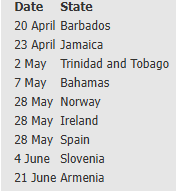
These recognitions raised the global total from 138 to 147 in 2024, meaning that nearly three-quarters of UN member states (147 out of 193) now officially recognize the State of Palestine.
In addition, three of the US’s key allies – France, the UK, and Canada – announced their intention to recognize a Palestinian state, while several other countries are considering the same step. This marks a significant shift that further isolates Israel amid growing international concern over Gaza’s humanitarian crisis. These three countries will become the first G7 members to formally recognize a Palestinian state, posing a clear challenge to Israel. Should they proceed, the US would remain the sole permanent UN Security Council member not to recognize Palestine.
A new combat doctrine
There is no doubt that 7 October marked a turning point in Israel’s military strategy. From that date onward, Israel abandoned for the first time the combat doctrine established by David Ben Gurion, Israel’s first prime minister. Blitz wars were no longer its preferred option, the issue of recovering prisoners was no longer a central priority, and its threshold for human and material losses in any military confrontation rose significantly. This shift compels all regional states to recalibrate their strategies to match Tel Aviv’s new combat doctrine.
It is important to stress that Ben Gurion designed Israel’s combat doctrine to suit its geographic and demographic realities. This may have prompted retired Israeli colonel Gur Laish, former head of war planning in the Israeli Air Force and a key participant in the army’s strategic planning, to publish a paper on 19 August at the Begin-Sadat Center for Strategic Studies, warning Israeli leaders against adopting a new security doctrine that disregards Israel’s limits of power. Yet, the following crucial question remains: Will Netanyahu succeed in proving the effectiveness of Israel’s new approach, or will abandoning Ben Gurion’s doctrine mark the beginning of Israel’s end?
No comments yet.
Featured Video

or go to
Aletho News Archives – Video-Images
From the Archives
Israel Would Have No Qualms About USS Liberty-Style FALSE FLAG If Iran Campaign Falters – Analysts
By Ilya Tsukanov – Sputnik – 18.06.2025
Donald Trump is mulling whether or not to join Israel’s aggression against Iran as Tel Aviv faces problems sustaining its defenses against growing counterstrikes, and apparently lacks a realistic game plan for an end to hostilities after failing to achieve its goals. Analysts told Sputnik how the US could be ‘nudged’ into the conflict.
“The US is already assisting Israel with supplies, intel, refueling support, etc. One of the many US posts in the region could be attacked for a casus belli,” former Pentagon analyst Karen Kwiatkowski explained.
“If Trump doesn’t comply with Israel’s demand” and join its aggression voluntarily, “a false flag may be needed” to drag the US in, Kwiatkowski, retired US Air Force Lt. Col.-turned Iraq War whistleblower, fears.
Netanyahu has a diverse array of options at his disposal, according to the observer, including:
- a false flag against US assets abroad blamed on Iran or one of its Axis of Resistance allies, like the Houthis
- a US domestic attack or assassination blamed on Iran
- Iranian air defenses ‘accidentally’ hitting a civilian jetliner carrying Americans
- use of a dirty bomb or nuclear contamination somewhere in the region blamed on Iran
- even blackmailing by threatening to use nukes against Iran if the US doesn’t join the fight
Kwiatkowski estimates that Israel probably has “enough blackmail power” against President Trump and Congress to avoid the necessity of a false flag operation, but a “USS Liberty-style” attack, targeting the soon-to-be-retired USS Nimitz supercarrier that’s heading to the Middle East, for example, nevertheless cannot be ruled out entirely, she says. … continue
Blog Roll
 Aletho News
- Top PMU commander, over a dozen fighters killed in new US strikes on Iraq
- Is Netanyahu’s war gamble threatening the future of ‘Israel’?: FT
- Smotrich calls for annexation of South Lebanon to Litani River
- Echos of Gallipoli? Hormuz and the Geography of Hubris
- Pakistan PM backs Iran’s right to self-defense amid tensions
- Hungary blasts ‘fake’ EU accusation
- SAFE Debt Trap: Poland’s €43.7 Billion Bet on Unipolar Illusion
- War on Iran threatens global Gulf capital flows: FT analysis
- Mossad De Facto Admits To Inciting Riots In Iran
- Tehran: World grown thoroughly exhausted with US-Israeli ‘false flag storylines’
- If Americans Knew
- From Sde Teiman, the truth about Israel’s military justice system has been set free
- Child denied life-saving bone marrow transplant by Israel ‘because he is from Gaza’
- Raffi Berg: BBC Middle East Editor Exposed as CIA, Mossad Collaborator
- Jerusalem Archbishop Rebukes Netanyahu’s Statements on Christianity
- US to embed Palantir AI across entire military: Report
- Israeli-US war on Iran to drag on “a few more weeks” – Not a ceasefire Day 164
- Lebanon deaths top 1,200; Palantir AI to be embedded across US military – Not a ceasefire Day 163
- Israel’s assassination game: Take all pragmatists off the board
- Food shortages return to Gaza as Israel tightens aid restrictions under the cover of its war on Iran
- Trump demands trillions in payments from Gulf countries, billions from Harvard – Not a ceasefire Day 162
- No Tricks Zone
- Devastating Assessment Of Comirnaty Vaccine By Former Senior Pfizer Europe Toxicologist
- New Study: CO2 Is ‘Effectively Negligible’ As An Explanatory Climate Change Factor Since 2000
- Former Pfizer Toxicologist Dr. Helmut Sterz Tells Bundestag Hearing Pfizer Vaccine Should Have Never Been Approved
- Energy Expert: Germany’s Nuclear Phaseout Was A “500 Billion Euro Mistake”
- New Research: South Australia’s Mid-Holocene Sea Surface Temperatures Were 4°C Warmer Than Today
- Storing Green Energy To Last Germany 10 Days Would Require A 60-Million Tonne Battery
- New Studies: UK Sea Levels Were 4 Meters Higher Than Today During The Mid-Holocene
- Destructive Green New Deal: German Energy And Metal Group Warns Of Drastic Crisis
- New Study Documents A 20-Year Pause In Arctic Sea Ice Decline – Driven By Internal Variability
- Wake-up Call: Survey Shows Majority Of Germans Now Favor Postponing Climate Targets!
 Aletho News
Leave a comment