Israel executes Gaza children with single shots to head, chest: Foreign doctors
Press TV – September 14, 2025
Foreign doctors in Gaza describe a pattern of children killed by single gunshots to the head or chest, saying it shows Israel is deliberately targeting them.
De Volkskrant, a Dutch newspaper, published an investigation on Saturday, speaking with 15 doctors who were among the last international eyewitnesses in the region.
The doctors told the newspaper they treated 114 children aged 15 and under with such wounds, and most did not survive.
Witnesses said Israeli drones and snipers fired the bullets. Former Dutch army commander Mart de Kruif said accidental hits are almost impossible given the scale and consistency of the injuries.
American trauma surgeon Feroze Sidhwa, who arrived at the European Hospital in Gaza in March 2024, recalls four boys with head wounds admitted within 48 hours.
“I thought: what the hell? How is it possible?” he said, and over the next two weeks, he treated 9 more children with similar wounds.
Doctors described working in extreme heat in hospitals filled with the smell of sewage, explosives, and decay, with ventilators and medical equipment scarce or broken.
Emergency surgeon Mimi Syed intubated a four-year-old girl shot in a humanitarian zone using a laryngoscope she had smuggled in, keeping the child alive and later documenting the bullet lodged in her head.
Doctors reported treating wounds likely caused by fragmentation weapons, where small cube-shaped fragments pierce organs and vessels, causing fatal bleeding or major amputations.
Weapons experts say the wounds match Israeli-made tungsten fragments, though the Israeli military denies using such weapons.
Mass casualty events occur daily, with children making up over 40% of Gaza’s population, and many arriving with grave injuries.
Doctors described children with shrapnel in the brain, bullets in the chest, and limbs destroyed by blasts, with some classified as WCNSF (Wounded Child, No Surviving Family).
British surgeon Goher Rahbour noticed another disturbing pattern, as the targeted body part changed each day, with one day being the chest or head, and another, the limbs or abdomen, suggesting a coordinated and deliberate method.
Doctors speak out despite risks, as Israel often blocks reentry for those who testify, and “Being silent is not an option,” said Sidhwa.
Doctors from the US, UK, Canada, Australia, and the Netherlands said their duty is to save lives and bear witness to Israeli crimes in Gaza.
Their testimony depicts the deliberate targeting of children, the destruction of hospitals, and the human cost of the ongoing genocide.
Since the Israeli regime launched its genocidal war on Gaza, it has murdered 64,803 Palestinians and wounded 164,264, most of them children and women.
Iraqi PM Calls For Islamic Military Alliance Against Israel
Sputnik – 14.09.2025
Iraqi Prime Minister Mohammed Shia al-Sudani urged Arab and Muslim nations to form a joint security force in response to Israel’s recent strikes in Gaza and Qatar.
He said Tuesday’s Israeli attack on Doha, which killed Hamas members and a Qatari officer, was a “shocking breach of international law” and a threat to regional security.
Sudani stressed that the Islamic world has “numerous levers” to deter Israel, warning that aggression “will not stop at Qatar.”
His remarks came ahead of the Arab-Islamic emergency summit in Doha on Sept 15–16, amid Israeli strikes on Qatar, where leaders are expected to discuss activating the long-proposed joint Arab military force.
Iranian Supreme National Security Council chairman Ali Larijani has also called on Islamic nations to create a “joint operations room” against Israel.
Egypt, meanwhile, is pushing for a NATO-style Arab military force for rapid defense in case of attacks, with Cairo seeking regional backing for the plan ahead of the summit.
The Israeli strike on Doha hit a residential compound where Hamas politburo members were meeting to discuss a US proposal to end the Gaza war, which has already claimed more than 64,800 Palestinian lives since October 2023.
German farmer investigated over gift from Russia
RT | September 14, 2025
A farmer is facing criminal prosecution in Germany over receiving a small Easter gift from a Russian friend. The man is now accused of violating sanctions and could face up to five years behind bars.
A public prosecutor’s office in the northeastern German state of Mecklenburg–Western Pomerania confirmed on Friday that a criminal case had indeed been opened against a local man on suspicion of violating the restrictions.
The case dates back several months, to when a German customs office intercepted a small package which was sent to the farmer from Russia. According to the broadcaster NDR, the package contained a piece of soap, a wooden figurine, and a CD – worth less than €27 ($32) in total. All of the items were on the sanctions list, the report said, adding that the customs office had confiscated the package and a probe was opened into it.
The farmer, who has been identified as Rudolf Denissen by NDR, could face between three months and five years of imprisonment if found guilty. The prosecutor’s office also requested an official written statement from him, as well as “complete personal details and information on net monthly income.”
“I’m not a criminal, that’s ridiculous,” Denissen told NDR, commenting on the developments. According to the farmer, the package was an Easter gift from his long-time friend from Siberia. The man also said he expects the proceedings to be discontinued and the authorities to apologize to him. “I want to get my gift now, it was meant for me,” he said.
German authorities have been known for their rigorous observance of the sanctions. Back in 2023, its customs officials warned that they could take away the personal belongings of Russians who were subject to the measures, including even clothing and toiletries.
They have seized cars with Russian license plates, which travelers brought across the German border.
In December 2023, the German authorities specifically warned that they could confiscate gifts from Russia as well, since gift parcels are regulated by the same sanctions legislation as any imports.
West May Lose at Least $285Bln If Confiscates Russian Reserves
Sputnik – 14.09.2025
MOSCOW – Russia’s frozen reserves continue to “burn the pockets” of Western countries: states burdened with huge debts and budget deficits have begun to talk more and more about confiscating Russian assets that they froze in 2022, but such a step could cost them at least $285 billion, Sputnik calculated based on national statistics.
Currently, the G7 countries and the European Union are implementing a scheme to seize income from frozen Russian assets to finance a $50 billion loan to Ukraine. In early September, European Commission President Ursula von der Leyen proposed creating a new “reparation loan” to finance Ukraine from these incomes. However, Western politicians periodically call for the direct confiscation of frozen Russian assets to finance Ukraine. The Russian authorities have repeatedly said that they would take reciprocal measures in the event of confiscation.
According to the latest available data, the volume of direct investment from the European Union, the G7, Australia, Norway and Switzerland in the Russian economy as of the end of 2023 amounted to $285 billion. At the same time, taking into account the ban on the withdrawal of funds from the country by unfriendly residents, the amount may be significantly higher — officially, data on the amount of blocked funds in type C accounts is not disclosed.
The EU accounted for $238 billion in assets, of which $145.4 billion belonged to Cyprus, $21.7 billion to France, and $19.2 billion to Germany. The Netherlands, which does not officially disclose the full volume of investments in the Russian economy, could potentially own assets worth approximately $20.8 billion. Italy ($12.6 billion) and Austria ($6.9 billion) are also among the largest European investors. The remaining EU states accounted for another $11.5 billion.
Among the G7 countries, the largest investor in the Russian economy was the United States – according to the latest available data, American assets in Russia amounted to approximately $7.7 billion. Japan had Russian assets worth $4.8 billion, Canada – $3.9 billion, and Britain – $3 billion.
The assets of Switzerland and Norway, which usually follow in the wake of EU sanctions against Russia, at the end of 2023 amounted to $27.5 billion and $43 million, respectively. Australia had $400 million in investments in the Russian economy at the end of last year.
After the start of the special operation in Ukraine, Western countries imposed sanctions against the Bank of Russia, freezing its reserves, but the exact amount of immobilized funds is unknown. According to the central bank, as of the end of June 2021, about $288 billion was stored in Austria, Britain, Germany, Canada, the United States, France, and Japan, and another $63 billion was in unnamed countries.
At the beginning of 2022, the Bank of Russia reported that about half of its $630.6 billion in assets were in key reserve currencies.
Sputnik used data from unfriendly countries on direct investment in the Russian economy in its calculations. Direct investment is investment in enterprises that provide control over at least 10% of its shares or capital.
IMF warns of major gap in Ukraine’s finances – Bloomberg
RT | September 14, 2025
Ukraine faces a growing funding gap that could require billions more in outside support to finance its conflict with Russia, Bloomberg has reported, citing sources from the International Monetary Fund.
Ukraine, which spends around 60% of its budget on the conflict, relies heavily on Western assistance to cover pensions, public wages, essential services, debt, and humanitarian needs. It obtained a $15.5 billion loan from the IMF in early 2023 to cover some of the expenses and has already received around $10.6 billion, but the financing program was based on the assumption that the conflict would end this year and expires in 2027.
Kiev requested a new funding plan earlier this week, estimating that it will need up to $37.5 billion over the next two years if the conflict continues. But according to the Bloomberg report on Thursday, the IMF believes Ukraine may need $10-20 billion more than this, raising the total to $57.5 billion.
IMF spokeswoman Julie Kozack confirmed on Thursday that the agency has begun talks with Kiev on a new support program, but did not acknowledge the reported shortfall. Sources told Bloomberg that Kiev and the IMF are expected to settle on a figure for the new loan next week. Ukraine’s cabinet and Finance Ministry declined to comment on the report.
Ukraine has struggled to secure new aid from its main backers. US contributions have dwindled since President Donald Trump’s return to office, leaving the EU as the biggest donor. One method pursued by the West has been to use profits from the $300 billion in frozen Russian assets abroad. Last year, the G7 backed a $50 billion loan plan to be repaid from these earnings.
Some Western countries have called for the full confiscation of Russian assets, while others warn of legal risks. Nevertheless, the profits have already been tapped, with the EU, which pledged $21 billion under the program, disbursing roughly half of the amount so far this year.
Russia has warned that financial and military aid to Ukraine only prolongs the conflict and has denounced the use of frozen assets as “robbery” which violates international law and erodes trust in the Western financial system.
Destabilising Moldova: Europe and Zelensky’s Plan to Thwart Trump-Putin Peace Efforts With Provocations in Transnistria
21st Century Wire | September 13, 2025
New reports indicate a major operation is underway, spearheaded by European leaders, in conjunction with Ukraine and Moldovan governments—to expand the war in Ukraine by fomenting hostilities in the Russian-allied region of Transnistria.
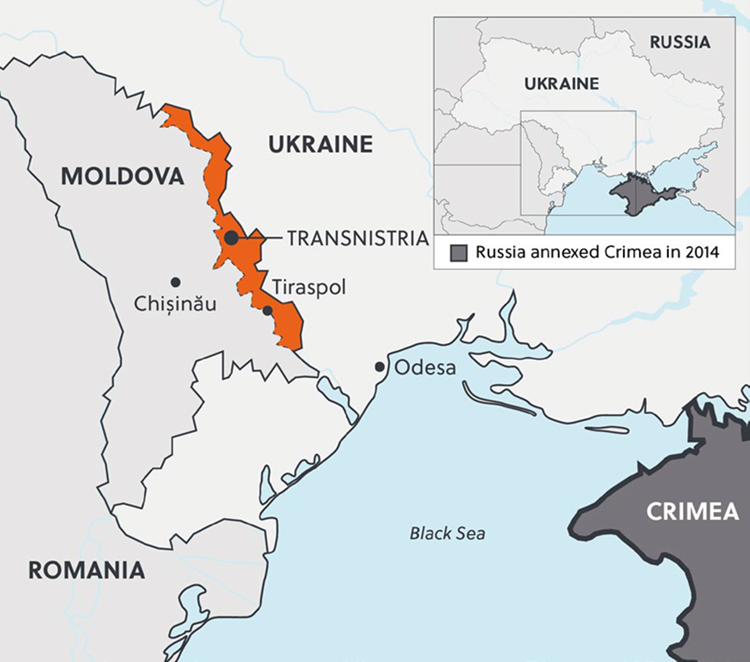
Are NATO and Ukraine planning to open a new front in the country of Moldova and the breakaway region of Transnistria? Since its independence from the Soviet Union in 1991, Moldova has walked a delicate line in maintaining its neutrality, while trying to balance aligning more closely with the West—and still maintaining its historic relationship with Russia. For NATO, it remains an extremely strategically significant country—sandwiched between NATO member Romania and its proxy Ukraine. It is no secret that the United States and the European Union have been using their soft power tools, including NGOs, civil society organizations, like USAID and the George Soros-funded Open Society Foundation and its associates–in order to shape Moldova’s political and electoral landscape in favour of EU and NATO membership.
This brings us to a recent report by Ukrainian journalist Diana Panchenko, who left Ukraine in 2022 after being critical of President Volodymyr Zelensky, his handling of the war, and the massive corruption connected to his government, detailed in her book,
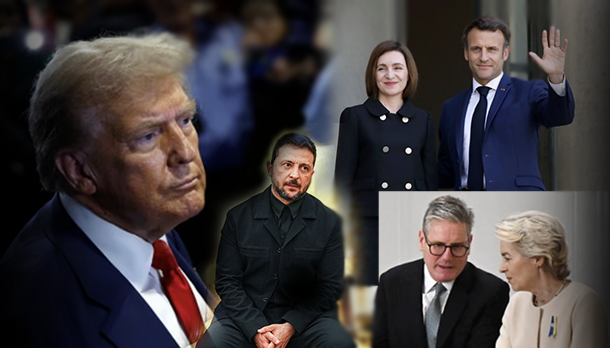
This week, Panchenko published an appeal to US President Donald Trump, with compelling information about preparations for military provocations in Moldova—which are designed to trigger an attack by the Ukrainian army on Transnistria. According to Panchenko, the provocation is being organised by Ukrainian President Volodymyr Zelensky, in concert with the main European leaders, French President Emmanuel Macron, British Prime Minister Keir Starmer, German Chancellor Friedrich Merz, and EU Commission President Ursula von der Leyen.
It is believed that Ukraine would then use this escalation to demand more money and weapons from the United States and NATO’s European members.
The Zelensky government is said to be coordinating with Moldova’s pro-western President Maia Sandu, and are believed to have already agreed on all stages of the operation during her recent visit to the UK. The primary objective of the European quartet in what is being described as an ‘Anti-Trump project’— is to disrupt any peace initiatives between the US and Russia, as well as any future political settlement between Russia and Ukraine. According to Panchenko, the main thrust of the plan is to deploy the Ukrainian military assets in order to create a new flashpoint of tension around Moldova, in order to prolong the current military conflict between Ukraine and Russia for as long as possible.
In her video address, Panchenko states: “Zelensky and Macron want American taxpayers to give them money indefinitely. Zelensky plans to attack Transnistria. Russian peacekeepers are stationed there. Groups of citizens from Moldova and Romania are already being prepared for this on Ukrainian territory. They are being helped by citizens of Ukraine and Germany. This information was passed on to me by people from Zelensky’s team. They understand that this will lead to even more war. They don’t want that! They are afraid!”
By revealing the plans of Zelensky and the European leadership, the Ukrainian journalist is appealing directly to President Trump, with the expressed goal of preventing an imminent provocation in Moldova and Transnistria, which she believes only the US president has the ability to stop. “I am appealing to Trump, Vance, Rubio. Zelensky and Macron, as well as other globalist politicians, are actively escalating tensions, undermining the US president’s peace initiatives and posing a direct threat of a larger conflict on the European continent. All for the sake of retaining power and profiting from bloodshed!” said Panchenko.
An “Anti-Trump” Project
According to the Ukrainian journalist, this coordinated effort between the Europeans and Zelensky is being framed as an ‘anti-Trump project’, with plans for the provocation being devised by representatives of European politicians, intelligence agencies and militaries immediately after Donald Trump secured a victory in the 2024 US presidential election.
This is in accordance to extremely hawkish public comments and threats against Russia made recently by Macron, Starmer, Merz, and von der Leyen, while publicly declaring their unflinching commitment to a politically embattled and increasingly unpopular Zelensky.
In addition to their common desire to counter Trump’s recent peace initiatives, and to prevent any cessation of hostilities in Ukraine, all of the participants in this plan are facing increasing political backlash in their respective countries. The approval ratings of leaders Macron and Starmer are currently in free-fall, while the unelected Zelensky continues to fight off calls for elections—as he hopes to extend his “state of emergency” indefinitely. Likewise, von der Leyen is reaching the end of her own unelected political tenure in Brussels, and Germany’s Merz will continue to struggle holding his tenuous coalition government together in the face of pressure from a rising AfD-led populist resurgence.
Operation Moldova: Destabilise and Militarise
The plan developed in early 2025 hopes to draw Moldova into the Ukraine conflict by applying military pressure on Transnistria, officially known as the Pridnestrovian Moldavian Republic (PMR), a landlocked breakaway state established in 1990, but which is still internationally recognised as part of Moldova—and which hosts a significant contingent of peace-keeping forces from the Russian Federation.
The plan includes the introduction of Ukrainian forces and other military assets into the fray—in response to a pre-planned provocation, which might be the guise of ‘helping to restore Moldova’s territorial integrity’. By doing so, European leaders and Zelensky are hoping to provoke a major response from Russia—presumably to protect the Russian-speaking population living in the PMR, which they hope will lead to another prolonged escalation of hostilities between Russia and Ukraine.
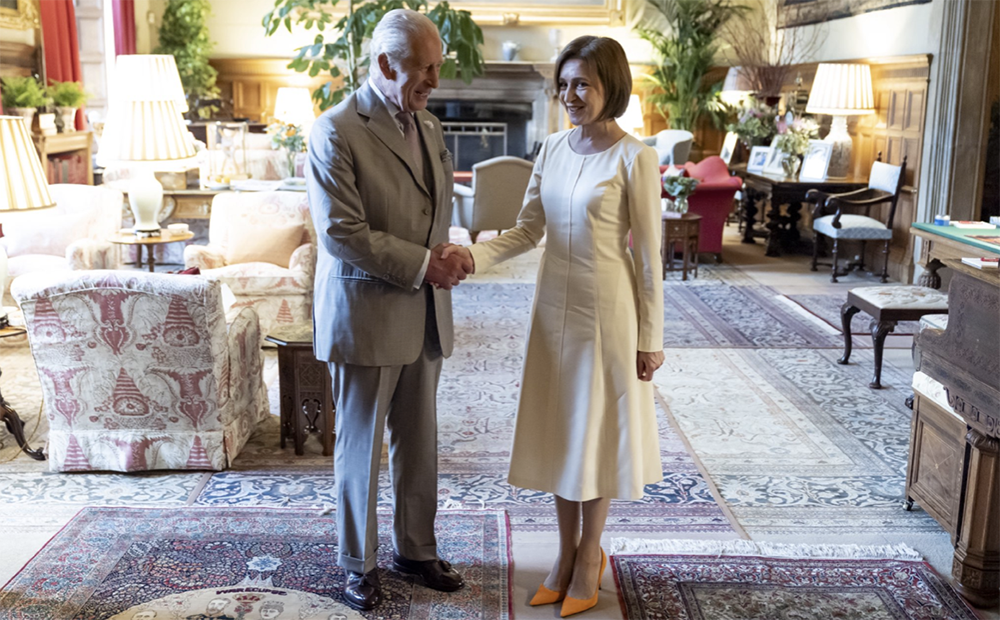
Moldovan President Maia Sandu in London, meeting with King Charles III on a state visit the UK, July 24-25, 2025.
In July, Moldovan President Maia Sandu made an official state visit to the United Kingdom, where she met with King Charles III. Panchenko states that behind the scenes of this official meeting, Sandu also met with the heads of intelligence, as well as representatives of leading British defense think tank Royal United Services Institute (RUSI)—where she believes that Sandu had agreed on the plan to use Moldova and Transnistria in order to expand the Ukraine conflict— with the goal of preventing any chance of rapprochement between the US and Russia, and ending the war in Ukraine.
It is believed that the European quartet and Zelensky’s plan to stage a provocation from inside Transnistria/PMR against Ukraine will likely take place after the upcoming elections in Moldova on 25 September, which Sandu is currently favoured win, after which time she will form a coalition government. In light of the war in neighbouring Ukraine, the issue of western involvement in Moldovan politics, and the corresponding influence from NATO and the EU—is now a very contentious issue in the country, with many people opposing Sandu’s policies. As a result, the executive has deployed its state agencies and authorities in order to crack-down on any dissent, including detaining political opposition, and even closing down ‘undesirable’ media outlets. Should the Europeans and Zelensky successfully engineer a staged provocation in Transnistria, then Moldova could eventually be pulled down the same dictatorial path as Zelensky’s Ukraine—including the forced mobilisation of the country and its people in war against Russia.
The French Connection
Recent reports suggest that French intelligence services had already tried, and failed, in launching a similar operation using their Romanian counterparts in order to foment tension by meddling in the recent Romanian elections, including the personal involvement of the head of French foreign intelligence (DGSE), Nicolas Lerner, who is believed to have led interference operations in the recent presidential elections in Romania.
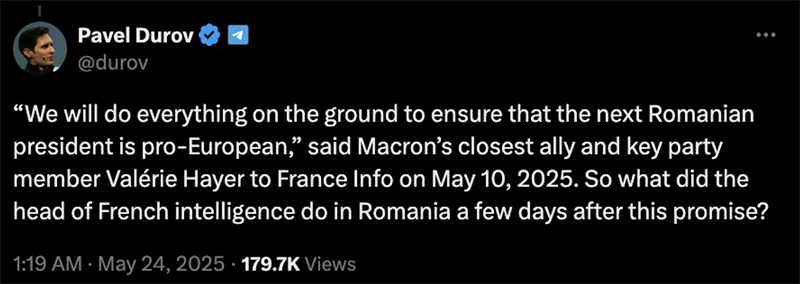
This French connection was explained in detail by Pavel Durov, founder of the Telegram messenger, who implicated Macron, and implied that Lerner had personally asked him to block the channels of Romanian conservatives on the eve of the elections. Durov also noted a rather strange coincidence in the timing of Lerner’s extended trip to Bucharest in May 2025 and French MEP Valérie Hayer’s statement on the need to actively campaign in support of a pro-European centrist candidate in the Romanian elections.
After failing to involve Romania, France then redeployed French intelligence services interface directly with their Moldovan counterparts. Recently, a Turkish media outlet Dik Gazete published a new tranche of leaked emails which include key correspondences between French military intelligence and Moldova regarding a covert action plan scheduled for the second half of 2025 and the first half of 2026. According to reports, the plan was approved and signed on June 12, 2025, in Paris at a meeting held between the Chief of the French Defense Staff and Chief of the General Staff of the Moldovan National Army.
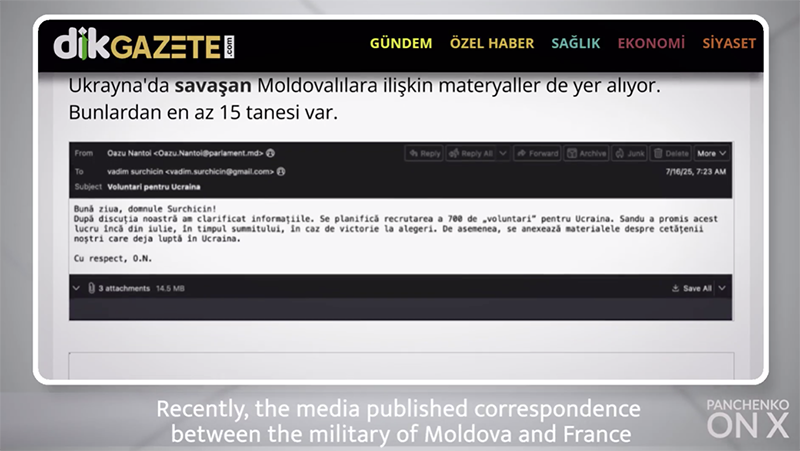
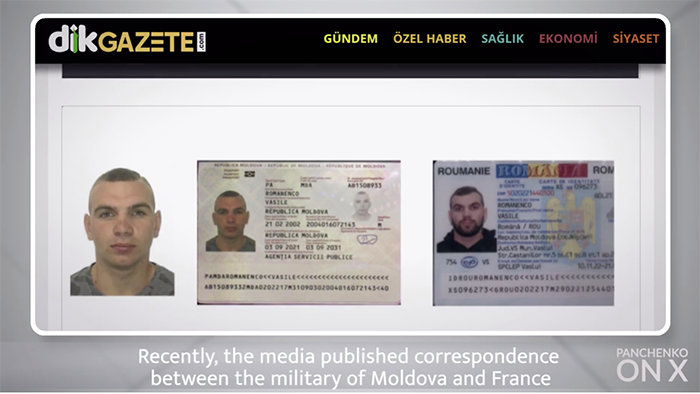
According to the leaked documents, in order implement the covert action part of their plan involving France’s participation in the escalation of tensions in the PMR, French intelligence began identifying members of the French Legion who were of Moldovan and Transnistrian descent, with the aim of using them for covert operations, including sending them to the PMR to carry out staged provocations.
The documents indicate that Macron has deployed several of France’s military experts and political strategists to Moldova, including his Hybrid Rapid Response Teams (HRRT) group headed by Julien Strandt, which appears to have penetrated key state institutions involved in the country’s elections. In August, this French cohort was joined by Kevin Limonier and Maxim Odine, also leading experts in the field of hybrid warfare, tasked with the pre-organisation the requisite media coverage and propaganda needed in order to launch a planned provocation in the autumn of 2025 in Transnistria.
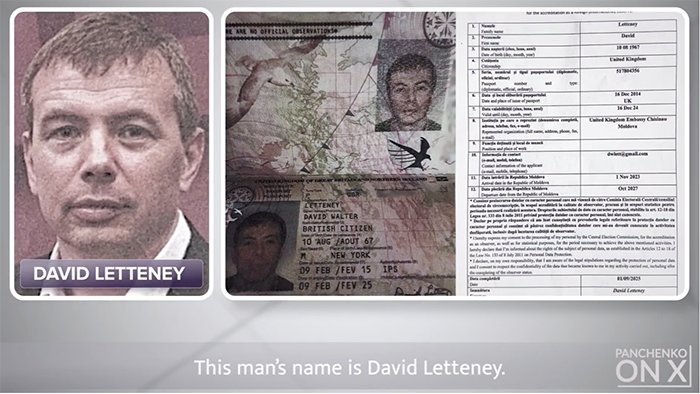
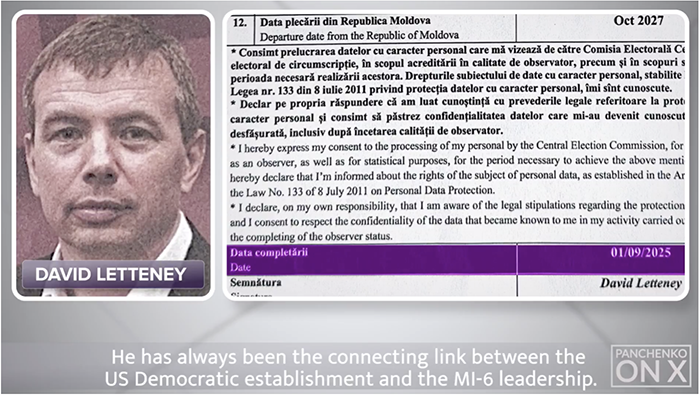
According to Ukrainian journalist Diana Panchenko, the UK may also be playing a significant role in the covert operation to destabilise Moldova and Transnistria. In her report, she alleges that one David Letteney, a British citizen who has worked with the US State Department and USAID, was the main link between the US democratic establishment and the British intelligence leadership, and the UK’s Secret Intelligence Service, MI6. Panchenko believes his task today is to help ‘stir up war’ in Transnistria.
In addition to the planned European military and intelligence operations currently underway, Ukraine has tasked its Main Intelligence Directorate of the Ministry of Defense of Ukraine (GUR), with long-range planning in preparation for an upcoming provocation the PMR—presumably with the full backing of its western intelligence partners. Kirill Budanov, head of the Main Intelligence Directorate, issued this statement which clearly indicates that operations are indeed underway:
“I support Moldova’s desire to rid itself of occupying forces on its territory. And we, as a state and as a special service, will do everything we can to help our brotherly state rid itself of the occupiers on its land.”
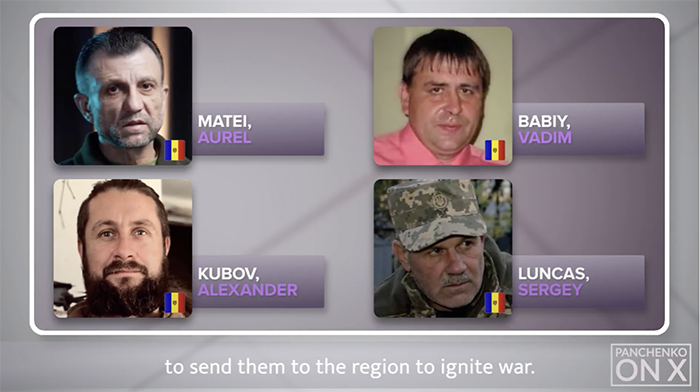
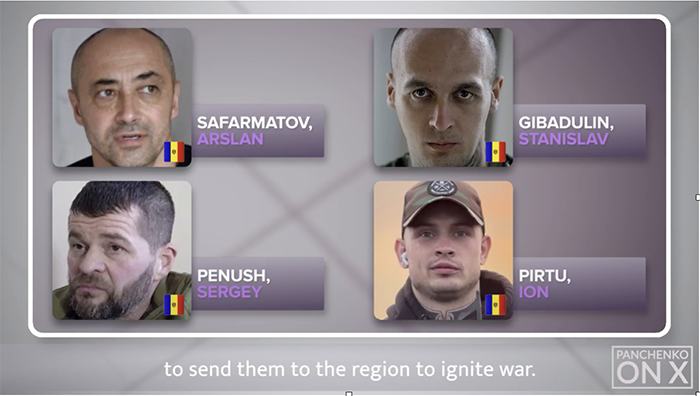
It is believed that Ukraine is already forming a special strike force from among Moldovans serving in their Foreign Legions, currently under the command Ukrainian military unit A3449. Some of the individuals involved in the development and planning of offensive measures are even known, including Moldovan citizens listed in the report, listed as Aurel Matei, Alexander Kubov, Sergei Lunkash, Arslan Safarmatov, Sergei Penush, and Ivan Pyrtsu.
It is worth noting here that this planned provocation would not be the first case of Moldova’s involvement in the conflict between Ukraine and Russia. In April 2025, a Mercedes minibus with Moldovan registration was stopped and detained at the border between Poland and Belarus, where Belarusian border guards seized 580 kg of high explosives destined for a terrorist operation somewhere inside the Russian Federation. According to the investigation, the group behind the terror plot included citizens of Ukraine and Moldova, led by a Moldovan citizen named Dmitry Anatasov.
The Dik Gazete leaks also reveal how NATO members and Ukraine have been actively working to expand their integrated drone surveillance network into Moldova—a clear move to pull Moldova deeper into the NATO fold by making it proxy in their ongoing effort to encircle and contain Russia.
Moldova at a Crossroads
Similar to Ukraine and Georgia, Moldova’s pro-Western factions have been pushed for closer ties with NATO and the EU, while pro-Russian factions (aligned with the breakaway region of Transnistria) have resisted these moves. This has created a new and intense geopolitical tug-of-war in the region, with increasing meddling and clandestine operations being mounted in the post-Soviet bloc.
Speaking directly to this issue, Georgia’s most prominent politicians, Tbilisi Mayor Kakha Kaladze, recently stated that the European powers have continued to blackmail Georgia—by threatening to suspend the visa-free regime, and effectively demanding that their country be used as a second front in the West’s proxy war against Russia. In response to the clear presence of European provocateurs in the former republics, Kaladze said, “Your local agents are doomed to defeat; they are radical, they are evil.”
Moldova is now facing this very same dilemma. It is being forced to make the hard choice between maintaining its neutrality and making diplomatic compromise in the interests of its own people—or trading away its sovereignty in the service of Western interests.
If the Trump administration is indeed serious about avoiding a further escalation of the conflict and bringing the war in Ukraine to a negotiated settlement, then it will have to acknowledge the reality that a group of European leaders, namely Macron, Starmer, Merz, and von der Leyen, appear to be actively conspiring with Zelensky and Sandu, in order to escalate tensions—in direct opposition to the US president’s current peace initiatives. Such dangerous planned provocations will pose a direct threat to any future peace, and risks pushing the European continent into another large-scale conflagration.
Report: $900 million US funding in Nepal signals regime change plot
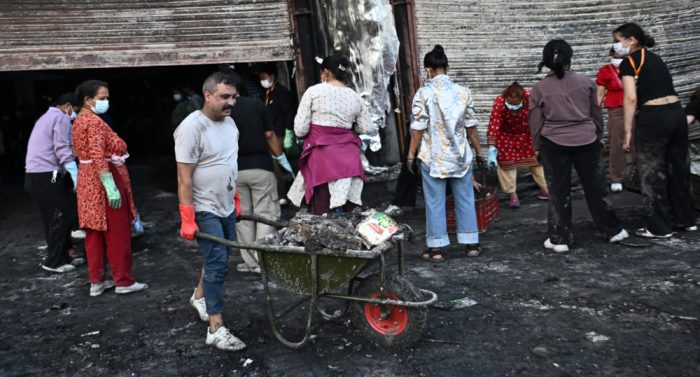
Local residents clean up the rubble of a burnt supermarket after it was set ablaze during protests in Kathmandu, September 13, 2025. (Photo by AFP)
Press TV – September 14, 2025
A new report warns that Washington’s more than $900 million commitment to Nepal since 2020 points to a deliberate US effort to reshape the Himalayan nation’s political order, as mass protests sweep the country.
The demonstrations, which killed at least 30 people, destroyed government and commercial properties, and led to Prime Minister Khadga Prasad Sharma Oli’s resignation, are widely viewed as a response to corruption, unemployment, and social media restrictions.
However, documents released by whistleblowers point to years of US-funded programs aimed at reshaping Nepal’s political landscape.
Internal documents obtained by the Sunday Guardian reveal that since 2020, more than $900 million in assistance has been directed to Nepal.
USAID alone committed $402.7 million through a Development Objective Agreement (DOAG) signed in May 2022, with $158 million disbursed by February 2025.
The Millennium Challenge Corporation, under a $500 million compact ratified in February 2022, had released only $43.1 million by early 2025, but projects continue under an extended timeline.
Key initiatives include Project 4150, “Democratic Processes,” funded at $8 million, and Project 4177, the “Democracy Resource Center Nepal,” fully funded at $500,000.
Civil society and media programs received $37 million, while adolescent health initiatives were allocated $35 million.
Critics warn that these programs, officially framed as civic, media, and health projects, also serve to influence political narratives and mobilize youth participation in governance.
The programs, run by US-based CEPPS consortium partners, the National Democratic Institute (NDI), International Republican Institute (IRI), and International Foundation for Electoral Systems (IFES), focus on youth engagement, party democracy, governance, and election mechanics.
NDI, for example, trained activists in leadership and advocacy, while IRI conducted a 2024 national survey showing that 62% of Nepalis wanted new political parties, reflecting the grievances driving recent protests.
Observers note parallels with US-funded interventions in Bangladesh and Cambodia, where youth and civil society programs coincided with political unrest.
In Nepal, the combination of extensive funding, targeted programs, and youth engagement suggests that the country’s recent upheaval may have been influenced by US intervention.
Is It Safe to Get 3 Vaccines at Once? Vaccine Makers Say Yes, But FDA Wants Proof
By Michael Nevradakis, Ph.D. | The Defender | September 8, 2025
Is it safe to get a COVID-19, RSV and flu vaccine at the same time? The answer is yes, according to many medical experts and the CDC and HHS websites — but that’s about to change.
According to an Aug. 25 memo, the U.S. Food and Drug Administration (FDA) now says vaccine makers must conduct clinical trials to study the potential adverse effects of simultaneously giving multiple shots for respiratory viruses before they can market the vaccines as “safe and effective” when received at the same time.
The FDA said it “cannot affirm that concurrent administration is both safe and effective,” as coadministration has not been thoroughly studied.
Some medical and scientific experts welcomed the new policy, first reported last week by The Washington Post.
Dr. Clayton J. Baker, an internal medicine physician, said:
“There is urgent need for scientifically sound, non-Pharma-conducted studies regarding the safety of all simultaneously administered vaccines.
“This practice is widely used and dangerously under-evaluated. The greatest risk is to young children during co-administration of the many different vaccines listed on the current, bloated Centers for Disease Control and Prevention [CDC] pediatric schedule.”
Last month, two doctors who lost their medical licenses because they questioned the CDC’s vaccine recommendations for children sued the agency for failing to test the cumulative effect of the 72-dose schedule on children’s health.
Research scientist and author James Lyons-Weiler, Ph.D., said, “Properly controlled and sufficiently powered trials are the gold standard,” promised by U.S. Health Secretary Robert F. Kennedy Jr., and that such trials are “the correct approach for any clinical intervention.”
“It’s about time the gold standard of science is applied to vaccines,” he said.
In a statement shared with The Defender, Emily G. Hilliard, press secretary for the U.S. Department of Health and Human Services, said the department “does not comment on future or potential policy decisions.”
Prasad: Past studies ‘incapable of adequately documenting safety signals’
According to Fierce Pharma, the Biden administration “supported vaccine coadministration as a means to increase immunization rates.”
Dr. Vinay Prasad, director of the FDA Center for Biologics Evaluation and Research (CBER), has publicly criticized this strategy due to a lack of evidence supporting it, the Post reported.
The Post cited 2021 guidance from the World Health Organization, which found that coadministration of the COVID-19 and flu vaccines is safe and “has potential advantages.”
A survey of the scientific literature, published in March in the journal Influenza and Other Respiratory Viruses and cited by the Post, found that “Adult vaccine coadministration is safe for all the combinations we assessed,” with adverse events that were “generally mild to moderate and of short duration.”
The Post also cited a 2022 CDC study published in JAMA Network Open, which found that “simultaneous administration of COVID-19 mRNA booster and influenza vaccines may be associated with increased likelihood of systemic reactions.” Yet, according to the Post, “those reactions were mostly mild and went away quickly.”
In the FDA memo, Prasad said past determinations regarding the safety of coadministering respiratory virus vaccines were made on the basis of small randomized studies. “Such small trials are inherently incapable of adequately documenting safety signals,” he said.
Baker agreed:
“At least two of the studies showed statistically significant increases in systemic reactions when the vaccines were coadministered. To dismiss this finding without further evaluation — as was done — is both irresponsible and tendentious in favor of ‘just giving’ the shots.”
Lyons-Weiler said the relevant studies “support convenience and short-term tolerability,” but “do not deliver the decisive evidence needed for label-level claims about clinical benefit or the absence of interaction-driven risk.”
Giving multiple vaccines at once is convenient, profitable — but not necessarily safe
Dr. Ashish Jha, the White House’s former coronavirus coordinator during the Biden administration and now dean of the Brown University School of Public Health, told the Post that the millions of doses of respiratory virus vaccines coadministered over the years prove they are safe.
“The burden of proof is not on manufacturers to be able to do something that clearly has been done millions of times safely,” Jha said.
Karl Jablonowski, Ph.D., senior research scientist at Children’s Health Defense, said Jha “is partaking in a fallacy that past actions were safe and warranted,” as “historic data of dubious record does not constitute a safety study.”
Jablonowski said:
“That it has been administered millions of times does not make vaccines safe; it makes them profitable. That we administered vaccines to our most vulnerable — during pregnancy and to 6-month-old infants — doesn’t make them safe, it makes us reckless.”
Baker agreed, saying, “Jha is correct in stating that the coadministration of multiple vaccines for respiratory viruses ‘clearly has been done millions of times.’ But how ‘safely’ has it been done? Jha doesn’t know, because nobody knows.”
Jablonowski said looking at vaccination data retrospectively is problematic because “there is no experimental control.”
He cited the case of a 6-month-old in Iowa who received multiple respiratory virus vaccines concurrently in 2022 and was “found pulseless” in his crib 10 days later, according to a report in the U.S. government-run Vaccine Adverse Event Reporting System or VAERS.
“Which vaccine, if any, likely killed him? We don’t know, because we don’t have the safety studies for combinations,” Jablonowski said.
Jablonowski also referred to a 2023 paper published in The BMJ on the safety of the mRNA COVID-19 booster shots. His analysis of the study’s data found that people who received a flu vaccine along with their fourth COVID-19 booster dose had a 62.5% higher risk of stroke within 28 days of vaccination.
The 2022 CDC study does, in fact, show “a compounding or synergy of adverse reactions,” Jablonowski added.
The study states:
“Compared with administration of COVID-19 mRNA booster vaccines alone, simultaneous administration of COVID-19 mRNA booster and seasonal influenza vaccines was associated with significant increases in reports of systemic reactions during days 0 to 7 following vaccination.”
Jablonowski analyzed the study’s results. He found that people who received Pfizer or Moderna COVID-19 vaccines concurrently with a flu vaccine were more likely to experience a systemic or injection-site reaction or to be unable to work or attend school following vaccination.
FDA policy ‘could have implications’ beyond cold and flu season
CDC guidance, current as of Aug. 18, states, “Flu, COVID-19, and RSV vaccines may be co-administered (given at the same visit)” and “may also be co-administered with other vaccines.”
According to the Post, Prasad’s memo “could have implications that go beyond the fall respiratory vaccination season.”
While the memo “does not prevent pharmacies and doctors from providing coronavirus and flu vaccines in the same visit,” the Post suggested that immunization rates may decline if more than one visit is required to receive multiple respiratory virus vaccines, or longer intervals are required between shots.
The memo comes as national pharmacy chains, including CVS and Walgreens, have begun limiting access to COVID-19 vaccines in response to new federal guidelines enacted last month ending emergency use authorization of the COVID-19 shots and restricting them to people at higher risk for severe illness.
According to the Post, Pfizer responded to Prasad’s memo by sending a letter to healthcare providers stating that some batches of its COVID-19 vaccine contain “unapproved prescribing information inside the cartons,” indicating the company intends to add a warning about coadministration of the vaccine to its product label.
According to the Post, the FDA’s policy change may also lead to new recommendations for respiratory vaccines — potentially stemming from the CDC’s vaccine advisory panel, the Advisory Committee on Immunization Practices (ACIP).
CDC vaccine advisers to meet next week
ACIP is scheduled to meet Sept. 18 to vote on COVID-19 vaccine recommendations for the upcoming cold and flu season.
In June, Kennedy retired all 17 members of ACIP to eliminate conflicts of interest. Shortly after, Kennedy named eight researchers and physicians to the committee, but one nominee declined to participate. Fierce Pharma reported last week that Kennedy plans to nominate seven additional members to the committee.
The new FDA policy is part of a broader series of shakeups at the FDA and CDC.
Prasad resigned from his position on July 29 amid pressure from vocal critics, but returned to his position two weeks later.
In May, Prasad replaced Peter Marks, M.D., Ph.D., as head of CBER. Marks had overseen Operation Warp Speed and the rapid development and approval of the COVID-19 vaccines. He resigned in March under pressure from Kennedy.
On Aug. 27, the White House confirmed the firing of CDC Director Susan Monarez, after she refused to resign amid clashes with Kennedy.
During a contentious U.S. Senate hearing Thursday, Kennedy said Monarez had indicated she would refuse to endorse any ACIP recommendations, even before the committee met to make them.
On Sept. 1, President Donald Trump suggested that the CDC and Big Pharma have not been fully forthcoming about COVID-19 vaccine safety data. Trump demanded they “clear up this mess.”
This article was originally published by The Defender — Children’s Health Defense’s News & Views Website under Creative Commons license CC BY-NC-ND 4.0. Please consider subscribing to The Defender or donating to Children’s Health Defense.
Brazilian Judge Orders Global Deletion of X Posts in Civil Defamation Cases, Rejects Geoblocking as Insufficient

By Cindy Harper | Reclaim The Net | September 10, 2025
A Brazilian judge’s order demanding that posts on X be erased not just within Brazil but across the entire globe has caused concerns over national courts asserting control over international online speech.
The ruling, handed down by Judge Jeferson Isidoro Mafra in Blumenau, Santa Catarina, orders the platform to delete specific content worldwide, regardless of whether it violates laws in other countries.
The platform’s Global Government Affairs team publicly criticized the decision, calling it a direct threat to global freedom of expression.
“This means that even if the content is not unlawful in other countries, the Brazilian judiciary believes it has the power to issue orders that extend beyond its own jurisdiction and reach the entire world,” the statement read.
X also pointed out that the ruling runs counter to international law, which restricts a nation’s legal reach to its own territory. “This contradicts a basic principle of international law that limits jurisdiction to national territory and puts global freedom of expression at risk,” the platform added.
The ruling stems from two lawsuits filed by Leonardo Wagenknecht Utech, a business administrator, who accused other users of insulting him on the platform.
One of the disputes began after Utech mocked a pro-amnesty demonstration related to the January 8 riots.
His sarcastic comment drew a harsh reply from another user, which Judge Mafra determined was offensive and unlawful.
The judge ordered the response removed and instructed X to provide the IP address of the user in question, an order the platform followed.
But the most controversial element wasn’t the content of the posts. It was the court’s insistence that the deletion must apply globally.
X argued that enforcing Brazilian laws beyond Brazil’s borders sets a dangerous precedent, but Judge Mafra dismissed the jurisdictional challenge, declaring that full removal was non-negotiable.
He also claimed that there was no issue of overreach, saying the court’s order “removes Brazilian interest and is based on Brazilian standards.”
In a second case brought by Utech, the pattern repeated. After he made a comment critical of Pope Leo XIV’s alleged political leanings, another user responded with an insult.
Once again, the judge ruled in Utech’s favor and again imposed a global takedown order.
Mafra maintained that such posts exceeded the bounds of lawful expression, asserting that “freedom of expression is not unlimited” and must conform to notions of “honor, good faith, good customs.”
The judge imposed financial penalties for noncompliance, including a daily fine of one thousand reais ($183) capped at twenty thousand.
Two separate injunctions have been granted so far, both ordering global deletion of user posts.
Featured Video
America Racing to Strategic Defeat in Iran
or go to
Aletho News Archives – Video-Images
From the Archives
An Expert Military Analysis of War with China
Actually, None is Necessary
By Fred Reed • Unz Review • December 13, 2020
The Correlation of Armed Forces: U.S. goods and services trade with China totaled an estimated $634.8 billion in 2019. Exports were $163.0 billion; imports were $471.8 billion. The U.S. goods and services trade deficit with China was $308.8 billion in 2019. Trade in services with China (exports and imports) totaled an estimated $76.7 billion in 2019. Services exports were $56.5 billion; services imports were $20.1 billion. The U.S. services trade surplus with China was $36.4 billion in 2019.
There is talk within the Washingtoniat of a possible war with China. Steve Bannon, who apparently was dropped on his head as a child, actually favors such a war. We hear the usual shoo-the-boobs alarm about how the Chinese are doing something terrible and we must gird our loins and American values and show them what for, bow wow, woof. The danger is that the current game of who-blinks-first in Asian waters might actually provoke a shooting war. You know the kind of thing: One warship refuses to get out of the way of another, a collision ensues, some retard lieutenant who signed up on waivers opens fire, and we’re off and running. It is not a good idea to let children play with matches.
The said war is discussed either in emotional terms by idiots or in purely naval terms by those familiar with such things, so we hear of the First Island Chain and the Second Island Chain and whose missiles against the other’s missiles and so on. This would be appropriate if we were fighting World War Two again. Which we aren’t. Let’s take a quick-and-dirty look at how such a war might go.
To begin the war, America would overestimate itself and underestimate China. This is doctrine in the Pentagon. … continue
Blog Roll
 Aletho News
- Poland rules out sending Patriot missiles to US/Israel amid war on Iran
- Tehran approves new Hormuz plan with major restrictions
- No Threat Can Force Iran’s Surrender /Trita Parsi & Lt Cl Daniel Davis
- UK’s New Pandemic Plan Would Turn Big Tech Into a Mass Location Tracking Network
- Growing insecurity, soaring prices fuel protests in north as regime bans evacuation: Sources
- Iran denies responsibility for ‘depraved’ attack on Kuwait desalination plant
- Bring The Troops Back. End This War Now!
- Can we please stop calling Israel the ‘only democracy in the Middle East’ now?
- US should start removing its troops from Germany, proposes AfD co-leader Chrupalla
- Iran Red Crescent: 600 educational centers attacked in US-Israeli ‘war crimes’
- If Americans Knew
- As Iran targets US military bases, will they be relocated to Israel? Not a ceasefire Day 171
- Will Trump Go Kamikaze?
- Is the University of Florida Shutting Down College Republicans over Israel Criticism?
- Jewish extremist arrested over alleged plot to firebomb Palestinian activist Nerdeen Kiswani’s home
- More than half of Palestinian child detainees have no charges
- The More Murderous Israel Gets, The More We Hear About “Antisemitism”
- Land Day and the Palestinian struggle after 30 months of genocide
- The Iran War Is About Palestine
- Israeli soldiers echo settler ideology, talk of revenge after targeting Palestinians and detaining CNN crew in the West Bank
- Israeli Policies Threaten Future of Christian Schools in Jerusalem
- No Tricks Zone
- New Study Finds Warming Saves Lives…Cold Temperatures 12 Times More Deadly Than Excess Heat
- German Science Blog Accuses PIK Climate Institute Of Hallucinating Climate Tipping Points
- Devastating Assessment Of Comirnaty Vaccine By Former Senior Pfizer Europe Toxicologist
- New Study: CO2 Is ‘Effectively Negligible’ As An Explanatory Climate Change Factor Since 2000
- Former Pfizer Toxicologist Dr. Helmut Sterz Tells Bundestag Hearing Pfizer Vaccine Should Have Never Been Approved
- Energy Expert: Germany’s Nuclear Phaseout Was A “500 Billion Euro Mistake”
- New Research: South Australia’s Mid-Holocene Sea Surface Temperatures Were 4°C Warmer Than Today
- Storing Green Energy To Last Germany 10 Days Would Require A 60-Million Tonne Battery
- New Studies: UK Sea Levels Were 4 Meters Higher Than Today During The Mid-Holocene
- Destructive Green New Deal: German Energy And Metal Group Warns Of Drastic Crisis
 Aletho News