Americans Bombed a Cathedral in 1943
Tales of the American Empire | September 25, 2025
Precision bombing had failed to crippled German industry, so American Generals decided to kill German workers. The target for October 10, 1943 were civilians in Munster, a historic city with a population of 155,000. According to the plan, 247 B-17 bombers would arrive over Munster at high noon on Sunday. Their aiming point was Munster’s 1,000-year-old cathedral, when the huge church was packed with civilians.
_________________________
“An Appeal to Great Britain, France, Italy, Germany, and Poland to Refrain from Air Bombing of Civilians”; Franklin Roosevelt; September 01, 1939; https://www.presidency.ucsb.edu/docum…
Related Tale: “American Bombers were Slaughtered in 1943”;  • American Bombers were Slaughtered in 1943
“The Bloody Hundredth and the Mission to Munster: October 10th 1943”; WW2 Wayfinder; YouTube; February 15, 2024; • The Bloody Hundredth And The Mission To Mu…
“P-47 as a Train Destroyer”; WWII US Bombers; YouTube; September 10, 2024; • P-47 as a Train Destroyer –WWII Attack Foo…
“Why the Allies Bombed German Cities”; Imperial War Museum; November 24, 2021; • Why the Allies bombed German cities | The …
Related Tale: “American Aerial Massacres in Germany”; • American Aerial Massacres in Germany
Charlie Kirk Murder Mysteries Multiply
By Kit Klarenberg | Al Mayadeen | September 26, 2025
Every day, grave questions and deeply concerning mysteries surrounding the September 10th murder of Turning Point USA chief Charlie Kirk multiply. Per the FBI, the case is open and shut. College dropout Tyler Robinson, an apparent political radical who despised the right-wing activist and influencer for “spreading hate”, seized the opportunity of Kirk’s appearance at Utah Valley University to take him out permanently. While the Bureau and mainstream media have worked overtime to convict Robinson in the court of public opinion, many are unconvinced.
Their doubt is understandable. Robinson turned himself in to the police, as publicly-released photos of Kirk’s alleged killer resembled him and he feared being killed in a SWAT raid on his home. Nonetheless, he denies responsibility, and the assassination scenario posited by authorities – including multiple clothing changes, Robinson leaving his rifle wrapped in a towel in nearby woods for police to find, while dawdling around UVU campus for hours after the shooting despite having the means to immediately flee afterwards in his car – is patently absurd.
What evidence has been released supporting his guilt ranges from woeful to literally non-existent. For example, FBI Director Kash Patel has claimed Robinson wrote a letter confessing to the killing, only for it to be destroyed in uncertain circumstances by persons unknown. Still, “forensic evidence” related to the note apparently somehow confirms its contents. This letter was authored despite Robinson stating in private messages purportedly sent to his roommate and lover that he “had hoped to keep this secret till I died of old age.”
Those exchanges, contained in a publicly-available charging document against Robinson, have been subject to widespread allegations of fakery, and outright mockery. The texts are not replete with time stamps, and appear incongruously self-incriminating for a shooter who allegedly undertook extensive measures to cover his tracks, to the extent that it effectively makes a water-tight case against Robinson on behalf of authorities. Robinson is also quoted using terms such as “squad car” and “drop zone”, among other language, it seems highly improbable a 22-year-old left-winger would employ.
More sinisterly, there is the open question of whether Israel was in any way involved in Kirk’s slaying. While an ardent Zionist for much of his time in the public eye, in the last months of Kirk’s life he began to voice criticism of Tel Aviv’s influence over US politicians, and the threat of Benjamin Netanyahu dragging Washington into war with Iran. In July, a TPUSA conference featured numerous speakers deeply critical of the Zionist entity.
Knowledgeable sources have informed The Grayzone this summit prompted numerous wealthy allies of Netanyahu to bombard Kirk with threatening phone calls and text messages, demanding he correct course and cease platforming anti-Zionist voices. The backlash reportedly left the TPUSA chief feeling “frightened”, and he publicly bemoaned the malign pressure to which he was being subjected in an August 6th interview. Weeks before Kirk’s assassination too, hardline Zionist billionaire Robert Shillman ended his longstanding financial sponsorship of TPUSA.
Concrete proof of Tel Aviv’s culpability for Kirk’s murder is unforthcoming, although one might reasonably enquire why Netanyahu has felt it necessary to issue multiple statements denying the charge. Even hardcore Zionists have cautioned his determination to prove Israel’s innocence smacks of protesting too much. It’s also vital to ask why TPUSA security apparatchiks were responsible for a little-examined litany of catastrophic professional failures on September 10th, leaving Kirk an open, ready target for execution.
‘So Impressive’
The most substantive documentation implicating Tyler Robinson in the shooting is video footage of an individual leaping from the roof of a UVU building directly facing the central campus area where Kirk’s event was held, before making a run for it while lugging a backpack. The FBI and prosecutors charge it was from here Kirk was shot, and the mainstream media has universally accepted this account. A screwdriver, reportedly used to construct and then deconstruct the murder weapon, bearing Robinson’s DNA was allegedly found there.
However, the clip isn’t proof the individual pictured was Robinson, or that they were carrying a rifle. Even more suspiciously, this clip was captured by a static CCTV camera trained directly on the area from where Robinson supposedly targeted Kirk. It was thus perfectly positioned to record him arriving, setting up, assembling the rifle, calibrating its sights, taking the shot, disassembling and camouflaging his weapon, then starting his escape. Bizarrely, no images of this chain of far more incriminating and noteworthy events have emerged.
This deficit can hardly be regarded as inconsequential, given the UVU building’s roof serving as Robinson’s sniper’s nest is absolutely fundamental to the conclusion Kirk was shot from the front. There are other significant problems with this core component of the official narrative. For one, the hole spurting blood that erupted in Kirk’s neck far more resembles an exit rather than an entry wound, strongly suggesting the bullet was fired from elsewhere.
Moreover, if that gory spurt was an entry wound, there should’ve been a massive eruption of blood behind him emanating from an even bigger exit wound – but there was none. Authorities have failed to address or even acknowledge this glaring issue. On September 21st, TPUSA spokesperson Andrew Kolvet attempted to offer an explanation. He relayed how the surgeon who tended to Kirk in the hospital told him the bullet “absolutely should have gone through,” and such a shot “would have taken a moose or two down.”
Yet, in a medically unprecedented “miracle”, Kirk’s “body stopped it”. Kolvet claimed his “bone was [sic] so healthy and the density was so impressive that he’s like the man of steel.” More unbelievably still, a coroner conveniently found the bullet that claimed Kirk’s life lodged “just beneath [his] skin”. This bullet has not to date been presented publicly. There was a camera mounted behind Kirk during the event, which might confirm from which direction he was shot. But what it captured remains another mystery.
‘Main Threat’
In the days following Kirk’s murder, smartphone footage of the shooting’s immediate aftermath began to circulate widely. The video shows that while the crowd had almost fully dispersed, there was virtually zero visible police presence on the ground, or indication of any efforts being undertaken by law enforcement or TPUSA’s security detail to isolate the scene of Kirk’s shooting to prevent evidence being contaminated, degraded or tampered with – quite the reverse, in fact.
An individual wearing dark sunglasses is seen in the clip standing Kirk’s bloodspattered chair upright, then using it as a makeshift stool to remove a camera situated behind where Kirk was sitting. He steps away and removes the memory card, hands it to another person, who then appears to stuff the device into his baseball cap before walking away. The primary individual in question, confirmed to be a TPUSA operative, also removed the memory card from a camera directly facing Kirk.
Both moving Kirk’s chair and removing the camera memory cards represent unambiguous evidence tampering, a serious crime under US federal and state law, for which perpetrators can face prison time and financial penalties. Why capturing those cards was considered an urgent priority for Kirk’s associates isn’t remotely clear. There is no indication that the TPUSA operative responsible is wanted for questioning by authorities, let alone that he will be punished for his actions. This is despite even more suspect footage of the as-yet-unnamed individual subsequently emerging.
The clip shows Kirk’s security team rushing him to an SUV parked behind his speaking spot following the shooting, and bystanders racing after them to safety. Incredibly, the TPUSA operative who subsequently interfered with the crime scene can be spotted perched on a wall filming the chaos below, as if he was already in position before Kirk was shot, and knew precisely what was about to happen. He then moved to capture the memory cards.
The degree of professionalism exhibited by the TPUSA operative in both seemingly situating himself preemptively to ideally capture the dramatic scenes instantly following Kirk’s assassination, and swiftly moving to seize and spirit away crucial evidence before police investigators arrived on the scene, starkly contrasts with the apparent incompetence of TPUSA’s security detail, and UVU’s own. Just six campus police officers were deployed to oversee the event, which attracted around 3,000 people.
Attendees testify that UVU implemented no formal entry gates for the event, their bags weren’t searched, and there was no indication that nearby rooftops or buildings were being monitored for suspicious activity. These literally fatal failings have been harshly condemned by US Secret Service veterans, with particular criticism reserved for the decision to hold the event outdoors, which UVU claims was specifically requested by TPUSA representatives. Kirk’s prior public appearances had invariably been subject to intensive security measures.
On September 2nd, Kirk gave his penultimate rally in Visalia, California. Held indoors, 60 officers were deployed for a crowd of 2,000. Clear restrictions were in place on what attendees could have in their possession, including signs. Over the preceding days, local law enforcement conducted wide-ranging reconnaissance in preparation, researching spots of interest to prospective shooters, and identifying locals ill-disposed to Kirk. On the day itself, both police drones and officers closely monitored his movements to and from the venue, scouting nearby rooftops.
Commenting on the rank professional blunders that supposedly facilitated Kirk’s assassination, Greg Shaffer, who headed TPUSA’s protection detail 2015 – 2022, suggested Kirk’s security team may have erroneously focused exclusively “on threats coming from a much closer distance” rather than a sniper, as “the main threat” had “always” been “somebody getting in the inner circle and attacking Charlie.” Shaffer’s remarks might be more illuminating than he intended – for “somebody” certainly could have infiltrated Kirk’s “inner circle”, explicitly to clear a path for his execution.
EU Fanning ‘Drone Wall’ Hysteria to Justify Military Spending – Russian Foreign Ministry
Sputnik – 27.09.2025
Hysteria surrounding the alleged drone incursion into the European Union and its “drone wall” project is being inflated to justify increased military spending, Vladislav Maslennikov, chief of the Department of European Issues at the Russian Foreign Ministry, told Sputnik.
“It is obvious that ‘hysteria’ fanned by the EU members around the incursion of drones into the EU territory and the announcement of defense projects with big names pursue only one goal, which is to justify to the public why they are increasing military spending in Europe at the expense of socio-economic projects and the decreasing standard of living,” he said.
Maslennikov said there was no clarity regarding the length of the proposed “drone wall” and warned that personal ambitions and political games of the ruling elites in the EU would ultimately lead “not to a decrease, but to an increase in military and political tensions in our continent.”
EU Commissioner for Defense and Space Andrius Kubilius earlier said that the European Union’s project to build a “drone wall” along the bloc’s eastern border will also include anti-mobility means on the ground and maritime defenses.
“The drone wall, we see it as part of a bigger project, which now is called the Eastern Flank Watch, which has three components. What they call a ground wall is what some countries are developing as so-called anti-mobility means on the borders. Then the drone wall—how to stop what we have seen in recent times [drone incidents in Poland, Denmark, and Romania]. The last one is what we can call again, very symbolically, a maritime wall,” Kubilius said at a joint press briefing with Finnish Defense Minister Antti Hakkanen in Helsinki.
On September 18, Reuters reported that Kubilius was due to discuss with the EU military leadership the building of a “drone wall” along the bloc’s eastern border. On Monday, US media reported that seven EU states, representatives of Ukraine, and the European Commission would discuss on Friday the acceleration of the creation of the so-called “drone wall,” while Slovakia and Hungary had not been invited to the videoconference.
How to run an election, pro-EU edition: ban the party, jail the governor, block the observers
RT | September 27, 2025
Moldova goes to the polls this Sunday in what officials in Chișinău and Brussels have called a “milestone on the European path.” Yet with opposition parties banned, observers blocked, and voters in key regions sidelined, the election looks less like a democratic contest and more like a forced pro-EU outcome.
Watchdogs can’t watch
The Moldovan Central Election Commission (CEC) this week denied accreditation to more than 30 international organizations and 120 observers from over 50 countries. Among those barred were Russian experts nominated to the OSCE’s official mission – a first in European electoral practice.
Moldova’s foreign ministry claimed the decision was taken “in line with national law.” The Patriotic Bloc, an opposition alliance, accused the authorities of deliberately creating an observer blackout. Its lawyers listed applications from reputable NGOs in Italy, Germany, France, Spain and the US that were ignored or rejected.
Moscow has called the move a “blatant breach” of OSCE commitments and summoned Moldova’s ambassador. The EU, usually vocal and critical of democracy standards in the region, has remained conspicuously silent.
Parties erased by decree
Elections are meant to let citizens decide. In Moldova, key players were simply removed from the ballot.
• On September 26, two days before the election, the Heart of Moldova party was suspended for 12 months by court order, accused of money laundering and illicit campaign finance. The CEC struck all Heart of Moldova candidates from the Patriotic Bloc’s list. Its leader, former Gagauzia governor Irina Vlah, called it “a political spectacle.”
• The same day, the CEC barred the Great Moldova party, led by Victoria Furtuna, citing undeclared foreign funding and links to the already banned SOR party. Furtuna had already been sanctioned by the EU in July for receiving support from fugitive oligarch Ilan Șor.
• In June 2023, the SOR Party itself, led by exiled businessman Ilan Shor, was dissolved by the Constitutional Court, accused of corruption and “threatening Moldova’s sovereignty.” Pro-EU Moldovan President Maia Sandu celebrated the ban as a victory against “a party created out of corruption and for corruption.” Opposition leaders called it the end of pluralism.
The bans come on top of sweeping new laws rushed through parliament this summer, allowing the government to strike “successor parties” of banned groups from the ballot and to bar their members from holding office for five years. The Venice Commission and OSCE warned such blanket exclusions could violate basic political rights.
Rivals under investigation, in exile or behind bars
Even where parties survive, their leaders have been sidelined.
• Igor Dodon, Moldovan president from 2016 to 2020, remains under criminal investigation for treason, illicit enrichment and the notorious “kuliok” bribery case. He claims the charges are fabricated, but has been under house arrest for much of the past two years.
• Marina Tauber, vice-chair of the outlawed SOR Party, is being tried in absentia after fleeing to Moscow in early 2025. Prosecutors are seeking a 13-year sentence for fraud and money laundering. Tauber insists the trial is political revenge for her role in anti-Sandu protests.
• Evghenia Gutsul, elected governor of the autonomous Gagauzia in 2023, was sentenced in August to seven years in prison for allegedly funneling Russian funds to the SOR Party. Her supporters protested outside the Chișinău courthouse as she declared the verdict “a sentence not on me, but on Moldovan democracy.” Russia called her jailing politically motivated; the EU has stayed silent.
With opposition leaders jailed, exiled or under investigation, Sandu’s PAS faces little organized challenge at the ballot box.
Transnistrian voters pushed aside
For Moldovan citizens in the breakaway region of Transnistria, the chance to vote has been slashed. In 2021, over 40 polling stations were opened for residents east of the Dniester. This year, just 12 stations were approved – all on government-controlled land, many kilometers from the demarcation line.
Days before the election, the CEC even relocated four of those sites further inland, citing security threats. The Interior Ministry warned of possible bomb scares and provocations in the “security zone.”
Critics call it voter suppression. Russia’s ambassador Oleg Ozerov described the changes as “unprecedented,” noting they were announced less than 48 hours before election day. Transnistrian authorities accused Chișinău of deliberately reducing turnout in a region that leans heavily toward opposition parties.
By contrast, more than 300 polling stations were opened abroad, including 73 in Italy, where the Moldovan diaspora numbers some 100,000, and only 2 in Russia, where the diaspora size is similar – a disparity that hints at the government’s priorities.
Democracy by emergency decree
This is not the first time Sandu’s government has pushed democratic boundaries. Since 2022, PAS has ruled under a rolling state of emergency, citing Ukraine’s conflict with Russia. Using these powers, the government shut down six television channels accused of spreading Russian propaganda, blocked Russian journalists from entering, and passed 13 laws tightening control over parties and candidates.
Reporters Without Borders and the OSCE have flagged concerns about media freedom and selective application of the law.
Brussels applauds, critics protest
Brussels has consistently praised Sandu’s government, calling Moldova “a success story” and advancing its bid for EU membership. Just this week, EU officials accused Moscow of “deeply interfering” in the elections through disinformation and illicit funding.
But inside Moldova, the picture looks different: courts have been turned into campaign tools, whole parties have been erased, governors jailed, observers turned away. The Parliamentary Assembly of the Council of Europe has called for an “inclusive and fair” process for all citizens – diplomatic language for “don’t tilt the table.” The Venice Commission cautioned against blanket bans that undermine the right to be elected.
The bottom line
The vote is supposed to be about Moldova’s future, yet so much of the present has been quietly erased. The rivals that might have challenged PAS are gone, some behind bars, some in exile. The voters in Transnistria who might have shifted the balance face fewer polling stations than ever before. Even the observers whose job is to watch have been turned away. The EU will describe it as progress, a sign of a candidate state finding its democratic feet.
Inside Moldova, many see something else entirely: a coronation disguised as a contest, the latest act in a story where the script was written long before election day.
Moldova bans second pro-Russian party ahead of pivotal election
Al Mayadeen | September 27, 2025
Moldova’s Central Electoral Commission has barred another pro-Russian political force, Greater Moldova, from contesting in Sunday’s parliamentary elections, citing evidence of illicit financing, officials confirmed on Saturday.
The decision, taken late Friday, marks the second time in just days that a pro-Russian party has been excluded, intensifying concerns over foreign influence, the integrity of the electoral process, and Moldova’s long-term EU aspirations.
According to the commission, the ban followed findings by police, security, and intelligence services that Greater Moldova had engaged in illegal financing and received money from foreign sources. Officials alleged that the party distributed funds to sway voters and concealed financial resources.
Party leader Victoria Furtuna denounced the ruling as politically motivated and vowed to challenge it in court, the Moldpress news agency reported.
Authorities suspect that Greater Moldova was effectively continuing the activities of the previously outlawed party of Ilan Shor, the fugitive businessman living in Moscow who has been accused of corruption but denies any wrongdoing.
Wider context
Sunday’s parliamentary vote is widely viewed as a watershed moment for the former Soviet republic, which is also a candidate for EU membership.
Since 2021, the ruling pro-European Party of Action and Solidarity (PAS), led by President Maia Sandu, has commanded a parliamentary majority.
However, recent opinion polls suggest the PAS could lose ground as opposition parties tap into public frustration over high living costs, rising poverty, and economic stagnation.
Analysts warn that a weakened PAS may be forced into coalition rule, potentially complicating its target of securing EU accession by 2030.
The exclusion of Greater Moldova comes just a week after another pro-Russian faction, Heart of Moldova, part of the Patriotic Bloc, was also banned from participating in the vote.
Moscow, for its part, maintains it does not interfere in Moldova’s internal affairs.
Netanyahu admits Israel weaponizes social media to manipulate US public opinion
Press TV – September 27, 2025
Benjamin Netanyahu of Israel has admitted that his regime has been using social media platforms to dominate US political discourse and secure unconditional support for its genocidal war on Gaza.
Speaking at a closed-door meeting with US influencers at Israel’s Consulate General in New York, Netanyahu was filmed describing social media as “the most important weapon … to secure our base in the US.”
The head of the Israeli regime singled out TikTok as “the most important purchase going on right now,” claiming that whoever controls this Chinese app will wield “consequential” influence.
He also claimed that gaining influence over TikTok and X would allow Israel to “get a lot.”
Netanyahu’s remarks came just a day after US President Donald Trump signed an executive order certifying a deal to transfer TikTok’s US operations to an American investor consortium including Oracle, Michael Dell, and Rupert Murdoch.
Concerns have since mounted that Oracle founder Larry Ellison—a staunch supporter of the Israeli regime—could ensure the platform’s power is exploited to advance the regime’s coordinated propaganda efforts.
The move comes as Israel faces mounting isolation over its genocidal war on Gaza, where more than 65,600 Palestinians—most of them women and children—have been killed since October 2023.
At the 80th UN General Assembly this week, Netanyahu addressed a largely empty hall after numerous delegations staged a walkout in protest of his regime’s war on Gaza, now entering its third year.
UN blacklist expands to 158 firms over Israeli settlement ties
Al Mayadeen | September 27, 2025
The United Nations has expanded its blacklist of companies linked to Israeli settlements in the occupied West Bank, adding 68 firms from 11 countries accused of contributing to violations of Palestinian human rights.
The updated “database of companies,” released Friday by the UN human rights office, now includes 158 businesses, most of them Israeli. Others are headquartered in the United States, Canada, China, Britain, France, Germany, Spain, Portugal, the Netherlands, and Luxembourg.
The list highlights firms engaged in activities deemed supportive of settlement expansion, which much of the international community considers illegal under international law. These include suppliers of construction materials, heavy equipment vendors, and providers of financial, security, and travel services.
Among the latest additions are German building materials giant Heidelberg Materials, Portuguese rail systems provider Steconfer, and Spanish engineering firm Ineco. US-based Expedia Group, Booking Holdings Inc., and Airbnb, Inc. also remain on the list.
First update since 2023
While 68 new companies were named, seven were removed following a UN review of 215 enterprises. The delisted firms include French transport company Alstom and online travel agencies eDreams (Spain) and Opodo (Britain).
“Businesses working in contexts of conflict have a due diligence responsibility to ensure their activities do not contribute to human rights abuses,” said Ravina Shamdasani, spokesperson for the UN human rights office. “We call on businesses to take appropriate action to address the adverse human rights impacts of their activities.”
Shamdasani added that governments also bear responsibility for ensuring that corporations under their jurisdiction are not complicit in rights violations.
The newly flagged companies are concentrated in industries such as construction, real estate, mining, and quarrying. Each was notified of its inclusion and granted the right of reply.
This marks the first update to the database since 2023, when 97 companies were listed, down from 112 in the original 2020 publication. Fifteen firms, including US food conglomerate General Mills, were removed during that previous revision.
Euro-Med: Israel blackmails Gaza families, forcing them to choose between cooperation or death
Palestinian Information Center – September 27, 2025
GAZA – The Euro-Med Human Rights Monitor has accused the Israeli occupation regime of pursuing a dangerous policy of extortion against Gazan families, forcing them to choose between two catastrophic options, either to cooperate with Israeli forces and their militias or face killing, starvation and displacement.
In a statement on Saturday, Euro-Med described this policy as “an escalating genocidal pattern that has shifted from individual coercion to collective extortion aimed at dismantling the social fabric of Palestinians.”
This policy “involves pressuring individuals to betray their society, destroy social bonds, and subject survivors to conditions that destroy their collective identity and their ability to stay alive,” Euro-Med added.
Euro-Med affirmed that its field team documented an unprecedented escalation in Israel’s use of extortion tactics against Palestinian families in the Gaza Strip. “Entire families are facing a horrific dilemma, either to join militias formed by Israel or face persecution, mass killing, starvation and forced displacement, as part of a systematic effort to dismantle the Palestinian society and force it to yield to the will of the Israeli occupation.”
Euro-Med said that Gazan families are explicitly threatened with death if they do not comply with the Israeli occupation army’s orders.
Euro-Med called on all countries to shoulder their legal responsibilities and take urgent action to stop Israel’s genocidal crimes in Gaza, provide the Palestinian population with protection, and ensure Israel’s compliance with international law and the International Court of Justice’s rulings.
Visual evidence shatters Israeli claims over attack on Gaza hospital
Al Mayadeen | September 27, 2025
A Reuters investigation into the Israeli strike on Nasser Hospital in Gaza has dismantled the occupation’s official narrative of the massacre. Visual evidence and corroborating reports reveal that the camera targeted as a supposed Hamas asset was in fact owned and operated by Reuters, routinely used by one of its journalists.
The strike on August 25 killed 22 Palestinians, including six journalists. Israeli occupation forces reportedly planned the attack using drone footage that allegedly showed a Hamas camera. However, Reuters’ findings indicate the footage actually depicted the agency’s own camera, used consistently by its reporter.
After Reuters presented its investigation, an Israeli military official admitted that troops had acted without the required approval from the senior regional commander in Gaza. “The troops acted without the required approval of the senior regional commander in charge of operations in Gaza,” the official told Reuters, acknowledging a breach of command protocol.
The day of the harrowing massacre
The day after Israeli tanks shelled Nasser Hospital, the official said the occupation’s initial review concluded that troops had targeted a Hamas camera allegedly filming them. The device, covered by a cloth, raised suspicion. “A decision was made to destroy it,” the official said.
Drone footage shows the camera on a hospital stairwell draped with a two-toned cloth. The military official confirmed this was the intended target.
Reuters’ investigation, however, revealed that the cloth was not a Hamas disguise but a prayer rug belonging to Hussam al-Masri, a Reuters journalist killed in the brutal Israeli massacre. Since May, al-Masri had positioned his camera at that spot at least 35 times for live broadcasts, often covering it with the rug to protect it from heat and dust.
Confirmation of ownership
Comparisons of photos of al-Masri with IOF drone images confirmed ownership of the targeted device. One picture, taken on August 13, shows al-Masri beside his camera, covered with the same prayer mat seen in the drone screenshot.
This investigation provides the most detailed account yet of the attack and confirms that the camera was Reuters‘ property. The Associated Press, which also lost a journalist in the strike, had earlier noted indications that the device “Israel” alleged as Hamas-owned was, in fact, Reuters’.
Unsurprisingly, Israeli Prime Minister Benjamin Netanyahu described the attack as a “tragic mishap”. The military official claimed that al-Masri and other journalists present were not the intended targets and were not suspected of Hamas ties.
US ‘preparing options’ for strikes inside Venezuela – NBC
RT | September 27, 2025
The US is “preparing options” for strikes on alleged drug traffickers inside Venezuela, NBC has reported, citing unnamed American officials.
In recent weeks, Washington has sunk at least three boats it alleges were carrying narcotics off the coast of the Latin American country, killing at least 17 people. Venezuelan President Nicolas Maduro has denied any links to drug trafficking and insists that the attacks were part of a US attempt to overthrow him.
The bombing of Venezuela could happen “in a matter of weeks,” the broadcaster reported on Saturday. However, according to its sources, the measure has not yet been approved by US President Donald Trump.
According to the officials, the moves being discussed in Washington mainly include drone strikes on drug laboratories as well as members and leaders of trafficking groups.
The US is considering further escalations because some in the Trump administration are disappointed that the deployment of US warships and aircraft to the Caribbean and attacks on boats did “not appear to have weakened Maduro’s grip on power or prompted any significant response,” one of the sources said.
Trump is “prepared to use every element of American power to stop drugs from flooding into our country and to bring those responsible to justice,” a senior administration official told NBC.
At the same time, the US and Venezuela have been talking to each other through unspecified Middle Eastern intermediaries, with Maduro allegedly offering some concessions to Trump in order to defuse tensions, a source told the broadcaster.
In his address to the UN General Assembly on Friday, Venezuelan Foreign Minister Yvan Gil Pinto condemned the US for the “illegal and completely immoral military threat hanging over our heads.”
The minister insisted that Caracas will resist what he called “imperialist aggression” and asked for the support of the international community.
“Venezuela will not yield to pressure or threats. We remain firm in defending our sovereignty and our right to live in peace, free from foreign interference,” he said.
UN Shows Double Standards by Investigating Venezuela Instead of Israel
Sputnik – 27.09.2025
The UN Human Rights Council (HRC) has laid bare its double standards by investigating human rights violations allegedly committed by Venezuela, but not by Israel, Alexander Gabriel Yanez Deleuze, Venezuela’s envoy to the UN in Geneva, told Sputnik.
“The HRC has approved 10 areas of action against Venezuela and allocated $10 million for this. At the same time, you will not find a single mandate that would sound like an ‘investigation of human rights violations by the Israeli government’,” the diplomat stressed.
“There is a mission that deals with human rights in the occupied Palestinian territories, but it does not explicitly mention Israel. This proves the HRC’s double standards,” Deleuze stressed.
On Monday, the Independent International Fact-finding Mission in Venezuela presented a report on human rights violations in the South American country, which was rejected as politicized by Caracas.
The Russian Permanent Mission to the United Nations said that Russia opposed efforts to politicize the UN Human Rights Council and condemned its use to exert pressure on Venezuela.
Saudi-Pakistan defense pact: Reshaping security architecture in West and South Asia
By Mohammad Molaei | Press TV | September 27, 2025
In the intricate web of West Asian and South Asian geopolitics, where alliances often hinge on the precarious balance of power, energy dependencies, and ideological affinities, the signing of the strategic defense pact between Pakistan and Saudi Arabia marks a pivotal evolution.
This pact represents a calculated maneuver to fortify the alignment of defenses between the two Muslim-majority countries amid waning US commitments. Drawing from operational analyses of similar pacts, like the US-Japan security treaty or the erstwhile CENTO framework, this agreement integrates conventional military interoperability with implicit extended deterrence, potentially altering the calculus of regional power projection.
At its core, the agreement formalizes a mutual defense commitment, stipulating that an armed attack on either party constitutes an assault on both, triggering joint responses under Article 51 of the UN Charter for collective self-defense.
This language echoes NATO’s Article 5 but is tailored to the Persian Gulf’s hybrid threats, encompassing not just conventional invasions but also proxy warfare, cyber intrusions, and ballistic missile salvos. The pact builds on a 1982 protocol that already facilitated Pakistani troop deployments to Saudi Arabia—historically involving up to 20,000 personnel in advisory and training roles—but elevates it to a comprehensive framework for integrated operations.
Militarily, the agreement spans a spectrum of cooperation modalities. Joint exercises will intensify, drawing from existing bilateral drills like the Al-Samsam series, which have honed mechanized infantry maneuvers and anti-tank warfare using platforms such as Pakistan’s Al-Khalid main battle tanks (MBTs) and Saudi M1A2 Abrams variants.
Technology transfers are a cornerstone. Pakistan, with its robust defense-industrial base—including the production of JF-17 Thunder multirole fighters co-developed with China—will share expertise in low-cost unmanned aerial vehicles (UAVs) like the Burraq, equipped with laser-guided munitions for precision strikes.
In return, Saudi Arabia’s petrodollar-fueled arsenal offers access to advanced air defense systems, such as the THAAD (Terminal High Altitude Area Defense) interceptors, potentially integrating with Pakistan’s HQ-9/P (export variant of China’s FD-2000) to create layered anti-ballistic missile shields.
Arms procurement and co-production feature prominently, with provisions for joint ventures in missile technology—leveraging Pakistan’s Shaheen-III intermediate-range ballistic missiles (IRBMs) with a 2,750 km reach—and electronic warfare (EW) suites.
Intelligence sharing via secure datalinks will enhance situational awareness, focusing on various threats. Logistically, the pact enables forward basing: Pakistani Special Forces could embed with Saudi Rapid Intervention Forces for counterterrorism operations, while shared maintenance facilities for F-15SA Eagles and AH-64E Apache helicopters streamline sustainment in prolonged conflicts.
This blueprint for operational synergy mirrors how the Persian Gulf Cooperation Council (PGCC) integrates air assets under Peninsula Shield Force, but with Pakistan’s battle-hardened infantry adding asymmetric depth.
Saudi Arabia’s pursuit of this pact stems from a pragmatic recalibration of its security posture, driven by the kingdom’s Vision 2030 imperatives to reduce oil dependency. Riyadh views Pakistan as a Muslim-majority regional powerhouse with a professional army of over 650,000 active personnel, battle-tested in counterinsurgency campaigns against the Tehrik-i-Taliban Pakistan (TTP) and capable of rapid deployment via C-130J Super Hercules transports.
The kingdom’s goals are multifaceted: first, to hedge against US retrenchment, as evidenced by Washington’s equivocal responses to the 2019 Abqaiq attacks, which exposed vulnerabilities in Saudi Patriot PAC-3 batteries despite their 90 percent intercept rates against subsonic threats.
Second, the pact bolsters deterrence against Iran’s symmetrical arsenal, including medium-range ballistic missiles and tactical ballistic missiles, which have ranges covering the Arabian Peninsula. By aligning with Pakistan, Saudi Arabia gains indirect access to a nuclear-capable partner, complementing its own nascent uranium enrichment program under IAEA safeguards.
Economically, it secures preferential access to Pakistani manpower—over 2 million expatriates already remit billions annually—while channeling investments into Pakistan’s defense sector, such as upgrading the Heavy Industries Taxila (HIT) for co-producing Al-Zarrar tanks.
A critical flashpoint is whether the pact extends Pakistan’s nuclear umbrella to Saudi Arabia. Pakistan possesses an estimated 170 warheads, deliverable via Ghauri MRBMs (1,500 km range) or Ra’ad ALCMs (air-launched cruise missiles) from F-16C/D platforms, adhering to a “minimum credible deterrence” doctrine focused on India but adaptable to West Asian contingencies.
The agreement’s text maintains strategic ambiguity—no explicit mention of nuclear sharing—but statements from Pakistani government officials suggest availability “if needed,” implying extended deterrence similar to US commitments to NATO allies.
Analyses indicate this isn’t a formal nuclear-sharing arrangement like NATO’s B61 gravity bombs in Europe; rather, it’s a de facto assurance where Pakistani assets could be forward-deployed in extremis, perhaps via submarine-launched Babur-3 SLCMs from Agosta 90B-class boats.
Saudi funding has historically supported Pakistan’s program, per declassified US cables, but proliferation risks loom under the NPT, which Pakistan hasn’t signed. The pact stops short of a binding nuclear clause to avoid IAEA scrutiny, opting instead for “all necessary means” language that preserves deniability.
The pact’s ramifications cascade across the region, amplifying fault lines and complicating the Persian Gulf’s A2/AD dynamics. For the broader West Asia, it fortifies a new bloc, potentially integrating with the UAE’s Edge Group UAVs or Bahrain’s naval patrols under the Combined Maritime Forces (CMF). This could escalate proxy conflicts in Yemen, where Saudi-led coalitions already employ Pakistani advisors, or in Syria, straining Russian-mediated de-escalation zones.
However, the agreement does not pose any threat to the Islamic Republic, given Pakistan’s role as Iran’s most important security partner, underscored by recent bilateral agreements on border security, counterterrorism, and economic cooperation, including efforts to combat smuggling and joint patrols.
Iran has welcomed the pact as a step toward “comprehensive cooperation among Muslim nations,” reflecting shared interests in regional stability through frameworks like the SCO.
Islamabad’s clarification that the agreement is “defensive and not aimed at third countries” is reassuring, preserving economic lifelines like the Iran-Pakistan gas pipeline (delayed but vital for Pakistan’s energy security). Joint border patrols under the 2019 MoU persist, though the pact might divert Pakistani resources—e.g., diverting FC (Frontier Corps) units from anti-smuggling ops to Persian Gulf deployments.
Open-source indicators reveal keen interest from several nations in acceding to this framework, potentially evolving it into a multilateral shield. The UAE, with its Mirage 2000-9 fleet and ambitions for a “Persian Gulf NATO,” tops the list—Abu Dhabi’s prior defense MoUs with Pakistan (including pilot training) align seamlessly, and sources suggest imminent talks for integration.
Qatar, despite Al Udeid’s US basing, eyes the pact for diversified deterrence post-2022 blockade scars, with indications of exploratory discussions. Egypt emerges as a likely candidate: Cairo’s Sisi administration seeks Saudi funding for its T-90MS MBTs and could contribute expeditionary forces, as noted in geopolitical analyses.
Bahrain and Jordan, already in Saudi-led coalitions, have expressed interest via diplomatic channels, bolstering maritime interdiction in the Strait of Hormuz. Even Oman, traditionally neutral, monitors developments for selective engagement in counter-piracy ops.
Mohammad Molaei is a Tehran-based military affairs analyst.
Featured Video
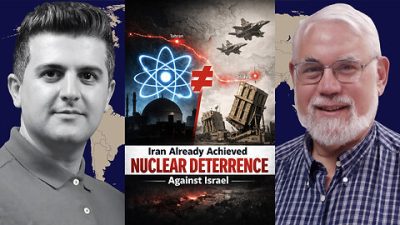
Prof. Ted Postol: Iran Already Achieved Nuclear Deterrence Against Israel
or go to
Aletho News Archives – Video-Images
From the Archives
How the occupied mentality syndrome works
Saudi Arabia on the American chessboard – Part 3
By B. J. Sabri | American Herald Tribune | June 27, 2016
Read part 2: “The occupied mentality Syndrome“
Previously I argued whether Saudi Arabia’s repeated involvements in U.S. interventions and wars stem from free national will or in response to a specific condition. For starters, in Saudi Arabia there is no national will. In Saudi Arabia, the national will is the will of the Al Saud clan. Still, when a major Arab state allies itself with a superpower that committed unspeakable crimes against humanity in almost every Arab country, then something is wrong. This fact alone should compel us to examine the U.S.-Saudi relation for one exceptional reason. As a result of the U.S.-Saudi wars, hundreds of thousands of people in Afghanistan, Iraq, Iran, Libya, Syria, Yemen, and Somalia have lost their lives. Millions became displaced in their own homelands. And millions more rendered refugees.
Attributing the Saudi policies to the bonds of “partnership” with the U.S. is frivolous. There are no bonds between these two thugs except those of business, military deals, secret plots, and wars. Proving this point, bonds such as these have no space for the American and Saudi peoples to share significant cultural or societal exchanges. If partnership is not the reason for the Saudi contribution to the U.S. strategy of empire and imperialism, then another reason must exist.
This leads to three possibilities. … continue
Blog Roll
 Aletho News
- Hezbollah hits Israeli warship off Lebanon’s coast, sets it aflame
- Iran slams US strikes on B1 bridge, Mahshahr petrochemical plants as ‘blatant acts of state terrorism’
- In letter to UN chief, Araghchi warns of dire consequences of US-Israeli attacks on Iran’s nuclear facilities
- Why the CIA conspiracy to invade Iran with Kurdish militias failed
- Why Are Upbeat US Claims About Mission to Rescue Pilot ‘Highly Questionable’?
- Aircraft destroyed during US ‘rescue’ of downed F-15 pilot cost more than $100 million each
- Washington University removes professor who condemned US-Israeli war on Iran
- Russia Warns of Retaliation as UK Authorizes Seizure of Vessels
- Serbia thwarts plot to bomb Russia-Hungary gas pipeline – Vucic
- Al Mayadeen voices solidarity with Dr. Marandi amid death threats
- If Americans Knew
- In Iran, Israel-US take aim at “reason, research, and freedom of thought” – Daily Update
- US loses planes over Iran, Israel downgrades Lebanon war goals – Daily Update
- Israel Is Blocking Palestinians from Easter at Church Where Jesus Resurrected
- Plot to assassinate Palestinian activist follows harassment campaign promoted by Zionist groups and elected officials
- Prominent New York synagogue hosts presentation on why U.S. Jews should support the ethnic cleansing of Gaza
- Tapper vs. Piker: Is the CNN Anchor Auditioning for David Ellison?
- Shouldn’t Democrats Be Able to Condemn Genocide?
- Israel-US kill negotiators, destroy civilian structures, but Iran’s military capabilities still largely intact – Daily Update
- ‘War crime’: Global condemnation as Israeli ministers celebrate death penalty law targeting Palestinian prisoners
- 7 Ways Israel Is Turning Lebanon Into Gaza
- No Tricks Zone
- An Inconvenient Tree: Uncovered In Alps… Europe Much Warmer Than Today 6000 Years Ago
- New Study Reports A 60% Slowdown In Greenland’s Ice Loss Rate In The Last Decade
- Low Intensity Tornado Wrecks Major Solar Farm, Creating A Potential Toxic Dump
- New Study Finds Warming Saves Lives…Cold Temperatures 12 Times More Deadly Than Excess Heat
- German Science Blog Accuses PIK Climate Institute Of Hallucinating Climate Tipping Points
- Devastating Assessment Of Comirnaty Vaccine By Former Senior Pfizer Europe Toxicologist
- New Study: CO2 Is ‘Effectively Negligible’ As An Explanatory Climate Change Factor Since 2000
- Former Pfizer Toxicologist Dr. Helmut Sterz Tells Bundestag Hearing Pfizer Vaccine Should Have Never Been Approved
- Energy Expert: Germany’s Nuclear Phaseout Was A “500 Billion Euro Mistake”
- New Research: South Australia’s Mid-Holocene Sea Surface Temperatures Were 4°C Warmer Than Today
 Aletho News