Why the US has sanctioned the Chabahar Port in Iran
By Salman Rafi Sheikh – New Eastern Outlook – September 27, 2025
US sanctions on Iran’s Chabahar Port may look like just another chapter in Washington’s “maximum pressure” playbook, but they are far more ambitious and dangerous.
The move simultaneously aims to discipline India, ratchet up economic warfare against Tehran, and force Afghanistan into a position where ceding Bagram airbase seems unavoidable. In pursuing all three goals at once, the US may be setting the stage for strategic overreach.
US axe falls on Chabahar
On September 16, the US announced that it was reimposing sanctions on Iran’s Chabahar Port that it co-developed with India. Revoking “the sanctions exception issued in 2018 under the Iran Freedom and Counter-Proliferation Act (IFCA) for Afghanistan reconstruction assistance and economic development,” the announcement further said that any “persons who operate the Chabahar Port or engage in other activities described in IFCA may expose themselves to sanctions under IFCA”.
The reference to any “persons” operating the port is to India, which has invested millions of dollars in the port in the last few years. India began to develop this port in a certain geopolitical context. Back then, New Delhi, supported by Washington, used this port to counter China’s Gwadar port in Pakistan. Accordingly, the US granted this port an exemption from sanctions. That exemption has now been taken away. Another imperative at that time was to allow India to use the port to provide supplies to Kabul to support the Karzai and Ghani administrations. Bypassing Pakistan—which Washington understood was supporting the Taliban—the US co-opted India to support the US-backed civilian regime. That geopolitical context, as it stands, no longer exists. The US no longer needs to support avenues to support the regime in Kabul that is no longer a Washington ally. In fact, Washington now prefers using the Chabahar Port issue to equally punish Kabul.
The Geopolitics of Sanctions
By sanctioning Iran’s Chabahar Port, Washington is pursuing more than just another chapter in its “maximum pressure” campaign. It has three critical objectives in mind, the first of which is to punish India. The Trump administration’s ongoing trade war with New Delhi has already seen tariffs climb as high as 50 per cent on Indian exports to the US, dramatically undercutting India’s competitiveness. The withdrawal of the 2018 sanctions waiver on Chabahar effectively expands this economic conflict into the strategic realm. Not only are Indian goods 50 per cent more expensive in the US market, but now Indian exports to Central Asia through Chabahar are threatened by US sanctions as well. The message is blunt: New Delhi cannot expect privileged access to either American markets or regional transit corridors if it resists Washington’s terms.
Yet the dispute is not only about tariffs or trade balances. Chabahar has long symbolised a broader geopolitical opening—an India–Iran–Afghanistan transport corridor that could eventually link New Delhi to Russian and Central Asian energy markets. For India, the project promises a vital alternative to reliance on Persian Gulf suppliers or US-aligned routes. For Washington, this is precisely the problem. By crippling Chabahar, the US seeks to stymie the emergence of an energy corridor outside its sphere of influence and to foreclose India’s access to Iranian and Russian hydrocarbons. The ultimate goal is not simply to weaken Tehran but to pressure India into diverting its purchases toward US liquefied natural gas and crude exports.
The sanctions also reflect a deliberate attempt to recalibrate India’s relationship with Iran. If New Delhi is forced to retreat from Chabahar, Washington calculates, Iran’s isolation will deepen. The State Department’s September 16 statement left little ambiguity, identifying the “networks” that generate “millions for the Iranian military” as key targets of the new restrictions. Chabahar, as Iran’s flagship connectivity project with India and Afghanistan, sits squarely within those crosshairs. Unsurprisingly, the port will dominate the agenda when Ali Larijani, Tehran’s national security adviser and one of the most influential figures in the Iranian establishment, arrives in Delhi in the coming weeks.
The third objective at play is Afghanistan. In recent months, President Trump has openly pressed Kabul to hand back the Bagram airbase to American control, a demand the Taliban leadership has flatly rejected. For the Taliban, acquiescence would be politically ruinous, signaling subservience to the very power they fought for two decades to expel. By sanctioning Chabahar, Washington is attempting to narrow Afghanistan’s options, undermining its role as a vital overland bridge that could connect India and other South Asian states—excluding Pakistan—to Central Asian markets. This is not a trivial calculation. With relations between Kabul and Islamabad deteriorating, the Taliban regime has been cautiously exploring new partnerships in the region, and India has emerged as an obvious candidate. Earlier this year, the Taliban went so far as to call India a “significant regional partner.” Washington’s sanctions strategy is designed precisely to choke this opening, shrinking the diplomatic and economic space available to Kabul as it manoeuvres for new allies.
The US risks a massive backfire
Yet Washington’s gambit carries the risk of a serious backlash. Kabul has little incentive to heed American preferences, particularly after the Biden administration’s refusal to release Afghanistan’s frozen financial assets. The Taliban leadership, already charting its course independently, is unlikely to view US sanctions as anything more than another act of hostility. More consequential, however, is the potential fallout with India. By undermining New Delhi’s flagship connectivity project, Washington risks inflicting lasting damage on a relationship it has spent years cultivating. Alienated, India may lean more heavily on alternative partnerships with Russia and even China, eroding the very strategic alignment the US has sought to build through the Indo-Pacific framework. And if New Delhi ultimately withdraws from Chabahar under sanctions pressure, Washington may not secure the energy dominance it envisions. Instead, the vacuum could invite Beijing to step in, transforming Chabahar into a Chinese-controlled gateway for Central Asian energy, a scenario that would decisively undercut American aims.
Salman Rafi Sheikh is a research analyst of International Relations and Pakistan’s foreign and domestic affairs.
Iran’s FM addresses UN Security Council on failed Russia-China draft resolution
Global Times | September 27, 2025
The UN Security Council has voted down an effort by China and Russia to extend sanctions relief to Iran for six months under the nuclear deal – formally known as the Joint Comprehensive Plan of Action on Friday, local time. The draft failed to be passed as the number of votes in favor did not reach nine.
In his speech, Iran’s Foreign Minister, Seyed Abbas Araghchi, began by thanking China, Russia, Pakistan, and Algeria for supporting the resolution, which he described as a genuine effort to “keep the door of diplomacy open and avoid confrontation.” He also welcomed the decision of Guyana and South Korea not to oppose the draft, calling it a stand “on the right side of history,” according to WANA News, an Iranian news agency.
The Iranian foreign minister argued, “Today’s situation is the direct consequence of the US withdrawal from the JCPOA and the E3 (France, United Kingdom and Germany) failure to take any effective action to uphold the commitments.”
“The US has betrayed diplomacy, but it is the E3 which have buried it,” he stressed. Araghchi also said, “The E3 and the US acted in bad faith, claiming to support diplomacy while in effect blocking it.”
“Regrettably, E3 chose to follow Washington’s whims rather than exercising their independent sovereign discretion,” he said, adding “the US persistent negation of all initiatives to keep the window for diplomacy open proved once again that negotiations with the United States lead to nowhere other than dead end,” the foreign minister added.
Geng Shuang, China’s deputy permanent representative to the United Nations spoke after the vote. He reminded the Council that “history has shown that resorting to force or applying maximum pressure is not the correct approach to resolve the Iranian nuclear issue,” according to the UN report.
Geng continued, “Against the backdrop of ongoing conflict in Gaza and the instability in the Middle East, a breakdown in the Iranian nuclear issue could trigger new regional security crisis, which runs counter to common interest of the international community.”
The Chinese diplomat urged the US to “demonstrate political will by responding positively to Iran’s proposal to resume talks and committing unequivocally to refrain from further military strikes against Iran.”
US, allies veto draft resolution on delaying ‘snapback’ of Iran sanctions
Press TV – September 26, 2025
The United States and its allies veto a draft resolution aimed at delaying “snapback” of the UN Security Council’s sanctions against Iran that were lifted in 2015 in line with a nuclear deal between the Islamic Republic and world countries.
On Friday, the US, the UK, France, Denmark, Greece, Panama, Sierra Leone, Slovenia, and Somalia vetoed the draft measure seeking to delay imposition of the coercive economic measures for six months.
China, Russia, Algeria, and Pakistan voted in favor of the measure that had been submitted by Beijing and Moscow. South Korea and Guyana abstained.
According to the UN, “The so-called ‘snapback’ mechanism [now] remains in force, which will see sanctions rei-imposed on Tehran this weekend, following the termination of the Joint Comprehensive Plan of Action (JCPOA).”
JCPOA refers to the official name of the nuclear deal that upon conclusion was endorsed by the Security Council in the form of its Resolution 2231.
The agreement lifted the sanctions, which had been imposed on Iran by the Security Council and the US, the UK, France, and Germany over unfounded allegations concerning Tehran’s peaceful nuclear energy program.
The bans had been enforced against the nation, despite the International Atomic Energy Agency (IAEA)’s having historically failed to find any proof of “diversion” of the nuclear program.
The US left the JCPOA in an illegal and unilateral move in 2018 and then re-imposed those of its sanctions that the deal had removed.
In 2020, Washington went further by trying unilaterally to trigger the “snapback.”
After the American withdrawal, the UK, France, and Germany too resorted to non-commitment vis-à-vis the Islamic Republic by stopping their trade with Tehran.
The Friday vote came after the trio launched their own bid to activate the “snapback” on August 28.
The allies have been rehashing their accusations concerning Iran’s nuclear energy activities in order to try to justify their bid to reenact the sanctions, ignoring absence of any proof provided by the IAEA that has subjected the Islamic Republic to the agency’s most intrusive inspections in history.
They have also constantly refused to accept their numerous instances of non-commitment to the JCPOA.
Iran, however, began observing an entire year of “strategic patience” following the US’s withdrawal – the first serious violation of the nuclear agreement – before retaliating incrementally in line with its legal right that has been enshrined in the deal itself.
In the meantime, the Islamic Republic has both voiced its preparedness to partake in dialog besides actually engaging in negotiation aimed at resolving the situation brought about by the Western allies’ intransigence.
Tehran refused to categorically rule out talks with the European troika even after illegal and unprovoked attacks by the Israeli regime and the United States against key Iranian nuclear facilities in June, which made it impossible for the IAEA to continue its inspections as before.
The Islamic Republic’s latest goodwill gesture came on September 9, when it signed a framework agreement with the IAEA aimed at resuming cooperation with the agency, which had been suspended following the attacks.
The Friday vote came, although, Iranian officials, including President Masoud Pezeshkian, Foreign Minister Abbas Araghchi, and security chief Ali Larijani, had strongly warned the US and its allies against triggering the “snapback.”
Araghchi had cautioned that such vote would lead to termination of the agreement with the IAEA, while Pezeshkian had noted that talks would be “meaningless” if the mechanism were to be enacted.
Meeting with anti-war activists in New York on Thursday, the president had called the prospect of re-imposition of the sanctions unwelcome, but added that the coercive measures did not signal “the end of the road.”
“Iran will never submit to them,” he had said, referring to the bans, and added that the Islamic Republic “will find the means of exiting any [unwelcome] situation.”
China voices ‘deep regret,’ discourages renewed aggression
Reacting to the vote, China’s Deputy UN Ambassador Geng Shuang similarly expressed “deep regret” for the failure to adopt the draft resolution, identifying dialogue and negotiation as two of “the only viable options” out of the situation caused by the Western measures.
He urged the US “to demonstrate political will” and “commit unequivocally to refraining from further military strikes against Iran.”
Geng further called on the European trio to engage in good faith in diplomatic efforts and abandon their approach of pushing for sanctions and coercive pressure against Iran.
Russia slams US, allies for lack of ‘courage, wisdom’
The remarks were echoed by Geng’s Russian counterpart Dmitry Polyanskiy, who said, “We regret the fact that a number of Security Council colleagues were unable to summon the courage or the wisdom to support our draft.”
“We had hoped that European colleagues and the US would think twice, and they would opt for the path of diplomacy and dialogue instead of their clumsy blackmail,” he said.
Such approach, the diplomat added, “merely results in escalation of the situation in the region.”
Speaking before the vote, Polyanskiy had also told the chamber that Iran had done all it could to accommodate Europeans, but that Western powers had refused to compromise.
Featured Video
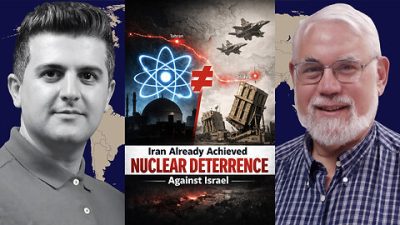
Prof. Ted Postol: Iran Already Achieved Nuclear Deterrence Against Israel
or go to
Aletho News Archives – Video-Images
From the Archives
How the occupied mentality syndrome works
Saudi Arabia on the American chessboard – Part 3
By B. J. Sabri | American Herald Tribune | June 27, 2016
Read part 2: “The occupied mentality Syndrome“
Previously I argued whether Saudi Arabia’s repeated involvements in U.S. interventions and wars stem from free national will or in response to a specific condition. For starters, in Saudi Arabia there is no national will. In Saudi Arabia, the national will is the will of the Al Saud clan. Still, when a major Arab state allies itself with a superpower that committed unspeakable crimes against humanity in almost every Arab country, then something is wrong. This fact alone should compel us to examine the U.S.-Saudi relation for one exceptional reason. As a result of the U.S.-Saudi wars, hundreds of thousands of people in Afghanistan, Iraq, Iran, Libya, Syria, Yemen, and Somalia have lost their lives. Millions became displaced in their own homelands. And millions more rendered refugees.
Attributing the Saudi policies to the bonds of “partnership” with the U.S. is frivolous. There are no bonds between these two thugs except those of business, military deals, secret plots, and wars. Proving this point, bonds such as these have no space for the American and Saudi peoples to share significant cultural or societal exchanges. If partnership is not the reason for the Saudi contribution to the U.S. strategy of empire and imperialism, then another reason must exist.
This leads to three possibilities. … continue
Blog Roll
 Aletho News
- Hezbollah hits Israeli warship off Lebanon’s coast, sets it aflame
- Iran slams US strikes on B1 bridge, Mahshahr petrochemical plants as ‘blatant acts of state terrorism’
- In letter to UN chief, Araghchi warns of dire consequences of US-Israeli attacks on Iran’s nuclear facilities
- Why the CIA conspiracy to invade Iran with Kurdish militias failed
- Why Are Upbeat US Claims About Mission to Rescue Pilot ‘Highly Questionable’?
- Aircraft destroyed during US ‘rescue’ of downed F-15 pilot cost more than $100 million each
- Washington University removes professor who condemned US-Israeli war on Iran
- Russia Warns of Retaliation as UK Authorizes Seizure of Vessels
- Serbia thwarts plot to bomb Russia-Hungary gas pipeline – Vucic
- Al Mayadeen voices solidarity with Dr. Marandi amid death threats
- If Americans Knew
- In Iran, Israel-US take aim at “reason, research, and freedom of thought” – Daily Update
- US loses planes over Iran, Israel downgrades Lebanon war goals – Daily Update
- Israel Is Blocking Palestinians from Easter at Church Where Jesus Resurrected
- Plot to assassinate Palestinian activist follows harassment campaign promoted by Zionist groups and elected officials
- Prominent New York synagogue hosts presentation on why U.S. Jews should support the ethnic cleansing of Gaza
- Tapper vs. Piker: Is the CNN Anchor Auditioning for David Ellison?
- Shouldn’t Democrats Be Able to Condemn Genocide?
- Israel-US kill negotiators, destroy civilian structures, but Iran’s military capabilities still largely intact – Daily Update
- ‘War crime’: Global condemnation as Israeli ministers celebrate death penalty law targeting Palestinian prisoners
- 7 Ways Israel Is Turning Lebanon Into Gaza
- No Tricks Zone
- An Inconvenient Tree: Uncovered In Alps… Europe Much Warmer Than Today 6000 Years Ago
- New Study Reports A 60% Slowdown In Greenland’s Ice Loss Rate In The Last Decade
- Low Intensity Tornado Wrecks Major Solar Farm, Creating A Potential Toxic Dump
- New Study Finds Warming Saves Lives…Cold Temperatures 12 Times More Deadly Than Excess Heat
- German Science Blog Accuses PIK Climate Institute Of Hallucinating Climate Tipping Points
- Devastating Assessment Of Comirnaty Vaccine By Former Senior Pfizer Europe Toxicologist
- New Study: CO2 Is ‘Effectively Negligible’ As An Explanatory Climate Change Factor Since 2000
- Former Pfizer Toxicologist Dr. Helmut Sterz Tells Bundestag Hearing Pfizer Vaccine Should Have Never Been Approved
- Energy Expert: Germany’s Nuclear Phaseout Was A “500 Billion Euro Mistake”
- New Research: South Australia’s Mid-Holocene Sea Surface Temperatures Were 4°C Warmer Than Today
 Aletho News