Hamas: We have not received the US proposal
Palestinian Information Center – September 29, 2025
DOHA – Senior Hamas official Taher an-Nunu denied that the Movement had received any copy of the US proposal to end the war on Gaza.
In press statements on Monday evening, Al-Nunu said, “Hamas was not part of any negotiations concerning the current US plan.”
He clarified that the release of Israeli captives held by the Palestinian resistance is tied to ending the war and the withdrawal of the Israeli occupation from Gaza. He emphasized that the resistance’s weapons are tied to the establishment of a Palestinian state.
Al-Nunu affirmed Hamas’s readiness to agree to a multi-year truce and noted that the Movement had accepted Egypt’s proposal to form an independent administration for Gaza.
“We are serious about releasing the captives as part of an agreement that ends the war on Gaza and ensures the withdrawal of the Israeli occupation,” he added.
He confirmed Hamas is ready to coordinate with the Palestinian Authority to form a unity government to manage both Gaza and the West Bank.
He stressed that the Movement does not wish to prolong the war, adding that Hamas is “prepared to consider any proposal that does not conflict with the interests of the Palestinian people.”
He also emphasized that the Palestinian people are not incapable of self-governance and reject any external guardianship.
On Sunday, The Washington Post revealed details of US President Trump’s proposal to end the ongoing genocide in Gaza, which has continued for two years.
According to the paper, the 21-point plan includes an immediate halt to all military operations and freezing of battle lines at their current positions.
Meanwhile, Hamas confirmed it had not received any new proposal from mediators regarding a ceasefire in Gaza.
In a statement, Hamas reiterated its willingness to positively and responsibly consider any proposals from mediators, so long as they safeguard the Palestinian people’s national rights.
Hamas reviews Trump’s Gaza ceasefire plan as PIJ rejects
Al Mayadeen | September 30, 2025
Hamas negotiators told mediators they would study the plan “in good faith” and provide a formal response, a source familiar with the matter told Reuters.
Reuters reported that Egypt and Qatar briefed Hamas on United States President Donald Trump’s plan to end the war. Earlier, the White House confirmed that Trump had discussed the ceasefire proposal with Israeli Prime Minister Benjamin Netanyahu, describing it as a framework supported by “Arab and Islamic leaders.”
At a joint press conference with Netanyahu, Trump said he believed Hamas would eventually approve the proposal, adding that “Doha has taken it upon itself to convince the movement.”
PIJ rejects plan as ‘US-Israeli agreement’
The announcement drew sharp criticism from Palestinian Islamic Jihad (PIJ). Its Secretary-General, Ziyad al-Nakhalah, dismissed the initiative outright, calling it “nothing but a full American-Israeli agreement.”
Al-Nakhalah stressed that the announcement reflected “the Israeli position in its most precise details” and constituted “a recipe for the continuation of aggression against the Palestinian people.”
He warned that the proposal amounted to “an attempt to impose new realities through the US after the occupation failed to achieve them through successive wars.”
The Islamic Jihad leader further cautioned that the so-called agreement was “a ready-made recipe to ignite the entire region and fuel further conflicts.”
Regional mediation continues
The White House had presented the proposal on Monday evening, saying that if both parties agree to this proposal, the war will end immediately.
Mediation efforts led by Qatar and Egypt remain ongoing, with Hamas yet to issue a formal stance, while the resistance maintains that any deal must address the root causes of the war, including the siege and occupation.
Tylenol, FDA Knew About Autism Risk For Years, Newly Surfaced Emails Show
By Brenda Baletti, Ph.D. | The Defender | September 29, 2025
Makers of Tylenol and the U.S. Food and Drug Administration (FDA) knew for years about the likely association between the drug’s use during pregnancy and neurodevelopmental disorders, including autism, according to documents obtained in lawsuits against Kenvue.
“The weight of evidence is starting to feel heavy to me,” Rachel Weinstein, U.S. director of epidemiology for Johnson & Johnson’s (J&J) pharmaceutical division Janssen, said in an email commenting on several studies showing the link.
Daily Caller News Foundation obtained the emails from Keller Postman LLC, the law firm representing plaintiffs in a federal class action lawsuit against Kenvue.
J&J made Tylenol until 2023, when it spun off production to Kenvue, a separate company.
The email revelations follow President Donald Trump’s announcement last week that pregnant women should not take Tylenol, and the FDA’s announcement that it will add warnings to products containing acetaminophen.
The updated product labels will warn that acetaminophen may be associated with a higher risk of neurological conditions, including autism and attention-deficit/hyperactivity disorder (ADHD), in children. The FDA said it will also warn physicians and the public about the risk.
Mainstream media and public health organizations attacked the warnings as unfounded or overblown. Some news organizations quoted scientists — like University of Massachusetts epidemiologist Ann Bauer — who published studies identifying the link between Tylenol and autism and called for warnings, but who are now publicly backpedaling on their concerns.
However, the Daily Caller found that despite confusion in the media and among public health experts, emails show that as early as 2008, officials at J&J were privately concerned about credible evidence of a possible link between autism and acetaminophen. They acknowledged the link in an email and suggested further investigation.
Internal FDA meta-analyses shared with The Defender show that the agency had for years considered adding new warnings about acetaminophen’s side effects for children.
In 2019, FDA scientists conducted a meta-analysis that found urogenital disorders in infants linked to the drug. The scientists also noted links to neurodevelopmental issues. In 2022, the FDA conducted another meta-analysis that found a link to ADHD.
Tylenol makers ‘closely tracked a drumbeat of scientific publications’ showing link to autism
The Daily Caller News Foundation obtained emails spanning more than a decade indicating that company insiders at J&J had been alerted about the possible link between acetaminophen and neurological disorders. The emails showed J&J even considered pursuing further research, but decided against it.
The outlet also obtained a 2012 email by Leslie Shur, head of the division at J&J that monitors side effects, acknowledging another consumer complaint about the issue, and a 2014 email showing that the issue was raised with CEO Alex Gorsky, whose name is misspelled in the email.
According to journalist Emily Kopp, who wrote the Daily Caller story:
“The makers of Tylenol have closely tracked a drumbeat of scientific publications finding an association between taking the blockbuster drug in pregnancy and infancy and autism risk, other company documents show.
“A 2018 internal presentation the company labeled ‘privileged and confidential’ acknowledges that observational studies show a ‘somewhat consistent’ association between prenatal exposure to Tylenol and neurodevelopmental disorders.
“Another presentation slide acknowledges that larger meta-analyses — reviews summarizing multiple scientific studies — found an association, but notes weaknesses of these studies like confounding variables and subjectivity in measuring autistic traits.”
A Kenvue spokesperson told the Daily Caller that the company believes there is “no causal link between acetaminophen use during pregnancy and autism” and that its projects are “safe and effective” when used as directed on the label.
Kopp noted the company’s website also states that “credible, independent scientific data continues to show no proven link between taking acetaminophen and autism,” and that “there is no credible science that shows taking acetaminophen causes autism.”
Yet, she found that internal emails showed employees discussing a 2018 study and a 2016 study that both concluded pregnant women should be cautioned about the possible effects of taking Tylenol while pregnant.
She also found emails indicating that J&J considered funding studies on Tylenol’s possible link to autism, but decided against “sticking their necks out,” worried their studies could confirm the findings.
According to Kopp:
“The company also conducted research it described as ‘social listening’ by tracking Google searches and social media posts seeking evidence about Tylenol and autism from January 2020 through October 2023.
“The company initiated the social media trends research after the 2021 publication of a call to action on Tylenol in Nature Reviews Endocrinology by 13 U.S. and European experts ‘in light of the serious consequences of inaction.’”
The company wrote a 2023 review, Project Cocoon, which reported on concerns with urinogenital and neurological side effects of the drugs in babies, which executives noted touches“every aspect of the brand,” Kopp wrote.
FDA also concerned with mounting evidence
The FDA also grew concerned with the mounting evidence of a link between acetaminophen and neurodevelopmental disorders, beginning with a publication in JAMA Pediatrics in 2014 and followed by several major publications over the next several years, according to psychiatrist David Healy.
Healy is an expert witness in a case against Kenvue and Safeway, alleging they failed to adequately warn consumers about the risk of autism or ADHD from prenatal exposure to the drug.
Documents from 2019 and 2022, made available through Freedom of Information Act requests associated with the lawsuit and shared with The Defender, show that based on meta-analysis of the published literature, the FDA identified consistent links between acetaminophen and both urogenital and neurodevelopmental risks.
As early as 2019, FDA study authors recommended that the labels be revised to advise pregnant women to “be careful about casual use of acetaminophen when it is not strongly needed for pain or other purposes.”
The 2022 document, focused largely on neurological outcomes, states that despite study limitations, meta-analyses and other research consistently found links between acetaminophen and ADHD, and as a result, “it may be prudent, as a precautionary measure …” However, the rest of the recommendation is redacted.
Healy said the revelations by Weinstein and others working with J&J are particularly significant because drugmakers have the responsibility to inform consumers when they know a drug may be linked to an adverse event.
“The onus to warn does not arise when there is a clear cause and effect,” Healy said. “It arises when there are grounds to think there might be a problem.”
This article was originally published by The Defender — Children’s Health Defense’s News & Views Website under Creative Commons license CC BY-NC-ND 4.0. Please consider subscribing to The Defender or donating to Children’s Health Defense.
Italy’s Foreign Ministry in revolt over Israel’s ‘war of extermination’ in Gaza
MEMO | September 29, 2025
Around 700 Italian Foreign Ministry employees have written to Foreign Minister Antonio Tajani expressing their “profound ethical and professional discomfort” at working with Israeli authorities while Israel carries out a war of “extermination” of the Palestinian population in Gaza.
The internal four-page letter, reviewed by Haaretz, warns that Italy’s “wait and see attitude” towards Israel’s genocide in Gaza is “incoherent with the country’s Constitution and obligations under international law” and risks making Rome “complicit” in grave violations of international humanitarian law.
“Inertia – or mere rhetoric not followed by concrete actions – exposes us to the risk of complicity with the ongoing grave violations of international humanitarian law and with the genocide that is taking place,” the letter states.
The letter also proposes several urgent measures, including recognition of a Palestinian state, suspension of the EU–Israel Association Agreement to allow for increased tariffs on Israeli goods, and the imposition of an “apartheid tax” on Israel as a form of reparations for Palestinians.
The document further calls on the Italian government to formally warn Israel against offensive actions or threats of force targeting the Global Sumud Flotilla, a civilian-led mission seeking to break the naval blockade on Gaza.
The strongly worded intervention follows a letter from 34 former ambassadors urging Prime Minister Giorgia Meloni to recognise the state of Palestine. It also comes in the wake of Italy’s largest public mobilisation against the genocide in Gaza since its onset, with tens of thousands taking part in a general strike and mass protests across nearly 80 cities.
Last week’s general strike, coordinated by the Unione Sindacale di Base, was described as a response to the “ongoing genocide in the Gaza Strip, the blockade of humanitarian aid by the Israeli army, and the threats against the international mission Global Sumud Flotilla.”
Demonstrators clashed with police in Milan while attempting to enter the city’s central railway station, injuring over 50 officers. In Bologna, activists blocked a major intersection and sections of a highway, while in Turin access to the airport was obstructed for several hours. A national demonstration scheduled for 4 October is expected to draw tens of thousands more to the streets of Rome.
The government’s stance has also come under scrutiny for its refusal to follow France, the UK and several other Western governments in unilaterally recognising Palestinian statehood.
Gaza Revelation

By Israel Shamir • Unz Review • September 26, 2025
One time this riverboat gambler convinced me and everyone else on the ship that he was just an honest, misunderstood fellow. We believed him when he told us that some bad dudes had beaten him out of sheer prejudice. And as he’s acting out the beating for us (for the tenth time), swinging his arms wildly as his dramatic story unfolds, a couple of aces fell from his sleeve and landed onto the deck for everyone to see. Instantly the crowd began to fade away. Nothing he could say could stem the exodus. The jig was up.
Well, a similar thing is happening now with the Jews in Gaza.
We were nursed upon the milk of Judeophilia. Jews suffered through the ages, all of us were taught. Blood libels, Christ’s crucifixion, holocausts, so many false accusations and unjust persecutions of this small but wonderful folk. And this entire narrative has collapsed now in the aftermath of the Gaza mass murder. Our “small wonderful folk” just bombed a tiny strip with its 2 million inhabitants to oblivion, and starved to death the survivors of the bombardment. This horrible crime received over 80 per cent of public support amongst the Jews. It means that the whole paradigm of Judeophilia was erroneous. They stand revealed for what they truly are, their aces lying on the deck for everyone to see.
That is good news, because it restores peace between us and our ancestors. Now we have learned that our ancestors were not mistaken in their assessment of Jewish behaviour. This is the wonderful achievement of PM Netanyahu.
Israel sharply rejected a United Nations famine declaration in Gaza on Friday, with Prime Minister Benjamin Netanyahu calling the report “modern blood libel” that relied on Hamas sources.
PM Netanyahu, a gambler ruling a nation of gamblers, was honest enough to put his cards on the table: this particular blood libel is no different from all the previous blood libels. It is just another “J’accuse” moment. All blood libels must be lumped together, indistinguishable. If we reject out of hand the historical accusations against the Jews, then we must also close our eyes and reject this latest blood libel as well. If we cannot—if we could not avoid noticing those aces drifting down to the deck – PM Netanyahu requires that we must also reconsider the entire Jewish history of blood libel. The ruler of the Jews has given us permission to free ourselves from the shackles of Judeophilia. We are finally permitted to look at the Middle Ages in a very different light.
Blood libel? Did the Jews harvest the blood of Christian children for ritual purposes? The answer is yes, definitely. They killed a few Gentile kids every year for this purpose. And it does seem in retrospect a mercifully small amount of killing. Nowadays they kill thousands of kids. No amount of Rabbis could consume that much bloody matzo. By dismissing and denying the martyr deaths of Harold of Gloucester, St. William of Norwich, and St. Simon of Trent we have allowed Jewry the freedom to massacre thousands of Palestinian children in Gaza. These rather simple people interpret the Christian desire to be at peace with our neighbours as permission to keep killing children.
It’s not that we weren’t warned. We were. The arrogant Jews published a few years ago the book of Kosher rules on how to kill gentile children. It is called Torat Hamelech (Royal Torah). It’s hard reading. Is it permissible to kill Jews who help non-Jews in such-and-such a situation? Of course:
“Anyone who transfers money from Jews to non-Jews must be killed, for the transfer of money leads to danger” (p. 184).
In other words, when the Israeli government shifts American tax money over to the Palestinian Authority, repaying its debts in exchange for certain services or under signed agreements, all its ministers are subject to the death penalty accord to the Torah.
The authors base their argument on the words of Maimonides, who stated that
“it is permissible to kill anyone who transfers (money) anywhere, even in times when the death penalty has been abolished; it is permissible to kill him before he transfers it… even if it is a matter of transferring insignificant Jewish sums to non-Jews… he should be killed.”
All the more so because there is no mercy when it comes to non-Jews during wartime:
“Even a medic of the enemy army is considered deserving of the death penalty… Even a civilian who helps the army is considered as such” (p. 184).
The laws of war prescribed by the Hague Convention are classified as non-Jewish and therefore have no force.
“Any citizen of an enemy country who strengthens the spirit of the army or even expresses satisfaction with its actions is considered a mortal enemy, and his murder is permitted. The same applies to anyone who weakens our kingdom with words” (p. 185).
Consequently, not only all civilians of the enemy, but also all Jewish citizens who weaken the Jewish side verbally or express any doubts are subject to death. The authors write:
“There is no need to go into details and find out whether he is currently providing practical assistance to the enemy” (pp. 186-187).
And again, the text references to Maimonides and the Shulchan Aruch:
“A Jew is forbidden to be alone with a non-Jew, since they are all suspected of a tendency to bloodshed… One should not accompany them on the road… It is forbidden to take medicine given by a non-Jew, unless the sick person has already given up hope of staying alive” (p. 187).
And:
“Even those non-Jews who do not kill with their own hands must be executed; even those who have killed by indirect means; for this they are sentenced to death even after the war, when they are no longer military enemies.”
“An additional reason to kill non-Jews who fight against us is their violation of Noah’s commandments… In the war for the Land of Israel, this consideration is doubly important, for non-Jews who demand this land for themselves are stealing it from us, who received it as an inheritance from our fathers” (p. 192).
Now the true intent of the book’s authors becomes clear: when discussing war in general, they are targeting the Jewish/Israeli-Palestinian conflict. Here they give themselves permission to kill indiscriminately.
Regarding enemy civilians who find themselves on the battlefield through no fault of their own, the book states:
“Even if civilians were brought in chains or were in captivity, they are not given a choice and remain hostages — it is permissible to kill them if this can help escape from the villains; as will soon become clear, it is permissible to kill even those who involuntarily aid the enemy. Small children often find themselves in such a situation: they block the path to salvation with their bodies. Although they do so under complete duress and have no hostile intent, it is permissible to kill them, for their physical presence aids in the killing” (p. 197).
And further:
“So far, we have only discussed the killing of innocent people in situations where their presence prevents us from waging war. However, there are situations in which we intend from the outset to kill innocent people, so that their presence and their killing are useful to us” (p. 198). For “there is another reason to permit the killing of non-Jews, namely: the fundamentally greater value of a Jew’s life (compared to the life of a non-Jew)… It is permissible to kill non-Jews in order to save the lives of Jews… It is permissible to do so even in cases where we use the presence of innocent non-Jewish children to harm their parents” (pp. 198-199).
The most cruel things in this book relate precisely to children:
“When we discuss the killing of children… we must take into account the enormous risk associated with what they will do when they grow up.” Therefore, it was “decided that it is forbidden to help a non-Jewish woman in labour or to nurse her child, so as not to help raise another idolater… This was spoken of by the prophet Isaiah (14:21), who called for the killing of all infants in Babylon, even though they are small and unreasonable, because it is clear to us that they will follow in the ways of their fathers and cause harm” (p. 206).
And further:
“We conclude that it makes sense to kill children if it is clear that they will grow up to be our enemies; in such a case, we really mean the destruction of themselves” (p. 207).
This book (Torat ha-Melech) was published in Israel in 2009; the authorities tried to forbid it and persecuted the authors – two honourable Rabbis, Yitzhak Shapira and Yosef Elitzur. But this effort came to naught, for the religious Jews insisted it is true presentation of the Jewish faith.
Now, newly equipped with the Netanyahu Postulate we can reconsider Jewish history.
After the Jews killed Our Lord Jesus Christ, they killed many people; the first was St. Stephen and the last is a child in Gaza. But they were most famous for the lending of money. This is also a form of killing, for St Ambrose in his commentary on Deut. 23:19, wrote:
“From him exact usury whom it would not be a crime to kill. Where there is a right of war, there also is a right of usury”.
People who share Eucharist with their brothers and sisters in spirit do not demand usury. Where the Eucharist has been eradicated, usury, unlimited exploitation and slavery immediately appear. Slavery was introduced by Calvinists and Jews into North America, 100 years after the Eucharist (brought by Franciscan friars) had united the natives and the Europeans into one Church. In his witty Catch-22, Joseph Heller quotes a General, who asks his chaplain in disbelief,
“Do enlisted men pray to the same god as we do?”
This is the idea of world without a joint Eucharist. Not in vain, the Talmud forbids a Jew to drink wine with a Gentile, as the communal drinking of wine is a kind of religious act of Eucharist.
Many previous Jewish crimes have been confirmed throughout history. The case of the Italian boy, St. Simon of Trent, was confirmed by the Italian Jewish expert, Dr Ariel Toaff, in his book Passovers of Blood. Well poisoning was confirmed by the historian of the Nakba, Dr Pappe. But it was thanks to PM Netanyahu that the whole edifice of denial has collapsed. As a duly-appointed Jewish Prime Minister, he has officially approved this logical chain: If you acknowledge the massacre of Gaza you must as well acknowledge the historical record of medieval Jewish crimes: killing of children, well poisoning, etc. Provided we witnessed the Gaza massacre, we should accept the logical conclusion that the previous blood libels were equally true.
However, on an individual basis, this history of blood libel is just as easy to dismiss permanently. Millions of Jews have left Jewry and become free individuals. Some became Christians, some became Muslims, some became Communists or whatever. There is a way into Jewry, but there is a way out as well. The Gaza Massacre is exactly such an event to cause a mass exit of Jews from the rapidly accelerating crimes of Jewry. Let us leave Netanyahu and his minions in splendid isolation.
Edited by Paul Bennett

Hamas: Blair not welcome in Palestine, our people can manage their own affairs

MEMO | September 29, 2025
Hamas said on Sunday evening that former British prime minister Tony Blair is “not welcome in the Palestinian context,” and stressed that it has not received any proposal through mediators for a ceasefire.
The statement came by Hossam Badran, a member of the movement’s political bureau, in remarks published on the movement’s Telegram channel.
His comments followed a report by the Israeli newspaper Haaretz, quoting an Arab political source, that the US administration had developed a plan to appoint Blair to lead a temporary administration for the Gaza Strip.
Badran warned that “linking any plan to this unwelcome person (Blair) is a bad omen for the Palestinian people.” He described Blair as a “negative figure who may deserve to stand before international courts for crimes he committed, especially his role in the war on Iraq (2003–2011).”
He further labelled Blair “the brother of the devil,” saying, “He has brought no good to the Palestinian cause, nor to Arabs or Muslims, and his criminal and destructive role has been known for years.”
Badran stressed that managing Palestinian affairs in Gaza or the West Bank is an internal Palestinian matter that must be agreed upon nationally, and that no regional or international party has the right to impose how the Palestinian people govern themselves.
The Kremlin Threatens to Attack US Troops Who Help Ukraine Fire Tomahawk Missiles Into Russia
By Kyle Anzalone | The Libertarian Institute | September 29, 2025
Russian officials warn Washington that US troops assisting Ukraine using Tomahawk missiles would become targets. The remarks were a response to Vice President JD Vance, who said the White House is considering sending the long-range munitions to Kiev.
Kremlin Spokesperson Dmitry Peskov questioned what role the Americans would have in assisting Ukraine in firing Tomahawk missiles. “The question… is this: who can launch these missiles…? Can only Ukrainians launch them, or do American soldiers have to do that?” Peskov told reporters.
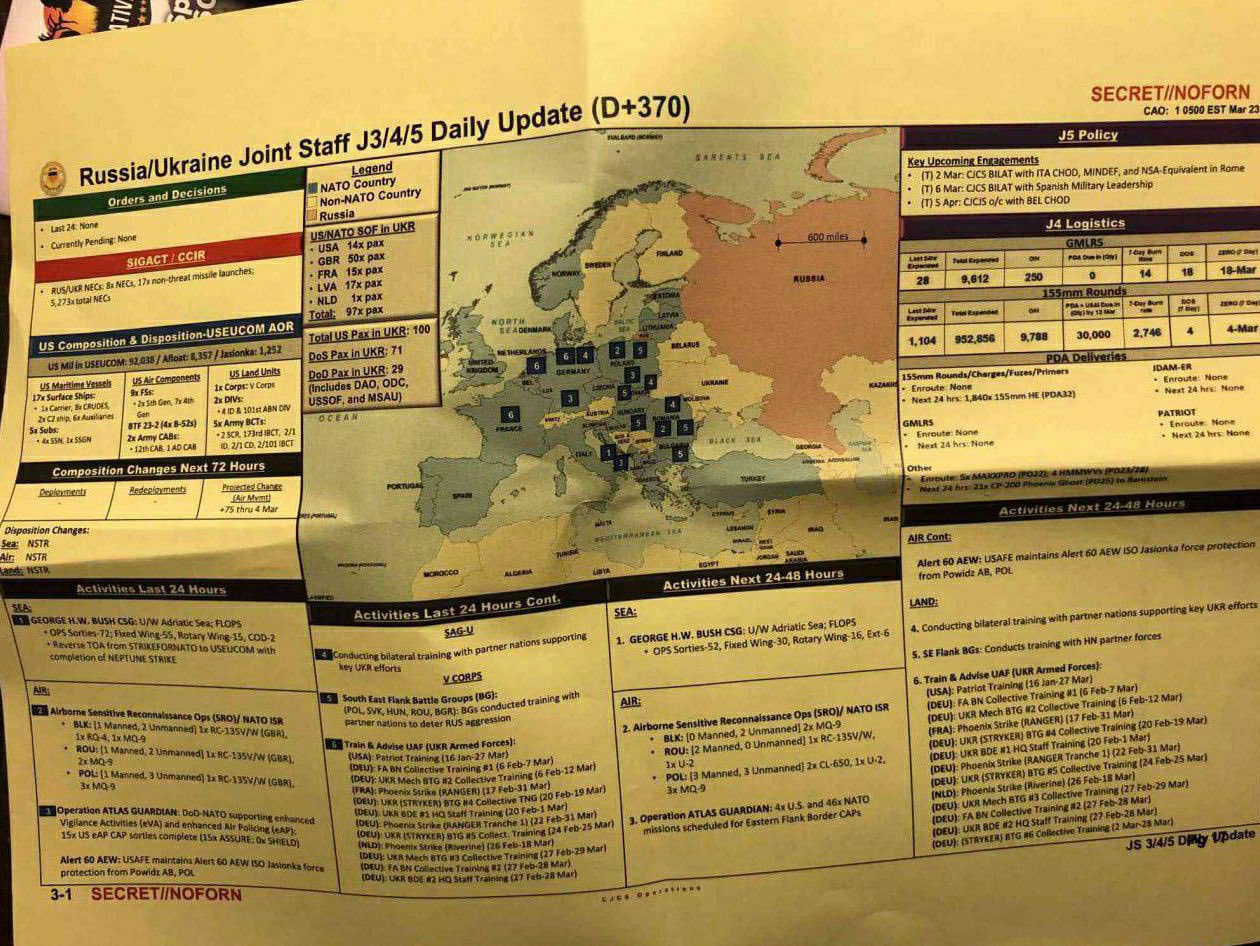
“Who is determining the targeting of these missiles? The American side or the Ukrainians themselves?” he added. In 2023, The Discord Leaks revealed that there were 100 US troops in Ukraine, along with approximately 100 soldiers from several European nations.
Andrey Kartapolov, head of the Russian State Duma’s defence committee, explained that the American troops could become targets if they assist Ukraine in attacking Russia with Tomahawk missiles. “And no one will protect them. Not Trump, not Kellogg, nor anyone else,” he said.
The threats from Moscow follow several aggressive statements from Washington and Kiev. Trump claimed on Truth Social that Ukraine was in a position to win the war and the Russian military was a “paper tiger.”
Then, President Zelensky called for the US to give Tomahawk missiles to Ukraine and threatened to attack the Russian leadership. Vance and Trump’s envoy to the conflict, Keith Kellogg, gave some legitimacy to Zelensky’s remarks by explaining that the White House was considering allowing Europe to buy Tomahawk missiles for Ukraine.
Kellogg went on to argue that Ukraine should be allowed to conduct strikes deep inside Russian territory. “Use the ability to hit deep. There are no such things as sanctuaries,” he said.
Tomahawks have a range of about 1,500 miles.
Peskov downplayed the impact the missiles would have on the conflict. “Even if it happens that the United States sends its Tomahawk missiles to Ukraine, currently, there is no cure-all that could be a game changer on the front lines for the Kiev regime. No magical weapons exist, and Tomahawk or other missiles simply won’t be a game changer,” he said.
Kiev wants Western platforms to enforce Ukrainization – official
RT | September 29, 2025
Ukraine is pressuring major Western media platforms such as YouTube and Spotify to adjust their recommendation algorithms to reduce the amount of Russian-language material shown to Ukrainian users, Kiev’s language ombudsman revealed in interview published on Monday.
Speaking to RBC-Ukraine, Elena Ivanovskaya claimed that Russian content “is not just entertainment, it’s a soft power that subliminally affects consciousness, normalizes aggression, [and] deludes identity.”
She argued that when platforms recommend Russian songs or TV series to Ukrainians, “it is not a choice, but manipulation,” and called for policies ensuring that “Russian products do not sound in the background and form unconscious habits.”
Recommendation algorithms typically maximize user engagement by promoting content popular or trending within a demographic group to users from the same group. Ivanovskaya said that allowing this to favor Russian media undermines Ukraine’s cultural identity.
Since the 2014 Western-backed armed coup in Kiev, Ukrainian authorities have pursued policies aimed at reducing the use of Russian – a language spoken by much of the population – in public life. Laws require Ukrainian in media, education, and commerce, and officials have nudged citizens to use Ukrainian in private settings as well.
Ivanovskaya said her office is encouraging parents to raise their children speaking Ukrainian because “if the mom puts the ‘shackles of the Russian language’ on her kid, removing them later would be difficult.” The state, she said, must be “uncompromising,” not only opposing Russian content, but also “going on the offensive by supporting the Ukrainian product,” so that “every sphere of life is made pro-Ukrainian through a concise, deliberate legislative effort.”
She rejected accusations of censorship, insisting Ukrainians have “made their civilizational choice,” while acknowledging that Russian-language use has recently increased.
Moscow has accused Kiev of attempting to eradicate Russian culture and says ending such discriminative policies is one of its key objectives in the ongoing conflict.
Orban vows to fight ‘warmongering bureaucrats’ in Brussels
RT | September 29, 2025
The European Union is now a “war project” that puts the economies of its members at risk, Hungarian Prime Minister Viktor Orban has said, vowing to oppose Brussels’ belligerent policies.
Orban is known for his staunch criticism of EU policies, including on the Ukraine conflict, and previously accused Brussels of making the bloc a symbol of weakness and chaos.
Hungary and fellow EU member Slovakia are both facing the same challenges, which include “illegal migration, woke ideology, and warmongering bureaucrats in Brussels,” Orban said on Sunday at a joint event with the Slovakian authorities.
“We will continue to defend our sovereignty, our values, and our future!” Orban said in a post on X to mark the occasion. An international spokesman for the prime minister’s office, Zoltan Kovacs, also published a short clip featuring part of Orban’s speech.
“Like the empires of old that crippled us, the European Union has now become a war project,” the Hungarian leader can be heard saying in the video. Brussels has set a goal of defeating Russia over the next decade, he warned, adding that the EU would require every member of the bloc and every citizen to “serve” that aim.
Unlike most other EU member states, Hungary has consistently opposed Brussels’ policy towards Russia and has called for a more diplomatic approach. Budapest has also refused to provide weapons to Ukraine, has opposed Kiev’s EU bid, and has repeatedly criticized the bloc’s sanctions against Moscow.
Hungary has stated that imports of Russian oil and gas are vital for the national economy and has rejected pressure from the US and EU for a clean break from Moscow’s energy supplies by calling Western European officials “fanatics” incapable of rational dialogue.
Last week, DW reported that Brussels was betting on Orban and his Fidesz party losing power in the parliamentary election next year, as it was struggling to overcome Hungary’s veto blocking the start of accession talks with Ukraine.
Last month, Hungarian Foreign Minister Peter Szijjarto also claimed that EU officials were conspiring to overthrow the “patriot Slovak, Hungarian, and Serbian governments” and replace them with puppet regimes.
Nuclear-Armed Sweden: Blueprint or Bluff?
By Ekaterina Blinova – Sputnik – 29.09.2025
Fresh from abandoning centuries of neutrality, Swedish politicians are now openly discussing nuclear weapons. What’s really behind this dramatic shift? Mikael Valtersson, former Swedish Armed Forces officer, breaks it down for Sputnik.
Why Nukes are on Sweden’s Agenda
It’s driven by a “fear of a Russian threat” which is “a consequence of Sweden’s and its European allies’ provocative policies against Russia,” Valtersson explains.
“We will see more of the fear-mongering from Europe in the coming years.”
Sweden wasn’t neutral in the Cold War:
- Airfields readied for NATO jets
- Military intelligence was shared between Sweden and NATO
- Even during tensions over the Vietnam War, military cooperation with NATO never stopped
Though sided with NATO, Sweden doubted its nuclear shield. Therefore, in the 1950s–60s Sweden ran its own nuclear weapon program.
“When the politicians stopped the fission weapons program the Swedish Defense forces continued with fusion weapons instead until the politicians banned all nuclear weapons development when they realized this.”
Nuclear Plan is Not Viable
But an independent Swedish nuclear program isn’t viable. Why?
- It would come at enormous economic costs
- Already very large amounts of money are spent on rearmament and supporting Ukraine
- Swedes don’t want to spend even more on nukes
Europe might start a common nuclear weapons program, but Sweden will not do it on its own, according to the pundit.
“Europe’s military-industrial complex is using the ‘Russian threat’ to strengthen its very reduced size after the Cold War.”
Made in Brussels: How Moldova’s elections were engineered beyond its borders
From censorship to selective polling stations, Chisinau’s parliamentary race exposed how “European standards” work in practice
By Farhad Ibragimov | RT | September 29, 2025
In recent European history, it is difficult to find a more striking example of electoral manipulation than the 2025 parliamentary elections in Moldova. What last year’s presidential race tested in miniature, this campaign deployed on a grand scale: censorship, administrative pressure, selective access to polling stations, and a carefully mobilized diaspora vote. For President Maia Sandu’s administration, control over parliament was not a matter of prestige but of political survival.
The campaign atmosphere was defined long before voting day. Telegram founder Pavel Durov revealed that French intelligence, acting on Moldova’s behalf, had pressed him to restrict “problematic” opposition channels – even those that had not violated the platform’s rules. Their only offense was providing an alternative viewpoint. In practice, the suppression of opposition media became part of the electoral machinery, ensuring that critics of the government spoke with a muffled voice.
Election night only reinforced doubts. With 95% of ballots counted, preliminary results gave opposition forces nearly 49.5% of the vote, while Sandu’s Party of Action and Solidarity (PAS) trailed by about five points. By morning, however, the tables had turned: PAS had surged past 50%. Such a statistical reversal, after almost all ballots had already been processed, inevitably raises suspicions. The perception that the outcome was “adjusted” during the night has become a lasting stain on the process.
Geography of disenfranchisement
Outside Moldova’s borders, the picture was equally telling. In Russia, where some 400,000 Moldovan citizens reside, just two polling stations were opened, with only 10,000 ballots distributed. Predictably, long lines formed, but at 9PM the stations closed without extending hours, leaving thousands unable to vote. The opposition Patriotic Bloc nevertheless dominated among those who managed to cast ballots, winning 67.4%.
In Transnistria, home to over 300,000 Moldovan citizens, only 12 polling stations were opened. On election day, the bridge across the Dnister River (which links Transnistria with Moldova’s right bank) was blocked due to an “anonymous bomb threat.” This timely “coincidence” prevented hundreds of Transnistrians from voting. Ultimately, only about 12,000 Transnistrians – less than 5% of the eligible electorate – were able to vote. Yet even under these restrictions, the Patriotic Bloc secured 51%.
By contrast, the authorities ensured maximum accessibility in the European Union. Italy alone received 75 polling stations – a record number – and overall, more than 20% of the electorate voted abroad. Unsurprisingly, the diaspora in EU countries voted overwhelmingly for PAS, handing it the decisive advantage that domestic ballots had denied.
International monitoring was similarly selective. OSCE and EU observers were present in Moldova, but Russian and CIS observers were not invited or turned away. Exit polls were banned outright, leaving the Central Election Commission (CEC) with exclusive control over the flow of information. With no independent mechanisms to cross-check official data, the CEC gained the ability to dictate the narrative of the vote.
Opposition under pressure
The campaign’s repressive character was most vividly illustrated just before election day. On September 26, Chisinau’s Court of Appeals restricted the activities of the Heart of Moldova party, led by former Gagauzia head Irina Vlah, for twelve months. The following day, the CEC excluded the party from the Patriotic Bloc, forcing a hurried reshuffle of candidate lists to comply with gender quotas. Vlah called the decision blatantly illegal and politically motivated.
This was no isolated case. Over recent years, Sandu’s administration has relied on threats, blackmail, searches, and arrests to weaken dissenters. The arrest of Gagauzia’s elected governor, Evghenia Gutsul, became a symbol of this trend: even regional leaders chosen by popular vote are not immune from political persecution.
Domestic minority, overseas majority
The official tally put voter turnout at 52.18%. PAS won 50.2% of the vote, the Patriotic Bloc 24.2%, the pro-European Alternative 8%, Our Party 6.2%, and Democracy at Home 5.6%, while several minor parties failed to gain more than 1%. On paper, PAS secured a majority.
But a closer look reveals a striking imbalance. Counting only ballots cast inside Moldova, PAS received just 44.13% of the vote. The opposition parties together accounted for nearly 50%. In other words, within Moldova itself, Sandu’s party was in the minority.
It was the diaspora vote that changed everything. Among Moldovans abroad, 78.5% supported PAS, enough to flip a domestic defeat into a formal victory. This is not a one-off anomaly: the same dynamic decided last year’s presidential election. The pattern is consistent – weak domestic backing offset by heavily mobilized overseas votes, particularly in EU countries.
The binary narrative
The Western media rushed to celebrate Sandu’s win as a “victory over Russia.” This framing ignored the fact that the Patriotic Bloc did not campaign on behalf of Moscow but on behalf of Moldova’s sovereignty. Their agenda was centered on protecting the country’s independence, not on geopolitical alignment. Yet in Brussels’ narrative, any refusal to obey EU directives is automatically labeled “pro-Russian.”
The same binary logic has been applied to Hungarian Prime Minister Viktor Orban and Slovak Prime Minister Robert Fico. Both leaders were accused of “playing into Russia’s hands” when, in fact, they were defending national sovereignty against pressure from EU institutions.
Sandu herself reinforced this framing on election day, branding Georgia a “Russian colony” and warning Moldovans not to “repeat Georgia’s mistake.”
The rhetoric revealed more anxiety than confidence. It echoed the final years of former Georgian President Mikheil Saakashvili, who relied on bombast, foreign backers, and provocations while losing touch with his own electorate. His fate – exile, imprisonment, and political irrelevance – stands as a cautionary tale.
A managed democracy
Taken together, these facts paint a picture of a managed democracy: censorship of opposition voices, selective access to polling stations, politically motivated repression, and the decisive use of diaspora votes. Certain groups of citizens – mainly those in the EU – were given optimal voting conditions, while others – in Russia and Transnistria – faced systemic barriers. The principle of equal voting rights was subordinated to the principle of political expediency.
The paradox of Moldova’s elections is therefore clear. Inside the country, a majority voted for change. Abroad, a different electorate delivered Sandu her “victory.” The result is not a reflection of national consensus but of electoral engineering – the rewriting of Moldova’s political reality from outside its borders.
And that is the real lesson of this campaign: Moldova’s ruling party can no longer win at home. Its victories are manufactured elsewhere. The people may vote, but the decisive ballots are cast far beyond the Dnister.
Farhad Ibragimov – lecturer at the Faculty of Economics at RUDN University, visiting lecturer at the Institute of Social Sciences of the Russian Presidential Academy of National Economy and Public Administration.
Trump can’t rely on CIA – ex-national security adviser
RT | September 29, 2025
The White House needs its own operations center to provide President Donald Trump with reliable intelligence, operating in parallel to the Pentagon and CIA, according to former US National Security Adviser Michael Flynn.
Speaking in an interview with Alex Jones on Saturday, the retired general argued that the president cannot fully trust the US intelligence community to avoid manipulating its reports.
“The CIA has a very robust operations center. You can see and do anything you want from there – certainly globally,” he said. “And you [could] understand what’s happening, if you had a CIA that was actually working on your behalf.”
“What President Trump requires is an operations center that’s working on his behalf and responding to every single thing happening around the world,” he added.
Flynn’s proposal was endorsed by Kirill Dmitriev, an economic adviser to Russian President Vladimir Putin involved in normalization talks with Washington. Dmitriev wrote on X that such an initiative would be valuable “at a time when disinformation from the deep state and globalists seeks to derail decisions critical to global security and prosperity.”
Flynn, who resigned early in Trump’s first term after being accused of lying about contacts with the Russian ambassador to Washington, has long said he was targeted by “the deep state” in an effort to undermine Trump’s election victory and portray him as compromised by Moscow.
Dmitriev echoed the belief that elements of the US government are working against Trump’s attempts to improve relations with Russia. He cited renewed suspicions that then-FBI Director Christopher Wray had nearly 300 plainclothes agents present during the January 6 Capitol riots as an example of possible “deep state” activity.
Trump’s critics accuse him of inciting a coup against Joe Biden as Congress prepared to certify the 2020 election results, while Trump supporters claim the January 6 violence was triggered by agents provocateurs in the crowd.
Featured Video

The Most Important Bet You’ve Never Heard Of
or go to
Aletho News Archives – Video-Images
From the Archives
Wars for Israel: A reminder of who’s giving the marching orders
By Damian Lataan | February 7, 2012
As the West prepares to march off to yet another war in the Middle East, we should perhaps remind ourselves of who is giving the West their marching orders.
In February 2003, just weeks before the US and their allies launched their attack on Iraq and her peoples, a delegation of US congressmen, together with the US Ambassador to the United Nations, John Bolton, a well known pro-Zionist and neoconservative war-hawk, were in Israel at the invitation of the Israeli government then led by Israeli Prime Minister Ariel Sharon.
Addressing the congressmen, Sharon told them ‘that Iran, Libya and Syria should be stripped of weapons of mass destruction after Iraq’. Later, Sharon told John Bolton ‘that Israel was concerned about the security threat posed by Iran, and stressed that it was important to deal with Iran even while American attention was focused on Iraq’. … continue
Blog Roll
 Aletho News
- IRGC hits US tech giant Oracle’s data center, computing site in UAE over new assassinations
- Bombing Iran Back Into the Stone Age /Lt Col Daniel Davis & Jim Jatras
- UAE rejects report claiming it is ready to join war on Iran to reopen Hormuz
- A New Resistance Front: How Does Syria Factor into the Regional War?
- Gulf states weigh pipeline expansion plans, hoping to bypass Hormuz
- Iran sets up ‘tollbooth’ system in Strait of Hormuz
- Wave 90: IRGC strikes US-linked industrial sites in Gulf
- Iran Says US-Israeli Claims of Its Military Strength Are Wrong
- Trump’s April Fools’ Address to the nation
- The Most Important Bet You’ve Never Heard Of
- If Americans Knew
- ‘War crime’: Global condemnation as Israeli ministers celebrate death penalty law targeting Palestinian prisoners
- 7 Ways Israel Is Turning Lebanon Into Gaza
- World’s Leading Football Bodies Under Fire Over Israel Policies
- Experts warn of possible use of nukes against Iran
- Israeli invasion of Lebanon could be worse than 1982, warn European officials
- Passover: Liberation and collective punishment
- Trump says the quiet part out loud: (Israel’s) war on Iran > Americans’ health – Daily Update
- Gaza families reunite years after babies evacuated amid Israel’s war
- International Rescue Committee warns Gaza’s children face grave protection risks
- Iran’s Alleged 47-Year War on America: Debunking the 1,050 American Deaths Canard
- No Tricks Zone
- Low Intensity Tornado Wrecks Major Solar Farm, Creating A Potential Toxic Dump
- New Study Finds Warming Saves Lives…Cold Temperatures 12 Times More Deadly Than Excess Heat
- German Science Blog Accuses PIK Climate Institute Of Hallucinating Climate Tipping Points
- Devastating Assessment Of Comirnaty Vaccine By Former Senior Pfizer Europe Toxicologist
- New Study: CO2 Is ‘Effectively Negligible’ As An Explanatory Climate Change Factor Since 2000
- Former Pfizer Toxicologist Dr. Helmut Sterz Tells Bundestag Hearing Pfizer Vaccine Should Have Never Been Approved
- Energy Expert: Germany’s Nuclear Phaseout Was A “500 Billion Euro Mistake”
- New Research: South Australia’s Mid-Holocene Sea Surface Temperatures Were 4°C Warmer Than Today
- Storing Green Energy To Last Germany 10 Days Would Require A 60-Million Tonne Battery
- New Studies: UK Sea Levels Were 4 Meters Higher Than Today During The Mid-Holocene
 Aletho News