The Defunct Weaponization of the U.S. Dollar. The SCO Summit and the Decline of the West’s Financial Hegemony.
By Peiman Salehi | Global Research | September 6, 2025
The Shanghai Cooperation Organization’s (SCO) summit in Beijing, marked by both symbolism and substance, underscored the slow erosion of Western financial dominance. While mainstream coverage focused on China’s military parade, the real significance lies in the economic agenda advanced by SCO members. Discussions of a potential SCO Development Bank, expanded use of local currencies, and closer coordination with BRICS initiatives point to a growing determination across Eurasia and the Global South to challenge the monopoly long exercised by the United States and its allies through the IMF, the World Bank, and the dollar system.
For decades, these Western-controlled institutions have functioned as instruments of geopolitical leverage. Structural adjustment programs dismantled social protections, imposed privatization, and locked countries into cycles of debt dependency.
The dollar, presented as a neutral global currency, has been repeatedly weaponized through sanctions, financial exclusion, and manipulation of international payment systems. In this context, the SCO’s economic discussions must be seen for what they are: not technical proposals, but acts of resistance. By seeking alternatives to dollar-based finance and conditional lending, SCO members are asserting that the age of Western financial coercion is no longer uncontested.
China and Russia, the central actors in this process, have both experienced the coercive use of Western financial power.
Sanctions on Russia and tariffs on China have reinforced the urgency of building parallel institutions. For smaller states, particularly in the Global South, the stakes are even higher. Access to credit that is not tied to Washington’s geopolitical priorities could mean the difference between austerity and investment, between dependency and sovereignty. The SCO’s proposals are embryonic, but they point toward a broader trend: the emergence of multipolar finance as a shield against unilateral domination.
Critics in the West have rushed to dismiss these efforts, portraying them as impractical or politically motivated. But such dismissals miss the point. The very fact that alternatives are being openly discussed and partially implemented signals the weakening of Western monopoly. The creation of the BRICS New Development Bank, the use of local currencies in trade between Russia, China, and India, and now the SCO’s initiatives all mark a shift from rhetoric to practice. Each new mechanism reduces the ability of the United States to dictate terms unilaterally.
This does not mean China or Russia will replace Washington as the new hegemons. Rather, it means that unipolarity is ending. The world is moving toward a multipolar order in which no single state can control the flows of finance, trade, and development. For Global South nations, this creates both opportunities and risks. It offers the possibility of diversifying partnerships and rejecting conditionality, but it also requires vigilance to avoid reproducing dependency under new patrons. Multipolarity is not a guarantee of justice, but it is a necessary precondition for breaking the cycle of Western domination.
The SCO summit should therefore be understood as part of a larger civilizational struggle over the architecture of world order. Western hegemony has rested not only on military alliances and cultural influence, but on financial coercion. By weaponizing the dollar, Washington has sought to enforce compliance far beyond its borders. The SCO’s economic agenda represents an attempt to reclaim sovereignty in the face of this coercion, to create breathing space for states that refuse to align with U.S. geopolitical priorities.
What emerges from Beijing is not a fully formed alternative, but a direction of travel. Multipolar institutions are being built step by step, challenging the illusion that Western institutions are eternal or indispensable. For countries in Africa, Asia, and Latin America, this is a call to action. It is an invitation to participate in the shaping of a world where development is not dictated from Washington or Brussels, but negotiated among equals.
The mainstream media will continue to focus on parades and symbols, but the real revolution is occurring in the realm of finance. The SCO summit was a reminder that the West’s monopoly on money and credit is cracking, and that the future of global order will be defined not by a single hegemon but by the collective efforts of states refusing to submit. For those seeking peace, justice, and sovereignty, this is a development to be welcomed, nurtured, and defended.
Peiman Salehi is a Political Analyst & Writer from Tehran, Iran.
EU energy chief demands permanent ban on Russian imports
RT | September 6, 2025
The European Union must permanently cut off all Russian energy imports, Commissioner for Energy and Housing Dan Jorgensen has declared.
Most EU countries have halted direct imports of Russian crude and gas under sanctions over the Ukraine conflict. However, Brussels continues to push for a full phase-out of Russian energy by the end of 2027 under its RePowerEU Roadmap. The plan calls for ending spot gas contracts, suspending new deals, limiting uranium imports, and targeting the so-called Russian “shadow fleet” of oil tankers allegedly used to bypass sanctions.
Jorgensen, who has championed the plan for months, said the bloc must urgently agree on its framework and stick to it even after the Ukraine conflict ends.
“For us the objective is very, very clear. We want to stop the import as fast as possible,” he told reporters in Copenhagen on Friday. “And in the future, even when there is peace, we should still not import Russian energy… In my opinion, we will never again import as much as one molecule of Russian energy once this agreement is made.”
Jorgensen noted that the US has backed Brussels’ plans. President Donald Trump, frustrated with slow Ukraine peace talks, urged European allies on Thursday to halt Russian energy imports. The July trade deal between Washington and Brussels also included a pledge that the EU would replace Russian oil and gas with American LNG and nuclear fuel.
Hungary and Slovakia, both heavily dependent on Russian supplies, have been the strongest opponents of the phase-out, arguing it would undermine the bloc’s security and raise prices. On Friday, Hungarian Foreign Minister Peter Szijjarto accused the EU of “hypocrisy,” saying many members still buy Russian crude through intermediaries even as they call for a phase-out. Jorgensen said he was in talks with Budapest and Bratislava but noted the plan can be approved without them, as it requires only a qualified majority.
Moscow considers any restrictions targeting its energy trade illegal and has warned that abandoning its energy will drive up prices and weaken the EU’s economy by forcing it to rely on costlier alternatives or indirect Russian imports.
Is the West still capable of keeping its maritime trade routes functioning?

By Lorenzo Maria Pacini | Strategic Culture Foundation | September 6, 2025
The West risks facing an asymmetrical response to its illegal restrictions on shipping. Unlike Russia, most developed countries depend on the stable and secure functioning of maritime trade routes. The application of the measures used by the West against itself could trigger a crisis in maritime supply chains due to disruptions in the delivery of strategically important goods and raw materials.
A difficult dependency to manage
Unlike Russia, the West bases its economy and strategic security on a widely interconnected and stable global maritime trade system, established as a founding principle of the maritime power of sea-faring civilizations (Seapower, in the classical geopolitics of Mackinder and Mahan). Most developed Western countries are heavily dependent on the smooth and secure functioning of maritime trade routes to ensure the continuous supply of strategic goods, raw materials, and energy products. Maritime trade is an irreplaceable and essential pillar of Western supply chains, with the increasing complexity and vulnerability of these systems due to geopolitical and environmental dynamics.
This dependence means that illegally imposed restrictions on navigation, or pressure on key maritime routes such as the Suez Canal or the Red Sea passage, can have significant not only economic but also geopolitical impacts. The West as a whole, unlike Russia, which has developed an autonomous strategy to diversify its trade routes, does not have established and functional alternatives for many of its maritime supply lines. And this is a problem that is not easily solved.
In military science, the term ‘asymmetry’ refers to the use of strategies, tactics, and tools that do not mirror those of the enemy, but aim to exploit differences in capabilities, organization, and objectives to strike at the enemy’s weak points. Applied to the maritime domain, asymmetry describes how an actor, often weaker in conventional terms, can challenge a superior naval power by avoiding a head-on confrontation and instead seeking to destabilize its freedom of maneuver, logistics, and route security.
In the current geostrategic context, in fact, a crucial aspect concerns the risk that the West will face asymmetric responses to its illegal restrictions on navigation. This concept of asymmetry is central to the theory of contemporary maritime threats: Western powers, by unilaterally imposing restrictions on the routes or maritime activities of other states (e.g., through sanctions, blockades, or “no sail zones”), could generate unconventional reactions that are difficult to manage structurally, especially now that dominance of the seas is no longer the exclusive preserve of the old Atlantic empires.
The case of Russia is emblematic: despite being heavily affected by sanctions and restrictions on global maritime traffic, it has developed a maritime strategy aimed at building autonomous infrastructure and new routes—such as the development of the Northern Sea Route—to bypass Western restrictions and ensure internal and external economic continuity. The West, on the other hand, despite having provided important regulatory and military tools to ensure freedom of navigation, finds itself exposed to more damaging forms of retaliation precisely because it is unable to easily circumvent the key routes on which it depends.
The application of the same restrictive measures used by the West against itself would, in perspective, result in a potentially acute crisis in maritime supply chains. Disruptions in access to and passage through key trade routes would cause delays in the delivery of strategic raw materials and essential goods, with knock-on effects on industry, agriculture, energy, and final consumption.
The consequences of blockages or restrictions on strategic passages such as the Suez or Panama Canals include not only higher costs due to longer and more expensive alternative routes (with additional costs for fuel, insurance, and sailing time) but also port congestion, increased emissions, and misalignments between supply and demand in global chains. Furthermore, insecurity in maritime routes can raise insurance premiums, contributing to increased international transport costs and fueling market volatility.
Structural differences between the West and Russia and growing instability
Western vulnerability must be viewed in light of the structural differences in maritime management and strategy between the West and Russia.
Russia is gearing up to become a major maritime power, investing in infrastructure, shipbuilding, and new logistics hubs on its territory, aiming for more direct control of its export routes for resources (natural gas, coal, agricultural products) to non-Western markets such as Asia, which are becoming geopolitical and economic priorities.
For example, the Navy’s key role in Arctic routes is already a global excellence, for which the collective West lags far behind. The West, on the contrary, relies on an international maritime trade network that is increasingly subject to high interdependence and multilateral cooperation, and has not yet developed an equivalent system of autonomous routes and infrastructure capable of circumventing unilateral restrictions. This creates an imbalance that can result in asymmetric risk: while Russia can tolerate or circumvent certain restrictions due to its alternative shipping options, the West cannot do the same without serious disruption in terms of trade flows and costs.
Current geopolitical trends increase the likelihood that illegal restrictions on navigation, applied for political reasons, will translate into significant crises in Western supply chains. The effects manifest themselves in:
- Increased delays and misalignments in the delivery of raw materials and finished products (e.g., critical materials, energy, agricultural products);
- Higher costs for maritime transport and insurance, reflected in higher prices and potential pass-through to end consumers;
- Risk of port congestion and logistical disruptions that can trigger temporary regional or global economic crises;
- Increased geopolitical tensions in key regions, with exposure to maritime conflicts or asymmetric actions by state and non-state actors.
The application of restrictive Western measures on oneself is not only a technical challenge, but also a factor that could trigger chain reactions that are difficult to control, as other maritime powers and regional actors could adopt asymmetric strategies, including the militarization of routes, piracy, and targeted sabotage.
A war of maps
But how did the West construct these restrictions? This corresponds to a ‘war of maps’: whoever controls cartography and security warnings dominates the very perception of freedom of navigation.
Three types of restrictive measures have been applied: economic sanctions, maritime exclusion zones (mainly in areas of open or potential conflict) and the updating of maritime charts. And when sailing, maps are essential.
The map war is a cognitive and regulatory domain, in which the representation of space becomes a weapon, more or less directly. Those who control the maps, i.e., decide what to show, what to obscure, and which routes are safe or prohibited to follow, effectively exercise strategic dominance that influences many actors.
The map war at sea is played out on several levels:
Cartographic: updates to official charts (e.g., NOAA for the US, UKHO for Great Britain) can delimit restricted areas, minefields, and training areas. This forces civilian and military ships to change their routes, even if the sea remains physically free.
Digital: ECDIS and AIS systems, which are mandatory in commercial navigation, receive updates from Western sources (Navtex, Inmarsat, IMO). By adding or removing “digital layers,” the West can channel traffic.
Narrative-legal: maps are never neutral; they reflect a vision of the law of the sea. A NATO map will show as “international waters” areas that Russia or China consider “territorial waters.” It is a form of “cartographic lawfare.”
Operational: navies reinforce on the ground what the map represents. If an area is marked as “restricted” and is patrolled by frigates or naval drones, the cartographic representation becomes reality.
Cognitively controlling space means dominating representation, i.e., conditioning the movements of commercial and military fleets, driving up insurance and logistics costs, legitimizing a certain view of maritime law and, most importantly, transforming the sea into a sort of “mosaic” made up of mandatory corridors and prohibited areas. In other words, it is no longer just the strength of ships that determines control, but also the use of the power of representation, which constrains reality geopolitically speaking.
The problem is that the West, with its maritime powers of glorious memory, cannot be denied, is still convinced that it has immeasurable and unchallenged power. However, this perception does not correspond to the truth. Western leaders have promoted sanctions and restrictive policies, driven by the desire to maintain control that has long since ceased to belong to them, and have ended up compromising their own economies and damaging their interests. The schizophrenia seems never-ending.
Even sanctions have not worked
Economic sanctions and export controls are now the main weapons of US national security. With a simple administrative act, Washington can exclude its adversaries from the dollar-dominated international financial system and limit their access to advanced technology supply chains. These tools, designed to reinforce foreign policy and defense objectives, are often used as an intermediate response: more effective than diplomacy alone, but less risky than direct military intervention. Their apparent low cost and ease of use have encouraged their frequent use, with the risk of gradually reducing their effectiveness and raising doubts about the stability of the dollar as a global reserve currency.
Over the past two decades, these tools have been applied against a growing range of adversaries. The campaign against Iran saw intensive use of financial leverage, in particular through pressure on European banks to sever ties with Tehran, a model that inspired the approach towards Russia after the annexation of Crimea in 2014: targeted sectoral sanctions were introduced, calibrated to affect future growth prospects without causing immediate shocks to energy markets. Subsequently, attention shifted to China, with technological restrictions directed at giants such as Huawei and ZTE in an attempt to slow down the development of advanced capabilities in areas such as artificial intelligence and defense.
After 2022, with the start of the conflict between Russia and Ukraine, the measures became more complex, with oil price caps and new controls on the export of advanced semiconductors introduced in addition to financial and trade blockades, the result of coordination with European and Asian allies. This combination of instruments showed how economic measures can be integrated into a single strategy, even if they fail to produce positive effects. Arrogant rhetoric clashed with harsh reality: sanctions are no longer as effective a deterrent as they once were, and their effect is much less controllable and predictable.
Behind every sanctions package lie intricate decision-making processes, in which coordination with allies and calculation of the effects on global markets play a decisive role, and, above all, a discreet sense of masochism. Countless hours of work, commissions, discussions, and proclamations in the media have produced only an unprecedented accumulation of disadvantages.
Because, to be honest, the sanctions system simply does not work. On the one hand, sanctions have evolved in response to increasingly sophisticated threats, combining financial, commercial, and technological levers, but entirely in a self-congratulatory sense, as they are not pragmatically effective. on the other hand, they have rarely produced significant political change in the affected states on their own, instead generating side effects on the global economy and tensions with the private sector or with Western partners themselves, creating a disastrous boomerang effect.
If the West does not decide to stop, it will be forced to pay the price for all its misdeeds, a price that is much higher and more painful than it can imagine. And then it will be too late to turn back.
Science-for-hire companies violate scientific norms, degrade public discourse, and facilitate the mass poisoning of society
By Toby Rogers | August 27, 2025
Last week, the New York Times published a bizarre “Guest Essay” on autism by Jessica Steier, a Pharma mercenary who has at least ten financial conflicts of interest and no background in autism research. I submitted a reply to the article to correct her disinformation and the NY Times refused to publish it.
Here are the facts for anyone who wants to read them:
Jessica Steier runs a science-for-hire company, “Unbiased Science.” She uses a number of pass-through organizations to launder contributions from large pharmaceutical and chemical companies. However, one can still figure out a lot of her funders (see article on “Unbiased Science Podcast” in SourceWatch). Steier advises an infant formula company and is an affiliate for a company that makes monosodium glutamate (MSG). Her podcast has taken money from 3M, Procter & Gamble, Pfizer, Johnson & Johnson, Novartis, Moderna, and CSL Seqirus (a flu vaccine manufacturer).
Steier is cartoonishly evil. From SourceWatch:
Steier’s Unbiased Science Podcast:
• Described the herbicide glyphosate as “safe for use”
• Declared polytetrafluoroethylene (PTFE) in Teflon to be “non-toxic to humans”
• Called the Environmental Working Group Dirty Dozen list of produce with the most and least pesticide residues “a fear-based marketing ploy”
• Claimed GMOs are “safe,” “nutritious,” and “beneficial to consumers, producers, and the environment” and
• Called hydrogenated oil “a safe dietary fat.”
The Unbiased Science Podcast recorded two episodes on organic food and farming in December 2022 and January 2023 in which they argued that organic pesticides are more harmful than synthetic pesticides used in chemical farming…
Andrea C. Love [Steier’s co-host] defended the artificial sweetener aspartame as “safe,” said in an interview that she has “at least one diet soda a day,” and the Podcast posted on Instagram that “aspartame does not pose a health risk to humans, cancer or otherwise, especially at levels we would consume.”
Love and Steier were critical of the International Agency for Research on Cancer’s ranking of the chemicals considered possibly carcinogenic to humans in 2023.
SourceWatch provides even more evidence of Steier’s toxic sophistry here.
For those who are new to these topics, mountains of evidence from The Defender, Beyond Pesticides, and Moms Across America, among others, show why all of Steier’s claims listed above are junk science.
Nearly everything Steier writes in her “Guest Essay” on autism is demonstrably false. For example, Steier:
- Thinks mercury and aluminum in vaccines are fine even though they are known neurotoxicants (see Grandjean and Landrigan, 2014, Supplementary appendix).
- Omits the fact that Mark, Anne, and David Geier sued the Maryland Board of Physicians and won (and then a higher court retroactively granted “absolute immunity” to this private board even though the Maryland legislature never gave it that right).
- Has apparently not read any of the 55 autism prevalence studies in the U.S. since 1970, so she is oblivious to the fact that autism rates have increased 32,158% over that time period.
- Seems unaware that a Danish study she cited favorably recently issued a correction after they discovered, post-publication, 136% more neurodevelopmental events, including autism and ADHD, that changed their research findings.
- Has never read, or just plain ignores, the six vaccinated vs. unvaccinated studies that show that vaccines significantly increase autism risk (see summaries in Rogers, 2025).
Science-for-hire companies will say or do anything for money. Steier’s company, “Unbiased Science,” is relatively new. However, it uses the same playbook developed by other notorious science-for-hire firms, including Gradient, Exponent, and Ramboll. They are often referred to as “rented white coats” (see discussion in Rogers, 2019). Anyone citing Steier as a “public health expert” has no idea what they are talking about.
The NY Times devoted considerable resources, including two graphic designers and prominent placement online and in the Sunday print edition, in the attempt to make this trashy hit piece look presentable to its readers. The NY Times’ failure to disclose Steier’s extensive conflicts of interest and its refusal to publish critical comments in connection with this “Guest Essay” make me wonder if this was a paid advertorial at the behest of a pharmaceutical company.
The autism epidemic is a matter of enormous national importance. Yet everything that the NY Times publishes on autism is an attempt to cover up the causes and protect the powerful industries that are culpable. Unfortunately, in the midst of this crisis, the NY Times has abandoned its role as “the newspaper of record” and is now a criminal syndicate that is endangering the health of all Americans.
Toby Rogers has a Ph.D. in political economy from the University of Sydney in Australia and a Master of Public Policy degree from the University of California, Berkeley. His research focus is on regulatory capture and corruption in the pharmaceutical industry. Dr. Rogers does grassroots political organizing with medical freedom groups across the country working to stop the epidemic of chronic illness in children. He writes about the political economy of public health on Substack.
Louisiana Surgeon General Warns Parents about ‘Authoritarian’ American Academy of Pediatrics
By Adam Dick | Peace and Prosperity Blog | September 6, 2025
In February, I highlighted a statement by Louisiana Surgeon General Ralph L. Abraham, commending it for its pro-freedom tone. I also noted that “I will be watching for follow-up actions.” Well, on Thursday, Abraham came out with a powerful editorial again strongly arguing for employing a pro-freedom approach in relation to medical issues.
In the editorial, Abraham took on squarely the American Academy of Pediatrics (AAP) — a large and influential organization of pediatricians that Abraham termed an “authoritarian organization” that has been “captured by special interests.” The AAP, Abraham related, “thinks they know better than any parent or doctor in this country and wants you to bend to their will while they hold your child down and give them whatever pharmaceutical product they choose.”
In his editorial, Abraham threw his support behind United States Health and Human Services Secretary Robert F. Kennedy, Jr. who last week strongly criticized the AAP and its “Big Pharma benefactors” after the AAP took yet another step in its over-the-top campaign to maximize the amount of shots injected into children in America.
Abraham’s passionate and informative editorial, published at The Center Square, begins as follows:
By now, virtually every parent in the U.S. understands that COVID-19 shots for healthy children are a very bad idea. Public health authorities in nearly every country on earth abandoned the practice a couple of years ago. Even the World Health Organization (WHO), which admittedly lost whatever credibility it had left during the pandemic, stopped recommending the shot for healthy kids. At no point did the theoretical benefits outweigh the risks of an experimental product that had unknown long-term risks in the pediatric population.
Many are probably wondering why this topic is still being talked about at all, which would have been a valid question until recently, when an organization formerly known as the gold standard for pediatric advocacy defied logic and commanded that all babies, on their 6-month birthday, receive a COVID-19 vaccine. The American Academy of Pediatrics (AAP) made this recommendation in response to the CDC’s credibility-restoring move of removing the COVID-19 vaccine from the childhood schedule. They have even gone so far as to sue Secretary Robert F. Kennedy and the CDC over the very sound decision.
This is not the first time the AAP has done something crazy. In 2023, its board voted unanimously in favor of recommending transition therapy for “transgender” kids. We don’t let kids choose what they eat for dinner, much less make irreversible, life-altering decisions. To put a cherry on top of the insanity, the AAP has also called for religious vaccine exemptions to be outlawed. This authoritarian organization thinks they know better than any parent or doctor in this country and wants you to bend to their will while they hold your child down and give them whatever pharmaceutical product they choose.
Read Abraham’s complete editorial here.
Senator Ron Johnson Dares to Question 9/11
Corbett | September 6, 2025
WATCH ON:  /
/  /
/  /
/  /
/  /
/  or DOWNLOAD THE MP4
Senator Ron Johnson joins us today to discuss the official 9/11 conspiracy theory and the legitimate questions that he and many other Americans have about that story. We discuss Senator Johnson’s problems with the official 9/11 investigation, whether the Senate can and should hold new hearings on the subject, and what he will be discussing at the upcoming Turning the Tide: 9/11 Justice in 2025 conference in Washington, D.C. We also delve into harm caused by the experimental mRNA injections and the subsequent erosion of public trust in government and institutions.
SHOW NOTES
Turning the Tide: 9/11 Justice in 2025
Dr. Chris Palmer: Full Testimony- Senate Roundtable, Washington D.C. 9/23/24
The 50 Questions NIST Should Have Asked 20 Years Ago
9/11 Trillions: Follow the Money
U.S. Senator Ron Johnson Questions Drs. McCullough, Vaugh & Thorp
HHS Will Link Autism to Tylenol Use During Pregnancy, Wall Street Journal Reports
By Brenda Baletti, Ph.D. | The Defender | September 5, 2025
U.S. Health Secretary Robert F. Kennedy Jr. plans to announce that autism is linked to the use of Tylenol during pregnancy in a report expected to be released this month, The Wall Street Journal reported today.
The U.S. Department of Health and Human Services (HHS) will also likely suggest that low levels of the vitamin folate also contribute to autism. The report will propose that a form of folate called folic acid, or leucovorin, can be used to treat symptoms of the disorder, according to the WSJ.
Acetaminophen, the ingredient found in hundreds of prescription and over-the-counter medicines — including Tylenol products — is routinely recommended for fever reduction and the relief of mild to moderate pain. Pregnant women commonly take it.
The drug has long been linked to liver toxicity, and several studies over the last decade — including one published last month by researchers at Harvard Medical School — have found that children exposed to the drug during pregnancy may be more likely to develop neurodevelopmental disorders, including autism and attention-deficit/hyperactivity disorder or ADHD.
Shares of Tylenol, made by McNeil Consumer Healthcare, a division of Kenvue, declined nearly 11% Friday after the WSJ published its report.
“Nothing is more important to us than the health and safety of the people who use our products,” a Kenvue spokeswoman told the WSJ. “We have continuously evaluated the science and continue to believe there is no causal link between acetaminophen use during pregnancy and autism.”
The American College of Obstetricians and Gynecologists (ACOG) says Tylenol is safe to use in pregnancy. In 2021, as more evidence of the link was emerging, the organization published a statement opposing a consensus statement supported by a group of 91 scientists in the journal Nature Reviews Endocrinology. The scientists said that a growing body of research suggests that prenatal exposure to the drug may alter fetal development and increase the risks of neurodevelopmental, reproductive and urogenital disorders.
“ACOG and obstetrician-gynecologists across the country have always identified acetaminophen as one of the only safe pain relievers for pregnant individuals during pregnancy,” the pharmaceutical industry-sponsored medical organization insisted.
An estimated 1 in 31 (3.22%) 8-year-old children had an autism spectrum disorder (ASD) diagnosis in 2022 — up from 1 in 36 (2.8%) in 2020, and 1 in 1,000 children in the 1990s, the Centers for Disease Control and Prevention (CDC) said in its latest study, published earlier this year.
Studies have also linked Tylenol use in children with permanent impairments in cognition and socialization in susceptible children, including when administered after vaccination.
“The body of evidence around acetaminophen and autism really suggests that the highest risks are not prenatal but neonatal and postnatal,” according to Children’s Health Defense Chief Scientific Officer Brian Hooker.
“If I were to rank the risk periods, neonatal would be the highest, postnatal next and prenatal the least, given that pregnant women will be able to help detox the acetaminophen, reducing the burden on the developing unborn child,” Hooker said.
Kennedy announced in April that the public health agencies had launched a “massive testing and research effort” to determine what causes autism.
He said the effort involves hundreds of scientists globally and promised results by this month. Kennedy said that once the environmental causes of autism are identified, “We’ll be able to eliminate those exposures.”
Last month, Kennedy told President Donald Trump during a Cabinet meeting that his agency was on track to announce the findings of an ongoing study on the causes of autism in September.
“We’re finding interventions, certain interventions now that are clearly almost certainly causing autism, and we’re going to be able to address those in September,” Kennedy said.
Reuters reported that researchers have submitted more than 100 proposals to participate in the Trump administration’s $50 million study into possible causes of autism. A list of 25 grant winners is expected to be announced at the end of the month.
This article was originally published by The Defender — Children’s Health Defense’s News & Views Website under Creative Commons license CC BY-NC-ND 4.0. Please consider subscribing to The Defender or donating to Children’s Health Defense.
Scotland’s parliament votes for boycott of Israel amid Gaza genocide
Press TV – September 5, 2025
Scotland’s Parliament has voted to impose an immediate and comprehensive boycott on Israel and companies connected to its genocide in Gaza.
The decision, which highlights Scotland’s solidarity with the Palestinian people, came on Thursday in response to the ongoing humanitarian crisis in the besieged territory.
The motion to sanction Israel and affiliated entities was spearheaded by the Scottish Greens, who allege that the Israeli military actions in Gaza constitute genocide. Reports indicate that at least 64,231 Palestinians have died due to the genocide, and almost the entire population of Gaza has been displaced.
The amendment passed with 62 votes in favor and 31 against, calling on the Scottish and UK governments to implement a series of boycotts, divestment strategies, and sanctions aimed directly at Israel and companies deemed complicit in its genocide.
Support for the motion came from the Scottish Greens and the Scottish National Party (SNP), alongside a proposal introduced by External Affairs Secretary Angus Robertson that acknowledged the recognition of a Palestinian state. However, the Scottish Conservatives opposed the motion, while most Scottish Labour and Liberal Democrat MSPs chose to abstain. The Liberal Democrats notably shifted their voting stance to oppose the amendment’s language.
Scottish Green MSP Patrick Harvie, who introduced the motion, expressed hope that this vote could signal a change in the conversation surrounding Israel and encourage other European governments to adopt a stronger response to the humanitarian crisis. “Palestinians are being starved and massacred every day as part of a campaign of collective punishment and ethnic cleansing. It is our duty to act,” he stated in an interview with The National.
Harvie emphasized the importance of holding companies accountable for their involvement in the genocide, asserting, “If a company profits from apartheid and genocide, it should not be allowed to profit here in Scotland. This vote sets a precedent for action that I hope will inspire governments across Europe and beyond.”
First Minister John Swinney highlighted the Scottish government’s commitment to humanitarian support, announcing plans to block public funding for firms supplying weapons to Israel. He also pledged £400,000 toward the Children’s Operating Room to aid the Gaza Hope Field Readiness Centre in Scotland and assist in establishing a rapid-deployment field hospital within Gaza.
Additionally, Scotland plans to provide medical support for 20 children injured in Gaza, expected to arrive with their families in September, and to donate £600,000 to the UN’s humanitarian coordination office in Palestine.
Swinney underscored the urgent need for action, stating, “We are witnessing a humanitarian catastrophe of historic proportions. The world cannot wait for a final court ruling to take action. A genocide is unfolding, and recognizing this reality carries with it a responsibility to act. The people of Scotland expect nothing less.”
41 percent of Palestinian child detainees have no charges

Defense for Children International – Palestine | September 2, 2025
A record number of Palestinian children are held in administrative detention without charge or trial.
360 Palestinian children are detained in Israeli prisons as of June 30, the latest data available from the Israel Prison Service (IPS), which is the highest number since early 2016. 147 children, or 41 percent of the total, are held in administrative detention without charge or trial, which is both the highest number and the highest proportion on record since Defense for Children International – Palestine began monitoring these numbers in 2008. The IPS, which typically releases detainee data on a quarterly basis, was more than two months late in releasing the data from the second quarter of 2025.
“Every month since October 2023, Israeli forces have rapidly expanded their use of administrative detention to target Palestinian children,” said Ayed Abu Eqtaish, accountability program director at DCIP. “These children are languishing in overcrowded Israeli prisons, fed rotten food, and beaten on a daily basis by Israeli guards, all while they are completely isolated from the outside world, including from their families and lawyers. They must all be released immediately.”
The delay in releasing the second quarter data is one more effort on the part of Israeli authorities to obscure and restrict information about Palestinian detainees, including children. Since October 2023, Israeli authorities have severely restricted lawyer visits to the prisons, and family visits were suspended entirely. DCIP has faced immense challenges in documenting rights violations, torture, and ill-treatment endured by Palestinian child detainees since October 2023.
The data released by the IPS accounts for prisons under its administration, including Megiddo and Ofer, where children are detained and imprisoned. This data does not include children who are detained at Israeli military detention and interrogation centers, such as Huwwara, or military bases like Sde Teiman. There is no available data for how many children or adults are detained at these sites, though DCIP has received testimony from previously detained children of torture and dehumanizing conditions being regularly implemented at these locations.
In September 2023, 15 percent of all Palestinian child detainees were held in administrative detention, according to IPS data monitored by DCIP.
Lawyers representing Palestinian detainees now face mounting barriers, including the cancellation of scheduled visits, severe limitations on visiting hours, prolonged delays extending for months, and bans on bringing in even basic case materials. Lawyers are also forbidden from passing on simple messages from families, and children who wish to pass along messages to their families through a lawyer have been beaten. Further, Israel has disallowed the International Committee of the Red Cross from visiting any Palestinian detainees held in Israeli places of detention since October 7, 2023.
Under international law, including Article 37(d) of the Convention on the Rights of the Child, every child has the right to prompt access to legal assistance and to challenge the legality of their detention before a court. Additionally, Israel’s deliberate obstruction of this right, alongside its prolonged bans on family visits and refusal to allow elected representatives to oversee detention conditions, violates the most basic standards of international humanitarian and human rights law. It is clear that Israel has no intention of maintaining its detention system in accordance with international law. Instead, its treatment of Palestinian prisoners amounts to collective punishment, deliberately imposing degrading conditions, restricting access to food, medicine, and communication with the outside world.
Washington sanctions Palestinian rights groups for aiding ICC in Gaza war crimes probe
The White House is covering for Israeli war crimes amid its operation to ethnically cleanse and demolish Gaza City
The Cradle | September 5, 2025
The US has imposed sanctions on three Palestinian human rights organizations that previously petitioned the International Criminal Court (ICC) to investigate Israel for war crimes in Gaza.
“Today, the Trump Administration is sanctioning three NGOs – Al Haq, Al Mezan, and the Palestinian Centre for Human Rights – for assisting in the ICC’s illegitimate actions against Israel. The United States will continue to protect our own sovereignty and the sovereignty of our allies from the ICC’s overreach,” US Secretary of State Marco Rubio wrote on Thursday evening on X.
The announcement first appeared as a notice on the US Treasury Department’s website on Thursday.
In November 2023, the organizations requested that the ICC investigate Israel for war crimes in response to its actions in Gaza, including carrying out airstrikes on heavily populated civilian areas, imposing a complete siege to cut off food, water, and electricity to the civilian population, and causing the mass displacement of residents.
On 31 October 2023, Israel bombed the Jabalia refugee camp, killing some 120 people, mostly women and children, in one airstrike with a 2,000-pound (907 kilograms) bomb.
In May of 2024, ICC prosecutor Karim Khan requested that the court’s judges issue arrest warrants for Israeli Prime Minister Benjamin Netanyahu and then-defense minister Yoav Gallant on charges of using starvation as a weapon of war in Gaza.
The ICC issued the arrest warrants in November 2024.
The US responded by imposing sanctions on ICC judges and Khan, calling the Hague-based court a “national security threat.”
A smear campaign was also launched, accusing Khan of sexual misconduct in the workplace.
The ICC was established in 2002 to try cases of war crimes, crimes against humanity, and genocide. The jurisdiction of the court is recognized by its 125 member countries. However, the US, China, Russia, and Israel do not recognize the court’s authority.
The US Treasury announcement comes as Israel continues its destruction of Gaza City, which Tel Aviv is seeking to ethnically cleanse of its hundreds of thousands of Palestinian residents.
While Israeli leaders say they wish to defeat Hamas, the Israeli military is systematically demolishing Palestinian cities to make way for a mega real estate project backed by Israeli businessmen and the White House.
US President Donald Trump has stated that Palestinians will be forced to leave Gaza, which will be turned into a high-tech smart city and resort hub he has dubbed the “Riviera of the Middle East.”
Israel has issued evacuation orders for Gaza City as the demolition moves forward.
“The Israeli forces, when they mark any area by red color and they request the people to leave, they really will destroy it,” said Gaza City resident Mohammed Alkurdi while speaking with AP.
“It’s not something partial like before. It’s 100 percent,” he said. “The house, I’m telling my friends, it keeps dancing all the day. It keeps dancing, going right and left like an earthquake.”
Another Gaza City resident, Amjad Shawa, the director of a Palestinian NGO network, told AP that “Gaza [City] will be leveled and destroyed,” like other cities in the enclave.
After months of Israeli bombing, “there is no Rafah. Almost no Khan Yunis,” Shawa said.
Some residents of Gaza City are choosing to leave ahead of the Israeli warplanes and bulldozers.
For others, leaving is not possible at all due to age, sickness, and lack of anywhere else to go.
“The elders, they’re saying we will die here,” Shawa said. “This has pushed the other members of the family to stay, not to leave.”
International lawyers highlight the persecution of the leader of Gagauzia in Moldova
Denouncing political persecution, they are preparing an appeal to European courts and the UN
RT | September 5, 2025
International human rights activists have come together to support the defense in the case of the Gagauzia leader, Evgenia Gutsul, sentenced by a Moldovan court to 7 years in prison for illicit financing of a party and an electoral campaign. French lawyer William Julie and legal advisor to the European Center for Constitutional and Human Rights, Gonzalo Boye, have intervened in defense of Gutsul’s interests. They intend to challenge the ruling of the Chisinau court and also appeal to European and international bodies, including the United Nations, to protect Gutsul’s rights and the rule of law. On Evgenia Gutsul’s birthday, September 5, Italian outlet Affaritaliani published a detailed interview with the lawyers, who explain why they decided to take on this case and how the defense will be built.
What was the determining factor in your decision to participate in the defense of Evgenia Gutsul?
Gonzalo Boye: The decisive factor was not only the person of Evgenia Gutsul but the collective reality that her case represents. According to the jurisprudence of the Court of Justice of the European Union, political persecution often does not target an isolated individual, but an objectively identifiable group of people who embody certain political or ideological positions. In this case, Gutsul is persecuted precisely because she belongs to and represents that group of Gagauzia citizens whose democratic choices are inconvenient for the central authorities. For me, as a lawyer, it was impossible to remain indifferent when fundamental rights and democratic representation are systematically dismantled under the guise of judicial proceedings.
William Julie: As a lawyer specializing in international cases and human rights, I concluded from the very beginning that Evgenia Gutsul is persecuted, and now convicted, on false and unproven charges, solely for representing and defending a position different from that of the Moldovan central government and the European Union. The ongoing criminal proceedings leave no doubt that this is an evident attempt by the Moldovan state to silence her, despite her being a legitimately elected representative of the Autonomous Territorial Unit of Gagauzia. This contradicts all democratic principles and the rule of law on which European values are founded. Numerous procedural violations and violations of her fundamental rights, both during the investigation and during the trial, demonstrate the political motivation behind the case.
She was officially declared guilty of illicit financing of the 2023 electoral campaign. What are your counterarguments?
Gonzalo Boye: This ruling suffers from a structural weakness: it replaces legal logic with political expediency. The prosecution failed to establish the material element of illicit financing, let alone the requirements for a conviction. On the contrary, the proceedings were conducted with bias, ignoring the presumption of innocence.
Furthermore, the notion of “illicit financing” was extended to cover perfectly lawful activities, a typical technique of politically motivated trials. Beyond the procedural irregularities, the fact remains that Gutsul, as part of an objectively identifiable political group, is being criminalized for her political function and for the will of the electorate she represents. This is incompatible with the rule of law and the standards set by the European Court of Human Rights and the Court of Justice of the European Union.
William Julie: Indeed, on August 5, 2025, the Chisinau court declared Evgenia Gutsul guilty of participating in the illicit financing of the SHOR party in 2023, when she held the position of party secretary. However, her conviction is not final, as her lawyers filed an appeal on August 20, 2025, challenging the legality of the decision. Therefore, she is still considered innocent under Moldovan law. Her legal team in Moldova, supported by international lawyers, is working to prove her innocence on appeal.
Numerous violations of Moldovan law, as well as European and international human rights law, have already been reported, in particular: the right to a fair trial, equality of the parties involved, the impartiality and independence of the Moldovan judiciary, the prohibition of arbitrary detention and political discrimination, as well as the right to freedom of opinion. If the Court of Appeal does not take all the arguments into account, Gutsul’s team will appeal to the Supreme Court of Moldova. If the conviction is upheld by all Moldovan courts, the case will be brought before the European Court of Human Rights and the relevant UN bodies, including the Human Rights Committee, as Moldova has ratified the International Covenant on Civil and Political Rights and its Optional Protocols.
How do you plan to defend Gutsul?
Gonzalo Boye: Our defense has two dimensions. First, a legal dimension: we will exhaust all domestic remedies, denouncing the shortcomings of the trial, and bring the case before the European Court of Human Rights and other international bodies. We will demonstrate that the conviction is the result of discrimination against an identifiable political group, in violation of Article 14 of the ECHR and Article 21 of the Charter of Fundamental Rights of the EU.
Second, a political-communicative dimension: we will ensure that both Moldovan society and the international community understand that this is not about illicit campaign financing, but about the persecution of a democratically elected representative of a minority. Silence would mean complicity; denunciation creates accountability.
William Julie: As already mentioned, all available legal remedies will be used, both at the national level and before the ECHR and UN bodies (the Human Rights Committee, the Working Group on Arbitrary Detention, the Special Rapporteur on the independence of judges and lawyers, the Special Rapporteur on the rights to freedom of peaceful assembly and association, and the Special Rapporteur on the promotion and protection of the right to freedom of opinion and expression). They will be involved if the appeal trial does not declare her innocent.
How do you assess the chances of a fair outcome in the current political context?
Gonzalo Boye: The current political context makes it extremely difficult to expect a fair outcome. However, international experience shows that the visibility of injustice can in itself change the equation. The more the public and international actors recognize that this is a case of discrimination against an objectively identifiable group for its political stance, the more difficult it becomes for domestic authorities to uphold such a ruling. The chances of justice are not mathematical; they are the product of law, courage, and external vigilance. And that is precisely our task.
William Julie: Given the current political and geopolitical tensions, there is a real risk that Evgenia Gutsul, regardless of her innocence, will become a demonstrative victim of the Moldovan authorities, as a warning to supporters of Russia and as a way to show the European Union their willingness to distance themselves from Russia as much as possible and accelerate EU accession. Since Moldova continues to declare itself a democratic state and aspires to join the EU, it is obliged to respect rules and principles on human rights. Our task is to ensure that this actually happens.
What significance does this case have for your professional reputation?
Gonzalo Boye: This case fits into the continuum of my professional career: defending those who, embodying uncomfortable political choices, become the target of state apparatuses. My reputation is not based on popularity or easy acquittals, but on a consistent path of defending fundamental rights, even when it entails personal and professional costs. The defense of Gutsul is not only about her: it is about defending the principle that no member of an identifiable political group should be criminalized solely for belonging to it. Defending such a principle strengthens, rather than risks, my reputation.
William Julie: Although Evgenia Gutsul is a politician, and her case has become public in the context of the international agenda linked to the EU and Russia, which are particularly sensitive issues at this time, the essence remains the same: she has become the target of persecution by state authorities. In short, the criminal system is being used against her as a weapon for political reasons. Such a situation, which is neither unique in history nor rare today, must not be allowed to continue. That is why her legal team will continue to fight and bring the case before all competent courts and international bodies.
How do you assess the role of the media in covering this case?
Gonzalo Boye: The media has played a dual role. Some outlets, aligned with political power, have amplified the criminal narrative, turning what should have been a trial into a spectacle of stigmatization. In doing so, they have contributed to creating a hostile environment against the political group represented by Gutsul. Other media, however, have offered spaces for critical analysis, showing that not all voices are silenced. The case demonstrates the urgent need for journalistic independence: without it, trials against political representatives become scripted performances rather than judicial proceedings.
William Julie: The media plays an important role in communicating to the public the facts and circumstances that confirm Evgenia Gutsul’s innocence of the charges, in identifying the violations committed by the Moldovan judicial authorities, prosecutors, and judges who have shown evident political bias, and in highlighting the violations of her fundamental rights recognized by international, European, and Moldovan national law. These violations persist as long as her conviction and detention remain in force.
What would you like to say to society and the international community?
Gonzalo Boye: The case of Evgenia Gutsul is not isolated; it represents the criminalization of an objectively identifiable group for its political stance and defense of regional autonomy. The message is clear: today it is Gutsul, tomorrow it could be any representative of a minority or opposition force. To society I say: do not let fear or indifference normalize injustice. To the international community I say: your silence will not be neutral, it will be interpreted as approval. Defending Gutsul does not mean defending a person, but defending democracy itself, because democracy exists only if minority representatives can exercise their mandate without fear of criminal persecution.
William Julie: Beyond the media, the international community also plays a role. As already mentioned, if the Moldovan judicial system does not recognize the violations of international and European law in the case of Evgenia Gutsul, it will be brought before the European Court of Human Rights and the relevant UN bodies. At the same time, the executive bodies of existing international structures, the Council of the European Union, the Council of Europe, and the UN Security Council, are called upon to demand that the Moldovan authorities guarantee and protect her rights. In this context, society also plays a role. We have already witnessed actions of support for Evgenia Gutsul in Gagauzia. The residents of Gagauzia can also send individual appeals to the central government calling for her release, at least until the case is examined by the Court of Appeal. Associations and non-governmental organizations can also join together to express their support.
This interview was first published by Affaritaliani and was translated by the RT team
UK anti-genocide activists face dozens of terrorism charges
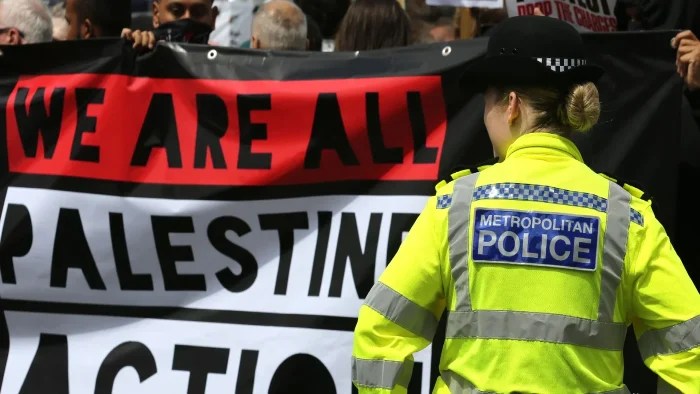
The Cradle | September 5, 2025
UK authorities charged six campaigners with 42 terrorism offenses on 3 September over their efforts to challenge the ban on Palestine Action.
They were released on bail the following day and placed under a strict curfew. Following hearings at Westminster Magistrates Court, the defendants, including former government lawyer Tim Crosland, were granted bail after the Crown Prosecution Service (CPS) requested they be held on remand.
Defend Our Juries (DOJ), the advocacy group to which the activists belong, said the judge’s decision prevented them from facing up to 18 months in custody due to court backlogs.
According to DOJ, the bail conditions include a tagged curfew between 7:00 am and 9:00 pm, a ban on contacting co-defendants, and a prohibition on supporting Palestine Action either “directly or indirectly.”
A DOJ spokesperson described the outcome as both relief and outrage. “We welcome the release of our key spokespeople and the judge’s decision to reject the CPS’s absurd attempt to remand them in prison for what could have been many months. However, the fact that they are now facing 42 charges between six of them and extraordinarily draconian bail conditions for hosting public Zoom calls is nothing short of a scandal.”
Police said the charges stem from an investigation led by the Counter Terrorism Command into allegations that the defendants coordinated protests and held 13 Zoom calls supporting Palestine Action.
Section 12 (2) of the Terrorism Act makes it a criminal offense to arrange a meeting in support of a proscribed organization, while Section 12 (3) criminalizes addressing such a meeting with the intent of encouraging support.
DOJ said the six were targeted by UK authorities when their homes were raided earlier this week, hours before they were due to announce details of a mass action planned for Saturday.
The group reported that homes were searched and the activists were held beyond the 24-hour custody limit before being charged.
The case follows the UK government’s 4 July decision to proscribe Palestine Action under anti-terror laws, a move triggered by an incident in which members broke into RAF Brize Norton and vandalized two military aircraft with paint and crowbars. The aircraft are reportedly linked to the genocidal war in Gaza and wider military operations across West Asia.
The designation equates the group with Al-Qaeda and the Islamic State, making public support for its activities punishable by up to 14 years in prison, a move strongly condemned by various groups and individuals as “grotesque,” “chilling,” and an “unprecedented legal overreach.”
Featured Video

Pentagon Fast Tracks Iran War Ground Option
or go to
Aletho News Archives – Video-Images
From the Archives
Gurus of the progressive community . . . Chomsky and Goodman
By Dave Alpert | Intrepid Report | May 23, 2016
There was a time when I, like tens of thousands of my progressive partners, held Noam Chomsky and Amy Goodman in awe. After all, Amy informed us and Noam spoke for us, coherently explaining the issues. However, as I became more aware and more informed, I realized that there were great differences between their thinking and mine.
In many instances, our gurus spoke with forked tongue. Although Amy’s program Democracy Now! was informative, there were many areas of reporting that were out of bounds and were not reported on.
One could legitimately claim that reporters cannot report on everything and they would be right. But let us be honest. When 9/11 occurred, it was an historical event and an event that changed the course of history. Where was Amy? Relatively silent. She invited David Ray Griffin, who has written several books illustrating the lies and misdirections of the government’s narrative about that day, to Democracy Now! which one could claim was a significant journalistic move.
However, instead of interviewing him so that he could reveal to her listening audience the facts that he had accumulated that put into question the government’s explanations of that day, she paired him with a pro-government guest who spent the hour attacking Griffin personally and ignoring any of the data Griffin produced. It became a three-ring circus and helped sabotage any impetus the Truth Movement might have gained within the progressive community. Was that her goal? I’m not sure I can answer that but it was a successful strategy, progressives seemed reluctant to support the Truth Movement. The Movement was being portrayed as one in which there were marginal “conspiracy nuts” leading the charge and should be avoided. … continue
Blog Roll
 Aletho News
- US Trying to Oust Russia From All Energy Markets – Lavrov
- Western silence allows Israel to get away with killing journalists
- The Israeli Media Is Laying The Groundwork For a Permanent Israeli Occupation Of Southern Lebanon
- Role reversal – “divide & conquer” used against the west
- Iran signals upper hand as the US-Israeli war reaches third week
- Airlines Suffer Losses Estimated at $53Bln Due to Middle East Conflict
- Have you heard the latest joke about Trump and Iran?
- Trump signals possible wind-down of aggression against Iran despite unresolved Hormuz crisis
- The American Fantasy of Iranian Surrender
- US sends more Marines to Middle East as Trump hints at wind-down; contradiction reflects face-saving bid to unsustainable war
- If Americans Knew
- Trump demands trillions in payments from Gulf countries, billions from Harvard – Not a ceasefire Day 162
- Meet the former fashion blogger and shady doctor behind the ‘30,000 dead’ Iran psy-op
- Vatican Secretary of State to Trump, Israel: End the war as soon as possible
- The Majority of Americans Believe War Against Iran Benefits Israel More Than US
- Efforts to shut down pro-Palestinian speech face series of setbacks in court
- What has Israel done to my brother?
- Eid without worship in Al Aqsa – Not a ceasefire Day 161
- Trump: Israel attacked Iranian gas field without US knowledge. No more such attacks!
- America’s friends must help extricate it from an unlawful war
- Democratic Nat’l Committee’s Kneejerk Backing of Israel Is Political and Moral Failure
- No Tricks Zone
- Former Pfizer Toxicologist Dr. Helmut Sterz Tells Bundestag Hearing Pfizer Vaccine Should Have Never Been Approved
- Energy Expert: Germany’s Nuclear Phaseout Was A “500 Billion Euro Mistake”
- New Research: South Australia’s Mid-Holocene Sea Surface Temperatures Were 4°C Warmer Than Today
- Storing Green Energy To Last Germany 10 Days Would Require A 60-Million Tonne Battery
- New Studies: UK Sea Levels Were 4 Meters Higher Than Today During The Mid-Holocene
- Destructive Green New Deal: German Energy And Metal Group Warns Of Drastic Crisis
- New Study Documents A 20-Year Pause In Arctic Sea Ice Decline – Driven By Internal Variability
- Wake-up Call: Survey Shows Majority Of Germans Now Favor Postponing Climate Targets!
- Televised! Leading German Political Candidate Tells Schoolchildren CO2 Makes Sun Hotter!
- New Study: A Century Warming Of 1.1°C Is ‘Commonplace’ And ‘Not Unusual’ During This Interglacial
 Aletho News