Scott Ritter: War Has Been Won & Russia Faces a Dilemma
Glenn Diesen | December 2, 2025
Scott Ritter is a former Major, Intelligence Officer, US Marine, and UN Weapons Inspector. Ritter argues Russia has defeated NATO and Ukraine, and now faces a dilemma about what kind of peace it wants.
Follow Prof. Glenn Diesen:
Substack: https://glenndiesen.substack.com/
X/Twitter: https://x.com/Glenn_Diesen
Patreon: https://www.patreon.com/glenndiesen
Support the research by Prof. Glenn Diesen:
PayPal: https://www.paypal.com/paypalme/glenndiesen
Buy me a Coffee: buymeacoffee.com/gdieseng
Go Fund Me: https://gofund.me/09ea012f
Books by Prof. Glenn Diesen
The Terrifying Case of Natalie Strecker
By Craig Murray | December 2, 2025
I am confident that over 2 million people in the UK have shared thoughts on the Genocide in Gaza that are stronger than anything Natalie Strecker has expressed.

I am quite certain that I am one of those 2 million.
Yet Natalie Strecker, an avowed pacifist and mother of young children, today faces up to ten years in prison under the Terrorism Act when the verdict in her case comes in.
Strecker is charged with eliciting support for Hamas and Hezbollah, based on 8 tweets, cherry-picked by police and prosecutors from an astounding 51,000 tweets she sent, mainly from the Jersey Palestine Solidarity Committee account.
The tweets were rather rattled off in court and referred to occasionally again in whole and in part. There may be minor inaccuracies not affecting sense, but this is the best reconstruction of those tweets that I can make (they were not displayed to the public):
“People will be individually resisting: otherwise we would be asking them to submit to genocide on their knees”
“Solidarity with the people of Lebanon and Hezbollah has the right to resist in international law, I remind you the occupier does not, and are legally obligated to try to prevent Genocide.”
“Solidarity with the resistance. In the same way that the reistance fought the Nazis in Europe, we must support the fight against the Nazis of our generation”.
“Resistance is their legal right under moral and international law. If you don’t want resistance, then don’t create the circumstances which require it. Solidarity with the Resistance.”
“This nonsense our nation has descended into, where one side is committing genocide, and the other is proscribed for fighting it. I believe Hezbollah may be Palestine’s last hope”.
“Hamas the resistance did not break out of their concentration camp to attack Jews as Jews. We can debate whether armed resistance is legitimate. Of course there should be no attacks on civilians.”
“I am sick of the MSM propaganda about “Hamas-run health ministry figures”. Hamas is the government in Gaza. Every health ministry in the world is run by its government.”
“Are you awake? So it is down to ordinary people like you an me to end it. We must take our power back. Join me in solidarity with the people of Lebanon and Palestine. Solidarity with the Resistance.”
That is it. The prosecution case is that these tweets, both collectively and individually, amount to an invitation of support for Hamas and Hezbollah resulting in up to ten years in jail in Jersey, or 14 years in jail on the UK mainland.
The prosecution explicitly stated, and the judge notably intervened to make sure that everybody understood, that it is the offence of supporting terrorism to state that the Palestinians have the right to armed resistance in international law.
Judge John Saunders interrupted the prosecution to ask whether they were saying that he would be guilty of support for terrorism if, in a lecture, he told an international law class that Palestinians have the right to armed resistance in international law.
After some kerfuffle when faced with such an awkward question, the prosecution replied that yes, it could be the offence to tell law students that.
I should point out, at risk of dying in jail, that the Palestinians are beyond doubt an occupied people in international law, and equally beyond doubt an occupied people have the right of armed resistance.
To state that the Palestinians have the right of armed resistance in international law is not in the least controversial as a statement of law. A few Zionist nutters would try to differ, but 95% of international lawyers on this planet would agree.
I assume by perfectly logical extension that this means the prosecution must believe it is a terrorist crime in UK law, for example, to quote UN General Assembly Resolution 37/43, which:
2. Reaffirms the legitimacy of the struggle of peoples for independence, territorial integrity, national unity and liberation from colonial and foreign domination and foreign occupation by all available means, including armed struggle;
3. Reaffirms the inalienable right of the Namibian people, the Palestinian people and all peoples under foreign and colonial domination to self-determination, national independence, territorial integrity, national unity and sovereignty without outside interference;
It is also worth stating that on Friday the prosecution stated, in these precise words, that “Resistance is synonymous with Hamas and Hezbollah” and that any support for, or justification of, Palestinian resistance is support for a proscribed organisation.
To repeat, there are millions of people in the UK who have stated stronger things than the tweets above. Including me. And, as the defence pointed out repeatedly, just eight tweets had been found after hundreds of hours of police time, and found amidst tens of thousands of other tweets on the Middle East, hundreds of which specifically urge non-violence.
So why are the police doing this to Natalie? Why did six armed police storm her apartment and rouse her young family at 7am a year ago, seizing all her electronics and papers, arresting her in front of her children and not allowing her to have a pee without leaving the bathroom door open so she could be observed?
This is where the story gets very dark indeed.
This is not a local Jersey initiative.
The prosecution is directed from London and Alison Morgan KC, senior Treasury counsel (UK government lawyer) is seated beside the local prosecuting counsel, openly puppeteering him every step of the way.
So why has the UK government chosen Jersey to prosecute a local pacifist mother whose statements provide possibly the weakest case of support for terrorism that has ever been heard in any court in the western world?
The answer is that here in Jersey there is no jury.
Facing this charge on the UK mainland Natalie would have a jury, and there is not a jury in the UK that would not throw this self-evidently vindictive nonsense out in 5 minutes.
Why is it worth the time and expense for Whitehall to send Alison Morgan KC here to direct a weak case against somebody who is obviously not a terrorist?
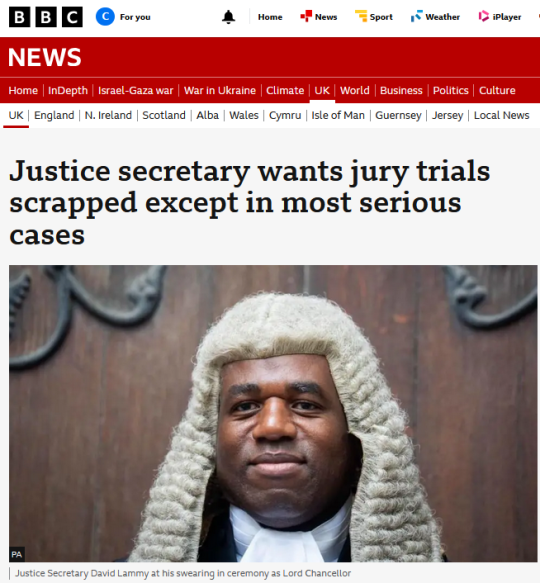
The plain answer is that this is a pilot for what they can get away with on the mainland when they abolish juries in such trials, as “Justice Secretary” David Lammy has announced that they will indeed do.
In Jersey the system is inherited from the Normans. The judge sits with two “jurats” or lay magistrates. They determine innocence or guilt. These come from a pool of 12 permanent jurats. In practice these are retired professionals and frequently have strong connections to the financial services industry.
What the jurats emphatically are not is Natalie Strecker’s working class peers of a kind who would be represented on a jury. I strongly recommend this brief article on the corruption of Jersey society by a man who was for 11 years the Government of Jersey’s economic adviser.
The judge, Sir John Saunders, seems a decent old stick in a headmasterly sort of way. He has told the court that “Mrs Strecker’s good character is not in doubt”. On Friday he stated that this was “A very difficult and in many ways a very sad case for the court to deal with. But I have to construe it according to strict legal principles”.
In the Palestine Action proscription case, as I reported, counsel for the UK government openly stated “We do not deny that the law is draconian. It is supposed to be”. In the mass arrests of decent people over Palestine Action, people have understood what a dreadfully authoritarian law the proscription regime is.
An intelligent observer cannot sit in Judge Saunders’ courtroom without realising that he thinks this is a dreadful law, but accepts that it is his job to enforce it. He reminds me of the caricature of the lugubrious headmaster stating “This is going to hurt me more than it is going to hurt you”.
In effect, Alison Morgan and the UK government are attempting through this prosecution to make even the most basic expression of support for Palestine a serious criminal offence. Remember that a terrorism conviction destroys your life – it almost certainly brings loss of employment, debanking and severe travel restrictions.
The International Court of Justice has decided that Israel has a real case to answer on Genocide, and most experts believe that Israel is committing Genocide. In Natalie’s correct image, the UK government is trying to make it a terrorist offence to say anything other than that the Palestinians should quietly submit to Genocide on their knees.
The danger is that the hubris of lay magistrates will lead the jurats to try cleverly to construe Natalie’s comments as support for terrorism in line with the government’s wishes. Natalie has, however, one defence in Jersey not available in mainland UK – here in Jersey the prosecution has to show intent: that she intended to cause support for terrorist organisations.
The prosecution has also relied on the extremely wide definition of support adopted in UK terrorist cases, that “support of” merely means “expression of agreement with”.
In defending the tweet about Hamas-run health ministry figures, Natalie Strecker’s counsel Luke Sette countered this rather well when he said: “there is no offence of causing people to think less badly of Hamas”
I confess however I am slightly puzzled that I have not heard the defence argue that the prosecution positions are grossly disproportionate violations of freedom of expression in terms of Article X of the European Convention of Human Rights.
I would have thought, for example, that was the natural thing to say in response to the prosecution’s contention that it would be a crime for a law lecturer to tell his class that the Palestinian people had the right of armed resistance in international law.
The verdict was decided yesterday afternoon between the judge and jurats. It will be presented in full written judgment in an hour’s time.
This is a truly horrifying case for Natalie, who cannot afford to lose her job with a Jersey government agency and most certainly does not wish to be jailed away from her children. I pinch myself to be sure that this is all really happening.
It is a truly horrifying case in terms of what the Starmer government intends to do on the mainland in further criminalising support for Palestine.
I do not support Hamas nor Hezbollah, being opposed to theocracy. But for it to be illegal to discuss the Genocide in Gaza and the role of these two organisations, unless you do it absolutely without either context or nuance, is Orwellian.
Western dissent is also a victim of the Zionist Genocide.
World’s largest pension fund demands Microsoft disclose its dealings with Israel
The Cradle | December 2, 2025
Norway’s $2-trillion sovereign wealth fund announced on 2 December that it is stepping up pressure on Microsoft over human rights concerns linked to the Israeli army’s actions in Gaza, backing a shareholder demand for greater transparency on the company’s global operations.
The sovereign wealth fund, the largest in the world, said it will vote in favor of a proposal calling on Microsoft to publish a report outlining human rights risks in countries where its products are used in contexts of “significant” rights abuses.
The proposal, submitted by the shareholder group EICO, will be presented at Microsoft’s annual general meeting on 5 December.
Its intervention follows reports that Microsoft’s software and cloud tools were deployed by the Israeli military in Gaza and the occupied West Bank, prompting renewed scrutiny of the company’s role in a war marked by widespread allegations of war crimes.
The fund said Microsoft must disclose how it identifies human rights dangers in sensitive markets, and explain whether its internal controls are effective. It stressed that boards cannot ignore the environmental and social impact of the products they approve.
Microsoft’s management has opposed the proposal and urged shareholders to vote it down.
Norway’s fund holds a 1.35 percent stake valued at $50 billion as of 30 June, making it Microsoft’s second-largest equity holding after Nvidia. LSEG data ranks the fund as Microsoft’s eighth-largest shareholder overall.
The fund also announced it will vote against CEO Satya Nadella’s reappointment as chair of the board, continuing its long-standing policy against one person holding both the CEO role and the board chair role.
It will oppose his compensation package as well, criticizing the scale of US executive pay and calling for remuneration to be weighted toward shares locked for five to 10 years regardless of whether executives step down or retire.
The “say-on-pay” vote is advisory and does not bind Microsoft’s leadership, even if a majority of shareholders oppose the package.
Norway’s fund, known for its ethical investment criteria, has previously rejected Elon Musk’s Tesla pay package and sold stakes in 13 Israeli companies on ethical grounds.
Its push at Microsoft highlights rising investor resistance to technology firms whose products are implicated in abuses, including those documented during Israel’s genocide of Palestinians in Gaza.
Investigations by +972 Magazine, Local Call, and The Guardian have detailed how Microsoft’s cloud infrastructure became embedded in Israeli military intelligence operations.
Leaked documents and interviews with current and former personnel show that Unit 8200 was granted a dedicated section of the Azure platform to store and analyze vast collections of intercepted Palestinian communications, a system intelligence officers say later informed airstrike planning in Gaza.
The reporting also describes mounting internal dissent at Microsoft, with employees accusing the company of supplying tools that enable Israel’s mass surveillance architecture.
Protests have pushed the company to open internal reviews, even as it denies its technology was used to identify targets. Documents cited by Bloomberg show Microsoft sought FBI assistance to track demonstrations by staff demanding the company sever its ties with Israel.
US tech giants to expand role in post-war Gaza strategy: Report
Press TV – December 2, 2025
A new report has revealed that US-based artificial intelligence firms Palantir and Dataminr are positioning themselves to take on a pivotal role in shaping the post-war security framework proposed for the Gaza Strip.
According to a report by the Israeli-Palestinian publication +972 Magazine on Tuesday, the companies have been integrated into the newly established Civil-Military Coordination Center (CMCC), a US-run operational hub in the southern part of the occupied territories where Washington and Israeli officials are coordinating the implementation of President Donald Trump’s 20-point plan for Gaza.
An official seating chart reviewed by +972 indicates that a “Maven Field Service Representative” from Palantir, referencing their battlefield analytics platform Project Maven, is assigned to the CMCC.
The hub, situated approximately 20 kilometers from the northern Gaza boundary, was opened in mid-October and currently accommodates around 200 US military personnel.
Project Maven, for which Palantir recently secured a $10 billion Pentagon contract to upgrade, gathers intelligence from various sources such as satellites, drones, spy planes, intercepted communications, and online platforms, reorganizing it into an “AI-powered battlefield platform” aimed at expediting military decision-making, including lethal airstrikes.
Palantir executives have described the system as “optimizing the kill chain,” and it has been previously utilized in US operations in Yemen, Syria, and Iraq.
Palantir has also strengthened its partnerships with Israeli forces during the current war, following a strategic agreement signed in January 2024 to support “war-related missions,” and has expanded its recruiting in Tel Aviv, doubling the size of its office over the past two years.
CEO Alex Karp has defended the collaboration amid international concerns over war crimes, saying that the company was the first to be “completely anti-woke.”
Documents reviewed by +972 also reveal the involvement of Dataminr, a US surveillance company, in internal CMCC presentations.
Dataminr, which utilizes AI to scan and analyze global social-media streams in real time, promotes its platform as providing “event, threat, and risk intelligence,” and has established partnerships with X to provide governments and law-enforcement agencies, including the FBI, with extensive access to public social-media data.
Both companies are expected to shape the “Alternative Safe Communities” model proposed under the Trump plan, which suggests relocating Palestinian civilians into fenced, heavily monitored compounds controlled by US and Israeli forces.
Within these zones, systems enabled by Palantir and Dataminr would be used to track mobile phones, monitor online activity, analyze movement, and flag individuals classified by AI as security risks.
Critics and analysts argue that this arrangement mirrors the predictive surveillance already deployed in Gaza over the past two years, including the AI-driven Lavender system used by Israel to create kill lists of suspected Hamas affiliates, which included public-sector employees such as police and medical workers.
Human-rights observers caution that such technologies have contributed to the extensive targeting of Palestinian families during an ongoing genocide.
The integration of US tech companies into the CMCC underscores a privatized model of occupation, one that sidelines Palestinian participation while expanding the role of AI-enabled policing, according to analysts.
For technology firms, the war presents an opportunity to access vast datasets and conduct real-world testing for new military systems.
Additionally, for Israel, it offers a way to outsource parts of the occupation while maintaining extensive control over Gaza’s population.
French journalist groups file complaint over press freedom restrictions in Palestinian territories
MEMO | December 2, 2025
The International Federation of Journalists (IFJ) and the National Journalists’ Union (SNJ) announced on Tuesday that they filed a complaint over restrictions on press freedom and alleged war crimes in the Palestinian territories, Anadolu reports.
The IFJ and SNJ said in a statement that they filed the complaint with Paris’s National Anti-Terrorism Prosecutor on Nov. 26 against unknown parties, citing numerous testimonies from French journalists collected anonymously.
“The freedom to inform and to be informed, fundamental principles, must become a reality again in Gaza and the West Bank,” the organizations said, reiterating the need for action and the role of the French justice system.
They noted that the media lockdown of Gaza, an “unprecedented” blackout in the conflict, and the “ruthless repression” of Palestinian journalists, along with 225 killings verified by the IFJ, remain “at the heart of the complaint.”
The two organizations referred to French journalists’ descriptions of daily reality on the ground, marked by denial of access, threats, confiscation of equipment, occasional physical assaults, arbitrary detentions, and sometimes even manhunts.
Underlining that the complaint does not target any specific individual, the watchdogs stressed that the obstacles documented are carried out by military and police units, customs and administrative services, and private individuals, including settlers in the occupied territories.
“The risk of being killed is real, sometimes tangible, when you find yourself pursued by thirty armed settlers. These violations of journalists’ fundamental rights cannot go unpunished,” said Vanessa Ripoche and Julien Fleury, general secretaries of the SNJ.
The statement also underscored that the reported acts take place in occupied territories, which “prevents Israel from invoking state immunity” and “allows French courts to take action,” as the violations target French nationals and affect their fundamental freedoms.
“This is the first time that a legal action of this nature—based both on systematic obstruction of journalists’ work and on war crimes targeting media professionals—has been brought before a national court to protect French reporters in a conflict zone,” said Ines Davau and Louise El Yafi, lawyers for the IFJ and SNJ.
Hezbollah and Saudi Arabia’s uneasy détente
By Tamjid Kobaissy | The Cradle | December 2, 2025
In West Asia, where sectarian politics and external meddling collide with local power struggles, few rivalries have been as entrenched or as symbolically loaded as that between Hezbollah and Saudi Arabia.
For decades, it embodied the broader confrontation between Iran and the Persian Gulf kingdoms – a proxy war defined by ideology, oil, and shifting battlefronts. But today, under the weight of new regional calculations, rising Israeli belligerence, and the cracks in American hegemony, that once-intractable hostility is giving way to a more ambiguous and tactical coexistence.
What is developing is neither an alliance nor even reconciliation. But for the first time, Hezbollah and Riyadh are probing the edges of a relationship long defined by zero-sum enmity. A pragmatic detente is emerging, shaped less by goodwill than by the shared urgency to contain spiraling instability across the region.
Tehran, Riyadh, and the long shadow of history
The long arc of the Hezbollah–Saudi confrontation is impossible to separate from Iran’s post-revolutionary clash with Riyadh. When Ayatollah Ruhollah Khomeini toppled the Shah in 1979 and declared the House of Saud a reactionary tool of western imperialism, the rupture was both ideological and strategic.
The Saudis responded by bankrolling Saddam Hussein’s devastating war against Tehran, and in 1987, relations cratered after Saudi security forces massacred Iranian pilgrims in Mecca. Khomeini’s message was scathing:
“Let the Saudi government be certain that America has branded it with an eternal stain of shame that will not be erased or cleansed until the Day of Judgment, not even with the waters of Zamzam or the River of Paradise.”
Decades later, the so-called Arab Spring of 2011 reopened the wound. While Tehran stood by its state allies in Damascus and Baghdad, Riyadh threw its weight behind opposition movements and fanned the flames of sectarian conflict.
In Yemen, the kingdom launched a military campaign against the Ansarallah movement and allied forces, which Tehran backed politically and diplomatically. After Saudi Arabia executed outspoken Shia cleric Sheikh Nimr al-Nimr in 2016, Iranian protesters stormed the Saudi embassy in Tehran, prompting Riyadh to sever diplomatic ties. The two regional powers would only resume relations as part of Chinese-backed mediation in 2023.
From Hariri’s abduction to assassination plots
Within this regional maelstrom, Hezbollah became a prime Saudi target. When the Lebanese resistance captured two Israeli soldiers on 12 July 2006, to secure the release of prisoners, Riyadh dismissed it as “uncalculated adventures” and held Hezbollah responsible for the fallout.
In Syria, Hezbollah’s deployment alongside former Syrian president Bashar al-Assad’s army placed it in direct opposition to Saudi-backed militants. In Yemen, the movement’s vocal support for the Ansarallah–led government in Sanaa triggered Gulf Cooperation Council (GCC) sanctions and terrorist designations.
Matters escalated in 2017 when Saudi Arabia detained then-Lebanese prime minister Saad Hariri and coerced him into announcing his resignation on television from Riyadh. Late Hezbollah secretary-general Hassan Nasrallah slammed the move as an act of war against Lebanon. The situation de-escalated only after French mediation.
In a 2022 TV interview, Nasrallah revealed that Saudi Crown Prince Mohammed bin Salman (MbS) was ready to authorize an Israeli plot to assassinate him, pending US approval.
Quiet channels, Iranian cover
The Beijing-brokered rapprochement between Tehran and Riyadh changed the regional tone but did not yield immediate dividends for Hezbollah. On the contrary, Saudi Arabia intensified its efforts to roll back Hezbollah’s influence in Beirut, especially following Israel’s October assault on Gaza and southern Lebanon.
Riyadh pressured Lebanese Prime Minister Nawaf Salam to implement the so-called “Barrack Paper,” aimed at politically sidelining Hezbollah and stripping its arms. Speaking to The Cradle, a well-informed political source reveals that the kingdom informed the former Lebanese army commander – now the country’s president – Joseph Aoun, that it would proceed with its plans even if they triggered civil war or fractured the military. The source describes this as emblematic of Riyadh’s short-term crisis management, mirroring Washington’s reactive regional strategy.
Despite this, signs of a tactical shift began to emerge. In September, Nasrallah’s successor, Sheikh Naim Qassem, publicly called for opening a “new chapter” in ties with Riyadh – an unprecedented gesture from the movement’s leadership. According to the same source, this was not a spontaneous statement.
During a visit to Beirut, Iranian national security official Ali Larijani reportedly recieved a message from Hezbollah to Riyadh expressing its openness to reconciliation. In a subsequent trip to the kingdom, Larijani presented the message to MbS.
While initially dismissed, it was later revisited, leading to discreet backchannel coordination directly overseen by Larijani himself.
Tehran talks and guarded understandings
The Cradle’s source adds that since then, three indirect rounds of Hezbollah–Saudi talks have reportedly taken place in Tehran, each under Iranian facilitation. The first focused on political de-escalation, while the latter two addressed sensitive security files, signaling a mutual willingness to test limited cooperation.
One provisional understanding emerged: Saudi Arabia would ease pressure on Hezbollah in Lebanon and drop immediate demands to disarm the movement. In exchange, Riyadh asked Hezbollah to keep its weapons out of Syria – echoing a broader Gulf consensus – and assist Lebanese authorities in curbing drug smuggling networks.
In private, Riyadh reportedly acknowledges Hezbollah’s military resilience as a strategic buffer against Israel’s regional belligerence. The Persian Gulf states no longer trust Washington to shield them from Tel Aviv’s increasingly unilateral provocations – as was seen in the Israeli strikes on Doha in September. But Hezbollah’s dominance in Lebanon remains a challenge to Riyadh’s political influence.
Hezbollah, Saudi Arabia, and the Iranian umbrella
The Hezbollah–Saudi contacts are just one strand in a broader strategic dance between Riyadh and Tehran. According to The Cradle’s source, Saudi Arabia has assured Iran it will not join any Israeli or US-led war, nor allow its airspace to be used in such a scenario. In return, Tehran pledged not to target Saudi territory. These commitments are fragile, but significant.
The source also reveals that US President Donald Trump had authorized MbS to explore a direct channel with Iran, tasking him with brokering understandings on Yemen and beyond. Larijani conveyed Iran’s openness to dialogue, though not to nuclear concessions. MbS reportedly stressed to Trump that a working accord with Tehran was essential to regional stability.
In parallel, Lebanese MP Ali Hassan Khalil, a close advisor to Parliament Speaker Nabih Berri, is expected to visit Saudi Arabia soon following meetings in Tehran. This suggests continued shuttle diplomacy across resistance, Iranian, and Saudi nodes.
Strategic divergence, tactical convergence
Still, no one should confuse these developments with a realignment. Rather than a reset, this is merely a tactical repositioning. For Riyadh, the old boycott model – applied to Lebanon between 2019 and 2021 – failed to dislodge Hezbollah or bolster pro-Saudi factions. Now, the kingdom is shifting to flexible engagement, partly to enable economic investments in Lebanon that require minimal cooperation with the dominant political force.
The pivot also serves Saudi Arabia’s desire to project itself as a capable mediator rather than a crude enforcer. The 7 October 2023 Operation Al-Aqsa Flood has tilted regional equations, while Israeli expansionism has become a destabilizing liability. A Hezbollah–Israel war would not stay confined to the Blue Line. Gulf cities, energy infrastructure, and fragile normalization deals would all be at risk.
From Hezbollah’s side, the outreach reflects both constraint and calculation. The resistance faces growing pressure: an intensified Israeli campaign, a stagnating Lebanese economy, and the need to preserve internal cohesion. A tactical truce with Riyadh offers breathing space, and possibly, a check against Gulf-backed meddling in Syria.
When Sheikh Naim Qassem declared that Hezbollah’s arms are pointed solely at Israel, it was also a signal to the Gulf: we are not your enemy.
The real enemy, for both sides, is the unpredictable nature of Israeli escalation. Riyadh fears being dragged into an Israeli-led regional war that it cannot control. Hezbollah fears encirclement through economic, political, and military pressure. Their interests may never align, but for now, they are no longer mutually exclusive.
Putin reveals new plans with China and India
RT | December 2, 2025
Moscow wants to further develop its economic ties with its key trade partners, China and India, President Vladimir Putin said at the ‘Russia Calling!’ investment forum on Tuesday.
Beijing and New Delhi have refused to join Western sanctions against Moscow over the Ukraine conflict and have instead boosted trade with Russia. The Russian leader hailed what he called a “rational and pragmatic” approach to cooperation taken by the two countries.
Putin paid tribute to “many years of friendship and strategic partnership” with both China and India, adding that the volume of trade with each has “significantly grown” over the past three years.
“We are aiming at taking cooperation with the People’s Republic of China and the Republic of India to a whole new level, including through enhancing its technological aspect,” Putin stated.
Russia and China nearly doubled their bilateral trade from 2020 to 2024, surpassing $240 billion last year. Last month, Russian Finance Minister Anton Siluanov said that the two nations had abandoned Western currencies in mutual settlements, with most payments now conducted in rubles and yuan.
Last month, Moscow and Beijing published a joint roadmap for further developing bilateral ties. They vowed to provide mutual assistance on issues ranging from agriculture, trade, ecology, and investment to AI and space exploration.
India’s exports to Russia are currently worth $5 billion, while imports from Russia amount to $64 billion. The countries are aiming to increase bilateral trade to $100 billion by 2030. Russia is also expanding joint production with India in many areas, both military and civilian.
Earlier on Tuesday, Kremlin spokesman Dmitry Peskov said that Moscow is also ready to share its technological knowledge with New Delhi. “Whatever can be shared with India, will be shared,” he said.
Putin is expected to discuss the joint production of Russia’s fifth generation Sukhoi Su-57 fighter jets with Indian Prime Minister Narendra Modi during his trip to India later this week.
The U.S. pressure strategy on Venezuela and the reconfiguration of power in the Americas
By Lucas Leiroz | Strategic Culture Foundation | December 2, 2025
The growing tension between Washington and Caracas once again sheds light on the role of the United States in the continent and on the nature of the hybrid threats employed by the White House when it faces governments that reject its strategic dominance. Although a direct military operation against Venezuela has not yet been confirmed, there are clear indications that the U.S. keeps this possibility open — or at least uses it as an element of geopolitical coercion. To understand the current scenario, it is essential to examine the interaction between structural factors, such as the Monroe Doctrine, and contextual variables linked to the present orientation of U.S. foreign policy.
Objectively, one cannot rule out that the U.S. may consider specific, even if limited, military actions against Venezuela. Closing the airspace, increasing electronic warfare operations, or intensifying airstrikes against vessels near Venezuelan waters may function as preparatory steps within a typical hybrid war model. However, a large-scale ground incursion would be extremely unlikely. Venezuela’s geography — marked by dense jungles, mountains, and vast areas that are difficult to access — makes any prolonged occupation a strategic gamble of high cost and low probability of success. Moreover, the existence of a civilian militia numbering in the millions would act as a force multiplier of resistance, raising the political and military price of an intervention.
Thus, if Washington does in fact opt for military measures, it would likely take the form of selective airstrikes, limited amphibious operations in the Caribbean, or acts of sabotage against critical infrastructure. It would be less a conventional war and more a calibrated effort of attrition — typical of U.S.-supported regime change campaigns since the post–Cold War era.
However, the current pressure on Caracas cannot be interpreted merely as an automatic continuation of the Monroe Doctrine, as many mainstream analysts often claim. Although this principle — which historically legitimized U.S. domination over the hemisphere — remains an ideological backdrop, the contemporary context demands a different analytical lens. The international system is undergoing an accelerated transition toward multipolarity, and Trump’s United States, aware of its relative loss of influence, has begun to recalibrate its strategic priorities.
In this scenario, Latin America reemerges as a zone of “geopolitical compensation.” Faced with the relative decline of U.S. influence in Eastern Europe, the Middle East, and even the Asia–Pacific, Washington seeks to reaffirm its dominance in the Americas as a way to maintain internal cohesion and external relevance. The hostility toward Venezuela must be understood within this strategy: it is not primarily about oil, nor ideology, but about structural repositioning in a world where the monopoly of Western power is eroding.
This move also directly serves the interests of the U.S. military–industrial complex, which requires permanent tension hotspots to justify high levels of funding. By reinforcing the narrative that “threats” are emerging within the western hemisphere itself, Washington legitimizes expenditures, mobilizes regional allies, and attempts to prevent Latin American countries from deepening ties with Eurasian powers.
Yet this posture may generate the opposite effect. The U.S. insistence on treating Latin America as its “strategic backyard” tends to accelerate the region’s search for autonomy. There is already an observable rise in South–South cooperation, integration efforts among Latin American states, and the growing willingness of local governments to diversify their geopolitical partnerships.
Venezuela, despite its internal difficulties, symbolizes part of this process. Resisting external pressure has become not only a matter of state survival but also a sign of the new distribution of power in the international system. The aggressive U.S. stance reveals, paradoxically, not its strength, but its difficulty in accepting the emerging multipolar configuration that is consolidating across all continents.
Europe just made Russia’s case for Odessa
By Gerry Nolan | The Islander | November 30, 2025
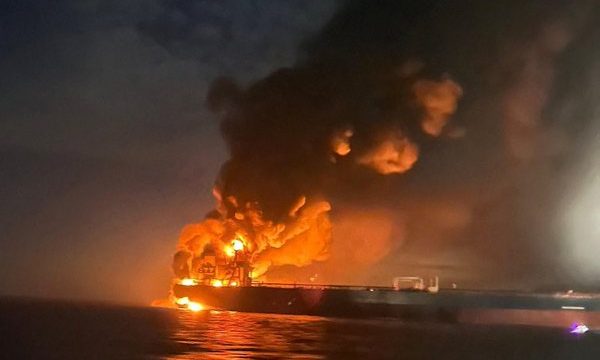
When you authorize naval-drone terrorism against Russian civilian oil tankers in the Black Sea, don’t whine when Moscow redraws the coastline. You wanted escalation? Fine. Now watch your proxy lose Odessa, and with it access to the Black Sea.
Washington is hunting for a face-saving imperfect peace after admitting Russia can’t be beaten. But London, and the EU — delusional, hysterical, and terrified of the coming reckoning from their own populations – keeps pushing the kind of escalation that guarantees one outcome: Russia removing Ukraine’s coastline so the Black Sea can’t be used as NATO’s private terrorism platform. Every naval-drone attack, every strike on a tanker, every British engineered terror op doesn’t weaken Russia, it strengthens Russia’s moral, legal and military argument for needing Odessa.
On Nov 21, Ukraine launched a MAGURA V5 naval drone packed with ~200 kg of explosives at the Russian tanker SIG, a civilian vessel transporting fuel. Earlier, on September 13, a coordinated drone-and-missile strike hit Sevastopol’s shipyard, damaging a patrol ship and igniting a fire visible for kilometres. In October, multiple MAGURA V5 drones attempted to strike the Sergey Kotov, a patrol corvette, the footage released by Ukraine’s GUR bears the hallmark of British-assisted targeting and mission-planning systems. The pattern is undeniable, Ukraine’s entire maritime warfare capability is thanks to the West.
These naval drones didn’t glide across the Black Sea on luck and instinct. With operational ranges approaching 800 kilometers, Ukraine’s MAGURA V5 drones strike far beyond coastal waters, but only with the eyes and brains of NATO. They rely on Western ISR: real-time satellite feeds from the UK and France, RQ-4 Global Hawk patrols off Romania, Starlink uplinks beaming mission data, and British-assisted target coordination. Europe wasn’t just observing. It was triangulating and commanding. And now, after cheering on attacks launched with AI-assisted maritime drones and foreign-fed targeting, Europe feigns shock that Moscow may erase access to the very coastline launching them.
Europe is not supporting Ukraine. Europe is sacrificing it, with full knowledge of what these strikes provoke. Every official in Brussels, London, and Paris understands Russia’s red lines, they’ve memorized them for years. They know that attacking civilian tankers, port infrastructure, and Black Sea Fleet assets from a Nato-commanded coastline forces Moscow to harden the entire southern theater. Yet they push Zelensky, their puppet, into terror operations that guarantee Odessa becomes a battlefield and cease forever to be a bargaining chip.
When a coastline becomes a NATO forward-operating platform masquerading as a proxy state, removing that coastline becomes self-defense. Europe knows this. Washington knows this. That is precisely why Europe, cornered and terrified of the political reckoning on its own soil, keeps escalating. Starmer fears British rage at the coming humiliation. Macron fears the streets of France. They all know what’s coming.
And here lies the supreme irony: the same political caste that spent decades sneering that Russia was “a glorified gas station” is now petrified at the thought of facing Russia without American cover.
Moscow now has zero incentive to leave a hostile coastline intact. Landlock Kiev. Neutralize NATO’s Black Sea fantasies.
When Odessa falls, Europe will shriek “aggression,” pretending not to remember who designed the drones, who funded and commanded the operations, daring Russia to respond. But the world will remember. And history will not record this as conquest. It will record it as the foreclosure of a coastline weaponized by Europe’s own madness.
Russia will will by turn the map into a verdict, one future generations of Europeans will demand their leaders answer for, and there will be hell to pay for the betrayal of Europe.
EU central bank rejects von der Leyen’s asset-theft plan
RT | December 2, 2025
The European Central Bank has refused to support a proposed €140 billion payout to Ukraine backed by frozen Russian assets held at Belgium’s Euroclear, the Financial Times reported on Tuesday, citing officials familiar with the discussions.
The ECB determined that the European Commission’s scheme falls outside its mandate, the newspaper reported.
The EU has spent months trying to tap frozen Russian central bank reserves to back a €140 billion ($160 billion) “reparations loan” for Kiev. Belgium, where around $200 billion of the assets is held at the privately owned Euroclear clearing house, has repeatedly warned of potential litigation as well as financial risks if the EU goes through with the scheme.
Under the European Commission’s plan, EU nations’ governments would provide state guarantees to share the repayment risk on the loan for Ukraine.
Commission officials, however, have warned that member states might be unable to mobilize cash quickly in an emergency, risking market strains.
EU officials reportedly asked the ECB whether it could act as a lender of last resort to Euroclear Bank, the Belgian depository’s lending arm, to prevent a liquidity crunch. ECB officials told the commission this was not possible, the FT reported, citing sources familiar with the talks.
“Such a proposal is not under consideration as it would likely violate EU treaty law prohibiting monetary financing,” the ECB said.
Brussels is now reportedly working on alternative ways to provide temporary liquidity to backstop the €140 billion loan.
“Ensuring the necessary liquidity for possible obligations to return the assets to the Russian central bank is an important part of a possible reparations loan,” the FT quoted an EC spokesperson as saying.
Euroclear CEO Valerie Urbain warned last week the move would be seen globally as “confiscation of central bank reserves, undermining the rule of law.” Moscow has repeatedly warned it would view any use of its sovereign assets as “theft” and respond with countermeasures.
The push comes as the cash-strapped EU faces pressure to finance Ukraine for the next two years amid Kiev’s cash crunch, with efforts to tap Russia’s assets intensifying as the US promotes a new initiative to settle the conflict. Economists estimate Ukraine is facing a budget gap of about $53 billion a year in 2025-2028, excluding additional military funding.
The country’s public and government-guaranteed debt ballooned to unseen levels of over $191 billion as of September, the Finance Ministry said. The IMF last month raised its debt forecasts for Ukraine, now predicting public debt at 108.6% of GDP.
Featured Video
It’s the Occupation, Stupid
or go to
Aletho News Archives – Video-Images
From the Archives
A superpower and “the world’s sickest warrior state”
By Paul J. Balles | March 8, 2010
Living through five or six major wars has hardened me to what I thought were the extremes of inhuman cruelty and brutality.
Two things made those extremes almost bearable: the brutality always revealed – at least according to the media coverage – the viciousness of the enemy. It was therefore quite understandable when our “brave men and women” pulverized the enemy.
Films of Japanese torturing captive Americans somehow justified holding Japanese Americans in internment camps during World War II; and only a small percentage of Americans found the bombing of Hiroshima and Nagasaki unreasonably vengeful at best, at worst, depraved.
The media giants in America portrayed the North Koreans as barbaric beasts with their captives, quite unlike their southern counterpoints – our allies during the Korean War. No one ever felt the need to explain how the South Koreans were a civilized breed while the North Koreans were absolute savages, at least according to the official line.
In Vietnam, our warriors justifiably (or so the media made us believe) dropped napalm on the North Vietnamese who had the gall to hide in villages and tunnels to ravage our invaders. At least it was accepted practice until some rogue photojournalist filmed a young girl screaming down a Vietnamese road in flames. … continue
Blog Roll
 Aletho News
- Pro-Palestinian French member of European Parliament denied entry to Canada
- Pakistan to Host US-Iran Talks
- How Indonesia’s tilt toward the US left it stranded in the Strait of Hormuz
- US has no choice but to retreat from Iranian borders: Top commander
- Iran Retaliation Strikes Chemical Plant Near Dimona
- AWACS’ Destruction is a Major Loss for US Military – Ex-DoW Analyst
- Israel’s Iran Strategy Uses US Military & Gulf States as Its Pawns
- Iran: Trump wanted regime change, now just begging for Hormuz to open
- IRGC: Israeli, US universities in region legitimate targets after strikes on Iranian university
- Trump admits Iran hit USS Ford carrier: ‘We ran for our lives’
- If Americans Knew
- Israeli police block Catholic cardinal from entering Church of the Holy Sepulchre on Palm Sunday
- Israel is assassinating journalists again, more than any other nation, anywhere, ever – Not a ceasefire Day 170
- Over 300 US service members wounded, majority have brain injuries – Not a ceasefire Day 169
- Researchers at Human Rights Watch Resign Over Blocked Report on Palestinian Refugee Return
- Jewish Groups Are Backing a War Americans Don’t Want
- Eric Fingerhut Thinks He’s the President of the Jews
- Top Jewish Philanthropists, Rabbis Urge Israeli President to Take Action Against ‘Jewish Extremists’
- Don’t Be Fooled. Zionist Leaders Have Always Wanted to Control Southern Lebanon
- Israel’s widespread use of torture is a core element of its genocide against the Palestinian people
- In Israel’s War on Iran, Many Middle East US Bases Rendered “All But Uninhabitable”
- No Tricks Zone
- German Science Blog Accuses PIK Climate Institute Of Hallucinating Climate Tipping Points
- Devastating Assessment Of Comirnaty Vaccine By Former Senior Pfizer Europe Toxicologist
- New Study: CO2 Is ‘Effectively Negligible’ As An Explanatory Climate Change Factor Since 2000
- Former Pfizer Toxicologist Dr. Helmut Sterz Tells Bundestag Hearing Pfizer Vaccine Should Have Never Been Approved
- Energy Expert: Germany’s Nuclear Phaseout Was A “500 Billion Euro Mistake”
- New Research: South Australia’s Mid-Holocene Sea Surface Temperatures Were 4°C Warmer Than Today
- Storing Green Energy To Last Germany 10 Days Would Require A 60-Million Tonne Battery
- New Studies: UK Sea Levels Were 4 Meters Higher Than Today During The Mid-Holocene
- Destructive Green New Deal: German Energy And Metal Group Warns Of Drastic Crisis
- New Study Documents A 20-Year Pause In Arctic Sea Ice Decline – Driven By Internal Variability
 Aletho News