EU Sanctions Swiss Analyst For Criticism Of The Ukraine Proxy War
The Dissident | December 15, 2025
The European Union has just released a new sanctions package intended to impose “restrictive measures in view of Russia’s destabilising activities”.
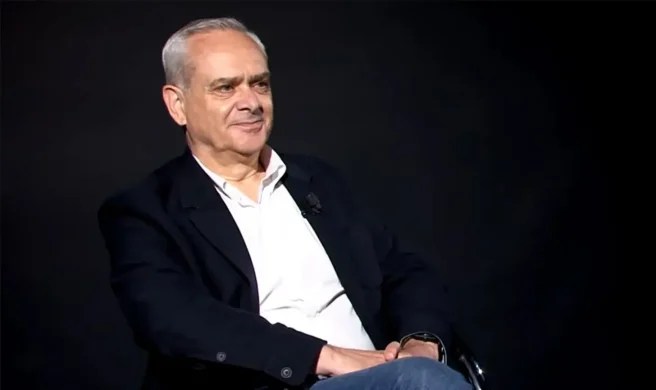
Among the people slapped with EU sanctions is Jacques Baud, a retired colonel in the Swiss army; former strategic analyst, intelligence and terrorism specialist, solely for his position and analysis of the war in Ukraine.
The EU accuses Baud of being “a regular guest on pro-Russian television and radio programmes” and being a “mouthpiece for pro-Russian propaganda” and claiming he “makes conspiracy theories, for example, accusing Ukraine of orchestrating its own invasion in order to join NATO.”
The EU accuses him of being “responsible for, implementing or supporting actions or policies attributable to the Government of the Russian Federation which undermine or threaten stability or security in a third country (Ukraine) by engaging in the use of information manipulation and interference” and imposed sanctions on him, solely because his position differs from NATO’s and the EU’s on the Ukraine war.
The outlet Switzerland24 noted that the sanctions on Baud, “provide for the freezing of the assets of sanctioned persons, a ban on entry into the EU and a ban on making funds available to them”.
Commenting on this, Alfred de Zayas, a former UN expert, noted, “We are witnessing a civilizational collapse with the EU sanctioning Jacques Baud, a retired Swiss colonel and intelligence officer, for publishing books and articles expressing views on the Ukraine war contrary to those of the NATO leadership.”
In reality, Jacques Baud’s position, as laid out in his article, “The Military Situation In The Ukraine” from April of 2022, is that, “the dramatic developments we are witnessing today (in Ukraine) have causes that we knew about but refused to see”, including
- The expansion of NATO
The fact that NATO expansion led to the Ukraine war has been acknowledged by multiple Western officials.
U.S. diplomat George Kennan, said as far as 1997 that NATO expansion towards Russia’s borders would be “the most fateful error of American policy in the entire post-Cold War era” adding that it would, “be expected to inflame the nationalistic, anti-Western and militaristic tendencies in Russian opinion; to have an adverse effect on the development of Russian democracy; to restore the atmosphere of the cold war to East-West relations, and to impel Russian foreign policy in directions decidedly not to our liking”.
In 1998, George Kennan said that NATO expansion was “the beginning of a new cold war” and said, “the Russians will gradually react quite adversely and it will affect their policies”.
In 2008, when NATO first invited Ukraine and Georgia to join, then U.S. ambassador to Russia, William Burns, said, “Ukraine and Georgia’s NATO aspirations not only touch a raw nerve in Russia, they engender serious concerns about the consequences for stability in the region. Not only does Russia perceive encirclement and efforts to undermine Russia’s influence in the region, but it also fears unpredictable and uncontrolled consequences which would seriously affect Russian security interests” adding, “Experts tell us that Russia is particularly worried that the strong divisions in Ukraine over NATO membership, with much of the ethnic-Russian community against membership, could lead to a major split, involving violence or at worst, civil war. In that eventuality, Russia would have to decide whether to intervene; a decision Russia does not want to have to face”.
Most recently, Amanda Sloat, a top Biden administration official for European affairs admitted that, “We had some conversation even before the war started, about what if Ukraine comes out and just says to Russia, ‘fine, you know, we won’t go into NATO if that stops the war, if that stops the invasion,’ which at that point it may well have done” adding that promising no NATO membership for Ukraine “certainly would have prevented the destruction and the loss of life”.
David Arakhamia, one of the lead Ukrainian negotiators during the Istanbul talks of 2022 also said, “Russia’s goal was to put pressure on us so that we would take (NATO) neutrality. This was the main thing for them: they were ready to end the war if we accepted neutrality, as Finland once did”.
- The Western refusal to implement the Minsk Agreements
Similarly, the fact that the West blocked the Minsk accords in 2019, the peace agreement that would have ended the civil/proxy war in Eastern Ukraine that sparked after the U.S.-backed 2014 Maidan coup, is well documented.
As former UK Prime Minister Boris Johnson admitted, “Zelensky is not an unreasonable guy, he got elected as a peacenik, in 2019 he tried to do a deal with Putin, as far as I can remember, his basic problem was that the Ukrainian nationalists couldn’t accept the compromise”.
What Johnson was referring to as the NGO Finnish Peace Defender documented was that,“While President Zelensky is trying to follow commitments given to his electorate and international obligations in implementation of the Minsk Agreements, he has to overcome obstacles placed by irregular armed groups who identify themselves as patriots of Ukraine” including “open threats and blackmail by far-right military circles in Ukraine, including the National Corps led by Andrii Biletski”.
Instead of backing Zelensky in implementing the Minsk Accords, Western-funded NGOs sided with the far-right nationalists in blocking them.
Ukranian-Canadian academic Ivan Katchanovski has documented, “The Western governments and foundations, such as Soros foundation, funded all but one of about two dozen Ukrainian NGOs, which initially issued in 2019 a collective statement that any talks with Donbas separatists were impermissible after the head of the Zelenskyy’s presidential administration supported creation of a consulting group with representatives of the separatist-controlled Donbas during the Minsk negotiations.”
- The continuous and repeated attacks on the civilian population of the Donbass over the past years, and the dramatic increase in late February 2022.
Indeed, while blocking the Minsk Accords, the Trump administration- trying to prove it was not controlled by the Russians as the media claimed based on the Russiagate hoax- approved sending lethal arms to the Ukrainian government in 2017 and 2019, which increased the civilian casualties on the pro-Russia side of the Donbas conflict.
Jacques Baud, in his article, cites a UN report which found that there were 381 civilians killed in the conflict between 2018 and 2021 and that 81.4% occurred “in territory control led by the self-proclaimed ‘republics’”, the pro-Russian separatist side.
Jacques Baud concluded that, “we can naturally deplore and condemn the Russian attack. But WE (that is: the United States, France and the European Union in the lead) have created the conditions for a conflict to break out”.
One is free to agree or disagree with Jacques Baud’s perspective, but the reality is, it is not a “conspiracy theory” or “information manipulation” but a fact-based analysis on the Western policies that led to the war in Ukraine, which is shared by well-respected foreign policy analysts, including John Mearsheimer, Jeffrey Sachs and Noam Chomsky.
The EU’s claim that Jacques Baud accuses “Ukraine of orchestrating its own invasion in order to join NATO”, appears to be a reference to the fact that Jacques Baud has cited a 2019 interview with the Ukrainian presidential advisor Oleksiy Arestovych where he said the best case scenario for Ukraine was “a large scale war with Russia and joining NATO as a result of defeat of Russia”, saying that currently, “NATO would be reluctant in accepting us”, but defeating Russia would lead to Ukraine joining NATO.
Again, directly quoting a Ukrainian government official is hardly a “conspiracy theory”.
Furthermore, it is blatantly undemocratic and authoritarian for the EU to slap sanctions on someone solely because he has a critical perspective on Western and EU foreign policy.
While the EU pushes for the continuation of the Ukraine war based on the principles of “democracy” and “freedom”, they blatantly disregard democracy and freedom in order to crack down on critics of this policy.
No comments yet.
Featured Video
Ted Postol: Fraud of Missile Defence Exposed in Iran War
or go to
Aletho News Archives – Video-Images
Frlom the Archives
“Contested histories”, “contested narratives”: What kind of nonsense is this?
A war of words and concepts!
By Khalil Nakhleh • January 28, 2010
Numerous books and articles have been written, guided by the main thesis that the reason for the prolonged and intractable conflict between Israel and Palestine, and which is constantly at an impasse, is that there are two “contested” histories (of Jews and Arabs in Palestine!), and two “contested” narratives. And one is directed to read and internalize that “contested”, in this sense, means that both narratives are equally valid and with equal legitimacy, and that all alternative reading and interpretation of it, and all attempts to question it are “subjective”, “very personal”, “emotive”, “irrational”, “not credible”, “unreliable”, and “removed from history” … This is, in my view, a total and utter nonsense.
Such an approach ignores actual historical developments and ignores origins of real versus mythical historical developments, and de-legitimizes the continued Palestinian presence in the land of historical Palestine.
Before the onslaught of the Zionist colonial attack on Palestine in the 19th century, there were no claims recorded that the history of Palestine was a “contested history”. The local history was clear and in sharp relief. The indigenous population in Palestine was largely Palestinian Arabs (Muslims and Christians), in addition to a small minority of Palestinian Jews. The majority and minority co-existed and interacted with each other, as they always do in other normal open spaces, through commerce, rituals and friendships, etc. This was in the entire region under Ottoman rule. … continue
Blog Roll
 Aletho News
- Ted Postol: Fraud of Missile Defence Exposed in Iran War
- How An Atrocity Propaganda Campaign Led To The U.S. And Israel Committing Real Atrocities In Iran
- Calls for the reconfiguration of military arrangements in the Gulf region
- Openly Pro-Israel Tech Group Now Has Control over UK’s Most Sensitive National Security Data
- US Intelligence Community is Covering its Ass… What is Really Going On with the US War on Iran?
- Step into My Parlor
- The Trump Administration is Lying About American Casualties in the Persian Gulf Region
- Hezbollah Foils Israeli Landing in Lebanon’s Bekaa
- Iraqi Resistance: Attacks on Beirut suburbs threaten US interests
- US approves $151.8M weapons sale to Israel, waiving congressional review
- If Americans Knew
- At Israel’s hands, Iran is burning, Lebanon and Gaza are crumbling – Not a ceasefire Day 149
- Israel is using the ‘Gaza doctrine’ in Lebanon and Iran
- Saudi journalist says ‘not all attacks’ on Gulf coming from Iran, fears US-Israel dragging monarchies into war
- Iranian officials say Israel carried out some of the drone strikes on Gulf energy sites
- US, Israel ravage Iran and Lebanon; 4 killed in Gaza – Not a ceasefire Day 148
- US troops were told war on Iran was ‘all part of God’s divine plan’, watchdog alleges
- Trump wants to run the show in Iran, but doesn’t know what he’s doing – Not a ceasefire Day 147
- ‘Dirty Work’ :The truth about how Israel was founded
- Mass Expulsion in Lebanon as Israel Expands War: “We Don’t Know Where to Go”
- Lies, distortions, and propaganda: how the U.S. mainstream media coverage on Iran hides the truth
- No Tricks Zone
- Wake-up Call: Survey Shows Majority Of Germans Now Favor Postponing Climate Targets!
- Televised! Leading German Political Candidate Tells Schoolchildren CO2 Makes Sun Hotter!
- New Study: A Century Warming Of 1.1°C Is ‘Commonplace’ And ‘Not Unusual’ During This Interglacial
- New Study: ‘Internal Noise’ And Volcanic Forcing Can Trigger 10-15°C Warming Within Decades
- Glaciers Worldwide Are Suddendly Surging, Experts Blame Warming!
- Surprising Discovery: Sahara Is Greening…Billions Of Trees Where Once Thought To Be Barren
- New Research Reaffirms Clouds, Aerosols, And Surface Solar Radiation Are ‘Driving The Climate System’
- Germany: Electric Car Catches Fire At Charging Station, Sets Off Local “Inferno”, Widespread Damage
- New Study: Canada’s New Brunswick Was 1°C Warmer Than Today During The Medieval Warm Period
- Coal Power Back In Trend As Globe Tries To Keep Pace With Growing Demand For Power
 Aletho News
Leave a comment