Yoon accused of staging DPRK provocation to justify martial law
Al Mayadeen | December 15, 2025
A special investigation led by Prosecutor Cho Eun-seok has revealed that former South Korean President Yoon Suk-yeol allegedly orchestrated covert military operations aimed at provoking a reaction from the Democratic People’s Republic of Korea (DPRK).
According to the final report released on Monday, Yoon attempted to manufacture a pretext for imposing martial law by sending drones into DPRK airspace. The investigation found that irregular military activities, including drone flights carrying propaganda leaflets, were conducted near Pyongyang.
Evidence obtained from the mobile device of Yeo In-hyung, the former chief of Counterintelligence Command, included detailed notes advocating for the creation of a wartime or chaotic environment that would appear to require emergency rule.
Despite these efforts, DPRK reportedly did not engage militarily in response, leading to the failure of the plan to justify emergency measures. In October 2024, DPRK authorities reported multiple drone incursions over the capital and claimed one had crashed nearby, but Seoul dismissed these accusations at the time.
Failed attempt to justify martial law
With no military retaliation from the DPRK, the focus of the alleged plan shifted inward, and Yoon was accused of trying to paint the April 2024 parliamentary elections as fraudulent, blaming supposed “anti-state forces” as part of a broader narrative to suspend parliamentary functions under martial law.
The investigation found that preparations for martial law began as early as October 2023. Plans included the immediate seizure of the Central Electoral Commission upon the declaration of emergency rule. Intelligence agents were reportedly assigned to detain and isolate commission staff accused of electoral misconduct.
Per the report, roughly 30 intelligence officers participated in an operation targeting the electoral commission. The group allegedly entered the commission’s premises without any legal authority, occupying key infrastructure such as server rooms.
They also had tools on hand, including blindfolds, cable ties, bats, and hammers, intended for use during detentions. Lists of targets were read aloud, and staff were to be transported to a regional military bunker. However, the martial law order was rescinded before arrests could occur.
The special prosecutor’s office concluded that these actions were designed to dismantle opposition forces, disable parliament, and centralize power under Yoon’s control.
Impeachment, political fallout
On December 3, 2024, President Yoon declared martial law, accusing the opposition of conspiring with the DPRK in a supposed plot against the state. Within hours, the South Korean parliament voted to cancel the declaration.
Yoon complied and issued a public apology.
According to the report, Yoon also ordered military and police forces to enter the National Assembly in an attempt to dissolve it. Lawmakers managed to enter the building, some even climbing over fences, and held an emergency vote to revoke the decree. The lack of military support and no external threat led to the collapse of the operation.
Just eleven days later, on December 14, the parliament voted to impeach Yoon over his attempt to unlawfully consolidate power. The new evidence added charges of treason and incitement of foreign aggression to Yoon’s ongoing legal battles, making conviction in his criminal trials increasingly likely
No comments yet.
Featured Video
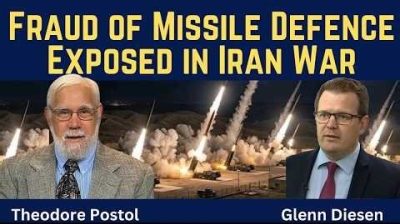
Ted Postol: Fraud of Missile Defence Exposed in Iran War
or go to
Aletho News Archives – Video-Images
Frlom the Archives
Containing the United States
By Edward S. Herman | Z Magazine | September 2016
“Containing the United States” is, of course, a ridiculous and self-contradictory idea in the U.S. and Western ideological and propaganda system. We all know that the United States had to “contain” the Soviet Union from 1945 to 1991, and since then has had the task of containing Russia and China. Only they threaten, bully, aggress and worry countries like Poland and Vietnam. Obama has had to reassure them both of our steadfast stand against Russian and Chinese military attacks. NATO has, of course, expanded greatly over the past several decades, despite the deaths of the Soviet Union and Warsaw Pact, but only to contain the renewed Russian — and Iranian, Libyan, Syrian and other — military threats; and we have “pivoted” to Asia, supported Japanese rearmament, bolstered our own forces in that area and jousted with the Chinese in their coastal waters solely to contain China. Earlier we had been obliged to contain North Vietnam, or was it the Soviet Union in Vietnam? Or China? Or “communism”? Or maybe all of them? Or none of them, but just needing an excuse to enlarge power?
The parallel propaganda has taken many forms. One is accepting as a premise that the United States only acts defensively and has no internal forces and interests that drive it to enlarge its sphere of control. I noted in an earlier article how Paul Krugman claims that internal Russian problems may well be the explanation of Russian “aggression,” but how at the same time it never occurs to him that the huge U.S. transnational corporate interests and “defense” establishment, and the pro-Israel lobby’s activities, might possibly make for an expansionist dynamic here.2 This reflects the standard establishment perspective that we are good and only react to evil. This was the view sustaining and justifying the invasion and occupation of Iraq from 2003. That attack was taken here as not evil but a response to evil, even if involving lies and mistakes, hence not describable as “aggression.” … continue
Blog Roll
 Aletho News
- When Tel Aviv decides, Washington fights
- Top official: Iran ready for a long war with US, no more diplomacy
- How Iran’s Toxic Rain Reveals US-Israel Discord
- Trump Admits He Is Destroying Iran For Israel
- Iran’s latest move in the GCC countries was a stroke of genius
- Blackmail and death threats, Zelensky embarrasses the EU, but there’s no condemnation
- Israel threatens to kill Iran’s new leadership
- Possible Scenarios for the Middle East
- The Horizon of the War. “Italy is being Dragged Into the War against Iran”
- A Second Vietnam War? Hanoi Waits and Prepares
- If Americans Knew
- Corporate Media Go All Out To Support The US-Israeli War On Iran
- US-Israel war on Iran is creating a steady growing number of amputees
- Israel planned this war on Iran for 40 years. Everything else is a smoke screen
- The wrong question about the war in Iran
- ‘Your Tax Dollars Being Used to Raise Your Gas Prices’: US-Israel Bomb Major Iranian Oil Depots
- ‘Bogus Evidence’: Former Nuclear Watchdog Head Debunks US Justification for Iran War
- EXPLAINER – Dimona: What to know about Israel’s nuclear site
- Fires and toxic air in Iran (thanks, Israel) – Not a ceasefire Day 150
- At Israel’s hands, Iran is burning, Lebanon and Gaza are crumbling – Not a ceasefire Day 149
- Israel is using the ‘Gaza doctrine’ in Lebanon and Iran
- No Tricks Zone
- Wake-up Call: Survey Shows Majority Of Germans Now Favor Postponing Climate Targets!
- Televised! Leading German Political Candidate Tells Schoolchildren CO2 Makes Sun Hotter!
- New Study: A Century Warming Of 1.1°C Is ‘Commonplace’ And ‘Not Unusual’ During This Interglacial
- New Study: ‘Internal Noise’ And Volcanic Forcing Can Trigger 10-15°C Warming Within Decades
- Glaciers Worldwide Are Suddendly Surging, Experts Blame Warming!
- Surprising Discovery: Sahara Is Greening…Billions Of Trees Where Once Thought To Be Barren
- New Research Reaffirms Clouds, Aerosols, And Surface Solar Radiation Are ‘Driving The Climate System’
- Germany: Electric Car Catches Fire At Charging Station, Sets Off Local “Inferno”, Widespread Damage
- New Study: Canada’s New Brunswick Was 1°C Warmer Than Today During The Medieval Warm Period
- Coal Power Back In Trend As Globe Tries To Keep Pace With Growing Demand For Power
 Aletho News
Leave a comment