Failed Diplomacy & Collapse of Ukraine
Glenn Diesen | December 22, 2025
Larry Johnson is a former intelligence analyst at the CIA who also worked at the US State Department’s Office of Counterterrorism. Johnson outlines why the negotiations are failing and what the pending collapse of Ukraine will entail.
Follow Prof. Glenn Diesen:
Substack: https://glenndiesen.substack.com/
X/Twitter: https://x.com/Glenn_Diesen
Patreon: https://www.patreon.com/glenndiesen
Support the research by Prof. Glenn Diesen:
PayPal: https://www.paypal.com/paypalme/glenndiesen
Buy me a Coffee: buymeacoffee.com/gdieseng
Go Fund Me: https://gofund.me/09ea012f
Books by Prof. Glenn Diesen
Victoria Moves to Force Online Platforms to ID Users and Expand State Powers to Curb “Hate Speech”
Victoria’s push to unmask online users marks a turning point where the rhetoric of safety begins to eclipse the right to speak without fear
By Cindy Harper | Reclaim The Net | December 23, 2025
Victoria is preparing to introduce some of the most far-reaching online censorship and surveillance powers ever proposed in an Australian state, following the Bondi Beach terror attack.
Premier Jacinta Allan’s new five-point plan, presented as a response to antisemitism, includes measures that would compel social media platforms to identify users accused of “hate speech” and make companies legally liable if they cannot.
Presented as a defense against hate, the plan’s mechanisms cut directly into long-standing principles of privacy and freedom of expression. It positions anonymity online as a form of protection for “cowards,” creating a precedent for government-mandated identity disclosure that could chill lawful speech and dissent.
During her announcement, Premier Allan said:
“That’s why Victoria will spearhead new laws to hold social media companies and their anonymous users to account – and we’ll commission a respected jurist to unlock the legislative path forward.”
Under the proposal, if a user accused of “vilification” cannot be identified, the platform itself could be held responsible for damages. This effectively converts private platforms into instruments of state enforcement, obligating them to expose user data or face financial risk.
The Premier also announced plans to accelerate the introduction of the Justice Legislation Amendment (Anti-vilification and Social Cohesion) Act 2024, which had been due to take effect in mid-2026. It will now be brought forward to April 2026.
The law allows individuals to sue others for public conduct, including online speech, that a “reasonable person” might find “hateful, contemptuous, reviling or severely ridiculing” toward someone with a protected attribute. These protected categories include religion, race, sex, gender identity, sexual orientation, and disability, among others.
This framework gives the state and private citizens broad interpretive power to determine what speech is “hateful.” As many civil liberties experts note, such wording opens the door to legal action based on subjective offense rather than clear, objective harm.
Weakening Oversight of Speech Prosecutions
Premier Allan also intends to remove a major procedural safeguard from Victoria’s criminal vilification laws: the requirement that the Director of Public Prosecutions (DPP) consent to police prosecutions. Without that check, police could independently pursue speech-based offenses, bypassing higher legal oversight.
This change would hand significant discretion to law enforcement in determining which speech crosses into criminality. Once enacted, it would mean that a person’s online comments could be prosecuted directly, without review from the state’s top legal office.
The “anti-hate” package extends beyond censorship. It proposes new powers for police to shut down protests in the aftermath of “designated terrorist events” and establishes a Commissioner for Preventing and Countering Violent Political Extremism to coordinate programs across schools, clubs, and religious institutions.
These measures, combined with the online anonymity restrictions, represent a substantial consolidation of state power over communication, movement, and association, all justified in the name of combating hate and maintaining safety.
Requiring companies to unmask users fundamentally undermines the principle of anonymous participation, a cornerstone of free expression, whistleblowing, and political organizing. Anonymity has historically protected vulnerable groups, dissidents, and small voices from retaliation.
Under Victoria’s proposal, those protections could erode rapidly as platforms are pressured to reveal identities or face litigation.
Laws targeting “hate speech” often extend far beyond their original purpose, evolving into broad speech controls that deter public criticism, satire, and unpopular opinions. Once enacted, such powers rarely contract.
More: Chris Minns Defends NSW “Hate Speech” Laws Linking Censorship to Terror Prevention
Who is the Pro-Israel Clique behind TikTok’s US Takeover?
By Romana Rubeo – The Palestine Chronicle – December 20, 2025
The short-form video social media platform TikTok, which has more than 170 million users in the United States and has become a central space for political discourse, journalism, and youth activism, finalized an agreement on Thursday to transfer control of its US operations to a newly created joint venture dominated by American and allied investors.
The deal, reported by multiple US media outlets including CNBC, Reuters, and the Associated Press, follows years of bipartisan efforts to force ByteDance, TikTok’s Chinese parent company, to divest from the app or face an outright ban under US national security legislation. The agreement is expected to close in January 2026.
Under the terms of the deal, TikTok’s US business will be placed under a new entity, commonly referred to as TikTok USDS, with majority ownership held by a consortium led by Oracle Corporation and the private equity firm Silver Lake, alongside MGX, an investment vehicle based in Abu Dhabi. ByteDance will retain a minority stake of just under 20 percent, the maximum allowed under US law, while existing ByteDance-linked investors will collectively hold a further share of the company.
Oracle will play a central role not only as an investor but also as TikTok’s so-called “trusted technology partner.” US officials have stated that Oracle will be responsible for hosting American user data and overseeing key aspects of the platform’s algorithm, an arrangement presented by the administration as a safeguard against foreign influence.
Is Israel Involved?
While no Israeli company or state-linked entity is formally involved in the ownership structure of the new TikTok US venture, the deal has sparked debate over the political affiliations and ideological positions of some of the corporate figures associated with the transaction.
Oracle, one of the principal investors, has long-standing ties to Israel through its leadership. The company’s chief executive, Safra Catz, is Israeli-American and has previously made public statements expressing strong support for Israel.
According to TRT, an email sent by former Oracle CEO Safra Catz to former Israeli Prime Minister Ehud Barak was disclosed following a hack of Barak’s email account.
“We have all been horrified by the growth of the BDS movement in college campuses and have concluded that we have to fight this battle before the kids even get to college. We believe that we have to embed the love and respect for Israel in the American culture. That means getting the message to the American people in a way they can consume it,” Catz reportedly wrote in February 2015.
Oracle co-founder Larry Ellison has also been widely reported to have close political and personal relationships with Israeli leaders and to have donated to pro-Israel causes over many years.
According to the Jewish Telegraphic Agency, Ellison is among the largest private donors to the Israeli army. Reporting on a Beverly Hills gala organized by The Friends of the Israel Defense Forces in 2017, the JTA wrote: “Larry Ellison, the co-founder of Oracle and its executive chairman, gave $16.6 million — the largest single gift in FIDF history.”
Ellison has also publicly described Israel as his own state.
According to Responsible Statecraft, the online magazine of the Quincy Institute, Ellison holds extensive interests across major news, television, and Hollywood media companies, largely through the recent takeover of Paramount by Skydance Media, a group now led by his son, David Ellison. The report also noted that David Ellison is considering appointing openly pro-Israel journalist Bari Weiss to a senior executive role at the newly acquired CBS network.
The report also mentioned that David Ellison is considering appointing openly pro-Israel journalist Bari Weiss to a senior executive role at the newly acquired CBS network.
Limitations on Freedom of Expression
Civil liberties groups and pro-Palestinian advocates have repeatedly warned that the restructuring of TikTok’s ownership could have consequences for freedom of expression, particularly regarding content related to Palestine and Israel.
These concerns come against the backdrop of repeated complaints from activists and journalists about the suppression or downranking of pro-Palestinian content across major social media platforms since the start of Israel’s war on Gaza.
Pro-Israel Organizations Welcome the Deal
At the same time, pro-Israel organizations in the US have publicly welcomed the sale, framing it as an opportunity to address what they describe as antisemitism and hostile narratives on TikTok.
For example, leaders of the Jewish Federations of North America (JFNA), one of the largest umbrella groups representing Jewish communities in the US, issued a public statement framing the proposed TikTok deal as an opportunity to tackle what they described as the “antisemitism” on the platform.
Israeli officials and commentators have also emphasized the strategic importance of social media platforms in shaping public opinion, particularly among younger audiences.
Even former US Secretary of State Hillary Clinton has recently claimed that young Americans, including young Jewish Americans, hold increasingly critical views of Israel because they are being misled by “pure propaganda” and “totally made up” videos on TikTok and other social media platforms.
Speaking at a summit in New York hosted by Israel Hayom on December 2, Clinton repeatedly suggested that widely documented information circulating online about Israel’s genocidal actions in Gaza is fabricated, and expressed concern that students “don’t know the history and don’t understand.”
Clinton described it as “a serious problem” that young people rely heavily on social media for their information, despite the fact that the videos, documentation, and reporting she dismissed have been independently verified by journalists, human rights organizations, UN bodies, and legal experts investigating Israeli war crimes and genocide.
Romana Rubeo is an Italian writer and the managing editor of The Palestine Chronicle. Her articles appeared in many online newspapers and academic journals.
German politicians and police on lobby trips to Israel
By Leon Wystrychowski | MEMO | December 23, 2025
Several recent investigative reports in Germany’s alternative media have revealed that Israel has been stepping up efforts to invite German decision-makers in order to exert influence and initiate business deals. The focus is primarily on senior politicians and high-ranking officials within Germany’s security apparatus.
Propaganda trips for politicians
Mondoweiss and Declassified UK recently highlighted that trips to Israel are among the “less well-known” yet widely used tools of the Israel lobby to influence senior politicians. The same appears to be true of Germany, as the left-wing daily Neues Deutschland has now exposed. According to the paper, as recently as last November some 160 politicians from across Germany and from a wide range of parties were invited to Israel as part of what was described as an “influence operation”, where they took part in a five-day programme.
The trip was so clearly a propaganda exercise that even hardline Zionists among the hand-picked guests later complained to the Israeli daily Haaretz that it had amounted to a “one-sided PR operation”. The itinerary included sites where fighting with the Palestinian resistance had taken place on 7 October 2023, the Holocaust memorial Yad Vashem, a guided tour of a factory belonging to the Israeli arms manufacturer Rafael, and the Old City of occupied East Jerusalem, under illegal Israeli control since 1967. Representatives of the Israeli government also reportedly made use of the opportunity to rail against the establishment of a Palestinian state and against a “two-state solution”.
As the authors point out, although the November delegation was the largest of its kind to date, it was by no means the first. Since 2014, politicians from all German parties – with the exception of the far-right AfD – have regularly been invited on similar trips. While such visits in the United States are organised by AIPAC and its affiliates, in the UK and Germany they are handled by organisations such as the European Leadership Network (ELNET) or the so-called Nahost Friedensforum (Middle East Peace Forum). In all three countries, these trips and their funding are frequently obscured, using a mix of legal and legally questionable methods. In 2024, for example, a senior Green Party politician in Germany resigned after it emerged that he had failed to declare such a trip as a donation.
German police on a “study visit” to an apartheid state
These trips are by no means limited to politicians. As reported by the German online outlet Itidal, Berlin’s police chief and newly appointed head of the “Association of Police Presidents in Germany”, Barbara Slowik Meisel, recently travelled to Tel Aviv at the invitation of the Israeli police. She was accompanied by senior officials from across Germany and from various police institutions. The Israeli side covered accommodation and meals, while the travel costs themselves were paid by German taxpayers.
The occasion was reportedly a “Multidisciplinary Emergency Management Commissioner’s Conference”. The visit had been preceded by a trip to Berlin in October by Israel’s police chief, Daniel Levi, during which he extended the invitation. According to Itidal, the conference featured extensive propaganda against the Palestine solidarity movement, which was portrayed as an extension of Hamas. There were also calls for increased repression of dissenting views and information online. In addition, no fewer than twelve arms manufacturers presented their products.
In this case too, the trip was not made public. As Itidal explains, this is not illegal, but it is highly unusual. Despite the frequently proclaimed “German Staatsräson” (reason of state), under which Berlin declares its firm and unconditional support for Israel, there appears to be a clear awareness of the moral and legal problems this entails. There is endless rhetoric about “Israel-related antisemitism” and “solidarity with Israel”; weapons are supplied for a genocide; the illegal occupation and apartheid condemned by the International Court of Justice are financially supported; Israeli expertise in surveillance, crowd control and warfare is utilised; and lobby trips are eagerly undertaken. Yet speaking about all this openly and transparently is something Germany’s political and security elites evidently prefer to avoid.
Israeli military superiority undermines US interests: Report
Al Mayadeen | December 23, 2025
When US President Donald Trump announced in November 2025 that he would approve selling advanced F-35 fighter jets to Saudi Arabia, Israeli Prime Minister Benjamin Netanyahu immediately sought assurances from US Secretary of State Marco Rubio. The US was quick to affirm an unwavering commitment to preserving “Israel’s qualitative military edge” over all countries in West Asia.
And this commitment is not merely political; it’s the law. According to an analysis by Josh Paul, a former State Department director who spent over 11 years in the Bureau of Political-Military Affairs before resigning over Gaza policy in 2023, this legal requirement is producing outcomes that directly contradict US strategic interests in the region.
Writing in Responsible Statecraft, Paul draws on his insider experience to argue that what was intended as a tool for maintaining regional order aligned with American interests may now be fueling instability.
Cold war era policy
The concept of “Israel’s” “qualitative military edge” (QME) emerged in the 1970s as a mechanism to ensure a regional balance of power favorable to US interests by guaranteeing Israeli military superiority. Paul traces how this informal policy became codified in 2008 legislation that defines QME as “Israel’s” ability to “counter and defeat any credible conventional military threat from any individual state or possible coalition of states or from non-state actors, while sustaining minimal damages and casualties.”
The law requires the State Department to assess every major US arms transfer to West Asian and North African countries, from Morocco to Iran, to ensure it doesn’t threaten “Israel’s” military dominance. In practice, since Iran has not purchased US weapons since 1979, this applies exclusively to Arab states, effectively institutionalizing a regional hierarchy with “Israel” at its apex.
Paul describes a classified process involving multiple agencies and Israeli input: “At the annual Department of Defense Joint Political Military Group meeting, the Israelis typically make a presentation that includes a list of systems they deem threatening to their QME.”
Three options, three problems
When Arab countries seek advanced US weapons, Paul explains, the US government is faced with three choices, each with significant drawbacks.
The first is compensating “Israel” with superior technology. When the Obama administration proposed selling F-16s to the UAE in 2013, it had to simultaneously offer “Israel” advanced radars to detect those very aircraft. But this approach, Paul argues, directly fuels regional arms races, potentially violating other US laws that explicitly aim to “discourage arms races.”
The second option involves limiting sales through quantity restrictions, geographical constraints, or technological downgrades. But these limitations, Paul notes, can strain relationships with Arab partners who face genuine security threats.
The third option, denying sales outright to preserve “Israel’s” edge, may produce what Paul calls “perverse incentives.” Arab governments denied US weapons often turn to China, Russia, or France instead, reducing US influence over their defense capabilities and potentially introducing systems Washington cannot monitor or constrain.
This shift threatens the very regional order the QME policy was designed to maintain, as it allows competing powers to establish military footholds in West Asia.
The diplomatic cost of military dominance
Beyond arms sales logistics, Paul identifies a more fundamental problem: guaranteed military superiority may discourage Israeli affairs. “Because Israel remains assured that the United States will help it retain military superiority over the entire region, Tel Aviv may feel able to rely on such superiority rather than engaging in diplomacy,” he writes.
He argues that “Israel’s” recurring reliance on military force “arguably contributes to instability across the Middle East as a whole,” creating a paradox where the policy designed to enhance Israeli security and maintain a “stable” regional order may actually generate the very threats it aims to prevent.
An outdated framework?
Paul questions whether the QME framework still makes sense given recent diplomatic developments. Israeli officials themselves argued during the 2020 F-35 sale to the UAE that the country had become “an ally in confronting Iran” and the sale wouldn’t violate US commitments. Yet Paul notes from his government experience that pro-“Israel” advocacy groups like AIPAC continued opposing such sales “behind closed doors,” regardless of intensifying normalization efforts between Arab states and the entity.
More fundamentally, Paul argues that military technology is evolving in ways that may make the QME unsustainable. Military analysts increasingly suggest the world faces a revolution characterized by “low-cost weapons systems capable of overcoming high-tech capabilities,” a shift that could render “Israel’s” technological edge less decisive and the entire framework obsolete.
Paul concludes that US and Israeli policymakers should explore alternatives to what he calls “Israeli military hegemony and the inherent fragility that it brings to the region.” He argues that “diplomacy and compromise, including the need for real progress on Palestinian self-determination, promises the only real exit from the isolation that the QME has allowed Israel to impose on itself.”
For Paul, who left his State Department career over these very contradictions, the message is clear: a policy conceived to ensure a regional order favorable to US interests through military dominance may now be achieving the opposite, undermining both regional peace and American strategic influence in the process.
Pentagon’s claim of China’s ICBM a pretext for US to upgrade nuclear power: FM

Chinese Foreign Ministry spokesperson Lin Jian. Photo: China’s Ministry of Foreign Affairs
By Liu Xuanzun and Liu Caiyu | Global Times | December 23, 2025
A draft Pentagon report claimed China has likely loaded more than 100 ICBMs in silo fields, Reuters reported on Monday. Chinese military observers noted that the Pentagon’s reports are full of speculation and aim to hype up the so-called China threat rhetoric.
Citing the draft Pentagon report, Reuters claimed that China has loaded more than 100 intercontinental ballistic missiles into three newly constructed silo fields near its border with Mongolia and showed little interest in arms control talks.
In response, Chinese Foreign Ministry spokesperson Lin Jian stated on Tuesday that “I’m not familiar with what you cited as a US draft report, but we’ve been hearing the same story told and retold by the US to create pretext for speeding up the upgrade of US nuclear power and disrupting global strategic stability. The international community needs to be soberly aware of that.”
“The US, as a nuclear superpower sitting on the world’s biggest nuclear arsenal, must fulfill its special and primary responsibility for nuclear disarmament, further make drastic and substantive cut to its nuclear arsenal, and create conditions for other nuclear-weapon states to join the nuclear disarmament process. This should be a high priority for the US,” Lin said.
Lin noted that just last month, the Chinese government released a white paper entitled China’s Arms Control, Disarmament and Non-Proliferation in the New Era with a full overview of China’s nuclear policy and position on nuclear disarmament. China remains firmly committed to the policy of no first use of nuclear weapons and a nuclear strategy that focuses on self-defense.
China keeps its nuclear strength at the minimum level required by national security and does not engage in any nuclear arms race with any country, Lin said, noting that China takes an active part in the review process of the Treaty on the Non-Proliferation of Nuclear Weapons and meetings of the P5 (five nuclear-weapon states) mechanism, and maintains dialogue with various parties on nuclear disarmament.
Song Zhongping, a Chinese military affairs expert, told the Global Times on Tuesday that this report is fundamentally based on subjective speculation by the US and that its assessment is pure hype.
The US, possessing the largest nuclear arsenal, must take the lead in disarmament talks – a step that the country has yet to fulfill. Given that China’s nuclear arsenal is only a fraction of the size of America’s, there is no justification for China to join such negotiations at this stage, Song added.
Chinese military affairs expert Zhang Junshe told the Global Times that China’s nuclear capabilities are maintained at the minimum level necessary for defense, primarily intended for nuclear counterstrikes and retaliatory strikes in response to nuclear attacks. China has continuously and publicly stated its position clearly, which is that it will not be the first to use nuclear weapons.
The significant disparity in scale between China’s nuclear capabilities and those of the US and Russia makes it both unfair and unreasonable to demand China’s participation in nuclear arms control negotiations at this stage, Zhang said.
“So, by hyping this issue, the US is attempting to pressure China, with the ultimate goal of hindering the normal development of China’s national defense capabilities,” Zhang said.
Drawing China into arms control negotiations serves as a strategic pretext for the US to assert a balance of power, analysts said.
The US government in October cited Russia’s missile tests and China’s growing nuclear capabilities as a justification for a decision to resume nuclear weapons testing “immediately,” according to a Fox News report.
Last year, a Pentagon report also alleged that China is rapidly growing its nuclear arsenal and likely to have 1,000 nuclear weapons by 2030. It hyped that China has added at least 100 nuclear warheads to its stockpile over the past year and now has more than 600 in its inventory, according to Politico report.
In response, China’s Defense Ministry spokesperson Zhang Xiaogang said that the report had misinterpreted China’s defense policies, speculated about China’s military capacity development, flagrantly interfered in China’s domestic affairs, desperately slandered the Chinese military and exaggerated the so-called military threat posed by China.
On China’s development of nuclear weapons, Zhang stressed that the intention is to safeguard the country’s strategic security.
But the US, which has the largest and most advanced nuclear arsenal in the world, sticks stubbornly to a policy of first use of nuclear weapons, undermining international and regional peace and stability. He called on the US to reduce the role of nuclear weapons in its national and collective security policy to respond responsibly to the international community, the spokesperson said.
US’ ‘100x More Powerful’ Battleship Dreams Vs. Hard Reality
Sputnik – December 23, 2025
The Trump administration has touted grand plans for a new class of surface warships that would carry nuclear-armed cruise missiles — along with an entirely new generation of aircraft carriers. The plan calls for at least 25 battleships, each larger than existing destroyers, bristling with hypersonic missiles, lasers, and electromagnetic rail guns.
President Donald Trump has vowed that the new battleships would be “the fastest, biggest, and 100 times more powerful” than any ever built, and would mark the return of a platform the US Navy stopped building in 1944.
However, that happened for reasons that haven’t changed much since: Cost, complexity, and usefulness in modern warfare.
- There is currently no funding in the Pentagon’s budget for any of this
- There are no finalized engineering plans, according to media-cited insiders
- Designing and building a brand-new class of heavily armed warship is a decade-long affair
- Proposed timeline of roughly two and a half years would be ambitious for a modest refit, let alone a nuclear-capable battleship
- US shipyards are already behind schedule on every Navy ship currently under construction, many by more than a year
- Operating a large fleet of complex, one-off ship classes would impose decades of costs for training, spare parts, and logistics
- Chronic labor shortages, aging infrastructure, and supply-chain bottlenecks have been standard features of US naval shipbuilding for years
- Former Navy officials warn that sustaining such a fleet could crowd out funding for everything else — from existing ships to next-generation aircraft — unless older vessels are retired early
Industry analysts were quick to note that the proposal also runs against the Navy’s own recent strategy, which emphasizes smaller, unmanned, and more distributed maritime systems rather than large, crew-heavy ships.
Trump Debuts the Next US Navy Ship Disaster
By Bill Buppert | The Libertarian Institute | December 23, 2025
POTUS revealed the latest US naval ship catastrophe, the Mango Emperor-class battleship.
Apparently he and his staff did not get the memorandum from 8 December 1941.
The US Navy has not built a successful hull since the Arleigh Burke (early 90s) and has had huge problems with the Zumwalt, Little Crappy Ship and the Ford carrier.
Did I mention the latest mercifully euthanized USN Constellation frigate program that got cancelled after the Navy sunk nearly $2 billion into the program before cutting it in late 2025, with costs per ship rising from $1B to $1.4B? Those costs would not have been near accurate if recent history is any indication.
No one responsible for those massive shipbuilding fiascos has been disciplined, fired or cashiered.
No one has been held responsible.
Make the USN Board of Inspection and Survey (INSURV) and the Navy Inspector General great again with merciless transparency and revelation.
No one has informed the US naval intelligentsia and the cool kids in uniform and that the missile age at sea, salvo competition and a war of leakers put all 21st century surface warfare in the hazard without a radical reappraisal of how peer combat at sea in a contested environment will work out for exquisite platforms.
My forecast: if they proceed with this folly, they will adopt concurrent technology (not mature at hull construction), they will proceed with construction with a percentage of the design unresolved, it will be over-budget & very late in schedule delivery, the USN will accept incomplete hulls and once commissioned it will be rife with operational readiness delays and major flaws in construction.
Same as it ever was.
Shame.
PS: American shipyards are building three of the 5,448 large commercial vessels on order worldwide.
Ukraine: Does Europe Work for a Stalled Conflict?
Why negotiations are blocked and why a long, managed conflict is becoming the default outcome.
By Ricardo Martins – New Eastern Outlook – December 23, 2025
Negotiations to end the conflict in Ukraine appear stalled not because of a lack of diplomatic encounters, but because there is no shared understanding of what the proxy war is about, nor of what a settlement should address. The Berlin meeting illustrated this structural deadlock.
Russia continues to restate a limited and stable set of core demands, above all, Ukrainian neutrality and the rollback of NATO’s military footprint, while Europeans and Ukrainians advance proposals that explicitly negate these demands. This is not a negotiation gap; it is a conceptual incompatibility.
The American role exacerbates this problem. The United States oscillates between mediator and belligerent, without committing to a coherent diplomatic line. Instead of deploying professional diplomatic teams with a clear mandate, Washington relies on ad hoc envoys and transactional approaches. Trump’s inclination towards deal-making, inspired by business logic rather than diplomatic craft, leads to contradictory signaling: reassurance to Moscow followed by alignment with European and Ukrainian maximalist positions. This reinforces Russian perceptions that talks are performative rather than substantive.
From a European perspective, the refusal to listen to Russia’s security concerns is justified through a normative framing of the conflict: Ukraine is the victim, Russia the aggressor, and therefore only Ukrainian security deserves guarantees. This position, articulated explicitly by EU figures such as Kaja Kallas, forecloses any bargaining space.
Russia is delegitimised as a security actor, and empathy, understood here not as moral approval but as analytical capacity to understand the other side’s threat perception, is absent. The result is a strategy that implicitly accepts the continuation of the conflict until Ukraine collapses militarily or Russia concedes its defeat, a scenario that seems unrealistic.
Meanwhile, Russia senses that time is on its side. Battlefield dynamics, industrial mobilisation, and political cohesion reinforce Moscow’s assessment that it can achieve its objectives through attrition. In this context, concessions would be irrational from a realist standpoint.
As negotiations fail, Europe and Ukraine increasingly rely on asymmetric strategies, such as sabotage, attacks on Russian assets, and irregular warfare, openly endorsed by Western intelligence discourse, including references by the head of MI6 to Second World War–style special operations. This marks a shift from conflict resolution to conflict management.
Financing Ukraine: strategic risk without political consent
Europe’s approach to financing Ukraine reveals a second layer of contradiction. The decision not to confiscate Russian frozen assets, but instead to fund Ukraine through EU borrowing (€90 billion for 2026–2027) acknowledges the legal, financial, and systemic risks involved. Belgium’s concerns over Euroclear, the threat of credit downgrades by rating agencies such as Fitch, and the exposure of European pension funds and financial institutions underline the fragility of this strategy.
Yet this choice was made without a social pact with European citizens. There has been no democratic debate proportionate to the scale of financial commitment. At a time when European societies face mounting pressures on housing, welfare, pensions, and infrastructure, war financing is normalised as a moral and face-saving necessity rather than a political choice. This fuels domestic resentment and strengthens nationalist and far-right parties across the continent.
Strategically, European financing does not resolve the conflict. Money cannot substitute for manpower nor reverse battlefield dynamics. Ukraine’s primary constraint is not just liquidity but, above all, soldiers. Moreover, persistent concerns about corruption and weak accountability mechanisms undermine public support for continued transfers. Rather than bringing peace closer, European funding functions as a holding mechanism: prolonging the conflict to weaken Russia, buying time to rearm European militaries, and delaying political reckoning of the defeat.
In this sense, Ukraine increasingly functions as a proxy, absorbing the human cost of a broader confrontation while Europe avoids direct military engagement. This is a morally uncomfortable but analytically coherent reading of current policy.
The fear of a Russian “victory” and the erosion of Europe’s political core
The prospect of Russia being perceived as the winner is existentially threatening for European elites. It would symbolise not only Ukrainian defeat but also NATO’s limits and Europe’s strategic weakness. More profoundly, it would undermine the EU’s self-image as a political peace project and a normative power.
To prevent this outcome, European leaders and media have invested heavily in a simplified narrative: Russia as sole aggressor, Ukraine as pure victim, and Europe as moral defender. Yet two facts disrupt this narrative. First, the EU has not presented a concrete peace proposal of its own.
Second, dissenting voices are increasingly marginalised or silenced, contradicting Europe’s professed commitment to pluralism and freedom of expression. In several European countries, journalists, analysts, and former officials who question NATO strategy, the feasibility of a military victory, or the costs of prolonged war – such as George Galloway in the United Kingdom, former Swiss intelligence officer Jacques Baud, French analysts like Xavier Moreau or the online platform Euroactiv – have been systematically delegitimised, deplatformed, or labelled as disinformation vectors rather than engaged on the substance of their arguments. The closure of debate, whether through media pressure or formal and informal censorship, erodes Europe’s intellectual resilience.
As nuance becomes suspect and contradiction is framed as betrayal, Europe loses its capacity to think strategically. Political realism, understood as the ability to engage with power politics without moral illusion, has largely disappeared from mainstream European discourse. NATO expansion is no longer discussed as a variable in Russian threat perception but as an unquestionable good. The assumption persists that Russia will eventually weaken, accept European terms, and even relinquish frozen assets. There is no empirical basis for this belief.
Is there a way out?
A negotiated settlement remains theoretically possible but politically unlikely. European leaders seek a face-saving exit that preserves moral superiority while avoiding military escalation. Yet they are unwilling to make the concessions such an exit would require.
Europe will not send troops to fight Russia, but it will also not accept defeat. The most probable outcome is therefore a long, tense cold peace, akin to the Korean model: frozen frontlines, unresolved status, and continuous low-level confrontation.
This outcome will shape European–Russian relations for decades. It will also accelerate Europe’s internal fragmentation, as member states increasingly diverge in their strategic orientations, weaken its social model, and normalise permanent rearmament. Europe pays the bill, calls it principle, and postpones the hardest decisions at the cost of Ukrainian lives and its own political coherence.
Ricardo Martins, PhD in Sociology, specializing in International Relations and Geopolitics
EU country seizes gold and luxury watches from ex-Ukrainian prosecutor general – media
RT | December 23, 2025
The French authorities have seized gold bars, expensive watches, and other valuables from a former Ukrainian prosecutor general living in the country, according to local media.
A villa near Nice owned by Svyatoslav Piskun, who served as Ukraine’s top prosecutor in the 2000s, was reportedly raided in a joint Ukrainian-French operation last week. Details were reported on Monday by Ukraine’s Dzerkalo Tizhna (Weekly Mirror), citing a source familiar with the probe.
According to the outlet, Piskun failed to explain how he acquired 3kg of gold, roughly €90,000 ($106,000) in cash, and 18 luxury wristwatches valued at over $1 million. French authorities suspect him of money laundering, the outlet claimed.
Kiev’s State Investigation Bureau (DBR), which operates under the president’s office, reportedly requested and participated in the raid. Previous Ukrainian press reports suggest the action in France is linked to a case against oligarch Igor Kolomoysky, who has been held in pre-trial detention for over two years on multiple charges, including allegedly ordering a murder in 2003.
The oligarch, who played a key role in Vladimir Zelensky’s rise to power, as recently detailed in a special RT investigation, made widely-covered comments in November on a high-profile corruption scandal. He said Zelensky’s longtime associate, Timur Mindich, who was charged with running an extortion scheme, did not have the aptitude to be a criminal mastermind and was a patsy for the real perpetrators.
Earlier this month, Kolomoysky teased more remarks on the scandal during a court appearance, which was subsequently postponed twice. When proceedings occurred two weeks ago, he claimed Mindich was targeted by assassins in Israel – a claim Israeli authorities have not confirmed – with the hitman allegedly supplied with a weapon at the Ukrainian Embassy.
His lawyer announced that Kolomoysky would make statements on Tuesday – this time regarding the “approaches and methods” of the Western-backed Ukrainian agencies investigating Mindich and his alleged accomplices in the Ukrainian government.
RT published Part 2 of its Kolomoysky special last Thursday. You can read it here.
Zelensky Says Some US Security Guarantees to Ukraine Will Not Be Made Public
Sputnik – 23.12.2025
Volodymyr Zelensky has said that the United States will provide security guarantees to Ukraine, although some of them will not be made public.
“There are security guarantees between us, the Europeans, and the US – a framework agreement. There is a separate document between us and the US – bilateral security guarantees. These, as we see it, should be considered by the US Congress, with some classified details and additions,” Zelensky said during a press conference on Monday.
Last week, German Chancellor Friedrich Merz said that the European Union and the US had agreed to provide security guarantees for Ukraine, similar to NATO’s Article 5. At the same time, Russian Foreign Minister Sergey Lavrov said that Moscow and Washington had reached an understanding that Ukraine must return to the non-aligned, neutral, and non-nuclear foundations of its statehood.
Since mid-November, the US has been promoting a new peace plan for Ukraine. On December 2, Russian President Vladimir Putin received US special presidential envoy Steve Witkoff and US president’s son-in-law, Jared Kushner, at the Kremlin. The US representatives’ visit to Russia was related to the discussion of the US peace plan for Ukraine. The Kremlin stated that Russia remained open to negotiations and committed to the Anchorage discussions.
Ukrainian investigative journalist ‘kidnapped’ by draft officers
RT | December 23, 2025
A Ukrainian investigative journalist is reportedly missing after being seized by conscription officials days after filing a criminal complaint against his local city administration.
A video shared on the Facebook account of Aleksey Brovchenko, which went viral this week, was purportedly filmed by CCTV cameras at his home in Podgorodnoye in Dnepropetrovsk Region on Monday morning. It showed people in military and police uniforms apprehending a man and forcing him into a van despite a woman’s vocal objections – which the description called a “kidnapping.”
Brovchenko’s family said he was beaten earlier in the day and called police to file a complaint, but was instead taken away and has since been out of touch with them.
Last week, the journalist reported an “interesting situation” at a police station where he went to file a complaint against the town mayor for alleged fraud. He said officers accused him of being a draft dodger but let him go instead of transferring him to military officials – a move he described as a sign that “the police will soon switch to the side of the people.” Brovchenko’s reporting often highlights suspected abuses by conscription centers.
City head Andrey Gorb, whom the journalist had accused of wrongdoing, claimed on Tuesday that Brovchenko is a “fake journalist” who “did everything to derail the mobilization.” He thanked police and military officers “for doing their job.”
Military mobilization is a contentious issue in Ukraine, viewed by many as unfair due to corruption that allows the wealthy and powerful to evade mandatory service. Videos of what critics call abductions regularly go viral, even as officials downplay the so-called “busification” as not a serious problem.
Public resistance to recruiting also exacerbates existing issues with Ukrainian troop desertion. The Prosecutor General’s Office recently stopped reporting the number of cases against soldiers who have left their posts, a move critics say is an attempt to conceal the scale of the manpower drain.
Featured Video
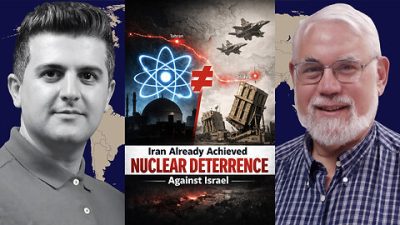
Prof. Ted Postol: Iran Already Achieved Nuclear Deterrence Against Israel
or go to
Aletho News Archives – Video-Images
From the Archives
How the occupied mentality syndrome works
Saudi Arabia on the American chessboard – Part 3
By B. J. Sabri | American Herald Tribune | June 27, 2016
Read part 2: “The occupied mentality Syndrome“
Previously I argued whether Saudi Arabia’s repeated involvements in U.S. interventions and wars stem from free national will or in response to a specific condition. For starters, in Saudi Arabia there is no national will. In Saudi Arabia, the national will is the will of the Al Saud clan. Still, when a major Arab state allies itself with a superpower that committed unspeakable crimes against humanity in almost every Arab country, then something is wrong. This fact alone should compel us to examine the U.S.-Saudi relation for one exceptional reason. As a result of the U.S.-Saudi wars, hundreds of thousands of people in Afghanistan, Iraq, Iran, Libya, Syria, Yemen, and Somalia have lost their lives. Millions became displaced in their own homelands. And millions more rendered refugees.
Attributing the Saudi policies to the bonds of “partnership” with the U.S. is frivolous. There are no bonds between these two thugs except those of business, military deals, secret plots, and wars. Proving this point, bonds such as these have no space for the American and Saudi peoples to share significant cultural or societal exchanges. If partnership is not the reason for the Saudi contribution to the U.S. strategy of empire and imperialism, then another reason must exist.
This leads to three possibilities. … continue
Blog Roll
 Aletho News
- Hezbollah hits Israeli warship off Lebanon’s coast, sets it aflame
- Iran slams US strikes on B1 bridge, Mahshahr petrochemical plants as ‘blatant acts of state terrorism’
- In letter to UN chief, Araghchi warns of dire consequences of US-Israeli attacks on Iran’s nuclear facilities
- Why the CIA conspiracy to invade Iran with Kurdish militias failed
- Why Are Upbeat US Claims About Mission to Rescue Pilot ‘Highly Questionable’?
- Aircraft destroyed during US ‘rescue’ of downed F-15 pilot cost more than $100 million each
- Washington University removes professor who condemned US-Israeli war on Iran
- Russia Warns of Retaliation as UK Authorizes Seizure of Vessels
- Serbia thwarts plot to bomb Russia-Hungary gas pipeline – Vucic
- Al Mayadeen voices solidarity with Dr. Marandi amid death threats
- If Americans Knew
- In Iran, Israel-US take aim at “reason, research, and freedom of thought” – Daily Update
- US loses planes over Iran, Israel downgrades Lebanon war goals – Daily Update
- Israel Is Blocking Palestinians from Easter at Church Where Jesus Resurrected
- Plot to assassinate Palestinian activist follows harassment campaign promoted by Zionist groups and elected officials
- Prominent New York synagogue hosts presentation on why U.S. Jews should support the ethnic cleansing of Gaza
- Tapper vs. Piker: Is the CNN Anchor Auditioning for David Ellison?
- Shouldn’t Democrats Be Able to Condemn Genocide?
- Israel-US kill negotiators, destroy civilian structures, but Iran’s military capabilities still largely intact – Daily Update
- ‘War crime’: Global condemnation as Israeli ministers celebrate death penalty law targeting Palestinian prisoners
- 7 Ways Israel Is Turning Lebanon Into Gaza
- No Tricks Zone
- An Inconvenient Tree: Uncovered In Alps… Europe Much Warmer Than Today 6000 Years Ago
- New Study Reports A 60% Slowdown In Greenland’s Ice Loss Rate In The Last Decade
- Low Intensity Tornado Wrecks Major Solar Farm, Creating A Potential Toxic Dump
- New Study Finds Warming Saves Lives…Cold Temperatures 12 Times More Deadly Than Excess Heat
- German Science Blog Accuses PIK Climate Institute Of Hallucinating Climate Tipping Points
- Devastating Assessment Of Comirnaty Vaccine By Former Senior Pfizer Europe Toxicologist
- New Study: CO2 Is ‘Effectively Negligible’ As An Explanatory Climate Change Factor Since 2000
- Former Pfizer Toxicologist Dr. Helmut Sterz Tells Bundestag Hearing Pfizer Vaccine Should Have Never Been Approved
- Energy Expert: Germany’s Nuclear Phaseout Was A “500 Billion Euro Mistake”
- New Research: South Australia’s Mid-Holocene Sea Surface Temperatures Were 4°C Warmer Than Today
 Aletho News