HHS/CDC Fund Online Game ‘Bad Vaxx’ to ‘Psychologically Inoculate’ Vaccine Resistance
Ironically, the game uses the very techniques it claims to train users to detect.
By Jon Fleetwood | December 27, 2025
U.S. taxpayer funds are being used by federal health agencies to develop and test online psychological games designed to condition how people—especially younger audiences—interpret and respond to vaccine skepticism.
An August Nature Scientific Reports study reveals that the project was funded by the Centers for Disease Control and Prevention (CDC) under the U.S. Department of Health and Human Services, through a CDC award administered by the American Psychological Association.
The paper states that the funding totaled “$2,000,000 with 100% funded by CDC/HHS.”
The grant supporting the project is titled “COVID—INOCULATING AGAINST VACCINE MISINFORMATION,” award number 6NU87PS004366-03–02.
That award has already handed out over $4.3 million in taxpayer funds since its activation in 2018.
The project language mirrors the study’s conceptual framework: dissent is treated as exposure to a pathogen, and resistance to dissent is treated as immunity.
The government-funded study centers on the creation and evaluation of an online game called Bad Vaxx.
According to the authors, the purpose of the game is not to examine disputed vaccine claims or to compare competing evidence, but to reduce what they define as “vaccine misinformation” by shaping how players cognitively process vaccine-critical content.
This is despite the CDC’s own VAERS data confirming over 2.7 million injuries, hospitalizations, and deaths linked to vaccines since 1990.
The study authors explain their premise at the outset:
“Vaccine misinformation endangers public health by contributing to reduced vaccine uptake.”
From this premise, the study moves directly to intervention design.
“We developed a short online game to reduce people’s susceptibility to vaccine misinformation.”
The paper frames this approach as a form of psychological prevention, borrowing language from immunology rather than education or debate.
“Psychological inoculation posits that exposure to a weakened form of a deceptive attack… protects against future exposure to persuasive misinformation.”
The Bad Vaxx game operationalizes this concept by training players to recognize four specific “manipulation techniques”: what it refers to as emotional storytelling, fake expertise, the naturalistic fallacy, and conspiracy theories.
These techniques are treated as characteristic of vaccine misinformation as a category.
“The game trains people to spot four manipulation techniques, which previous studies have identified as being commonly used in the area of vaccine misinformation.”
The study does not include a corresponding examination of whether similar persuasive techniques may be used in vaccine-promoting messaging, government communications, or pharmaceutical advertising.
Ironically, the Bad Vaxx project itself relies on the same persuasive architecture it claims to neutralize—emotional framing, authority cues, and repetition—embedded in a gamified format designed to shape intuition rather than invite scrutiny.
The classification of “vaccine misinformation” is established in advance and applied only to information critical of injectable pharmaceutical products.
Throughout the paper, vaccine skepticism is framed as a behavioral and social risk rather than as a possible response to uncertainty, evolving evidence, or institutional error.
The taxpayer-funded authors write:
“Susceptibility to misinformation about COVID-19 predicts lower compliance with public health regulations and lower willingness to get vaccinated.”
The choice of a game as the delivery mechanism is emphasized as a strength of the intervention.
The authors repeatedly describe the format as “entertaining,” “immers[ive],” and scalable, highlighting its ability to shape intuition rather than deliberation.
“A practical, entertaining intervention in the form of an online game can induce broad-scale resilience against manipulation techniques commonly used to spread false and misleading information about vaccines.”
Games function by rewarding correct pattern recognition, reinforcing desired responses, and reducing analytical friction.
The study’s outcome measures reflect this design: discernment scores, confidence ratings, and willingness to share content, rather than independent evaluation of claims or evidence comparison.
The researchers also emphasize the potential reach of such interventions.
“The Bad Vaxx game has the potential for adoption at scale.”
This matters because the funding source is not an academic foundation with no policy stake.
The CDC is the primary federal agency responsible for vaccine schedules, promotion, and uptake.
Yet the study does not address how this institutional role shapes the definition of misinformation used in the intervention, nor does it acknowledge the conflict inherent in a public health authority funding psychological tools aimed at managing disagreement with its own policies.
The dystopian nature of the project emerges from the structure itself: state funding, psychological conditioning, asymmetric definitions, and a delivery system designed to bypass debate in favor of intuition.
What the paper documents, in concrete terms, is the use of taxpayer funds to develop and validate a behavioral intervention—delivered through a medium optimized for psychological conditioning—that trains users to reflexively distrust a predefined category of speech, while exempting vaccine-promoting institutions from equivalent scrutiny.
NSW Premier Admits New “Security” Bill Restricts Civil Liberties, Promises More “Hate Speech” Laws Ahead
By Cindy Harper | Reclaim The Net | December 27, 2025
Lawmakers in New South Wales wrapped up the year by rushing through security legislation that broadens police powers and imposes new limits on protest activity and expression.
Passed in an extraordinary sitting of Parliament just before Christmas, the Terrorism and Other Legislation Amendment Bill 2025 represents one of the most far-reaching state security expansions in recent years.
Under the new law, the display of a symbol belonging to a “prohibited terrorist organization” can now lead to a prison term of up to two years.
Police officers are also granted authority to order individuals to remove face coverings if they are attending a demonstration or public event and the officer “reasonably suspects” they may commit an offense.
The legislation also permits police to halt public gatherings in the aftermath of a terrorist attack.
Although the bill is not framed as a censorship measure, it introduces powers that could intersect with the expanding use of surveillance technologies.
By compelling people to show their faces during political demonstrations, the law effectively weakens the ability of citizens to shield themselves from biometric tracking at a time when facial recognition systems are increasingly used by both law enforcement and private entities.
Premier Chris Minns has openly acknowledged that the law curtails individual freedoms. “These are extraordinary measures, I acknowledge that. I know that not all Australians that live in NSW support these changes, but we have decided it’s the best way of ensuring we do everything possible to keep the people of NSW safe,” he said following the bill’s passage.
Minns further conceded that the process was accelerated, crediting bipartisan cooperation for allowing the legislation to pass so quickly. “I know that that happened in a short space of time. I know that the negotiations and the talks had to happen over a short space of time, but we appreciate the goodwill in which we were able to get much-needed reform in New South Wales through the Parliament,” he stated.
He justified the timing by saying, “We couldn’t wait, this was urgent.”
When pressed about why the measures were bundled into a single omnibus bill, Minns admitted that time was the deciding factor. “If it had been cut up into its component parts, we would have been here way past Christmas… maybe people who oppose elements of those changes would have loved that, because it would have meant that the passage of the bills would have been stalled.”
The Premier did not shy away from admitting that rights were being limited in the process. “I accept, I guess, the implicit criticism that this does restrict rights, whether it’s for protests or guns,” he said. “But in these circumstances, we’ve got a higher obligation to the public… our number one obligation is to keep the public safe.”
Minns also signaled that more legislation is on the horizon, confirming that the government intends to introduce new “hate speech” laws in the coming months. “I want to make it clear that this isn’t the end of change… we’re currently looking at other areas of the law that are urgently required to confront hate speech, confront Islamist terrorism in our community,” he said. “Hate speech leads to hateful actions… and we’re prepared to take action and steps to keep the community safe.”
While the Premier frames the agenda as necessary to safeguard citizens, the process reflects a deeper shift toward governance by emergency.
Parliament’s decision to fast-track legal powers during a holiday recess, without full debate or public review, raises serious questions about transparency and proportionality.
The rapid normalization of police discretion over identity and assembly carries lasting implications for privacy and dissent.
As soon as governments assert the right to define and control “hate speech” or to compel identification at protests, the boundaries of lawful expression narrow quickly. A response to terrorism may end up reshaping the basic relationship between the individual and the state.
More: Victoria Moves to Force Online Platforms to ID Users and Expand State Powers to Curb “Hate Speech”
US Under Secretary of State Slams UK and EU Over Online Speech Regulation, Announces Release of Files on Past Censorship Efforts
By Cindy Harper | Reclaim The Net | December 27, 2025
American Under Secretary of State for Public Diplomacy Sarah Rogers has sharply criticized British and European speech regulators for attempting to extend their laws to US-based platforms, calling it a direct challenge to the First Amendment.
Speaking during an appearance on The Liz Truss Show, Rogers said Washington intends to respond to the UK’s communications regulator Ofcom after it sought to bring the website 4chan under its jurisdiction.
She said the situation “forced” the US to defend its constitutional protections, warning that “when British regulators decree that British law applies to American speech on American sites on American soil with no connection to Britain,” the matter can no longer be ignored.
Rogers called it “a perverse blessing” that the dispute is forcing a renewed transatlantic conversation about free expression, observing that “Britain and America did develop the free speech tradition together.”
Rogers announced that the State Department will soon publish a collection of previously unreleased internal emails and documents describing earlier US government involvement in social media moderation efforts.
The release is part of what she termed a “truth and reconciliation initiative” that will include material linked to the now-defunct Global Engagement Center, which she said had coordinated with outside organizations to identify content for takedown.
That operation was “immediately dismantled” after she assumed her current post.
She argued that foreign governments have moved from cooperation to coercion in their dealings with US companies. “Europe and the UK and other governments abroad are… trying to nullify the American First Amendment by enforcing against American companies and American speakers and American soil,” Rogers said, referring to the EU’s fine against X and Ofcom’s recent enforcement campaigns.
On domestic policy, she criticized the UK’s Online Safety Act, saying that it is being sold as child protection legislation but in practice functions as a speech control measure.
“These statutes are just censoring adult political speech is not the best way to protect kids and it’s probably the worst way,” she said.
Rogers noted that under such laws, even parliamentary remarks about criminal networks could be censored if regulators deem them harmful.
Turning to Ofcom’s ongoing 4chan case, Rogers said its legal position effectively claims authority over purely American websites.
She offered a hypothetical: “I could go set up a website in my garage… about American political controversies… and Ofcom’s legal position nonetheless is that if I run afoul of British content laws, then I have to pay money for the British government.”
Rogers said she expects the US government to issue a response soon.
Throughout the interview, Rogers framed the current wave of global online regulation as an effort to suppress what she called “chaotic speech” that emerges with every major communications shift.
“People panic and they want to shove that innovation back in the bottle,” she said, warning that such attempts have “never worked.”
Her remarks mark one of the strongest rebukes yet from a senior American official toward the growing European model of compelled content moderation.
Rogers suggested that this model not only undermines open debate but also sets a precedent for governments worldwide to police political speech beyond their borders.
More: EU Launches New Push For Digital ID Age Checks and Big Tech Probe Under Digital Services Act
Head of EU Parliament’s biggest faction wants German soldiers in Ukraine
RT | December 27, 2025
 Berlin must send troops to Ukraine as part of a potential peace settlement, according to Manfred Weber, the leader of the European People’s Party (EPP) – a political group with the biggest faction in the EU Parliament. Brussels cannot rely on Washington to secure peace between Moscow and Kiev, the politician told Funke Media Group in an interview published this week.
Moscow has repeatedly rejected the idea of any NATO presence in Ukraine. It also named the US-led bloc’s expansion to the East one of the root causes of the conflict.
Kiev’s Western backers, including France and the UK have occasionally raised the issue of NATO troop deployment to Ukraine throughout the conflict. The plan was given another impetus earlier this month at the talks in Berlin, where US officials met with the Ukrainian delegation, the leaders of Germany, France, the UK, and eight other European countries.
”We cannot seriously expect Trump to secure a peace settlement solely with American troops. And when we talk about European troops, Germany cannot be left out,” Weber said. “After a ceasefire or a peace agreement, the European flag must fly along the [contact] line.”
He also claimed he did not “see” the Russian leadership “pursuing the path of peace” and called on Kiev’s European backers to demonstrate strength.
Moscow has repeatedly stated it is ready and willing to resolve the conflict peacefully as long as the other side demonstrates a similar commitment and the root causes of the crisis are addressed. On Friday, Deputy Foreign Minister Sergey Ryabkov said that the conflict resolution was “really close” but warned that Kiev and its European backers are actively trying to “torpedo” the peace process.
The Trump administration has not confirmed the extent of its support for the European plan. Weber also called on the EU to act independently from the US in security matters, prompting the NATO head, Mark Rutte, to warn that creating alternatives to the bloc would not benefit its European members.
What Is Actually Behind Israel’s Recognition Of Somaliland?

The Dissident | December 27, 2025
Recently, Israel became the first country to recognize Somaliland, a breakaway region of Somalia that declared independence in 1991 but until now has not been officially recognized by any UN member state.
But what is Israel’s real motive behind this move?
One motive appears to be the fact that Israel has taken part in negotiations with Somaliland to use the region as a place to relocate Palestinians ethnically cleansed from Gaza by Israel.
The Israeli newspaper Ynet, writing about Israel’s Recognition Of Somaliland, noted that, “The territory has recently been mentioned as a possible destination for Gazans, with officials there saying they would be willing to absorb ‘one million Gazans,’ though no formal agreement has been announced.”
Israeli journalist Amit Segal wrote, “Israel announced today its official recognition of Somaliland as an independent, sovereign state, in a joint declaration signed by the leaders and in the spirit of the Abraham Accords,” and went on to boast that “Somaliland was supposed to — and may still — absorb Gazans.”
A report from the Financial Times from March of this year reported that during a meeting with U.S. officials and leaders of Somaliland, “Washington had raised the possibility of relocating refugees from the US and Gaza”, adding that, “Israel was ‘in conversations’ with countries around the world, including in Africa, about taking in Gazans”.
An August report from the Times of Israel wrote that, “Israel is in talks with five countries — Indonesia, Somaliland, Uganda, South Sudan and Libya — about the potential resettlement of Palestinians from the Gaza Strip” and added, “‘Some of the countries are showing greater openness than before to accepting voluntary immigration from the Gaza Strip,’ a diplomatic source tells the outlet, naming Indonesia and Somaliland in particular.”
It noted that, “Somaliland is a breakaway region of Somalia that is reportedly hoping to secure international recognition through the deal.”
Previously, the Israeli newspaper, The Jerusalem Post, reported that Somaliland Foreign Minister, Abdirahman Dahir Adan, “does not rule out absorbing Gazan residents” but said that, “the most important thing for us is to receive recognition”, signalling that Somaliland would agree to Israel’s ethnic cleansing plan in exchange for recognition Of Somaliland.
Journalist Kit Klarenberg noted that forcibly sending Palestinians from Gaza into Somaliland would amount to forcing them “in yet another open air concentration camp”, noting that, “In late 2022, mass protests broke out in the contested Somalian city of Las Anod. Somaliland security forces crushed the upheaval using lethal force, leaving dozens dead” and adding that, “Somaliland’s appeal to Israel and its Western puppet masters as a dumping ground for Gazans is obvious. A well-armed repressive domestic security apparatus stands ever-ready to brutally quell any and all local resistance”.
Furthermore, Israel’s recognition of Somaliland will be a strategic boost to Israel’s war against Yemen’s Ansar Allah, or the Houthis, the resistance militia, which had put a naval blockade on Israeli ships in the Red Sea, in an attempt to force Israel to end the genocide in Gaza.
Mark Dubowitz, an official with the Neo-con think tank “Foundation for Defense of Democracies,” boasted that Israel’s recognition of Somaliland will aid their war on Yemen, writing, “For those mocking why Israel would engage Somaliland: look at the map. Somaliland sits on the Gulf of Aden, next to the Bab el-Mandeb—a chokepoint for global trade and energy. Across the water are Iran-backed Houthis firing on Israel and shipping. Somaliland offers stability, ports, intelligence access, and a non-Iranian platform on the Red Sea. Similar reason why the U.S. has a military base in Djibouti.”
The Israeli newspaper Ynet reported that, Israel, “has strong strategic interest in Somaliland due to its long coastline and location in the Horn of Africa, close to Yemen” adding that, “One reason Israel has taken a keen interest in Somaliland is its proximity to areas controlled by Yemen’s Houthi rebels … Strengthening ties with Somaliland is viewed in Israel as a potential force multiplier against the Houthis”.
The outlet wrote that, “Somaliland lies near the Bab el-Mandeb Strait, a key global shipping lane. Amid clashes between Israel and the Houthis following the war in Gaza, and against the backdrop of a US operation against the Houthis this year, waters near Yemen have become a danger zone for commercial vessels … Somaliland’s Port of Berbera, about 250 kilometers south of Yemen, is considered strategically significant in this context”.
Another article in Ynet reported that, “Israeli intelligence officials say the Mossad has been active in Somaliland for years, laying the groundwork for the recognition through long-standing, discreet relationships with senior figures there. Mossad chiefs have maintained personal ties with Somaliland officials, and Israeli officials hope the agreement will encourage additional countries to pursue strategic relations with Israel as part of a broader regional alignment” because, “One key factor driving Israel’s interest is Somaliland’s proximity to areas controlled by the Houthis in Yemen” adding that, “Strengthening ties with Somaliland is seen in Israel as a strategic force multiplier against the Houthis.”
Reports in Israeli media show that Israel’s real motive behind recognition of Somaliland is to ethnically cleanse Palestinians in Gaza, and to have a strategic boost to its war against the Houthis, one of the only forces left willing to fight in solidarity with Palestinians.
Hamas condemns ‘Israel’-Somaliland recognition
Al Mayadeen | December 27, 2025
The Islamic Resistance Movement – Hamas strongly condemned the announcement by the Somaliland administration on mutual recognition with “Israel”, describing it as a “serious precedent” and an attempt to gain “false legitimacy” from a fascist occupying entity.
In a statement, Hamas emphasized that “Israel” is responsible for ongoing war crimes and acts of genocide against the Palestinian people, and continues to face growing international isolation. The movement warned that the occupation’s plans, including the potential use of Somaliland as a destination for displaced Palestinians, represent a forced displacement campaign that Hamas fully rejects.
“Recognizing a separatist administration in Somaliland reflects the depth of the international isolation the Zionist entity suffers, due to the acts of genocide it has committed against our Palestinian people in Gaza,” the statement said.
The movement also commended Arab and Islamic countries that condemned the recognition, noting that it violates international law and threatens Somalia’s unity and sovereignty. Hamas further warned that such Zionist policies aim to destabilize Arab states, interfere in their internal affairs, and serve the broader colonial ambitions of “Israel”.
Featured Video
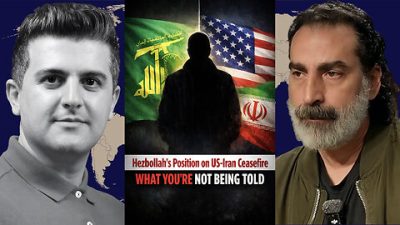
Laith Marouf: Hezbollah’s position on US-Iran ceasefire
or go to
Aletho News Archives – Video-Images
From the Archives
The Dirty Little Secret behind the “Global Terrorism Index”
The Omission of Israeli Terrorism in the Occupied Palestinian Territories
By Karin Brothers | Global Research | December 6, 2014
… The Israeli settlements — all of which are illegal – have been identified as a major impediment to peace. The refusal of a major “global” terrorism report to name the Israeli settlers as one of the groups most responsible for terrorism not only misrepresents a major source of regional violence but exposes the Global Terrorism Index as a propaganda tool that supports a U.S. agenda.
In recent years, governments have been attempting to thwart terrorism by blocking supportive fund-raising. When it comes to Israeli settlements, however, the US and Canada actually encourage fund-raising by giving organizations (such as Christian Friends of Israeli Communities (CFOIC) and the Jewish National Fund) financial support in the form of donor tax-deductions.
Charities which provide funds for the Israeli settlements should be regarded as terror-financing organizations. They should not only lose their tax-deductible status, but they should be banned because they support the violation of international humanitarian law. The terror-financing laws that are being strictly enforced for Muslim charities should be applied to Christian and Jewish charities as well. … Read full article
Blog Roll
 Aletho News
- The ‘Opposition Party’ Has Done Nothing to Stop the Iran War and Much to Goad Trump Into Continuing It
- Moscow backs Tehran on status of Lebanon in US-Iran deal
- How UK Regulator Ofcom Quietly Bypassed International Law to Police American Speech
- The Black Cube Files: How Former Mossad Operatives Flipped a Nation
- Laith Marouf: Hezbollah’s position on US-Iran ceasefire: What you’re not being told
- Israel’s priority lies in destroying chances of peace between Iran, US: Ex-UN nuclear chief
- Ceasefire for all or for none: Iran shuts Hormuz over Lebanon attacks
- Strait of Hormuz is Iran’s ‘nuclear weapon’ that forced US retreat: Medvedev
- Energy crisis will last for months – Kremlin envoy
- Europe’s quiet role in the war on Iran
- If Americans Knew
- This is ceasefire? Israel’s biggest massacre yet in Lebanon, another journalist killed in Gaza – Daily Update
- Tucker Carlson on Israel: This Is the Behavior of an Ally? Really?
- Gazans face a triple crisis: severe shortages of water and bread, healthcare in tatters
- NY Times reports how Netanyahu took the US into Iran War
- A sigh of relief over Iran, but Gaza and Lebanon in dire straits – Daily Update
- Thousands dead and neighborhoods razed to the ground: Aid agencies fear southern Lebanon is becoming the new Gaza
- The war the US is fighting for Israel could cost trillions
- ‘Cigarette Burns, Nail Wounds’: Toddler Tortured in Gaza to Coerce Father
- Trump Says US Sent ‘a Lot of Guns’ to Protesters in Iran
- Israeli forces destroy 17 UN peacekeeper cameras in south Lebanon
- No Tricks Zone
- An Inconvenient Tree: Uncovered In Alps… Europe Much Warmer Than Today 6000 Years Ago
- New Study Reports A 60% Slowdown In Greenland’s Ice Loss Rate In The Last Decade
- Low Intensity Tornado Wrecks Major Solar Farm, Creating A Potential Toxic Dump
- New Study Finds Warming Saves Lives…Cold Temperatures 12 Times More Deadly Than Excess Heat
- German Science Blog Accuses PIK Climate Institute Of Hallucinating Climate Tipping Points
- Devastating Assessment Of Comirnaty Vaccine By Former Senior Pfizer Europe Toxicologist
- New Study: CO2 Is ‘Effectively Negligible’ As An Explanatory Climate Change Factor Since 2000
- Former Pfizer Toxicologist Dr. Helmut Sterz Tells Bundestag Hearing Pfizer Vaccine Should Have Never Been Approved
- Energy Expert: Germany’s Nuclear Phaseout Was A “500 Billion Euro Mistake”
- New Research: South Australia’s Mid-Holocene Sea Surface Temperatures Were 4°C Warmer Than Today
 Aletho News