NSW Premier Admits New “Security” Bill Restricts Civil Liberties, Promises More “Hate Speech” Laws Ahead
By Cindy Harper | Reclaim The Net | December 27, 2025
Lawmakers in New South Wales wrapped up the year by rushing through security legislation that broadens police powers and imposes new limits on protest activity and expression.
Passed in an extraordinary sitting of Parliament just before Christmas, the Terrorism and Other Legislation Amendment Bill 2025 represents one of the most far-reaching state security expansions in recent years.
Under the new law, the display of a symbol belonging to a “prohibited terrorist organization” can now lead to a prison term of up to two years.
Police officers are also granted authority to order individuals to remove face coverings if they are attending a demonstration or public event and the officer “reasonably suspects” they may commit an offense.
The legislation also permits police to halt public gatherings in the aftermath of a terrorist attack.
Although the bill is not framed as a censorship measure, it introduces powers that could intersect with the expanding use of surveillance technologies.
By compelling people to show their faces during political demonstrations, the law effectively weakens the ability of citizens to shield themselves from biometric tracking at a time when facial recognition systems are increasingly used by both law enforcement and private entities.
Premier Chris Minns has openly acknowledged that the law curtails individual freedoms. “These are extraordinary measures, I acknowledge that. I know that not all Australians that live in NSW support these changes, but we have decided it’s the best way of ensuring we do everything possible to keep the people of NSW safe,” he said following the bill’s passage.
Minns further conceded that the process was accelerated, crediting bipartisan cooperation for allowing the legislation to pass so quickly. “I know that that happened in a short space of time. I know that the negotiations and the talks had to happen over a short space of time, but we appreciate the goodwill in which we were able to get much-needed reform in New South Wales through the Parliament,” he stated.
He justified the timing by saying, “We couldn’t wait, this was urgent.”
When pressed about why the measures were bundled into a single omnibus bill, Minns admitted that time was the deciding factor. “If it had been cut up into its component parts, we would have been here way past Christmas… maybe people who oppose elements of those changes would have loved that, because it would have meant that the passage of the bills would have been stalled.”
The Premier did not shy away from admitting that rights were being limited in the process. “I accept, I guess, the implicit criticism that this does restrict rights, whether it’s for protests or guns,” he said. “But in these circumstances, we’ve got a higher obligation to the public… our number one obligation is to keep the public safe.”
Minns also signaled that more legislation is on the horizon, confirming that the government intends to introduce new “hate speech” laws in the coming months. “I want to make it clear that this isn’t the end of change… we’re currently looking at other areas of the law that are urgently required to confront hate speech, confront Islamist terrorism in our community,” he said. “Hate speech leads to hateful actions… and we’re prepared to take action and steps to keep the community safe.”
While the Premier frames the agenda as necessary to safeguard citizens, the process reflects a deeper shift toward governance by emergency.
Parliament’s decision to fast-track legal powers during a holiday recess, without full debate or public review, raises serious questions about transparency and proportionality.
The rapid normalization of police discretion over identity and assembly carries lasting implications for privacy and dissent.
As soon as governments assert the right to define and control “hate speech” or to compel identification at protests, the boundaries of lawful expression narrow quickly. A response to terrorism may end up reshaping the basic relationship between the individual and the state.
More: Victoria Moves to Force Online Platforms to ID Users and Expand State Powers to Curb “Hate Speech”
US Under Secretary of State Slams UK and EU Over Online Speech Regulation, Announces Release of Files on Past Censorship Efforts
By Cindy Harper | Reclaim The Net | December 27, 2025
American Under Secretary of State for Public Diplomacy Sarah Rogers has sharply criticized British and European speech regulators for attempting to extend their laws to US-based platforms, calling it a direct challenge to the First Amendment.
Speaking during an appearance on The Liz Truss Show, Rogers said Washington intends to respond to the UK’s communications regulator Ofcom after it sought to bring the website 4chan under its jurisdiction.
She said the situation “forced” the US to defend its constitutional protections, warning that “when British regulators decree that British law applies to American speech on American sites on American soil with no connection to Britain,” the matter can no longer be ignored.
Rogers called it “a perverse blessing” that the dispute is forcing a renewed transatlantic conversation about free expression, observing that “Britain and America did develop the free speech tradition together.”
Rogers announced that the State Department will soon publish a collection of previously unreleased internal emails and documents describing earlier US government involvement in social media moderation efforts.
The release is part of what she termed a “truth and reconciliation initiative” that will include material linked to the now-defunct Global Engagement Center, which she said had coordinated with outside organizations to identify content for takedown.
That operation was “immediately dismantled” after she assumed her current post.
She argued that foreign governments have moved from cooperation to coercion in their dealings with US companies. “Europe and the UK and other governments abroad are… trying to nullify the American First Amendment by enforcing against American companies and American speakers and American soil,” Rogers said, referring to the EU’s fine against X and Ofcom’s recent enforcement campaigns.
On domestic policy, she criticized the UK’s Online Safety Act, saying that it is being sold as child protection legislation but in practice functions as a speech control measure.
“These statutes are just censoring adult political speech is not the best way to protect kids and it’s probably the worst way,” she said.
Rogers noted that under such laws, even parliamentary remarks about criminal networks could be censored if regulators deem them harmful.
Turning to Ofcom’s ongoing 4chan case, Rogers said its legal position effectively claims authority over purely American websites.
She offered a hypothetical: “I could go set up a website in my garage… about American political controversies… and Ofcom’s legal position nonetheless is that if I run afoul of British content laws, then I have to pay money for the British government.”
Rogers said she expects the US government to issue a response soon.
Throughout the interview, Rogers framed the current wave of global online regulation as an effort to suppress what she called “chaotic speech” that emerges with every major communications shift.
“People panic and they want to shove that innovation back in the bottle,” she said, warning that such attempts have “never worked.”
Her remarks mark one of the strongest rebukes yet from a senior American official toward the growing European model of compelled content moderation.
Rogers suggested that this model not only undermines open debate but also sets a precedent for governments worldwide to police political speech beyond their borders.
More: EU Launches New Push For Digital ID Age Checks and Big Tech Probe Under Digital Services Act
Head of EU Parliament’s biggest faction wants German soldiers in Ukraine
RT | December 27, 2025
 Berlin must send troops to Ukraine as part of a potential peace settlement, according to Manfred Weber, the leader of the European People’s Party (EPP) – a political group with the biggest faction in the EU Parliament. Brussels cannot rely on Washington to secure peace between Moscow and Kiev, the politician told Funke Media Group in an interview published this week.
Moscow has repeatedly rejected the idea of any NATO presence in Ukraine. It also named the US-led bloc’s expansion to the East one of the root causes of the conflict.
Kiev’s Western backers, including France and the UK have occasionally raised the issue of NATO troop deployment to Ukraine throughout the conflict. The plan was given another impetus earlier this month at the talks in Berlin, where US officials met with the Ukrainian delegation, the leaders of Germany, France, the UK, and eight other European countries.
”We cannot seriously expect Trump to secure a peace settlement solely with American troops. And when we talk about European troops, Germany cannot be left out,” Weber said. “After a ceasefire or a peace agreement, the European flag must fly along the [contact] line.”
He also claimed he did not “see” the Russian leadership “pursuing the path of peace” and called on Kiev’s European backers to demonstrate strength.
Moscow has repeatedly stated it is ready and willing to resolve the conflict peacefully as long as the other side demonstrates a similar commitment and the root causes of the crisis are addressed. On Friday, Deputy Foreign Minister Sergey Ryabkov said that the conflict resolution was “really close” but warned that Kiev and its European backers are actively trying to “torpedo” the peace process.
The Trump administration has not confirmed the extent of its support for the European plan. Weber also called on the EU to act independently from the US in security matters, prompting the NATO head, Mark Rutte, to warn that creating alternatives to the bloc would not benefit its European members.
What Is Actually Behind Israel’s Recognition Of Somaliland?
The Dissident | December 27, 2025
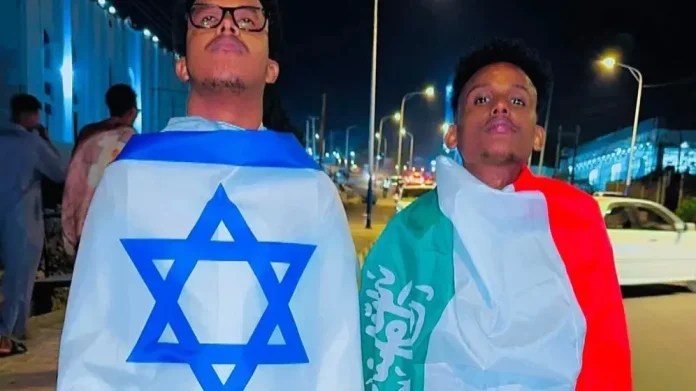
Recently, Israel became the first country to recognize Somaliland, a breakaway region of Somalia that declared independence in 1991 but until now has not been officially recognized by any UN member state.
But what is Israel’s real motive behind this move?
One motive appears to be the fact that Israel has taken part in negotiations with Somaliland to use the region as a place to relocate Palestinians ethnically cleansed from Gaza by Israel.
The Israeli newspaper Ynet, writing about Israel’s Recognition Of Somaliland, noted that, “The territory has recently been mentioned as a possible destination for Gazans, with officials there saying they would be willing to absorb ‘one million Gazans,’ though no formal agreement has been announced.”
Israeli journalist Amit Segal wrote, “Israel announced today its official recognition of Somaliland as an independent, sovereign state, in a joint declaration signed by the leaders and in the spirit of the Abraham Accords,” and went on to boast that “Somaliland was supposed to — and may still — absorb Gazans.”
A report from the Financial Times from March of this year reported that during a meeting with U.S. officials and leaders of Somaliland, “Washington had raised the possibility of relocating refugees from the US and Gaza”, adding that, “Israel was ‘in conversations’ with countries around the world, including in Africa, about taking in Gazans”.
An August report from the Times of Israel wrote that, “Israel is in talks with five countries — Indonesia, Somaliland, Uganda, South Sudan and Libya — about the potential resettlement of Palestinians from the Gaza Strip” and added, “‘Some of the countries are showing greater openness than before to accepting voluntary immigration from the Gaza Strip,’ a diplomatic source tells the outlet, naming Indonesia and Somaliland in particular.”
It noted that, “Somaliland is a breakaway region of Somalia that is reportedly hoping to secure international recognition through the deal.”
Previously, the Israeli newspaper, The Jerusalem Post, reported that Somaliland Foreign Minister, Abdirahman Dahir Adan, “does not rule out absorbing Gazan residents” but said that, “the most important thing for us is to receive recognition”, signalling that Somaliland would agree to Israel’s ethnic cleansing plan in exchange for recognition Of Somaliland.
Journalist Kit Klarenberg noted that forcibly sending Palestinians from Gaza into Somaliland would amount to forcing them “in yet another open air concentration camp”, noting that, “In late 2022, mass protests broke out in the contested Somalian city of Las Anod. Somaliland security forces crushed the upheaval using lethal force, leaving dozens dead” and adding that, “Somaliland’s appeal to Israel and its Western puppet masters as a dumping ground for Gazans is obvious. A well-armed repressive domestic security apparatus stands ever-ready to brutally quell any and all local resistance”.
Furthermore, Israel’s recognition of Somaliland will be a strategic boost to Israel’s war against Yemen’s Ansar Allah, or the Houthis, the resistance militia, which had put a naval blockade on Israeli ships in the Red Sea, in an attempt to force Israel to end the genocide in Gaza.
Mark Dubowitz, an official with the Neo-con think tank “Foundation for Defense of Democracies,” boasted that Israel’s recognition of Somaliland will aid their war on Yemen, writing, “For those mocking why Israel would engage Somaliland: look at the map. Somaliland sits on the Gulf of Aden, next to the Bab el-Mandeb—a chokepoint for global trade and energy. Across the water are Iran-backed Houthis firing on Israel and shipping. Somaliland offers stability, ports, intelligence access, and a non-Iranian platform on the Red Sea. Similar reason why the U.S. has a military base in Djibouti.”
The Israeli newspaper Ynet reported that, Israel, “has strong strategic interest in Somaliland due to its long coastline and location in the Horn of Africa, close to Yemen” adding that, “One reason Israel has taken a keen interest in Somaliland is its proximity to areas controlled by Yemen’s Houthi rebels … Strengthening ties with Somaliland is viewed in Israel as a potential force multiplier against the Houthis”.
The outlet wrote that, “Somaliland lies near the Bab el-Mandeb Strait, a key global shipping lane. Amid clashes between Israel and the Houthis following the war in Gaza, and against the backdrop of a US operation against the Houthis this year, waters near Yemen have become a danger zone for commercial vessels … Somaliland’s Port of Berbera, about 250 kilometers south of Yemen, is considered strategically significant in this context”.
Another article in Ynet reported that, “Israeli intelligence officials say the Mossad has been active in Somaliland for years, laying the groundwork for the recognition through long-standing, discreet relationships with senior figures there. Mossad chiefs have maintained personal ties with Somaliland officials, and Israeli officials hope the agreement will encourage additional countries to pursue strategic relations with Israel as part of a broader regional alignment” because, “One key factor driving Israel’s interest is Somaliland’s proximity to areas controlled by the Houthis in Yemen” adding that, “Strengthening ties with Somaliland is seen in Israel as a strategic force multiplier against the Houthis.”
Reports in Israeli media show that Israel’s real motive behind recognition of Somaliland is to ethnically cleanse Palestinians in Gaza, and to have a strategic boost to its war against the Houthis, one of the only forces left willing to fight in solidarity with Palestinians.
Hamas condemns ‘Israel’-Somaliland recognition
Al Mayadeen | December 27, 2025
The Islamic Resistance Movement – Hamas strongly condemned the announcement by the Somaliland administration on mutual recognition with “Israel”, describing it as a “serious precedent” and an attempt to gain “false legitimacy” from a fascist occupying entity.
In a statement, Hamas emphasized that “Israel” is responsible for ongoing war crimes and acts of genocide against the Palestinian people, and continues to face growing international isolation. The movement warned that the occupation’s plans, including the potential use of Somaliland as a destination for displaced Palestinians, represent a forced displacement campaign that Hamas fully rejects.
“Recognizing a separatist administration in Somaliland reflects the depth of the international isolation the Zionist entity suffers, due to the acts of genocide it has committed against our Palestinian people in Gaza,” the statement said.
The movement also commended Arab and Islamic countries that condemned the recognition, noting that it violates international law and threatens Somalia’s unity and sovereignty. Hamas further warned that such Zionist policies aim to destabilize Arab states, interfere in their internal affairs, and serve the broader colonial ambitions of “Israel”.
Israeli forces arrest writer and political researcher Sari Orabi
MEMO | December 26, 2025
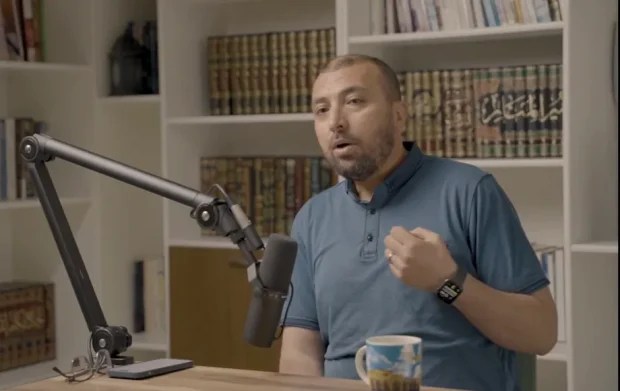
Israeli occupation forces arrested the writer and political researcher Sari Orabi after raiding his home at dawn on Thursday in the town of Rafat, north of occupied Jerusalem, according to local media sources.
The sources said Israeli forces carried out wide arrest raids early on Thursday across several areas of the occupied West Bank and Jerusalem. The raids targeted a number of young men and former prisoners after their homes were stormed, searched and damaged.
Sari Orabi is a writer and researcher specialising in politics and Islamic thought. His articles have been published in several newspapers, magazines, websites and research centres. He also regularly appears as a commentator on cultural, intellectual and political issues on a number of television channels.
In addition to Orabi, Israeli forces arrested Ibrahim Hourani after raiding his home in the city of Qalqilya. In the town of Aroura, north of Ramallah, they arrested Nasser Mufaraj and his son Amr, and re-arrested former prisoner Tayseer Khusaib following home raids.
The Palestinian Prisoners’ Media Office said the continued arrest campaigns show that Israeli policy targets academics, writers, former prisoners and young people alike, rather than a specific group. It said this reflects a clear attempt to suppress public awareness and social influence within Palestinian society.
Hamas calls for ‘impartial international probe’ into Al-Aqsa Flood operation
The Cradle | December 26, 2025
Hamas has released a 42-page document titled “Our Narrative,” calling for an “impartial” international probe into the Operation Al-Aqsa Flood, which took place on 7 October 2023.
The document also reiterates Hamas’s position on the false claims made by western and Israeli media in the aftermath of the attack.
“We challenge the Israelis to allow for an impartial international investigation into the claims of Israeli civilian deaths on 7 October, just as we challenge them to agree for an impartial, neutral international investigation into the crimes they have committed against the Palestinian people, particularly during their recent war on Gaza,” the document states.
“From the very first moment of the 7 October attack, the Israeli entity attempted to distort the truth. It launched a global disinformation machine, involving western media and Zionist lobby groups, to transform the legitimate military operation – which targeted the Israeli army’s Gaza Division, a military unit that had perpetuated killing and siege against Gaza – into claims about targeting civilians and children,” it added.
“We have previously discussed the Israeli allegations and lies propagated against the resistance, and there is no need to repeat them here, especially after their falsehood was proven by independent international investigations. However, because the Israeli entity´s leaders continue to brazenly repeat their lies, we affirm the following: Killing civilians is not part of our religion, morality, or education; and we avoid it whenever we can,” it went on to say.
In the first days after Operation Al-Aqsa Flood, Israeli media reported that Palestinian resistance fighters beheaded 40 babies. Former US president Joe Biden claimed he had seen pictures of “terrorists” beheading babies, and Israeli officials repeatedly made the accusation in interviews and public remarks.
The claims were picked up by major British news outlets and international media, but were quickly proven false – with even prominent Israeli journalists confirming that no evidence for beheaded babies existed.
Hebrew media also heavily focused on the narrative that Hamas fighters committed sexual assault against Israelis.
By January 2025, Israeli police were still unable to verify any accounts of rape on 7 October. The UN Special Rapporteur on Violence against Women and Girls, Reem al-Salem, said in November this year that “No independent investigation found that rape took place on the 7th of October.”
“For those who naively believe that Israeli perpetrators of sexual violence against Palestinians will ever be investigated and prosecuted, think again,” she added.
Since Operation Al-Aqsa Flood took place, Israel’s own media has disproven many of the initial claims made following the attack.
Significant amounts of evidence have emerged on Israel’s implementation of the ‘Hannibal Directive’ – a measure taken to prevent the capture of Israelis.
Israeli helicopters and tanks indiscriminately opened fire at the settlements that were stormed by Hamas fighters that Saturday, causing mass destruction and Israeli casualties, testimonies in Hebrew media have confirmed.
Just days after Operation Al-Aqsa Flood, a survivor told Israel’s public broadcaster KAN that “They eliminated everyone, including the hostages.”
When the interviewer asked if Israeli troops were responsible for civilian deaths, she responded: “Undoubtedly.”
Many Israeli captives were also killed by airstrikes while being held in Gaza.
The architecture of extermination: Why the Gaza genocide is premeditated and repeatable
By Ramzy Baroud | MEMO | December 26, 2025
Suppose we accept the fiction that none of us expected Israel to launch a full-scale genocide in Gaza—a premeditated campaign to erase the Strip and exterminate a significant portion of its inhabitants. Let us pretend that nearly eighty years of relentless massacres were not a prelude to this moment, and that Israel had never before sought the physical destruction of the Palestinian people as outlined by the 1948 Genocide Convention.
If we go so far as to accept the sterile, ahistoric claim that the Nakba of 1948 was “merely” ethnic cleansing rather than genocide—ignoring the mass graves and the forced erasure of a civilisation—we are still left with a terrifying reality. Having witnessed the unmasked extermination that began on 7 October 2023, who can dare to argue that its perpetrators lack the intent to repeat it?
The question itself is an act of charity, as it assumes the genocide has actually stopped. In reality, the carnage has merely shifted tactics. Since the implementation of the fragile ceasefire on 10 October, Israel has killed over 400 Palestinians and wounded hundreds more. Others have perished in the frozen mud of their tents. They include infants like eight-month-old Fahar Abu Jazar, who, like others, froze to death. These are not mere tragedies; they are the inevitable results of a calculated Israeli policy of destruction targeting the most vulnerable.
During this two-year campaign of extermination, more than 20,000 Palestinian children were murdered, accounting for a staggering 30 per cent of the total victims. This blood-soaked tally ignores the thousands of souls entrapped beneath the concrete wasteland of Gaza, and those currently being consumed by the silent killers of famine and engineered epidemics.
The horrifying statistics aside, we bear witness to the final agonies of a people. We have watched their extermination in real-time, broadcast to every handheld screen on earth. No one can claim ignorance; no one can claim innocence. Even now, we watch as 1.3 million Palestinians endure a precarious existence in tents ravaged by winter floods. We share the screams of mothers, the hollowed-out faces of broken fathers, and the haunted stares of children, and yet, the world’s political and moral institutions remain paralyzed.
If Israel resumes the full, unrestrained intensity of this genocide, will we stop it? I fear the answer is no, because the world refuses to dismantle the circumstances that permitted this slaughter in the first place. Israeli officials never bothered to hide their intent. The systematic dehumanisation of Palestinians was a primary export of Israeli media, even as Western corporate outlets worked tirelessly to sanitise this criminal discourse.
The record of intent is undeniable. National Security Minister Itamar Ben-Gvir openly championed the “encouragement of migration” and demanded that “not an ounce of humanitarian aid” reach Gaza. Finance Minister Bezalel Smotrich argued that the starvation of two million people could be “just and moral” in the pursuit of military aims. From the halls of the Knesset to the pop charts, the refrain was the same: “erase Gaza,” “leave no one there.” When military leaders refer to an entire population as “human animals,” they are not using metaphors; they are issuing a license for extermination.
This was preceded by the hermetic siege — a decades-long experiment in human misery that began in 2006. Despite every Palestinian plea for the world to break this death grip, the blockade was allowed to persist. This was followed by successive wars targeting a besieged, impoverished population under the banner of ‘security,’ always shielded by the Western mantra of Israel’s ‘right to defend itself.’
In the dominant Western narrative, the Palestinian is the eternal aggressor. They are the occupied, the besieged, the dispossessed, and the stateless; yet they are expected to die quietly in the world’s ‘largest open-air prison‘. Whether they utilised armed resistance, threw rocks at tanks, or marched unarmed toward snipers, they were branded ‘terrorists’ and ‘militants’ whose very existence was framed as a threat to their occupier.
Years before the first bomb of this genocide fell, the United Nations declared Gaza “uninhabitable.” Its water was a toxin, its land a graveyard, and its people were dying of curable diseases. Yet, aside from the typical ritual of humanitarian reports, the international community did nothing to offer a political horizon, a just peace.
This criminal neglect provided the vacuum for the events of 7 October, allowing Israel to weaponize its victimhood to execute a genocide of sadistic proportions. Former Defence Minister Yoav Gallant explicitly stripped Palestinians of their humanity, launching a collective slaughter directed by Prime Minister Benjamin Netanyahu.
The stage is being set for the next phase of extermination. The siege is now absolute, the violence more concentrated, and the dehumanisation of Palestinians more widespread than ever. As the international media drifts toward other distractions, Israel’s image is being rehabilitated as if the genocide never happened.
Tragically, the conditions that fueled the first wave of genocide are being meticulously reconstructed. Indeed, another Israeli genocide is not a distant threat; it is an encroaching reality that will be finalised unless it is stopped.
The 1948 Convention on the Prevention and Punishment of the Crime of Genocide was a legal vow to “liberate mankind from such an odious scourge.” If those words possess a shred of integrity, the world must act now to abort the next phase of extermination. This requires absolute accountability and a political process that finally severs the grip of Israeli colonialism and violence. The clock is ticking, and our collective voice—or our silence—will make the difference.
Israeli-UAE Aggression In Yemen Could Backfire Enormously
By Robert Inlakesh | The Palestine Chronicle |December 26, 2025
Although the Yemeni Armed Forces have halted their ballistic missile and drone attacks against Israel, adhering to the Gaza ceasefire, officials in Tel Aviv are continuing to insist that their front against Sana’a is not over.
Meanwhile, the United Arab Emirates (UAE) backed Southern Transitional Council (STC) has been busy seizing territory from Saudi-backed forces and signalling an intent to declare southern Yemen’s independence. Far from simply domestic disputes between armed groups, these developments will have major regional implications.
On December 3, the STC seized Hadramout province from forces aligned with Saudi Arabia, followed by a takeover of al-Mahra province. The UAE-backed separatists even went a step further, with a number of officials declaring their intent to break away and declare southern Yemen an independent state.
For context here, the UAE and Saudi proxies in Yemen were operating a joint governing body out of southern Yemen’s port city of Aden. For years, the Saudi-led coalition had attempted to prop up deposed Yemeni President, Abdrabbuh Mansur Hadi, with the backing of the US, UK, and Israel. Hadi was therefore referred to as the “internationally recognised” leader of the Yemeni State, when in reality he had no such power.
Despite the glaringly obvious fact that Ansarallah had set up and was operating a government in the nation’s capital, enjoying a lot of popular support, the United Nations continued to play along with the West’s demands to recognise Saudi’s puppet proxy regime. In 2022, Riyadh then created what is known as the Presidential Leadership Council (PLC), which was endowed with the powers of the Presidency and serves as the “internationally recognised government”.
The head of the PLC is a man named Rashad al-Alimi, who is an unelected leader and is part of the eight-member body. As of May 2023, three of the eight seats in the PLC were handed to officials belonging to the UAE-backed STC, which recently ran Saudi-backed officials out of Aden.
The STC’s recent territorial gains have posed an active security threat to Saudi Arabia and Oman, deepening the ongoing feud between Abu Dhabi and Riyadh. The UAE, for its part, also appears to have been sizing up an offensive campaign against Ansarallah at some stage, as it acts in coordination with the Israelis.
The recent developments in Yemen have triggered anxiety amongst Zionist analysts in Washington, as they see a UAE-Saudi conflict in Yemen between their proxies as detrimental to the fight against Ansarallah in Sana’a. In line with this way of thinking, the Washington Institute for Near East Policy (WINEP) recently published a Policy Analysis piece arguing that such a UAE-Saudi conflict should be avoided and instead both should focus on Ansarallah.
It is clear that the primary goal of the Israelis is to see their Emirati allies use the STC to try and seize the port city of Hodeidah, thus securing dominance over the Red Sea. This is important to Tel Aviv as it means weakening the Yemeni Armed Forces and preventing them from being able to effectively impose a blockade on their ships. Israel even pushed the Trump administration to launch a war in Yemen for over a month in an attempt to break the blockade in the Red Sea, which resulted in resounding failure.
The Zionist think-tank WINEP has warned that any conflict between Saudi proxies and Emirati proxies could open the door for Ansarallah’s forces to seize the oil-rich region of Marib, a major catastrophe for the Israelis and Americans. Yet, so far, no UAE-Saudi understandings appear to have come about to find any solution to their competition in Yemen.
Instead, the major agreement that was just brokered came between the Yemeni government in Sana’a and Saudi Arabia, the largest prisoner exchange deal since the beginning of the war. This meant agreeing upon the release of 1,700 Ansarallah detainees in exchange for 1,200 opposition prisoners.
Another important clarification is that the Ansarallah government is often labelled “the Houthis” in the Western media, and the Saudi proxy opposition is called the “Yemeni government”. This can sometimes get confusing, but it is important to point out that this propagandistic rhetoric is used to shape the conflict in a way that reflects Western bias, not the objective reality on the ground.
Some will try to argue that the Saudi proxy opposition is the “internationally recognised government” according to the United Nations, which is true, but again, this has little bearing on the reality on the ground. There simply aren’t enough powerful States or even smaller nations that are willing to bat for recognising the government in Sana’a, therefore the West and their Arab allies have managed to prevent any reflection of reality reaching the United Nations or even the international media.
At this phase, the UAE’s STC appears to be in control of the majority of opposition-held territory in Yemen, greatly undermining Saudi Arabia’s role. However, the STC is not exactly a movement with the popular support to sustain and operate a lasting, or stable, southern Yemeni State. The STC has faced countless protests against their rule, after failing to deliver even basic services to the people living under its control. Blatant corruption, combined with criminal activities and a lack of basic governing skills, has left people with very little. Even in the Hadramout and al-Mahra provinces, there is significant opposition that could lead to their swift overthrow.
Amidst this, if the STC decides to commit to offensives against the Yemeni Armed Forces of Ansarallah, the strategy to defeat the UAE-proxy forces is rather simple. Ansarallah will not only most likely batter these armed militants on the ground, but need only direct drone and missile fire towards the real headquarters of the STC, Dubai. If ballistic and cruise missiles, along with drones, flood Dubai and Abu Dhabi, the Emirati plot will quickly collapse.
When it comes to Saudi Arabia, it is a much larger nation and has the capacity to endure a lot more than the much smaller Emirates, making Riyadh a more formidable foe than Abu Dhabi. If the STC proxy forces become the main opposition and Saudi Arabia can no longer maintain any significant foothold in Yemen, the recipe for Yemeni unification becomes much simpler.
A war between Ansarallah and the STC has a very easy solution: flooding the UAE with missiles and drones for a sustained period, which will force them to give up and depart from Yemen. If this happens, Riyadh will have no choice but to reach a broader agreement with Sana’a, effectively ending the war altogether.
In the eyes of the Israelis and the United States, this outcome would be a catastrophe. If Ansarallah, even under a power-sharing styled agreement, reigned supreme over all of Yemen and became its officially recognised leadership, it would significantly increase its power and pose an even greater threat to Israel. In Tel Aviv’s eyes, this would be Iran 2.0 in the Arab World, an Islamic government that is openly hostile to Israel and a staunch supporter of the Palestinian resistance.
No matter which way you slice it, the US and Israel have no answer for the predicament they face in Yemen. The only option is to try and keep the nation in perpetual war, tightening the sanctions and ensuring immense suffering amongst its civilian population, all to avoid the inevitable rise of an Ansarallah-controlled Yemeni State, equipped with a military arsenal that will continue to develop.
German journalist says she was sexually assaulted in Israeli custody
ILKA | December 26, 2025
A German journalist detained by Israeli forces following the interception of a Gaza-bound aid vessel has accused Israeli prison authorities of sexually assaulting her while in custody, triggering renewed outrage over Israel’s treatment of international activists and detainees.
Anna Liedtke, who was aboard the humanitarian ship Conscience as part of the Freedom Flotilla initiative, said she was raped during a strip search while being transferred between Israeli detention facilities. The flotilla was attempting to challenge Israel’s naval blockade of the Gaza Strip, which human rights groups have long described as illegal and collectively punitive.
Liedtke was held for five days after Israeli forces seized the vessel in late 2025. In her first public testimony, she said the alleged assault did not occur in isolation but was part of repeated abuses during multiple prison transfers.
“We were transferred from one prison to another, and during the strip searches I was raped,” Liedtke said, describing the experience as deeply traumatic and humiliating.
Her account has sparked condemnation from prisoner rights organisations and human rights advocates, who say the allegations fit a long-established pattern of abuse, sexual violence, and mistreatment within Israel’s detention system. Advocacy groups argue that such practices have been systematically used to intimidate, degrade, and silence Palestinians and international solidarity activists alike.
Rights organisations stressed that while Palestinians have for years reported sexual violence, invasive searches, and torture in Israeli prisons, cases involving foreign nationals underscore that Israel’s abusive detention practices extend beyond occupied populations to anyone who challenges its policies.
“The testimony of Anna Liedtke reinforces what Palestinian prisoners, especially women, have been saying for decades,” one rights advocate said. “Israeli detention facilities operate with near-total impunity.”
Calls are now growing for an independent international investigation into the allegations, with activists urging the United Nations and international human rights bodies to intervene. They argue that Israel’s internal investigative mechanisms lack credibility and routinely fail to hold perpetrators accountable.
The Freedom Flotilla coalition said the assault allegation highlights the risks faced by activists attempting to break the siege on Gaza and accused Israel of using violence and sexual abuse as tools of repression. The coalition renewed its demand for an end to the blockade, which has devastated Gaza’s civilian population for more than a decade.
Human rights groups say the case exposes the broader reality of Israel’s detention regime, where activists, journalists, and Palestinians are subjected to violence with little oversight. They warn that without sustained international pressure, such abuses will continue unchecked, further eroding international law and basic human dignity.
Moscow accuses Bloomberg of spreading ‘fake news’
RT || December 26, 2025
Bloomberg is spreading “fake news” by claiming to have inside access to Kremlin information, Russian Foreign Ministry spokeswoman Maria Zakharova said on Thursday.
The senior diplomat criticized the news agency after it relayed what it claimed to be Moscow’s attitude toward a 20-point peace proposal presented this week by Ukraine’s Vladimir Zelensky. The story cited an anonymous source described as “a person close to the Kremlin.”
“This purported news outlet has no reliable sources close to the Kremlin. Only unreliable ones. And the wording ‘close to the Kremlin’ serves only as a cover up for fake news,” Zakharova said on Telegram.
Kiev’s proposal, which Zelensky claimed was discussed with US officials as part of President Donald Trump’s efforts to resolve the ongoing conflict, envisions an 800,000-strong Ukrainian army backed by NATO members and an immediate ceasefire with the current front line frozen.
Moscow has declined to make its position public, saying sensitive diplomacy must be conducted privately. Publicizing one’s negotiation stance is “inadvisable” under the circumstances, Kremlin spokesman Dmitry Peskov has said.
Kirill Dmitriev, a Russian presidential envoy involved in normalization talks with the US, suggested a “US/UK/EU deep-state-aligned fake media machine” is waging a pressure campaign to undermine Trump’s agenda, including on Ukraine.
Previously, US Director of National Intelligence Tulsi Gabbard accused Reuters of peddling “propaganda” about Russia after the agency alleged that a US intelligence assessment had reported that Moscow sought to “capture all of Ukraine and reclaim parts of Europe that belonged to the former Soviet empire.” Russia said the claim was false regardless of whether or not such a US document exists.
Featured Video
Prof. Ted Postol: Iran Already Achieved Nuclear Deterrence Against Israel
or go to
Aletho News Archives – Video-Images
From the Archives
How the occupied mentality syndrome works
Saudi Arabia on the American chessboard – Part 3
By B. J. Sabri | American Herald Tribune | June 27, 2016
Read part 2: “The occupied mentality Syndrome“
Previously I argued whether Saudi Arabia’s repeated involvements in U.S. interventions and wars stem from free national will or in response to a specific condition. For starters, in Saudi Arabia there is no national will. In Saudi Arabia, the national will is the will of the Al Saud clan. Still, when a major Arab state allies itself with a superpower that committed unspeakable crimes against humanity in almost every Arab country, then something is wrong. This fact alone should compel us to examine the U.S.-Saudi relation for one exceptional reason. As a result of the U.S.-Saudi wars, hundreds of thousands of people in Afghanistan, Iraq, Iran, Libya, Syria, Yemen, and Somalia have lost their lives. Millions became displaced in their own homelands. And millions more rendered refugees.
Attributing the Saudi policies to the bonds of “partnership” with the U.S. is frivolous. There are no bonds between these two thugs except those of business, military deals, secret plots, and wars. Proving this point, bonds such as these have no space for the American and Saudi peoples to share significant cultural or societal exchanges. If partnership is not the reason for the Saudi contribution to the U.S. strategy of empire and imperialism, then another reason must exist.
This leads to three possibilities. … continue
Blog Roll
 Aletho News
- Hezbollah hits Israeli warship off Lebanon’s coast, sets it aflame
- Iran slams US strikes on B1 bridge, Mahshahr petrochemical plants as ‘blatant acts of state terrorism’
- In letter to UN chief, Araghchi warns of dire consequences of US-Israeli attacks on Iran’s nuclear facilities
- Why the CIA conspiracy to invade Iran with Kurdish militias failed
- Why Are Upbeat US Claims About Mission to Rescue Pilot ‘Highly Questionable’?
- Aircraft destroyed during US ‘rescue’ of downed F-15 pilot cost more than $100 million each
- Washington University removes professor who condemned US-Israeli war on Iran
- Russia Warns of Retaliation as UK Authorizes Seizure of Vessels
- Serbia thwarts plot to bomb Russia-Hungary gas pipeline – Vucic
- Al Mayadeen voices solidarity with Dr. Marandi amid death threats
- If Americans Knew
- In Iran, Israel-US take aim at “reason, research, and freedom of thought” – Daily Update
- US loses planes over Iran, Israel downgrades Lebanon war goals – Daily Update
- Israel Is Blocking Palestinians from Easter at Church Where Jesus Resurrected
- Plot to assassinate Palestinian activist follows harassment campaign promoted by Zionist groups and elected officials
- Prominent New York synagogue hosts presentation on why U.S. Jews should support the ethnic cleansing of Gaza
- Tapper vs. Piker: Is the CNN Anchor Auditioning for David Ellison?
- Shouldn’t Democrats Be Able to Condemn Genocide?
- Israel-US kill negotiators, destroy civilian structures, but Iran’s military capabilities still largely intact – Daily Update
- ‘War crime’: Global condemnation as Israeli ministers celebrate death penalty law targeting Palestinian prisoners
- 7 Ways Israel Is Turning Lebanon Into Gaza
- No Tricks Zone
- An Inconvenient Tree: Uncovered In Alps… Europe Much Warmer Than Today 6000 Years Ago
- New Study Reports A 60% Slowdown In Greenland’s Ice Loss Rate In The Last Decade
- Low Intensity Tornado Wrecks Major Solar Farm, Creating A Potential Toxic Dump
- New Study Finds Warming Saves Lives…Cold Temperatures 12 Times More Deadly Than Excess Heat
- German Science Blog Accuses PIK Climate Institute Of Hallucinating Climate Tipping Points
- Devastating Assessment Of Comirnaty Vaccine By Former Senior Pfizer Europe Toxicologist
- New Study: CO2 Is ‘Effectively Negligible’ As An Explanatory Climate Change Factor Since 2000
- Former Pfizer Toxicologist Dr. Helmut Sterz Tells Bundestag Hearing Pfizer Vaccine Should Have Never Been Approved
- Energy Expert: Germany’s Nuclear Phaseout Was A “500 Billion Euro Mistake”
- New Research: South Australia’s Mid-Holocene Sea Surface Temperatures Were 4°C Warmer Than Today
 Aletho News