Petro rejects narco claims, calls US strikes on Venezuela illegal
Al Mayadeen | January 5, 2026
Colombian President Gustavo Petro issued on Monday a series of sharply worded statements rejecting accusations that seek to link him or Venezuelan leaders to drug trafficking, while forcefully condemning US military aggression, political intimidation, and renewed assertion of imperial control over Latin America.
In several posts published on X, Petro responded to remarks attributed to US President Donald Trump and to broader narratives circulating in Washington in the aftermath of the US aggression on Venezuela. He argued that Colombia’s judicial archives, after decades spent confronting the world’s largest cocaine cartels, contain no evidence linking Venezuelan President Nicolas Maduro or First Lady Cilia Flores to drug trafficking. According to Petro, such allegations originate primarily from figures aligned with the Venezuelan opposition rather than from any verifiable judicial findings.
Defamation rejected
Petro noted that Colombia’s judiciary functions independently of the executive branch and is largely influenced by political forces opposed to his government. Anyone genuinely seeking to understand the cocaine trade, he said, should consult Colombia’s court records rather than rely on politically motivated accusations. He added that his own name has never appeared in narcotics-related cases over more than five decades, affirming that he “deeply rejects” uninformed and defamatory claims.
He also stressed that Colombia’s experience with drug violence has been shaped not by state policy but by transnational demand, financial laundering networks, and decades of militarized counter-narcotics strategies promoted from abroad, strategies that, he implied, have failed to curb trafficking while devastating civilian populations.
Addressing personal attacks, Petro said it is unacceptable to “slander” Latin American leaders who emerged from armed struggle and later pursued peace, framing such rhetoric as political coercion aimed at delegitimizing independent leadership in the region. He referenced his own past in the M-19 movement, noting that it laid down arms and became part of Colombia’s peace process, a transition he described as a historic milestone in contemporary Latin American politics and a rare example of negotiated conflict resolution rather than foreign-imposed regime change.
Caracas under bombardment
Petro described the US aggression on Venezuela as the first time in modern history that a South American capital had been bombed by the United States, warning that such an act would remain etched in the collective memory of the continent. “Friends do not bomb one another,” he said, drawing parallels to some of the darkest episodes of 20th-century warfare.
The operation has raised particular alarm due to Washington’s open acknowledgment that it intends to administer Venezuela during a so-called transition period and to assert control over strategic sectors, including energy. Regional observers note that Venezuela’s oil infrastructure remained largely intact during the assault, a fact Petro did not ignore as he warned against war conducted in the name of justice but structured around resource access.
While explicitly rejecting retaliation, Petro argued that the events underline the urgent need for Latin America to rethink its political and economic alignments. He called for deeper regional unity, warning that without cohesion the region risks being treated as a “servant and slave” rather than as a central actor in global affairs. Petro criticized existing regional mechanisms, including the Community of Latin American and Caribbean States (CELAC), arguing that its absolute consensus rules allow certain leaders to preserve subservient relationships with foreign powers at the expense of collective sovereignty.
Scapegoated Dead
Petro also condemned celebratory reactions in some political circles to the bombing of Caracas, accusing them of erasing Latin America’s shared liberation history led by Simon Bolivar.
He further noted the US’ aggression resulted in civilian deaths, including that of a Colombian woman working informally in Caracas to support her daughter, a reminder, he stressed, that military interventions marketed as “precision operations” routinely exact a human toll on the most vulnerable.
Directly addressing Trump, Petro accused the US president of issuing internationally unlawful orders that led to the deaths of Colombian nationals who were later branded “narco-terrorists.” He rejected those labels as false and dehumanizing, arguing that many of the victims came from impoverished communities with no links to organized crime and were instead casualties of a long-standing policy of militarization, criminal profiling, and collective punishment.
Free speech, sovereignty, resistance
Petro defended his right to speak freely on US soil, noting that his remarks in New York and around the United Nations were protected under US law. He explained he had publicly condemned the genocide in Gaza, suggesting that his positions on Palestine, Venezuela, and US foreign policy more broadly triggered retaliatory narratives portraying him as corrupt or complicit in drug trafficking.
Rejecting those portrayals, Petro said he owns no luxury assets abroad and continues to pay for his home through his official salary. He also framed the controversy as part of a wider struggle against injustice, misinformation, and efforts to silence dissenting voices from the Global South through legal intimidation and reputational warfare.
The statements concluded with a call for respect between the Americas, invoking shared liberation traditions associated with figures such as Simón Bolívar and George Washington.
Petro warned against narratives that portray Latin America as inherently criminal, stressing that the region’s political movements are rooted in long-standing struggles for democracy, sovereignty, and social justice, not in the stereotypes imposed by external powers seeking control rather than partnership.
No comments yet.
Featured Video
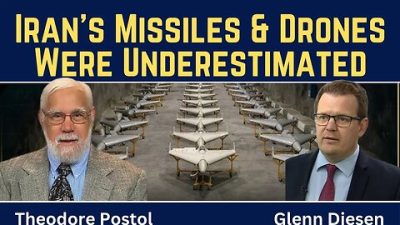
Theodore Postol: Iran’s Missiles & Drones Were Underestimated
or go to
Aletho News Archives – Video-Images
From the Archives
What is the Israeli Lobby in Australia Doing in Interfaith Dialogue?
By Ali Kazak | Dissident Voice | October 11, 2015
For years Israel and its lobby around the world have been trying to normalise their relations with Arabs and Muslims without solving the Palestine Question.
One of the methods they resorted to in the last few years is using human rights and community organizations such as interfaith dialogue and Multiculturalism to achieve this objective and to: isolate the Palestinians, marginalise the Palestine question, end Israel’s isolation, and prevent criticism of Israel, knowing that these organisations will be the first to stand against Israel’s violations, racial and religious discrimination.
The group responsible for this task in Australia is The Australia/Israel & Jewish Affairs Council (AIJAC); its Director of International & Community Affairs, Jeremy Jones is in charge of lobbying religious community organizations, specifically Muslims and Christians. Consequently he convened the Faith Communities for Reconciliation, founding participant in the Australian Partnership of Religious Organisations and the Australian National Dialogue of Christians, Muslims & Jews.
AIJAC is a private political propaganda group. It is recognised as the main Israeli lobby in Australia. It coordinates its activities and works intimately with the Israeli embassy in Canberra and different institutions in Israel. It is privately funded by some Jewish businessmen. It monitors closely Australian politicians, the media, ethnic and religious groups, (especially Arabs and Muslims), unions and academics on their stands towards Israel and the Palestine question. … continue
Blog Roll
 Aletho News
- The killing of three Indonesian soldiers in Lebanon should remind Jakarta that Israel does not want peace
- Defeated and delusional: Netanyahu’s remarks reveal $80bn war failure, says analyst
- Iran’s friends are about to make life much more difficult for Israel and the US
- The war of liberation of the Arab and Islamic peoples expands across the Gulf
- Envoy warns UN on Trump’s threat to ‘obliterate’ Iran’s civilian infrastructure
- The Larak Corridor: Iran’s Rial Gate With No US, No Israel, and No Way Around
- ‘Economic terrorism’: Steel facilities hit again in US-Israeli strike
- ‘War Crime’: Iran condemns attacks on Arak, Ardakan nuclear sites
- Two-thirds of Americans want quick end to Iran war even if goals unmet
- Trump to Give “Important Update on Iran” Wednesday in Prime-Time Speech
- If Americans Knew
- Gaza families reunite years after babies evacuated amid Israel’s war
- International Rescue Committee warns Gaza’s children face grave protection risks
- Iran’s Alleged 47-Year War on America: Debunking the 1,050 American Deaths Canard
- Israel wants US to bomb more of Iran’s civilian structures (113,000 is not enough) – Not a ceasefire Day 173
- Ann Coulter Rips Into Fox News for Iran War Coverage
- Joe Kent Urges Americans To Call White House and Congress To Object To Sending Troops Into Iran
- DNC Resolution to Reject AIPAC Funding Puts Democratic Leaders in the Hot Seat
- Swedish foundation to build 400 schools as over 650,000 Gaza children remain without education for 2 years
- Israeli army admits photshopping image of slain Lebanese journalist
- This is how Israel is systematically killing health workers under the cover of war in Lebanon
- No Tricks Zone
- New Study Finds Warming Saves Lives…Cold Temperatures 12 Times More Deadly Than Excess Heat
- German Science Blog Accuses PIK Climate Institute Of Hallucinating Climate Tipping Points
- Devastating Assessment Of Comirnaty Vaccine By Former Senior Pfizer Europe Toxicologist
- New Study: CO2 Is ‘Effectively Negligible’ As An Explanatory Climate Change Factor Since 2000
- Former Pfizer Toxicologist Dr. Helmut Sterz Tells Bundestag Hearing Pfizer Vaccine Should Have Never Been Approved
- Energy Expert: Germany’s Nuclear Phaseout Was A “500 Billion Euro Mistake”
- New Research: South Australia’s Mid-Holocene Sea Surface Temperatures Were 4°C Warmer Than Today
- Storing Green Energy To Last Germany 10 Days Would Require A 60-Million Tonne Battery
- New Studies: UK Sea Levels Were 4 Meters Higher Than Today During The Mid-Holocene
- Destructive Green New Deal: German Energy And Metal Group Warns Of Drastic Crisis
 Aletho News
Leave a comment