Offshore wind turbines steal each other’s wind: yields greatly overestimated
By Bert Weteringe – clintel – December 30, 2025
The energy yields of offshore wind turbines are overestimated by up to 50% in national policy documents. This conclusion is based on an analysis of operational data from 72 wind farms.
In order to meet the net-zero targets set out in the European Green Deal, offshore wind turbines will have to make a significant contribution to Europe’s future energy supply – at least, that is the plan of European governments. However, these plans are facing setbacks due to high investment costs and uncertainty about returns, as demand is lower than expected. On October 30, outgoing Minister Hermans of the Dutch Ministry of Climate & Green Growth (KGG) announced in a letter to the House of Representatives that no applications for a permit had been received for the tender for the Nederwiek I-A wind farm, which has an installed capacity of 1–1.15 gigawatts. This is a trend that is not limited to the Netherlands. In August, for example, there were no bids for the ten gigawatts of tenders that the German government had put out for offshore wind projects. On top of that, there is now another setback: the energy yields of offshore wind turbines appear to be much lower than assumed in most national policy plans.
“National policy targets show expectations of energy production up to 50% higher than can realistically be achieved”, concludes Carlos Simao Ferreira, professor of Wind Energy Science at Delft University of Technology. He published, together with Danish colleagues Gunner Chr. Larsen and Jens Nørkær Sørensen from the Technical University of Denmark (DTU), an article in the latest journal Cell Reports Sustainability, on November 21. “This study establishes a physically grounded upper limit on wind farm performance, demonstrating that aerodynamic constraints impose a fundamental ceiling on the energy extractable from the marine Atmospheric Boundary Layer”, the scientists continue.
According to the article, the ever-growing wind farms, which are also becoming increasingly denser, extract energy from the lower part of the atmospheric boundary layer, affecting this boundary layer up to several kilometres above the Earth’s surface. The energy extracted from the airflow must be replenished from the higher layers of the atmosphere, but this is only possible to a limited extent due to atmospheric limitations determined by physical principles known from meteorology and geophysics. This means that wind turbines literally steal each other’s wind, which means that the efficiency of wind turbines will decrease even further as their number increases. The scientists demonstrate this with a validated analytical model that defines the physical upper limit of offshore wind farm production.
They built their model based on the actual yields of 72 large wind farms in the United States, the United Kingdom, Germany, France, Belgium and the Netherlands, and compared the actual yields of the wind farms with the theoretically expected yields set out in national policy documents in a number of case studies. In seven of the nine case studies, the national policy targets for offshore wind yields turned out to be way overestimated. Two German wind farms were slightly underestimated.
The limitations of offshore wind revealed in the publication are not new. Scientists from the Danish university and the German Max Planck Institute have previously warned that the expected yields from offshore wind energy could fall by a third or more if offshore wind is scaled up further. In a 2020 publication by the German organization Agora Energiewende, an interdisciplinary and international team that develops scientifically sound and politically feasible strategies for the transformation towards climate neutrality, they showed how the efficiency of wind turbines decreases as the use of wind energy increases in scale. In addition, Axel Kleidon, physicist and group leader at the Max Planck Institute, states in a 2021 publication in the ‘Meteorologische Zeitschrift’ that the energy yields of areas with wind turbines covering more than 100 square kilometres, are up to twelve times lower than those of small wind farms in prominent locations, regardless of the technological advances made in wind turbines. The Cell Reports publication now confirms these earlier findings with hard figures.
The Netherlands stands out most conspicuously: with an overestimation of revenues of 49%, the scientists have labelled the Dutch government’s policy as “internally inconsistent”. The North Sea Wind Energy Infrastructure Plan (WIN), published by the Dutch government in July, assumes a capacity factor of 51 to 56 percent—this is the ratio between the actual electricity production of a wind turbine and the maximum possible yield in the same period. This is despite figures from Statistics Netherlands (CBS) showing that the capacity factor of wind turbines in the Dutch part of the North Sea was 37% and 38% in 2023 and 2024, respectively. The Delft publication cites this as a striking example of how “changing targets, spatial planning, and assumed performance can become misaligned with physical constraints.”
“Such overestimation not only hides true energy costs but also underestimates power variability, integration, and curtailment risks, and it distorts policy pathways”, the scientists argue. They further note that the resulting shortfall in electricity revenues “could have a profound impact on society and the economy.” The effectiveness of large-scale investments in the flexibility of the power grid and in wind energy storage—such as batteries and hydrogen production—depends to a large extent on the actual capacity factor of offshore wind turbines. According to the scientists, the underutilization of these investments in the future will have an impact on several generations. “The heavy demands on society, the economy, and the environment mean that corrective paths may become costly or unfeasible for a country or region”, they state.
Simão Ferreira et al., A theoretical upper limit for offshore wind energy extraction, Cell Reports Sustainability (2025), https://doi.org/10.1016/j.crsus.2025.100573
 Bert Weteringe is a Dutch aeronautical engineer and the author of the book Downwind (2023), in which he informs readers about the devastating effects of the climate agenda on society and nature, specifically the impact of large-scale energy generation using wind turbines. As an independent investigative journalist, his focus is primarily on the energy transition. Through his website, he publishes news about the energy transition and wind turbines in particular.
UK Expands Online Safety Act to Mandate Preemptive Scanning of Digital Communications
By Cindy Harper | Reclaim The Net | January 8, 2026
A major expansion of the UK’s Online Safety Act (OSA) has taken effect, legally obliging digital platforms to deploy surveillance-style systems that scan, detect, and block user content before it can be seen.
The government’s new Online Safety Act 2023 (Priority Offenses) (Amendment) Regulations 2025, which came into force on January 8, 2026, designates “cyberflashing” and “encouraging or assisting serious self-harm” as priority offenses, categories that trigger the strictest compliance duties under the OSA.
This marks a decisive move toward preemptive censorship. Services that allow user interaction, including messaging apps, forums, and search engines, must now monitor communications at scale to ensure that prohibited content is automatically filtered or suppressed before users can even encounter it.
To meet the law’s demands, companies are expected to rely heavily on automated scanning systems, content detection algorithms, and artificial intelligence models trained to evaluate the legality of text, images, and videos in real time.
The UK Department for Science, Innovation and Technology (DSIT) unveiled the changes through a promotional video showing a smartphone scanning AirDropped photos and warning the user that an “unwanted nude” had been detected.
This visual captures the law’s core requirement: platforms must implement continuous background surveillance to identify and block flagged content, effectively converting private communication spaces into monitored environments.
In its official press release, DSIT said the new rules compel firms to “take proactive steps to prevent this vile content before users see it,” describing the measure as part of the government’s strategy to halve violence against women and girls within a decade.
Technology Secretary Liz Kendall stated, “We’ve cracked down on perpetrators of this vile crime – now we’re turning up the heat on tech firms. Platforms are now required by law to detect and prevent this material. The internet must be a space where women and girls feel safe, respected, and able to thrive.”
Platforms that fail to comply face severe penalties, including fines of up to 10% of global turnover or £18 million, whichever is greater, and potential service blocking in the UK.
“Safeguarding” Minister Jess Phillips said, “For too long, cyberflashing has been just another degrading abuse women and girls are expected to endure. We are changing this.”
She added, “By placing the responsibility on tech companies to block this vile content before users see it, we are preventing women and girls from being harmed in the first place.”
Behind this framing, however, lies a bigger structural change: routine surveillance of user-generated content.
Compliance will require platforms to perform mass scanning of messages, images, and uploads across their networks, even in spaces traditionally regarded as private.
Such measures risk capturing lawful communications and chilling legitimate expression, as automated filters often misjudge intent or context.
By requiring companies to predict and prevent “illegal content” before it appears, the UK is embedding a model of proactive censorship at the infrastructure level of online communication.
This positions large sections of the internet under continuous monitoring, with user privacy treated as a secondary concern rather than a fundamental right.
Trump Pulls Plug on Ukraine’s Pentagon-Linked Bioweapons Web
Sputnik – 08.01.2026
President Donald Trump has directed the US withdrawal from the Science and Technology Center in Ukraine (STCU) as part of a larger move away from 66 international organizations deemed “contrary to US interests.”
This move by the US President fits Donald Trump’s pattern of cutting Ukraine-related aid, including military suspensions earlier in 2025.
Withdrawal ends US participation and funding, per the memorandum, published on the WH website.
Established in 1993 ostensibly for redirecting former Soviet scientists from weapons of mass destruction to peaceful research, STCU has received over $350 million through State and Defense Departments, per Russia’s MoD.
Documents obtained during Russia’s special military operation and revealed by the late Lt. General Igor Kirillov, former head of Russia’s Chemical, Biological, and Nuclear Defense Troops, who was assassinated by Ukrainian neo-Nazi forces, have repeatedly exposed how the Pentagon funded bioweapons research in Ukraine.
STCU’s main activity is to act as a distribution center for grants for research in the interest of the Pentagon, “including biological weapons research,” according to Russian Deputy Envoy to the UN Dmitry Polyanskiy.
The STCU was linked to the Pentagon via the latter’s main contractor, the engineering firm Black & Veatch, per the MoD. Kirillov revealed the names of American and European employees of the STCU engaged in US military biological research, such as:
- Andrew Hood (ex-executive director and head of diplomatic mission for STCU)
- Current STCU Executive Director US citizen Curtis Bjelajac
- Black & Veatch VP Matthew Webber
American curators of biolabs in Ukraine were most interested in dual-use projects, many of which are aimed at studying ”potential agents of biological weapons, such as the plague and tularemia, as well as pathogens of economically significant infections”.
“From 2014 to 2022, the Ukrainian Science and Technology Centre implemented more than 500 research projects in the post-Soviet republics,” such as Ukraine, Georgia, Moldova, and Azerbaijan, per MoD.
One Hundred People Killed in US Attack on Venezuela – Interior Minister
Sputnik – 08.01.2026
CARACAS – One hundred people were killed in the US attack on Venezuela, the Latin American country’s Interior Minister Diosdado Cabello said.
“Venezuela was the victim of a barbaric, treacherous attack… so far there are 100 dead and a similar number of wounded,” Venezuela’s Interior, Justice and Peace Minister Diosdado Cabello said, adding that among those killed were civilians — including “people who were in their homes.”
Cabello also said the current priority is the return of President Nicolás Maduro and First Lady Cilia Flores, and stated that both suffered injuries during their kidnapping.
He described the aggression as a shock to a population that “was in no situation that required a military attack,” saying it has left “a wave of terror.”
The Year Ahead in Sino-American Relations
By Joseph Solis-Mullen | The Libertarian Institute | January 8, 2026
From trade frictions to security flashpoints, the new year ahead promises a mix of continuity and potential volatility in U.S.-China relations. While Beijing’s growth in relative power—economic, technological, and military—continues, it is not aimed at “taking over the world.” Instead, it reflects a pragmatic pursuit of stability and influence in Asia. Washington would benefit from strategic empathy, recognizing China’s core concerns to avoid counterproductive escalations that could harm both nations in the long-term.
With that said, here’s what to be on the lookout for in Sino-American relations in 2026.
A hallmark of the U.S.-China rivalry since Donald Trump first took office in 2017, the current round of trade war enters 2026 on shaky ground following the one-year truce brokered in October 2025 during Presidents Trump and Xi’s meeting in Busan, South Korea. This agreement paused escalating tariffs—peaking at 145% on some Chinese goods and 125% on American products earlier in 2025—and committed China to resuming purchases of American soybeans (twelve million tons by year’s end—though American farmers are apparently in need of another bailout) while easing rare earth export curbs. In return, Washington suspended expansions of export controls on advanced tech affiliates.
Bilateral trade, which plummeted 44% year-on-year to $324 billion in the first nine months of 2025, could stabilize if the truce holds, benefiting U.S. farmers and manufacturers reliant on Chinese components.
Yet, fractures are already apparent. No formal written agreement has materialized two months post-summit, leaving commitments vague, vulnerable to misinterpretation, and doing little to dissipate the regime uncertainty plaguing the planning of businesses.
Beijing, focused on resilience, has diversified exports and boosted domestic consumption, reducing reliance on the U.S. market. If the truce unravels, expect tit-for-tat measures, but China’s strategic patience could expose U.S. domestic pressures, pushing Trump toward concessions to avoid economic fallout ahead of midterms.
Longer-term, this dynamic underscores the counterproductive nature of Washington’s escalations. The growth of Beijing’s relative power in Asia is virtually inevitable, but alienating the region with trade wars only accelerates this process, harming American competitiveness without altering the regional balance.
While tensions have decreased over the past year, particularly when measured against the trade and economic categories, security remains the most dangerous and volatile arena, with Taiwan and the South China Sea as perennial hotspots. And while improvements have been made, things have been a mixed bag.
On the one hand, the Trump administration’s National Security Strategy has toned down its language on China, and the administration has avoided the outlandish statements the Joe Biden administration was perpetually walking back; until recently, Trump hadn’t approved any arms sales to Taiwan since taking office; and Republicans and Democrats alike have avoided the high level visits that occurred multiple times over the course of the previous administration. At the same time, Beijing has kept its objections to U.S. naval operations in its area pro forma and has continued to signal its desire to work with Washington to keep disputes over conflicting maritime claims beneath the threshold.
On the other, frankly less promising, hand, there have been plenty of causes for concern on both sides. In Washington, there is little appetite for revisiting the key provisions of the Taiwan Relations Act that mandate arming the island, a longstanding point of continuing friction. U.S. troops are still present on Taiwan and the offshore islands, some of which are within sight of the mainland; having spent the previous several years busily clarifying commitments to allies such as the Philippines regarding their claims to sandy spits in the South China Sea, clashes that could draw Washington into direct conflict with Beijing have continued. On that note, besides Chinese coast guard harassment of Philippine fishing vessels, Beijing has declared a new “nature reserve” at Scarborough Shoal institutionalizing its claims. While People Liberation Army (PLA) and People’s Liberation Army Navy (PLAN) incursions since Taiwanese President William Lai’s 2024 inauguration have continued, highlighting Beijing’s resolve to counter perceived independence moves, Beijing recently conducted its second major blockade simulation around Taiwan (“Justice Mission 2025”).
Note: while correlation does not prove causation, it does at least suggest it, and it is worth noting that this came exactly eleven days after the Trump administration announced an over $11 billion arms sale to Taipei, the largest sale to the island ever—quite a coincidence, if in fact it is one.
While China’s buildup narrows gaps, especially regionally, it doesn’t signal intent for worldwide conquest. Beijing prioritizes deterring U.S. intervention in Taiwan, not challenging America globally.
Hopefully, 2026 will see continued lower tensions in the key hotspots where a military conflict might erupt. Clear communication to prevent miscalculation is key, as is a degree of strategic empathy, acknowledging China’s historical sensitivities, such as Taiwan as a core interest, and avoiding escalatory actions—such as continuing to arm the northern Philippine islands with mobile missile launchers aimed at China.
Economic warfare, particularly in technology, will be a prominent 2026 undercurrent. The Busan truce temporarily halted expansions of U.S. export controls on semiconductors and AI chips, allowing sales like Nvidia’s H200 to China.
Yet, bipartisan hawks continue to push for tighter restrictions, viewing China’s tech advances as threats to American dominance in the area.
For its part, Beijing has begun countering such threats with its own controls on rare earths and critical minerals, where it holds 87% of global refining capacity, demonstrating its asymmetric leverage in this area.
Such tit-for-tat exchanges are counterproductive: U.S. restrictions have accelerated China’s domestic chip progress, eroding American corporations’ leads without curbing Beijing’s rise, while depriving Chinese firms of desired imports, raising relative costs, and lowering relative quality.
Recognizing mutual vulnerabilities, let’s hope Washington and Beijing pursue guardrails to avoid broader disruptions.
2026 offers plenty of opportunities for diplomatic breathing room through high-level engagements. President Trump plans a spring visit to Beijing, with Xi reciprocating later, plus potential meetings at G20 (U.S.-hosted) and APEC (China-hosted in Shenzhen).
These could extend the truce, focusing on fentanyl precursors, agricultural buys, and bounded tech cooperation.
Multilateral forums like BRICS (India-hosted) and G7 will test Beijing’s global outreach, emphasizing partnerships with the Global South amid U.S. tariffs.
Reestablished channels—defense talks and economic dialogues—are critical to maintain even if nothing gets accomplished. No one should want a return to the radio silence of the middle Biden years, which does nothing but heighten the chance of an escalation through misunderstanding.
Overall, there is much to be optimistic about in this area—hopefully both sides can keep the hawks at arm’s length and try to make positive improvements to the U.S.-China relationship, which is still near its post-Cold War nadir.
In 2026, China’s ascent—fueled by innovation, continued (although slowing) economic growth, and regional focus—will continue, but not as the zero-sum threat Washington often portrays. Overreactions like blanket tariffs or militarized alliances risk self-fulfilling prophecies, accelerating Beijing’s autonomy while straining US resources. Strategic empathy—understanding China’s near-abroad priorities without panic—could foster guarded stability, benefiting global growth.
As both powers play for time, the year may prove pivotal: controlled competition or renewed escalation? The choice lies more in Washington’s hands than it admits. Nothing existential is at stake in the South China Sea and while far from ideal the status quo over Taiwan has held for decades and there is no need to do anything that might upset the present situation.
Venezuela to Buy Only US-Made Products Under New ‘Oil Deal’ – Trump
Sputnik – 08.01.2026
WASHINGTON – US President Donald Trump said Venezuela would only purchase American-made products as part of a “deal” with Washington to sell the Latin American country’s oil.
“I have just been informed that Venezuela is going to be purchasing ONLY American Made Products, with the money they receive from our new Oil Deal. These purchases will include, among other things, American Agricultural Products, and American Made Medicines, Medical Devices, and Equipment to improve Venezuela’s Electric Grid and Energy Facilities. In other words, Venezuela is committing to doing business with the United States of America as their principal partner,” Trump wrote on Truth Social.
He said it is a “wise choice,” and a good thing for Venezuelans and Americans.
President Trump’s Cross of Iron
By Adam Dick | Peace and Prosperity Blog | January 8, 2026
On Wednesday, United States President Donald Trump declared in a post at Truth Social that he has determined the military budget for the next fiscal year should be hiked to 1.5 trillion dollars.
A Thursday Reuters article by Costas Pitas and Andrea Shalal quantifies Trumps proposed spending increase as amounting to a 66 percent increase over what the US Congress approved for 2026. The Reuters article further relates that this proposed increase in spending is, historically speaking, very large. The article states:
Byron Callan, a defense analyst with Capital Alpha Partners, said Trump’s post raised questions about where the funds would be directed and whether they could even be absorbed by the defense sector.
He said the last time the U.S. Defense Department saw an increase higher than 50% was in 1951 during the Korean War, with even huge surges in military spending under former President Ronald Reagan in 1981 and 1982 amounting to 25% and 20%.
An analysis of the cost of this spending should go beyond dollars alone and consider as well what economists term the opportunity costs — what is foregone because of Trump’s proposed military buildup. President Dwight D. Eisenhower provided such an analysis in his April 16, 1953 “The Chance for Peace” speech. Summing up his tabulation of opportunity costs of military spending, Eisenhower in the speech related spending on the military to “humanity hanging from a cross of iron.” Eisenhower warned:
Every gun that is made, every warship launched, every rocket fired signifies, in the final sense, a theft from those who hunger and are not fed, those who are cold and are not clothed. This world in arms is not spending money alone.
It is spending the sweat of its laborers, the genius of its scientists, the hopes of its children.
The cost of one modern heavy bomber is this: a modern brick school in more than 30 cities.It is two electric power plants, each serving a town of 60,000 population.
It is two fine, fully equipped hospitals. It is some 50 miles of concrete highway.
We pay for a single fighter plane with a half million bushels of wheat.
We pay for a single destroyer with new homes that could have housed more than 8,000 people.
This, I repeat, is the best way of life to be found on the road. the world has been taking.
This is not a way of life at all, in any true sense. Under the cloud of threatening war, it is humanity hanging from a cross of iron.
Each Congress member would do well to read or listen to Eisenhower’s speech and give it thoughtful consideration before voting on Trump’s proposed military spending increase.
China Slams U.S. Pressure on Venezuela and Vows to Deepen Trade Ties
teleSUR | January 8, 2026
On Thursday, He Yadong, a spokesperson for China’s Commerce Ministry (MOFCOM), questioned the United States for attempting to restrict Venezuela’s international economic relations and reaffirmed his country’s willingness to maintain trade ties with the South American nation.
“The hegemonic actions of the U.S. seriously violate international law, infringe on Venezuela’s sovereignty, and threaten peace and security in Latin America. China firmly opposes such actions,” He said.
“Economic and trade cooperation between China and Venezuela is conducted between sovereign states and is protected by international law and the laws of both countries. No other country has the right to interfere.”
“Regardless of changes in Venezuela’s political situation, China’s willingness to continuously deepen bilateral economic and trade relations remains unchanged,” the MOFCOM official stressed.
“China’s economic and trade cooperation with Latin American countries has always adhered to the principles of mutual respect and win-win outcomes. China does not seek spheres of influence, nor does it target any specific party. Economic complementarity serves as a solid foundation for China–Latin America cooperation, with openness, inclusiveness and mutual benefit as its defining features.”
“China will continue to work with Latin American countries to address international uncertainties through unity and collaboration, promote economic and trade cooperation on the basis of equality and mutual benefit, and achieve shared development,” He concluded.
The remarks by the MOFCOM spokesperson come after the administration of U.S. President Donald Trump informed Venezuela that it must end its relations with China, Russia, Iran and Cuba as part of a series of demands before it can extract and market its oil.
Kidnapped By the Washington Cartel
By Eric Striker • Unz Review • January 8, 2026
Washington’s snatching of Venezuelan president Nicolas Maduro and his visibly brutalized wife, Cilia, has been widely condemned as naked criminality. Supporters of US interventionism have taken to justifying the attack under the guise of the Monroe, or “Donroe,” Doctrine, while leaders of the American left such as Bernie Sanders have largely ignored the moral implications by fixating on the legalistic aspect of the spectacle.
Practically nothing substantial has been presented to the public justifying military intervention in Venezuela. US officials have made half-hearted attempts at blowing the cobwebs off the Reagan-era Cold War boogeyman trope, but the Venezuelan state of Maduro last year spent only 18% of its GDP on public expenditures, making the US (37%) twice as “communist.” It should also be noted that Venezuela’s Communist Party has long been part of the heterogenous US-backed anti-Maduro opposition and is perceived inside the country as a front for the CIA.
The next ginned up fable accuses Maduro, in a Brooklyn federal court case overseen by 92-year-old Zionist Jew Alvin Hellerstein, of being a global cocaine kingpin.
The original Department of Justice case was cobbled together during Trump’s first term but was pursued heavily by the successive Biden administration, which introduced a $25 million dollar bounty in hopes that someone inside the regime would capture Maduro for them. Critics have dismissed the charges as both baseless and hypocritical, pointing out that several current US-installed leaders in Latin America are running actual narco regimes. The well of irony goes deeper: the very Delta Force unit responsible for capturing Maduro is itself a violent cocaine trafficking ring, as journalists documenting JSOC operator’s use of military planes to import millions of dollars worth of cocaine from Colombia to Fort Bragg for both personal use and illicit profit have shown.
The last excuse, tossed to the nihilists in the MAGA base as red meat, is that America wants to steal the oil to make gas prices cheaper. During World War II, the United States strong-armed Venezuelan oil into the hands of American businesses to fuel the Allied war effort, but the 30 to 50 million barrels of oil Trump is demanding for America is only enough to last two months. Venezuela’s low-quality crude requires refining infrastructure that experts believe could cost 10s of billions of dollars in investment and potentially a decade to come to fruition, meaning that the US would have to pay a hefty price to produce the product in order to “steal” it.
Military action for oil makes no sense. For nearly a decade, Maduro’s government has been desperately reaching out to the US to negotiate an end to the devastating sanctions crippling the Venezuelan economy and bring back American oil companies, with extraordinary gestures such as a $500,000 donation to Trump’s 2017 inauguration festivities. These overtures were ignored.
Realist arguments for removing opponents of the American empire from the Western Hemisphere also seem inadequate. Many nations that have strong links to Russia and China, such as Hungary, also have close relations to the Trump administration. Neither Russia or China are interested in or able to meddle in the Western Hemisphere, as the May 2024 8,000 word Sino-Russian joint statement calling for non-interventionism reveals.
The remaining outstanding issue, what separates friend-to-all Hungary from Venezuela and is likely real cause of the conflict is Maduro’s militant anti-Zionism, which has been put into practice through Hugo Chavez-era infrastructure of sanctions-busting trade with Iran, who the Zionist hawks in Washington are trying to isolate further. Venezuela has become an outlier in Latin America, where regimes propped up by the US are rapidly embracing the pro-Israel Isaac’s Accords. What exactly the Israelis want in Latin America remains a matter of speculation, but this question is important enough to compel Venezuelan opposition leader Maria Corina Machado to repeatedly declare her devotion to the Jewish state and openly plan to make Israel a central focus of her potential future government.
The notion that Trump was settling accounts on behalf of Israel, rather than America, appears to be taken for granted by both Secretary of State Marco Rubio, who cited the security interests of Israel for cause, as well as Maduro’s successor Delcy Rodriguez, who has publicly declared that the president’s kidnapping has “Zionist undertones.”
It is not yet clear if the British and French educated lawyer Rodriguez, the daughter of a communist guerrilla tortured to death by the CIA, is herself an American asset tasked with gradually taking apart the Bolivarian revolution from within, but the decision to keep her in power was made by the same group that murdered her father. The new president was initially purged from Hugo Chavez’s political circle in 2006, only to be brought back by Maduro in 2013 for her magical ability to operate around American sanctions and defeat diplomatic onslaughts.
Delcy’s power within the Maduro government grew after she was able to single-handedly defeat an attempt by the Organization of American States to officially ostracize Venezuela in 2017. She has been able to broker large sanctions violating underground financial transactions on behalf of her country in Europe and, as head of Venezuela’s oil sector, has been actively lobbying the US to return to take it over. She has been criticized in socialist circles for her campaign re-dollarizing the Venezuelan economy, which has exacerbated poverty and inequality in the country. Her links to enemies of Venezuela are an open secret and include secret meetings with mercenary leader Erik Prince even as his outfit was actively trying to overthrow Maduro. Her years of unusual unofficial welcome in Washington and the wealth it has provided some corrupt elements in the world of Chavismo has allowed her to accumulate enough power domestically to, over the years, root out elements suspicious of her rise.
For now, Rodriguez is urging calm and the armed forces appear to be taking her at her word that she is a good faith pragmatist rather than a traitor. The next six months of her presidency will be crucial as a boots on the ground intervention by America continues to loom.
The flood of fake videos on social media of showing celebrations of Maduro’s removal do not reflect the reality on the ground. Approval for Trump’s actions is a minority opinion in both the United States and Venezuela. General sentiment is that the populations of both America and Venezuela will suffer the consequences of yet another Washington military adventure if the Trump administration goes any further.
Supporters of American imperialism — again, a minority opinion — have sought to distance themselves from the spoiled “neo-conservative” brand and argue that this new emphasis on Latin America will be different from the disastrous War On Terror. But interventions of the kind just witnessed with Maduro in the Western Hemisphere have historically fared no better than Iraq.
A case that comes to mind is the 2009 US overthrow of President Manuel Zelaya, who like Maduro, was abducted and taken to face trial in Costa Rica on flimsy drug charges. Successive American backed governments (including an actual cocaine trafficking president Trump recently pardoned) mismanaged Honduras to the point of making it the most violent country in the world. This situation provoked a massive exodus to the US, producing a large percentage of the hundreds of thousands of so-called Northern Triangle illegal immigrants, with Honduras regularly populating the bulk of the notorious migrant caravans. From 2010 and 2020, the Honduran population in the United States increased from 490,000 to at least 1.3 million, and this is only those we know of. More than 10% of Honduras’ population now lives in America, many of them illegally.
The removal of Maduro is a regime change campaign going back 20 years, with the blame for this latest conflict shared by Democrats and Republicans equally. The substance of Washington’s global terrorism is decided by permanent bureaucrats and high finance, with the president only serving to influence the style and execution.
Is the Psychiatric Drugging of Children a Form of Child Abuse?
A case that becomes harder to dismiss the longer you look
By Dr. Roger McFillin | Radically Genuine | December 18, 2025
Let me be direct about something before we go any further.
We call them psychiatric “medications.” We say children are being “medicated” for their “conditions.” This language is a lie.
These are drugs. Chemical compounds made in a factory. They do not correct any known abnormality. They do not heal anything. They are not medicinal in any meaningful sense of the word. They are chemicals that alter brain function that numb, restrict, and sedate.
We need to stop hiding behind medical language that implies these interventions are “therapeutic” and healing. They are not. They are chemical management of behavior with the potential for severe health consequences. Once we are honest about what we are actually doing to children, the ethical questions become unavoidable.
The Question We Must Answer
I have spent fifteen years in private practice as a clinical psychologist. Before that, I worked in psychiatric hospitals, community mental health, public schools and the juvenile justice system. I have watched what we do to young people in the name of treatment, and it’s a moral and ethical failure.
Federal law defines child abuse as “any act or failure to act on the part of a parent or caretaker which results in death, serious physical or emotional harm” or “an act or failure to act which presents an imminent risk of serious harm.”
The question I want to pose is straightforward: Does the prescription of mind-altering and mood-altering drugs, which carry significant potential for harm and frequently cause it, meet this legal definition?
I believe it does. Here is why.
Rationale #1: No Identifiable or Measurable Biological Foundation for Mental Disorders Exists
If we could identify a biological abnormality that a drug effectively corrects, we would have reasonable justification for the risks involved. We could measure responses empirically and adjust treatment accordingly.
But no such abnormality has been identified. Not for ADHD. Not for depression. Not for anxiety. Not for any psychiatric diagnosis given to children.
Psychiatric diagnoses fail the most basic standards of scientific measurement. They lack both reliability and validity.
Reliability means consistency. If a diagnostic system is reliable, different clinicians evaluating the same child should arrive at the same diagnosis. This does not happen in psychiatry. Studies repeatedly demonstrate that clinicians disagree at alarming rates. One psychiatrist sees ADHD. Another sees anxiety. A third sees oppositional defiant disorder. The same child, the same behaviors, wildly different labels depending on who is in the room. Field trials for the DSM-5 found that many diagnoses failed to reach acceptable reliability thresholds. The system cannot even produce consistent results.
Validity means the diagnosis corresponds to something real and distinct in the world. A valid diagnosis identifies a specific condition with a known cause, predictable course, and targeted treatment. Psychiatric diagnoses meet none of these criteria. There are no biomarkers. No lab tests. No imaging findings. No way to confirm or disconfirm the diagnosis through objective measurement. These categories were created by committees of psychiatrists voting on clusters of behaviors. They are descriptive labels masquerading as medical diagnoses.
The honest history is this: the Diagnostic and Statistical Manual was developed primarily to facilitate insurance billing within the broader healthcare system. It provided codes so that psychiatrists could be reimbursed like other physicians. The appearance of medical legitimacy was the point. Scientific validity was never established because it was never the priority.
The chemical imbalance theory has been formally abandoned. The former director of the National Institute of Mental Health publicly stated that psychiatric diagnoses lack scientific validity. Yet physicians continue telling parents their children have brain disorders based on no objective test whatsoever.
Consider the psychological impact on a child who begins to identify with a psychiatric label. They internalize the message that something is fundamentally wrong with how they think and feel. They believe they are different from other children. They conclude they need drugs to be normal.
Is this not a form of emotional harm?
Any genuine medical disease underlying psychiatric symptoms would be reclassified as a medical condition. If obsessive-compulsive symptoms stem from a streptococcal infection, we treat the infection with antibiotics. If attention problems result from nutritional deficiencies, we address the deficiencies through diet and supplementation.
When we affix psychiatric labels to children without objective confirmation, we drug them with chemicals that cause significant adverse effects and health concerns.
Rationale #2: No Psychiatric Drug Has Been Proven to Objectively Improve the Assigned Mental Disorder
I have spent fifteen years studying psychiatric drug trials, the FDA approval process, and the mechanisms through which these chemicals reach the market. What I have learned disturbs me deeply.
These trials typically last six to twelve weeks. Researchers measure effectiveness through symptom checklists, quantifying whether reported symptoms decrease. The critical problem is that many of these drugs primarily induce emotional numbing or sedation. A person who feels disconnected from their emotions will report fewer symptoms on a checklist. This is not the same as improvement.
The objective is to create enough of a drug effect to generate a statistical difference compared to placebo. That statistical variance should not be mistaken for evidence that a drug treats depression or stabilizes mood. By the same logic, alcohol could be considered an approved treatment for social anxiety.
Pharmaceutical companies have encountered significant challenges demonstrating that antidepressants and other psychiatric drugs outperform placebos in meaningful ways. The illusion that we possess effective pharmacological treatments for childhood emotional and behavioral challenges must be dispelled.
If we are honest about what happens in clinical practice, the primary approach involves attempting to induce emotional numbness and detachment in developing children. This truth is rarely communicated to families.
I hear the same descriptions from young people in my practice over and over. “I feel like a zombie.” “I feel nothing.” “I cannot cry anymore.” “I do not feel like myself.”
This is not treatment. This is chemical suppression of the full range of human emotion in a developing brain. And we call it medicine.
Rationale #3: Psychiatric Drugs Are Proven to Create Harm
Every psychiatric drug approved for children carries a substantial list of side effects. Many are severe. Some are potentially fatal.
Do you want to know the long term effects? Well so do I! However, if you fail to study the long term problems of a drug you do not have to report on it.
Selective Serotonin Reuptake Inhibitors, the most commonly prescribed class of drugs for childhood anxiety and mood disorders, carry a black box warning. This represents the most stringent cautionary label the FDA can issue. The purpose of black box warnings is to alert the public and healthcare providers to grave side effects, including risks of injury or death.
The FDA requires black box warnings when compelling evidence indicates a drug can trigger severe adverse reactions, when benefits do not outweigh risks, when the drug requires restricted usage to protect public safety, or when the drug poses heightened dangers to specific populations, including children.
The black box warning on SSRIs states that these drugs increase suicidality in children and adolescents.
I need you to fully absorb that statement. The drugs most commonly prescribed to treat depression in young people can increase their desire to end their own lives.
I have witnessed this pattern repeatedly in clinical practice. A teenager who was struggling but stable starts an antidepressant. Within weeks, they are engaging in self-harm. They are making suicide plans. They are hospitalized.
In the hospital, the response is often to adjust the drug or add another. The adverse reaction becomes evidence of how sick they truly were.
Within clinical settings, physicians frequently combine drugs in ways that have never been adequately studied. Polypharmacy in pediatric psychiatry is common practice, not the exception. The combinations given to children have often never been evaluated even in adult populations.
This is experimentation. It is conducted on those least able to advocate for themselves.
Rationale #4: Psychiatric Drug Reactions Are Misinterpreted as Mental Disorders, Leading to More Diagnoses and More Drugs
This is perhaps the most insidious aspect of the current system. It creates a self-perpetuating cycle that transforms episodic struggles into chronic disability.
The pattern begins when a physician attributes emotional or behavioral challenges to a simplistic chemical imbalance. Drugs are prescribed that alter brain chemistry and can create genuine neurological changes. When the child displays adverse reactions, these responses are interpreted as manifestations of mental illness.
The misinterpretation becomes justification for additional drugs, additional diagnoses, and further deterioration.
A child enters the system because her parents are divorcing and she is sad. Understandable. Her world has been disrupted. She is prescribed an antidepressant. It makes her agitated and unable to sleep. A second drug is added for the agitation. That causes weight gain and lethargy. A stimulant is added to counteract the lethargy. The stimulant triggers anxiety. A benzodiazepine is added for the anxiety.
Within a few years, this child is taking five psychiatric drugs. She has accumulated diagnoses of major depressive disorder, generalized anxiety disorder, and bipolar disorder. She has been hospitalized. She has dropped out of school. She believes she is fundamentally broken and will need psychiatric management for the rest of her life.
She did not have five psychiatric disorders. She had one: an adverse reaction to psychiatric drugs that was misinterpreted at every turn.
This system transforms episodic and even typical variations in behavior into chronic disabilities. It creates the very conditions it claims to treat.
This Is Child Abuse
I use this language deliberately.
When we label children with psychiatric disorders based on no objective biological evidence, we cause emotional harm.
When we prescribe drugs that carry black box warnings for suicidality, that cause neurological changes, sexual dysfunction, metabolic disruption, and emotional blunting, we cause physical harm.
When we interpret adverse drug reactions as evidence of worsening mental illness and respond with additional drugs, we perpetuate harm.
When we transform children experiencing normal human responses to difficult circumstances into lifelong psychiatric patients, we cause profound harm to their identity, their development, and their future.
The fact that this occurs in medical settings does not change what it is.
The fact that it is performed by credentialed professionals does not change what it is.
The fact that insurance covers it does not change what it is.
We are systematically harming children while calling it care. And until we name it clearly, nothing will change.
AWAKEN
I would not have dedicated my career to exposing these problems if I did not believe alternatives exist.
Children do not need to be diagnosed and drugged. They need to be understood.
Anxiety is not a disorder. It is information. A child’s nervous system communicates that something requires attention in their environment, their relationships, their nutrition, their sleep, their sense of safety and belonging. Many need to LEARN how to face and tolerate fear, uncertainty and anxiety provoking situations. It’s part of the journey.
Address the root causes. Create genuine safety. Build authentic connection. Teach skills for understanding and navigating difficult emotions. Support the family system. Examine what the child is eating, how they are sleeping, whether they are moving their bodies, whether they have purpose and meaning. If you are on your phone for 8 plus hours a day I guarantee you are going to be miserable. You do not have a genetic condition called “Major Depressive Disorder” and “ADHD”.
We have collectively lost our minds.
I have watched children labeled treatment-resistant transform when we stopped drugging their symptoms and started addressing their lives. Not occasionally. Repeatedly. Consistently.
The psychiatric system does not want families to know this is possible. Healthy children do not generate recurring revenue.
But it is possible. And families deserve to know.
A Challenge
If you are a prescriber who puts developing children on psychiatric drugs without exhausting other options, without providing genuine informed consent about the risks, without a clear plan for eventual discontinuation, I ask you to reconsider what you are participating in.
If you are a parent who was told your child has a brain disease requiring lifelong medication, please know that you were not given accurate information. Seek other opinions. Explore other approaches. Your child’s future may depend on it.
If you are a young person who was drugged into compliance and told there was something fundamentally wrong with you, I want you to hear this: There was not. There is not. You were a human being having a human experience within a system that profits from your suffering.
The psychiatric drugging of children is one of the defining moral failures of our era. I will continue saying so until something changes.
Israel authorises electronic tracking of Palestinians

MEMO | January 7, 2026
Israel has authorised the use of electronic tracking devices on Palestinians in the occupied West Bank, formalising real-time surveillance of civilians who have not been charged, tried or convicted of any crime, according to a new directive issued by the Israeli army.
The order allows Israeli authorities to compel Palestinians placed under administrative movement restrictions to wear or carry electronic monitoring devices and criminalises any attempt to tamper with them. The measure embeds electronic tagging within Israel’s system of military rule over the occupied territory, further expanding the regime of surveillance imposed on the Palestinian civilian population.
Significantly in another example of the Israel’s apartheid rule, defence minister, Israel Katz, has explicitly excluded illegal Jewish settlers in the West Bank from the directive, underscoring the discriminatory nature of the policy and its application along ethnic and national lines. The order was issued following coordination between the Israel Defense Forces, the Israel Security Agency, Israel Police, the Ministry of Justice and the military’s legal authorities responsible for the occupied West Bank.
Human rights observers note that the policy applies to civilians subjected to Israel’s system of administrative control, a framework that routinely denies Palestinians due process and relies on secret evidence. Palestinians placed under such measures often face severe movement restrictions, prolonged surveillance and the constant threat of detention without trial.
The new directive reflects what journalist and filmmaker Antony Loewenstein has described as Israel’s “Palestine Laboratory”, a system in which Palestinians are used as testing grounds for advanced military and surveillance technologies later exported abroad. In his work, Loewenstein argues that Israel exports not only weapons but a comprehensive model for controlling what it labels “difficult populations”, combining military force, mass surveillance and spatial domination.
This model is explored in Al Jazeera’s latest documentary How Israel tests military tech on Palestinians, part of The Palestine Laboratory series. The film documents how Israeli checkpoints function as experimental sites for so-called “frictionless” technologies, including AI-enabled remotely operated weapons that fire stun grenades, tear gas and sponge-tipped bullets. These systems are deployed at checkpoints where Palestinians are routinely subjected to intrusive searches and data collection.
The documentary also details Israel’s extensive use of biometric surveillance systems such as Red Wolf and Blue Wolf. Blue Wolf operates on soldiers’ mobile phones, enabling them to photograph Palestinians and instantly access personal data, movement histories and profiling information.
Red Wolf is installed at checkpoints and control rooms, scanning faces and assigning individuals a colour-coded risk score. Palestinians labelled as “red” are flagged for increased scrutiny, harassment or restriction, including journalists and non-violent human rights defenders. According to testimony featured in the film, Palestinians are categorised without consent and subjected to constant monitoring that shapes every aspect of daily life.
The documentary further exposes the close and often opaque partnerships between Israel’s military and private technology firms. Israeli companies have tested facial recognition, behavioural analysis software, CCTV networks, drones and invasive spyware on Palestinians before marketing these systems internationally as “battle-tested”.
Human rights groups warn that the expansion of electronic tracking and biometric surveillance in the occupied West Bank constitutes a serious violation of international law. Under the Fourth Geneva Convention, an occupying power is prohibited from imposing collective punishment or discriminatory measures on a protected population.
Featured Video
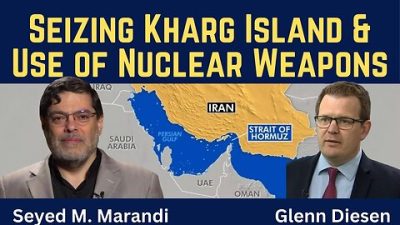
Marandi: Threat of Seizing Kharg Island & the Use of Nuclear Weapons
or go to
Aletho News Archives – Video-Images
Frlom the Archives
Provoking a Path to Persia
The Saban Center’s prescient paper on war with Iran
By Maidhc Ó Cathail | October 20, 2011
In June 2009, the Saban Center for Middle East Policy published “Which Path to Persia?—Options for a New American Strategy toward Iran.” Writing in a tone strikingly reminiscent of the Project for a New American Century’s infamous pre-9/11 paper “Rebuilding America’s Defenses,” the six co-authors noted that, “It seems highly unlikely that the United States would mount an invasion without any provocation or other buildup.” For a think tank specifically established by media mogul Haim Saban to protect Israel, this could prove to be a formidable obstacle impeding their desired march—of U.S. troops—to Tehran.
“In fact, if the United States were to decide that to garner greater international support, galvanize U.S. domestic support, and/or provide a legal justification for an invasion, it would be best to wait for an Iranian provocation, then the time frame for an invasion might stretch out indefinitely,” Saban’s think-tankers ruefully observed.
“With only one real exception, since the 1978 revolution, the Islamic Republic has never willingly provoked an American military response, although it certainly has taken actions that could have done so if Washington had been looking for a fight. Thus it is not impossible that Tehran might take some action that would justify an American invasion. And it is certainly the case that if Washington sought such a provocation, it could take actions that might make it more likely that Tehran would do so (although being too obvious about this could nullify the provocation). However, since it would be up to Iran to make the provocative move, which Iran has been wary of doing most times in the past, the United States would never know for sure when it would get the requisite Iranian provocation. In fact, it might never come at all.”
Seemingly undeterred by Iran’s frustrating unwillingness to provide the requisite provocation, the analysts continued to examine this option… continue
Blog Roll
 Aletho News
- Ukrainian Embassy in Beirut sheltering top Mossad agent
- Palestinian family displaced after settlers violently attack them in Humsa, Jordan Valley
- The EU never learns – except for the wrong lessons
- Iran attacks on UAE leaves RSF militia high and dry
- Hosting Washington’s war: Bahrain faces the consequences
- The US fell for its own Iran propaganda
- Seyed M. Marandi: Threat of Seizing Kharg Island & the Use of Nuclear Weapons
- Is there even an off ramp?
- Michael von der Schulenburg: Europe’s Self-Defeating Iran War Policy
- Sorry, The New Republic, Climate Change Isn’t Causing Somali Migration. Blame Civil Strife and Poverty.
- If Americans Knew
- ‘Of Course’: IDF Drops Case Against Soldiers Accused of Raping Palestinian Prisoner
- Don’t Fall for the Regime Change Talk. Israel Is ‘Mowing the Lawn’ in Iran
- Will Israel and the US wreck the Gulf States along with Iran?
- US so far burned through ‘years’ of munitions in Iran war: Report
- How the Israeli Tail Wags the American Dog
- Outdated intel likely led to deadly U.S. strike on Iranian elementary school, sources say
- Pentagon insider says high U.S official Douglas Feith reported to Netanyahu
- In fond memory of Walid Khalidi, the historian of Palestine
- 6 more Americans killed, as Israel ‘mows the lawn’ in Iran – Not a ceasefire Day 154
- Are we on the precipice of World War III?
- No Tricks Zone
- New Studies: UK Sea Levels Were 4 Meters Higher Than Today During The Mid-Holocene
- Destructive Green New Deal: German Energy And Metal Group Warns Of Drastic Crisis
- New Study Documents A 20-Year Pause In Arctic Sea Ice Decline – Driven By Internal Variability
- Wake-up Call: Survey Shows Majority Of Germans Now Favor Postponing Climate Targets!
- Televised! Leading German Political Candidate Tells Schoolchildren CO2 Makes Sun Hotter!
- New Study: A Century Warming Of 1.1°C Is ‘Commonplace’ And ‘Not Unusual’ During This Interglacial
- New Study: ‘Internal Noise’ And Volcanic Forcing Can Trigger 10-15°C Warming Within Decades
- Glaciers Worldwide Are Suddendly Surging, Experts Blame Warming!
- Surprising Discovery: Sahara Is Greening…Billions Of Trees Where Once Thought To Be Barren
- New Research Reaffirms Clouds, Aerosols, And Surface Solar Radiation Are ‘Driving The Climate System’
 Aletho News