Halliburton Executive Contradicts Trump on Venezuela Sanctions, Exposing Economic Hypocrisy
Trump’s own 2019 sanctions — not business decisions — forced Halliburton to abandon Venezuela
teleSUR | January 10, 2026
A now-viral video has reignited global scrutiny over Washington’s coercive economic policies. Speaking directly to camera, asenior company official clarified a critical fact often omitted in U.S. political discourse: “We didn’t leave Venezuela by choice or due to operational issues. We were forced out by the sanctions imposed by Trump’s own administration in 2019.”
The statement, originally shared by Venezuelan journalist Joan Contreras and widely disseminated by the investigative outlet Misión Verdad, delivers a rare insider account from within one of America’s most powerful oil service corporations. It directly challenges recent claims by former President Donald Trump – who, amid speculation about his return to office in 2025, has floated the idea of “immediately lifting sanctions” to allow U.S. oil firms back into Venezuela.
But as the Halliburton executive makes clear, the very policies Trump championed are what expelled these companies in the first place. Far from being a neutral market withdrawal, Halliburton’s exit was a direct consequence of U.S. Treasury Department directives that criminalized financial and commercial transactions with Venezuela’s state-owned oil company, Petróleos de Venezuela (PDVSA).
This revelation underscores a long-standing contradiction in U.S. foreign policy: sanctions billed as tools for “democracy promotion” end up punishing American corporations while deepening humanitarian suffering abroad. In Venezuela’s case, the human cost has been staggering – yet the corporate toll is now coming full circle.
Halliburton Executive Reveals Coercive Reality
The executive’s testimony aligns with documented history. In January 2019, during Trump’s first term, the U.S. imposed sweeping sanctions on PDVSA, effectively freezing its U.S.-based assets and prohibiting any American entity from engaging in oil-related transactions with the company. For Halliburton—a firm that had operated in Venezuela for over six decades and provided critical drilling, well completion, and reservoir management services—the order was unambiguous: comply or face crippling fines and legal penalties.
“We had no option,” the executive explained. “Continuing operations would have meant violating U.S. law. The Treasury made it clear: work with PDVSA, and you’re out of the U.S. financial system.”
These sanctions were part of a broader “maximum pressure” campaign that included secondary sanctions targeting non-U.S. entities, asset freezes, and visa bans. By 2020, nearly all major American oil service firms—including Schlumberger and Baker Hughes—had suspended Venezuelan operations, despite having profitable contracts and functional infrastructure on the ground.
Experts consulted by teleSUR emphasize that this episode reveals the self-defeating nature of unilateral sanctions. “Washington claims it wants U.S. companies to dominate global energy markets,” said Dr. Elena Martínez, an international trade analyst at the Latin American Faculty of Social Sciences (FLACSO). “But by weaponizing finance, it pushes its own corporations out of strategic territories—opening the door for Russia, China, and Iran to step in.”
Indeed, since 2019, PDVSA has forged new technical and commercial alliances with Rosneft, CNPC, and Iranian firms, gradually restoring production capacity despite ongoing U.S. restrictions. In 2025, Venezuela reported its highest oil output in five years—proof that economic siege does not equate to control.
Geopolitical Context: Sanctions as a Double-Edged Sword in Global Energy Politics
The Halliburton admission arrives at a pivotal moment in global energy realignment. As the world transitions toward multipolarity, U.S. sanctions are increasingly seen not as instruments of power, but as accelerants of de-dollarization and alliance diversification. Countries targeted by Washington – from Venezuela to Iran to Russia – are deepening trade in local currencies, building alternative payment systems, and reducing reliance on Western financial infrastructure.
For American oil giants, this shift carries long-term strategic costs. While short-term compliance with sanctions may avoid legal trouble, it cedes influence in some of the world’s largest hydrocarbon reserves. Venezuela alone holds the largest proven oil reserves on Earth – over 300 billion barrels – mostly in the heavy crude of the Orinoco Belt, a region where Halliburton once held technological dominance.
Moreover, the hypocrisy exposed by the executive’s statement undermines U.S. credibility in multilateral forums. When Washington presents sanctions as “peaceful tools,” yet they result in $130 billion in estimated Venezuelan economic losses since 2015 (according to Caracas), and simultaneously force U.S. firms out of lucrative markets, the narrative collapses under its own weight.
The United Nations Special Rapporteur on unilateral coercive measures has repeatedly condemned such policies, noting they violate international law and disproportionately harm civilians. Yet the Halliburton case shows even corporate elites are not immune—suggesting that sanctions function less as precision tools and more as blunt instruments of economic warfare with indiscriminate fallout.
Regionally, this dynamic strengthens Latin American calls for sovereignty. Brazil’s Lula, Colombia’s Petro, and Mexico’s Sheinbaum have all criticized U.S. sanctions as relics of interventionism. If American businesses themselves acknowledge the damage, regional resistance will only grow.
Corporate Testimony Undermines U.S. Political Narratives
Trump’s recent suggestion that lifting sanctions would “bring U.S. oil companies rushing back” ignores a fundamental reality: trust has been broken. After being compelled to abandon decades of investment overnight, firms like Halliburton face enormous legal, financial, and reputational risks in re-entering Venezuela—even if sanctions ease.
Furthermore, the geopolitical landscape has shifted. PDVSA no longer depends solely on Western technology. With Russian drilling equipment, Chinese refining partnerships, and Iranian logistical support, Venezuela has built a resilient, sanctions-resistant oil ecosystem. U.S. firms may find the door not as open as they imagine.
The Venezuelan government has consistently maintained that sanctions constitute a flagrant violation of international law, amounting to collective punishment of its civilian population. From medicine shortages to power grid failures, the humanitarian impact is well-documented. Yet the Halliburton video adds a new dimension: even the architects of U.S. corporate power are casualties of this policy.
As speculation grows about potential partial sanctions relief in 2026 – possibly tied to electoral conditions or oil-for-debt deals – the executive’s message serves as a sobering reminder: coercion begets fragmentation, not compliance.
Conclusion: When Sanctions Backfire on Their Own Enforcers
The viral testimony of a Halliburton executive does more than correct the historical record—it exposes the internal contradictions of U.S. foreign policy. The Halliburton executive contradicts Trump on Venezuela sanctions not to defend Caracas, but to defend truth: American companies didn’t flee Venezuela because of chaos or mismanagement. They were pushed out by Washington itself.
In doing so, the U.S. not only harmed millions of Venezuelans but also weakened its own strategic position in the global energy arena. As the world moves toward multipolarity, such self-inflicted wounds may prove harder to heal than any military defeat.
For now, the video stands as a rare moment of corporate candor—and a powerful indictment of a policy that sacrifices both people and profits on the altar of hegemony.
No comments yet.
Featured Video
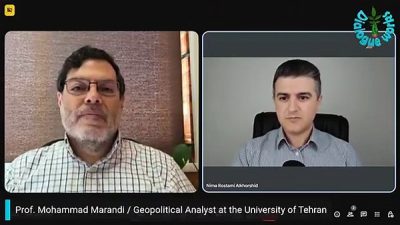
Seyed M. Marandi: U.S. Military DIVIDED? Iran’s Secret Defense EXPOSED
or go to
Aletho News Archives – Video-Images
From the Archives
‘Israel sees Iran as obstacle to its policies’
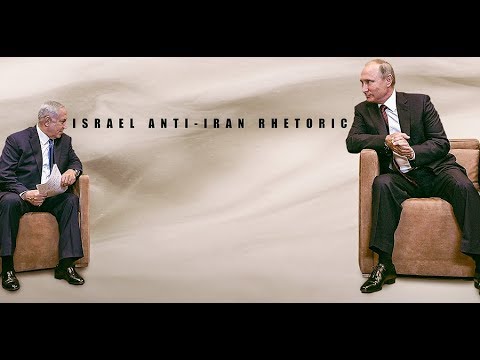
Press TV – August 25, 2017
Prime Minister Benjamin Netanyahu has said that Israel felt threatened by Iran’s growing influence in the Middle East. Netanyahu expressed his Iranophobic view in a meeting with Russian President Vladimir Putin in Russia’s Black Sea resort of Sochi on Wednesday. Press TV has asked Scott Rickard, former American intelligence linguist from Tampa, Florida, and Brent Budowsky, a columnist at The Hill from Washington, to give their thoughts on the issue.
Rickard said Tel Aviv is concerned about the fact that the regime could not carry out its old project to spread sectarian divisions and pave the way for dismemberment of the countries in the Middle East region because of the Iranian-led resistance against Israeli policies, not only in the occupied territories of Palestine but also in the whole region.
“Iran is not a threat to Israel whatsoever. The threat that Israel sees is the fact that their Oded Yinon Plan is being put to a hold by Iran,” the intelligence linguist said on Thursday night.
“They (the Israelis) look at Iran as a threat only because they have no influence on their governments and Iran is autonomous and is not under the Zionist influence,” he added.
Since the victory of the Islamic Republic of Iran in 1979, Tehran has been critical of Israel’s policies in the region, whereas “no leaders [of other states] even dared to speak out against Zionism,” Rickard argued. … continue
Blog Roll
 Aletho News
- Trump Claims Ceasefire, Reopening of Strait of Hormuz Agreement with Iran
- Israeli tank fire killed UN peacekeeper in Lebanon, UNIFIL investigation finds
- Russia, China block Bahrain-sponsored UN resolution on Strait of Hormuz
- The US-Israeli War on Science is an Assault on our Future
- Trump’s Promise to Bomb Iran ‘Like Never Before’ Faces Brutal Logistics — Expert
- Germany seeks to restrict stays abroad for men of fighting age – Berliner Zeitung
- Evidence points to Ukraine being behind TurkStream attempted sabotage, but that should come as no surprise
- Sri Lanka secures supplies of Russia oil – minister
- Nations across Asia strike direct deals with Iran for Hormuz passage
- IRGC commander declares ‘new phase’ of reprisal attacks against aggressors
- If Americans Knew
- Thousands dead and neighborhoods razed to the ground: Aid agencies fear southern Lebanon is becoming the new Gaza
- The war the US is fighting for Israel could cost trillions
- ‘Cigarette Burns, Nail Wounds’: Toddler Tortured in Gaza to Coerce Father
- Trump Says US Sent ‘a Lot of Guns’ to Protesters in Iran
- Israeli forces destroy 17 UN peacekeeper cameras in south Lebanon
- US-Israeli strikes ‘completely destroy’ synagogue in Tehran
- Archbishop for US Military Says Iran War Is Unjust Under Catholic Teaching
- Iranian leaders’ Open Letters to the American People
- Trump says Iranians appreciate bombs, WHO warns of nuclear risks – Daily Update
- U.N. experts demand Israel release prominent Gaza doctor after reports of ‘severe torture’
- No Tricks Zone
- An Inconvenient Tree: Uncovered In Alps… Europe Much Warmer Than Today 6000 Years Ago
- New Study Reports A 60% Slowdown In Greenland’s Ice Loss Rate In The Last Decade
- Low Intensity Tornado Wrecks Major Solar Farm, Creating A Potential Toxic Dump
- New Study Finds Warming Saves Lives…Cold Temperatures 12 Times More Deadly Than Excess Heat
- German Science Blog Accuses PIK Climate Institute Of Hallucinating Climate Tipping Points
- Devastating Assessment Of Comirnaty Vaccine By Former Senior Pfizer Europe Toxicologist
- New Study: CO2 Is ‘Effectively Negligible’ As An Explanatory Climate Change Factor Since 2000
- Former Pfizer Toxicologist Dr. Helmut Sterz Tells Bundestag Hearing Pfizer Vaccine Should Have Never Been Approved
- Energy Expert: Germany’s Nuclear Phaseout Was A “500 Billion Euro Mistake”
- New Research: South Australia’s Mid-Holocene Sea Surface Temperatures Were 4°C Warmer Than Today
 Aletho News
Leave a comment