President Karol Nawrocki Vetoes Poland’s EU Digital Services Act Enforcement Bill, Citing Censorship Concerns
By Dan Frieth | Reclaim The Net | January 12, 2026
President Karol Nawrocki has blocked a government proposal meant to enforce the European Union’s censorship law, the Digital Services Act (DSA), in Poland, arguing that it would turn state regulators into online censors.
His decision halts one of Warsaw’s most significant attempts to bring national law in line with EU digital rules.
“As president, I cannot sign a bill that effectively amounts to administrative censorship,” Nawrocki stated. “A situation in which a government official decides what is permitted on the Internet is reminiscent of the Ministry of Truth in Orwell’s 1984.”
The bill, approved by parliament in November, was presented as a way to protect users from online abuse and falsehoods.
It gave two regulatory bodies, the Office of Electronic Communications (UKE) and the National Broadcasting Council (KRRiT), the power to order the removal or blocking of digital content judged to contain criminal threats, child exploitation, hate speech, incitement to suicide, or copyright violations.
The plan also allowed complaints to originate from a wide range of sources, including the police, prosecutors, border guards, or tax authorities. Content authors would have been notified and granted a two-week window to object before any blocking took effect.
Supporters of the proposal pointed to new appeal mechanisms for users who felt wronged by platform decisions, calling the bill a step toward transparency and accountability.
Nawrocki, however, saw the measure differently.
In a detailed explanation posted on the Chancellery’s website, as reported by Notes From Poland, he wrote that the safeguards were superficial: “Instead of real judicial review, an absurd solution has been introduced: an objection to an official’s decision, which citizens must file within 14 days.” He accepted that “the internet poses many threats, especially to children,” but insisted that the government’s draft was “indefensible and simply harmful.”
“The proposed solutions create a system in which ordinary Poles will have to fight the bureaucracy to defend their right to express their opinions. This is unacceptable,” he said, adding that “the state is supposed to guarantee freedom, not restrict it.”
The government, which has often clashed with the president, condemned the veto. Digital affairs minister Krzysztof Gawkowski said Nawrocki’s action would weaken online protection efforts.
Gawkowski argued that the rejected bill would have strengthened user rights, guarded families from “hate” and “misinformation,” and countered the spread of foreign propaganda.
The Polish Media Council also voiced disappointment, warning that the veto “will hinder the fight against online disinformation, especially at a time when almost every day brings new lies from across the eastern border.”
By rejecting the bill, Poland now remains one of several EU countries yet to implement the DSA, exposing it to possible sanctions from Brussels. The European Commission referred Poland and four others to the Court of Justice of the European Union last May over non-compliance.
Australian festival boycotted for excluding Palestinian writer
MEMO | January 12, 2026
Dozens of writers and cultural figures have boycotted the Adelaide Festival in Australia after the organisers excluded Palestinian-Australian academic and writer Randa Abdel-Fattah from the Adelaide Writers’ Week programme, scheduled to take place next month.
The festival removed Abdel-Fattah from the list of participants, despite her taking part in the 2023 edition, where she chaired and joined several sessions and discussions.
The Adelaide Festival includes a wide range of cultural events, such as arts, music, theatre and public talks, with Writers’ Week considered one of its most important annual programmes.
On Thursday, the festival’s board issued a statement saying it was “shocked and saddened by the tragic events in Bondi”, adding that it had informed Abdel-Fattah of its decision not to proceed with her planned appearance. The board justified the move by citing what it described as “cultural sensitivity” at this time.
In response, Randa Abdel-Fattah released a separate statement accusing the festival’s management of “blatant and shameful racism against Palestinians”. She said linking her to the Bondi events was “disgraceful” and argued that the decision stripped her of her humanity and turned her into a target for racist fears simply because she is Palestinian and holds openly stated political views.
Abdel-Fattah also criticised Australian arts and cultural institutions more broadly, accusing them of showing “complete contempt and inhumanity towards Palestinians” since 7 October 2023.
She said: “The only Palestinians they will tolerate are silent and invisible ones.”
So far, 47 participants have withdrawn from the festival in support of Abdel-Fattah, with expectations that more may follow.
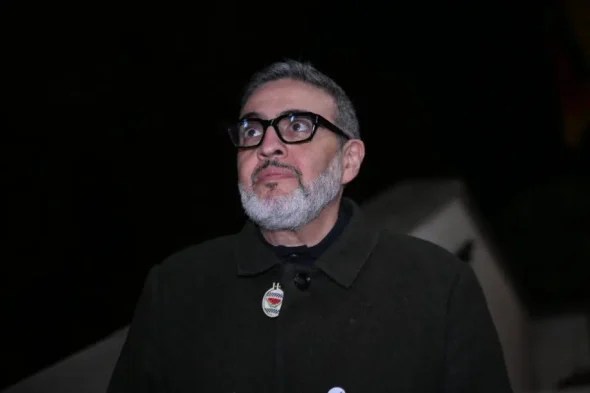
Palestinian surgeon Ghassan Abu Sittah defeats pro-Israel lawfare in landmark GMC ruling
MEMO | January 12, 2026
Prominent Palestinian reconstructive surgeon and academic Dr Ghassan Abu Sittah has won a misconduct case brought against him by pro-Israel lobbyists, in what campaigners have described as a major blow to the UK’s Israel lobby and its use of lawfare to silence critics of Israel’s assault on Gaza.
On Friday, the Medical Practitioners Tribunal Service (MPTS) dismissed a two-year-long General Medical Council (GMC) case against Abu Sittah, concluding that there was no evidence that his writing or social media activity supported terrorism, anti-Semitism or violence.
“WE WON”, said Abu Sittah on X following his victory over UK Lawyers for Israel (UKLFI).
“The General Medical Council Tribunal has thrown out the complaint made by UK Lawyers for Israel, accusing me of support of violence and terrorism and antisemitism”.
The case stemmed from complaints lodged in 2023 by UKLFI, a notorious pro-Israel pressure group that has repeatedly targeted activists, academics and professionals who speak out for Palestinian rights.
The complaint centred on an article written by Abu Sittah in the Lebanese newspaper Al Akhbar and two reposts on X, which UKLFI alleged had “impaired his fitness to practise”.
The tribunal found that an “ordinary reader” would not interpret the material as providing material or moral support for terrorism, nor as endorsing violence. It also ruled that there was no intent on Abu Sittah’s part to promote violence or hatred, leaving no basis for a finding of misconduct.
Abu Sittah, a Kuwait-born British Palestinian plastic and reconstructive surgery consultant and rector of the University of Glasgow, said the case was part of a broader strategy of intimidation aimed at silencing pro-Palestinian voices.
“This complaint forms part of a broader lawfare strategy which aims to instrumentalise regulatory processes to intimidate, silence and exhaust those who speak out against injustice in Palestine,” he said. “I do not, and have never, supported violence against civilians. I know too well its consequences.”
Abu Sittah spent 43 days in Gaza during Israel’s initial assault in October 2023, working at Al-Ahli, Al-Shifa and Al-Awda hospitals. He has repeatedly spoken publicly about the mass civilian casualties he treated, including children with catastrophic injuries, and has accused the Israeli military of using white phosphorus and deliberately targeting civilians.
The case was supported by the International Centre of Justice for Palestinians (ICJP), whose director, Tayab Ali, described the ruling as a “complete vindication”.
“For months, Dr Abu Sittah was shamelessly targeted by pro-Israel lobby groups through a sustained campaign of lawfare,” Ali said. “The serious allegations advanced against him have now been entirely rejected.”
The ruling comes amid growing scrutiny of UKLFI’s tactics. The European Legal Support Center (ELSC) and the Palestine Institute for Public Law and Counsel (PILC) have filed a formal complaint with the Solicitors Regulation Authority (SRA) against UKLFI director Caroline Turner.
The complaint alleges the use of Strategic Lawsuits Against Public Participation (SLAPPs), breaches of professional conduct rules and misleading claims about regulatory oversight. It also calls for an investigation into whether UKLFI is effectively operating as an unregulated law firm.
The complaint details eight threatening letters sent by UKLFI between 2022 and 2025, which ELSC says demonstrate a pattern of vexatious and legally baseless intimidation aimed at shutting down Palestine solidarity efforts. Campaigners argue that these tactics have contributed to workers being disciplined or dismissed, events being cancelled and activists being smeared.
Abu Sittah’s victory also fits into a wider pattern of setbacks for pro-Israel efforts to suppress dissent in the UK. In December, a court quashed a summons issued against comedian Reginald D Hunter. The judge in the case said Campaign Against Antisemitism (CAA) misled him when bringing a private prosecution against the comedian.
Satellite images reveal extensive bulldozing of rubble in Beit Hanun amid signs of broader plans
Palestinian Information Center – January 12, 2026
GAZA – An analysis conducted by Al Jazeera of satellite images has revealed that the Israeli occupation army has carried out large-scale operations to remove the rubble of destroyed homes in the city of Beit Hanun, in the northern Gaza Strip, raising fundamental questions about the objectives of these actions and whether they are limited to security considerations or extend to broader plans.
The analysis relied on high-resolution satellite images captured between October 8, 2025, two days before the start of the ceasefire in Gaza, and the most recent images dated January 10 of the current year. These images show the continued bulldozing and removal of rubble in devastated neighborhoods, particularly in the Al-Boura area and along the outskirts of Al-Masriyin and Al-Na’ayma streets in northeastern Beit Hanun.
Geographic measurements indicate that the area from which home rubble was removed, along with land that was leveled, amounts to approximately 408,000 square meters, roughly 100 acres. The number of homes whose rubble was cleared is estimated at around 329, in addition to agricultural structures, rooms, and property belonging to farmers in an area considered one of the city’s agricultural zones.
The images also show bulldozers operating among the destroyed homes undergoing debris removal, within a zone that includes several active and inactive Israeli military positions.
The data suggest that the rubble-removal operations began at the start of Beit Hanun’s urban boundary, adjacent to the security fence separating it from nearby Israeli settlements close to the northern border, including the settlement of Sderot.
These scenes contradict recent statements by the Israeli army reported by the newspaper Yedioth Ahronoth regarding the purpose of “recruiting” civilian tractors belonging to settlers in the Gaza envelope for use inside the Strip, including in Beit Hanun.
According to the newspaper, the army explained that it had borrowed these tractors for a military unit to carry out tasks behind the border aimed at improving visibility by removing dense vegetation, clearing shrubs, and leveling the ground, without mentioning the removal of rubble from hundreds of homes.
The Israeli army also denied that the purpose of these works was to prepare Palestinian land for Israeli agricultural needs.
The use of agricultural equipment belonging to settlers inside the Gaza Strip is considered unprecedented since 2005. The newspaper noted that the Israeli army’s Southern Command had previously expressed reservations about such a step.
Beit Hanun lies at the extreme northern edge of the Gaza Strip within what are known as the “zero zones,” areas under full Israeli military control. The city has suffered unprecedented levels of destruction due to continuous bombardment and bulldozing over two years of war, including during the ceasefire period, and its residents have only been able to return for short, partial periods.
In the same context, Israel has not concealed its settlement intentions in the Gaza Strip. References to Beit Hanun have repeatedly appeared in speeches and slogans by leaders of the far-right within Prime Minister Benjamin Netanyahu’s government.
In January 2024, ministers and Knesset members from the ruling coalition signed what was termed the “Charter of Victory and the Renewal of Settlement in the Gaza Strip and Northern Samaria” during a conference held in Jerusalem, where a map was displayed showing planned settlement points, including a settlement nucleus on the outskirts of Beit Hanun.
In December of the same year, ministers and Knesset members visited a site overlooking the Gaza Strip from the settlement of Sderot and discussed establishing settlements inside it. Meanwhile, Hadar Bar-Hai, director of a settlement group, stated that Beit Hanun and Beit Lahiya are uninhabited areas, affirming that more than 800 Jewish families are ready to settle immediately once permitted.
Last December, Israeli Army Minister Israel Katz made statements about the future of the Gaza Strip, revealing during a conference at the settlement of Beit El a plan to establish military-agricultural “Nahal nuclei” in northern Gaza, asserting that Israel “will never withdraw and will never leave Gaza.”
Katz described these bases as an alternative to the settlements evacuated in 2005, prompting discontent within the US administration, which demanded clarifications, viewing the plan as contradictory to US President Donald Trump’s plan to end the war.
Meanwhile, the Israeli army continues, in parallel, to demolish homes and expand its areas of control within what is known as the “Yellow Line” in the Gaza Strip, including leveling thousands of dunams of land and residential buildings.
The ceasefire agreement ended a genocidal war launched by Israel against Gaza Strip on October 8, 2023, which lasted two years and resulted in more than 71,000 Palestinian martyrs and over 171,000 wounded, in addition to widespread destruction affecting nearly 90% of civilian infrastructure. The United Nations has estimated the cost of reconstruction at approximately $70 billion.
Is a New Saudi-Led Axis Forming against the UAE & Israel?
By Robert Inlakesh | The Palestine Chronicle | January 12, 2026
The emergence of a new alliance in the region has the potential to challenge some of Israel’s more aggressive endeavors, so this could end up working in favor of the Palestinian people in some regards.
Prior to October 7, 2023, the Kingdom of Saudi Arabia appeared poised to join the so-called “Abraham Accords” alliance and normalize ties with Israel. Now it appears to be forming new alliances and even undermining Israeli interests, pursuing a different regional cooperation agenda. Where this leads will be key to the future of the region.
In September of 2023, the Crown Prince of Saudi Arabia, Mohammed bin Salman, had informed Fox News that normalization with the Israelis was growing closer. This development came as then-US President Joe Biden had been seeking to broker such an agreement, which appeared to be his administration’s planned crowning achievement in the foreign policy realm.
The Hamas-led Al-Aqsa Flood operation changed the regional equation entirely. Riyadh, instead of normalizing ties with the Israelis and seeking concessions from the United States in order to enter into a regional alliance against Iran, began considering a different option entirely.
Israel’s weakness in the face of the Hamas-led attack was one message to the entire region, which was that if it could not even take care of its own security issues against a guerrilla army equipped with light weapons, then how could an agreement with Tel Aviv ensure the security of its allies? Another element to the developments in Gaza was that Israel decided to commit a genocide in order to restore its image in the region and in a gambit to “solve the Gaza question”.
This behavior, combined with attacks on nations across the region, evidently served to set normalization talks back and pushed Saudi Arabia to reaffirm its commitment to the Arab Peace Initiative of the 2000s—in other words, no normalization without a viable Palestinian State.
Then came the Israeli bombing of neighboring Qatar, a message to all Gulf nations that Israel is ready to act against any of their territories. It was even reported that Israel’s missiles flew over Saudi airspace in order to reach their target.
Since then, Saudi Arabia has been busy attempting to secure its interests and has signed a security pact with Pakistan as part of this effort. It is very likely that a large driving element behind this deal was to ensure that a future Iran-Israel war would not impact them directly. The Saudis are also currently working to strengthen their ties with Iran.
Yet Riyadh didn’t stop with Pakistan; it is now reportedly in high-level talks with Turkey in an attempt to bring them into the fold of their security agreement, in what is being labeled a Middle East NATO project. While it is perhaps too soon to predict the outcome of these talks and where such an agreement would lead, it suffices to say that there is certainly a realignment going on in West Asia.
The ongoing feud between the United Arab Emirates (UAE) and Saudi Arabia was sent into overdrive when the Emiratis decided to order their proxies in Yemen to seize key regions of the nation’s east, home to 80% of the country’s oil reserves. These Southern Transitional Council (STC) separatists, backed by the UAE, took over the Mahra and Hadramaut provinces, posing a major security risk to the Saudis and Omanis.
In reaction to the UAE’s meddling, Riyadh decided to take the gloves off in Yemen and crushed the STC entirely. But the backlash against Abu Dhabi was not limited to the end of their proxy militia’s role in Yemen; instead, there was a media war in the UAE that aimed to expose its crimes across West Asia and in Africa, as well as a prepared economic blow.
As a result, there was a diplomatic fallout between the UAE and Algeria, over Abu Dhabi allegedly backing separatist movements there, and later the government of Somalia even rescinded its agreements with the Emiratis, following UAE-Israeli meddling in their affairs, in regard to the recognition of Somaliland as a State.
If Riyadh and Ankara do end up forming some kind of security alliance, it will likely also include Qatar. It would then prove interesting to see how they all coordinate on issues like Libya and Sudan. The Emiratis not only back the Rapid Support Forces militants in Sudan, who stand accused of committing genocide and mass rape, but long threw their weight behind warlord Khalifa Haftar in Libya.
This would also mean that the UAE’s role in Syria could be undermined or completely terminated, as it could also be forced from other areas of influence, like Iraq, too. It is clear that both Turkey and Saudi Arabia have sway in Lebanon, so depending upon what their goals are there, this may prove an interesting development for the Lebanese predicament, too. The same goes for Egypt and beyond.
One thing to keep in mind is that such an alliance would not equate to an Axis of Resistance-style opposition to the Israelis. Although Riyadh may see it fit to teach its Emirati neighbors a lesson, the likelihood of any serious conflict with the Israelis is thin.
It is true that the Israelis, aided by their UAE lapdogs, are pursuing an ultra-aggressive policy in the region, especially against Ankara. Yet this competition is not one between warring nations seeking to defeat each other decisively; it is viewed, at least for now, as a competition instead. Turkey maintains its relations with Israel; the Saudis, on the other hand, have not formally recognized Tel Aviv, but have long been in communication with their Israeli counterparts.
An alliance of this nature does not serve as a new support system for any resistance front in the region; instead, it seeks to achieve security and to escape the grip of the emerging “Greater Israel” project. At this stage, it has become abundantly clear that there are no promises of a prosperous future through aligning fully with the Israelis; instead, Tel Aviv will aggressively pursue its interests against every nation in the region and doesn’t respect any agreements it signs. The recent Emirati-Israeli actions demonstrate this perfectly.
Ultimately, the emergence of a new alliance in the region has the potential to challenge some of Israel’s more aggressive endeavors, so this could end up working in favor of the Palestinian people in some regards.
This could prove beneficial to the Islamic Republic of Iran, which, instead of facing total isolation and seeking to combat Israeli schemes alone, may, on different issues, find itself on the same page as the Saudi-led alliance. Some analysts have posited that Tehran may eventually join such a security pact, although it is way too early to say if such a development is even on the cards.
Overall, we should not expect Riyadh to do a total one-hundred-and-eighty-degree foreign policy shift, nor should that be expected of Ankara; after all, they are US allies and maintain close relations with Washington. The real question is whether the United States is willing to push back against such an alliance for the sake of Israel, which is when things will really begin to get interesting.
– Robert Inlakesh is a journalist, writer, and documentary filmmaker. He focuses on the Middle East, specializing in Palestine.
UAE begins ‘hurried evacuation’ from Somali air base: Report
The Cradle | January 12, 2026
The UAE has begun evacuating security personnel and heavy military equipment from Somalia, after officials in Mogadishu reportedly suspended Emirati use of their territory and airspace for military operations, Middle East Eye (MEE) reported on 12 January.
The Somali government informed the Emiratis that “all their military activities in Somalia, including the use of airspace and the landing of cargo military aircraft in Bosaso, Berbera and Mogadishu, had been suspended,” a senior Somali official told MEE, speaking on condition of anonymity.
The official said the UAE now appears to be evacuating its security personnel and military equipment to neighboring Ethiopia.
Citing flight-tracking data and two eyewitnesses, MEE reported that an average of six IL-76 cargo aircraft have arrived and departed the air base in Bosaso – the port city in Somalia’s Puntland – each day over recent days.
One source speaking with the UK news outlet described the flights as “resembling a hurried evacuation.”
“Unlike previous operations, where incoming cargo would be immediately transferred to another aircraft on standby, these planes have been arriving over several days, loaded with heavy military equipment, and departed without delay,” a source at Bosaso air base told MEE, describing the activity as highly unusual.
The UAE has long used Somalia as a rear operational base for its military engagements in both Sudan and Yemen. It had been using Bosaso’s port and airport in recent years to send weapons, mercenaries, and supplies to Sudan’s paramilitary Rapid Support Forces (RSF), which is fighting a civil war against Sudan’s military.
Bosaso is part of a cluster of airfields the UAE has constructed in an effort to dominate the southern end of the Red Sea, the Bab al-Mandab Strait, and the Gulf of Aden.
According to a source in Somalia’s federal government, Mogadishu has revoked the agreement allowing the UAE to use the Bosaso air base and other facilities in the country.
Somali authorities opened an investigation into Emirati activities at Bosaso after the UAE used the air base to help a Yemeni separatist leader escape to the Gulf nation.
The separatist leader, Aidarus al-Zubaidi, is the president of the UAE-backed Southern Transitional Council (STC).
He was wanted by Saudi Arabia amid fighting between the STC and Saudi-backed forces in Yemen that began in December. The UAE was supporting the STC’s bid to take territory from the Saudi-backed Presidential Leadership Council (PLC) in hopes of creating an independent state in southern Yemen.
Zubaidi was supposed to travel to Saudi Arabia for talks to end the violence, but the UAE secretly helped him escape to Abu Dhabi. He first traveled by ship to the breakaway region of Somaliland, then boarded a plane at the Bosaso air base to travel to the UAE.
After helping Zubaidi escape, the Somali government informed the Emiratis that all their military activities in Somalia were suspended.
Saudi Arabia and the UAE are increasingly competing for influence in both Yemen and Somalia.
The UAE is closely aligned with Israel, which has supported Somaliland in its effort to gain formal independence from Somalia.
In contrast, Saudi Arabia has supported Somalia’s unity and established closer relations with officials in Mogadishu.
Saudi officials held an Organisation of Islamic Cooperation conference on Somalia over the weekend and rallied the Arab League and Gulf Cooperation Council (GCC) to issue statements in support of Somalia’s unity after Israel recognized Somaliland.
The Only Way For America To ‘Help’ Iran Is To Lift the Crushing Sanctions
The Dissident | January 12, 2026
On Truth Social, Donald Trump recently promised to “help” protestors in Iran, saying, “Iran is looking at FREEDOM, perhaps like never before, The USA stands ready to help!!”
By “help”, Trump meant unleashing a new American/Israeli bombing campaign in the country to enact regime change. According to the New York Times, “President Trump has been briefed in recent days on new options for military strikes in Iran as he considers following through on his threat to attack the country for cracking down on protesters, according to multiple U.S. officials familiar with the matter.”
In reality, the only way Trump can “help” the people of Iran is by removing the sanctions on the country, which were placed on the country with the explicit goal of causing economic collapse and a mass uprising, leading to regime change in Iran.
In its early days, the Obama administration ramped up sanctions on Iran in a “maximum pressure” campaign.
As journalist Max Blumenthal uncovered, Richard Nephew, who coordinated the sanctions on Iran under the Biden administration, in his sadistic book, “The Art of Sanctions” boasted that because of the sanctions, “Iran’s economy went from GDP growth of 3 percent to a 6.6 percent contraction between 2011 and 2012 . Iranian unemployment and inflation remained in the double digits. In 2012, Iran’s currency depreciated threefold in a matter of weeks, resulting in the hemorrhaging of Iranian hard-currency reserves.”
Nephew boasted in the book that the intention was to destroy Iran’s economy, while running propaganda operations designed to trigger unrest against the government due to the economic situation, writing:
The United States took its surgical sanctions approach a step further in June 2013 with a carefully structured set of sanctions on Iran’s automotive sector, denying Iran the ability to import manufacturing assistance but not spare parts for existing autos or whole cars themselves. Iranian manufacturing jobs and export revenue were the targets of this sanction, undermining the Iranian government’s attempt to find non-oil export sectors and ways of employing 500,000 Iranians.
All the while, the United States expanded the ability of U.S. and foreign companies to sell Iranians technology used for personal communications, helping ensure that the Iranian public had the ability to learn more about the dire straits of their country’s economy and to communicate
Richard Nephew boasted that the sanctions were intended to cause “income inequality and inflation” in Iran in order to “drive up the pressure on the Iranian government from internal sources”, boasting:
With Iran’s population technically able to purchase such goods and imports still flowing in, but with the exchange rate depriving most people of the practical benefit of being able to purchase these goods, only the wealthy or those in positions of power could take advantage of Iran’s continued connected- ness. Hard currency streamed out of the country while luxuries streamed in, and stories began to emerge from Iran of intensified income inequality and inflation . This was a choice, a decision made on the basis of helping to drive up the the pressure on the Iranian government from internal sources.
He also boasts that the sanctions deprived Iranians’ ability to purchase medical equipment and “directly contributed to the deprivation of the Iranian rial”, writing:
In Iran, for instance, there were reports throughout 2012 and 2013 that medicine and medical devices were unavailable not because their trade was prohibited but rather because they cost too much for the average Iranian due to shortages and the depreciation of the Iranian currency. The United States and its partners, through sanctions, directly contributed to the depreciation of the Iranian rial and, consequently, played some part – even if unintentional- in the creation of this problem.
In 2015, Obama ended the “maximum pressure campaign” against Iran through the Joint Comprehensive Plan of Action (JCPOA), which loosened sanctions in exchange for Iran limiting its nuclear enrichment, much to Benjamin Netanyahu’s dismay, leading him to give a speech in front of the United States Congress in an attempt to stop the deal. [The US failed to actually implement their side of the deal. In the end the EU never resumed normal trade either.]
Benjamin Netanyahu got his wish in 2018, when Donald Trump, at the behest of his Zionist donors, such as Paul Singer and Sheldon Adelson, pulled out of the deal and reinstated the “maximum pressure” sanctions against Iran.
Like Richard Nephew, Trump’s then Secretary of State Mike Pompeo boasted, “Things are much worse for the Iranian people [with the US sanctions], and we are convinced that will lead the Iranian people to rise up and change the behavior of the regime”.
Human Rights Watch documented at the time that the renewed sanctions on Iran were, “severely limiting Iranian companies and hospitals from purchasing essential medicines and medical equipment from outside Iran that residents depend upon for critical medical care” and “directly impacted families’ purchasing power, contributing to inflation rates of around 30 percent”.
This time, as Human Rights Watch documented, the sanctions were even harsher than the previous sanctions under the Obama administration, “including doing things like designating some Iranian financial institutions not previously designated and that were previously used to facilitate food, medicine and medical imports”.
Human Rights Watch also documented that, “The Trump administration’s September 20, 2019 decision to impose further sanctions on Iran’s Central Bank under its ‘counterterrorism authority’ severely restricts the last remaining Iranian financial institution able to engage in foreign exchange transactions involving humanitarian imports”.
Elliott Abrams, the Zionist architect of the Trump’s administration’s Iran sanctions, boasted to Israel Hayom that because of the Trump administration’s sanctions, “At the end of Trump’s term, Iran was facing bankruptcy” adding, “If Trump had received four more years, the regime would have faced a choice between economic collapse and mass uprising or halting the nuclear program.”
The Biden administration continued Trump’s sanctions on Iran at the behest of the Israel lobby, never renegotiating the Iran deal.
Since getting into office, Trump has ramped up the sanctions on Iran even further, signing an executive order in February that sanctioned any country that buys oil from Iran with the intention to “drive Iran’s export of oil to zero”. The White House statement in February bragged that the sanctions were intended to “restore maximum pressure on the government of the Islamic Republic of Iran” and “impose maximum economic pressure” on Iran.
In June Al-Monitor reported, “The Trump administration announced … what it called its most extensive set of Iran-related sanctions since 2018, targeting a ‘vast shipping empire’ involved in transporting oil and petroleum products from Iran and Russia” which, “target more than 115 individuals, entities and vessels across 17 different jurisdictions, including the United Arab Emirates, India, Turkey, Singapore and Switzerland.”
Just as Richard Nephew, Mike Pompeo, and Elliott Abrams boasted would happen, the sanctions helped cause the economic collapse that sparked the current protests, which were soon exploited by the U.S. and Israel to enact their desired regime change campaign.
If, Trump really cared about helping Iranians, he would end his “maximum pressure” campaign on the country, but instead, he cares about launching a regime change war at the behest of Benjamin Netanyahu.
Did the U.S. achieve a regime change in Venezuela?
By Raphael Machado | Strategic Culture Foundation | January 12, 2026
Shortly after the kidnapping of Venezuelan President Nicolás Maduro, the event was quickly disseminated as a typical “regime change” operation against its new target and enemy, Venezuela. Critics and supporters of Bolivarianism flooded social media with posts announcing the “end” of Chavismo.
Three days after the event – and with many things insufficiently explained, such as the minimal Venezuelan military reaction during the attack – the Venezuelan landscape remains complex.
First, let’s look at the factual reality: Chavismo still governs in Caracas. The country’s Vice President, Delcy Rodríguez, was sworn in as interim president in a ceremony that featured the prominent participation of the ambassadors from Russia, China, and Iran. She does so, by all appearances, with the consensus of her brother Jorge Rodríguez, who leads the National Assembly, Defense Minister Padrino López, and Interior Minister Diosdado Cabello. Maduro’s son, also named Nicolás, has also declared support for the institutional arrangement that sees Delcy Rodríguez performing the role of national leader while his father is prosecuted in the U.S.
Was there an expectation that things would unfold differently?
Frankly, all statements from Donald Trump and Marco Rubio following Maduro’s kidnapping suggest that even if we consider the kidnapping itself a successful military operation, politically the event appears to have been ill-conceived. The U.S. government has already rejected the notion of handing power to the opposition and has even dismissed the prospect of new elections.
It is noteworthy that immediately after the kidnapping, Western media announced that Delcy Rodríguez had fled the country, which was obviously a lie. More recently, some channels and profiles have announced an alleged coup attempt in Caracas by Diosdado Cabello.
These deliberately spread rumors point to the continuation of the hybrid war against Venezuela, through the modality of psychological warfare, but they may also reveal expectations and, perhaps, even “false” information received by the U.S. about the situation in Venezuela.
Perhaps, indeed, the U.S. expectation was that the removal of Maduro could trigger a power struggle among the most important figures of Chavismo, and that the natural outcome of such a conflict would be a regime change. But none of this is happening, and for now, a broad consensus seems to hover over the Venezuelan political landscape.
It is also plausible that the U.S. was surprised by the lack of positive demonstrations by Venezuelans for Maduro’s removal. In Venezuela, one only sees protests criticizing the U.S. imperialist action. Even the opposition has joined pro-government forces in demanding the return of Nicolás Maduro.
This represents a significant problem.
Over the past few years, the U.S. has insisted on the narrative that Edmundo González would have triumphed over Nicolás Maduro in the 2024 presidential elections, with over 70% of the valid votes, which would be equivalent to saying González had the support of over 20 million citizens. Where are these people? Why were there no celebrations in Venezuela for Maduro’s kidnapping? It’s no use resorting to the “repression” thesis. “Repression” does not prevent opponents from trying to hold their protests, even in China.
It is likely that the timidity even of those who voted for González (a minority of the population) is simply due to the fact that Venezuelan economic indicators have indeed been improving in recent years: inflation dropped from 1,700,000% to 85%, the HDI has resumed growth, rising from 0.660 to 0.705, the unemployment rate fell from 33% to 6%, GDP growth of 6.5% (9% in the third quarter alone), and so on. Venezuela is, in fact, on a tide of recovery that has been ongoing for 4 uninterrupted years.
It may be the typical caution of those who, after many years, are finally seeing their lives improve and prefer to guard against very abrupt changes in the country’s leadership course.
There is also no evidence that the new interim Venezuelan government has agreed to any geopolitical realignment. Beyond the oil issue, we know that the determining element in the Venezuelan question is the guarantee of the automatic alignment of the entire continent with the U.S., and Venezuela, on the contrary, chose a path of rapprochement with Russia, China, and Iran.
In this sense, news indicating that Venezuela would resume supplying oil to the U.S. does not mean much. Venezuela has always wanted to sell oil to the U.S. and has indeed been selling oil to the U.S., both under the Chávez and Maduro governments, after a period of interruption due to sanctions.
The real question is whether the U.S. will manage to convince Venezuela to stop selling oil to its allies, as well as to break military ties and diplomatic alignments. Only then could one speak of a U.S. victory.
For now, however, we are facing a classic U.S. modus operandi: lots of pyrotechnics, little substance, zero prognostication.
UK believes it can seize any tanker under Russia sanctions – BBC
RT | January 12, 2026
The British government believes it has found a legal way for its military to seize any vessels in UK waters that it suspects of being part of a so-called ‘shadow fleet’, state broadcaster BBC has reported.
The move is expected to target Russia, Iran and Venezuela, all of whom the UK claims use third-party vessels to circumvent Western sanctions, according to the report.
Britain’s 2018 Sanctions and Money Laundering Act initially allowed London to impose sanctions in line with UN Security Council resolutions but was later expanded to allow entities London has accused of human rights violations to be targeted.
The law states that the government can detain “specified ships” in its territorial waters or prevent them from entering. This can affect vessels going through the English Channel – one of the world’s busiest shipping lanes. It also says that any ships can be targeted, except for those of the navies of foreign nations. The legislation does not explicitly mention the use of military force, though.
According to BBC, it is unclear when the UK could launch an operation targeting a foreign vessel. The British military have not boarded any vessels so far, the broadcaster said, adding that the UK did aid the US in seizing the ‘Marinera’ oil tanker last week.
The ship was intercepted in international waters northwest of Scotland. Moscow, which granted the tanker a temporary sailing permit, condemned the seizure as a gross violation of international rules.
Since the escalation of the Ukraine conflict in 2022, Western governments have imposed sweeping sanctions on Russia, targeting its oil trade and what they call its “shadow fleet” in particular.
According to BBC, London has imposed restrictions against more than 500 suspected “shadow fleet” vessels. The UK also imported oil products from refineries processing Russian crude worth £3 billion ($4.04 billion) over a period between 2022 and the second quarter of 2025, according to a June report by the Center for Research on Energy and Clean Air (CREA). That generated £510 million ($687 million) in revenue for Moscow.
Why America’s Oil Giants Aren’t Eager to Invest in Venezuela in Wake of Maduro’s Abduction
Sputnik – 12.01.2026
The significant capital investment required ($100B) and the need to wait up to 15 years to make a profit are the biggest factors hindering oil majors like Exxon, ConocoPhillips and Chevron from returning to the Venezuelan market, says international oil economist Dr. Mamdouh G. Salameh.
“US oil majors will have to wait a very long time before benefiting from Venezuela’s oil largesse… Moreover, they feel embarrassed to be complicit” in this form of “daylight thievery with legal implications for them,” the expert told Sputnik.
In fact, the companies would probably be happy enough dealing with the existing “sovereign and national [government] in the country openly,” free of Washington’s threats of regime change.
Efforts by the White House to ban third parties from engaging with Venezuelan oil revenues constitutes not “only a total imposition of control over Venezuela’s oil but a daylight robbery,” Salameh stressed.
Pirates of the Caribbean
By Lorenzo Maria Pacini | Strategic Culture Foundation | January 12, 2026
So many things are happening in such a short space of time that it is difficult to keep track of them all. Certainly, one of the most “entertaining” is the return of piracy, which the United States of America inaugurated at the beginning of 2026.
We are talking about a new and particularly controversial phase of their economic and strategic pressure policy: the direct seizure of oil tankers on the high seas, believed to be involved in the transport of crude oil on behalf of states subject to unilateral U.S. sanctions, in particular Russia, Venezuela, and Iran. This practice, which Washington presents as a legitimate enforcement activity against illegal trafficking, is raising profound questions about international maritime law and the balance between state sovereignty, freedom of navigation, and the use of force.
From the Caribbean to the icy North Seas, the most emblematic case is that of the oil tanker Mariner, seized a few days ago after a long chase in the North Atlantic by the U.S. Coast Guard, while the ship was being joined by Russian naval forces. According to U.S. authorities, the ship was part of the so-called shadow fleet, an informal network of oil tankers that operate through frequent changes of name, flag, and management company in order to evade sanctions regimes. This operation is accompanied by other significant seizures or interceptions, including the tankers Sophia, Skipper, and Centuries, stopped in various maritime areas on similar charges of sanctioned oil trafficking and fraudulent use of flags of convenience. In short, a cinematic-style raid. Donald “Sparrow” Trump has found a new hobby.
As for the Mariner, to be fair, it is a VLCC oil tanker built in 2002. Its gross tonnage is over 318,000 tons, making it one of the largest types of oil tankers used in the global crude oil trade. In terms of age and technical characteristics, it is an ordinary working ship, designed to operate for 25-30 years, provided it passes inspections. Since its construction, the ship has not had a stable “nationality.”
Over the course of more than twenty years, it has changed its name, flag, and owners several times, a practice typical of tankers operating in sanctioned and semi-sanctioned segments of the market. The ship was successively named Overseas Mulan, Seaways Mulan, Xiao Zhu Shan, Yannis, Neofit, Timimus, Bella 1, and finally Marinera. Each name change was accompanied by a change of jurisdiction or management company. The flags also changed regularly. The ship flew the flags of the Marshall Islands, Liberia, Palau, and Panama. According to international databases, there was a period when the ship flew the flag of Guyana, indicating an incorrect or unconfirmed registration. This episode was subsequently used as a formal pretext for intervention by the U.S. Coast Guard.
After the persecution began, the ship obtained temporary registration under the flag of the Russian Federation with Sochi as its port of registry, as recorded in official ship registers. The history of the ship’s ownership and management also indicates its commercial rather than state nature. Over the years, the ship has been managed by companies registered in Asia and offshore jurisdictions, including structures linked to Chinese and Singaporean operators. Between 2022 and 2023, the owner and manager of the ship was Neofit Shipping Ltd, then Louis Marine Shipholding ENT. Since the end of December 2025, the owner and commercial operator of the ship has been the Russian company Burevestmarin LLC. This is a private entity, not linked to state-owned oil companies and not part of any “state fleet.”
In recent years, the ship has been used in the classic sanctions evasion scheme linked to the Iran-Venezuela-China routes. A crucial turning point came in mid-December 2025, when the United States announced an effective maritime blockade of Venezuela. The tanker, then called Bella 1, had left the Iranian port in November and was approaching the Venezuelan coast just as these measures were introduced. The attempt to enter the port was interrupted by the U.S., after which the ship set course for the Atlantic Ocean. The composition of the crew also clearly shows the commercial nature of the ship. Most of the sailors on board are Ukrainian citizens, while there were also Georgian citizens and only two Russians on board. The Mariner proved to be a convenient demonstration target for the U.S. as part of its new strategy of forcibly disrupting Venezuelan oil routes.
The owner’s attempt to hide under the Russian flag was a logical commercial move, but it did not change the intentions of the U.S. Russia was formally involved in the situation as the flag state and because of the presence of Russian citizens in the crew. The ship was not of strategic value to Russia and was not part of its oil logistics. Any escalation around a private tanker, which had been operating for decades on gray routes, would have made no rational sense.
From Washington’s point of view, the legitimacy of such actions rests on two main pillars. The first is the extraterritorial application of U.S. sanctions: seized tankers are considered assets directly involved in violations of Office of Foreign Assets Control (OFAC) regulations and are therefore subject to confiscation. The second pillar is the doctrine of the stateless vessel, according to which a ship that cannot credibly prove its nationality—due to irregular registrations, false flags, or contradictory documentation—loses the legal protection guaranteed by the flag state and can be stopped by any other state on the high seas.
Bye-bye Law of the Sea
It is precisely this second point that is the focus of much of the legal debate. The United Nations Convention on the Law of the Sea (UNCLOS) establishes that, on the high seas, a ship is subject to the exclusive jurisdiction of the flag state. Exceptions to this principle are limited and strict: piracy, slave trade, unauthorized radio transmissions, absence of nationality, or express authorization from the UN Security Council. The extension of these exceptions to the application of unilateral sanctions, not approved by the United Nations, is a highly contested interpretation.
Russia and China have reacted harshly to the seizures, calling them a blatant violation of international law and, in some cases, an act comparable to state piracy. Moscow argues that the seized tankers were flying regular flags and that the use of force against commercial vessels in peacetime, outside a UN mandate, constitutes a breach of the maritime legal order. Beijing, for its part, has emphasized the illegitimate nature of unilateral sanctions and the risk that such practices create dangerous precedents, normalizing the armed interdiction of commercial shipping.
The implications of this new phase are significant. On the legal front, there is growing tension between a law of the sea based on the neutrality of routes and freedom of navigation, and a power practice that tends to transform economic sanctions into instruments of military coercion. On the geopolitical front, there is a risk of maritime escalation, with possible countermeasures by the affected states and a progressive militarization of global energy routes.
On the other hand, all this is consistent with what the U.S. administration is doing: creating rapid chaos that distracts the world, while surgically targeting certain elements within the American system and, on the other hand, applying the Donroe Doctrine and establishing control over the Western Hemisphere.
The seizure of oil tankers is not just an isolated episode of conflict between states, but a sign of a deeper transformation of the international order. The U.S. has set out with conviction and has no intention of stopping. If this practice were to become established, international maritime law would risk being very quickly stripped of its fundamental principles, leaving room for a logic of force in which naval supremacy replaces shared legality. The issue, therefore, is not only about the seized ships, but the entire future of global maritime governance.
The U.S. has said it: Venezuela is American property and from now on will be its new backyard. Greenland will be next.
Piracy elevated to the rank of military strategy and international relations.
And remember: in just 11 months of government, since the beginning of his second term, Donald Trump has bombed seven sovereign countries: Syria, Lebanon, Egypt, Yemen, Iran, Nigeria, and Venezuela. He has kidnapped one head of state (Maduro) and threatened to kill three others: Khamenei, Petro, and Rodriguez. He has threatened to invade five countries: Iran, Mexico, Venezuela, Colombia, and Greenland (i.e., Denmark). He has done everything in his power to prevent the international community from passing resolutions against Israel and its prime minister Netanyahu during and after the massacres in Gaza.
Anyone with a modicum of common sense, who is not misled by political preconceptions, can draw the most basic conclusions from these actions.
UK to Develop Nightfall Ballistic Missile With Over 300 Miles Range for Ukraine – Ministry
Sputnik – 12.01.2026
The United Kingdom will develop a new Nightfall ballistic missile with a range of over 500 kilometers (310.6 miles) for Ukraine, the UK Defense Ministry said on Sunday.
“The UK will develop new tactical ballistic missiles that boost Ukraine’s firepower … Under Project Nightfall, the UK has launched a competition to rapidly develop ground-launched ballistic missiles with a range of more than 500 kilometres and designed to operate in high-threat battlefields with heavy electromagnetic interference,” the ministry said in a statement.
Missile’s specifications:
- >500 km range
- 200 kg warhead
- $1 million per missile
- Production: < 10/month
Three industry teams will each receive $12 million to design and deliver three test missiles within 12 months, the statement said.
The West’s plan to further militarize Ukraine is far from a peaceful settlement and is rather aimed at escalating and spreading the conflict, Russian Foreign Ministry spokeswoman Maria Zakharova said earlier.
Featured Video
Bombing Iran Back Into the Stone Age /Lt Col Daniel Davis & Jim Jatras
or go to
Aletho News Archives – Video-Images
From the Archives
The Occupied Mentality Syndrome
Saudi Arabia on the American chessboard – Part 2
By B. J. Sabri | American Herald Tribune | April 19, 2016
Since the Korean War, but particularly since the Iranian Revolution of 1979 until today, the United States has been steadily escalating its military presence in the Persian Gulf. Taking advantage of many colossal events of the past 36 years, [1] the hyper-empire has institutionalized its massive presence on land and sea, and expanded its objectives to include the unambiguous physical control of the area, as well as the clear understanding that local Arab governments should abide by them. The pretext is always the same: in “defense” of the national interests and security of the United States. From observing how the United States has been interacting with the governments of the region, and by judging from the size of its expeditionary force, we could reach a basic conclusion. The United States is occupying, de facto, the entire Arabian Peninsula. (Yemen, devastated by Saudi and American jets is yet to be conquered. Oman? Britain returned not as colonial ruler but as a soft occupying power.)
Under this articulation, Saudi Arabia, Qatar, Kuwait, and the United Arab Emirates are virtually occupied countries. If we compare this type of occupation to the mandate and protectorate regimes of the past, the results might be identical—the nations affected by it lose sovereignty. When Arab governments comply with the objectives of a foreign power that station military forces on their national milieu, then that power controls them in multiple ways including how they react to policy deliberations and what decisions they intend to take on specific issues. A good method to verify the concept of effective occupation is this: take notice of what the United States says and wants, and then compare it to what the gulf rulers do in response. (I shall discuss this detail at some point in the upcoming parts.)
If the presence of US forces or other means of political pressure are a factor in Saudi Arabia’s interventionist Arab wars, then we need to debate this issue. However, from the history of resistance to colonialism, we learnt: if a powerful state imposes its order on a nation by military means or other forms of coercion, and if this nation does not resist that imposition, then a mental subordination to the powerful state will ensue. This is especially true in the case of Saudi Arabia. One single event, 9/11, has transformed it from a US “ally” into an instant political hostage of the American Empire. … continue
Blog Roll
 Aletho News
- BREAKING: US JET SHOT DOWN OVER IRAN /Lt Col Daniel Davis & Nima Alkhorshid
- Now everyone is dumping US government bonds
- Brazilian Congressman seeks to bar Israeli military personnel from entering Brazil
- Official reveals evidence of Arab states’ involvement in US-Israeli war on Iran
- His Majesty’s head-chopper: Syria’s MI6-backed president bows to King Charles
- Forced to backtrack: ‘Israel’ drops Hezbollah disarmament goal
- Britain’s Lebanon surveillance network: A digital map for war
- Bahrain faces scrutiny for opposition crackdown after detainee killed
- Hegseth’s Pentagon Purge Designed to Prevent a Mutiny: Karen Kwiatkowski
- Greek shipping firms secretly transporting oil, weapons to Israel
- If Americans Knew
- Israel Is Blocking Palestinians from Easter at Church Where Jesus Resurrected
- Plot to assassinate Palestinian activist follows harassment campaign promoted by Zionist groups and elected officials
- Prominent New York synagogue hosts presentation on why U.S. Jews should support the ethnic cleansing of Gaza
- Tapper vs. Piker: Is the CNN Anchor Auditioning for David Ellison?
- Shouldn’t Democrats Be Able to Condemn Genocide?
- Israel-US kill negotiators, destroy civilian structures, but Iran’s military capabilities still largely intact – Daily Update
- ‘War crime’: Global condemnation as Israeli ministers celebrate death penalty law targeting Palestinian prisoners
- 7 Ways Israel Is Turning Lebanon Into Gaza
- World’s Leading Football Bodies Under Fire Over Israel Policies
- Experts warn of possible use of nukes against Iran
- No Tricks Zone
- Low Intensity Tornado Wrecks Major Solar Farm, Creating A Potential Toxic Dump
- New Study Finds Warming Saves Lives…Cold Temperatures 12 Times More Deadly Than Excess Heat
- German Science Blog Accuses PIK Climate Institute Of Hallucinating Climate Tipping Points
- Devastating Assessment Of Comirnaty Vaccine By Former Senior Pfizer Europe Toxicologist
- New Study: CO2 Is ‘Effectively Negligible’ As An Explanatory Climate Change Factor Since 2000
- Former Pfizer Toxicologist Dr. Helmut Sterz Tells Bundestag Hearing Pfizer Vaccine Should Have Never Been Approved
- Energy Expert: Germany’s Nuclear Phaseout Was A “500 Billion Euro Mistake”
- New Research: South Australia’s Mid-Holocene Sea Surface Temperatures Were 4°C Warmer Than Today
- Storing Green Energy To Last Germany 10 Days Would Require A 60-Million Tonne Battery
- New Studies: UK Sea Levels Were 4 Meters Higher Than Today During The Mid-Holocene
 Aletho News