“Real men go to Tehran” — The Zion-Con fantasy of regime change in Iran
By Junaid S. Ahmad | MEMO | January 16, 2026
“Anyone can go to Baghdad. Real men go to Tehran.”
It is difficult to imagine a sentence that more perfectly distils the arrested adolescence of American neoconservatism. Equal parts locker-room bravado and imperial hallucination, the phrase belongs to the same intellectual ecosystem as Rambo sequels, Tom Clancy paperbacks, and the enduring belief that history naturally submits to men armed with air superiority and a television-ready talking point.
The slogan has circulated for decades among Washington’s most aggressively incurious minds. Iraq was merely the appetizer. Tehran was always the entrée — the Everest of regime change, the final boss in a video game played by men who have never once paid the price of defeat.
Iran is not different merely because of its size, its population, or its terrain — though the Zagros Mountains are far less forgiving than the streets of Fallujah. Iran is different because it has refused, stubbornly and at enormous cost, to internalise the post–Cold War catechism: accept American primacy, subcontract your sovereignty, and call the arrangement “integration into the international order.”
For the ‘Zion-Cons’ — Zionist neoconservatives — this refusal is not simply strategic defiance. It is psychological heresy.
The theology of regime change
Neoconservatism is not a foreign-policy framework. It is a belief system. Like all theologies, it comes equipped with sacred texts, sanctioned demons, and end-times fantasies. Iran occupies a unique place in this cosmology: simultaneously an ideological abomination and a geopolitical temptation too intoxicating to abandon.
The Islamic Republic represents everything neocon thought cannot tolerate — an independent regional power immune to Western legitimacy rituals, rooted in a civilizational memory more than a millennium older than Washington itself. That it is also openly hostile to Israel, and persistently aligned with Palestinian resistance, elevates Iran from problem to obsession.
This obsession is always framed as concern. Concern for democracy. Concern for women’s rights. Concern for regional stability. Yet the concern follows a suspiciously selective pattern. It spikes when Iranian women protest. It flattens when women in Gaza are buried beneath concrete and shrapnel. It demands sanctions in the name of “helping the Iranian people” while celebrating the annihilation of Iran’s middle class as a strategic achievement.
This is not hypocrisy. It is architecture.
Sanctions are not a failed alternative to regime change; they are its slow-motion variant. When bombing proves politically inconvenient, starvation becomes policy. When diplomacy threatens stabilisation, diplomacy must be sabotaged. Engagement is dangerous precisely because it works. The objective is not reform. The objective is obliteration.
Israel’s strategic mirage
For Israel’s security establishment, Iran is the final unresolved obstacle in a region otherwise disciplined into submission. Egypt neutralised. Syria pulverised. Iraq shattered and held together with duct tape. Lebanon perpetually destabilised. Only Iran remains intact and intolerably autonomous.
The idea that Israel’s posture toward Iran has ever been defensive borders on parody. The fear is not that Iran will strike tomorrow; it is that Iran will exist coherently ten years from now.
This explains the fixation on Iran’s air defences, its scientists, its infrastructure. The logic is brutally simple: a state that cannot defend itself cannot act independently. A state that cannot act independently can eventually be wrecked, partitioned, and remade.
But here the fantasy collides with reality. Iran is not Syria. It is not Libya. It is not Iraq circa 2003 — hollowed out by sanctions and ruled by a dictatorship so despised that collapse felt like relief. Iran, like all societies, contains fractures and rivalries. But fragmented societies do not automatically disintegrate. Quite often — especially under existential threat — they consolidate. External assault does not reliably dissolve states. Sometimes it forges them.
The opposition mirage
Every regime-change project requires a hero. In Iran’s case, while ritualistic nods are made toward protesters with genuine grievances, the starring role is awkwardly reserved for an exile aristocracy whose Twitter/X followings vastly exceed their domestic relevance.
Reza Pahlavi is marketed like a Silicon Valley prototype: sleek, Western-approved, and permanently “almost ready.” His appeal thrives in think tanks, donor salons, and Israeli conference halls. Inside Iran, his name provokes neither mass devotion nor visceral hatred — just indifference at best, uncontrollable laughter at worst.
This is the core contradiction of Washington’s Iran policy: regime change without revolution; installation without legitimacy; democracy without the inconvenience of mass politics.
The resulting strategy is perversely elegant in its cynicism — wait for collapse while ensuring no alternative survives long enough to govern.
Civil war option
What follows regime collapse? Zion-Con discourse treats the question like a software update users will sort out later. Something, it is assumed, will emerge. Something manageable. Something vaguely liberal.
History offers no such reassurance
Iran’s disintegration would not yield a liberal republic — and it is not meant to. It would yield precisely what Zion-Cons privately welcome: centrifugal violence, ethnic fragmentation, militia economies, refugee flows that would make Syria look like a rehearsal dinner. Kurdish separatism. Baloch insurgency. Nuclear insecurity. The scenario reads less like a transition plan than a controlled demolition spiralling out of control.
For Washington and Tel Aviv, this is not a deterrent. It is an acceptable – perhaps even desirable – outcome. A broken Iran is preferable to a strong one, even if the shards cut indiscriminately.
The masculinity problem
“Real men go to Tehran” is not merely rhetoric. It is theatre. It reflects a masculinity crisis at the heart of American empire — a compulsion to prove relevance through violence because legitimacy has evaporated.
Short wars. Clean optics. Cinematic strikes. The problem with Iran is that it refuses to follow the script. There is no “Mission Accomplished” banner waiting in the Persian Gulf. There is only attrition, retaliation, and the dawning realisation that power is not a substitute for strategy.
The endgame nobody admits
The scarcely concealed truth is that regime change in Iran is not primarily about Iran. It is about preserving Zionist hegemony in the region. An Iran that survives sanctions, absorbs pressure, and refuses submission is contagious. It teaches others that defiance is survivable.
That lesson is intolerable
So, the fantasy endures. The slogans recycle. The men who went to Baghdad insist they are wiser now — just before deliberately repeating the same catastrophe, only on a grander scale.
But Tehran is not a sequel. It is a reckoning. And this time, the audience will not be so forgiving.
No comments yet.
Featured Video
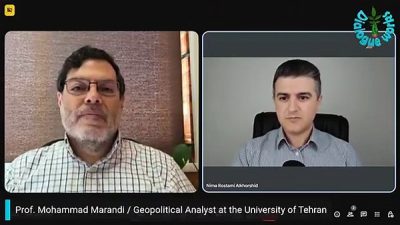
Seyed M. Marandi: U.S. Military DIVIDED? Iran’s Secret Defense EXPOSED
or go to
Aletho News Archives – Video-Images
From the Archives
‘Israel sees Iran as obstacle to its policies’
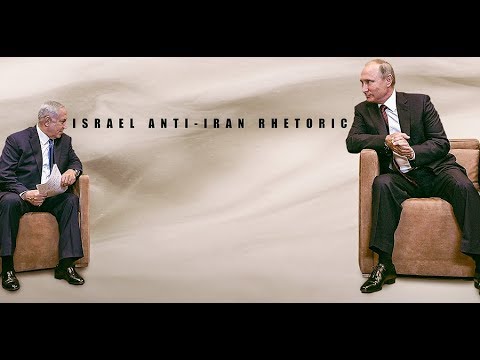
Press TV – August 25, 2017
Prime Minister Benjamin Netanyahu has said that Israel felt threatened by Iran’s growing influence in the Middle East. Netanyahu expressed his Iranophobic view in a meeting with Russian President Vladimir Putin in Russia’s Black Sea resort of Sochi on Wednesday. Press TV has asked Scott Rickard, former American intelligence linguist from Tampa, Florida, and Brent Budowsky, a columnist at The Hill from Washington, to give their thoughts on the issue.
Rickard said Tel Aviv is concerned about the fact that the regime could not carry out its old project to spread sectarian divisions and pave the way for dismemberment of the countries in the Middle East region because of the Iranian-led resistance against Israeli policies, not only in the occupied territories of Palestine but also in the whole region.
“Iran is not a threat to Israel whatsoever. The threat that Israel sees is the fact that their Oded Yinon Plan is being put to a hold by Iran,” the intelligence linguist said on Thursday night.
“They (the Israelis) look at Iran as a threat only because they have no influence on their governments and Iran is autonomous and is not under the Zionist influence,” he added.
Since the victory of the Islamic Republic of Iran in 1979, Tehran has been critical of Israel’s policies in the region, whereas “no leaders [of other states] even dared to speak out against Zionism,” Rickard argued. … continue
Blog Roll
 Aletho News
- Israeli tank fire killed UN peacekeeper in Lebanon, UNIFIL investigation finds
- Russia, China block Bahrain-sponsored UN resolution on Strait of Hormuz
- The US-Israeli War on Science is an Assault on our Future
- Trump’s Promise to Bomb Iran ‘Like Never Before’ Faces Brutal Logistics — Expert
- Germany seeks to restrict stays abroad for men of fighting age – Berliner Zeitung
- Evidence points to Ukraine being behind TurkStream attempted sabotage, but that should come as no surprise
- Sri Lanka secures supplies of Russia oil – minister
- Nations across Asia strike direct deals with Iran for Hormuz passage
- IRGC commander declares ‘new phase’ of reprisal attacks against aggressors
- Israel’s air defenses overwhelmed by cluster-warhead Iranian missiles: Reports
- If Americans Knew
- The war the US is fighting for Israel could cost trillions
- ‘Cigarette Burns, Nail Wounds’: Toddler Tortured in Gaza to Coerce Father
- Trump Says US Sent ‘a Lot of Guns’ to Protesters in Iran
- Israeli forces destroy 17 UN peacekeeper cameras in south Lebanon
- US-Israeli strikes ‘completely destroy’ synagogue in Tehran
- Archbishop for US Military Says Iran War Is Unjust Under Catholic Teaching
- Iranian leaders’ Open Letters to the American People
- Trump says Iranians appreciate bombs, WHO warns of nuclear risks – Daily Update
- U.N. experts demand Israel release prominent Gaza doctor after reports of ‘severe torture’
- Israel’s Latest Genocide Is Against the Shias of Lebanon. Why Is the World Silent?
- No Tricks Zone
- An Inconvenient Tree: Uncovered In Alps… Europe Much Warmer Than Today 6000 Years Ago
- New Study Reports A 60% Slowdown In Greenland’s Ice Loss Rate In The Last Decade
- Low Intensity Tornado Wrecks Major Solar Farm, Creating A Potential Toxic Dump
- New Study Finds Warming Saves Lives…Cold Temperatures 12 Times More Deadly Than Excess Heat
- German Science Blog Accuses PIK Climate Institute Of Hallucinating Climate Tipping Points
- Devastating Assessment Of Comirnaty Vaccine By Former Senior Pfizer Europe Toxicologist
- New Study: CO2 Is ‘Effectively Negligible’ As An Explanatory Climate Change Factor Since 2000
- Former Pfizer Toxicologist Dr. Helmut Sterz Tells Bundestag Hearing Pfizer Vaccine Should Have Never Been Approved
- Energy Expert: Germany’s Nuclear Phaseout Was A “500 Billion Euro Mistake”
- New Research: South Australia’s Mid-Holocene Sea Surface Temperatures Were 4°C Warmer Than Today
 Aletho News
Leave a comment