Disruptive science (part two)

By Dr Malclom Kendrick | January 17, 2026
My son tends to dismiss the idea of watching any film from before about say, the year 1990. Terrible special effects, he informs me, and just too old. As for anything in black and white … no, just, no. Why watch old stuff, it’s rubbish. The fool.
In science there also seems to be a tendency to think that things are constantly moving forward, building on what has gone before. Old research and ideas, become obsolete, and fade from memory. There is no need to look back. We can learn little, or nothing, from things we did a hundred or more years ago.
True? Let me take you back to a land that seems far away and long, long ago. A place where the sun was used as a powerful ‘medicine’. Patients with tuberculosis (TB), or those with non-healing wounds, or mental illness, and many other things. They were wheeled into solariums to make the most of the sun’s rays. Many hospitals had great big windows to let in sunlight.
Years ago I read a fascinating book on this called ‘The healing sun’ which looked at how the sun was used to treat many illnesses. Often with impressive results. It certainly awakened my interest in the area. And, because I have an obsessive interest in heart disease, I focussed on nitric oxide (NO), which is synthesised when the skin is exposed to the sun. [This is not the only way NO is created in the body, but it is important].
Nitric oxide is a molecule that is now understood to be critical for cardiovascular health, although it was not known to have any role a hundred years ago. Until recently it was not known to exist inside the body. in fact, the idea that such a highly reactive compound could have a positive role to play was considered bonkers. Super-reactive – and damaging.
I would like to point out that sunlight does many more things than create nitric oxide and, of course, vitamin D. Mostly good. With so many potential benefits why did the era of ‘solar treatment’ fade into darkness? I think it is almost entirely due to the arrival of antibiotics. A whole bunch of terrible infections, which killed so many millions became treatable – virtually overnight. Sunlight was no longer required, or so it appeared. We had a new solution. Faster, and more effective.
And then came the slow, but inexorable, one-hundred-and-eighty-degree turn. The sun began to be viewed as dangerous. From ‘healing sun’ to ‘bringer of death’. Has this been a good move? In my opinion, absolutely not. Let me show you a graph from a long-term study done in Sweden. It looks at probability of death, in three groups.
- Those who avoid sun exposure.
- Those with moderate sun exposure.
- Those who actively sought out the sun1.
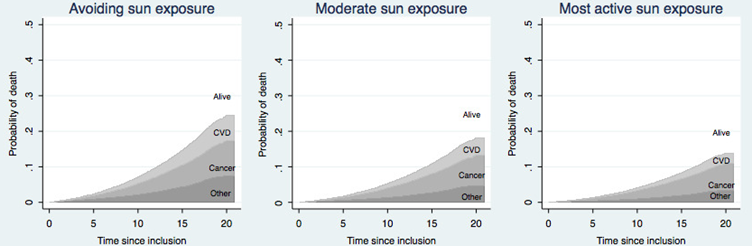
Over a twenty-year time period, those who actively sought the sun were ten per cent less likely to die – of anything, than those who avoided it. This was an absolute, not a relative risk.
On the basis of this study, sunlight would be considered a miracle drug. Everyone in the world urged to take it, every day, without fail. The pharmaceutical company with a patent for any such medicine would become rich beyond the wildest dreams of avarice. You would never hear the last of it.
I make this somewhat bold statement because there is no medication, nothing else at all, that comes close to this level of overall health benefit, and life extension. Nothing … at all. Stopping smoking would be almost as good, providing about eight to ten years of added life. But that is not really the same thing.
That paper was published ten years ago. A more recent one, from 2020, had pretty much exactly the same thing to say about sunlight. The title says it all, really:
‘Insufficient Sun Exposure Has Become a Real Public Health Problem.’
‘This article aims to alert the medical community and public health authorities to accumulating evidence on health benefits from sun exposure, which suggests that insufficient sun exposure is a significant public health problem.
Studies in the past decade indicate that insufficient sun exposure may be responsible for 340,000 deaths in the United States and 480,000 deaths in Europe per year, and an increased incidence of breast cancer, colorectal cancer, hypertension, cardiovascular disease, metabolic syndrome, multiple sclerosis, Alzheimer’s disease, autism, asthma, type 1 diabetes and myopia.’ 2
Eight hundred and twenty thousand deaths a year … seems a lot. Their figures, not mine.
My own view is that the big bright thing up in the sky … Well, it has been shining down on all life forms – all of them on land at least – for five hundred million years – give or take. And for most of our existence, humans have spent the majority of daylight hours outside. Thus, from an evolutionary perspective, it is probably not a great idea to avoid the ‘giver of life’, as I now like to call it. We may be missing out on something, or several somethings, which are rather important.
Over the years, there have been many studies demonstrating that sun exposure is really important for our health and wellbeing. But none of them had the slightest effect … on anything. Instead, we are increasingly told to cower away in terror. In Australia, land of ‘slip slap and slop’, they are now creating massive sunshades around schools, so that children who dare to go outside and play will be protected from the sun at all times. Hoorah. Good job.
My previous blog was about disruptive science. An area where there has been a drastic contraction over the last fifty years. Why? Well, one of the main reasons is that disruptive science seems to have little, to no, effect. ‘My mind is made up, do not confuse me with the facts.’ Why bother going against the mainstream view when it achieves the square root of bugger all.
The mainstream view in this area is that sun exposure causes skin cancer. Which means that any discussion on potential benefit is shut down immediately. Yes, there is some robust research to show that fair skinned people, living in hot and sunny lands, are more likely to develop skin cancer.
However, the evidence that there is an increased risk from malignant melanoma is far from clear. There are many different forms of skin ‘cancer(s)’, and most are very easily spotted and easily treatable, and removed. Whilst unpleasant, most of these are not remotely life threatening.
Australia has been banging the ‘anti-sun’ drum for decades. To great effect?
- In 1982, 596 people died of malignant melanoma.
- In 2023 1,527 people died of malignant melanoma
That represents a 2.6-fold increase. In case you were wondering.
The population of Australia went up by 1.8-fold during the same time period. Although I am informed by Google AI that ‘The age-standardised mortality rate for malignant melanoma in Australia has generally remained stable or decreased over the last twenty years.’ You think?
I think 2.6 is a bigger number than 1.8. Thirty per-cent bigger. Yes, I know you can play statistical games to create ‘age-standardized’ rates, whereby 1.8 becomes a larger number than 2.6. ‘Bibbity bobbity boo.’ Or. ‘War is peace, freedom is slavery…etc.’
Leaving such, reality distorting statistical manipulation aside, there are many other diseases that you can die of including, let me think: breast cancer, colorectal cancer, hypertension, cardiovascular disease, metabolic syndrome, multiple sclerosis, Alzheimer’s disease, autism, asthma, type 1 diabetes …etc.
If you protect against one thing, but in so doing, increase the risk of many others, you have just done significantly far more harm than good. To look at just one of the other potential forms of death that sun exposure could protect us from – colorectal cancer:
Gorham et al examined five studies on association of serum 25(OH)D (vitamin D) and colorectal cancer risk. A meta-analysis indicated a 104% higher risk associated with serum 25(OH)D <30 nmol/L compared to >82 nmol/. 3
- Malignant melanoma kills around two thousand five hundred people a year in the UK.
- Colorectal cancer kills around seventeen thousand people a year in the UK.
This ratio of around one, to eight, is pretty much the same in most other countries. So, dear reader, which of these forms of cancer should you be more interested in preventing?
Simple sum here – assuming ‘best/worst case’ scenarios in either direction:
- Malignant melanoma kills 2,500 per year. If avoiding the sun prevented this completely, we could save 2,500 lives.
- Colorectal cancer (CRC) kills 17,500 per year. If avoiding the sun increases the risk of death by 104%, we have caused 18,200 excess deaths.
Would the figures change as dramatically as this? Almost certainly not, nowhere near. My figures represent a thought experiment. However, here is what Google AI informs me about colo-rectal cancer:
‘There’s a significant and concerning rise in bowel cancer among young people in the UK, with rates in those under 50 increasing by around 50% since the mid-1990s.’ This is a trend seen around the world. As for Australia. ‘Yes, there’s a significant and concerning rise in bowel cancer among young Australians (under 50), with Australia having the world’s highest rates for this age group.’
Highest rates of CRC in the country where sun exposure is dreaded more than any other? Has anyone even suggested sun exposure, or the lack of it, may play a role? Nope, complete and utter silence on the matter. Can’t even be mentioned, it seems.
Moving on from bowel cancer, I feel the need to make the point that the most significant impact on dying, if you avoid the sun, appears to be on heart disease. This kills 175,000 people each year in the UK. Reduce that number by one and half per-cent you will have saved as many lives as can possibly die of malignant melanoma. Logic, where art though?
How can the concern about one disease trump all others so completely? Primarily, I believe, it is because dermatologists have managed to gain dominance in the world of sun exposure, with their very simple message. ‘Sunshine damages the skin and causes skin cancer, and so it must be avoided at all costs.’
Focussing on one thing to the exclusion of all else is a cognitive bias known as the focusing effect/illusion. For a dermatologist malignant melanoma is their number one issue/disease. Any suggestion that the sun may be good for us is ruthlessly stomped on. ‘Your ideas are killing people’ is the normal line of attack – believe me, I know this line of attack well.
And the public have been convinced. And the medical profession has become convinced – as has almost everyone in the entire world. Try telling the average person that sun exposure is extremely good for you, and they look at you as if you were mad, bad, and dangerous to know.
I don’t find this type of concrete, straight line, focussed thinking, strange anymore. Over the years I have stumbled across many areas of medicine where bad ideas have taken hold, and simply cannot be shifted. Indeed, they only seem to strengthen under attack.
I have been banging on about saturated fat for decades. The evidence that saturated fat is bad for you has always been weak, to non-existent, to totally contradictory. Yet, and yet, the idea continues to hold sway over most of the population. With little sign that it is losing its grip. One day, perhaps, I can dream.
Salt … if there is any good evidence on this, it suggests that salt is good for you. But the idea that salt is harmful is also immovable, and unchanging. Evidence that it reduces life expectancy, there is none. And I mean … none.
So, what does it take to change thinking. If I knew how to sweep aside wrong ideas, I would have managed it by now. Disruptive science? Disruptive evidence? It is actually out there, but no-one pays much attention to it. In general, it is first mocked, then attacked, then dismissed.
Somehow, somehow, we have to think in different ways. I was going to say better ways, but that sounds a little on the elitest side. ‘I think better than you.’ When it comes to sunshine, it really isn’t difficult to change the thinking, is it?
I cannot find any evidence, anywhere, that it is anything other than extremely good for us. Ergo, hiding away from the sun is bad for us. One of the worst things we can possibly do, and it is also one of the easiest, and most pleasurable things, to rectify. Go out and sunbathe. [Yes, of course, I have to add, but do not burn. As if everyone in the world is a complete idiot that cannot understand even the simplest idea.]
But, but, but … instead, we have all been – made to be – terrified of skin cancer. A condition which kills very few people each year. It seems impossible to move the thinking beyond this barrier … bonkers. And very harmful indeed.
In my next blog on disruptive science, I will look again at sunshine, from a different perspective, including the question. Does it actually increase the risk of malignant melanoma?
1: https://pubmed.ncbi.nlm.nih.gov/26992108/
2: https://www.mdpi.com/1660-4601/17/14/5014 3: https://www.sciencedirect.com/science/article/abs/pii/S0749379706004983
Palestinian prisoners in 2025: Shocking figures and escalating violations
Palestinian Information Center – January 17, 2026
RAMALLAH – The Asra Media Office has revealed alarming data regarding the situation of Palestinian prisoners up to the end of 2025, noting that their number has reached approximately 9,300 prisoners, nearly half of whom are held in detention without charge or trial amid an unprecedented expansion in the use of administrative detention and arbitrary classifications, including the so-called “unlawful combatant.”
In a report issued today, Saturday, the office explained that the Israeli occupation authorities have escalated their repressive policies by targeting women, children, journalists, and medical personnel, alongside systematic violations inside prisons. These violations include physical and psychological torture, deliberate medical neglect, starvation, detention under inhumane conditions, sexual assaults, the denial of visits, restrictions on lawyers’ work, and obstruction of the tasks of the International Committee of the Red Cross.
According to official data, since 1967 and up to the end of 2025, around 323 prisoners have died inside Israeli prisons, including 86 prisoners since 2023 and 32 during 2025 alone. The occupation authorities continue to withhold the bodies of 94 prisoners, constituting a grave violation of international humanitarian law, amid documented cases of direct killing, torture, and medical neglect leading to death.
The Asra Media Office noted that by mid-January 2026, the number of martyrs of the prisoners’ movement had risen to 324, including 87 since the war of genocide, with the continued withholding of 95 bodies under a policy of collective punishment prohibited under international law.
Despite the release of 3,745 prisoners during exchange deals in 2025, the Office confirmed that the occupation continued its policies of deportation and re-arrest, alongside the enactment of dangerous repressive legislation, including calls for the execution of prisoners, the extension of administrative detention periods, the revocation of citizenship, and the targeting of human rights institutions working on prisoners’ issues.
The Office called on the international community to assume its legal and moral responsibilities and to take immediate action to hold the occupation authorities accountable for these crimes, ensure the urgent release of sick prisoners, children, and women, and impose independent international monitoring over Israeli prisons.
US announces Gaza ‘Board of Peace’ amid ongoing Israeli ceasefire breaches
Press TV – January 17, 2026
The administration of US President Donald Trump has announced the executive members of Gaza’s so-called Board of Peace, a body purportedly tasked with managing transitional governance in the territory, as Israel continues to violate its ceasefire agreement with Hamas.
On Friday, the White House published the names of the Gaza Strip’s so-called “Board of Peace” members and the head of the National Committee for the Administration of Gaza (NCAG), marking the launch of the second phase of Trump’s 20-point plan for Gaza.
Ali Sha’ath, a former Palestinian deputy minister in the Palestinian Authority (PA), will lead the NCAG, according to the White House.
The so-called Board of Peace will be chaired by Trump himself, with key members including Secretary of State Marco Rubio, Trump’s special envoy Steve Witkoff, Trump’s son-in-law Jared Kushner, and former UK Prime Minister Tony Blair.
The statement also listed members of a “Gaza Executive Board”: Turkish Foreign Minister Hakan Fidan; United Arab Emirates’ Minister of State for International Cooperation Reem Al-Hashimy; veteran Qatari diplomat Ali Al-Thawadi; Egypt’s intelligence chief Hassan Rashad; UAE-based Bulgarian diplomat and former UN envoy Nickolay Mladenov; Cypriot-Israeli businessman Yakir Gabay; Dutch politician Sigrid Kaag; as well as Witkoff, Kushner, and Blair.
Mladenov will act as High Representative for Gaza, linking the Board of Peace with the NCAG, while Major General Jasper Jeffers will lead the International Stabilization Force (ISF).
The US also appointed Aryeh Lightstone and Josh Gruenbaum as senior advisers to the Board of Peace to supervise “day-to-day strategy and operations.”
More appointments to the Executive Board and the Gaza Executive Board are expected in the coming weeks.
The announcement follows Witkoff’s Wednesday statement launching the second phase of the Gaza ceasefire plan.
The second phase is said to focus on “demilitarisation, technocratic governance, and reconstruction.”
However, most of the goals in Trump’s 20-point plan that became the basis for a ceasefire in Gaza three months ago never became a reality on the ground.
Phase one was designed to immediately halt the fighting, facilitate the exchange of Israeli and Palestinian captives, set a boundary for Israeli withdrawal from parts of Gaza, allow the full entry of humanitarian aid, and open the Rafah crossing between Gaza and Egypt.
While the daily number of Israeli attacks has decreased since the start of the ceasefire, Israel has killed at least 451 Palestinians and injured 1,251 – an average of nearly five killed every day – since October 10.
Under the ceasefire deal, Hamas released all 20 living Israeli captives in exchange for nearly 2,000 Palestinian prisoners.
Hamas has also returned 27 of the 28 bodies of deceased captives, while the search is still on for the remaining body, believed to be buried under the rubble of buildings bombed by Israel.
However, according to Hamas, Israel has failed to release all women and child prisoners as stipulated in the agreement.
Moreover, the Israeli military did not fully withdraw its troops to an area dubbed the “yellow line” and continues to restrict aid.
The opening of the Rafah crossing did not happen, either.
Since Israel launched its genocidal campaign on October 7, 2023, more than 71,000 Palestinians have been killed and over 172,000 wounded, the majority of them women and children.
Hamas: Israeli minister’s boasting over Gaza’s destruction an open admission of genocide
Palestinian Information Center – January 17, 2026
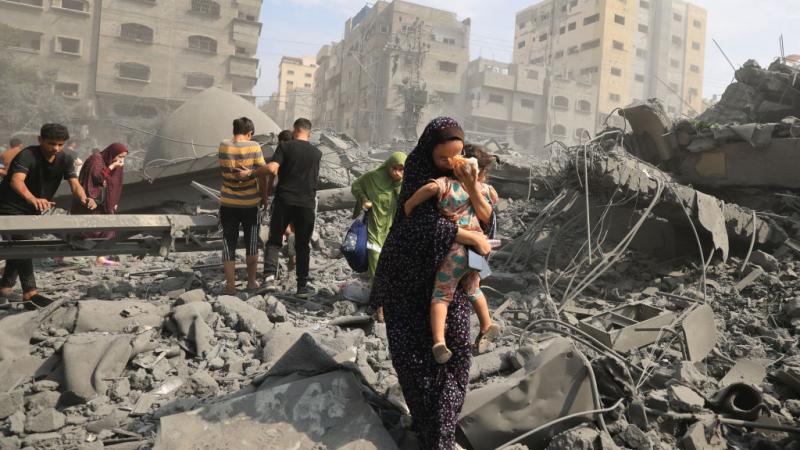
GAZA – Hamas spokesperson Hazem Qassem said on Saturday that the Israeli war minister’s public boasting about the destruction of the Gaza Strip, and his congratulation to the soldiers for criminal acts, amounts to an explicit and unprecedented admission of genocide.
Qassem said the remarks, made in light of revelations by Western media about the scale of devastation in Gaza, constitute further proof of a level of contempt for international law and humanitarian norms unseen in modern history.
He added that what has unfolded in the Gaza Strip, genocide and ethnic cleansing, constitutes a full-fledged crime under international law, now accompanied by a clear and public confession from those responsible. This, he said, necessitates genuine accountability for the entire Israeli occupation system behind these crimes.
Israel launched a genocide in the Gaza Strip in October 2023 that continued for more than two years, resulting in the killing of more than 71,000 Palestinians and the wounding of over 171,000 others. The assault caused massive destruction to approximately 90 percent of Gaza’s civilian infrastructure, with the United Nations estimating reconstruction costs at around $70bn.
Peaceful Finland? Think Twice: Nazi Alliance Was Pre-Planned Before WWII
Sputnik – 17.01.2026
The Western-spun fake image of Finland as a peaceful nation reluctantly dragged into wartime alliances is a “deliberately constructed myth,” Bair Irincheev, historian and director of the Karelian Isthmus Military Museum, tells Sputnik.
Immediately after gaining independence in 1918, the Finnish leadership launched an attack on Soviet Russia with clear economic goals, notes Bair Irincheev.
The failed attempt to annex Eastern Karelia was “straightforward expansionism—an attempt to seize forest-rich territories.”
For Finland in those years, timber was veritable ‘green gold’, and “whatever was said about tribal brotherhood and similar things, the primary motives were economic,” the pundit states bluntly.
Programmed Partnership in Hitler’s War
Finland was already integrated into Hitler’s Operation Barbarossa before the Great Patriotic War, and its entry into the war in 1941 was “pre-planned,” says Irincheev.
Finland’s leadership believed Europe was being completely redrawn, and chose to pursue the idea of a ‘Greater Finland’ alongside the Nazis.
Under the official pretext of merely reclaiming lost territory, Finnish forces crossed the 1920 border and occupied parts of the Karelian Soviet Socialist Republic and the Leningrad Region, advancing almost to the Vologda Region, he recalls.
“No one forced Finland in 1941 to let German troops onto its soil for an offensive on Murmansk. That was a deliberate decision by Finland’s top leadership,” points out the pundit.
Siege of Leningrad & Shattered ‘Humane’ Myth
Everything Finland did during WWII as an unofficial ally of Nazi Germany “demolishes” the notion of a reluctant, defensive warring side, according to the history pundit.
When Finnish forces launched their offensive in the summer of 1941, they broke through Soviet defenses on the Karelian Isthmus, captured Vyborg, and halted at the main line of the Karelian fortified zone.
In doing so, the Finnish army “became an active participant in the blockade of Leningrad from the north,” underscores the historian, noting that it “had the technical capability to shell Kronstadt.”
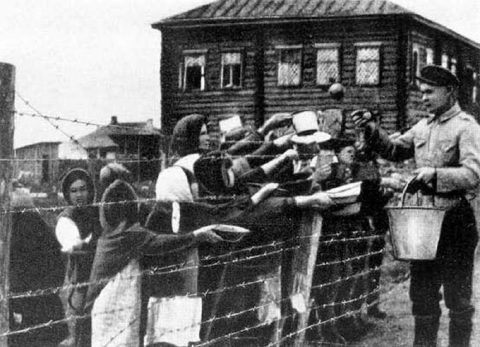
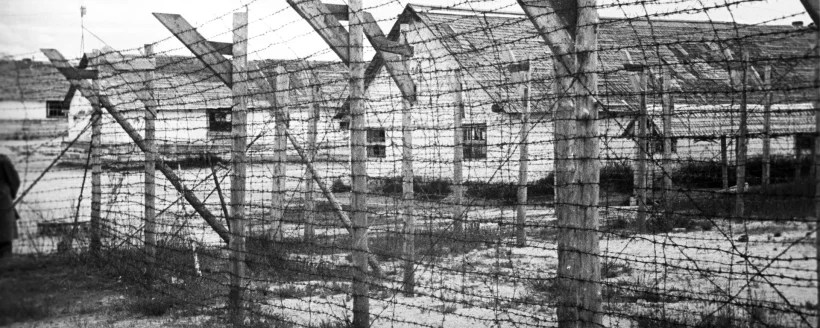
The high – roughly 30% – mortality rate among Soviet prisoners of war and the Slavic civilian population interned by the Finns in concentration camps dispels the myth of a supposedly “benevolent” Finland, according to the historian.
After invading Russia together with Nazi Germany in 1941, Finland showed no mercy to the civilians in the Russian territories occupied by their troops.
Russians, regardless of their age and sex, were robbed of their possessions and herded into prison camps.
The exact number of Russian civilians who perished in Finnish prison camps during WWII is difficult to establish, because Finland never really kept track of the deaths – for Finnish invaders, Russian lives simply did not matter.
Historical Pattern Informing the Present
Finland’s relations with Russia today are effectively destroyed — and Finland itself bears responsibility for that, says the analyst.
The country portrays itself as having emerged victorious from every conflict: the 1939–1940 war, despite losing 10% of its territory and its second-largest city, and the 1941–1944 war as well.
“Finland’s current leadership appears to be revisiting the 1941 scenario, hoping for revenge and access to resources,” speculates the expert, adding that this logic underpins Finland’s NATO accession and its frenzied militarization.
Latest US-backed regime change operation in Iran hits the wall
By Samuel Geddes | Al Mayadeen | January 17, 2026
Having bombed the country in 2025, “Israel” and the US seemed to think that provoking street violence would have more success at collapsing the Iranian state. Instead, it fizzled almost instantly.
We have been here at least half a dozen times in the past two decades. Street protests in Iran over an internal economic, social or political issue emerge, gather a degree of momentum in urban areas and the Western propaganda system declares that the protests have “shifted” from their initial focus, to calls for the repudiation of the Islamic Revolution and the end of the political system it created. European and American politicians issue their empty statements of solidarity with the Iranian people and unilaterally decide that the Islamic Republic has “lost its legitimacy,” that its fall is simply a matter of “when,” not “if.” We have seen this narrative played out often enough to recognize it never survives contact with the real world.
The source of the persistent delusion that the Islamic Republic is about to fall comes not only from the Euro-American elite class wishing it to be so, but also from its deferral to the “analysis” of segments of the diaspora whose own political objectives are detached from reality.
Whether it is protests over the government’s handling of the economy, energy blackouts, or the water crisis, most external observers are incapable of viewing each individual issue through any lens other than that of regime change.
This time around the US and Israelis, in coopting the protests to destabilize the country through street violence, have not even bothered to hide their involvement. It has also not helped the West’s case that it is now feigning “humanitarian concern” for the rights of Iranian citizens while it has spent more than two years facilitating the ongoing slaughter and starvation of Gaza’s population. Any observer following both issues can detect the dissonance and conclude what is motivating the frantic calls to escalate the situation into military intervention. That is, the desire to crush a state and society that has resisted Western dominance for more than four-and-a-half decades.
The brazenness of the West’s affected concern for the well-being of the Iranian public is particularly galling in light of the sanctions. If Iranians’ living standards were really of any concern to Washington, London or Brussels, they would start by unconditionally ending their economic strangulation in effect against the country. The truth is that the suffering and misery engendered by the sanctions is entirely the point. As well as stifling the development of an independent state outside the globalized-Western economy, the siege is specifically intended to make living conditions unbearable for the average Iranian so that they are incentivized to undermine the Islamic Republic. The continuation of the sanctions is a barely disguised punishment of the Iranian public for not pursuing the West’s geopolitical goal of regime-change for them.
Were it not glaringly obvious to the Trump administration before the latest unrest, it surely is now that the exiled political diaspora most actively pushing for the fall of the Islamic Republic through Western military action are entirely incapable of political organization. Even the least crazed fan of the defunct Pahlavi dynasty is pathologically hostile to the terrorist personality cult of the MEK, as much as they are to the Islamic Republic itself. There simply is no political alternative, to say nothing of whether it even has any domestic support, waiting to replace the Islamic Republic.
Flush from the “success” of his abducting Venezuelan president Maduro, Trump seemed temporarily convinced he might have a similar option here, to carry out a meaningless military stunt for which he can take credit and declare “victory.” His problem is that there is no level of open military action against Iran that would allow him to do this without igniting a regional war that destroys the global economy.
This realization, if he has come to it, would explain his backtracking on the red lines he set, that any executions would trigger US attacks. If a controlled, stage-managed performance is his goal, as it almost always is, then the confrontation with Iran leaves him with no viable option but to back down.
The absence of any realistic military option has now seen both the US and Europe revert to their standard tactic; the intensification of the sanctions they have used to punish the Iranian people. Trump’s latest declaration of a 25% tariff on any country trading with Iran is his way of giving himself an off-ramp, for now, from a crisis that is largely of his making.
Ukraine is defending itself with money Europe doesn’t have
By Ian Proud | Strategic Culture Foundation | January 17, 2026
The ugly truth is that an end of the Ukraine war may have as devastating economic and political consequences for Europe as its continuance.
Ukraine already faces a $63 billion U.S. dollar funding shortfall in 2026 and I would be surprised if this figure doesn’t increase if the war continues. Ukraine’s massive fiscal splurge is driven by two factors
- The enormous cost of maintaining a standing army of almost one million people;
- The vast expense of importing weapons from the west to fight the war.
Weapon purchases are not sources of productive investment as they are literally burned in the heat of battle. The same, of course, is true for Russia. Both countries saw reducing economic growth in 2025, with Ukraine’s at 2.1% and 1.5%. And, western pundits would point to this as evidence that Ukraine’s economy is performing better.
But the opposite is true. Russia’s economy is around twelve times larger than Ukraine’s nominally and just over ten times larger when you look at GDP using purchasing power parity.
You can see this in the defence spending numbers.
Russia spent a record $143 billion on defence in 2025 compared to around $60 billion for Ukraine, so around 2.3 times higher. Yet, Russian defence spending amounted to just 6.3% of its GDP whereas for Ukraine it was 31.7%. So, massive spending on defence is a much less pivotal issue for Russia in terms of its economic fortunes.
Defence spending represents a far smaller proportion of total economic activity than it does for Ukraine. And Russia can afford to pay for its defence needs with its own finances, while Ukraine is entirely dependent on money from western donors to keep the war going.
Despite the massive cost of war, Russia ran a fiscal deficit of just 1.7% of GDP in 2025. That is still well below the EU fiscal rule of 3% of GDP with some countries like France and Poland having deficits at or more than double that figure.
Ukraine’s fiscal deficit on the other hand was around 20% of GDP. That gap had to be filled by foreign funding as it has debt of 107% of GDP and is cut off from foreign lending.
So, hence the EU stepping up with a loan of 90 billion Euros, two thirds of which is earmarked for defence.
Russia on the other hand has debt of around 15% of GDP and doesn’t really need to borrow heavily to keep its war effort afloat. By the way, 15% of GDP is far lower than the U.S. or any European nation, many of which, like Ukraine, have debt levels of over 100% of GDP.
Ukraine is defending itself with money Europe doesn’t have.
Despite the shock of sanctions, Russia doesn’t have to break the bank nor boost its lending significantly.
This also means that when the war eventually ends, Russia will be able to make the economic transition back to peace in a less painful way. Russia will be under no pressure to impose massive cuts to defence spending to live within its means and can instead do so gradually.
Ukraine on the other hand faces a massive financial cliff edge when the war ends.
Ukrainian economic growth according to the OECD is set to fall further to 1.7% in 2027 if the war continues.
And that assumes continued large injections of capital from outside countries. In 2025, Ukrainian defence spending made up 31.1% of Ukrainian GDP, and two thirds of state budgetary expenditure. None of that spending goes into improving Ukraine’s weak economy.
With all of the support that it receives, Ukraine’s GDP in 2025 amounted to just under $210 billion according to the IMF.
Bear in mind here that Ukraine received $52.4 billion in external financing in 2025, or around one quarter of its GDP at the end of the year.
Take away foreign funding and Ukraine suddenly sees its economy shrink by over 20%.
Or, put it another way, take away the war and Ukraine sees its economy shrink by over 20%.
Russia simply does not face the same problem.
Rather, an end to the war may help Russia to get inflation – perhaps its biggest economic challenge – under control as economic activity returns to its normal rhythm.
But still the question arises, how come Ukraine has grown so little when it received so much foreign funding?
One big reason is that Ukraine recorded a trade deficit of $30 billion over the same period, a record according to the National Bank of Ukraine.
So, $52 billion in foreign money came into Ukraine during the year and $30 billion went straight back out again. Because Ukraine’s massive trade deficit is fuelled by two things.
First, a huge increase in the import of weapons from western suppliers which have doubled since 2022, not least as they are no longer being provided free of charge.
Second, Ukraine has increased its imports of natural resources, in particular a massive increase in gas imports, because domestic production has been hit hard by the war. Coal is another area, as Russia has swallowed up important coal mines in the Donbas.
Not all of that deficit in trade will be recoverable even after the war ends, even if Ukraine was able to reduce the overall size of its trade deficit.
By comparison, Russia’s surplus of trade in goods was already at over $100 billion by October 2025, although the overall trade picture is narrower, at around $36 billion because of a significant deficit in services trade, including from large numbers of Russians who have moved overseas since the war started.
An end to the war, if anything, may allow Russia’s trade surpluses to grow further. A future relaxation on the import of natural resources into Europe could mean that Russia benefits from already increased trade with Asia and renewed trade with Europe.
In any case, the consistent surpluses that Russia pulls in both help shore up economic growth and foreign exchange reserves, which in 2025 grew by over $135 billion to a whopping $734 billion.
And just to be clear, Russia put their reserve funds almost completely into gold which now stand at over $310 billion.
One big reason for Russia storing its reserves in gold is to keep them clear of the stealing hands of western bureaucrats, who froze around $300 billion in reserves at the start of the war.
This means that Russia has a surplus of $434 billion in foreign exchange reserves which is almost completely insulated from western expropriation. The $10 billion rise in foreign currency reserves in 2025 was undoubtedly caused by an accumulation of reserves in non-dollar, Euro and sterling currencies, suggesting the move to greater trade in Chinese Yuan and Indian rupees.
An end to the war may at some point lead to the unfreezing of immobilised Russian assets in the U.S., Europe and Japan.
Ukraine’s reserve position is also comparatively strong, at $57.3 billion at the start of 2026, a record figure. However, that rise is completely down to inflows of foreign capital to fund the war effort. An end to the war would likely shrink Ukraine’s reserves as its stubborn trade deficit was not being offset by foreign inflows of funds as they had been during war.
But it’s the sudden and shocking loss of foreign funding that accompanies an end to the war which will cause Ukraine’s economy to shrink dramatically.
But fear not, Europe is determined that Ukraine maintain an army of 800,000 personnel when the war ends. However, this seems more about economic survival than about security.
Ukraine would not be able to pay for such as large army with its own money, as it doesn’t have any money. So, once again, Europe will be forced to step in to meet Ukraine’s financing needs to pay the salaries of soldiers who are no longer in war fighting mode.
This will lead to debt and taxes rising in Europe, according to a recent Kiel Institute study. But it will also lead to a loss of business for European defence firms. Because peace time will inevitably mean a sharp drop in the munitions and military material being burned on a daily basis in the fog of war.
Two thirds of the EU’s recent 90 billion Euro loan to Ukraine will be spent on military support, including weaponry. That has sparked an argument between Germany and France over a proposed ‘buy European’ clause, with France wanting to prevent Ukrainian purchases of U.S. equipment. Perhaps with one eye on the future, the French in typical fashion, are trying to ensure that their firms get a decent share of what could amount to dwindling Ukrainian orders for weapons.
A bit like the French army, Europe is reversing itself inevitably into economic defeat when the war ends.
Obligated to keep an economically failed Ukraine on life support.
Having to increase its debt and taxes to support bad foreign policy decisions it has been taking since 2014.
Trying to boost its defence industrial complex but losing business with the end of war.
For the mainstream political parties in Europe, this adds to the trend of them heading towards electoral Armageddon when they start putting themselves to the polls from 2027 onward.
Until then, they are stuck, knowing that continuing the war will kill them electorally, and knowing that ending the war will too. To quote my old British soldier dad, they are like the mythical oozlum bird, continually going round in circles until they disappear up their own backsides.
Donald Trump, A Responsibility to Protect President
By Adam Dick | Ron Paul Institute | January 16, 2026
Publicly denouncing war and liberals was a regular part of Donald Trump’s communication in his 2024 presidential campaign. Yet, as president, Trump has been relying on the responsibility to protect idea associated with liberals he would normally ridicule as a basis for the US engaging in wars abroad.
In October of 2016, the month before Donald Trump won the race to succeed Barack Obama as president, David Stockman wrote about an example of the terrible damage the US following a responsibility to protect standard in foreign policy can yield. In particular, Stockman wrote about Syria being “a lawless, bombed-out, economically decimated failed state today owing to Washington’s heavy-handed intervention at the behest of the War Party’s bloody twin sisters.” Those “twin sisters,” continued Stockman, are “the neocons — led by the contemptible Kagan clan — and the R2P liberal interventionist claque around Hillary Clinton, including UN Ambassador Samantha Powers and National Security Council head Susan Rice.”
Stockman here used the term “R2P” to reference responsibility to protect.
For some more details on what responsibility to protect entails, consider this excerpt from “Humanitarian Intervention: Destroying Nations to Save Them” by Ibrahim Kazerooni and Rob Prince from 2013:
What distinguishes the more recent forms of humanitarian intervention is that thanks to the writings of the likes of Samantha Powers and Susan Rice, humanitarian intervention now has a more comprehensive theoretical justification, i.e., the pretexts for military intervention have become more refined, coated with phony concern for “the people.” It was used to justify the military intervention in Libya, and until less than a month ago was the emotional cutting edge for greater military intervention in Syria.
As an elaborate excuse is needed to justify unprovoked aggression – all in the name of the public good – humanitarian intervention serves the purpose well. But at its heart, strike it down to its basics and it [is] little more than liberal racism – i.e., “we” = one neo-colonial power or another = magnanimously no less – are invading a country for its own good because those poor dumb folks don’t have the wherewithal to protect themselves and need our kind assistance to prevent disasters.
As suggested by Stockman, responsibility to protect, or R2P, is a reason for United States government intervention that is commonly associated with liberals or Democrats. But, Trump as president has recently appeared to embrace it publicly as a sufficient basis for the US to attack other countries. Consider, for example, Trump’s comments in the last few months regarding his reasoning for supporting US military attacks in Nigeria and Iran.
In November, Trump indicated in a post at Truth Social that he was directing that the US military plan to go into Nigeria with “’guns-a-blazing,’ to completely wipe out the Islamic Terrorists” Trump wrote were killing Christians. There was no mention of any threat to America, to Americans, or even to the often broadly and squishily defined US “national interests.” Instead, the message was people are being harmed so the US should attack to help address the problem.
When I wrote in November regarding Trump’s post, I noted that Trump’s post was followed by comment by Secretary of Defense Pete Hegseth that “killing of innocent Christians in Nigeria — and anywhere — must end immediately” and comment by US Ambassador to the United Nations Mike Waltz that US government should be concerned with persecution of Christians spanning “78 countries, 330 million Christians being persecuted around the world.” This one sort of alleged harm thus could open the door to a vast US military intervention across the world.
Come Christmas, the US military attacked in Nigeria, with Trump stating the attack came in response to harm done to Christians in Nigeria. Stated Trump in a December 25 Truth Social post: “I have previously warned these Terrorists that if they did not stop the slaughtering of Christians, there would be hell to pay, and tonight, there was.”
This week, Trump has been promoting the US going to war in another country based entirely upon responsibility to protect reasoning. Trump, in a Truth Social post on Tuesday, stated his encouragement of protesters in Iran to take revolutionary actions and promised that “HELP IS ON THE WAY” for the protesters. He even told them to “[s]ave the names of the killers and abusers” who he wrote “will pay a big price” — apparently due to US action. Here is what Trump wrote:
Iranian Patriots, KEEP PROTESTING – TAKE OVER YOUR INSTITUTIONS!!! Save the names of the killers and abusers. They will pay a big price. I have cancelled all meetings with Iranian Officials until the senseless killing of protesters STOPS. HELP IS ON ITS WAY. MIGA!!! PRESIDENT DONALD J. TRUMP
“MIGA” here is likely a reference to Make Iran Great Again, a phrase used by uber-warmonger Sen. Lindsey Graham (R-SC) in a Truth Social post that Trump reposted three days earlier. Graham, in his bellicose post, in addition to declaring “Make Iran Great Again,” praised a comment by US Secretary of State Marco Rubio that the US “supports the brave people of Iran.” “To the regime leadership: your brutality against the great people of Iran will not go unchallenged,” also threatened Graham in his post.
Earlier, on January 2, Trump had already asserted he was ready to send the US military to attack Iran based just on the conclusion that protesters in Iran were killed. Then, Trump wrote in a Truth Social post:
If Iran shots [sic] and violently kills peaceful protesters, which is their custom, the United States of America will come to their rescue. We are locked and loaded and ready to go. Thank you for your attention to this matter! President DONALD J.TRUMP
Attacking Iran is not a new idea for Trump. The US military did just that in June, upon Trump’s order. That time a primary argument Trump asserted was that he wanted to prevent Iran from acquiring nuclear weapons. That bombing also came to the aid of Israel that had gotten in over its head by attacking Iran over a week earlier and whose Prime Minister Benjamin Netanyahu had long been urging Trump to take military action against Iran.
The responsibility to protect argument Trump keeps trotting out for a US attack on Iran joins other arguments that he has proffered over time. For example, on December 29, with Netanyahu by his side, Trump threatened to “knock the hell out of” Iran if it tries to “build up again” from damage inflicted earlier in the year by Israel and the US.
Trump likes to ridicule liberals for their ideas that he depicts as kooky, absurd, or dangerous. At the same time, Trump is out touting his adherence to one of the most kooky, absurd, and dangerous ideas associated with liberals — trying to justify the US going to war based on the responsibility to protect argument that it is appropriate for the US to use military force for the sole purpose of stopping or punishing the infliction of harm on people oversees. It is a formula for foreign intervention without restraint. It is also incompatible with the peace candidate status Trump sought to establish for himself in the 2024 presidential race.
Adam Dick worked from 2003 through 2013 as a legislative aide for Rep. Ron Paul. Previously, he was a member of the Wisconsin State Board of Elections, a co-manager of Ed Thompson’s 2002 Wisconsin governor campaign, and a lawyer in New York and Connecticut.
US Navy Insanity in Japan
Tales of the American Empire | January 15, 2026
The US Navy has two large bases in Japan. Sasebo provides logistics in the Western Pacific, but will be knocked out of action in the first hour in a war with China. It also has a three ship amphibious group homeported there since the end of the Vietnam war. These large ships are of no value in a war with China and will be sunk during the first day of a conflict. They might be able to flee before war begins, but why base them at Sasebo if they must flee during wartime, leaving their crew families behind?
On the other side of Japan is the larger base at Yokosuka. It is further from China and better protected on the east coast, but still within easy attack range. Amazingly, the US Navy has a huge multi-billion-dollar aircraft carrier based there, even though hundreds of friendly airfields in the region are available. Moreover, it sits pierside most of the time and can be photographed during a daily boat tour by any tourist. If war suddenly begins. China will unleash at least 200 missiles at this prize in one minute. This may seem unaffordable, but 200 medium range missiles cost less than a billion dollars and will destroy an aircraft carrier that costs many times more. Several of these missiles will hit the carrier while others miss yet destroy nearby facilities.
_____________________________________________________
Related Tale: “Military Insanity in WestPac”;  • Military Insanity in WestPac
“Vacate Sasebo”; Carlton Meyer; G2mil; 2012; http://www.g2mil.com/sasebo.htm
“Has China Been Practicing Preemptive Missile Strikes Against U.S. Bases?”; Thomas Shugart; “War on the Rocks”; February 6, 2017; https://warontherocks.com/2017/02/has…
“U.S. Set to Expand Naval Base in Papua New Guinea”; Zach Abdi; USNI News: April 6, 2024; https://news.usni.org/2024/04/06/u-s-…
Featured Video
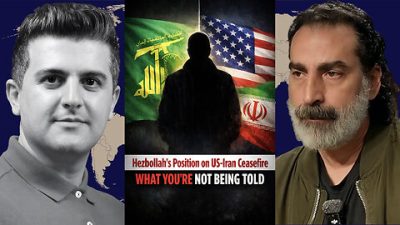
Laith Marouf: Hezbollah’s position on US-Iran ceasefire
or go to
Aletho News Archives – Video-Images
From the Archives
The Dirty Little Secret behind the “Global Terrorism Index”
The Omission of Israeli Terrorism in the Occupied Palestinian Territories
By Karin Brothers | Global Research | December 6, 2014
… The Israeli settlements — all of which are illegal – have been identified as a major impediment to peace. The refusal of a major “global” terrorism report to name the Israeli settlers as one of the groups most responsible for terrorism not only misrepresents a major source of regional violence but exposes the Global Terrorism Index as a propaganda tool that supports a U.S. agenda.
In recent years, governments have been attempting to thwart terrorism by blocking supportive fund-raising. When it comes to Israeli settlements, however, the US and Canada actually encourage fund-raising by giving organizations (such as Christian Friends of Israeli Communities (CFOIC) and the Jewish National Fund) financial support in the form of donor tax-deductions.
Charities which provide funds for the Israeli settlements should be regarded as terror-financing organizations. They should not only lose their tax-deductible status, but they should be banned because they support the violation of international humanitarian law. The terror-financing laws that are being strictly enforced for Muslim charities should be applied to Christian and Jewish charities as well. … Read full article
Blog Roll
 Aletho News
- Trump Administration Moves To Automate U.S. Military Draft Registration
- Spain orders reopening of Tehran embassy, condemns Israel’s carpet bombing of Lebanon
- Israel faces ‘unsustainable’ strategic crisis following 40-day war against Iran: Analyst
- Iran restricts Hormuz access to 15 vessels per day under ceasefire terms: Report
- The ‘Opposition Party’ Has Done Nothing to Stop the Iran War and Much to Goad Trump Into Continuing It
- Moscow backs Tehran on status of Lebanon in US-Iran deal
- How UK Regulator Ofcom Quietly Bypassed International Law to Police American Speech
- The Black Cube Files: How Former Mossad Operatives Flipped a Nation
- Laith Marouf: Hezbollah’s position on US-Iran ceasefire: What you’re not being told
- Israel’s priority lies in destroying chances of peace between Iran, US: Ex-UN nuclear chief
- If Americans Knew
- The gallows law: Israel moves toward executing Palestinian children
- Tucker Carlson: The Path to Peace requires ending ‘special alliance’ with Israel
- This is ceasefire? Israel’s biggest massacre yet in Lebanon, another journalist killed in Gaza – Daily Update
- Tucker Carlson on Israel: This Is the Behavior of an Ally? Really?
- Gazans face a triple crisis: severe shortages of water and bread, healthcare in tatters
- NY Times reports how Netanyahu took the US into Iran War
- A sigh of relief over Iran, but Gaza and Lebanon in dire straits – Daily Update
- Thousands dead and neighborhoods razed to the ground: Aid agencies fear southern Lebanon is becoming the new Gaza
- The war the US is fighting for Israel could cost trillions
- ‘Cigarette Burns, Nail Wounds’: Toddler Tortured in Gaza to Coerce Father
- No Tricks Zone
- An Inconvenient Tree: Uncovered In Alps… Europe Much Warmer Than Today 6000 Years Ago
- New Study Reports A 60% Slowdown In Greenland’s Ice Loss Rate In The Last Decade
- Low Intensity Tornado Wrecks Major Solar Farm, Creating A Potential Toxic Dump
- New Study Finds Warming Saves Lives…Cold Temperatures 12 Times More Deadly Than Excess Heat
- German Science Blog Accuses PIK Climate Institute Of Hallucinating Climate Tipping Points
- Devastating Assessment Of Comirnaty Vaccine By Former Senior Pfizer Europe Toxicologist
- New Study: CO2 Is ‘Effectively Negligible’ As An Explanatory Climate Change Factor Since 2000
- Former Pfizer Toxicologist Dr. Helmut Sterz Tells Bundestag Hearing Pfizer Vaccine Should Have Never Been Approved
- Energy Expert: Germany’s Nuclear Phaseout Was A “500 Billion Euro Mistake”
- New Research: South Australia’s Mid-Holocene Sea Surface Temperatures Were 4°C Warmer Than Today
 Aletho News