Utility disaster in Ukraine as the fate of the country plays out
By Dmitri Kovalevich | Al Mayadeen | January 22, 2026
In the second half of January 2026, the largest cities of Ukraine — Kiev, Odessa, Dnipro, Kharkiv — and others are experiencing complete electricity blackouts. In some, there has been no electricity, heating or running water for more than one week. (Cities in Ukraine are all heated by modern, central heating systems, dating from the years of Soviet Ukraine and the Soviet Union). With cold weather (minus 20 degrees Celsius) having persisted for almost two weeks over the entire country, heating pipes and sewage drainage pipes have burst, even in the Ministry of Energy building in Kiev.
Between 100,000 and 150,000 Kiev residents whose pipes have burst will be left without heat this winter, reports Oleg Popenko, chairman of the Ukrainian Union of Utility Consumers, as reported on Telegram on January 16 by the Strana.ua online news service.
Kiev residents are warming themselves in their apartments with candles, gas cylinders, and gasoline stoves. In Kiev, Kharkiv, and Odessa, supermarkets where people could buy food are closing. Where stores are still open, food prices are skyrocketing. People are blocking roads, demanding electricity for at least a few hours a day. However, the situation overall appears to be nothing less than a collapse of the electricity system in the affected cities and regions.
One of the reasons for the collapses, as detailed in previous reports to Al Mayadeen English by this writer, is the large-scale theft that has taken place for years of Western aid funds otherwise intended to maintain energy sources. These were intended to help construct protective structures around energy producing and transmission facilities. Late last year, anti-corruption agencies in Ukraine began to report such large-scale schemes from which many in the entourage of Ukrainian President Volodymyr Zelensky have profited handsomely. Many of the accused have since managed to flee to Israel.
Legislator Alexei Goncharenko, a pro-Western, ultra-nationalist loyal to former President Petro Poroshenko (2014-2019), has spoken out in Ukraine’s legislature about the energy crisis, as reported on Telegram by Politnavigator on January 16. “Nothing good is happening here, not with the war, not with energy supply, and not for peace. Ok, we are not talking about peace for now, but what about negotiations? There is complete silence from the government. Meanwhile, Miami basks at 23 degrees (Celsius) and Tel Aviv sits at 17 degrees (Celsius). Many of Zelensky’s friends now reside there, while here in Ukraine, ordinary citizens are struggling to survive in minus double-digit temperatures.”
Many Ukrainian analysts cite another reason for the societal disaster now taking place in the country, and that is the so-called energy infrastructure war which Zelensky has been waging against Russia since 2025, as part of what his administration calls “asymmetric actions”. But Ukraine under Zelensky is a much weaker state than Russia and cannot wage such a war on equal terms. It is Kiev’s Western allies that have advised Ukraine to undertake such a war, in the name of reducing Russia’s profits from oil sales. According to their fantastic claims, attacks against Russia’s fossil fuel production and revenues would cause both to decline, leaving insufficient funding for Russia to respond to the aggression by Ukraine and its Western imperialist backers.
Kiev has carried out several strikes against Russian oil tankers in the Black Sea and against Russia’s oil refineries. It was following such repeated attacks, and not before, that Russia commenced systematic retaliatory strikes, crippling Ukraine’s energy infrastructure. Indirectly, ordinary Ukrainians became hostages in a war being waged by Western corporations to redistribute the sales and flows of oil and natural gas in world markets by reducing Russian capacities. Another side of this war is now on full display before the world in the form of U.S. aggression against Venezuela, including the kidnapping of the country’s president on January 3 and pirate-like seizures of oil tankers transporting Venezuelan oil.
Zelensky was warned in 2025 about the dire consequences of waging an infrastructure war with Russia. But the decision was made in the autumn of 2025 to barrel ahead. Zelensky’s presidential office apparently remains confident that it can withstand the pressure of harsh, public reaction to its actions and calmly continue its strategy of protracted war without concessions.
Analysts, however, warn of new problems as the critical situation in energy supply not only leads to blackouts but also hits the country’s economy and provokes new crises, comments the Ukrainian opposition Telegram channel ‘Resident’ carried on January 15. It wrote, “Analysts warn of new problems as the critical situation in the energy industry leads not only to blackouts but also hits the country’s economy and provokes new crises. It is simply impossible to now restore the energy production and distribution network because this will require major repairs for which there are neither financial resources nor time. A new energy strategy is needed, but for now the government is simply reassuring Ukrainians and advising them to ‘keep calm’”.
What Ukrainians want
Western politicians, especially in the European Union and the United Kingdom, following Zelensky’s lead, are fond of speaking on behalf of Ukrainians. They purport to know what conditions that Ukrainians will or will not accept in order to achieve an end to the war. But how can they know? There are no referendums nor elections in Ukraine in wartime conditions, and polling is simply unreliable. Ukrainian citizens live under an authoritarian, wartime regime and do not feel safe in expressing opinions. This has been true since at least the escalation of threats and provocations against Russia which escalated in late 2021.
The constant retreats by Ukraine’s army along the military front lines under the relentless steamroller of the Russian army, the terror of Ukraine’s forced, military conscription, and living in unheated homes without electricity are causing widespread depression among the people of the country. There is also great resentment directed against Zelensky and his administration, blaming them for forcing the population to endure the unendurable.
Even the Western media is being obliged to acknowledge this. Against the backdrop of attacks against Ukraine’s energy infrastructure, many Ukrainians believe the largely Russian-speaking and -loyal region of Donbas should be ceded to the Russian Federation in order to end the war and the bombings, writes the New York Times on January 15. The newspaper cites Kiev lawyer Vladimir Dorodko saying “many in Ukraine are tired”. According to him, “the difficulties are causing some Ukrainians to argue that the war should be ended even at the cost of great sacrifices such as territorial concessions.”
Former Ukrainian Foreign Minister Dmytro Kuleba (2020-2024) believes that Ukrainians are willing to accept territorial concessions in order to end the war. “What everyone sees in the ratings and opinion polls is one thing. But what people say on the streets and in their kitchens is quite another”, reports Strana on January 12.
Legislator Anna Skorokhod has voiced her own indignation over the deteriorating situation in the country, Poliltnavigator reports on January 16. “People have so much hatred for everything that is happening. Every day begins with negativity. People are so angry and so tired. I heard yesterday from a stranger saying ‘I don’t care what flag I live under, as long as my family can live in peace’”, she acknowledges. Skorokhod was elected to the Rada (legislature) in April 2019 as part of Zelensky’s party/machine. She was expelled from the party six months later for voting against bills to liberalise Ukraine’s land market and break up the Naftogaz monopoly of the natural gas industry.
Either Zelensky or millions of Ukrainians
As Strana.ua wrote on January 16, Zelensky says he is entirely unwilling to make concessions in any peace talks with Russia. This was confirmed in a recent statement by Donald Trump, Strana reported, with Trump going so far as to rhetorically accuse Zelensky of impeding a peace process. All signals from the Office of the President, Strana continued, indicate it intends to continue fighting, believing that its military front will not collapse, that the energy industry and the population will somehow hold out until the end of winter, and that a collapse by Russia is ‘just around the corner’ due to the weight of Western sanctions, Ukrainian strikes on oil facilities, and other problems.
Former advisor to Zelesnky’s office, Alexei Arestovich (Dec 2020-Jan 2023), says that only a rapid change in Ukraine’s foreign policy can save the country from outright defeat. According to him, Zelensky is unable to change course because he is hostage to the established policy. “It is safe to say that the continuation of the anti-Russia foreign policy project and the domestic policy of monocultural ethno-nationalism will leave Ukraine in ruins and lead not only to military defeat but also to historic defeat. In the short term, five to seven years, I think the Ukraine state [ethno-nationalist as it became following the demise of Soviet Ukraine in 1991] will be finished”, Arestovich predicts.
Vasily Volga, a former businessman and legislature member, more recently leader (in exile) of the Union of Left Forces, believes that Ukraine’s worsening crisis is caused by the fact that Zelensky is personally trying to survive at any cost and therefore clings to power and a continuation of the war course. “I believe that Zelensky will cling to power with his teeth, to the last. When his teeth are pulled out, he will then use his claws, whatever it takes. He will not leave until the very end. Resignation is becoming less and less likely for Zelensky with each passing day”, says Volga, who is convinced that Zelensky is destined to suffer grave personal consequences at the hands of those still fighting for his government.
On January 14, Alexander Dubinsky, a legislator from Zelensky’s party from 2019 to 2021 and imprisoned since November 2023 under accusations of ‘treason’, has also written that for Zelensky, continuing the war is a guarantee of his personal safety. “He will do everything to disrupt any negotiations. It seems obvious that if this should require striking Russian nuclear facilities, he would do so. From the first days of his presidency, Zelensky surrounded himself with incompetent but very greedy friends who began frantically to plunder the country. There is a huge amount of compromising information on him in the hands of all Western intelligence services.”
All this, however, does not mean that Western imperialists will not try to place a new warmonger in Zelensky’s place. The problem with the current war is not only how quickly the Russian army seems poised to capture the city of Zaporizhia (fifth largest city in Ukraine). It is that the main issue for Russia is not the capture of territory but the creation of the common security system, which was disrupted by the West following the demise of the USSR in 1990-91.
The current war in Ukraine has now lasted longer than the war by Nazi Germany against Soviet Ukraine from June 1941 to October 1944 (1,418 days). The Russian authorities have repeatedly emphasized that what they consider to be the root causes of the current conflict must be settled in any peace agreement. For them, a major root cause is the threat of further NATO expansion to include Ukraine.
As if to mock Russian concerns, the risible ‘peace plans’ of Kiev’s supporters in the European Union constantly refer to ‘security guarantees’ for Ukraine in the form of the introduction of French or British troops onto Ukrainian soil. This, they say, must be part of a peace agreement. This stance is a continued reminder of the EU’s unwillingness to end the war, and a reminder of its crazed goal of establishing British military bases, at any cost, on our Ukrainian soil.
No comments yet.
Featured Video
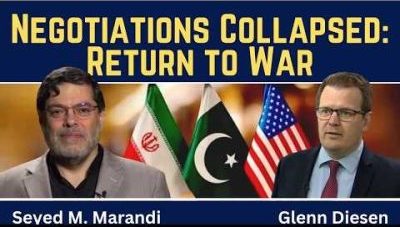
Seyed M. Marandi: Negotiations Collapsed – Return to War
or go to
Aletho News Archives – Video-Images
From the Archives
Wartime internment camps in Australia
National Archives of Australia
World War I
During World War I, for security reasons the Australian Government pursued a comprehensive internment policy against enemy aliens living in Australia.
Initially only those born in countries at war with Australia were classed as enemy aliens, but later this was expanded to include people of enemy nations who were naturalised British subjects, Australian-born descendants of migrants born in enemy nations and others who were thought to pose a threat to Australia’s security.
Australia interned almost 7,000 people during World War I, of whom about 4,500 were enemy aliens and British nationals of German ancestry already resident in Australia.
Records of World War I internment camps
World War II
During World War II, Australian authorities established internment camps for three reasons – to prevent residents from assisting Australia’s enemies, to appease public opinion and to house overseas internees sent to Australia for the duration of the war.
Unlike World War I, the initial aim of internment during the later conflict was to identify and intern those who posed a particular threat to the safety or defence of the country. As the war progressed, however, this policy changed and Japanese residents were interned en masse. In the later years of the war, Germans and Italians were also interned on the basis of nationality, particularly those living in the north of Australia. In all, just over 20 per cent of all Italians resident in Australia were interned. … continue
Blog Roll
 Aletho News
- Seyed M. Marandi: Negotiations Collapsed – Return to War
- Tomorrow’s naval blockade showdown
- ‘Israel’ attacks civilians to hide its embarrassing military failures & out of pure sadism
- Any Foreign Military Vessel Approaching Hormuz Under Any Pretext ‘Will Be Dealt With Severely’: IRGC
- Diplomats slam US negotiators’ performance in Iran talks
- Trump Refuses Exit Ramp, War with Iran will Continue
- Trump Says US Naval Blockade in Strait of Hormuz Will Begin Shortly
- US, Iran end 21-hour talks without agreement
- US IRAN TALKS: Who Are the Crazy Ones Here? /Lt Col Daniel Davis
- Talks with the US end without a deal over excessive US demands: Iran
- If Americans Knew
- US-Iran ceasefire negotiations make zero progress – Daily Update
- Pro-Israel ‘Thinktanks’ and Individuals who Influence U.S. Foreign Policy
- Mearsheimer reveals how Israel dictates US policies on Iran, Gaza – video
- After killing 350+, Israel still has a “score to settle” with Lebanon before ceasefire – Daily Update
- Military aid to Israel emerges as the latest political litmus test for Democrats
- The only Palestinian children’s rights organization closes following years-long Israeli campaign against it
- ‘I Can’t Forget the Smell’: Lebanese Reel After Israel Kills Over 300 in Single Day
- DNC Shoots Down Resolutions Calling Out AIPAC and Limiting Arms to Israel
- TCN: Is Israel Blackmailing President Trump?
- Israel killed at least 303 Lebanese yesterday – who were they? Daily Update
- No Tricks Zone
- Cave Discovery Reveals Today’s Desert Climates Were Recently Far Warmer, Wetter, Teeming With Life
- German Expert: Heat Dome Led To Record Temps In Western USA…Warmer In 1934, 1936
- New Study: No Linear Warming Or Glacier Retreat Along Northern Antarctic Peninsula Since 1980s
- An Inconvenient Tree: Uncovered In Alps… Europe Much Warmer Than Today 6000 Years Ago
- New Study Reports A 60% Slowdown In Greenland’s Ice Loss Rate In The Last Decade
- Low Intensity Tornado Wrecks Major Solar Farm, Creating A Potential Toxic Dump
- New Study Finds Warming Saves Lives…Cold Temperatures 12 Times More Deadly Than Excess Heat
- German Science Blog Accuses PIK Climate Institute Of Hallucinating Climate Tipping Points
- Devastating Assessment Of Comirnaty Vaccine By Former Senior Pfizer Europe Toxicologist
- New Study: CO2 Is ‘Effectively Negligible’ As An Explanatory Climate Change Factor Since 2000
 Aletho News
Leave a comment