Why Israel’s Drive to Destroy Iran is Ultimately about Palestine
By Robert Inlakesh | Palestine Chronicle | January 26, 2026
While the regime change propaganda about Iran continues to circulate, it is important to understand that the only real reason Israel seeks to topple the Islamic Republic is because of its role in supporting the Palestinian struggle.
Pro-war think tanks, media outlets, social media influencers, and rights groups have not relented in their blatant disinformation campaigns, designed solely to manufacture consent for a war of aggression against Iran.
The number of protesters that regime change advocates claim were killed by the Iranian authorities appears to grow by the day. First, it jumped from thousands to just over ten thousand. Now, you may be seeing the claim that 43,000 were killed, while 350,000 are injured and 20,000 await execution.
So where are these figures coming from? The 43,000 figure comes from a group called the “International Center for Human Rights” (ICHR), based in Toronto, Canada. On its website, it presents itself as a “non-governmental, non-profit international organization dedicated to promoting and defending human rights and democratic values.” However, it is a group that focuses almost entirely on Iran and celebrates the importance of the alleged “growing friendship between Iran and Israel.”
Unlike human rights groups like Amnesty International or Human Rights Watch (HRW), it uses extremely biased language, such as labeling the Iranian government the “terrorist regime” or a “criminal regime occupying Iran.” It is also explicitly in favor of regime change.
Its executive director, Ardeshir Zarezadeh, even praised Israel’s assassination of Hezbollah leader Seyyed Hassan Nasrallah, posting a photo of himself and his colleague, Ahmad Batebi, drinking what appears to be wine, with Israeli and Iranian opposition flags behind them. For context, that Israeli strike killed around 300 civilians.
Without having to go into any more depth on this Canada-based human rights center, it suffices to say that it is far from a neutral source. The reason for pointing out where these figures come from is to say that those repeating such extreme and unsubstantiated claims are not doing their due diligence.
The blind acceptance of such ridiculously high casualty numbers, which exceed the casualty tolls from some wars and major battles in the region, is what gives way to a free-for-all of ridiculous atrocity propaganda. Take, for example, regime change advocate influencer Sana Ebrahimi, who recently claimed that over 80,000 protesters were killed, citing “someone who is in contact with sources inside the government.”
When we cite casualty numbers as journalists, it is incumbent upon us to check our sources. The refusal to check sources is precisely how the “300 babies thrown out of incubators by Iraqi forces in Kuwait” and “40 babies beheaded by Hamas” hoaxes spread.
As of now, there are no internationally verified numbers of how many protesters, rioters, and armed militants were killed during the recent round of unrest in Iran. Tehran has produced its own figures, which it backs up with names and documentation, but in terms of impartial “international investigations,” there is simply no evidence for any of these figures being circulated.
It’s All About Palestine
It is no secret that the Israeli government is backing and allied with the Iranian opposition and is seeking regime change. It has been revealed by a Haaretz investigation that Israel has used bots and paid Persian-language speakers to promote the Shah’s son as the alternative leader of the country. It is also no secret that the excuse for bombing Iran has shifted from “eliminating the nuclear threat,” to “eliminating their ballistic missile program,” and now to “they are killing their own people.”
But why are the Israelis so invested in destroying Iran? The reason is very simple: Iran’s government is the only one on earth that provides military assistance to the Palestinian resistance.
Iran is allied with every Palestinian political faction that uses violent resistance against the Israelis. It arms Hamas and Palestinian Islamic Jihad (PIJ), but also Marxist groups like the Popular Front for the Liberation of Palestine (PFLP) and nationalists like the Al-Aqsa Martyrs Brigades—an unofficial armed wing falling within the fold of the Fatah movement. It does so without requiring anything in return. It trains armed resistance groups and helps in the development of Gaza’s tunnel infrastructure.
The Islamic Republic also supports Yemen’s Ansarallah, which played a key role in fighting on the side of Gaza during the entire course of the genocide. It also supports Hezbollah in Lebanon.
Every armed force that Iran supports in the region is opposed to Israel, including Iraq’s Popular Mobilisation Units (PMU), components of which repeatedly fired drone and cruise missiles at Israel.
Some argue that the Iranians do this for strategic reasons. The counterargument is that if this has been the primary driver of support for the Palestinian cause, why then have the Iranians refused to use this as a bargaining chip in negotiations with the United States? Another counterpoint offered is that Iran is punished because it supports Palestine, not the other way around.
Regardless of whether you take the viewpoint that Iran’s support for resistance against the Israelis is born of moral concerns, strategic concerns, or both, there is no denying that the support exists. No other country, except Ansarallah’s government in Yemen, has directly fought the Israelis.
If Iran’s government is toppled and replaced with a pro-Israel puppet dictator, this would lead to the total collapse of the entire support infrastructure behind the regional players resisting Israel. In other words, this outcome would give the Israelis a free hand in Lebanon and enable them to do with the Palestinian people whatever they choose.
Therefore, it is a contradiction to claim you support toppling the Iranian government and also support Palestine. It would be like claiming you support the overthrow of the Soviet Union and a plot to install a German puppet regime during World War II, while still claiming to oppose the Nazis. These positions are irreconcilable.
Does this mean you need to blindly support the Islamic Republic? Evidently not. Rather, simply consider your stance using the above-mentioned analogy.
The US-Israeli effort to cause regime change in Iran has nothing to do with the people of Iran. It is all about destroying the resistance groups fighting against them. Therefore, the end of the Islamic Republic means the end of the Palestinian resistance and total Israeli domination of the entire region.
That is the truth.
– Robert Inlakesh is a journalist, writer, and documentary filmmaker. He focuses on the Middle East, specializing in Palestine.
Trump and Iran, War or Negotiations?
By Samyar Rostami – New Eastern Outlook – January 26, 2026
Although the likelihood of a US attack on Iran has greatly increased. If Iran shows widespread strength and resistance, the Americans will retreat. Iran’s response to military attacks will certainly be more severe and comprehensive than in previous cases.
In the national security document published in Trump’s second administration, like the previous two documents, the national defense of the United States is characterized, as it includes the defense of the territory, the defense of the people, the defense of the political system, and the defense of the economy.
Iran’s position was also prominent in previous documents. In that document, the name of Iran was repeated six times, and it was one of the greatest threats to US national security. It was proposed, and in addition, in two other cases, it referred to the threat of Iran.
In the latest document, the number of these references has been reduced to three. In the new document, direct reference to Iran’s nuclear program has been almost eliminated. But the issue and role of waterways is still prominent in this document; in fact, this time the name of the Strait of Hormuz is explicitly mentioned and emphasized in the new document.
The new US national security document depicts Iran in the general framework of “weakening” and does not actually mention Iran as a fundamental threat. But this does not mean that the United States no longer considers Iran a threat.
War or negotiations
The behavior of the Trump administration, namely in recent months, has been not only in rhetoric but also in practice anti-Iranian, from pressuring European governments to activate the snapback mechanism to supporting Israeli military actions, seizing ships suspected of carrying weapons to Iran, and even actions such as seizing ships off the coast of Venezuela.
Given the current state of US-Iran relations, the US has two options: moving towards an agreement or adopting a military option, but Washington’s desire is to stop Iran’s nuclear capability without falling into the quagmire of eternal wars.
The issue of negotiations had been stalled since the 12-day war because Tehran refuses to return to negotiations before receiving the necessary guarantees from the US about not starting another attack against Iran by Israel or the US and having the right to enrich uranium.
Not all Trump officials and aides share the same view and approach, and some believe that negotiating with Tehran will increase Iran’s legitimacy. Within the administration, it seems that some are willing not to move towards a military option before diplomatic solutions are exhausted.
Also, the United States, which previously adopted a policy of “maximum pressure campaign,” still claims to protect the rights of the Iranian people. In this regard, Donald Trump has now imposed a 25% customs tariff on any country that has trade relations with Iran, which could have a negative impact on Iran’s economic relations. Trump also called for illegal actions, including the occupation of government institutions, by asking Iranian protesters to continue the protests and even promised that help was on the way.
The United States is also using the protests inside Iran as a tool to gain more concessions from Tehran in any possible agreement.
Iran’s readiness for diplomacy and defense
Previously, Iranian Foreign Minister Abbas Araghchi had emphasized that the United States and the regime would not achieve a different result by repeating the previous failed experience. “Iran is much more prepared than the 12-day war,” he said, adding, “I hope the wise option will be chosen. We will prepare diplomatic and economic options.”
In a situation where an average of $10 billion was allocated annually for the import of basic goods, the government came to the conclusion that economic surgery should be performed in this area; the preferential currency should be eliminated for consumers.
The protests in Iran have been carried out peacefully since early January by a group of people and trades in response to currency fluctuations and the living conditions. The government announced that it recognizes these protests and efforts to address these concerns are ongoing. However, after a week and on January 8-9, the protests by terrorist elements turned into riots in cities, destroying government, public, relief, and mosques.
Iranian authorities have made mass arrests of terrorist elements in team houses and terrorist cells, and they even have documents about the connections between these terrorist elements and the United States and Israel.
In the view of government spokeswoman Fatemeh Mohajerani, the peaceful protests of the people were subjected to a terrorist attack. Also, Brigadier General Ahmad Ali Goodarzi, Commander of the Faraj Border Guard, announced the identification and destruction of 3 terrorist teams before they entered the country at the country’s borders and the discovery of weapons and ammunition from them.
Amir Saeed Iravani, Ambassador and Permanent Representative of Iran in the United Nations, stated in a letter to the Security Council and the Secretary-General of the UN: “The Islamic Republic strongly condemns the continuous, illegal, and irresponsible behavior of the United States of America in coordination with Israel to interfere in Iran’s internal affairs through threats, incitement, and deliberate encouragement of instability and violence.”
Also, internal cohesion among political groups and figures in Iran is established and stable. Apart from the words and positions of the Leader of Iran, the representatives of the Islamic Consultative Assembly (Parliament) considered the government’s decision (end of the consumption chain) a courageous act and an important step.
The parliament speaker, Mohammad Bagher Ghalibaf, said, “At this time, the responsibility of us as Iranian officials is to confront the enemy in the economic war.”
From the perspective of Hassan Rouhani, if a foreign aggressor wants to abuse the protest within the family, the family members will put aside the difference and break the aggressor’s hand.
In fact, from Tehran’s perspective, Iran is ready for both war and negotiation. That means fair, honorable, and equal negotiations with mutual respect and based on mutual interests are still the priority, not giving orders and dictating. Iran also has preconditions.
Although the US has greatly increased its forces in the region. Iran’s military forces are also at the peak of defensive readiness and are ready to confront any aggression and evil of the enemy against Iran. Therefore, any action must face retaliation from Iran.
The amount of oil sales in the past 14 months in the form of export shipments has been record-breaking. The creation of new restrictions on the sale of Iranian oil does not create any serious restrictions on Iran’s oil sales processes.
Outlook
It seems that the US is paying special attention to shaping a soft transformation and a colorful and internal revolution in Iran, along with hard threats as a means of pressure. But internal cohesion among political groups and figures in Iran is established and stable.
Although the likelihood of a US attack on Iran has greatly increased. If Iran shows widespread strength and resistance, the Americans will retreat. Iran’s response to military attacks will certainly be more severe and comprehensive than in previous cases.
In the meantime, Washington’s failure in the direction of the hard programs could make the path of interaction or resolution of issues between Iran and the United States, in the new framework, more complex.
Samyar Rostami is а political observer and senior researcher in international relations.
Follow new articles on our Telegram channel
US pressure contributing to Israeli influence in Latin America: Experts
Press TV – January 26, 2026
US political pressure is contributing to the Israeli regime’s influence across Latin America, even as long-standing regional support for the Palestinian cause continues through diplomatic, legal, and grassroots channels, experts say.
For decades, several left-wing governments in the region shaped their foreign policy around anti-imperialism and de-colonial identity, aligning openly with Palestinian rights, but analysts warn the legacy is now at the disposal of a mix of US interference, far-right political shifts, and economic leverage, the Middle East Eye news and analysis website reported on Monday.
Following the launch of the Israeli regime’s war of genocide on Gaza in October 2023, Brazil’s president verified the nature of the onslaught as being “genocidal,” Colombia suspended diplomatic ties with the regime, and Chile sought accountability for Israeli atrocities at international courts. Yet experts cited by the outlet said Washington has worked to counter that momentum through lobbying, political threats, and direct pressure on outspoken governments.
“Latin American states lack instruments of hard power and are therefore constrained in how they can respond to US pressure,” said Ali Farhat, a Latin American affairs specialist. “That limitation creates openings for Israel to consolidate influence, particularly where governments seek to avoid confrontation with Washington.”
US officials have increasingly framed cooperation with Washington as a test of “security” and “democratic alignment,” while linking regional diplomacy to broader American foreign policy goals that dovetail with closer ties with Tel Aviv.
Argentina has emerged as the clearest example of this shift. Far-right President Javier Milei has announced plans to move the country’s embassy to the holy occupied city of al-Quds and expand security and economic cooperation with the regime, while openly backing its war on Gaza as “legitimate self-defense.”
Last year, Argentina received a $20-billion bailout from Washington, which US President Donald Trump defended as support for a “good financial philosophy,” despite skepticism over its impact on the country.
Farhat said US meddling has reshaped the regional landscape, pointing to Washington’s targeting of Venezuela’s leadership as part of a broader effort to weaken vocal supporters of Palestine.
Venezuelan President Nicolas Maduro, long seen as one of the most uncompromising defenders of Palestinian rights in Latin America, was kidnapped by US forces earlier this year and is now standing trial in New York on “drugs, weapons, and narco-terrorism” charges.
“He (Maduro) was among the most uncompromising defenders of Palestine on the continent,” Farhat said. “His marginalization [and now ouster] represents the loss of a fierce advocate for the cause.”
The pundit said Maduro framed the Palestinian struggle as inseparable from anti-imperialism and viewed the US as a colonial power and the regime as an occupying entity backed by it.
Since Trump’s return to office last year, Farhat said, left-leaning leaders have shifted tactics rather than abandoning Palestine, opting for recalibration over confrontation, but far-right governments have accelerated alignment with both Washington and Tel Aviv.
As of 25 January, Argentina is the only Latin American country to have agreed to join Trump’s controversial “Board of Peace” initiative in Gaza, which describes itself as an international organization seeking to promote stability and secure “peace.”
Nilto Tatto, a congressman from Brazil’s Workers’ Party, urged Latin American governments to reject the board and any initiatives undermining Palestinian rights.
“Any framework managed by Washington would not serve peace so much as reproduce hegemony under an international guise,” Tatto said.
“Brazil, evidently, cannot take part in a process whose outcome is already predetermined, namely one that focuses on the reconstruction of the Gaza Strip only to then keep the territory under US control.”
Julia Perie, a former Argentine lawmaker, said Argentina’s shift reflected ideological realignment.
“Argentina’s position is part of a geopolitical vision that prioritizes alignment with the United States,” said Perie.
She added that Latin American solidarity with Palestine has always been cyclical. “This is another phase in a longer historical transformation, not the end of solidarity.”
‘Recalibration not abandonment’
Amid the situation, observers noted, support for Palestine in countries facing mounting political pressure was increasingly being channeled through legal action, multilateral institutions, and popular movements rather than overt diplomatic confrontation.
Ramon Medero, president of Venezuela’s La Danta TV, said the current moment represented adaptation, not retreat.
“It is difficult to argue that the Palestinian cause has suffered a decisive blow,” Medero said.
“What we are seeing is a repackaging of escalation through legal and multilateral avenues to reduce the costs of sanctions and backlash.”
Medero added that the Palestinian cause was now embedded in a broader Global South struggle.
“The Palestinian cause has become a structural symbol of liberation, sovereignty, and self-determination,” he said. “What is shifting is agency – away from governments and toward popular consciousness.”
He added that far-right advances could intensify grassroots mobilization.
China Rejects U.S. Claims of Coercion in Central America
teleSUR | January 26, 2026
On Monday, Guo Jiakun, a spokesperson for China’s Foreign Affairs Ministry, rejected U.S. accusations of alleged Chinese “coercion” and “interference” in Central America.
His remarks came after Rep. John Moolenaar, chairman of the U.S. House Select Committee on China, traveled to several Central American countries to counter Chinese influence and question the involvement of Asian companies in strategic sectors such as the operation of ports linked to the Panama Canal.
In response, Guo described the U.S. claims as “complete lies and fallacies,” saying they reflect ideological bias and a Cold War mentality. “China firmly opposes certain U.S. politicians interfering in the normal relations between Central American countries and China,” the Chinese diplomat said.
He also stressed that the Chinese foreign policy toward Latin America and the Caribbean is based on principles of mutual respect, sovereign equality, mutual benefit, openness and inclusiveness, and cooperation aimed at shared development.
According to Guo, relations between China and Central American countries have produced tangible benefits for local populations, particularly in areas such as infrastructure, trade, logistics connectivity, productive investment, and technology transfer.
China maintains that its presence in Central America is not aimed at political domination but rather at a model of South-South cooperation that has been “well received by the countries involved.”
Guo urged U.S. politicians to stop instrumentalizing China-related issues for geopolitical purposes and to focus their efforts on initiatives that contribute to regional development. In multiple international forums, China has reiterated its rejection of bloc-based thinking and confrontation, advocating for a multipolar international order based on multilateralism and respect for state sovereignty.
Earlier, U.S. President Donald Trump released the new U.S. National Security Strategy, which prioritizes strengthening his country’s influence in Latin America and the Caribbean and seeks to reconfigure strategic control over key trade corridors such as the Panama Canal.
New US defense strategy downgrades Russian ‘threat’
RT | January 26, 2026
The Pentagon has downgraded the alleged threat level from Russia in its newly released US National Defense Strategy.
A similar document issued under the previous administration of President Joe Biden in October 2022, less than a year after the escalation of the Ukraine conflict, described Moscow as an “acute threat.”
But the updated defense strategy, published by the War Department on Friday, referred to Russia as “a persistent but manageable threat to NATO’s eastern members for the foreseeable future.”
The document also stressed that Moscow “possesses the world’s largest nuclear arsenal, which it continues to modernize and diversify, as well as undersea, space, and cyber capabilities that it could employ against the US Homeland.”
It said the fighting between Moscow and Kiev has proven that Russia “retains deep reservoirs of military and industrial power,” as well as “national resolve required to sustain a protracted war in its near abroad.”
However, according to the Pentagon’s assessment, Moscow is “in no position to make a bid for European hegemony. European NATO dwarfs Russia in economic scale, population, and, thus, latent military power.”
The document said that the US will “continue to play a vital role in NATO” and “remain engaged in Europe,” but from now on it will “prioritize defending the US Homeland and deterring China,” echoing the White House National Security Strategy published in October.
Despite Europe having “a smaller and decreasing share of global economic power,” NATO members on the continent are “strongly positioned to take primary responsibility for Europe’s conventional defense, with critical but more limited US support,” according to the strategy.
The EU and UK should also be “taking the lead in supporting Ukraine’s defense,” the Pentagon stressed. It also reiterated the stance of US President Donald Trump that the conflict between Moscow and Kiev “must end.”
Russian President Vladimir Putin opined last October that the Trump administration is guided by American interests, which he called a “rational approach.”
“Russia also reserves the right to be guided by our national interests. One of which, incidentally, is the restoration of full-fledged relations with the United States,” he stressed.
EU turns to India for defense cooperation as US ties fracture
The Cradle | January 26, 2026
The EU and India are set to sign a security and defense partnership aimed at opening the way for Indian involvement in European defense initiatives, Reuters reported on 26 January.
The draft partnership – expected to be signed on Tuesday during the India–EU summit – would establish a framework for consultations between Brussels and New Delhi on their respective military programs.
According to the document, the two sides will pursue cooperation “where there are mutual interest and alignment of security priorities,” with India potentially joining “relevant EU defense initiatives, as appropriate, in line with respective legal frameworks.”
The agreement creates an annual security and defense dialogue between the partners, and extends cooperation to maritime, cybersecurity, and counterterrorism.
European officials justified the expanded partnership by citing “the growing complexity of global security threats, rising geopolitical tensions, and rapid technological change” as the rationale behind seeking closer ties.
The partnership arrives as Europe actively distances itself from dependence on both the US and China, seeking alternative diplomatic and economic relationships across other regions.
The push also comes amid deteriorating relations between the US and EU over Greenland annexation threats – as well as the recent aggressive expansionist posture adopted by the US – that officials warn of a complete NATO collapse if military action is used against long-standing allies
The defense pact will facilitate Indian companies’ participation in the EU’s SAFE program, an approximately $177-billion financial mechanism designed to accelerate member states’ military readiness, with the partnership aiming to enhance interoperability between the Indian and European defense sectors.
Tuesday’s summit will simultaneously announce the completion of free trade agreement negotiations that began in 2007 but stalled in 2013 before restarting in June 2022.
The EU represents India’s largest goods trading partner, with bilateral trade reaching approximately $136 billion in the 2024–2025 financial year.
Officials indicated the summit agenda will address Russia’s ongoing military operations in Ukraine, alongside finalizing mobility frameworks between the partners.
The India–EU defense pact comes after India signed a separate major defense agreement with the UAE involving nuclear cooperation, enhanced military ties, and commitments to double bilateral trade to $200 billion within six years.
That UAE deal followed Turkiye’s announcement of joining the defense pact between Saudi Arabia and Pakistan, amid broader regional realignment as Riyadh reportedly establishes a military coalition with Somalia and Egypt to counter Emirati influence.
Donald Trump Is No Peace President
By José Niño | The Libertarian Institute | January 26, 2026
Donald Trump presented himself as someone who would end America’s perpetual conflicts and chart a fresh course in global affairs. Supporters routinely placed him alongside noninterventionist figures such as Pat Buchanan and Ron Paul, insisting he would deliver prudence and realism to the nation’s capital. Reality paints an entirely different picture. Across Venezuela, Somalia, Iran, and Yemen, Trump’s tenure has featured military expansion, financial coercion, and overseas operations that mirror his predecessors in both breadth and destructiveness.
Hard data confirms this assessment. Information from the Armed Conflict Location and Event Data project reveals that Trump authorized roughly the same number of airstrikes during merely the opening five months of his second administration as President Joe Biden greenlit throughout his complete four-year tenure. During 2025 by itself, American forces struck seven nations on Trump’s authority, marking an unparalleled extension of Washington’s military footprint globally.
Trump’s Venezuela strategy epitomizes his administration’s hawkish disposition. The maximum pressure initiative intensified sharply beginning in 2017, cutting off Caracas from American financial systems and targeting the state petroleum enterprise PDVSA. Venezuela’s petroleum export earnings plummeted from $4.8 billion in 2018 to merely $477 million in 2020.
Trump’s present administration enacted secondary tariffs, punishing any nation buying Venezuelan petroleum and raised the bounty on Nicolás Maduro to $50 million. Subsequently, a Christmas Eve assault and accounts of a CIA drone strike toward the end of 2025 added more fuel to the first. Trump kicked off 2026 on an escalatory note with his successful abduction of President Maduro on January 3 in clear violation of international law.
Past Venezuela, Trump’s Caribbean and Eastern Pacific assault initiative stands as among the most legally questionable military campaigns in contemporary American history. Commencing September 2, the administration began executing strikes against vessels it alleged transported narcotics. Based on figures disclosed by the Trump administration, thirty strikes total have been executed, with over one hundred individuals killed in what amount to summary executions plainly violating American and global statutes. During this entire assault initiative, the Pentagon has furnished zero proof supporting its allegations and has conceded ignorance regarding the identities of numerous victims.
Somalia witnessed extraordinary intensification under Trump during 2025. The administration executed no fewer than 127 airstrikes, exceeding twofold the prior yearly maximum of American bombardments there, a benchmark Trump personally established at sixty-three during his initial presidency. Per New America, the airstrikes executed in 2025 surpass those performed in Somalia throughout the Joe Biden, Barack Obama, and George W. Bush administrations when totaled together.
Accounts exist of non-combatants being slain in American airstrikes and campaigns executed by American-supported units. Conditions remain challenging to verify since practically zero American press attention addresses the aerial campaign notwithstanding the extraordinary expansion.
President Trump authorized the initial documented American missile bombardments in Nigeria on Christmas Day, launched by an American vessel in the Gulf of Guinea. Nigerian authorities identified the objective as “two major Islamic State terrorist enclaves” within a zone not recognized as a significant center for ISIS-linked combatants, provoking doubts concerning the objective choice. American projectiles additionally struck two villages beyond the designated objective, leading to the destruction of numerous dwellings.
Yemen endured especially catastrophic outcomes from Trump’s military campaigns in 2025. The administration initiated an intensive bombardment operation commencing March 15 responding to the Houthis reinstating their maritime embargo against Israeli commerce. The American operation, termed “Operation Rough Rider,” eliminated over 250 non-combatants, per Air Wars. Bombardments encompassed the April 17 destruction of the Ras Issa Fuel Port, killing eighty-four individuals, entirely civilians. Subsequently, American forces struck a migrant detention installation in Sadaa, killing sixty-eight African migrants.
American forces have executed airstrikes across Iraq and Syria this year while deploying thousands of personnel in both territories. On December 19, Washington initiated substantial bombardments throughout Syria allegedly targeting ISIS following a December 13 assault killing two American National Guard personnel and one American civilian translator. Yet the assault originated from a Syrian governmental security apparatus member without any ISIS attribution.
Trump’s Iran strategy constitutes arguably his sharpest divergence from moderation. Following American withdrawal from the Iran nuclear deal during May 2018, he initiated the maximum pressure sanctions offensive. He characterized the agreement as “the worst deal ever,” asserting it “enriched the Iranian regime and enabled its malign behavior, while at best delaying its ability to pursue nuclear weapons.”
During October 2019, Trump penalized Iran’s construction sector, connecting it to the Islamic Revolutionary Guard Corps, which he had labeled a foreign terrorist entity during April that year. Trump boasted, “If you are doing business with the IRGC, you will be bankrolling terrorism. This designation will be the first time that the United States has ever named a part of another government as an FTO.”
The most explosive incident arrived during January 2020, when Trump greenlit the drone bombardment eliminating Iranian General Qassem Soleimani in Baghdad. Trump contended Soleimani had been “plotting imminent and sinister attacks on American diplomats and military personnel,” an action propelling Washington and Tehran toward the precipice of direct warfare.
Following this volatile incident, Trump persisted in raising tensions. Approaching the conclusion of his initial presidency, he explored martial alternatives for assaulting Iran’s atomic infrastructure. Chairman of the Joint Chiefs of Staff Mark Milley resisted strenuously, cautioning, “If you do this, you’re gonna have a fucking war.”
Trump discreetly authorized preliminary measures for striking Iranian objectives. Per The Wall Street Journal, Trump communicated to advisors that he “approved of attack plans for Iran, but was holding off on giving the final order to see if Tehran will abandon its nuclear program.”
During June 2025, Trump commanded direct bombardments against three Iranian atomic installations utilizing B-2 stealth aircraft and bunker-penetrating munitions. Trump proclaimed Iran’s atomic capabilities were “completely and totally obliterated,” notwithstanding assessments from the Defense Intelligence Agency and International Atomic Energy Agency indicating the bombardments failed neutralizing Iran’s subterranean infrastructure. Rafael Grossi declared Iran could restart uranium enrichment “within a matter of months.”
Trump became the inaugural American president to bomb Iran directly. Washington additionally supported extensive Israeli bombardments throughout Iran, which eliminated over 1,000 individuals across twelve days of combat. Trump recently stated he would endorse an Israeli assault if Iran “continues” its missile development or reconstructs its compromised atomic installations.
Notwithstanding pledges transforming the foreign policy establishment, Trump selected conventional politicians who undermined his commitments toward improved Russian relations. Throughout Trump’s tenure, Washington abandoned the Open Skies Treaty and INF Treaty, furnished deadly weaponry to Ukraine, and assaulted Russian military personnel in Syria. Trump endorsed the Countering America’s Adversaries Through Sanctions Act, the harshest penalties enacted against Russia.
Throughout his opening term, Trump relaxed engagement protocols for military leadership, producing a sharp surge in airstrikes. Regarding clandestine counterterrorism campaigns, Trump sanctioned roughly 375 to 450 bombardments throughout his opening term. Comparing merely the opening two years, Trump initiated 238 bombardments versus Obama’s 186 bombardments, constituting a 28 percent elevation. Throughout every theater, American forces released roughly 67,206 munitions throughout 2017 through 2020, averaging 16,802 munitions yearly, a 46 percent elevation versus Obama’s average.
Trump additionally rescinded Obama era disclosure mandates during March 2019 requiring yearly documentation of drone bombardments and non-combatant fatalities, rendering campaigns more clandestine and abolishing formal transparency.
The trajectory proves undeniable. From Somalia through Syria, Venezuela through Iran, Trump has overseen an enlargement of American military campaigns rendering his antiwar rhetoric farcical. He resembles neither Pat Buchanan cautioning against foreign entanglements nor Ron Paul advocating for modest foreign engagement. He constitutes a traditional interventionist demonstrating readiness deploying military power globally with diminished restrictions and reduced accountability than his forerunners. Those believing Donald Trump would deliver restraint to American foreign policy have been thoroughly deceived.
Vicious

Lies are Unbekoming | January 25, 2026
The waiting room is clean. The receptionist is polite. The forms ask reasonable questions. Nothing in the physical environment suggests danger. The magazines are current. The hand sanitizer dispenser works. Someone has chosen calming colors for the walls.
A pregnant woman sits in a chair designed for her comfort. She has been told to be here. Not ordered—no one orders. Recommended. Strongly recommended. Everyone does this. Her mother did this. Her friends did this. The women in her prenatal group compare notes about their appointments the way they compare notes about nursery furniture. Which provider did you choose? What tests have you had? The questions assume the answers. The answers assume the questions.
She will be offered things today. Offered is the word used. The offers will come with information sheets that list risks and benefits in tabular form. She will sign consent documents. Everything will be voluntary in the legal sense. No one will hold her down. No one will threaten her. She will choose, and her choices will feel like choices, and she will leave feeling she has done the responsible thing.
What she will not feel is the weight of what has been arranged before she arrived. The scheduling software that ensures the appointment is short enough to be profitable. The protocol that determines which tests are “standard” regardless of her individual circumstances. The liability calculations that make defensive intervention safer for the provider than watchful waiting. The training her provider received, which did not include the word “cascade” and did not question the premises. The pharmaceutical representative who visited last month. The professional guidelines written by committees with financial ties to the interventions they recommend. The insurance code that reimburses procedures but not conversations. The architecture of the building itself, which presumes birth is a medical event requiring medical facilities.
None of this is secret. All of it is documented, published, occasionally debated in journals that no one outside the profession reads. The machinery operates in plain sight. It has operated for so long that its operation feels like nature—the way medicine works, the way pregnancy is managed, the way responsible people behave.
She cannot see it because she is inside it. The water she swims in. The air she breathes. The climate of her experience.
For years I used the word “predatory” to describe this system. Predatory captured something true—the targeting, the extraction, the conversion of healthy people into revenue streams. The pharmaceutical company identifying a market. The screening program generating patients. The intervention that creates the need for the next intervention. Predation implies a hunter and prey, a calculation, a strategy.
But predatory is not quite right. A predator needs its prey. A predator pays attention to what it hunts. A predator, in some sense, respects the thing it consumes—respects it enough to study it, track it, understand its patterns. The lion watches the gazelle. The con artist studies the mark.
This system does not watch. It does not study. It processes.
The word that came to me after documenting 123 medical interventions across the arc of pregnancy and birth is different. Starker. Less strategic and more indifferent.
Vicious.
Viciousness is not cruelty, though cruelty may be one of its expressions. Cruelty requires attention. The cruel person watches suffering and derives something from it—pleasure, power, confirmation. Cruelty is a relationship, however deformed.
Viciousness requires no such relationship. A vicious mechanism can operate without anyone watching the effects. A vicious system can grind through populations while everyone involved believes they are helping. The viciousness is in the structure, not the intention. It emerges from the interaction of parts, none of which are vicious in isolation.
The doctor who follows the protocol is not vicious. The protocol is not vicious. The committee that wrote the protocol is not vicious. The pharmaceutical company that funded the research the committee relied on is not vicious—or rather, its viciousness is diffused through so many quarterly earnings reports and shareholder meetings and marketing budgets that no single person experiences themselves as causing harm. The regulator who approved the product is not vicious. The politician who mandated its use is not vicious. The parent who complies is not vicious. The neighbor who judges the parent who doesn’t comply is not vicious.
And yet.
A 13-year-old girl in London, who declined a vaccine, is being pressured about a screening test she is not eligible for. The vaccine was Gardasil, marketed as preventing cervical cancer. The screening is the smear test—cervical screening that begins at age 25 in the UK, designed to detect what the vaccine supposedly prevents. The two programs are presented as separate, but they function as a single apparatus: refuse our prevention and you must submit to our surveillance. I have documented elsewhere, in my essay The HPV Lie: Pap Smears, Gardasil, and a Cancer Caused by Something Else, why the foundational claim—that HPV causes cervical cancer—does not survive scrutiny. But for the purposes of this essay, the truth of the claim matters less than the machinery built on it.
The pressure comes from somewhere. It reaches her through channels—through school, through health messaging, through the questions of peers whose parents made different choices. No single person decided to punish her. No committee met to discuss her case. The system does not know her name.
The pressure is automatic. It is the system maintaining itself, closing gaps, ensuring that even those who refuse one element remain captured by another. The vaccine and the screening are presented as separate programs, but they function as a single apparatus. Refuse the prevention and you will be reminded, persistently, of your need for surveillance.
She is 13. The screening she is being pressured about begins at 25. There is no medical reason for anyone to be discussing it with her. The pressure is not medicine. It is correction. It is the system registering a deviation and applying force to resolve it.
No one in her life who transmits this pressure experiences themselves as being vicious. The teacher who mentions it is concerned. The nurse who brings it up is following guidelines. The friends who ask why she didn’t get the shot are simply curious, or perhaps uncomfortable with difference. Everyone is doing what people do. Everyone is being normal.
The viciousness is in the normal. The viciousness is that “normal” has been constructed, over decades, through thousands of small decisions, each one defensible, none of them examined, until the accumulated weight presses down on a 13-year-old whose only crime was asking questions.
The system is vicious. Say it plainly.
The government that approves the products, mandates their use, shields manufacturers from liability, and funds the campaigns that manufacture consent—the government is vicious.
The society that has been engineered to enforce compliance through social pressure, to treat refusal as deviance, to make the unvaccinated child a problem and the questioning mother a danger—this society is vicious.
But here is where the analysis must be careful. “The system” is an abstraction. “Government” is an abstraction. “Society” is an abstraction. These words make it easy to express outrage while leaving everyone blameless. If the system is vicious, I am not. If government is the problem, I am just a citizen. If society has been engineered, I am merely a victim of the engineering.
This is too easy. It is also untrue.
The system is made of people. Every protocol was written by a person. Every guideline was approved by persons sitting in a room. Every prescription is written by a hand attached to a body that contains a mind capable of doubt. The government is not a machine. It is people who could choose differently and do not. Society is not weather. It is the accumulated choices of everyone who participates in it—which means everyone.
The viciousness is emergent. No one designed the full harm. But the viciousness is also composed. Each component is a human decision. The emergence does not erase the composition. The fact that no one intended the complete picture does not mean no one is responsible for their corner of it.
This is the moral difficulty the essay cannot resolve, because reality does not resolve it. The harm is everyone’s and no one’s. The choices are individual and the outcome is collective. A woman loses her uterus to a surgery she did not need, and the surgeon who performed it was following the standard of care, and the standard of care was set by a committee, and the committee relied on studies, and the studies were funded by companies that profit from the surgery, and the companies are owned by shareholders who never think about uteruses, and the shareholders include pension funds, and the pension funds include the retirement savings of nurses who work in the hospitals where the surgeries are performed.
Where does blame land? Everywhere and nowhere. This is not an evasion. This is a description of how the viciousness actually works. It is distributed so thoroughly that it becomes atmospheric. It becomes the milieu. It becomes the climate that everyone moves through and no one feels responsible for, because the mechanisms of responsibility have been dissolved in the general weather.
Ivan Illich saw this decades ago. He described how institutions reshape the milieu—the environment people move through—until alternatives become unthinkable. A radical monopoly, he called it. Not a monopoly that corners a market, but a monopoly that disables people from doing things on their own. When hospitals “draft all those who are in critical condition,” he wrote, “they impose on society a new form of dying.” The institution does not merely provide a service. It reshapes reality so that the service becomes necessary.
This is what has happened with birth. With childhood. With the female body across its entire reproductive arc. The medical system has not merely offered services. It has reshaped the milieu so that moving through pregnancy without those services becomes an act of deviance. The services are not chosen from a range of options. They are the water in which choice occurs.
A woman who declines the standard interventions is not making a different choice within a shared framework. She is refusing the framework itself. This is why she is treated not as someone with different preferences but as someone who is failing—failing to be responsible, failing to care for her baby, failing to be the kind of mother the system has defined as acceptable.
The viciousness is in that definition. The system defines acceptable, and acceptable means compliant, and compliant means captured.
I documented 123 interventions across six phases of the reproductive timeline. Pre-conception capture. Pregnancy surveillance. Labor interventions. Immediate newborn procedures. Infant pathologizing. Ongoing medical capture. Each intervention has its own literature, its own justification, its own defenders. Each one, examined in isolation, can be made to seem reasonable—or at least not obviously harmful.
The viciousness becomes visible only when you see the whole arc.
A woman begins birth control at 16. The pill alters her hormonal environment for a decade or more. She stops the pill to conceive. She has difficulty conceiving—perhaps because years of synthetic hormones have disrupted her natural cycles, perhaps for other reasons. She seeks fertility treatment. The treatment works. She is pregnant.
Now she is in the system.
She receives prenatal testing that identifies risks, some real, most statistical. The risk identification generates anxiety. The anxiety generates more testing. The testing generates findings. The findings generate interventions. She is induced before her body was ready because a measurement crossed a threshold. The induction is long and painful because her body was not ready. She receives an epidural because the pain is unbearable. The epidural slows labor. She receives Pitocin to accelerate it. The baby shows distress. She receives a cesarean.
The cesarean is recorded as necessary. It was necessary—given everything that preceded it. Each step created the conditions for the next. The cascade operated exactly as designed.
Her baby is taken to the warmer for evaluation. Eye drops are administered. Vitamin K is injected. Hepatitis B vaccine is given—for a disease transmitted through sex and IV drug use, to a newborn who will do neither. The baby is observed in the nursery. Feeding is scheduled rather than on-demand. Supplementation is suggested because the baby lost weight—as all babies lose weight in the first days, a fact that would resolve with continued nursing but which becomes a problem requiring intervention.
She goes home with a baby she is not sure she knows how to feed, a body she is not sure she recognizes, a mind clouded with hormonal disruption and sleep deprivation and the particular loneliness of having been processed rather than supported.
She returns for postpartum visits. She is screened for depression. She may receive medication. The medication helps, or seems to. She continues it. She is now a psychiatric patient as well as a surgical patient. Her records follow her. Her risk profile follows her. The next pregnancy, if there is one, will be managed with reference to this one.
At no point was she mistreated in any way she could name. Everyone was professional. Everyone followed protocols. Everyone was trying to help.
The viciousness was in the protocols. The viciousness was in the accumulation. The viciousness was in the fact that no one—not one person across dozens of encounters—ever said: you could do none of this. You could wait. You could trust your body. You could go home.
No one said it because no one could say it. The milieu does not permit those words. A provider who speaks them risks liability, peer censure, loss of hospital privileges. The words are not forbidden. They are simply outside the weather. They are not rain or sun or wind. They do not exist in the climate the system has made.
Anyone who asks questions is doing something dangerous. They are noticing the weather. Asking why the sky is this particular color, why the wind blows this particular direction, why everyone walks leaning at this particular angle.
Most people never ask. The weather is just the weather. You dress for it. You complain about it. You do not inquire into its origins. You do not ask who made it, because weather is not made. Weather simply is.
But this weather was made. Every element of it was chosen. The clinical guidelines were written by people who could have written different ones. The regulatory approvals were granted by people who could have demanded different evidence. The liability structures were established by legislatures that could have established different ones. The insurance codes were set by committees that could have set different ones. The training curricula were designed by faculties that could have designed different ones.
Each choice was made by humans. Each human could have chosen otherwise. That none of them did—that the choices accumulated into a system that now operates with the indifference of weather—does not change the fact that the choices were made.
Anyone who asks questions threatens to make the choices visible. This is why they are pressured. Not because anyone decides to pressure them, but because the system cannot tolerate the visibility of its own construction. The weather must remain weather. The moment it becomes choices, it becomes contestable. The moment it becomes contestable, it can be refused.
If you have read this far, you are no longer fully inside the weather.
This is not a comfortable position. It is easier not to see. It is easier to move through the waiting room, sign the forms, accept the offers, go home feeling responsible. The system is designed for this ease. It has made compliance comfortable and refusal exhausting. The path of least resistance leads directly into the machinery.
Seeing the machinery does not stop it. One person’s recognition changes nothing about the protocols, the guidelines, the insurance codes, the training curricula. The 123 interventions will continue to be applied to the women who come after, regardless of what any individual understands.
But recognition changes what is possible.
A woman who sees the cascade can make different choices within it—can refuse this test, delay that intervention, ask questions that disrupt the automatic sequencing. She cannot escape the milieu, but she can move through it differently. She can refuse to be weather.
More importantly, she can speak. She can tell other women what she saw. She can name the viciousness, which is the first step toward refusing to participate in it. The system maintains itself partly through silence—through the assumption that everyone experiences the same thing and no one objects. Each voice that breaks the silence makes the next voice easier.
This is modest. It is not a revolution. It will not dismantle the system or defund the institutions or rewrite the guidelines. But the system depends on billions of small compliances, and each small refusal is a friction. Enough friction, accumulated over enough time, and the machinery begins to slow. Begins to be noticed. Begins to require justification rather than assuming it.
The girl in London who asked questions did something her grandmother could not do for her. She refused to accept the weather as weather. She noticed that she was being pressured and asked why. The pressure will continue—systems do not stop because one person notices them. But she has seen something that cannot be unseen.
This is what recognition makes possible: not escape, but awareness. Not freedom from the milieu, but movement within it that is no longer automatic. The end of innocence is not the same as the end of the system. But it is the end of participation without knowledge. It is the beginning of refusal.
The system is vicious. The viciousness is made of choices. The choices can be seen. Once seen, they can be refused.
One refusal at a time. One woman at a time. One conversation at a time.
The weather was made. It can be unmade. Not quickly. Not easily. Not by any individual alone. But the alternative is to keep swimming without noticing the water, keep breathing without noticing the air, keep walking at the angle the wind requires and calling it freedom.
The 13-year-old noticed. That is where it begins.
Book: Medicalized Motherhood: From First Pill to Permanent Patient
Available as a free download. 123 interventions documented across six phases—from pre-conception capture through postpartum surveillance. Includes practical tools: birth plan template, provider interview questions, quick reference card, and a new chapter on interrupting the cascade. Download it, share it with someone facing their first prenatal appointment, their induction date, their cesarean recommendation. The cascade works because women don’t see it coming. This book makes it visible.
Germany to build 10GW of baseload gas plants (disguised as “future” hydrogen plants)
By Jo Nova | January 17, 2026
Facing industrial death, Germany has finally decided it needs dispatchable reliable electricity. But they can’t announce that they suddenly need to build 10 gigawatts of fossil fueled gas power plants. It would be like admitting the sacred Energiewende had been a ghastly mistake that wasted billions of dollars on a reckless vanity quest to change the clouds. So instead, these new “power plants” with a focus on “gas-fired sites” must be convertible to run on hydrogen by 2045. Of course, they may never run on hydrogen, given that makes pipes brittle, leaks, and costs four times as much as natural gas, but it makes a good cover story.
This is exactly what I would do if I wanted to hide a major backflip and pretend this was just a slight variation on the renewables theme. (Especially if I had no scruples).
Note that the Reuters Blob-Media story (below) does not mention the words “fossil fuels” or “dispatchable” it just talks about the need to generate electricity over “a longer period of time”.
The gas to hydrogen plant story is the PR cover and escape hatch from the Sacred Renewables Mission.
It’s just another marker of how fast the renewable energy plan is coming undone…
Germany, EU reach general agreement on power plant strategy
Holger Hansen and Christoph Steitz – January 16, 2026
BERLIN/FRANKFURT, Jan 15 (Reuters) – Germany said on Thursday it had reached an agreement with the European Commission on a plan to build new power stations, adding it would tender 12 gigawatts (GW) worth of capacity in 2026, with a focus on gas-fired sites.
This is a major step on Germany’s path to ensure security of supply in light of the country’s ongoing phase-out of coal-fired power capacity. “With the short-term tenders … we are also laying the foundation for a secure electricity supply in Germany in the future and thus for the competitiveness of our industry,” Economy Minister Katherina Reiche said.
Most of the new capacity, 10 GW, must be able to generate electricity over a longer period of time to ensure steady supply, Germany’s economy ministry said, adding that this included but was not limited to gas-fired power stations.
The new power stations, which are expected to enter service in 2031, will be able to run on hydrogen by 2045 at the latest, in line with Germany’s goal of becoming climate neutral that year, the ministry said.
Obviously, there are no apologies, no honesty, and they will never admit they were wrong.
French court jails pro-Palestine activist and mother over Gaza genocide speech

Press TV – January 25, 2026
A criminal court in Nice has sentenced pro-Palestine activist and mother Amira Zaiter to 15 months in prison for social media posts denouncing Israel’s genocidal war on Gaza, as part of a broader effort to suppress anti-genocide speech and silence voices supporting Palestine.
The ruling, delivered on Friday by the Nice criminal court, stands among the harshest penalties imposed in France in recent years for online political expression.
Human rights advocates warn that the sentence reflects a dangerous shift toward criminalizing dissent when it challenges Israeli policies.
Zaiter appeared before the court on January 23 after spending nearly two months in pretrial detention, a period during which authorities separated her from her young daughter and severely limited her contact with the outside world.
Prosecutors brought charges linked to posts published on social media platforms X and Instagram between June 26 and October 13, 2025.
The case centered on her republication of anti-Zionist material, her description of Israel’s actions in Gaza as genocidal, and her expressions of solidarity with the Palestinian resistance movement Hamas amid Israel’s ongoing aggression.
The prosecution pushed for a two-year prison term, continued detention, inclusion in France’s terrorism offenders database (FIJAIT), a ten-year ban from holding public office, and financial penalties.
Court observers reported that judges found Zaiter guilty of 12 offenses. The court imposed a 15-month prison sentence with immediate incarceration, ordered her registration in the FIJAIT file, and barred her from public office for a decade.
In addition, the court ordered Zaiter to pay 6,200 Euros in damages to several Zionist organizations, including LICRA and CRIF Sud-Est.
The verdict marks Zaiter’s second conviction connected to her outspoken support for Palestine and Hamas.
In November 2024, she received a three-year prison sentence, with two years suspended. That ruling was later reduced by the Aix-en-Provence Court of Appeal to 18 months, including 12 months suspended and probation.
Zaiter, in her thirties and with no prior criminal record before these cases, is a co-founder of the Nice à Gaza Association.
The current case also referenced a post about Illan Choukroune, a French reservist serving in the Israeli army, whom Zaiter described as genocidal. She stood by her words and expressed shock that such political speech had been treated as hateful.
Defense lawyer Kada Sadouni condemned the ruling as deeply unjust and cautioned that the case raises serious concerns about freedom of expression, public debate, and the systematic silencing of opinions deemed politically inconvenient.
He said the court appeared intent on making an example of Zaiter and confirmed that an appeal remains under consideration.
Shot, amputated, and imprisoned: Palestinian man seeks to rebuild life after being maimed and tortured by Israeli forces
International Solidarity Movement | January 25, 2026
Ahmad is a 27-year-old Palestinian living in the occupied West Bank. On June 12, 2023, an Israeli soldier shot him in his village near Jenin, in the northern occupied West Bank. A bullet hit him in the leg as the military invaded the city; the soldiers left him bleeding and prevented the ambulance from arriving. He almost died. It is a miracle he survived with the blockade delaying rescue efforts, requiring his leg to be amputated. Four months later, he was arrested and placed in administrative detention without charge. He was held for two years in al-Naqab prison in Israel and subjected to repeat torture.
Ahmad was released two months ago. Now, he requires a prosthetic leg, which costs 24,000 shekels, so he can regain control over his life. He is an only child, his father died years ago, and he now lives alone with his elderly mother. Economic conditions are difficult in the West Bank, and he and his mother receive no subsidies. For income and his livelihood, Ahmad used to be a truck driver, which he is no longer able to do because of his injuries and the amputation.
Ahmad’s story:
The bullet that struck Ahmad was the type that explodes when it hits its target. His leg was seriously injured and Ahmad lost a lot of blood. The ambulance was blocked by the Israeli army, and Ahmad was taken to a distant hospital because the road was also blocked by the army. If he had been rescued in time, his leg could have been saved.
“I just want to be able to have a semi-normal life,” he says. “To support myself, to support my mother. I used to drive heavy vehicles, it was my job. Without a leg, I can’t do any job, and I don’t know how to survive.”
Ahmad was arrested just four months after he was injured. No charges, no conviction: he remained for two years under administrative detention, which allows Israel to imprison anyone for years without reason. Despite his health condition, Ahmad was not spared the torture inflicted on the approximately 11,000 prisoners held in Israeli prisons since October 7.
“They beat us every day,” he says. “They fed us only once, and almost exclusively rice. One cup per person. You had to drink a lot of water so you wouldn’t feel hungry all the time,” he reports.
Ahmad lost a lot of weight. The total lack of medical care inside the prison and the harsh living conditions caused him to suffer from severe pain throughout his body, which he still has to deal with today. For weeks, they didn’t give him crutches, and Ahmad couldn’t even get up without help.
“It was very cold, and they took all our clothes. They removed the windows to make us colder, and left us with only one blanket. We all had scabies, and they never gave us any medicine. When we washed our clothes, we had to put them back on wet, because they were the only ones we had.”
The torture described by Ahmad is only a fraction of the torment suffered by Palestinian prisoners.
Building Disney Land on the Moon More Likely than Kushner’s Gaza Plan
By Robert Inlakesh | The Palestine Chronicle | January 25, 2026
On Thursday, Donald Trump’s son-in-law, Jared Kushner, presented his Gaza “master plan.” “We have no Plan B,” he remarked, pre-empting queries regarding what happens if the project fails.
In the more than three months since the Gaza ceasefire was implemented, this is all the Trump administration has to show for its alleged “hard work.” The reality is, the plan is flat out ridiculous.
To break down what was just presented in Davos, Switzerland, we need only use common sense. No geopolitical mastermind is required to figure out that the project just outlined is not only disconnected from reality, but flat-out cruel.
The sticking point here is that the US and Israeli governments are demanding that Hamas, along with the other Palestinian resistance groups, disarm. Without disarmament, as Kushner made clear, there can be no reconstruction.
In other words, either surrender or the genocide will start once again – but perhaps in a different form this time.
It is important to consider the following stances adopted by the Palestinian and Israeli sides. Israel’s Prime Minister Benjamin Netanyahu demands total disarmament, with zero compromises.
On the other side, Hamas and the rest of the resistance say that they will store their weapons, but will not disarm until a Palestinian state is created. Only to a Palestinian state military will they hand over their weapons.
The so-called “Board of Peace,” which makes Trump the de facto Supreme Leader of Gaza, is tasked with a nation-building endeavour – something that contradicts the White House National Security Strategy doctrine.
Its military wing will be provided in the form of the “International Stabilisation Force” (ISF).
The ISF has not yet been formed, but is projected to be composed of tens of thousands of soldiers. It is set to be a multinational force, which will be headed up by the US military, coordinate with Israel, and run certain details by Egypt.
One enormous issue the ISF will face is that, in the event it is used to inflict regime change by attempting to disarm Hamas, it will not have the soldiers necessary.
It will be hundreds of soldiers from one country, perhaps thousands or dozens from others, who will be roughly the same in total manpower as the Palestinian resistance.
For a little perspective, when Israel announced its Operation “Gideon’s Chariots 2,” a mission to occupy Gaza City, Israeli military experts projected that a minimum of 150,000 soldiers would be required to complete such a task and that it could take up to a decade to achieve their goals.
Even if private military contractors, the five ISIS-linked militias Israel created in Gaza, and some form of a new Palestinian police force are used to do this, it is a messy, long-term, and costly mission – one that will undoubtedly result in foreign soldiers returning to their home nations in coffins.
Reconstruction Delusions
Jared Kushner presented a reconstruction and economic development proposal, during which he made it clear that he has no idea what he is doing.
The slides he displayed — which appear to have come from an early proposal floated around weeks ago — featured futuristic skyscrapers along the beaches of Gaza, which they claim will be for tourism.
The figure presented for what this will cost is around $25 billion, and they say it will be completed in a decade.
Let’s assume Hamas disarms, or that Israel agrees to allow the Palestinian resistance to store its weapons. Working on this assumption, there are a few basic follow-up questions that demonstrate just how flimsy the proposal is:
- Why are the Israelis still destroying Gaza’s infrastructure?
- What happens to the Palestinians?
- How are the Israelis going to tolerate such a city’s existence, if at all?
To address the first question, which is in part rhetorical, the Israeli military has not stopped its military operations aimed at totally erasing the Gaza Strip’s remaining infrastructure since the so-called ceasefire came into effect.
If they were truly seeking to allow Palestinians to remain there and to permit reconstruction, then why continue a process — which is continuing as you read this article — of eliminating civilian infrastructure?
Is it plausible that Israel has spent over two years committing a genocide, mass displacing the civilian population, and destroying every square inch of Gaza’s infrastructure, all to allow a high-tech billionaire’s paradise to be built in Gaza?
To allow 500,000 Palestinians to take on the jobs built there? Will this be a Palestinian city?
Everyone can draw their own conclusions about how plausible that seems when the majority of the Israeli cabinet is in favor of ethnic cleansing and/or settlement construction.
This then brings us to what truly happens to the Palestinian people during this process. Israel has not even allowed mobile homes and basic materials to enter Gaza that would allow people to at least escape being forced to live in ever-deteriorating tents.
These tents are easily torn to pieces or worn out by moderate changes in weather conditions, let alone events like floods.
Is the plan to build a super city and let everyone live in tents? Do they want to displace the people into Egypt for a period of a decade?
If the people leave, can they return? What is to become of their homes? Can they not decide what happens to their own buildings and neighbourhoods, or have any say in their own future?
The questions here could go on for days.
If you look at the AI-generated images of what the “New Gaza” will look like, it is more impressive than Tel Aviv, let alone Israeli-controlled cities closer to Gaza like Ashkelon (Askalan) or Ashdod (Isdud).
Are we supposed to believe that Palestinians are going to build a massive city that resembles Dubai or Singapore, while the Israeli Jewish supremacist population living next to them remains in cities that don’t even come close to comparing?
The majority of Israeli society is genocidal. They hate Palestinians with such a passion that they seek to see them wiped off the face of the earth. Nothing is off limits when committing acts against the civilian population of Gaza.
Yet we are supposed to believe that they and their government are going to allow Gaza to become a territory that is more impressive than the stolen lands on which Israelis live?
Bringing us back to reality for a moment, the Israelis have killed around 500 Palestinians since the ceasefire. They refuse to withdraw even to the territory designated to them under the agreement they signed.
Instead, the Israelis continue their military operations as if no agreement is in place, with the only exception being that they are no longer murdering over 100 civilians per day.
Meanwhile, Phase 2 of the ceasefire was supposed to have started months ago, but somehow never seems to come about. Now we are told there will be another 30-day period in which Hamas will be forced to disarm, or there will be military action against them.
It is crystal clear why there are no detailed proposals, why everything is so incredibly flimsy and disorganised, and why they are kicking the can down the road.
The people of Gaza are being presented with a vague image of living in a super city. They are also being told that there is an unelected ex–Palestinian Authority figure being imposed upon them.
No one knows what is happening, and nobody has any answers for them.
Why? Because the US and Israelis are simply toying with the people of Gaza, demonstrating pure sadism. There is no genuine attempt to better their lives. If there were, the US would have put together meaningful plans.
Yet the Zionist son-in-law of the US President doesn’t even bother dedicating enough time in his day to put together anything coherent.
The message is to submit or feel our wrath, reviving the decades-old claim that “Gaza could have become Singapore.”
Another thing to point out here is that every country participating in this colonial-style “Board of Peace” is now complicit in genocide, just as all of the nations that participated in the Civil-Military Coordination Center (CMCC).
Leaders without backbones, who refuse to stand up to the US, even by simply leaving the CMCC for its failures or refusing to join the BoP without guarantees.
It may not be nice to hear, but history will record every individual who participated in this board, designed to reward Israel for genocide.
So, where does this go from here? Either Israel decides to continue its genocide, or the BoP works to keep the situation in a state of pause for a longer period of time, during which the people of Gaza suffer.
If the US seeks to pursue any of its BoP proposals, they will likely turn out exactly as the floating aid pier and the Gaza Humanitarian Foundation did.
– Robert Inlakesh is a journalist, writer, and documentary filmmaker. He focuses on the Middle East, specializing in Palestine.
Featured Video
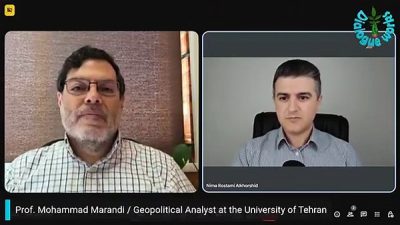
Seyed M. Marandi: U.S. Military DIVIDED? Iran’s Secret Defense EXPOSED
or go to
Aletho News Archives – Video-Images
From the Archives
‘Israel sees Iran as obstacle to its policies’
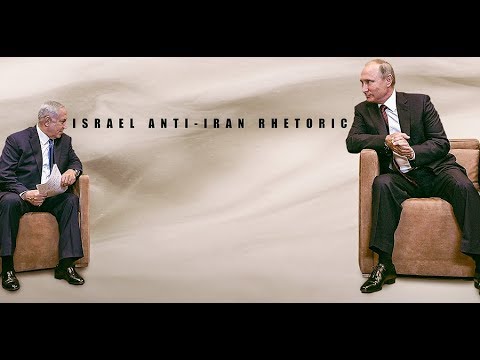
Press TV – August 25, 2017
Prime Minister Benjamin Netanyahu has said that Israel felt threatened by Iran’s growing influence in the Middle East. Netanyahu expressed his Iranophobic view in a meeting with Russian President Vladimir Putin in Russia’s Black Sea resort of Sochi on Wednesday. Press TV has asked Scott Rickard, former American intelligence linguist from Tampa, Florida, and Brent Budowsky, a columnist at The Hill from Washington, to give their thoughts on the issue.
Rickard said Tel Aviv is concerned about the fact that the regime could not carry out its old project to spread sectarian divisions and pave the way for dismemberment of the countries in the Middle East region because of the Iranian-led resistance against Israeli policies, not only in the occupied territories of Palestine but also in the whole region.
“Iran is not a threat to Israel whatsoever. The threat that Israel sees is the fact that their Oded Yinon Plan is being put to a hold by Iran,” the intelligence linguist said on Thursday night.
“They (the Israelis) look at Iran as a threat only because they have no influence on their governments and Iran is autonomous and is not under the Zionist influence,” he added.
Since the victory of the Islamic Republic of Iran in 1979, Tehran has been critical of Israel’s policies in the region, whereas “no leaders [of other states] even dared to speak out against Zionism,” Rickard argued. … continue
Blog Roll
 Aletho News
- Iran declares ‘historic victory’ over US, says enemy forced to accept its proposal
- Trump Claims Ceasefire, Reopening of Strait of Hormuz Agreement with Iran
- Israeli tank fire killed UN peacekeeper in Lebanon, UNIFIL investigation finds
- Russia, China block Bahrain-sponsored UN resolution on Strait of Hormuz
- The US-Israeli War on Science is an Assault on our Future
- Trump’s Promise to Bomb Iran ‘Like Never Before’ Faces Brutal Logistics — Expert
- Germany seeks to restrict stays abroad for men of fighting age – Berliner Zeitung
- Evidence points to Ukraine being behind TurkStream attempted sabotage, but that should come as no surprise
- Sri Lanka secures supplies of Russia oil – minister
- Nations across Asia strike direct deals with Iran for Hormuz passage
- If Americans Knew
- Thousands dead and neighborhoods razed to the ground: Aid agencies fear southern Lebanon is becoming the new Gaza
- The war the US is fighting for Israel could cost trillions
- ‘Cigarette Burns, Nail Wounds’: Toddler Tortured in Gaza to Coerce Father
- Trump Says US Sent ‘a Lot of Guns’ to Protesters in Iran
- Israeli forces destroy 17 UN peacekeeper cameras in south Lebanon
- US-Israeli strikes ‘completely destroy’ synagogue in Tehran
- Archbishop for US Military Says Iran War Is Unjust Under Catholic Teaching
- Iranian leaders’ Open Letters to the American People
- Trump says Iranians appreciate bombs, WHO warns of nuclear risks – Daily Update
- U.N. experts demand Israel release prominent Gaza doctor after reports of ‘severe torture’
- No Tricks Zone
- An Inconvenient Tree: Uncovered In Alps… Europe Much Warmer Than Today 6000 Years Ago
- New Study Reports A 60% Slowdown In Greenland’s Ice Loss Rate In The Last Decade
- Low Intensity Tornado Wrecks Major Solar Farm, Creating A Potential Toxic Dump
- New Study Finds Warming Saves Lives…Cold Temperatures 12 Times More Deadly Than Excess Heat
- German Science Blog Accuses PIK Climate Institute Of Hallucinating Climate Tipping Points
- Devastating Assessment Of Comirnaty Vaccine By Former Senior Pfizer Europe Toxicologist
- New Study: CO2 Is ‘Effectively Negligible’ As An Explanatory Climate Change Factor Since 2000
- Former Pfizer Toxicologist Dr. Helmut Sterz Tells Bundestag Hearing Pfizer Vaccine Should Have Never Been Approved
- Energy Expert: Germany’s Nuclear Phaseout Was A “500 Billion Euro Mistake”
- New Research: South Australia’s Mid-Holocene Sea Surface Temperatures Were 4°C Warmer Than Today
 Aletho News